NATIONAL ACADEMY PRESS
2101 Constitution Avenue, NWWashington, DC20418
The National Academy of Sciences is a private, nonprofit, self-perpetuating society of distinguished scholars engaged in scientific and engineering research, dedicated to the furtherance of science and technology and to their use for the general welfare. Upon the authority of the charter granted to it by the Congress in 1863, the Academy has a mandate that requires it to advise the federal government on scientific and technical matters.
Library of Congress Cataloging-in-Publication Data
Science and creationism: a view from the National Academy of Sciences
p. cm.
Includes bibliographical references (p. ).
ISBN 0-309-06406-6 (paperbound)
1. Evolution (Biology). 2. Creationism. 3. Cosmology. I. National Academy of Sciences (U.S.)
QH366.2 .S425 1999 99-6259
576.8—dc21
Printed in the United States of America
Copyright 1999 by the National Academy of Sciences. All rights reserved.
Science and Creationism: A View from the National Academy of Sciences, Second Edition, is available for sale from the
National Academy Press,
2101 Constitution Avenue, NW, Box 285, Washington, DC20055. Call 1-800-624-6242 or 202-334-3313 (in the Washington Metropolitan Area). The report also is available online atwww.nap.edu
STEERING COMMITTEE ON SCIENCE AND CREATIONISM
Francisco J. Ayala (Chairman) Donald Bren Professor of Biological Sciences
Department of Ecology and Evolutionary Biology University of California Irvine, California
Ralph J. Cicerone Chancellor Aldrich Professor of Earth System Science
University of California Irvine, California
M. T. Clegg Professor of Genetics
College of Natural and Agricultural Sciences University of California Riverside, California
G. Brent Dalrymple Dean
College of Oceanic and Atmospheric Sciences Oregon State University Corvallis, Oregon
Richard E. Dickerson
Molecular Biology Institute University of California Los Angeles, California
Stephen J. Gould Professor of Geology Agassiz Professor of Zoology
Harvard University The Agassiz Museum Cambridge, Massachusetts
Dudley R. Herschbach Professor of Science
Department of Chemistry Harvard University Cambridge, Massachusetts
Donald Kennedy Bing Professor of Environmental Sciences
Stanford University Stanford, California
Joseph D. McInerney Director
Biological Sciences Curriculum Study Colorado Springs, Colorado
John A. Moore Professor Emeritus of Biology
Department of Biology University of California Riverside, California
Jeremiah P. Ostriker Provost
Princeton University Princeton, New Jersey
George Rupp President
Columbia University New York, New York
Eugenie Scott Executive Director
National Center for Science Education El Cerrito, California
Barbara Schulz
Lakeside School Seattle, Washington
Steven M. Stanley Professor of Paleobiology
Department of Earth and Planetary Systems Johns Hopkins University Baltimore, Maryland
Staff
Donna M. Gerardi, Director,
Office on Public Understanding of Science, National Academy of Sciences
Paul Gilman, Executive Director,
Commission on Life Sciences, National Research Council (through September 1998)
Alvin Lazen, Associate Executive Director,
Commission on Life Sciences, National Research Council (through September 1998)
Kit Lee, Senior Project Assistant
Steve Olson, Consultant Editor
Erika C. Shugart, Research Associate,
Office on Public Understanding of Science, National Academy of Sciences
Any opinions, findings, conclusions, or recommendations expressed in this publication are those of the authors and do not necessarily reflect the view of the organizations that provided financial support for this project.

THE NATIONAL ACADEMY OF SCIENCES WASHINGTON, DC
For more information on Science and Creationism visit
Acknowledgments
The National Academy of Sciences gratefully acknowledges contributions from:
The Esther A. and Joseph Klingenstein Fund, Inc.
The Council of the National Academy of Sciences
The 1997 and 1998 Annual Funds of the National Academy of Sciences, whose donors include Academy members and other science-interested individuals.
Preface
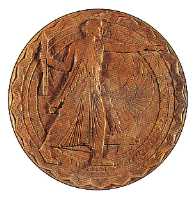
In his preface to the original 1984 version of this document, Frank Press, my predecessor as president of the National Academy of Sciences, called attention to a pair of illustrations similar to the ones on the front and back of this booklet. The first is a photograph of Earth from space—the one on this booklet was taken by the GOES 7 satellite in 1992 as it passed over Earth and captured in graphic detail Hurricane Andrew. The second shows a map of the world prepared during the 7th century by the scholar Isidore of Seville. As Press pointed out, both illustrations reflect the efforts of humans to understand the natural world. "How then," he wrote, "can the two views be so different? The answer lies at the very heart of the nature of this system of study we call science."
Since those words were written, the mapping of Earth has provided further powerful examples of how science and science-based technologies progress. Beginning in the early 1990s, a network of satellites has allowed anyone with a hand-held receiver to know his or her position on Earth to within a few feet. This Global Positioning System* (GPS) now is being used to locate vessels lost at sea, study plate tectonics, trace open routes through crowded city streets, and survey Earth's surface. Yet the technology originated with a purely scientific objective—the desire to build extremely accurate clocks to test Einstein's theory of relativity.
The tremendous success of science in explaining natural phenomena and fostering technological innovation arises from its focus on explanations that can be inferred from confirmable data. Scientists seek to relate one natural phenomenon to another and to recognize the causes and effects of phenomena. In this way, they have developed explanations for the changing of the seasons, the movements of the sun and stars, the structure of matter, the shaping of mountains and valleys, the changes in the positions of continents over time, the history of life on Earth, and many other natural occurrences. By the same means, scientists have also deciphered which substances in our environment are harmful to humans and which are not, developed cures for diseases, and generated the knowledge needed to produce innumerable labor-saving devices.
The concept of biological evolution is one of the most important ideas ever generated by the application of scientific methods to the natural world. The evolution of all the organisms that live on Earth today from ancestors that lived in the past is at the core of genetics, biochemistry, neurobiology, physiology, ecology, and other biological disciplines. It helps to explain the emergence of new infectious diseases, the development of antibiotic resistance in bacteria, the agricultural relationships among wild and domestic plants and animals, the composition of Earth's atmosphere, the molecular machinery of the cell, the similarities between human beings and other
primates, and countless other features of the biological and physical world. As the great geneticist and evolutionist Theodosius Dobzhansky wrote in 1973, "Nothing in biology makes sense except in the light of evolution."
Nevertheless, the teaching of evolution in our schools remains controversial. Some object to it on the grounds that evolution contradicts the accounts of origins given in the first two chapters of Genesis. Some wish to see "creation science"—which posits that scientific evidence exists to prove that the universe and living things were specially created in their present form—taught together with evolution as two alternative scientific theories.
Scientists have considered the hypotheses proposed by creation science and have rejected them because of a lack of evidence. Furthermore, the claims of creation science do not refer to natural causes and cannot be subject to meaningful tests, so they do not qualify as scientific hypotheses. In 1987 the U.S. Supreme Court ruled that creationism is religion, not science, and cannot be advocated in public school classrooms. And most major religious groups have concluded that the concept of evolution is not at odds with their descriptions of creation and human origins.
This new edition of Science and Creationism: A View from the National Academy of Sciences is a companion volume to a publication released in 1998 by the Academy, Teaching About Evolution and the Nature of Science. That longer document is addressed to the teachers, educators, and policymakers who design, deliver, and oversee classroom instruction in biology. It summarizes the overwhelming observational evidence for evolution and explains how science differs from other human endeavors. It also suggests effective ways of teaching the subject and offers sample teaching exercises, curriculum guides, and "dialogues" among fictional teachers discussing the difficulties of presenting evolution in the classroom.
This new edition of Science and Creationism has a somewhat different purpose. It, too, summarizes key aspects of several of the most important lines of the evidence supporting evolution. But it also describes some of the positions taken by advocates of creation science and presents an analysis of these claims. As such, this document lays out for a broader audience the case against presenting religious concepts in science classes. Both this document, and the earlier Teaching About Evolution and the Nature of Science, are freely available online at the Academy website (www.nap.edu).
Scientists, like many others, are touched with awe at the order and complexity of nature. Indeed, many scientists are deeply religious. But science and religion occupy two separate realms of human experience. Demanding that they be combined detracts from the glory of each.
Bruce Alberts
President
National Academy of Sciences
|
* |
"The Global Positioning System: The Role of Atomic Clocks." Part of the series Beyond Discovery: The Path from Research to Human Benefit by the National Academy of Sciences (Washington, D.C.: National Academy Press, 1997). This document is also available at www2.nas.edu/bsi. |