
NOTICE: The project that is the subject of this report was approved by the Governing Board of the National Research Council, whose members are drawn from the councils of the National Academy of Sciences, the National Academy of Engineering, and the Institute of Medicine. The members of the panel responsible for the report were chosen for their special competences and with regard for appropriate balance.
This report has been reviewed by a group other than the authors according to procedures approved by a Report Review Committee consisting of members of the National Academy of Sciences, the National Academy of Engineering, and the Institute of Medicine.
The National Academy of Sciences is a private, nonprofit, self-perpetuating society of distinguished scholars engaged in scientific and engineering research, dedicated to the furtherance of science and technology and to their use for the general welfare. Upon the authority of the charter granted to it by the Congress in 1863, the Academy has a mandate that requires it to advise the federal government on scientific and technical matters. Dr. Frank Press is president of the National Academy of Sciences.
The National Academy of Engineering was established in 1964, under the charter of the National Academy of Sciences, as a parallel organization of outstanding engineers. It is autonomous in its administration and in the selection of its members, sharing with the National Academy of Sciences the responsibility for advising the federal government. The National Academy of Engineering also sponsors engineering programs aimed at meeting national needs, encourages education and research, and recognizes the superior achievements of engineers. Dr. Robert M. White is president of the National Academy of Engineering.
The Institute of Medicine was established in 1970 by the National Academy of Sciences to secure the services of eminent members of appropriate professions in the examination of policy matters pertaining to the health of the public. The Institute acts under the responsibility given to the National Academy of Sciences by its congressional charter to be an adviser to the federal government and, upon its own initiative, to identify issues of medical care, research, and education. Dr. Kenneth I. Shine is president of the Institute of Medicine.
The National Research Council was organized by the National Academy of Sciences in 1916 to associate the broad community of science and technology with the Academy's purposes of furthering knowledge and advising the federal government. Functioning in accordance with general policies determined by the Academy, the Council has become the principal operating agency of both the National Academy of Sciences and the National Academy of Engineering in providing services to the government, the public, and the scientific and engineering communities. The Council is administered jointly by both Academies and the Institute of Medicine. Dr. Frank Press and Dr. Robert M. White are chairman and vice-chairman, respectively, of the National Research Council.
This study was supported by Contract NASW-4003 between the National Academy of Sciences and the National Aeronautics and Space Administration.
Library of Congress Catalog Card Number 92-64197
International Standard Book Number 0-309-04732-3
Available in limited supply from
The Aeronautics and Space Engineering Board
2101 Constitution Avenue, N.W.
Washington, D.C. 20418
Also available for sale from
National Academy Press
2101 Constitution Ave., N.W. Washington, D.C. 20418
S578
Printed in the United States of America
First Printing, September 1992
Second Printing, January 1993
Third Printing, May 1993
COMMITTEE ON AERONAUTICAL TECHNOLOGIES
STEERING COMMITTEE
EUGENE E. COVERT, Professor,
Department of Aeronautics and Astronautics, Massachusetts Institute of Technology, Cambridge, Mass.,
Chairman
RICHARD G. BRADLEY, Director,
Flight Sciences, General Dynamics Corporation, Fort Worth, Tex.,
Vice-Chairman
MAX E. BLECK, President,
Raytheon Company, Lexington, Mass.
EDWARD S. CARTER, Jr., Retired Chief Scientist,
Sikorsky Division of United Aircraft, Fairfield, Conn.
WOLFGANG H. DEMISCH, Director of Research,
UBS Securities, New York, N.Y.
ALEXANDER H. FLAX, Home Secretary,
National Academy of Engineering, Washington, D.C.
KENNETH I. GRINA, Retired Vice-President,
Engineering, Boeing Vertol Company, Media, Pa.
ROBERT H. KORKEGI, Retired Director,
Hypersonics Research Laboratory, United States Air Force, and
Retired Director,
Aeronautics and Space Engineering Board, National Research Council, Washington, D.C.
DUANE T. McRUER, President and Technical Director,
Systems Technology, Inc., Hawthorne, Calif.
GARNER W. MILLER, Retired Senior Vice-President,
Maintenance and Engineering, USAir, Naples, Fla.
MARIO J. MOLINA, Professor,
Department of Chemistry/Earth and Planetary Sciences, Massachusetts Institute of Technology, Cambridge, Mass.
HARVEY O. NAY, Retired Vice-President of Engineering,
Piper Aircraft Corporation, Vero Beach, Fla.
ROBERT B. ORMSBY, Jr., Retired Aircraft Group President,
Lockheed Corporation, Newhall, Calif.
HERSHEL SAMS, Retired Vice-President and General Manager,
National Aerospace Plane, McDonnell Douglas Corporation, St. Petersburg Beach, Fla.
JOHN D. WARNER, Vice-President,
Engineering, Boeing Commercial Airplane Group, Seattle, Wash.
ALBERTUS D. WELLIVER, Corporate Senior Vice-President,
Engineering and Technology, The Boeing Company, Seattle, Wash.
(ex officio)
Staff:
JOANN C. CLAYTON, Director
VICKI S. JOHNSON, Senior Program Officer (March 1990 – July 1991)
MARTIN J. KASZUBOWSKI, Study Director (July 1991–July 1992)
CHRISTINA A. WEINLAND, Senior Project Assistant
PANEL ON AERODYNAMICS
ROBERT B. ORMSBY, Jr., Retired Aircraft Group President,
Lockheed Corporation, Newhall, Calif.,
Chairman
EDWARD S. CARTER, Jr., Retired Chief Scientist,
Sikorsky Division of United Aircraft, Fairfield, Conn.
ROBERT H. KORKEGI, Retired Director,
Hypersonics Research Laboratory, United States Air Force, and
Retired Director,
Aeronautics and Space Engineering Board, National Research Council, Washington, D.C.
HELEN L. REED, Associate Professor,
Department of Mechanical and Aerospace Engineering, Arizona State University, Tempe, Ariz.
PAUL E. RUBBERT, Unit Chief,
Aerodynamics Research, The Boeing Company, Seattle, Wash.
RICHARD G. BRADLEY, Director,
Flight Sciences, General Dynamics Corporation, Fort Worth, Tex.
(ex officio)
Technical Advisors:
ROY V. HARRIS, Jr., Director for Aeronautics,
NASA Langley Research Center, Hampton, Va.
VICTOR L. PETERSON, Deputy Director,
NASA Ames Research Center, Moffett Field, Calif.
PANEL ON AVIONICS AND CONTROL
JOHN D. WARNER, Vice-President,
Engineering, Boeing Commercial Airplane Company, Seattle, Wash.,
Chairman
SUSAN C. GARING, Senior Engineer,
Air Vehicle Software, Link Flight Simulation Division, CAE-Link Corporation, Binghamton, N.Y.
JOEL F. KUHLBERG, Manager,
Engine Controls Engineering, Pratt & Whitney, East Hartford, Conn.
STEPHEN S. OSDER, Chief Scientist,
McDonnell Douglas Helicopter, Mesa, Ariz.
Technical Advisor:
H. MILTON HOLT, Chief,
Information Systems Division, NASA Langley Research Center, Hampton, Va.
PANEL ON GENERAL SYSTEMS
HERSHEL SAMS, Retired Vice-President and General Manager,
National AeroSpace Plane, McDonnell Douglas Corporation, St. Petersburg Beach, Fla.,
Chairman
WILLIAM C. DIETZ, Vice-President and Program Director,
Special Products, General Dynamics Corporation, Fort Worth, Tex.
CHARLES W. ELLIS, Retired Vice-President V-22 Program,
Boeing Vertol Company, Newtown Square, Penn. (Deceased)
ALEXANDER H. FLAX, Home Secretary,
National Academy of Engineering, Washington, D.C.
R. RICHARD HEPPE, Consultant,
Lockheed Aeronautical Systems Company and Lockheed Corporation, Pasadena, Calif.
ALBERTUS D. WELLIVER, Corporate Senior Vice-President,
Engineering and Technology, The Boeing Company, Seattle, Wash.
Technical Advisor:
THEODORE G. AYERS, Deputy Director,
NASA Dryden Flight Research Center (Facility of the Ames Research Center), Edwards, Calif.
PANEL ON INFORMATION SCIENCES AND HUMAN FACTORS
DUANE T. McRUER, President and Technical Director,
Systems Technology, Inc., Hawthorne, Calif.,
Chairman
RENWICK E. CURRY, President,
Tycho Systems, Atlanta, Ga.
JOHN K. LAUBER, Member,
National Transportation Safety Board, Washington, D.C.
HERMAN A. REDIESS, Manager,
Aerospace Engineering & Systems Operation, Sparta, Laguna Hills, Calif.
Technical Advisors:
JEREMIAH F. CREEDON, Director for Flight Systems,
NASA Langley Research Center, Hampton, Va.
TOM SNYDER, Director,
Aerospace Systems, NASA Ames Research Center, Moffett Field, Calif.
PANEL ON MATERIALS AND STRUCTURES
ROBERT G. LOEWY, Institute Professor,
Mechanical and Aerospace Sciences, Rensselaer Polytechnic Institute, Troy, N.Y.,
Chairman
KENNETH I. GRINA, Retired Vice-President Engineering,
Boeing Vertol Company, Media, Pa.
PAUL A. LAGACE, Associate Professor,
Department of Aeronautics and Astronautics, Massachusetts Institute of Technology, Cambridge, Mass.
HARRY L. LEMASTERS, Vice-President,
Commercial Programs, United Technologies, Hamilton Standard, Windsor Locks, Conn.
HARVEY O. NAY, Retired Vice-President of Engineering,
Piper Aircraft Corporation, Vero Beach, Fla.
Technical Advisor:
CHARLES P. BLANKENSHIP, Director for Structures,
NASA Langley Research Center, Hampton, Va.
PANEL ON OPERATION AND ENVIRONMENTAL ISSUES
WESLEY L. HARRIS, Vice-President,
University of Tennessee Space Institute, Tullahoma, Tenn.,
Chairman
MAX E. BLECK, President,
Raytheon Company, Lexington, Mass.
WOLFGANG H. DEMISCH, Director of Research,
UBS Securities, New York, N.Y.
GARNER W. MILLER, Retired Senior Vice-President,
Maintenance and Engineering, USAir, Naples, Fla.
MARIO J. MOLINA, Professor,
Department of Chemistry/Earth and Planetary Sciences, Massachusetts Institute of Technology, Cambridge, Mass.
Technical Advisors:
JEREMIAH F. CREEDON, Director for Flight Systems,
NASA Langley Research Center, Hampton, Va.
ROBERT E. MACHOL, Chief Scientist,
Federal Aviation Administration, Washington, D.C.
PANEL ON PROPULSION
FRANK E. MARBLE, Professor Emeritus,
California Institute of Technology, Pasadena, Calif.,
Chairman
ALAN H. EPSTEIN, Professor,
Department of Aeronautics and Astronautics, Massachusetts Institute of Technology, Cambridge, Mass.
JAMES N. KREBS, Retired Vice-President,
General Electric Corporation, Santa Fe, N. Mex.
FRANKLIN K. MOORE, Joseph C. Ford Professor of Mechanical Engineering,
Cornell University, Ithaca, N.Y.
MAURICE E. SHANK, Consultant and Retired Vice-President,
Pratt & Whitney of China, Bellevue, Wash. and York Harbor, Maine
MONTGOMERIE C. STEELE, Senior Chief Engineer,
Garrett Engine Division, Phoenix, Ariz.
EUGENE E. COVERT, Professor,
Department of Aeronautics and Astronautics, Massachusetts Institute of Technology, Cambridge, Mass.
(ex officio)
Technical Advisor:
NEAL T. SAUNDERS, Director of Aeronautics,
NASA Lewis Research Center, Cleveland, Ohio
AERONAUTICS AND SPACE ENGINEERING BOARD
Duane T. McRuer, President and Technical Director,
Systems Technology, Inc., Hawthorne, Calif.,
Chairman
James M. Beggs, Partner,
J.M. Beggs Associates, Arlington, Va.
Richard G. Bradley, Director,
Flight Sciences, Ft. Worth Division, General Dynamics, Ft. Worth, Tex.
Robert H. Cannon, Jr., Charles Lee Powell Professor and Chairman,
Dept. of Aeronautics and Astronautics, Stanford University, Stanford, Calif.
Eugene E. Covert, Professor,
Dept. of Aeronautics and Astronautics, Massachusetts Institute of Technology, Cambridge, Mass.
Ruth M. Davis, President and CEO,
Pymatuning Group, Inc., Alexandria, Va.
Wolfgang H. Demisch, Director of Research,
UBS Securities, New York, N.Y.
Charles W. Ellis, Retired Vice-President V-22 Program,
Boeing Vertol Company, Newtown Square, Penn. (Deceased)
Owen K. Garriott, Vice-President,
Space Programs, Teledyne Brown Engineering, Huntsville, Ala.
John M. Hedgepeth, Retired President,
Astro Aerospace Corporation, Santa Barbara, Calif.
Robert G. Loewy, Institute Professor,
Dept. of Mechanical and Aerospace Sciences, Rensselaer Polytechnic Institute, Troy, N.Y.
John M. Logsdon, Director,
Space Policy Institute, George Washington University, Washington, D.C.
Frank E. Marble, Richard L. Hayman and Dorothy M. Hayman Professor of Mechanical Engineering, and Professor of Jet Propulsion,
California Institute of Technology, Pasadena, Calif.
John H. McElroy, Dean of Engineering,
University of Texas at Arlington, Arlington, Tex., (Term ended 12/31/91)
Garner W. Miller, Retired Senior Vice-President for Technology,
USAir, Naples, Fla.
Franklin K. Moore, Joseph C. Ford Professor of Mechanical Engineering,
Cornell University, Ithaca, N.Y.
Harvey O. Nay, Retired Vice-President of Engineering,
Piper Aircraft Corporation, Vero Beach, Fla.
Frank E. Pickering, Vice-President and General Manager,
Aircraft Engines Engineering Division, General Electric Company, Lynn, Mass.
Anatol Roshko, von Karman Professor of Aeronautics,
California Institute of Technology, Pasadena, Calif.
Maurice E. Shank, Retired Vice-President,
Pratt & Whitney of China, Inc., Bellevue, Wash. and York Harbor, Maine
Thomas P. Stafford, Vice-Chairman,
Stafford, Burke, and Hecker, Inc., Alexandria, Va.
Martin N. Titland, Chief Operating Officer,
CTA, INCORPORATED, Rockville, Md.
Albertus D. Welliver, Corporate Senior Vice-President,
Engineering and Technology, The Boeing Company, Seattle, Wash.
Staff:
JoAnn C. Clayton, Director
Noel E. Eldridge, Program Officer
Martin J. Kaszubowski, Senior Program Officer
Allison C. Sandlin, Senior Program Officer
Susan K. Coppinger, Project Assistant
Anna L. Farrar, Administrative Associate
Maryann Shanesy, Senior Secretary
Christina A. Weinland, Administrative Assistant
FOREWORD
Over the last decade, foreign aircraft manufacturers have made significant inroads into the global aircraft market, to the detriment of U.S. interests. The commuter aircraft market has been almost completely lost to foreign manufacturers, the subsonic transport market is seriously threatened, and foreign competitors are already positioning themselves to capture the future supersonic transport market.
Foreign governments, in close relationships with their aircraft industries, have invested heavily in the basic aeronautics research and technology that is necessary for developing and maintaining a competitive posture, meeting future constraints on air traffic management system capacity, and reducing the environmental impact of aircraft. This is particularly true in the advanced subsonic transport market. Although the availability of advanced technology is only one of several factors that relate to overall competitiveness, without continued access to that technology the leadership that the U.S. subsonic transport aircraft manufacturers now enjoy will continue to erode. Whereas technology alone may not ensure economic success in competition in the aircraft industry, without competitive technology, U.S. manufacturers will fail economically.
Clearly, maintenance of U.S. standing in the world industry is an imperative national need. The current effort of the U.S. government to support basic aeronautics research and technology is inadequate to meet that need. Although the aeronautics research program supported by the National Aeronautics and Space Administration contains elements that contribute to advanced subsonic aircraft technology, the funding level is well below that needed to be competitive. The threat is growing, and the nation's technological capability is not being positioned for the future.
In March 1985 the Aeronautical Policy Review Committee of the Office of Science and Technology Policy issued a report, National Aeronautical R&D Goals: Technology for America's Future. Three priorities were defined. First and foremost was advanced subsonic aircraft, then high-speed civil aircraft, and finally transatmospheric flight vehicles. In February 1987 a second report was issued by that group entitled National Aeronautical R&D Goals: Agenda for Achievement. It, too, emphasized the importance of advanced subsonic transports to both the national economy and the national transportation infrastructure. Page four of the second report describes as the leading priority in subsonics: "a new generation of superior U.S. aircraft." That section concludes with the warning, "We are approaching an important crossroad: one path leading to steady erosion of U.S. participation in world markets; the other to economic growth and job creation." The warning has gone unheeded.
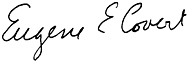
Eugene E. Covert
Chairman
LIST OF FIGURES AND TABLES
|
FIGURE 2-1 |
Fuel burn comparison for short- and medium-range airplanes (design range ≤ 4,000 nautical miles). |
|||
|
FIGURE 2-2 |
Fuel burn comparison for long-range aircraft (design range ≥ 4,000 nautical miles). |
|||
|
FIGURE 2-3 |
Airplane price trends. |
|||
|
FIGURE 2-4 |
Direct operating cost trends. |
|||
|
FIGURE 2-5 |
Projected world passenger traffic. |
|||
|
FIGURE 2-6 |
Potential traffic distribution. |
|||
|
FIGURE 2-7 |
Projected worldwide aircraft departures. |
|||
|
FIGURE 2-8 |
Number of seats versus range capability. |
|||
|
FIGURE 2-9 |
Installed turbine engine efficiency (TSFC = thrust-specific fuel consumption). |
|||
|
FIGURE 2-10 |
Aerodynamic efficiency. |
|||
|
FIGURE 2-11 |
Potential airframe weight savings. |
|||
|
FIGURE 2-12 |
Direct operating cost breakdown for the 747-400 (1990 U.S. dollars). |
|||
|
FIGURE 2-13 |
Direct operating cost goals (range = 1,000 nautical miles, 1990 U.S. dollars). |
|||
|
FIGURE 3-1 |
International passenger traffic. |
|||
|
FIGURE 3-2 |
Market capture. |
|||
|
FIGURE 4-1 |
Commuter fleet forecast. |
|||
|
FIGURE 4-2 |
World civil rotorcraft production forecast. |
|||
|
FIGURE 4-3 |
General aviation unit shipments/billings. |
|||
|
FIGURE 4-4 |
General aviation fatal accidents and paid claims. |
|||
|
FIGURE 7-1 |
Variation of CLmax with Reynolds number for a simple swept wing. |
|||
|
FIGURE 7-2 |
Improvements in transonic wing technology. |
|||
|
FIGURE 7-3 |
FAR 36 measurement locations. |
|||
|
FIGURE 7-4 |
Takeoff noise contours. |
|||
|
FIGURE 7-5 |
Comparison of major subsonic tunnels. |
|||
|
FIGURE 7-6 |
Comparison of major transonic tunnels. |
|
FIGURE 7-7 |
Comparison of major supersonic tunnels. |
|||
|
FIGURE 8-1 |
Overall pressure ratio for high-bypass ratio turbofans, maximum climb. |
|||
|
FIGURE 8-2 |
Compressor discharge temperature for high-bypass ratio turbofans, sea level static. |
|||
|
FIGURE 8-3 |
Turbine inlet temperature for high-bypass ratio turbofans, sea level static. |
|||
|
FIGURE 8-4 |
Actively stabilized compressor suppresses rotating stall. |
|||
|
FIGURE 8-5 |
Active compressor stabilization moves the stall point to lower mass flows. |
|||
|
FIGURE 8-6 |
Nitric oxide emissions versus severity index(s), current and future engines. |
|||
|
FIGURE 9-1 |
Tensile strength per unit mass as a function of operating temperature for several composite materials. |
|||
|
FIGURE 9-2 |
Expected temperature capability of turbine engine bearing systems as a function of service entry year. |
|||
|
FIGURE 10-1 |
Integration of elements needed for cooperative global airspace management. |
|||
|
FIGURE 10-2 |
Taxonomy of ATM automation aids. |
|
TABLE ES-1 |
Primary Benefits from Each Discipline |
|||
|
TABLE ES-2 |
NASA Research and Development Funding Mix (1992) |
|||
|
TABLE ES-3 |
1992 NASA Aeronautics Funding by Discipline |
|||
|
TABLE 1-1 |
Primary Benefits from Each Discipline |
|||
|
TABLE 1-2 |
1992 NASA Aeronautics Program Funding |
|||
|
TABLE 1-3 |
1992 NASA Aeronautics Funding by Discipline |
|||
|
TABLE 2-1 |
Direct Operating Cost (DOC)—Major Drivers |
|||
|
TABLE 2-2 |
Advanced Subsonic Transport Funding by Discipline |
|||
|
TABLE 3-1 |
High-Speed Civil Transport Funding by Discipline |
|||
|
TABLE 4-1(A) |
Short-Haul Aircraft Delivered, by Region (as of February 1, 1991) |
|||
|
TABLE 4-1(B) |
Short-Haul Aircraft on Order, by Region (as of February 1, 1991) |
|||
|
TABLE 4-2 |
International Consortia for New Helicopters and VTOL Aircraft |
|||
|
TABLE 4-3 |
Short-Haul Funding by Discipline |
|||
|
TABLE 7-1 |
Potential L/D Improvements |
|||
|
TABLE 7-2 |
Current Research Aircraft |
|||
|
TABLE 8-1 |
Factors Providing Improved Core Thermal Efficiency |
|||
|
TABLE 8-2 |
Factors Providing Improved Propulsion Efficiency |
|||
|
TABLE 8-3 |
Improvements in Nacelle and Installation Technology |
|||
|
TABLE 8-4 |
Cycle Parameters for Axial Centrifugal Engines |
|||
|
TABLE 8-5 |
Potential Applications for Advanced Composites |
|||
|
TABLE 11-1 |
Key Features of Two Scenarios for the Air Transportation System in 2020 |


