| Copyright © 2010. National Academy of Sciences. All rights reserved. Terms of Use and Privacy Statement |
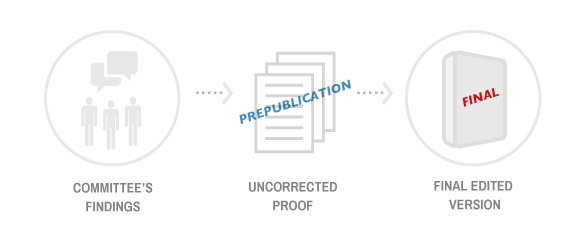
Below are the first 10 and last 10 pages of uncorrected machine-read text (when available) of this chapter, followed by the top 30 algorithmically extracted key phrases from the chapter as a whole.
Intended to provide our own search engines and external engines with highly rich, chapter-representative searchable text on the opening pages of each chapter.
Because it is UNCORRECTED material, please consider the following text as a useful but insufficient proxy for the authoritative book pages.
Do not use for reproduction, copying, pasting, or reading; exclusively for search engines.
OCR for page R1
Hmerico's
EQUIP Cal
sorely NET
Intact but Endongorcd
Committee on the Changing Market, Managed Care, and th
Future Viability of Safety Net Providers
Marion Ein Lewin and Stuart Altman, Editors
INSTITUTE OF MEDICINE
NATIONAL ACADEMY PRESS
Washington, D.C.
e
OCR for page R2
NATIONAL ACADEMY PRESS · 2101 Constitution Avenue, N.W. · Washington, D 20418
NOTICE: The project that is the subject of this report was approved by the Governing
Board of the National Research Council, whose members are drawn from the councils
of the National Academy of Sciences, the National Academy of Engineering, and the
Institute of Medicine. The members of the committee responsible for the report were
chosen for their special competences and with regard for appropriate balance.
Support for this project was provided by the Health Resources and Services Ad-
ministration (Contract No. 240-97-0030~. The views presented in this report are those of
the Institute of Medicine Committee on the Changing Market, Managed Care, and the
Future Viability of Safety Net Providers and are not necessarily those of the funding
agency.
Library of Congress Cataloging-in-Publication Data
America's health care safety net: intact but endangered / Committee on the
Changing Market, Managed Care, and the Future Viability of Safety Net
Providers; Marion Fin Lewin and Stuart Altman, editors.
p. ; cm
Includes bibliograpical references and index.
ISBN 0-309-06497-X (hardcover)
1. Medical assistance United States. 2. Medical care Needs
assessment United States. 3. Medically uninsured United States. 4. Poor-
Medical care United States. I. Lewin, Marion Fin. II. Altman, Stuart H.
III. Institute of Medicine (U.S.~. Committee on the Changing Market,
Managed Care, and the Future Viability of Safety Net Providers.
[DNLM: 1. Medical Assistance United States. 2. Delivery of Health
Care United States. 3. Medically Uninsured United States.
W 250 AA1 A512 2000]
RA 395.A3 A5965 2000
362.1'0973 dc21
00-033231
Additional copies of this report are available for sale from the National Academy
Press, 2101 Constitution Avenue, N.W., Box 285, Washington, DC 20055. Call (800)
624-6242 or (202) 334-3313 (in the Washington metropolitan area), or visit the NAP's
home page at www.nap.edu. The full text of this report is available at www.nap.edu.
For more information about the Institute of Medicine, visit the IOM home page at
www.iom.edu.
Copyright 2000 by the National Academy of Sciences. All rights reserved.
Printed in the United States of America.
The serpent has been a symbol of long life, healing, and knowledge among almost
all cultures and religions since the beginning of recorded history. The serpent adopted
as a logotype by the Institute of Medicine is a relief carving from ancient Greece, now
held by the Staatliche Museen in Berlin.
OCR for page R3
"I(nowing is not enough; we invest apply.
Willing is not enough; we midst do. "
Goethe
......... ..........
....... .... . . . . .......
....
I NSTITUTE OF MEDICI N E
Shaping the Future for Health
OCR for page R4
National Acaclemy of Sciences
National Acaclemy of Engineering
Institute of Meclicine
National Research Council
The National Academy of Sciences is a private, nonprofit, self-perpetuating society
of distinguished scholars engaged in scientific and engineering research, dedi-
cated to the furtherance of science and technology and to their use for the general
welfare. Upon the authority of the charter granted to it by the Congress in 1863,
the Academy has a mandate that requires it to advise the federal government on
scientific and technical matters. Dr. Bruce M. Alberts is president of the National
Academy of Sciences.
The National Academy of Engineering was established in 1964, under the charter
of the National Academy of Sciences, as a parallel organization of outstanding
engineers. It is autonomous in its administration and in the selection of its mem-
bers, sharing with the National Academy of Sciences the responsibility for advis-
ing the federal government. The National Academy of Engineering also sponsors
engineering programs aimed at meeting national needs, encourages education
and research, and recognizes the superior achievements of engineers. Dr. William
A. Wulf is president of the National Academy of Engineering.
The Institute of Medicine was established in 1970 by the National Academy of
Sciences to secure the services of eminent members of appropriate professions in
the examination of policy matters pertaining to the health of the public. The
Institute acts under the responsibility given to the National Academy of Sciences
by its congressional charter to be an adviser to the federal government and, upon
its own initiative, to identify issues of medical care, research, and education. Dr.
Kenneth I. Shine is president of the Institute of Medicine.
The National Research Council was organized by the National Academy of Sci-
ences in 1916 to associate the broad community of science and technology with
the Academy's purposes of furthering knowledge and advising the federal gov-
ernment. Functioning in accordance with general policies determined by the
Academy, the Council has become the principal operating agency of both the
National Academy of Sciences and the National Academy of Engineering in pro-
viding services to the government, the public, and the scientific and engineering
communities. The Council is administered jointly by both Academies and the
Institute of Medicine. Dr. Bruce M. Alberts and Dr. William A. Wulf are chairman
and vice chairman, respectively, of the National Research Council.
OCR for page R5
COMMITTEE ON THE CHANGING MARKET, MANAGED CARE,
AND THE FUTURE VIABILITY OF SAFETY NET PROVIDERS
STUART H. ALTMAN (Chair), Sol C. Chaikin Professor of National
Health Policy, Helter Graduate School of Social Policy, Brandeis
University
JOHN G. BARTLETT, Chief, Division of Infectious Diseases, Johns
Hopkins University School of Medicine
RAYMOND I. BAXTER, Executive Vice President, The Lewin Group,
Falls Church, Virginia
JOHN BILLINGS, Associate Professor and Director of the Center for
Health and Public Service Research, Robert F. Wagner School of
Public Service, New York University
PATRICIA A. GABOW, Chief Executive Officer and Medical Director,
Denver Health
MARY L. HENNRICH, Chief Executive Officer, CareOregon, Portland
SANDRAL HULLETT, Executive Director, West Alabama Health
Services, Inc., Eutaw
THOMAS G. IRONS, Associate Vice Chancellor for Health Sciences,
East Carolina University School of Medicine, and President, Health
East, Greenville, North Carolina
JOYCE C. LASHOF, Professor Emerita, School of Public Health,
University of California at Berkeley
PATRICK H. MATTINGLY, Senior Consultant, Picker Institute, Boston
CAROLINA REYES, Associate Director, Division of Women's Health
Policy and Research, Department of Obstetrics and Gynecology,
Cedars-Sinai Medical Center, Los Angeles
CHERYL I. ROBERTS, Director of Managed Care, Virginia Department
of Medical Assistance Services, Richmond
STEPHEN A. SOMERS, President, Center for Health Care Strategies,
Inc., Princeton, New Jersey
ANN ZUVEKAS, Senior Fellow, Center for Health Services Research
and Policy, School of Public Health and Health Services, The
George Washington University Medical Center
Staff
MARION KIN LEWIN, Study Director
JUSTINE LANG, Research Assistant (December 1997-October 1998)
KARI MCFARLAN, Program Associate
v
OCR for page R6
Consultants
ANDREA FISHMAN, Research Assistant, The Lewin Group, Falls
Church, Virginia
DARRELL I. GASKIN, Research Assistant Professor, Institute for
Health Care Research and Policy, Georgetown University Medical
Center
JUDITH KRAUSS, Professor, Yale University School of Nursing
THOMAS C. RICKETTS III, Director, North Carolina Rural Health
Research Program, Cecil G. Sheps Center for Health Services
Research, and Associate Professor, Department of Health Policy and
Administration, School of Public Health, University of North
Carolina at Chapel Hill
LESLIE SCALLET, Vice President, The Lewin Group, Falls Church,
Virginia
ANDY SCHNEIDER, Principal, Health Policy Group, Washington, D.C.
ALEXANDRA SHIELDS, Senior Research Associate, Institute for
Health Care Research and Policy, Georgetown University Medical
Center
REBECCA T. SLIFKIN, Senior Research Fellow, Cecil G. Sheps Center
for Health Services Research, University of North Carolina at
Chapel Hill
MICHAEL SPIVEY, Principal, Health Policy Group, Washington, D.C.
Al
OCR for page R7
PrQfucc
At a time of unprecedented prosperity and budget surpluses it seems
almost out of style to focus on groups in our nation who fall outside the
economic and medical mainstreams. These people include not only this
country's 44 million uninsured individuals but also an almost equal num-
ber of low-income underinsured individuals. Vulnerable populations ex-
tend as well to poor and disadvantaged individuals living in inner cities
and isolated rural communities, minority and immigrant families, people
with special health care needs, and low-income groups who face a variety
of other financial and nonfinancial barriers to stable health care coverage.
To address at least the basic health care needs of these impoverished
and disadvantaged populations, America has long relied on an institu-
tional safety net system, a patchwork of hospitals, clinics, financing, and
programs that vary dramatically across the country. The funding and
organization of the safety net have always been tenuous and subject to the
changing tides of politics, available resources, and public policies. De-
spite their precarious and unstable infrastructure, these providers have
proven to be resilient, resourceful, and adept at gaining support through
the political process. Today, however, a more competitive health care
marketplace and other forces of change are posing new and unprec-
edented challenges to the long-term sustainability of safety net systems
and hold the potential of having a serious negative impact on populations
that most depend on them for their care.
Our committee was asked to examine the impact of Medicaid man-
aged care and other changes in health care coverage on the future integ-
rity and viability of safety net providers, particularly core safety net pro-
viders such as community health centers, public hospitals, and local health
. .
V11
OCR for page R8
V111
PREFACE
departments. To carry out its charge, the committee reviewed the evi-
dence from the peer-reviewed literature, held a 2-day public hearing, and
elicited a broad array of expert testimony. The committee also conducted
a number of regional meetings and commissioned several papers to pro-
vide further analyses on topics of special relevance to the study charge. In
the course of our work, we were impressed by a number of excellent
ongoing studies and surveys under way to determine how safety net
providers and vulnerable populations are faring in the new environment.
Much of this work is being sponsored by major health care foundations.
At the same time, the committee was struck by the dearth of reliable and
consistent data that can be used to accurately assess, measure, or compare
the changing status of safety net systems across the country. Compound-
ing the difficulty of accurate measurement is the ongoing evolution of
Medicaid managed care and the turbulent health care environment.
These limitations notwithstanding, the committee came away from
its deliberations convinced that today's changing health care marketplace
is placing core safety net providers in many communities at risk of not
being able to continue their mission of caring for a growing number of
uninsured at a time when other national, federal, state, and local initia-
tives to expand coverage are still on the drawing board, in a fledgling
state, or falling short of their promise. The growth of Medicaid managed
care enrollment, the retrenchment or elimination of key direct and indi-
rect subsidies that providers have relied upon to help finance uncompen-
sated care, and growing demand for charity care are making it more
difficult for many safety net providers to survive. Moreover, in many
communities these adverse forces are affecting safety net providers all at
once, placing already fragile underpinnings in even greater danger of
falling apart.
In the absence of agreement on broader health care reform and with
growing demand for charity care, the committee came to feel strongly
that our nation's core safety net provider system needs to be sustained
and protected. At the same time, the committee realized the importance
of encouraging safety net providers to actively embrace the positive as-
pects of current change, including incentives to develop more integrated
and accountable delivery systems and a greater emphasis on performance
and customer service. Together with the committee's findings and recom-
mendations, this report includes a synthesis of what the committee heard
and learned over its 18 months of deliberations. We hope that our work
will contribute in some small way to the dialogue on broadening the
reach of access to health care for all Americans.
Stuart Altman, Ph.D.
Chair
March 2000
OCR for page R9
OCR for page R11
OCR for page R12
OCR for page R13
OCR for page R14
OCR for page R15
OCR for page R16
OCR for page R17
OCR for page R18
OCR for page R19
OCR for page R20
Oc~
x
ACKNOWLEDGMENTS
of safety net organizations across the country. Valerie Lewis, Crystal
Hayling, Brian Bites, and David Sandman deserve special praise for their
help in developing these important meetings. Appreciation goes as well
to lames Tallon and the United Hospital Fund for hosting a meeting in the
early stages of the study.
The committee wants to give special thanks to the dedicated and
hardworking staff at the Institute of Medicine. We are particularly fortu-
nate that Marion Ein Lewin agreed to take on the responsibilities of study
director for the project. Marion brought to this effort a knowledge of the
issues surrounding safety net providers and the individuals whose re-
search activities and experience were most important for our evaluation.
Above all, Marion's tireless energy, enthusiasm and commitment to ex-
cellence pushed the committee to produce what we believe is a first rate
report. Judith Krauss, the 1998-1999 Institute of Medicine/American
Academy of Nursing/American Nurse Foundation's Senior Nurse
Scholar, contributed in major ways not only to the content of the report
but also to many of the other lofty and mundane tasks that this kind of
effort involves. Kari McFarlan deserves major commendation for her mas-
terful and proficient handling of communications with the committee,
organizing the literature database, and carrying out a myriad of other
critical administrative tasks with great professional aplomb. Justine Lang
deserves thanks for her administrative help in the early stages of this
report and organizing the committee's first site visit to Tampa, Florida.
Project assistant Michael Conroy was also helpful to the committee's work.
We thank Michael Hayes not only for his careful and professional
editing but also for his interest in the project and thoughtful ongoing
support. The committee also appreciated Richard Sorian's editing help
from the perspective of his communications and health policy expertise.
The committee owes countless thanks to Heather Binder, who "adopted"
the study in its final months of gestation. Heather meticulously incorpo-
rated all of the edits and checked and double-checked all of the refer-
ences, charts, and figures. Her proficient and careful review of the draft
was a major contribution to the quality of the final product. Claudia Carl
and Mike Edington provided assistance during the report review and
preparation stages.
The committee wishes to express heartfelt appreciation to the authors
of the commissioned papers. The well-researched and highly informative
background papers enhanced the committee's understanding of the many
dimensions of this complex issue. Alexandra Shields not only authored
one of the commissioned papers but also conducted a national survey of
local health departments with Magda Peck and contributed significantly
to the research and writing of the report. Marlene Niefeld deserves thanks
for her research assistance.
ACKNOWLEDGMENTS
Xl
1
The committee extends special thanks to all of the people who con-
tributed to the substance, learning, and enjoyment of our site visits. The
committee is especially thankful to Bob Master, km Hooley, km Bernstein,
Bill Remmes, lane McCaleb, Patricia Bean, and Commissioner Thomas
Scott for their help in planning and organizing these activities.
The committee greatly appreciates the help and contributions of
Christine Burch, Joel Cantor, Peter Cunningham, Lynn Fagnani, Marilyn
Falik, Paul Fronstin, Darrel Gaskin, Brad Gray, Dan Hawkins, John
Holohan, Robert Hurley, Lucy Johns, Ronda Kotelchuck, Leighton Ku,
Debbie Lewis-Idema, lack Needleman, Stephen Norton, and Sara
Rosenbaum. These respected experts were never too busy to answer our
calls, respond to our inquiries, and give generously of their time and
knowledge. Thanks go as well to Joe Anderson, Jack Ashby, Amy
Bernstein, Maura Bluestone, Dennis Braddock, Carol Brown, Bruce Bullen,
Thomas Chapman, Lisa Tremento Chimento, Anne Dievler, Susanne Felt-
Lisk, Irene Fraser, Marsha Gold, Eric Holzberg, Pat lerominski, Neva
Kaye, Peter Kralovec, Larry Lewin, Jack Meyer, John Murphy, Bill
Sappenfeld, George Schieber, Bruce Siegel, Helen Smits, David Sundwall,
Caroline Taplin, Pat Taylor, and Andrew Wallace for their thoughtful and
informed perspectives.
Finally, the committee would like to thank the chair, Stuart Altman,
for his intellectual leadership and for his strong commitment to the pur-
poses of this project. He, in turn, wishes to thank the excellent and
hardworking committee members whose dedication and perseverance to
this effort far exceeded any reasonable expectations.
X11
ACKNOWLEDGEMENTS
Judith Krauss, the 1998-1999 Institute of Medicine/American Academy of Nursing/American
Nurse Foundation's Senior Nurse Scholar, contributed in major ways not only to the content of
the report but also to many of the other lofty and mundane tasks that this kind of effort involves.
Karl McFarIan deserves major commendation for her masterful and proficient handling of com-
munications with the committee, organizing the literature database, and carrying out a myriad of
other critical administrative tasks with great professional aplomb. Justine Lang deserves thanks
for her administrative help in the early stages of this report and organizing the committee's first
site visit to Tampa, Florida. Project assistant Michael Conroy was also helpful to the committee's
work.
We thank Michael Hayes not only for his careful and professional editing but also for his in-
terest in the project and thoughtful ongoing support. The committee also appreciated Richard So-
rian's editing help from the perspective of his communications and health policy expertise. The
committee owes countless thanks to Heather Binder, who "adopted" the study in its final months
of gestation. Heather meticulously incorporated all of the edits and checked and double-checked
all of the references, charts, and figures. Her proficient and careful review of the draft was a
major contribution to the quality of the final product. Claudia Car] and Mike Edington provided
assistance during the report review and preparation stages.
The committee wishes to express heartfelt appreciation to the authors of the commissioned
papers. The well-researched and highly informative background papers enhanced the commit-
tee's understanding of the many dimensions of this complex issue. Alexandra Shields not only
authored one of the commissioned papers but also contributed significantly to the research and
writing of the report. Marlene Niefled deserves thanks for her research assistance to Alexandra.
The committee extends special thanks to all of the people who contributed to the substance,
learning, and enjoyment of our site visits. The committee is especially thankful to Bob Master,
Jim Hooley, Jim Bernstein, Bill Remmes, Jane McCaTeb, Patricia Bean, and Commissioner
Thomas Scott for their help in planning and organizing these activities.
The committee greatly appreciates the help and contributions of Christine Burch, Joel Cantor,
Peter Cunningham, Lynn Fagnani, Marilyn FaTik, Darre] Gaskin, Brad Gray, Dan Hawkins, John
Holohan, Robert Huriey, Lucy Johns, Ronda Kotelchuck, Leighton Ku, Debbie Lewis-TUema,
Jack Needleman, Stephen Norton, Magda Peck, and Sara Rosenbaum. These respected experts
were never too busy to answer our calls, respond to our inquiries, and give generously of their
time and knowledge. Thanks go as well to Joe Anderson, Amy Bernstein, Maura Bluestone,
Dennis Braddock, Thomas Chapman, Lisa Tremento Chimento, Anne DievIer, Susanne Felt-
Lisk, Irene Frazier, Marsha Gold, Eric Ho~zberg, Pat Jerominski, LarTy Lewin, Jack Meyer, John
Murphy, George Schieber, Helen Smits, David Sundwall, Carolyn Taplin, Pat Taylor, and An-
drew Wallace for their thoughtful and informed perspectives.
Finally, the committee would like to thank the chair, Stuart Altman, for his intellectual lead-
ership and for his strong commitment to the purposes of this project. He, in turn, wishes to thank
the excellent and hardworking committee members whose dedication and perseverance to this
effort far exceeded any reasonable expectations.
i7QviQwQrs
The report was reviewed by individuals chosen for their diverse per-
spectives and technical expertise in accordance with procedures approved
by the National Research Council's Report Review Committee. The pur-
pose of this independent review is to provide candid and critical com-
ments to assist the authors and the Institute of Medicine in making the
published report as sound as possible and to ensure that the report meets
institutional standards for objectivity, evidence, and responsiveness to
the study charge. The content of the review comments and the draft manu-
script remain confidential to protect the integrity of the deliberative pro-
cess. The committee wishes to thank the following individuals for their
participation in the report review process:
GERARD F. ANDERSON, Director and Professor, Center for Hospital
Finance and Management, Johns Hopkins University
JAMES BERNSTEIN, Director, North Carolina Office of Research,
Demonstrations, and Rural Health Development, Raleigh
JO IVEY BOUFFORD, Dean, Robert F. Wagner Graduate School of
Public Service, New York University
JAMES W. CURRAN, Dean and Professor of Epidemiology, The Rollins
School of Public Health, Emory University
MARSHA R. GOLD, Senior Fellow, Mathematica Policy Research, Inc.,
Washington, D.C.
. . .
x'''
REVIEWERS
KEVIN GRUMBACH, Chief, Family and Community Medicine, San
Francisco General Hospital/Community Health Network and Vice-
Chair, Department of Family and Community Medicine, University
of California at San Francisco
ROBERT HURLEY, Associate Professor, Department of Health
Administration, Medical College of Virginia,Virginia
Commonwealth University
RONDA KOTELCHUCK, Executive Director, Primary Care
Development Corporation, New York City
JOSEPH P. NEWHOUSE, John D. MacArthur Professor of Health
Policy and Management, Harvard University
MARK V. PAULY, Chair, Health Care Systems Department, The
Wharton School of Finance, University of Pennsylvania
DAVID J. SANCHEZ, Jr., Commissioner, Health Commission, City and
County of San Francisco
While the individuals listed above provided many constructive com-
ments and suggestions, responsibility for the final content of the report
rests solely with the authoring committee and the Institute of Medicine.
EXECUTIVE SUMMARY
Contents
1 BACKGROUND AND OVERVIEW
Background, 16
Approach to the Study, 18
Organization of the Report, 20
Key Definitions, Study Parameters, and Caveats, 21
Program and Policy Overview, 29
THE CORE SAFETY NET AND THE SAFETY NET SYSTEM
The Health Care Safety Net, 49
The Special Value of Core Safety Net Providers, 70
Safety Net Providers in a Changing Health Care Environment, 74
3 FORCES AFFECTING SAFETY NET PROVIDERS IN A
CHANGING HEALTH CARE ENVIRONMENT
Increasing Demand for Care, 84
Uncertainties in Public Support, 98
Changing Structure and Environment of the Health
Care Marketplace, 106
Conclusion, 126
xv
1
16
47
81
xv!
4 HOW SAFETY NET PROVIDERS ARE ADAPTING TO
THE NEW ENVIRONMENT
The Changing Medicaid Managed Care Marketplace, 134
Safety Net Provider Participation in Managed Care, 136
New Federal Safety Net Initiative, 152
Importance of State and Local Policies, 153
5 THE IMPACT OF CHANGE ON VULNERABLE
POPULATIONS
Access, Quality, and Satisfaction, 162
Nonfinancial Barriers to Access to Health Care, 166
Improving the Scope and Content of Beneficiary Choice, 166
How Effective Are Current Enrollment and Choice Policies?, 169
Mainstreaming, 170
The Uninsured Population, 173
Innovative New Approaches to Care for the Uninsured
Population, 174
Other Challenges, 175
6 SAFETY NET POPULATIONS WITH SPECIAL HEALTH
AND ACCESS NEEDS
People with Special Needs, 181
Lessons Learned, 198
Generalizations to the Larger Safety Net System, 200
7 FINDINGS AND RECOMMENDATIONS
Findings, 206
Recommendations, 212
APPENDIXES
Committee Biographies
B Workshop Agenda
C Workshop Participants
D California Regional Meeting Agenda
E California Regional Meeting Participants
F New York Regional Meeting Agenda
New York Regional Meeting Participants
Rural Conference Call Participants
Acronyms
INDEX
CONTENTS
132
159
180
205
221
227
234
243
244
249
253
258
260
263
CONTENTS
. .
XVI!
TABLES, FIGURES, AND BOXES
Figures
2.1 Changes in health center Medicaid and uninsured patients by rev-
enue source, 1985-1997, 50
2.2 Ethnic and racial composition of urban safety net hospital market
areas, 1994, 52
2.3 Payor source, income, and racial characteristics of FQHC patients,
1997, 53
3.1 Forces affecting the health care safety net, 82
3.2 Number of uninsured nonelderly Americans (in millions), 1987 to
1998, 85
3.3 Employers offering health insurance and worker participation, 1987
to 1996, by wage of workers, 87
3.4 Trends in Medicaid coverage and a lack of health insurance cover-
age, 1987 to 1998, 88
3.5 Variations in percentage of nonelderly uninsured among U.S. states
and the District of Columbia, 1998, 90
3.6 Rate of growth in Medicaid enrollment by eligibility group, 1990 to
1997, 94
3.7 Percentage changes in selected states' Medicaid enrollment, 1995 to
1997, 96
3.8 Medicaid spending on DSH payments, 1990 to 1996, 99
3.9 Average net revenues from select sources at NAPH member hospi-
tals, 1993 to 1997, 104
3.10 Trends in state and local subsidies and uncompensated care costs at
NAPH member hospitals, 1991 to 1997, 105
3.11 Percentage of HMOs reporting a profit, 1988 to 1997, 110
3.12 Change in safety net hospitals' market shares of Medicaid and unin-
sured patients, 1991 to 1994, 115
3.13 Medicaid and self-paying patient discharges as a percentage of total
discharges at NAPH member hospitals, 1993 to 1997, 118
3.14 Actual and projected declines of total Medicare margins for public
hospitals as a result of the BBA of 1997, 119
3.15 Percentage growth in numbers of uninsured compared with 1990
levels: rates for CHCs versus national rates, 123
6.1 Percentage of nonelderly persons with disabilities (PWD) in Medic-
aid managed care, 1998, 183
6.2 Medicaid enrollees and expenditures by enrollment group, 1996,
184
xvIll
CONTENTS
Tables
2.1 Revenue for Public Versus Private Hospitals, 58
2.2 Patients by Revenue Source: Physicians and Federally Qualified
Health Centers, 61
3.1 Changes in the Balanced Budget Act (BBA) of 1997 Phaseout of
Health Center Cost-Based Reimbursement Made by the BBA Refine-
ments Act of 1999, 102
3.2 Hospital Gains and Losses by Payer, by Hospital Group, 1992, 116
3.3 Hospital Gains and Losses by Payer, by Hospital Group, 1997, 117
3.4 Trends in Federally Qualified Health Center Revenue, 1990-1998,
120
3.5 Trends in Federally Qualified Health Center Users, 1990-1998, 121
3.6 Trends in Federally Qualified Health Center Revenues per Patient
User, 1990-1998, 121
Boxes
1.1 Medicaid Managed Care: Selected Provisions in the Balanced Bud-
get Act of 1997, 36
2.1 The Core Safety Net Serves a Wide Range of Vulnerable Popula-
tions, 51
2.2 Funding Sources for a Major Urban Safety Net Health System, Den-
ver Health, 56
2.3 Funding Sources for a Rural Safety Net System, Rural Health Group,
Inc., 57
4.1 Safety Net Providers: Keys to Successful Adaptation and Future
Viability in a Managed Care Environment, 155
5.1 Characteristics of Medicaid Managed Care That Make It Different
from Commercial Managed Care, 161
5.2 Lessons Learned from Managed Care Enrollment, 168