
NATIONAL ACADEMY OF SCIENCES Colloquium Series
In 1991, the National Academy of Sciences inaugurated a series of scientific colloquia, five or six of which are scheduled each year under the guidance of the NAS Council's Committee on Scientific Programs. Each colloquium addresses a scientific topic of broad and topical interest, cutting across two or more of the traditional disciplines. Typically two days long, colloquia are international in scope and bring together leading scientists in the field. Papers from colloquia are published in the Proceedings of the National Academy of Sciences (PNAS).
National Academy of Sciences Colloquium
Variation and Evolution in Plants and Microorganisms Toward a New Synthesis: 50 Years after Stebbins
Beckman Center of the National Academies at Irvine, California
January 27–29, 2000
Organized by Francisco J. Ayala, Walter M. Fitch, and Michael T. Clegg
Welcoming Reception
Session I. Early and Prokaryote Evolution
Predicting the Course of Evolution: Viral Models • Walter M. Fitch (UC Irvine)
Genetic Variation and the Response of Bacteria to Natural and Not-So-Natural Selection • Bruce R. Levin (Emory)
The Evolution of RNA Viruses: A Population Genetics View • Andrés Moya (U. Valencia, Spain)
Origin of the Nucleus and Symbiogenesis • Lynn Margulis (U. Massachusetts)
Session II. Origins and Evolution of Eukaryote Cells:
Evolutionary Mobility of Organelle Genes–Migration to the Nucleus and Lateral Transfer between Organisms • Jeffrey D. Palmer (Indiana U.)
Transposable Elements in Plants • Nina Fedoroff (Penn State U.)
Evolution of RNA Editing in Kinetoplastid Protozoa • Larry Simpson (UCLA)
Evolution and Population Structure of Plasmodium • Francisco J. Ayala (UC Irvine)
Banquet Lecture:
Early Life - J. William Schopf (UCLA)
Session III. Patterns of Plant Evolution: Saturday, January 29, AM
Major Evolutionary Trends in Plants: The Fossil Record • David L. Dilcher (U. Florida)
Polyploid Evolution: Genetic and Genomic Consequences • Pamela S. Soltis (Wash. State U.)
Rates of Genome Evolution in Plants • Brandon S. Gaut (UC Irvine)
Flower Color Variation: A Model for the Experimental Study of Evolution • Michael T. Clegg (UC Riverside)
Session IV. Population Variation and Adaptation.
Variation in Plant Populations • Barbara A. Schaal (Washington U.)
Mating and Breeding Systems in Plant Evolution • Kent E. Holsinger (U. Connecticut)
Hybridization as Stimulus for the Evolution of Invasive Success in Exotic Plants • Norman C. Ellstrand (UC Riverside)
Origins of Domesticated Plants • Jared M. Diamond (UCLA)
National Academy of Sciences Colloquia Bound Reprints Available
In 1991, the National Academy of Sciences (NAS) inaugurated a series of scientific colloquia, several of which are held each year under the auspices of the NAS Council Committee on Scientific Programs. These colloquia address scientific topics of broad and topical interest that cut across two or more traditional disciplines. Typically two days long, these colloquia are international in scope and bring together leading scientists in the field.
Papers presented at these colloquia are published in the Proceedings of the National Academy of Sciences (PNAS) and are available online (www.pnas.org). Because they have generated much interest, these papers are now available in the form of collected bound reprints, which may be ordered through the National Academy Press.
Currently available are:
Carbon Dioxide and Climate Change ($11)
Held November 13–15, 1995 (Irvine, CA)
Computational Biomolecular Science ($16)
Held September 12–13, 1997 (Irvine, CA)
Earthquake Prediction ($16)
Held February 10–11, 1995 (Irvine, CA)
Elliptic Curves and Modular Forms ($7)
Held March 15–17, 1996 (Washington, DC)
Genetic Engineering of Viruses and Viral Vectors ($21)
Held June 9–11, 1996 (Irvine, CA)
Genetics and the Origin of Species ($8)
Held January 31–February 1, 1997 (Irvine, CA)
Geology, Mineralogy, and Human Welfare ($11) New!
Held November 8–9, 1998 (Irvine, CA)
Neurobiology of Pain ($8) New!
Held December 11–13, 1998 (Irvine, CA)
Ordering Information:
Telephone orders will be accepted only when charged to VISA,
MasterCard, or American Express accounts.
Neuroimaging of Human Brain Function ($17)
Held May 29–31, 1997 (Irvine, CA)
Plants and Population: Is There Time? ($8) New!
Held December 5–6, 1998 (Irvine, CA)
Shipping and Handling Charges:
In the U.S. and Canada please add $4.50 for the first reprint ordered and $0.95 for each additional reprint.
Protecting Our Food Supply: The Value of Plant Genome Initiatives ($13)
Held May 29–31, 1997 (Irvine, CA)
Proteolytic Processing and Physiological Regulation ($11) New!
Held February 20–21, 1999 (Irvine, CA)
Papers from future colloquia will be available for purchase after they appear in PNAS.
Science, Technology, and the Economy ($12)
Held November 20–22, 1995 (Irvine, CA)
To order, call toll-free 1-800-624-6242 or order online at www.nap.edu and receive a 20% discount.
The Age of the Universe, Dark Matter, and Structure Formation ($13)
Held March 21–23, 1997 (Irvine, CA)
PNAS
Proceedings of the National Academy of Sciences of the United States of America
Contents
COLLOQUIUM
Papers from the National Academy of Sciences Colloquium on Variation and evolution in plants and microorganisms: Toward a new synthesis 50 years after Stebbins
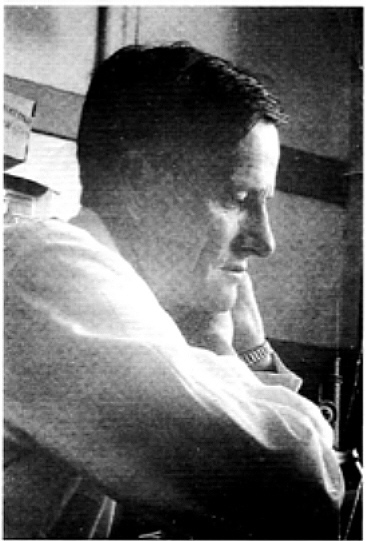
G. Ledyard Stebbins
1906–2000
Ledyard Stebbins, the most eminent plant evolutionist of the twentieth century, died on January 19, 2000, just 8 days before the colloquium on “Variation and Evolution in Plants and Microorganisms” was held on January 27–29, 2000, at the Beckman Center in Irvine, California. The colloquium, which he planned to attend, was sponsored by the National Academies of Sciences to commemorate the 50th anniversary of the publication of Stebbins' classic book “Variation and Evolution in Plants.” These proceedings include the papers presented at the colloquium.


