
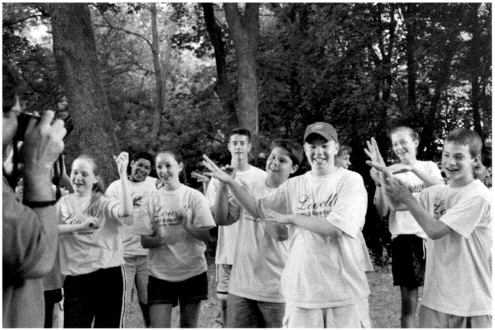
As summarized in the Part I, evidence suggests that the more positive features a setting has, the greater contribution it will make to young people’s positive development. The list of features of positive developmental settings we have presented was generated primarily from evidence about families, schools, and neighborhoods. Given that the focus of this report is on community programs for youth, we turn now to a review of the ways in which these programs incorporate features of positive developmental settings and provide opportunities for young people to acquire personal and social assets and promote their positive development.
What can community programs for youth do to give each person who walks in the door the best chance possible of acquiring the assets described in Part I of this report? How do we make sure that programs engage all youth and support their development?
In this part we provide examples of community programs that promote adolescent development. There is great diversity in the structure, focus, and size of these programs. Funding mechanisms, staff training, and management styles also vary. Programs differ in their objectives and the emphasis they place on particular program features. But all programs can strive toward incorporating developmental opportunities while working to meet the needs of individual participants.
This part of the report reviews studies and evaluations that detail how programs incorporate features of positive developmental settings and their impact on the outcomes for adolescents. Chapter 5 considers findings from a number of nonexperimental studies using various methods to collect information; Chapter 6 looks at findings from a set of comprehensive experimental evaluations.
CHAPTER 5
The Landscape of Community Programs for Youth
A group of 20 young people meets twice a week for three hours after school with their school dance teacher and a professional dancer from the city’s local dance troupe. They spend one hour doing their homework and receiving tutoring assistance from the staff. Then they participate in an hour of rigorous stretching and calisthenics. Exhausted but exhilarated, they spend the remainder of their afternoon rehearsing for their upcoming dance performance at a school talent show.
A half-dozen teenagers meet at their local community centers with adult city council members to share the results of a survey they conducted to help the city council understand adolescent needs and how to serve young people more effectively. They leave the meeting with plans to meet again the following week with two city council members to plan a community service event for young people and their families.
Hundreds of young people in uniforms fan out to various neighborhoods across the city in one of the country’s largest urban areas. Working in teams, they participate in various community service tasks, such as tutoring children, landscaping, and cleaning a park. Between community service projects, these youth receive tutoring and assistance in preparing for a high school equivalency exam.
These examples of community programs for youth represent just a few of the many diverse programs operating throughout the United States. There are various efforts at both the individual organization level and the broader community level to promote adolescent development through community programs. While many youth organizations, foundations, and citywide initiatives support youth development concepts and practices, there is little agreement on what specifically constitutes a youth development program and little systematic information on the breadth and diversity of efforts to provide these kinds of opportunities.
Community programs for youth vary in many significant ways. A program represents a number of elements and decisions that together constitute a program setting. Some of these dimensions represent choices made, such as the program focus, curriculum, and membership; others are not choices but the consequences of structural arrangements, organizational affiliations, local community issues, geographic location, funding, and political climate.
This chapter creates a bridge between the framework for adolescent development and program design and implementation by providing examples of ways in which community programs for youth incorporate the features of positive developmental settings described in Chapter 4. Committee members observed a variety of community programs for youth and reviewed literature describing these programs. We also drew heavily on the findings from studies that used various nonexperimental methods to describe the design, implementation, and management of a number of community programs for youth that appear to work at the community level.
INSIGHTS FROM NONEXPERIMENTAL STUDIES
Nonexperimental studies provide valuable insight about these programs because they generally go beyond traditional evaluation input factors, such as size, funding, activity focus, and participants served and help elucidate the realities of program practices and consequences. Although these studies cannot draw conclusions about the impact of program design characteristics on adolescent outcomes, they can help program planners and program staff build internal knowledge and skills and can highlight theoretical issues about the developmental qualities of programs. Nonexperimental studies can also help develop a solid understanding about program operations, components, and relationships in order to inform the design of future experimental evaluations.
The illustrations used throughout this chapter represent only a small sample of the many innovative community programs for youth. The extent to which and methods by which these programs have been systematically studied varies. Consequently, they cannot be said to represent “model programs” in a formal sense; instead, they illustrate the application of youth development concepts to program design dimensions. In Chapter 6 we examine findings from another set of evaluations on community programs for youth—those that use experimental methods—and consider the additional insight gained from these evaluation methods.
The committee examined in detail two studies of specific programs— Community Impact! (Association for the Study and Development of Community, 2000) and Save the Children (Terao et al., 2000) —and one study of a set of programs—Community Counts (McLaughlin, 2000). These studies used a variety of field-based and ethnographic methods to address youth development questions. They embrace an array of study purposes, employ various strategies to enhance the validity and reliability of the research, and provide important contributions to both knowledge and research. These three illustrations are summarized in Boxes 5– 1, 5–2, and 5–3. Our discussion of programs in this chapter, however, is not exclusive to these three program illustrations. The programs identified throughout this chapter are based on various sources of information, including program materials, site visits, and field observations by committee members.
A WIDE RANGE OF PROGRAMS
In order to understand how community programs for youth may incorporate features of settings, it is first useful to understand the diverse nature of these programs. The characterization of community programs for youth is complicated. The landscape of programs is vast. And the variety of terms used to describe the programs varies. At the most basic level, “programs are semi-structured processes, most often led by adults and designed to address specific goals and youth outcomes. This category incorporates a range of programs from those that are highly structured, often in the form of curriculum with step-by-step guidelines, to those that may have a looser structure” (Benson and Saito, 2000:126). They may be called after-school programs, youth programs, youth activities, community programs, extracurricular activities, or programs during out-of-school time or nonschool hours.
|
BOX 5–1 Community Counts An exploratory study that aimed to identify elements of community organizations that youth judged effective and the accomplishments of the youth participants, Community Counts (McLaughlin, 2000) included exploratory research aimed at better understanding the organizational settings youth found supportive and inviting—settings that reflected many of the features of settings presented in Chapter 4. The sample was purposely biased to include “effective” programs; youth steered researchers toward organizations they identified as good places to spend their time—places where they felt valued, respected, and challenged in positive ways. The organizations and activities studied were a diverse lot—Boys and Girls Clubs, dance troupes, YMCA/YWCAs, basketball teams, and improvisational theater. More than 1,000 youth participated in these groups; all were poor, and the majority were members of minority groups. During the first phase of the study, research associates living in each of the communities carried out primary data collection. These researchers spent full time for three years getting to know the communities, the youth, and their organizations. They and the principal investigators conducted interviews, observations, and focus groups with youth, community-based organizations, and community leaders over a three-year period. The study developed a strategy to engage youth in data collection and interpretation. Approximately five young people from the organizations in each of the three communities were recruited and trained to serve as ethnographers. These youth were responsible for interviews with youth and adults in their organization and neighborhood and for providing field notes from activities that researchers could not attend. Phase 2 of the research continued these data collection strategies, employing “traveling” research associates instead of community-based researchers. Phase 2 also included a survey that asked a subset of questions from the National Education Longitudinal Survey of Youth (NELS:88) instrument in order to “locate” the characteristics and accomplishments of participating youth in terms of representative American youth. |
|
BOX 5–2 Community Impact! Community Impact! was founded in 1990 to help low-income neighborhoods across Washington, DC, invest in their youth through neighborhood-based programs focused on youth development, entrepreneurship, and academic enrichment. The Association for the Study and Development of Community and Community IMPACT! (CI!) used a “utilization-focus” with three interdependent studies to evaluate CI! efforts, to examine research and practice as it relates to CI! strategies, and to assess CI!’s organizational capacity (Association for the Study and Development of Community, 2000). The first study included personal interviews, archival data review, and evaluator observations. Data collection focused on nine domains of interest (1) community climate, cooperation, and participation; (2) leadership; (3) program legitimacy; (4) community awareness; (5) steering committee membership; (6) committee activities and empowerment; (7) resources and technical assistance/training; (8) financial and partnership management; and (9) financial resources. The second study focused on providing knowledge and a new understanding of what “community” means to community members (adults and youth) and how youth leadership affects a community and its members. They conducted both adult and youth focus groups, administered a youth survey, and conducted a literature review. The third study involved a questionnaire that asked program staff to evaluate the following six dimensions of their organizational structure: culture, leadership, systems and structures, communication of information, teams, and evaluation. |
The institutional structure of programs can fundamentally affect the degree to which they address adolescent development, respond to local conditions, and provide appealing and safe settings. The Carnegie Council on Adolescent Development described youth programs through various categories (Carnegie Corporation of New York, 1992):
-
Private, nonprofit national youth organizations: There are a number of large national youth-serving organizations that have local franchises throughout the United States, and often internationally.
|
BOX 5–3 Save the Children (U.S. Programs) Since 1997, Save the Children has been running an initiative called Web of Support to promote quality programs for young people ages 5 to 18 during out-of-school time. Community organizations across the country, identified by Save the Children as Rural Community Partners or Urban Collaboratives, serve children and youth sponsored by Save the Children. The evaluation, conducted by the Aguirre Group, reports on the accomplishments and outcomes of 43 Rural Community Partners (Partners) and 7 Urban Collaboratives (Collaboratives) from October 1998 through September 1999 (Terao et al., 2000). The evaluation was based on a participatory/empowerment model. This study documents the positive outcomes associated with children and youth, partners and Collaboratives, regional and Home Office staff, and the Save the Children national network. The evaluation included a variety of data collection methods including content analysis of evaluation reports developed by each participating partner and collaborative; conducting pre-post surveys of youth interns and new partners (through written surveys and through focus groups); conducting post surveys of youth-intern supervisors, pilot and first-year partners, and Collaboratives facilitators; conducting telephone interviews with Collaboratives members, and regional and home office staff; conducting observations during site visits and training; conducting pre-post adult surveys (staff, teacher, and/or parent); conducting parent interviews; developing and using observation checklists; and reviewing a collection of existing records (e.g., grades and test scores). |
-
Although these organizations share many common aspects, each has unique components within the structure of its program. For instance, the program content may vary and the demographics of the service populations may vary, depending on the local community.
-
Grassroots youth development organizations: These autonomous community-based organizations are fundamentally independent from other organizations or institutions. While they generally do not operate in isolation, their work with youth does not depend on the acceptance or support of any single institution.
-
Religious youth organizations: These organizations may vary in their particular program activities and focus, but they generally share the common objective of fostering moral and faith development.
-
Private community groups (i.e., adult service clubs, sports organizations, senior citizens groups, and museums): These organizations sponsor a broad range of youth programs; although their primary mission is not to provide youth programming, they engage youth in various activities.
-
Public-sector institutions (i.e., public libraries, parks and recreation departments): These institutions often serve as a gathering point for adolescents and may offer activities and services specifically to promote adolescent development.
In addition to these categories, the committee also recognized that institutional collaborations, such as school-based programs being run by community-based organizations, offer many programs for youth.
There is great diversity in the specific focus and character of community programs for youth. Community Counts, for example, examined 120 community organizations that differed in nearly every objective way possible (McLaughlin, 2000). The Younger Americans Act (discussed in Chapter 9), introduced in the Senate in September 2000 and the House in January 2001, included a useful list of youth program activities:
-
Character development and ethical enrichment activities;
-
Mentoring activities, including one-to-one relationship building and tutoring;
-
Community youth centers and clubs;
-
Nonschool hours, weekend, and summer programs and camps;
-
Sports, recreation, and other activities promoting physical fitness and teamwork;
-
Services that promote health and healthy development and behavior on the part of youth, including risk avoidance programs;
-
Academic enrichment, peer counseling and teaching, and literacy;
-
Camping and environmental education;
-
Cultural enrichment, including music, fine, and performing arts;
-
Workforce preparation, youth entrepreneurship, and technological and vocational skill building, including computer skills;
-
Opportunities for community service;
-
Opportunities that engage youth in civic participation and as part-
-
ners in decision making;
-
Special-interest groups or courses, including video production, cooking, gardening, pet care, photography, and other youth-identified interests; and
-
Public and private youth-led programs, including ones provided by youth-serving or youth development organizations.
To this list, the committee added program activities associated with such developmental passage rituals as bat and bar mitzvahs, American Indian rite of passage rituals, and Christian first communion and confirmation ceremonies.
There is little comprehensive information on the prevalence and distribution of the various community programs for youth in this country. The Carnegie Council on Adolescent Development’s 1992 report, A Matter of Time, provided the most comprehensive summary of basic national statistics on the pervasiveness of youth programs (Carnegie Corporation of New York, 1992). Based on data from the National Center for Charitable Statistics, this study concluded that there were 17,000 active youth organizations in the United States in 1990. No other national studies as comprehensive as this have been undertaken in the past decade, a period when there has been considerable increases in funding and opportunity for these programs. A variety of independent efforts to compile information about a particular set of youth programs have been conducted, but they are neither comprehensive nor national in their scope (National Collaboration for Youth, 1997).
FEATURES OF COMMUNITY PROGRAMS FOR YOUTH
The committee mapped the features of settings developed in the Chapter 4 against various program illustrations and drew some conclusions about effective strategies to incorporating features of positive developmental settings. While there are fairly obvious links between some program dimensions and features of settings, there is also a great deal of overlap. For instance, programs that develop clear and consistent rules of behavior demonstrate appropriate structure; at the same time, these rules may help nurture an environment that promotes physical and psychological safety.
Physical and Psychological Safety
Physical and psychological safety is fundamental to attract young people to programs and to keep them coming back. This requires both creating an environment that is safe, as well as handling conflicts among participants as they arise.
The objective of some programs is to enable youth to just participate in safe environments free from pressures associated with violence and substance abuse. In many cases, accessibility makes a difference to safety, which in turn often affects participation. Some programs or facilities are too far for youth to get to conveniently, requiring a bus ride or long walk through uncertain neighborhoods. Other clubs or programs may be only a few blocks from a young person’s home but require navigating hostile gang territory. Hours of operation matter, too. Programs unavailable until after six in the evening, for example, have difficulty attracting youth at all (Cahill et al., 1993). Programs operating only one evening a week or that are closed on weekends also seem insufficient to sustain youth interest. Most appealing from youth’s perspective were organizations that provided reliable access to adults and safe space to meet daily and on weekends (McLaughlin, 2000).
Sometimes maintaining an atmosphere of safety requires denying some young people participation. Directors describe the process as a sort of triage, in which difficult decisions are sometimes made to deny needy and deserving youth a place in the organization for the sake of the whole. For example, the director of HOME in Alameda, California, pays close attention to school records and will not accept (or continue to involve) youth with consistent records of failure. These youth, she feels, could erode the spirit of entrepreneurship and responsibility that is the group’s signature. The director of East Oakland’s Youth Development Center has more pragmatic concerns—the safety of the young people who come through the door every afternoon. The director explained that they could not serve everyone and still have an environment that is safe and supportive for everyone.1 This means that the most needy youth—youth of most concern to society—are sometimes excluded. It also means that youth who could benefit from and contribute to the organization may be denied a space simply because the program is full.
Several prevention studies have also documented a negative effect of programs that focus exclusively on adolescents already engaged in risky
behaviors, as described more in Chapter 6. For example, programs that put together a group of young people who are all already involved in problem behaviors often produce increases in the very behaviors the programs were designed to reduce (Dishion et al., 1999). These negative effects have been interpreted as the consequence of participation in a peer group comprised primarily of adolescents already actively involved in troubling behaviors.
Clear and Consistent Structure Appropriate Levels of Adult Supervision
Appropriate structure in community programs for youth includes developing clear and consistent rules and expectations, setting limits, and being clear about behavioral expectations. Settings with appropriate structure have predictability and consistency. The staff develop clear boundaries that take into consideration the age and developmental maturity of the youth involved.
Appropriate structure is often based on the rules maintained by a program. Rules of membership, such as bans on gang colors, weapons, drugs, and alcohol, are an essential set of agreements and understandings; also important are rules about members treating each other and the adult leaders with honesty, and teamwork. Youth report that these guidelines for behavior are elemental to their own feelings of safety and comfort—especially as the program environment provides a safe haven in their neighborhood (McLaughlin et al., 1994).
Appropriate structure is also based on the focus of the program and its underlying curriculum. Many community programs for youth attract young people of varying ages. Programs may explicitly seek to make the curriculum and program activities also reflect different developmental needs.
Supportive Relationships
Programs that focus on supportive relationships provide settings in which youth feel a strong sense of warmth, closeness, caring, support, and guidance from the adult leaders in the program.
Community programs for youth provide opportunities to expose young people to caring adults who challenge them, encourage them to participate in positive experiences, and respect their opinions. Youth respondents to the Community Impact! survey indicated that they desire
and require guidance from adults (Association for the Study and Development of Community, 2000). This may be one of the most important characteristics of highly valued programs (McLaughlin, 2000).
Programs vary in terms of the characteristics of the staff they employ—by age, race, previous experience, and educational attainment. Some programs are staffed by full-time or part-time staff; others rely heavily on community or family volunteers. Adult leaders—both paid and volunteer—came from various personal and professional backgrounds in the programs reviewed in Community Counts. Some had been in military services; others had been teachers; many had worked in church groups or athletic teams all of their lives (McLaughlin, 2000). Save the Children programs involve paid and volunteer adults and teens, youth interns, teachers, and community elders (Terao et al., 2000). Participants in the Community Impact! survey place value on adults leaders who were getting or had gotten an education (Association for the Study and Development of Community, 2000).
From the perspective of young people, supportive relationships are based less on the professional qualifications of the staff and more on the staff’s attitudes toward them (McLaughlin, 2000). Some community programs are led by adults deeply committed to young people and their futures. The staff that run these programs have an opportunity to influence a young person’s sense of belonging, their sense of empowerment, and their connectedness to the program.
For some youth, the strength of relationships may be heightened by interaction with adults of their own ethnicity or experience as role models, coaches, and program administrators. Staff who are members of the same community from which the young people come may provide particularly strong support. A participant explained, “The [program] really taught me how to survive on the street. Most of the staff members here grew up just like I did on the street and stuff like that so they really taught me how to stay out of trouble and protect myself.”2
Most important to developing connectedness and providing support and guidance is staff who are committed to a program and its young participants, who are consistent in the messages they teach, and who communicate warmth and caring while setting clear boundaries and consistent rules and expectations (McLaughlin, 2000). These staff attitudes matter more than do questions of race, age, or ethnicity. Youth see staff who they perceive are their allies and who are committed and trustworthy.
Opportunities to Belong
Promoting a sense of belonging is fundamental to attracting and retaining the participation of young people, as well as helping them develop confidence and a personal identity. Young people need to feel included, regardless of their gender, ethnicity, sexual orientation, personality, or physical, intellectual, or social limitations.
A program’s curriculum and strategy describe what it does and how it carries out its mission and goals. A number of things about the nature of a program’s curriculum and strategy matter for youth involvement, the benefits youth derive from participation, and the sense of belonging that is nurtured. One is the quality of program content; another is the extent to which activities embed various learning goals. At the most basic level, a sense of belonging and inclusion requires that the program strategy attract and interest young people. “Activities for youth need to be attractive to the youth audience. This means having fun, fresh, and interactive things to do” (Morley and Rossman, 1997). Youth want challenging, age-appropriate programming.
A program’s size and membership may also fundamentally shape its design and operation and its ability to adequately offer opportunities that promote meaningful inclusion. Membership matters not only to its approach to youth development but also to how it organizes itself to facilitate opportunities for youth. The target membership for a program may be broad or it may focus on a particular ethnic or religious group. It may be only for boys or only for girls. It may be restricted to a particular age group. Some programs reach out to disenfranchised or at-risk youth; others limit participation to young people who have maintained a certain grade point average or have applied or auditioned to participate in the program. Many programs seek a heterogeneous set of participants to build understanding and tolerance among young people. Many of the national organizations, such as Big Brothers/Big Sisters, focus their activities on a large, diverse group of community participants. Some other programs are targeted toward homogeneous groups in order to offer specific support, cultural awareness, a sense of belonging, and pride to a particular subgroup of youth.
Both the Center for Young Women’s Development (CYWD) and the Lavender Youth Recreation and Information Center (LYRIC), for example, are organizations that nurture belonging among youth with particular histories and experiences. They are committed to offering supports and opportunities to socially marginalized youth—in the case of CYWD to young female prostitutes in San Francisco, and in the case of
LYRIC, to transgender, bisexual, lesbian, and gay youth (McDonald et al., 2001).
Community programs for youth may engage a set of youth in communities that are particularly isolated and where youth have less access to social integration. For adolescents living in rural communities, where the proportion of parents working outside the home is the largest in the country, community programs for youth can nurture engagement and create a strong sense of belonging (Charles Stewart Mott Foundation, 1998a). An after-school program in rural Kentucky (the Clinton County School District), for example, offers an academic summer camp to 100 youth. These young people participate in sports activities, dancing and music, hunter education courses, computer skills training, communications skills activities, and public speaking. Given the isolated nature of this Kentucky community, opportunities for special field trips or exposure to diverse skills training are more limited than in urban areas. For these reasons, the on-site program is complemented with a Spanish course taught on-line by a teacher 90 minutes away, and young people take electronic field trips by way of the Internet (Charles Stewart Mott Foundation, 1998a).
Positive Social Norms
Some community programs for youth are designed as drop-in activities, where young people can come and go and participate in rotating activities of their choice. Other programs require youth to make a commitment to the program and as a result have high expectations for their involvement. These programs support prosocial norms by teaching youth responsibility to uphold certain rules of behavior, to be accountable to the program and its expectations, and to agree to live up to a set of morals and values.
Participants in the East Oakland Youth Development Center, which offers a range of activities for young people and their families, are required to make a commitment to the program through membership in one of the program’s teams, dance troupes, or clubs. And to become a member of one of these groups, participants have to agree to the programs’ values, which encourage self-respect and respect among peers and adults. At all costs, the center enforces these established rules and expectations of respect. The objective is to help young people integrate these norms into their character and their behavior in other parts of their lives (McLaughlin et al., 2001).
Support for Efficacy and Mattering
Many community programs for youth incorporate multiple opportunities to build efficacy. Programs may vary in the extent to which they allow youth to participate in the leadership of the program. However, many programs believe that youth can play a variety of roles in designing, delivering, and evaluating activities. Youth participants may help identify needs and set goals; help design the structure, activities, and supports that will be attractive and accessible to youth; help staff understand what youth need and how to relate to them; help identify community and family issues that may be barriers for youth participation; and help create an environment for youth to positively contribute to their community. Some programs develop youth councils to systematically generate youth involvement. Others involve youth in responsible leadership positions around program activities, such as tutors, peer counselors, and event organizers (Burt, 1998).
Community programs for youth that incorporate opportunities for efficacy may, in fact, be youth-centered or run entirely by adults. In practice, what often matters from the adolescent’s perspective is the stance about youth communicated by program goals and philosophy. Are program goals focused on youth as resources or as problems? Do youth see programs as resources to help them grow or succeed, rather than as efforts to “fix” them? They are likely to avoid or leave programs that seem punitive or deficit-based and instead choose ones that acknowledge their assets and help them to develop their strengths. Youth-centered programs provide rich opportunities to support youth efficacy—for youth to experience leadership, assume responsibility, and develop problem-solving skills.
Faced with declining enrollment of youth over 13 years of age, Louisiana 4-H developed a survey to ensure that their curriculum and program strategy were designed around ideas that teens themselves indicated were of interest. They found that the topics of interest changed as young people got older. At higher grade levels, for instance, they were much more interested in jobs, careers, and options after high school. They also discovered that the traditional 4-H program topics of health, safety, and nutrition had to be packaged in terms of fitness or sports in order to attract adolescent interest. Although the youth did not want to discuss personal grooming, they were eager to participate in activities about fashion (Acosta and Holt, 1991). This program granted youth responsibility and supported efficacy by involving them in deciding the nature of the program activities.
There are programs that have explored including young people as evaluators of their programs. The Department of Children, Youth and Their Families in the City of San Francisco launched a comprehensive effort to promote leadership development among San Francisco youth. The city’s efforts included a youth-led evaluation program that trains 12– 15 youth in research, planning, and evaluation. This component of the city’s work was designed both to create new leadership among young people and to improve the effectiveness of the organizations being funded, from a youth perspective (Department of Children, Youth and Their Families, 2001).
Opportunities for Skill Building
At the heart of many community programs for youth are opportunities for skill building. Programs can use a wide variety of activities, such as community service, adventure and outdoor activities, art, drama, music, religious instruction, sports, cultural awareness, academic improvement, and career preparation, to support positive youth development and to meet the program-specific objectives. The exact content or focus (e.g., sports, music, community service) may be designed to attract adolescents to the program, while the curriculum may focus more on developmental skills (e.g., cooperation, creativity, communication). Save the Children programs, for example, include activities to promote cognitive ability and intellectual growth, as well as social and emotional growth, through a range of activities, including tutoring, computer training, recreation activities, team-building programs, and youth leadership activities (Terao et al., 2000).
Programs focusing on a specific activity can support skill building in a number of different areas. An arts program, for example, may involve youth in researching their cultural history and painting community murals to reflect what they learn. A sports program may focus not only on skills development, but also on teamwork and problem solving (McLaughlin, 2000). Library-based programs encouraging teens to read can provide a variety of educational, recreational, and cultural opportunities that help the participants improve academic performance, develop social skills, learn new hobbies, and build self-esteem. Through reading opportunities, these programs focus on critical thinking, communication skills, social skills, and creativity (American Library Association, 2000).
Examples of skills that are incorporated into programs are plentiful. Volunteers of Campfire Boys and Girls provide youth with assistance,
guidance, and direction in a myriad of programs, including citizenship and community leadership, health and safety, food and nutrition, energy, economics, jobs and careers, natural resources, sciences, and plant and animal production (Campfire Boys and Girls, 2000). “Always on Saturday,” a teen pregnancy program for black boys in Hartford, Connecticut, focuses on teaching life skills. The program curriculum incorporates general decision-making, problem-solving, planning, and goal-setting techniques taught through life examples that both the director and the youth provide (Ferguson, 1994:74).
Programs that address a number of developmental outcomes with each activity offer what is referred to as an embedded curriculum (McLaughlin, 2000). Embedded within an organization’s programs are activities that build a number of competencies and life skills. For example, YO!, a Northern California youth-run newspaper, provides jobs for youth, training in reporting, writing, and production, and experience in the business side of newspaper production. An after-school dance program for youth integrates cultural history into the dance lessons and gives them responsibility for program planning, advertising, and marketing. A championship inner-city basketball team begins each after-game briefing with an assessment of teamwork and sportsmanship. Programs such as these teach skills—writing, dance, and basketball—but they also build skills around responsibility, leadership, persistence, and connection to the family, schools, and the community.
Integration of Family, School, and Community Efforts
Community programs for youth offer many opportunities for the integration of families, schools, and the broader community. Thus far we have described the specific ways in which individual organizations design and operate programs. But youth development depends not only on the independent efforts of programs, but also on these efforts in collaboration with the community as a whole.
Peter L.Benson, president of the Search Institute, describes a community by three characteristics: (1) a shared commitment, in which adults, organizations, and community institutions unite to affirm their responsibility to youth and their ability to make a difference and take action; (2) daily opportunities for individuals to acknowledge, encourage, and support youth; (3) intentional involvement of organizations, institutions, and systems—including schools, congregations, youth organizations, businesses, health care providers, and foundations—in pro-
grams and activities that provide youth with positive experiences (Benson, 1996).
Given the focus of this report, the committee was particularly interested in highlighting strategies through which community programs for youth integrate their activities with the broader community. Many programs in fact do target the community more broadly, seeking to reach and influence young people, their families, and other community members, organizations, and businesses. HOME, for example, is a community-based youth membership organization where young people throughout the city of Alameda, California, collaborate with each other and adults to create important projects and innovative businesses. The achievements made through these youth-initiated projects pave the way for adults to embrace youth as contributing members of the community and for youth to learn the skills they need to be effective, enterprising citizens.
As well, many programs that are focused on individual-level outcomes also influence community-level outcomes. Community programs for youth may, in fact, focus beyond individual-level outcomes to strengthen community capacity. Where youth live, what their communities are like, and what the general climate is like in their neighborhood— factors of safety, schools, and economic stability, for example—have significant impacts on individual development (National Governors’ Association’s Center for Best Practices, 1999). Youth participants in the Community Impact! survey, for example, specifically reported that they perceived a supportive community as one with adequate resources, including such activities as community programs for youth (Association for the Study and Development of Community, 2000).
Most young people grow up in families, spend much of their time in schools, and are surrounded by communities, so incorporating opportunities for developmental outcomes into their lives demands coordinated efforts among these stakeholders. “Youth development requires collaboration. No single community organization can provide the range of developmental, preventive, and intervention programs and services required to give young people the experiences they need to mature into successful adults. Rather, creation of such programs requires collaborative planning by a community’s youth-serving agencies, other social services and educational institutions, policy makers, community leaders, and young people” (National Clearinghouse on Families and Youth, 1996).
Agreeing on what communities want for all young people is an important factor in supporting youth development. Youth service provid-
ers, in conjunction with youth, parents, and community members, need to develop a shared understanding of the needs of the young people in their community. They must decide what youth need to develop into healthy, self-sufficient, and involved adults and how the community can best meet those needs. Through that collaborative process, they can begin discussing a youth development framework and how it might translate into a vision for young people in their community.
The committee explored in more depth a few particular strategies to integrate community programs for youth with broader community priorities.
Community-Wide Initiatives
Over the past 10 years, there has been growing interest in community-wide programming initiatives for youth. Consistent with the importance we place on the interconnections across the various social settings in which adolescents live, these community-wide initiatives have sought to take a broader view of the developmental needs of youth. Also growing out of a community development perspective, these initiatives have focused on a coordinated effort to increase the services and programs for youth across the community. Communities That Care in Pennsylvania, based on a curriculum developed by Hawkins, Catalano, and Associates (1992; Development Research and Programs, Inc., 2000) and Public/ Private Ventures Community Change for Youth Development (Gambone, 1997) are two prime examples of these efforts.
These types of initiatives are particularly noteworthy, since they seek to provide a coordinated approach to meeting the needs for positive youth development. Such initiatives also offer the possibility of implementing a monitoring and self-evaluation system that regularly assesses the needs of youth and matches them against the range of services and programs provided by the community. Such a coordinated approach appears to have a good chance of actually ensuring the adequacy of community-wide services for youth.
Communities That Care. The Communities That Care approach, developed by David Hawkins and Richard Catalano, is an operating system for prevention. It helps states and communities assess and prioritize needs, choose the best approaches to promote youth development and prevent problem behaviors based on those needs, and evaluate the effec-
tiveness of policies, programs, and actions that have been implemented in their communities.
The scientific knowledge base underlying this approach includes understanding the root causes of both positive and problem behaviors. These root causes include risk factors for adolescent problem behaviors— those factors associated with an increased likelihood of such behaviors. Root causes also include protective factors—those factors that appear to buffer the effects of risk and promote positive youth development even in the presence of risk. The approach is designed to reduce risk in ways that enhance protective factors. The knowledge base also includes identification of programs, policies, and actions that have demonstrated their ability to reduce risk and enhance protection.
The model began with a field test in 1988 in Washington State with 25 communities, then in 1989 in Oregon with 39 communities. It has now been adopted by the U.S. Department of Justice’s Office of Juvenile Justice and Delinquency Prevention as the prevention component of their comprehensive strategy and is offered as training to assist communities to spend Title V funds. The states of Colorado, Illinois, Kansas, Louisiana, Maine, Michigan, New York, North Carolina, Oregon, Pennsylvania, Utah, and Washington have adopted this approach state-wide in a single agency or in multiple youth-serving agencies. It has allowed them to take the lead in prevention, get funds transferred, and helped to educate citizens and practitioners about this effective approach to prevention.
The state of Pennsylvania (in collaboration with federal funding sources) serves as one example of the use of this model. The state made a commitment to help communities put together a coordinated effort around prevention. Communities were encouraged to combine the processes and skills of community building and community development with the evidence emerging from the field of prevention science in order to evaluate community needs and resources; design a more comprehensive, coordinated set of services and programs for children, youth, and families; implement their design; and put in place an extensive evaluation component to monitor progress and improve design. Communities applied for planning and training grant funds. At present, the state plans to provide training for up to 20 new communities per year until the demand for this program is met. The evaluation of this effort, based on a quasi-experimental design, is just beginning. Initial results focus only on implementation in a limited number of communities. Reports over the next
|
PROCESS → Community mobilization |
IMPLEMENTATION → Increased number and quality of activities and opportunities in core concept areas in community |
SHORT-TERM → YOUTH OUTCOMES Increased developmental supports/experiences in core concept areas in youth’s daily lives |
LONG-TERM YOUTH OUTCOMES Positive achievements by community’s youth |
FIGURE 5–1 Theory of Change. Source: Gambone (1997).
several years will reveal a great deal about this effort (Hawkins, Catalano, and Associates, 1992; Development Research and Programs, Inc., 2000).
Community Change for Youth Development. The Community Change for Youth Development demonstration, initiated by Public/Private Ventures, involved selecting three communities (St. Petersburg, Florida; Savannah, Georgia; and Austin, Texas) and working with them to develop and implement an integrated set of activities for youth ages 12 to 20 (Gambone, 1997). Public/Private Ventures approached communities with a very well-articulated theory of change (see Figure 5–1) and offered technical assistance during a 6-month planning period, followed by partial support of the implementation phase.
The three communities with the most comprehensive plan that was consistent with the goals and developmental perspective were selected. Unlike the Communities That Care initiative, this project involved little state funding. Instead, the communities received some support and were required to identify and recruit other sources of funding.
Two things are very exciting about this community effort. First, the core concepts identified were based on solid research and fit with the positive developmental features of settings outlined in Chapter 4. Second, initial studies of the planning and implementation phases suggest that communities can come together to increase the range of opportunities available to their youth (Gambone, 1997). Nonexperimental evaluations of this effort are ongoing, and a great deal will be learned from these studies.
School-Based Community Centers. Schools often serve as a gathering spot for community activity focused on the development of its youth. Two schools in New York City, I.S. 218 and P.S. 5, decided to extend the
use of their existing facilities to include a multiservice center providing services to neighborhood children and families, through the aid and guidance of the Children’s Aid Society and other partners. A survey of parents indicated concern about homework patterns, so the program began as a homework tutorial. Gradually it has expanded to include computer labs, dance classes, arts programs, and career readiness support. Resources are also available through the program to parents and the community (U.S. Department of Education, 2001). Other similar models now exist across the country.
Intermediary Organizations
Closely related to these community-wide initiatives are a wide variety of capacity-building intermediary organizations that have emerged over the past decade. These organizations have grown out of a need to advance the vision of comprehensive promotion and implementation of youth development. These organizations are helping to chart, support, implement, and sustain multiple changes for multiple stakeholders, such as youth development providers, funders, and researchers (Academy for Educational Development, 1999).
The Community Network for Youth Development (CNYD), an example of an intermediary organization located in San Francisco, California, has been instrumental in promoting a youth development approach and supporting youth workers and directors. Through its Learning Network, directors and youth workers become familiar with best practices that support youth to build relationships with other youth and adults, participate in decision-making and leadership roles, become involved in the larger community, and develop skills and knowledge through their participation in challenging and interesting learning opportunities. In addition, the Learning Network provides a shared space in which directors and youth workers throughout the Bay area can jointly reflect on youth development practices and learn from one another regarding what works in practice. There are a number of other such capacity-building intermediaries across the country, such as Youth Net in Greater Kansas City, Missouri, the Hampton Coalition for Youth in Hampton, Virginia, B. BRAVO for Youth in Baltimore, Maryland, and the Chicago Youth Agency Partnership. Intermediary organizations are discussed more in Chapter 9.
There are a number of other efforts to coordinate learning among individuals and organizations involved in identifying and developing
youth development research and policies. The Harvard Family Research Project, for instance, developed the idea of learning communities as one way to institutionalize continual and coordinated self-examination. The Forum for Youth Investment (formerly the International Youth Foundation) is also involved in such efforts to help community programs flourish.
Faith-Based Organizations
Faith-based organizations have long been important providers of services to young people and the broader community, creating links between youth, families, and the community. Research on faith-based institutions and the role of religious organizations, such as churches and synagogues, suggests that they can contribute to community-wide efforts to promote youth development in several key areas, helping to reduce risky behaviors, building a value base from which young people make decisions, and involving a variety of people across the life span. While schools and social service agencies reach only targeted populations, congregations often touch a cross-section of the population. Nearly 40 percent of Americans say they attend some form of worship regularly and 65 percent are members of a church or synagogue (Saito and Blyth, 1992).
These institutions may attract increased attention with President George W.Bush’s focus on faith-based initiatives. President Bush has proposed to allow religious groups to compete on an equal basis with secular organizations for federal grants and to create a nationwide faith-based initiative. This has taken the form of the White House Office of Faith-Based and Community Initiatives, which plans on using government subsidies to prompt religious and community organizations’ role in combating such problems as juvenile delinquency and drug abuse.
Catholic Charities is a good example of a faith-based national organization that stimulates local affiliates to undertake new activities, offers training and technical assistance in their ongoing work, assists with fund raising, and coordinates public policy advocacy. Two current examples of initiatives emanating from the national office of Catholic Charities are illustrative. Catholic Charities has been encouraging affiliates to get involved in restorative justice for young people who have gotten into trouble with the law. For example, Project Payback in Newark, New Jersey, is a program that allows young people to avoid incarceration by working in the community on service projects that help victims of crime.
Catholic Charities also encourages local affiliates to get involved in delivering treatment services that are a key part of the drug court model now being replicated in many communities (Catholic Charities USA, 2000). Leaders of Tomorrow in Cleveland, for example, helps young people convicted of selling drugs to find and keep jobs and stay in school. Catholic Charities uses convening people, e-mail, and publications to let its affiliates know about new activities it encourages them to undertake (Catholic Charities USA, 2000).
Another example of the ways in which the juvenile justice system has become involved in forming a partnership with faith-based community organizations is the Boston Ten-Point Coalition. Responding to escalating violence, black clergy joined with the Boston police force to create a coalition, aimed at reaching out to at-risk youth and gang members through “adoption” of gangs, patrolling neighborhoods, counseling, and using the church as a community center. The coalition, working with law enforcement and social service officials, has been successful in reducing gun violence and formulating future plans for a program that will help create entrepreneurial businesses run by former gang members, who in turn, will employ other former gang members (Congress of National Black Churches, 2001).
Project SPIRIT (Strength, Perseverance, Imagination, Responsibility, Integrity, and Talent) is an after-school, church-based curriculum program for students ages 6–12. The program, run by the Congress of National Black Churches, is built on the idea that church is a major institution in the lives of many black families. By joining together parents, pastors, community and business leaders, and politicians, the program aims to provide youth with a safe haven for teaching and learning. Youth participants engage in a variety of activities, including life skills enhancement programs, after-school tutorials, and Saturday School. Project SPIRIT, which has spread to at least eight states, also provides parents with education, pastoral counseling, and training (Congress of National Black Churches, 2001).
Community-Based Ceremonies for Youth Development
As we have described, public and private organizations often provide communities with programs to support young people. However, communities themselves also often initiate and maintain vital programs to nurture their young members—particularly through unique programs rooted in the communities’ own cultural traditions.
Among many Jewish communities in America, perhaps the single most important rite is the celebration of puberty, the bar mitzvah (for males) and bat mitzvah (for females) (Neuser, 1994). The bar/bat mitzvah3 (Diamant and Cooper, 1991) celebrates the coming of age of young men and women, after which the community regards them as adults, obligated to fulfill Judaism’s religious commandments. While the rite varies among congregations, three elements are ubiquitous: the young person reads from the Torah (Old Testament) before the community, gives a speech, and holds a celebration (Diamant and Cooper, 1991). The ceremony represents the social order of the Jewish community and affirms the place of the youth and their family in that order (Liebman, 1990). Family and community members begin preparing the young man or woman at least one year before the ceremony and are deeply involved throughout. Community members teach the youth to read and speak the Hebrew language, instruct them on the ceremonies of the bar/bat mitzvah, direct their study of the particular passage of Torah to be read, and tutor them as they prepare their speech. The bar/bat mitzvah and the preparations for it incorporate the support of relatives and the larger community.
Navajo communities hold a coming-of-age ceremony for young women, called kinaalda. Navajo communities have maintained kinaalda, part of the larger Navajo Blessing Way, and it is now a most anticipated Navajo ceremony. Shortly after a girl announces the beginning of her first menstrual cycle, relatives and community members begin the formal ceremony, which lasts two to four days. With the assistance of family and community elders, kinaalda instills young girls with a pride in their cultural traditions, identity, and community, as well as signifying their coming life (Roessel, 1993; see also, Ryan, 1998). Kinaalda mobilizes family and community support around a young woman’s growth and integration into the Navajo social order. Community programs that support youth, such as the bar/bat mitzvah and the kinaalda, exist in many different communities—Catholic first communion and confirmation, Mexican and Mexican American quinciñera ceremonies for young women, Afrocentric coming-of-age programs, religious missions among
Latter-Day Saints, debutante balls, and the culture and language schools found among such ethnic communities as Chinese Americans and Japanese Americans. Research has only begun to explore the similarities, connections, and benefits of such community efforts to youth development.
SUMMARY
Program providers, program administrators, community leaders, and policy makers face a variety of choices in developing, implementing, supporting, and sustaining successful community programs for youth. The committee draws several conclusions from a review of illustrative community programs for youth and the ways in which these programs incorporate features of positive developmental settings into their design and implementation.
Community programs have the potential to provide opportunities for youth to acquire personal and social assets and experience features of positive developmental settings. Among other things, these programs can incorporate opportunities for physical, cognitive, and social/emotional development; opportunities that address underlying issues of ethnic identity and intergroup relationships; opportunities for community involvement and service; and opportunities to interact with caring adults and a diversity of peers.
There is great diversity in the design, approach, and focus of community programs for youth. Priorities vary among the diverse programs and therefore may emphasize different program features. Mentoring programs, for example, may focus on creating supportive relationships and developing a sense of belonging and inclusion. Programs that emphasize sports activities, for example, may place greater priority of developing team building and physical skill building. Priorities vary, and consequently program features vary.
No single program can necessarily serve all young people or incorporate all of the features of positive developmental settings. Diverse opportunities are more likely to support broad adolescent development and outcomes for a greater number of youth. As noted in Chapter 4, communities that are rich in opportunities reduce adolescent risk and increase positive development for a greater number of young people. This further supports the conclusion that communities need to offer multiple opportunities to experience positive developmental settings. Community-wide approaches to developing and implementing commu-
nity programs for youth are more likely to meet the needs of the diverse population of adolescents. Programs for youth offered by more than one organization—in schools, community centers, or both—focusing on different areas of interest and through different kinds of curricula provide the greatest opportunity for young people to acquire personal and social assets.
Finally, collaboration among researchers, providers, funders, and policy makers is important in order to develop and support community-wide approaches and implement a coordinated approach to designing, delivering, and evaluating community programs for youth.


