
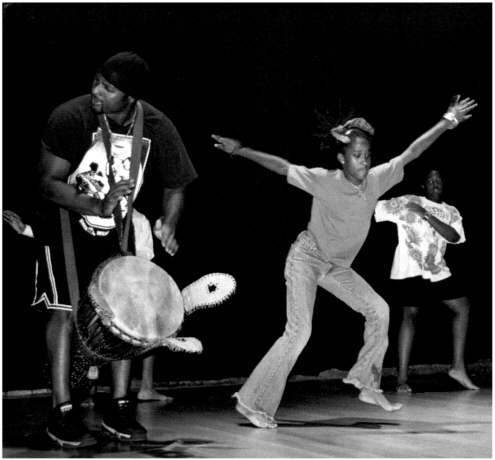
Public interest in and funding for youth activities during nonschool hours increased dramatically during the second half of the 1990s. Concerns about children’s performance on standardized tests, worries over supervision with increasing numbers of mothers working outside the home, and the sudden emergence of fiscal surpluses combined to create enthusiastic bipartisan support for after-school programs (National Research Council and Institute of Medicine, 2000a).
There are a number of policy and system-level supports and barriers that affect the future direction, growth, and funding of community programs for youth. This section highlights these supports and barriers and makes recommendations for future policy, practice, and research. Funding is probably the most critical issue. But political support, public interest, and professional networks are also critical to sustain interest and promote the growth of these programs.
As has been emphasized throughout this report, community programs for youth provide opportunities to facilitate their well-being and promote successful transitions to adulthood. Chapter 9 reviews public and private support for these kinds of opportunities. Chapter 10 summarizes a series of conclusions about adolescent well-being and development, program design, and implementation and presents the committee’s recommendations in the areas of practice and policy and evaluation, research, and data collection.
CHAPTER 9
Funding and Support for Programs
Community programs for youth have been a national concern at least episodically since the New Deal, when the National Youth Administration was a significant star in the constellation of agencies formed to confront the ravages of the Great Depression. The New Frontier and the Great Society featured a renewed interest in the subject, as part of the 1960s War on Poverty, through such programs as the Neighborhood Youth Corps, Upward Bound, and VISTA.
“After-school programs” has become the current operative language among federal, state, and local policy makers and foundations. The new federally funded programs that began appearing about 1997 are based largely in schools, staffed by school-hired personnel, and dedicated heavily to helping improve children’s academic performance. Most of the new funding is supporting programs in elementary schools, with some in middle schools. Almost none of the new focus is at the high school level, although there was also a new, smaller infusion of funding for community programs to assist lower-income youth in gaining entry to the labor market. The new government funding was accompanied by some increased support from
foundations, both national and local, for infrastructure to assist with staff development, research, and evaluation, in addition to program activities. Some of the foundation initiatives reflected a more three-dimensional emphasis around the family, schools, and community on youth development that the latest government efforts have lacked.
Although the recent surge of interest in out-of-school activities is gratifying, it is still limited in scope. While a series of national policies on youth development, including get-tough criminal justice policies related to youthful offenders, exist in disjointed form, there is as yet no broad, positive national policy for youth development. Even the new funding, substantial as it is, is modest compared with the number of children who need assistance (National Research Council and Institute of Medicine, 2000a). If there is one barrier above all others to an ample supply of high-quality community programs for children whose parents cannot afford to pay for them, it is the lack of reliable, stable funding streams to support them. It seems that parents are still the major funders of after-school programs, which means that many children, particularly those in lower-income families, are not served. The lack of consistent and sufficient funding leads to other barriers: untrained staff, low pay, high turnover, and inadequate facilities.
Nevertheless, what was previously a nonsystem is now moving toward becoming a formal system, with increased attention to programs that support adolescent development and to the importance of supporting adolescents by supporting families, schools, and communities. The response is still riddled with gaps, especially along lines of income and race, but governments at all levels that previously resisted funding activities during out-of-school hours have become involved to an unprecedented degree. Stable institutional mechanisms to support and ensure quality are still not in place, but the number of young people being reached seems to have increased. We do not have an overarching national policy to promote positive youth development, but a youth development field is closer to reality than it was five years ago.
This chapter reviews the multiple and varied sources of funding available to community programs for youth and discuss other nonfinancial institutional support for these programs. It is by no means a comprehensive summary, but rather serves as evidence of the financial and political support that exists for the development and continuation of current and future program efforts.
FUNDING
Community programs for youth are funded in a variety of ways. The funding structure of a program often relates directly to the institution that administers it (for example, if it is administered by a public or private agency), but in most cases programs patch together funding from many sources. The nature of program funding affects its design and stability, which in turn affect the extent to which it can promote developmental outcomes. Is the program public, private, or quasi-public? Who funds it? What is the annual program budget? What are the primary sources of money? If these sources are public, how much is federal, state, and local? For public sources, what is the funding by sector (e.g., health—including mental health and physical health—education, labor, justice, and agriculture)? If privately funded, is the funding primarily from philanthropies (e.g., foundations, United Way, a local business/service organization), membership dues (e.g., Boy Scouts), or user fees? Is funding stable over time or is it short-term temporary funding that must be raised from new sources periodically?
Programs face a variety of challenges related to funding. YouthBuild, for example, has been involving young people in leadership development and job training through housing rehabilitation since 1978. The program has grown from 10 to 4,600 participants and has received funding from a variety of sources, including Congress, federal agencies, and foundations. Because funds can fluctuate dramatically, they have also initiated local fundraising in order to increase the sustainability of local programs (Dahlstrom, 1998).
Smaller autonomous organizations are particularly affected by the challenges of funding development and funding management, since the smaller the organization, the more likely it is that the program and administrative functions are inextricably linked. In interviews with 26 grassroots youth programs, service practitioners indicated that the time and resources devoted to fundraising represent their biggest administrative burden (Quern and Raider, 1998).
There is great variation from program to program in the kind of funding they are able to secure and maintain. The sources of funding affect a program’s stability, as well as its ability to serve young people whose families cannot afford to pay fees.
The United Way of Southeastern Pennsylvania and the Philadelphia Citizens for Children and Youth (1998) reported that after-school programs cost from $600 to $1,000 per child per year in their region. They
estimate that more than 300,000 children in the state and more than 50,000 in the city of Philadelphia need financial assistance in order to participate in these programs. In a review of two youth programs in the Philadelphia area, this report highlighted the disparate nature of the funding for these programs. A large, well-established agency with locations in low- and middle-income neighborhoods reaching 5,000 youth each year received funding from the following sources: corporations (2 percent); federal competitive grants (5 percent); federal child care and child care food programs (17 percent); foundations (13 percent); individuals/ special events (9 percent); membership and child care fees (34 percent); state funding (3 percent); and the United Way (16 percent). A smaller, well-established program with several sites serving 1,000 youth each year received funding from the following sources: corporations (8 percent); federal competitive grants (25 percent); federal child care and child care food programs (none); foundations (32 percent); individuals/special events (10.5 percent); membership and child care fees (1 percent); state funding (none); and the United Way (23 percent). The smaller program was heavily dependent on the philanthropic community and special federal government grants, which offer less long-term support and require a greater focus on prevention activities than on broad youth development goals.
Federal Funding
21st Century Community Learning Centers
The biggest single funding development in recent years has been the rapid expansion of 21st Century Community Learning Centers (CCLCs), funded in fiscal year (FY) 2000 at $453 million, increasing to an $846 million appropriation in FY 2001 (U.S. Department of Education, 2000). The effort began with $750,000 in FY 1995 and grew to $200 million in FY 1999 (General Services Administration, 2001; McCallion, 2000). The CCLCs provide funds primarily to schools and school districts, in some cases working in partnership with community-based organizations, for after-school, weekend, and summer activities. As of FY 1999 the programs were serving 400,000 children and youth and 200,000 adults (McCallion, 2000). With the new grants awarded in 2001, this program has increased its support to 6,800 centers, serving 1.2 million children and 400,000 adults (U.S. Department of Education, 2000).
The legislation authorizing CCLCs stressed collaboration with nonprofit organizations and businesses and focused on an array of activities much broader than academic supplementation. Relatively little collaboration exists in practice, however, and an academic focus predominated most of the first phase of funded programs. Most of the sites are quite new, since the program first received substantial funding in FY 1998. It appears that more enrichment and collaboration are occurring as the sites are gaining experience. The U.S. Department of Education, which administers the program, has contracted with Mathematica Policy Research to conduct a four-year evaluation; however, there is no outcome information as yet (McCallion, 2000).
The Clinton administration reauthorized the program in 1999 with the following new provisions: allowing grants for up to five years, requiring local matching grants, making nonprofit organizations eligible for up to 10 percent of the grants (with the concurrence of the local school district), and targeting grants explicitly to inner cities, small cities, and rural areas. Some in Congress have suggested that as the program gets larger, it will become unwieldy to require applications directly to Washington, D.C. Instead, they have suggested that the program should be converted to a formula mechanism, which would decentralize decisions about grantees to the state or the local level (McCallion, 2000).
Programs include a variety of approaches. Michigan State University, for example, received an $8.2 million CCLC grant to expand its Kids Learning in Computer Klubhouses (KLICK!) program from 9 to 20 middle schools around the state, and from 1,600 to 11,000 students. The program gives low-income students experience with computers, digital equipment, and robotics (Girod and Zhao, 2000). Good Shepherd Services, a respected youth-serving agency in Brooklyn, New York, received $865,015 to expand its work in four low-income elementary schools, enabling it to offer Saturday programming, to upgrade its computer training activities, and to add more activities and services for parents (Gonzalez, 2000).
A significant partnership with the Charles Stewart Mott Foundation has been critical to the implementation of the CCLC program. Mott has committed nearly $100 million over a seven-year period (began in 1997) to two entities that offer training and assistance to CCLC applicants and grantees and to the Afterschool Alliance, an alliance of government and private-sector partners that is dedicated to increasing public awareness of the need for such programs (Charles Stewart Mott Foundation, 2001).
Youth Opportunity Grants
A second, important new pool of relevant federal funding is the U.S. Department of Labor’s Youth Opportunity Grants, added in FY 2000 at a level of $250 million. This new program was funded at $375 million for FY 2001 (Lordeman, 1998). Aimed at 14- to 21-year-olds, especially those who have not finished high school, the program has some dimensions of a youth development program. Each of the three dozen grants (some urban, some rural, and some involving American Indians) involves a partnership of employment and training and other public agencies, public schools and community colleges, community-based organizations, and private employers. Based on the experience of over three decades of youth employment programs, its activities are comprehensive, including participant outreach for skills and interpersonal training, job placement, commitments from employers to hire these young adults, and continuing support for them after they are at work (Brown, 1999).
The city of Los Angeles, for example, has received a grant for $11 million, renewable for a total of up to $44 million over five years, to provide services to youth in the high-poverty areas in Watts and the Eastside of the city, where there is a disproportionate number of public housing residents. The programs are based in existing youth centers and rely on participation of diverse public agencies, nonprofit organizations, and private employers focused on employment and training, education, housing, law enforcement, social services, and community development (U.S. Department of Labor, 2000).
Workforce Investment Act
As part of the repackaging of federal employment and training programs in 1998, the long-standing summer jobs program and the considerably smaller pot of funds for year-round youth job training were consolidated by the Workforce Investment Act. Funded at a total of $1 billion, the program offers the possibility of new strategies for at-risk youth to combine summer work experience with year-round activities in ways that introduce an academic component in the summer and year-round exposure to the world of work. The act was based on principles of youth development and involves mentoring, community service, leadership development, positive peer-centered activities, and long-term follow-up elements. The new local Workforce Investment Boards were created by the act to replace the previous Private Industry Councils as
distributors of the funds. They are required to establish youth councils to advise on a youth strategy, and 30 percent of the funds must be spent on out-of-school youth (Institute for Youth Development, 2000; Brown, 1999). Where Youth Opportunity Grant funds have been awarded, Workforce Investment Act youth funding can be added to enrich programs and reach more young people.
Americorps
Building on long-standing programs like VISTA and Foster Grandparents and on initiatives begun during the George H.W.Bush administration (1988–1992), the Corporation for National and Community Service—which administers the Americorps Program—has grown to offer over $500 million annually in a series of programs that both involve and serve young people (General Services Administration, 2001; Institute for Youth Development, 2000). In many communities there are youth-serving programs funded by Americorps (and the VISTA components of the corporation’s programs). Very often the staff members in these programs include young people (junior and senior high school students) from the low-income neighborhood or area being served. Sometimes they are youth who dropped out of school and are in Americorps as members of bridge programs to finish high school and move into the job market. For some, these bridge programs are an avenue out of welfare. A substantial proportion of these activities have roots in the kinds of positive youth development activities stressed throughout this report.
Temporary Assistance for Needy Families
Temporary Assistance for Needy Families (TANF) was created by the Personal Responsibility and Work Opportunity Reconciliation Act of 1996 and was the successor to Aid to Families with Dependent Children (AFDC), or welfare (Reder, 2000). As a block grant, the $16 billion is available annually to the states for a wide variety of purposes, including community programs for youth. Consequently, whether the precise purpose is child care for school-age children and youth or prevention of teen pregnancy or welfare receipt, TANF is an important source of funding for community programs for youth (Kaplan and Sachs, 1999). Expert groups like the Center on Law and Social Policy (Greenberg, 1998) and the Finance Project (Flynn, 1999) have authored and distributed
handbooks explaining how TANF funds can be used for out-of-school-hours programs.
Although only a relatively small part of these funds are being used for community programs for youth, the fact that after-school child care currently is critical to successful welfare-to-work strategies opens the possibility for substantial funding for community programs for youth through this source. Some states and counties have used funds in this way. Los Angeles County allocated $74 million of combined TANF and state welfare funds for an after-school program that was slated to operate in 225 elementary schools and 40 middle schools by fall 2000. Los Angeles County is also using $35 million for a Community-Based Teen Services Program to reach youth in 35 high school areas with large percentages of TANF recipients, as well as $13.5 million to provide summer jobs to 9,000 young people from TANF families (Flynn, 1999). Similarly, Illinois is using TANF funds to pay for about a third of its $18.5 million Teen REACH program, a model youth development and pregnancy and substance abuse prevention program that includes academic help, recreation, mentoring, and life skills training. The program was in 75 sites at the end of 1999, including both schools and nonprofit organizations like the Boys and Girls Clubs, reaching an estimated 34,000 youth ages 10 to 17 (Flynn, 1999; Cohen and Greenberg, 2000). Florida, Georgia, Kentucky, Massachusetts, Michigan, New York, North Carolina, Pennsylvania, South Carolina, Texas, Vermont, and Wisconsin, as well as Mecklenburg County (Charlotte), Philadelphia, and Washington County, Ohio, all use TANF funds to help finance after-school and summer programs, teen pregnancy prevention programs (Flynn, 1999; Cohen and Greenberg, 2000), and Youth Corps and Conservation Corps programs (Cohen, 2000a).
Other Federal Programs
U.S. Department of Agriculture
The U.S. Department of Agriculture (USDA) has been a pioneer in community programs for youth, with its decades-old 4-H program. Begun as a way to involve farm and other rural youth in constructive community activities, 4-H now runs programs in urban areas, contributing to positive outcomes for millions of young people every year. A special appropriation through USDA for a national Children, Youth, and Families at Risk initiative enables 4-H to focus particular activities on at-risk
youth and families (U.S. Department of Agriculture, 2001). The USDA is also an important source of funding for meals and snacks for children participating in a variety of community programs for youth, including schools (Langford, 2000a; Wilgoren, 2000). The 4-H program receives support from a combination of federal, state, and local public funding.
U.S. Department of Justice
The U.S. Department of Justice (DOJ) is a significant provider of community programs for youth. Most of what it offers for youth comes from either block or formula grants to states that can be used for community programs for youth or more specialized program grants administered from Washington, D.C., for such activities. In the former category are the Byrne Formula Grant Program ($508 million in FY 2000), the Juvenile Accountability Incentive Block Grants ($221 million in FY 2000), and the formula grant portion of the Juvenile Justice and Delinquency Prevention (JJDP) Program ($76.5 million in FY 2000) (General Services Administration, 2001). Among the 26 permissible purposes of Byrne grants is gang prevention, and about $12 million of the Byrne funds went to crime and gang prevention in FY 1998 (General Services Administration, 2001; Reder, 2000). Although the spirit of the legislation is targeted toward enforcement activities, the Juvenile Accountability Incentive Block Grants can be used for prevention programs. However, some states and localities are reluctant to use these funds because they are required to either enact or certify that they are considering prosecution of additional juveniles as adults, graduated sanctions, and the opening of juvenile records. The long-standing JJDP formula grant provides another source of funds for such community prevention programs.
The smaller specialized programs funded directly from Washington, D.C., include the Juvenile Mentoring Program (JUMP) ($12 million in FY 2000), the Weed and Seed Program ($32 million in FY 2000), the special emphasis portion of the JJDP program ($23.8 million in FY 2000), the Tribal Youth Program ($12.5 million in FY 2000), the Gang-Free Schools and Communities Program ($16.9 million in FY 2000), and a special appropriation of $50 million for the Boys and Girls Clubs of America (up from $40 million in FY 1999) (General Services Administration, 2001).
DOJ, especially through the Office of Juvenile Justice and Delinquency Prevention (OJJDP), has taken a special interest in recent years in stimulating the creation of community programs for youth. OJJDP spon-
sored SafeFutures demonstration projects in six sites that sought to link research findings about risk and protective factors for youth with the best current program knowledge about juvenile delinquency prevention. SafeFutures stressed collaboration among key local agency players in young people’s lives (Office of Juvenile Justice and Delinquency Prevention, 1998). Children at Risk was another DOJ initiative developed in partnership with the Center for Substance Abuse at Columbia University. Begun at the end of the George H.W.Bush administration and expanded the following year, this program worked in five sites to create multiagency networks to serve 11- to 13-year-olds who met specified risk criteria. Both efforts involved colocation of staff, individualized case management with extra training for case managers, parental involvement, mentoring, and careful monitoring of day-to-day operations (Harrell et al., 1999).
U.S. Department of Housing and Urban Development
The U.S. Department of Housing and Urban Development (HUD) provides programs and services primarily to residents of public housing. Its HOPE VI program for revitalization and demolition of severely distressed public housing ($1.25 billion in FY 2000) allows up to 15 percent of each grant to be used for community and supportive services programs for youth. Other accounts for public housing include funding for services that include community programs for children who live in public housing. HUD’s Community Development Block Grant ($4.2 billion in FY 2000, is used to support community programs for youth. HUD also administers dedicated appropriations for YouthBuild ($42.5 million in FY 2000, described earlier) and Communities in Schools ($5 million in FY 2000), which brings supportive services for low-income children and families into school settings (General Services Administration, 2001).
U.S. Department of Education
In addition to the CCLCs, the U.S. Department of Education offers a number of other funding opportunities relevant to community programs for youth. Up to 5 percent of the $7.9 billion Title I program of compensatory education for low-income children can be used for coordinated services (General Services Administration, 2001). Bilingual education and Individuals With Disabilities Education Act (IDEA) funds are occa-
sionally used for programs provided outside the standard school day and year. The Safe and Drug-Free Schools and Communities Act distributes funds through a formula grant ($439 million in FY 2000) and a discretionary pool ($90 million in FY 2000) (General Services Administration, 2001; Fairman, 2000). This program has been widely criticized for failing to produce measurable outcomes. Nevertheless it has survived numerous attempts to cut its funding (Cooper, 2000; Frammolino, 1998) because it is highly popular with school administrators. This popularity stems from the fact that it provides flexible funding for schools to undertake a wide variety of activities in the name of drug and violence prevention. This flexibility makes it a useful source of funds for entrepreneurial local program operators. Another program experiencing growth in recent years is Gaining Early Awareness and Readiness for Undergraduate Programs (GEAR UP) ($200 million in FY 2000). This program provides college preparation activities for middle school students through parnerships between school and other community-based organizations (General Services Administration, 2001).
U.S. Department of Labor
Additional Department of Labor funding relevant to community programs for youth comes through the Job Corps and the School-to-Work Programs. The Job Corps ($1.3 billion in FY 2000) serves low-income youth ages 16 to 24 mainly in Job Corps centers often located outside the communities of its participants (Lordeman, 1998; Richardson and House, 1999). The school-to-work programs provide seed money to get new school-to-work systems into place. These programs typically involve community partnerships between community organizations schools, and employers. Its funding, conceived as an initial stimulus to the states, is about to end (Reder, 2000).
U.S. Department of Health and Human Services
The U.S. Department of Health and Human Services (DHHS) offers a number of block grants that can be used for community programs for youth. The Substance Abuse and Mental Health Services (SAMSHA) block grant ($1.5 billion in FY 2000), for example, requires a percentage of its funds to be spent on prevention; in many localities, community programs for youth have drawn on these funds for activities linked to substance abuse prevention grants. Many agencies funded by the Com-
munity Services Block Grant (CSBG) ($527.7 million in FY 2000) serve youth (General Services Administration, 2001). For example, community action agencies, originally created as part of the War on Poverty, receive a portion of their funding under the CSBG.
Entitlement programs administered by DHHS also offer possibilities to states for support of community programs for youth. For example, Oregon, Tennessee, and other states have reorganized their Medicaid programs to obtain “section 1115 waivers,” which enable the states to fund prevention and health promotion efforts at the community level in such areas as teen pregnancy, violence, and drug and alcohol abuse (English, 1997).
States can also reorganize their child welfare protection systems and deploy federal Title IV-E (of the Social Security Act) funds from out-of-home care to community programs. The architects of the initial Beacons Schools in New York City discovered that they could use Title IV-E funds as a partial financing source because so many of the children projected to participate were at risk of being removed from their homes for neglect or abuse (Alliance for Redesigning Government, 2001). Similarly, because it was organizing and coordinating neighborhood and school-based services that were keeping children out of foster care, the Local Investment Commission of Greater Kansas City, Inc., in conjunction with its community-based partner organizations, used Title IV-E to recover some of its administrative costs (Center for the Study of Social Policy, 2001).
DHHS categorical programs are important, too. The Community Health Centers (CHC) program ($826.5 million in FY 2000) provides opportunities for youth programming. Many of the clinics funded by this program define their responsibility to youth to include broad-based public health activities. Consequently, they offer not only health care and reproductive health services, but also activities and services designed to support the positive development of their participants. The CHC program is widely regarded as very successful; one reason for the success is the continuity of funding it has provided to grantees. Another, smaller effort with similar funding continuity is the Runaway and Homeless Youth program ($43.6 million in FY 2000). Established in 1974, it has funded many of its grantees continuously since that time. Like the CHCs, these programs typically receive funding from multiple public and private sources, but the funding they receive from DHHS is a stable base that enables them to survive shifts in other fund sources. Finally, Title X of the Public Health Service Act, which supports family planning ($254 million in FY 2001), has been very important in supporting family plan-
ning services to young people (General Services Administration, 2001; Institute for Youth Development, 2000).
In 1995, the Centers for Disease Control and Prevention (CDC) established the Community Coalition Partnership Programs for the Prevention of Teen Pregnancy to demonstrate the communities can mobilize and organize resources in support of programs to prevent initial and repeat teen pregnancies. CDC awarded nearly $3.3 million multiyear cooperative agreements to 13 community programs, as well as provided technical assistance and training. These demonstration projects, administered by the CDC’s Division of Reproductive Health, are in communities of at least 200,000 or more that have a teen birth rate of 1.5 times the national average for young females ages 15 to 19. The strategy of the partnership programs is based on the premise that young people who are experiencing success, are hopeful about their futures, and are supported by their communities will postpone pregnancy and childbearing.
Future Prospects
In September 2000, as the 106th Congress was drawing to a close, a bill was introduced that, if enacted, has promise of offering a stable source of federal funding to support the creation of a positive and coherent national youth policy. The Younger Americans Act, which was reintroduced in the 107th Congress, was developed by a broad coalition of national nonprofit organizations led by the member organizations of the National Collaboration for Youth, the United Way of America, and America’s Promise. Introduced by Senator James Jeffords of Vermont, with the cosponsorship of Senators Max Cleland of Georgia, Christopher Dodd of Connecticut, Edward Kennedy of Massachusetts, and Ted Stevens of Alaska, when in full operation it would provide $2 billion annually for youth development programs chosen by a local community board that includes young people as one-third of its membership. The bill would also create a federal advisory committee to help coordinate youth policy on a national level (National Youth Development Information Center, 2000a). Former Senator Nancy Kassebaum promoted a similar idea in the early 1990s—the Youth Development Block Grant—as a part of the Young Americans Act, but could not gather enough momentum to get it funded (Kassebaum, 1995). The Younger Americans Act was enacted as part of the Human Services Reauthorization Act of 1990. This act called for a national youth policy that ensures the rights of young people and promotes development of a continuum of needed educational,
health, and social services for young people whose families cannot ensure their well-being.
The current proposal is in effect a successor to Senator Kassebaum’s bill, but it is more promising because a number of issues that blocked wide support of the earlier bill have been resolved and because more funds are available now. With a new Congress and a new administration, only time will tell whether this bill will be passed.
President George W.Bush included after-school programming as part of his presidential campaign agenda. He proposed opening up the funding for 21st Century Learning Centers to broad-based bidding so that faith-based organizations (Education Week, 2001), youth development groups, and local charities could compete equally with schools for the funds (Chaddock, 1999).
President Bush also proposed a $400 million add-on to the Child Care and Development Block Grant to fund certificates that would help an additional 500,000 low-income parents to pay for after-school programs. This funding is often an important support for many local community programs for youth, particularly those for children younger than 13. These grants are provided to states and tribes to assist low-income families with child care. This funding allows states maximum flexibility in developing child care programs and policies that best suit the needs of children and parents, and therefore after-school programs are eligible for this funding.
In fall 2000 a group of federal agencies and nonprofit youth-serving organizations, convened by the U.S. Department of Health and Human Services’ Family and Youth Services Bureau, collaborated on the development of a framework to promote and support youth development (2001). This framework declared that the time is right to promote youth development principles through community-based organizations and schools. It included a definition of youth development that is consistent with the framework developed in this report and it provided examples of programs that promoted these principles.
State and Local Public Funding
Increased opportunities for community programs for youth have also emerged at the state and local level. In fact, there are many good examples of coordination around youth development policies at the state and local level. Support for such initiatives is being driven by federal funding, as well as state and local funding.
In 1998, the U.S. Department of Health and Human Services’ Family Youth Services Bureau awarded state Youth Development Collaboration Projects grants to nine states (Arizona, Colorado, Connecticut, Iowa, Maryland, Massachusetts, Nebraska, New York, and Oregon) to develop and support innovative youth development strategies. These grants were designed to enable states to develop or strengthen youth development strategies and target all youth, including youth in at-risk situations, such as runaway and homeless youth, youth leaving the foster care system, abused and neglected children, and other youth served by the child welfare and juvenile justice systems. These states are making strides in promoting youth development policy. Although each state’s plan is unique, each aims to:
-
enhance relationships between state and local government to develop and implement youth development policies and programs;
-
build on existing youth collaborations and organizations;
-
articulate a statewide policy and understanding of youth development;
-
develop and implement statewide training programs based on effective principles and best practices of youth development;
-
involve youth in planning; and
-
evaluate results.
These objectives are being achieved in various ways. State initiatives include activities such as developing statewide web sites to link agencies and programs involved in youth development activities; involving youth in state policy decision making; developing a state framework for a comprehensive youth development policy; and providing state training opportunities for both youth workers and youth leaders.
California has perhaps the most extensive network of activities driven by new state funds allowing expansion of local efforts already in place as well as the establishment of new initiatives. A $50 million state appropriation in 1998, the After School Learning and Safe Neighborhoods Partnership Program, was expanded to $85 million in 1999 (California Department of Education, 1999a, 199b; Foundation Consortium, 2000). In at least four cities, the new state funds are supporting inclusion of more children in programs already operating with local public and private dollars: LA’s BEST in Los Angeles, Beacons Schools in San Francisco, the Critical Hours Program in San Diego, and START in Sacramento. The new state funds, with the new federal CCLC and TANF
funds, combined with private sources, were projected to have added 1,200 new sites serving 95,000 additional children across the state by the 2000–2001 school year (Foundation Consortium, 2000). Almost none of the new funds, however, are being spent on high school age youth, and observers estimate the overall number of young people in need of services to be 1.2 to 1.5 million statewide (Dominguez-Arms, 2000). The new state legislation requires spending on youth development activities apart from academic enrichment, yet a substantial number of the new sites across the state are essentially homework centers. Also, priority for funding under the new state program is to be given to schools in which half or more of the students are eligible for free or reduced-price school lunches (California School Boards Association, 1999a).
California’s experience exemplifies a fact that is ubiquitous across the nation—outside of the basic cost of paying for schooling, it spends far more on younger children than it does on youth. For example, as its after-school investment was ramping up to $85 million, it was undertaking implementation of its recent Proposition 10, which by popular vote created a 50-cent excise tax on tobacco products to be spent on early childhood supports and services, with revenues projected at $690 million for FY 2000 (California School Boards Association, 1999a).
Efforts in other states reflect a variety of approaches to after-school programming. Governor (now Senator) Thomas Carper of Delaware made what the National Governors’ Association calls “extra learning opportunities,” or ELOs, his Chairman’s Initiative during his period as chair in 1998 and 1999 (National Governor’s Association, 1999). In response to a survey he conducted, 26 states said they had increased or were planning to increase funding for ELOs (Olsen, 2000). Maryland recently enacted an After-School Opportunity Fund, which requires a $10 million allocation by 2001. Kentucky is spending $37 million to reach 150,000 students through its Extended School Services program, up $16 million since 1991–1992. New York raised funding for after-school programs from $500,000 to $10 million for the 1999–2000 school year and added $15.2 million for the Extended Day and School Violence Prevention program. Ohio Governor Bob Taft obtained $60 million, to be spent over two years, for his OhioReads program, which will engage community organizations, libraries, and 20,000 volunteers in seeking to have all children reading at grade level by the 4th grade. He also added another $31 million for a new summer remediation program. In addition to Teen REACH in Illinois, discussed earlier, the state is spending $8.5 million on Summer Bridge, which will provide summer learning and
after-school opportunities for 19,000 students most at risk of not being promoted to the next grade. Delaware is adding $10.4 million for its Extra Time Program, which increases instructional time for low-achieving students (National Governor’s Association, 2000).
At the local level, Boston is an example of a city devoting major attention to expanding the quantity and quality of community programs for youth, with its 2:00 to 6:00 After-School Initiative. In FY 2000 the city committed $10.5 million to the initiative and helped leverage $17 million over the previous two years from federal, state, and private sources. Partly due to advocacy emanating from Boston, total state funding for out-of-school-hours programs had gone up from $3.7 million in FY 1998 to $15.5 million in FY 2000, and funding for school-age child care had gone from $51 to $72 million over the same period. The United Way increased its funding for relevant programs in Boston by $2.4 million, or 19 percent, during that time (City of Boston, 2000a).
As a consequence of the increased funding, 57 elementary and middle schools are now being kept open until 6:00 p.m., 11 new after-school programs in school buildings are being run by the YMCA of Greater Boston, 40 new after-school programs operate in predominantly black churches, and other after-school care has been expanded (City of Boston, 2000a).
One impressive product of the city’s 2:00 to 6:00 After-School Initiative is an extensive up-to-date, user-friendly finance guide listing possible sources of funding at all levels of government. Federal and state funds actually dispensed locally are identified as such, with the appropriate local official and office listed. When the state or federal government needs to be contacted directly, that is indicated, too. A section on web sites and publications is included as well (City of Boston, 2000a).
Relevant organizations from around the state have also developed a legislative advocacy coalition to work in the legislature for funding, an expanded age range of eligibility for child care, increased voucher reimbursement rates for agencies, and a larger state contribution to the vouchers available to families. Parents United for Child Care (PUCC), with support from the Finance Project of Washington, D.C., and the MOST Initiative (discussed in more detail below), convened a broad-based civic and governmental working group to recommend steps for advancing out-of-school programs in the city and the state. Over 60 organizations came together to create a professional advancement and development project for youth workers. A wide variety of educational, arts, museum, and other programs and institutions came forward to make technical
assistance available to individual youth-serving organizations. The MOST Initiative and PUCC combined to create a pool of practitioners trained as Quality Advisers, to work with programs on improving their opportunities for youth. College-level course work is now offered for after-school providers. The United Way has also worked with youth-serving organizations to develop and put into use outcome measures to determine program quality (City of Boston, 2000b; Sachs, 1997).
All of these achievements, monetary and structural, are summarized together with thoughtful recommendations for future action in a comprehensive report of the Mayor’s Task Force on After-School Time, Schools Alone Are Not Enough: Why Out-of-School Time Is Crucial to the Success of Our Children (City of Boston, 2000b).
A number of states and localities have adopted innovative forms of financing for community programs for youth. The Finance Project, through its Out-of-School Time Technical Assistance Project, has pulled together information on these approaches and disseminated it widely (Langford, 1999):
-
Pinellas County, Florida, pioneered the idea of a special taxing district to support children’s services in 1946. Six Florida counties now have authority to levy such special taxes, generating about $63 million in FY 1995. While child care is the main program expenditure, 19 percent of the funds collected in Palm Beach County were allocated to out-of-school-time activities for children ages 6 to 12.
-
Seattle has a special Families and Education property tax levy of 23 cents per $1,000 of assessed valuation, which generates about $10 million annually for early childhood development, school-based child and family services, student health services, and out-of-school-hours programs.
-
Proposition J, passed in 1991 by the voters of San Francisco, sets a budget floor and earmarks 2.5 percent of property tax revenue as a set-aside for children’s services. In 1995 the budget floor was $44.7 million and the set-aside Children’s Fund was $13.8 million, to be divided equally among child care, health and social services, job readiness, and a combination of delinquency prevention, education, libraries, and recreation.
-
Oakland, California, voters approved Measure K, creating a Kids First Fund in 1996, which generated $5.2 million in 1998, $1 million of which was directed to special youth development grants.
-
New Mexico used tobacco settlement funds to create a special trust fund for after-school programs.
-
Kansas has created an Endowment for Youth Fund into which it has placed all of its tobacco settlement funds, the income from which will support a broad Children’s Initiative Fund.
-
Other innovative ideas continue to be developed: San Francisco uses fees from real estate developers, Massachusetts sells a special “Invest in Children” license plate, and Colorado offers a voluntary contribution check-off on income tax forms to finance improvements in child care.
The New York State Youth Bureau system has also developed a youth development framework for much of its cross-departmental funding. Founded in 1971, the Association of New York State Youth Bureaus has over 200 members representing youth bureaus and youth boards, not-for-profit youth service organizations, and municipalities throughout New York State. The mission of the association is to promote the physical, emotional, and social well-being of youth and families in New York State through a unified, statewide network of youth service programs and professionals. New York State has 109 county, town, city, and village youth bureaus. This network has grown steadily since 1945 and now encompasses all 62 counties, including New York City. Youth bureaus support youth development programs that address identified community needs. Community members, local businesses, human service professionals, educators, clergy, parents, and young people are all a part of the planning process.
In a publication commissioned by the Robert Wood Johnson Foundation to assist its Urban Health Initiative, the Finance Project listed other strategies to maximize the amounts of funds available and their efficient use. These include efficiencies from colocation of staff and purchasing pools, as well as state and county action to pool or decategorize funds from various sources so as to make them more user-friendly for community agencies. Pooling and decategorization have been used in Iowa; Missouri; and Monroe County (Rochester), New York (O’Brien, 1997).
Charter schools are another important new state and local source of financing. As discussed previously, there is increased interest in connecting activities during out-of-school time more closely to what children are doing in school (without losing a broader youth development focus). Charter schools enable a program that works with young people after
school and during the summer to connect to them even more fully. The Center for Youth Development and Policy Research at the Academy for Educational Development in Washington, D.C., has been in the forefront of the movement urging community-based organizations to investigate the possibility of opening a charter school. Some long-standing youth programs, like El Puente in Brooklyn, have operated schools for years, because it was possible in New York City for alternative schools to receive designation as public schools long before the idea of charter schools caught hold. El Puente discovered some time ago the advantages of working with its young people throughout the day (Academy of Educational Development, 2000a). This opportunity is now available to others on a more widespread basis. The Mesa (Arizona) Arts Academy, a K-8 school located at the Grant Woods Branch of the Boys and Girls Clubs in Mesa, is a more recent example of a charter school. Charter schools are more than just a financing idea; they enable schools and the community programs to share the mission of adolescent development.
Foundations
Foundations, especially local foundations, have supported national youth-serving organizations and settlement houses for decades. In the late 1980s and early 1990s the Carnegie Council on Adolescent Development put the idea of positive youth development in the spotlight for foundation and public policy consideration. Local foundations followed with important efforts. For example, the Chicago Community Trust undertook a multineighborhood, multiyear initiative that created a number of new youth-serving organizations, which are still operating. The Fund for the City of New York established the Youth Development Institute, which provided technical support and evaluation for the Beacons Schools and other youth-serving organizations. It became the prototype for other local youth development intermediaries around the country (Fund for the City of New York, 1993).
In the mid-1990s the DeWitt Wallace-Reader’s Digest Fund took an especially important step by starting the MOST Initiative (Making the Most of Out-of-School Time). It awarded grants to public and private collaborations in Boston, Chicago, and Seattle to pursue a comprehensive approach to school-age care for low-income children ages 5 to 14. Designed in conjunction with the National Institute on Out-of-School Time (NIOST) at the Wellesley College Center for Research on Women, MOST not only started new programs, but also paid attention to staff
training and development, standards for worker competencies, program content, data collection, evaluation, and a host of other important issues. Its commitment was to develop an infrastructure and operate on a scale such that the effort in each community would be sustainable and systems change could occur. The foundation’s grants leveraged multiple contributions from both public and private sources in each of the three cities and resulted in thousands of new school-age care spaces, hundreds of better-trained staff, and an array of new services and programs for families through partnerships with park districts, schools, youth-serving organizations, cultural institutions, and others. Since 1993 the foundation has spent about $10 million on the program. The Chapin Hall Center for Children has been engaged to conduct an evaluation (National Institute on Out-of-School Time, 2001b).
The DeWitt Wallace-Reader’s Digest Fund also undertook an extended schools initiative that in the last half of the 1990s awarded over $13 million to support 20 communities-in each adopting one of three nationally recognized extended-service school models: Beacons Bridges to Success (originally undertaken by the United Way of Central Indiana), Community Schools (based on the work of the Children’s Aid Society of New York City), and the West Philadelphia Improvement Corps (initially started at the University of Pennsylvania) (Olsen, 2000; National Institute on Out-of-School Time, 2001b). Each set of communities was assigned an intermediary organization to help with implementation issues and an evaluator. Sustainability was a major goal for each community, and the Finance Project was engaged to work with each community on a business plan to identify both cash and in-kind resources and assist in developing a strategy to pursue a broad base of support in the community with key champions in both the private and public sectors (Marchetti, 1999). The experience of this initiative, timed fortuitously to be available as the CCLC program began, contributed to the implementation of that effort.
The William T.Grant Foundation’s mission is to promote research that will help the “nation value youth as a resource.” The foundation directs funding to three programs that support this mission: a focus on youth development, systems that affect youth, and enhancing the public’s view of youth. In order to focus on youth development, the foundation funds research on six key topics: civic development, diversity and intergroup relations, strengthening ties between youth and adults, diffusion of youth creativity and marketing to youth, the impact of new technologies, and the transition to adulthood. Grants associated with the focus
on youth development made up 34 percent of 1999 appropriations and 48 percent of all awards.
The foundation’s second program focuses on the systems that have an impact on youth development. This program funds policy analyses and evaluations of programs that promote youth development. Grants for this program comprised 41 percent of 1999 appropriations and 28 percent of all awards. The W.T.Grant Foundation’s third program focuses on the public, both generally and by subgroups, including business leaders, policy makers, media professionals, youth program leaders, and scholars. This program supports research that tracks the perceptions of and attitudes toward young people. Grants for this program accounted for 13 percent of 1999 appropriations and 12 percent of all awards.
Two important foundation actors with a specific focus on the out-of-school hours at the present time are the Charles Stewart Mott Foundation and the Open Society Institute (OSI). As mentioned earlier, the Mott Foundation is playing a vital role in helping with the CCLCs. The Mott Foundation has a long history of supporting community schools that open their buildings to deliver human services beyond the traditional academic focus of the school for families and children. It was therefore natural that the CCLCs would pique the Mott Foundation’s interest. Mott got involved in two big ways. One was to continue to fund the National Center for Community Education and the National Community Education Association to offer training and assistance to the CCLC grantees. This also included engaging the Finance Project to do the same kind of sustainability work that was already being done with the DeWitt Wallace-Reader’s Digest grantees. The second was to create the Afterschool Alliance, which launched a public awareness campaign about the importance of after-school programs. The J.C.Penney Company, Inc. was an initial partner in the alliance, along with the U.S. Department of Education, the Entertainment Industry Foundation, People Magazine, the Creative Artists Agency Foundation, and the Advertising Council (Afterschool Alliance, 2000). The Mott Foundation will have invested $95 million in these two projects by 2003.
The Open Society Institute, started by philanthropist George Soros, started the After-School Corporation (TASC) and pledged up to $25 million a year for five years to stimulate new after-school programs in New York. He required a three-to-one match of public or other private funds for each dollar of his contribution, and in the first year and a half brought in more than $30 million in New York City and state funding and more than $10 million from a variety of private sources. Grantees
are nonprofit organizations that work with the schools, and by spring 2000 there were 100 participating schools in New York City and nine other locations around the state (After-School Corporation, 2000). The programs are located primarily in elementary schools, with some in middle, junior, and senior high schools (Wilgoren, 2000). TASC programs operate only on school days and are heavily focused on homework assistance, complemented by various arts, sports, and other recreational activities. The program costs $1,000 per participant annually, plus start-up, facilities, and staff training costs (Wilgoren, 2000). This cost does not include the supplies and other in-kind contributions from the New York City Board of Education. The Mott Foundation and the Carnegie Corporation of New York have also funded an ongoing evaluation of this program, carried out by the Policy Studies Associates, Inc., of Washington, D.C. (Policy Studies Associates, Inc., 2000).
Adherents of community programs taking a youth development approach were heartened in the early 1990s by the enthusiasm in the foundation community for programs like the Beacons and by foundation investments like those made by DeWitt Wallace. However, the more narrow academic focus of much of the new wave of after-school programs and the changed emphasis of some of the key foundations have been disappointing.
Foundations like Annie E.Casey, which premises its new 22-city initiative on the fact that families and communities should have an interactive relationship, are pursuing an approach that is congruent with a youth development perspective. Casey staff examined past efforts of the foundation and concluded that its previous efforts at community building had not focused consciously enough on strengthening communities and neighborhoods, and previous family-supporting strategies had not focused sufficiently on helping females function more effectively in the communities around them. Casey’s new priorities will support efforts to serve youth through a three-dimensional emphasis on schools, neighborhoods, and families (Annie E.Casey Foundation, 2001).
National Youth-Serving Organizations
National youth-serving organizations serve as an important support for community programs for young people because they are catalysts for a significant flow of funding to their local “franchisees.” The Carnegie Council found that there were over 17,000 youth development organizations in the United States, only several thousand of which were indepen-
dent of any national affiliation (Carnegie Corporation of New York, 1992). National organizations have created a “brand name” that enables their local affiliates to raise funds. And they function as an important funding source as well, with their funds being generated from government at all levels, foundations, corporations, private donations, and fees. At the same time, the local franchises may also support the national organization in part with their member dues. The combined totals add up to substantial sums.
The Carnegie Council on Adolescent Development summarized the funding that flows through or is accounted for by national youth-serving organizations. Although the figures are from the early 1990s, they are indicative of the large role of these organizations. Furthermore, the funding amounts mentioned here relate to the budgets of the national organizations and do not even take into account the aggregate budgets of their many local chapters.
-
The Boy Scouts’ annual budget was $75.5 million; the Girl Scouts’ $32.7 million.
-
The Boys and Girls Clubs were spending $16.1 million (they are much larger now).
-
Junior Achievement had a budget of $8.4 million.
-
Multipurpose organizations had youth components that were not accounted for separately, like the American Red Cross at $1.4 billion, the YMCA at $35.4 million, and the YWCA at $12.1 million.
Corporations
Many private-sector companies make contributions to community programs for youth based in the places where they do substantial business or have major activities. For example, City Year, a youth-service program originally based in Boston and now operating in over a dozen cities, is supported by over a hundred companies that have invested over $40 million in it since its founding in 1988. It was initially backed by Bain and Company, BankBoston, The Equitable, and General Cinema and now has national sponsors led by Timberland, which alone has invested over $10 million to help with City Year’s national expansion. City Year emphasizes that its corporate sponsors go well beyond checkbook philanthropy in their support, participating extensively in service days with City Year teams (City Year, 2001).
Beyond its involvement with City Year, Timberland is deeply interested in community service, offering its employees 40 hours a year of paid time to do community service. This policy has resulted in the performance of over 78,000 hours of service since 1992. Recently, Timberland has teamed up with Community Impact!, a community youth organization in Washington, D.C., and a local entrepreneur to open a retail store in a low-income neighborhood that employs local youth, provides entrepreneurial training, and sets aside a third of its profits to pay for college scholarships for local youth (Timberland Company, 2000).
Best Buy is another company that has taken a particular interest in positive youth development. Its Children’s Foundation makes grants to youth-serving (ages 5 to 18) organizations in communities in which the company has a strong presence, as well as to national youth-serving organizations. About 60 percent of the giving is to local organizations and about 40 percent to its national partners; it is currently giving away about $2 million annually (Best Buy, 2000).
FUNCTIONAL SUPPORTS
More assured funding is vital to deal with all of the limitations and structural problems that community programs for youth face, but money alone will not solve the problems. More money may provide higher wages and reduce turnover, but institutional mechanisms need to be created to achieve stability. This includes credentialing staff and continuing their training while they are on the job, developing career ladders, agreeing on desired outcomes for youth, developing curricula and methodology to pursue those outcomes, developing management assistance, creating apparatus for networking with peer organizations, enhancing research and evaluation, and increasing advocacy for the field and for individual programs. These needs are present whether the youth-serving organization is a local autonomous organization, an affiliate of a national organization, or a public agency.
The needs can be met in various ways. National technical assistance and policy organizations, like the Academy for Educational Development’s Center for Youth Development and Policy Research, are important, too. More and more local or multicity organizations within states have developed a big enough network of program sites to be able to do their own inservice training, handle their own external relations, and use consultants for other needs. Local governments’ youth program coordinating agencies in some cities help to meet some of the needs,
playing a key role in moving their jurisdiction toward a real system of community programs for youth. Many national youth-serving organizations also provide technical support to their affiliates through national training programs and training materials that can be used at the local level.
National Technical Assistance and Policy Organizations
The Center for Youth Development and Policy Research has helped community programs for youth in multiple ways. One example is Community YouthMapping, which as of mid-2000 had youth “mapping” their communities’ youth needs and programs in over 30 communities. The most sophisticated and long-standing of these efforts is in Pinellas County, Florida. This effort has spawned a continuing constructive dialogue between local young people and the larger community, with concrete results in terms of expansions in services, better information, and empowering of the young people. Denver’s YouthMapping was specifically helpful in choosing activities for the three Beacons Schools that were being developed in Denver and in stimulating youth involvement in the governance of the Beacons. Detroit’s YouthMapping created an inventory of resources in two neighborhoods and strengthened relations with the adult community in those neighborhoods (Academy of Educational Development, 2000b).
A second activity modeled by the Center for Youth Development is YouthBudgeting. Indianapolis and the surrounding Central Indiana region did a YouthBudget exercise to find out how much they were spending on youth development outside their expenditures on schooling. The process was instructive in showing concretely how difficult it is to get an accurate understanding of the full range of community programs and in demonstrating how little of the funding for activities comes from the United Way and private foundations. Two striking facts emerged: only 5 percent of the funding was from private sources, and 79 percent of the funding was from the federal government. Also, while much of the work can be carried out by nongovernmental organizations, public funding is essential to enable these organizations to fulfill their responsibilities (Newman et al., 1999).
Several other agencies provide a variety of services to help communities and organizations provide high-quality youth programs. The Search Institute, based in Minneapolis, is dedicated to an asset-based approach to youth development, providing publications and support for families,
communities, businesses, and nonprofit organizations, especially in the faith community, to nurture children and adolescents in ways that build on the communities’ strengths. Based on research involving over 100,000 children from 6th through 12th grade over a period of years, the Search Institute has identified 40 developmental assets that, when present in sufficient combination and strength, produce positive outcomes. Through its continuing research, resource materials, presentations, training, and networking, it works with people all over the country (Search Institute, 2000). The National School Age Child Care Alliance, headquartered in Boston, has state affiliate alliances in more than 40 states. It is primarily a professional organization for out-of-school-hours providers, focusing on both practitioner training and program accreditation (National School-Age Care Alliance, 1998). Finally, the National Youth Development Information Center, a project of the National Collaboration for Youth, provides practice-related information about youth development to national and local youth-serving organizations.
Another useful new resource is www.afterschool.gov, a government-sponsored web site that contains a database of federal grants and loans for after-school programs; links to government guides, reports, and research; links to recommendations on building strong programs; and other useful information on developing and providing after-school programs.
The Institute for Youth Development has developed some useful tools to assist organizations identify funding opportunities. The Federal Grants Manual for Youth Programs: A Guide to Youth Risk Behavior Prevention Funding, Volume I is a comprehensive listing of federal grants available from the Department of Health and Human Services to states, organizations, and individuals to help youth avoid unhealthy risk behaviors. Volume II, contains listings of federal grants available from other cabinet-level departments and agencies to states, organizations, and individuals to help youth avoid unhealthy risk behaviors
Training
Preservice and inservice education and training are important functional supports for youth workers to develop skills in working with adolescents, instill the values of youth development among staff, and to promote a professional career development. Organizations like the Child and Youth Care Learning Center, based at the University of Wisconsin-Milwaukee, have been doing youth worker training for many years (Boyle, 2000). Others are part of a growing proliferation of training
programs occurring now. The Springfield (Massachusetts) College of Human Services now has eight campuses around the country that provide a youth worker training program. The BEST system, run by the National Training Institute for Community Youth Work, provides training opportunities at 15 sites (Academy for Educational Development and National Training Institute for Community Youth Work, 2000). The Child Welfare League of America is moving toward a regionalized training system. National organizations like Girls, Inc. and Boys Town have their own training programs. There are a few university-based youth work education programs, like the one at Nova University in Florida and the Child Development and Child Care Program at the University of Pittsburgh. The DeWitt Wallace-Readers Digest Fund has also been particularly active in supporting the development of youth worker training programs with a $55 million investment.
The National Institute on Out-of-School Time (NIOST), founded in 1978, is a leader in the area of youth worker training, offering training in a variety of forms and for a variety of audiences. It runs a series of multiday sessions to increase skills as workers gain experience. It offers help with program design and founded a 20-city network of program leaders to communicate and share problems and solutions. NIOST also disseminates information on out-of-school time research (National Institute on Out-of-School Time, 2001).
Local Intermediaries
An emerging participant in the dialogue about community programs for youth are local capacity-building intermediary organizations that assist individual local programs with program design, operations, fund development, networking, and evaluation. These were discussed in some detail in Chapter 5 and again in Chapter 8. Perhaps the earliest of these in the nonprofit sector, and a prototype for others, is the Youth Development Institute of the Fund for the City of New York, which was founded in the early 1990s to serve the Beacons Schools.
SUMMARY
Policy and instrumental support for community programs for youth improved considerably during the decade of the 1990s. Almost a billion dollars of new annual federal funds for these activities has been added over the past eight years. More state and local funding, foundation fund-
ing, and private-sector funding have also increased the resources targeted toward community programs for youth. In addition, a significant number of local intermediary organizations were formed to assist in reducing the barriers faced by these programs. National, state, and local policy, practice, and research organizations are involved in supporting programs in their efforts to promote adolescent development.
Despite all of this good news, barriers still exist to improving and increasing opportunities for all young people to benefit from community programs. Neither the new funding nor the presence of new intermediaries and other institutional supports are occurring on a scale that meets existing diverse needs of the young people, their families, and their communities. Youth-serving organizations, especially independent, local, multipurpose ones, often have to cobble together funding from as many as 40 or more sources.
The challenge goes beyond a stable supply of adequate funding. Stable institutional mechanisms in local areas are needed to manage these activities. A stable institutional framework includes three levels: the front-line organizations and personnel who deliver services and interact directly with young people, including the volunteers who are vital to the effort; the local support mechanisms for the front-line effort—those who manage the funding and the education and training and the other needed supports and those who do the technical assistance and the research and evaluation; and finally, the counterparts of those support mechanisms at state and national levels. To have a genuine youth development field, all are necessary.
Many argue that the increased funding support—particularly the 21st Century Learning Centers Program—is skewed toward public schools and does not adequately support the involvement of community-based organizations. In addition, the CCLP emphasis is tilted toward academic activities and does not pay as much attention to other developmental needs. Finally, there is concern that this funding is primarily directed at younger elementary and middle or junior high school children. Some believe this program should be redesigned with a more explicit youth development strategy. Others argue for increased flexibility to allow programs to be administered through community-based organizations, as well as schools. Some also argue for supporting programs and organizations already in place rather than redesigning the program from scratch.
Policy and instrumental support for these programs has improved considerably during the last couple of decades. However, there is still no
overall positive youth development policy at the national level. There is no dedicated funding stream for community programs that promote youth development. None of the new annual funding for such community programs over the past eight years ensures a developmental focus. Furthermore, much of the funding of youth programs continues to be categorical funding—forcing programs to narrowly focus their agenda and cobble together funding from multiple sources. There has just begun to be consistent efforts to bring federal agencies together around a developmental perspective extending through adolescence, but it remains to be seen whether the new federal leadership will continue to support these efforts. The future success of community programs for youth in promoting adolescent development and well-being and the successful transition to adulthood is dependent on consistent, reliable, and broad-based support at the federal, state, and community levels.


