






Below is the uncorrected machine-read text of this chapter, intended to provide our own search engines and external engines with highly rich, chapter-representative searchable text of each book. Because it is UNCORRECTED material, please consider the following text as a useful but insufficient proxy for the authoritative book pages.
4 Vitamin A SUMMARY Vitamin A is important for normal vision, gene expression, repro- duction, embryonic development, growth, and immune function. There are a variety of foods rich in vitamin A and provitamin A carotenoids that are available to North Americans. Thus, current dietary patterns appear to provide sufficient vitamin A to prevent deficiency symptoms such as night blindness. The Estimated Aver- age Requirement (EAR) is based on the assurance of adequate stores of vitamin A. The Recommended Dietary Allowance (RDA) for men and women is 900 and 700 µg retinol activity equivalents (RAE)/day, respectively. The Tolerable Upper Intake Level (UL) for adults is set at 3,000 µg/day of preformed vitamin A. There are a number of sources of dietary vitamin A. Preformed vitamin A is abundant in some animal-derived foods, whereas pro- vitamin A carotenoids are abundant in darkly colored fruits and vegetables, as well as oily fruits and red palm oil. For dietary provitamin A carotenoidsâβ-carotene, α-carotene, and β-cryptoxanthinâRAEs have been set at 12, 24, and 24 µg, respectively. Using µg RAE, the vitamin A activity of provitamin A carotenoids is half the vitamin A activity assumed when using µg retinol equivalents (µg RE) (NRC, 1980, 1989). This change in equivalency values is based on data demonstrating that the vitamin A activity of purified β-carotene in oil is half the activity of vitamin A, and based on recent data demonstrating that the vitamin A activity of dietary β-carotene is one-sixth, rather than one-third, the vitamin 82
VITAMIN A 83 activity of purified β-carotene in oil. This change in bioconversion means that a larger amount of provitamin A carotenoids, and there- fore darkly colored, carotene-rich fruits and vegetables, is needed to meet the vitamin A requirement. It also means that in the past, vitamin A intake has been overestimated. The median intake of vitamin A ranges from 744 to 811 µg RAE/ day for men and 530 to 716 µg RAE/day for women. Using µg RAE, approximately 26 and 34 percent of vitamin A activity consumed by men and women, respectively, is provided from provitamin A carotenoids. Ripe, colored fruits and cooked, yellow tubers are more efficiently converted to vitamin A than equal amounts of dark green, leafy vegetables. Although a large body of observational epidemiological evidence suggests that higher blood concentrations of β-carotenes and other carotenoids obtained from foods are associated with a lower risk of several chronic diseases, there is currently not sufficient evidence to support a recommendation that requires a certain percentage of dietary vitamin A to come from provitamin A carotenoids in meet- ing the vitamin A requirement. However, the existing recommenda- tions for increased consumption of carotenoid-rich fruits and vege- tables for their health-promoting benefits are strongly supported (see Dietary Reference Intakes for Vitamin C, Vitamin E, Selenium, and Carotenoids [IOM, 2000]). BACKGROUND INFORMATION Vitamin A is a fat-soluble vitamin that is essential for humans and other vertebrates. Vitamin A comprises a family of molecules con- taining a 20 carbon structure with a methyl substituted cyclohexenyl ring (beta-ionone ring) (Figure 4-1) and a tetraene side chain with a hydroxyl group (retinol), aldehyde group (retinal), carboxylic acid group (retinoic acid), or ester group (retinyl ester) at carbon- 15. The term vitamin A includes provitamin A carotenoids that are dietary precursors of retinol. The term retinoids refers to retinol, its metabolites, and synthetic analogues that have a similar structure. Carotenoids are polyisoprenoids, of which more than 600 forms exist. Of the many carotenoids in nature, several have provitamin A nutritional activity, but food composition data are available for only three (α-carotene, β-carotene, and β-cryptoxanthin) (Figure 4-1). The all-trans isomer is the most common and stable form of each carotenoid; however, many cis isomers also exist. Carotenoids usually contain 40 carbon atoms, have an extensive system of conjugated double bonds, and contain one or two cyclic structures at the end
84 DIETARY REFERENCE INTAKES CH2OH all trans -Retinol all trans -β -Carotene all trans- α-Carotene HO all trans -β -Cryptoxanthin FIGURE 4-1 Structure of retinol and provitamin A carotenoids. of their conjugated chain. An exception is lycopene, which has no ring structure and does not have vitamin A activity. Preformed vita- min A is found only in animal-derived food products, whereas dietary carotenoids are present primarily in oils, fruits, and vegetables. Function The 11-cis-retinaldehyde (retinal) form of vitamin A is required by the eye for the transduction of light into neural signals necessary for vision (Saari, 1994). The retinoic acid form is required to main-
VITAMIN A 85 tain normal differentiation of the cornea and conjunctival mem- branes, thus preventing xerophthalmia (Sommer and West, 1996), as well as for the photoreceptor rod and cone cells of the retina. Rods contain the visual pigment rhodopsin (opsin protein bound to 11-cis-retinal). The absorption of light catalyzes the photoisomer- ization of rhodopsinâs 11-cis-retinal to all-trans-retinal in thousands of rods, which triggers the signaling to neuronal cells associated with the brainâs visual cortex. After photoisomerization, all-trans- retinal is released, and for vision to continue, 11-cis-retinal must be regenerated. Regeneration of 11-cis-retinal requires the reduction of all-trans retinal to retinol, transport of retinol from the photo- receptor cells (rods) to the retinal pigment epithelium, and esterifi- cation of all-trans-retinol, thereby providing a local storage pool of retinyl esters. When needed, retinyl esters are hydrolyzed and isomerized to form 11-cis-retinol, which is oxidized to 11-cis-retinal and transported back to the photoreceptor cells for recombination with opsin to begin another photo cycle. Vitamin A is required for the integrity of epithelial cells through- out the body (Gudas et al., 1994). Retinoic acid, through the activa- tion of retinoic acid (RAR) and retinoid X (RXR) receptors in the nucleus, regulates the expression of various genes that encode for structural proteins (e.g., skin keratins), enzymes (e.g., alcohol dehydrogenase), extracellular matrix proteins (e.g., laminin), and retinol binding proteins and receptors. Retinoic acid plays an important role in embryonic development. Retinoic acid, as well as RAR, RXR, cellular retinol-binding protein (CRBP), and cellular retinoic acid-binding proteins (CRABP-I and CRABP-II), is present in temporally specific patterns in the embry- onic regions known to be involved in the development of structures posterior to the hindbrain (e.g., the vertebrae and spinal cord) (Morriss-Kay and Sokolova, 1996). Retinoic acid is also involved in the development of the limbs, heart, eyes, and ears (Dickman and Smith, 1996; Hofmann and Eichele, 1994; McCaffery and Drager, 1995). Retinoids are necessary for the maintenance of immune function, which depends on cell differentiation and proliferation in response to immune stimuli. Retinoic acid is important in maintaining an adequate level of circulating natural killer cells that have antiviral and anti-tumor activity (Zhao and Ross, 1995). Retinoic acid has been shown to increase phagocytic activity in murine macrophages (Katz et al., 1987) and to increase the production of interleukin 1 and other cytokines, which serve as important mediators of inflam- mation and stimulators of T and B lymphocyte production (Trechsel
86 DIETARY REFERENCE INTAKES et al., 1985). Furthermore, the growth, differentiation, and activa- tion of B lymphocytes requires retinol (Blomhoff et al., 1992). Proposed functions of provitamin A carotenoids are described in Dietary Reference Intakes for Vitamin C, Vitamin E, Selenium, and Caro- tenoids (IOM, 2000). Physiology of Absorption, Metabolism, and Excretion Absorption and Bioconversion Absorption of Vitamin A. Intestinal absorption of preformed vita- min A occurs following the processing of retinyl esters in the lumen of the small intestine. Within the water-miscible micelles formed from bile salts, solubilized retinyl esters as well as triglycerides are hydrolyzed to retinol and products of lipolysis by various hydrolases (Harrison, 1993). A small percentage of dietary retinoids is convert- ed to retinoic acid in the intestinal cell. In addition, the intestine actively synthesizes retinoyl β-glucuronide that is hydrolyzed to ret- inoic acid by β-glucuronidases (Barua and Olson, 1989). The effi- ciency of absorption of preformed vitamin A is generally high, in the range of 70 to 90 percent (Sivakumar and Reddy, 1972). A specific retinol transport protein within the brush border of the enterocyte facilitates retinol uptake by the mucosal cells (Dew and Ong, 1994). At physiological concentrations, retinol absorption is carrier mediated and saturable, whereas at high pharmacological doses, the absorption of retinol is nonsaturable (Hollander and Muralidhara, 1977). As the amount of ingested preformed vitamin A increases, its absorbability remains high (Olson, 1972). Vitamin A absorption and intestinal retinol esterification are not markedly dif- ferent in the elderly compared to young adults, although hepatic uptake of newly absorbed vitamin A in the form of retinyl ester is slower in the elderly (Borel et al., 1998). Absorption and Bioconversion of Provitamin A Carotenoids. Carotenoids are also solubilized into micelles in the intestinal lumen from which they are absorbed into duodenal mucosal cells by a passive diffusion mechanism. Percent absorption of a single dose of 45 µg to 39 mg β-carotene, measured by means of isotopic methods, has been re- ported to range from 9 to 22 percent (Blomstrand and Werner, 1967; Goodman et al., 1966; Novotny et al., 1995). However, the absorption efficiency decreases as the amount of dietary carotenoids increases (Brubacher and Weiser, 1985; Tang et al., 2000). The relative carotene concentration in micelles can vary in response to
VITAMIN A 87 the physical state of the carotenoid (e.g., whether it is dissolved in oil or associated with plant matrix materials). A number of factors affect the bioavailability and bioconversion of carotenoids (Casten- miller and West, 1998). Carotene bioavailability can differ with dif- ferent processing methods of the same foods and among different foods containing similar levels of carotenoids (Boileau et al., 1999; Hume and Krebs, 1949; Rock et al., 1998; Torronen et al., 1996; Van den Berg and van Vliet, 1998) (also see Dietary Reference Intakes for Vitamin C, Vitamin E, Selenium, and Carotenoids [IOM, 2000]). Absorbed β-carotene is principally converted to vitamin A by the enzyme β-carotene-15, 15â²-dioxygenase within intestinal absorptive cells. The central cleavage of β-carotene by this enzyme will, in theory, result in two molecules of retinal. β-Carotene can also be cleaved eccentrically to yield β-apocarotenals that can be further degraded to retinal or retinoic acid (Krinsky et al., 1993). The pre- dominant form of vitamin A in human lymph, whether originating from ingested vitamin A or provitamin A carotenoids, is retinyl ester (retinol esterified with long-chain fatty acids, typically palmitate and stearate) (Blomstrand and Werner, 1967; Goodman et al., 1966). Along with exogenous lipids, the newly synthesized retinyl esters and nonhydrolyzed carotenoids are transported from the intestine to the liver in chylomicrons and chylomicron remnants. Derived from dietary retinoids, retinoic acid is absorbed via the portal sys- tem bound to albumin (Blaner and Olson, 1994; Olson, 1991). Vitamin A Activity of Provitamin A Carotenoids: Rationale for Develop- ing Retinol Activity Equivalents. The carotene:retinol equivalency ratio (µg:µg) of a low dose (less than 2 mg) of purified β-carotene in oil is approximately 2:1 (i.e., 2 µg of β-carotene in oil yields 1 µg of retinol) (Table 4-1). This ratio was derived from the relative amount of β-carotene required to correct abnormal dark adaptation in vita- min A-deficient individuals (Hume and Krebs, 1949; Sauberlich et al., 1974). The data by Sauberlich et al. (1974) were given greater consideration because (1) the actual amount (µg) of vitamin A and β-carotene consumed was cited, (2) varied amounts of vitamin A or β-carotene were consumed by each individual, and (3) a greater sample size was employed (six versus two subjects). In addition to these studies, an earlier study by Wagner (1940) estimated a carotene:retinol equivalency ratio of 4:1; however, the method em- ployed for measuring dark adaptation was not standardized and used an imprecise outcome measure. Studies have been performed to compare the efficiency of absorp- tion of β-carotene after feeding physiological amounts of β-carotene
88 DIETARY REFERENCE INTAKES TABLE 4-1 Relative Absorption of Vitamin A and Supplemental β-Carotene Reference Study Groupa Study Design Diet/Dos Hume and Krebs, 1 adult per Depletion/repletion study; depletion Low (< 21 1949 treatment group, phase ranged from 18 to 22 mo and single d England the repletion phase ranged from or β-ca 3 wk to 6 mo after de Sauberlich et al., 2 or 4 men per Depletion/repletion study; depletion Low vitam 1974 treatment group, phase ranged from 361 to 771 d and doses o United States the repletion phase ranged from 2 to (37.5â2 455 d (150â2 the dep a Treatment group received supplemental vitamin A or β-carotene. b Based on the assumption that 1 IU is equivalent to 0.3 µg of vitamin A (WHO, 1950). c One IU is equivalent to 0.6 µg of β-carotene (Hume and Krebs, 1949). in oil, in individual foods, and as part of a mixed vegetable and fruit diet. Many of the earlier studies analyzed the fecal content of β- carotene after the consumption of a supplement, fruit, or vegeta- ble. Data from these studies were not considered because the por- tion of unabsorbed β-carotene that is degraded by the intestinal microflora is not known. The efficiency of absorption of β-carotene in food is lower than the absorption of β-carotene in oil by a repre- sentative factor of a. Assuming that after absorption of β-carotene, whether from oil or food, the metabolism of the molecule is similar and that the retinol equivalency ratio of β-carotene in oil is 2:1, the vitamin A activity of β-carotene from food can be derived by multi- plying a by 2:1. Until recently it was thought that 3 µg of dietary β-carotene was equivalent to 1 µg of purified β-carotene in oil (NRC, 1989) due to a relative absorption efficiency of about 33 percent of β-carotene from food sources. Only one study has compared the relative ab- sorption of β-carotene in oil versus its absorption in a principally mixed vegetable diet in healthy and nutritionally adequate individ- uals (Van het Hof et al., 1999). This study concluded that the rela- tive absorption of β-carotene from the mixed vegetable diet com- pared to β-carotene in oil is only 14 percent, as assessed by the increase in plasma β-carotene concentration after dietary interven-
VITAMIN A 89 Diet/Dose Results pletion Low (< 21 µ g/d) vitamin A diet plus a Abnormal dark adaptation was mo and single dose of supplemental vitamin A reversed with 1,300 IU (390 µg) b from or β-carotene were provided to subjects of vitamin A and 2,500 IU after depletion period (1,500 µg) c of β-carotene; thus the retinol equivalency ratio is assumed to be 3.8:1 pletion Low vitamin A diet (< 23 µg) plus varying 600 µg/d retinol corrected dark 71 d and doses of supplemental vitamin A adaptation; 1,200 µg/d β-carotene from 2 to (37.5â25,000 µ g/d) or β-carotene corrected dark adaptation; (150â2,400 µ g/d) were provided after therefore the retinol equivalency the depletion period ratio was concluded to be 2:1 HO, 1950). tion. Based on this finding, approximately 7 µg of dietary β-carotene is equivalent to 1 µg of β-carotene in oil. This absorption efficiency value of 14 percent is supported by the relative ranges in β-carotene absorption reported by others using similar methods for mixed green leafy vegetables (4 percent) (de Pee et al., 1995), carrots (18 to 26 percent) (Micozzi et al., 1992; Torronen et al., 1996), broccoli (11 to 12 percent) (Micozzi et al., 1992), and spinach (5 percent) (Castenmiller et al., 1999) (Table 4-2). Only one study has been published to assess the relative bio- conversion of β-carotene from fruits versus vegetables by measuring the rise in serum retinol concentration after the provision of a diet high in vegetables, fruits, or retinol (de Pee et al., 1998). This study used methods similar to those employed by other researchers (Castenmiller et al. [1999], de Pee et al. [1995], Micozzi et al. [1992], Torronen et al. [1996], and Van het Hof et al. [1999]), and indicated that the vitamin A activity was approximately half the activity for dark, green leafy vegetables compared to equal amounts of β-carotene from orange fruits and some yellow tubers, such as pumpkin squash (de Pee et al., 1998) (Table 4-2). Because of the low content of fruits contained in the principally mixed vegetable diet of Van het Hof et al. (1999) and the low proportion of dietary β-carotene that is consumed from fruits compared to vegetables in
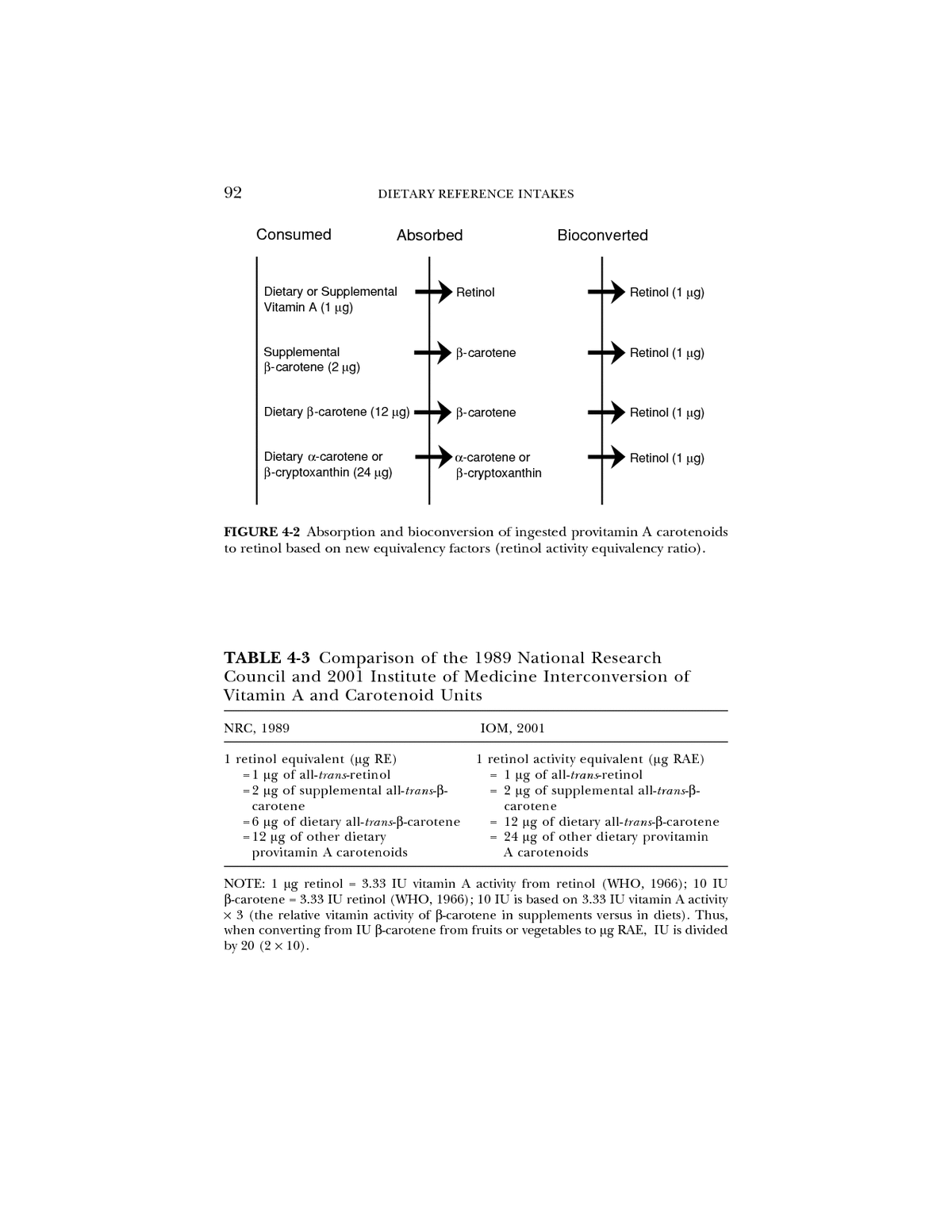
90 DIETARY REFERENCE INTAKES TABLE 4-2 Relative Absorption of Supplemental and Dietary β-Carotene Reference Subjects Study Design Diet/Dos Micozzi et al., 30 men, 20â45 y, Diet/supplementation intervention, Suppleme 1992 United States 6 wk Carrots, 3 Broccoli, de Pee et al., 173 children, Diet intervention, 9 wk Vegetable 1995 7â11 y, Indonesia Fruit diet Torronen et al., 42 women, Diet/supplementation intervention, Low caro 1996 20â53 y, Finland 6 wk + Raw car + Supplem de Pee et al., 188 anemic school Diet intervention, 9 wk Fruit/squ 1998 children, 7â11 y, Dark gree Indonesia + carro Low vitam diet, 44 Castenmiller et al., 72 men and Diet/supplementation intervention, Control d 1999 women, 18â58 y, 3 wk Suppleme Netherlands Spinach d Van het Hof et al., 55 men and Diet/supplementation intervention, Suppleme 1999 women, 18â45 y, 1 mo High vege Netherlands 5.1 mg/ the United States (16 percent from the 14 major dietary contribu- tors of β-carotene which provide a total of 70 percent of dietary β- carotene) (Chug-Ahuja et al., 1993), it is estimated that 6 µg, rather than 7 µg, of β-carotene from a mixed diet is nutritionally equivalent to 1 µg of β-carotene in oil. Therefore, the retinol activity equivalency (µg RAE) ratio for β-carotene from food is estimated to be 12:1 (6 à 2:1) (Figure 4-2). Unfortunately, studies using a positive con- trol group (preformed vitamin A) at a level equivalent to β-carotene from a mixed vegetable and fruit diet using levels similar to the RAE have not been conducted in healthy and nutritionally adequate individuals. An RAE of 12 µg for dietary β-carotene is supported by Parker et al. (1999) who reported that 8 percent of ingested β- carotene from carrots was absorbed and converted to retinyl esters
VITAMIN A 91 etary Diet/Dose of β-Carotene Results ention, Supplement, 30 mg/d Increase of plasma β-carotene from carrots Carrots, 30 mg/d compared to supplemental β-carotene in Broccoli, 6 mg/d gelatin beadlets was 18% Increase of plasma β-carotene from broccoli compared to supplemental β-carotene in gelatin beadlets was 12% Vegetable diet, 3.5 mg/d Increase of serum β-carotene from fruit diet was Fruit diet, 2.3 mg/d 5â6 times higher than from vegetable diet ention, Low carotenoid diet Increase of serum β-carotene from raw carrots + Raw carrots, 12 mg/d was 26% compared to that from supplemental + Supplement, 12 mg/d β-carotene in a gelatin beadlet Fruit/squash diet, 509 µg/d Increase of serum β-carotene from fruit/squash Dark green leafy vegetables diet was 3.5-fold greater than that for the + carrots, 684 µ g/d dark green leafy vegetables + carrots diet Low vitamin A/β-carotene diet, 44 µg/d ention, Control diet, 0.5 mg/d Increase of serum β-carotene from spinach was Supplement diet, 9.8 mg/d 5% compared to that from supplemental Spinach diet, 10.4 mg/d β-carotene in oil ention, Supplement, 7.2 mg/day Increase of plasma β-carotene from high High vegetable diet, vegetable diet compared to supplemental 5.1 mg/d β-carotene in oil was 14% contained in chylomicrons, resulting in a carotene:retinol equiva- lency ratio of 13:1. One RAE for dietary provitamin A carotenoids other than β-caro- tene is set at 24 µg on the basis of the observation that the vitamin A activity of β-cryptoxanthin and α-carotene is approximately half of that for β-carotene (Bauernfeind, 1972; Deuel et al., 1949). There- fore, the amount of vitamin A activity of provitamin A carotenoids in µg RAE is half the amount obtained if using µg RE (Table 4-3). Example: A diet contains 500 µg retinol, 1,800 µg β-carotene and 2,400 µg α-carotene. 500 + (1,800 ÷ 12) + (2,400 ÷ 24) = 750 µg RAE.
92 DIETARY REFERENCE INTAKES Consumed Absorbed Bioconverted Dietary or Supplemental Retinol Retinol (1 µg) Vitamin A (1 µg) Supplemental β-carotene Retinol (1 µg) β-carotene (2 µg) Dietary β-carotene (12 µg) β-carotene Retinol (1 µg) Dietary α-carotene or α-carotene or Retinol (1 µg) β-cryptoxanthin (24 µg) β-cryptoxanthin FIGURE 4-2 Absorption and bioconversion of ingested provitamin A carotenoids to retinol based on new equivalency factors (retinol activity equivalency ratio). TABLE 4-3 Comparison of the 1989 National Research Council and 2001 Institute of Medicine Interconversion of Vitamin A and Carotenoid Units NRC, 1989 IOM, 2001 1 retinol equivalent (µg RE) 1 retinol activity equivalent (µg RAE) = 1 µg of all-trans-retinol = 1 µg of all-trans-retinol = 2 µg of supplemental all-trans-β- = 2 µg of supplemental all-trans-β- carotene carotene = 6 µg of dietary all-trans-β-carotene = 12 µg of dietary all-trans-β-carotene = 12 µg of other dietary = 24 µg of other dietary provitamin provitamin A carotenoids A carotenoids NOTE: 1 µg retinol = 3.33 IU vitamin A activity from retinol (WHO, 1966); 10 IU β-carotene = 3.33 IU retinol (WHO, 1966); 10 IU is based on 3.33 IU vitamin A activity à 3 (the relative vitamin activity of β-carotene in supplements versus in diets). Thus, when converting from IU β-carotene from fruits or vegetables to µg RAE, IU is divided by 20 (2 à 10).
VITAMIN A 93 Example: A diet contains 1,666 IU of retinol and 3,000 IU of β- carotene. (1,666 ÷ 3.33) + (3,000 ÷ 20) = 650 µg RAE. Example: A supplement contains 5,000 IU of vitamin A (20 per- cent as β-carotene). 5,000 ÷ 3.33 = 1,500 µg RAE. The use of µg RAE rather than µg RE or international units (IU) is preferred when calculating and reporting the amount of the total vitamin A in mixed foods or assessing the amount of dietary and supplemental vitamin A consumed. Given the need to be able to calculate the intake of carotenoids, food composition data tables should report food content in amounts of each carotenoid when- ever possible. Metabolism, Transport, and Excretion Retinyl esters and carotenoids are transported to the liver in chylo- micron remnants. Apoprotein E is required for the uptake of chylo- micron remnants by the liver. Some retinyl esters can also be taken up directly by peripheral tissues (Goodman et al., 1965). Several specific hepatic membrane receptors (low density lipoprotein [LDL] receptor, LDL receptor-related protein, lipolysis-stimulated receptor) have been proposed to also be involved with the uptake of chylomicron remnants (Cooper, 1997). The hydrolysis of retinyl ester to retinol is catalyzed by retinyl ester hydrolase following endo- cytosis. To meet tissue needs for retinoids, retinol binds to retinol- binding protein (RBP) for release into the circulation. In the blood, holo-RBP associates with transthyretin (a transport protein) to form a trimolecular complex with retinol in a 1:1:1 molar ratio. Retinol is transported in this trimolecular complex to various tissues, includ- ing the eye. The mechanism through which retinol is taken up from the circulation by peripheral cells has not been conclusively estab- lished. Retinol that is not immediately released into circulation by the liver is reesterified and stored in the lipid-containing stellate (Ito) cells of the liver until needed to maintain normal blood retin- ol concentrations. Carotenoids are incorporated into very low density lipoproteins (VLDL) and exported from the liver into the blood. VLDL are con- verted to LDL by lipoprotein lipase on the surface of blood vessels.
94 DIETARY REFERENCE INTAKES Plasma membrane-associated receptors of peripheral tissue cells bind apolipoprotein B100 on the surface of LDL, initiating recep- tor-mediated uptake of LDL and their lipid contents. The liver, lung, adipose, and other tissues possess carotene 15, 15â²-dioxygenase activity (Goodman and Blaner, 1984; Olson and Hayaishi, 1965), and thus it is presumed that carotenes may be converted to vitamin A as they are delivered to tissues. The major end products of the enzymeâs activity are retinol and retinoic acid (Napoli and Race, 1988). It is unclear, however, whether carotenoids stored in tissues other than the intestinal mucosa cells are cleaved to yield retinol. Thatcher et al. (1998) demonstrated that β-carotene stored in liver is not utilized for vitamin A needs in gerbils. Typically, the majority of vitamin A metabolites are excreted in the urine. Sauberlich et al. (1974) reported that the percentage of a radioactive dose of vitamin A recovered in breath, feces, and urine ranged from 18 to 30 percent, 18 to 37 percent, and 38 to 60 percent, respectively, after 400 days on a vitamin A-deficient diet. Almost all of the excreted metabolites are biologically inactive. Retinol is metabolized in the liver to numerous products, some of which are conjugated with glucuronic acid or taurine for excretion in bile (Sporn et al., 1984). The portion of excreted vitamin A metabolites in bile increases as the liver vitamin A exceeds a critical concentration. This increased excretion has been suggested to serve as a protective mechanism for reducing the risk of excess storage of vitamin A (Hicks et al., 1984). Body Stores The hepatic vitamin A concentration can vary markedly depend- ing on dietary intake. When vitamin A intake is adequate, over 90 percent of total body vitamin A is located in the liver (Raica et al., 1972) as retinyl ester (Schindler et al., 1988), where it is concentrat- ed in the lipid droplets of perisinusoidal stellate cells (Hendriks et al., 1985). The average concentration of vitamin A in postmortem livers of American and Canadian adults is reported to range from 10 to as high as 1,400 µg/g liver (Furr et al., 1989; Hoppner et al., 1969; Mitchell et al., 1973; Raica et al., 1972; Schindler et al., 1988; Underwood et al., 1970). In developing countries where vitamin A deficiency is prevalent, the vitamin A concentration in liver biopsy samples is much lower (17 to 141 µg/g) (Abedin et al., 1976; Flores and de Araujo, 1984; Haskell et al., 1997; Olson, 1979; Suthutvora- voot and Olson, 1974). A concentration of at least 20 µg retinol/g of liver in adults is suggested to be the minimal acceptable reserve
VITAMIN A 95 (Loerch et al., 1979; Olson, 1982). The mean liver stores of vitamin A in children (1 to 10 years of age) have been reported to range from 171 to 723 µg/g (Flores and de Araujo, 1984; Mitchell et al., 1973; Money, 1978; Raica et al., 1972; Underwood et al., 1970), whereas the mean liver vitamin A stores in apparently healthy in- fants is lower, ranging from 0 to 320 µg/g of liver (Flores and de Araujo, 1984; Huque, 1982; Olson et al., 1979; Raica et al., 1972; Schindler et al., 1988). With use of radio-isotopic methods, the efficiency of storage (reten- tion) of vitamin A in liver has been estimated to be approximately 50 percent (Bausch and Rietz, 1977; Kusin et al., 1974; Sauberlich et al., 1974). More recently, stable-isotopic methods have shown an efficiency of storage of 42 percent for individuals with concentra- tions greater than or equal to 20 µg retinol/g of liver (Haskell et al., 1997). The efficiency of storage was lower in those with lower vita- min A status. The percentage of total body vitamin A stores lost per day was approximately 0.5 percent in adults consuming a vitamin A- free diet (Sauberlich et al., 1974). Clinical Effects of Inadequate Intake The most specific clinical effect of inadequate vitamin A intake is xerophthalmia. It is estimated that 3 to 10 million children, mostly in developing countries, become xerophthalmic, and 250,000 to 500,000 go blind annually (Sommer and West, 1996; WHO, 1995). The World Health Organization (WHO, 1982) classified various stages of xerophthalmia to include night blindness (impaired dark adaptation due to slowed regeneration of rhodopsin), conjunctival xerosis, Bitotâs spots, corneal xerosis, corneal ulceration, and scar- ring, all related to vitamin A deficiency. Night blindness is the first ocular symptom to be observed with vitamin A deficiency (Dowling and Gibbons, 1961), and it responds rapidly to treatment with vita- min A (Sommer, 1982). High-dose (60 mg) vitamin A supplementa- tion reduced the incidence of night blindness by 63 percent in Nepalese children (Katz et al., 1995). Similarly, night blindness was reduced by 50 percent in women after weekly supplementation with either 7,500 µg RE of vitamin A or β-carotene (Christian et al., 1998b). An association of vitamin A deficiency and impaired embryonic development is well documented in animals (Morriss-Kay and Sokolova, 1996; Wilson et al., 1953). In laboratory animals, fetal resorption is common in severe vitamin A deficiency, while fetuses that survive have characteristic malformations of the eye, lungs, uro- genital tract, and cardiovascular system. Similar abnormalities are
96 DIETARY REFERENCE INTAKES observed in rat embryos lacking nuclear retinoid receptors (Wendling et al., 1999). Morphological abnormalities associated with vitamin A deficiency are not commonly found in humans; however, functional defects of the lungs have been observed (Chytil, 1996). Because of the role of vitamin A in maintaining the structural integrity of epithelial cells, follicular hyperkeratosis has been observed with inadequate vitamin A intake (Chase et al., 1971; Sauberlich et al., 1974). Men who were made vitamin A deficient under controlled conditions were then supplemented with either retinol or β-carotene, which caused the hyperkeratosis to gradually clear (Sauberlich et al., 1974). Vitamin A deficiency has been associated with a reduction in lym- phocyte numbers, natural killer cells, and antigen-specific immuno- globulin responses (Cantorna et al., 1995; Nauss and Newberne, 1985). A decrease in leukocytes and lymphoid organ weights, im- paired T cell function, and decreased resistance to immunogenic tumors have been observed with inadequate vitamin A intake (Dawson and Ross, 1999; Wiedermann et al., 1993). A generalized dysfunction of humoral and cell-mediated immunity is common in experimental animals and is likely to exist in humans. In addition to xerophthalmia, vitamin A deficiency has been asso- ciated with increased risk of infectious morbidity and mortality in experimental animals and humans, especially in developing coun- tries. A higher risk of respiratory infection and diarrhea has been reported among children with mild to moderate vitamin A deficiency (Sommer et al., 1984). Mortality rates were about four times greater among children with mild xerophthalmia than those without it (Sommer et al., 1983). The risk of severe morbidity and mortality decreases with vitamin A repletion. In children hospitalized with measles, case fatality (Barclay et al., 1987; Hussey and Klein, 1990) and the severity of complications on admission were reduced when they received high doses (60 to 120 mg) of vitamin A (Coutsoudis et al., 1991; Hussey and Klein, 1990). In some studies, vitamin A sup- plementation (30 to 60 mg) has been shown to reduce the severity of diarrhea (Barreto et al., 1994; Donnen et al., 1998) and Plasmodium falciparum malaria (Shankar et al., 1999) in young children, but vitamin A supplementation has had little effect on the risk or sever- ity of respiratory infections, except when associated with measles (Humphrey et al., 1996). In developing countries, vitamin A supplementation has been shown to reduce the risk of mortality among young children (Ghana VAST Study Team, 1993; Muhilal et al., 1988; Rahmathullah et al., 1990; Sommer et al., 1986; West et al., 1991), infants (Humphrey et
VITAMIN A 97 al., 1996), and pregnant and postpartum women (West et al., 1999). Meta-analyses of the results from these and other community-based trials are consistent with a 23 to 30 percent reduction in mortality of young children beyond 6 months of age after vitamin A supplemen- tation (Beaton et al., 1993; Fawzi et al., 1993, Glasziou and Mackerras, 1993). WHO recommends broad-based prophylaxis in vitamin A-deficient populations. It also recommends treating chil- dren who suffer from xerophthalmia, measles, prolonged diarrhea, wasting malnutrition, and other acute infections with vitamin A (WHO, 1997). Furthermore, the American Academy of Pediatrics (AAP, 1993) recommends vitamin A supplementation for children in the United States who are hospitalized with measles. SELECTION OF INDICATORS FOR ESTIMATING THE REQUIREMENT FOR VITAMIN A Dark Adaptation The ability of the retina to adapt to dim light depends upon an adequate supply of vitamin A, because 11-cis retinal is an integral part of the rhodopsin molecule of the rods. Without adequate levels of vitamin A in the retina, the function of the rods in dim light situations becomes compromised, resulting in abnormal dark adap- tation (night blindness). Before clinically apparent night blindness occurs, abnormal rod function may be detected by dark adaptation testing. In addition to vitamin A deficiency, zinc deficiency and severe protein deficiency also may affect dark adaptation responses (Bankson et al., 1989; Morrison et al., 1978). Dark Adaptation Test To perform a dark adaptation test, the eye is first dilated and the subject fixates on a point located approximately 15 degrees above the center of the test light. The test stimulus consists of light flashes of approximately 1-second duration separated by 1-second intervals of darkness. A tracking method is used with the luminance of the test light being increased or decreased depending upon the re- sponse of the subject. The ascending threshold is the intensity at which the subject first sees the test light as its luminance is increased. The descending threshold is the intensity at which the subject ceases to see the test light as its luminance is lowered. Each threshold intensity is plotted versus time and the values are read from the graph at the end of a test session. Testing is continued
98 DIETARY REFERENCE INTAKES until the final threshold is stabilized. The final dark-adapted thresh- old is defined as the average of three ascending and three descend- ing thresholds and is obtained after 35 to 40 minutes in darkness. When the logarithm of the light perception is plotted as a func- tion of time in darkness, the change in threshold follows a charac- teristic course. There is an initial rapid fall in threshold attributed to cones, followed by a plateau. A steeper descent, referred to as the rod-cone break, usually occurs at 3 to 9 minutes followed by a slow- er descent attributed to adaptation of the rods. The final threshold attained at about 35 to 40 minutes is the most constant indicator of dark adaptation. Among stable subjects, test results are reproduc- ible over a 1- to 6-month interval with final threshold differences ranging from 0 to 0.1 log candela/meter2. In one series, the dark adapted final threshold among 50 normal subjects (aged 20 to 60 years) was â5.0 ± 0.3 candela/ meter2 (Carney and Russell, 1980). Similar information on retinal function may be obtained by an electroretinogram or an electrooculorgram. However, these tests are more invasive than dark adaptation and there are not as many data relating these functional tests to dietary vitamin A levels. There is literature relating dark adaptation test results to dietary levels of vitamin A under controlled experimental conditions (Table 4-4). Under controlled feeding conditions, dark adaptation, objec- tively measured by dark adaptometry, is one of the most sensitive indicators of a change in vitamin A deficiency status (Figure 4-3). Epidemiological evidence suggests that host resistance to infection is impaired at lesser stages of vitamin A deficiency, prior to clinical onset of night blindness (Arroyave et al., 1979; Arthur et al., 1992; Barreto et al., 1994; Bloem et al., 1990; Ghana VAST Study Team, 1993; Loyd-Puryear et al., 1991; Salazar-Lindo et al., 1993). More- over, laboratory animals fed a vitamin A-deficient diet maintain ocular levels of vitamin A despite a significant reduction in hepatic vitamin A levels (Bankson et al., 1989; Wallingford and Underwood, 1987). Nevertheless, this approach can be used to estimate the aver- age requirement for vitamin A but without assurance of adequate tissue levels to meet nonvisual needs for vitamin A. Pupillary Response Test Another test of ability to dark adapt, one that avoids reliance on psychophysical responses, is the pupillary response test that mea- sures the threshold of light at which a pupillary reflex (contraction) first occurs under dark-adapted conditions (Stewart and Young, 1989). The retina of one eye is briefly exposed to incremental pulses
VITAMIN A 99 of light while a trained observer monitors the consensual response of the other pupil under dark conditions. A high scotopic (vision in dim light) threshold indicates low retinal sensitivity, a pathophysio- logical response to vitamin A deficiency. An early report of pupil- lary nonresponse to candlelight among night blind Confederate soldiers in the Civil War (Hicks, 1867) led to the development and validation of instrumentation for this test as a reliable, functional measure of vitamin A deficiency in Indonesian (Congdon et al., 1995) and Indian (Sanchez et al., 1997) children. However, data do not currently exist relating pupillary threshold sensitivity as deter- mined by this test to usual vitamin A intakes, and so measures of pupillary response cannot be used at the present to establish dietary vitamin A requirements. Plasma Retinol Concentration The concentration of plasma retinol is under tight homeostatic control in individuals and therefore is insensitive to liver vitamin A stores. The relationship is not linear and over a wide range of ade- quate hepatic vitamin A reserves there is little change in plasma retinol or retinol binding protein (RBP) concentrations (Under- wood, 1984). When liver vitamin A reserves fall below a critical con- centration, thought to be approximately 20 µg/g of liver (Olson, 1987), plasma retinol concentration declines. When dietary vitamin A is provided to vitamin A-deficient children, plasma retinol con- centration increases rapidly, even before liver stores are restored (Devadas et al., 1978; Jayarajan et al., 1980). Thus, a low concentra- tion of plasma retinol may indicate inadequacy of vitamin A status, although median or mean concentrations for plasma retinol may not be well correlated with valid indicators of vitamin A status. In malnourished populations, often 25 percent or more individu- als exhibit a plasma retinol concentration below 0.70 µmol/L (20 µg/dL), a level considered to reflect vitamin A inadequacy in a population (Flores, 1993; Underwood, 1994). However, a low plas- ma retinol concentration also may result from an inadequate sup- ply of dietary protein, energy, or zinc, all of which are required for a normal rate of synthesis of RBP (Smith et al., 1974). Plasma retin- ol concentration may also be low during infection as a result of transient decreases in the concentrations of the negative acute phase proteins, RBP, and transthyretin, even when liver retinol is adequate (Christian et al., 1998a; Filteau et al., 1995; Golner et al., 1987; Rosales et al., 1996). The presence of one or more of these factors could lead to an overestimation of the prevalence of vitamin
100 DIETARY REFERENCE INTAKES TABLE 4-4 Correction of Abnormal Dark Adaptation with Vitamin A Vitamin A Dark Intake Serum Adapta- Reference Subject (µg/d) Duration Retinol tiona ERGb Blanchard DA, man, 90â165 A and 20 y +450 3 d C Harper, +600 2 d SI 1940 JK, man, 90â165 A 23 y +300 4 d C +1,081 2 d C TH, man, 90â165 A 20 y +150 3 d PC +721 4 d N Batchelder GG, young 60 A and adult 600 A Ebbs, woman 1,201 N 1943 KY, young 60 A adult 600 A man 1,201 N MW, young 60 A adult 600 440 and 620 A woman IU/dL 1,200 6 d TC 1,200 17 d A 3,000 C Hume and Golding, 21 14 mo 22 IU/dL 2.81, A Krebs, man, 390 1 mo 50 IU/dL 2.38, A 1949 32 y, 2 mo 88 IU/dL 2.26, M vitamin A 6 mo 88 IU/dL 1.81, N depleted continued
VITAMIN A 101 TABLE 4-4 Continued Vitamin A Dark Intake Serum Adapta- Reference Subject (µg/d) Duration Retinol tiona ERGb Sauberlich Subject #1, < 24 771 d et al., man, 37.5 14 d 8 µg/dL A A 1974 37 y, 75 14 d 7 µg/dL A A vitamin A 150 15 d 4 µg/dL C A depleted 300 14 d 12 µg/dL C PC 600 11 d 19 µg/dL C Subject #5, < 24 359 d man, 150 82 d 4 µg/dL C A 43 y, 300 372 d 27 µg/dL C PC vitamin A 600 14 d 42 µg/dL C depleted 1,200 14 d 42 µg/dL C C 2,400 14 d 47 µg/dL C C Subject #7, < 24 505 d man, 150 82 d 9 µg/dL C A 41 y, 300 42 d 16 µg/dL C A vitamin A 600 16 d 20 µg/dL C depleted 1,200 9 d 24 µg/dL C Subject # 8, < 24 595 d man, 75 10 d 8 µg/dL A A 32 y, 150 17 d 9 µg/dL C A vitamin A 300 3 d C depleted KC, 60 40 d A medical 570 10 d C student, vitamin A depleted MS, 60 52 d A medical 255 10 d C student, vitamin A depleted NOTE: Subjects from the four studies were included based on two rules: (1) only sub- jects with intake gaps less than 600 µg/day were used and (2) the lowest corrected/ normal intake value was chosen as that level at which dark adaptation was corrected or normal and for which no abnormal ERG was recorded. a Dark adaptation normal = 1.37 to 2.3 log µm lamberts. A = abnormal, C = corrected, SI = slight improvement, PC = partially corrected, N = normal, TC = temporarily corrected, M = marginal. b ERG = electroretinogram.
102 DIETARY REFERENCE INTAKES Final dark adapted thrershold (log candela/m2) â3.3 â3.7 â4.1 â4.5 â4.9 â5.3 â5.7 10 20 30 40 50 60 70 80 90 Serum vitamin A (micrograms %) FIGURE 4-3 Serum vitamin A concentrations and dark adaptation final thresh- olds. Upper limit of normal final threshold = â4.6 log candela/m2. Adapted from Carney and Russell (1980). A deficiency when serum retinol concentration is used as an indica- tor. According to an analysis of the Third National Health and Nutrition Examination Survey, individuals in the highest quartile for vitamin A intake had only slightly higher serum retinol concen- trations than those in the lowest quartile for vitamin A intake (Ap- pendix Tables H-1 and H-2). In the United States (Looker et al., 1988; Pilch, 1987) (Appendix Table G-4), serum retinol concentration is rarely low (< 0.7 µmol/ L) in more than 5 percent of preschool children, although 20 to 60 percent may exhibit concentrations between 0.70 and 1.05 µmol/L, a range that may be marginal for some individuals (Underwood, 1994). Excluding pregnant women, less than 5 percent of adults had a serum retinol concentration less than 1.05 µmol/L (Appen- dix Table G-4). The median concentration of serum retinol in adults was 1.7 to 2.2 µmol/L (48 to 63 µg/dL). At the usual U.S. range of plasma retinol concentration, the con- centration is neither related to observed levels of usual vitamin A intake, from either dietary preformed vitamin A or provitamin A carotenoid sources (Hallfrisch et al., 1994), nor responsive to sup- plement use (Krasinski et al., 1989; Nierenberg et al., 1997; Stauber et al., 1991). Because of the relatively insensitive relationship be-
VITAMIN A 103 tween plasma retinol concentration and liver vitamin A in the ade- quate range, and because of the potential for confounding factors to affect the level and interpretation of the concentration, it was not chosen as a primary status indicator for a population for esti- mating an average requirement for vitamin A. Total Liver Reserves by Isotope Dilution Body stores of vitamin A can be estimated directly by liver biopsy, but this is not an appropriate indicator of status, except at autopsy, for a population. Vitamin A stores can also be estimated by an indi- rect approach using an isotope dilution technique. This technique involves administering an oral dose of stable-isotopically labeled vi- tamin A and, after a period of equilibration, drawing blood for measurement of the isotopic ratio in plasma. The Bausch and Rietz (1977) equation used to calculate liver reserves is: TLR = F à dose à [(H:D) â 1] where TLR is the pretreatment total liver reserve of vitamin A in millimoles of retinol, F is a factor that expresses the efficacy of storage of an early administered dose, dose is the oral dose of labeled retinol in millimoles, H:D is the ratio of hydrogen to deuterated retinol in the plasma after an equilibration period, and â1 corrects TLR for the contribution of the administered dose to the total body pool. Furr et al. (1989) have suggested modification of this formula to: TLR = F à dose à (S à a à [H:D) â1]) where S is the ratio of the specific activities of retinol in serum to that in liver and a is the fraction of the absorbed dose of deuterated retinol remaining in the liver at the time of blood sampling. Liver reserves of vitamin A can be correlated with known dietary intake levels of vitamin A. An Estimated Average Requirement (EAR) could be derived by knowing the population median intake of vitamin A at which half the population has hepatic stores above a certain desired level (e.g., 20 µg/g) and half has stores below it. Although theoreti- cally such an approach could be used to establish an EAR, no studies have been conducted in which detailed and long-term dietary data have been obtained in the tested subjects. Relative Dose Response and Modified Relative Dose Response In healthy individuals, approximately 90 percent of vitamin A in the body is stored in the liver and this percentage decreases to 50 percent or less in severely deficient individuals (Olson, 1987). He- patic vitamin A stores can thus be interpreted to reflect nutrient adequacy to meet total body needs, barring factors that impede
104 DIETARY REFERENCE INTAKES their release into circulation (e.g., liver disease and severe protein malnutrition). The relative dose response (RDR) is a method that permits indirect assessment of the relative adequacy of hepatic vita- min A stores. The RDR test was first demonstrated in rats where the release of RBP from liver was shown to depend on the availability of retinol (Loerch et al., 1979). In experimental vitamin A deficiency in rats, RBP accumulated in liver but was rapidly released after vita- min A (retinol) was administered (Carney et al., 1976; Keilson et al., 1979). This observation led Loerch et al. (1979) to propose that a positive plasma retinol response to a small test dose of vitamin A could be used as an indicator of inadequate liver vitamin A reserves. The test was subsequently validated against measured liver retinol stores in humans (Amedee-Manesme et al., 1984, 1987; Mobarhan et al., 1981). For the test, a blood sample is drawn before retinol administration (zero time), and then a small dose of vitamin A is administered; a second blood sample is taken after an interval, gen- erally 5 hours. The concentration of retinol in each sample is deter- mined and the difference (response) in plasma retinol concentra- tion (5 hours minus zero hours) is calculated and expressed as a percentage of the 5-hour concentration. Although various cutoff levels have been used, a plasma retinol response greater than or equal to 20 percent is generally consid- ered to indicate that liver vitamin A is inadequate (Tanumihardjo, 1993). The synthesis of RBP depends on the adequacy of other nutrients, and other deficiencies, such as zinc deficiency and pro- tein energy malnutrition, can confound the results of the RDR test, particularly when a repeat test is conducted within a week or less after the first or baseline test. With proper controls the RDR test is considered a valid test to determine inadequate vitamin A status. However, just as plasma retinol concentration is insensitive across a wide range of âadequateâ liver vitamin A reserves, the RDR test does not distinguish among different levels of adequate vitamin A reserves (Solomons et al., 1990). The modified relative dose response (MRDR) test is a variation of the RDR test (Tanumihardjo and Olson, 1991). The MRDR requires a single blood sample and uses as the test dose vitamin A2 (dehydro- retinol), which combines with RBP in the same manner as retinol but is not found endogenously in human plasma (with the possible exception of populations consuming high levels of fresh water fish). The test is subject to the same limitations as the RDR test. Neither the RDR nor the MRDR was chosen for estimating an EAR because little data exist relating usual dietary intakes of individuals or popu- lations to RDR or MRDR test value distributions.
VITAMIN A 105 Conjunctival Impression Cytology Before the clinical onset of xerophthalmia, mild vitamin A defi- ciency leads to early keratinizing metaplasia and losses of mucin- secreting goblet cells on the bulbar surface of the conjunctiva of the eye. These functional changes on the ocular surface can be detected by microscopic examination of PAS-hematoxylin stained epithelial cells obtained by briefly applying a cellulose acetate filter paper strip (Hatchell and Sommer, 1984; Natadisastra et al., 1987; Wittpenn et al., 1986) or disc (Keenum et al., 1990) against the temporal conjunctivum. An alternative approach involves transfer- ring cell specimens from the filter paper to a glass slide before staining and examination (Carlier et al., 1991). Specimens are clas- sified as normal or into degrees of abnormality, depending on the density and distribution of stained normal epithelial cells, goblet cells, and mucin âspotsâ (contents of goblet cells). Vitamin A status is defined by target tissue cellularity, integrity, and function, which, unlike biochemical measures, if compromised may take several weeks to normalize following vitamin A repletion (Keenum, 1993). In spite of that, there is an association between the prevalence of conjunctival impression cytology (CIC) abnormality and serum retinol and RDR test results (Sommer and West, 1996). Although CIC is used for assessment, there are few data that relate CIC status to dietary vitamin A intake in the United States, other well-nourished populations, or malnourished populations. As a result, CIC was not selected as the functional indicator for the EAR for vitamin A. Immune Function There is sound evidence for a role of vitamin A in the mainte- nance of both humoral antibody responses and cell-mediated im- munity. In experimental animals, both nonspecific immunity (Butera and Krakowka, 1986; Cohen and Elin, 1974) and antigen- specific responses, including delayed-type hypersensitivity (Smith et al., 1987), blastogenesis (Butera and Krakowka, 1986; Friedman and Sklan, 1989), and antibody production (Carman et al., 1989, 1992; Pasatiempo et al., 1990; Ross, 1996; Stephensen et al., 1993), have been shown to be altered by a deficiency of vitamin A or enhanced by vitamin A supplementation. The number and cytotoxic activity of natural killer cells (Dawson et al., 1999; Zhao et al., 1994) is reduced in vitamin A deficiency, although responsiveness to activa- tion is maintained. Several human studies have linked impairment in immunity to
106 DIETARY REFERENCE INTAKES low plasma or serum vitamin A concentrations (Coutsoudis et al., 1992; Semba et al., 1992, 1996). However, there are no human studies using controlled diets that have evaluated immune function tests as a means to assess the adequacy of different levels of dietary vitamin A. In addition to a lack of relevant dietary studies, there are some inherent limitations to using immune functions as indicators to establish dietary recommendations. Most changes in immune functions that have been associated with a nutrient deficiency are not specific to the nutrient under study (e.g., low T cell-mediated immunity may be caused by a lack of vitamin A, but also by a defi- ciency of protein or energy, zinc, or other specific nutrient defi- ciencies or imbalances). Thus, human dietary studies would have to be highly controlled with respect to the contents of potentially con- founding nutrients. Another limitation of many immune function tests is related to difficulties encountered in standardizing tests of immunity (e.g., proliferative responses to antigen or mitogen chal- lenge which are often used within studies to assess T and B cell responses). These tests are affected by many factors, such as the type and quality of mitogen used, cell culture conditions, and how subjectsâ cells have been collected, that cannot be readily controlled among laboratories or over time. Thus, for these reasons, immune function tests could not be used as an indicator for establishing the EAR for vitamin A. FACTORS AFFECTING THE VITAMIN A REQUIREMENT Intestinal Absorption Dietary Fat Dietary vitamin A is digested in mixed micelles and absorbed with fat. In some studies, increasing the level of fat in a low fat diet has been shown to improve retinol and carotene absorption (Reddy and Srikantia, 1966) and vitamin A nutriture (Jalal et al., 1998; Roels et al., 1963). Other studies, however, have not demonstrated a ben- eficial effect of fat on vitamin A absorption (Borel et al., 1997; Figueira et al., 1969). For optimal carotenoid absorption, a number of research groups have demonstrated that dietary fat must be consumed along with carotenoids. Roels and coworkers (1958) reported that the addition of 18 g/day of olive oil improved carotene absorption from 5 to 25 percent. Jayarajan and coworkers (1980) reported that the addition 5 g of fat to the diet significantly improved serum vitamin A concen-
VITAMIN A 107 trations among children after the consumption of a low fat vegetable diet. The addition of 10 g of fat did not improve serum vitamin A concentrations any more than did 5 g of fat. Infections Malabsorption of vitamin A can occur with diarrhea and intestinal infections and infestations. Sivakumar and Reddy (1972) demon- strated depressed absorption of labeled vitamin A in children with gastroenteritis and respiratory infections. Malabsorption of vitamin A is also associated with intestinal parasitism (Mahalanabis et al., 1979; Sivakumar and Reddy, 1975). The malabsorption of vitamin A that is observed in children with Ascaris lumbricoides infection was associated with an altered mucosal morphology that was reversed with deworming (Jalal et al., 1998; Maxwell et al., 1968). Food Matrix The matrix of foods affects the ability of carotenoids to be released from food and therefore affects intestinal absorption. The rise in serum β-carotene concentration was significantly less when individ- uals consumed β-carotene from carrots than when they received a similar amount of β-carotene supplement (Micozzi et al., 1992; Tang et al., 2000; Torronen et al., 1996). This observation was similar for broccoli (Micozzi et al., 1992) and mixed green leafy vegetables (de Pee et al., 1995; Tang et al., 2000) as compared with a β-carotene supplement. The food matrix effect on β-carotene bioavailability has been reviewed (Boileau et al., 1999). Food Processing The processing of foods greatly affects the absorption of caro- tenoids (Van het Hof et al., 1998). The absorption of carotene was 24 percent from sliced carrots, whereas the absorption of carotene from homogenized carrots was 56 percent (Hume and Krebs, 1949). Rock et al. (1998) reported that the rise in serum β-carotene con- centration was significantly greater in subjects consuming cooked carrots and spinach as compared with those consuming an equal amount of raw carrots and spinach. Similarly, the rise in serum β- carotene concentration was greater after the consumption of carrot juice than after the same amount of raw carrots (Torronen et al., 1996).
108 DIETARY REFERENCE INTAKES Nutrient-Nutrient Interactions Iron A direct correlation between hemoglobin and serum retinol con- centrations has been observed (Suharno et al., 1993; Wolde-Gebriel et al., 1993). Anemic rats have been shown to have reduced plasma retinol concentrations when fed a vitamin A-rich diet (Amine et al., 1970), although normal hepatic stores of vitamin A were observed (Staab et al., 1984). Rosales and coworkers (1999) reported that iron deficiency in young rats alters the distribution of vitamin A concentration between plasma and liver. In a cross-sectional study of children in Thailand, serum retinol concentration was positively associated with serum iron and ferritin concentrations (Bloem et al., 1989). Intervention studies among Indonesian girls demonstrated that combining vitamin A with iron supplementation was more effec- tive in increasing hemoglobin concentrations than was giving iron alone (Suharno et al., 1993). As discussed in further detail in Chap- ter 9, various studies suggest that vitamin A deficiency impairs iron mobilization from stores and therefore vitamin A supplementation improves hemoglobin concentrations (Lynch, 1997). Zinc Zinc is required for protein synthesis, including the hepatic synthesis and secretion of retinol binding protein (RBP) and transthyretin; therefore, zinc deficiency influences the mobilization of vitamin A from the liver and its transport into the circulation (Smith et al., 1974; Terhune and Sandstead, 1972). In animal models, circulating and hepatic concentrations of retinol decline and rise with experi- mental zinc deficiency and repletion, respectively (Baly et al., 1984; Duncan and Hurley, 1978). In humans, cross-sectional studies and supplementation trials have failed to establish a consistent relation- ship between zinc and vitamin A status (Christian and West, 1998). Because zinc is important in the biosynthesis of RBP, it has been suggested that zinc intake may positively affect vitamin A status only when individuals are moderately to severely protein-energy deficient (Shingwekar et al., 1979). Although the alcohol dehydrogenase enzymes involved in the for- mation of retinal from retinol in the eye are not zinc dependent (Duester, 1996; Persson et al., 1995), zinc-deficient rats had a signif- icant reduction in the synthesis of rhodopsin (Dorea and Olson,
VITAMIN A 109 1986), which was postulated to be due to impaired protein (opsin and alcohol dehydrogenase) synthesis. Morrison and coworkers (1978) reported that dark adaptation improved after the provision of 220 mg/day of zinc to zinc-deficient patients. Carotenoids Competitive interactions among different carotenoids have been observed. When subjects were given purified β-carotene and lutein in a combined dose, β-carotene significantly reduced lutein absorp- tion, and therefore serum lutein concentration, compared to when lutein was given alone (Kostic et al., 1995). However, lutein given in combination with β-carotene significantly increased β-carotene serum concentrations compared to when β-carotene was given alone. Johnson et al. (1997) reported that lycopene does not affect the absorption of β-carotene, and β-carotene improved the absorption of lycopene. Alcohol Because both retinol and ethanol are alcohols, there is potential for overlap in the metabolic pathways of these two compounds. Competition with each other for similar enzymatic pathways has been reported (Leo and Lieber, 1999), while other retinol and al- cohol dehydrogenases show greater substrate specificity (Napoli et al., 1995). Ethanol consumption results in a depletion of hepatic vitamin A concentrations in animals (Sato and Lieber, 1981) and in humans (Leo and Lieber, 1985). Although the effect on vitamin A is due, in part, to hepatic damage (Leo and Lieber, 1982) and mal- nutrition, the reduction in hepatic stores is also a direct effect of alcohol consumption. Patients with low vitamin A stores, in the study by Leo and Lieber (1982), were otherwise well nourished. Further- more, the reduction in hepatic vitamin A stores was reduced before the onset of fibrosis or cirrhosis of the liver (Sato and Lieber, 1981). Results suggest that vitamin A is mobilized from the liver to other organs (Mobarhan et al., 1991) with ethanol consumption. Chronic ethanol intake resulted in increased destruction of retinoic acid through the induction of P450 enzymes, resulting in reduced hepatic retinoic acid concentrations (Wang, 1999).
110 DIETARY REFERENCE INTAKES FINDINGS BY LIFE STAGE AND GENDER GROUP Infants Ages 0 through 12 Months Method Used to Set the Adequate Intake No functional criteria of vitamin A status have been demonstrated that reflect response to dietary intake in infants. Thus, recommended intakes of vitamin A are based on an Adequate Intake (AI) that reflects a calculated mean vitamin A intake of infants principally fed human milk. Ages 0 through 6 Months. Using the method described in Chapter 2, the AI of vitamin A for infants ages 0 though 6 months is based on the average amount of vitamin A in human milk that is con- sumed. After rounding, an AI of 400 µg retinol activity equivalents (RAE)/day is set based on the average volume of milk intake of 0.78 L/day (see Chapter 2) and an average concentration of vitamin A in human milk of 1.70 µmol/L (485 µg/L) during the first 6 months of lactation (Canfield et al., 1997, 1998) (see Table 4-5). Because the bioconversion of carotenoids in milk and in infants is not known, the contribution of carotenoids in human milk to meeting the vitamin A requirement of infants was not considered. TABLE 4-5 Vitamin A in Human Milk Reference Study Group Average Maternal Intake Stage of L Butte and Calloway, 1981 23 Navajo women Not reported 1 mo Chappell et al., 1985 12 women Not reported 3â4 d 37 d Canfield et al., 1997 6 women, 23â36 y 2,334 µg/d < 6 mo Canfield et al., 1998 5 women, 23â36 y 2,544 µg/d > 1 mo a Vitamin A intake based on reported data or concentration (µg/L) à 0.78 L/day.
VITAMIN A 111 Ages 7 through 12 Months. Using the method described in Chapter 2 to extrapolate from the AI for infants ages 0 through 6 months fed human milk, the intake from human milk for the older infants is 483 µg RAE/day of vitamin A. The vitamin A intake for older infants can also be determined by estimating the intake from human milk (concentration à 0.6 L/ day) and complementary foods (Chapter 2). Vitamin A intake data (n = 45) from complementary foods was estimated to be 244 µg/day based on data from the Third National Health and Nutrition Exam- ination Survey. The average intake from human milk is approxi- mately 291 µg/day (485 µg/L à 0.6 L/day). Thus, the total vitamin A intake is estimated to be 535 µg RAE/day (244 µg/day + 291 µg/day). On the basis of these two approaches and rounding, the AI was set at 500 µg RAE/day. The AI for infants is greater than the Recom- mended Dietary Allowance (RDA) for young children because the RDA is based on extrapolation of adult data (see âChildren and Adolescents Ages 1 through 18 Yearsâ). Vitamin A AI Summary, Ages 0 through 12 Months AI for Infants 0â6 months 400 µg RAE/day of vitamin A 7â12 months 500 µg RAE/day of vitamin A Milk Concentration Estimated Vitamin A nal Intake Stage of Lactation (µg/L) Intake of Infants (µg/d)a 1 mo 329 256 3â4 d 2,000 1,560 37 d â600 468 < 6 mo 314 245 485 380 > 1 mo 640 500 /day.
112 DIETARY REFERENCE INTAKES Special Considerations Concentrations of 520 to 590 µg/L of vitamin A in milk from Holstein cows have been reported (Tomlinson et al., 1976), which is significantly less than the levels observed in human milk (Table 4-5). The majority of vitamin A and carotenes are located in the fat globule and fat globule membrane in cow milk (Patton et al., 1980; Zahar et al., 1995). The concentrations of retinol and β-carotene in cow milk averaged 18 to 27 µg/g of milk fat in one study (Jensen and Nielsen, 1996). Retinol in cow milk is bound to β-lactoglobulin, which has a structure very similar to retinol binding protein (Papiz et al., 1986). There is minimal isomerization of trans-retinol to cis- retinol in unheated cow milk (Panfili et al., 1998), the latter being less well absorbed. Cow milk submitted to pasteurization resulted in 3 to 6 percent isomerization to cis-retinol. Greater isomerization was observed with severe heat treatments (16 percent in ultra high temperature milk and 34 percent in sterilized milk). Children and Adolescents Ages 1 through 18 Years Method Used to Estimate the Average Requirement No data are available to estimate an average requirement for chil- dren and adolescents. A computational method is used that includes an allowance for adequate liver vitamin A stores to set the Esti- mated Average Requirement (EAR) (see âAdults Ages 19 Years and Olderâ). The EAR for children and adolescents is extrapolated from adults by using metabolic body weight and the method described in Chapter 2. If total body weight is used, the RDA for children 1 through 3 years would be 200 µg RAE/day. If metabolic weight (kg0.75) is used, the RDA would be 300 µg RAE/day. Studies con- ducted in developing countries indicate that xerophthalmia and serum retinol concentrations of less than 20 µg/dL exist among preschool children with daily intakes of up to 200 µg of vitamin A, whereas 300 µg/day of vitamin A is associated with serum retinol concentrations greater than 30 µg/dL (Reddy, 1985). Although sim- ilar data are lacking in developed countries, to ensure that the RDA will meet the requirement of almost all North American preschool children, metabolic weight was used to extrapolate from adults.
VITAMIN A 113 Vitamin A EAR and RDA Summary, Ages 1 through 18 Years EAR for Children 1â3 years 210 µg RAE/day of vitamin A 4â8 years 275 µg RAE/day of vitamin A EAR for Boys 9â13 years 445 µg RAE/day of vitamin A 14â18 years 630 µg RAE/day of vitamin A EAR for Girls 9â13 years 420 µg RAE/day of vitamin A 14â18 years 485 µg RAE/day of vitamin A The RDA for vitamin A is set by using a coefficient of variation (CV) of 20 percent based on the calculated half-life values for liver vitamin A (see âAdults Ages 19 Years and Olderâ). The RDA is de- fined as equal to the EAR plus twice the CV to cover the needs of 97 to 98 percent of individuals in the group (therefore, for vitamin A the RDA is 140 percent of the EAR). The calculated values for the RDAs have been rounded to the nearest 100 µg. RDA for Children 1â3 years 300 µg RAE/day of vitamin A 4â8 years 400 µg RAE/day of vitamin A RDA for Boys 9â13 years 600 µg RAE/day of vitamin A 14â18 years 900 µg RAE/day of vitamin A RDA for Girls 9â13 years 600 µg RAE/day of vitamin A 14â18 years 700 µg RAE/day of vitamin A Adults Ages 19 Years and Older Evidence Considered in Estimating the Average Requirement The calculation described below can be used for estimating the vitamin A requirement and is calculated on the basis of the amount of dietary vitamin A required to maintain a given body-pool size in well-nourished subjects. Olson (1987) determined the average re- quirement of vitamin A by this approach using the calculation:
114 DIETARY REFERENCE INTAKES AÃBÃCÃDÃEÃF A = Percent of body vitamin A stores lost per day when ingesting a vitamin A-free diet B = Minimum acceptable liver vitamin A reserve C = The liver weight:body weight ratio D = Reference weight for a specific age group and gender E = Ratio of total body:liver vitamin A reserves F = Efficiency of storage of ingested vitamin A. By using this approach, a daily vitamin A intake can be deter- mined that will assure vitamin A reserves to cover increased needs during periods of stress and low vitamin A intake. That value can be used for estimating the average requirement for vitamin A. The portion of body vitamin A stores lost per day has been esti- mated to be 0.5 percent based on the rate of excretion of radio- activity from radiolabeled vitamin A and by the calculation of the half-life of vitamin A. The minimal acceptable liver reserve is esti- mated to be 20 µg/g and is based on the concentration at which (1) no clinical signs of a deficiency are observed, (2) adequate plasma retinol concentrations are maintained (Loerch et al., 1979), (3) induced biliary excretion of vitamin A is observed (Hicks et al., 1984), and (4) there is a protection against a vitamin A deficiency for approximately 4 months while the person consumes a vitamin A-deficient diet. The liver weight:body weight ratio is 1:33 (0.03) and is an average of ratios for infants and adults. The reference weights for adult women and men are 61 and 76 kg, respectively (see Chapter 1). The ratio of total body:liver vitamin A reserves is 10:9 (1.1) and is based on individuals with adequate vitamin A status. Finally, the efficiency of storage can be determined by iso- tope dilution methods following the administration of either radio- active or stable-isotopically labeled vitamin A to subjects adequate in vitamin A (Bausch and Reitz, 1977; Haskell et al., 1997). Recent studies by Haskell and coworkers (1997) suggest that the efficiency of storage is approximately 40 percent, rather than the 50 percent that was previously reported (Olson, 1987). Based on these current estimations, the EAR of preformed vitamin A required to assure an adequate body reserve in an adult man is 0.005 à 20 µg/g à 0.03 à 76 kg à 1.1 à 2.5, or 627 µg RAE/day. With a reference weight of 61 kg for women, the EAR would be 503 µg RAE/day. Based on the study of Sauberlich and coworkers (1974), Olson (1987) estimated that the liver vitamin A concentration was less than 10 µg/g at the time the first clinical signs of vitamin A defi-
VITAMIN A 115 ciency appeared. From this assumption, it was estimated that the half-life of vitamin A is approximately 128 days, and the CV is 21 percent. Because the portion of this variability that is due to experi- mental error is not known, a CV of 20 percent is used for setting the RDA. Vitamin A EAR and RDA Summary, Ages 19 Years and Older EAR for Men 19â30 years 625 µg RAE/day of vitamin A 31â50 years 625 µg RAE/day of vitamin A 51â70 years 625 µg RAE/day of vitamin A > 70 years 625 µg RAE/day of vitamin A EAR for Women 19â30 years 500 µg RAE/day of vitamin A 31â50 years 500 µg RAE/day of vitamin A 51â70 years 500 µg RAE/day of vitamin A > 70 years 500 µg RAE/day of vitamin A The RDA for vitamin A is set by using a CV of 20 percent (see Chapter 1) using the EAR for adequate body stores of vitamin A. The RDA is defined as equal to the EAR plus twice the CV to cover the needs of 97 to 98 percent of the individuals in the group (there- fore, for vitamin A the RDA is 140 percent of the EAR). The calcu- lated values for the RDAs have been rounded to the nearest 100 µg. RDA for Men 19â30 years 900 µg RAE/day of vitamin A 31â50 years 900 µg RAE/day of vitamin A 51â70 years 900 µg RAE/day of vitamin A > 70 years 900 µg RAE/day of vitamin A RDA for Women 19â30 years 700 µg RAE/day of vitamin A 31â50 years 700 µg RAE/day of vitamin A 51â70 years 700 µg RAE/day of vitamin A > 70 years 700 µg RAE/day of vitamin A
116 DIETARY REFERENCE INTAKES Pregnancy Evidence Considered in Estimating the Average Requirement Direct studies of the requirement for vitamin A during pregnancy are lacking. The model used to establish the EAR is based on the accumulation of vitamin A in the liver of the fetus during gestation and an assumption that liver contains approximately half of the bodyâs vitamin A when liver stores are low, as in the case of new- borns. Liver vitamin A concentrations for full-term stillborn infants (Dorea et al., 1984; Hoppner et al., 1968; Montreewasuwat and Olson, 1979; Olson, 1979) have ranged from less than 10 to greater than 100 µg/g liver, with values tending to be skewed towards the lower range (Olson, 1979). A vitamin A concentration of 1,800 µg per liver for 37 to 40 week gestation age (Montreewasuwat and Olson, 1979) was used to calculate a concentration of 3,600 µg per fetus. Assuming the efficiency of maternal vitamin A absorption to average 70 percent and vitamin A to be accumulated mostly in the last 90 days of pregnancy, the motherâs requirement would be in- creased by approximately 50 µg/day during the last trimester. Be- cause vitamin A in the motherâs diet may be stored and mobilized later as needed and some vitamin A may be retained in the placenta, the EAR is estimated to be ~50 µg/day in addition to the EAR for nonpregnant adolescent girls and women for the entire pregnancy period. Vitamin A EAR and RDA Summary, Pregnancy EAR for Pregnancy 14â18 years 530 µg RAE/day of vitamin A 19â30 years 550 µg RAE/day of vitamin A 31â50 years 550 µg RAE/day of vitamin A The RDA for vitamin A is set by using a CV of 20 percent based on the calculated half-life values for liver vitamin A (see âAdults Ages 19 Years and Olderâ). The RDA is defined as equal to the EAR plus twice the CV to cover the needs of 97 to 98 percent of individuals in the group (therefore, for vitamin A the RDA is 140 percent of the EAR). The calculated values for the RDAs have been rounded up to the nearest 10 µg.
VITAMIN A 117 RDA for Pregnancy 14â18 years 750 µg RAE/day of vitamin A 19â30 years 770 µg RAE/day of vitamin A 31â50 years 770 µg RAE/day of vitamin A Lactation Evidence Considered in Estimating the Average Requirement As indicated earlier in the section on infants, human milk-fed infants consume on average 400 µg/day of vitamin A in the first 6 months of life. The carotenoid content of human milk has been summarized in Dietary Reference Intakes for Vitamin C, Vitamin E, Sele- nium, and Carotenoids (IOM, 2000). Because the bioconversion of carotenoids in milk and in infants is not known, the contribution of carotenoids in human milk to meeting the vitamin A requirement of infants was not considered. To set an EAR during pregnancy, 400 µg RAE/day is added to the EAR for nonpregnant adolescent girls and women to assure adequate body stores of vitamin A. Vitamin A EAR and RDA Summary, Lactation EAR for Lactation 14â18 years 885 µg RAE/day of vitamin A 19â30 years 900 µg RAE/day of vitamin A 31â50 years 900 µg RAE/day of vitamin A The RDA for vitamin A is set by using a CV of 20 percent based on the calculated half-life values for liver vitamin A (see âAdults Ages 19 Years and Olderâ). The RDA is defined as equal to the EAR plus twice the CV to cover the needs of 97 to 98 percent of individuals in the group (therefore, for vitamin A the RDA is 140 percent of the EAR). The calculated values for the RDAs have been rounded to the nearest 100 µg. RDA for Lactation 14â18 years 1,200 µg RAE/day of vitamin A 19â30 years 1,300 µg RAE/day of vitamin A 31â50 years 1,300 µg RAE/day of vitamin A
118 DIETARY REFERENCE INTAKES Requirement for Provitamin A Carotenoids Although a large body of observational epidemiological evidence suggests that higher blood concentrations of β-carotene and other carotenoids obtained from foods are associated with a lower risk of several chronic diseases (see Dietary Reference Intakes for Vitamin C, Vitamin E, Selenium, and Carotenoids [IOM, 2000]), no evidence pointed to the need for a certain percentage of dietary vitamin A to come from provitamin A carotenoids to meet the vitamin A require- ment. In view of the health benefits associated with consumption of fruits and vegetables, existing recommendations for increased con- sumption of carotenoid-rich fruits and vegetables are strongly sup- ported (see IOM, 2000). Consumption of five servings of fruits and vegetables per day could provide 5.2 to 6 mg/day of provitamin A carotenoids (Lachance, 1997), which would contribute approxi- mately 50 to 65 percent of the menâs RDA for vitamin A. Special Considerations Alcohol Consumption Excessive alcohol consumption results in a depletion of liver vita- min A stores (Leo and Lieber, 1985). Depletion is partly due to the reduced consumption of foods. Furthermore, mobilization of vita- min A out of the liver may be increased with excessive alcohol con- sumption (Lieber and Leo, 1986). Because alcohol intake has been shown to enhance the toxicity of vitamin A (Leo and Lieber, 1999) (see âTolerable Upper Intake Levelsâ), individuals who consume alcohol may be distinctly susceptible to the adverse effects of vita- min A and any increased intake to meet oneâs needs should be in the context of maintaining health. Developing Countries and Vegetarian Diets A number of factors can influence the requirement for vitamin A, including iron status, the presence and severity of infection and parasites, the level of dietary fat, protein energy malnutrition, and the available sources for preformed vitamin A and provitamin A carotenoids. Parasites and Infection. Malabsorption of vitamin A can occur with diarrhea and intestinal infestations (Jalal et al., 1998; Sivakumar and Reddy, 1972). Furthermore, the urinary excretion of vitamin A
VITAMIN A 119 is increased with infection, and especially with fever (Alvarez et al., 1995; Stephensen et al., 1994). For these reasons, with parasitic in- festation and during infection, the requirement for vitamin A may be greater than the requirements set in this report, which are based on generally healthy individuals. Protein Energy Malnutrition. Protein synthesis generally, and specif- ically retinol binding protein synthesis, is reduced with severe pro- tein energy malnutrition (PEM) (marasmus and kwashiorkor), and therefore release of retinol from the liver (assuming stores are present) is also reduced (Large et al., 1980). With successful dietary treatment of PEM, growth and tissue weight gain will be stimulated, and the relative requirement of vitamin A will increase during the recovery period. Vegetarianism. Preformed vitamin A is found only in animal-derived food products. A clinical sign of vitamin A deficiency, night blind- ness, is prevalent in developing countries where animal and vitamin A-fortified products are not commonly available. Although caro- tenoids such as β-carotene are abundant in green leafy vegetables and certain fruits, because it takes 12 µg of dietary β-carotene to provide 1 retinol activity equivalent (RAE) (as compared to previous recommendations where 1 µg of retinol was thought to be provided by 6 µg of β-carotene [NRC, 1989 and Table 4-3]), a greater amount of fruits and vegetables than previously recommended are required to meet the daily vitamin A requirement for vegetarians and those whose primary source of vitamin A is green leafy vegetables. Analyzing intakes of vitamin A and β-carotene and using an RAE of 12 µg for dietary β-carotene indicate that the RDA for vitamin A can be met by those consuming a strict vegetarian diet containing the deeply colored fruits and vegetables (1,262 µg RAE) that are major sources of β-carotene in the United States (Chug-Ahuja et al., 1993) (Table 4-6). The United States has several vitamin A-fortified foods, including milk, cereals, and infant formula. Furthermore, certain food products, such as sugar, are being fortified with vita- min A in some developing countries. If menus are restricted in the amounts of provitamin A carotenoids consumed and such fortified products are not part of routine diets, then vitamin A supplements may be required. Populations Where Consumption of Vitamin A-Rich Foods is Limited. Three major intervention trials have been conducted in developing countries to evaluate the efficacy of provitamin A carotenoids in
120 DIETARY REFERENCE INTAKES TABLE 4-6 Vitamin A Intake from a Vegan Diet High in Carotene-Rich Fruits and Vegetables β-Carotene Retinol Vitamin A Equivalents Intake Intake Meal Foods Eaten Intakea (µg) (µg) (µg RAE b) Breakfast Bagel (1 medium) 0 0 0 Peanut butter (2 T) 1 0 0 Canned pineapple, juice pack (1/2 cup) 40 0 3 Orange juice (3/4 cup) 103 0 9 Total for meal 143 0 12 Snack Banana (1 medium) 28 0 2 Total for snack 28 0 2 Lunch Vegetable soup, prepared from ready-to-serve can (1 cup) 1,195 0 166 Hummus (2 T) 2 0 0 White pita (1 large) 0 0 0 Soy milk (1 cup) 0 0 0 Apple, with skin (1 medium) 70 0 6 Total for meal 2,067 0 172 Dinner Lettuce salad: romaine lettuce (1 cup) with tomato (2 wedges) and oil and vinegar dressing (2 T) 850 0 71 Baked sweet potato (1 medium) 10,195 0 850 Bean burrito (1 medium) with avocado (3 slices) and salsa (2 T) 165 0 13 Soy milk (1 cup) 0 0 0 Total for meal 11,210 0 934 Snack Vegetable juice (3/4 cup) 1,697 0 141 Nuts, seeds and dried fruit mixture (1/4 cup) 2 0 0 Total for snack 1,699 0 141 Daily Totals 15,148 0 1,262 NOTE: Source of food composition data: NDS-R Food and Nutrient Data Base, Version 30, 1999, Nutrition Coordinating Center, University of Minnesota. Nutrient totals may not equal the sum of the parts. a β-Carotene equivalents (µg) = µg β-carotene + 1/2(µg α-carotene + µg β-cryptoxanthin). b RAE = retinol activity equivalents; 1 RAE = 1 µg retinol + 1/12(µg β-carotene equivalents).
VITAMIN A 121 maintaining or improving vitamin A status in lactating women (de Pee et al., 1995), preschool children (Jalal et al., 1998), and young children (Takyi, 1999). Vitamin A status, as determined by serum retinol concentration, was not improved in Indonesian lactating women after the consumption of dark green leafy vegetables (de Pee et al., 1995). These women had hemoglobin concentrations less than 13 mg/dL. There is evidence that iron deficiency impairs the metabolism of vitamin A in laboratory animals (Jang et al., 2000; Rosales et al., 1999). In some, but not all, studies (Suharno et al., 1993), iron supplementation improved vitamin A status in humans (Munoz et al., 2000). Therefore the presence of iron deficiency, which is prevalent in developing countries, may impair the efficacy of dark green leafy vegetables. Jalal and coworkers (1998) reported that the addition of β-carotene-rich foods to the diets of preschool children improved vitamin A status, however, vitamin A status improved almost as well when fat was added to the diet and an anthelmintic drug to destroy parasitic worms was provided. This finding demonstrates the importance of dietary fat, which is often low in the diets of developing countries and the importance of in- testinal parasites on vitamin A status. Takyi (1999) reported that the vitamin A status of young children improved similarly when fed either a pureed β-carotene-rich diet or provided a similar amount of β-carotene as a supplement. Here, in contrast to the findings of Jalal et al. (1998), dietary fat and anthelmentic drugs did not ap- pear to have a beneficial effect on vitamin A status, possibly because the carotenoid was already provided in a highly absorbable, pureed form. The EARs that have been set for the North American population are achievable through diet because of the abundance of vitamin A- rich foods. Populations of less developed countries may have diffi- culty in meeting the EAR that ensures adequate vitamin A stores. Therefore, an EAR that does not assure adequate vitamin A stores has been determined on the basis of the level of vitamin A for cor- rection of abnormal dark adaptation in adults. This approach does not assure adequate stores of vitamin A because animal studies indi- cate that vitamin A depletion of the eye occurs after the depletion of hepatic vitamin A reserves (Bankson et al., 1989; Lewis et al., 1942). Furthermore, epidemiological studies in children suggest impaired host resistance to infection, presumably reflecting com- promised immunity and represented by increased risk of morbidity and mortality at lesser stages of depletion (Arroyave et al., 1979; Arthur et al., 1992; Barreto et al., 1994; Bloem et al., 1990; Ghana
122 DIETARY REFERENCE INTAKES VAST Study Team, 1993; Loyd-Puryear et al., 1991; Rahmathullah et al., 1990; Salazar-Lindo et al., 1993; West et al., 1991). An EAR of 300 µg RAE/day can be calculated based on the dark adaptation data obtained from 13 individuals from four studies on adults (Table 4-4). The duration of depletion and repletion varied among these four studies and the majority of the studies were con- ducted on men. Interpolation of the level of vitamin A at which dark adaptation of each individual was corrected in these four studies results in a median intake of 300 µg RAE/day, which can be used to set an EAR based on dark adaptation for adults. Using this method, there was insufficient evidence to support setting a different EAR for men and for women, as there were too few women studied. EARs using dark adaptation as the indicator for children (1â3 years, 112 µg RAE/day; 4â8 years, 150 µg RAE/day; 9â13 years, 230 µg RAE/day) and adolescents (14â18 years, 300 µg RAE/day) are based on extrapolation from the adult EAR as described in Chapter 2. INTAKE OF VITAMIN A Food Sources Common dietary sources of preformed vitamin A in the United States and Canada include liver, dairy products, and fish. Chug- Ahuja et al. (1993) reported that carrots were the major contributor of β-carotene (25 percent). Other major contributors to β-carotene intakes included cantaloupe, broccoli, squash, peas, and spinach. Carrots were also the major contributor (51 percent) of α-carotene. Fruits were the sole contributors of β-cryptoxanthin. According to data collected from the 1994â1996 Continuing Survey of Food In- takes by Individuals (CFSII), the major contributors of vitamin A from foods were grains and vegetables (approximately 55 percent), followed by dairy and meat products (approximately 30 percent). Dietary Intake The Third National Health and Nutrition Examination Survey (NHANES III) (Appendix Table C-8) estimated that the median dietary intake of vitamin A is 744 to 811 µg/day for men and 530 to 716 µg/day for women using the new provitamin A carotenoid con- version factors for calculating retinol activity equivalents (RAE) (see Table 4-3). When one examines Appendix Table C-8 to determine the proportion of individuals with intakes that were less than the EAR (500 µg RAE/day for women and 625 µg RAE/day for men), it
VITAMIN A 123 is apparent that for most age groups between 25 and 50 percent of adults fell in this category. The EAR for vitamin A is based on a criterion of adequate liver stores; thus, these data suggest that con- siderable proportions of adults have liver vitamin A stores that are less than desirable. It should be recognized that this does not repre- sent a clinical deficiency state, such as abnormal dark adaptation. Because the level of vitamin A intake varies greatly (Beaton et al., 1983), it is very important that the daily intake distribution be ad- justed for day-to-day variability in intakes when assessing intake dis- tributions of groups to determine the proportion with intakes below the EAR. This adjustment can be carried out using the methods of Nusser et al. (1986) and the National Research Council (NRC, 1986). When reporting as RAE, the vitamin A activity of provitamin A carotenoids is half the activity given as retinol equivalents (RE) (Table 4-3). Therefore, vitamin A intakes calculated using RAE are less than intakes determined using RE (compare Appendix Tables C-7 and C-8) resulting in a higher percentage of certain groups who consume levels of vitamin A less than the EAR. Thus, a greater amount of provitamin A carotenoids, and therefore darkly colored, carotene-rich fruits and vegetables, is needed to meet the vitamin A requirement. Data from NHANES III indicate that for men 31 to 50 years of age, the median intakes of the provitamin A carotenoids α-carotene, β-carotene, and β-cryptoxanthin, were 51 (2 µg RAE), 1,942 (162 µg RAE), and 39 (1.6 µg RAE) µg/day, respectively (Appendix Tables C-1, C-2 and C-3). Using RAE, dietary β-carotene contributes ap- proximately 21 percent of the total vitamin A intake. All provitamin A carotenoids contributed 26 and 34 percent of vitamin A con- sumed by men and women, respectively. The median intake of other carotenoids, lutein and zeaxanthin, ranged from 1,353 µg/day to 1,966 µg/day for men and women (Appendix Table C-4). For men and women, the median intake of lycopene ranged from 842 to 5,079 µg/day (Appendix Table C-5). The menus in Table 4-7 show that the total dayâs vitamin A intake (1,168 µg RAE/day) exceeds the Recommended Dietary Allowance (RDA) when consuming an omnivorous diet and choosing five fruits and vegetables that are major contributors of β-carotene in the United States. The RDA can also be achieved for individuals con- suming vegetarian diets high in carotene-rich fruits and vegetables (Table 4-6).
124 DIETARY REFERENCE INTAKES TABLE 4-7 Vitamin A Intake from an Omnivorous Diet High in Carotene-Rich Fruits and Vegetables β-Carotene Retinol Vitamin A Equivalents Intake Intake Meal Foods Eaten Intakea (µg) (µg) (µg RAE b) Breakfast Ready-to-eat oat cereal (1 cup) 1 150 150 Skim milk (1/2 cup) 0 75 75 Toasted wheat bread (2 medium slices) with margarine (2 pats) 53 95 99 Orange juice (3/4 cup) 103 0 9 Total for meal 157 319 332 Lunch Roast beef sandwich (1 medium) 49 0 4 Vegetable soup, prepared from ready-to-serve can (1 cup) 1,195 0 166 Nectarine (1 medium) 177 0 15 Cola (12 fl oz) 0 0 0 Total for meal 2,221 0 185 Dinner Lettuce salad: iceberg lettuce (1 cup) with tomato (2 wedges) and creamy dressing (2 T) 247 6 27 Chicken pot pie (8 oz) 2,333 3 197 Cooked broccoli (1/2 cup) 943 0 79 White dinner roll (1 medium) with margarine (1 pat) 23 47 49 Skim milk (1 cup) 0 149 149 Total for meal 3,547 205 501 Snack Skim milk (1 cup) 0 149 149 Oatmeal cookie (1 medium) 0 0 0 Total for snack 0 149 149 Daily Totals 5,925 647 1,168 NOTE: Source of food composition data: NDS-R Food and Nutrient Data Base, Version 30, 1999, Nutrition Coordinating Center, University of Minnesota. Nutrient totals may not equal the sum of the parts. a β-Carotene equivalents (µg) = µg β-carotene + 1/2(µg α-carotene + µg β-cryptoxanthin). b RAE = retinol activity equivalents; 1 RAE = µg retinol + 1/12(µg β-carotene equivalents).
VITAMIN A 125 Intake from Supplements Information from NHANES III on Americansâ use of supplements containing vitamin A is given in Appendix Table C-9. The median intake of vitamin A from supplements was approximately 1,430 µg RAE/day for men and women. In 1986, approximately 26 percent of adults in the United States took supplements that contained vita- min A (Moss et al., 1989; see Table 2-2). TOLERABLE UPPER INTAKE LEVELS The Tolerable Upper Intake Level (UL) is the highest level of daily vitamin A intake that is likely to pose no risk of adverse health effects in almost all individuals. Although members of the general population should be advised not to routinely exceed the UL, intake above the UL may be appropriate for investigation within well- controlled clinical trials. Clinical trials of doses above the UL should not be discouraged as long as subjects participating in these trials have signed informed consent documents regarding possible toxic- ity and as long as these trials employ appropriate safety monitoring of trial subjects. In addition, the UL is not meant to apply to indi- viduals who are receiving vitamin A under medical supervision. The UL for provitamin A carotenoids has been addressed in the report Dietary Reference Intakes for Vitamin C, Vitamin E, Selenium, and Caro- tenoids (IOM, 2000). Hazard Identification There are substantial data on the adverse effects of high vitamin A intakes. Acute toxicity is characterized by nausea, vomiting, head- ache, increased cerebrospinal fluid pressure, vertigo, blurred vision, muscular incoordination (Olson, 1983), and bulging fontanel in infants (Persson et al., 1965). These are usually transient effects involving single or short-term large doses of greater than or equal to 150,000 µg in adults and proportionately less in children (Bendich and Langseth, 1989). The clinical picture for chronic hyper- vitaminosis A is varied and nonspecific and may include central nervous system effects, liver abnormalities, bone and skin changes, and other adverse effects. Chronic toxicity is usually associated with ingestion of large doses greater than or equal to 30,000 µg/day for months or years. Both acute and chronic vitamin A toxicity are asso- ciated with increased plasma retinyl ester concentrations (Krasinski et al., 1989; Ross, 1999).
126 DIETARY REFERENCE INTAKES For the purpose of deriving a UL, three primary adverse effects of chronic vitamin A intake are discussed below: (1) reduced bone mineral density, (2) teratogenicity, and (3) liver abnormalities. High β-carotene intake has not been shown to cause hypervitaminosis A. Therefore, this review is limited to the adverse effects of preformed vitamin A or retinol. The terms vitamin A and retinol will be used interchangeably in the following sections. Because provitamin A car- otenoids were not included in vitamin A supplements until the late 1980s, it is assumed that studies and case reports published before 1990 used preformed vitamin A in supplements. The UL derived here applies to chronic intake of preformed vitamin A from food, fortified food, and/or supplements. Adverse Effects in Adults Bone Mineral Density. Chronic, excessive vitamin A intake has been shown to lead to bone mineral loss in animals (Rohde et al., 1999), making such a consequence in humans biologically plausible. Most human case reports are not well described and epidemiological studies are inadequate in design. However, four studies provide interpretable evidence relating changes in bone mineral density (BMD) and risk of hip fracture with variation in dietary intake of preformed vitamin A (Freudenheim et al., 1986; Houtkooper et al., 1995; Melhus et al., 1998). The studies are distinguished by their well-described study designs and populations, adequate dietary in- take estimates, and accurate methods for measuring BMD at multi- ple sites. One two-part study (Melhus et al., 1998) suggests that a chronic intake of 1.5 mg/day of preformed vitamin A is associated with osteoporosis and increased risk of hip fracture. The first part, a cross-sectional multivariate regression analysis in 175 Swedish women 28 to 74 years of age, showed a consistent loss in BMD at four sites and in total BMD with increased preformed vitamin A intake. Numerous nutritional and non-nutritional exposures were concurrently assessed, allowing substantial control of potential con- founders. With the use of stratified estimates of retinol intake in a univariate regression analysis, BMD was shown to increase with each 0.5 mg/day increment in intake above a reference intake of less than 0.5 mg/day, until intakes exceeded 1.5 mg/day. Above this level, mean BMD decreased markedly at each site. In a multivariate model, adjusting for effects of 14 other covariates, similar results were found. It is not clear whether the findings are equally applica- ble to pre- and postmenopausal women.
VITAMIN A 127 The second part was a nested case-control study on the risk factors for hip fracture. Cases were mostly postmenopausal women with first hip fracture within 2 to 64 months after entry into the large cohort study, or 5 to 67 months after the mid-point of the recalled dietary assessment. Four matched control subjects were selected for each case. A total of 247 cases and 873 control subjects completed the study. Univariate and multivariate conditional logistic regres- sion analysis showed a dose-dependent increase in the risk of hip fracture with each 0.5 mg/day increment in reported retinol intake above 0.5 mg/day (baseline). The odds ratio was 2.05 (95 percent confidence interval, 1.05â3.98) at intakes above 1.5 mg/day. In contrast to the results of Melhus and coworkers (1998), which suggest that risk of bone mineral loss and hip fracture occurs at estimated intakes above 1.5 mg/day, two U.S. studies provide no evidence of increased bone mineral loss in women with intakes of preformed vitamin A up to 1.5 to 2.0 mg/day (Freudenheim et al., 1986; Houtkooper et al., 1995). Freudenheim and coworkers (1986) evaluated the correlation between mean 3-year vitamin A intakes ranging from approximately 2 to 3 mg/day and rates of change in BMD in 84 women, 35 to 65 years of age (17 pre- and 67 post- menopausal). No consistent relationship was reported between vita- min A intake and the rate of bone mineral content loss in pre- and postmenopausal women. The single subject who showed rapid bone mineral loss with very high vitamin A intake also appeared to have consumed large amounts of other micronutrients as well, obscuring the significance of this relationship. Further, this study suffers from a small sample size in each of the four key groups (i.e., pre- and postmenopausal women by calcium supplement status), making cor- relations of potential nutritional or pathological importance inde- terminate. Houtkooper and coworkers (1995), in a longitudinal study of 66 women 28 to 39 years of age, showed that vitamin A intake was significantly associated with the increased annual rate of change in total body BMD. The mean rate of change in total body BMD over the 18-month study was negative, although several sites (lumbar spine, trochanter, and Wardâs triangle) showed small positive slopes. The estimated mean intake of preformed vitamin A from the diet was 1,220 ± 472 (standard deviation [SD]) µg/day. The estimated vitamin A intake from provitamin A carotenoids was 595 ± 352 (SD) µg/day. In multivariable regression models that included covari- ables for body composition and treatment (exercise versus seden- tary) status, the slopes for vitamin A and carotene (two separate models) were both positive [b = 0.007 and 0.008 mg/(cm2-year)]
128 DIETARY REFERENCE INTAKES with r2 values of ~0.30 for each model. While the positive associa- tion between vitamin A and carotene intake and change in BMD may not be causal, the data provide evidence that vitamin A does not adversely affect premenopausal bone health within this range of intake. The findings from these studies are provocative but conflicting, and therefore, they are not useful for setting a UL for vitamin A. More research is needed to clarify whether chronic vitamin A intake, at levels that characterize upper-usual intake ranges for many Amer- ican and European populations, may lead to loss in BMD and con- sequent increased risk of hip fracture in certain population groups, particularly among pre- and postmenopausal women. Teratogenicity. Concern for the possible teratogenicity of high vita- min A intake in humans is based on the unequivocal demonstration of human teratogenicity of 13-cis-retinoic acid (Lammer et al., 1985) after supplementation with high doses of vitamin A (Eckhoff and Nau, 1990; Eckhoff et al., 1991). Numerous studies in experimental animals clearly establish the teratogenic potential of excessive in- takes of vitamin A (Cohlan, 1953, 1954; Geelen, 1979; Hutchings and Gaston, 1974; Hutchings et al., 1973; Kalter and Warkany, 1961; Pinnock and Alderman, 1992). Epidemiological data show the possibility of teratogenic effects with high intakes of preformed vitamin A (Table 4-8). The critical period for susceptibility appears to be the first trimester of preg- nancy and the primary birth defects associated with excess vitamin A intake are those derived from cranial neural crest (CNC) cells such as craniofacial malformations and abnormalities of the central nervous system (except neural tube defects), thymus, and heart. Examination of the data suggests a likely dose-dependent association between vitamin A intake at excessive levels and the risk of birth defects. One case-control report showed a statistically nonsignificant associ- ation between a reported maternal intake of greater than 12,000 µg/day and malformations, but not below that level (Martinez-Frias and Salvador, 1990). Two other large case-control studies showed no relationship between risk of malformation and likely supplemen- tal daily doses of 2,400 to 3,000 µg by mothers (Khoury et al., 1996; Shaw et al., 1996). An observational study by Rothman and co- workers (1995) involving 22,748 pregnant women found that those who ingested greater than 4,500 µg/day of preformed vitamin A from food and supplements were at greater risk of delivering infants with malformations of CNC cell origin (e.g., cleft lip or palate) than were women consuming less than 1,500 µg/day. But questions have
VITAMIN A 129 been raised about the accuracy of intake estimates and birth defects diagnosed. It has been argued further that the limited number of excess cases used to identify a toxicity threshold of 4,500 µg/day of preformed vitamin A (or 3,000 µg from supplements) permits the studyâs findings to be consistent with a larger threshold than other studies would suggest (Brent et al., 1996; Mastroiacovo et al., 1999; Watkins et al., 1996; Werler et al., 1996). Thus, while few dispute a causal association between excessive periconceptual vitamin A in- take and risk of malformation, the threshold at which risk increases remains a matter of debate. However, in the context of the totality of data on vitamin A and birth defects, the data of Rothman and coworkers (1995) provide supportive evidence of a causal associa- tion. Case reports of malformations exist to support an increased risk of birth defects above a maternal intake of 7,800 µg/day of vitamin A (Bauernfeind, 1980; Bernhardt and Dorsey, 1974). Human case reports support a temporal association between maternal ex- posure to elevated vitamin A intakes and birth defects (Bernhardt and Dorsey, 1974; Von Lennep et al., 1985). Liver Abnormalities. There is a strong causal association shown by human and animal data between excess vitamin A intake and liver abnormalities because the liver is the main storage site and target organ for vitamin A toxicity. The wide spectrum of vitamin A-induced liver abnormalities ranges from reversibly elevated liver enzymes to wide- spread fibrosis, cirrhosis, and sometimes death. Table 4-9 shows consis- tency and specificity of the following effects in liver pathology: sponta- neous green fluorescence of sinusoidal cells, perisinusoidal fibrosis, hyperplasia, and hypertrophy of Ito cells. Human data are potentially confounded by other factors related to liver damage such as alcohol intake, hepatitis A, B, and C, hepatotoxic medications, or preexisting liver disease. A thorough evaluation of the liver data is provided in the later section, âDose-Response Assessmentâ. Adverse Interactions. Alcohol intake has been shown to enhance the toxicity of vitamin A (Leo and Lieber, 1999). In particular, the hepa- totoxicity of vitamin A may be potentiated by alcohol use. There- fore, alcohol drinkers may be distinctly susceptible to the adverse effects of vitamin A. Adverse Effects in Infants and Children There are numerous case reports of infants (Table 4-10), tod- dlers, and children who have demonstrated toxic effects due to ex-
130 DIETARY REFERENCE INTAKES TABLE 4-8 The Relationship Between Reproductive Risk and Excess Preformed Vitamin A in Humans Time of Study Design Subjects Daily Dose (µ g/day) Exposure Martinez-Frias Case control 11,293 cases of NA and Salvador, study birth defects 1990 11,193 controls < 12,000 ⥠12,000 (supplemental forms) Dudas and Letter 1,203 exposed 1,800 -1 to 3 mo Czeizel, 1992 1,510 nonexposed gestatio Rothman et Cohort study 22,748 pregnant First al., 1995 women trimest ⤠1,500 control > 3,000 supplement > 4,500 supplement + food Khoury et al., Case control 1,623 casesb < 2,400c -1 to 3 mo 1996 study 3,029 controlsb gestatio Shaw et al., Case control 925 cases of birth ⥠3,000 (presumed) -1 to 3 mo 1996 study defects gestatio 871 controls Mills et al., Case control 89 cases -15 d to 1997 study 573 controls < 1,500 (supplement + 1 mo fortification) gestatio > 2,400 (supplement + fortification) > 3,000 (supplement + fortification) Czeizel and Case control 20,830 cases Estimated range: 1 to 9 mo Rockenbauer, pair 35,727 controls 150â30,000 gestatio 1998 analysis Most < 3,000
VITAMIN A 131 k and Time of ay) Exposure Results Conclusions NA Risk ratio for birth defects This suggests women of 0.5 (p = 0.15) reproductive age may be at 2.7 (p = 0.06) increased risk of teratogenicity mental at vitamin A exposures ⥠12,000 µ g/day -1 to 3 mo Cranial neural crest The comparison of the rate and gestation defects not observed in pattern of congenital exposed group abnormalities in exposed and nonexposed groups did not indicate any teratogenic effect of vitamin A First Risk ratio for neural Vitamin A intakes > 3,000 µ g/d, trimester crest defects significant increased risk of cranial 1.0 neural crest defects nt 4.8 nt + food 3.5a -1 to 3 mo Risk ratio for cranial No increased risks of defects from gestation neural crest defects cranial neural crest among 1.36 vitamin A supplement vitamin A and multivitamin users 0.69 vitamin A + multivitamin supplement d) -1 to 3 mo Risk ratio 0.55 No increased risk of orofacial clefts gestation at vitamin A intakes ⥠3,000 µ g/d compared to controls -15 d to Risk ratio No association between ent + 1 mo 1.0 periconceptional vitamin A at gestation doses > 2,400 or > 10,000 µg/d ent + 0.76 and malformations in general and cranial neural crest defects ent + 1.09 1 to 9 mo Fewer cases were treated Vitamin A doses < 3,000 µg/d during gestation with vitamin A (1,642 or the first trimester of pregnancy is 7.9%) than controls not teratogenic (3,399 or 9.5%) (p < 0.001) continued
132 DIETARY REFERENCE INTAKES TABLE 4-8 Continued Time of Study Design Subjects Daily Dose (µ g/day) Exposure Mastroiacovo Cohort study 311 infants Median: 15,000 0 to 9 wk et al., 1999 evaluated Range: 3,000â100,000 gestatio a 3.5 = the ratio of the prevalence among babies born to women who consumed more than 4,500 µg/d of preformed vitamin A/d from food and supplements to the preva- lence among the babies whose mothers consumed 1,500 µg or less/d. For vitamin A from supplements alone, the ratio of the prevalence among the babies born to women who consumed more than 3,000 µg/day to that among the babies whose mothers con- sumed 1,500 µg/d or less was 4.8. cess vitamin A intakes for months to years. Of particular concern are intracranial (bulging fontanel) and skeletal abnormalities that can result in infants given vitamin A doses of 5,500 to 6,750 µg/day (Persson et al., 1965). The clinical presentation of vitamin A toxicity in infants and young children varies widely. The more commonly recognized signs and symptoms include skeletal abnormalities, bone tenderness and pain, increased intracranial pressure, desquamation, brittle nails, mouth fissures, alopecia, fever, headache, lethargy, irri- tability, weight loss, vomiting, and hepatomegaly (Bush and Dahms, 1984). Furthermore, tolerance to excess vitamin A intake also ap- pears to vary (Carpenter et al., 1987). Carpenter and coworkers (1987) described two boys who developed hypervitaminosis A by age 2 years for one and by age 6 years for the other. Both were given chicken liver that supplied about 690 µg/day of vitamin A and various supplements that supplied another 135 to 750 µg/day. An older sister who had been treated similarly remained completely healthy. Summary Based on considerations of causality, quality, and completeness of the database, teratogenicity was selected as the critical adverse effect on which to base a UL for women of childbearing age. For all other adults, liver abnormalities were the critical adverse effect. Abnormal
VITAMIN A 133 Time of ay) Exposure Results Conclusions 0 to 9 wk Risk ratio of prevalence of Daily intake of preformed vitamin A 000 gestation major malformations in supplement ⥠3,000 µ g/d does not treated group vs. controls seem to increase risk of serious was 0.5 anomalies of structures with a cranial neural crest cell contribution b Cases refer to mothers of infants with cranial neural crest-derived defects ascertained within the first year of life. Controls represent mothers of infants without birth defects, frequency-matched to cases by period of birth, race, and hospital of birth. c There was no information to quantify the actual vitamin A content of the supplements or multivitamins. During the period of the study, most were expected to contain under 2,400 µg and contained preformed vitamin A. liver pathology, characteristic of vitamin A intoxication (or grossly elevated hepatic vitamin A levels), was selected rather than elevated liver enzymes because of the uncertainties regarding other possible causes such as concurrent use of hepatotoxic drugs, alcohol intake, and hepatitis B and C. Bone changes were not used because of the conflicting findings and the lack of other data confirming the find- ings of Melhus et al. (1998). Dose-Response Assessment Women of Reproductive Age Data Selection. Epidemiological studies evaluating the teratogenicity of vitamin A intake shortly before or during pregnancy (Table 4-8) were used to derive a UL for women of reproductive age. Because adequate human data were available, animal data were not used to derive a UL. Identification of a No-Observed-Adverse-Effect Level (NOAEL). A NOAEL of approximately 4,500 µg/day of preformed vitamin A from food and supplements was based on a critical evaluation of the data in Table 4-8. There are numerous reports showing no adverse effects at doses below 3,000 µg/day of vitamin A from supplements (Czeizel and Rockenbauer, 1998; Dudas and Czeizel, 1992; Khoury et al.,
134 DIETARY REFERENCE INTAKES TABLE 4-9 Evidence of Liver Abnormalities After Excess Preformed Vitamin A Intakes (< 30,000 µg/day), Based on Increasing Dose Duration Case Reports Subject Dose ( µg/d) (y) Outcomea Hepatitis Oren and Ilan, Woman, 1,515 10 Severe fibrosis to portal No histor 1992 56 y areas; ALP (870 U/L) blood t immun Weber et al., Man, 6,000 6 Increase of vitamin A in Hepatitis 1982 62 y (supplement) liver (5,700 µg/g); 10,000 (foodb) decrease in serum 1 vitamin A & RBP; liver 4,500 (foodc) biopsy: lipid vacuoles 7,500 within hepatocyte (supplement) cytoplasm; sinusoidal fibrosis; lipid-filled Ito cells Hatoff et al., Vege- 7,600d 10 Acute hypervitaminosis A Hepatitis 1982 tarian (supplement) precipitated by viral man, 7,600 (foode) hepatitis B infection; 42 y liver biopsy showed many lipid-filled Ito cells; enlarged Kupffer cells; perisinusoidal fibrosis; increase in liver and serum vitamin A; headache, skin desquamation, hypercalcemia, and confusion Kowalski Woman, 7,600 6 Severe hepatotoxicity Hepatitis et al., 1994 45 y Eaton, 1978 Woman, 8,300â10,600 30 Cirrhosis; portal Unknown 51 y (diet + hypertension; marked supplements) fibrosis Woman, 14,000 from 10 AST (73 U/L), Two bloo 63 y supplements ALT (96 U/L), 30 y pr (information ALP (258 U/L); Hepatitis on diet not vacuolated, lipid-filled HbsAg provided) Ito cells anti-HBc
VITAMIN A 135 s on Increased Alcohol Other Hepatitis Use Factors o portal No history of hepatitis or No None 70 U/L) blood transfusions; negative immunological profiles min A in Hepatitis B No It is possible g/g); that effects erum were due to RBP; liver protein vacuoles deficiency cyte nusoidal filled minosis A Hepatitis B Limited by viral (3 beers/ fection; wk) howed led Ito d Kupffer soidal ase in m adache, ation, a, and xicity Hepatitis A, B, and C No Patientâs health status; meds l Unknown No marked Two blood transfusions Extremely ), 30 y previously rare L); Hepatitis A pid-filled HbsAg anti-HBc continued
136 DIETARY REFERENCE INTAKES TABLE 4-9 Continued Duration Case Reports Subject Dose ( µg/d) (y) Outcomea Hepatitis Minuk et al., Man, 14,000 from 10 AST (124 U/L), Hepatitis 1988 62 y supplement ALT (256 U/L), 5 y earl (diet ALP (76 U/L), contained albumin (46 g/L), no raw meat increase in total or seafood) bilirubin; tests for IgM antibody to hepatitis A virus, HbsAg and anti-HBc were negative Zafrani et al., Man, 15,000 from 12 Increase in liver vitamin Negative 1984 36 y supplement A concentration; antigen spontaneous green hepatit fluorescence of core an sinusoidal cells; perisinusoidal fibrosis and hyperplasia; hypertrophy of Ito cells; portal and periportal fibrosis; lesions of hepatic sinusoids randomly distributed areas of sinusoidal dilation; RBCs present in Disseâs spaces; sinusoidal barrier abnormalities mimicking peliosis hepatitis Zafrani et al., Woman, 26,000 8 Hepatic lesions; Negative 1984 25 y spontaneous green antigen fluorescence of hepatit sinusoidal cells; core an perisinusoidal fibrosis, hyperplasia, and hypertrophy of Ito cells; randomly distributed areas of sinusoidal dilation; RBCs present in Disseâs spaces; sinusoidal barrier abnormalities mimicking peliosis hepatitis
VITAMIN A 137 Increased Alcohol Other Hepatitis Use Factors , Hepatitis A virus infection Not excessive No meds L), 5 y earlier ), g/L), tal s for IgM epatitis A and e r vitamin Negative hepatitis B surface No No meds on; antigen; positive serum green hepatitis B surface and of core antibodies ls; l fibrosis sia; of Ito nd rosis; patic domly eas of ation; in Disseâs idal malities liosis Negative hepatitis B surface No None green antigen; negative serum of hepatitis B surface and ls; core antibodies l fibrosis, nd f Ito cells; ributed oidal s present ces; rrier mimicking itis continued
138 DIETARY REFERENCE INTAKES TABLE 4-9 Continued Duration Case Reports Subject Dose ( µg/d) (y) Outcomea Hepatitis Geubel et al., 41 cases, Mean, 29,000 Mean, Cirrhosis (n = 9); mild, No hepat 1991 9â76 y 4.6 chronic hepatitis (n = 10); noncirrhotic portal hypertension (n = 5); fat storing cell hyperplasia and hypertrophy (n = 9); death (n = 6) Farrell et al., Woman, 30,000 4 Serum ALP (108 U/L); Not repor 1977 57 y (supplement) serum AST (72 U/L); 1,600 (food) increased size and number of fat storing cells a ALP = alkaline phosphatase (normal range = 0â36 U/L), AST = aspartate aminotrans- ferase (normal range = 45â110 U/L), ALT = alanine aminotransferase (normal range = 0â41 U/L). b Ingestion of sweet potatoes, carrots, peaches, tomatoes, and desiccated beef liver ac- counted for this high vitamin A intake. c Diet included sweet potatoes, carrots, peaches, tomatoes, and desiccated beef liver. 1996; Rothman et al., 1995) or 4,500 µg/day of preformed vitamin A from food and supplements (Rothman et al., 1995). Rothman and coworkers (1995) showed a significantly increased risk of birth defects at the cranial neural crest sites among women who con- sumed greater than 4,500 µg of preformed vitamin A/day from food and supplements during the first trimester compared to those who took 1,500 µg/day or less. Most of the human data on teratogenicity of vitamin A involve doses equal to or greater than 7,800 µg/day. There are limited epidemiological data to clearly define a dose- response relationship in the dose range of 3,000 to 7,800 µg/day. Nevertheless, 4,500 µg/day represents a conservative value for a NOAEL in light of the evidence of no adverse effects at or below that level.
VITAMIN A 139 Increased Alcohol Other Hepatitis Use Factors ); mild, No hepatitis B virus No Meds titis cirrhotic ension oring cell nd n = 9); 8 U/L); Not reported Unknown 2 U/L); and t storing d Subject took an additional vitamin A capsule (7,500 µg/d) âwhen under stressâ or not feeling well. e Diet included carrot and raisin salad daily, large amounts of leafy, green vegetables. Subject also took 1,000 IU vitamin D/d and unknown quantities of vitamin E, B-com- plex, and bone meal. Uncertainty Assessment. An uncertainty factor (UF) of 1.5 was selected on the basis of inter-individual variability in susceptibility. Because there are substantial data (Table 4-8) showing no adverse effects at doses up to 3,000 µg/day of vitamin A supplements, a higher UF was not justified. Derivation of a UL. The NOAEL of 4,500 µg/day was divided by the UF of 1.5 to obtain a UL value of 3,000 µg/day for women of repro- ductive age. UL = NOAEL = 4,500 µg/day = 3,000 µg/day UF 1.5
140 DIETARY REFERENCE INTAKES TABLE 4-10 Cases of Subchronic and Chronic, Low-Dose Vitamin A Toxicity in Infants, Based on Increasing Dose Age, Dose Dose Duration Report Gender (µg/kg/day) (µg/day) Form (mo) Persson et al., 4.5 mo, F 840 5,500a Dropsb 3 1965 4.5 mo, M 1,100 6,750 Drops 2 4 mo, M 1,200 6,750 Drops 1 5.5 mo, M 820 6,750 Drops 2.5 Mahoney et al., 7 mo, F 1,700 c 12,100 Chicken liver 4 1980 (total) (11,000 µ g)d; milk (600 µ g); supplement (600 µg) Arena et al., 6.5 mo, F 1,650â4,400e 9,100â24,200 Drops in oil 4 1951 solution Persson et al., 2.5 mo, F 4,250f 18,200 Drops 1.5 1965 Woodard et al., 2 mo, M 5,250 g 21,200 Aqueous drops 2 1961 Bush and 11 d, M 14,000 27,300 Drops-Aqualsol A 0.4 Dahms, 1984 Naz and 9 mo, F 28,570h 60,000 Drops in oil 5.5 Edwards, 1952 a 50 capsules (38,000 µg vitamin A) were consumed over a period of several weeks. The daily dose was not specified. b AD-vimin®. Astra, aqueous suspension. Ten drops correspond to 2,300 µg of vitamin A and 1,500 IU of vitamin D. c Calculation of 1,700 µg/kg/d is based on a reference body weight of 7 kg (for infants 2â6 mo). Because these infants weighed slightly more than 7 kg at 7 mo, using the reference weight of 9 kg would have been inappropriate. Therefore, 12,000 µg/day (total preformed vitamin A intake) ÷ 7 kg = 1,700 µg/kg/d. d The source of 11,000 µg/d of vitamin A was homogenized chicken livers. The actual total vitamin A intake was higher as the children were also consuming a vitamin supple-
VITAMIN A 141 e Duration (mo) Adverse Effect 3 Bulging fontanels 2 Bulging fontanels, anorexia, hyperirritability, edema of occipital area, bone changes, skin lesions, desquamation 1 Bulging fontanels, hyperirritability, anorexia, occipital edema, increased head circumference 2.5 Anorexia, hyperirritability, edema of the occipital area, pronounced craniotabes, increased intracranial pressure, skin lesions, skin desquamation, x-ray findings: epiphyseal line changes n liver 4 Bulging anterior fontanels, irritability, vomiting 00 µ g)d; (600 µ g); ement µg) n oil 4 Anorexia, hyperirritability, pronounced craniotabes, x-ray findings: n cortical hyperostosis 1.5 Anorexia, hyperirritability, edema of the occipital area, pronounced craniotabes, increased intracranial pressure, skin lesions, skin desquamation, x-ray findings: epiphyseal line changes us drops 2 Anorexia, hyperirritability, edema of the occipital area, pronounced craniotabes, increased intracranial pressure, skin lesions, skin desquamation, falling out of hair, x-ray findings: cortical hyperostosis Aqualsol A 0.4 Hypercalcemia, metastatic calcification of the lungs, kidneys, stomach, soft tissue, and skin; peeling skin; erythematous rash; hyperphosphatemia, bleeding disorder; pulmonary insufficiency; and death after 2-week hospital stay n oil 5.5 Anorexia, hyperirritability, edema of the occipital area, increased intracranial pressure, skin lesions, skin desquamation, x-ray findings: cortical hyperostosis ment containing 600 µg vitamin A, along with a mixed diet high in fruits and veg- etables. When the use of the chicken livers was discontinued, the children recovered with no lingering effects. e Dose in µg/kg/d was calculated assuming the average body weight equaled the arith- metic mean of 3.5 (weight at birth) and 7.5 kg (weight on admission to hospital) = 5.5 kg. f Dose in µg/kg/d was calculated using the arithmetic mean of the body weight at birth (2,850 g) and the body weight on admission to the hospital (5,590 g) or about 4.2 kg. g Dose in µg/kg/d was calculated assuming a body weight of 4 kg (body weight at birth). h Dose in µg/kg/d was calculated using the standard reference weight of 7 kg for infants 0 to 6 mo.
142 DIETARY REFERENCE INTAKES The UL for adolescent girls was adjusted on the basis of relative body weight as described in Chapter 3 with the use of reference weights from Chapter 1 (Table 1-1). Vitamin A UL Summary, Adolescent Girls and Women Ages 14 through 50 Years, Pregnancy, Lactation UL for Women 14â18 years 2,800 µg/day of preformed vitamin A 19â50 years 3,000 µg/day of preformed vitamin A UL for Pregnancy 14â18 years 2,800 µg/day of preformed vitamin A 19â50 years 3,000 µg/day of preformed vitamin A UL for Lactation 14â18 years 2,800 µg/day of preformed vitamin A 19â50 years 3,000 µg/day of preformed vitamin A All Other Adults Ages 19 Years and Older, Excluding Women of Childbearing Age Data Selection. Data on liver abnormalities in humans were used to derive a UL. Because clear toxicity has been demonstrated in nu- merous studies at doses above 15,000 µg/day, only data involving doses less than 30,000 µg/day of vitamin A were included in Table 4-9. Data were thoroughly evaluated for other potential causes of liver abnormalities. The following criteria for selecting the data sets were used: (1) data must show grossly elevated liver vitamin A levels or hypertrophy of Ito cells, (2) no alcoholism, (3) no concomitant liver hepatitis, and (4) no hepatotoxic drug use. While hepatitis A and B status are known in most cases, testing for hepatitis C did not begin until the early 1990s and is unknown in most cases. There- fore, hepatitis C was not used as a criterion for exclusion. Two case studies reported hypertrophy of Ito cells in a 63-year-old woman after vitamin A intake of 14,000 µg/day for 10 years (Minuk et al., 1988) and in a 36-year-old man who took about 15,000 µg/ day for 12 years (Zafrani et al., 1984). Neither of these reports ap- pear to be confounded by hepatitis A or B viral infections or con- comitant exposure to other hepatotoxic agents including alcohol. Reports of vitamin A-induced hepatotoxicity at doses less than 14,000 µg/day were found (Eaton, 1978; Hatoff et al., 1982; Kowalski et al., 1994; Oren and Ilan, 1992). However, as Table 4-9 shows,
VITAMIN A 143 these studies fail to provide information on other predisposing or confounding factors such as alcohol intake, drugs and medications used, and history of viral hepatitis infection. Uncertainty Assessment. A UF of 5.0 was selected to account for the severe, irreversible nature of the adverse effect, extrapolation from a lowest-observed-adverse-effect level (LOAEL) to a NOAEL, and interindividual variation in sensitivity. Derivation of a UL. Hepatotoxicity was reported at vitamin A sup- plement doses of 14,000 µg/day. A LOAEL of 14,000 µg/day was divided by a UF of 5 to obtain a UL after rounding of 3,000 µg/day for adults other than women of reproductive age. This UL is the same as that set for women of reproductive age, given that the UL is defined as the highest level of daily nutrient intake likely to pose no risk of adverse health effects to almost all of the general population. UL = LOAEL = 14,000 µg/day â 3,000 µg/day UF 5 Vitamin A UL Summary, Ages 19 Years and Older, Excluding Women of Childbearing Age UL for Men ⥠19 years 3,000 µg/day of preformed vitamin A UL for Women ⥠51 years 3,000 µg/day of preformed vitamin A Infants, Children, and Adolescent Boys Data Selection. Case reports of hypervitaminosis A in infants were used to identify a LOAEL and derive a UL. Data were not available to identify a NOAEL. Identification of a LOAEL. A LOAEL of 6,460 µg/day of vitamin A (which was rounded to 6,000 µg/day) was identified by averaging the lowest doses of four case reports (Persson et al., 1965). Four cases of hypervitaminosis A occurred after doses of 5,500 to 6,750 µg/day of vitamin A for 1 to 3 months (Table 4-10). The age of onset of symptoms ranged from 2.5 to 5.5 months and included anorexia, hyperirritability, occipital edema, pronounced craniotabes, bulging fontanels, increased intracranial pressure, and skin lesions
144 DIETARY REFERENCE INTAKES and desquamation. The lowest dose associated with a bulging fon- tanel involved a 4-month-old girl given a daily dose of 24 drops of AD-vimin (about 5,500 µg of vitamin A) for 3 months. Her fontanels bulged 0.5 centimeters above the plane of the skull. The other three cases involved a dose of 6,750 µg/day of vitamin A for 1 to 2.5 months. Increased intracranial pressure and bulging fontanels were observed in these cases as well. Other effects observed at the higher dose included anorexia, hyperirritability, occipital edema, pro- nounced craniotabes, skin lesions, skin desquamation, epiphyseal line changes, and cortical hyperostosis on x-rays. Uncertainty Assessment. A UF of 10 was selected to account for the uncertainty of extrapolating a LOAEL to a NOAEL for a nonsevere and reversible effect (i.e., bulging fontanel) and the interindividual variability in sensitivity. Derivation of a UL. The LOAEL of 6,000 µg/day was divided by a UF of 10 to calculate a UL of 600 µg/day of preformed vitamin A for infants. Children and Adolescent Boys. There are limited case report data of hypervitaminosis A (e.g., bulging anterior fontanels, increased in- tracranial pressure, hair loss, increased suture markings on the skull, and periosteal new bone formation) in children and adolescents after doses ranging from 7,000 µg/day in young children to 15,000 µg/day in older children and adolescents (Farris and Erdman, 1982; Siegel and Spackman, 1972; Smith and Goodman, 1976). Given the dearth of information and the need for conservativism, the UL val- ues for children and adolescents are extrapolated from those estab- lished for adults. Thus, the adult UL of 3,000 µg/day of preformed vitamin A was adjusted for children and adolescents on the basis of relative body weight as described in Chapter 2 with use of reference weights from Chapter 1 (Table 1-1). Values have been rounded. Vitamin A UL Summary, Infants, Children, and Adolescent Boys UL for Infants 0â12 months 600 µg/day of preformed vitamin A UL for Children 1â3 years 600 µg/day of preformed vitamin A 4â8 years 900 µg/day of preformed vitamin A 9â13 years 1,700 µg/day of preformed vitamin A
VITAMIN A 145 UL for Boys 14â18 years 2,800 µg/day of preformed vitamin A Special Considerations A review of the literature revealed that individuals with high alcohol intake, pre-existing liver disease, hyperlipidemia, or severe protein malnutrition may be distinctly susceptible to the adverse effects of excess preformed vitamin A intake (Ellis et al., 1986; Hathcock et al., 1990; Leo and Lieber, 1999). These individuals may not be pro- tected by the UL for vitamin A for the general population. Intake Assessment Based on data from the Third National Health and Nutrition Survey (NHANES III), the highest median intake of preformed vitamin A for any gender and life stage group was 895 µg/day (Ap- pendix Table C-6). This intake was being consumed by lactating women. The highest reported intake at the ninety-fifth percentile was 1,503 µg/day in lactating women. For adult Americans who take supplements containing vitamin A, intakes at the ninety-fifth per- centile ranged from approximately 1,500 to 3,000 µg/day (Appen- dix Table C-9). Less than 5 percent of pregnant women had dietary and supplemental intake levels exceeding the UL. Risk Characterization The risk of exceeding the UL for vitamin A appears to be small based on the intakes cited above. There is not a large difference between the UL for infants (600 µg/day) and the Adequate Intake for older infants (500 µg/day). There is a body of evidence support- ing the reversibility of bulging fontanels following the elimination of intermittent supplementation (de Francisco et al., 1993) or chronic ingestion (Naz and Edwards, 1952; Persson et al., 1965; Woodard et al., 1961) of high doses of vitamin A. The UL is based on healthy populations in developed countries. Supplemental doses exceeding the UL for vitamin A (60 to 120 mg) are currently used in fortification and supplementation programs for the prevention and treatment of vitamin A deficiency, especially in developing countries. The UL is not meant to apply to communities of malnourished individuals receiving vitamin A prophylactically, either periodically or through fortification, as a means to prevent
146 DIETARY REFERENCE INTAKES vitamin A deficiency or for individuals being treated for diseases, such as retinitis pigmentosa, with vitamin A. RESEARCH RECOMMENDATIONS FOR VITAMIN A ⢠Effects of food matrices (e.g., carotenoids in milk and supple- ments) on the bioavailability of provitamin A carotenoids. ⢠Age-related differences in the bioavailability of vitamin A. ⢠Defined critical endpoints for population assessment for vita- min A and evaluation of their association with liver vitamin A stores. ⢠Effect of dietary vitamin A and vitamin A status on turnover and utilization of vitamin A. Is there significant adaptation to low vita- min A intakes? Is vitamin A absorption increased in response to low vitamin A intake? Is catabolism upregulated as body stores increase? ⢠Relationship of bioactive vitamin A indicators (e.g., retinoic acid) to dietary vitamin A intake. ⢠Effects of pregnancy and lactation on maternal vitamin A turn- over. ⢠Effect of the interaction of vitamin A with other nutrients and food processing on the bioavailability of vitamin A. REFERENCES AAP (American Academy of Pediatrics Committee on Infectious Diseases). 1993. Vitamin A treatment of measles. Pediatrics 91:1014â1015. Abedin Z, Hussain MA, Ahmad K. 1976. Liver reserve of vitamin A from medico- legal cases in Bangladesh. Bangladesh Med Res Counc Bull 2:43â51. Alvarez JO, Salazar-Lindo E, Kohatsu J, Miranda P, Stephensen CB. 1995. Urinary excretion of retinol in children with acute diarrhea. Am J Clin Nutr 61:1273â 1276. Amedee-Manesme O, Anderson D, Olson JA. 1984. Relation of the relative dose response to liver concentrations of vitamin A in generally well-nourished sur- gical patients. Am J Clin Nutr 39:898â902. Amedee-Manesme O, Mourey MS, Hanck A, Therasse J. 1987. Vitamin A relative dose response test: Validation by intravenous injection in children with liver disease. Am J Clin Nutr 46:286â289. Amine EK, Corey J, Hegsted DM, Hayes KC. 1970. Comparative hematology during deficiencies of iron and vitamin A in the rat. J Nutr 100:1033â1040. Arena JM, Sarazen P, Baylin GJ. 1951. Hypervitaminosis A: Report of an unusual case with marked craniotabes. Pediatrics 8:788â794. Arroyave G, Aguilar JR, Flores M, Guzman MA. 1979. Evaluation of Sugar Fortifica- tion with Vitamin A at the National Level. Scientific Publication No. 384. Wash- ington, DC: Pan American Health Organization. Arthur P, Kirkwood B, Ross D, Morris S, Gyapong J, Tomkins A, Addy H. 1992. Impact of vitamin A supplementation on childhood morbidity in northern Ghana. Lancet 339:361â362.
VITAMIN A 147 Baly DL, Golub MS, Gershwin ME, Hurley LS. 1984. Studies of marginal zinc depri- vation in rhesus monkeys. III. Effects on vitamin A metabolism. Am J Clin Nutr 40:199â207. Bankson DD, Ellis JK, Russell RM. 1989. Effects of a vitamin-A-free diet on tissue vitamin A concentration and dark adaptation of aging rats. Exp Gerontol 24:127â 136. Barclay AJ, Foster A, Sommer A. 1987. Vitamin A supplements and mortality relat- ed to measles: A randomised clinical trial. Br Med J 294:294â296. Barreto ML, Santos LM, Assis AM, Araujo MP, Farenzena GG, Santos PA, Fiaccone RL. 1994. Effect of vitamin A supplementation on diarrhoea and acute lower- respiratory-tract infections in young children in Brazil. Lancet 344:228â231. Barua AB, Olson JA. 1989. Chemical synthesis of all-trans [11-3H]-retinoyl β-glucu- ronide in its metabolism in rats in vivo. Biochem J 263:403â409. Batchelder EL, Ebbs JC. 1943. Some observations of dark adaptation in man and their bearing on the problem of human requirement for vitamin A. Rhode Island Agricultural Experiment Station Bulletin, No. 645. Bauernfeind JC. 1972. Carotenoid vitamin A precursors and analogs in foods and feeds. J Agric Food Chem 20:456â473. Bauernfeind JC. 1980. The Safe Use of Vitamin A. A report of the International Vitamin A Consultative Group. Washington, DC: The Nutrition Foundation. Bausch J, Rietz P. 1977. Method for the assessment of vitamin A liver stores. Acta Vitaminol Enzymol 31:99â112. Beaton GH, Martorell R, Aronson KJ, Edmonston B, McCabe G, Ross AC, Harvey B. 1993. Effectiveness of Vitamin A Supplementation in the Control of Young Child Morbidity and Mortality in Developing Countries. Geneva: Subcommittee on Nutri- tion, Administrative Committee on Coordination, World Health Organization. Beaton GH, Milner J, McGuire V, Feather TE, Little JA. 1983. Source of variance in 24-hour dietary recall data: Implications for nutrition study design and inter- pretation. Carbohydrate source, vitamins and minerals. Am J Clin Nutr 37:986â 995. Bendich A, Langseth L. 1989. Safety of vitamin A. Am J Clin Nutr 49:358â371. Bernhardt IB, Dorsey DJ. 1974. Hypervitaminosis A and congenital renal anoma- lies in a human infant. Obstet Gynecol 43:750â755. Blanchard EL, Harper HA. 1940. Measurement of vitamin A status of young adults by the dark adaptation technic. Arch Int Med 66:661â669. Blaner WS, Olson JA. 1994. Retinol and retinoic acid metabolism. In: Sporn MB, Roberts AB, Goodman DS, eds. The Retinoids: Biology, Chemistry, and Medicine, 2nd ed. New York: Raven Press. Pp. 229â255. Bloem MW, Wedel M, Egger RJ, Speek AJ, Schrijver J, Saowakontha S, Schreurs WH. 1989. Iron metabolism and vitamin A deficiency in children in northeast Thailand. Am J Clin Nutr 50:332â338. Bloem MW, Wedel M, Egger RJ, Speek AJ, Schrijver J, Saowakontha S, Schreurs WH. 1990. Mild vitamin A deficiency and risk of respiratory tract diseases and diarrhea in preschool and school children in northeastern Thailand. Am J Epidemiol 131:332â339. Blomhoff HK, Smeland EB, Erikstein B, Rasmussen AM, Skrede B, Skjonsberg C, Blomhoff R. 1992. Vitamin A is a key regulator for cell growth, cytokine pro- duction, and differentiation in normal B cells. J Biol Chem 267:23988â23992. Blomstrand RM, Werner B. 1967. Studies on the intestinal absorption of radioac- tive β-carotene and vitamin A in man. Scand J Clin Lab Invest 19:339â345.
148 DIETARY REFERENCE INTAKES Boileau TW, Moore AC, Erdman JW Jr. 1999. Carotenoids and vitamin A. In: Papas AM, ed. Antioxidant Status, Diet, Nutrition and Health. Boca Raton, FL: CRC Press. Pp. 133â158. Borel P, Dubois C, Mekki N, Grolier P, Partier A, Alexandre-Gouabau MC, Lairon D, Azais-Braesco V. 1997. Dietary triglycerides, up to 40 g/meal, do not affect preformed vitamin A bioavailability in humans. Eur J Clin Nutr 51:717â722. Borel P, Mekki N, Boirie Y, Partier A, Alexandre-Gouabau MC, Grolier P, Beaufr- ere B, Portugal H, Lairon D, Azais-Braesco V. 1998. Comparison of the post- prandial plasma vitamin A response in young and older adults. J Gerontol A Biol Sci Med Sci 53:B133âB140. Brent RL, Hendrickx AG, Holmes LB, Miller RK. 1996. Teratogenicity of high vitamin A intake. N Engl J Med 334:1196â1197. Brubacher G, Weiser H. 1985. The vitamin A activity of beta-carotene. Int J Vitam Nutr Res 55:5â15. Bush ME, Dahms BB. 1984. Fatal hypervitaminosis A in a neonate. Arch Pathol Lab Med 108:838â842. Butera ST, Krakowka S. 1986. Assessment of lymphocyte function during vitamin A deficiency. Am J Vet Res 47:850â855. Butte NF, Calloway DH. 1981. Evaluation of lactational performance of Navajo women. Am J Clin Nutr 34:2210â2215. Canfield LM, Giuliano AR, Neilson EM, Yap HH, Graver EJ, Cui HA, Blashill BM. 1997. Beta-carotene in breast milk and serum is increased after a single beta- carotene dose. Am J Clin Nutr 66:52â61. Canfield LM, Giuliano AR, Neilson EM, Blashil BM, Graver EJ, Yap HH. 1998. Kinetics of the response of milk and serum beta-carotene to daily beta-caro- tene supplementation in healthy, lactating women. Am J Clin Nutr 67:276â283. Cantorna MT, Nashold FE, Hayes CE. 1995. Vitamin A deficiency results in a prim- ing environment conducive for TH1 cell development. Eur J Immunol 25:1673â 1679. Carlier C, Moulia-Pelat J-P, Ceccon J-F, Mourey MS, Fall M, NâDiaye M, Amedee- Manesme. 1991. Prevalence of malnutrition and vitamin A deficiency in the Diourbel, Fatick and Kaolack regions of Senegal: Feasibility of the method of impression cytology with transfer. Am J Clin Nutr 53:66â69. Carman JA, Smith SM, Hayes CE. 1989. Characterization of a helper T-lymphocyte defect in vitamin A deficient mice. J Immunol 142:388â393. Carman JA, Pond L, Nashold F, Wassom DL, Hayes CE. 1992. Immunity to Tri- chinella spiralis infection in vitamin A-deficient mice. J Exp Med 175:111â120. Carney EA, Russell RM. 1980. Correlation of dark adaptation test results with se- rum vitamin A levels in diseased adults. J Nutr 110:552â557. Carney SM, Underwood BA, Loerch JD. 1976. Effects of zinc and vitamin A defi- cient diets on the hepatic mobilization and urinary excretion of vitamin A in rats. J Nutr 106:1773â1781. Carpenter TO, Pettifor JM, Russell RM, Pitha J, Mobarhan S, Ossip MS, Wainer S, Anast CS. 1987. Severe hypervitaminosis A in siblings: Evidence of variable tolerance to retinol intake. J Pediatr 111:507â512. Castenmiller JJ, West CE. 1998. Bioavailability and bioconversion of carotenoids. Ann Rev Nutr 18:19â38. Castenmiller JJ, West CE, Linssen JP, Van het Hof KH, Voragen AG. 1999. The food matrix of spinach is a limiting factor in determining the bioavailability of beta-carotene and to a lesser extent of lutein in humans. J Nutr 129:349â355.
VITAMIN A 149 Chappell JE, Francis T, Clandinin MT. 1985. Vitamin A and E content of human milk at early stages of lactation. Early Hum Dev 11:157â167. Chase HP, Kumar V, Dodds JM, Sauberlich HE, Hunter RM, Burton RS, Spalding V. 1971. Nutritional status of preschool Mexican-American migrant farm chil- dren. Am J Dis Child 122:316â324. Christian P, West KP Jr. 1998. Interactions between zinc and vitamin A: An update. Am J Clin Nutr 68:435Sâ441S. Christian P, Schulze K, Stoltzfus RJ, West KP Jr. 1998a. Hyporetinolemia, illness symptoms, and acute phase protein response in pregnant women with and without night blindness. Am J Clin Nutr 67:1237â1243. Christian P, West KP Jr, Khatry SK, Katz J, LeClerq S, Pradhan EK, Shrestha SR. 1998b. Vitamin A or beta-carotene supplementation reduces but does not eliminate maternal night blindness in Nepal. J Nutr 128:1458â1463. Chug-Ahuja JK, Holden JM, Forman MR, Mangels AR, Beecher GR, Lanza E. 1993. The development and application of a carotenoid database for fruits, vegeta- bles, and selected multicomponent foods. J Am Diet Assoc 93:318â323. Chytil F. 1996. Retinoids in lung development. FASEB J 10:986â992. Cohen BE, Elin RJ. 1974. Vitamin A-induced nonspecific resistance to infection. J Infect Dis 129:597â600. Cohlan SQ. 1953. Excessive intake of vitamin A as a cause of congenital anomalies in the rat. Science 117:535â536. Cohlan SQ. 1954. Congenital anomalies in the rat produced by excessive intake of vitamin A during pregnancy. Pediatrics 13:556â567. Congdon N, Sommer A, Severns M, Humphrey J, Friedman D, Clement L, Wu LS, Natadisastra G. 1995. Pupillary and visual thresholds in young children as an index of population vitamin A status. Am J Clin Nutr 61:1076â1082. Cooper AD. 1997. Hepatic uptake of chylomicron remnants. J Lipid Res 38:2173â 2192. Coutsoudis A, Broughton M, Coovadia HM. 1991. Vitamin A supplementation reduces measles morbidity in young African children: A randomized, placebo- controlled, double-blind trial. Am J Clin Nutr 54:890â895. Coutsoudis A, Kiepiela P, Coovadia HM, Broughton M. 1992. Vitamin A supple- mentation enhances specific IgG antibody levels and total lymphocyte num- bers while improving morbidity in measles. Pediatr Infect Dis J 11:203â209. Czeizel AE, Rockenbauer M. 1998. Prevention of congenital abnormalities by vita- min A. Int J Vitam Nutr Res 68:219â231. Dawson HD, Ross AC. 1999. Chronic marginal vitamin A status effects the distribu- tion and function of T cells and natural T cells in aging Lewis rats. J Nutr 129:1782â1790. Dawson HD, Li NQ, DeCicco KL, Nibert JA, Ross AC. 1999. Chronic marginal vitamin A status reduces natural killer cell number and function in aging Lewis rats. J Nutr 129:1510â1517. de Francisco A, Chakraborty J, Chowdhury HR, Yunus M, Baqui AH, Siddique AK, Sack RB. 1993. Acute toxicty of vitamin A given with vaccines in infancy. Lancet 342:526â527. de Pee S, West CE, Muhilal, Karyadi D, Hautvast JG. 1995. Lack of improvement in vitamin A status with increased consumption of dark-green leafy vegetables. Lancet 346:75â81.
150 DIETARY REFERENCE INTAKES de Pee S, West CE, Permaesih D, Martuti S, Muhilal, Hautvast JG. 1998. Orange fruit is more effective than dark-green, leafy vegetables in increasing serum concentrations of retinol and beta-carotene in schoolchildren in Indonesia. Am J Clin Nutr 68:1058â1067. Deuel HJ, Greenberg SM, Straub E, Fukui T, Chatterjee A, Zechmeister L. 1949. Stereochemical configuration and provitamin A activity. VII. Neocryptoxan- thin U. Arch Biochem 23:239â240. Devadas R, Premakumari S, Subramanian G. 1978. Biological availability of β-caro- tene from fresh and dried green leafy vegetables on preschool children. Ind J Nutr Dietet 15:335â340. Dew SE, Ong DE. 1994. Specificity of the retinol transporter of the rat small intes- tine brush border. Biochemistry 33:12340â12345. Dickman ED, Smith SM. 1996. Selective regulation of cardiomyocyte gene expres- sion and cardiac morphogenesis by retinoic acid. Dev Dyn 206:39â48. Donnen P, Dramaix M, Brasseur D, Bitwe R, Vertongen F, Hennart P. 1998. Ran- domized placebo-controlled clinical trial of the effect of a single high dose or daily low doses of vitamin A on the morbidity of hospitalized, malnourished children. Am J Clin Nutr 68:1254â1260. Dorea JG, Olson JA. 1986. The rate of rhodopsin regeneration in the bleached eyes of zinc-deficient rats in the dark. J Nutr 116:121â127. Dorea JG, Souza JA, Galvao MO, Iunes MA. 1984. Concentration of vitamin A in the liver of foetuses and infants dying of various causes in Brasilia, Brazil. Int J Vitam Nutr Res 54:119â123. Dowling JE, Gibbons IR. 1961. In: Smelser GK, ed. The Structure of the Eye. New York: Academic Press. Dudas I, Czeizel AE. 1992. Use of 6,000 IU vitamin A during early pregnancy without teratogenic effect. Teratology 45:335â336. Duester G. 1996. Involvement of alcohol dehydrogenase, short-chain dehydroge- nase/reductase, aldehyde dehydrogenase, and cytochrome P450 in the con- trol of retinoid signaling by activation of retinoic acid synthesis. Biochemistry 35:12221â12227. Duncan JR, Hurley LS. 1978. An interaction between zinc and vitamin A in preg- nant and fetal rats. J Nutr 108:1431â1438. Eaton ML. 1978. Chronic hypervitaminosis A. Am J Hosp Pharm 35:1099â1102. Eckhoff C, Nau H. 1990. Vitamin A supplementation increases levels of retinoic acid compounds in human plasma: Possible implications for teratogenesis. Arch Toxicol 64:502â503. Eckhoff C, Bailey JR, Collins MD, Slikker W Jr, Nau H. 1991. Influence of dose and pharmaceutical formulation of vitamin A on plasma levels of retinyl esters and retinol and metabolic generation of retinoic acid compounds and beta-glucu- ronides in the cynomolgus monkey. Toxicol Appl Pharmacol 111:116â127. Ellis JK, Russell RM, Makrauer FL, Schaefer EJ. 1986. Increased risk for vitamin A toxicity in severe hypertriglyceridemia. Ann Intern Med 105:877â879. Farrell GC, Bhathal PS, Powell LW. 1977. Abnormal liver function in chronic hy- pervitaminosis A. Am J Dig Dis 22:724â728. Farris WA, Erdman JW Jr. 1982. Protracted hypervitaminosis A following long- term, low-level intake. J Am Med Assoc 247:1317. Fawzi WW, Chalmers TC, Herrera MG, Mosteller F. 1993. Vitamin A supplementa- tion and child mortality. A meta-analysis. J Am Med Assoc 269:898â903.
VITAMIN A 151 Figueira F, Mendonca S, Rocha J, Azevedo M, Bunce GE, Reynolds JW. 1969. Ab- sorption of vitamin A by infants receiving fat-free or fat-containing dried skim milk formulas. Am J Clin Nutr 22:588â593. Filteau SM, Morris SS, Raynes JG, Arthur P, Ross DA, Kirkwood BR, Tomkins AM, Gyapong JO. 1995. Vitamin A supplementation, morbidity, and serum acute- phase proteins in young Ghanaian children. Am J Clin Nutr 62:434â438. Flores H. 1993. Frequency distributions of serum vitamin A levels in cross-sectional surveys and in surveys before and after vitamin A supplementation. In: A Brief Guide to Current Methods of Assessing Vitamin A Status. A report of the Inter- national Vitamin A Consultative Group (IVACG). Washington, DC: The Nutri- tion Foundation. Pp. 9â11. Flores H, de Araujo RC. 1984. Liver levels of retinol in unselected necropsy speci- mens: A prevalence survey of vitamin A deficiency in Recife, Brazil. Am J Clin Nutr 40:146â152. Freudenheim JL, Johnson NE, Smith EL. 1986. Relationships between usual nutrient intake and bone-mineral content of women 35â65 years of age: Longitudinal and cross-sectional analysis. Am J Clin Nutr 44:863â876. Friedman A, Sklan D. 1989. Impaired T lymphocyte immune response in vitamin A depleted rats and chicks. Br J Nutr 62:439â449. Furr HC, Amedee-Manesme O, Clifford AJ, Bergen HR, Jones AD, Anderson LD, Olson JA. 1989. Vitamin A concentrations in liver determined by isotope dilu- tion assay with tetradeuterated vitamin A and by biopsy in generally healthy adult humans. Am J Clin Nutr 49:713â716. Geelen JA. 1979. Hypervitaminosis A induced teratogenesis. CRC Crit Rev Toxicol 6:351â375. Geubel AP, De Galocsy C, Alves N, Rahier J, Dive C. 1991. Liver damage caused by therapeutic vitamin A administration: Estimate of dose-related toxicity in 41 cases. Gastroenterology 100:1701â1709. Ghana VAST Study Team. 1993. Vitamin A supplementation in northern Ghana: Effects on clinic attendances, hospital admissions, and child mortality. Lancet 342:7â12. Glasziou PP, Mackerras DE. 1993. Vitamin A supplementation and infectious dis- ease: A meta-analysis. Br Med J 306:366â370. Golner BB, Reinhold RB, Jacob RA, Sadowski JA, Russell RM. 1987. The short and long term effect of gastric partitioning surgery on serum protein levels. J Am Coll Nutr 6:279â285. Goodman DS, Blaner WS. 1984. Biosynthesis, absorption, and hepatic metabolism of retinol. In: Sporn MB, Roberts AB, Goodman DS, eds. The Retinoids, Vol. 2. Orlando: Academic Press. Pp. 1â39. Goodman DS, Huang HS, Shiratori T. 1965. Tissue distribution and metabolism of newly absorbed vitamin A in the rat. J Lipid Res 6:390â396. Goodman DS, Blomstrand R, Werner B, Huang HS, Shiratori T. 1966. The intesti- nal absorption and metabolism of vitamin A and β-carotene in man. J Clin Invest 45:1615â1623. Gudas LJ, Sporn MB, Roberts AB. 1994. Cellular biology and biochemistry of the retinoids. In: Sporn MB, Roberts AB, Goodman DS, eds. The Retinoids: Biology, Chemistry, and Medicine, 2nd ed. New York: Raven Press. Pp. 443â520. Hallfrisch J, Muller DC, Singh VN. 1994. Vitamin A and E intakes and plasma concentrations of retinol, beta-carotene, and alpha-tocopherol in men and women of the Baltimore Longitudinal Study of Aging. Am J Clin Nutr 60:176â 182.
152 DIETARY REFERENCE INTAKES Harrison EH. 1993. Enzymes catalyzing the hydrolysis of retinyl esters. Biochim Biophys Acta 1170:99â108. Haskell MJ, Handelman GJ, Peerson JM, Jones AD, Rabbi MA, Awal MA, Wahed MA, Mahalanabis D, Brown KH. 1997. Assessment of vitamin A status by the deuterated-retinol-dilution technique and comparison with hepatic vitamin A concentration in Bangladeshi surgical patients. Am J Clin Nutr 66:67â74. Hatchell DL, Sommer A. 1984. Detection of ocular surface abnormalities in exper- imental vitamin A deficiency. Arch Ophthalmol 102:1389â1393. Hathcock JN, Hattan DG, Jenkins MY, McDonald JT, Sundaresan PR, Wilkening VL. 1990. Evaluation of vitamin A toxicity. Am J Clin Nutr 52:183â202. Hatoff DE, Gertler SL, Miyai K, Parker BA, Weiss JB. 1982. Hypervitaminosis A unmasked by acute viral hepatitis. Gastroenterology 82:124â128. Hendriks HF, Verhoofstad WA, Brouwer A, de Leeuw AM, Knook DL. 1985. Perisi- nusoidal fat-storing cells are the main vitamin A storage sites in rat liver. Exp Cell Res 160:138â149. Hicks RJ. 1867. Night-blindness in the Confederate Army. Richmond Med J 3:34â38. Hicks VA, Gunning DB, Olson JA. 1984. Metabolism, plasma transport, and biliary excretion of radioactive vitamin A and its metabolites as a function of liver reserves of vitamin A in the rat. J Nutr 114:1327â1333. Hofmann C, Eichele G. 1994. Retionoids in development. In: Sporn MB, Roberts AB, Goodman DS, eds. The Retinoids: Biology, Chemistry, and Medicine, 2nd ed. New York: Raven Press. Pp. 387â441. Hollander D, Muralidhara KS. 1977. Vitamin A1 intestinal absorption in vivo: In- fluence of luminal factors on transport. Am J Physiol 232:E471âE477. Hoppner K, Phillips WE, Murray TK, Campbell JS. 1968. Survey of liver vitamin A stores of Canadians. Can Med Assoc J 99:983â986. Hoppner K, Phillips WE, Erdody P, Murray TK, Perrin DE. 1969. Vitamin A re- serves of Canadians. Can Med Assoc J 101:84â86. Houtkooper LB, Ritenbaugh C, Aickin M, Lohman TG, Going SB, Weber JL, Greaves KA, Boyden TW, Pamenter RW, Hall MC. 1995. Nutrients, body com- position and exercise are related to change in bone mineral density in pre- menopausal women. J Nutr 125:1229â1237. Hume EM, Krebs HA. 1949. Vitamin A Requirement of Human Adults. An Experimental Study of Vitamin A Deprivation in Man. Medical Research Council Special Re- port Series No. 264. London: His Majestyâs Stationery Office. Humphrey JH, Agoestina T, Wu L, Usman A, Nurachim M, Subardja D, Hidayat S, Tielsch J, West KP Jr, Sommer A. 1996. Impact of neonatal vitamin A supple- mentation on infant morbidity and mortality. J Pediatr 128:489â496. Huque T. 1982. A survey of human liver reserves of retinol in London. Br J Nutr 47:165â172. Hussey GD, Klein M. 1990. A randomized, controlled trial of vitamin A in children with severe measles. N Engl J Med 323:160â164. Hutchings DE, Gaston J. 1974. The effects of vitamin A excess administered during the mid-fetal period on learning and development in rat offspring. Dev Psycho- biol 7:225â233. Hutchings DE, Gibbon J, Kaufman MA. 1973. Maternal vitamin A excess during the early fetal period: Effects on learning and development in the offspring. Dev Psychobiol 6:445â457. IOM (Institute of Medicine). 2000. Dietary Reference Intakes for Vitamin C, Vitamin E, Selenium, and Carotenoids. Washington, DC: National Academy Press.
VITAMIN A 153 Jalal F, Nesheim MC, Agus Z, Sanjur D, Habicht JP. 1998. Serum retinol concentra- tions in children are affected by food sources of beta-carotene, fat intake, and anthelmintic drug treatment. Am J Clin Nutr 68:623â629. Jang JT, Green JB, Beard JL, Green MH. 2000. Kinetic analysis shows that iron deficiency decreases liver vitamin A mobilization in rats. J Nutr 130:1291â1296. Jayarajan P, Reddy V, Mohanram M. 1980. Effect of dietary fat on absorption of β- carotene from green leafy vegetables in children. Indian J Med Res 71:53â56. Jensen SK, Nielsen KN. 1996. Tocopherols, retinol, beta-carotene and fatty acids in fat globule membrane and fat globule core in cowsâ milk. J Dairy Sci 63:565â 574. Johnson EJ, Qin J, Krinsky NI, Russell RM. 1997. Ingestion by men of a combined dose of β-carotene and lycopene does not affect the absorption of β-carotene but improves that of lycopene. J Nutr 127:1833â1837. Kalter H, Warkany J. 1961. Experimental production of congenital malformations in strains of inbred mice by maternal treatment with hypervitaminosis A. Am J Pathol 38:1â14. Katz DR, Drzymala M, Turton JA, Hicks RM, Hunt R, Palmer L, Malkovsky M. 1987. Regulation of accessory cell function by retinoids in murine immune responses. Br J Exp Pathol 68:343â350. Katz J, West KP Jr, Khatry SK, Thapa MD, LeClerq SC, Pradhan EK, Pokhrel RP, Sommer A. 1995. Impact of vitamin A supplementation on prevalence and incidence of xerophthalmia in Nepal. Invest Ophthalmol Vis Sci 36:2577â2583. Keenum D. 1993. Conjunctival impression cytology. In: A Brief Guide to Current Methods of Assessing Vitamin A Status. A report of the International Vitamin A Consultative Group (IVACG). Washington, DC: The Nutrition Foundation. Pp. 19â21. Keenum D, Semba RD, Wirasasmita S, Natadisastra G, Muhilal, West KP Jr, Som- mer A. 1990. Assessment of vitamin A status by a disk applicator for conjuncti- val impression cytology. Arch Ophthalmol 108:1436â1441. Keilson B, Underwood BA, Loerch JD. 1979. Effects of retinoic acid on the mobili- zation of vitamin A from the liver in rats. J Nutr 109:787â795. Khoury MJ, Moore CA, Mulinare J. 1996. Vitamin A and birth defects. Lancet 347:322. Kostic D, White WS, Olson JA. 1995. Intestinal absorption, serum clearance, and interactions between lutein and beta-carotene when administered to human adults in separate or combined oral doses. Am J Clin Nutr 62:604â610. Kowalski TE, Falestiny M, Furth E, Malet PF. 1994. Vitamin A hepatotoxicity: A cautionary note regarding 25,000 IU supplements. Am J Med 97:523â528. Krasinski SD, Russell RM, Otradovec CL, Sadowski JA, Hartz SC, Jacob RA, McGan- dy RB. 1989. Relationship of vitamin A and vitamin E intake to fasting plasma retinol, retinol-binding protein, retinyl ester, carotene, alpha-tocopherol, and cholesterol among elderly people and young adults: Increased plasma retinyl esters among vitamin A-supplement users. Am J Clin Nutr 49:112â120. Krinsky NI, Wang X-D, Tang G, Russell RM. 1993. Mechanism of carotenoid cleav- age to retinoids. Ann NY Acad Sci 691:167â176. Kusin JA, Reddy V, Sivakumar B. 1974. Vitamin E supplements and the absorption of a massive dose of vitamin A. Am J Clin Nutr 27:774â776. Lachance PA. 1997. Nutrient addition to foods: The public health impact in coun- tries with rapidly westernizing diets. In: Bendich A, Deckelbaum RJ, eds. Pre- ventive Nutrition: The Comprehensive Guide for Health Professionals. Totowa, NJ: Humana Press. Pp. 441â454.
154 DIETARY REFERENCE INTAKES Lammer EJ, Chen DT, Hoar RM, Agnish ND, Benke PJ, Braun JT, Curry CJ, Fern- hoff PM, Grix AW Jr, Lott IT, Richard JM, Sun SC. 1985. Retinoic acid embry- opathy. N Engl J Med 313:837â841. Large S, Neal G, Glover J, Thanangkul O, Olson RE. 1980. The early changes in retinol-binding protein and prealbumin concentrations in plasma of protein- energy malnourished children after treatment with retinol and an improved diet. Br J Nutr 43:393â402. Leo MA, Lieber CS. 1982. Hepatic vitamin A depletion in alcoholic liver injury. N Engl J Med 307:597â601. Leo MA, Lieber CS. 1985. New pathway for retinol metabolism in liver microsomes. J Biol Chem 260:5228â5231. Leo MA, Lieber CS. 1999. Alcohol, vitamin A, and beta-carotene: Adverse interac- tions, including hepatotoxicity and carcinogenicity. Am J Clin Nutr 69:1071â 1085. Lewis JM, Bodansky O, Falk KG, McGuire G. 1942. Vitamin A requirements in the rat. The relation of vitamin A intake to growth and to concentration of vita- min A in the blood plasma, liver and retina. J Nutr 23:351â363. Lieber CS, Leo MA. 1986. Interaction of alcohol and nutritional factors with hepat- ic fibrosis. Prog Liver Dis 8:253â272. Loerch JD, Underwood BA, Lewis KC. 1979. Response of plasma levels of vitamin A to a dose of vitamin A as an indicator of hepatic vitamin A reserves in rat. J Nutr 109:778â786. Looker AC, Johnson CL, Woteki CE, Yetley EA, Underwood BA. 1988. Ethnic and racial differences in serum vitamin A levels of children aged 4â11 years. Am J Clin Nutr 47:247â252. Loyd-Puryear MA, Mahoney J, Humphrey JH, Mahoney F, Siren N, Moorman C, West KP Jr. 1991. Vitamin A deficiency in Micronesia: A statewide survey in Chuuk. Nutr Res 11:1101â1110. Lynch SR. 1997. Interaction of iron with other nutrients. Nutr Rev 55:102â110. Mahalanabis D, Simpson TW, Chakraborty ML, Ganguli C, Bhattacharjee AK, Mukherjee KL. 1979. Malabsorption of water miscible vitamin A in children with giardiasis and ascariasis. Am J Clin Nutr 32:313â318. Mahoney CP, Margolis MT, Knauss TA, Labbe RF. 1980. Chronic vitamin A intoxi- cation in infants fed chicken liver. Pediatrics 65:893â897. Martinez-Frias ML, Salvador J. 1990. Epidemiological aspects of prenatal exposure to high doses of vitamin A in Spain. Eur J Epidemiol 6:118â123. Mastroiacovo P, Mazzone T, Addis A, Elephant E, Carlier P, Vial T, Garbis H, Robert E, Bonati M, Ornoy A, Finardi A, Schaffer C, Caramelli L, Rodriguez- Pinilla E, Clementi M. 1999. High vitamin A intake in early pregnancy and major malformations: A multicenter prospective controlled study. Teratology 59:7â11. Maxwell JD, Murray D, Ferguson A, Calder E. 1968. Ascaris lumbricoides infecta- tion associated with jejunal mucosal abnormalities. Scott Med J 13:280â281. McCaffery P, Drager UC. 1995. Retinoic acid synthesizing enzymes in the embryonic and adult vertebrate. In: Weiner H, Holmes RS, Wermuth B, eds. Enzymology and Molecular Biology of Carbonyl Metabolism 5. New York: Plenum Press. Pp. 173â183. Melhus H, Michaelsson K, Kindmark A, Bergstrom R, Holmberg L, Mallmin H, Wolk A, Ljunghall S. 1998. Excessive dietary intake of vitamin A is associated with reduced bone mineral density and increased risk for hip fracture. Ann Intern Med 129:770â778.
VITAMIN A 155 Micozzi MS, Brown ED, Edwards BK, Bieri JG, Taylor PR, Khachik F, Beecher GR, Smith JC. 1992. Plasma carotenoid response to chronic intake of selected foods and β-carotene supplements in men. Am J Clin Nutr 55:1120â1125. Mills JL, Simpson JL, Cunningham GC, Conley MR, Rhoads GG. 1997. Vitamin A and birth defects. Am J Obstet Gynecol 177:31â36. Minuk GY, Kelly JK, Hwang WS. 1988. Vitamin A hepatotoxicity in multiple family members. Hepatology 8:272â275. Mitchell GV, Young M, Seward CR. 1973. Vitamin A and carotene levels of a select- ed population in metropolitan Washington, D.C. Am J Clin Nutr 26:992â997. Mobarhan S, Russell RM, Underwood BA, Wallingford J, Mathieson RD, Al-Midani H. 1981. Evaluation of the relative dose response test for vitamin A nutriture in cirrhotics. Am J Clin Nutr 34:2264â2270. Mobarhan S, Seitz HK, Russell RM, Mehta R, Hupert J, Friedman H, Layden TJ, Meydani M, Langenberg P. 1991. Age-related effects of chronic ethanol intake on vitamin A status in Fisher 344 rats. J Nutr 121:510â517. Money DF. 1978. Vitamin E, selenium, iron, and vitamin A content of livers from Sudden Infant Death Syndrome cases and control children: Interrelationships and possible significance. NZ J Sci 21:41â45. Montreewasuwat N, Olson JA. 1979. Serum and liver concentrations of vitamin A in Thai fetuses as a function of gestational age. Am J Clin Nutr 32:601â606. Morrison SA, Russell RM, Carney EA, Oaks EV. 1978. Zinc deficiency: A cause of abnormal dark adaptation in cirrhotics. Am J Clin Nutr 31:276â281. Morriss-Kay GM, Sokolova N. 1996. Embryonic development and pattern forma- tion. FASEB J 10:961â968. Moss AJ, Levy AS, Kim I, Park YK. 1989. Use of Vitamin and Mineral Supplements in the United States: Current Users, Types of Products, and Nutrients. Advance Data, Vital and Health Statistics of the National Center for Health Statistics, Number 174. Hyattsville, MD: National Center for Health Statistics. Muhilal, Permeisih D, Idjradinata YR, Muherdiyantiningsih, Karyadi D. 1988. Vita- min A-fortified monosodium glutamate and health, growth, and survival of children: A controlled field trial. Am J Clin Nutr 48:1271â1276. Munoz EC, Rosado JL, Lopez P, Furr HC, Allen LH. 2000. Iron and zinc supple- mentation improves indicators of vitamin A status of Mexican preschoolers. Am J Clin Nutr 71:789â794. Napoli JL, Race KR. 1988. Biogenesis of retinoic acid from β-carotene: Differences between the metabolism of β-carotene and retinal. J Biol Chem 263:17372â 17377. Napoli JL, Boerman MH, Chai X, Zhai Y, Fiorella PD. 1995. Enzymes and binding proteins affecting retinoic acid concentrations. J Steroid Biochem Mol Biol 53:497â502. Natadisastra G, Wittpenn JR, West KP Jr, Muhilal, Sommer A. 1987. Impression cytology for detection of vitamin A deficiency. Arch Ophthalmol 105:1224â1228. Nauss KM, Newberne PM. 1985. Local and regional immune function of vitamin A- deficient rats with ocular herpes simplex virus (HSV) infections. J Nutr 115:1316â1324. Naz JF, Edwards WM. 1952. Hypervitaminosis A: A case report. N Engl J Med 246:87â 89. Nierenberg DW, Dain BJ, Mott LA, Baron JA, Greenberg ER. 1997. Effects of 4 y of oral supplementation with beta-carotene on serum concentrations of retinol, tocopherol, and five carotenoids. Am J Clin Nutr 66:315â319.
156 DIETARY REFERENCE INTAKES Novotny JA, Dueker SR, Zech LA, Clifford AJ. 1995. Compartmental analysis of the dynamics of β-carotene metabolism in an adult volunteer. J Lipid Res 36:1825â 1838. NRC (National Research Council). 1980. Recommended Dietary Allowances, 9th ed. Washington, DC: National Academy Press. NRC. 1986. Nutrient Adequacy: Assessment Using Food Consumption Surveys. Washing- ton, DC: National Academy Press. NRC. 1989. Recommended Dietary Allowances, 10th ed. Washington, DC: National Academy Press. Nusser SM, Carriquiry AL, Dodd KW, Fuller WA. 1986. A semiparametric transfor- mation approach to estimating usual daily intake distributions. J Am Stat Assoc 91:1440â1449. Olson JA. 1972. The prevention of childhood blindness by the administration of massive doses of vitamin A. Isr J Med Sci 8:1199â1206. Olson JA. 1979. Liver vitamin A reserves of neonates, preschool children and adults dying of various causes in Salvador, Brazil. Arch Latinoam Nutr 29:521â545. Olson JA. 1982. New approaches to methods for the assessment of nutritional status of the individual. Am J Clin Nutr 35:1166â1168. Olson JA. 1983. Adverse effects of large doses of vitamin A and retinoids. Semin Oncol 10:290â293. Olson JA. 1987. Recommended dietary intakes (RDI) of vitamin A in humans. Am J Clin Nutr 45:704â716. Olson JA. 1991. Vitamin A. In: Machlin LJ, ed. Handbook of Vitamins, 2nd ed. New York: Marcel Dekker. Pp. 1â57. Olson JA, Hayaishi O. 1965. The enzymatic cleavage of β-carotene into vitamin A by soluble enzymes of rat liver and intestine. Proc Nat Acad Sci USA 54:1364â 1370. Olson JA, Gunning D, Tilton R. 1979. The distribution of vitamin A in human liver. Am J Clin Nutr 32:2500â2507. Oren R, Ilan Y. 1992. Reversible hepatic injury induced by long-term vitamin A ingestion. Am J Med 93:703â704. Panfili G, Manzi P, Pizzoferrato L. 1998. Influence of thermal and other manufac- turing stresses on retinol isomerization in milk and dairy products. J Dairy Res 65:253â260. Papiz MZ, Sawyer L, Eliopoulos EE, North AC, Findlay JB, Sivaprasadarao R, Jones TA, Newcomer ME, Kraulis PJ. 1986. The structure of beta-lactoglobulin and its similarity to plasma retinol-binding protein. Nature 324:383â385. Parker RS, Swanson JE, You CS, Edwards AJ, Huang T. 1999. Bioavailability of carotenoids in human subjects. Proc Nutr Soc 58:155â162. Pasatiempo AM, Kinoshita M, Taylor CE, Ross AC. 1990. Antibody production in vitamin A-depleted rats is impaired after immunization with bacterial polysac- charide or protein antigens. FASEB J 4:2518â2527. Patton S, Kelly JJ, Keenan TW. 1980. Carotene in bovine milk fat globules: Obser- vations on origin and high content in tissue mitochondria. Lipids 15:33â38. Persson B, Tunell R, Ekengren K. 1965. Chronic vitamin A intoxication during the first half year of life. Acta Paediatr Scand 54:49â60. Persson B, Krook M, Jornvall H. 1995. Short-chain dehydrogenases/reductases. In: Weiner H, Holmes RS, Wermuth B, eds. Enzymology and Molecular Biology of Carbonyl Metabolism 5. New York: Plenum Press. Pp. 383â395. Pilch SM. 1987. Analysis of vitamin A data from the health and nutrition examina- tion surveys. J Nutr 117:636â640.
VITAMIN A 157 Pinnock CB, Alderman CP. 1992. The potential for teratogenicity of vitamin A and its congeners. Med J Aust 157:804â809. Rahmathullah L, Underwood BA, Thulasiraj RD, Milton RC, Ramaswamy K, Rah- mathullah R, Babu G. 1990. Reduced mortality among children in southern India receiving a small weekly dose of vitamin A. N Engl J Med 323:929â935. Raica N Jr, Scott J, Lowry L, Sauberlich HE. 1972. Vitamin A concentration in human tissues collected from five areas in the United States. Am J Clin Nutr 25:291â296. Reddy V. 1985. Vitamin A Requirements of Preschool Children. Joint FAO/WHO Expert Group on Requirement for Vitamin A, Iron, Folate and Vitamin B12, Doc. No. 6. Geneva: World Health Organization. Reddy V, Srikantia SG. 1966. Serum vitamin A in kwashiorkor. Am J Clin Nutr 18:105â109. Rock CL, Lovalvo JL, Emenhiser C, Ruffin MT, Flatt SW, Schwartz SJ. 1998. Bio- availability of β-carotene is lower in raw than in processed carrots and spinach in women. J Nutr 128:913â916. Roels OA, Trout M, Dujacquier R. 1958. Carotene balances on boys in Ruanda where vitamin A deficiency is prevalent. J Nutr 65:115â127. Roels OA, Djaeni S, Trout ME, Lauw TG, Heath A, Poey SH, Tarwotjo MS, Suhadi B. 1963. The effect of protein and fat supplements on vitamin A deficient children. Am J Clin Nutr 12:380â387. Rohde CM, Manatt M, Clagett-Dame M, DeLuca HF. 1999. Vitamin A antagonizes the action of vitamin D in rats. J Nutr 129:2246â2250. Rosales FJ, Ritter SJ, Zolfaghari R, Smith JE, Ross AC. 1996. Effects of acute inflam- mation on plasma retinol, retinol-binding protein, and its mRNA in the liver and kidneys of vitamin A-sufficient rats. J Lipid Res 37:962â971. Rosales FJ, Jang JT, Pinero DJ, Erikson KM, Beard JL, Ross AC. 1999. Iron deficien- cy in young rats alters the distribution of vitamin A between plasma and liver and between hepatic retinol and retinyl esters. J Nutr 129:1223â1228. Ross AC. 1996. Vitamin A deficiency and retinoid repletion regulate the antibody response to bacterial antigens and the maintenance of natural killer cells. Clin Immunol Immunopathol 80:S63âS72. Ross AC. 1999. Vitamin A and retinoids. In: Shils ME, Olson JA, Shike M, Ross AC, eds. Modern Nutrition in Health and Disease, 9th ed. Baltimore, MD: Williams & Wilkins. Pp. 305â328. Rothman KJ, Moore LL, Singer MR, Nguygen UDT, Mannino S, Milunsky B. 1995. Teratogenicity of high vitamin A intake. N Engl J Med 333:1369â1373. Saari JC. 1994. Retinoids in photosensitive systems. In: Sporn MB, Roberts AB, Goodman DS, eds. The Retinoids: Biology, Chemistry, and Medicine, 2nd ed. New York: Raven Press. Pp. 351â385. Salazar-Lindo E, Salazar M, Alvarez JO. 1993. Association of diarrhea and low se- rum retinol in Peruvian children. Am J Clin Nutr 58:110â113. Sanchez AM, Congdon NG, Sommer A, Rahmathullah L, Venkataswamy PG, Chan- dravathi PS, Clement L. 1997. Pupillary threshold as an index of population vitamin A status among children in India. Am J Clin Nutr 65:61â66. Sato M, Lieber CS. 1981. Hepatic vitamin A depletion after chronic ethanol con- sumption in baboons and rats. J Nutr 111:2015â2023. Sauberlich HE, Hodges HE, Wallace DL, Kolder H, Canham JE, Hood J, Raica N, Lowry LK. 1974. Vitamin A metabolism and requirements in the human stud- ied with the use of labeled retinol. Vitam Horm 32:251â275.
158 DIETARY REFERENCE INTAKES Schindler R, Friedrich DH, Kramer M, Wacker HH, Feldheim W. 1988. Size and composition of liver vitamin A reserves of human beings who died of various causes. Int J Vitam Nutr Res 58:146â154. Semba RD, Muhilal, Scott AL, Natadisastra G, Wirasasmita S, Mele L, Ridwan E, West KP Jr, Sommer A. 1992. Depressed immune response to tetanus in chil- dren with vitamin A deficiency. J Nutr 122:101â107. Semba RD, Bulterys M, Munyeshuli V, Gatsinzi T, Saah A, Chao A, Dushimimana A. 1996. Vitamin A deficiency and T-cell subpopulations in children with men- ingococcal disease. J Trop Pediatr 42:287â290. Shankar AH, Genton B, Semba RD, Baisor M, Paino J, Tamja S, Adiguma T, Wu L, Rare L, Tielsch JM, Alpers MP, West KP Jr. 1999. Effect of vitamin A supple- mentation on morbidity due to Plasmodium falciparum in young children in Papua, New Guinea: A randomised trial. Lancet 354:203â209. Shaw GM, Wasserman CR, Block G, Lammer EJ. 1996. High maternal vitamin A intake and risk of anomalies of structures with a cranial neural crest cell con- tribution. Lancet 347:899â900. Shingwekar AG, Mohanram M, Reddy V. 1979. Effect of zinc supplementation on plasma levels of vitamin A and retinol-binding protein in malnourished chil- dren. Clin Chim Acta 93:97â100. Siegel NJ, Spackman TJ. 1972. Chronic hypervitaminosis A with intracranial hyper- tension and low cerebrospinal fluid concentration of protein. Two illustrative cases. Clin Pediatr 11:580â584. Sivakumar B, Reddy V. 1972. Absorption of labelled vitamin A in children during infection. Br J Nutr 27:299â304. Sivakumar B, Reddy V. 1975. Absorption of vitamin A in children with ascariasis. J Trop Med Hyg 78:114â115. Smith FR, Goodman DS. 1976. Vitamin A transport in human vitamin A toxicity. N Engl J Med 294:805â808. Smith JE, Brown ED, Smith JC Jr. 1974. The effect of zinc deficiency on the metab- olism of retinol-binding protein in the rat. J Lab Clin Med 84:692â697. Smith SM, Levy NL, Hayes CE. 1987. Impaired immunity in vitamin A-deficient mice. J Nutr 117:857â865. Solomons NW, Morrow FD, Vasquez A, Bulux J, Guerrero AM, Russell RM. 1990. Test-retest reproducibility of the relative dose response for vitamin A status in Guatemalan adults: Issues of diagnostic sensitivity. J Nutr 120:738â744. Sommer A. 1982. Nutritional Blindness. Xerophthalmia and Keratomalacia. New York: Oxford University Press. Sommer A, West KP Jr. 1996. Vitamin A Deficiency: Health, Survival, and Vision. New York: Oxford University Press. Sommer A, Tarwotjo I, Hussaini G, Susanto D. 1983. Increased mortality in chil- dren with mild vitamin A deficiency. Lancet 2:585â588. Sommer A, Katz J, Tarwotjo I. 1984. Increased risk of respiratory disease and diar- rhea in children with pre-existing mild vitamin A deficiency. Am J Clin Nutr 40:1090â1095. Sommer A, Tarwotjo I, Djunaedi E, West KP Jr, Loeden AA, Tilden R, Mele L. 1986. Impact of vitamin A supplementation on childhood mortality: A ran- domized controlled community trial. Lancet 1:1169â1173. Sporn MB, Roberts AB, Goodman DS. 1984. The Retinoids. Orlando: Academic Press. Staab DB, Hodges RE, Metcalf WK, Smith JL. 1984. Relationship between vitamin A and iron in the liver. J Nutr 114:840â844.
VITAMIN A 159 Stauber PM, Sherry B, VanderJagt DJ, Bhagavan HN, Garry PJ. 1991. A longitudi- nal study of the relationship between vitamin A supplementation and plasma retinol, retinyl esters, and liver enzyme activities in a healthy elderly popula- tion. Am J Clin Nutr 54:878â883. Stephensen CB, Blount SR, Schoeb TR, Park JY. 1993. Vitamin A deficiency im- pairs some aspects of the host response to influenza A virus infection in BALB/ c mice. J Nutr 123:823â833. Stephensen CB, Alvarez JO, Kohatsu J, Hardmeier R, Kennedy JI, Gammon RB. 1994. Vitamin A is excreted in the urine during acute infection. Am J Clin Nutr 60:388â392. Stewart BE, Young RS. 1989. Pupillary response: An index of visual threshold. Appl Optics 28:1122â1127. Suharno D, West CE, Muhilal, Karyadi D, Hautvast JG. 1993. Supplementation with vitamin A and iron for nutritional anaemia in pregnant women in West Java, Indonesia. Lancet 342:1325â1328. Suthutvoravoot S, Olson JA. 1974. Plasma and liver concentration of vitamin A in a normal population of urban Thai. Am J Clin Nutr 27:883â891. Takyi EE. 1999. Childrenâs consumption of dark green, leafy vegetables with added fat enhances serum retinol. J Nutr 129:1549â1554. Tang G, Qin J, Dolnikowski GG, Russell RM. 2000. Vitamin A equivalence of β- carotene in a woman as determined by a stable isotope reference method. Eur J Nutr 39:7â11. Tanumihardjo SA. 1993. The modified relative dose-response assay. In: A Brief Guide to Current Methods of Assessing Vitamin A Status. A report of the Inter- national Vitamin A Consultative Group (IVACG). Washington, DC: The Nutri- tion Foundation. Pp. 14â15. Tanumihardjo SA, Olson JA. 1991. The reproducibility of the modified relative dose response (MRDR) assay in healthy individuals over time and its compari- son with conjunctival impression cytology (CIC). Eur J Clin Nutr 45:407â411. Terhune MW, Sandstead HH. 1972. Decreased RNA polymerase activity in mam- malian zinc deficiency. Science 177:68â69. Thatcher AJ, Lee CM, Erdman JW Jr. 1998. Tissue stores of β-carotene are not conserved for later use as a source of vitamin A during compromised vitamin A status in Mongolian gerbils (Meriones unguiculatus). J Nutr 128:1179â1185. Tomlinson JE, Hemken RW, Mitchell GE, Tucker RE. 1976. Mammary transfer of vitamin A alcohol and ester in lactating dairy cows. J Dairy Sci 59:607â613. Torronen R, Lehmusaho M, Hakkinen S, Hanninen O, Mykkanen H. 1996. Serum β-carotene response to supplementation with raw carrots, carrot juice or puri- fied β-carotene in healthy non-smoking women. Nutr Res 16:565â575. Trechsel U, Evequoz V, Fleisch H. 1985. Stimulation of interleukin 1 and 3 produc- tion by retinoic acid in vitro. Biochem J 230:339â344. Underwood BA. 1984. Vitamin A in animal and human nutrition. In: Sporn MB, Roberts AB, Goodman DS, eds. The Retinoids, Vol. 1. New York: Academic Press. Pp. 281â392. Underwood BA. 1994. Hypovitaminosis A: International programmatic issues. J Nutr 124:1467Sâ1472S. Underwood BA, Siegel H, Weisell RC, Dolinski M. 1970. Liver stores of vitamin A in a normal population dying suddenly or rapidly from unnatural causes in New York City. Am J Clin Nutr 23:1037â1042.
160 DIETARY REFERENCE INTAKES Van den Berg H, van Vliet T. 1998. Effect of simultaneous, single oral doses of β- carotene with lutein or lycopene on the β-carotene and retinyl ester responses in the triacylglycerol-rich lipoprotein fraction of men. Am J Clin Nutr 68:82â89. Van het Hof KH, Gartner C, West CE, Tijburg LB. 1998. Potential of vegetable processing to increase the delivery of carotenoids to man. Int J Vitam Nutr Res 68:366â370. Van het Hof KH, Brouwer IA, West CE, Haddeman E, Steegers-Theunissen RP, van Dusseldorp M, Weststrate JA, Ekes TK, Hautvast JG. 1999. Bioavailability of lutein from vegetables is five times higher than that of β-carotene. Am J Clin Nutr 70:261â268. Von Lennep E, El Khazen N, De Pierreux G, Amy JJ, Rodesch F, Van Regemorter N. 1985. A case of partial sirenomelia and possible vitamin A teratogenesis. Prenat Diagn 5:35â40. Wagner KH. 1940. Die experimentelle avitaminose a bein menschen. Ztschf Physiol Chem 264:153â188. Wallingford JC, Underwood BA. 1987. Vitamin A status needed to maintain vitamin A concentrations in nonhepatic tissues of the pregnant rat. J Nutr 117:1410â 1415. Wang XD. 1999. Chronic alcohol intake interfers with retinoid metabolism and signaling. Nutr Rev 57:51â59. Watkins M, Moore C, Mulinare J. 1996. Teratogenicity of high vitamin A intake. N Engl J Med 334:1196â1197. Weber FL Jr, Mitchell GE Jr, Powell DE, Reiser BJ, Banwell JG. 1982. Reversible hepatotoxicity associated with hepatic vitamin A accumulation in a protein- deficient patient. Gastroenterology 82:118â123. Wendling O, Chambon P, Mark M. 1999. Retinoid X receptors are essential for early mouse development and placentogenesis. Proc Natl Acad Sci USA 96:547â 551. Werler MM, Lammer EJ, Mitchell AA. 1996. Teratogenicity of high vitamin A in- take. N Engl J Med 334:1195â1196. West KP Jr, Pokhrel RP, Katz J, LeClerq SC, Khatry SK, Shrestha SR, Pradhan EK, Tielsch JM, Pandey MR, Sommer A. 1991. Efficacy of vitamin A in reducing preschool child mortality in Nepal. Lancet 338:67â71. West KP Jr, Katz J, Khatry SK, LeClerq SC, Pradhan EK, Shrestha SR, Conner PB, Dali SM, Christian P, Pokhrel RP, Sommer A. 1999. Double blind, cluster randomized trial of low dose supplementation with vitamin A or beta carotene on mortality related to pregnancy in Nepal. Br Med J 318:570â575. WHO (World Health Organization). 1950. Expert Committee on Biological Standardisa- tion. Technical Report Series, No. 3. Geneva:WHO. WHO. 1966. WHO Expert Committee on Biological Standardization Eighteenth Report. Technical Report Series, No. 329. Geneva: WHO. WHO. 1982. Control of Vitamin A Deficiency and Xerophthalmia. Technical Report Series No. 672. Geneva: WHO. WHO. 1995. Global Prevalence of Vitamin A Deficiency. Micronutrient Deficiency In- formation System Working Paper, No. 2. Geneva: WHO. WHO. 1997. Vitamin A Supplements: A Guide to Their Use in the Treatment of Vitamin A Deficiency and Xerophthalmia. Geneva: WHO. Wiedermann U, Hanson LA, Kahu H, Dahlgren UI. 1993. Aberrant T-cell function in vitro and impaired T-cell dependent antibody response in vivo in vitamin A- deficient rats. Immunology 80:581â586.
VITAMIN A 161 Wilson JG, Roth CB, Warkany J. 1953. An analysis of the syndrome of malforma- tions induced by maternal vitamin A deficiency. Effects of restoration of vita- min A at various times during gestation. Am J Anat 92:189â217. Wittpenn JR, Tseng SC, Sommer A. 1986. Detection of early xerophthalmia by impression cytology. Arch Ophthalmol 104:237â239. Wolde-Gebriel Z, West CE, Gebru H, Tadesse AS, Fisseha T, Gabre P, Aboye C, Ayana G, Hautvast JG. 1993. Interrelationship between vitamin A, iodine and iron status in schoolchildren in Shoa Region, central Ethiopia. Br J Nutr 70:593â607. Woodard WK, Miller LJ, Legant O. 1961. Acute and chronic hypervitaminosis in a 4-month-old infant. J Pediatr 59:260â264. Zafrani ES, Bernuau D, Feldmann G. 1984. Peliosis-like ultrastructural changes of the hepatic sinusoids in human chronic hypervitaminosis A: Report of three cases. Hum Pathol 15:1166â1170. Zahar M, Smith DE, Martin F. 1995. Vitamin A distribution among fat globule core, fat globule membrane, and serum fraction in milk. J Dairy Sci 78:498â 505. Zhao Z, Ross AC. 1995. Retinoic acid repletion restores the number of leukocytes and their subsets and stimulates natural cytotoxicity in vitamin A-deficient rats. J Nutr 125:2064â2073. Zhao Z, Murasko DM, Ross AC. 1994. The role of vitamin A in natural killer cell cytotoxicity, number and activation in the rat. Nat Immun 13:29â41.
