
7
Assessing Management Options
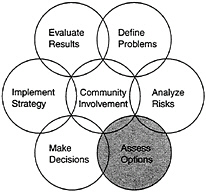
The preceding stages in the framework for environmental risk management lead to the formulation of risk management goals, the identification of the chemicals, sources, affected media, and potential risks of contaminated sediments. Only after the risk-management goals have been defined and the risks assessed should management options be examined. A range of technologies are applicable to the management of contaminated sediments, and these technologies must be identified and analyzed, and their benefits, effectiveness, costs, feasibility, and adverse consequences compared. All technologies might be appropriate under some site and contaminant conditions, but no technology exists that is generally applicable or preferred for the management of all contaminated sediments. Even at a single site, the application of multiple technologies is likely to be required to achieve risk-management goals. The lack of a single generally applicable and effective option means that site-specific analyses are needed to determine which combination of technologies best meet the identified goals (as determined in stage 1) at the least cost and with the most benefit to the environment and the community.
The identification and selection of a risk-management strategy and its component management options should be based on a range of considerations, including effectiveness, permanence, implementability, risks associated with implementation, costs, and state and community acceptance. These factors must be evaluated relative to the identified goals and based on site-specific
|
Assessing Options
|
conditions. The affected parties should be included in the identification, selection, and evaluation processes. Without a clear statement of goals, it is not possible to evaluate and compare the effectiveness of any management option at meeting those goals. Without adequate consideration of site-specific conditions, the comparison is incomplete. The primary purpose of this chapter is to outline the process of identifying and evaluating contaminated-sediment management options and identify the characteristics of specific technologies that influence their selection at a particular site.
IDENTIFYING OPTIONS
Among the many different regulatory and nonregulatory approaches to reducing and managing risks of contaminated sediments are
-
Socioeconomic options.
-
Institutional controls.
-
Offsets.
-
-
Source control.
-
Natural attenuation and recovery.
-
Biodegradation.
-
Sedimentation.
-
-
In situ treatment.
-
Enhanced natural attenuation.
-
Capping.
-
-
Multicomponent removal and ex situ treatment.
-
Dredging technologies.
-
Pretreatment technologies.
-
Ex situ treatment, storage, and disposal technologies.
-
Technologies for management of residual contaminants.
-
Often the identification of potential management options occurs simultaneously with the identification and analysis of risks and potential risks. Input from all affected parties, including the public, industry, local community-based organizations, and government, is critical to the identification of an
appropriate range of possible options. In the identification of options, the initial emphasis should be on completeness. Possible options should not be arbitrarily eliminated prior to a systematic and thoughtful evaluation by all participants. The participation of concerned groups at this stage can also help to identify potential beneficial outcomes of some options that might not be readily apparent to others. Options that incorporate beneficial outcomes beyond that achieved simply by reducing the risks of contaminated sediments generally have a greater chance of acceptance and success, because they may be seen as win-win options. Examples of such beneficial outcomes include creation of green space, habitat, and wetlands or the use of dredged material for fill.
Many of the potential technologies for management of contaminated sediments were initially developed to manage contaminated soils. Unfortunately, many of these technologies are difficult to apply to contaminated sediments, and they might impose potentially unacceptable risks. Sites with contaminated sediments are often poorly controlled, dynamic systems containing large volumes of moderately contaminated material. An analysis of the Superfund Record of Decisions from 1982 to 19971 showed that the average contaminated-soil site considered for ex situ treatment contained 38,000 cubic yards of contaminated material and that the average site considered for in situ treatment contained approximately 105,000 cubic yards of contaminated material. Sites at which contaminated sediments occur, however, often contain in excess of 1,000,000 cubic yards of contaminated material and generally are not directly accessible. Soils can be removed in a relatively dry state for further processing, and sediments are removed as slurries with a high proportion of water that must be processed. The control of releases of contaminants is much more difficult during removal of submerged sediments than during removal of soil for ex situ treatment. The difficulty is due to limited control of the subaqueous environment as well as the sometimes profound chemical and physical changes that the sediment undergoes during removal (e.g., anaerobic to aerobic and wet to dry).
Identifying management options for contaminated sediment is also complicated by the multiple technologies often involved. The application of ex situ treatment or disposal of sediments, for example, typically introduces a complete train of technologies, including removal by dredging, temporary storage or pretreatment to reduce water content or volume, final dredged material treatment or disposal, and management of any residually contaminated materi-
als. In situ treatments, such as capping, are normally coupled with source control and often require long-term monitoring and maintenance. Natural-attenuation processes (i.e., biodegradation and sedimentation) are also a component of all contaminated-sediment management options, because these processes are expected to have an impact on any residuals left after application of other management approaches. Generally, large contaminated-sediment sites also require the application of different options at different portions of the site, each containing multiple technologies. The identification of sediment management options must recognize the entire train of technologies that constitute each option so that a fair evaluation and comparison of these options can be accomplished.
EVALUATING MANAGEMENT OPTIONS
The evaluation of management options requires definition of
-
The goals and objectives of the management actions (see Chapter 5).
-
A valid conceptual model of the sediment system to be managed (see Chapter 6).
Without definition of the management goals and objectives, it is not possible to measure the effectiveness of a management option. Without a valid conceptual model of the site, it is not possible to define how a management option can successfully meet the risk-reduction goals and objectives. The conceptual model must be based on site-specific conditions, and experience at other sites must be used to aid our understanding and not simply be presumed to represent default conditions at the site. Although a valid conceptual model of a site is a minimal requirement for success, it is recognized that many sites require much more. Large, complicated sites posing substantial risks and potentially large cleanup costs generally require development of an extensive database and sophisticated prognostic models to compare management options adequately and evaluate the risk reduction they can achieve.
The primary purpose of evaluating options at this stage is to develop the information and data necessary to compare and select a viable alternative from among the options. The evaluation is not designed to make that selection. The evaluation of options is often conducted by technical personnel who might not fully recognize or consider such factors as acceptability to the community. For this reason, the process of evaluating options is separated from making decisions, the next stage in the decision-making framework (see Chapter 8). Although options may be eliminated from further consideration during evalua-
tion due to technical infeasibility or other factors, elimination must be done cautiously to avoid prematurely eliminating options that might ultimately prove effective. For this reason, affected parties should participate in the development of the evaluation criteria and have input into the evaluation process.
The options for managing contaminated sediments vary greatly with respect to the site-specific factors that must be evaluated:
-
Feasibility.
-
Expected benefits and effectiveness.
-
Expected costs.
-
Potential adverse consequences.
-
Distribution of benefits, risks, and costs among various potentially affected groups.
All technologies have advantages and disadvantages when applied at a particular site, and it is critical to the evaluation that these be identified as completely as possible. For example, reducing risks from contaminated sediment in the aqueous environment might create other risks in the terrestrial environment. These risks might be to the same community affected by the in situ sediments or to other communities faced with transportation, treatment, or disposal of contaminated dredged material. The evaluation of sediment management options must take into account the entire train of technologies that constitute an option and the costs and potential risks throughout the life cycle of the options. Evaluation, screening, and ultimately, selection of an option depends on recognition of the full environmental, human, social, and economic costs of implementing that option. Incomplete evaluation, particularly neglect of required components of a management option or their environmental and economic costs, biases the evaluation.
Even if all components of a management option are considered, costs are difficult to estimate and compare. Management costs that are routinely available often use different bases and assumptions and can be influenced dramatically by site-specific conditions, such as the debris or the physical characteristics of the sediments. The existing database of costs is inadequate to provide anything more than a crude estimate of the costs of the application of a particular management option at a particular site. (See Table 5–1a,b for costs associated with management options, primarily dredging, at several PCB-contaminated-sediment sites.) Standardization of costing approaches has been advocated by such groups as the American Society of Testing and Materials; a proposed standard is under development by that organization. Such standardization, when combined with a detailed evaluation of site-specific conditions
that might affect costs, should improve the ability to predict management costs accurately and allow comparison of costs of various management options and remediation technologies.
The evaluation of options also requires assessment of their effectiveness. The primary goal of contaminated-sediment management is the protection of resources at risk, such as human or ecological health, commercial or recreational fishing stocks, or a particular endangered species. Ultimately, it would be preferable to choose management options that best protect affected resources or lead to their recovery. That takes time, however, and interim indicators of effectiveness, such as contaminant loss or exposure and risk to sensitive populations during and immediately after implementation of the option, are generally necessary. Assessing or predicting even short-term human health and ecological risks directly for all options at this stage can be exceedingly difficult.
An alternative for the evaluation and comparison of management options is to use contaminant mass flows as a surrogate measure of exposure and, ultimately, risk—that is, a technology may generally be assumed to result in reduced exposure and risk if it leaves less residual contamination in the sediment and puts fewer contaminants into the air and water than an alternative technology. Evaluation of contaminant mass flows for each management option can be most useful in the comparative rather than the absolute evaluation of potentially applicable management options by providing a systematic screening tool. A comparative analysis of mass flows can also help identify those components of an overall management strategy that largely control the overall exposure or risk and, therefore, should receive the most resources and effort for detailed evaluation.
Although contaminant mass flows can be useful, exposure and risk to human and ecological health ultimately drives the need for risk management and the success or failure of any management option. In particular, absolute rather than comparative analyses are needed to balance short-term acute risks, for example, from removal options with long-term risks, such as from in situ containment options. The actual magnitude of the resulting exposure and risk must be assessed for decision-makers to make these tradeoffs in the next stage of the framework.
Mass release or flow analysis can also be used to estimate concentrations in surficial sediment or overlying water. Ultimately, it is these quantities that are most closely related to risk. The long-term behavior of the concentration can then be used to define exposure and risk as a function of time. For example, if dredging and onshore treatment or disposal are used, the water concentrations increase during the dredging action but, if effective, decrease rapidly beyond that expected of natural-attenuation processes. Finally, if in situ capping is used, the concentrations in water and the risk might be reduced dramat-
ically over the short-term, but there is a possibility of cap failure at some later time, resulting in increased exposure and risk unless maintenance and repair are performed.
The relative importance of the exposure and risk is dependent upon the magnitude of the concentrations and the type of adverse effects caused by the contaminant. Long-term cancer risk in humans, for example, is usually assumed to be related to average exposure or dose, whereas noncarcinogenic risk is usually assumed to be significant only if a certain threshold is exceeded. Thus, the cancer risks associated with various management options can be compared by evaluating the cumulative exposure over time, and the noncarcinogenic risks can be compared by evaluating the maximum exposure or the period exceeding the threshold. Other more complicated risk factors must be evaluated by more sophisticated analyses.
There are at least two reasons why current risk might be of more concern than deferral of risks into the future. First, it is common practice to discount future gains and losses in recognition of rates of time preference and productivity of capital assets (e.g., Cropper and Portney 1990; Portney and Weyant 1999). So a given risk today is commonly viewed as more of a concern than an equivalent risk at some future date. Second, changing technology might make PCB-related risks less of an issue in the future. For example, if PCB-contaminated sediments are capped beneath clean sediments and if that cap is expected to last for a long enough time (say one century), it is possible that new technologies can be developed in the mean time to alleviate the risk. On the other hand, some might question whether it is morally acceptable to take actions that benefit society today, if those actions push risks off onto future generations (Kadak 2000).
Component Technologies of Sediment Management Options
A wide variety of management options exist for addressing contaminated-sediment problems. Socioeconomic options might provide offsets that improve human or ecological health or quality of life. Institutional controls attempt to reduce exposure to contaminants associated with sediments, for example, by restricting fishery usage or by providing alternative sources of fish.
Source control, often by treatment, removal, or containment, seeks to eliminate the causes of the contamination to ensure the permanence of management actions. Natural-attenuation processes are likely to affect the risk of the contaminants in the sediments. These processes combined with institutional controls are expected to limit exposure to the contaminated sediments. The primary natural process likely to reduce risk to PCBs at contaminated-sediment sites is stable burial by deposition of clean sediment, a process that
physically separates contaminants from organisms in the biologically active region near the sediment-water interface. A variety of more active in situ and ex situ options also exist for contaminated sediments. The application of ex situ treatment or disposal typically introduces a complete train of component technologies, including removal by dredging, temporary storage or pretreatment to reduce water content or volume, final dredged material treatment or disposal, and management of any residually contaminated materials, including air and water waste streams. All of these options pose varying degrees of effectiveness for any particular PCB-contaminated site. As indicated previously, the identification and comparative evaluation of these options as to effectiveness, cost, and contaminant losses and residuals must take into account all components of the individual options.
These general approaches to sediment management are addressed below. Excellent reviews of the remediation technologies including a description of their design, application, and effectiveness are already available (see Averett et al. 1990; EPA 1994a; NRC 1997). As a result, only outlines of the various approaches and the potential advantages, disadvantages, limitations, and applications are discussed here. The primary goal is to indicate the risks associated with the various options or their components and the conditions under which those risks might be problematic. An important consideration in the selection of a management option is balancing effectiveness with costs. Unfortunately, costs are very site-specific and highly variable and are often estimated on different bases, making generalizations on costs difficult. As a result, the costs of various management options are not discussed here except in general terms. To be useful, project-costing information must be reported much more completely with identification of major cost factors at a particular site.
Socioeconomic Options
Options for reducing exposure to PCBs include approaches that do not directly address the contaminated sediments in which they reside. Two types of approaches in this area include the use of institutional or administrative controls to limit exposure and access by groups at risk and the use of offsets to meet environmental goals by reducing risks from sources other than the contaminated sediments.
Institutional Controls
In the parlance of a previous report by the NRC (1997), institutional controls are “interim controls” implemented to minimize exposure to contami-
|
BOX 7–1 Administrative or Institutional Controls Are nonengineered instruments, such as administrative and legal controls, that minimize the potential for exposure to contamination by limiting land or resource use.
|
nants and reduce risk to humans and the environment until long-term management reduces risks to acceptable levels (see Box 7-1).
There are several general categories of institutional controls: government controls; informational devices; proprietary controls; and enforcement tools with institutional control components. Institutional controls involving PCB-contaminated sediments often take the form of government controls, such as fishing bans or fishing catch-and-release requirements, or informational devices, such as fishing advisories. These controls can also include physical measures, such as fences and signs, to limit activities that might result in exposure to contamination at a site. For example, in an effort to prevent or minimize exposure to fish with PCB contamination above a target risk level, signs warning against eating fish have been posted at most public boat-launch areas and recreational areas at Lake Hartwell in South Carolina since 1987 (Hahnenberg 1995, as cited in NRC 1997). As noted in the 1997 NRC report, in some cases fishing restrictions have been in place for so long that they have become de facto permanent solutions. For instance, PCB-contaminated fish and sediments were found in the upper Hudson River in the early 1970s. Health advisories against fish consumption from the lower river and a complete ban on fishing in the upper river have been in effect since the mid-1970s (Harkness et al. 1993).
The effectiveness of fishing controls is an open question. The committee responsible for the 1997 NRC report was unable to find enough information to document or analyze the risk reduction of either fishing bans or advisories. The committee summarized a study by Belton et al. (1985) that illustrates the compliance problems involved. This study addressed a potential 60-fold increase in the risk of human cancer associated with the lifetime consumption
of PCB-contaminated fish from the Hudson-Raritan estuary area. The effectiveness of public-health advisories as risk-reduction measures was evaluated by a careful, multidisciplinary study of recreational fishers. Approximately 59% of those surveyed fished for the purpose of catching food. More than 50% of the respondents were aware of the warnings, and those who did not consume the fish were generally persuaded by a perception of unacceptable risks. But 31% of those who ate their catch did so despite believing it was contaminated. The researchers concluded that the broad-scale rejection of the health advisories was due to a combination of factors: the way the media were used, the nature and delivery of the health advisory, and personal predispositions that tended to reduce the credibility or usefulness of the communication.
In a more recent study (NYSDOH 2000), approximately half of the Hudson River anglers surveyed remained unaware of fish advisories, and approximately one-third ate the fish from the river. Of the anglers surveyed, however, only 6–7% indicated that their primary reason for fishing was for food, and 90% indicated that they were fishing primarily for recreation. Those that did eat the fish often shared the fish with women and children despite NYSDOH recommendations that these portions of the population eat no fish from the Hudson River.
Fishing controls might have more impact if fish advisories are available in multiple languages, are handed out with fish licenses, or are readily accessible on the Internet. For example, the state of Indiana maintains an updated fish consumption advisory on its official website. Also, local health or environmental management personnel should be encouraged to visit local fishing holes and advise people about the risks of eating the fish they catch (i.e., enforce catch-and-release laws associated with a fish advisory).
Institutional controls involving PCB-contaminated sediments may also take the form of legal restrictions on the use of aquatic or adjacent upland property (proprietary controls). These legal restrictions are often described in a restrictive covenant on the property that runs with the land executed by the property owner and recorded with the register of deeds for the county in which the site is located. The restrictive covenant may contain measures prohibiting uses (e.g., residential) or activities (e.g., recreational fishing) more likely to result in exposure to residual contamination on the property. The restrictive covenant may also provide for continued access to the site by appropriate agencies. The restrictive covenant may be removed, upon notice to and approval by the appropriate federal or state agency, if and when residual contamination on the site finally achieves acceptable risk levels.
Like fishing bans, proprietary controls are only as effective as the willingness of local, state, or federal authorities to monitor and enforce such restrictions. Given that restrictive covenants may allow for residual contamination
on the site, questions remain whether such measures truly reduce risks from exposure over the long term (see Chapter 4 for more discussion of community concerns regarding institutional controls).
In summary, institutional controls “may be advisable when sediment contamination poses an imminent danger and immediate risk reduction is required” (NRC 1997). The committee finds that institutional controls might also be advisable as a supplement to long-term controls and technologies when management actions that would reduce contaminant risks to acceptable levels are impracticable and long-term solutions necessarily involve natural-attenuation processes. Although few data are available concerning the effectiveness of institutional controls, the measures identified above appear to be practical and are likely to reduce risk to some (albeit unknown) degree. Other advantages include low costs and ease of implementation.
When institutional controls form part of the management strategy, they should be negotiated at the same time as the remainder of the strategy rather than after the strategy has proved to be ineffective. Negotiating institutional controls as part of the management strategy will allow maximal flexibility in achieving a solution acceptable to directly affected parties. To be effective, however, the controls must be understandable, monitored, and enforced.
Offsets
Offsets can be an effective way to attain environmental goals in a technically feasible and cost-effective manner and can facilitate negotiations among affected parties. Offsets trade off an increase in environmental harm by certain actions against an equivalent or greater reduction in harm by other actions. For example, suppose there is a goal to reduce aggregate pollution emissions from all sources by 50%. An offset might reduce overall emissions by 50% or more by reducing emissions by more than 50% at sites that are inexpensive to control and simultaneously allowing current levels of emission at sources where pollution control is very expensive. The goal is to think creatively to identify and pursue win-win solutions that are preferred by all parties.
Typically, offsets focus on controlling pollution emissions. However, such control is not likely to be effective for a pollutant like PCBs, where zero emission is the environmental goal. Instead, offsets might focus directly on impacts to humans and the environment. For example, the community might agree to bear some risk from PCB-contaminated sediments if the responsible party agree to offset that risk by reducing other risks to human health. In such a case, a community might opt to have a catch-and-release program for its contaminated fish, if the responsible party restores a contaminated river bank
rather than dredging deep-water sediments. A plan to restore wetlands or avoid the anticipated loss of a critical habitat area might be used to offset ecological impacts from PCB contamination.
If all parties cooperate and think creatively, offsets can result in solutions that reduce overall impacts to the community and simultaneously reduce costs to the responsible party. Again, the key is to implement offsets within the context of a negotiation process that identifies solutions that are preferred by all affected parties.
The design of this type of system for offsets requires several steps. First, all potential PCB impacts must be identified. Next, a set of feasible actions must be identified to offset each type of impact. All affected parties should be involved in identifying impacts and the set of potential offsetting actions, and all affected parties should be satisfied that the proposed set of actions at least offsets the PCB-related impacts. Finally, alternative sets of actions that both offset all PCB-related impacts and result in a cost savings relative to PCB risk management can then be identified. The least costly set of actions that fully offset PCB-related impacts is then implemented, or an alternative set may be chosen if agreed to by all affected parties.
Source Control
Many of the contaminated-sediment problems faced by the nation are a legacy of the poor control of industrial and municipal effluents in the period prior to the passage of the Clean Water Act. With respect to PCBs, much of the problem stems from effluents and activities before to the ban on PCB usage and also before effective control of PCB sources. Because of the historical nature of the PCB-contamination problem, sediments now often serve as a major contributor of PCBs to overlying water rather than as a sink for external sources. In some areas, however, uncontrolled land-based sources of PCBs continue to release contaminants to the water and, due to their strongly sorptive nature, to the sediments. The first goal of any management activity is to conduct a critical assessment of the sources of the sediment contamination and control sources that are significant relative to the sediment cleanup goals. Significant source control might have been achieved already, however, and further source control might be more difficult to manage than the residual sediment contamination that might result. If a significant external source is not identified or is allowed to persist, then efforts to reduce risk through other management options might not be successful. Controlling on-going sources is consistent with the EPA contaminated sediment management strategy (EPA
1998), which has as its first goal “preventing the volume of contaminated sediment from increasing.”
Identification and control of remaining sources of PCBs to a water body and to the sediments is often difficult but is a necessary part of developing an accurate conceptual model of a site. Full development of an accurate, verifiable, material-balance-based mathematical model of the site remains one way to identify other as yet unidentified sources. A detailed database and understanding of the fate and transport processes of the contaminant are a necessary prerequisite to the development of such a model. However, these requirements are unlikely to be met except in the case of the most studied sites where the expense of sophisticated model development can be justified by the potential risks and costs associated with risk management of the site. As shown in Box 7-2, even sites that have received a great deal of study might have significant sources that go unrecognized. Although finding all external sources might be difficult, the long-term cost of inadequate source control is that site remediation might have to be repeated at some time in the future.
A continuing source of sediment PCB contamination often results when the water body is adjacent to a contaminated-soil site. Runoff of surface contamination, continued seepage of groundwater contaminants, or movement of nonaqueous-phase liquids can pose a continuing source of PCBs to the sediments. Lack of source control might make sediment management efforts unsuccessful. In other cases, a continuing source, if not significant, might limit the cleanup levels that are achievable. In addition, if it is not possible to control the migration of contamination from the soil site, it might be appropriate to manage the sediments to lessen the impact of the contamination on the water body. In such a situation, continuous monitoring and periodic remediation of the contaminated sediments might be alternative management options. In any event, no “walk-away” solution is possible without adequate source control.
One of the most difficult sources to quantify and control is urban storm-water runoff and combined sewer overflows. Since the overflows are episodic in nature, it is often difficult to monitor and characterize these releases effectively. Due to improved control and management of other potential sources of PCBs and over time, the amount of PCBs associated with storm water runoff or combined sewer overflows is likely to be much less than that in decades past, but it still might be important relative to target sediment cleanup goals. PCBs are strongly sorbing, and even low water-borne loads might lead to significant sediment concentrations. King County, Washington, is eliminating combined-sewer overflows at Denny Way, where sewers overflow from the south end of the city of Seattle, partly to avoid recontamination of remediated sediments (King County 2000).
|
BOX 7–2 Location of Additional Sources of PCBs on the Hudson River From the late 1940s until 1977, two General Electric capacitor manufacturing plants near Fort Edward and Hudson Falls, New York, discharged PCBs into the Hudson River. Much of the sediments accumulated behind a dam at Fort Edward that was removed in 1973. Subsequent high-flow events on the river led to dispersal of the PCBs throughout the Hudson River. The site was proposed for listing on the National Priorities List in 1983. In 1984, on the basis of a lack of a technologically feasible, cost-effective management alternative, in-place containment of remnant shoreline deposits was selected to mitigate the most significant threats to human health and the environment. No action was taken on dredging the river system. In the late 1980s, significant decreases in fish-tissue PCB levels were observed. Despite extensive study of the river prior to the issuance of a record of decision, however, another source of PCBs to the river was found in 1991. In that year, a failure of a gate in an abandoned paper mill at Hudson Falls led to a significant increase in PCB loading to the Hudson River. PCB loadings into the lower portions of the river, which had decreased to about 2 pounds (lb) per day by 1990, increased to 5–10 lb/day in 1991 and 1992 (Farley et al. 1999). A large pool of PCBs was found entering the river through the abandoned paper mill and via fractures in the surrounding bedrock. Containment and removal actions taken since 1991 have led to the removal of 136 tons of PCBs from this source. This represents a quantity of PCBs equal to about half of all of the PCBs estimated to be within the river system at the time of the Record of Decision in 1984. Groundwater extraction systems have been installed in an attempt to contain the PCBs in the fractured bedrock but the current PCB load due to this source remains 0.2–0.4 lb/day or 10–20% of that from other sources (Farley et al. 1999). The significance of the continuing source in slowing natural attenuation of the surficial sediments and decreasing fish-tissue PCB levels remains a subject of debate and analysis. It is clear, however, that this source was and continues to be sufficiently significant that it must be included in the assessment and evaluation of the potential effectiveness of management options for the river. The continuing source might have gone largely unnoticed without the gate failure, but seepage from the bedrock could have posed a long-term source that would have at least slowed any natural attenuation of the system and could have substantially reduced the effectiveness of any management option undertaken prior to its identification. |
Natural Attenuation
EPA (1999b) defines natural-attenuation processes for soil or groundwater as including “a variety of physical, chemical, or biological processes that, under favorable conditions, act without human intervention to reduce the mass, toxicity, mobility, volume, or concentration of contaminants in soil or groundwater. These in situ processes include biodegradation; dispersion; dilution; sorption; volatilization; radioactive decay; and chemical or biological stabilization, transformation, or destruction of contaminants.” Since natural-attenuation processes will affect all contaminated sites to some extent, an evaluation of the change in risk with the passage of time posed by natural-attenuation processes should be a component of all risk-management proposals. Some natural-attenuation processes, such as dispersion, dilution, and volatilization, might transfer the risk at one location to another location, which might or might not reduce overall risk. Other processes, such as biodegradation and sorption, and stabilization through burial, might produce overall risk reduction. However, in water bodies with PCB-contaminated sediments, stable burial by deposition of clean sediment (i.e., sedimentation) is often the major natural-attenuation process that can lead to further recovery of the water body. Natural-attenuation processes will be a part of any management strategy, because some residual PCBs are expected to remain at a site despite efforts to remove all contamination. These residual PCBs might be in marginally contaminated areas outside the area receiving more active management efforts, or they might be the residual contamination remaining within the remediated zone.
The question then is not whether natural attenuation should be considered a part of a risk management strategy, but how much should it be relied upon for reduction of risk to humans and the environment, and how can this risk reduction be measured? (See Chapter 4 for a discussion of community concerns regarding natural attenuation.) Because many of the processes that might attenuate contaminants are different in sediments than in other environmental media, the direct application of existing protocols for natural attenuation of contaminants in soils and groundwater is inappropriate. Reduction of the PCB content in fish through time might be used as one indicator of the effectiveness of natural attenuation, because fish consumption frequently is the major pathway of PCB exposure to humans. Sloan (1999) provided data on changes in lipid-based PCB content in Hudson River fish. The concentration in all species combined dropped over a 15-year period from 1983 to 1998 in both the upper Hudson and lower Hudson, in spite of a major increase of PCBs in fish that appears to have occurred in 1991 as a result of a major upper Hudson PCB discharge, which resulted from a gate failure in an abandoned paper
mill. Using the regression line provided (Sloan 1999), one can calculate a first-order rate of PCB decrease in fish of about 3% per year for the upper Hudson and about 4% per year for the lower Hudson. The rates of reduction might have been greater if the 1991 spill had not occurred.
As indicated in Box 7-1, however, the spill allowed identification of a continuing source of PCBs to the river, which became more obvious as sediment contaminant levels were reduced by natural-attenuation processes. As another measure of risk reduction, source control with the reduction in PCBs through time might be useful. For example, the PCB discharge from the Saginaw River to Saginaw Bay, Michigan, decreased from about 4,500 kilograms (kg) in 1972, when point-source PCB discharges were first regulated, to 110 kg in 1991, a rate of decrease of about 20% per year (Verbrugge et al. 1995). That relatively high rate undoubtedly reflects the combined effect of source control and natural attenuation, a decrease of 14% since 1979 is perhaps more indicative of the portion attributable to natural attenuation, although the data available are inadequate for good statistical analysis. A similar decrease in PCB discharges from the upstream reaches of the lower Fox River in Wisconsin is discussed in Box 7-3.
Natural Attenuation by Biodegradation
Of the natural-attenuation processes, biodegradation is generally considered the most desirable because it can result in elimination of risk. However, biodegradation does not always result in complete destruction of a compound; it results more often in the transformation of one compound into another. The daughter products can at times be even more hazardous than the parent compound. Thus, a knowledge of biodegradation pathways is needed to properly evaluate whether biological processes are likely to be beneficial in risk reduction. The biodegradation pathways of the collection of chlorinated compounds that comprise the PCBs differs depending upon whether the degradation occurs in the presence of oxygen (aerobic processes) or in its absence (anaerobic processes). A detailed discussion of the various pathways is given in Appendix E. Generally, anaerobic processes are most effective in removing chlorine atoms from PCB molecules containing more than three chlorine atoms, particularly when they are located at what are termed the meta and para positions rather than the ortho positions. Aerobic processes are more effective at complete destruction of the PCB molecule when it has three or less chlorine atoms. (See Appendix E for a more detailed discussion of the fate of PCBs in the environment.) A combination of anaerobic and aerobic processes can result in complete destruction of PCB molecules. However, the rate of natural biodegradation of PCBs is often slow. The slow rate is due partly to the poor
|
BOX 7–3 Simulation of Natural Attenuation of Upstream Reaches of Lower Fox River, Wisconsin The lower Fox River extends 39 miles from Lake Winnebago to Green Bay, Wisconsin. Beginning in the mid-1950s, paper mills along the river began using PCBs, primarily in carbonless copy paper. Recycling of this paper discharged substantial quantities of PCBs into the river and out into Green Bay. In 1990, over 4,000 kg of PCBs remained within the upstream reaches of the Fox River between Lake Winnebago and the DePere Dam, 7 miles upstream of Green Bay. Studies of the upstream reaches demonstrate the importance of sediment stability, partially through burial by depositional processes, on containment of the PCBs and reduction of PCB fluxes within that reach of the river. Because natural-attenuation processes are generally slow, there are rarely sufficient time-series data to demonstrate the rate and extent of natural attenuation. Instead, sophisticated mathematical models that simulate future behavior are required to predict the effects of natural recovery. If natural attenuation is included as part of the management strategy, continued long-term monitoring should provide the time-series data needed to validate and calibrate the model and improve its predictions. During the early 1990s, the Wisconsin Department of Natural Resources sponsored the development of such a model for the upstream reaches of the lower Fox River (WDNR 1995). The model was able to simulate the available observations of a variety of PCB congeners while modeling a 1-year period between May 1989 and April 1990. The upstream Fox River model predicted that 143 kg of PCBs were transported over the DePere Dam during this period and 19 kg were released to the air by volatilization. Of this 162 kg total, all but 2 kg were estimated to have entered the water column by release from the bed sediments. Using the calibrated model to predict future behavior, the mass of PCBs estimated to be transported over the DePere Dam was expected to decrease by a factor of two every 5 years primarily due to burial of contaminated sediments by clean sediments. Although these predictions suggested that PCB transport during normal flows over the DePere Dam would decrease dramatically, similar simulations in the downstream reaches would be required to predict PCB transport into Green Bay. Separate simulations also showed that a major storm event during 1989 and 1990 could have caused significant increases in transport of PCBs. A simulation of such an event suggested that 140 kg of PCBs could be resuspended, leading to 81 kg being transported over the DePere Dam, 6 kg being volatilized, and the remaining 53 kg being distributed over the upstream reaches. The significance relative to sediment-management decisions depends on the probability of such an event occurring during the early years of natural attenuation as well as the potential consequences. In either case, prognostic modeling remains the only tool available for assessment in the absence of sufficient time-series observations. |
bioavailability of PCBs because of (1) their strong tendency to sorb to sediments, (2) their generally low concentrations, especially in water where they are more readily available to biological attack, and (3) their complex structure. Probably no single organism is capable of complete destruction of PCBs. A single organism might be capable of degrading or transforming only a few of the 209 different possible PCB isomers or congeners. Thus, many different organisms are generally required to effect more complete PCB biodegradation, and all those required might not be naturally present at any given time or place. In addition, there is yet no good evidence that microorganisms benefit from PCB transformations. The transformations occurring might be a fortuitous process, carried out by enzymes present in microorganisms for other purposes, a process termed cometabolism. If no direct benefit is received, the process might not be reliable and might depend upon other factors affecting the viability of the PCB-transforming organisms.
Given the above, what in general can be said about the potential for biodegradation to reduce PCB risk? Anaerobic biodegradation tends to be most effective for the more-chlorinated PCB congeners. The dioxin-like PCB congeners tend to be modified most readily by anaerobic transformations, and thus the arylhydrocarbon receptor (AhR)-mediated toxicity of the critical PCB congeners can be reduced significantly by anaerobic processes. The proportion of nondioxin-like PCBs present is then increased. Thus, anaerobic biodegradation might cause a change from a prominence of dioxin-like toxicity to a prominence of nondioxin-like toxicity. Anaerobic transformations also reduce the chlorine content of PCB molecules, making them more mobile, less sorptive, and more susceptible to aerobic biodegradation. Frequently, “weathered” PCBs are noted to be more toxic per unit total PCB mass, than “non-weathered” PCB mass (Giesy and Kannan 1998). That difference is probably the result of the loss through diffusion and volatilization of the lesser chlorinated PCBs, leaving behind the more highly chlorinated and toxic congeners. Thus, some natural-attenuation processes might render the remaining PCBs mixture more toxic per unit mass, and others, such as biodegradation, might render them less toxic. The particular processes involved in change in PCB mass must be clearly understood by site risk assessors to draw valid conclusions about risk reduction.
Natural Attenuation by Sedimentation
One of the most important natural-attenuation processes affecting risk reduction of PCB-contaminated sediments is sedimentation itself. Historically, contaminated sediments often developed in net depositional environments. If the hydraulic conditions of the water body have not changed, natural attenua-
tion is often assisted by the continuing deposition of clean sediments. For PCBs, which are persistent and subject to only limited degradative processes in the environment, burial by deposition of clean sediment may be the dominant natural-attenuation process. Because this process does not change the contaminant levels at depth in the sediments, it is often viewed with concern and distrust, particularly by affected communities. Changes in hydraulic forces, for example, by dam removal or major flooding or storm events, might also cause erosion of the sediments and mobilization and transport downstream of contaminants. Stable deposition and burial, however, can result in substantial recovery of resources at risk, for example, fish in the overlying water. Natural-attenuation processes might or might not lead to recovery of the water body or resource at risk. Whether natural-attenuation processes can be viewed as natural recovery depends on whether risk-management goals are met and maintained over the long term. That is, natural recovery depends on the ability of attenuation processes to maintain risk reduction to humans and ecological health over an extended time and not necessarily on the reduction of concentration levels in the contaminated sediments.
Key factors affecting sedimentation and benthic stability are the energy of the overlying flow and whether a particular sediment deposit is net erosional or depositional. Under high-flow conditions, a bed sediment deposit tends to be coarse grained and noncohesive with little sorptive capacity and low depositional rates. Substantial amounts of sediment and associated contaminants can be suspended in the water. Because most persistent sediment contaminants such as PCBs are associated with the solid phase, any mobilization of the solid phase dramatically increases contaminant mobility. However, high suspended sediment levels in a water body does not necessarily mean that the bed and its associated contaminants have been resuspended. High suspended sediment loads may result from surface runoff or simply transport from upstream.
In low-energy environments, deposits are typically fine-grained, providing high sorptive capacity and significant slowing of advection and oxygen transport. Low-flow conditions might stem from low runoff during dry periods, from a widening of a stream to a pool in a pool-riffle system, or from hydraulic controls, such as a dam, which contributes to sediment accumulation immediately upstream. Under stable sediment conditions, even relatively thin layers of sediment pose important barriers to contaminant transport and release to the overlying water. Deep within the sediments, the release or fate of contaminants from the bed sediment is largely governed by physicochemical and microbial processes. Important physicochemical processes include advection, diffusion and sorption and desorption. Because PCBs are highly sorbing, however, advection and diffusion processes in the pore water are severely retarded because of accumulation on the sediment solids.
Generally, the most important process within stable sediment deposits is bioturbation, the mixing of sediments associated with the normal life-cycle activities of sediment-dwelling organisms. This process is inherently faster than pore-water based advective and diffusional processes. Many organisms, especially head-down deposit feeders, prefer fine-grained, organic-rich sediments, enhancing uptake and bioturbation in those areas where PCB accumulation is most likely and where advective and diffusive processes are normally suppressed. The presence of these organisms tends to produce a relatively well-mixed zone of sediment near the surface. This biologically active zone largely governs the extent of exposure to benthic organisms and overlying water. It is important to note that the contaminant concentration in the biologically active zone might not be represented well by a depth-averaged composite concentration which is typically measured (see Chapter 10, Box 10-1). Freshwater benthos, for example, might populate in large numbers only the upper 5–10 centimeters (cm) of sediments. In marine sediments, animals living at the sediment-water interface tend to be larger and influence a larger sediment depth. The region of sediment heavily affected by benthic organisms, however, tends to remain 5–15 cm, and occasional deeper excursions by organisms generally do not significantly affect the overall mass of contaminants or the exposure of animals living in overlying waters. More than 90% of the 240 observations of bioturbation mixing depths in both fresh and salt water reported by Thoms et al. (1995) were 15 cm or less, and more than 80% were 10 cm or less. Almost all of those estimates were based on measurements of the vertical distribution of various radionuclides, measurements that have proved to be useful tools in identifying erosion and deposition rates and the degree of mixing within the upper layers of sediment. The observed effective particle diffusion coefficients fell within the range of 0.3 to 30 cm2 per year more than two-thirds of the time. Recognizing the strong sorption of PCBs to particles, that observation suggests that bioturbation can move contaminants at least 10–1,000 times faster than molecular diffusion in the pore water. Thus, depositional processes that bury contaminants below the biologically active zone can provide effective containment of contaminants unless episodic flooding or storm events are capable of returning the deep contaminated layers to the surficial sediments and the biologically active zone.
In summary, it is clear that some natural-attenuation processes, notably burial in a stable system, can reduce risk, and others, such as bed erosion, dilution, dispersion, and volatilization, may simply transport the risk elsewhere. Because different natural-attenuation processes have such different impacts on risk management, it is not sufficient to quantify natural attenuation without adequate characterization of the particular processes involved at a given site. The important processes effecting natural attenuation at a given site must themselves be characterized to understand the long-term effective-
ness of a given management option, the rate at which risk is likely to be reduced, and the potential for transporting risk to some other location. Natural attenuation by deposition is most effective in areas that are hydrodynamically stable and that have sedimentation resulting in the burial of contaminated sediments. In contrast, this process might not be effective in areas that are subject to continuous or episodic erosion and exposure of deep sediments or in areas where sources are not yet controlled. To characterize the natural-attenuation processes properly, mathematical models are often required because of the complexity of the many processes involved.
Recommendations for evaluating natural-attenuation processes in groundwater (NRC 2000) can be applied similarly to PCB contamination in sediments:
-
Evidence of natural-attenuation processes should be used to document which mechanisms are responsible for observed decreases in contaminant concentration.
-
A conceptual model of sites being considered for natural attenuation should be prepared to show where the contaminants are moving.
-
Field data on natural attenuation should be analyzed at a level commensurate with the complexity of the site and the contaminant type.
-
A long-term monitoring plan should be specified for every site at which natural attenuation is approved as a formal remedy for contamination.
In Situ Treatment Options
In situ treatment options are often designed to enhance natural-attenuation processes. Risk reduction as a result of natural-attenuation processes in sediments is often due to depositional processes that carry the contaminant below the biologically active zone. Similarly, in situ containment by capping with clean sediments has been proposed as a sediment management option. The extremely slow transport processes of diffusion or advection in the region below the biologically active zone provide effective containment of sorbing contaminants, such as PCBs (e.g., Palermo et al. 1998).
In situ treatment options that do not rely upon physical separation from the biologically active zone have been considered but have not yet been demonstrated at the field scale for PCBs. Biological-degradation processes could be implemented in situ, but most PCBs degrade only slowly or to a limited extent in sediments, as discussed above. In principle, biological degradation could be enhanced by the addition of required substrates and nutrients or reagents or catalysts (Koenigsberg and Norris 1999), but no effective in situ delivery system has yet been developed for contaminated sediments. An effective
delivery system would likely involve mixing of the sediment, encouraging resuspension and loss of both sediments and contaminants. The lack of an effective delivery and homogenization system has also hindered the application of in situ stabilization systems. A demonstration in Manitowoc Harbor, Wisconsin, also encountered difficulties in the management of pore water released by the solidification process (Fitzpatrick, W., Wisconsin Department of Natural Resources, Madison, WI, personal communication, 1994 as cited in EPA 1994a). As a result of these limitations, in situ treatment and stabilization technologies are unlikely to be used except when the contaminated sediment can be isolated from the water body, for example, through sheet piling or temporary dams. In situ treatment options that do not involve delivery of chemicals to the sediments have also been proposed. In situ vitrification uses electricity to raise sediments to sufficiently high temperatures to produce a glass-like product (EPA 1995). The energy costs of heating high-moisture-content sediments to glass-formation temperatures are formidable, and the technology is unlikely to be used except for small volumes of highly contaminated sediments.
In the absence of other in situ contaminated-sediment treatment systems that have been demonstrated to be effective, attention is focused here on capping. For ease of placement, sand or other coarse media are normally used as capping material. Geomembrane material may be used beneath a cap in soft sediments to aid in the support of the cap and stones, or other large material may be used as armoring on top of the cap to reduce cap resuspension and erosion. The purpose of a cap is to separate contaminated sediment from organisms living at the sediment-water interface, isolate the chemical contaminants from the overlying water, and provide protection from breaching as a result of cap erosion. A cap may be placed upon undisturbed contaminated sediments or upon dredged material that has been discharged back to the water column in a separate location from where it was generated. Due to the potential for contaminant losses during removal and subsequent placement, capping dredged material is generally only considered for the management of marginally contaminated sediments in regions where navigation needs necessitate sediment removal.
Capping contaminated sediment is usually implemented by either
-
Thin-layer capping, also referred to as enhanced natural attenuation.
-
Thick-layer capping and armoring.
Thin-layer capping or enhanced natural attenuation is the process most closely related to natural sedimentation processes. By placing a thin layer of clean sediment over the contaminated sediment, the process is potentially less disruptive of the benthic community. Because the sediment-water interface
tends to approach an equilibrium state, the small modification provided by a thin-layer cap is potentially more stable than a thick-layer cap without additional armoring. A layer of only 5–15 cm will generally isolate the bulk of the contaminants from the benthic community and the overlying water. Isolated penetrations of a thin-layer cap can still occur, however, but are unlikely to lead to aquatic organism exposure to significant contaminant mass. As indicated earlier, the depth effectively mixed by benthic organisms rarely exceeds 15 cm, even in the marine environment. Primary concerns associated with thin-layer capping is the long-term stability of the capping layer without armoring and the ability to accurately place a thin layer of sediment. Accurate placement of a thin-layer cap requires shallow water depths for better control of material placement and sediments of sufficient static strength to support a cap without intermixing with the bottom sediments.
Thick-layer capping is the conventional approach to containment of contaminated sediments. Cap thicknesses are normally 20 cm to as much as 1 m. The larger depths help ensure that an isolating cap layer remains even if there is significant heterogeneity in placement thickness or small amounts of post-placement erosion. However, the larger depth of capping material might result in load-bearing problems for an underlying soft sediment or require placement in multiple layers to allow the underlying sediment to consolidate and develop sufficient strength to support the cap layer. Once placed, however, the load of the cap can contribute to the consolidation and strengthening of the underlying sediment, aiding in its stability even in the event of major storms that might remove the cap. A membrane layer can also be used to provide strength for the underlying sediment during placement, but the requirement for a membrane layer has been demonstrated in only a few cases. A number of examples exist of the placement of sand caps of 20–50 cm directly over sediments with a surface undrained strength of less than 1 kilopascal (Palermo et al. 1998). A capping pilot-scale demonstration (1 hectare) over soft sediments was conducted by the National Water Research Institute of Canada in 1995. Although full-scale capping projects have been implemented, the pilot-scale project benefitted from the collection of extensive measurements before, during, and after capping to assess effectiveness and implementability. The results and the implications for cap effectiveness are discussed in Box 7-4.
Capping can also be used to promote wetlands and restore habitat. The lower layers of a cap may be used for chemical containment and physical separation of contaminants from organisms that might burrow or contact the sediments. The materials used for this portion of the cap should be selected to maximize their effectiveness in those roles—for example, sorbing amendments might be used to aid chemical containment, or grain size might be selected to control the type and extent of bioturbating organisms. The upper layers of a sediment can be selected to enhance habitat and tailored to the
|
BOX 7–4 In Situ Capping Demonstration at Hamilton Harbour, Lake Ontario Hamilton Harbour, located on the extreme west end of Lake Ontario, is contaminated with a variety of organic and metal compounds, including PCBs. The sediment is soft and exhibits low shear strength, but water depths of 12–17 m protect an area that was capped from even severe storm events. The 50-cm sand cap used was chosen to contain contaminants, and monitoring programs were developed to evaluate mixing during placement and release after placement. Capping sands were placed via tremie pipe from a feed hopper. Accurate placement was assured by cable anchoring of the sand barge with a winch to control horizontal movement. Three layers of sand were placed. The capping operation and its results are described by Zeman and Patterson (1997). Observations after placement indicated that the initial lift of sandy material intermixed with the underlying sediment, strengthening the sediment for subsequent sand placement. Subsequent sand lifts did not significantly intermix with underlying sediment. Turbidity plumes observed during placement were determined to be associated with a small fraction of fine-grained material with the sand and not by resuspension of the underlying sediment. The cap and underlying sediment consolidated 6–8 cm within a period of days after placement, consistent with laboratory assessment prior to the demonstration. As a result of consolidation as well as inaccuracy in cap placement and horizontal spreading of the cap material, the final cap depth was about 34 cm rather than the design depth of 50 cm. Coring subsequent to cap placement showed no sediment intermixing between the second and third sand lifts and the underlying materials. Core analyses also showed that contaminant levels of insoluble metals decreased from 100 to 1,000 of mg/kg in the sediment to effectively zero in the capping material. PCBs decreased from a maximum of about 0.2 mg/kg in the underlying sediment to about 0.01 mg/kg in the capping material. Soluble metals showed penetration into the capping material as a result of cap placement and consolidation, but pore-water levels at the cap-water interface were still effectively zero. |
species for which improved habitat is desired. Box 7-5 illustrates how a capping project can be used to enhance habitat. (See Appendix D for a more detailed description of the St. Paul Waterway problem area.)
Guidance exists for the design, placement and monitoring of a cap as a sediment management option (Palermo et al. 1998). This guidance includes quantitative information on design of armoring layers, design for contaminant containment and stability analysis during cap placement. A capping layer even 20 cm thick has been demonstrated to be an effective means of reducing
|
BOX 7–5 Capping and Habitat Restoration at St. Paul Waterway, Tacoma, Washington The St. Paul Waterway problem area was a 17-acre contaminated-sediment site located at the mouth of the Puyallup River near Tacoma, Washington. The area was contaminated by pulp and paper-mill operations over 6 decades. Discussions between the site owners; the Puyallup American Indian Tribe; various environmental groups; interested citizens; and federal, state, and local government officials led to the emergence of a comprehensive environmental cleanup and restoration approach. The approach included
The cleanup action and habitat restoration was initiated in 1987 and completed in 1988 (Weiner 1991). It involved a very deep cap in shallow water (4–20 feet in thickness depending on the area being capped and the desired tide flat habitat elevations) (Sumeri 1989, Sumeri et al.1994). The deep cap in shallow water allowed integration of the cleanup action with the creation of new intertidal and shallow-water habitat capable of supporting a diverse benthic community and higher organisms that could use that benthic community for food. Commencement Bay, in which the area is located, had lost about 90% of such habitat over the last 100 years. Monitoring 10 years after placement of the cap showed minimal redistribution of cap materials and the development of a productive habitat where none had previously existed (Parametrix 1999). There now exist diverse biological communities of benthic and epibenthic organisms. Shorebirds and salmon use the site for feeding and rearing, and tidal pools are abundant with invertebrates. The cost-effective project demonstrated the ability of capping to contain contaminants and provide viable habitat. The project remains one of the few sediment management efforts for which sufficient time-series monitoring (over 10 years) has been accomplished to demonstrate its success. The project was also the first completed Superfund cleanup in U.S. marine waters and the first natural resource damages settlement in the United States without litigation and with all federal, state and tribal trustees. |
chemical flux and effectively isolates the contaminated sediment from much of the mixing associated with benthic organisms (Palermo et al. 1998). Thus, the ultimate effectiveness of capping as a sediment management alternative is generally reduced to a question of the stability of the capping layer. Some applications have depended on natural features to contain material to be capped (Commencement Bay, Washington) or spreading of cap material (Sumeri 1989) beyond the bounds of the material to be capped (New York Bight, New York). Subsequent monitoring in both cases has shown little movement of cap material or movement of contaminants into cap material (Parker and Valente 1988). A more general approach, however, is to engineer an armored cap to ensure containment of capping material under a particular disturbance (Palermo et al. 1998). That containment might be especially important in that a cap might disrupt the equilibrium surface of a riverine system and might encourage further erosion.
Assessment of capping in any particular situation depends on the ability to describe the hydraulics of the water body in which the cap resides and the resulting potential for cap resuspension and erosion. Because most caps consist of noncohesive sandy materials, the ability to predict the onset of sediment resuspension and erosion is comparatively good. Quantitative evaluation of the potential for cap loss under a variety of flow conditions, including episodic storm events, can be conducted. The stability of a cap can be further enhanced by the addition of an armoring layer composed of stones or other material currently used for bank or levee protection. With proper design and armoring it is possible, in principle, to build a cap that would be stable in any storm or flow situation. As with any engineered structure, however, the potential for failure in a catastrophic event remains, and plans for monitoring and long-term maintenance of a cap must be part of any application of this approach.
One potential cause for a reduction in the effectiveness of a capping layer is substantial seepage of groundwater through the cap into the overlying water. In such a situation, PCBs present in the sediment pore water can be transported into the overlying body of water. As with any pore-water transport process, sorption in the cap material can slow this process. For hydrophobic organic compounds, such as PCBs, the addition of organic material in the capping layer can enhance sorption and retard the movement of the contaminant through the cap. Ultimately, however, continued groundwater movement can cause the migration of sufficient PCBs to saturate the overlying capping layer, resulting in breakthrough of contaminants into the overlying water. Substantial groundwater seepage might occur in near-shore areas of lakes and along the coast and in river systems not underlain by low permeability clays or bedrock. Solutions to this problem include hydraulic control of groundwater (e.g., a slurry wall or trench system to divert water around the contaminated sediments) or control of the permeability of the capping layer to minimize
seepage. Clay materials that expand upon placement in water or sediment solidification might also reduce seepage to manageable levels. Commercially available capping materials, such as Aquablok, a clay mineral-based capping material, also exhibit low permeability upon saturation with water and high resistance to erosion. The use of such material as a cap tends to divert groundwater seepage away from the contaminated sediments.
Although it is possible in principle to place and maintain a cap over contaminated sediments, a cap can be inappropriate at a given site for other reasons. The presence of a cap might hinder navigation or in the case of shallow environments, create unwanted wetland or upland conditions. The presence of a cap might also be incompatible with current or future uses of the water body or region. However, the cap can be used beneficially to create desired wetland areas or appropriate habitat at the sediment-water interface, as indicated previously, or to reclaim land by building the cap above the air-water interface. Sediment management options that include beneficial outcomes exhibit many advantages and are often more acceptable to the community than those that are viewed strictly as remediation efforts. Capping with clean sediments, with proper design and implementation, is a widely used and highly effective means of ensuring isolation of contaminated sediments in areas for which the resulting reduction in water depth is acceptable or desired. As with any engineered structure, however, provisions for monitoring and maintenance of a cap is necessary to ensure long-term containment.
As discussed above, in situ treatment options include capping and enhanced biological degradation. The use of capping is limited to sites where adequate placement and maintenance of the cap is feasible. For example, in situ containment by thick-layer capping and armoring can be an effective means of reducing risks where the cap can be maintained because of (1) a hydrodynamically stable environment, (2) adequate design of protective structures, and (3) adequate monitoring and maintenance of the containment system.
Removal Technologies
Options that involve removal of contaminated sediments from a water body are much more complicated than in situ approaches. Removal options generally require
-
Controls to minimize contaminant loss during sediment removal and transportation.
-
Pretreatment of produced dredged material for dewatering (i.e., removing water from the dredged material) and use of equalization basins to
-
assist in control of the rate of dredged material handled in subsequent steps in the treatment train.
-
Treatment or transport and disposal of the dredged material.
-
Management of the residual contamination left in the sediment as well as effluent streams from pretreatment or treatment operations (e.g., contaminated water).
Thus, removal options involve not only dredging but also several other component technologies to manage the dredged material. This discussion of removal options will consider the applicable component technologies separately:
-
Sediment removal via mechanical or hydraulic dredging.
-
Dredged material pretreatment technologies, including dewatering and particle-size separation.
-
Dredged material extraction, stabilization, or destruction technologies.
-
Dredged material disposal technologies, including upland and subaqueous disposal.
-
Options for management of residual contamination.
Sediment Removal Via Dredging
Key factors affecting the selection and performance of dredging or excavation technologies include
-
Production rate.
-
Solids content of produced dredge material.
-
Resuspension of sediments and associated contaminants.
-
Dredging accuracy and residual contamination.
-
Operational limitations.
-
Availability.
Selection and design of removal technologies depend on those factors. The performance of some available technologies with respect to those factors is discussed below.
Hydraulic and Mechanical Dredging
Table 7–1 summarizes the key characteristics of the most common dredging types for the subaqueous removal of contaminated sediment. These dredges fall into one of two basic categories: (1) hydraulic dredges that primarily
TABLE 7–1 Summary of Operating Characteristics of Common Dredges
|
Dredge Type |
Operational Depths, m |
Production Capacity, m3 hr |
Solids Fraction, % by wt |
Accuracy, m (horizontal/ vertical) |
Resuspension Minimization |
Turbidity Generating Units, kg/m3a |
Debris Handling |
Maintenance Dredging Costs, $/m3b |
Comments |
|
Hydraulic |
|||||||||
|
Cutterhead |
1.2–15c |
25–2,500 |
37,183 |
1/0.3 |
Fair to good |
1.4–45.2 |
Fair to good |
36,956 |
Widely available in pipe sizes 6–30 inches |
|
Horizontal auger |
0.5–5 |
46–120 |
37,193 |
0.15/0.15 |
Fair |
|
Fair to poor |
36,956 |
|
|
Matchbox |
36,910 |
18–60 |
37,025 |
1/0.3 |
Fair |
|
Fair to poor |
36,956 |
Enclosed horizontal auger |
|
Dustpan |
2.5–19c |
19–3,800 |
37,183 |
1/0.15 |
Fair |
|
Poor |
36,956 |
Partially enclosed pure suction dredge |
|
Plain suction |
2–19c |
19–3,800 |
37,178 |
1/0.3 |
Fair |
7.1–25.2 |
Poor |
36,956 |
|
|
Mechanical |
|||||||||
|
Clamshell |
0–48d |
23–460 |
~in situ |
0.3/0.6 |
Poor |
17.6–55.8 |
Good |
37,018 |
Enclosed bucket (e.g. cable arm dredge) |
|
Excavator |
36,964 |
20–150 |
~in situ |
0.3/0.3 |
Poor |
11.9–89 |
Good |
37,019 |
|
|
Dry dredge |
36,956 |
50–80 |
0.2–0.5 |
0.3–0.3 |
Fair to good |
|
Good |
|
Excavator with hydraulic pump |
|
aKilogram of sediment resuspended per cubic meter of sediment dredged (from Nakai, 1978, as cited in Herbich and Brahme 1991) bRemediation dredging costs typically 2–3 times navigation dredging costs. cGreater depths achievable through use of submerged pumps. dDemonstrated depth of operation; greater depth is theoretically possible. Sources: EPA (1994a); Foster Wheeler Corp. (1999). |
|||||||||
use suction and hydraulic action to remove sediments, and (2) mechanical dredges that remove sediments by direct mechanical action. Hydraulic dredges typically exhibit high production rates and minimize sediment resuspension. Mechanical dredges are applicable for high solids content, low water production, improved performance in the presence of debris and obstructions, and greater accuracy. Hybrid dredges have also been used that are predominantly mechanical in action but also withdraw water to control migration of a resuspension plume. The selection of a particular dredging technology, or the risks associated with dredging relative to other management options, is dependent upon site-specific factors, and no general guidance can be provided. Some of the site-specific factors include sediment grain size and cohesiveness, the presence of debris, and the conditions controlling the relationship between the contaminant release and the exposure and risks faced by sensitive organisms. A more complete list of factors is included in Table 7–2.
There are a variety of specific dredge technologies other than those included in Table 7–1, but they have seen limited use in environmental dredging, and no evidence exists that they have significant, consistent advantages over the dredges listed (e.g., McLellan and Hopman 2000). In addition, there are a variety of minor variations on the types of dredges listed in Table 7–1 that have merits for particular applications.
One of the most important factors in the selection of dredges for removal of PCB-contaminated sediments is the resuspension potential. PCBs are largely associated with the solid phase in sediment beds, and therefore resuspension of particles results in resuspension of contaminants. Sediment characteristics, such as grain size, largely control resuspension. Fine-grained sediments settle the most slowly and result in the most resuspension in and around a head of the dredge. Dredging effectiveness is also limited by residual sediment contamination not targeted or captured by the dredging operation and the influences of debris, sediment heterogeneity, and dredge type. In the presence of large debris, hydraulic dredges can be ineffective or have increased resuspension rates. Hard, consolidated sediment layers, or hardpan, might make dredging overlying contaminated sediments extremely difficult and of limited effectiveness. Sediments also tend to settle back into the cuts of mechanical dredges, resulting in increased resuspension rates.
Hydraulic dredges operated slowly and with care to avoid unnecessary resuspension generally give rise to less resuspension than mechanical dredges or dredges operated to maximize production rate. Nakai (1978, as cited in Herbich and Brahme 1991) estimated releases of 5–45 kg of suspended solids per cubic meter of sediment dredged using hydraulic dredges in silt and clay sediments. That amount represents between 0.5% and 4.5% of the sediments dredged, assuming a typical sediment bulk (dry) density of about 1,000 kg/m3. Nikai also estimated releases of 25–90 kg of suspended solids per cubic meter
TABLE 7–2 Factors That Affect Contaminant Loss During Dredging
|
Category |
Factors |
|
Sediment type and quality |
Grain size Sediment cohesion Organic matter content Sediment density Volatiles concentration |
|
Dredging equipment and methods |
Type of dredge Dredge production rate Condition of equipment Equipment reliability Operating precision of equipment Sediment loss during operations Training and skill of operators |
|
Hydrodynamic conditions |
Water depth Morphology of shoreline Flows and suspended solids Waves, tides, and currents Hydraulic effects of dredging operations |
|
Water quality |
Temperature Salinity Density |
|
Source: St. Lawrence Centre 1993 (as cited in EPA 1994a). |
|
from mechanical dredges in silt and clay (i.e., approximately 2.5–9% of the sediments dredged). Resuspension from sandy sediments was as much as an order of magnitude less for either dredge type. Nikai refers to the production normalized resuspension rate as a turbidity-generating unit, and some of those are listed in Table 7–1. The use of the term turbidity-generating unit is misleading in that turbidity does not directly indicate resuspended sediment concentrations. Values shown in Table 7–1 are based on sparse data and should be used with caution. Kauss and Nettleton (1999), for example, measured water concentrations and estimated that an enclosed cable-arm mechanical dredge lost only 0.1–1.3% of the contaminants hexachlorobenzene and hexachlorobutadiene in a particular application. Unfortunately, the estimation of a mass release rate in such cases must be inferred from a dispersion model and cannot be estimated directly by evaluation of mass flows. Additional information on expected resuspension characteristics of dredge can be found in McLellan et al. (1989) and Hayes et al. (2000a,b).
In some cases, resuspension can be much greater than those estimates
suggest. Palermo et al. (1990) estimated that 20–30% of the sediment from a clay and silt bed was spilled from the clamshell during hoisting through the water in a particular situation. In another study, Kauss and Nettleton (1999) noted that the negative impact of debris on a cable arm hindered its ability to close and enhanced resuspension. Enclosed clamshells can reduce losses by a factor of about 2, and similar variations in resuspension potential can be realized by changes in operation of a particular dredge (McLellan et al. 1989). Debris, the presence of hardpan, poor control of operations, fine-grained, fluffy sediments, and use of nonoptimal dredging equipment can all cause sediment resuspension and residual contamination to be much greater.
There have been important improvements in hydraulic and mechanical dredging technologies in the past 10 years, but improvement has been largely limited to improvements in production rate and location and depth accuracy (McLellan and Hopman 2000). In general, improvement (i.e., reductions) in sediment resuspension and contaminant release come at the expense of volumetric efficiency and production rates. The low resuspension rates of the enclosed cable-arm dredge noted by Kauss and Nettleton (1999) were aided by continuous monitoring and in-water cycle times of 2–6 minutes during normal operation, much slower than would be expected during navigational dredging. During hydraulic hot-spot dredging in New Bedford Harbor in 1994 and 1995, efforts to control resuspension led to the capture of 160 million gallons of water, which had to be decanted and treated, while targeting the dredging of only 10,000 yd3 of sediments (an average solids concentration based on targeted sediments of little more than 1%) (Foster-Wheeler 1999)
Although resuspension-related contaminant loss can result in residual surficial sediment concentrations, the overall effectiveness of dredging is also reduced by contaminated sediments that are targeted but not captured by the dredge. Because historically contaminated sediments are generally found in net depositional environments, the highest concentrations are often found at depth in the sediment column. Difficulties in removing all the sediments can result in surficial concentrations that might increase after dredging because of the exposure of the more contaminated sediments at depth. Sediments that are difficult to dredge include those underlain by bedrock or hardpan. In such a situation, it is not possible to use overdredging or “overbite” to improve removal efficiency. Debris and boulders can also reduce removal efficiency. The difficulties of obtaining specific cleanup levels through dredging are illustrated in Box 7-6.
The effectiveness of dredging is also reduced by the presence of contaminated sediments that are not targeted by the dredge. Hot-spot dredging, for example, only targets contaminants within the region containing elevated concentrations. The success of such an effort, even if 100% effective at capturing targeted sediments, depends on the extent to which the hot spot contrib-
|
BOX 7–6 Effectiveness of Dredging PCB Contaminated Sediments at Massena, New York Between 1959 and 1973, hydraulic fluids used at the General Motors facility in Massena, New York, contained PCBs, a portion of which were ultimately released to the sediments in the adjacent St. Lawrence River. In 1995, approximately 13,000 yd3 of sediment adjacent to the facility were dredged for removal of PCBs to a target level of 1 mg/kg. The management activities and results are described in BBL (1996). Removal of boulders and debris was conducted by mechanical excavation, and subsequent sediment removal was conducted by horizontal auger dredge. The selection of a horizontal auger dredge was based on expected removal efficiency and minimization of sediment resuspension. Containment of sediments resuspended by dredging operations was originally attempted with silt curtains, but high flows in the river forced the placement of sheet piling to separate the dredging area from the river flow. The contaminated sediments were underlain with dense glacial till, which made it impossible to use overdredging to increase sediment removal efficiency. In areas in which initial concentrations exceeded 500 mg/kg, 15–18 dredge passes were required to reduce sediment concentrations below 500 mg/kg. In one particular area that initially exceeded 500 mg/kg, eight additional attempts, including multiple dredge passes, were conducted to reduce sediment concentrations. After as many as 32 dredge passes, the contractor had concluded, with EPA concurrence, that attainment of target cleanup levels in this quadrant was not possible with dredging alone. It was decided that capping the residual contamination was the most effective means of reducing surficial sediment concentrations and risk. A 6-inch sand cap with an additional 6 inches armoring by 2-inch gravel was placed over all sediment (75,000 ft2) that contained in excess of 10 mg/kg. A review of this management activity indicates that dredging alone was not sufficient to achieve desired cleanup goals due to resuspension within the sheetpile walls and the inability to remove all sediments as a result of underlying dense glacial till. A cap with an armoring layer, however, effectively separated at-risk species from the contaminants and was largely responsible for risk reduction for the most highly contaminated sediments at the site. The combination of dredging and mass removal for control of long-term risk and capping to control short-term risk is a highly effective, although expensive, means of managing contaminated sediments. |
utes to the risk to the resource of concern. If the elevated contamination levels are at depth in the sediment column and the risk is largely controlled by the surficial sediment concentrations in the surrounding area, the hot-spot dredging will not be successful at risk reduction. Hot-spot dredging of the Grasse
River by Alcoa, Inc., for example, has apparently not significantly reduced fish body burdens, despite removal of 84% of the targeted PCBs within the hot spot and an 86% reduction in average PCBs concentrations in the top 12 inches of sediment (Smith 1999).
Thus, residual sediment contamination can result from (1) leaving sediments nontargeted by dredging; (2) exposing previously buried sediments; or (3) contaminant losses during dredging. Therefore, surficial sediment concentrations may increase or decrease less than expected despite obtaining high mass removal rates. Because at least short-term exposure and risk is related to surficial sediment concentrations within the biologically active zone, mass removal itself might not achieve risk-management goals. Although the contaminated-sediment management strategy (EPA 1998) has a goal of reducing the volume of existing contaminated sediment, a goal more consistent with the proposed framework is reducing the volume solely to the extent that it reduces the broadly defined risks of the contaminated sediments.
The assessment of the effectiveness or ineffectiveness of dredging is a strong function of site-specific conditions. It is not possible to state generally that dredging is appropriate or inappropriate. At this time, the only guidance that can be provided is to identify conditions that hinder the successful application of a removal technology. As indicated above, these conditions include the presence of buried high contaminant concentrations near hardpan or bedrock, and the presence of significant quantities of debris or stone.
The current database on the success or failure of dredging is not sufficient to draw strong general conclusions as to its applicability in particular situations. This situation is changing rapidly, however, as a result of improved monitoring of dredging operations and increasing scrutiny of the success or failure of such operations. As an illustration, the nongovernmental organization, Scenic Hudson, has prepared a report on the effectiveness of environmental dredging (Scenic Hudson 1997). The General Electric Co. has supported the development of a database on sediment management projects, including those that used dredging (General Electric 1999). Other firms and an industrial group, the Sediment Management Workgroup, have supported the investigation of dredging activities in the Fox River and in Manistique Harbor, Michigan (Brown and Doody 2000). These reports are largely based on limited recent data sets, and several of the sites are still undergoing additional management. Furthermore, as will be discussed in Chapter 10, there appears to be some discrepancy in terms of the actual goals against which the various reports compared the results. It appears, however, that the greater scrutiny and oversight of dredging projects has caused more extensive monitoring to be conducted at sites undergoing management. It is expected that the resulting data sets will soon substantially improve our ability to understand the positive and negative consequences of removal actions.
Controls on Sediment Resuspension Losses
The impact of sediment and contaminants resuspended at the point of dredging can be reduced by the addition of sheet piling or silt curtains around the area to be dredged. Sheet piling provides the greatest control of both particulate and contaminant resuspension but might not be feasible or required at many sites. Silt curtains are designed to increase the residence time of suspended solids around the dredgehead, encouraging settling and reducing the amounts of resuspended sediments reaching the main body of water. Silt curtains are normally constructed of vinyl or polyurethane and are not capable of eliminating flow between the zones inside and outside the silt curtain. Generally, they also cannot be placed and maintained in the presence of any significant current. Where applicable, however, loss of suspended solids and particulate-bound contaminants might be effectively reduced by properly installed and maintained silt curtains.
Although potentially effective on suspended particles, silt curtains are not normally expected to reduce contaminant loss in dissolved form. As noted by DiGiano et al. (1993), the concentration of the dissolved-contaminant can be estimated by assuming local equilibrium for hydrophobic organic compounds between the suspended sediment particles and the water within the silt curtain. A statement of this equilibrium can be written
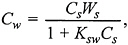
where Cw is the dissolved-phase concentration in the water, Cs is the suspended-solids concentration in the water within the silt curtain, Ws is the chemical loading on the sediment being dredged, and Ksw is the sediment-water partition coefficient. At low suspended-solids concentrations (Cs≪1/Ksw), the dissolved-phase concentration in the water is just the mass of contaminant resuspended by the dredge (i.e., all of the resuspended PCB is in dissolved form and not effectively contained by silt curtains). At high suspended-solids concentrations (Cs≫1/Ksw), the total water-borne concentration is higher, but the bulk of the contaminants are associated with suspended solids. Under these conditions, much of the PCBs are sorbed to suspended-sediment particles, but the dissolved-phase concentration is at its maximum. At high suspended-sediment concentrations within the silt curtain, the dissolved PCB concentrations would approach those found in the pore water of the sediment.
The effectiveness of a silt curtain and other means of controlling contaminant releases during dredging and shore operations are illustrated in Box 7-7, which describes a hot-spot dredging operation in the Grasse River, New York.
|
BOX 7–7 Effectiveness of Control Measures During Removal and Treatment of Dredged Material, Grasse River, New York The Alcoa, Inc. facility in Massena, New York, has historically discharged storm water and treated wastewater to the Grasse River. As a result of the past use of PCBs at the facility, sediments within the Grasse River were ultimately contaminated with PCBs. During 1995, a Non-Time-Critical Removal Action (NTCRA) was implemented on sediment in the most upstream contaminated areas. The monitoring conducted during the NTCRA allows an assessment of the effectiveness of various control actions that were implemented (Alcoa 1999; Thibodeaux et al. 1999). Mechanical excavation equipment was used to remove 390 yd3 of rocks and debris to expose the contaminated sediment. A total of 2,640 yd3 of sediment were removed using a horizontal auger dredge. Approximately 84% of the targeted sediment was removed by the action, but because of the presence of rocks and debris and a hard bottom, or hardpan, the ability to dredge to overcut to improve removal efficiency was limited. Despite removal of as much as 98% of the PCBs from the sediment column, the average PCB concentrations in surficial sediments (upper 8 inches) were reduced by only 53% (Thibodeaux et al. 1999). The entire dredging operation was conducted within a three-layer silt curtain. The dredged sediments were dewatered onshore and the water was discharged back to the Grasse River after treatment with a sand filter and granular activated carbon. Monitoring downriver showed that the silt curtain was effective at containing sediment resuspended during the dredging operations. Alcoa (1990) estimated that 8 yd3 of sediment were released through the silt curtains, which equals approximately 0.3% of the sediment dredged. They also estimated PCB losses through the silt curtain at 5–30 lb (2–14 kg), which is similar in percentage to that of sediment losses. Such correlation between PCB losses and sediment losses depends on the particle concentration in the escaping water and the partitioning of the PCBs between the particles and water. Silt curtains are not designed to contain water or dissolved contaminants, and no such correlation would be expected if the majority of the PCBs were not particle-bound. The dewatering operations produced 11,667,000 gallons of water that required treatment. Thibodeaux et al. (1999) estimated that 0.16 kg of PCBs were lost by volatilization, 11.7 kg of PCBs, presumably that fraction associated with particulate matter, were removed by sand filtration, and 0.33 kg of PCBs were taken up by the granular activated carbon. Less than 0.0045 kg of PCBs were returned to the Grasse River following treatment by the activated carbon treatment system. However, significant savings in water treatment costs would have been obtained if untreated water were returned to the area within the silt curtains. If it is assumed that the particulate-bound PCBs in the returned water were contained as effectively as the sediment resuspended during dredging, the net increase in PCB release through the silt curtains would have been only about 0.37 kg, far less than the 2–14 kg estimated to have been released due to resuspension during dredging itself. |
The illustration also shows the utility of mass-flow analysis in determining the most significant factors contributing to contaminant loss, in this case showing that water treatment can result in minor improvements in contaminant containment while dramatically increasing the cost.
Dry Excavation
In addition to conventional dredging approaches, it is sometimes possible to temporarily dam a water body, remove the overlying water, and conduct the contaminated-sediment removal via dry excavation. This approach has important advantages with respect to control of resuspension and minimization of residual contamination. Through this approach, the degree of control afforded land excavation can be applied to contaminated sediments. The hydraulic conditions of the waterway can make isolation and dewatering infeasible. Direct exposure of the contaminated sediments will also result in significant increases in volatilization of PCBs (Valsaraj et al. 1995). These evaporative losses must be assessed to ensure that the risk of exposure during the removal action is not unacceptable. However, in some situations, higher short-term risks may be considered acceptable to reduce long-term risks. This decision should be made in conjunction with all affected parties, including local community organizations. Evaporative losses are very high in freshly exposed sediments and may be controllable in a particular situation by working with small areas at a time. As with resuspension losses during subaqueous removal, evaporative losses during dry excavation are essentially negligible after completion of the risk management process, and the long-term risk is determined by untargeted or uncaptured residual contamination. Examples of dry excavation have been largely limited to near-shore sediments that can be readily isolated and might already be exposed under low-water or tidal conditions.
Summary of Removal Technologies
Ex situ remediation technologies, such as dredging and dry excavation, might be most effective for exposed and accessible hot spots that pose significant risks. Removal options, such as dredging and dry excavation, require pretreatment (dewatering and volume equalization) and appropriate treatment and disposal options for the excavated sediments (landfilling, treatment, incineration, or placement in a confined disposal facility) and for any separated liquids.
Although no dredge can remove all PCB contamination, dredging can remove a substantial mass of PCBs from contaminated areas. However, even
with substantial mass removal, sufficient PCBs might be left behind to cause water-quality and, hence, ecosystem risks. The importance of these residual PCBs depends to a great degree on natural attenuation processes, including deposition. In addition, the dredging process can result in the exposure of high PCB concentrations buried in the sediments directly to the water column and the dispersal of PCBs to other areas through resuspension. The effective removal of contaminated sediment with less dispersal can best be achieved through a relatively controlled dry excavation. For a contaminant such as PCBs, however, that must be done carefully and with small areas at a time to avoid unacceptable volatilization losses. Methods exist for prediction of volatile losses that could be used to assess the risks of this exposure pathway.
Wet excavations of contaminated sediment using either hydraulic or mechanical dredges, however, remains the more common approach. Mechanical dredges are preferred near submerged structures and when a large amount of debris exists in the sediment. Hydraulic dredges tend to produce less resuspended sediment if they are operated carefully in sediments with little or no debris. Silt curtains can aid in limiting dispersion of resuspended sediment and in evaluating the amount of resuspended sediment and contaminants generated by the dredge but cannot reduce the amount of dissolved contaminants dispersed in the water body. During wet dredging operations in silty clay sediments, loss and resuspension of 0.5–5% of the sediments can be expected during a single pass in the absence of debris or heterogeneities in sediment characteristics. The significance of such losses depends on the distribution of contaminants. Multiple dredging passes may be required to achieve desired sediment and contaminant recoveries even under ideal conditions.
Pretreatment Technologies
Dredged material removed from a contaminated-sediment site normally requires pretreatment prior to ultimate treatment or disposal. The purpose of pretreatment is normally twofold:
-
Remove excess water to reduce volume and aid subsequent treatment or disposal.
-
Provide a volume equalization basin to allow matching of dredging rates with subsequent treatment or disposal rates.
In navigational (not environmental) dredging, the material produced by mechanical means is close to in situ sediment density, and hydraulic means introduce much more water. In environmental dredging, the slower production rate and operational procedures to reduce contaminant and sediment resuspen-
sion generally increases the produced water content. It is not unusual to have mean water contents that exceed 90% for hydraulic dredging when attempting to minimize solids loss and resuspension (Foster Wheeler 1999; General Electric 1999). Reduction of these high water contents is normally necessary for subsequent cost-effective treatment or disposal of the dredged material.
Dredging is normally subject to wide variations in production rate. Even when pumping hydraulically dredged material as a slurry through a pipeline, wide variations in production rate result because of sediment heterogeneity and the presence of debris. Subsequent treatment or disposal steps often cannot maintain effectiveness if the feed rate is widely variable, and so a temporary storage system is normally required to serve as a basin for watering and volume equalization.
Variations in sediment conditions and production rates cause difficulties when adding coagulants within a dredged material pipeline to aid dewatering (Jones et al. 1978). Similar problems would be expected with the addition of nutrients or reagents to aid decontamination of dredged material or with any effort to feed the dredged material to a process unit for dewatering or other pretreatment operation. Among other pretreatment operations that have been considered is hydrocyclone separation of fine from coarse sediments (EPA 1994a). The organic fraction that contains the bulk of the PCBs can be separated from the clean sands in this fashion. No advantage is realized, however, unless the sand fraction is sufficiently clean that it can be returned for open water disposal or used as clean fill on land. The ability of a hydrocyclone operation to achieve these goals is dependent upon the sediment characteristics, particularly the particle-size distribution, and the distribution and potential for separation of the organic-matter fraction.
Because of these difficulties, pretreatment is normally limited to use of primary settling basins for dewatering. Potential contaminant concerns in such systems are evaporation of PCBs from the exposed sediment and overlying water (Valsaraj et al. 1995) and carryover of dissolved and suspended contaminants with the effluent water. The residual contamination in the effluent water is normally treated before discharge back into the water body. Due to low solubility and high sorptivity of PCBs, however, as well as the relatively high Henry’s Law constant or volatilization constants of many PCBs, the mass of PCBs normally associated with the produced water is very low compared with the mass of PCBs on the sediment. Despite that, regulations normally require treatment of the water produced from the dewatering cycle. A mass-flow analysis might suggest, however, that return of the produced water to the point of dredging, or within the silt curtain, can add a mass of PCBs that is negligible compared with the mass lost by resuspension by the dredge (see Box 7-7). In such cases, the expense of water treatment is difficult to justify. To address such concerns, the committee encourages regulatory agencies to
retain maximal flexibility to adapt to site-specific challenges and opportunities—for example, not requiring treatment of residual effluent streams that contain a small mass of PCBs.
Treatment and Disposal Technologies
In most sediment management activities that have been completed or are under way, the dewatered dredged material is either left in a confined disposal facility or transported to a landfill. In a confined disposal facility, the ultimate disposal is typically at the same facility in which primary dewatering has taken place. In an upland landfill, the partially dewatered dredged material may be further dewatered, for example, via filtering, and then transported for ultimate disposal.
If disposed of in an upland landfill, the dredged material is not normally subjected to further treatment. A confined disposal facility, however, can be useful as a treatment facility. Particular technologies that have been considered in a confined disposal facility include biodegradation, phytoremediation and solidification and stabilization. Problems include the heterogeneity of the dredged material and the difficulty of applying biodegradation and phytoremediation to the entire column of dredged material, which may be tens of feet thick. A completely confined disposal facility may be capped to control leachate production and vaporization and to provide a physical barrier to direct contact by terrestrial animals and birds. Additional development and field testing are required before these approaches will receive widespread acceptance.
In principle, the public is more supportive of treatment technologies that permanently destroy the contaminants, but the costs of these treatment technologies or disposal have generally not been competitive with landfill or disposal-facility placement. A recent review of eight technologies (PIANC 2000) suggested that contracts of 10 or more years involving the treatment of a million or more cubic yards of dredged material per year were required for sufficient economies of scale to make the technologies commercially viable. At sites where a large volume of sediment and effluent must be managed, technologies that generate a product that can be sold to offset the costs of the technology, might receive greater acceptance by some of the affected parties. These technologies would require development of regulatory standards that establish the safety of these product. These volumes are available only in large harbors subject to navigational dredging of sediments unable to be disposed of in open water (e.g., New York/New Jersey Harbor) or in a few large contaminated-sediment sites. It might also be possible to build centralized facilities capable of processing the contaminated dredged materials from
multiple sites although public acceptance would have to be gained and regulatory barriers would have to be overcome. Even treatment technologies that permanently destroy PCB-containing wastes, however, might generate residuals that are released to the environment or disposed of in licensed landfills.
There are a number of technologies that might be appropriate for contaminated sediment and competitive with landfill disposal under certain conditions, or they might significantly reduce the volume or toxicity of the material that could be placed in a landfill. It is not possible to address all of these technologies in this report, and the reader is referred to the more comprehensive technology summaries, which include costing information, such as PIANC (2000), EPRI (1999), General Electric (1999), and EPA (1994a,b,c).
Essentially all dredged-material treatment technologies can be characterized into one of three categories:
-
Extractive technologies that seek to separate the contaminants from the sediment, producing a residual material that is smaller in volume and has a greater variety of disposal options.
-
Stabilization or containment technologies that seek to minimize the mobility of contaminants and thereby reduce exposure and risk.
-
Destructive technologies that seek to eliminate the contaminant while producing an innocuous residual material.
Extractive technologies include thermal desorption, solvent extraction (including supercritical gaseous solvents), and soil washing for either particulate-size separation or contaminant removal. Stabilization or containment technologies include disposal in secure landfills as well as chemical processing to bind contaminants in a stable matrix, such as concrete. Destructive technologies are generally limited to thermal processes, such as incineration, vitrification, or high-temperature desorption followed by reduction. Nonthermal destruction technologies, such as biodegradation, are generally not suitable for PCBs because of slow or limited biological-degradation rates, as discussed previously in the section on natural attenuation.
Soil-washing technologies serve to reduce contaminant levels by partial removal of fine-grained particles and organic material that contain the majority of the contaminants. The net result is small reductions, by factors of 2 to 10, in the more-soluble contaminants in the sediments. Reductions in contaminant levels of less-soluble components, such as PCBs, are likely to be by a factor of 2 or less. Therefore, the sediment treated by washing might still require disposal in a secure landfill. The goal of some soil-washing technologies is production of a manufactured soil. In such cases, the ability to use the soil as fill depends on the availability of use-dependent quality standards and the ability of the washed sediment to meet those standards. The effectiveness of selected soil-washing processes is shown in Box 7-8. As illustrated by these
|
BOX 7–8 Effectiveness of Sediment Washing Sediment washing may be used to remove PCBs when fine-grained silt and clay fractions that generally contain the bulk of the PCB contamination represent only a small fraction of the sediments. Sediment washing can remove the fine-grained contaminated materials from the larger and cleaner sands and gravels, thereby reducing significantly the volume of contaminated material for subsequent treatment and disposal. The effectiveness of these processes is illustrated by two pilot-scale demonstration projects, a sediment washing and classification system at Saginaw River, Michigan (EPA 1994c) and a sediment washing and treatment system in New York/New Jersey Harbor (PIANC 2000). Saginaw River: Washing of Saginaw River, Michigan, sediments using a system designed by Bergman USA was demonstrated by the EPA Assessment and Remediation of Contaminated Sediments (ARCS) and Superfund Innovative Technology Evaluation (SITE) programs in 1991 and 1992. A total of 800 yd3 of Saginaw River sediments were dredged via open clamshell bucket for use as feed material during the demonstration. The feed material was relatively homogeneous and contained PCBs at 1.2±0.23 mg/kg. The process involved a separation of oversize material followed by three hydrocyclone stages to size segregate the sediments. Observed concentrations of PCBs in washed sand were reduced by more than 80% to 0.21±0.07 mg/kg, and concentrations in two fine-grained solid streams averaged 3.9±2 mg/kg and 2.2±0.4 mg/kg, respectively. Produced water contained PCBs at 1.34±0.54 micrograms per liter PCBs and was recycled back into the process. Successful application of this treatment process requires that the produced sand be sufficiently clean to allow alternative uses or disposal and that the volume of the more contaminated fine-grained solids be significantly smaller than the starting volume. New York/New Jersey Harbor: The sediment washing process developed by BioGenesis Enterprises was evaluated in a pilot-scale test by EPA Region 2, U.S. Army Corps of Engineers—New York District, and Brookhaven National Laboratory. The process used an initial washing step, a separation system to remove floating organic materials, a second washing step using a collision chamber, and a two-stage cavitation and oxidation system to reduce sediment contaminant levels. The resulting stream was separated using hydrocyclones and a centrifuge, and the resulting partially dewatered sediment was available for beneficial uses. During the treatment of 700 yd3 of material dredged from the Seaboro/Koppers Coke Site in Kearny, New Jersey, the process removed about 45% of the PCBs from an average sediment concentration of 0.398 to 0.22 mg/kg. Successful application of the process requires that the produced material be sufficiently clean to allow alternative uses or disposal. In addition, water and a floating organic stream require treatment prior to discharge. |
examples, product streams from a soil washing system can still contain high contamination, and the disposal or subsequent treatment of these streams must be included in the identification, analysis, and screening of sediment management options.
Other extractive technologies, such as thermal desorption and solvent extraction, are generally more effective than simple sediment washing. As with any extraction process, however, product streams and residuals contain the contaminants, and these streams generally require further treatment before disposal. Generally, the product streams are more concentrated in contaminants than the original sediment, since the desire is to reduce the volume of material for subsequent treatment or disposal. If the product stream is a fluid, either air or water, subsequent treatment might be more easily accomplished than treatment of the original sediment. If the product stream is a solid, subsequent treatment options might be identical to those available for the original contaminated sediment, but the reduction in volume might result in reduced overall costs. Because of the cost and complexity, solvent extraction has seen limited application to either sediment or soil remediation and is unlikely to be used except for specialized, small-volume applications. Thermal desorption has received somewhat wider usage and has been used in sediment management programs. Box 7-9 illustrates two examples of the effectiveness of thermal desorption and the residuals that might be produced. One example is low-temperature desorption, which has relatively low-energy requirements when applied to wet sediment but is limited in effectiveness. The second example is high-temperature desorption, which exhibits high effectiveness with correspondingly greater energy costs and process complexity. Both processes illustrate a key feature of extractive technologies: the products and residuals require further treatment or disposal.
Stabilization technologies involve introduction of additives to the dredged material to prevent mobility of contaminants, providing a more secure material for disposal, or a reusable product, such as flowable or solid fill for construction. The contaminant levels are normally unchanged except for dilution due to mixing with the various additives required to prepare the product. Stabilization is expected to significantly reduce the potential for leaching of the contaminants. An important barrier, however, is the lack of regulatory standards for use of the product. Fill standards based on total contaminant levels are not suitable for stabilized materials, while fill standards based on leachate tests, such as EPA’s toxicity characteristic leaching procedure (TCLP), may not be sufficiently protective or acceptable to the community. Examples of solidification and stabilization processes that are being applied to contaminated sediments are the flowable fill technology marketed by Pohlman Materials Recovery and the solidification process of OENJ Cherokee. In the flowable fill process, partially dewatered sediment is blended, after debris removal, with
|
BOX 7–9 Effectiveness of Thermal Desorption Thermal desorption enhances the evaporation of contaminants from soils and sediments. The resulting air stream can be treated for removal and destruction of contaminants prior to release to the atmosphere. Low-temperature thermal desorption has lower energy requirements, and high-temperature thermal desorption has the advantage of a high removal and destruction efficiency, which is typical of high-temperature processes. High-temperature processes, however, also involve high-energy costs associated with treatment of wet sediments and might result in the formation of dioxins and furans. The effectiveness of the process is illustrated with a pilot-scale demonstration on sediment dredged from Ashtabula, Ohio (EPA 1994b) and a full-scale management effort in Waukegon, Illinois (EPA 1995). Ashtabula River, Ohio: The Remediation Technologies (RETEC) Inc., process was evaluated in a pilot-scale demonstration on 36–55 gallon drums of sediment from Ashtabula, Ohio, in 1992 (EPA 1994b). This is a low-temperature (190–250°C) desorption process that collects particulate matter carried by exhaust gases with a cyclone separator and collects the vapors with a multistage condenser system. Average PCB concentrations in the sediments were 2.2 mg/kg before treatment and 0.4–0.8 mg/kg after treatment. The average removal efficiency was 82.8%, although efficiencies as high as 95.1% were observed. With low-temperature desorption, the PCBs are not destroyed. The bulk of the desorbed PCBs (as much as 55%) were collected in the condensate system. An activated carbon-polishing step collected as much as 6% of the desorbed PCBs. The remainder of the desorbed PCBs were not accounted for. Waukegon, Illinois: High-temperature (up to 1207°F) thermal desorption was used for the full-scale remediation of the Outboard Marine Corporation site in Waukegan, Illinois, during 1992 (EPA 1995). The process, developed by Soiltech ATP, involves a rotary kiln desorption under anaerobic conditions and with a mean solids residence time of 30–40 minutes followed by exhaust gas and water treatment. A total of 12,755 tons of soil and sediment containing an average of 10,484 mg/kg PCBs were treated, and 255 tons of soils and sediments containing extractable organic halides at 1,900 mg/kg were processed during a site process evaluation at the same site during June 1992. The treated soil contained an average of 2.2 mg/kg for greater than a 99.98% treatment efficiency. Because desorption was conducted under anaerobic conditions, PCBs in the effluent gases were removed with particulate collection devices and with an oil absorption system. Approximately 50,000 gallons of PCB-contaminated oil was produced that required subsequent disposal. PCBs released to the atmosphere met destruction and removal efficiency (DRE) targets (99.9999%), but meeting dioxin and furan emission targets required process modification. |
proprietary silicate binders and fine aggregate. Contaminants are not destroyed but are stabilized by incorporation into the physical matrix of the product. Reduction in mobility by 2–3 orders of magnitude is expected. Conventional stabilization of the New York/New Jersey Harbor sediments with Portland cement was conducted by OENJ Cherokee and used as a cap on a municipal landfill in Elizabeth, New Jersey. A similar project plan was to use 4.5 million yd3 of dredged harbor sediment as a cap on a 38-acre municipal landfill and a 97-acre industrial site in Bayonne, New Jersey. Because of the lack of quality standards for either the stabilized material or the leachate that it might produce, these processes are likely to be applied only to relatively clean sediments and only for use as fill in industrial or landfill applications.
As indicated previously, destruction processes are primarily thermally based. Conventional incineration has a high cost, results in the formation of dioxins and furans, and is subject to considerable community resistance. Alternative destructive processes might include the production of a reusable product, such as blended cement, lightweight aggregate, or glass from the dredged material. The blended-cement process includes the use of dredged material along with other components to produce cement. It would be necessary, however, to develop regulatory standards that establish the safety of these products. Thermal destruction in cement kilns to make cement, however, can raise air-emission permit and community-acceptance issues similar to those that arise for a conventional incinerator. The production of lightweight aggregate also uses rotary kiln technology for the destruction of contaminants and production of the aggregate. The production of glassy products from dredged material using a plasma torch has been proposed. Very high temperatures (in excess of 5,000°C) are achieved in the plasma torch, causing vaporization and degradation of organic materials in the dredged material. The final product is of high quality and essentially contaminant free. In situ vitrification is a similar process in which very high temperatures are achieved in situ with the accompanying potential for contaminant vaporization and degradation. High-temperature degradation processes can also be conducted under reducing (oxygen-free) conditions. Under these conditions, the generation of dioxins and furans might be minimized. The Eco Logic process (Eco Logic 1998) is a high-temperature (more than 850°C) desorption process followed by a gas-phase reduction reaction using hydrogen. The process can achieve high destruction efficiencies with minimal production of dioxins, furans, and other products of incomplete reaction (Eco Logic 1998). The high temperatures, associated energy costs, and complexity of the process, however, have limited its application to contaminated-sediment treatment.
The various nonthermal and thermal technologies, while providing permanence, are costly and not likely to compete on a cost basis with direct disposal of the dredged material in a landfill. The useful products that some of the
above processes produce have the opportunity to offset part of the cost of treatment if their introduction to the marketplace in large volume will not overly disrupt the market. The costs of these processes are also likely to be large except when large volumes are dredged because of economies of scale. It has been estimated, but not demonstrated, that many of these technologies can be implemented for $20–$60 per cubic yard of dredged material if amounts greater than 100,000 yd3 per year for 10–20 years can be guaranteed (PIANC 2000). The success of the various technologies and the products they produce currently depends on community and regulatory acceptance of their operation and the proposed usefulness of the products. The factor common to all treatment technologies for dredged material is that 100% effectiveness cannot be realized and that residual and effluent streams containing significant contamination might require further treatment or disposal or both. The contaminant losses, treatment and disposal of the residuals, and the risks involved need to be considered when identifying, evaluating, and selecting sediment management options. Inadequate consideration of such problems can give rise to inaccurate and misleading comparisons between removal and nonremoval sediment management options.
CONCLUSIONS AND RECOMMENDATIONS
A summary of the various risk-management options and the areas of potential risks that must be assessed is given in Table 7–3. Ultimately, the ability to make decisions, the next step in the management framework, requires that the process of identifying and evaluating options collects the information necessary to complete such a table. It should be emphasized that the table is a conceptual framework in which to consider the various options. The information needed to make decisions requires far more information and data about the individual options than can be presented in a simple table.
On the basis of the discussion in this chapter, a number of considerations should be kept in mind when identifying and evaluating options.
-
The current ability to reduce health and environmental risks from PCB-contaminated sediments through technical options alone is limited. Successful contaminated-sediment management and risk reduction requires a combination of technical and institutional options as well as natural attenuation.
-
There should be no preferred or default PCB-contaminated-sediment management option. The optimal option for a particular site is dependent upon site-specific factors and conditions and should be selected as a result of active participation by all affected by the decision.
TABLE 7–3 Sediment Management Options and Associated Risks
|
Option |
Component |
Goal |
Feasibility Cost |
Risk of Implementing |
Short-Term Risk |
Long-Term Risk |
|
Socioeconomic |
Institutional controls |
Sever exposure pathways |
|
|||
|
Source control |
|
Eliminate source |
||||
|
In situ management |
Natural attenuation |
Containment and degradation |
||||
|
Thin-layer capping |
Containment |
|||||
|
Thick-layer capping |
Containment |
|||||
|
Ex situ management |
Mechanical dredging |
Removal |
||||
|
Hydraulic dredging |
Removal |
|||||
|
Dry excavation |
Removal |
|||||
|
Pretreatment |
Dewatering, size separation |
|||||
|
Treatment and disposal |
Separation or destruction |
|||||
-
The first goal of any management activity for PCB-contaminated sediments should be to identify and, where possible, control the point and nonpoint sources that have caused and will continue to cause the contamination problem. The sources include, but are not limited to, run-off from contaminated soils, combined sewer overflows, and atmospheric inputs.
-
Effectively responding to the contaminated sediment at a site generally requires using options that involve multiple technological and institutional components, and the evaluation, screening, and selection of these options must consider all the components, their interrelationships, and their impacts. Seven broad rules govern the analysis of management options:
-
All sites require a conceptual model of the system, and the interaction of the management options with the sediments and contaminants is required.
-
The use of mass flows can assist in developing and testing the
-
-
conceptual model and can identify components of the management option that require additional review and analysis
-
Evaluation of options at large, complicated sites requires the development of a sophisticated understanding of the specific system dynamics and the ability to predict future contaminant behavior and risks that are likely to result from the application of each of the various management options.
-
The reduction of risks to human health and the environment at one location can often result in the creation of additional risks at other locations. The impact of these transferred risks and their acceptability to all concerned should be identified and fully explored.
-
Natural attenuation is a component of all contaminated-sediment management options. No remediation technology is effective in removing all sediment contaminants from a site, and all remediation technologies result in the production of contaminated residuals and effluents that cannot be eliminated by known or likely technology. Such contaminated residuals and effluents left in place must ultimately be subjected to natural-attenuation processes.
-
Removal options might produce short-term risks and, due to residual contamination from resuspension losses or leftover contaminated sediment, long-term risks that must be managed.
-
Nonremoval options might produce long-term risks due to the potential of exposure to the remaining contaminants, and provisions for long-term monitoring and maintenance is required.
-
The committee recommends that opportunities to restore or create critical habitats not be overlooked in the development and implementation of PCB-contaminated sediment risk-management strategies. Cleanup projects, such as the St. Paul Waterway Area Remedial Action and Habitat Restoration Project, demonstrate how sediment risk management can be successfully coupled with natural-resource restoration.
-
Research should be directed toward improving understanding of the acute and chronic exposure and risk associated with the various management options. Because the appropriateness and effectiveness of the various options are dependent upon site-specific characteristics, such research should be directed toward defining models that can be used to project mass flows for a particular management option as a function of site conditions.
-
A particular area of uncertainty is the long-term stability of sediments and sediment caps and the mode of failure if destabilized. Specifically, an ability is needed to quantitatively predict the extent of failure and the resulting exposure and risk in a low-probability storm or flow event.
-
-
Due to the inability to target or capture all contaminated sediments, a second particular area of uncertainty is the assessment of residual contamination mass and concentrations. Under what conditions will dredging be unlikely to reduce risk?
-
A third particular area of uncertainty is the assessment of the financial costs of a management alternative. Part of this uncertainty is due to the inability to adequately describe site conditions that influence the effectiveness and cost of management options. Part of this uncertainty is also due to the lack of a standard approach to accounting for present and future costs and inadequate representation of the entire life-cycle of management options.
REFERENCES
Alcoa. 1999. Analysis of Alternatives Report. Grasse River Study Area, Massena, New York. December.
Averett, D.E., B.D.Perry, E.J.Torrey, and J.A.Miller. 1990. Review of Removal, Containment and Treatment Technologies for Remediation of Contaminated Sediment in the Great Lakes, Final Report. Paper EL-90–25, U.S. Army Engineer Waterways Experiment Station, Vicksburg, MS.
Belton, T., B.Ruppel, K.Lockwood, S.Shiboski, G.Bukowski, R.Roundy, N. Weinstein, D.Wilson, and H.Wholan. 1985. A Study of Toxic Hazards to Urban Recreational Fisherman and Crabbers. Trenton, NJ: New York Department of Environmental Protection, Office of Science and Research. September 15 .
BBL (Blasland, Bouck & Lee). 1996. St. Lawrence River Sediment Removal Project Remedial Action Completion Report. Prepared for General Motors Powertrain, Massena, New York. Blasland, Bouck & Lee, Syracuse, New York. June.
Brown, M.P, and J.P.Doody. 2000. A Dredging Effectiveness Review—Case Studies and Lessons Learned. 16th Annual International Conference on Contaminated Soils, Sediments and Water, University of Massachusetts, Amherst, MA. October 16–19.
Cropper, M.L., and P.R.Portney. 1990. Discounting and the evaluation of lifesaving programs. J. Risk Uncertainty 3(4):369–379.
DiGiano, F.A., C.T.Miller, and J.Yoon. 1993. Predicting release of PCBs at the point of dredging. J. Environ. Eng. 119(1):72–89.
Eco Logic. 1998. PCB-Contaminated Soil and Sediment Treatment Using Eco Logic’s Gas-Phase Chemical Reduction Process. Rockwood, Ontario: ELI Eco Logic International Inc. July 18.
EPA (U.S. Environmental Protection Agency). 1994a. Assessment and Remediation of Contaminated Sediments (ARCS) Program: Remediation Guidance Document. EPA 905-R-94–003. Great Lakes National Program Office, Chicago, IL. October.
EPA (U.S. Environmental Protection Agency). 1994b. Assessment and Remediation of Contaminated Sediments (ARCS) Program: Pilot Scale Demonstration of Thermal Desorption for the Treatment of Ashtabula River Sediments. EPA 905-R-94–021. Great Lakes National Program Office, Chicago, IL.
EPA (U.S. Environmental Protection Agency). 1994c. Assessment and Remediation of Contaminated Sediments (ARCS) Program: Pilot Scale Demonstration of Sediment Washing for the Treatment of Saginaw River Sediments. EPA 905-R94–019. Great Lakes National Program Office, Chicago, IL.
EPA (U.S. Environmental Protection Agency). 1995. Remediation Case Studies: Thermal Desorption, Soil Washing, and In Situ Vitrification. EPA 542/R-95/005. Federal Remediation Technologies Roundtable, U.S. Environmental Protection Agency, Washington, DC.
EPA (U.S. Environmental Protection Agency). 1996. Assessment and Remediation of Contaminated Sediments (ARCS) Program: Estimating Contaminant Losses from Components of Remediation Alternatives for Contaminated Sediments. EPA-905-R-96–001. Great Lakes National Program Office, Chicago, IL.
EPA (U.S. Environmental Protection Agency). 1998. EPA’s Contaminated Sediment Management Strategy. EPA-823-R-98–001. Office of Water, U.S. Environmental Protection Agency, Washington, DC. April.
EPA (U.S. Environmental Protection Agency). 1999a. Treatment Technologies for Site Cleanup: Annual Status Report, 9th Ed. EPA 542-R-99–001. [Online]. Available: http://clu-in.org/products/asr/index2.html. [May 26, 1999].
EPA (U.S. Environmental Protection Agency). 1999b. Use of Monitored Natural Attenuation at Superfund, RCRA Corrective Action, and Underground Storage Tank Sites. OSWER Directive 9200.4–17P. Office of Solid Waste and Emergency Response, U.S. Environmental Protection Agency, Washington, DC. April 1999. [Online]. Available: http://www.epa.gov/OUST/directiv/d9200417.htm [June 16, 1999].
EPRI (Electric Power Research Institute). 1999. Review of Sediment Removal and Remediation Technologies at MGP and Other Contaminated Sites. Report No. TR-113106. Electric Power Research Institute, Palo Alto, CA. September.
Farley, K.J., R.V.Thomann, T.F.Cooney, D.R.Damiani, and J.R.Wands. 1999. An Integrated Model of Organic Chemical Fate and Bioaccumulation in the Hudson River Estuary, Manhattan College, Riverdale, NY. Final Report to the Hudson River Foundation. [Online]. Available: http://www.hudsonriver.org/
Foster Wheeler (Foster Wheeler Environmental Corporation). 1999. New Bedford Harbor Cleanup Dredge Technology Review, Final Report. Prepared for U.S. Army Corps of Engineers, New England District. March.
General Electric Company. 1999. Major Contaminated Sediment Site Database. [Online]. Available: http://www.hudsonwatch.com/mess/.
Giesy, J.P. and K.Kannan. 1998. Dioxin-like and non-dioxin-like toxic effects of polychlorinated biphenyls (PCBs): implications for risk assessment. Crit. Rev. Toxicol. 28(6):511–569.
Hahnenberg, J. 1995. Presentation at the Workshop on Interim Controls held July 31, 1995. Committee on Contaminated Sediments, National Research Council. EPA Headquarters, Chicago.
Harkness, M.R., J.B.McDermott, D.A.Abramowicz, J.J.Salvo, W.P.Flanagan, M.L. Stephens, F.J.Mondello, R.J.May, and J.H.Lobos. 1993. In situ stimulation of aerobic PCB biodegradation in Hudson River sediments. Science 259:503–507.
Hayes, D.F., T.Borrowman, and T.Welp. 2000a. Near field turbidity observations during Boston Harbor Bucket comparison study. Pp. 357–370 in Proceedings of the Western Dredging Association 20th Technical Conference and 32nd Annual Texas A&M Dredging Seminar, R.E.Randall, ed. CDC Report 372. Center for Dredging Studies, Texas A&M University.
Hayes, D.F., T.R.Crockett, T.J.Ward, and D.Averett. 2000b. Sediment resuspension during cutterhead dredging operations. J. Waterw. Port Coastal Ocean Eng. 126(3):153–161.
Herbich, J.B., and S.B.Brahme. 1991. Literature Review and Technical Evaluation of Sediment Resuspension During Dredging. Contract Report HL-91–1. Vicksburg, MS: U.S. Army Engineer Waterways Experiment Station. January.
Jones, R.H., R.R.Williams, and T.K.Moore. 1978. Development and Application of Design and Operation Procedures for Coagulation of Dredged Material Slurry and Containment Area Effluent. Technical Report D-78–54. Vicksburg, MS: U.S. Army Engineer Waterways Experiment Station.
Kadak, A.C. 2000. Intergenerational risk decision making: a practical example. Risk Anal. 20(6):883–894.
Kauss, P.B., and P.C.Nettleton. 1999. Impact of 1996 Cole Drain Area Contaminated Sediment Cleanup on St. Clair River Water Quality. Technical report. Ministry of the Environment, Toronto, Ontario. NTIS MIC-99–07256INZ.
King County. 2000. King County’s Combined Sewer Overflow (CSO) Control Program. Department of Natural Resources, Wastewater Treatment Division, Seattle, WA. [Online]. Available: http://dnr.metrokc.gov/WTD/cso/. [August 17, 2000].
Koenigsberg, S.S., and R.D.Norris, eds. 1999. Accelerated Bioremediation Using Slow Release Compounds: Selected Battelle Conference Papers: 1993–1999. San Clemente, CA: Regenesis Bioremediation Products.
McLellan, T.N., and R.J.Hopman. 2000. Innovations in Dredging Technology: Equipment, Operations, and Management. ERDCTR-DOER-5. Vicksburg, MS: U.S. Army Corps of Engineers, Engineer Research and Development Center.
McLellan, T.N., R.N.Havis, D.F.Hayes, and G.L.Raymond. 1989. Field Studies of Sediment Resuspension Characteristics of Selected Dredges. Technical Report HL-89–9. Vicksburg, MS: U.S. Army Engineer Waterways Experiment Station.
Nakai, O. 1978. Turbidity generated by dredging projects. Pp. 31–47 in Management of Bottom Sediments Containing Toxic Substances: Proceedings of the Third U.S./Japan Experts Meeting. EPA-600/3–78–084.
NRC (National Research Council). 1997. Contaminated Sediments in Ports and Waterways: Cleanup Strategies and Technologies. Washington, DC: National Academy Press.
NRC (National Research Council). 2000. Natural Attenuation for Groundwater Remediation. Washington, DC: National Academy Press.
NYSDOH (New York State Department of Health). 2000. Health Consultation 1996 Survey of Hudson River Anglers: Hudson Falls to Tappan Zee Bridge at Tarry-
town, NY. Final Report. CERCLIS No. NYD980763841. Troy, NY: New York State Department of Health, The Center for Environmental Health.
Palermo, M.R., J.Homziak, and A.M.Teeter. 1990. Evaluation of Clamshell Dredging and Barge Overflow, Military Ocean Terminal, Sunny Point, NC. Technical Report D-90–6. Vicksburg, MS: U.S. Army Engineer Waterways Experiment Station.
Palermo, M.R., S.Maynord, J.Miller, and D.D.Reible. 1998. Assessment and Remedation of Contaminated Sediments (ARCS) Program: Guidance for In situ Subaqueous Capping of Contaminated Sediments. EPA 905-B96–004. Great Lakes National Program Office, Chicago, IL. [Online]. Available: http://www.epa.gov/glnpo/sediment/iscmain/index.html [December 09, 1998].
Parametrix. 1999. St. Paul Waterway Area Remedial Action and Habitat Restoration Project. Final 1998 Monitoring Report. Prepared for Simpson Tacoma Kraft Company, Tacoma, WA, and Champion International, Stanford, CT, by Parametrix, Inc., Kirkland, WA. February.
Parker, J.H. and R.Valente. 1988. Long-Term Sand Cap Stability: New York Dredged Material Disposal Site. Contract Report CERC-88–2. Vicksburg, MS: US Army Engineer Waterways Experiment Station.
PIANC (Permanent International Association of Navigation Congress). 2000. Innovative Dredged Sediment Decontamination and Treatment Technologies, U.S. Section PIANC Specialty Workshop, May 2, 2000, Waterfront Plaza Hotel, Oakland, CA. [Online]. Available: http://www.wes.army.mil/el/dots/training/pianc.html [March 2000].
Portney, P.R., and J.P.Weyant, eds. 1999. Discounting and Intergenerational Equity. Washington, DC: Resources for the Future Press.
Scenic Hudson. 1997. Advances in Dredging Contaminated Sediments, New Technologies and Experience Relevant to The Hudson River PCBs Site. Prepared by J. Cleland for Scenic Hudson, Poughkeepsie, NY. April.
Sloan, R.J. 1999. Hudson River Fish and the PCB Perspective. Paper presented to the National Research Council Committee on Remediation of PCB-Contaminated Sediments November 8.
Smith, J.R. 1999. Non-time-critical removal action (NTCRA) pilot dredging in Grasse River. Pittsburgh, PA: Alcoa Inc. November 8.
St. Lawrence Centre. 1993. Selecting and Operating Dredging Equipment: a Guide to Sound Environmental Practices. Prepared in collaboration with Public Works Canada and the Ministere de l’Environement du Quebec, and written by Les Consultants Jaques Berube Inc. Cat No En 40–438/1993E.
Sumeri, A. 1989. Confined Aquatic Disposal and Capping of Contaminated Bottom Sediments in Puget Sound. Proceedings of the WODCON XII, Dredging: Technology, Environmental, Mining, World Dredging Congress, Orlando, FL, May 2–5, 1989.
Sumeri, A., T.J.Fredette, P.G.Kullberg, J.D.Geermano, D.A.Carey and P.Pechko. 1994. Sediment Chemistry Profiles of Capped Dredged Sediment Deposits Taken 3 to 11 Years After Capping. Dredging Research Technical Note. DRP-5–09. Vicksburg, MS: U.S. Army Engineer Waterways Experiment Station. May.
Thibodeaux, L.J., D.D.Reible, and K.T.Valsaraj. 1999. Effectiveness of Environ-
mental Dredging. Final Report to Alcoa, Massena, NY. Hazardous Substance Research Center/South and Southwest, Louisiana State University, Baton Rouge, LA.
Thoms, S.R., G.Matisoff, P.L.McCall, and X.Wang. 1995. Models for Alteration of Sediments by Benthic Organisms. Project 92-NPS-2. Alexandria VA: Water Environment Research Foundation.
Valsaraj, K.T., L.J.Thibodeaux, and D.D.Reible. 1995. Modeling air emissions from contaminated sediment dredged materials. Pp. 227–238 in Dredging, Remediation, and Containment of Contaminated Sediments, K.R.Demars, G.N. Richardson, R.N.Young, and R.C.Chaney, eds. Philadelphia: American Society for Testing and Materials.
Verbrugge, D.A., J.P.Giesy. M.A.Mora, L.L.Williams, R.Rossmann, R.A.Moll, and M.Tuchman. 1995. Concentrations of dissolved and particulate polychlorinated biphenyls in water from the Saginaw River, Michigan. J. Great Lakes Res. 21(2):219–233.
WDNR (Wisconsin Department of Natural Resources). 1995. A Deterministic PCB Transport Model for the Lower Fox River Between Lake Winnebago and De Pere, Wisconsin. Prepared by J.Steuer, S.Jaeger, and D.Patterson. Publication WR 389–95. Wisconsin Department of Natural Resources.
Weiner, K.S. 1991. Commencement Bay Nearshore/Tideflats Superfund Completion Report for St. Paul Waterway Sediment Remedial Action. Submitted to the U.S. Environmental Protection Agency for Simpson Tacoma Kraft Company and Champion International Corporation. January.
Zeman, A.J., and T.S.Patterson. 1997. Results of in situ capping demonstration project in Hamilton Harbour, Lake Ontario. Pp. 2289–2295 in Engineering Geology and the Environment: Proceedings: International Symposium on Engineering Geology and the Environment, Athens, Greece, June 23–27, 1997, P.G. Marinos, ed. Rotterdam, Brookfield: A.A.Balkema.


