
4
DIMETHYLHYDRAZINE occurs as symmetrical (1,2-dimethylhydrazine) and unsymmetrical (1,1-dimethylhydrazine) isomers. Unless otherwise specified, dimethylhydrazine refers to unsymmetrical dimethylhydrazine in this document. Both compounds are clear, colorless liquids. 1,1-Dimethylhydrazine is a component of rocket fuels and is also used as an adsorbent for acid gas, as a plant-growth control agent, and in chemical synthesis. Although it has been evaluated as a high-energy rocket fuel, commercial use of 1,2-dimethylhydrazine is limited to small quantities, and it is usually considered to be a research chemical. Because data are limited for 1,2-dimethylhydrazine, the acute exposure guideline level (AEGL) values for both isomers are based upon 1,1-dimethylhydrazine. Limited data suggest that 1,1-dimethylhydrazine may be somewhat more toxic than 1,2-dimethylhydrazine.
Data on acute exposures of humans to both isomers of dimethylhydrazine are limited to case reports of accidental exposures. Signs and symptoms of exposure include respiratory irritation, pulmonary edema, nausea, vomiting, and neurologic effects. However, definitive exposure data (concentration and duration) were unavailable for these accidents. The limited data in humans suggest that the nonlethal toxic response to acute inhalation of dimethylhydrazine is qualitatively similar to that observed in animals. No information was available regarding lethal responses in humans. In the absence of quantitative data in humans, the use of animal data is considered a credible approach for developing AEGL values.
Toxicity data of varying degrees of completeness are available for several laboratory species, including, rhesus monkeys, dogs, rats, mice, and hamsters (Weeks et al. 1963). Most of the animal studies were conducted using 1,1-dimethylhydrazine, although limited data suggest that 1,2-dimethylhydrazine exerts similar toxic effects. Minor nonlethal effects such as respiratory tract irritation appear to occur at cumulative exposures of less than 100 parts per million multiplied by hours (ppm·h). At cumulative exposures of 100 ppm·h or slightly greater than this level, more notable effects have been reported, including, muscle fasciculation, behavioral changes, tremors, and convulsions. Lethality has been demonstrated when cumulative exposures exceed these levels only slightly. The available data suggest that there is a very narrow margin between exposures resulting in no significant toxicity and those causing substantial lethality (the lethal concentration for 50% of the animals (LC50) ≈ 900–2,000 ppm·h).
Developmental toxicity of dimethylhydrazines has been demonstrated in rats following parenteral administration of maternally toxic doses.
Both isomers of dimethylhydrazine have been shown to be carcinogenic in rodents following chronic oral exposure and 6-mon inhalation exposure to 1,1-dimethylhydrazine. Increased tumor incidence was observed in mice, although these findings are compromised by the contaminant exposure to dimethylnitrosamine. An increased incidence of lung tumors and hepatocellular carcinomas was also seen in rats but not in similarly exposed hamsters. The U.S. Environmental Protection Agency (U.S. EPA) inhalation slope factors are currently unavailable for dimethylhydrazine.
AEGL-1 values for dimethylhydrazine are not recommended because of inadequate data to develop health-based criteria and because the concentration-response relationship for dimethylhydrazine indicated that a very narrow margin exists between exposures producing no toxic response and those resulting in significant toxicity.
Behavioral changes and muscle fasciculations in dogs exposed for 15 min to 1,1-dimethylhydrazine at 360 ppm (Weeks et al. 1963) served as the basis for
deriving AEGL-2 values. Available lethality data in dogs and rats indicated a near linear temporal relationship (n=0.84 and 0.80 for dogs and rats, respectively). For temporal scaling (C1×t=k) to derive values for AEGL-specific exposure durations, a linear concentration-response relationship, n=1, was used. (C=exposure concentration, t=exposure duration, and k=a constant.) This value was adjusted by an uncertainty factor of 30. An uncertainty factor of 3 for interspecies variability was applied, because the toxic response to dimethylhydrazine was similar across the species tested. This was especially true for lethality among rats, mice, dogs, and hamsters with LC50 values for time periods ranging from 5 min to 4 h. A comparison of LC50 values for the same exposure durations in these species did not vary more than 3-fold. An uncertainty factor of 10 was used for intraspecies variability. This was based primarily on the variability observed in dogs in which responses varied from one of extreme severity (vomiting, tremors, convulsions, and death) to no observable effects. Additionally, Weeks et al. (1963) indicated that dogs previously stressed by auditory stimuli may have potentiated their response to dimethylhydrazine. Based on these data, it was assumed that humans may be equally divergent in their response to dimethylhydrazine as a result of similar stresses.
The AEGL-3 values were derived from the 1-h LC50 (981 ppm) for 1,1-dimethylhydrazine in dogs (Weeks et al. 1963). Because of the steep slope of the dose-response curve of 1,1-dimethylhydrazine, the 1-h LC50 of 981 ppm was adjusted to estimate the lethality threshold of 327 ppm. An uncertainty factor of 3 for interspecies variability was applied for several reasons. The 4-h LC50 values for mouse, rat, and hamster differ by a factor of approximately 2 and were consistent with the dog data when extrapolated from 1 h using n=1. The more sensitive species, the dog, was used to derive the AEGL-3 values. An uncertainty factor of 10 for intraspecies variability was used since a broad spectrum of effects were seen including behavioral effects, hyperactivity, fasciculations, tremors, convulsions, and vomiting. The mechanism of toxicity is uncertain, and sensitivity among individuals may vary. Following identical exposures, the responses of the dogs varied from one of extreme severity (vomiting, tremors, convulsions, and death) to no observable effects. Temporal scaling as previously described was applied to obtain exposure values for AEGL-specific exposure periods.
Verified inhalation and oral slope factors were unavailable from U.S. EPA for dimethylhydrazine. A cancer assessment based upon the carcinogenic potential (withdrawn cancer slope factors) of dimethylhydrazine revealed that AEGL values for a theoretical excess lifetime 10−4 carcinogenic risk exceeded the AEGL-2 values that were based on noncancer endpoints. Because the risk for dimethylhydrazine exposure was estimated from nonverified sources and because AEGLs are applicable to rare events or single once-in-a-lifetime expo-
sures to a limited geographic area and small population, the AEGL values based on noncarcinogenic endpoints were considered to be more appropriate. The derived AEGLs are listed in Table 4–1.
1. INTRODUCTION
Dimethylhydrazine occurs as 1,2-dimethylhydrazine and 1,1-dimethylhydrazine isomers. Both compounds are clear, colorless liquids (Trochimowicz 1994). 1,1-Dimethylhydrazine is a component of jet and rocket fuels and is also used as an absorbent for acid gas, as a plant-growth control agent, and as a feedstock in chemical syntheses. Although it has been evaluated as a high-energy rocket fuel, commercial use of 1,2-dimethylhydrazine is limited to small quantities, and it is usually considered to be a research chemical (Trochimowicz 1994).
Trochimowicz (1994) published a review of the toxicology of dimethylhydrazines with most of the data obtained from studies with 1,1-dimethylhydrazine. Early data on the pharmacologic and toxicologic effects of dimethylhydrazines in laboratory animals by various routes of administration were summarized and noted involvement of the central nervous system, lungs, liver, and kidneys as targets. In the 1950s, additional studies were conducted to assess the acute toxicity of various hydrazines in animals following various routes of exposure. The toxicology of dimethylhydrazines has also been reviewed by the National Research Council (NRC 1985).
For derivation of AEGL values, acute exposure studies are preferentially examined. Subchronic and chronic studies generally have not been included in the data analysis for AEGL derivation because of the great uncertainty in extrapolating such data to acute exposure scenarios. Such studies may be addressed when the data provided relate to effects following acute exposures, provide meaningful insight into understanding toxicity mechanisms, or can be used for other special considerations.
The primary physical and chemical data for dimethylhydrazines are presented in Table 4–2.
2. HUMAN TOXICITY DATA
2.1. Acute Lethality
No information was located regarding the acute lethality to humans following inhalation exposure to dimethylhydrazine.
TABLE 4–1 Summary of AEGL Values for 1,1- and 1,2-Dimethylhydrazines
|
Classification |
30 min |
1 h |
4 h |
8 h |
Endpoint (Reference) |
|
AEGL-1 (Nondisabling) |
NR |
NR |
NR |
NR |
Not recommended due to insufficient data; concentration-response relationships suggest little margin between exposures causing minor effects and those resulting in serious toxicity.a |
|
AEGL-2 (Disabling) |
6 ppm 14.7 mg/m3 |
3 ppm 7.4 mg/m3 |
0.75 ppm 2 mg/m3 |
0.38 ppm 1 mg/m3 |
Behavioral changes and muscle fasciculations in dogs exposed at 360 ppm for 15 min (Weeks et al. 1963) |
|
AEGL-3 (Lethal) |
22 ppm 54 mg/m3 |
11 ppm 27 mg/m3 |
2.7 ppm 6.6 mg/m3 |
1.4 ppm 3.4 mg/m3 |
Lethality threshold of 327 ppm for 1 h estimated from 1-h LC50 in dogs (Weeks et al. 1963) |
|
Numeric values for AEGL-1 are not recommended because (1) the lack of available data, (2) data indicate that toxic effects may occur at or below the odor threshold, (3) the inadequate margin of safety that exists between the derived AEGL-1 and the AEGL-2, or (4) the derived AEGL-1 is greater than the AEGL-2. Absence of an AEGL-1 does not imply that exposure below the AEGL-2 is without adverse effects. Abbreviations: NR, not recommended; ppm, parts per million; mg/m3, milligrams per cubic meter. |
|||||
TABLE 4–2 Chemical and Physical Data for Dimethylhydrazines
|
Parameter |
Value |
Reference |
|
Synonyms |
1,1-dimethylhydrazine, unsymmetrical-dimethylhydrazine, asymmetrical-dimethylhydrazine UDMH, N,N-dimethylhydrazine, Dimazine; 1,2-dimethylhydrazine, symmetrical dimethylhydrazine, SDMH, N,N'-dimethylhydrazine |
Budavari et al. 1989 |
|
Chemical formula |
(CH3)2N-NH2 (1,1-dimethylhydrazine) CH3-NH-NH-CH3 (1,2-dimethylhydrazine) |
Trochimowicz et al. 1994 |
|
Molecular weight |
60 |
U.S. EPA 1987 |
|
CAS Registry No. |
57–14–7 (1,1-dimethylhydrazine) 540–73–8 (1,2-dimethylhydrazine) |
Budavari et al. 1989 |
|
Physical description |
liquid |
U.S. EPA 1987 |
|
Solubility |
soluble in water and alcohol; practically insoluble in ether |
ACGIH 1996 |
|
Vapor pressure |
156.8 mm Hg at 25°C (1,1-dimethylhydrazine) 69.6 mm Hg at 25°C (1,2-dimethylhydrazine) |
Jacobson et al. 1955 |
|
Specific gravity |
0.782 at 25°C |
ACGIH 1996 |
|
Boiling/melting point/flash point |
63.9°C/–58°C/–15°C (closed cup) |
Budavari et al. 1989 |
|
Odor threshold |
6–14 ppm; ammonia-like odor |
ACGIH 1996 |
|
Conversion factors in air |
1 mg/m3=0.41 ppm (unsymmetrical) 1 ppm=2.45 mg/m3 |
Trochimowicz et al. 1994 |
2.2. Nonlethal Toxicity
2.2.1. Acute Exposure Case Reports
Information regarding human exposures to dimethylhydrazine are limited to a few case reports. Although case reports provide qualitative data regarding signs and symptoms of exposure, no exposure concentration data or precise exposure duration data were reported. Signs and symptoms of exposure included respiratory effects, nausea, vomiting, neurologic effects, pulmonary edema, and increased serum enzyme levels (reviewed in Trochimowicz et al. 1994).
Inhalation (approximately 90-min duration) by two workers of Aerozine-50 (a 1:1 (weight/weight) mixture of hydrazine and 1,1-dimethylhydrazine) resulted in odor detection followed by a complaint of headache, nausea, weakness, burning of the skin, tightness in the chest, and soreness of the throat by one man (Frierson et al. 1965). Pyridoxine successfully ameliorated all symptoms except the tightness in the chest; bilateral pulmonary edema, wet rales, and tachypnea were later detected upon clinical examination. Subsequent examination some weeks later revealed no hematologic, pulmonary, hepatic, or renal sequelae. The second worker, although donning an air supply upon recognition of exposure, suffered severe dyspnea that forced egress from the situation. This individual developed pulmonary edema but recovered after pyridoxine and oxygen therapy and rest. An additional four workers were exposed to high levels of Aerozine-50 (no specific concentration values available) for about 2 h experienced severe nausea and vomiting, which was also successfully treated with intravenous pyridoxine.
Shook and Cowart (1957) provided a brief report regarding two individuals exposed during an accidental spillage of 1,1-dimethylhydrazine. Although exposure concentration data were not available, it was noted that the two men were approximately 750 yards from the spill. After being exposed to the release, the men experienced choking and difficulty in breathing. Four hours later both subjects became extremely nauseated and retained the odor and taste of the chemical for an unspecified period of time. This case report also provided evidence of subclinical hepatotoxicity in a group of workers following several months of occupational exposure to low (but unspecified) concentrations of 1,1-dimethylhydrazine.
2.2.2. Epidemiologic Studies
Epidemiologic studies regarding human exposure to dimethylhydrazine were not available.
2.3. Developmental and Reproductive
No data were available regarding the potential reproductive and developmental toxicity of dimethylhydrazine in humans.
2.4. Genotoxicity
Human genotoxicity data applicable to AEGL development for dimethylhydrazine were not available.
2.5. Carcinogenicity
No data are available regarding the potential carcinogenicity of dimethylhydrazine in humans.
2.6. Summary
The human experience regarding exposure to dimethylhydrazines is limited to case reports describing severe but nonlethal effects following accidental acute exposures. There are limited data suggesting subclinical hepatotoxicity following subchronic occupational exposure to unspecified low levels of 1,1-dimethylhydrazine. No definite exposure concentrations or durations were available in these reports, and the data are not useful for quantitative derivation of AEGLs.
3. ANIMAL TOXICITY DATA
3.1. Acute Lethality
Acute lethality studies in laboratory species are summarized in the following sections. The LC50 and other lethality values from these studies are summarized in Table 4–3.
3.1.1 Nonhuman Primates
No data were available regarding lethality in nonhuman primates following acute exposures to dimethylhydrazines.
3.1.2. Dogs
Jacobson et al. (1955) reported the deaths of dogs following 4-h exposures to 1,1-dimethylhydrazine at concentrations of 24, 52, or 111 ppm (192-min exposure). Mortality was 0/3, 1/3, and 3/3 for the three exposure groups, respectively. All deaths or terminations (one dog in the high-exposure group was terminated in extremis) occurred within the first day of initiation of exposure. All three dogs in the highest exposure group exhibited vomiting, panting, and convulsions prior to death. The one dog that died in the 52-ppm group also exhibited these signs prior to death, while the two surviving dogs exhibited
TABLE 4–3 Summary of Lethality Data for Dimethylhydrazine in Laboratory Species
|
Species |
Toxicity Value (ppm) |
C×t (ppm·h) |
Comments |
Reference |
|
Rat |
4-h LC50: 252 (1,1-DMH) |
1,008 |
|
Jacobson et al. 1955 |
|
Rat |
4-h: 338 (1,2-DMH) 4-h: 285 (1,2-DMH) 4-h: 210 (1,2-DMH) 4-h: 435 (1,2-DMH) |
1,352 1,140 840 1,740 |
50% mortality but not statistically-derived LC50 20% mortality 100% mortality |
Jacobson et al. 1955 |
|
Rat |
4-h LC50: 252 (1,1-DMH) 1-h LC50: 1,410 (1,1-DMH) 30-min LC50: 4,010 (1,1-DMH) 15-min LC50: 8,230 (1,1-DMH) 5-min LC50: 24,500 (1,1-DMH) |
1,008 1,410 2,005 2,058 2,042 |
Mortality over 24 h |
Weeks et al. 1963 |
|
Mouse |
4-h LC50: 172 (1,1-DMH) |
688 |
|
Jacobson et al. 1955 |
|
Hamster |
4-h LC50: 392 (1,1-DMH) |
1,568 |
|
|
|
Dog |
192 min: 111 (1,1-DMH) 4-h: 52 (1,1-DMH) |
355 208 |
100% mortality 33% mortality |
Jacobson et al. 1955 |
|
Dog |
1-h LC50: 981 (1,1-DMH) 15-min LC50: 3,580 (1,1-DMH) 5-min LC50 22,300 (1,1-DMH) |
981 895 1,858 |
Mortality over 24 h |
Weeks et al. 1963 |
|
Abbreviation: DMH: dimethylhydrazine. |
||||
nausea, panting, and incoordination, or no signs of toxicity. One dog in the low-exposure group also exhibited vomiting and convulsions but did not die. No changes were observed in hematologic values (hemoglobin level, red-blood-cell counts, leukocyte counts, prothrombin times) in any of the surviving dogs. Necropsy revealed pulmonary edema and patchy hemorrhage only in animals that had convulsions, possibly resulting from the seizures rather than direct test-article action. An LC50 was not estimated by the investigators.
In a study reported by Rinehart et al. (1960), three male beagle dogs were exposed to 1,1-dimethylhydrazine at 25 ppm 6 h/d, 5 d/w for 26 w. Although one dog died after the third exposure (equivalent to a Ct of 450 ppm·h), the exposure was discontinuous, making application of that result to AEGL development difficult. One of the other two dogs exhibited similar signs of toxicity without death and the other exhibited no sign of toxicity (see Section 3.2.2).
Weeks et al. (1963) studied the outcome of 1,1-dimethylhydrazine inhalation on mongrel dogs (groups of three) exposed for 5, 15, or 60 min to various concentrations. During exposure, signs of toxicity were limited to licking of the lips and nose, and vomiting. After the exposure, all dogs appeared dazed and depressed, and sharp noises induced shivering and cowering. Intermittent tonicoclonic convulsions (2–15 min duration) were observed in dogs just prior to death and in some dogs that survived. Dogs that survived appeared to be completely recovered by 48 h post-exposure, and all deaths occurred within 24 h. The LC50 values for the 5, 15, and 60-min exposures were 22,300, 3,580, and 981 ppm, respectively (Table 4–3). The slope of the exposure-response curve for 5-min exposures was steep (221.0, standard error (SE)=207.0); for 15 and 60 min, the slopes were 3.9 (SE=2.2) and 14.7 (SE=7.8), respectively). Because external auditory stimuli appeared to affect the response of dogs exposed to 1,1-dimethylhydrazine, additional experiments were carried out using dogs that were stressed by auditory, visual, and/or electrical stimuli. Generally, neurobehavioral responses were observed at exposure concentrations that previously had caused no response. For the 5-min exposure, one of two dogs that died was exposed to 1,1-dimethylhydrazine at 4,230 ppm. No dogs exposed for 15 min died, but tremors and vomiting occurred in two of four dogs exposed at 610 ppm, and one of three dogs exposed at 360 ppm exhibited muscle fasciculations. For the 60-min exposures, two of three dogs exposed at 400–500 ppm died, one of three dogs exposed at 200–250 ppm died, and one of four dogs exposed at 80–120 ppm exhibited slight tremors. Minimal response resulted from exposures to 1,1-dimethylhydrazine at 1,200, 400, and 100 ppm for 5, 15, and 60 min, respectively. A 1-h exposure at 96 ppm represents a no-observed-effect level for mongrel dogs. There were no gross or histopathologic changes observed in any dogs that could be attributed to exposure to the test article.
3.1.3. Rats
Jacobson et al. (1955) assessed the lethality of 1,2-dimethylhydrazine and 1,1-dimethylhydrazine in rats following a 4-h exposure. Lethality was assessed over a 14-d post-exposure variability in the response. For 1,1-dimethylhydrazine, an LC50 of 252 ppm was calculated, and an LC20 of 210 ppm (515 mg/m3) was estimated from the exposure-response graphs in the report. The exposure-response curve was steep (slope = 8.65; SE = 2.8), suggesting very little variability among the test groups.
Preliminary studies with 1,2-dimethylhydrazine were also reported: 2/10, 5/10, and 5/5, rats died respectively, after a single 4-h exposure at 285, 338, or 435 ppm (Jacobson et al. 1955). During the exposure, the rats were restless and exhibited dyspnea, convulsions, and exophthalmos. Although an LC50 was not estimated, review of these data suggest that 1,2-dimethylhydrazine is somewhat less toxic under these experimental conditions in this species and strain. For 1,2-dimethylhydrazine, lethality was assessed over a 7-d period.
Weeks et al. (1963) exposed male rats (10 per group) to various concentrations of 1,1-dimethylhydrazine for periods of 5, 15, 30, 60, and 240 min. Rats exposed to 1,1-dimethylhydrazine showed signs of irritation (sneezing, eye closure, restlessness). In animals that died, deaths occurred within 24 h post-exposure and were preceded by alternating periods of tonicoclonic convulsions and depressed activity. For the 5-, 15-, 30-, 60-, and 240-min exposure periods, LC50 values of 24,500, 8,230, 4,010, 1,410, and 252 ppm were reported by the study authors (Table 4–3).
3.1.4. Mice
Acute toxicity assays using groups of 20 mice (strain not specified) exposed to 1,1-dimethylhydrazine for 4 h were conducted by Jacobson et al. (1955). During the exposure the mice were restless and exhibited dyspnea, convulsions, and exophthalmos. An LC50 of 172 ppm was reported and an LC20 of 140 ppm was estimated from the exposure-response curve presented by the study authors. Post-mortem examination of the mice revealed no significant histopathologic findings other than pulmonary edema and occasional, localized pulmonary hemorrhage. The hemorrhaging was, however, considered to be secondary to the observed convulsions and not a direct effect of dimethylhydrazine in those tissues. The exposure-response curve was steep (slope=8.52; SE=1.9), suggesting little variability among the test groups. Analytical concentrations of 1,1-dimethylhydrazine averaged 75% of nominal, which suggested that there were difficulties in accurately maintaining or measuring test article concentrations.
In a study reported by House (1964), groups of male ICR Swiss mice inhaled 1,1-dimethylhydrazine at a concentration of 0.56 ppm for 90 d. For the first 10 d of exposure, however, the mean concentration was 0.43 ppm (range: 0.22– 0.80 ppm). One mouse died during the first 5 d of exposure. No specific comments or observations were made for the first day of exposure. Gross and histopathologic examinations of mice exposed for the longer periods did not reveal any significant changes attributable to the treatment. Therefore, it may be inferred that 24-h exposure of mice to 1,1-dimethylhydrazine at 0.43 ppm represents a 1-d no-effect level.
3.1.5. Hamsters
The acute lethality of 1,1-dimethylhydrazine in hamsters was reported by Jacobson et al. (1955). Based on the estimated LC50 (392 ppm), hamsters were somewhat less sensitive than rats or mice. Similar to mice and rats, the slope of the exposure-response curve was steep (10.5; SE = 2.0), suggesting little variability in response.
3.2. Nonlethal Toxicity
3.2.1. Nonhuman Primates
In a U.S. Air Force study reported by House (1964), 10 rhesus monkeys were exposed continuously (24 h/d) to a mean concentration of 1,1-dimethylhydrazine at 0.56 ppm for 90 d (during the first 10 d, the average concentration was 0.43 ppm). Concentration excursions during the first 10 d ranged from 0.22 to 0.80 ppm. Although one monkey died at 41 d, there were no deaths or clinical signs of toxicity during the exposure period. Additionally, there were no significant alterations in clinical chemistry parameters throughout the exposure period; however, clinical data were obtained only at 30, 60, and 90 d during exposure, and no definitive observations were provided for acute exposure durations.
3.2.2. Dogs
Groups of three male beagle dogs were exposed to 1,1-dimethylhydrazine at 24 ppm for 4 h (Jacobson et al. 1955). During the exposure, one of the three dogs vomited and convulsed but recovered. The remaining dogs showed no signs of toxicity.
Exposure of three male beagle dogs to 1,1-dimethylhydrazine at 5 ppm for 6 h/d, 5 d/w for 26 w resulted in lethargy and minor body weight loss, especially after 2–3 w of exposure (Rinehart et al. 1960). There were no deaths among the test animals. There were no observations or data reported that were specific for exposures ≤24 h. In another group of dogs exposed at 25 ppm for similar durations, depression, salivation, emesis, diarrhea, ataxia, tonicoclonic convulsions, bradycardia, and fever occurred in one dog on the third day of exposure, but no signs were observed in the other dogs.
In a study reported by Weeks et al. (1963), the effects of stress on the toxic response to 1,1-dimethylhydrazine was examined. For this study, mongrel dogs were first stressed by auditory, visual, and/or electrical stimuli and subsequently subjected to varying concentrations of 1,1-dimethylhydrazine for 5, 15, or 60 min. Five-minute exposures of two dogs at concentrations as high as 1,200 ppm produced no signs of toxicity, while exposure at 1,550 ppm resulted in behavioral changes (depression), and exposure at 4,230 resulted in tremors and convulsions followed by the death (3 h post-exposure) of one of two dogs. Exposure of four dogs at 360 ppm for 15 min produced muscle fasciculations in one dog, while inhalation of 400 ppm resulted in no signs of toxicity in two dogs and mild behavioral changes in the remaining two dogs. Fifteen-minute exposure of two dogs at concentrations as high as 1,530 ppm did not result in death but produced tremors, vomiting and convulsions in both dogs; recovery was noted 24 h post-exposure. Additionally, 15-min exposure of dogs at 610 ppm produced tremors and vomiting. Exposure of five dogs to 1,1-dimethylhydrazine at 96 ppm for 60 min produced no signs of toxicity. Exposure of four dogs at 80–120 ppm for 60 min resulted in one dog experiencing slight tremors (recovery after 1 h), while 60-min exposure at 200–250 ppm resulted in slight tremors in one dog, no effects in another, and convulsions and death in a third dog.
3.2.3. Rats
House (1964) conducted 90-d continuous exposure studies of male Sprague-Dawley rats exposed to 1,1-dimethylhydrazine at average concentrations of 0.56 ppm. Mean exposure concentration over the first 10 d was 0.43 ppm. Definitive information regarding responses and biologic effects during the first day of exposure were not provided. Because laboratory data were recorded only at 30, 60, and 90 d, no inference could be made regarding potential effects of acute exposures from the House (1964) summary.
In a study reported by Rinehart et al. (1960), 30 Wistar rats were exposed for 6 h/d, 5 d/w to 1,1-dimethylhydrazine at 75 ppm for 26 w. Although no rats died during the exposure period, occasional tremors were observed. However, no time to effect was provided.
3.2.4. Mice
In the study by House (1964), groups of male ICR Swiss mice were exposed to 1,1-dimethylhydrazine (0.56 ppm) for 90 d. However, during the first 10 d of the exposure period, the mean concentration was 0.43 ppm (range: 0.22 to 0.80 ppm). Because laboratory data were recorded only at 30, 60, and 90 d, no inferences could be made regarding potential effects of acute exposures.
3.3. Developmental and Reproductive Toxicity
The only available data regarding developmental and reproductive effects of dimethylhydrazine involved parenteral administration and, therefore, are of questionable relevance for AEGL derivation. The data are included, however, to provide insight relative to dimethylhydrazine exposure.
The results of a teratogenicity assessment of 1,2-dimethylhydrazine and 1,1-dimethylhydrazine in rats were reported by Keller et al. (1984) (Tables 4–4 and 4–5). In this study, groups of 14–18 pregnant Fischer 344 (F344) rats were given 1,1-dimethylhydrazine in saline (10, 30, or 60 milligrams per kilogram per day (mg/kg/d) intraperitoneally (i.p.)) or 1,2-dimethylhydrazine in saline (2.0, 5.0, or 10 mg/kg, i.p.) on gestation d 6–15; controls received saline only. The pregnant rats were sacrificed on gestation d 20 and the following parameters examined: numbers and positions of implants, and numbers of dead fetuses, live fetuses, and resorptions. Fetuses were examined for evidence of terata.
For 1,1-dimethylhydrazine, maternal body-weight gains in the high-dose group were significantly reduced throughout the treatment period. A statistically significant reduction in mean fetal weight was observed for the 60-mg/kg group. Although not statistically significant, reductions in the numbers of implants and viable fetuses per litter were noted for the high-dose group (Table 4–4). In the high-dose group, nearly 50% of the treated dams exhibited a per litter resorption in excess of 33%, and a moderate increase in total malformation incidences.
For 1,2-dimethylhydrazine, effects on maternal body weight were inconsistent, and litter parameters were affected only in the high-dose (10 mg/kg) group (Table 4–5). There was a moderate decrease in mean viable fetuses per litter, and mean fetal weight was significantly reduced. There was a slight increase in the number of litters with 33% or more of the fetuses resorbed and a slight increase in the incidences of total malformations. The embryo toxic effects were observed at exposures that also induced maternal toxicity (body-weight loss).
TABLE 4–4 Developmental Effects of 1,1-Dimethylhydrazine in Rats Following i.p. Administration on Gestation Days 6–15
|
|
Dose (mg/kg) |
|||
|
Parameter |
0 |
10 |
30 |
60 |
|
No. of litters |
12 |
11 |
11 |
15 |
|
Implants/littera |
8.5±1.9 |
10.1±0.9 |
10.5±0.5 |
7.7±1.0 |
|
Viable fetuses/littera |
7.1±2.6 |
8.5±1.2 |
8.4±1.0 |
5.6±1.1 |
|
No. litters with >33% resorption |
2 |
2 |
2 |
7 |
|
Fetal weighta |
3.1±0.3 |
3.2±0.3 |
3.1±0.1 |
2.8±0.3b |
|
Gross examc |
1 (1) |
2 (2) |
1 (1) |
3 (3) |
|
Soft-tissue exam |
1 (1)d |
4 (4)d |
5 (7)f |
|
|
Skeletal exam |
1 (1)g |
1 (1)h |
2 (2)i |
4 (7)j |
|
Note: Although no maternal lethality was reported, the developmental effects were observed at exposures that induced maternal toxicity (body-weight loss). aValues are means ± SE. bSignificant at ≤0.05. cAll gross abnormalities were nanoids; one high-dose fetus also had exencephaly, shortened mandible, and agenesis of the tail. dAnophthalmia and/or severe microophthalmia. eOne fetus had hydronephrosis. fAnophthalmia or severe microophthalmia (two fetuses), agenesis of kidney (two fetuses), hydronephrosis (two fetuses), and one hydrocephalic fetus. gUnossified sternebrae. hUnfused ossification centers of vertebrae. iUnfused ossification centers of vertebrae, 14 ribs. jFused ribs (two fetuses), 14 ribs (four fetuses), and unfused ossification centers of vertebrae (three fetuses). Source: Keller et al. 1984. |
||||
3.4. Genotoxicity
Brusick and Matheson (1976) reported that 1,1-dimethylhydrazine failed to increase reversions in Salmonella typhimurium or Saccharomyces cerevisiae gene mutation assays with or without metabolic activation. A concentration-related response was observed in the mouse lymphoma assay (with activation). Dominant lethal tests were negative.
TABLE 4–5 Developmental Effects of 1,2-Dimethylhydrazine in Rats Following i.p. Administration on Gestation Days 6–15
|
|
Dose (mg/kg) |
|||
|
Parameter |
0 |
2 |
5 |
10 |
|
No. of litters |
12 |
14 |
14 |
13 |
|
Implants/littera |
10.2±1.1 |
9.8±2.8 |
10.2±2.0 |
9.8±1.8 |
|
Viable fetuses/littera |
9.3±2.6 |
9.1±3.2 |
9.7±1.5 |
6.8±4.1 |
|
No. litters with >33% resorption |
1 |
2 |
0 |
3 |
|
Fetal weighta |
3.2±0.3 |
3.2±0.1 |
3.1±0.2 |
2.8±0.2b |
|
Gross examc |
2 (2) |
0 (0) |
2 (2) |
5 (10) |
|
Soft-tissue exam |
1 (1)d |
1 (1)e |
1 (2)f |
|
|
Skeletal exam |
0 (0) |
0 (0) |
0 (0) |
3 (4)g |
|
aValues are means±S.E. bSignificant at ≤0.05. cAll gross abnormalities were nanoids; one high-dose fetus also had exencephaly, shortened mandible, and agenesis of the tail. dAnophthalmia and uterine agenesis in onr fetus. eRetained testicle. fAnophthalmia or severe microophthalmia. gUnfused ossification centers of vertebrae and sternebrae. Source: Keller et al. 1984. |
||||
Matheson et al. (1978) reported the results of a battery of in vivo and in vitro assays to assess the genotoxicity of 1,1-dimethylhydrazine. Included were the Ames' Salmonella/microsome assay, a microbial suspension assay, mutation induction at the TK locus in L5178Y mouse lymphoma cells, stimulation of UDS in WI-38 cells, and a dominant lethal assay in mice. 1,1-Dimethylhydrazine was active in all of the tests except the dominant lethal assay.
In a study using cultured L5178Y mouse lymphoma cells, Rogers and Back (1981) reported that both 1,1-dimethylhydrazine and 1,2-dimethylhydrazine induced forward mutations at the thymidine kinase level in the absence of an extraneous metabolic activation system. The investigators also noted that the two dimethylhydrazines appeared to have different modes of action under these conditions.
Parodi et al. (1981) considered 1,1-dimethylhydrazine (42 µmol/plate) to exhibit weak mutagenic activity in Salmonella typhimurium in streams TA 1535 and 1538 with or without metabolic activation.
In a review of 1,1-dimethylhydrazine genotoxicity, Trochimowicz et al. (1994) noted that in vitro assays using nonmammalian systems were generally positive, dominant lethal tests in rodents were negative, and in vivo tests (e.g., micronucleus assay) were equivocal. For 1,2-dimethylhydrazine, potency similar to 1,1-dimethylhydrazine and tests with intact animals provided both positive and negative results that related to the ability of the chemical to remain in contact with a specific target tissue long enough to induce genetic damage.
3.5. Carcinogenicity
Both 1,1-dimethylhydrazine and 1,2-dimethylhydrazine were carcinogenic in rodents following oral exposures. Lifetime exposure of mice to 1,1-dimethylhydrazine in drinking water (1,000 ppm) was associated with an elevated incidence of angiosarcomas, pulmonary adenomas, malignant lymphoma, kidney adenomas, and hepatomas (Toth 1973). In a 40-w gavage study, mice given 0.5 mg of 1,1-dimethylhydrazine exhibited a marginal increase in lung tumors, and rats and mice developed liver tumors following exposure to 1,1-dimethylhydrazine in drinking water for 2 y (reviewed in Trochimowicz 1994).
Inhalation studies at the U.S. Air Force Aerospace Medical Research Laboratory showed an increased tumor response (hemangiosarcomas and Kupffer cell sarcomas) in mice exposed at 5 ppm, 6 h/d, 5 d/w for 6 mon (MacEwen and Vernot 1977, and Haun 1977, reviewed in Trochimowicz 1994). Rats similarly exposed at 5 ppm exhibited increased incidences of squamous cell carcinomas of the lung and hepatocellular carcinomas. Hamsters subjected to a similar experimental protocol failed to show an increased incidence of tumors (MacEwen and Vernot 1975). It must be noted that the 1,1-dimethylhydrazine used in these studies contained 0.12% dimethylnitrosamine, which could be a significant confounder.
Inhalation slope factors of 3.5 (mg/kg·d)−1 and 3.7×101 (mg/kg·d)−1 were previously available for 1,1-dimethylhydrazine and 1,2-dimethylhydrazine, respectively. Because of uncertainties regarding their development, these have been withdrawn from the U.S. EPA Integrated Risk Information System (IRIS) and, therefore, are of uncertain validity.
3.6. Summary
Inhalation lethality data are available for several laboratory species, including dogs, rats, mice, and hamsters. Most of the available data, however, were collected using 1,1-dimethylhydrazine as the test material. Independent studies and reports confirm a steep exposure-response relationship for the dimethyl-
hydrazines. Cumulative exposures of ≈700–2,000 ppm·h were associated with 50% lethality. Cumulative exposures of <90 ppm·h were not associated with clinical signs of toxicity, although there is little margin between such exposures and those that induce significant toxic responses; e.g., notable but nonlethal effects have been reported for exposures of 90 ppm·h. An assessment of the limited data for dogs suggests that this species may be somewhat more sensitive than other species and that hamsters are the least sensitive. Restlessness and convulsions (tonic and clonic) are frequently associated with lethal exposures in laboratory species and most deaths tend to occur within 24 h of exposure.
Developmental toxicity of dimethylhydrazines has been demonstrated in rats following parenteral administration of maternally toxic doses during gestation. No developmental toxicity studies were available that employed inhalation.
Two oral studies in rodents demonstrated the carcinogenic potential of dimethylhydrazines. Results of an inhalation study in mice showing an increased tumor response following exposure to 1,1-dimethylhydrazine may be compromised by the contamination of the test article with dimethylnitrosamine. Both inhalation and oral slope factors for the dimethylhydrazines have been withdrawn from IRIS.
4. SPECIAL CONSIDERATIONS
4.1. Metabolism and Disposition
Weeks et al. (1963) reported that 80% of the 1,1-dimethylhydrazine administered via endotracheal tube to anesthetized mongrel dogs was retained in the respiratory tract. It was unclear if the retention was monitored only for the 51– 64 min duration of exposure.
Back et al. (1963) studied the absorption, distribution, and excretion of [C14]-1,1-dimethylhydrazine. Various aspects of the disposition of dimethylhydrazine were measured in monkeys, dogs, cats, rabbits, or rats following intravenous or intraperitoneal administration. The doses were not specified. Based on the tissues examined, dimethylhydrazine was not preferentially concentrated or sequestered in tissues of rabbits. According to the study authors, at 2, 4, 8, 12, 18, and 24 h, plasma concentrations represented 4.18%, 2.23%, 0.17%, 0.65%, 0.85%, and 0.46% of the administered dose (i.v.). Total recovery of administered radioactivity from the rabbits never exceeded 28.3%. However, the authors noted that tissues representing the bulk of the body weight (e.g., skeletal muscle, bone, adipose tissue, and cutaneous tissue) were not examined and that these were probably substantial reservoirs for the radioactive label. Peak plasma concentrations in cats and dogs were attained at 15–60 min but varied depending on the analytical technique. Urinary excretion in cats and dogs was
dose-related; 30–50% of the administered dose was excreted by 5 h. Generally, absorption of 1,1-dimethylhydrazine is very rapid following i.p. administration and is widely distributed throughout the body. Plasma concentration did not correlate well with dose, but this may have been a function of the analytical techniques. Urinary excretion of 1,1-dimethylhydrazine was rapid, regardless of the route of administration. In cats and dogs, 30–50% of the administered dose (i.p. or i.v.) was excreted in the urine within 5 h.
Dost et al. (1966) studied the excretion of [14C] 1,1-dimethylhydrazine administered i.p. to rats. Following a single (0.88 mg/kg) dose, approximately 30% of the test material was metabolized to carbon dioxide within 10 h. After injection of 20 mg/kg or 80 mg/kg, CO2 excretion accounted for approximately 15.2% and 7%, respectively, of the administered dose. Approximately 50% of the administered dose was excreted in the urine over a 2-d period.
4.2. Mechanism of Toxicity
The precise mechanism of dimethylhydrazine toxicity is uncertain. In addition to the contact irritant effects, the acute effects of dimethylhydrazine exposure may involve the central nervous system as exemplified by tremors and convulsions (Shaffer and Wands 1973) and behavioral changes at sublethal doses (Streman et al. 1969). Back and Thomas (1963) noted that the deaths probably involve respiratory arrest and cardiovascular collapse. The central nervous system as a target is consistent with the delayed latency in response reported for dimethylhydrazine (Back and Thomas 1963). There is some evidence that 1,1-dimethylhydrazine may act as an inhibitor of glutamic acid decarboxylase, thereby adversely affecting the aminobutyric acid shunt, and could explain the latency of central-nervous-system effects (Back and Thomas 1963). Furthermore, vitamin B6 analogues that act as coenzymes in the aminobutyric acid shunt have been shown to be effective antagonists to 1,1-dimethylhydrazine toxicity (reviewed in Back and Thomas 1963).
4.3. Structure-Activity Relationships
The toxicities of hydrazine and monomethylhydrazine and the 1,1- and 1,2-isomers of dimethylhydrazine were reported by Jacobson et al. (1955). Rats and mice exposed to hydrazine and monomethylhydrazine and rats exposed to 1,2-dimethylhydrazine exhibited restlessness, dyspnea, and convulsions with exophthalmos. Excessive salivation, vomiting, respiratory distress, and convulsions were reported for dogs exposed to 1,1-dimethylhydrazine as well as monomethylhydrazine. For rodents, estimated LC50 values for hydrazine,
TABLE 4–6 Lethality of Hydrazine, 1,2-Dimethylhydrazine, and Monomethylhydrazine in Rodents (LC50 in ppm)
|
Species |
Hydrazine |
Dimethylhydrazine |
Monomethylhydrazine |
|
Rat |
570 (4 h) |
250 (4 h) |
74 (4 h) |
|
Mouse |
252 (4 h) |
172 (4 h) |
56 (4 h) |
|
Hamster |
ND |
392 (4 h) |
143 (4 h) |
|
Source: Jacobson et al. 1955. |
|||
dimethylhydrazine, and monomethylhydrazine are shown in Table 4–6. These values indicate that dimethylhydrazine was more potent than hydrazine but less potent than monomethylhydrazine.
Hydrazine and all of its methylated derivatives appear to induce neuromuscular disorders at or near lethal doses, and all appear to be respiratory irritants. Jacobson et al. (1955) noted that the actions of hydrazine and its methylated derivatives were similar; all are respiratory irritants and convulsants. In addition, monomethylhydrazine also induced severe intravascular hemolysis in dogs.
Witkin (1956) reported intravenous (i.v.), i.p., and oral LD50 (lethal dose for 50% of the animals) values for mice and rats, and i.v. LD50 values for dogs. Similar to hydrazine, the route of administration had minimal effect on the LD50 within species. Generally, monomethylhydrazine and 1,2-dimethylhydrazine appeared to be somewhat more potent in mice and rats than was hydrazine. Results of this study showed that the 1,1-dimethylhydrazine was less acutely toxic than hydrazine or the other hydrazine derivatives.
Relative to other forms of hydrazine, House (1964) reported 1,1-dimethylhydrazine to be less toxic to monkeys, rats, and mice. Mortality over a 90-d inhalation exposure at 0.56 ppm (0.73 mg/m3) was 20%, 98%, and 99% for monkeys, rats, and mice, respectively.
4.4. Other Relevant Information
4.4.1. Species Variability
Compared with other tested species, hamsters appear to be resistant to the lethal effects of acute exposure to monomethylhydrazine. Within similar exposure durations, the cumulative exposure data (exposure concentration× time) suggest similar sensitivities in response among dogs, rats, and mice. As noted by Back and Thomas (1963), death in monkeys, dogs, rats, and mice was preceded by tonicoclonic convulsions and respiratory arrest.
4.4.2. Unique Physicochemical Properties
Although the high chemical reactivity of hydrazine presented substantial problems regarding accurate and consistent measurement of experimental concentrations in earlier studies, this high reactivity does not appear to reside with the dimethylhydrazines, nor was it noted as a significant problem area in the experimental protocols.
4.4.3. Concurrent Exposure Issues
Although data analyzing the adverse effects of concurrent exposure to hydrazines and other chemicals are not available, this may be an important issue, especially for those chemicals with irritant properties. Although not as reactive as hydrazine, the dimethylhydrazines are reactive with strong oxidizing agents, thereby possibly altering effects on physiologic systems.
5. DATA ANALYSIS FOR AEGL-1
5.1. Summary of Human Data Relevant to AEGL-1
Quantifiable data pertinent to AEGL-1 effects in humans were not available.
5.2.
Summary of Animal Data Relevant to AEGL-1
Continuous exposure of rhesus monkeys to 1,1-dimethylhydrazine at 0.43 ppm resulted in no reported signs of toxicity during the first 30 d of a 90-d exposure period, thereby implying that this exposure caused no notable signs of toxicity (House 1964). A 4-h exposure of beagle dogs to 1,1-dimethylhydrazine at 24 ppm (Jacobson et al. 1955) and a 1-h exposure at 96 ppm (Weeks et al. 1964) resulted in no significant signs of toxicity in two of three dogs, although a third exhibited vomiting and convulsions.
5.3. Derivation of AEGL-1
The only data applicable to the AEGL-1 values are those reported by Jacobson et al. (1955) and Weeks et al. (1963) for dogs. Both the 4-h exposure to 1,1-dimethylhydrazine at 24 ppm (Jacobson et al. 1955) and the 1-h exposure
TABLE 4–7 AEGL-1 For Dimethylhydrazine
|
AEGL Level |
30 min |
1 h |
4 h |
8 h |
|
AEGL-1 |
NR |
NR |
NR |
NR |
|
Numeric values for AEGL-1 are not recommended because (1) the lack of available data, (2) data indicate that toxic effects may occur at or below the odor threshold, (3) the inadequate margin of safety that exists between the derived AEGL-1 and the AEGL-2, or (4) the derived AEGL-1 is greater than the AEGL-2. Absence of an AEGL-1 does not imply that exposure below the AEGL-2 is without adverse effects. Abbreviation: NR, not recommended. |
||||
at 96 ppm (Weeks et al. 1963) resulted in cumulative exposures of 96 ppm·h that produced no significant toxic effects in two of three dogs examined, although, as previously described, notable effects were seen in one dog. However, analysis of dimethylhydrazine toxicity data in total revealed that significant toxicity may occur at or below the odor threshold. Furthermore, the available data indicate that there is an almost nonexistent margin between exposures resulting in no response and those causing lethality. Therefore, AEGL-1 values for dimethylhydrazine are not recommended (Table 4–7).
6.
DATA ANALYSIS FOR AEGL-2
6.1. Summary of Human Data Relevant to AEGL-2
Human data were not available for deriving AEGL-2 values based upon nonlethal, irreversible effects of dimethylhydrazine exposure.
6.2. Summary of Animal Data Relevant to AEGL-2
Exposures resulting in nonlethal, irreversible effects of dimethylhydrazine were not well defined. For most studies, responses were described in terms of no visible signs of toxicity or lethality. However, Weeks et al. (1963) described nonlethal (but reversible) effects in dogs exposed to 1,1-dimethylhydrazine at varying concentrations. In this study, dogs were exposed to 1,1-dimethylhydrazine at 1,550 ppm or 4,230 ppm for 5 min or 360, 400, or 1,530 ppm for 15 min. The highest cumulative exposures at each of two exposure periods (Ct =352–383 ppm·h) were associated with marked tremors, convulsions and death, while the lower concentration exposures at each of two periods caused behav-
ioral changes and muscle fasciculations (Ct=90–129 ppm·h). Because of the steep exposure-response relationship for this chemical, concentrations more representative of a threshold for moderate but reversible toxic effects were used to represent AEGL-2 effects.
6.3. Derivation of AEGL-2
The data most applicable for derivation of AEGL-2 values were from the study reported by Weeks et al. (1963) that identified nonlethal, reversible toxic effects in dogs exposed to 1,1-dimethylhydrazine for 5 or 15 min. The exposure selected as the basis for deriving AEGL-2 values was 360 ppm for 15 min (Ct =90 ppm·h). This exposure resulted in behavioral changes and mild muscle fasciculations in dogs. Although a nearly equivalent exposure (1,550 ppm for 5 min; Ct=129 ppm·h) produced similar effects, the 15-min, 360-ppm exposure was considered more appropriate for AEGL derivation because it was more relevant to AEGL-specific exposure durations.
The 360-ppm exposure value was then adjusted by a total uncertainty factor of 30. An uncertainty factor of 3 for interspecies variability was applied for several reasons. The 4-h LC50 values for mouse, rat, and hamster differ by a factor of approximately 2 and were consistent with the dog data when extrapolated from 1 h using n=1. The more sensitive species, the dog, was used to derive the AEGL-3 values. The response to inhaled dimethylhydrazine was similar across the species tested. This was especially true for lethality responses (LC50 values for varying time periods ranging from 5 min to 4 h) among rats, mice, dogs, and hamsters. A comparison of LC50 values for the same exposure durations in these species did not vary more than 3-fold. An uncertainty factor of 10 was retained for intraspecies variability, however, based primarily upon the variability in the response observed in dogs. This variability was especially demonstrated in dogs wherein responses varied from one of extreme severity (vomiting, tremors, convulsions, and death) to no observable effects. Therefore, a factor of 10 was retained. A factor of 10 was also retained because the Weeks et al. (1963) results indicated that dogs that had been previously stressed (auditory stimuli) appeared to have been affected in their response to dimethylhydrazine. Based upon these data, it was assumed that humans may be equally divergent in their response to dimethylhydrazine.
The adjusted exposure value estimated to be the threshold level of AEGL-2 effects (12 ppm for 15 min) was then scaled to AEGL time frames using the Cn ×t=k relationship (ten Berge et al. 1986). For relatively brief exposures (i.e., <4 h), the data for dimethylhydrazine implied a linear concentration-response relationship (C1×t=k), which was used for AEGL derivations. LC50 data on
TABLE 4–8 AEGL-2 for Dimethylhydrazine
|
AEGL Level |
30 min |
1 h |
4 h |
8 h |
|
AEGL-2 |
6 ppm 14.7 mg/m3 |
3 ppm 7.4 mg/m3 |
0.75 ppm 2 mg/m3 |
0.38 ppm 1 mg/m3 |
dogs and rats were available from exposures that varied from 5 to 240 min. Regression analyses of these exposure-response data indicated a near linear concentration-response relationship (n=0.84 for rats; n=0.80 for dogs). For time-scaling, a linear relationship was assumed, and a value of n=1 was selected. Temporal scaling using C1×t=k was then used to derive the time-specific AEGLs (Appendix A).
The resulting AEGL-2 values are shown in Table 4–8 and their derivations are shown in Appendix A.
7.
DATA ANALYSIS FOR AEGL-3
7.1. Summary of Human Data Relevant to AEGL-3
Human data were not available for deriving a dimethylhydrazine AEGL based upon lethality.
7.2. Summary of Animal Data Relevant to AEGL-3
Lethality data were available for several laboratory species including, dogs, rats, mice, and hamsters. Based upon the available data, dogs appeared to be the most sensitive species tested. Although LC50 values for various exposure periods were available for rats and dogs, and 4-h LC50s were available for mice and hamsters, available data did not identify a definitive lethal threshold for inhalation exposure to dimethylhydrazine. A 30-min LC10 of 3,250 ppm and a 1-h LC10 of 1,100 ppm for 1,1-dimethylhydrazine can be estimated for rats from the exposure-response data of Weeks et al. (1963) (see Appendix D). Similarly, using the exposure-response data of Jacobson et al. (1955), a 4-h LC20 of 210 ppm and 140 ppm can be estimated for rats and mice, respectively. For comparison, exposure of dogs to 1,1-dimethylhydrazine at 52 ppm for 4 h resulted in 33% mortality, although this was not a statistically-derived lethality value.
7.3. Derivation of AEGL-3
For derivation of an AEGL-3 for dimethylhydrazine, it was necessary to estimate a lethality threshold. As previously indicated, the available data indicated that the dog was the most sensitive species tested, but no definitive lethality threshold values were identified for this or any other species. Although the dog appeared to be the most sensitive species, the data for dogs were compromised by the small numbers of animals used in these studies. The lethality threshold for dogs exposed to 1,1-dimethylhydrazine was estimated from the 1-h LC50 of 981 ppm (Weeks et al. 1963). Reducing this value 3-fold to 327 ppm results in an exposure concentration 3 times greater than the 1-h concentration (i.e., 96 ppm, Weeks et al. 1963) associated with a no-effect level in dogs. Using the available exposure-response data (Jacobson et al. 1955), a 3-fold reduction in LC50 values results in exposures that would not be associated with lethality. The Fowles et al. (1999) analysis of inhalation toxicity experiments revealed that for many chemicals, the ratio between the LC50 and the experimentally observed nonlethal level was on average a factor of approximately 2, the 90th percentile was 2.9, and the 95th percentile was 3.5.
As for AEGL-2 values, the adjusted exposure value of 327 ppm was adjusted by a total uncertainty factor of 30 (3 for interspecies variability and 10 for individual variability). An uncertainty factor of 3 was applied to account for interspecies variability because the toxic response to dimethylhydrazine (LC50 values) was similar across species. The 4-h LC50 values for mouse, rat, and hamster differ by a factor of approximately 2 and were consistent with the dog data when extrapolated from 1 h using n=1. LC50 values for other exposure durations (e.g., 5 min., 15 min, 30 min, and 1 h) were also similar and did not vary by more than 3-fold among the species tested. The more sensitive species, the dog, was used to derive the AEGL-3 values. An uncertainty factor of 10 was retained for intraspecies variability, and it was based primarily on the variability of response observed in dogs; this variability was demonstrated in dogs wherein responses varied from one of extreme severity (vomiting, tremors, convulsions, and death) to no observable effects. The intraspecies uncertainty factor of 10 was also retained, because in experiments by Weeks et al. (1963), dogs that had been previously stressed exhibited an enhanced response to inhaled dimethylhydrazine. Based upon these data, it was assumed that humans may be equally divergent in their response to dimethylhydrazine.
The adjusted exposure value, estimated to be the threshold for lethality (11 ppm for 15 min), was then scaled to AEGL time frames using the Cn×t=k relationship (ten Berge et al. 1986) as discussed in Section 6.3 for AEGL-2. Temporal scaling using C1×t=k was then used to derive the time-specific AEGLs (Appendix A).
TABLE 4–9 AEGL-3 for Dimethylhydrazine
|
AEGL Level |
30 min |
1 h |
4 h |
8 h |
|
AEGL-3 |
22 ppm 54 mg/m3 |
11 ppm 27 mg/m3 |
2.7 ppm 6.6 mg/m3 |
1.4 ppm 3.4 mg/m3 |
The resulting AEGL-3 values are shown in Table 4–9 and their derivation shown in Appendix A.
8. SUMMARY OF PROPOSED AEGLS
8.1. AEGL Values and Toxicity Endpoints
A summary of the proposed AEGLs for dimethylhydrazine and their relationship to one another are shown in Table 4–10. No AEGL-1 values were developed because data indicated that overt toxicity may become manifest at or below the odor threshold and because the exposure-response relationship for dimethylhydrazine suggest little margin between exposures resulting in no observable effects and those producing significant toxicity. The AEGL-2 is based upon data showing only behavioral changes and moderate neuromuscular involvement, but these exposures were very close to those inducing tremors, convulsions, and death. The AEGL-3 was based upon an estimated lethality threshold because there were no data sets identifying an LC01 or similar threshold or near threshold value. The lethality threshold estimated from LC50 data represents a conservative approach to AEGL-3 derivation that was justified given the steep exposure-response relationship for dimethylhydrazine.
The derivation of AEGL values based upon potential carcinogenicity is shown in Appendix C. The assessment, following the methods of the NRC (1985), utilized an inhalation slope factor for 1,1-dimethylhydrazine. This slope factor, however, has been withdrawn from the U.S. EPA IRIS and, therefore, is of uncertain validity. Nonetheless, the assessment shows that acute toxicity is clearly more relevant as a basis for calculation of dimethylhydrazine AEGLs.
8.2. Comparison with Other Standards and Criteria
Exposure standards and guidelines for dimethylhydrazine have been established by several organizations. All currently available standards and guidelines are shown in Table 4–11.
TABLE 4–10 Comparison of AEGL Values for Dimethylhydrazine
|
Classification |
30 min |
1 h |
4 h |
8 h |
|
AEGL-1 |
NR |
NR |
NR |
NR |
|
AEGL-2 |
6.0 ppm 14.7 mg/m3 |
3.0 ppm 7.4 mg/m3 |
0.75 ppm 2 mg/m3 |
0.38 ppm 1 mg/m3 |
|
AEGL-3 |
22 ppm 54 mg/m3 |
11 ppm 27 mg/m3 |
2.7 ppm 6.6 mg/m3 |
1.4 ppm 3.4 mg/m3 |
|
Numeric values for AEGL-1 are not recommended because (1) the lack of available data, (2) data indicate that toxic effects may occur at or below the odor threshold, (3) the inadequate margin of safety that exists between the derived AEGL-1 and the AEGL-2, or (4) the derived AEGL-1 is greater than the AEGL-2. Absence of an AEGL-1 does not imply that exposure below the AEGL-2 is without adverse effects. Abbreviation: NR, not recommended. |
||||
Frawley (1964) provided a summary of data relevant for the derivation of emergency exposure levels (EELs) for 1,1-dimethylhydrazine. The EELs are considerably higher than the proposed AEGLs due, at least in part, to the application of a total 10-fold margin of safety and estimated no-effect (10 mg/kg) and severe-effect levels (40 mg/kg) that are higher than those used for AEGL derivation. Based upon the dog data reported by Weeks et al. (1963) that indicated a 1-h exposure at 96 ppm (235 mg/m3) as a no-effect level, a body weight of 12.7 kg, and breathing rate of 0.179 m3/h, the minimal no-effect dose is 3.3 mg/kg. Back and Thomas (1963) estimated that humans could tolerate 10 mg/kg (4.1 ppm) without adverse health effects. However, this estimate appears to be based upon route-to-route extrapolations and major assumptions inherent in such extrapolations make the comparisons tenuous.
8.3. Data Adequacy and Research Needs
Only qualitatively descriptive information is available regarding acute exposure of humans to dimethylhydrazines. Case reports, although lacking definitive exposure terms, indicate that acute exposure to dimethylhydrazines may cause nasal and respiratory tract irritation, breathing difficulties, and nausea. Quantitative data in animals have shown concentration-dependent effects ranging from respiratory tract irritation, pulmonary edema and neurologic effects to lethality. Because the nonlethal effects in humans and animals are qualitatively similar, the animal data were considered relevant and appropriate for development of AEGL values.
TABLE 4–11 Extant Standards and Guidelines for Dimethylhydrazine
|
|
Exposure Duration |
|||
|
Guideline |
30 min |
1 h |
4 h |
8 h |
|
AEGL-1 (Nondisabling) |
NR |
NR |
NR |
NR |
|
AEGL-2 (Disabling) |
6 ppm |
3 ppm |
0.75 ppm |
0.38 ppm |
|
AEGL-3 (Lethal) |
22 ppm |
11 ppm |
2.7 ppm |
1.4 ppm |
|
NRC EELa |
100 ppm |
50 ppm |
|
|
|
NIOSH IDLHb |
15 ppm (REL: 0.06 ppm, 120-min.ceiling) |
|
||
|
OSHA PELc |
|
0.5 ppm |
||
|
ACGIH TLV-TWAd |
|
0.05 ppm (0.01 ppm proposed) |
||
|
Numeric values for AEGL-1 are not recommended because (1) the lack of available data, (2) data indicate that toxic effects may occur at or below the odor threshold, (3) the inadequate margin of safety that exists between the derived AEGL-1 and the AEGL-2, or (4) the derived AEGL-1 is greater than the AEGL-2. Absence of an AEGL-1 does not imply that exposure below the AEGL-2 is without adverse effects. aNRC 1985. bNIOSH 1994. cOSHA 1993. dACGIH 1999, 8-h TWA with skin notation. Abbreviations: NR, Not recommended; EEL, emergency exposure levels; IDLH, immediately dangerous to life and health; PEL, permissible exposure limit; TLV-TWA, Threshold Limit Value-time-weighted average. |
||||
The most notable database deficiencies were the absence of quantitative exposure data regarding the human experience, the absence of a well-defined exposure-response curve relationship in animals, and understanding of individual variability in response to inhaled dimethylhydrazines.
Because the theoretical excess lifetime cancer risk for dimethylhydrazines was estimated from nonverified potency estimates and because AEGLs are applicable to rare events or single, once-in-a-lifetime exposures in a limited geographic area with a small population, the AEGL values based on noncarcinogenic endpoints were considered to be more appropriate.
Critical research needs include definition of thresholds for adverse health effects and how these thresholds vary with exposure concentration and duration. Such data would be valuable for affirming AEGL values. Additionally, the mode of dimethylhydrazine toxicity is not fully understood and, therefore, research providing insight into the underlying mechanism(s) of dimethylhydrazine toxicity would reduce current uncertainties in quantitative health risk issues.
9. REFERENCES
ACGIH (American Conference of Governmental Hygienists). 1996. Threshold Limit Values for Chemical Substances and Physical Agents and Biological Exposure Indices. Cincinnati, OH: ACGIH.
ACGIH (American Conference of Governmental Hygienists). 1999. Threshold Limit Values (TLVs) for Chemical and Physical Agents and Biological Exposure Indices (BEIs). Cincinnati, OH: ACGIH.
ATSDR (Agency for Toxic Substances and Disease Registry). 1994. Toxicological Profile for Hydrazine. Draft. U.S. Department of Health and Human Services, ATSDR, Atlanta, Ga.
Back, K.C., M.K.Pinkerton, A.B.Cooper, and others. 1963. Absorption, distribution, and excretion of 1,1-dimethylhydrazine (UDMH). Toxicol. Appl. Pharmacol. 5:401– 413.
Back, K.C., and A.A.Thomas. 1963. Pharmacology and toxicology of 1,1-dimethylhydrazine (UDMH). Am. Ind. Hyg. Assoc. J. 24:23–27.
Brusick, D., and D.Matheson. 1976. Mutagenic evaluation of 1,1-dimethylhydrazine, methylhydrazine, and n-phenyl-x-napthylamine. AMRL-TR-76–125. Aerospace Medical Research Laboratory, Wright-Patterson AFB, OH. Pp. 108–139.
Budavari S., M.J.O’Neil, A.Smith, and P.E.Heckelman, eds. 1989. The Merck Index. 11th Ed. Rahway, NJ: Merck and Co. P. 754.
Crump, K.S., and R.B.Howe. 1984. The multistage model with a time-dependent dose pattern: Applications to carcinogenic risk assessment. Risk Anal. 4:163–176.
Dost, F.N., D.J.Reed, and C.H.Wang. 1966. The metabolic fate of monomethylhydrazine and unsymmetrical dimethylhydrazine. Biochem. Pharmacol. 15:1325– 1332.
Fowles, J.R., G.V.Alexeeff, and D.Dodge. 1999. The use of benchmark dose methodology with acute inhalation lethality data. Regul. Toxicol. Pharmacol. 29:262–278.
Frawley, J.P. 1964. Emergency exposure limits. Am. Ind. Hyg. Assoc. J. 25:578–584.
Frierson, W.B. 1965. Use of pyridoxine HCl in acute hydrazine and UDMH intoxication. Ind. Med. Surg. 34:650–651.
Haber, F. 1924. Zur Geschichte des Gaskrieges. Pp. 76–92 in Fünf Vorträge aus den Jahren 1920–1923. Berlin: Springer-Verlag.
Haun, C.C. 1977. Canine hepatotoxic response to the inhalation of 1,1-dimethylhydrazine (UDMH) and 1,1-dimethylhydrazine with dimethylnitrosamine (DMNA).
Proceedings of the Seventh Annual Conference on Environmental Toxicology, Aerospace Medical Research Laboratory, Wright-Patterson AFB, OH.
Henderson, R.F. 1992. Short-term exposure guidelines for emergency response: The approach of the Committee on Toxicology. Pp. 89–92 in Conference on Chemical Risk Assessment in the Department of Defense (DoD): Science, Policy, and Practice, H.J.Clewell III, ed. American Conference of Governmental Hygienists, Cincinnati, OH.
House, W.B. 1964. Tolerance criteria for continuous exposure inhalation exposure to toxic materials. III. Effects on animals of 90-d exposure to hydrazine, unsymmetrical dimethylhydrazine (UMDH), decaborane, and nitrogen dioxide. ASD-TR-61–519 (iii). Wright-Patterson AFB, OH. 84 pp.
Jacobson, K.H., J.H.Clem, H.J.Wheelwright, Jr., W.E.Rinehart, N.Mayes. 1955. The acute toxicity of the vapors of some methylated hydrazine derivatives. AMA Arch. Ind. Health 12:609–616.
Keller, W.C., C.T.Olson, and K.C.Back. 1984. Teratogenic assessment of three methylated hydrazine derivatives in the rat. J. Toxicol. Environ. Health 13:125–131.
MacEwen, J.D., and E.H.Vernot. 1975. Acute Inhalation Toxicity of Hydrazine, Monomethylhydrazine and Unsymmetrical Dimethylhydrazine in Golden Syrian Hamsters. Toxic Hazards Research Unit Annual Report. AMRL-TR-75–57. Aerospace Medical Research Laboratory, Wright-Patterson Air Force Base, OH.
MacEwen, J.D., and E.H.Vernot 1977. Toxic Hazards Research Unit Annual Technical Report. AMRL-TR-77–46, AS A046–085. Aerospace Medical Research Laboratory, Wright-Patterson AFB, OH.
Matheson, D., D.Brusick, and D.Jagannath. 1978. Genetic activity of 1,1-dimethylhydrazine and methylhydrazine in a battery of in vitro and in vivo assays. Mutat. Res. 53:93–94.
NIOSH (National Institute for Occupational Safety and Health). 1994. NIOSH Pocket Guide to Chemical Hazards. U.S. Department Health and Human Services, National Institute for Occupational Safety and Health, Cincinnati, OH.
NRC (National Research Council), 1985. Emergency and Continuous Exposure Guidance Levels for Selected Airborne Contaminants, Vol. 5, pp. 5–21. Washington, DC: National Academy Press.
NRC (National Research Council). 1993. Guidelines for Developing Community Emergency Exposure Levels for Hazardous Substances. Washington, DC: National Academy.
NRC (National Research Council). In press. Standing Operating Procedures for Developing Acute Exposure Guideline Levels for Airborne Chemicals. Washington, DC: National Academy Press.
OSHA (Occupational Safety and Health Administration). 1993. Air Contaminants Rule. 29 CFR Part 1910. Fed. Regist. 58:35345.
Parodi, S., S.DeFlora, M.Cavanna, and others. 1981. DNA-damaging activity in vivo and bacterial mutagenicity of sixteen hydrazine derivatives as related quantitatively to their carcinogenicity. Cancer Res. 41:1469–1482.
Rinehart, W.E., and T.Hatch. 1964. Concentration-time product (CT) as an expression of dose in sublethal exposures to phosgene. Ind. Hyg. J. 25:545–553.
Rinehart, W.E., E.Dontai, and E.A.Greene. 1960. The sub-acute and chronic toxicity of 1,1-dimethylhydrazine vapor. Am. Ind. Hyg. Assoc. J. 21:207–210.
Rogers, A.M., and K.C.Back. 1981. Comparative mutagenicity of hydrazine and 3 methylated derivatives in L5178Y mouse lymphoma cells. Mutat. Res. 89:321–328.
Shaffer, C.B., and R.C.Wands. 1973. Guides for short-term exposure limits to hydrazines. Pp. 235–242. in Proceedings of the Seventh Annual Conference on Environmental Toxicology, Fairborn, OH.
Shook, B.S., Sr., and O.H.Cowart. 1957. Health hazards associated with unsymmetrical dimethylhydrazine. Ind. Med Surg. 26:333–336.
Streman, M.B., R.W.LoPristi, and M.D.Fairchild. 1969. Electro-encephalographic and behavioral studies of monomethylhydrazine toxicity in the cat. AMRL-TR-69–3. Aerospace Medical Research Laboratory, Wright-Patterson Air Force Base, OH.
ten Berge, W.F., A.Zwart, and L.M.Appelman. 1986. Concentration-time mortality response relationship of irritant and systemically acting vapours and gases. J. Hazard. Materials 13:301–309.
Toth, B. 1973. 1,1-Dimethylhydrazine (unsymmetrical) carcinogenesis in mice. J. Natl. Cancer Inst. 50:181–194.
Trochimowicz, H.J. 1994. Heterocyclic and miscellaneous nitrogen compounds. Pp. 3442–3445 in Patty’s Industrial Hygiene and Toxicology, 4th Ed, G.D.Clayton and F.E.Clayton, eds. New York: John Wiley & Sons.
U.S. EPA (U.S. Environmental Protection Agency). 1986. Reference Values for Risk Assessment. SRC TR 85–300. EPA Environmental Criteria and Assessment Office, Cincinnati, OH.
U.S. EPA (U.S. Environmental Protection Agency). 1987. Technical Guidance for Hazards Analysis. Emergency Planning for Extremely Hazardous Substances. U.S. Environmental Protection Agency, Federal Emergency Management Agency, U.S. Department of Transportation. P. C-4.
Weeks, M.H., G.C.Maxey, M.E.Sicks, and E.A.Greene. 1963. Vapor toxicity of UDMH in rats and dogs from short exposures. Am. Ind. Hyg. Assoc. J. 24:137–143.
Witkin, L.B. 1956. Acute toxicity of hydrazine and some of its methylated derivatives. Arch. Ind. Health, 13:34–36.
APPENDIX A
DERIVATION OF AEGL VALUES
Derivation of AEGL-1
|
Key study: |
None. An AEGL-1 was not recommended because of inadequate data for developing health-based criteria and because exposure-response relationships suggest little margin between exposures resulting in no observable adverse effects and those producing significant toxicity. The absence of an AEGL-1 does not imply that exposure below the AEGL-2 is without adverse effects. |
Derivation of AEGL-2
|
Key study: |
Weeks et al. 1963 |
|
Toxicity endpoint: |
Dogs exposed to 1,1-dimethylhydrazine at 360 ppm for 15 min exhibited behavioral changes and muscle fasciculations |
|
Uncertainty factors: |
An uncertainty factor of 3 for interspecies variability was applied because the toxic response to dimethylhydrazine was similar across the species tested. This was especially true for lethality responses (LC50 values for varying time periods ranging from 5 min to 4 h) among rats, mice, dogs, and hamsters. A comparison of LC50 values for the same exposure durations in these species did not vary more than 3-fold. An uncertainty factor of 10 was retained for intraspecies variability (protection of sensitive populations). A broad spectrum of effects were seen that included behavioral effects, hyperactivity, fasciculations, tremors, convulsions, and vomiting. The mechanism of toxicity is uncertain and sensitivity among individuals regarding these effects may vary. Following identical exposures, the responses of the dogs varied from one of extreme severity (vomiting, tremors, convulsions, and death) to no observable effects. A |
|
factor of 10 was also retained because experiments by Weeks et al. (1963) indicated that dogs that had been previously stressed (auditory stimuli) were more sensitive to the adverse effects of dimethylhydrazine. |
|
|
Calculations: |
360 ppm/30=12 ppm C1×t=k 12 ppm×15 min=180 ppm·min |
|
Time scaling: |
C1×t=k (ten Berge et al. 1986) (12 ppm)1×15 min=180 ppm·min LC50 data were available for 5-, 15-, 30-, 60-, and 240-min exposures in rats and 5, 15, and 60 min in dogs. Exposure-response data indicated a near linear concentration-response relationship (n=0.84 for rats; n=0.80 for dogs). For time-scaling, a linear relationship was assumed and a value of n =1 was selected. |
|
30-min AEGL-2: |
C1×30 min=180 ppm·min C=6 ppm |
|
1-h AEGL-2: |
C1×60 min=180 ppm·min C=3 ppm |
|
4-h AEGL-2: |
C1×240 min=180 ppm·min C=0.75 ppm |
|
8-h AEGL-2: |
C1×480 min=180 ppm-min C=0.38 ppm |
Derivation of AEGL-3
|
Key study: |
Weeks et al. 1963 |
|
Toxicity endpoint: |
1-h LC50 of 981 ppm in dogs reduced by a factor of three to 327 ppm as an estimate of a lethality threshold. Weeks et al. (1963) provided data showing that 15-min exposure of dogs at 36–400 ppm produced only minor, reversible effects (behavioral changes and mild muscle fasciculations) |
|
Uncertainty factors: |
An uncertainty factor of 3 for interspecies variability was applied because the toxic response to dimethylhydrazine |
|
|
was similar across the species tested. This was especially true for lethality responses (LC50 values for varying time periods ranging from 5 min to 4 h) among rats, mice, dogs, and hamsters. A comparison of LC50 values for the same exposure durations in these species did not vary more than 3-fold. An uncertainty factor of 10 was retained for intraspecies variability (protection of sensitive populations). A broad spectrum of effects were seen that included behavioral effects, hyperactivity, fasciculations, tremors, convulsions, and vomiting. The mechanism of toxicity is uncertain and sensitivity among individuals regarding these effects may vary. Following identical exposures, the responses of the dogs varied from one of extreme severity (vomiting, tremors, convulsions, and death) to no observable effects. A factor of 10 was also retained because experiments by Weeks et al. (1963) indicated that dogs that had been previously stressed (auditory stimuli) were more sensitive to the adverse effects of dimethylhydrazine. |
|
Calculations: |
327 ppm/30=10.9 ppm C1×t=k 11.9 ppm×60 min=654 ppm-min |
|
Time scaling: |
C1×t=k (ten Berge et al. 1986) 11.9 ppm1×60 min=654 ppm-min LC50 data were available for 5, 15, 30, 60, and 240-min exposures in rats and 5, 15, and 60 min in dogs. Exposure-response data indicated a near linear concentration-response relationship (n=0.84 for rats, n=0.80 for dogs). For time-scaling, a linear relationship was assumed and a value of n =1 was selected. |
|
30-min AEGL-2: |
C1×30 min=654 ppm·min C=22 ppm |
|
1-h AEGL-2: |
C1×60 min=654 ppm·min C=11 ppm |
|
4-h AEGL-2: |
C1×240 min=654 ppm-min C=2.7 ppm |
|
8-h AEGL-2: |
C1×480 min=654 ppm-min C=1.4 ppm |
APPENDIX B
TIME SCALING CALCULATIONS FOR DIMETHYLHYDRAZINE AEGLS
The relationship between dose and time for any given chemical is a function of the physical and chemical properties of the substance and the unique toxicologic and pharmacologic properties of the individual substance. Historically, the relationship according to Haber (1924), commonly called Haber’s law (NRC 1993) or Haber’s rule (i.e., C×t=k, where C=exposure concentration, t= exposure duration, and k=a constant) has been used to relate exposure concentration and duration to effect (Rinehart and Hatch 1964). This concept states that exposure concentration and exposure duration may be reciprocally adjusted to maintain a cumulative exposure constant (k) and that this cumulative exposure constant will always reflect a specific quantitative and qualitative response. This inverse relationship of concentration and time may be valid when the toxic response to a chemical is equally dependent upon the concentration and the exposure duration. However, an assessment by ten Berge et al. (1986) of LC50 data for certain chemicals revealed chemical-specific relationships between exposure concentration and exposure duration that were often exponential. This relationship can be expressed by the equation Cn×t=k, where n represents a chemical-specific and even a toxic endpoint-specific exponent. The relationship described by this equation is basically the form of a linear regression analysis of the log-log transformation of a plot of C vs t. ten Berge et al. (1986) examined the airborne concentration (C) and short-term exposure duration (t) relationship relative to death for approximately 20 chemicals and found that the empirically derived value of n ranged from 0.8 to 3.5 among this group of chemicals. Hence, these workers showed that the value of the exponent (n) in the equation Cn×t=k quantitatively defines the relationship between exposure concentration and exposure duration for a given chemical and for a specific health effect endpoint. Haber’s rule is the special case where n=1. As the value of n increases, the plot of concentration vs time yields a progressive decrease in the slope of the curve.
Two data sets of LC50 values for different time periods of exposure were analyzed using a linear regression analysis of the log-log transformation of a plot of C vs t to derive values of n for dimethylhydrazine.
Dimethylhydrazine dog data from Weeks et al. 1963
The LC50 values for 5-, 15-, and 60-min exposures were 22,300, 3,580, and 981 ppm, respectively.
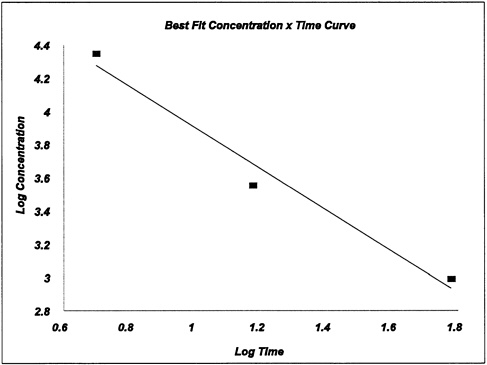
Dimethylhydrazine rat data from Weeks et al. 1963
The LC50 values for 5-, 15-, 30-, 60-, and 240-min exposures were 24,500, 8,230, 4,010, 1,410, and 252 ppm, respectively.
|
Time |
Concentration |
Log Time |
Log Concentration |
|
5 |
24,500 |
0.6990 |
4.3892 |
|
15 |
8,230 |
1.1761 |
3.9154 |
|
60 |
4,010 |
1.4771 |
3.6031 |
|
240 |
252 |
2.3802 |
2.4014 |
|
n=0.84 |
|||
|
Calculated LC50 values: |
|
|
Min |
Concentration |
|
30 |
3,323.28 |
|
60 |
1,449.93 |
|
240 |
276.00 |
|
480 |
120.42 |
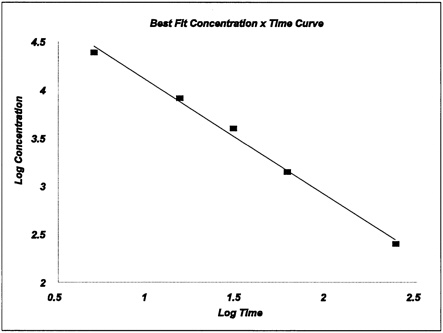
APPENDIX C
CARCINOGENICITY ASSESSMENT OF DIMETHYLHYDRAZINE
Slope factors for 1,1-dimethylhydrazine and 1,2-dimethylhydrazine were available but have been withdrawn from the U.S. EPA Integrated Risk Information System (IRIS) (U.S. EPA1986). For a preliminary carcinogenicity assessment, the withdrawn inhalation slope factor for 1,1-dimethylhydrazine (cited in ATSDR 1994) will be used. The assessment follows previously described methodologies (NRC 1985; Henderson 1992).
The withdrawn slope factor for 1,1-dimethylhydrazine was 3.5 (mg/kg·d)–1, which, based upon a human inhalation rate of 20 m3/d and a body weight of 70 kg, is equivalent to 1 (mg/m3)–1.
To convert to a level of monomethylhydrazine that would cause a theoretical excess cancer risk of 10–4:
Risk of 1×10–4=(1×10⁻⁴/1)×1 mg/m3=1×10–4 mg/m3
(virtually safe dose)
To convert a 70-y exposure to a 24-h exposure:
24-h exposure=d×25,600
=(1×10⁻⁴ mg/m3)×25,600 d
=2.56 mg/m3
To account for uncertainty regarding the variability in the stage of the cancer process at which monomethylhydrazine or its metabolites may act, a multistage factor of 6 is applied (Crump and Howe 1984):
(2.56 mg/m3)/6=0.43 mg/m3 (0.18 ppm)
Therefore, based upon the potential carcinogenicity of monomethylhydrazine, an acceptable 24-h exposure would be 0.9 mg/m3 (0.5 ppm).
If the exposure is limited to a fraction (f) of a 24-h period, the fractional exposure becomes 1/f×24 h (NRC 1985).
24-h exposure=0.43 mg/m3 (0.18 ppm)
8-h=1.3 mg/m3 (0.5 ppm)
4-h=2.6 mg/m3 (1.1 ppm)
1-h=10.3 mg/m3 (4.2 ppm)
0.5h=20.6 mg/m3 (8.5 ppm)
Because the AEGL-2 values based upon acute toxicity were equivalent to or lower than the 10–4 risk values derived based on potential carcinogenicity, the acute toxicity data were used for the AEGLs for dimethylhydrazine. For 10–5 and 10–6 risk levels, the 10–4 values are reduced by 10-fold or 100-fold, respectively.
APPENDIX D
DERIVATION SUMMARY FOR ACUTE EXPOSURE GUIDELINE LEVELS FOR DIMETHYLHYDRAZINE (CAS No. 57–14–7; 1,1-Dimethylhydrazine) (CAS No. 540–73–8; 1,2-Dimethylhydrazine)
|
AEGL-1 Values |
|||
|
30 min |
1 h |
4 h |
8 h |
|
Not |
Not |
Not |
Not |
|
recommended |
recommended |
recommended |
recommended |
|
Reference: Not applicable. |
|||
|
Test Species/Strain/Number: Not applicable |
|||
|
Exposure Route/Concentrations/Durations: Not applicable |
|||
|
Effects: Not applicable |
|||
|
Endpoint/Concentration/Rationale: Not applicable |
|||
|
Uncertainty Factors/Rationale: Not applicable |
|||
|
Modifying Factor: Not applicable |
|||
|
Animal to Human Dosimetric Adjustment: Not applicable |
|||
|
Time Scaling: Not applicable |
|||
|
Data Adequacy: Numeric values for AEGL-1 are not recommended because (1) data are not available, (2) data indicate that toxic effects may occur at or below the odor threshold, (3) an inadequate margin of safety exists between the derived AEGL-1 and the AEGL-2, or (4) the derived AEGL-1 is greater than the AEGL-2. Absence of an AEGL-1 does not imply that exposure below the AEGL-2 is without adverse effects. |
|||
|
AEGL-2 Values |
|||
|
30 min |
1 h |
4 h |
8 h |
|
6.0 ppm |
3.0 ppm |
0.75 ppm |
0.38 ppm |
|
Reference: Weeks, M.H., G.C.Maxey, M.E.Sicks, and E.A.Greene. 1963. Vapor toxicity on UDMH in rats and dogs from short exposures. Am. Ind. Hyg. Assoc. J. 24:137–143 |
|||
|
Test Species/Strain/Sex/Number: mongrel dogs, 2–4/group, sex not specified |
|||
|
Exposure Route/Concentrations/Durations: Inhalation; 1,200–4,230 ppm for 5 min; 360, 400, or 1,530 ppm for 15 min; 80–250 ppm for 60 min |
|||
|
Effects: |
|||
|
Exposure (15 min) |
Effect |
||
|
360 ppm |
muscle fasciculations in 1 of 4 dogs (determinant for AEGL-2) |
||
|
400 ppm |
behavioral changes in 2 of 4 dogs |
||
|
1,530 ppm |
tremors, convulsions, vomiting in 2 of 2 dogs |
||
|
Endpoint/Concentration/Rationale: 15-min exposure at 360 ppm considered a threshold for potentially irreversible effects or effects that would impair escape. At this exposure, muscle fasciculations were observed in 1 of 4 exposed dogs, and at 400 ppm, behavioral changes were observed. |
|||
|
Uncertainty Factors/Rationale: Total uncertainty factor: 30 Interspecies: 3—The toxic response to dimethylhydrazine (LC50 values) was similar across species. The 4-h LC50 values for mouse, rat, and hamster differ by a factor of approximately 2 and were consistent with the dog data when extrapolated from 1 h using n=1. The more sensitive species, the dog, was used to derive the AEGL-2 values. Intraspecies: 10—A broad spectrum of effects were seen, including behavioral effects, hyperactivity, fasciculations, tremors, convulsions, and vomiting. The mechanism of toxicity is uncertain and sensitivity among individuals regarding these effects may vary. This variability was especially demonstrated in dogs wherein responses varied from one of extreme severity (vomiting, tremors, convulsions, and death) to no observable effects. Therefore, a factor of 10 was retained. A factor of 10 was also retained because experiments by Weeks et al. (1963) indicated that dogs had been previously stressed (auditory stimuli), which may have affected their response to dimethylhydrazine. Based upon these data, it was assumed that humans may be equally divergent in their response to dimethylhydrazine. |
|||
|
Modifying Factor: None |
|
Animal to Human Dosimetric Adjustment: None applied, insufficient data |
|
Time Scaling: Cn×t=k, where n=1 and k=180 ppm·min; LC50 data were available for 5-, 15-, 30-, 60-, and 240-min exposures in rats and 5-, 15-, and 60-min in dogs. Exposure-response data indicated a near linear concentration-response relationship (n=0.84 for rats; n=0.80 for dogs). For time-scaling, a linear relationship was assumed and a value where n= 1 was selected. |
|
Data Adequacy: Information regarding the human experience for acute inhalation exposure to dimethylhydrazine are limited to qualitatively case reports indicating nasal and respiratory tract irritation, breathing difficulties, and nausea. Data in animals have shown concentration-dependent effects ranging from respiratory tract irritation, pulmonary edema and neurologic effects to lethality. Because the nonlethal effects in humans and animals are qualitatively similar, the animal data were considered relevant and appropriate for development of AEGL values. The AEGL values for dimethylhydrazine reflect the steep exposure-response relationship suggested by available data. |
|
AEGL-3 Values |
|||
|
30 min |
1 h |
4 h |
8 h |
|
22 ppm |
11 ppm |
2.7 ppm |
1.4 ppm |
|
Reference: Weeks, M.H., G.C.Maxey, M.E.Sicks, and E.A.Greene. 1963. Vapor toxicity of UDMH in rats and dogs from short exposures. Am. Ind. Hyg. Assoc. J. 24:137–143 |
|||
|
Test Species/Strain/Sex/Number: mongrel dogs, 3–4/group; sex not specified |
|||
|
Exposure Route/Concentrations/Durations: Inhalation; exposure to various concentrations (80–22,300 ppm) for 5, 15, or 60 min |
|||
|
Effects: |
|||
|
1-h LC50 |
981 ppm (reduction by 1/3 was basis for AEGL-3 derivation) |
||
|
15-min LC50 |
3,580 ppm |
||
|
5-min LC50 |
22,300 ppm |
||
|
Endpoint/Concentration/Rationale: 1-h LC50 (981 ppm) reduced by 1/3 was considered an estimate of the lethality threshold (327 ppm). Based on the available exposure-response data for this chemical (Jacobson et al. 1955), a 3-fold reduction in LC50 values results in exposures that would not be associated with lethality. |
|||
|
Uncertainty Factors/Rationale: Total uncertainty factor: 30 Interspecies: 3—The toxic response to dimethylhydrazine (LC50 values) was similar across species. The 4-h LC50 values for mouse, rat, and hamster differ by a factor of approximately 2 and were consistent with the dog data when extrapolated from 1 h using n=1. The more sensitive species, the dog, was used to derive the AEGL-3 values. Intraspecies: 10—A broad spectrum of effects were seen, including behavioral effects, hyperactivity, fasciculations, tremors, convulsions, and vomiting. The mechanism of toxicity is uncertain, and sensitivity among individuals regarding these effects may vary. This variability was especially demonstrated in dogs wherein responses varied from one of extreme severity (vomiting, tremors, convulsions, and death) to no observable effects. Therefore, a factor of 10 was used. A factor of 10-fold was also used because experiments by Weeks et al. (1963) indicated that dogs previously stressed by auditory stimuli may have a potentiated response to dimethylhydrazine. Based upon these data, it was assumed that humans may be equally divergent in their response to dimethylhydrazine subsequent to similar stresses. |
|||
|
Modifying Factor: None |
|
Animal to Human Dosimetric Adjustment: None applied, insufficient data |
|
Time Scaling: Cn×t=k, where n=1 and k=654 ppm-min; LC50 data were available for 5-, 15-, 30-, 60-, and 240-min exposures in rats and 5-, 15-, and 60-min in dogs. Exposure-response data indicated a near linear concentration-response relationship (n=0.84 for rats; n=0.80 for dogs). For time-scaling, a linear relationship was assumed and a value where n= 1 was selected by the National Advisory Committee. |
|
Data Adequacy: Information regarding the lethality of dimethylhydrazine in humans were not available. Lethality data for several animal species allowed for a defensible development of the AEGL-3 values but uncertainties remain regarding individual variability in the toxic response to dimethylhydrazines. |


