
E
OSHA in a Health Care Context
Scott Burris, J.D., and Jamie Crabtree, B.A.*
This appendix summarizes requirements of the Occupational Safety and Health Act for the development, enforcement, and adjudication of new safety and health standards, with particular emphasis on the current proposal to regulate occupational exposure to tuberculosis.
Occupational safety and health, like other core public health concerns, was historically a matter of state, rather than federal, oversight. States directly attempted to promote occupational safety and health by passage of industrial safety legislation and indirectly by passage of worker’s compensation schemes. Although commentators disagree about the overall effectiveness of state safety measures (Chelius, 1977; McLaury, 1981), by the late 1960s, support had grown for a uniform national workplace safety regime. Citing statistics placing the cost of workplace injuries at more than $8 billion annually (Senate Report No. 1282, 1970), the U.S. Congress passed the Occupational Safety and Health Act of 1970 (the Act).
THE OCCUPATIONAL SAFETY AND HEALTH ACT IN FORM AND FUNCTION
The Act covers private employers in the 50 states and all U.S. territories and guarantees workers a workplace safe from the threat of workplace accidents and exposure to toxic substances (Occupational Safety
and Health Act of 1970). The Act imposes upon covered employers a “general duty” to provide a safe workplace to employees and created the Occupational Safety and Health Administration (OSHA) to adopt and enforce rules. For clarity and ease of enforcement, the Act also authorized OSHA to create specific standards for particular industries or risks. Several other agencies were created to conduct research, try enforcement cases, or otherwise contribute to the workplace safety system. Individuals and organizations in the private sector also play a considerable role in shaping OSHA’s standards and priorities.
Political Bodies Responsible for Administering OSHA
The administration of the Act is comprised of four basic functions: research on workplace risks and risk reduction; the development of specific safety standards (called rulemaking); enforcement of the rules through education and technical assistance, as well as investigation and punishment of violations; and adjudication and judicial review of standards and enforcement measures. In all these functions, OSHA and other federal agencies must comply with both the substantive and procedural requirements of the Act and other related federal rules, which prescribe what rules agencies like OSHA may make and how it must go about making them.
Research
Several entities conduct research or provide information to OSHA (Figure E-1). The National Institute for Occupational Safety and Health (NIOSH) is the principal government agency charged with conducting research regarding workplace hazards. NIOSH is part of the Centers for Disease Control and Prevention (CDC), within the Department for Health and Human Services. Unlike OSHA, NIOSH has no regulatory or enforce-
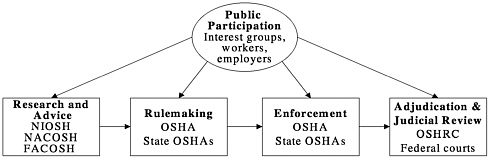
FIGURE E-1. OSHA processes and personae.
ment authority. It does have the authority to enter workplaces and question employees as part of its research activities. NIOSH may examine medical records or conduct medical examinations upon consenting employees, and may involve employees in data collection with the employees’ consent. NIOSH and OSHA have entered into cooperative agreements under which NIOSH advises OSHA on the development of new standards, and assists in ensuring employer compliance by offering training and education (Rothstein, 1998).
The National Advisory Committee on Occupational Safety and Health (NACOSH) advises the U.S. Department of Labor and the U.S. Department of Health and Human Services on the feasibility of and alternatives to new standards. Its 12 members include representatives of labor, management, the public, and occupational safety professionals. The Federal Advisory Council on Occupational Safety and Health (FACOSH) advises the Secretary of Labor on occupational safety and health among federal agencies. The Secretary may create additional advisory committees to aid OSHA in the promulgation of new standards. These committees may be permanent committees to advise the Secretary on safety and health in a single industry or temporary committees created to advise the Secretary on issuing a single standard (Rothstein, 1998).
Rulemaking
The Act creates a duty for each covered employer to provide “to each of his employees employment and places of employment which are free from recognized hazards that are causing or are likely to cause death or serious physical harm to his employees” (Occupational Safety and Health Act of 1970). This is known as the general-duty clause of the Act. The Act authorizes OSHA to interpret and enforce this general rule and also to issue more specific standards for particular industries or hazards. The decision to issue a specific standard initiates a process known in administrative law as rulemaking. Rulemaking is subject to substantive and procedural rules that are discussed in detail later in this appendix.
OSHA is part of the U.S. Department of Labor and is headed by the Assistant Secretary of Labor for OSHA. Staff in Washington, D.C., make policy and develop new standards in accordance with the research results and advice of NIOSH, the various advisory boards, and the many other public and private individuals and organizations with an interest in worker health and safety. Public participation is required by the statute and formalized in U.S. Department of Labor regulations providing for “written petitions” submitted to the Secretary by “any interested person” suggesting a new standard. These petitions must include the rule proposed, a statement of reasons for the new standard, and a statement of its intended effect (29 C.F.R. 1911.3).
The Act also allows states to operate their own occupational safety and health regulatory systems. States that exercise this option are called “state plan jurisdictions” and have taken regulatory authority back from OSHA by creating and submitting for approval to the Secretary of Labor their own regulatory plan for occupational safety and health. A more detailed discussion of state plan jurisdictions and the requirements for approval by the Secretary is included below.
Enforcement
Enforcement of the Act is an OSHA function. In states that have their own occupational safety and health systems, state agencies also carry out enforcement activities. Enforcement activities include
-
analyzing the compliance reports that employers are required to submit on a regular basis,
-
conducting inspections on the agency’s own initiative or in response to incidents or complaints,
-
citing employers for violations, and
-
providing training and technical support.
OSHA’s enforcement is conducted by Area Directors placed throughout the country who are responsible for providing explanations to any questions received from affected parties in the area for which the Director is responsible, responding to complaints made by employees covered by OSHA protection, scheduling and conducting the periodic inspections required by the Act, determining when employers should be cited for violations, and assigning any fines as the result of a violation. Under the authority of the Area Directors are Compliance Safety and Health Officers, or Compliance Officers, whose responsibility it is to inspect individual work sites, counsel employers regarding compliance concerns, as well as submit reports to the area directors regarding these investigations. These reports provide Area Directors with a means to assess employer compliance for purposes of issuing citations and violations (Rothstein, 1998).
The Act requires some employers to maintain records regarding the injury and illness rates of the individual facility, which must be available on site for review during inspections. These reports help OSHA decide what industries or sites should be targeted for inspections and assess how well the Act and state plans are being implemented. Standards designed to address toxic substances also include exposure control plans. These plans identify the workers who are in danger of exposure to toxic substances in order to ensure proper training and medical surveillance.
OSHA’s Compliance Officers conduct two types of inspections: periodic “programmed inspections” scheduled by OSHA Area Directors and inspections made in response to complaints, deaths, or other indicators of
an imminent danger. The thoroughness of the inspection can vary depending upon the illness and injury rate for the particular employer. However, at the end of an inspection the Compliance Officer counsels the employer and employee representatives accompanying the inspection on how to improve the safety and health plan in their workplace. The Compliance Officer submits a report regarding the inspection to the Area Director, who determines if there are violations. Once a determination has been made after an inspection that a standard is being violated, a citation is sent to the employer with a detailed description of the violation and a date by which the condition should be corrected. This notice will also include the amount of the proposed penalty. If the employer fails to contest the citation within 15 days, the citation becomes a final order of the Occupational Safety and Health Review Commission (OSHRC) (see adjudication section below) and the penalty a fine which is owed. If contested, the Commission will hold a hearing to determine the level of violation and fine.
The sanctions for violating the Act are a function of the seriousness of the risk created and the perceived motives and past behavior of the employer. The more serious the risk and the more it was known to and disregarded by the employer, the more serious the violation and the higher the penalty. A de minimus violation occurs when the employer is technically not in compliance with a standard but the violation has no direct effect on safety and health. This violation is different from all other OSHA violations in that it carries no penalty and is not contestable under OSHA’s adjudication process. OSHA issues a nonserious violation when the noncompliant condition has an effect on safety and health, but it is not likely to result in death or serious physical harm. Serious violations are issued for conditions likely to result in death or serious physical harm. A repeated violation arises when the same employer has been cited at least once before, and a final order was issued for a substantially similar violation. OSHA may issue a willful violation when the employer has blatantly violated the Act demonstrating indifference to complying with its standards (Rothstein, 1998; Occupational Safety and Health Act of 1970).
|
Violation Categories and Fines
|
A violation must be corrected within a specified time, and failure to correct can itself be a violation. The failure to abate violation carries one of the most severe penalties, with fines ranging from $1,000 to $7,000 per day. In order to impose this violation OSHA must show that the original citation was upheld in the adjudicatory process (see below), a reinspection uncovered violation of the exact same condition, and the condition continues to present a hazard (Rothstein, 1998; Occupational Safety and Health Act of 1970). Failure to post is a record-keeping violation arising out of the enforcement process. An employer must post notice to his employees of violations as well as year-end summaries of injury and illness (Occupational Safety and Health Act of 1970). In addition to these civil penalties, the Act does provide for criminal penalties in cases where employer neglect is extreme and results in the death of an employee (Occupational Safety and Health Act of 1970).
The employer’s demonstrated good faith, history of compliance with the Act, and the size of the employer’s financial resources may all influence the penalty (Occupational Safety and Health Act of 1970). Good faith can be judged by examining the employer’s overall safety plan, not just the particular standard for which it was cited. The employer’s track record with OSHA may help to a large degree if it shows a history of a willingness to comply. OSHA considers the size of the business and may impose lesser penalties on smaller businesses in order not to unduly hamper the employer’s ability to stay in business. The gravity of the harm the noncompliant condition creates is a large factor taken into consideration since the overall aim of the statute is to improve safety and health of employees (Rothstein, 1998).
OSHA has the resources to inspect only a fraction of workplaces (Rabinowitz and Shapiro, 2000). The success of the Act’s scheme therefore requires a high degree of voluntary compliance by employers. The deterrent effect of fines and unannounced inspections makes some contribution, but the agency also uses positive methods of training and technical assistance to facilitate employer compliance with standards. Some research suggests that the cooperative approach to regulation under OSHA such as facilitation of worker involvement in safety programs actually has a greater deterrent effect on workplace hazards than do coercive measures such as fines (Rabinowitz and Shapiro, 1997; Gray and Scholz, 1997)
Although the Act also imposes upon employees a duty to comply with OSHA’s rules, regulations, and standards, OSHA may not levy fines or otherwise punish employees for failure to comply. The sections of the Act addressing enforcement proceedings only refer to employers, and the legislative history confirms congressional intent to hold employers ultimately liable for compliance (Atlantic & Gulf Stevedores, Inc., v. Occupational Safety & Health Review Commission, 1976). In practice, employers enforce employee compliance through their own disciplinary practices (Rothstein, 1998).
Adjudication and Judicial Review
The agency responsible for administering the Act’s adjudicatory process is OSHRC. OSHRC is an independent agency within the executive branch exercising quasijudicial powers. It consists of three members appointed by the President. The OSHRC members appoint Administrative Law Judges, who are stationed throughout the country in OSHA’s regional offices. These judges hear challenges to enforcement penalties issued to employers, including challenges to the factual basis of the alleged violation and challenges to the validity of the standard being enforced. They weigh evidence, listen to testimony and issue a ruling on the challenges that come before them. Decisions of the judges can be appealed to the three commission members. Upon making a determination regarding the validity of the judge’s decision, OSHRC issues a final ruling that may be appealed in federal court (Rothstein, 1998).
Federal courts hear two kinds of cases under the Act: appeals from final decisions of OSHRC and “preenforcement” challenges to new standards when they are issued. Although the validity of the standard can be attacked in both types of action, in practice new OSHA standards are invariably challenged in federal court upon issuance. These preenforcement challenges must be filed within 59 days of the publication of the final rule in the Federal Register, and employers must obey the rule during the months and years of litigation.
There are three levels of federal courts. Normally litigation in the federal system is initiated in the District Courts that are responsible for conducting trials. However, appeals from the final order of OSHRC or from OSHA’s decision to issue a new standard go directly to the Circuit Courts of Appeals (Occupational Safety and Health Act of 1970). Decisions of the Courts of Appeals can be appealed to the Supreme Court, which has the discretion to hear the case or leave the lower court decision unreviewed.
In appellate courts, what is known as the standard of review governs the scope of the court’s inquiry into the decision being appealed. More than one standard of review may apply; for example, courts usually review findings of fact differently than conclusions of law in the same case. The standards applied in the review of OSHA and OSHRC were set by Congress in the Act. When reviewing OSHA’s standard promulgation and OSHRC’s factual findings, courts are limited to determining whether or not the decision at issue was “supported by substantial evidence on the record considered as a whole” (Occupational Safety and Health Act of 1970). Substantial evidence is “such relevant evidence as a reasonable mind might accept as adequate to support a conclusion” (American Textile Manufacturers Institute, Inc. v. Donovan, 1981). OSHRC’s decision to impose a penalty will be reversed only if the reviewing court decides it was “arbitrary and capricious” or an “abuse of discretion” —i.e., an unrea-
sonable exercise of the agency’s power that evinces clear disregard of its statutory role (Rothstein, 1998; Brennan v. OSHRC, 1973). There has been some variation over time and across the judicial circuits in the stringency of review, which has led to some strategic “forum-shopping” by challengers to OSHA rules (Cherrington, 1994).
State Plan Jurisdictions
Upon passage of the Act, all state safety and health regulations covered by OSHA were preempted by OSHA standards. However, the Act included a provision for allowing states to take jurisdiction back from OSHA by creating a state plan to regulate occupational safety and health (Occupational Safety and Health Act of 1970). The most significant difference between state plan and OSHA jurisdictions is the scope of workplace coverage. State plans are required by the Act to cover the employees of the state and its political subdivisions in addition to private workplaces (Occupational Safety and Health Act of 1970). Two state plan jurisdictions, Connecticut and New York, only cover public employees, leaving occupational safety and health of private workplaces in the hands of OSHA (Rothstein, 1998).
Beyond the required additional coverage, states may choose to cover parties not covered by the Act, such as volunteers. Other than this, state plan jurisdictions and OSHA jurisdictions operate in much the same way. State plans must designate a state agency responsible for the plan’s enforcement. The plan must include a means to adopt new safety and health standards, and these standards must be at least as stringent as those adopted by OSHA. The means of abating the hazardous condition being regulated does not have to be identical to the means outlined in OSHA’s standard, but the protective effect of the state standard must be equal or greater to the protective effect of the OSHA standard (Occupational Safety and Health Act of 1970). The plan to regulate Occupational Exposure to Tuberculosis calls for state plan jurisdictions to adopt the new rule or one at least as effective within 6 months of the rule’s final approval by OSHA (Occupational Exposure to Tuberculosis, 1997).
The enforcement of standards in state plan jurisdictions does not differ substantially from that in OSHA jurisdictions (Occupational Safety and Health Act of 1970). Unannounced inspections must be included, and employers may ultimately pay a fine for violating safety and health standards. State plan jurisdictions may also have a steeper fine structure than OSHA’s. In order to monitor the effectiveness of the state plan, state plan jurisdictions must require employers to continue to provide OSHA with required information as though no plan were in place. OSHA may also inspect workplaces in state plan jurisdictions to monitor the effectiveness of the state’s efforts at regulating workplace safety and health.
|
State Plan States
|
||||||||||||||||||||||||||
RULEMAKING
The starting point for understanding the Act’s requirements is the general-duty clause: “Each employer shall furnish to each of his employees employment and a place of employment which are free from recognized hazards that are causing or are likely to cause death or serious physical harm to his employees” (Occupational Safety and Health Act of 1970). It represents a catchall means for OSHA to enforce basic safety in the workplace on matters concerning which OSHA has not promulgated a specific standard. Currently, OSHA enforcement of tuberculosis prevention is based in part on the authority of the general-duty clause (Occupational Exposure to Tuberculosis, 1997).
When OSHA concludes that a workplace hazard is best addressed by a specific standard, it initiates the rulemaking process to promulgate a standard. The standards that OSHA adopts require a specific plan to abate workplace risks through use of protective equipment, environmental controls, workplace practices, or a combination of these measures. Standards may be designed to prevent a particular hazard or protect against a type of hazard existing throughout many industries. For example, parts of OSHA’s current regulation of TB risk come under existing general industry standards that require employers “to provide respiratory protection equipment” (29 C.F.R. 1910.34) and use “accident prevention tags to warn of biological hazards” (29 C.F.R. 1910.145 (f)). The proposed rule to regulate occupational exposure to tuberculosis is hazard specific. Where a hazard is covered by more than one OSHA standard, the employer must adhere to the standard most specifically designed to address the hazard (29 C.F.R. 1910.12; Rothstein, 1998).
On October 8, 1993, in response to the citizen petition requesting a permanent tuberculosis standard and an Emergency Temporary Standard,1 OSHA issued enforcement guidelines to protect workers exposed to tuberculosis based on the general-duty clause and the existing respiratory hazard and biohazard warning standards. OSHA initiated rulemaking proceedings for a specific standard to prevent occupational exposure to tuberculosis (Occupational Exposure to Tuberculosis, 1997).
Like all executive branch agencies, OSHA is limited in its power by the legislation creating it and by legal doctrines generally applicable to administrative agencies. These limitations constrain the process by which OSHA adopts a new standard, the content of the new standard, and even what it may undertake to regulate in the first instance. We turn now to an examination of these limitations. Whether or not OSHA successfully promulgates a new standard within these parameters is ultimately a question for reviewing courts, and the prospect of review has a strong influence on OSHA’s rulemaking work.
THE PROCEDURAL REQUIREMENTS
Under U.S. law, there are procedural requirements that all agencies engaged in rulemaking must observe (Administrative Procedure Act, 1994). These rules specify that an agency proposing to issue a regulation must give the public notice of its proposed action. Once this notice is provided, the agency must allow the public an opportunity to review and comment upon the proposed regulation. The agency may also be required to hold hearings to obtain further public input and to answer questions. Once the agency has completed obtaining all of the public input, it must consider and respond to the comments when it formulates the final regulations. Over time the implementation of certain executive orders and other acts of Congress have added more procedural steps for agencies making regulations.
Procedural requirements of the statute provide that a new OSHA standard shall be adopted according to the following procedure:
-
A notice of proposed rulemaking is placed in the Federal Register.
-
Interested parties have 30 days following publication of the notice to submit written data or comments. This is known as the comment period, and may be extended or reopened at the discretion of the agency.
-
An interested party may file an objection to the rulemaking (i.e., to the making of any rule, as opposed to a comment on the proposed rule) during the comment period. The filing of an objection requires the agency to hold hearings.
-
In order to hold hearings OSHA must publish notice of the objections filed along with the dates, times, and places for the hearings in the Federal Register within 30 days of the close of the comment period.
-
Within 60 days of completion of the last hearing or the last day for submission of comments if no hearings were required, the Secretary may issue a decision regarding the approval or disapproval of the new standard. The Secretary has the discretion to exceed this period.
When promulgating new standards OSHA must also comply with requirements imposed by other congressional acts and executive orders in the name of regulatory reform (McGarity, 1996). These include environmental impact statements, unfunded mandates analysis, and regulatory flexibility analysis. All agencies are required under the National Environmental Policy Act of 1969 to prepare Environmental Impact Statements when taking an action that will have an effect on the quality of the environment. Even if a new standard will have no effect on the quality of the environment, OSHA still must conduct the analysis and provide the basic notice that its action will have no environmental effect prior to instituting the new rule (Occupational Exposure to Tuberculosis, 1997). OSHA must provide notice that it undertook an analysis calculating the most cost-effective means of accomplishing its regulatory objective in order to fully comply with the Unfunded Mandates Reform Act of 1995. This is required when any executive agency action imposes costs in excess of $100 million per year on the private sector (Unfunded Mandates Reform Act of 1995). Finally, OSHA must assess the nonregulatory alternatives to achieving the same benefit of the regulation, perform a limited cost-effectiveness analysis, and conduct a costs minimization analysis for small business in order to comply with the Regulatory Flexibility Act and Executive Order 12866, which governs regulatory planning and review in the executive branch. This Executive Order requires administrative agencies to engage in regulatory flexibility analysis to determine among other things if the costs of the regulation are justified by its benefits. The cost-benefit and costs minimization analyses are discussed below in the section on substantive rulemaking requirements, as they have some impact on understanding how OSHA is tabulating the effect of its proposed standard and how OSHA developed some portions of the content of its standard. OSHA did not find that there were nonregulatory alternatives to accomplishing the same goal as the proposed standard (Occupational Exposure to Tuberculosis, 1997).
THE SUBSTANTIVE REQUIREMENTS FOR RULEMAKING
OSHA’s proposed standard to regulate occupational exposure to tuberculosis arises under its authority to control exposure to toxic substances. The Act requires OSHA, when it addresses a toxic substance, to
set the standard which most adequately assures, to the extent feasible, on the basis of the best available evidence, that no employee will suffer material impairment of health or functional capacity even if such employee has regular exposure to the hazard dealt with by such standard for the period of his working life (Occupational Safety and Health Act of 1970).
We will examine judicial interpretation of this statutory provision in the following section.
As interpreted by the courts, the phrase “the standard which most adequately assures” sets two important characteristics of OSHA standards. First, since the phrase does not specifically enumerate the means by which OSHA standards should protect employee safety and health, the Act authorizes OSHA to impose workplace practices, environmental controls, or protective equipment—or any combination of the three—to abate occupational exposure to toxic substances. Second, the language has been read to specify the standard OSHA should use to decide among possible measures: it must select the measure or package of measures that achieves the most protective standard. Courts generally leave this decision to OSHA and are highly deferential to OSHA’s findings (American Iron and Steel Institute v. OSHA, 1999).
When deciding between the various methods to abate occupational exposure to airborne toxins, OSHA regulates to reduce the source of exposure to the substance. It considers this to be the best means to protect worker safety and health (See 29 C.F.R. § 1910.134 (a)(1); Rothstein, 1998). As a result, OSHA favors the use of engineering controls to reduce occupational exposure to airborne toxins when possible. Thus, OSHA’s standard to regulate occupational exposure to tuberculosis focuses on moving those who are suspected or confirmed to have tuberculosis into acid-fast bacillus (AFB) isolation rooms as soon as possible, but provides for use of respiratory masks until the transfer takes place (Occupational Exposure to Tuberculosis, 1997).
The phrase “to the extent feasible” requires OSHA to conduct an economic and technological feasibility analysis of its proposed standards. Economic feasibility means that the proposed standard is economically “capable of being done” (American Textile Manufacturers Institute, Inc. v. Donovan, 1981). Case law treats this is an examination of whether or not a proposed OSHA standard will impair “the long term profitability and competitiveness of the industry” being regulated (Rothstein, 1998). The focus is on ensuring that compliance with the new standard will not cause wide-
spread business failures in the long term. When considering alternatives, OSHA may not adopt a standard it considers to be less than the most protective safety and health standard, unless it is the only standard whose costs the industry can absorb or pass along. However, OSHA may choose the least costly of two equally protective measures (Latin, 1983). The requirement to regulate to the safest possible level precludes a true cost-benefit analysis (American Textile Manufacturers Institute, Inc. v. Donovan, 1981).
Technological feasibility as required of proposed OSHA standards involves determining that the technology exists or “may reasonably be brought into existence” to comply with a new standard. This requirement’s most litigated point of interpretation regards the degree to which OSHA’s authority permits it to “force” industries to adopt new technology. Essentially, OSHA cannot force industries to engage in research to achieve safer workplaces, but OSHA may impose the adoption of new or existing technologies provided it is economically feasible (Latin, 1983). The technological feasibility analysis for OSHA’s proposed tuberculosis standard involves the examination of the existence and costs of requiring the use of AFB isolation rooms and biological safety cabinets in facilities where the standard requires these engineering controls. OSHA noted the existence of this equipment in its report on the proposed rule and commented that they were already in widespread use (Occupational Exposure to Tuberculosis, 1997).
To satisfy provisions of Executive Order 12866 as well as its own economic and technological feasibility analyses, OSHA may tailor its standards to the industries it affects taking into consideration size, expertise, and resources of the businesses involved. OSHA may only do this “to the extent permitted by law” under the Executive Order. The determination to change the requirements for compliance from one industry to the next must bear some reasonable relationship to the decreased risk presented in that industry and its ability to comply in light of the economic means of the industry and the skill of its workers to effectively implement the use of engineering controls (Occupational Exposure to Tuberculosis, 1997).
OSHA’s decision to adopt a new standard and the means chosen to abate the regulated risks must be made on “the best available evidence.” While OSHA must be diligent in its efforts to collect data and must draw reasonable conclusions from that data, it is not constrained to regulate only when it finds to a “scientific certainty” that the adverse effects of a toxic substance can be remedied by the standard it proposes. Nor does OSHA have to prove to a scientific certainty that the substance it proposes to regulate will ever even cause a disease (Truong, 2000). The Supreme Court noted in Industrial Union Department, AFL-CIO v. American Petroleum Institute (the Benzene case) that this provision of the statute allowed OSHA to promulgate protective standards before a disease begins to occur in the workforce. OSHA is permitted to err on the side of overprotec-
tion (Industrial Union Department, AFL-CIO v. American Petroleum Institute, 1980). There is no question that exposure to aerosolized Mycobacterium tuberculosis causes the disease tuberculosis. OSHA’s determination that it has set the highest standard of protection that is economically and technologically feasible will, however, likely be tested against this “best available evidence” standard.
The goal of proposed standards must be to ameliorate the risk of “a material health impairment.” While the statute fails to define this term and no cases exist defining “material health impairment,” it is suggested that this term can fairly “be given its common workers’ compensation definition of ‘loss of a physical function’” (Rothstein, 1998), but OSHA regulates impairments that may not be compensable under worker’s compensation. In a number of standards, including the bloodborne pathogen and lead standards, OSHA has encompassed infections or other pre-symptomatic events antecedent to serious illness as “material impairments.” The proposed rule on tuberculosis reflects this view. In the proposal, OSHA discusses the risk of death and serious disease, but regards even infection alone as a material impairment (Occupational Exposure to Tuberculosis, 1997). Courts will generally defer to OSHA’s decision to define an adverse health condition a material impairment (AFL-CIO v. OSHA, 1992).
In addition to these explicit statutory requirements, OSHA must show that a new standard is designed to eliminate a “significant risk.” The significant risk requirement comes from the Benzene case, one of the first major Supreme Court interpretations of the Act. Several Justices—though not a majority of the Court—expressed the opinion that the Act did not empower OSHA to regulate every possible occupational health risk, but only those that were “significant.” These Justices suggested that the determination of significance should normally be left within OSHA’s discretion, but offered, by way of illustration, the suggestion that a 1 in 1,000 risk of death was clearly significant, and that a 1 in a billion risk clearly was not (Industrial Union Department., AFL-CIO v. American Petroleum Institute, 1980). These Justices were not writing for a majority of the Court, and were not attempting to set the threshold for regulation at exactly the 1/1,000 level. Nevertheless, if only because it provides OSHA with a concrete figure, subsequent regulations and the case law have hewn close to the 1 in 1,000 benchmark, and courts have made it clear that “OSHA has a responsibility to quantify or explain, at least to some reasonable degree, the risk posed by each toxic substance regulated” (AFL-CIO v. OSHA, 1992).
The subsequent case law on significant risk does not offer a coherent, simple explanation of what level of risk is considered significant, largely because the cases have dealt with such a diverse group of scientific questions and legal arguments. Given the Benzene case requirement it seems clear that “OSHA cannot impose onerous requirements on an industry
that does not pose substantial hazards to workers” (American Dental Association v. Martin, 1993), but no cases since the Benzene case have squarely faced the question of how low a risk can be and still be substantial. Instead, the cases have dealt with two basic kinds of problems: the quality of OSHA’s risk evidence, and the reliability of its statistical analysis of that evidence. The ultimate question for reviewing courts is whether OSHA’s findings of “significant risk” are supported by substantial evidence. The standard of review colors court decisions regarding both of these problems.
Texas Independent Ginners v. Marshall is an example of a case turning on the quality of OSHA’s evidence. OSHA had found that American cotton gin workers were at a “significant risk” of developing byssinosis due to cotton dust exposure. OSHA had relied on studies of foreign cotton ginners and American cotton manufacturing employees other than ginners to establish that the prevalence of “acute respiratory problems” among American ginners was likely to lead to byssinosis. There was no dispute that U.S. manufacturing and foreign gin workers experienced more prolonged and higher concentrations of exposure to cotton dust than did American ginners. Since OSHA had failed to offer an explanation for how these differences in working conditions would affect the ultimate occurrence of byssinosis among U.S. ginners, the reviewing court held that the studies would not suffice to constitute substantial evidence of “significant risk.”
Most of the “significant risk” cases deal with OSHA’s choices among statistical methods or scientific data. For example, in ASARCO v. OSHA, members of the smelting industry challenged OSHA’s standard governing exposure to airborne arsenic because it relied on studies treating duration as the key factor in determining the risks of exposure. The industry, backed by its own studies, claimed that it was the level of dosage that determined the level of risk. The court rejected the challenge, reasoning that a dispute in the scientific record did not justify overruling OSHA where OSHA articulated clear reasons for choosing its study over the one in question: “where an agency presents scientifically respectable evidence which the petitioner can continually dispute with rival, and we will assume, equally respectable evidence, the court must not second guess the particular way the agency chooses to weigh conflicting evidence or resolve the dispute” (ASARCO v. OSHA, 1984).
So long as OSHA presents reasonable explanations for accepting one version of scientific analysis over another a court will not engage in an evaluation of OSHA’s decision. However, if OSHA fails to explain why it chooses one method of risk calculation over another, then the court may remand the standard for OSHA to provide these explanations (UAW v. Pendergrass, 1989). Throughout OSHA’s tuberculosis risk assessment OSHA provides reasons for rejecting scientific studies critical of its analy-
sis for this very reason (Occupational Exposure to Tuberculosis, 1997). If OSHA ultimately promulgates a final tuberculosis standard, the record must reflect that OSHA considered these studies and rejected them with reasonable explanations.
OSHA has apparently adhered to the 1/1,000 level of risk as its benchmark for “significant risk” since the Benzene case decision (UAW v. Pendergrass, 1989). It is not clear, however, that OSHA is legally required to hold to this practice. It has certainly departed from the strict terms of the Benzene case standard in some cases by regulating a 1/1,000 risk of material impairment rather than death. This is what it has proposed to do in the tuberculosis rule.
DETERMINING WHOM OSHA PROTECTS AND CONTROLS
Two aspects of the Act have a considerable influence on OSHA’s regulatory impact on the health care system. The first question is how the Act defines who are the “employees” and “employers” subject to OSHA’s protection and control under the Act. The other is how the Act assigns responsibility for ensuring compliance with OSHA standards in workplace settings where there are multiple employers.
Statutory Definitions of Employees and Employers
The statute defines an employee as “an employee of an employer who is employed in a business of his employer which affects commerce” (Occupational Safety and Health Act of 1970). An employer is “a person engaged in a business affecting commerce who has employees, but does not include the United States or any State or political subdivision of a State” (Occupational Safety and Health Act of 1970). “State” includes the District of Columbia and U.S. territories.
The commerce clause in the Constitution authorizes Congress to regulate matters related to the interstate economy. As a result, the constitutionality of the Act or any particular regulatory measure requires a finding that covered employers have an effect on commerce that can be felt outside the state in which the employer is located. Since OSHA must establish in its enforcement proceedings that it has jurisdiction over the cited employer, it must make an initial showing that the employer is engaged in a business “affecting commerce.” This is rarely a problem and easily done. OSHA commonly establishes this by showing that in the course of doing business the employer makes use of goods produced out of state. For example, in any given health care facility this will include everything from the use of computer software to cotton swabs (Rothstein, 1998).
Employees of State and Local Governments
People who are employed by states or political subdivisions of a state are not protected by OSHA standards unless the state participates as a state plan jurisdiction. It is not always easy to determine, however, whether an employer is public or private. The Secretary of Labor’s regulations delineate a two-prong test for determining whether or not an entity qualifies for the political subdivision exemption from OSHA regulation: “1) whether the entity is created directly by the state so as to constitute a department or administrative arm of government, or 2) whether the entity is administered by individuals who are controlled by public officials and responsible to such officials or to the general public” (29 C.F.R. 1975.5 (b)). Courts also examine to what degree the employees of an institution are treated as state employees, considering, for example, whether the benefits package offered to employees is the same as that offered to state employees, or whether employees are subject to the same merit and promotion system as state employees. To the degree that state university hospitals and other state-run health care providers may have engaged in quasiprivatization over the past few years, these distinctions may be helpful. These issues may also arise in state facilities where the state has outsourced some of its functions to employers who are private entities.
Volunteers
Volunteers are not protected by OSHA, because its statutory mandate is to protect employees. However, OSHA indicates that the employer’s assertion that a person is a volunteer and the mere absence of monetary compensation for services are not the determinative factors. OSHA has cited employers who were compensating workers in kind. OSHRC has upheld these violations (Secretary of Labor v. Arlie R.Hawk General Contractor, 1976). Finding that a volunteer is actually an employee compensated in kind turns on proof of an exchange of value that is significant enough to give rise to an employer/employee relationship. Altruistic volunteers in health care and other service settings would probably never be treated as employees, but an employer cannot avoid the requirements of OSHA by finding alternative, nonmonetary ways of paying for services (such as room and board or discounted fees).
Students
While physicians completing residency requirements would clearly fall within OSHA’s protective reach since they are being compensated for their services, it is unlikely that medical students completing clinical requirements without compensation are covered by OSHA regulation.
Federal Employees
The Act requires federal agencies to develop safety standards consistent with those adopted by OSHA, maintain occupational safety and health records, and make reports to the Secretary of Labor regarding the program. The Act gave OSHA no enforcement powers as against other federal agencies, but enforcement rules were set up by presidential order as early as the Nixon administration. The current scheme for federal compliance was set out in a 1980 Executive Order of President Carter, which requires federal agencies
-
to comply with OSHA standards unless the Secretary of Labor approves an alternative safety plan;
-
to comply with the general-duty clause of the Act by ridding federal workplaces of all recognized hazards that cause or are likely to cause death;
-
to comply with antidiscrimination requirements of the Act by allowing employees to report safety problems without fear of retaliatory action;
-
to establish within each agency an occupational safety and health committee consisting of an equal number of management and nonmanagement employees to monitor the agency’s safety and health performance; and
-
to allow unannounced inspections by the Secretary of Labor under certain conditions (Executive Order 12196, 1980).
Employees of Veterans Administration hospitals are protected by this section.
ASSIGNING RESPONSIBILITY IN THE MULTIEMPLOYER WORKPLACE
Often there are many employers within one workplace, raising questions about which employer is responsible for complying with OSHA regulations (American Dental Association v. Martin, 1993). This situation is common in but not unique to health care, and indeed first became an issue for OSHA in the construction industry. With time, a rule emerged that limits the responsibility of an employer who does not control the physical makeup of the work site. The subcontractor-employer must make reasonable efforts to ensure that the places where its employees work is safe: it must inspect the work site, report problems to the employer who has control of the site, provide necessary safety equipment to abate the hazardous condition to the extent possible, or in extreme cases remove its employees from the site. Additionally, the subcontractor maintains responsibility for OSHA compliance that does not require control of the work site, such as initial safety training and in some instances supply of
safety equipment. In short the rule mitigates against the harshness of imposing sanctions on employers who may be unable to alleviate unsafe working conditions, but it does not relieve an employer of all responsibility assigned by OSHA (Anonymous, 1976). It is also possible to assign responsibilities for compliance by contract (Occupational Exposure to Tuberculosis, 1997).
OSHA’s proposed tuberculosis standard explains how responsibility would be assigned in covered multiemployer work sites and the home health care industry (Occupational Exposure to Tuberculosis, 1997). OSHA suggests that the responsibilities for compliance with respect to temporary workers supplied to workplaces covered by the rule be specified by contract. Employers providing temporary workers would be expected ordinarily to ensure that these employees receive all necessary general training required by the statute, and the “host” employer should provide any site-specific training necessary. The “provider” employer would be responsible for postexposure medical evaluation, with the host employer maintaining responsibility for ensuring compliance with the engineering and environmental controls required by the standard. Provider employers would be exempt from recordkeeping requirements related to engineering controls. Home health care workers are covered by the proposed standard as well. Employers in this industry are not responsible for the conditions of the homes served, but are to be required to provide training and ensure that their employees have respiratory masks (Occupational Exposure to Tuberculosis, 1997).
Doctors who work for corporations that have obtained use-right agreements with a covered hospital are protected under the same multiemployer work site rules as outlined above. If a doctor has his own practice for which he has created a legal entity by filing articles of incorporation, he would qualify as a protected employee of that practice since OSHA regulations have been held applicable to management as well as subordinate employees (Rothstein, 1998). If a doctor practices medicine without having created a legal entity such as a corporation to serve as the business for which he works, then he may not be under OSHA’s protective reach while practicing in a hospital. In this instance OSHA would likely consider the doctor to be an independent contractor and not an employee (Rothstein, 1998).
ALTERING OSHA RULES
OSHA may respond to changes in hazards or workplace practices by amending or rescinding a standard. In doing so, OSHA must adhere to the same procedural and substantive requirements that apply to the issuance of a new standard, and the agency’s action can be challenged in court (Occupational Safety and Health Act of 1970). If new information indicated that a threat to employee health and safety were grave and
extraordinary in nature, the Secretary could issue an Emergency Temporary Standard effective upon publication in the Federal Register (Occupational Safety and Health Act of 1970). If, however, the new information indicates that a standard is no longer “necessary or appropriate” due to an overestimation or subsequent elimination of the risk it was designed to reduce, there is no similar statutory vehicle for immediate recission. Of course, OSHA could also informally stop enforcing a rule that was no longer necessary to protect worker health, at least while it was moving formally to change or rescind the standard.
OSHA might also use new information in setting the level of violation or fine in its enforcement scheme (Occupational Exposure to Tuberculosis, 1997). For example, if CDC develops new infection control guidelines that are equal to or more protective than the OSHA standard governing control of tuberculosis, OSHA could take the position that employers following the new guidelines would only be subject to citations for de minimus violations. This violation carries no penalty or stigma.
Congress may also directly disapprove a standard prior to or after its effective date (Government Organization and Employees Act, 2000). Section 801 is part of the regulatory oversight that requires the filing of reports by administrative agencies to assess a standard’s societal impact such as the Unfunded Mandates Reform Act reports. Within 60 days of the filing of these reports, Congress may by joint resolution directly invalidate an OSHA standard. The President may also, in turn, mandate that the agency standard take effect if it is necessary to eliminate one of four categories of threats including “imminent” danger to public health and safety (Government Organization and Employees Act, 2000). Congressional oversight may soon increase if new proposals requiring that all administrative agency rules be subject to congressional approval are successful.
CONCLUSION: OSHA, PUBLIC HEALTH, AND CONTAGIOUS DISEASE
Effectively regulating risk presents difficult challenges to government agencies like OSHA (Kuran and Sunstein, 1999). Regulating the risk of exposure to communicable disease through OSHA has raised several serious issues. Commentators have suggested that the added costs of OSHA compliance may hurt patients by pushing poorer consumers out of the health care market (American Dental Association v. Martin, 1993) or by exposing patients and clients with tuberculosis to discrimination by institutions with an incentive to avoid costly compliance measures (Berg, 1997). It has also been claimed that OSHA simply moves too slowly to keep up with a changing risk like tuberculosis (Berg, 1997). Few if any of these assertions are backed by data, but there is no question that the effort
to regulate TB has added a new page to the history of OSHA’s struggles to deal with the scientific and regulatory complexity of regulating workplace risk.
REFERENCES
Administrative Procedure Act 5 U.S. C.§§551–59 West, 1994.
AFL-CIO v. OSHA, 965 F.2d 962 (11th Cir. 1992).
American Dental Ass’n v. Martin, 984 F.2d 823 (7th Cir. 1993).
American Iron and Steel Institute v. OSHA, 182 F.3d 1261 (11th Cir. 1999).
American Textile Manufacturers Institute, Inc. v. Donovan, 452 U.S. 490 (1981).
Anonymous: Recent Case: Administrative Law—Occupational Safety and Health Act—On Multiemployer Jobsite, When Employees of Any Employer Are Affected by Non-compliance with a Safety Standard, Employer in Control of Work Area Violates Act; Employer Not in Control of Work Area Does Not Violate Act, Even if his own Employees are Affected. Harvard Law Review 89:793–800, 1976.
ASARCO, Inc. v. OSHA, 746 F.2d 483 (9th Cir. 1984).
Atlantic & Gulf Stevedores, Inc., v. Occupational Safety & Health Review Commission, 534 F.2d 541 (3d Cir. 1976).
Berg, Paula E.: When the Hazard is Human: Irrationality, Inequity, and Unintended Consequences of the Regulation of Contagion. Washington University Law Quarterly 75:1367–1429, 1997.
Brennan v. OSHRC, 487 F.2d 438 (8th Cir. 1973).
Chelius, James Robert: The Occupational Safety and Health Problem in Workplace Safety and Health: The Role of Workers Compensation. American Enterprise Institute for Public Policy Research, Washington, D.C., 1977.
Cherrington, David R.: The Race to the Courthouse: Conflicting Views Toward the Judicial Review of OSHA Standards. Brigham Young University Law Review, 95–128, 1994.
Executive. Order No.12196, 45 Fed. Reg. 12,769 (1980).
Executive Order No. 12866, 58 Fed. Reg. 51,735 (1993).
Farmworker Justice Fund, Inc. v. Brock, 811 F.2d 613 (D.C. Cir. 1987)
Government Organization and Employees Act 5 U.S.C.A. §801 (West 2000).
Gray, Wayne B. and Scholz, John T.: Can Government Facilitate Cooperation?: An Informational Model of OSHA Enforcement. American Journal of Political Science 41:693– 717, 1997.
Industrial Union Department, AFL-CIO v. American Petroleum Institute, 448 U.S. 607 (1980).
Kuran, T. and Sunstein, C.: Availability Cascades and Risk Regulation. Stanford Law Review 51:683–768, 1999.
Latin, Howard A.: The Feasibility of Occupational Health Standards: An Essay on Legal Decisionmaking Under Uncertainty. Northwestern University Law Review 78: 583–631, 1983.
McGarity, Thomas O.: The Expanded Debate over the Future of the Regulatory State. University of Chicago Law Review 63:1463–1489, 1996.
McLaury, Judson: The Job Safety Law of 1970: Its Passage was Perilous in Mintz, Benjamin, 1984. OSHA History, Law, and Policy, The Bureau of National Affairs, Inc., 1981.
National Environmental Policy Act of 1969, 42 U.S.C.A. § 4332 et seq. (West 1994).
Northwest Airlines, Inc., 8 OSHC 1982,1980 OSHD ¶24,751 (1980)
Occupational Exposure to Tuberculosis, 62 Fed. Reg. 54,160–01 (1997) (to be codified at 29 C.F.R. pt. 1910).
Occupational Safety and Health Act of 1970, 29 U.S.C.A. § 651 et seq. (West 1999).
Rabinowitz, Randy S. and Shapiro, Sidney A.: Punishment Versus Cooperation in Regulatory Enforcement: A Case Study of OSHA Administrative Law Review 49:713– 762, 1997.
Rabinowitz, Randy S. and Shapiro, Sidney A.: Voluntary Regulatory Compliance in Theory and Practice: The Case of OSHA. Administrative Law Review 52:97–155, 2000.
Rothstein, Mark: Occupational Safety and Health Law, 4th ed., West Publishing Co., St. Paul, Minn., 1998.
Secretary of Labor v. Arlie R.Hawk General Contractor, 1976 WL 5974 (O.S.H.R.C.) S. Rep. No. 1282 at 2–4 (1970).
Texas Independent Ginners Association v. Marshall, 630 F.2d 389 (5th Cir. 1980).
Truong, Hiep: Daubert and Judicial Review: How Does an Administrative Agency Distinguish Valid Science from Junk Science? Akron Law Review 33:365–390, 2000.
UAW v. Pendergrass, 878 F.2d 389 (D.C. Cir. 1989). Unfunded Mandates Reform Act of 1995, 2 U.S.C.A. §1532 (West 1997).


