
2
Activities and Membership
FIRST QUARTER HIGHLIGHTS
With the beginning of a new year, one can always look forward to the budding of spring flowers, flagging commitments to New Year’s resolutions, and great expectations for a new budget for the next fiscal year. At first glance, and at a macroscopic level, the FY2000 federal budget outlook was rosy, with expectations of growing budget surpluses over the next 5 years. Closer inspection, however, showed that the projected surpluses depended on assumptions about major Social Security reforms and on federal government access to portions of funds from tobacco settlements recently negotiated between the industry and a number of states. Furthermore, it was not obvious that NASA or other R&D agencies were slated by the Administration to be beneficiaries of any of the projected surpluses. Finally, budget “caps” established several years earlier still bound the Congress, and that posed an immediate problem for the allocation to the appropriations subcommittees. Budget Committee allocations for General Science, Space, and Technology (where one finds NASA, NSF, and parts of DOE) had a $1 billion to $2 billion shortfall in FY2000 compared with the President’s request. Similar shortfalls were evident in the allocation for Natural Resources, where NOAA’ s budget rests. In the face of such a set of cautionary notes, “steady as you go” sounded like a good mantra for space research budgets in the coming year.
The overall federal R&D budget proposed by the Administration called for a 3% increase over FY1999, with an emphasis on basic research. NASA accounts for Science, Aeronautics, and Technology would fall by 4.1 %, owing largely to cuts in aeronautics. The budgets of the Office of Space Science and the Office of Earth Science were proposed to grow by 3.7% and 3.2%, respectively. Reflecting likely delays in the installation of research hardware on the International Space Station (ISS), the proposed budget for the Office of Life and Microgravity Sciences and Applications would drop 2.8% below FY1999 levels. At the NSF, the total budget was proposed to grow by 5.8%, corresponding to one of the most substantial increases among R&D agencies. At NOAA, the National Environmental Satellite, Data, and Information Service (NESDIS) was proposed to receive a 4.8% increase, the major portion of which would be for an increase in funds for NOAA’s share of the National Polar-orbiting Operational Environmental Satellite System being developed jointly with the DOD.
Appropriations hearings began at a brisk pace. Thus one was tempted to hope that FY2000 might well begin unencumbered by having many agencies operating under a continuing resolution or funded under some sort of catchall, omnibus appropriations bill similar to the one that resolved budgets for large portions of the government in 1998. Seasoned pragmatists, however, were not so optimistic.
In space research there was much to celebrate or anticipate, and a few sobering events to contemplate as well. NASA’s Office of Space Science progressed through a series of 11 launches in the 12-month period from November 1998 through October 1999. Seven of those were accomplished successfully during the first quarter, although the premature opening of the telescope door led to loss of the Wide-field Infra-Red Explorer (WIRE)
mission in March before any data could be collected. NASA’s Office of Earth Science prepared for 10 launches in 1999. They included Landsat-7, QuikSCAT, GOES-L for NOAA, and the Earth Observing System AM-1 platform all planned for the first half of the year. These missions would be the first of 26 planned Earth-observing missions between 1999 and 2002. The Office of Life and Microgravity Sciences and Applications reported excellent progress in its efforts over the past few years to build a core research community through its competitive, peerreviewed grants program. The program now has more than 700 principal investigators, nearly three-quarters of whom come from academia, and plans exist to build that community to a cadre of about 950 principal investigators. A significant challenge for the program, however, is the question of how, or how soon, those investigators can be assured a regular flow of spaceflight opportunities.
The Board itself entered 1999 with more than a dozen study reports in various stages of development and several more projects under way. They covered topics across all space science disciplines and areas of interest to NASA, NOAA, NSF, and other agencies as well. They also reflected the Board’s evolutionary changes toward increasing attention to such topics as biology (e.g., related to studies of the origin and evolution of life in the solar system) and space applications (e.g., related to science policy aspects of space remote sensing).
The Space Studies Board held its 127th meeting on March 8-10 in Washington, D.C. A main focus of the meeting was the FY2000 budget, with presentations from Tim Peterson, House Appropriations Subcommittee on VA-HUD-Independent Agencies; David Moore, Congressional Budget Office; and Steve Isakowitz, Office of Management and Budget. NASA Associate Administrators Ed Weiler, Arnauld Nicogossian, and Ghassem Asrar and NOAA Assistant Administrator Robert S. Winokur also presented information on the budget and about their specific programs.
The meeting included a panel discussion on NASA-industry-university partnerships, moderated by Board member Dan Baker, with participants Lennard Fisk, University of Michigan; Irwin Shapiro, Center for Astro-physics; Lamont di Biasi, L. Di Biasi Associates; Tom Krimigis, Johns Hopkins University; Glenn Mason, University of Maryland; and William Townsend, Goddard Space Flight Center. Members agreed to plan a followup activity and to invite Aeronautics and Space Engineering Board participation.
A forum titled “Roles and Responsibility of Space Research in Education” was held with presentations from Frank Owens, Jeffrey Rosendhal, and Nahid Khazenie, NASA; Joseph Stewart and James Wright, NSF; Carol Christian, Space Science Telescope Institute; and Roger Bybee, NRC. SSB members agreed to discuss as a potential follow-up activity an assessment of NASA’s science education and public outreach. Several members of the Board were assigned to discuss the potential activity and provide a report for the June meeting.
Mark Uhran, acting director, Flight Systems Office, NASA, provided information about NASA’s plans for space station commercialization and for a nongovernmental organization to facilitate research on the space station.
Bill Green, a member of the Committee on International Space Programs, discussed plans for a workshop with Japanese counterparts. This activity is part of a new study being undertaken jointly with the European Space Science Committee (ESSC). Jean-Claude Worms, scientific secretary of the ESSC, provided an update on its programs. Louis Lanzerotti, vice president of COSPAR, discussed plans for the upcoming World Space Congress to be held in Houston in 2002. He requested suggestions of names for COSPAR scientific program committee chair.
Roberta Balstad Miller, chair of the Steering Committee on Space Applications and Commercialization, reported on efforts to begin a series of three workshops that will address different aspects of remotely sensed data.
Roald Sagdeev, University of Maryland, provided a briefing on the state of space research in Russia and about the challenges and obstacles that now confront our Russian colleagues.
Claude R. Canizares, chair, and Joseph Alexander, director, reported on a meeting with NAS/NAE/IOM presidents and co-chairs of the CPSMA. Alexander also reported on Governing Board approval for a new standing Committee on Astrobiology, which will be joint with the NRC Board on Biology.
Other discussion items included updates on ongoing studies of the Committee on Astronomy and Astrophysics, Committee on Planetary and Lunar Exploration, and Committee on Space Biology and Medicine. A statement of task for a new study to be undertaken by the Committee on Human Exploration was approved. Updates were provided for studies on (1) an assessment of NASA’s plans for post-2002 Earth observing missions, (2) an evaluation of NASA’s biotechnology facility for the International Space Station, (3) preventing the forward contamination of Europa by spaceflight missions, and (4) institutional arrangements for research on the International Space Station.
Preliminary approval was given for the Committee on Solar and Space Physics report Radiation and the International Space Station: Recommendations to Reduce Risk. A discussion was held on the Committee on Microgravity Research report Microgravity Research in Support of Technologies for the Human Exploration and Development of Space and Planetary Bodies, with approval deferred until the next revision is in hand.
SECOND QUARTER HIGHLIGHTS
The second quarter of 1999 had its full share of important developments for the space research community. The scene was characterized by a mix of exciting new scientific results and tools, tempered by reminders that technological risk and budget uncertainties can never be ignored. The Space Studies Board, being cognizant of the often fragile status of the space sciences, pursued an internal assessment of how to maximize the value of the Board’s work.
At NASA a new chief scientist, Kathie L. Olsen, was named to fill a position that had been vacant for several years. Olsen, a neuroscientist with a PhD from the University of California at Irvine, has research experience at Harvard Medical School and SUNY Stony Brook. She also served as a Senate staffer and held a number of positions at NSF before coming to NASA in May. At NOAA, Gregory Withee was named to succeed Robert S. Winokur as assistant administrator for Satellite and Information Services and head of NESDIS. An oceanographer, Withee had previously served as deputy assistant administrator and as head of NESDIS information services.
Two important Earth science and applications space missions were successfully launched during the second quarter. The long-awaited launch of Landsat 7 occurred on April 15, and NASA and the U.S. Geological Survey released its first image a week later. QuikSCAT, a mission developed in a little more than 12 months to carry a scatterometer for measuring oceanic winds, was launched on June 20. Mission operations for QuikSCAT were conducted via a control center staffed largely by students at the University of Colorado.
There were also two significant milestones for the life and microgravity sciences during the period—one retrospective and one pointing to the future. On April 14-16, 1999, NASA hosted a symposium to present the first results of the 1998 Neurolab Spacelab flight. Neurolab was the last Spacelab mission and quite possibly the most ambitious. For 16 days in late April to early May 1998, investigators sponsored by NASA, NIH, ONR, and NSF, plus agencies in Spain, France, Germany, and Japan, conducted research in areas such as neuroplasticity, muscle atrophy, sleep disruption, and how the brain processes spatial and navigational data. The STS-96 mission was launched on May 27 to permit astronauts to begin to outfit the first two elements of the International Space Station (ISS) that had been launched and joined together in late 1998.
In the space sciences, the Johns Hopkins University’s Far-Ultraviolet Spectroscopic Explorer was successfully launched on June 24. On the same day Cassini executed a close swing by Venus to gain a gravitational kick necessary to send the spacecraft toward its ultimate target at Saturn.
Among the science highlights produced during the quarter, two missions received particular attention. First, researchers using data from Mars Global Surveyor (MGS) presented remarkable new results about both the interior and surface of Mars. Magnetic field measurements have revealed banded patterns of field reversals that are reminiscent of striping seen on Earth’s ocean floors due to seafloor spreading associated with plate tectonic motions. The MGS investigators suggested that the magnetic signatures on Mars may be consequences of tectonic motions and a magnetic dynamo inside ancient Mars. Another team, using the laser altimeter on MGS, released an extraordinarily precise global elevation map of the planet that offers new insights into global-scale water flows on early Mars. Second, a 27-member, 13-institution, Hubble Space Telescope (HST) key project team announced the completion of an 8-year effort to provide a precise measurement of the Hubble constant. While debates over remaining uncertainties will undoubtedly persist, the new HST results represent a major step forward in understanding the evolution of the universe.
As if to emphasize that space research remains a risky and uncertain business at times, there were also regrettable losses and some anxiety during the quarter. First, the Boston University TERRIERS satellite was successfully launched aboard a Pegasus rocket on May 18 but lost power almost immediately after being unable to properly orient its solar panels. TERRIERS was the second mission in the Student Explorer Demonstration Program intended to provide students with hands-on space experience via low-cost, short-development-cycle missions. Second, NASA’s Office of Space Science (OSS) made a decision to cancel the Champollion cometary probe mission because of budget constraints. Champollion was intended to be the fourth space technology mission in NASA’s New Millennium Program and would have served as a testbed for a number of advanced technologies
following a planned launch in 2003 toward a comet. Third, on a more hopeful note, the Chandra X-ray Astrophysics Facility was declared ready for a late July launch after having been grounded for months, first due to spacecraft testing problems and then to the need to assess potential problems with the inertial upper stage. Once in orbit, Chandra would produce unprecedented views of the universe at X-ray wavelengths, but the launch delays created significant stresses on the OSS budget.
The European Space Agency’s (ESA’s) budget for 1999-2002 was a major item for attention at the ESA Ministerial Meeting held May 11-12, 1999, in Brussels. With respect to science programs, the ministers approved funding to launch the Living Planet Program ($635 million, 1999-2002), which will support long-term research on the Earth and the environment from space, and provided approvals for ISS utilization ($319 million) and continued support for the European Microgravity Research Program ($48 million). Finally, the ESA’s Science Program Committee unanimously approved the Mars Express mission, which just fits within the limited amount approved for ESA’s science program at the ministerial meeting. Mars Express will search for water and life on the red planet.
The budget outlook for space research in the United States remained cloudy, to say the least. The House of Representatives moved briskly to pass a NASA authorization bill for the 3-year FY2000-2002 period. In it ISS development would be funded at the requested levels, and both space science and life and microgravity science budgets would receive increases along with some earmarks. In Earth science, Triana—a mission to permit acquisition of a continuous full-disk sunlit image of Earth and to support other scientific, educational, and commercial uses—would be canceled, and a requirement would be levied for $50 million to be spent for purchases of commercial remote sensing data. An authorization bill had not yet been passed in the Senate in the second quarter.
Much more troubling, however, was the situation for appropriation legislation. In spite of projected federal budget surpluses over the next decade, the 1997 balanced budget agreement placed firm caps on total spending levels. These had been translated into specific limits on funds available to each appropriation subcommittee, including the Subcommittee on VA-HUD-Independent Agencies, where NASA funding is handled. Because neither the Congress nor the Administration had shown a willingness yet to modify the caps and provide some relief from the currently mandated ceilings, some analysts were predicting possible budget cuts on the order of 20% for NASA and probably for other science agencies. Such an outcome would make the recent cancellation of Champollion just the tip of the iceberg. The month of June ended with a major heat wave in Washington, and budget watchers were looking forward to a long hot summer in the appropriations scene, too.
The SSB held its 128th meeting on June 22-24 at the John H. Glenn Research Center (GRC) at Lewis Field in Cleveland, Ohio. A main focus of the meeting was the research work of the GRC, including briefings and tours. One of the original NASA centers, GRC is NASA’s center of excellence in turbomachinery; it also leads the agency’s work in microgravity fluid and combustion science. There were presentations by GRC staff Gerald Barna, director of space science, Howard Ross, W. Dan Williams, and Valerie Lyons. Members participated in tours to the drop tower, the communications and power and propulsion laboratories, and the fluids and combustion facility. Also briefing the Board was Simon Ostrach, director of the National Center for Microgravity Research on Fluids and Combustion, who described the center’s programs conducted under a cooperative agreement between NASA, Case Western Reserve University, and the Universities Space Research Association.
The meeting included a report on the recent successful trilateral workshop in Japan and a talk by Atsuhiro Nishida, director general of the Institute of Space and Astronautical Science in Japan. Other discussion items included updates on ongoing studies of the Board’s standing committees. An update was also provided by the Committee on Human Exploration, which had a preplanning meeting scheduled for mid-July for a possible workshop on cultural anthropology aspects of human exploration and development. Reports were made by the Task Group to Review Institutional Arrangements for Space Station Research, the Task Group to Review Plans for Biotechnology Research on the ISS, and the Task Group on Preventing Forward Contamination of Europa. Roberta Balstad Miller reported on plans by the Steering Group on Space Applications and Commercialization and the positive response from several agencies to proposals for a series of three workshops.
Mark Abbott, chair of the Committee on Earth Studies (CES), made a presentation on remote sensing and Earth science in 2030, and Alan Title made a presentation on new solar physics research results from TRACE and SOHO.
Members discussed plans for implementation of three studies requested by the Congress concerning the mix of space research mission sizes for Earth and space science, maximizing the use of the space station for research in life and microgravity sciences, and studies related to NASA’s Astrobiology and Origins programs. Plans for follow-up actions on other potential projects also were discussed. Plans were made to modify a proposal for an activity on
NASA-university-industry partnerships and to do some groundwork with agencies. Arrangements were made for a meeting with the new NASA chief scientist, Kathie Olsen, and a few Board members to discuss plans for an education activity.
Preliminary approval was given for the Committee on Astronomy and Astrophysics report Federal Funding of Astronomical Research.
During the meeting Board Chair Claude Canizares saluted retiring Board members Gerald Elverum and Andrew Knoll, who completed 3-year terms on June 30, 1999.
THIRD QUARTER HIGHLIGHTS
On July 15, 1999, the science community was saddened by news of the death of Representative George S. Brown. NAS President Bruce Alberts hailed Brown as “a consistent, strong supporter of science throughout his 35 years in Congress…. He worked diligently to protect the scientific enterprise, helping it to become a critical driver of our nation’s economic prosperity and well-being.”
When in June the followers of the federal budget appropriations process forecast “a long hot summer,” they still could not have guessed that the budgets for NASA and NSF would be threatened with unprecedented cuts. Certainly they did not foresee cuts that could have led to widespread reductions to research grants programs and outright cancellation of a number of key research and technology programs. First the House of Representatives passed an appropriations bill for FY2000 that would have dropped NASA by $1 billion below its FY1999 level, reducing science and technology accounts by 12% overall and imposing cuts of 17% on Earth science and 27% on the space science program. The same bill proposed to cut NSF by $25 million below the FY1999 levels, or $275 million below the FY2000 request. After several weeks of vigorous arguments on behalf of the R&D budgets by members of the scientific community, the Administration, and some members of Congress, the Senate acted to propose, instead, that the FY2000 levels be funded at the level originally requested by the Administration.
Under the Senate bill, the NSF would receive a 6.8% increase above FY1999 for a total of $3.9 billion. The NASA budget provided for a total of $13.6 billion, including the requested levels of $1.4 billion for Earth sciences and $256 million for life and microgravity sciences. But the Senate bill funded the space science budget at $2.1 billion for a cut of $120 million below the request. After absorption of earmarks directed by the Senate ($41 million) and the House ($23 million), many observers feared that even in the best of situations the Office of Space Science could be required to absorb a net $184 million (9%) reduction below its FY2000 request. In the end, the two congressional bodies conferenced to agree on a final bill to submit to the White House. When the dust settled, space science emerged with a total budget of $2.2 billion, the level originally requested by the Administration and representing a 3.6% increase over FY1999. NASA sources indicated that after accounting for earmarks the net result would be a reduction in space science of more than $60 million, a much less painful situation than had been feared in earlier rounds. NASA and NSF, like most other government agencies, were operating under a temporary continuing resolution while awaiting final FY2000 appropriation approvals.
During the third quarter of the year, we both celebrated and lamented the retirement of Norman Metzger, the executive director of the SSB’s parent unit, the NRC Commission on Physical Sciences, Mathematics, and Applications (CPSMA). Norm came to the NRC in 1975 and in his almost 25 years with the institution served it in a variety of ways. Prior to assuming his Commission post he served as NRC deputy executive officer and was instrumental in revitalizing the institutional journal Issues in Science and Technology. As executive director of CPSMA, he launched or managed numerous projects, including the Committee on Undergraduate Science Education, the Army Research Laboratory Technical Assessment Board, and the study that produced the 1995 report Allocating Federal Funds for Science and Technology, known popularly as the “Press Report.” Norm even served a stint as acting director of the SSB from November 1997 to February 1998. His colleagues both inside the NRC and across the science and technology community have benefited greatly from his work and guidance, and they are likely to continue to lean on him for guidance even in his “retirement.”
During the summer months, the SSB benefited from the work of two summer interns. Craig Herbold, our undergraduate summer intern, is a student at the University of Southern California working on a bachelor’s degree in biology and environmental studies-chemistry; he will graduate in May 2000. Before his tour at the SSB, Craig had participated in research projects at the University of Southern California, lakes in the Canadian Shield, the Pacific Northwest National Laboratory, and the Oregon Department of Fish and Wildlife. Nadia Targulian, our NRC summer graduate intern, came to the SSB from Purdue University, where she was working in the areas of
remote sensing and geographic information systems. Nadia has a diploma of higher education in social and economic geography of the world from Moscow State University. She has worked for the U.S. Agency for International Development, assisting with seminar projects on franchising in Russia.
The Board’s Executive Committee met September 8-10 in Woods Hole, Massachusetts, to assess the effectiveness and impact of the SSB, approve the U.S.-European-Japanese workshop report by the Committee on International Space Programs, and review the Board’s committee structure and membership and plans for the coming year.
As it has done in the past, the Board planned to undertake a review of a draft of NASA’s Office of Space Science strategic plan, pending NRC go-ahead in October. NASA sent a formal letter of request to the SSB on September 2. The SSB planned to organize the review during the Board’s November meeting and to request input from three of the Board’s standing discipline committees (CAA, COMPLEX, and CSSP) so that a report could be written during the March 2000 Board meeting for delivery to the agency by May.
FOURTH QUARTER HIGHLIGHTS
Looking back over the year as a whole, one could point to the often delayed but finally successful launches of Landsat-7, Chandra, Terra, and the HST servicing mission. Other successful flights included the launches of Stardust, QuikSCAT, FUSE, and the ESA XMM telescope aboard an Ariane-5 rocket. Tempering those and other successes were launch failures of two Titan-4 rockets, an Athena-2, a Delta-3, two Protons, and a Japanese H2 vehicle. Perhaps even more painful for the space research community were the in-flight failures of Mars Climate Orbiter, Mars Polar Lander, two Deep Space-2 Mars penetrators, and the WIRE and TERRIERS missions. In August, federal science and technology budgets were threatened with fearsome cuts, especially at NASA, but members of Congress who were favorable to those programs were able to work nearly miraculous solutions in the final days of the appropriations process.
One might ask whether there are any common themes or underlying messages in this collection of events. Some are obvious, but they may be worth repeating, and remembering. The challenge, though, is to see where to draw the line in terms of saving older proven methods and where to replace them. For example, the government assessment of the string of U.S. launch vehicle failures concluded that manufacturers were tempted to cut corners on some testing and quality assurance practices and to substitute approaches that were less robust. We may be learning that, regardless of whether the issue is the changing roles of government and industry in launch vehicles or the changing approach to science missions, the conscious act of defining acceptable risks—both in terms of how much and what kind—is critical.
The inherent complexities of space activities probably also figure into the explanation for the year’s nearly disastrous budget story. In spite of the popular fascination with dramatic results from HST, Galileo, or TOMS, neither members of the public nor legislators readily understand the purpose of data-analysis grants, or advanced instrument technology funds, or definition studies of next-generation observing systems. If the funding needs, the societal benefits, and the nature of the inherent risks are not clear to decision makers, then the rationale for continuing funding becomes ephemeral.
In the environment described above, in which complexity and risk are fundamental, complacency is an enemy. One can never afford to be complacent either about attending to the details of technical challenges or about articulating and communicating the rationale, risks, and benefits of the programs. The good news appears to be that most observers agree that things are not fundamentally broken. Corrections may be in order, but major overhauls do not seem to be called for. To be sure, there are a number of troubling questions to be addressed—such as, Have new approaches to space systems design and management tried to move too far and too fast? Are we seeing effects of burn-out or loss of corporate memory in key project positions? Why were congressional budget knives turned so abruptly toward space research in 1999?
The SSB held its 129th meeting on November 8-10 at the Stennis Space Center (SSC) in Mississippi. A main focus of the meeting was the center’s commercial remote-sensing work. There were presentations by SSC staff and tours of the virtual products and visualization labs and a presentation by the NASA Headquarters director for expendable launch vehicle requirements on a number of current expendable launch vehicle issues. Plans for the Board’s review of NASA’s OSS strategic plan were reviewed, and presentations from the OSS Galveston planning workshop were discussed.
Status reports were presented on behalf of the Committees on Earth Studies, Astronomy and Astrophysics, Planetary and Lunar Exploration, and Microgravity Research. A statement of task for a new study by the Committee on Solar and Space Physics was discussed, and suggestions for revisions were made. Director Joseph Alexander reported on the Executive Committee’s discussion of the internal assessment of the effectiveness and impact of the SSB and focused on findings, implications, and actions needed. Alexander reported on the continuing activity of the Task Group on Technology Development in OSS and on new projects about to begin on life-detection techniques (via the Committee on the Origins and Evolution of Life) and on scientific aspects of the Triana mission (via an ad hoc task group). Staff member Pam Whitney reported on NRC activities involving export control issues.
Chair Claude R. Canizares gave a science talk summarizing early results from the Chandra X-ray astrophysics mission. European Space Science Committee chair J. Leonard Culhane summarized ESSC activities since that committee’s last visit a year ago.
Members of the Board discussed four draft reports:
-
Review of NASA’s Biomedical Research Program, by the Committee on Space Biology and Medicine;
-
Preventing the Forward Contamination of Europa, by the Task Group on the Forward Contamination of Europa;
-
Institutional Arrangements for Space Station Research, by the Task Group to Review Alternative Institutional Arrangements for Space Station Research; and
-
Assessment of Mission Size Trade-offs for Earth and Space Science Missions, by the Ad Hoc Committee on the Assessment of Mission Size Trade-offs for Earth and Space Science Missions.
Preliminary approvals were given to the Review of NASA’s Biomedical Research Program and Institutional Arrangements for Space Station Research. The full Board will review the next drafts of the reports Preventing the Forward Contamination of Europa and Assessment of Mission Size Trade-offs for Earth and Space Science Missions.
PERFORMANCE MEASURES
A summary of all reports published by the Space Studies Board during 1999 is presented in Table 2.1 . Included in that collection were reports of interest to all three NASA science offices and to NOAA, NSF, and DOD as well. All but two of the reports were prepared in less than 12 months. The reports covered a wide range of types, including full-length science strategies, short reports of under 100 pages, and letter reports.
Except for the 1998 annual report, all reports were subjected to full peer review. The first step for SSB reports is an internal review by the Board itself. When the authoring committee or task group is ready to send its draft report to review, it goes first to an ad hoc review panel composed of four to six Board members. They review and critique the report and present their comments to the chair of the authoring group, either at a meeting of the Board or via a teleconference. All Board members are invited to provide comments to the ad hoc review panel. After the comments are handled by the committee authors, as certified by the Board chair, the report is ready for external review under oversight by the NRC Report Review Committee (RRC).
Typically 4 to 7 reviewers (occasionally as many as 12) are selected, based on recommendations by NAS and NAE section liaisons and SSB members and staff and subject to approval by CPSMA. The identities of external reviewers are not known to the report’s authors until after the review has been completed and the report has been approved by the RRC. The report authors, with the assistance of SSB staff, must provide some response to every specific comment from every external reviewer. The response-to-review process is overseen and refereed by an independent coordinator appointed by the CPSMA, to ensure that appropriate technical revisions are made to the report, and by a monitor appointed by the RRC, to ensure that the revised report complies with NRC policy and standards. All the reviews place an emphasis on scientific and technical clarity and accuracy and on proper substantiation of the findings and recommendations presented in the report. Names of the external reviewers, including the coordinator and monitor, are published in the final report, but their individual comments are not released.
Another important measure of the capacity of the Board to produce high-quality work derives from the size, breadth, and depth of the cadre of experts who serve on SSB committees and task groups or who participate in other ways in the activities of the Board. Some highlights of the demographics of the SSB in 1998 are presented in
TABLE 2.1 Space Studies Board Reports Published in 1999
|
|
|
Principal Agency Audience b |
|||||
|
Report Title |
Authoring Committee a |
OSS |
OLMSA |
OES |
NOAA |
NSF |
OTHER |
|
“Assessment of NASA’s Plans for Post-2002 Earth Observing Missions” |
TG |
|
|
X |
|
|
OSTP OMB |
|
“On Antarctic Astronomy” |
CAA |
|
|
|
|
X |
|
|
Institutional Arrangements for Space Station Research |
TG |
X |
X |
X |
|
|
OSF |
|
“On the National Science Foundation’s Facility Instrumentation Program” |
CAA |
|
|
|
|
X |
|
|
Size Limits of Very Small Microorganisms: Proceedings of a Workshop |
TG |
X |
X |
|
|
X |
|
|
Radiation and the International Space Station: Recommendations to Reduce Risk |
CSSP |
X |
X |
|
X |
|
DOD OSF |
|
A Scientific Rationale for Mobility in Planetary Environments |
COMPLEX |
X |
|
|
|
|
|
|
A Scientific Strategy for the Exploration of Europa |
COMPLEX |
X |
|
|
|
|
|
|
Space Studies Board Annual Report—1998 |
SSB |
X |
X |
X |
X |
X |
|
|
U.S.-European-Japanese Workshop on Space Cooperation: Summary Report |
CISP |
X |
X |
X |
|
|
DOD ESF ESA JSC |
|
aAuthoring Committee |
|
|
CAA |
Commitee on Astronomy and Astrophysics |
|
COMPLEX |
Commitee on Planetry and Lunar Exploration |
|
CSSP |
Commitee on Solar and Space Physics |
|
SSB |
Space Studies Board |
|
TG |
Task Group |
|
TG/CISP |
Committee on International Space Programs |
|
bPrincipal of Defence |
|
|
DOD |
Department of Defense |
|
ESA |
European Space Agency |
|
ESF |
European Science Foundation |
|
JSC |
Japanese Science Council |
|
NOAA |
National Oceanic and Atmospheric Administration |
|
NSF |
National Science Foundation |
|
OES |
NASA Office of Earth Science |
|
OMB |
Office of Management and Budget |
|
OLMSA |
NASA Office of Life and Microgravity Sciences and Application |
|
OSF |
NASA Office of Space Flight |
|
OSS |
NASA Office of Space Science |
|
OSTP |
Office of Science and Technology Policy |
TABLE 2.2 Experts Involved in the SSB and Its Subunits, January 1, 1999, to December 31, 1999
|
|
Number of Board and Committee Members |
Number of Institutions or Agencies Represented |
|
Academia |
135 |
81 |
|
Government and National Facilities a |
16 |
13 |
|
Private Industry |
22 |
18 |
|
Nonprofit and Other |
11 |
11 |
|
184 |
123 |
|
|
a H-S CfA, NASA, DOD, DOE labs, USGS, and national facilities (NRL, NOAO, NRAO, PNL, STScI). b Includes 38 NAS, NAE, IOM members. c 28 SSB members, 156 committee and task group members. |
||
Tables 2.2 and 2.3 . During the year a total of 184 individuals from 81 different colleges and universities and 42 other public or private organizations served as formally appointed members of the Board and its committees and task groups. More than 250 individuals participated in SSB activities either as briefers or as invited workshop participants. The report review process is as important as the writing of reports, and during the period there were 38 different external reviewers who contributed to critiques of draft reports. Overall, we counted 464 individuals from 107 academic institutions, 53 industry or nonprofit organizations, and 12 government agencies or offices who participated in SSB activities. That number included 54 elected members of the NAS, NAE, and/or IOM. Being able to draw on such a broad base of expertise is a unique strength of the NRC advisory process.
A different way to assess the performance of the SSB is to examine its productivity with respect to study reports. The histogram in Figure 2.1 shows the total number of peer-reviewed reports published by the SSB over the period from 1988 through 1999. “Broad” reports include classical scientific strategies (long-range goals and priorities in a particular discipline or set of disciplines) and programmatic strategies or analyses that cross all of an agency office or even several agencies. “Focused” reports include more narrowly directed topical studies, assessments, and letter reports. One sees that the volume of work, as measured by number of reports, has grown
TABLE 2.3 Summary of Participation in Space Studies Board Activities, January 1, 1999, to December 31, 1999
|
|
Academia |
Government and National Facilities a |
Private Industry |
Nonprofit and Others |
Total Individuals |
|
Committee Members |
135 |
16 |
22 |
11 |
184 |
|
Workshop Participants |
24 |
40 |
9 |
3 |
76 |
|
Reviewers |
22 |
6 |
6 |
4 |
38 |
|
Guest Experts |
43 |
147 |
10 |
13 |
213 |
|
Total b |
201 |
193 |
41 |
29 |
464 |
|
a Includes government agencies: H-S CfA, NASA, DOD, DOE labs, USGS, and national facilities (NRL, NOAO, NRAO, PNL, STScI). b Columns do not add due to service of some individuals in more than one capacity. |
|||||
|
|
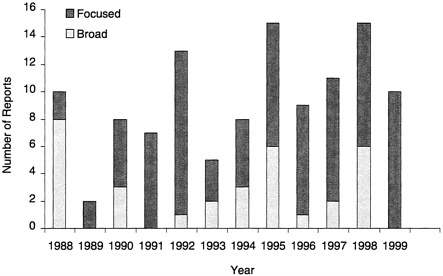
FIGURE 2.1 Number and type of peer-reviewed Space Studies Board reports published from 1988 through 1999.
over the decade while the mix has continued to show somewhat more effort on focused studies than on broad strategic and policy reports, particularly in the past year.
Finally, one can also examine the extent to which the Board’s efforts have been relevant to the full range of government interests in civilian space research. Figure 2.2 summarizes the principal federal agency audiences to which SSB reports were directed for the period from 1995 through 1999. “NASA-wide” reports were addressed to multiple NASA offices or the whole agency; “OES,” to the Office of Earth Science; “OLMSA,” to the Office of Life
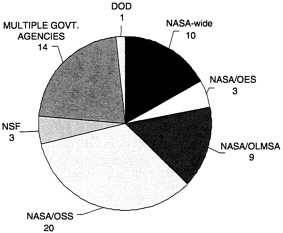
FIGURE 2.2 Principal federal agency audiences for Space Studies Board reports published from 1995 through 1999.
and Microgravity Sciences and Applications; and “OSS,” to the Office of Space Science. The “multiple” category covers reports that were directed to more than one agency in addition to NASA, e.g., NOAA, NSF, DOE, and/or DOD. One also sees a few reports prepared specifically for NSF and DOD. Within NASA, the Office of Space Science has been the most frequent report recipient, with the Office of Life and Microgravity Sciences and Applications also appearing as a major audience.
SSB Readership Survey Results
In the SSB quarterly newsletter for September 1999, SSB staff included an informal survey for readers to complete. The purpose of the survey was to attempt to gauge the interest in, and readership of, SSB newsletters and reports. The information supplied will help the SSB staff meet the current and future needs of its readers.
Of the surveys distributed, an impressive 30% (229/770 surveys) were returned. The responses received indicated that the majority of SSB readers work in academia (57%); 17% work in government; 4% work in industry; 6% are self-employed; and the remaining 16% are in private environments, are retired, or work in other occupations. Responses to the question on scientific interests showed that 13% of readers are interested in life and microgravity sciences; 12%, science policy; 11%, planetary and lunar exploration; and 10%, astronomy and astrophysics. Other categories of interest are Earth studies (9%), human exploration of space (8%), international space programs (8%), solar and space physics (8%); technology and astrobiology, each, (7%); and space systems (5%).
Forty-three percent of readers have received the SSB newsletter for more than 5 years; 36%, 3 to 5 years; 11%, 1 to 2 years; and 8%, less than 1 year. The good news is that 91 % find it useful, while 5% do not. Those persons not finding it useful indicated that (1) they are overwhelmed by the volume of newsletters that they receive; (2) SSB activities no longer cover their area of interest; or (3) they are already familiar with the material.
Ninety-eight of our readers indicated they prefer to get the newsletter by e-mail; however, 113 still prefer the paper issue. Those who did not indicate a preference will continue to get their newsletters by postal mail.
Seventy-four percent of the respondents indicated they had previously received SSB reports. Forty-two percent prefer to read executive summaries, while 24% stated that the size of the report did not matter.
Readers were asked to comment on the usefulness of the information contained in the newsletter and to also give general comments on the SSB and its activities. The comments were very informative. A list of replies is available on the SSB Web site at < http://www.nationalacademies.org/ssb/ssb.html > under “What’s New.”
Membership of the Space Studies Board
Claude R. Canizares, § Massachusetts Institute of Technology (chair)
Mark Abbott, Oregon State University
Fran Bagenal, University of Colorado
Daniel N. Baker, § University of Colorado
Robert E. Cleland, University of Washington
Gerard W. Elverum, Jr., * TRW Space and Technology Group (retired)
Marilyn L. Fogel, § Carnegie Institution of Washington
Bill Green, former member, U.S. House of Representatives
John H. Hopps, Jr., Rozewell, Georgia
Chris Johannsen, § Purdue University
Andrew H. Knoll, * Harvard University
Richard G. Kron, University of Chicago
Jonathan I. Lunine, § University of Arizona
Roberta Balstad Miller, Columbia University
Gary J. Olsen, University of Illinois at Urbana-Champaign
Mary Jane Osborn, University of Connecticut Health Center
George A. Paulikas, The Aerospace Corporation (retired)
Joyce E. Penner, University of Michigan
Thomas A. Prince, California Institute of Technology
Pedro L. Rustan, § Jr., U.S. Air Force (retired)
George L. Siscoe, Boston University
Eugene B. Skolnikoff, § Massachusetts Institute of Technology
Mitchell Sogin, Marine Biological Laboratory
Norman E. Thagard, Florida Agricultural and Mechanical University, Florida State University
Alan M. Title, Lockheed Martin Advanced Technology Center
Raymond Viskanta, Purdue University
Peter Voorhees, § Northwestern University
John A. Wood, Harvard-Smithsonian Center for Astrophysics
Louis J. Lanzerotti, Lucent Technologies (ex officio, U.S. representative and vice president of COSPAR)
J. Leonard Culhane, ENSPS (ex officio, chair of the European Space Science Committee)
William W. Hoover, U.S. Air Force (retired) (ex officio, chair of the Aeronautics and Space Engineering Board)
Michael C. Kelley, Cornell University (ex officio, chair of the Committee on Solar-Terrestrial Research)
Peter M. Banks, Veridian ERIM International, Inc. (CPSMA liaison)
William F. Ballhaus, Jr., Lockheed Martin Corporation (CPSMA liaison)
Marshall H. Cohen, California Institute of Technology (CPSMA liaison)
Michael F. Goodchild, University of California at Santa Barbara (CPSMA liaison)
Wesley T. Huntress, Jr., Carnegie Institution of Washington (CPSMA liaison)
Joseph K. Alexander, Director
Betty C. Guyot, Administrative Officer
Claudette K. Baylor-Fleming, Senior Program Assistant
COMMITTEE ON ASTRONOMY AND ASTROPHYSICS
The Committee on Astronomy and Astrophysics (CAA) met April 20-21 in Washington, D.C., to complete work on its draft report on federal support for astronomy research. The committee also drafted a letter on peer review for NSF’s South Pole astronomy program and responded to reviewers’ comments on its letter to the NSF concerning the revised Facility Instrumentation Program. The committee also heard presentations from the director of the National Radio Astronomy Observatory on the Millimeter Array (MMA) and the proposal for the international Atacama Large Millimeter Array, which would subsume the MMA. The federal funding report was reviewed by the SSB at its June meeting.
The CAA filed two letter reports with the National Science Foundation, one on June 2 on the NSF Facility Instrumentation Program, which followed up on the 1995 CAA report A Strategy for Ground-based Optical and Infrared Astronomy, and another on August 19 on astronomy from the South Pole.
During the third quarter of the year, the committee worked on completing its draft report Federal Funding for Astronomical Research, which was requested by the House Science Committee. The report was released in prepublication format in late September to NASA, the NSF, the House Science Committee, and the Astronomy and Astrophysics Survey Committee. Additional statistics on astrophysics activities within the NSF’s Physics Division and Office of Polar Programs were subsequently incorporated into the draft. The final edited version of the report is expected in the summer of 2000. The committee has also provided information on pertinent astronomy-related missions for the Board’s ad hoc Committee on the Assessment of Mission Size Trade-offs for Earth and Space Science Missions. Co-chair Thomas Prince attended the first day of the OSS strategic planning workshop in Galveston, Texas, on November 2.
The Astronomy and Astrophysics Survey Committee (AASC), established every 10 years to address priorities and long-range directions in the field of astronomy, functions under joint oversight of the Board on Physics and Astronomy (lead) and the SSB. The AASC completed its draft report in 1999 with plans for public release in the second quarter of 2000.
CAA Membership
John P. Huchra, Harvard-Smithsonian Center for Astrophysics (co-chair)
Thomas A. Prince, California Institute of Technology (co-chair)
Eric E. Becklin, University of California at Los Angeles
Todd A. Boroson, National Optical Astronomy Observatories
Roger Chevalier, * University of Virginia
Neal J. Evans, University of Texas at Austin
Jacqueline N. Hewitt, Massachusetts Institute of Technology
Robert C. Kennicutt, Jr., University of Arizona
Richard F. Mushotzky, NASA Goddard Space Flight Center
Stanton J. Peale, University of California at Santa Barbara
Deane Peterson, State University of New York
Blair D. Savage, University of Wisconsin
David N. Spergel, Princeton University Observatory
Michael S. Turner, * University of Chicago
Ellen G. Zweibel, University of Colorado
Robert L. Riemer, Study Director
Anne K. Simmons, Senior Program Assistant
COMMITTEE ON PLANETARY AND LUNAR EXPLORATION
The Committee on Planetary and Lunar Exploration (COMPLEX) did not meet during the first quarter. The report A Scientific Rationale for Mobility in Planetary Environments was published in late March and released to the public in early April. Another report, A Science Strategy for the Exploration of Europa, was revised in response to reviewers’ comments.
The committee met March 31-April 2 at the University of Colorado in Boulder to begin work on a new study concerning the certification and quarantine of martian samples. During the meeting the committee also heard from NASA representatives about ongoing programs and from AASC participants about relevant aspects of the decadal astronomy survey. Topics on international space programs and the industrial perspective on missions were also covered. Revisions to A Science Strategy for the Exploration of Europa continued.
At its meeting in Washington, D.C., on July 26-28, the committee’s time was divided between two principal activities—presentations relating to its current study, The Certification and Quarantine of Martian Samples, and the drafting of input to the SSB’s study on the size limits of small space missions. Additional agenda items included a brief discussion of future study topics, the workshop on life detection techniques proposed by the SSB-Board on Biology Committee on the Origins and Evolution of Life, and a status report on NASA’s planetary programs and the agency’s FY2000 budget.
The report A Science Strategy for the Exploration of Europa was approved and proceeded to editing.
The committee met at the Beckman Center in Irvine, California, on November 1-5. The meeting was devoted to three main topics: a series of presentations relating to biomarkers and life detection techniques, a series of presentations relating to current knowledge of, and key issues relating to, Venus, and discussions concerning NASA’s draft Solar System Exploration Roadmap and the OSS strategic planning workshop in Galveston, Texas.
Although the discussions concerning biomarkers and life detection techniques were conducted in the context of an ongoing study, The Certification and Quarantine of Martian Samples, it became apparent that the subject matter raised important questions relating to many different aspects of solar system exploration. As a result, a charge for a potential new study, Organic Synthesis in the Solar System, was drafted and subsequently approved by the Board. Work on drafting a charge for a possible study on the future exploration of Venus was begun. The committee’s tentative plan, subject to NRC approval, is to initiate the organic synthesis study at the spring 2000 meeting and to initiate the Venus study at a later date.
Work also began on drafting the committee’s input to both the Board’s review of NASA’s OSS 2000 Strategic Plan and the draft of NASA’s Solar System Exploration Roadmap. The latter was verbally requested by NASA’s
science program director for solar system exploration. Work on the former was facilitated by the presence of a committee representative, Wendy Calvin, on the first day of the OSS strategic planning workshop at Galveston.
The committee’s report, A Science Strategy for the Exploration of Europa, was released in printed form in late December.
COMPLEX Membership
John Wood, Harvard-Smithsonian Center for Astrophysics (chair)
Richard P. Binzel, * Massachusetts Institute of Technology
William Boynton, University of Arizona
W. Roger Buck, Lamont-Doherty Earth Observatory
Wendy Calvin, University of Nevada-Reno
Larry Haskin, * Washington University
Bruce Jakosky, * University of Colorado
Kenneth Jezek, Ohio State University
Peter B. Kahrling, U.S. Army Medical Research Institute of Infectious Diseases
Karen Meech, University of Hawaii
Michael Mendillo, Boston University
John F. Mustard, Brown University
Keith S. Noll, NASA/Marshall Space Flight Center
David A. Paige, University of California, Los Angeles
J. William Schopf, University of California, Los Angeles
Everett Shock, Washington University
Ann L. Sprague, University of Arizona
David H. Smith, Study Director
Sharon S. Seaward, Program Assistant
COMMITTEE ON SOLAR AND SPACE PHYSICS
The Committee on Solar and Space Physics (CSSP) met on January 18-20 at the Beckman Center and continued work on its report Radiation and the International Space Station: Recommendations to Reduce Risk. The report was presented at the March meeting of the SSB and received preliminary approval.
The committee’s meeting on June 28-30 in Woods Hole, Massachusetts, began with a discussion with George Withbroe, director of NASA’s Sun-Earth Connections (SEC) science theme, who reported on the Solar-Terrestrial Probes mission line, the Solar B instrument selection, the STEREO AO, and the MO&DA budget for SEC. The committee also heard presentations related to the ongoing SEC Roadmap exercise from Bill White, Mission Research Corp.; Vassilis Angelopoulos, University of California at Berkeley; Jim Slavin, NASA Goddard Space Flight Center; and Keith Strong, Lockheed Martin. The SEC Roadmap covers the time period from 2000 to 2015. Slavin noted that this roadmap develops the scientific rationale for new missions in more depth than did the previous roadmap. He also noted that there is more attention given to SEC relevance to other units within NASA and to other agencies.
The meeting included discussions with Rich Behnke, director of Atmospheric Sciences at NSF, committee member Dick Wolf, who also chairs the National Space Weather Program Metrics Committee, and Terry Onsager of NOAA’s Space Environment Center.
Most of the meeting was devoted to formulating revisions in response to external review of the committee’s report Radiation and the International Space Station: Recommendations to Reduce Risk and to developing plans for a new study. The radiation report was approved in late September and was released in December. Printed versions of the report are expected in early 2000.
At the June meeting, the committee also continued its planning for a possible new study that will explore Sun-Earth connection science and its links with other areas of physics and astrophysics. In addition, the committee began work on its input to the Board’s review of the OSS strategic plan. Committee member Robert Carovillano represented CSSP on the first day of the OSS Galveston strategic planning workshop.
CSSP Membership
George L. Siscoe, Boston University (chair)
James L. Burch, Southwest Research Institute
Charles W. Carlson, University of California at Berkeley
Robert L. Carovillano, Boston College
Tamas L Gombosi, * University of Michigan
Raymond A. Greenwald, * Johns Hopkins University Applied Physics Laboratory
Mary K. Hudson, Darmouth College
Judith T. Karpen, Naval Research Laboratory
Glenn M. Mason, University of Maryland
Frank B. McDonald, University of Maryland
Eugene N. Parker, University of Chicago
Robert A. Schunk, Utah State University
Margaret A. Shea, * Air Force Phillips Laboratory
Keith T. Strong, * Lockheed Martin Advanced Technology
Richard A. Wolf, Rice University
Arthur Charo, Study Director
Carmela J. Chamberlain, Senior Program Assistant (through March 1999)
Theresa Fisher, Senior Program Assistant (beginning April 1999)
COMMITTEE ON THE ORIGINS AND EVOLUTION OF LIFE
In February the NRC Governing Board approved establishment of the Committee on the Origins and Evolution of Life (COEL), to be organized jointly by the Space Studies Board and the Board on Biology (BB) of the Commission on Life Sciences. The committee will serve a coordinating function and will conduct studies related to the origin and evolution of life in the universe, developing or reviewing research strategies and monitoring their implementation, and assessing technology and program plans when these topics do not readily fall under the auspices of an existing discipline committee. It also will provide a broad-based, cross-disciplinary focus for astrobiology-related issues for the two Boards and will serve as an NRC focal point for relevant government agencies, such as NASA and NSF, as well as industry and academe on issues pertaining to astrobiology.
Committee activity has focused on the formal initiation of the committee’s first project, a workshop on life-detection techniques. A statement of task for this study was drafted jointly by the SSB and the BB in August and was subsequently approved by the NRC.
The committee has eight members, including a co-chair nominated by the Space Studies Board and another nominated by the Board on Biology. An organizational meeting for the committee’s workshop on life detection techniques will be held at the Beckman Center on January 27-28, 2000.
COEL Membership
Jonathan Lunine, University of Arizona (co-chair)
John Baross, University of Washington (co-chair)
Luann Baker, University of Hawaii
Sherwood Chang, Palo Alto, California
David Deamer, University of California, Santa Cruz
Marilyn Fogel, Carnegie Institution of Washington
Norman Pace, University of Colorado
David A. Stahl, Northwestern University
Joan Esnayra, Study Director (BB)
David H. Smith, Study Director (SSB)
COMMITTEE ON EARTH STUDIES
The Committee on Earth Studies (CES) was engaged in multiple activities during the first quarter. These included:
-
Completing revision of The Role of Small Satellites in NASA and NOAA Earth Observation Programs in response to external review comments;
-
Revising the NPOESS Phase 1 report in response to SSB reviewers comments;
-
Gathering background information for the NPOESS Phase 2 report;
-
Planning a workshop to develop the criteria and priorities for climate research missions that might be implemented on NPOESS; and
-
Assisting in the NASA ESE request for assessment of NASA’s plans for post-2002 Earth observing missions.
On February 10-12, the committee met in Washington to revise the NPOESS Phase 1 draft report in preparation for SSB approval. Representatives from NASA, Ghassem Asrar and Pierre Morel, and from IPO/NOAA, C. Nelson, M. Taylor, and M. Crison, provided updates on agency plans. In addition, the committee had briefings on calibration and validation for spaceborne sensors that have application to climate change research and weather prediction. Presenters included C. McClain, NASA/Goddard; R. Barnes, NASA/Goddard; C. Johnson, NIST; and C. Schueler, Raytheon. Further briefings in support of the NPOESS Phase 2 report were planned.
Planning for a workshop on NPOESS observations and climate research continued on May 26 when CES Chair Mark Abbott and other relevant NRC committee chairs met with officials from NASA, NOAA, NSF, and the White House Office of Science and Technology Policy (OSTP) to identify key variables with demonstrated or potential importance for climate research. Selection criteria for the variables included the likelihood that data collection could be turned over to an operational agency such as NOAA.
The committee met on June 8-9, in Washington, D.C., and heard briefings in support of the NPOESS Phase 2 report, including discussions on NPOESS systems engineering and architecture, and data management and distribution plans. CES also developed the outline for the Phase 2 report, discussed some of the conclusions and recommendations, and assigned writing topics to committee members.
The committee met twice during the third quarter. It held a workshop on July 26-27 in Washington, D.C., to address some of the difficult issues in the integration of NASA’s research and NOAA’s operational satellite systems, specifically for the planned NPOESS constellation. The SSB, the Board on Sustainable Development (BSD), and the Board on Atmospheric Sciences and Climate (BASC) were joint sponsors. Invited to the meeting, besides the chairs and former chairs of the relevant NRC committees (Eric Barron, Tom Karl, Charles Kennel, and Berrien Moore), were various government officials representing NASA, NOAA, OSTP, NSF, OMB, and the U.S. Global Change Research Program (USGCRP). The goals of the workshop were (1) to define the essential elements of an appropriate sampling strategy for long-term observations in support of climate research and (2) to identify a process to assess climate requirements and the overall approach and balance of the observational system that integrates operational stability with research flexibility. The results of the workshop will be integrated into the NPOESS Phase 2 report.
The committee met September 20-22 at the National Climatic Data Center in Asheville, North Carolina, to complete information gathering for the Phase 2 (final) NPOESS report. An outline was agreed upon and the committee spent one day writing. The committee planned to complete the first draft of the Phase 2 report in time for the SSB review at its November meeting.
During the third quarter, the committee’s report on the role of small satellites was revised in response to external review comments and was submitted for final approval. The NPOESS Phase 1 report was revised in response to reviewer comments and also was submitted for final approval.
The committee continued work on the two reports on NPOESS during the fourth quarter. NPOESS-1 was in review and NPOESS-2 will begin Board review in mid-January. The committee’s report The Role of Small Satellites in NASA and NOAA Earth Observation Programs was approved and is expected to be available in late February.
CES Membership
Mark R. Abbott, Oregon State University (chair)
Otis B. Brown, * Rosenstiel School of Marine and Atmospheric Science
John R. Christy, University of Alabama in Huntsville
Catherine Gautier, University of California at Santa Barbara
Daniel J. Jacob, * Harvard University
Christopher O. Justice, University of Virginia
Bruce D. Marcus, * TRW
M. Patrick McCormick, * Hampton University
Ralph Milliff, National Center for Atmospheric Research
Scott Pace, The RAND Corporation
Dallas L. Peck, U.S. Geological Survey (retired)
Michael Prather, University of California at Irvine
R. Keith Raney, Johns Hopkins University Applied Physics Laboratory
David T. Sandwell, Scripps Institution of Oceanography
Lawrence C. Scholz, Lockheed Martin (retired)
Carl Schueler, Raytheon Santa Barbara Remote Sensing
Graeme L. Stephens, Colorado State University
Fawwaz T. Ulaby, University of Michigan
Susan L. Ustin, University of California at Davis
Frank J. Wentz, Remote Sensing Systems
Edward F. Zalewski, University of Arizona
Ina B. Alterman, Study Director
Arthur Charo, Study Director
Carmela J. Chamberlain, Senior Program Assistant (through March 1999)
Theresa M. Fisher, Senior Program Assistant (beginning April 1999)
COMMITTEE ON SPACE BIOLOGY AND MEDICINE
The Committee on Space Biology and Medicine (CSBM) met on March 3-5 at the Johnson Space Center (JSC), in Houston, Texas, to review the biomedical programs and activities at JSC. The committee was welcomed to JSC by Center Director George Abbey, who spoke about his perspective on the role of life sciences at NASA. The committee received a very extensive and thorough set of presentations from JSC biomedical program managers and scientists. Topics included the organizational structure of the Human Space Life Sciences Program Office (HSLSPO), an overview of the space medicine program, the processes used to manifest operational and clinical experiments on spaceflights, and briefings on each of the medical research areas supported by JSC. The committee also heard about the critical-path research plan being developed for HSLSPO and was particularly impressed with both the approach used to develop the plan and the questions used to prioritize research. The presentations on astronaut medical data and privacy policies prompted the greatest number of questions from the committee and were the subject of vigorous discussion. The committee also toured a mock-up of the International Space Station research modules, and each member received individual tours of two biomedical labs of their choice.
The committee heard a report from the committee contingent that had visited Ames Research Center on February 11-12 in order to review its smaller biomedical research program.
The committee met on June 3-5 in Woods Hole, Massachusetts, to review and revise the first-draft chapters for its report on NASA biomedical research programs. The meeting also included an examination of the various discipline chapters. One area of particular confusion was the status of discipline balance in the life sciences program, and the committee agreed to use NASA’s FY1999 budget figures as a consistent basis for making this determination. The committee identified additional resource materials needed and agreed to a schedule for developing additional iterations of the report prior to its September meeting.
The committee met on September 22-24 in Irvine, California, to revise the final draft of its report on NASA biomedical research programs. The meeting included a review of the integrated report to identify remaining gaps and inconsistencies, group discussion, and work in individual writing groups. The draft report was reviewed by SSB in November.
The committee met on December 6-8 in Irvine, California, to revise its report on the NASA biomedical research program in response to review comments from the Board. The revised report was expected to enter external review in mid-January 2000 after final SSB approval.
CSBM Membership
Mary Jane Osborn, University of Connecticut Health Center (chair)
Norma M. Allewell, Harvard University
Jay C. Buckey, Dartmouth-Hitchcock Medical Center
Lynette Jones, Massachusetts Institute of Technology
Robert Marcus, VA Palo Alto Health Care System
Lawrence A. Palinkas, University of California at San Diego
Kenna D. Peusner, George Washington University Medical Center
Steven E. Pfeiffer, University of Connecticut Medical Center
Danny A. Riley, Medical College of Wisconsin
Richard Setlow, Brookhaven National Laboratory
Gerald Sonnenfeld, Morehouse School of Medicine
T. Peter Stein, University of Medicine and Dentistry of New Jersey
Judith L. Swain, Stanford University School of Medicine
Sandra J. Graham, Study Director
Anne K. Simmons, Senior Program Assistant
COMMITTEE ON MICROGRAVITY RESEARCH
The Committee on Microgravity Research (CMGR) met on January 25-28 at the Beckman Center in Irvine, California, to finalize a draft of its phase II HEDS report, Microgravity Research in Support of Technologies for the Human Exploration and Development of Space and Planetary Bodies, prior to SSB review. The first priority of the meeting was to develop and prioritize the overall research and programmatic recommendations for the report and to draft the sections containing those recommendations. The committee also closely reviewed and discussed Chapters 3 and 4 ; particular attention was paid to the subsystem and phenomena matrices. The committee continued to revise the report following the meeting, and the final draft was reviewed by the SSB in March.
The committee met on March 28-31 in Irvine, California, to revise the report in response to SSB review comments.
The committee met on June 8-10 in Washington, D.C., to revise the report in response to comments from external reviewers. A short open session was held to discuss possible new tasks for the committee. Mike Wargo, acting director for NASA’s Microgravity Research Division, was present to propose possible new tasks of interest to NASA. A number of topics were explored, and it was agreed that NRC staff would follow up with NASA regarding those tasks that the committee believed to be within its scope.
The committee did not meet during the third quarter. The committee worked by e-mail and fax to complete revisions on its HEDS technology report in response to external review comments. The report was approved on October 1 and editing continued.
On October 28 at NASA Headquarters, committee chair Raymond Viskanta briefed the NASA chief scientist and leadership of Office of Life and Microgravity Sciences and Applications and the microgravity division on the recommendations of the committee’s report, Microgravity Research in Support of Technologies for the Human Exploration and Development of Space and Planetary Bodies. At the end of the year, the report was being edited with a release anticipated in the first quarter of 2000 and publication to follow.
CMGR Membership
Raymond Viskanta, Purdue University (chair)
Robert A. Altenkirch, * Washington State University
Robert L. Ash, * Old Dominion University
Robert J. Bayuzick, * Vanderbilt University
Charles W. Carter, Jr., University of North Carolina at Chapel Hill
Richard T. Lahey, Jr., Rensselaer Polytechnic Institute
Ralph A. Logan, * AT&T Bell Laboratories (retired)
Franklin K. Moore, * Cornell University (emeritus)
William W. Mullins, Carnegie Mellon University
Forman A. Williams, * University of California at San Diego
Sandra J. Graham, Study Director
Anne Simmons, Senior Program Assistant
COMMITTEE ON HUMAN EXPLORATION
The Committee on Human Exploration (CHEX) met on February 24-25 in Washington, D.C., to discuss the viability and feasibility of undertaking a new project developed during discussions by the committee in its August 1998 meeting and in subsequent meetings with NASA Headquarters officials. The meeting began with committee member-led discussions on topics that included prior efforts to articulate the role of humans in space, implications of recent science discoveries, and the changing relationship between humans and technology. Presentations were provided by Mark Craig (Stennis Space Center), Arnauld Nicogossian and Roger Crouch (NASA Headquarters), and Marcia Smith (Congressional Research Service) regarding the potential for this task. CHEX Chair Norman Thagard and SSB staff continued to hold informal discussions with NASA officials about scheduling and funding issues for this task, as well as other future directions for the committee.
On July 14 the chair and two members of the committee participated in a preproject planning meeting organized by the SSB and the NRC Commission on Behavioral and Social Sciences and Education (CBSSE). The purpose of the meeting was to explore, in discussions with a small number of experts in cultural anthropology and other related social science disciplines, a range of topics related to long-term human exploration missions. The informal session began from the perspective that such future missions are very likely to involve multicultural crews and ground-support teams, and that coping with the unique challenges of such missions is likely to involve new kinds of human-machine relationships and interdependencies. Participants agreed that these topic areas deserve further consideration, possibly leading to a proposal for an NRC study of relevant research requirements and priorities. Staff members from the SSB and CBSSE, in consultation with members of CHEX, planned to work with NASA to determine appropriate next steps.
The committee did not meet during the fourth quarter. Discussions with CBSSE continued at a low level regarding a future project to study social, cultural, and anthropological issues that are relevant to human exploration missions beyond low Earth orbit. A new statement of task will be developed in early 2000.
CHEX Membership
Norman Thagard, Florida Agricultural and Mechanical University, Florida State University (chair)
Gerard W. Elverum, Jr., TRW (retired)
Steven Jacobsen, University of Utah
Michael Ladisch, Purdue University
John Logsdon, George Washington University
Harry Y. McSween, Jr., University of Tennessee
Patricia Santy, University of Texas Medical Branch
Richard Setlow, Brookhaven National Laboratory
Joseph K. Alexander, Study Director
Erin Hatch, Research Associate (through May 1999)
Sharon Seaward, Program Assistant
COMMITTEE ON INTERNATIONAL SPACE PROGRAMS
The Committee on International Space Programs (CISP) met on February 22-23 in Washington, D.C. The objectives for the meeting were to gather information and perspectives on what should be on the committee’s agenda for the next few years and to discuss the committee’s next activity, a U.S.-European-Japanese workshop on space cooperation to be held on May 19-21 in Japan.
The committee membership was new, with the exception of Bill Green, who was reappointed. The committee heard from a broad spectrum of agencies, both in the space science and international science policy arenas. Briefings were presented by Jeff Hofgard, Office of Science and Technology Policy; Ralph Braibanti, Department of State; Brent Smith, NOAA/NESDIS; Larry Weber, NSF; and Pierre Morel, Guenter Riegler, John Schumacher, and Beth McCormick, all of NASA. The committee appointed two subcommittees. One would explore whether the CISP should address the issue of international cooperation in the changing era of “smaller, faster, cheaper” missions. The other would explore whether the CISP should engage in a follow-on workshop with Japan on cooperation in the Earth, life, and microgravity sciences, since the May 1999 workshop was planned to focus on cooperation in the more traditional space sciences (astronomy and astrophysics, space physics, and planetary sciences).
Several members of the committee participated in the trilateral workshop on space cooperation in Tokyo on May 19-21, hosted by the Science Council of Japan and including representatives of the European Space Science Committee of the European Science Foundation. The purposes of the workshop were as follows:
-
To provide an opportunity for independent space science advisory bodies in Europe and the United States to establish a relationship with like bodies in Japan;
-
To begin this relationship by examining the nature of trilateral, cooperative space missions conducted during the last decade;
-
To better understand the primary factors that had led to successful collaboration in the past, to explore the benefits and costs of cooperation, and to identify major problems; and
-
To review the status of several embryonic projects and to consider broader issues such as the possibility of coordinated, international strategic planning for space science, and other policy issues likely to be significant in the future.
The primary approach of the workshop was to examine U.S., European, and Japanese perspectives on the collaborative experience in three missions—a space physics mission, Geotail; an astrophysics mission, Astro-D/ASCA; and a solar physics mission, Yohkoh. Workshop discussions focused on extracting the problems, lessons, and elements of success experienced in the missions. An aim of the workshop was to consider future missions and how they might benefit from past lessons learned, or how the current policy, budgetary, and technology environment might pose entirely different challenges for upcoming collaborative endeavors (e.g., technology transfer, commercialization, and intellectual property issues).
The CISP met on July 19-20 in Woods Hole, Massachusetts, to review the draft summary report of the trilateral workshop and to discuss a potential follow-on workshop with Japan to address cooperation in the Earth, life, and microgravity science areas. During the meeting the committee also provided inputs on international perspectives on two ongoing SSB projects: (1) the Assessment of Mission Size Trade-Offs for Earth and Space Science Missions and (2) Institutional Arrangements for Space Station Research. In addition, the SSB’s European sister body, the
European Space Science Committee (ESSC), was planning an initiative to explore international collaboration and strategic planning for large-scale missions. CISP discussed this activity and how the SSB might be involved.
In February 1999, Gerhard Haerendel, president of the Committee on Space Research (COSPAR), sent a letter to NAS president Bruce Alberts inviting him to suggest a candidate for chair of the Scientific Program Committee for the upcoming World Space Congress (WSC) 2002 in Houston, Texas. After an extensive search aided by the SSB, Alberts proposed Stephen S. Holt, director of NASA Goddard’s Space Science Directorate and an astrophysicist with extensive international research experience. A joint activity of COSPAR and the International Astronautical Federation (IAF), WSC 2002 will include COSPAR’s biennial scientific assembly, the IAF annual Congress, and a number of joint science-engineering sessions and associated joint events. One of the objectives of the WSC is to seek greater synergy among the scientific and engineering sides of international space research.
During the fourth quarter COSPAR continued its preparations for WSC 2002. The Joint Program Committee met on October 5 in Amsterdam at the annual IAF Congress. Issues discussed included possible joint publications emanating from the event and initial plans for the program. The Joint Program Committee will meet in Houston, Texas, for a site visit to the George Brown Convention Center on January 30-31. Scientific Program Committee Chair Stephen Holt attended the Amsterdam meeting and will attend the site visit in late January.
The CISP did not meet during the fourth quarter. The committee’s report, U.S.-European-Japanese Workshop on Space Cooperation: Summary Report, was published in December. Committee member Jack Hughes, currently on sabbatical at the Service d’Astrophysique in Saclay, France, represented the SSB at the November 22-23 meeting of the ESSC in Granada, Spain. The ESSC was the co-author of the 1998 report U.S.-European Collaboration in Space Science and participated in the U.S.-European-Japanese Workshop on Space Cooperation held at the Japan Science Council in Tokyo, Japan, in May 1999.
CISP continued to monitor several issues, including the international dimensions of NASA’s “faster, better, cheaper” approach to conducting missions, U.S. export control stipulations and their potential impact on international cooperation in space research, intellectual property rights and the potential implications for international space research, and the status of the Russian and Chinese space programs.
CISP Membership
Eugene Skolnikoff, Massachusetts Institute of Technology (chair)
Fran Bagenal, University of Colorado
Lennard Fisk, University of Michigan
Martin E. Glicksman, Rensselaer Polytechnic Institute
Bill Green, former member, U.S. House of Representatives
John Hughes, Rutgers University
Adrian LeBlanc, Baylor College of Medicine
Thomas R. Loveland, U.S. Geological Survey EROS Data Center
Norman P. Neureiter, Texas Instruments (retired)
Louis J. Lanzerotti, Lucent Technologies (ex officio)
Pamela L. Whitney, Study Director
Carmela J. Chamberlain, Senior Program Assistant
JOINT COMMITTEE ON TECHNOLOGY
The Joint Committee on Technology (JCT) of the SSB and the Aeronautics and Space Engineering Board (ASEB) did not meet during the year. Planning for future activities continued informally, pending agreement on a specific project.
JCT Membership
Claude R. Canizares, Massachusetts Institute of Technology (co-chair)
William Hoover, U.S. Air Force (retired) (co-chair)
Alan Angleman, Study Director (ASEB)
Pamela L. Whitney, Study Director (SSB)
TASK GROUP ON ASSESSMENT OF NASA’S PLANS FOR POST-2002 EARTH OBSERVING MISSIONS
The Task Group on Assessment of NASA’s Plans for Post-2002 Earth Observing Missions was formed in January in response to a request from NASA’s Office of Earth Science for a fast-track review of NASA’s proposed mission scenario for Earth observing missions during the period from 2003 to 2010. The study was conducted under the auspices of the Space Studies Board, the Board on Sustainable Development, and the Board on Atmospheric Sciences and Climate. The task group’s charge included consideration of the extent to which the mission set addressed important science themes and priorities, broad aspects of balance between various Earth science discipline areas, general technical and programmatic feasibility, and evaluation of the process employed by NASA to solicit and distill ideas to frame the proposed mission set.
The task group met February 10-11 in Washington, D.C. Briefings to the task group were provided by representatives from NASA, NOAA, and the NPOESS/IPO (National Polar-orbiting Operational Environmental Satellite System/Integrated Program Office), the U.S. Global Change Research Program, the Office of Management and Budget, and the White House Office of Science and Technology Policy. The task group also held discussions with the chairs of three recent NRC studies pertinent to the current assessment and with authors of NASA’s Report on the Post-2002 Mission Planning Workshop (the Kennel report).
The task group issued its letter report on April 8, 1999.
Post-2002 Task Group Membership
Marvin A. Geller, State University of New York (chair)
Eric J. Barron, Pennsylvania State University
Hartmut Grassl, World Meteorological Organization
Bill Green, former member, U.S. House of Representatives
Gordon McBean, Atmospheric Environment Service
William J. Merrell, Jr., H. John Heinz III Center for Science, Economics, and the Environment
Richard Moss, Pacific Northwest Laboratory
Edward S. Sarachik, University of Washington
David S. Schimel, University Corporation for Atmospheric Research
Susan L. Ustin, University of California at Davis
Joseph K. Alexander, Director, Space Studies Board
Art Charo, Senior Project Officer, Space Studies Board
Sherburne B. Abbott, Director, Board on Sustainable Development
Sylvia Edgerton, Senior Project Officer, Board on Sustainable Development
Elbert W. (Joe) Friday, Director, Board on Atmospheric Sciences and Climate
Claudette Baylor-Fleming, Senior Program Assistant, Space Studies Board
WORKSHOP ON SIZE LIMITS OF VERY SMALL MICROORGANISMS
Size Limits of Very Small Microorganisms: Proceedings of a Workshop, the report of a workshop held in October 1998, was published in late summer.
Steering Group for the Workshop on Size Limits of Very Small Microorganisms Membership
Andrew Knoll, Harvard University (co-chair)
Mary Jane Osborn, University of Connecticut Health Center (co-chair)
John Baross, University of Washington
Howard C. Berg, Harvard University
Norman R. Pace, University of California at Berkeley
Mitchell Sogin, Marine Biological Laboratory
Sandra J. Graham, Study Director (from October 17, 1998)
Joseph L. Zelibor, Jr., Study Director (through October 16, 1998)
Erin C. Hatch, Research Associate
Jacqueline D. Allen, Senior Program Assistant (through February 1999)
Theresa M. Fisher, Senior Program Assistant (from April 1999)
Laura Ost, Consultant
TASK GROUP ON THE FORWARD CONTAMINATION OF EUROPA
The Task Group on the Forward Contamination of Europa was established under the leadership of Larry Esposito of the University of Colorado as chair. The eight-member task group had its first meeting in Washington, D.C., on April 5-6.
The task group held its second and third meetings, primarily writing meetings, on May 3-4 in Boulder, Colorado, and on July 1-2 at the Beckman Center in Irvine, California. At the July meeting the task group heard a couple of presentations, but the majority of the meeting was devoted to discussion of the report’s conclusions and recommendations. The task group put the finishing touches on a draft of the report and forwarded it to the SSB for review at its November meeting.
The task group did not meet during the fourth quarter. Its draft report, Preventing the Forward Contamination of Europa, was reviewed by the Board in November and was returned to the task group for revision.
Task Group on the Forward Contamination of Europa Membership
Larry W. Esposito, University of Colorado (chair)
Andrew F. Cheng, Johns Hopkins University
Benton C. Clark, Lockheed Martin Astronautics
Michael Daly, Uniformed Services University of the Health Sciences
E. Imre Friedmann, Florida State University
Bruce M. Jakosky, University of Colorado
Richard Y. Morita, Oregon State University
Anne-Louise Reysenback, Portland State University
David A. Stahl, Northwestern University
David H. Smith, Study Director
Sharon Seaward, Project Assistant
TASK GROUP FOR THE EVALUATION OF NASA’S BIOTECHNOLOGY FACILITY FOR THE INTERNATIONAL SPACE STATION
The Task Group for the Evaluation of NASA’s Biotechnology Facility for the International Space Station (BTF) was formed to look at NASA’s proposed plans to support a range of investigations in cell biology (cell culture, growth, and differentiation) and macromolecular crystal growth (growth of biological macromolecular crystals such as proteins and nucleic acids). The task group, then chaired by Paul Sigler of Yale University, held its first meeting on April 26-27 in Washington, D.C. The task group heard presentations from NASA on the use of the International Space Station (ISS) as a research platform, on the agency’s goals for its research programs in cell science and protein crystal growth, and on the engineering plans and schedule for the ISS biotechnology facility.
The task group held two site visits in July. Half the group went to the Marshall Space Flight Center in Huntsville, Alabama, on July 12 and to the University of Alabama at Birmingham on July 13. On this trip, they heard presentations about NASA’s program in macromolecular crystal growth and viewed equipment currently available or in development for growing and observing protein crystals in space. The remainder of the task group spent July 19-20 at the Johnson Space Center in Houston, Texas, where they learned about NASA’s work in cell
biology and viewed prototypes of the hardware planned to be used for culture growth on the ISS. The whole task group met for a session devoted to deliberation and writing in Washington, D.C., on August 30.
The task group did not meet during the fourth quarter. The report of the task group was reviewed by SSB in November and was in external review at the end of the year. Release was planned for February 2000. Gary Stein of the University of Massachusetts was appointed acting chair following Paul Sigler’s death in January 2000.
TGBTF Membership
Paul B. Sigler, Yale University (chair * )
Gary S. Stein, University of Massachusetts Medical School (acting chair ** )
Adele L. Boskey, Hospital for Special Surgery, New York
Noel D. Jones, Molecular Structure Corp. and Eli Lilly (retired)
John Kuriyan, Rockefeller University
William M. Miller, Northwestern University
Michael L. Shuler, Cornell University
Bi-Cheng Wang, University of Georgia
Elizabeth L. Grossman, Study Director
Carmela J. Chamberlain, Senior Project Assistant
TASK GROUP TO REVIEW ALTERNATIVE INSTITUTIONAL ARRANGEMENTS FOR SPACE STATION RESEARCH
Appointments to the Task Group to Review Alternative Institutional Arrangements for Space Station Research (IASSR) were completed during the first quarter. Cornelius J. Pings was appointed to chair the 13-person group to address general principles, major roles and functions, organizational character, and other relevant aspects of alternative institutional arrangements for facilitating the conduct of research on the International Space Station. This project was conducted jointly under the auspices of the SSB and the Aeronautics and Space Engineering Board.
The task group held its first meeting on May 18-20 in Houston, Texas. At the meeting, the task group heard presentations from NASA officials regarding NASA’s Human Exploration and Development of Space Enterprise, the overall International Space Station (ISS) program, ISS utilization planning, and research mission management and integration. Members were also briefed on plans for ISS utilization in life and microgravity sciences, Earth and space sciences, engineering research, and commercial development. Additional briefings and discussions covered NASA’s reference model for a nongovernmental organization for ISS research, international participation in the ISS program, and the perspective of the ISS prime contractor, Boeing, on ISS operations and utilization.
The task group held its second meeting in Washington, D.C., on July 26-28. Members heard from senior representatives of the NASA Offices of Life and Microgravity Sciences and Applications and of Space Flight, OMB and congressional committee staffs, NASA field center space station payload developers, the NASA Commercial Space Centers, and private-sector entities. They also discussed the policies of several federal agencies regarding accommodation of proprietary use of federal research facilities, and they engaged in lessons-learned discussions with a panel of individuals having experience with a range of different nongovernmental R&D organizations. The meeting also was used to begin to frame the task group’s findings and recommendations. A small subset of task group members visited the Space Telescope Science Institute (STScI) on August 31 to learn about the history, responsibilities, and operating structure of the STScI. The task group’s third meeting occurred on September 28-29 for the purpose of further discussion of key issues leading to closure on the structure of a final draft report.
The report, Institutional Arrangements for Space Station Research, was delivered to NASA on December 23. The task group concluded that NASA should establish a nongovernmental organization under the direction of institutions capable of representing the broad research community to manage the research utilization of the ISS and that this organization should have sufficient authority to match its assigned responsibilities. The report outlines the most important attributes and roles of that organization, and it recommends priority actions for NASA and the
organization to accomplish a timely transition to bringing the organization on line. Dissemination activities will continue into the first quarter of 2000.
IASSR Membership *
Cornelius J. Pings, American Association of Universities (retired) (chair)
Judith H. Ambrus, Space Technology Management Services
Robert J. Bayuzick, Vanderbilt University
Anthony W. England, University of Michigan
Charles A. Fuller, University of California at Davis
Richard H. Hopkins, Northrop Grumman Corp. (retired)
Ernest G. Jaworski, Monsanto Co. (retired)
Michael J. Katovich, University of Florida
Samuel Kramer, Kramer Associates
G. Paul Neitzel, Georgia Institute of Technology
Lyle H. Schwartz, Air Force Office of Scientific Research
John G. Stewart, Stewart, Wright and Associates
John C. Toole, University of Illinois at Urbana-Champaign
Norma Allewell, Harvard University, ex officio
Joseph K. Alexander, Study Director
Tom Albert, Senior Program Officer, Aeronautics and Space Engineering Board
Susan Garbini, Senior Program Officer
Claudette Baylor-Fleming, Senior Program Assistant
Edmond M. Reeves, Consultant
TASK GROUP ON TECHNOLOGY DEVELOPMENT IN NASA’S OFFICE OF SPACE SCIENCE
The Task Group on Technology Development in NASA’s Office of Space Science (TGTOSS) met on April 28 at the request of NASA to hold an informal discussion on NASA’s approach to addressing the task group’s report, Assessment of Technology Development in NASA’s Office of Space Science, published in November 1998. Peter Ulrich, director of the Office of Space Science (OSS) Advanced Technology and Mission Studies (AT&MS) Division, discussed with the participants the status of the OSS advanced technology and cross-cutting technology programs.
In general, the task group’s reaction to NASA/OSS efforts was very positive. The group felt that NASA’s planning on advanced technology was improving and that the agency’s approach to matching technology development to program needs was laudable. Restructuring of the cross-cutting technology program also appeared to be moving in the right direction. The task group raised concerns about the portfolio mix of near-term versus far-term technology development and the need for the OSS AT&MS Division to stay focused on big-picture issues, rather than details. In-depth discussion of these and other specific issues was planned for the fall meeting, as requested by NASA, as an initial step in conducting an external review of the OSS advanced technology development (ATD) program and of NASA’s official response to the task group’s recommendations in its 1998 report.
The task group met on October 18-19 in Washington, D.C., to gather input for its review of NASA’s response to the 1998 TGTOSS report. The task group heard from several officials on aspects of the technology development programs at NASA Headquarters and the NASA centers. In addition, the task group received a status briefing on full-cost accounting from Bill Dimmer, Office of the Comptroller, NASA Headquarters. The letter report resulting from the meeting was completed and submitted for NRC review. Final results of this activity are expected to be available in March 2000.
TGTOSS Membership
Daniel J. Fink, D.J. Fink Associates, Inc., (chair)
Robert S. Cooper, Atlantic Aerospace Electronic Corp.
Anthony W. England, University of Michigan
Donald C. Fraser, Boston University
Bruce D. Marcus, Consultant
Irwin I. Shapiro, Harvard-Smithsonian Center for Astrophysics
Oswald Siegmund, University of California at Berkeley
Pamela L. Whitney, Study Director
Tamara L. Dickinson, Study Director
Anne K. Simmons, Senior Program Assistant
TASK GROUP ON THE REVIEW OF SCIENTIFIC ASPECTS OF THE NASA TRIANA MISSION
In the fall of 1999, NASA’s Office of Earth Science requested that the NRC undertake an evaluation of the scientific goals of the Triana mission, as specified in the House-Senate FY2000 Appropriations Conference report. The Task Group on the Review of Scientific Aspects of the NASA Triana Mission was subsequently appointed by the NRC and will meet on January 12-13, 2000, in Washington, D.C., to review the scientific goals and related aspects of the Triana mission. After examining the scientific basis for the mission, its research goals, and its measurement plans, the task group will provide an independent technical assessment of the extent to which the planned science mission is consonant with research priorities and directions recommended in recent relevant NRC reports. A letter report is expected in early March.
TRIANA Membership
James J. Duderstadt, University of Michigan (chair)
William L. Chameides, Georgia Institute of Technology
Catherine Gautier, University of California at Santa Barbara
George Gloeckler, University of Maryland
William E. Gordon, Rice University (retired)
Judith Lean, Naval Research Laboratory
Noboru Nakamura, University of Chicago
Alan Strahler, Boston University
Tamara L. Dickinson, Study Director
Rebecca Shapack, Research Assistant
Sharon Seaward, Project Assistant
AD HOC COMMITTEE ON THE ASSESSMENT OF MISSION SIZE TRADE-OFFS FOR EARTH AND SPACE SCIENCE MISSIONS
The Board constituted the Ad Hoc Committee on the Assessment of Mission Size Trade-offs for Earth and Space Science Missions, which met at Woods Hole, Massachusetts, on September 8-10. As requested by NASA, the ad hoc committee was assembled to respond to a congressionally mandated study to explore issues related to the mix of mission sizes in the NASA space and Earth science enterprises. The September meeting was devoted to organizing the report, reviewing inputs from SSB discipline committees, and preparing an initial draft of the report. Release of the report is planned for February 2000.
The ad hoc committee (also known as the Limits Group) met on November 10-11 at Stennis Space Center to revise its draft report in response to Board review. During the meeting the group had the opportunity to hear the briefing of the Mars Climate Orbiter Failure Review Board, which was broadcast live on the NASA TV channel.
The committee’s report will be sent to external review in early January and the final report is expected in late February 2000.
Limits Membership
Daniel N. Baker, University of Colorado (chair)
Fran Bagenal, University of Colorado
Robert L. Carovillano, Boston College
Richard G. Kron, University of Chicago
George A. Paulikas, The Aerospace Corporation (retired)
R. Keith Raney, Johns Hopkins University Applied Physics Laboratory
Pedro L. Rustan, Jr., U.S. Air Force (retired)
Pamela Whitney, Study Director
Carmela J. Chamberlain, Senior Program Assistant
STEERING COMMITTEE ON SPACE APPLICATIONS AND COMMERCIALIZATION
The Steering Committee on Space Applications and Commercialization (SAPPSC) met briefly during the Space Studies Board meeting on March 8-10 in Washington, D.C., to discuss plans for a series of three workshops on remote sensing. SSB staff held discussions with federal agencies, state organizations, and professional staff of the Subcommittee on Space and Aeronautics of the House Committee on Science to acquire feedback on the proposals and to pursue sponsorship for the workshops. The SAPPSC expects to establish a full steering committee and begin planning as soon as sponsorship is secured.
During the second quarter, the steering committee and staff continued to pursue funding for the series of three workshops on remote sensing. The workshops will address the changes in remote sensing from a government- and research-oriented environment to a more commercial and applications-oriented climate and explore how this transition is affecting basic research and education, public-sector uses of remote sensing, and the development of new remote-sensing applications. SSB staff and steering committee members held discussions with officials at NASA and USDA about potential interest in the workshops and solicited low-level support from private remote sensing and geographical information systems companies. NOAA, EPA, and the U.S. Army Corps of Engineers expressed interest in supporting the workshops. The steering committee met again on June 23 during the SSB meeting at Glenn Research Center to discuss increasing and broadening the committee membership in preparation for the workshop activities and to set a date for a workshop planning meeting.
An SSB Web site was developed to provide background information, meeting plans, and other relevant information for this activity.
The steering committee held its first meeting on December 13-14 in Washington, D.C., marking the beginning of formal planning for the series of workshops that the committee will undertake over the next 2 years. Plans were made for the first workshop, “Moving from Research to Applications: A Case Study of the Knowledge Transfer Process.” Representatives from the federal agencies that are sponsoring the workshops (NOAA (National Ocean Service and the National Environmental Satellite Data and Information Service), EPA, the U.S. Army Corps of Engineers, and NASA (Stennis Space Center and Headquarters)) attended and provided input on their interests in and perspectives on the workshop topic. Interested individuals from the USDA and the NRC as well as independent consultants also attended. Following the planning meeting, the steering committee agreed on an agenda for the workshop, which will be held at the NRC in Washington, D.C., in early May 2000.
SAPPSC Membership
Roberta Balstad Miller, Columbia University (chair)
Mark R. Abbott, Oregon State University
Lawrence W. Harding, Jr., Horn Point Environmental Laboratory
John R. Jensen, University of South Carolina
Chris J. Johannsen, Purdue University
Molly Macauley, Resources for the Future
Pamela L. Whitney, Study Director
Carmela J. Chamberlain, Senior Program Assistant
DISTINGUISHED LEADERS IN SCIENCE LECTURE SERIES 1999-2000
The 1999-2000 session of the “Distinguished Leaders in Science” lecture series, a cooperative activity between the SSB and the National Academies’ Office on Public Understanding of Science, will feature presentations by five space scientists and four life scientists. The five space science lectures scheduled are highlighted below:
-
Turner, University of Chicago
-
October 27, 1999, Biodiversity: What Does It Mean for Use? Peter H. Raven, Missouri Botanical Garden
-
November 10, 1999, From Mad Cows to “psi-chotic” Yeast: A New Paradigm in Genetics, Susan L. Lindquist, University of Chicago
-
December 10, 1999, Rediscovering the Red Planet: Latest Results from the Exploration of Mars, Maria Zuber, Massachusetts Institute of Technology
-
January 10, 2000, Life at the Ends of Your Chromosomes: How to Stay Young Forever, Thomas R. Cech, University of Colorado
-
February 7, 2000, Life in the Underground: Symbiosis, Phytochemicals, and Agriculture, Sharon R. Long, Stanford University
-
March 23, 2000, Probing the Violent Universe with the Chandra X-Ray Observatory, Claude R. Canizares, Massachusetts Institute of Technology
-
April 18, 2000, Europa and the Rebirth of Exobiology, Christopher Chyba, SETI Institute
-
May 11, 2000, The Sun-Earth Connection in the Space Age, Richard Canfield, Montana State University
An extensive mail and e-mail publicity campaign for the series was initiated in early September. Outreach activities included disseminating lecture information to local newspapers and radio stations, with an emphasis on local university populations, high schools, and small alternative and neighborhood publications. A mutually beneficial marketing collaboration with the Carnegie Institution of Washington was initiated. Archival and broadcast quality videotapes of each lecture were made. The Montgomery County (Md.) public access channel rebroadcast each lecture up to nine times over the course of a month. Post-production editing was done to create a more polished product for rebroadcasting. Discussions were held with commercial and noncommercial broadcast venues for wider distribution to a science-interested public.


