
1
Drinking Water Contaminant Candidate List: Past, Present, and Future
INTRODUCTION
The provision of safe drinking water throughout the United States has been a major triumph in U.S. public health practice since the turn of the twentieth century. The quality of this essential service is critical to community health because not only does it provide a life-giving substance to our communities, but it also has the potential to deliver harmful substances and microorganisms if not properly maintained. Maintenance of drinking water quality has been accomplished through several layers of federal, state, and local government laws, advisories, and regulations designed to protect public water supplies. Despite multiple levels of regulatory protection, however, many sources of raw and treated public drinking water in the United States contain chemical, microbiological, and even radiological contaminants at detectable and occasionally harmful levels (EPA, 1999a; Neal, 1985). The continuing presence of contaminants in water supplies, as well as documented outbreaks of waterborne disease and the many other outbreaks thought to go undetected, serve as a clear reminder that unprotected and contaminated drinking water can still pose health risks to the population (NRC, 1999a). Continuing public health vigilance is necessary to ensure that drinking water contaminants, especially newly identified ones, are appropriately addressed.
Perhaps the most important, comprehensive, and widely enforced law designed to protect the public from hazardous substances in drinking water is the Safe Drinking Water Act (SDWA). Enacted in 1974, it was significantly amended in 1986 and again most recently in 1996 and is administered by the U.S. Environmental Protection Agency (EPA). Prior to the passage of the original SDWA, the only enforceable federal drinking water standards were directed at waterborne pathogens in water sup-
plies utilized by interstate carriers such as buses, trains, airplanes, and ships (NRC, 1997). The reader should refer to the 1997 National Research Council (NRC) report Safe Water from Every Tap: Improving Water Service to Small Communities (NRC, 1997) for an abbreviated review of the historical development of drinking water supply regulations in the United States. Alternatively, Pontius and Clark (1999) provide an extensive overview and discussion of this topic, especially as related to the SDWA and its subsequent amendments.
The purpose of the original SDWA was to ensure that public water systems (PWSs)1 meet national primary drinking water regulations2 for contaminants to protect public health. The SDWA also established a joint federal-state system to help administer the nationwide program and ensure compliance with federal standards. It is important to note that the SDWA does not regulate bottled water. Rather, bottled water is regulated at the federal level by the U.S. Food and Drug Administration under authority of the Federal Food, Drug, and Cosmetic Act. This report is concerned principally with requirements newly established in the SDWA Amendments of 1996.
Among other changes, the amended SDWA requires EPA to publish a list of unregulated contaminants and contaminant groups every five years that are known or anticipated to occur in public water systems and which may require regulation. This list, the Drinking Water Contaminant Candidate List—commonly referred to as the CCL—will provide the
basis for a mandated EPA decision to regulate (or not) at least five new contaminants every five years.3 EPA published the first draft CCL on October 6, 1997 (EPA, 1997a), and the first final CCL on March 2, 1998, hereafter referred to as the 1998 CCL (EPA, 1998a). The 1998 CCL is comprised entirely of chemical and microbial contaminants and contaminant groups. In addition to supporting the mandated development of drinking water regulations, each CCL is intended to be the source of priority contaminants for the agency’s drinking water program as a whole, including research, monitoring, and guidance development.
The Committee on Drinking Water Contaminants (jointly overseen by the NRC’s Water Science and Technology Board and Board on Environmental Studies and Toxicology) was formed in 1998 at the request of EPA’s Office of Ground Water and Drinking Water to provide advice regarding the setting of priorities among drinking water contaminants in order to identify those contaminants that pose the greatest threats to public health. The original committee consisted of 14 volunteer experts in water treatment engineering, toxicology, public health, epidemiology, water and analytical chemistry, risk assessment, risk communication, public water system operations, and microbiology.
The committee’s activities have been conducted in two discrete phases over a three-year period. During the first phase of the study (February 1998 through July 1999), the committee convened twice, leading to the development of its first report, Setting Priorities for Drinking Water Contaminants (NRC, 1999a). That report recommended a phased decision process, time line, and related criteria to assist EPA efforts to set priorities and decide which CCL contaminants should be subjected to regulation development, increased monitoring, or additional health effects, treatment, and analytical methods research. It also includes a review of several past approaches to setting priorities for drinking water contaminants and other environmental pollutants. First and foremost, the report emphasizes the need for expert judgment throughout this process
and for a conservative approach that errs on the side of public health protection.
During the first phase of study, the committee also organized and conducted an NRC workshop on emerging drinking water contaminants and subsequently published a second report entitled Identifying Future Drinking Water Contaminants (NRC, 1999b). That report includes a dozen papers presented at the workshop by government, academic, and industry scientists on new and emerging microbiological and chemical drinking water contaminants, associated analytical and water treatment methods for their detection and removal, and existing and proposed environmental databases to assist in their proactive identification and potential regulation. The workshop papers are preceded by a short committee report that provides a conceptual approach to the creation of future CCLs. The committee strongly urged EPA to consider the benefits of a more careful, detailed assessment of the CCL development process, especially regarding the identification of critical drinking water contaminants for regulatory activities from among tens of thousands of potential candidates.
For the second phase of the study (August 1999 through February 2001), EPA asked the committee—which was partially reconstituted, including a new chair—to evaluate, expand, and revise as necessary the conceptual approach for the generation of future CCLs and related conclusions and recommendations documented in the committee’s second report. EPA also asked the committee to explore the feasibility of developing mechanisms for identifying emerging microbial pathogens (using what the committee now terms virulence-factor activity relationships, or VFARs; see Chapter 6 for further information) for research and regulatory activities as recommended in the committee’s second report.
This chapter provides a brief summary of the purpose, development, and implementation status of the 1998 CCL, an overview of the recommended two-step process for the generation of future CCLs, and an overview of two closely related programs required by the amended SDWA. Chapter 2 describes important sociopolitical issues that EPA should consider when prioritizing contaminants for inclusion on future CCLs. Chapter 3 provides some initial recommendations for conducting the first step of the CCL development process. Chapter 4 describes in detail the second step of the recommended CCL development process and includes a general discussion of how EPA can implement the recommended approach. Chapter 5 builds on Chapter 4 and provides an overview and pros and cons of several classification approaches that EPA could use to help develop future CCLs. It also provides and discusses the results of
the committee’s attempt to demonstrate and validate the utility of the recommended approach. Lastly, Chapter 6 responds to EPA’s request that the committee explore the feasibility of developing VFARs as a tool to help identify emerging waterborne pathogens and provides some initial guidance and recommendations on the necessary steps for their construction and use.
DEVELOPMENT OF THE 1998 CCL
Shortly after passage of the 1996 SDWA Amendments and prior to the development of the first CCL, EPA began work on a conceptual, risk-based approach to identifying and selecting unregulated chemical and microbiological drinking water contaminants as priorities for its drinking water program. This conceptual approach, called the contaminant identification method (CIM), was intended to identify and classify potential contaminants into several possible regulatory and nonregulatory categories for future activities (EPA, 1996b). These categories included contaminants to be placed on the CCL (for future regulatory determinations), those requiring further toxicological research, those recommended for monitoring, those needing health advisory development or other guidance, and those for which no action was required. The CIM was also intended to be used to reevaluate currently regulated drinking water contaminants as periodically required under the amended SDWA. However, extensive work on the CIM was suspended shortly after its inception due to the time constraints stipulated by the SDWA Amendments for publication of the first CCL. Instead, EPA relied primarily on the advice of the National Drinking Water Advisory Council4 (NDWAC) Working Group on Occurrence and Contaminant Selection5 for developing the
|
4 |
NDWAC was chartered under the original SDWA and established in 1975 under the authority of the Federal Advisory Committee Act to provide independent advice and recommendations to EPA on drinking water issues and SDWA policies (EPA, 1999e). Its 15 members are appointed by the Office of Ground Water and Drinking Water, represent a broad base of interests and expertise, and serve staggered three-year terms. Several working groups were formed within NDWAC after the SDWA Amendments of 1996 to assist EPA in the implementation of many of its new and revised statutory requirements. Further information about NDWAC can be obtained at http://www.epa.gov/safewater/ndwac/council.html. |
draft 1998 CCL.
At the first meeting of the working group, EPA proposed a total of 391 contaminants (including 25 microorganisms) taken from 10 lists of potential drinking water contaminants as a reasonable starting point for developing the draft CCL (EPA, 1997a). A total of eight lists—most originating from a variety of EPA programs (see Table 1–1) —and 262 chemicals and chemical groups were ultimately retained and evaluated by EPA. EPA also specifically deferred consideration of 21 contaminants for the draft CCL based solely on the possibility of their being endocrine disruptors and of 35 pesticides pending further evaluation of their potential to occur at levels of health concern (see Tables 4–2 and 4–3 of NRC, 1999a). At the recommendation of the working group, EPA first evaluated each chemical according to whether it had demonstrated or potential occurrence in drinking water (EPA, 1997a). Only those contaminants that met either of two criteria for occurrence were subsequently and similarly evaluated for evidence or suspicion that they cause adverse health effects via drinking water or other exposure routes.
Also at the recommendation of the working group, EPA sought external expertise in identifying and selecting potential waterborne pathogens for inclusion on the draft 1998 CCL (EPA, 1997a). For this purpose, EPA convened a workshop of microbiologists and public health specialists and provided an initial list of microorganisms for their immediate consideration (EPA, 1997b). The list included bacteria, viruses, protozoa, and algal toxins selected on the basis of disease outbreak data, published literature documenting the occurrence of known or suspected waterborne pathogens, and other related information. All of the microorganisms included on the initial list, as well as other potential microbiological contaminants that arose during deliberations, were evaluated individually against a set of baseline criteria related to an organism’s (1) public health significance, (2) known waterborne transmission, (3) occurrence in source water, (4) effectiveness of current water treatment, and (5) adequacy of analytical methods as developed by the workshop participants. The evaluation also assessed the basic research and data needs for each microorganism. When published, the draft CCL included every microbiological contaminant recommended by the workshop participants and subsequently adopted by the full NDWAC.
TABLE 1–1 Chemical Lists Considered for Development of Draft 1998 CCL
|
List |
Summary and Notes |
|
1991 Drinking Water Priority List (DWPL) |
Excluding disinfection by-products for which regulations were being developed under the Disinfectants and Disinfection Byproducts Rule |
|
Health advisories (HAs) |
All contaminants with HAs or HAs under development by EPA |
|
Integrated Risk Information System (IRIS) |
Contaminants adopted from IRIS based on a risk-based screen developed by EPA in anticipation of the 1994 DWPL |
|
Contaminants identified by-public water systems |
List of non-target contaminants identified in public water systems in anticipation of the 1994 DWPL |
|
List of contaminants found at Comprehensive Environmental Response, Compensation, and Liability Act (CERCLA) sites |
Top contaminants from a 1995 CERCLA list of prioritized hazardous substances |
|
Stakeholder summary list |
Contaminants proposed by participants in a December 2–3, 1997, stakeholder meeting on EPA’s CIM |
|
Toxic Release Inventory (TRI) list |
Chemicals that met criteria for assessing the potential of a contaminant to occur in public water; derived from a 1994 TRI list of 343 chemicals |
|
Office of Pesticide Programs (OPP) ranking |
Pesticides and degradates taken from OPP ranking of pesticides from highest to lowest potential to reach groundwater |
|
SOURCE: Adapted from EPA, 1997a; NRC, 1999a. |
|
The draft 1998 CCL included 58 unregulated 6 chemical and 13 microbiological contaminants and contaminant groups (chemical contaminants were further divided into preliminary data need categories such as those requiring additional health effects data but not occurrence data) and was made publicly available for comments in the Federal Register (EPA, 1997a). EPA considered all comments, data, and other information provided by the public and several stakeholder groups in preparing the final CCL.
The 1998 final CCL (EPA, 1998a) comprises 60 contaminants and contaminant classes, including 10 microbial contaminants and groups of related microorganisms and 50 chemicals and chemical groups, as alphabetically listed in Table 1–2. A total of four microorganisms and eight chemicals and chemical groups were removed from the draft CCL. However, one chemical (perchlorate) and one broad group of microorganisms (cyanobacteria, other freshwater algae, and their toxins) were added based on public comments and the continued input of the working group. Modifications to the draft CCL were also reviewed and formally approved by the full NDWAC prior to publication of the final 1998 CCL.
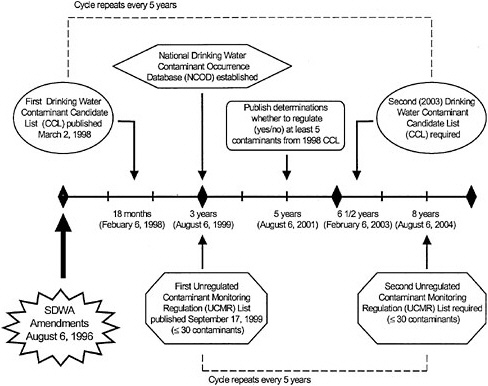
With the exception of sulfate (see footnote 6), the CCL includes contaminants that are not currently subject to any proposed or promulgated primary drinking water regulation, but are known or anticipated to occur in public water systems and may require regulation under the SDWA (EPA, 1998a). Thus, the 1998 CCL is intended to be the primary source of priority contaminants for future regulatory actions by EPA’s drinking water program until the next CCL is published in 2003. Figure 1–1 summarizes the current time line for the development, promulgation, and implementation of the 1998 CCL and future CCLs and two other related programs required under the amended SDWA that are described later in this chapter. For further information on the development of the 1998 CCL, please refer to Chapter 4 of the committee’s first report, Setting Priorities for Drinking Water Contaminants (NRC, 1999a).
TABLE 1–2 1998 Drinking Water Contaminant Candidate List (CCL)
|
Microbiological Contaminants Acanthamoeba (guidance) Adenoviruses Aeromonas hydrophila Caliciviruses Coxsackieviruses Cyanobacteria (blue-green algae), other freshwater algae, and their toxins Echoviruses Helicobacter pylori Microsporidia (Enterocytozoon and Septata) Mycobacterium avium intracellulare |
|
|
Chemical Contaminants |
CASRNa |
|
1,1,2,2-Tetrachloroethane |
79–34–5 |
|
1,2,4-Trimethylbenzene |
95–63–6 |
|
1,1-Dichloroethane |
75–34–3 |
|
1,1-Dichloropropene |
563–58–6 |
|
1,2-Diphenylhydrazine |
122–66–7 |
|
1,3-Dichloropropane |
142–28–9 |
|
1,3-Dichloropropene |
542–75–6 |
|
2,4,6-Trichlorophenol |
88–06–2 |
|
2,2-Dichloropropane |
594–20–7 |
|
2,4-Dichlorophenol |
120–83–2 |
|
2,4-Dinitrophenol |
51–28–5 |
|
2,4-Dinitrotoluene |
121–14–2 |
|
2,6-Dinitrotoluene |
606–20–2 |
|
2-Methyl-phenol (o-cresol) |
95–48–7 |
|
Acetochlor |
34256–82–1 |
|
Alachlor ESA and other acetanilide pesticide degradation products |
N/A |
|
Aldrin |
309–00–2 |
|
Aluminum |
7429–90–5 |
|
Boron |
7440–42–8 |
|
Bromobenzene |
108–86–1 |
|
DCPA mono-acid degradate |
887–54–7 |
|
DCPA di-acid degradate |
2136–79–0 |
|
DDE |
72–55–9 |
|
Diazinon |
333–41–5 |
|
Dieldrin |
60–57–1 |
|
Disulfoton |
298–04–4 |
|
Diuron |
330–54–1 |
|
EPTC |
759–94–4 |
|
Fonofos |
944–22–9 |
|
Hexachlorobutadiene |
87–68–3 |
|
p-lsopropyltoluene (p-cymene) |
99–87–6 |
|
Linuron |
330–55–2 |
|
Manganese |
7439–96–5 |
|
Methyl bromide |
74–83–9 |
|
Chemical Contaminants |
CASRNa |
|
Metolachlor |
51218–45–2 |
|
Metribuzin |
21087–64–9 |
|
Molinate |
2212–67–1 |
|
MTBE |
1634–04–4 |
|
Naphthalene |
91–20–3 |
|
Nitrobenzene |
98–95–3 |
|
Organotins |
N/A |
|
Perchlorate |
N/A |
|
Prometon |
1610–18–0 |
|
RDX (1,3,5-trinitrohexahydro-s-triazine) |
121–82–4 |
|
Sodium |
7440–23–5 |
|
Sulfate |
14808–79–8 |
|
Terbacil |
5902–51–2 |
|
Terbufos |
13071–79–9 |
|
Triazines and degradation product of triazines (including, but not limited to Cyanizine [21725–46–2], and atrazine-desethyl [6190–65–4] |
N/A |
|
Vanadium |
7440–62–2 |
|
NOTE: DCPA=(Dacthal) dimethyl-2,3,5,6-tetrachlorobenzene-1,4-dicarboxylate; DDE=1,1-dichloro-2,2,-bis(p-diclorodiphenyl) ethylene; EPTC=S-ethyl dipropylthiocarbamate; MTBE=methyl-t-butyl ether; RDX=royal Dutch explosive. aChemical Abstracts Service Registry Number. SOURCE: EPA, 1998a. |
|
IMPLEMENTATION STATUS OF THE 1998 CCL
As noted by EPA, sufficient data are necessary to analyze the extent of exposure and risk to populations (particularly for vulnerable subpopulations such as infants and immuno-compromised persons as mandated by the amended SDWA) via drinking water in order to determine appropriate regulatory action (EPA, 1998a, 2000b). If sufficient data are not available, additional data must be obtained before any meaningful assessment can be made for a specific contaminant. In this regard, a table listing several categories of preliminary data needs for all chemicals on the draft 1998 CCL (EPA, 1997a) was expanded to include the microorganisms on the final CCL. These preliminary data need categories are now collectively called future action (“next-step”) categories (EPA, 1998a). All 1998 CCL contaminants are currently divided into one or more of these categories (see Figure 1–2 and Table 1–3), which are used to help set priorities for EPA’s drinking water program. It is important to note that there has been periodic reassignment of contaminants into and
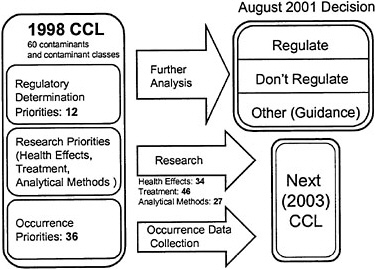
out of these categories since publication of the draft 1998 CCL as additional data have been obtained and evaluated. The current “regulatory determination priorities” category shown in Table 1–3 includes those contaminants considered to have sufficient data to evaluate both exposure and risk to public health and to support a regulatory decision (EPA, 2000b). Thus, the contaminants in this next-step category will be used to select five or more contaminants for which EPA will make a determination to regulate or not by August 2001. This category also includes those contaminants (sodium and Acanthamoeba) for which EPA intends to develop nonenforceable guidance rather than drinking water regulations. At present, only those contaminants in the regulation determination priorities category that ultimately receive a decision to be regulated, not regulated, or issued a health advisory will be removed entirely from the CCL process (i.e., not be retained on the 2003 CCL).
As noted previously by the committee (NRC, 1999a), the first CCL began as an essentially unranked list of research needs for drinking water contaminants. Additional research and monitoring must be conducted for many, if not most, of the contaminants on the current CCL as indicated in Table 1–3 (EPA, 2000b). Thus, EPA faces a daunting task in assessing the available scientific information about CCL contaminant risks and, based on that assessment, making a risk management decision about which contaminants should be moved off one of the research lists and into regulatory action.
Research Plan for 1998 CCL
Since its publication in March 1998, however, EPA has made progress in setting an overall CCL research strategy and schedule through its Office of Research and Development (ORD) which has the overall responsibility for shaping and guiding the agency’s research agenda. The overall goal of ORD’s CCL research process is to provide appropriate information for the Office of Water’s (OW’s) regulatory determinations concerning CCL contaminants. More specifically, this research is intended to identify the scientific and engineering data needed and to characterize the risks posed by 1998 CCL contaminants. It is beyond the scope of this report to describe the CCL research strategy in great detail. However, the committee notes that several elements from its first report (NRC, 1999a) for setting regulatory and research priorities for contaminants already on a CCL have been incorporated by EPA and an overview
TABLE 1–3 CCL Future Action Next-Step Categoriesa
|
Regulatory Determination Priorities (12) |
Research Priorities |
|
||
|
Health Effects (34) |
Treatment (46) |
Analytical Methods (27) |
Occurrence Priorities (36) |
|
|
Acanthamoeba (guidance) Sodium (guidance) 1,3-Dichloropropeneb Aldrinb Boron Dieldrinb Hexachlorobutadiene Manganese Metolachlorb Metribuzinb Naphthalene Sulfate |
Adenoviruses Aeromonas hydrophila Caliciviruses Coxsackieviruses Cyanobacteria (blue-green algae) Echoviruses Helicobacter pylori Microsporidia Mycobacterium avium intracellulare 1,1,2,2-Tetrachloroethane 1,2,4-Trimethylbenzene 1,1-Dichloroethane 1,1-Dichloropropene 1,2-Diphenylhydrazine 1,3-Dichloropropane 2,4,6-Trichlorophenol 2,2-Dichloropropane 2,4-Dinitrophenol 2,4-Dinitrotoluene 2,6-Dinitrotoluene 2-Methyl-phenol (o-cresol) |
Adenoviruses Aeromonas hydrophila Caliciviruses Coxsackieviruses Cyanobacteria (blue-green algae) Echoviruses Helicobacter pylori Microsporidia Mycobacterium avium intracellulare 1,1,2,2-Tetrachloroethane 1,2,4-Trimethylbenzene 1,1-Dichloroethane 1,1-Dichloropropene 1,2-Diphenylhydrazine 1,3-Dichloropropane 2,4,6-Trichlorophenol 2,2-Dichloropropane 2,4-Dichlorophenol 2,4-Dinitrophenol 2,4-Dinitrotoluene 2,6-Dinitrotoluene 2-Methyl-phenol |
Adenoviruses Aeromonas hydrophila Caliciviruses Coxsackieviruses Cyanobacteria (blue-green algae) Echoviruses Helicobacter pylori Microsporidia Mycobacterium avium intracellulare 1,2-Diphenyl-hydrazine 2,4,6-Trichlorophenol 2,4-Dichlorophenol 2,4-Dinitrophenol 2-Methyl-phenol (o-cresol) Acetochlor Alachlor ESA Diazinon Disulfoton Diuron Fonofos Linuron Organotinsc |
Adenoviruses Aeromonas hydrophila Calicivirusese Coxsackievirusese Cyanobacteria (blue-green algae)e Echovirusese Helicobacter pylorie Microsporidiae Mycobacterium avium intracellulare 1,2-Diphenylhydrazinee 1,3-Dichloropropane 2,4,6-Trichlorophenole 2,4-Dichlorophenole 2,4-Dinitrophenole 2-Methyl-phenol (o-cresol)e Acetochlore Alachlor ESAe DCPA mono-acid degradate DCPA di-acid degradate DDE Diazinone |
|
|
Aluminum Bromobenzene DCPA mono-acid degradateb DCPA di-acid degradateb p-Isopropyltoluene (p-cymene) Methyl bromideb MTBE Nitrobenzene Organotinsc Perchlorate RDX Triazines & degradation productsb,d Vanadium |
(o-cresol) Acetochlor Alachlor ESA Aluminum Bromobenzene DCPA mono-acid degradate DCPA di-acid degradate DDE Diazinon Disulfoton Diuron EPTC Fonofos p-Isopropyltoluene (p-cymene) Linuron Methylbromide Molinate MTBE Nitrobenzene Organotinsc Perchlorate Prometon RDX Terbacil Terbufos |
Perchlorate Prometon RDX Terbufos Triazines and degradation productsd |
Disulfotone Diurone EPTC Fonofose Linurone MTBE Molinate Nitrobenzene Perchloratee Prometone RDXe Terbacil Terbufose Organotinsc |
|
NOTE: See Table 1–2 for definition of chemical acronyms. a Table reflects some movement of contaminants between next-step categories since the CCL was published on March 2, 1998 (ERA, 1998a), the final Unregulated Contaminant Monitoring Regulation List was published on September 17, 1999 (EPA, 1999g), and publication of EPA’S SAB review draft of the Research Plan for the Drinking Water Contaminant Candidate List (ERA, 2000b). b These chemicals will be deferred to EPA’S Office of Pesticide Programs for health effects research and assessment. c Organotins include monobutyltin trichloride, dibutyltin dichloride, monomethyltin trichloride, and dimethyltin trichloride. d Degradation products include, but are not limited to, Cyanazine and atrazine-desethyl. e Suitable analytical methods must be developed prior to obtaining occurrence data. SOURCE: ERA, 2000b. |
||||
of the development and current status of EPA’s CCL Research Plan is provided below.
A draft version of the research plan (EPA, 2000b) was currently under review by EPA’s Science Advisory Board (SAB) and available at the time this report was written. Notably, the CCL Research Plan (report) is expected to be revised significantly in response to the SAB review (Fred Hauchman, EPA, personal communication, 2000). The CCL Research Plan report addresses five major questions:
-
What is EPA’s plan for identifying and ranking research needs for the 1998 CCL contaminants?
-
What analytical methods are needed to adequately address occurrence, exposure, health effects, and treatability issues?
-
What are the occurrence and exposure issues associated with CCL contaminants in source water, finished water, and drinking water distribution systems?
-
Are there significant health risks associated with exposure to CCL contaminants?
-
How effective are candidate treatment technologies for controlling CCL contaminants?
EPA decided on a two-phased approach to form the basis for the 1998 CCL Research Plan (EPA, 2000b). Phase I is a screening level effort in which the CCL contaminants are evaluated with regard to available methods, health risk, and treatment information. This screening process involves the examination of minimum data sets that can be used to determine if a contaminant should be moved into the regulatory determination priorities category of the CCL or moved into Phase II. In Phase II, a more in-depth examination is conducted to determine whether the contaminant should be recommended for regulation, guidance should be developed, or a recommendation not to regulate should be made. In general, Phase II research involves the generation of a comprehensive database for each CCL contaminant on its health effects, analytical methods, occurrence, exposure, and treatment options. Because of the complexity of the CCL research process and the need to integrate ORD’s efforts, an Implementation Team comprised of researchers and managers from ORD’s laboratories and centers as well as representatives from OW will be established. The team will be responsible for providing oversight and coordinating the CCL research process while balancing the agency’s resource commitments against the requirements of the CCL process.
The CCL Research Plan was developed by EPA in close consultation with outside stakeholders, including the American Water Works Association (AWWA), the AWWA Research Foundation (AWWARF), other government agencies,7 universities, and other public and private sector groups (EPA, 2000b). In addition, several expert workshops that helped in developing the 1998 CCL itself were used to help identify research needs for specific contaminants. For example, EPA and AWWARF jointly sponsored a three-day conference in September 1999 that was intended to review all aspects of the proposed CCL Research Plan and make suggestions for future research activities (AWWARF, 2000). Representatives attended the meeting from the water utility industry, state and federal health and regulatory agencies, professional associations, academia, and public interest groups, and recommendations and results from the meeting were incorporated into the CCL Research Plan.
After the AWWARF-EPA workshop in September 1999, a special panel was convened by EPA to examine the risk assessment and risk characterization issues associated with the CCL Research Plan. Recommendations from that panel were utilized in developing the two-phased research approach outlined in the CCL Research Plan report. Implementation of the CCL Research Plan will require the coordinated efforts of both government and nongovernment entities, as did its creation (EPA, 2000b). In this regard, EPA intends to make all aspects of 1998 CCL research planning, implementation, and communication a collaborative process through a series of public workshops and stakeholder meetings held periodically over the next few years.
LIMITATIONS OF THE FIRST CCL DEVELOPMENT PROCESS
EPA stated in the draft 1998 CCL that the “first CCL is largely based on knowledge acquired over the last few years and other readily available information, but an enhanced, more robust approach to data collection and evaluation will be developed for future CCLs” (EPA, 1997a). Several public commenters on the draft CCL also noted the need for a more systematic and scientifically defensible approach to selecting contaminants for future CCLs (EPA, 1998c). Chapter 4 of the committee’s
first report (NRC, 1999a) summarizes the development of the first CCL in detail. The committee’s second report (NRC, 1999b) briefly described some limitations of the first CCL development process before presenting its recommended conceptual approach to the development of future CCLs. Chapter 2 of this report more fully describes these and other limitations, especially as related to various sociopolitical issues surrounding the development of future CCLs.
Partly due to these limitations, the committee recommended in its second report (NRC, 1999b) that a new type of screening process be used to identify and evaluate a broader universe of microbiological, chemical, and other types of potential drinking water contaminants in order to provide a more objective list of contaminants of concern. In this regard, a conceptual two-step process for the creation of future CCLs was outlined and recommended to EPA.
RELATED SDWA PROGRAMS
In accordance with the SDWA Amendments of 1996 and as indicated in Figure 1–1, the development and use of future CCLs will be coordinated closely with two other drinking water programs: the National Drinking Water Contaminant Occurrence Database (NCOD) and the Unregulated Contaminant Monitoring Regulation (UCMR) (EPA, 1998a). Both of these programs, as well as the CCL, are the responsibility of EPA’s Office of Ground Water and Drinking Water. EPA completed the first working release of the NCOD and the UCMR prior to its amended SDWA statutory deadline of August 1999.
National Drinking Water Contaminant Occurrence Database
The NCOD stores data on the occurrence of both regulated and unregulated drinking water contaminants. It is intended to support EPA efforts in the identification and selection of contaminants for placement on future CCLs; subsequent and related research, monitoring, and regulatory activities; and the periodic (six-year) review of existing drinking water regulations for possible modification as required under the amended SDWA (EPA, 2000g). An additional purpose is to inform the public about contaminants detected in drinking water and make available the data sets that help form the primary basis for EPA’s drinking water-related regulatory and research actions. EPA requested input from the
public, states, and the scientific community regarding the NCOD’s design, structure, and use (AWWA, 1997; EPA, 1997c).
The first release of the NCOD became operational in August 1999 (as mandated) and included occurrence data on various physical, chemical, microbial, and radiological contaminants found in public water systems and ambient (source) water (EPA, 2000g). More specifically, it contained some summary statistics of PWS data stored in EPA’s Safe Drinking Water Information System (SDWIS) and ambient water stored in the National Water Information System (NWIS) of the U.S. Geological Survey (USGS). The second release of NCOD became operational in late August 2000 and included several changes intended to increase its functionality. For example, the second release of NCOD completely refreshes summary PWS data every quarter (Lew Summers, EPA, personal communication, 2000) and is supported by an NCOD User’s Guide (EPA, 2000h).
At present, four types of NCOD queries have been defined: (1) public right to know; (2) occurrence data survey for preliminary CCL8; (3) regulation determination/development; and (4) regulation revision (EPA, 2000g). In brief, the public right-to-know query allows a user to query the database for a specific contaminant in specific political jurisdictions (i.e., national, state, county, or city) grouped by population and source water type. The query on occurrence data survey for preliminary CCL presents information on unregulated contaminants in public drinking water from EPA’s SDWIS and ambient source water from NWIS provided by USGS. A regulation determination/development query is still under construction but will allow users to view summary information and download PWS sample data that could be used to help select contaminants for future regulation or to develop new national primary drinking water regulations (NPDWRs). Last, the regulation revision query (also still under construction) will allow users to view summary data and to download a data set that could be used in the periodic revision of existing NPDWRs as required under the amended SDWA.
Despite these ongoing improvements, EPA has provided (EPA, 2000g) some self-assessed data limitations (and strengths) associated with the first and second releases of the NCOD, along with several cautions to NCOD users, including the following:
-
The NCOD does not contain occurrence data from every public water system or from every state. Only PWS occurrence data reported to the SDWIS are available using a public water system query in NCOD.
-
The NCOD contains data both for currently unregulated contaminants required to be monitored by PWS under the UCMR (see more below) and for the occurrence of regulated contaminants with health-based drinking water MCLs. However, not all states and territories, or PWSs within states and territories, have reported data for either type of contaminant data as yet. Furthermore, the historical data goes back only to 1983.
-
The NCOD contains occurrence monitoring data from sampling locations throughout a PWS. However, detections do not necessarily mean that the contaminant would be found at the tap.
-
The NCOD contains ambient (source) water quality data from USGS for river basins from 1991 to 1998. Ambient occurrence data are provided to identify presence in a watershed; however, contaminant occurrence in the ambient data does not imply that the contaminant is also present in a nearby PWS.
-
Although the NCOD data sets will be updated over time, they may still reflect a lag time of at least six months from data provided directly from a PWS. Thus, getting data that reflect the current conditions of a PWS is not possible from NCOD.
-
Reports generated by the use of EPA’s NCOD database are designed to provide coarse summaries of the underlying data. The amount of occurrence data already stored in the NCOD is quite large and is expected to increase by as much as 1 gigabyte (1,000 megabytes) each quarter. This could result in very large download files that could adversely affect the performance of EPA public information servers. For this reason, NCOD downloads are currently available only from reports generated by selecting single contaminants.
Interested readers are encouraged to visit EPA’s Web site on the NCOD at http://www.epa.gov/ncod/ for further information.
Unregulated Contaminant Monitoring Regulation
Section 125 of the 1996 SDWA Amendments requires EPA to substantially revise the previous SDWA regulations for unregulated contaminant monitoring (UCM; Title 40, Code of Federal Regulations, Part 141) (EPA, 1999g). The new program includes (1) development of a
new list of UCMR contaminants every five years; (2) a representative sample of small public water systems serving 10,000 persons or fewer to conduct the monitoring (in addition to all large systems); (3) placement of the monitoring data in the NCOD; and (4) notification of consumers that monitoring results are publicly available. The 1996 amendments also limit the number of unregulated contaminants to be monitored by a PWS in any given period to a maximum of 30 and specify that EPA pay the reasonable costs of analyzing the samples taken by those systems designated as “small.” EPA plans to use data generated by the UCMR to (1) evaluate and rank contaminants on the 1998 CCL and help develop future CCLs; (2) support its determinations of whether to regulate a contaminant under the drinking water program; and (3) support the development of drinking water regulations. The final UCMR rule will replace almost all of the existing monitoring requirements of the existing UCM rule when it takes effect on January 1, 2001.
In accordance with recommendations from a previous report (EPA, 1997d) on options for developing the UCMR, EPA used the original occurrence priorities of the 1998 CCL (as published on March 2, 1998) as the primary basis for selecting contaminants for future monitoring under the UCMR (EPA, 1999f,g). These 26 chemical and 8 microbiological contaminants9 were then evaluated primarily for the analytical methods and the level of information available for them at the time of development of the 1999 UCMR List (see Table 1–4 for a current alphabetical listing). Based on these evaluations, EPA developed a three-tier monitoring approach that allows assessment monitoring to start promptly for contaminants with approved analytical methods (UCMR List 1), while accommodating the need to delay implementation for contaminants requiring further refinement of analytical methods to initiate screening survey monitoring (UCMR List 2) and those that need method development for prescreen testing (UCMR List 3) (EPA, 1999c,f,g). Please refer to the final UCMR rule (EPA, 1999f) for further information on assessment monitoring for List 1 contaminants and the proposed rule for screening survey monitoring for List 2 contaminants (EPA, 2000j).
In summary, List 1 contains 12 chemical contaminants that require monitoring for one continuous year between 2001 and 2003 at all 2,744
|
9 |
It is important to note that the most recent occurrence priorities category of the 1998 CCL (see Table 1–3) includes two contaminants (Mycobacterim avium intercellulare and 1,3-dichloropropane) that were not listed in that category at the time the CCL was first published and were thus not evaluated or listed on the 1999 UCMR List. |
TABLE 1–4 1999 UCMR List
|
Contaminant |
Analytical Method(s) Availability and Adequacy |
|
List 1 Chemicals (No Microorganisms) |
|
|
2,4-Dinitrotoluene |
Available and adequate for assessment monitoring |
|
2,6-Dinitrotoluene |
Available and adequate for assessment monitoring |
|
Acetochlor |
Available and adequate for assessment monitoring |
|
DCPA mono-acid degradate |
Available and adequate for assessment monitoring, but all approved methods identify total mono- and di-acid forms |
|
DCPA di-acid degradate |
Available and adequate for assessment monitoring, but all approved methods identify total mono- and di-acid forms |
|
DDE |
Available and adequate for assessment monitoring |
|
EPTC |
Available and adequate for assessment monitoring |
|
Molinate |
Available and adequate for assessment monitoring |
|
MTBE |
Available and adequate for assessment monitoring |
|
Nitrobenzenea |
Available and adequate for assessment monitoring |
|
Perchlorateb |
Available and adequate for assessment monitoring |
|
Terbacil |
Available and adequate for assessment monitoring |
|
UCMR List 2 Microorganisms |
|
|
Aeromonas hydrophilia |
Method proposed; ready for delayed screening survey monitoring |
|
UCMR List 2 Chemicals |
|
|
1,2-Diphenylhydrazine |
Method proposed; ready for screening survey monitoring |
|
2,4-Dichlorophenol |
Method proposed; ready for screening survey monitoring |
|
2,4-Dinitrophenol |
Method proposed; ready for screening survey monitoring |
|
2,4,6-Trichlorophenol |
Method proposed; ready for screening survey monitoring |
|
2-Methyl-phenol (o-cresol) |
Method proposed; ready for screening survey monitoring |
|
Alachlor ESAc |
Being refined |
|
Diazinon |
Method proposed; ready for screening survey monitoring |
|
Disulfoton |
Method proposed; ready for screening survey monitoring |
|
Diuron |
Method proposed; ready for screening survey monitoring |
|
Fonofos |
Method proposed; ready for screening survey monitoring |
|
Linuron |
Method proposed; ready for screening survey monitoring |
|
Nitrobenzenea |
Method proposed; ready for screening survey monitoring |
|
Prometon |
Method proposed; ready for screening survey monitoring |
|
RDXc |
Being refined |
|
Terbufos |
Method proposed; ready for screening survey monitoring |
|
UCMR List 3 Microorganisms |
|
|
Adenoviruses |
No method currently available |
|
Caliciviruses |
No method currently available |
|
Coxsackieviruses |
Methods available but not standardized |
|
Cyanobacteria (blue-green algae) |
Methods available but not standardized |
|
Echoviruses |
Methods available but not standardized |
|
Contaminant |
Analytical Method(s) Availability and Adequacy |
|
Helicobacter pylori |
No method currently available |
|
Microsporidia |
No method currently available |
|
UCMR List 3 Chemicals |
|
|
Lead-210 (210Pb)d |
No method currently available |
|
Polonium-210 (210Po)e |
No method currently available |
|
NOTE: See Table 1–2 for definition of chemical acronyms. a Originally included on List 1 (EPA, 1999c,f,g), EPA recently proposed (EPA, 2000j) to also add nitrobenzene to List 2 to allow for refinement of an analytical method that would permit detection at lower levels. b To meet the reporting requirements of the UCMR, all participating laboratories must successfully complete EPA’s Perchlorate Performance Testing Program (EPA, 2000k). c If methods are developed in a timely fashion for these two contaminants, they may be added for monitoring in a separate action, probably in 2003, or during the next UCMR five-year monitoring cycle beginning in 2006 (EPA, 2000j). d Originally proposed to be added to UCMR List 1 (EPA, 1999g), it was later added to List 3 because no suitable methods were available (EPA, 1999f). e Originally proposed to be added to UCMR List 1 (EPA, 1999g), it was later added to List 2 for methods refinement (EPA, 1999f) and subsequently proposed to be moved to List 3 because ultimately no suitable methods were determined available (EPA, 2000j). SOURCE: Adapted from EPA, 1999c,f,g, 2000j. |
|
large PWSs serving more than 10,000 persons and at a representative national sample of 800 (out of 66,000) small systems serving 10,000 or fewer persons (EPA, 1999f,g). Monitoring for the contaminants on UCMR Lists 2 and 3 is not required until EPA promulgates revisions to the UCMR final rule that specifies analytical methods and related sampling requirements. However, EPA recently revised List 2 and published proposed analytical methods and monitoring requirements for 14 (13 chemicals and 1 microorganism) of its now 16 contaminants (see Table 1–4; EPA, 2000j). More specifically, EPA is proposing to require screening survey monitoring for these 13 chemical contaminants at 180 randomly selected small systems with the small systems doing the sampling and EPA conducting the testing and reporting beginning in January 2001. A total of 120 randomly selected large systems would begin List 2 chemical monitoring in January 2002. A second (delayed) screening survey for Aeromonas will be performed in 2003 by 180 other small systems and 120 other large systems. The delay is intended to allow laboratories to gain experience with the new method and develop the capacity for testing in large systems. More generally, evaluation of the newly proposed methods during screening survey monitoring for List 2 contaminants will include developing the data necessary to support the
determination of practical quantitation levels, which are needed to support possible future regulations, as well as determining the occurrence of the analytes measured.
Notably, the addition of the majority of List 2 contaminants will not require any PWS to monitor for more than 30 total unregulated contaminants during the first five-year UCMR monitoring cycle, as specified in the amended SDWA. At this time, EPA does not expect to publish analytical methods for List 3 contaminants before the next UCMR is required in 2004 (Rachel Sakata, EPA, personal communication, 2000). Therefore, it is likely that these contaminants will be retained on the 2003 CCL (at least as occurrence priorities) and the 2004 UCMR and will be monitored accordingly. In this regard, the 2004 UCMR is expected to use the occurrence priorities from the next (2003) CCL as the primary basis for selecting contaminants for future monitoring under the UCMR (EPA, 1999d).
IDENTIFYING AND SELECTING CONTAMINANTS FOR FUTURE CCLS
As noted earlier, the committee produced this report at the request of EPA to build upon, expand, and revise as necessary the conceptual approach recommended in its second report (NRC, 1999b). In that report, the committee stated that if resources were unlimited and health effects and occurrence information were perfect, an ideal CCL development process would include the following features:
-
It would meet all statutory requirements of the SDWA Amendments of 1996, such as requirements for consultation with the scientific community and opportunities for public comment.
-
It would begin with identification of the entire universe of potential drinking water contaminants prior to any attempts to rank or sort them.
-
It would address risks from all potential routes of exposure to water supplies, including dermal contact and inhalation as well as ingestion.
-
It would use the same identification and selection process for chemical, microbial, and all other types of the potential drinking water contaminants.
-
It would use mechanisms for identifying similarities among contaminants and contaminant classes to assess the potential risks of individual contaminants—especially emerging contaminants.
-
It would result in CCLs containing only contaminants that when regulated would reduce disease, disability, and death, and excluding contaminants that have few or no adverse effects on human health (e.g., contaminants removed or detoxified through conventional drinking water treatment methods).
However, EPA’s resources are still constrained; no comprehensive list of potential drinking water contaminants yet exists; and health effects, occurrence, and other related data for the vast majority of potential contaminants are poor or nonexistent (NRC, 1999b). Despite these limitations, the committee continues to recommend that EPA develop and use a two-step process for creating future CCLs as illustrated in Figure 1–3. In brief, a broad universe of potential drinking water contami-
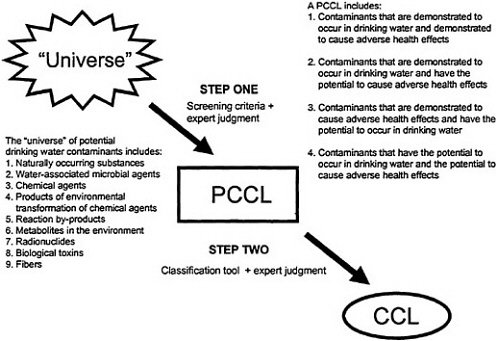
FIGURE 1–3 Recommended two-step process for developing future CCLs.
nants is examined and narrowed to a preliminary CCL using simple screening criteria and expert judgment. All PCCL contaminants are next individually assessed using a “prototype” classification tool in conjunction with expert judgment to create the corresponding (and much smaller) CCL.
The committee also continues to recommend that this two-step process be repeated for each CCL development cycle to account for new data and potential contaminants that inevitably arise over time. In addition, all contaminants that have not been regulated or removed from the existing CCL should be retained automatically on each subsequent CCL. Chapters 3 to 5 of this report provide detailed descriptions, examples, and recommendations for implementing the recommended two-step approach.
PERSPECTIVE OF THIS REPORT
As its previous reports, the promotion of public health remains the guiding principle of the committee’s recommendations and conclusions in this report. As in those documents, the committee recognizes that questions of economic impact, required technological shifts, and political orientations and concerns are all related to how safe drinking water is provided and at what cost. However, the committee has adopted an explicitly public health orientation because section 1412(b)(1)(A)(i) of the amended SDWA specifically directs the EPA administrator to identify “contaminants for listing [that], first, may have an adverse effect on the health of persons.” Further, section 1412(b)(1)(c) specifies that EPA must focus on contaminants that pose the “greatest health concern.” Therefore, in framing this report the committee has chosen to adopt an explicit public health perspective, rather than any of a number of other possible perspectives (e.g., enterprise centered, economic development, legal). The report should be read with this qualification in mind.


