
Page 70
4
Fundamental Laws and Symmetries
The observation of nature, be it with human eyes and ears or with particle accelerators and electron microscopes, often reveals distinctive patterns: Hurricanes recur every fall, sunspot activity peaks every 11 years, salt forms a cubic crystal, the chemical properties of atoms lie neatly in a periodic table. Physics attempts to bind these different phenomena together by searching for common underlying laws. The laws of magnetism, which explain a child's bar magnet, apply as well to the nuclear cores of atoms. The laws of gravitation, which govern the gentle drop of falling leaves, also determine the behavior of the black hole in the center of our galaxy.
In the early part of the 20th century, research in the subatomic realm revealed a simple, economical structure—all matter was composed of three elementary particles: the electron, the proton, and the neutron. Over the course of the second half of that century, probes at the even shorter distances of the nuclear and subnuclear realm led to several important changes in this picture. Early on, a new particle was added to the list: the neutrino, observed as an end-product in nuclear decay. This nearly weightless particle plays an essential role in nuclear decay, the lives of stars, and even, possibly, the ultimate fate of our universe. Nevertheless the neutrino remains mysterious, with ongoing experiments in Japan, North America, and Europe only beginning to elucidate its nature. In the 1960s the proton and neutron were revealed to have substructure: They contain two species of yet smaller particles called quarks. The two species are known as the up quark and the down quark. Most of the matter we encounter is composed of these four particles alone. But, strangely, nature has chosen to replicate this list (up quark, down quark, electron, and its neutrino) twice more, with the two additional sets differing only by being much heavier. The last entry in this catalog, the top quark, with a weight more than 30,000 times that of the up quark, was discovered only recently in the Tevatron collider at Fermilab.
As research has probed the constituents of matter, it has also revealed the interactions among them. The gravitational force described by Newton
Page 71
in the 17th century dominates physics at the largest distances of our universe. The electromagnetic force, synthesized triumphantly in the 19th century in the form of Maxwell's equations, determines the behavior of atoms, molecules, and materials. Investigation of the subatomic world has so far revealed two further forces that operate only at the most minute distances: the strong force, responsible for the structure of nuclei, and the weak force, first revealed in nuclear decay. The constituents of matter together with these four forces constitute the underlying structure of contemporary physics, the so-called standard model.
HIDDEN SYMMETRIES AND THE STANDARD MODEL
One of the deep ideas embodied in the standard model is the notion that symmetries may be hidden—what we observe in nature may not directly reflect the underlying symmetries of the laws of physics. The spherically symmetric laws of electricity and magnetism, which determine most of the phenomena of our everyday experience, are equally responsible for the highly irregular snowflake and the round raindrop. In the first case the spherical symmetry of electricity and magnetism is hidden, while in the second it is manifest. Materials that do not exhibit the symmetry, like the ice in the snowflake, are in a different “phase” from materials like liquid water, in which the symmetry is evident. Frequently, changes in the environment with which the material interacts—the air temperature, the pressure, or other factors—determine whether the symmetry is hidden or revealed. Thus by heating the snowflake (hidden symmetry) we obtain the raindrop (manifest symmetry). This change of a substance from a hidden-symmetry phase to another where it is manifest, a phase transition, plays a role in nearly all branches of physics.
The idea of hidden symmetry is central to understanding the pattern of elementary particles and their interactions. One celebrated example, the relationship between radioactive decays and electromagnetic phenomena, was originally introduced as an analogy: Enrico Fermi suggested that the force responsible for certain radioactive decays, now known as the weak interaction, might be described in terms of weak charges and weak currents, just as electromagnetism involves ordinary charges and currents. The analogy was not precise—the analogue of the electromagnetic radiation was absent from Fermi's theory. Although Fermi's idea did partially explain the weak interaction, it was unable to encompass all of the phenomena observed in radioactive decay or those observed in the properties of “hadrons,” bound states of quarks
.Page 72
The Electroweak Force
In 1962, Sheldon Glashow proposed a connection between weak and electromagnetic interactions that was deeper than that of Fermi. In effect he unified electromagnetism and weak processes into a single electroweak interaction using an expanded version of the gauge invariance of electromagnetism. This symmetry had the immediate consequence that there should be a “weak” analogue of the electromagnetic field, with the weak force transmitted by new particles analogous to the photon of electromagnetism. Called the W and the Z, these particles were first observed at CERN, in Geneva, Switzerland, 20 years after Glashow first made his suggestion.
Although gauge invariance for the electroweak interaction had appealing features, it was not readily accepted when first proposed. The reason was that nature did not appear to possess this symmetry. For example, the symmetry requires the electroweak interaction to extend to large distances, a so-called long-range force. While the electromagnetic interaction is indeed long range, the weak forces are extremely short range, acting on distances much smaller than an atomic nucleus.
The solution to this puzzle grew out of efforts in the 1960s by both elementary-particle and condensed-matter physicists to investigate the consequences of hiding a symmetry. It was soon realized that unexpected phenomena can arise from hidden symmetries. For example, at very low temperatures, where the symmetries of electromagnetism become hidden, materials often display superconductivity: the absence of resistance to current flow, the expulsion of magnetic fields, and only short-range electromagnetic interactions. Study of these phenomena led Steven Weinberg to suggest that the symmetry of the electroweak interaction might be similarly hidden, with similar consequences. In particular, this hidden symmetry turned the long-range interaction into a short-range one. In this form the weak interactions are in a superconducting phase in which the symmetry is hidden. This final form of the electroweak theory has been beautifully confirmed through 30 years of accurate experimental tests.
The details of how the electroweak symmetry is hidden are mysterious. The unraveling of this physics remains one of the most important questions in particle physics. Weinberg's original suggestion for the physics responsible for hiding the electroweak symmetry requires a new object, the Higgs boson. As the missing player in the standard model, the Higgs has been the subject of intense searches at CERN's electron-positron collider (LEP) and at the Tevatron collider at Fermilab outside Chicago (see sidebars “Tools of the
Page 73
Trade” and “Societal Benefits from Accelerator Science”). If the Higgs boson exists, the fact that it has not been observed implies that it weighs 110 times more than the proton! Early in 2001, experiments at a newly upgraded Tevatron will extend the Higgs search to even higher masses. CERN's Large
TOOLS OF THE TRADE
Work at the cutting edge of experimental physics requires instrumentation that pushes the frontiers of technology. Just as astronomy has seen amazing advances brought about by the latest generation of large-scale modern instruments, so too have the small distance frontiers of physics been advanced by sophisticated, large-scale facilities. In particle and nuclear physics, where the smallest structures in nature are probed, the increasing capability of particle accelerators, the modern “microscopes” designed for this purpose, along with their instrumentation, have driven the experimental frontier. From Ernest Lawrence's original 4-in. cyclotron to today's mammoth colliders—one of them, the Collider Detector at the Fermilab (CDF), is shown below at the left; below at the right is an illustration of a top quark decaying in the CDF—the energy of particle beams has increased by a factor of over a million. At the same time, a series of breakthroughs has decreased the cost per unit energy, keeping the high-energy frontier within the range of economic feasibility. In the new century, the suite of accelerators and detectors available to the nuclear and high-energy physics community will provide answers to the most important questions in these fields. The growth of accelerator-based detectors from a modest array of Geiger counters and scintillators in the 1940s and 1950s to today's thousand-ton, house-size facilities has been remarkable. Huge detectors have powerful magnets enclosing arrays of hundreds of thousands of sensor elements, each feeding data at high speeds to sophisticated data acquisition and processing computers. New technologies adapted or developed for these detectors drive a rich interchange between the scientific community and segments of the manufacturing, electronics, and computer industries. 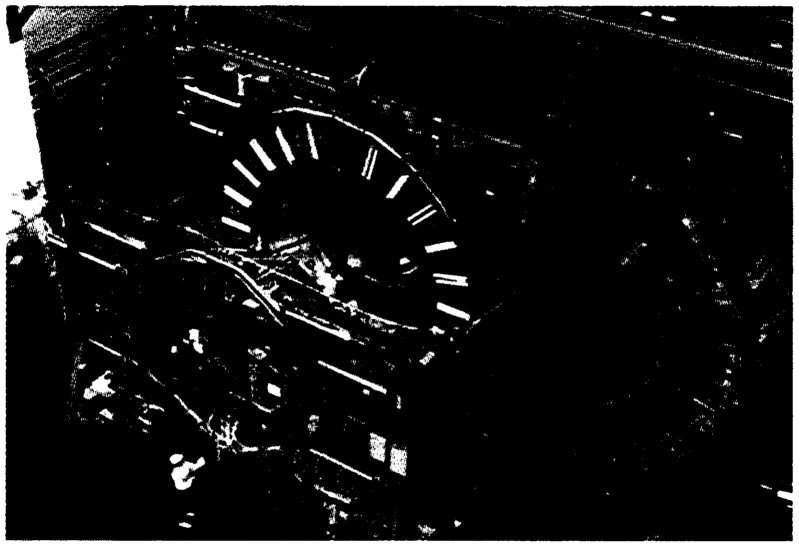
~ enlarge ~ 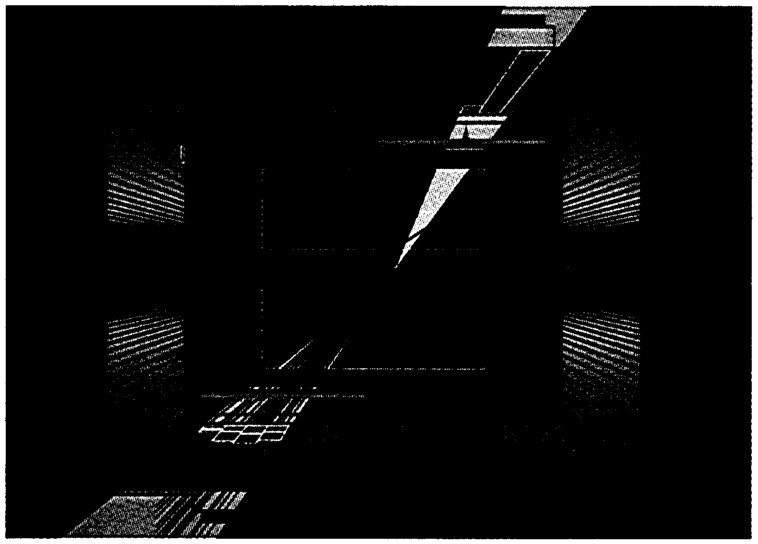
~ enlarge ~ |
Page 74
SOCIETAL BENEFITS FROM ACCELERATOR SCIENCE
The flowering of accelerator science and technology in response to the needs of nuclear and high-energy physics has spawned an array of technologies benefiting health care, industry, and basic research in many fields of science. A significant fraction of the radioisotopes used in medical treatment, diagnostics, and research are produced by accelerators. Beams from accelerators are successfully used in the treatment of cancer and other diseases. Modern medical imaging techniques such as CAT scans, PET scans, and MRI have their roots directly in technologies developed for particle detectors. The development of readout electronics and data acquisition technologies for these detectors has led to new industrial processes and products. In industry, R&D utilizing accelerators is often undertaken to develop new products, for example high-density magnetic storage media. Beams are used to alter the composition of materials by means of techniques such as ion implantation; to improve materials performance (e.g., hardening surfaces to increase wear resistance); for direct process improvement (e.g., curing of epoxies and plastics); and directly in such production processes as x-ray micromachining. Accelerators are used to produce intense, bright beams of x-rays and neutrons for forefront basic and applied research in the life sciences, chemistry, materials science, geology, and the environmental sciences. Large-scale accelerator-based facilities are operated for thousands of users from universities, industry, and the national laboratories. Programs in areas such as materials characterization, protein crystallography, surface characterization, and chemical dynamics are advancing the forefront of our knowledge. 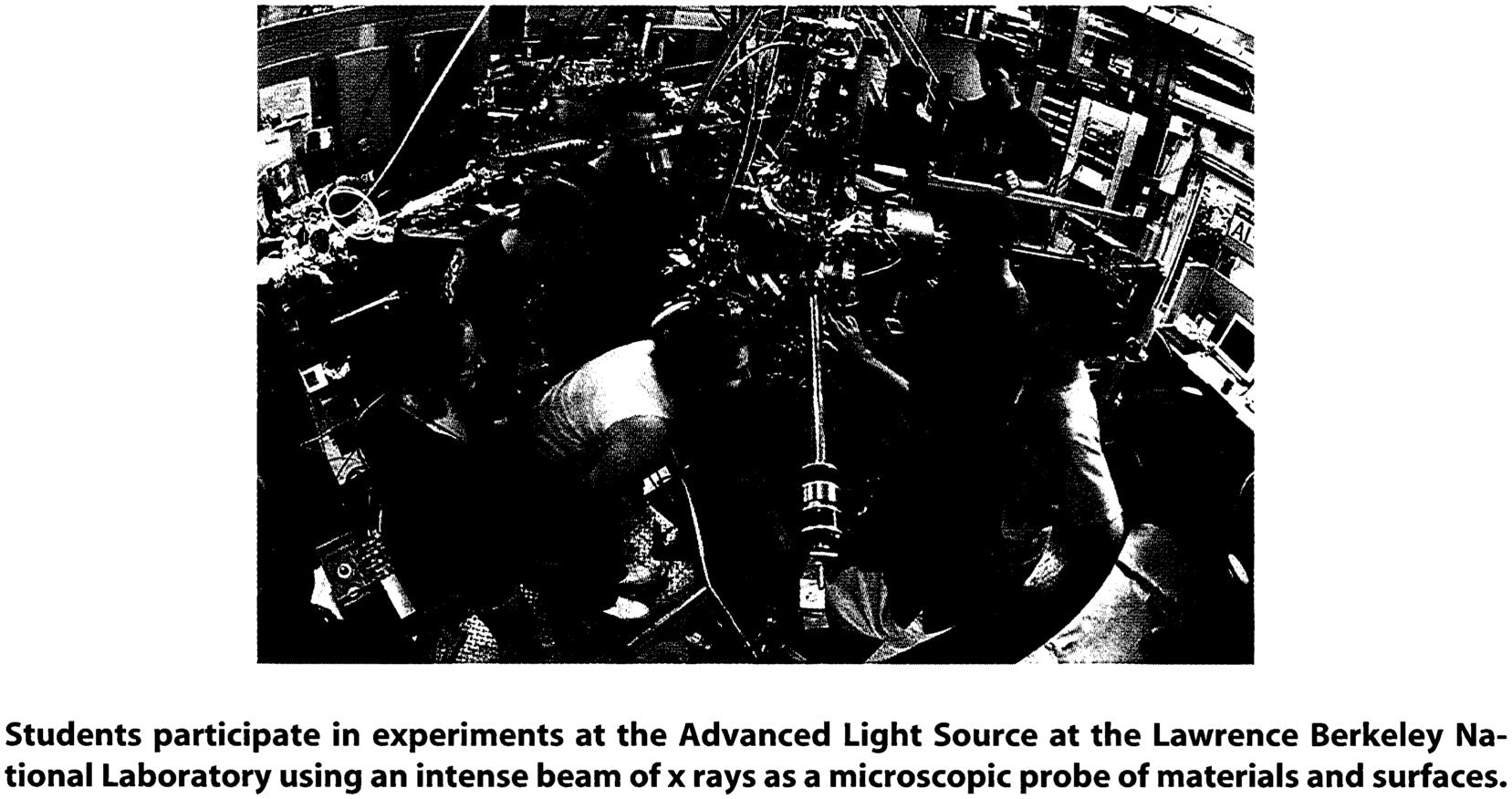
~ enlarge ~ |
Page 75
Hadron Collider (LHC), now under construction and expected to be completed in 2005, will produce collisions with an energy much larger than that available today, significantly advancing the energy frontier. There are strong arguments that the Higgs should lie within the LHC's range of sensitivity. The properties of the Higgs boson would be peculiar and unlike those of any known particle. For this reason, other suggestions have been made for the origin of electroweak symmetry breaking, all of which lead to predictions of phenomena whose signals will be observable at the Tevatron or the LHC.
Many other aspects of this standard model of electroweak forces, such as the strength of the various particle interactions, have been subjected to detailed tests at facilities like LEP and the SLAC electron-positron collider, know as SLC. These experiments are scientific marvels involving massive detectors and huge international scientific collaborations. The results are in spectacular agreement with the predictions of the theory. Important tests of the standard model have also been performed at low energies. A notable example is the contribution of the weak force to atomic structure. Because the electromagnetic interaction is so much stronger, the weak effects are very small, about 1 part in 100 billion. However, the weak interaction is not symmetric under mirror reflection; that is, it does not display parity. Experimenters recently exploited this parity violation in measuring the weak effects to an accuracy of better than 1 percent, an extraordinary achievement made possible by advances in laser technology. The results again confirm the standard model.
In superconducting materials, the superconductivity disappears as the temperature of the material is raised, revealing the electromagnetic symmetry. So, too, the electroweak symmetry should become manifest at sufficiently high temperatures. Although such temperatures have not been achieved in the laboratory, they were probably reached in the early universe, shortly after the Big Bang. Understanding how the electroweak symmetry is hidden will reveal details about the cosmology of our universe more than 13 billion years in the past.
The Strong Force
Hidden symmetry also plays a crucial role in the theory of the strong force. The underlying constituents of strongly interacting matter, the quarks, do not appear individually under normal conditions but only as composite bound states called hadrons. Protons and neutrons, described earlier as three-quark bound states, are examples of hadrons. The quarks within pro-
Page 76
tons and neutrons are extremely light objects, yet protons and neutrons are hundreds of times heavier. This binding by the strong force, quantum chromodynamics (QCD), hides a symmetry associated with the nearly weightless quarks, allowing the proton and neutron to be heavy. One surprising consequence of this picture is the existence of a quark and an antiquark bound state much lighter than a proton or neutron. This particle, called the pion, was first observed in cosmic-ray interactions. The exchange of pions between nucleons is an important part of the mechanism by which the strong interaction binds nucleons into nuclei. The pion's small mass was a mystery resolved by the discovery of a strong-interaction hidden symmetry.
As in the electroweak interactions, the hidden quark symmetry may be restored at very high temperatures or very high energy densities. The newly commissioned Relativistic Heavy Ion Collider (RHIC) at Brookhaven National Laboratory on Long Island is designed to reach these extreme temperatures and densities, leading to the creation of a new state of quark matter (see sidebar “Recreating the Early Universe in the Laboratory”). A similar heavy ion experiment, ALICE, will be performed at CERN's LHC.
Obtaining predictions from the theory of strong interactions is often difficult because of the technical complexities of QCD, difficulties that do not arise for weaker interactions such as the electromagnetic force that binds electrons to the nucleus. In recent years, owing to the advent of powerful supercomputers, this situation is beginning to change. A technique known as lattice gauge theory can be used to calculate many properties of hadrons and may someday allow us to calculate directly from QCD the structure of the nucleus. It may also shed light on other aspects of “hadronic” physics, such as hadrons without quarks (called glueballs) and strange matter. These ideas are being tested experimentally at the Jefferson Laboratory in Newport News, Virginia.
CP Symmetry
Perhaps the most mysterious aspect of the standard model is the breakdown of a symmetry called CP. This symmetry involves a reversal of sign of all of a particle's charges and a simultaneous mirror reflection of space. Until the 1960s it was thought that CP was an exact symmetry of nature. But this notion was shattered with the discovery that the decay of a hadron called the K meson was slightly different from that of its antiparticle. Because the difference is very small, CP is nearly a perfect symmetry.
While the CP violation seen in K decays can be accommodated by the standard model, this model provides no insight into the origin of the CP
Page 77
RECREATING THE EARLY UNIVERSE IN THE LABORATORY
One millionth of a second after the Big Bang, our universe was filled with a soup of quarks and gluons, the particles we believe to be the fundamental building blocks for the nuclear matter of our everyday world. Later, as the universe expanded and cooled, the quarks and gluons “froze” together to form the familiar protons and neutrons that make up atomic nuclei. Theorists have argued that it should be possible to recreate the conditions of the Big Bang, and thus the primordial quark-gluon soup, if sufficiently extreme conditions of temperature and pressure are achieved. Experimentalists can now build powerful particle accelerators and colliders to produce these conditions, though only in a volume the size of a large atomic nucleus. The quark-gluon soup (or “plasma”) is generated by using the energy of motion of colliding nuclei to heat them to a temperature where the individual neutrons and protons “melt,” allowing their constituent quarks and gluons to roam freely throughout the nuclear volume. At Brookhaven National Laboratory near New York City, a large accelerator called the Relativistic Heavy Ion Collider (RHIC) has been constructed to accomplish this goal. RHIC allows physicists to collide gold nuclei, head-on, with energies of 20 trillion eV per nucleus. (See below for an image of this collision as seen by the Star Detector at RHIC.) As of the writing of this report, the first data had been obtained and were being examined for evidence of the quark-gluon plasma. 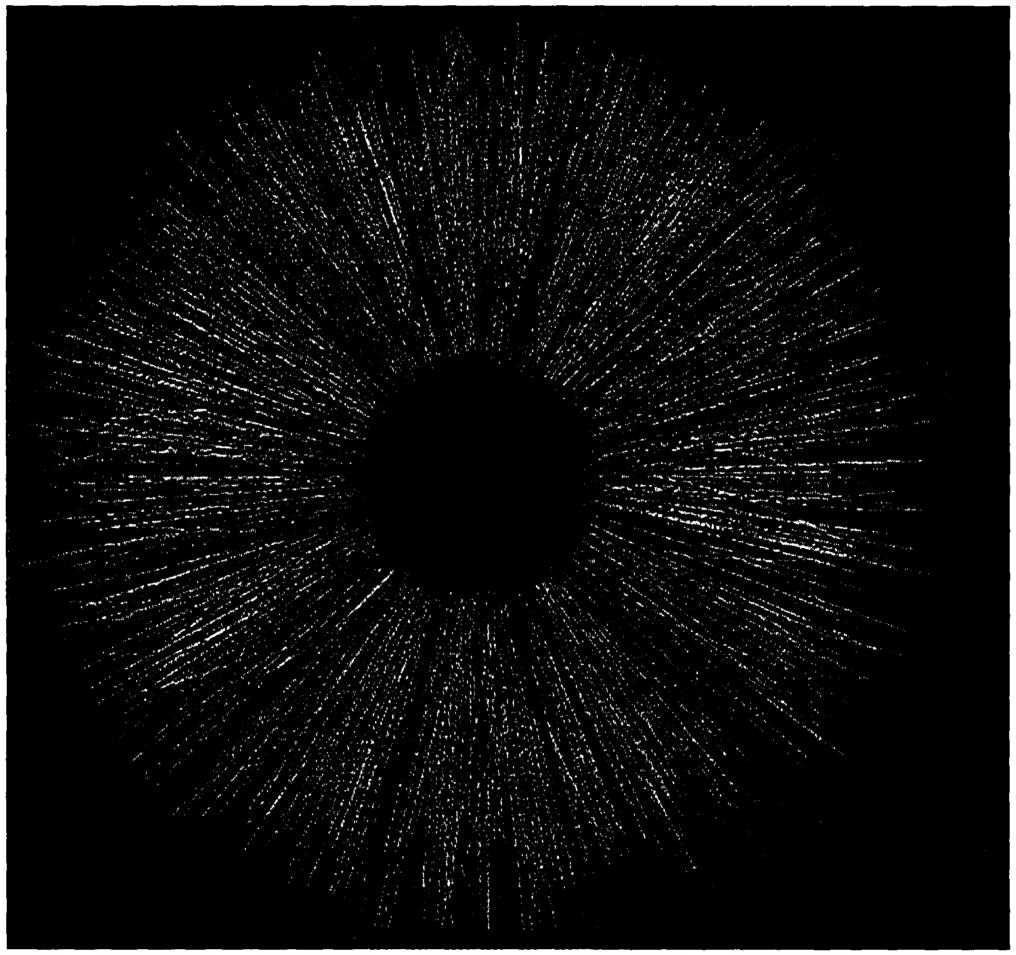
~ enlarge ~ |
violation. A new generation of particle accelerators may change this situation. The so-called B-Factories at SLAC, Cornell University, and the KEK laboratory in Japan will produce large numbers of B mesons. These are similar to K mesons except that an s-quark, which belongs to the second family, is replaced by a third-family b-quark. By examining certain rare
Page 78
decays of the B meson, CP-violating quantities can be isolated. The important question is whether B meson decays can be explained with the same parameter introduced to explain K decays. A negative result will force us to extend the standard model to account for CP violation.
The standard model contains a second source of CP violation, known as strong CP violation, that is not probed in K or B decays but can be studied in low-energy atomic and nuclear experiments. This source of CP violation generates an electric dipole moment (EDM), a separation of charge along a particle's spin axis. If a particle with a nonzero EDM is placed in an electric field, its spin will precess around the direction of the field, just as a child's top precesses around the vertical. Wonderfully precise techniques have been developed to measure neutron and atomic EDMs. The former involve ultracold neutrons confined in “bottles.” The latter employ atom beams, vapor cells, or atom traps. While no EDM has yet been detected, the precision of these experiments is extraordinary: Charge distortions of 1 part in 10 trillion trillion are ruled out! And experiments hundreds of times more sensitive are being planned. It is very difficult to understand why the standard model—which allows a nonzero EDM—does not generate one. One attractive solution of this strong CP puzzle involves a modification of the standard model's Higgs structure. This change has a remarkable consequence, a new and very light particle called the axion, which is a leading candidate for dark matter. Several experiments are under way to determine whether the universe is filled with a sea of axions.
Matter and Antimatter
The interest in CP violation is connected with a puzzling aspect of our universe—namely, that it contains much more matter than antimatter. If physics is manifestly CP symmetric at high temperatures, one would expect the very early universe to contain equal numbers of particles and antiparticles. If this symmetry had been maintained during the subsequent expansion and cooling, matter and antimatter would have almost exactly annihilated each other, leaving a vast void containing only a faint glow of radiation from the primeval fireball. Instead, we find ourselves surrounded by planets, stars, and other matter. It is known that one requirement for generating the observed matter-antimatter asymmetry during expansion is CP violation, and it is believed that the CP violation seen in K meson decays might not be sufficient. Thus the CP violation of the standard model may be just the first indication of the new physics that lurks beyond that model.
Page 79
NEW PHYSICS FOR A NEW ERA
The standard model is a triumphant success. Yet for every question it answers, new and deeper ones arise. Why are there three families of quarks and leptons? What accounts for the patterns of masses within the families? Why, for example, is the electron neutrino at least 100,000 times lighter than its charged partner, the electron? Why are certain interactions mixing the families absent in the standard model? Why are the W and Z particles so heavy? Why are some symmetries exact in nature and others broken or hidden? Why are symmetries so essential to nature?
Ideas have emerged in the past few years that promise to answer these questions. Many of them involve the behavior of matter at increasingly smaller distance scales, distances requiring increasingly energetic probes. More powerful accelerators turning on early in this century will continue to push back this energy frontier. Some of the questions involve distance scales so small that they will probably never be probed directly in accelerator experiments. But subtle hints of this new physics may be encoded in phenomena like neutrino masses, free proton decay, and family mixing.
New Symmetries
There must be new forces responsible for the hidden symmetries of the standard model, forces of such short range that they have so far escaped discovery. But there are powerful arguments suggesting that the next generation of accelerators will be sufficiently energetic to produce the massive particles that carry these forces. While there are several appealing ideas about the nature of the physics that will be discovered, especially intriguing is an entirely new type of symmetry known as supersymmetry.
Supersymmetry predicts a new partner for each of the known particles. For example, the partners of the quark and photon are known as the “squark” and “photino,” respectively. None of these particles has yet been seen, indicating that supersymmetry is hidden in such a way that these partners are so massive as to have escaped detection. But if supersymmetry is related to the hidden symmetry of the standard model, then these masses cannot be too large, and they can be produced in collider experiments. In particular, the search for supersymmetry will be central to the LHC program that begins in 2005. The observation of such superpartners and their associated supersymmetery would be a stunning experimental discovery.
Page 80
Grand Unification
A puzzling feature of the standard model is the large disparity in strength between electroweak interactions and the strong interaction of QCD. Yet these interactions have very similar structures, both modeled on the gauge invariance of electromagnetism. Soon after the emergence of the standard model, it was realized and confirmed experimentally that the strengths of these interactions change with distance: As the distance gets smaller, the strong interaction grows weaker and the weak interaction grows stronger. They ultimately come together at distances roughly a million billion times smaller than those now being probed. At this tiny distance the strong and electroweak theories may combine into a single grand unified theory, incorporating symmetries beyond those of the strong and electroweak theories.
An especially dramatic prediction of grand unified theories is that the proton, a basic building block of matter, decays into lighter particles with a very small probability. In fact, a large class of grand unified theories predict that protons have a mean lifetime in excess of a trillion trillion times the age of our universe. This explains why we still have plenty of protons. Despite 20 years of careful searches with massive detectors located far underground to avoid spurious signals, no proton decay has been seen, ruling out the simplest grand unified theories. However, some of the most appealing versions of these theories incorporating supersymmetry predict that current detectors are very close to having the required sensitivity.
Neutrinos
A startling discovery made recently may be a different sign of grand unification. Nuclear and particle experimentalists using underground detectors similar to those involved in the search for proton decay detect neutrinos produced by the Sun and by cosmic-ray interactions in Earth's atmosphere (see sidebar “Massive Neutrinos and Neutrino Astrophysics”). The results indicate that a neutrino belonging to one family can spontaneously transform into a neutrino from another, a process known as neutrino oscillation. This can happen only if neutrinos have a nonzero mass, a possibility outside the standard model but easily accommodated in grand unified theories. In fact, the mass determined by the Super-Kamiokande atmospheric neutrino experiment in Japan may be a sign of new interactions at the grand unified scale. Housed deep within a mine in the Japanese alps, Super-Kamiokande contains 50,000 tons of ultrapure water, the inner portion of which is viewed by an array of 13,000 photomultiplier tubes.
Page 81
MASSIVE NEUTRINOS AND NEUTRINO ASTROPHYSICS
Earth is bathed in an enormous flux of neutrinos produced by thermonuclear reactions occurring deep in the core of our Sun. The prospect of exploiting neutrinos as a solar probe led experimenters to build a series of neutrino detectors, all of which recorded fewer neutrino events than expected. Efforts to explain the results by modifying the standard solar model proved unsuccessful. Gradually physicists began to suspect that the explanation had to do with unexpected properties of neutrinos. If neutrinos have a mass, then the electron neutrinos produced in the solar core can “oscillate” into muon or tau neutrinos before reaching Earth, thereby escaping detection. 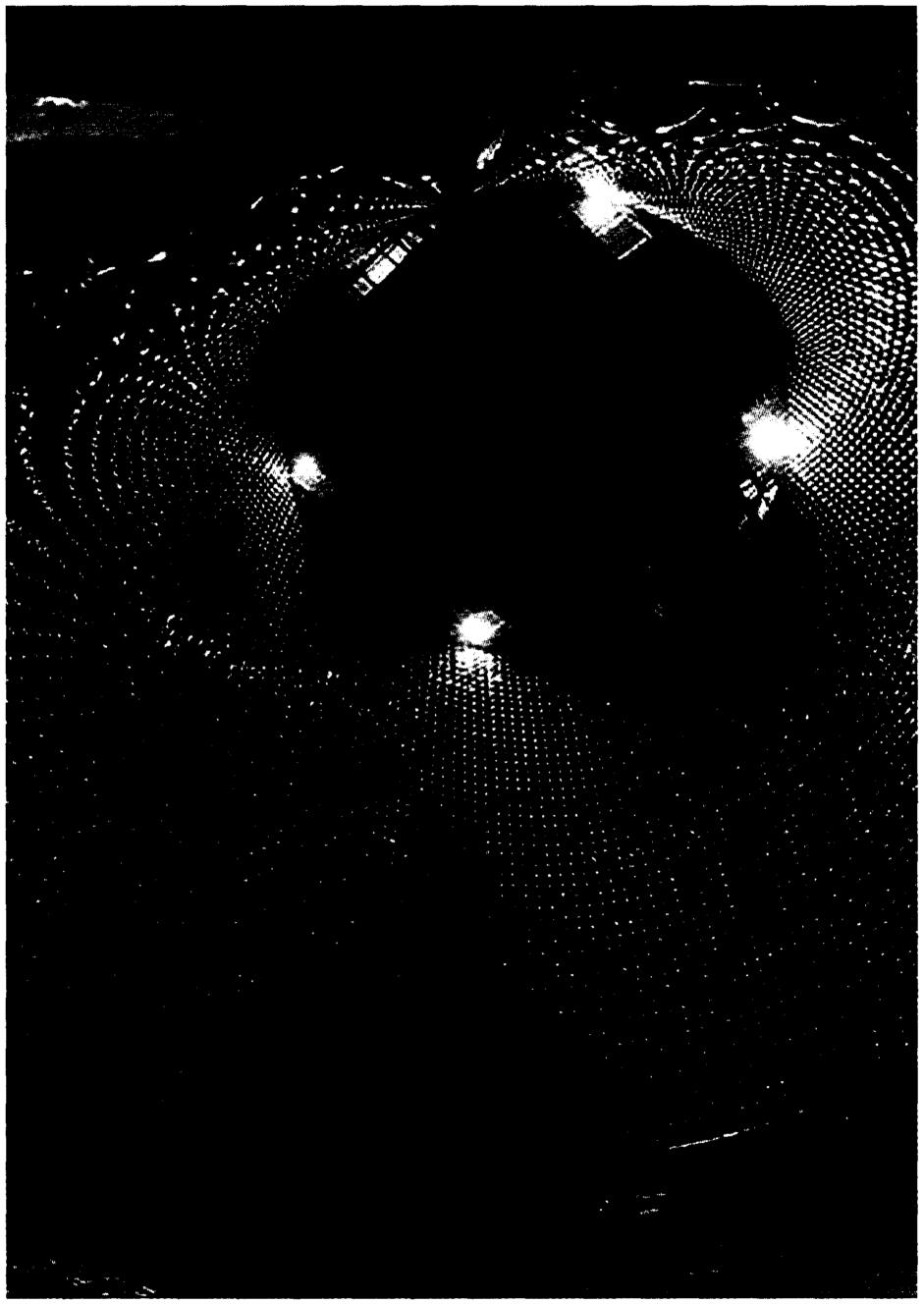
~ enlarge ~ The Super-Kamiokande experiment, an enormous 50,000-ton water Cherenkov detector located in a mine deep within the Japanese alps, has recently measured both solar neutrinos and neutrinos produced in our atmosphere by cosmicray interactions. When the detector, shown at the left, is filled with water, these 13,000 photomultiplier tubes detect faint flashes of light caused by passing neutrinos. The atmospheric neutrino results have already produced dramatic evidence for oscillations, an apparent transmutation of muon neutrinos into tau neutrinos. The Sudbury Neutrino Observatory (SNO), located nearly 2 km underground in a Canadian nickel mine, contains 1000 tons of heavy water. The deuterium in the heavy water allows the experimenters to measure both solar electron neutrinos and their oscillation products, the muon and tau neutrinos. The SNO experiment is now under way. A possible explanation for the Super-Kamiokande results attributes the needed neutrino masses to physics deeply hidden at 1015 GeV, an energy roughly a thousand billion times greater than that reached with the largest accelerators. |
Page 82
Neutrino oscillations in which the electron neutrinos produced in the Sun convert into muon- or tau-type neutrinos that cannot be seen in detectors on Earth may also account for the peculiar behavior of neutrinos coming from the Sun. Five underground experiments have detected the electron neutrinos, but the rate at which they arrive at Earth is nearly three times smaller than that predicted by models of solar neutrino production. While the evidence is indirect (neither muon nor tau neutrinos produced in the oscillation have been directly observed), the results are in excellent accord with the oscillation hypothesis.
A favorite theoretical interpretation is that the electron neutrino produced in the Sun oscillates to a muon neutrino with a mass of about 0.003 eV. Such oscillations would take place predominantly in the Sun's interior as the neutrinos pass from the high-density solar core to the surface. In this dense interior, oscillations can be magnified a thousandfold. This effect, predicted 15 years ago by Mikheyev, Smirnov, and Wolfenstein and known as the MSW effect, is analogous to phenomena explored in atomic physics 50 years earlier. A new solar neutrino detector that uses heavy water, the Sudbury Neutrino Observatory in Canada, will soon provide new information, determining whether the solar flux contains muon or tau neutrinos.
A supernova, the spectacular collapse of a massive star in which the star's outer mantle is ejected, produces prodigious numbers of neutrinos of all three types, which must then propagate through matter billions of times denser than the core of our Sun. The concomitant enhancement of neutrino oscillations in this environment provides another probe of the MSW effect. The experimental challenge is to build neutrino detectors sensitive to all three neutrino flavors and reliable enough to see supernovae, which occur only about once in every 30 years in our galaxy.
The mechanism of supernovae, the creation of the heavy elements, and the nature of nuclear matter at extreme densities all depend on the properties of neutrinos. Supernovae are the main engines driving the chemical evolution of our galaxy, synthesizing new elements and ejecting them into the interstellar medium. Supercomputer simulations of stars so far have been incapable of accurately predicting the synthesis of heavy nuclei in supernovae explosions. Because neutrinos play a crucial role in this process, it may be that new neutrino physics is the missing ingredient in these simulations.
Experiments searching for neutrino oscillations are conducted by producing neutrinos of one type at one location and then detecting these neutrinos at another, distant one. If the type of neutrino at detection differs
Page 83
from the type originally produced, a neutrino oscillation has occurred. The smaller the neutrino mass, the longer this distance must be to see an effect; this is why many experiments use extraterrestrial sources such as the Sun. But experiments in which the neutrino production takes place in the laboratory, under experimental control, provide a flexible alternative to search for neutrino oscillations. For example, tau neutrino masses of the size indicated by Super-Kamiokande might be detectable in long-baseline accelerator oscillation experiments, where neutrinos are created in accelerators and detected in laboratories hundreds of miles away. Both Fermilab and KEK are conducting these important experiments.
Gravity, the Planck Scale, and String Theory
The very short length scale of grand unification is intriguingly close to another important length scale, one involving gravity: the Planck length (see sidebar “Gravity”). Laboratory experiments probe short distances by accelerating particles to high energies. At energies available in today's experiments, gravity is incredibly weak. It is totally negligible in the structure of atoms and nuclei and is important in planetary motion and in stars only because the gravitating masses are so large. But the strength of gravity depends on an object's mass only when it is at rest. Generally the strength of gravity will depend on a particle's total energy, growing stronger with increasing energy. When a particle's energy reaches the Planck energy, the energy necessary to probe physical phenomena at the Planck length scale, gravity becomes as strong as the other forces of nature.
With all the interactions—electroweak, strong, and gravitational—of comparable strength at the Planck energy, it is natural to conclude that this energy is the fundamental scale of the physical world, where all the forces of nature may be unified into a single theory. Einstein's theory, so successful at low energies, is notoriously difficult to interpret once gravity becomes strong, at which point quantum mechanical effects are expected to be important. One exciting development during the past 20 years was the emergence of a framework—string theory—that may lead to a unified theory of gravity with the other fundamental forces in a manner that overcomes these obstacles.
String theory proposes that something profoundly new happens at the Planck scale. A powerful microscope capable of resolving distances on the order of 10−33 cm would show a quark or electron to have a physical size. But instead of structure based on still tinier particles, these particles would appear as tiny loops, or strings. String theory is a beautiful theoretical frame-
Page 84
GRAVITY
Gravity is the weakest of the fundamental forces of nature and unimportant for the physics of atoms, solids, nuclei, and the elementary particles at accessible energy scales. The classical theory of gravity—general relativity—was formulated by Albert Einstein in 1915. In general relativity, gravity is geometry: Mass curves four-dimensional space-time and, in turn, moves in response to its curvature. For much of the 20th century, the progress of experimental gravitational physics was concerned with developing this classical vision in order to understand such large-scale phenomena as black holes, gravitational waves, and the final destiny of stars, pulsars, quasars, x-ray sources, and the universe itself. Some of that progress is described in Chapter 3, “Structure and Evolution of the Universe,” which is concerned with these large distance scales. 
~ enlarge ~ Yet it was the vision of many scientists that the two great developments of 20th-century physics—quantum theory and Einstein's theory of general relativity—would eventually be unified and that the resulting quantum theory of gravity would be a part of a unified theory of all fundamental interactions. However, the characteristic length scale at which quantum gravity becomes important is the Planck length of 10−33 cm or the corresponding Planck energy scale of 1019 billion eV. This is a length scale a hundred billion billion times smaller than the size of an atomic nucleus and an energy scale 10 million billion times larger than that of the largest accelerator on Earth. Only in the explosive evaporation of black holes or at the Big Bang, where large and small are one, are such energies realized in this universe. (The upper image at the right shows a numerical calculation of the horizons of two colliding black holes.) But this extreme Planckian scale is important for today's particle physics because it is the scale characterizing the long-sought-after unified theory of all the fundamental interactions described in this chapter. Remarkably, as described in this chapter, many of the ideas underlying string theory—today's best attempt at the unified theory of all interactions—have their origin in Einstein's 1915 theory of relativity. Curved space-time, dimensions beyond the four of space and time, and black holes all have their place in string theory. (The lower image at the right is a diagram describing the collision of two microscopic strings.) Equally remarkable, |
Page 85
|
string theory suggests that there is something more fundamental than the space-time that is the focus of Einstein's theory. On this distant frontier, gravitational physics at last becomes important for science at the smallest scales considered by contemporary physics. 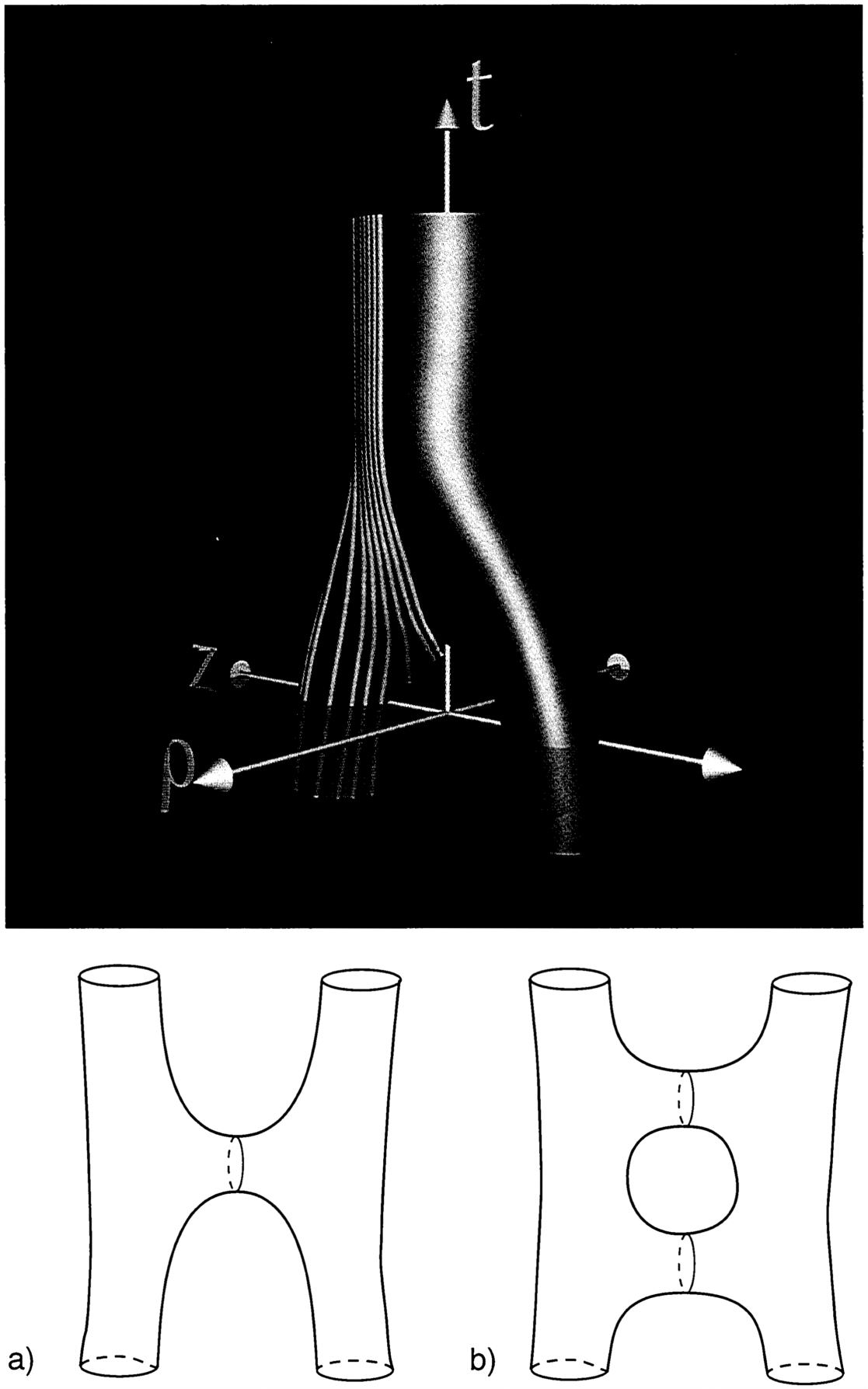
~ enlarge ~ |
Page 86
work that is in the midst of intense development. Shaped by compelling ideas of symmetry, including supersymmetry and powerful principles of internal consistency, it incorporates both gravity and quantum mechanics and could answer many of the questions generated by the standard model. If string theory does indeed describe the physical world at the very tiniest distances, its beautiful symmetries are deeply hidden from direct observation. Explaining how this takes place remains an especially challenging problem in theoretical physics.
To some, the current state of development of string theory is reminiscent of the state of quantum theory in the very early years of the 20th century. It was clear then that something radically different from the classical physics of the 19th century was emerging, but it was not until the mid-1920s that the final form of the new theory began to take shape. Although string theory is not directly tied to experiment as quantum theory was during its formation, it does call for radically new ideas, and its future development may prove equally revolutionary.
THE LENGTH SCALES OF NATURE
Our universe has a size, age, and complexity that dwarfs the realm of human experience. Yet physics strives to understand the constituents and forces that shaped all of the cosmos. How can we hope to discover basic laws that simultaneously describe quarks and quasars, transistors and tribology, baseball and black holes?
Our ability to understand such diverse phenomena relies on the same principle affecting the boats described (at p. 10) in the introduction to this volume: Only waves of a certain size, the size of the boat, pose a lethal danger. In a similar way, the phenomena at large length scales are largely insensitive to the detailed laws of nature at shorter scales. The principles that describe earthquakes need not involve the details of nuclear physics; descriptions of Bose-Einstein condensation need not worry about the existence of quarks.
At the shortest distances yet probed, 10−16 cm, the standard model of particle physics provides an accurate description of nature. Quarks, the W and Z bosons, gluons, and other exotic particles all must be included to account successfully for the phenomena observed in high-energy accelerators. But when nature is observed at larger length scales, such as the atomic scale, many of these details fade into the background.
A surprising feature of this picture is the remarkable variety of phenomena that arise when we don't try to resolve short distances: For example, the
Page 87
laws that govern atoms are simpler than the standard model, involving fewer particles and forces, yet atoms display extremely complex and often unexpected behavior. Similarly, Newton's laws of motion are simpler than the quantum mechanical equations that describe atoms, yet the movement of Earth's surface in an earthquake is unpredictable. Understanding how these complex properties appear at large distances remains an important challenge.
Although the phenomena at these disparate length scales seem very different, their description is often similar. For example, the description of the hidden symmetry associated with the W and the Z is nearly identical to that of magnetism in some materials. Mathematical techniques developed by string theorists are now being applied to membranes in biological systems. Nothing illustrates the unity of physics better than these similarities across vastly different length scales.
The common ideas of physics have been applied over distances ranging from the realm of string theory to the furthest reaches of our universe. The results have allowed an understanding of a staggering variety of phenomena and lay the foundation for further research as we probe new frontiers at all distances.


