
12
Developing Understanding Through Model-Based Inquiry
James Stewart, Jennifer L. Cartier, and Cynthia M. Passmore
A classroom of students need only look at each other to see remarkable variation in height, hair color and texture, skin tone, and eye color, as well as in behaviors. Some differences, such as gender, are discrete: students are male or female. Others, such as hair color or height, vary continuously within a certain range. Some characteristics—10 fingers, 10 toes, and one head—do not vary at all except in the rarest of cases. There are easily observed similarities between children and their parents or among siblings, yet there are many differences as well. How can we understand the patterns we observe?
Students need only look through the classroom window to take these questions a next step. Birds have feathers and wings—characteristics on which they vary somewhat from each other but on which they are completely distinct from humans. Dogs, cats, and squirrels have four legs. Why do we have only two? As with much of science, students can begin the study of genetics and evolution by questioning the familiar. The questions mark a port of entry into more than a century of fascinating discovery that has changed our understanding of our similarities, our differences, and our diseases and how to cure them. That inquiry has never been more vital than it is today.
It is likely that people observed and wondered about similarities of offspring and their parents, and about how species of animals are similar and distinct, long before the tools to record those musings were available. But major progress in understanding these phenomena has come only relatively recently through scientific inquiry. At the heart of that inquiry is the careful collection of data, the observation of patterns in the data, and the generation of causal models to construct and test explanations for those
patterns. Our goal in teaching genetics and evolution is to introduce students to the conceptual models and the wealth of knowledge that have been generated by that scientific enterprise. Equally important, however, we want to build students’ understanding of scientific modeling processes more generally—how scientific knowledge is generated and justified. We want to foster students’ abilities not only to understand, but also to use such understandings to engage in inquiry.
For nearly two decades, we have developed science curricula in which the student learning outcomes comprise both disciplinary knowledge and knowledge about the nature of science. Such learning outcomes are realized in classrooms where students learn by “doing science” in ways that are similar to the work scientists do in their intellectual communities. We have created classrooms in which students are engaged in discipline-specific inquiry as they learn and employ the causal models and reasoning patterns of the discipline. The topics of genetics and evolution illustrate two different discipline-specific approaches to inquiry. While causal models are central in both disciplines, different reasoning patterns are involved in the use or construction of such models. The major difference is that the reconstruction of past events, a primary activity in the practice of evolutionary biology, is not common in the practice of genetics. The first section of this chapter focuses on genetics and the second on evolution. The third describes our approach to designing classroom environments, with reference to both units.
Our approach to curriculum development emerged as a result of collaborative work with high school teachers and their students (our collaborative group is known as MUSE, or Modeling for Understanding in Science Education).1 As part of that collaboration, we have conducted research on student learning, problem solving, and reasoning. This research has led to refinements to the instruction, which in turn have led to improved student understanding.
GENETICS
An important step in course design is to clarify what we want students to know and be able to do.2 Our goal for the course in genetics is for students to come away with a meaningful understanding of the concepts introduced above—that they will become adept at identifying patterns in the variations and similarities in observable traits (phenotypes) found within family lines. We expect students will do this using realistic data that they generate themselves or, in some cases, that is provided. However, while simply being familiar with data patterns may allow students to predict the outcomes of future genetic crosses, it provides a very incomplete understanding of genetics because it does not have explanatory power. Explanatory power comes from understanding that there is a physical basis for those
patterns in the transmission of genetic material (i.e., that there are genes, and those genes are “carried” on chromosomes from mother and father to offspring as a result of the highly specialized process of cell division known as meiosis) and as a result of fertilization.
To achieve this understanding, students must learn to explain the patterns they see in their data using several models in a consistent fashion. Genetics models (or inheritance pattern models) explain how genes interact to produce variations in traits. These models include Mendel’s simple dominance model, codominance, and multiple alleles. But to understand how the observed pairings of genes (the genotype) came about in the first place, students must also understand models of chromosome behavior, particularly the process of segregation and independent assortment during meiosis (the meiotic model).
We have one additional learning outcome for students—that they will couple their understanding of the transmission of the genetic material and their rudimentary understanding of how alleles interact to influence phenotype with an understanding of the relationship of DNA to genes and the role played by DNA products (proteins) in the formation of an organism’s phenotype (biomolecular models). DNA provides the key to understanding why there are different models of gene interaction and introduces students to the frontier of genetic inquiry today.
These three models (genetic, meiotic, and biomolecular) and the relationships among them form the basic conceptual framework for understanding genetics. We have designed our instruction to support students in putting this complex framework in place.
Attending to Students’ Existing Knowledge
While knowledge of the discipline of genetics has shaped our instructional goals, students’ knowledge—the preconceptions they bring to the classroom and the difficulties they encounter in understanding the new material—have played a major role in our instructional design as well.
The genetics course is centered around a set of scientific models. However, in our study of student learning we have found, as have others,3 that students have misunderstandings about the origin, the function, and the very nature of causal models (see Box 12-1). They view models in a “naïve realistic” manner rather than as conceptual structures that scientists use to explain data and ask questions about the natural world.4
Following our study of student thinking about models, we altered the instruction in the genetics unit to take into consideration students’ prior knowledge about models and particular vocabulary for describing model attributes. Most important, we recognized the powerful prior ideas students had brought with them about models as representational entities and explic-
|
BOX 12-1 One early study of student learning in the genetics unit focused on identifying the criteria students used when assessing their models for inheritance phenomena.5 The study was predicated on a commitment to developing with students early in the course the idea of consistency as a basis for model assessment. Students read a mystery scenario involving a car accident and evaluated several explanations of the cause of the accident. Each explanation was problematic because it was either (1) inconsistent with some of the information the students had been given, (2) inconsistent with their prior knowledge about the world, or (3) unable to account for all of the information mentioned in the original scenario. Students discussed these explanations and their shortcomings, and the teacher provided the language for talking about model assessment criteria: she instructed them to seek explanatory power, predictive power (which was discussed but not applied to the accident scenario), internal consistency (among elements within the model), and external consistency (between a model and one’s prior knowledge or other models). Throughout the genetics unit, students were prompted to use these criteria to evaluate their own inheritance models. Despite the explicit emphasis on consistency as a criterion for model assessment, however, we found that very few students actually judged their models this way. Instead, students valued explanatory adequacy, visual simplicity, and “understandability” more strongly. A closer look at the work of students in this study showed that most of them viewed models not as conceptual structures but as physical replicas, instructional tools, or visual representations. In fact, the common use of the term to describe small replicas—as in model airplanes—sometimes interferes with students’ grasp of a causal model as a representation of a set of relationships. Similarly, when attempting to apply model assessment criteria to their explanations for data patterns in liquid poured from a box, several students treated “internal consistency” and “external consistency” literally: they evaluated the box’s proposed internal components and the external phenomena (observations) separately. This confusion stemmed from students’ prior understanding of concepts associated with the vocabulary we provided: clearly “internal” and “external” were already meaningful to the students, and their prior knowledge took precedence over the new meanings with which we attempted to imbue these terms. Given this misunderstanding of models, it was not surprising that our genetics students neither applied nor discussed the criterion of conceptual consistency within and among models. |
itly addressed these ideas at the outset of the unit. In the genetics unit, teachers employ tasks early on that solicit students’ ideas about scientific models and explicitly define the term “model” as it will be used in the science unit. Frequently, teachers present sample models that purport to explain the phenomena at hand and ask students to evaluate these models. Teachers create models that have particular shortcomings in order to prompt discussion by students. Most commonly, students will describe the need for a model to explain all the data, predict new experimental outcomes, and be realistic (their term for conceptual consistency). Throughout the course, teachers return to these assessment criteria in each discussion about students’ own inheritance models.
A subsequent study has shown that these instructional modifications (along with other curricular changes in the genetics unit) help students understand the conceptual nature of scientific models and learn how to evaluate them for consistency with other ideas.6 We now provide an example of an initial instructional activity—the black box—designed to focus students’ attention on scientific modeling.
As Chapter 1 suggests, children begin at a very young age to develop informal models of how things work in the world around them. Scientific modeling, however, is more demanding. Students must articulate their model as a set of propositions and consider how those propositions can be confirmed or disconfirmed. Because this more disciplined modeling is different from what students do in their daily lives, we begin the course with an activity that focuses only on the process of modeling. No new scientific content is introduced. The complexity of the task itself is controlled to focus students on the “modeling game” and introduce them to scientific norms of argumentation concerning data, explanations, causal models, and their relationships. This initial activity prepares students for similar modeling pursuits in the context of sophisticated disciplinary content.
During the first few days of the genetics course, the teacher presents the students with a black box—either an actual box or a diagram and description of a hypothetical box—and demonstrates or describes the phenomenon associated with it. For example, one box is a cardboard detergent container that dispenses a set amount of detergent each time it is tipped, while another is a large wooden box with a funnel on top and an outlet tube at the bottom that dispenses water in varying amounts, shown in Figure 12-1. Once the students have had an opportunity to establish the data pattern associated with the particular box in question, the teacher explains that the students’ task is to determine what mechanisms might give rise to this observable pattern. During this activity (which can take anywhere from 3 to 11 class periods, depending on the black box that is used and the extent to which students can collect their own data), the students work in small teams. At the conclusion of the task, each team creates a poster representing its explana-
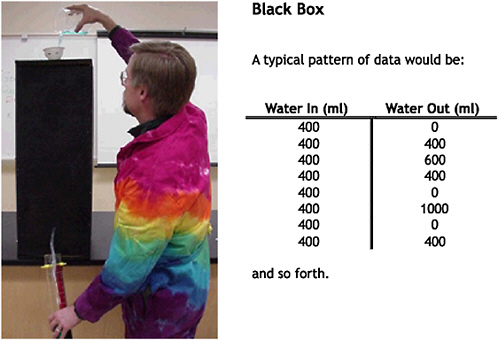
FIGURE 12-1 One black box used in the MUSE science curriculum and typical data patterns associated with the box.
tion for the box mechanism and presents it to the class. Classmates offer criticism and seek clarification during these presentations.
As the dialogue below suggests, the exercise begins with students engaged in a central activity of scientists—making observations.
|
Teacher |
Making observations is important in science. I want you to observe this carton. Just call out what you notice and I will write it on the board. |
The students respond with a variety of observations:
|
Ian |
The box is white with blue lettering. |
|
Delia |
The contents slosh around and it looks like liquid soap when we pour it. |
|
Sarah |
Hey, it stopped coming out! Try to pour it again so we can see what happens. |
|
Owen |
It always pours about the same amount then stops. |
After several minutes of listening to the students, the teacher stops them and invites them to take a closer look at the carton, prompting them to identify patterns associated with their observations. Their reflection on these patterns leads the students to propose manipulations of the container, which in turn produce more observations. The teacher now interrupts them to guide their attention, saying:
|
Teacher |
Okay, you’ve made some wonderful observations, ones that you are going to be using in just a few minutes. But, there is more to science than making observations. Scientists also develop ideas of what is not visible in order to explain that which is. These ideas are called models. |
She goes on to challenge them:
|
Teacher |
Imagine an invisible “world” inside the container that, if it existed in the way that you imagine, could be used to explain your observations. I want you to make drawings of your imagined world and maybe some groups will have time to develop a three-dimensional representation too. And, one last thing, I want each group to develop at least one test of your model. Ask yourself, “If the world inside the carton is as I imagine it and I do X to the carton, what result would I expect?” |
Over the next two class periods, the students work in animated groups to develop models that can be used to explain their observations. They describe, draw, and create three-dimensional representations of what they think is in the carton. They argue. They negotiate. They revise. Then they share drawings of their models with one another.
|
Sarah |
Hey Scott, you have a different idea than ours. How does that flap work? |
|
Scott |
The flap is what stops the detergent from gushing out all at once when you tip it. |
|
Delia |
Yeah, I get that, but does your design allow the same amount of detergent to come out every time? Because we tried a flap, too, but we couldn’t figure out how to get the amount to be the same. |
The students also propose tests of their models:
|
Sarah |
Well, Scott is saying that the flap is like a trapdoor and it closes to keep the detergent in. But I think that if there is a trapdoor-like thing in there, then we should be able to hear it close if we listen with a stethoscope, right? |
|
Delia |
Hey, Mrs. S., can we get a stethoscope? |
A visitor to the classroom would notice that Mrs. S. listens attentively to the descriptions that each group gives of its model and the observations the model is designed to explain. She pays special attention to the group’s interactions with other groups and is skillful in how she converses with the students during their presentations. Through her comments she demonstrates how to question the models of others and how to present a scientific argument. To one group she says, “I think I follow your model, but I am not sure how it explains why you get 90 milliliters of liquid each time you tip the box.” To another she comments, “You say that you have used something similar to a toilet bowl valve. But I don’t understand how your valve allows soap to flow in both directions.” And to a third group she asks, “Do you think that Ian’s model explains the data? What question would you ask his group at this point?” By the end of the multiday activity, the students are explicit about how their prior knowledge and experiences influence their observations and their models. They also ask others to explain how a proposed model is consistent with the data and challenge them when a component of a model, designed to explain patterns in observations, does not appear to work as described.
This activity creates many opportunities to introduce and reinforce foundational ideas about the nature of scientific inquiry and how one judges scientific models and related explanations. As the class shares early ideas, the teacher leads discussion about the criteria they are using to decide whether and how to modify these initial explanations. Together, the class establishes that causal models must be able to explain the data at hand, accurately predict the results of future experiments, and be consistent with prior knowledge (or be “realistic”) (see the example in Box 12-2). Through discussion and a short reading about scientific inquiry and model assessment, the teacher helps students connect their own work on the black boxes with that of scientists attempting to understand how the natural world works. This framework for thinking about scientific inquiry and determining the validity of knowledge claims is revisited repeatedly throughout the genetics unit.
Other modeling problems might serve just as well as the one we introduce here. What is key is for the problem to be complex enough so that students have experiences that allow them to understand the rigors of scien-
|
BOX 12-2 While working to revise Mendel’s simple dominance model to account for an inheritance pattern in which there are five variations (rather than two), many students propose models in which each individual in the population has three alleles at the locus in question. However, such a model fails to hold up when evaluated according to the criteria established during the black box activity because it is inconsistent with the students’ prior knowledge about meiosis and equal segregation of parental information during gamete formation:
|
tific modeling. In particular, the activity is designed to give students an opportunity to do the following:
-
Use prior knowledge to pose problems and generate data. When science teaching emphasizes results rather than the process of scientific inquiry, students can easily think about science as truths to be memorized, rather than as understandings that grow out of a creative process of observing, imagining, and reasoning by making connections with what one already knows. This latter view is critical not only because it offers a view of science that is more engaging and inviting, but also because it allows students to
-
grasp that what we understand today can be changed, sometimes radically, by tomorrow’s new observations, insights, and tools. By carrying out a modeling activity they see as separate from the academic content they are studying in the unit, students are more likely to engage in understanding how models are generated rather than in learning about a particular model.
-
Search for patterns in data. Often the point of departure between science and everyday observation and reasoning is the collection of data and close attention to its patterns. To appreciate this, students must take part in a modeling activity that produces data showing an interesting pattern in need of explanation.
-
Develop causal models to account for patterns.7 The data produced by the activity need to be difficult enough so that the students see the modeling activity as posing a challenge. If an obvious model is apparent, the desired discourse regarding model testing and consideration of the features of alternative models will not be realized.
-
Use patterns in data and models to make predictions. A model that is adequate to explain a pattern in data provides relatively little power if it cannot also be used for predictive purposes. The activity is used to call students’ attention to predictive power as a critical feature of a model.
-
Make ideas public, and revise initial models in light of anomalous data and in response to critiques of others. Much of the schoolwork in which students engage ends with a completed assignment that is graded by a teacher. Progress in science is supported by a culture in which even the best work is scrutinized by others, in which one’s observations are complemented by those of others, and in which one’s reasoning is continually critiqued. For some students, making ideas public and open to critique is highly uncomfortable. A low-stakes activity like this introductory modeling exercise can create a relatively comfortable setting for familiarizing students with the culture of science and its expectations. A teacher might both acknowledge the discomfort of public exposure and the benefits of the discussion and the revised thinking that results in progress in the modeling effort. Students have ample opportunity to see that scientific ideas, even those that are at the root of our most profound advances, are initially critiqued harshly and often rejected for a period before they are embraced.
Learning Genetics Content
Having provided this initial exposure to a modeling exercise, we turn to instruction focused specifically on genetics. While the core set of causal models, assumptions, and argument structures generated the content and learning outcomes for our genetics unit, our study of student understanding and reasoning influenced both the design and the sequencing of instructional activities. For example, many high school students do not understand
the interrelationships among genetic, meiotic, and biomolecular models, relationships that are key to a deep understanding of inheritance phenomena.8 To deal with this problem, we identified learning outcomes that address the conceptual connections among these families of models, and the models are introduced in a sequence that emphasizes their relatedness. Initially, for example, we introduced genetic models, beginning with Mendel’s model of simple dominance, first. This is typical of many genetics courses. In our early studies (as well as in similar studies on problem solving in genetics9), students often did not examine their inheritance models to see whether they were consistent with meiosis. In fact, students proposed models whereby offspring received unequal amounts of genetic information from their two parents or had fewer alleles at a particular locus than did their parents.10 Because of their struggles and the fact that meiosis is central to any model of inheritance, we placed this model first in the revised curricular sequence. Students now begin their exploration of Mendelian inheritance with a firm understanding of a basic meiotic model and continue to refer to this model as they examine increasingly complex inheritance patterns.
A solid integration of the models does not come easily, however. In early versions of the course, it became apparent that students were solving problems, even sophisticated ones, without adequately drawing on an integrated understanding of meiotic and genetic models.11 In response, we designed a set of data analysis activities and related homework that required students to integrate across models (cytology, genetics, and molecular biology) when conducting their genetic investigations and when presenting model-based explanations to account for patterns in their data. By providing tasks that require students to attend to knowledge across domains and by structuring classrooms so that students must make their thinking about such integration public, we have seen improvements in their understanding of genetics.12
We then focus on inheritance models, beginning with Mendel’s model of simple dominance. Mendel, a nineteenth-century monk, grew generation after generation of pea plants in an attempt to understand how traits were passed from parent plants to their offspring. As Chapter 9 indicates, Mendel’s work represented a major breakthrough in understanding inheritance, achieved in large part by selecting a subject for study—peas—that had discontinuous trait variations. The peas were yellow or green, smooth or wrinkled. Peas can be self-fertilized, allowing Mendel to observe that some offspring from a single genetic source have the same phenotype as the parent plants and some have a different phenotype. Mendel’s work confirmed that individuals can carry alleles that are recessive—not expressed in the phenotype. By performing many such crosses, Mendel was able to deduce that the distribution of alleles follows the laws of probability when the pairing of alleles is random. These insights are fundamental to all the work
in classical transmission genetics since Mendel. Students need ample opportunity to work with Mendel’s model if they are to make these fundamental insights their own.
The development of modern genetic theory from its classical Mendelian origins has been the subject of much historical and philosophical analysis. Darden13 draws on historical evidence to identify a set of strategies used by scientists to generate and test ideas while conducting early inquiries into the phenomenon of inheritance. She traces the development of a number of inheritance models that were seen at least originally to be at odds with those underlying a Mendelian (i.e., simple dominance) explanation of inheritance. Among these models are those based on the notions of linkage and multiple forms (alleles) of a single gene. In short, Darden provides a philosophical analysis of the history of model-based inquiry into the phenomenon of inheritance from a classical genetics perspective. Drawing on Darden’s work and our own experiences as teachers and researchers, we made a primary feature of the course engaging students in building and revising Mendel’s simple dominance model. Students thereby have rich opportunities to learn important genetics concepts, as well as key ideas about the practice of genetics.
Inheritance is considerably more complex than Mendel’s simple dominance model suggests. Mendel was not wrong. However, simple dominance applies to only a subset of heritable traits. Just as geneticists have done, students need opportunities to observe cases that cannot be explained by a simple dominance model. We provide such opportunities and thus allow students to conclude that Mendel’s model is not adequate to explain the data. Students propose alternatives, such as the codominance model, to explain these more complex patterns.
Once students have come to understand that there are multiple models of allele interaction, they are primed for an explanation of why we observe these different inheritance patterns. How can a recessive allele sometimes have an influence and sometimes not? With that question in mind, we introduce DNA and its role in protein production. What drives the instructional experience throughout is students’ active engagement in inquiry, which we turn to in the next section.
Student Inquiry in Genetics
Early instruction in the genetics class includes a few days during which students learn about the meiotic model14 and the phenomena this model can explain. In an introductory activity, students look at sets of pictures and are asked to determine which individuals are members of the same families. The bases for their decisions include physical similarities between parents and children and between siblings. Thus, instruction about meiosis focuses
on how the meiotic model can account for these patterns: children resemble their parents because they receive information from both of them, and siblings resemble each other but are not exactly alike because of the random assortment of parental information during meiosis.
After students have developed some understanding of meiosis, they create, with guidance from the teacher, a representation of Mendel’s model of simple dominance (see Figures 12-2a and 12-b) in an attempt to further explain why offspring look like parents. First, “Mendel” (a teacher dressed in a monk’s habit) pays the class a visit and tells them he would like to share some phenomena and one important model from his own research with them. In character, “Mendel” passes out three packets of peas representing a parental generation and the F1 and F2 generations (the first and second filial generations, respectively). He asks the students to characterize the peas according to color and shape. For example, the parental generation includes round green peas and wrinkled yellow peas. The F1 generation contains only round yellow peas. Finally, the F2 generation contains a mix of round yellow, wrinkled yellow, round green, and wrinkled green peas in a ratio of approximately 9:3:3:1. Using what they already know about meiosis—particularly the fact that offspring receive information from both parents—the students reconstruct Mendel’s model of simple dominance to explain these patterns (see Figures 12-2a and 12-b).
While Darden’s work (discussed above) aides in the identification of important inheritance models and strategies used by scientists to judge those models, it is the work of Kitcher15 that places the simple dominance model developed by students into context with comparable models of geneticists. According to Kitcher,16 genetic models provide the following information:
(a) Specification of the number of relevant loci and the number of alleles at each locus; (b) Specification of the relationships between genotypes and phenotypes; (c) Specification of the relations between genes and chromosomes, of facts about the transmission of chromosomes to gametes (for example, resolution of the question whether there is disruption of normal segregation) and about the details of zygote formation; (d) Assignment of genotypes to individuals in the pedigree.
Moreover, Kitcher17 describes how such models might be used in inquiry:
… after showing that the genetic hypothesis is consistent with the data and constraints of the problem, the principles of cytology and the laws of probability are used to compute expected distributions of phenotypes from crosses. The expected distributions are then compared with those assigned in part (d) of the genetic hypothesis.
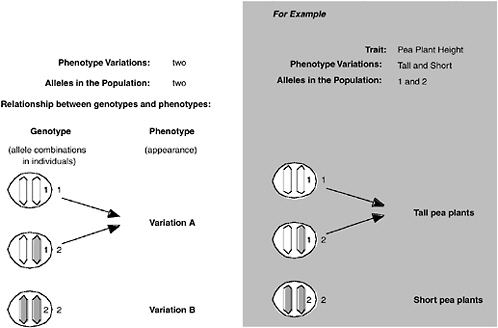
FIGURE 12-2 Mendel’s model of simple dominance.
(a) Students’ representation of Mendel’s simple dominance model. This model accounts for the inheritance of discrete traits for which there are two variants (designated A and B). Each individual in the population possesses two alleles (designated 1 and 2) for the trait; one allele (here, allele 1) is completely dominant over the other. For plant height, for example, there are two phenotypic variants: short and tall. There are only two different alleles in the population. Plants with a genetic makeup of (1,1) or (1,2) will be tall, whereas plants with a genetic makeup of (2,2) will be short.
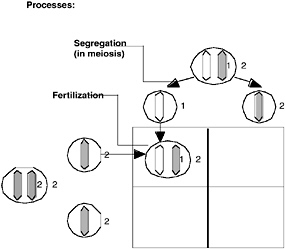
(b) Meiotic processes governing inheritance. The underlying processes governing simple dominance are Mendel’s law of segregation (the meiotic process of sex cell formation during which half of all parental genetic information is packaged into sperm or egg cells) and fertilization (during which genetic information from both parents combines in the offspring).
With their teacher’s guidance, students represent Mendel’s simple dominance model in a manner consistent with Kitcher’s description of the models of geneticists. They pay particular attention to (b) and (d) above: specifying the relationships between genotypes and phenotypes and identifying the genotypes of individuals in their experimental populations. Because our unit does not address multigene traits, one locus per trait is assumed (thus part of criterion (a) above is not applicable in this case), and students focus on determining the number of alleles at that locus. Finally, the students’ prior understanding of meiosis—developed earlier in the unit—enables them to specify chromosomal transmission of genes for each particular case (item (c) above). The vignette below portrays students engaged in this type of inquiry.
Genetic Inquiry in the Classroom: A Vignette
Nineteen students are sitting at lab tables in a small and cluttered high school biology classroom. The demonstration desk at the front of the room is barely visible under the stacks of papers and replicas of mitotic cells. A human skeleton wearing a lab coat and a sign reading “Mr. Stempe” stands in a corner at the front of the room, and the countertops are stacked with books, dissecting trays, and cages holding snakes and gerbils.
During the previous few days, the students in this class have studied the work of Mendel. Years of work resulted in his publication of Experiments on Plant Hybridization,18 a paper in which he presented his model explaining the inheritance of discontinuous traits in plants.19 The students have read an edited version of this paper and refer to Mendel’s idea as the “simple dominance model” because it explains the inheritance of traits derived from two alleles (or pieces of genetic information) when one of the alleles is completely dominant over the other (see Figures 12-2a and 12-2b).
During class on this day, the students’ attention is drawn to the cabinet doors along the length of the room. These doors are covered with students’ drawings of family pedigrees labeled “Summers: Marfan” (see Figure 12-3a), “Healey: Blood Types,” “Jacques: Osteogenesis Imperfecta,” and “Cohen: Achondroplasia.” The teacher is standing at the side of the room facilitating a discussion about these family pedigrees.
|
Teacher |
Now that we’ve learned about Mendel’s model, can we use it to explain any of the patterns in our pedigrees? |
|
Kelly |
Well, I think Marfan is dominant. |
|
Teacher |
Okay. Since we are using 1’s and 2’s to show alleles in the Mendel model, can you put some numbers up there so we can see what you’re talking about? |
Kelly walks to one of the cabinets at the side of the room and begins to label each of the circles and squares on the pedigree with two alleles: some are assigned the genotype 1,2 (heterozygous or possessing two different alleles) and others 2,2 (homozygous recessive or possessing two recessive alleles) (see Figures 12-3a and 12-3b, respectively).
|
Teacher |
Kelly thinks that the allele that causes Marfan syndrome is dominant and she’s put some genotypes up there to help us see her idea. What do you all think about that? |
|
Chee |
Yeah, that’s OK. That works. |
|
Jamie |
Yeah, because all the filled in ones, the ones who have Marfan, are all 1,2’s, so it’s dominant. |
|
Curtis |
Well, but we started off by saying that it’s dominant. I mean, we made that assumption. If we say that the Marfan allele is recessive and switch all the affected genotypes to 2,2’s then that would work too. Do you know what I’m saying? |
|
Teacher |
Wow! That’s quite an idea. I think we need help thinking about that, Curtis, so can you write your genotypes next to Kelly’s in a different color? |
Curtis proceeds to label the same pedigree consistently with his idea that the Marfan allele is actually recessive (see Figure 12-3c).
|
Teacher |
Well, that’s very interesting. |
|
David |
I don’t get it. Both of them work. |
|
Teacher |
You think they both work. Marfan could be dominant or recessive. |
|
Lucy |
Well, we can’t tell right now. |
|
Sarah |
But if we could take two people with Marfan, like the grandmother and the son, and find out what kind of kids they’d have, then we could tell for sure. |
|
Sam |
That’s sick, man! |
|
Teacher |
Wait a minute. Wait a minute. What’s Sarah saying here? |
|
Sarah |
That if you got children from two affected people … |
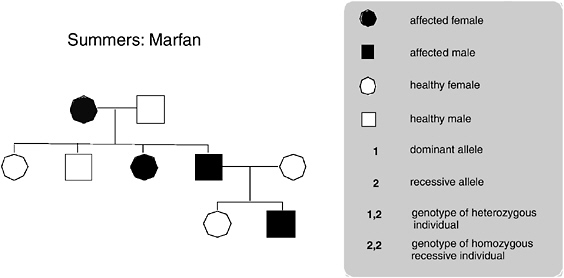
FIGURE 12-3 Pedigrees representing inheritance of Marfan symdrome in the Summers family. (a) The original pedigree, representing the inheritance pattern within the Summers family without specifying individual genotypes.
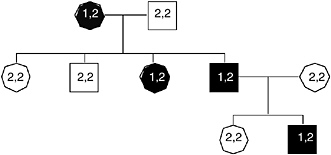
FIGURE 12-3 (b) Kelly’s genotype assignments, assuming that Marfan syndrome is inherited as a dominant trait.
|
Curtis |
… that you could tell if it was recessive or dominant. |
|
Teacher |
What would you see? |
|
Sarah |
Well, if it’s recessive, then all the kids would be Marfan, too. But if it’s dominant, then some of the kids might not be Marfan ‘cause they could get like a 2 from both parents. |
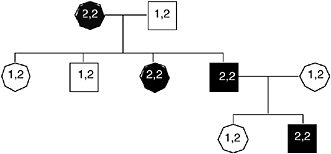
FIGURE 12-3 (c) Curtis’ genotype assignments, assuming that Marfan syndrome is inherited as a recessive trait.
|
Teacher |
Do you all see that? Sarah is saying that if the parents had what genotype? |
|
Sam |
They’d have to be a 1,2, right? |
|
Teacher |
A 1,2. Then if these parents had kids, their kids could be what? |
|
Kelly |
1,2 or 1,1 or 2,2. |
|
Teacher |
Right. So Sarah is actually proposing an experiment that we could do to find out more [see Box 12-3]. |
|
Teacher |
Now what about the Healey pedigree? Can Mendel explain that one? |
|
Chee |
I don’t think so. |
|
Chris |
Why not? |
|
Chee |
Because there’s four things. And Mendel only saw two. |
|
Teacher |
Four things? |
|
Sarah |
Yeah. Like phenotypes or traits or whatever. |
|
David |
There’s people who have type A and people who have B and some who have AB or O. |
|
Tanya |
But isn’t AB the most dominant or something? |
|
Teacher |
What do you mean by “most dominant,” Tanya? |
|
Tanya |
I don’t know. It’s just like … |
|
Chee |
… like it’s better or stronger or something. |
|
Tanya |
Like you’re gonna see that showing up more. |
|
Lee |
Well even if that’s true, you still can’t really explain why there’re A’s and B’s, too. It’s not just AB is dominant to O, right? You still have |
|
BOX 12-3 In Sarah’s thought experiment, two individuals with Marfan’s syndrome would produce sex cells, and those sex cells would recombine during fertilization (see Figure 12-3). Looking at the children from such a mating would enable the students to determine whether Marfan’s syndrome is inherited as a dominant or recessive trait because the only situation in which one would expect to see both unaffected and affected children would be if Marfan’s is inherited as a dominant trait (see below). 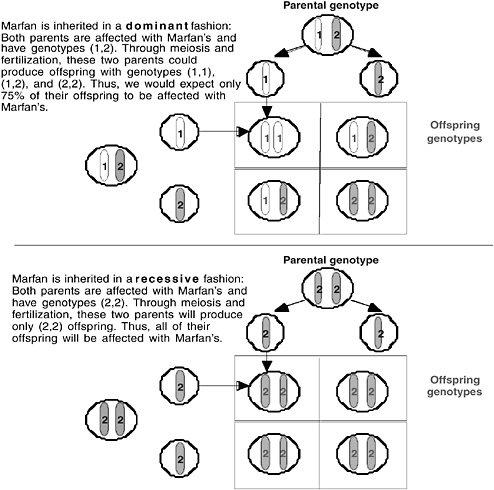 |
|
|
four different things to explain and Mendel didn’t see that. |
|
Teacher |
OK, so Mendel’s model of simple dominance isn’t going to be enough to explain this pattern is it? |
|
Chris |
Nope. |
The students in this high school biology class are engaged in genetic inquiry: they are examining data and identifying patterns of inheritance for various traits. They are also attempting to use a powerful causal model, Mendel’s model of simple dominance, to explain the patterns they see. And just as scientists do, they recognize the limitations of their model when it simply cannot explain certain data patterns. These students are poised to continue their inquiry in genetics by revising Mendel’s model such that the resulting models will be able to explain a variety of inheritance patterns, including the multiple allele/codominance pattern within the Healey pedigree.
Multiple Examples in Different Contexts
Chapter 1 argues that learning new concepts with understanding requires multiple opportunities to use those concepts in different contexts. Our course is designed to provide those opportunities. Once the students have represented and used the simple dominance model to explain phenomena such as the inheritance of characteristics in peas and disease traits in humans, they use the model to explain data they generate using the software program Genetics Construction Kit or GCK.20 This program enables students to manipulate populations of virtual organisms (usually fruit flies) by performing matings (or crosses) on any individuals selected. Each cross produces a new generation of organisms whose variations for particular traits (e.g., eye color, wing shape) are described. Thus, the students develop expertise using the simple dominance model to explain new data, and they also design and perform crosses to test their initial genotype-to-phenotype mappings within these populations.
The beginning of this process is illustrated in Figure 12-4, which shows an excerpt from one student’s work with GCK and the simple dominance model. After the student’s model is discussed, the teacher presents or revisits phenomena that the simple dominance model cannot explain. For example, students realize when applying the model to explain their human pedigrees that it is inadequate in some cases: it cannot account for the inheritance of human blood types or achondroplasia. The next step for the class is to study these “anomalous” inheritance patterns using GCK. They begin with achondroplasia, a trait for which there are three variations rather than two. Students revise the simple dominance model to account for the codominant
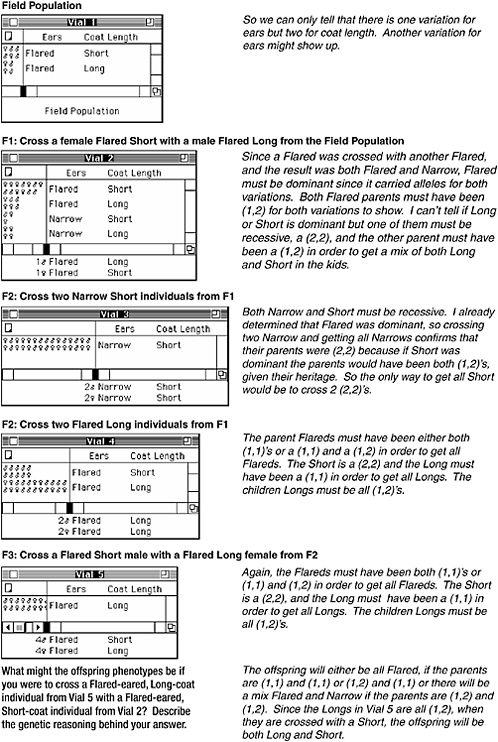
inheritance pattern observed for this trait. While solving GCK problems such as this, students propose models that specify some or all of the information (a through d) noted above and then test their models for fit with existing data, as well as for the ability to predict the results of new experiments accurately.
Since most students ultimately explain the inheritance of achondroplasia using a codominant model (whereby each possible genotype maps to a distinct phenotype), they must also revise their understanding of dominance and recessiveness. Up to this point, most students tend to associate recessiveness with either (1) a phenotype, (2) any genotype that contains a recessive allele (designated with the number 2), or (3) both. It is quite common for students to conclude that the phenotypes associated with (1,1) and (1,2) genotypes are both “recessive.”21 However, this conclusion is inconsistent with the students’ prior concept of recessiveness as it was developed under the simple dominance model. Thus, it is at this point in the unit that we emphasize the need for models to be consistent with other knowledge in a scientific discipline. In other words, geneticists must assess a new inheritance model in part on the basis of how well it fits within an existing family of related models, such as those for meiosis (including cytological data) and molecular biology (which specifies the relationships between DNA and proteins, as well as protein actions in cells). After explicit instruction about DNA transcription, translation, and protein function, students attempt to reconcile their codominance models with this new model of protein action in cells. In the case of codominance, doing so requires them to conceptualize recessiveness at the level of alleles and their relationships to one another, rather than at the level of phenotypes or genotypes.22 In the process, students construct meanings for dominance and recessiveness that are consistent across various inheritance models (e.g., simple dominance, codominance, multiple alleles, etc.), as well as models of meiosis and molecular biology.
For the final GCK inquiry, the students are organized into two research teams, each of which consists of four small research groups. Each team is assigned a population of virtual fruit flies and told to explain the inheritance of four traits within this population (see Figure 12-5). The work is divided such that each research group studies two of the traits. Consequently, there is some overlap of trait assignments among the groups within a team. The teams hold research meetings periodically, and a minimal structure for those meetings is imposed: two groups present some data and tentative explanations of the data, one group moderates the meeting, and one group records the proceedings. The roles of individual groups alternate in successive meetings.
Each of the fly populations in this last problem contains traits that exhibit the following inheritance patterns: (1) Mendelian simple dominance; (2) codominance; (3) multiple alleles (specifically, three different alleles with varying dominant/codominant relationships between pairs of alleles); and
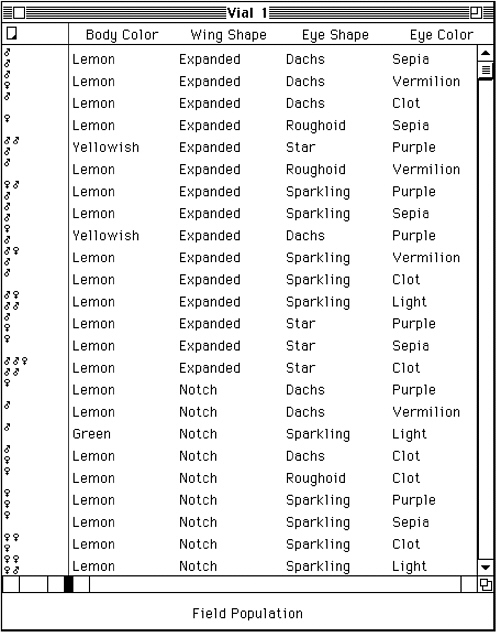
FIGURE 12-5 Initial GCK population for the final GCK inquiry.
(4) x-linkage. After about a week of data collection, model testing, and team meetings, each small research group is usually able to describe a model of inheritance for at least one of the traits in its population, and most groups can describe inheritance models for both of the traits on which they chose to focus. The entire class then gathers for a final conference during which students create posters that summarize their research findings, take turns
making formal presentations of their models, and critique their classmates’ models.
This high school biology curriculum is designed to give students opportunities to learn about genetic inquiry in part by providing them with realistic experiences in conducting inquiry in the discipline. As a primary goal of practicing scientists is to construct causal models to explain natural phenomena, involving students in the construction of their own models is given major emphasis in the classroom. The students work in groups structured like scientific communities to develop, revise, and defend models for inheritance phenomena. The overall instructional goals include helping students to understand mechanistic explanations for inheritance patterns in fruit flies and humans, and to appreciate the degree to which scientists rely on empirical data as well as broader conceptual knowledge to assess models.
Metacognition: Engaging Students in Reflective Scientific Practice
Ultimately, students need to learn to reflect on and judge their own work rather than relying solely on assessments from others. Several early studies of students’ GCK work in our genetics unit revealed that students assessed their tentative models primarily on the basis of empirical rather than conceptual criteria.23 Even when conceptual inconsistencies occurred between the students’ proposed models and other models or biological knowledge, their primary focus was usually on how well a given model could explain the data at hand. They frequently had difficulty recognizing specific inconsistencies between their models and meiosis or other biological knowledge, such as the method of sex determination in humans. In some instances, students recognized that their models were inconsistent with other knowledge but were willing to overlook such inconsistencies when they judged their models to have adequate explanatory power. (For example, students sometimes proposed models to account for x-linkage inheritance patterns wherein a male organism simply could never be heterozygous. They gave no explanation consistent with independent assortment in meiosis for this model.) Thus, students paid more attention to empirical than conceptual issues and tended to value empirical power over conceptual consistency in models when both criteria were brought to bear.
White and Frederiksen24 describe a middle school science curriculum designed to teach students about the nature of inquiry generally and the role of modeling in specific scientific inquiries. One aspect of the curriculum that had a measurable effect on its success was the emphasis on students’ reflective (metacognitive) assessment. Following modeling activities, students were asked to rate themselves and others in various categories, including “understanding the science,” “understanding the processes of inquiry,” “being systematic,” and “writing and communicating well.” Involving the students in
|
BOX 12-4 Students are asked to use Mendel’s simple dominance model to explain a realistic data pattern. They are also asked to justify their reasoning explicitly, in a manner similar to that in which they argue in support of their ideas in regular classroom activities. Inheritance of PKU in the Samsom Family 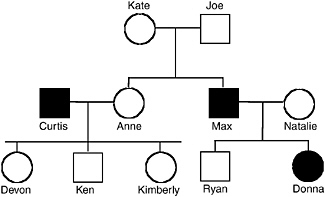
|
such an explicit evaluation task helped emphasize the importance of learning about inquiry and modeling in addition to learning how to do inquiry.
Our work in developing tasks for students is also predicated on the importance of metacognitive reflection on the students’ part. Influenced by our research in the genetics unit, we built into the curriculum more tasks that require students to reflect upon, write about, and discuss conceptual aspects of genetic modeling. These tasks include journal writing, written self-assessments, homework assignments that require students to explain their reasoning (see Box 12-4), and class presentations (both formal and
informal). Most important, we created a complex problem involving several different inheritance patterns and asked the students to account for these new data while working in cooperative laboratory teams. As described above, the regular team interactions required students to be critical of their own thinking and that of others. Moreover, situating the study of these inheritance patterns within the context of a single population of organisms helped emphasize the need for each inheritance model to be basically consistent with other models within genetics. We have found that in this new context, students are more successful at proposing causal models and have a better understanding of the conceptual nature of such scientific models.25
Summary
The structure of the genetics class that we have described reflects important aspects of scientific practice: students are engaged in an extended inquiry into inheritance in which they collect data, seek patterns, and attempt to explain those patterns using causal models. The models proposed by students are also highly similar to those of practicing geneticists in that they specify allelic relationships and genotype-to-phenotype mappings for particular traits. In the next section, we describe a course in evolutionary biology that provides opportunities for students to participate in realistic inquiry within another subdiscipline of biology.
DEVELOPING DARWIN’S MODEL OF NATURAL SELECTION IN HIGH SCHOOL EVOLUTION
Hillary and Jerome are sitting next to each other in their sixth-hour science class waiting for the bell to ring.
|
Jerome |
What are we doing in here today? |
|
Hillary |
I think we will be starting the next case study. |
The bell rings, and their teacher announces that the class will start work on the last of three case studies designed to allow the students to continue to develop and use Darwin’s model of natural selection. She tells the students that there are two parts to this third case. First, they will need to use their knowledge of the natural selection model to develop an explanation for the bright coloration of the male ring-necked pheasant. Second, they will have to write a research proposal that will then be considered by the rest of the students in a research grant competition.
|
Teacher |
Each of you has seen during the past two cases that there are aspects of your explana- |
|
|
tion that you would like to explore further or confirm in some way. This is your opportunity to imagine how you might do that. Each group will need to think about their explanation and identify areas that could use a bit more evidence. |
As the teacher passes out the eight pages of case materials, she asks the students to get to work. Each group receives a file folder containing the task description and information about the ring-necked pheasant. There are color pictures that show adult males, adult females, and young. Some of the pages contain information about predators, mating behavior, and mating success. Hillary, Jerome, and their third group member, Grace, begin to shuffle through the pages in the folder.
|
Hillary |
The males look completely different from the females! |
|
Jerome |
Okay, so what are we supposed to be doing here? |
|
Grace |
It is similar to the last case. We need to come up with a Darwinian explanation for why the males look brighter than the females. |
|
Hillary |
How can this be? It seems like being bright would be a problem for the males, so how can it fit with Darwin’s ideas? |
|
Grace |
Well, I guess we need to look at the rest of the stuff in the folder. |
The three students spend the remainder of the period looking over and discussing various aspects of the case. By the middle of the period on Tuesday, this group is just finalizing their explanation when Casey, a member of another group, asks if she can talk to them.
|
Casey |
What have you guys come up with? Our group was wondering if we could talk over our ideas with you. |
|
Grace |
Sure, come over and we can each read our explanations. |
These two groups have very different explanations. Hillary’s group is thinking that the males’ bright coloration distracts predators from the nest, while Casey’s group has decided that the bright coloration confers an advantage on the males by helping them attract more mates. A lively discussion ensues.
|
Ed |
But wait, I don’t understand. How can dying be a good thing? |
|
Jerome |
Well, you have to think beyond just survival of the male himself. We think that the key is the survival of the kids. If the male can protect his young and give them a better chance of surviving then he has an advantage. |
|
Claire |
Even if he dies doing it? |
|
Grace |
Yeah, because he will have already passed on his genes and stuff to his kids before he dies. |
|
Casey |
How did you come up with this? Did you see something in the packets that we didn’t see? |
|
Grace |
One reason we thought of it had to do with the last case with the monarchs and viceroy. |
|
Hillary |
Yeah, we were thinking that the advantage isn’t always obvious and sometimes what is good for the whole group might not seem like it is good for one bird or butterfly or whatever. |
|
Jerome |
We also looked at the data in our packets on the number of offspring fathered by brighter versus duller males. We saw that the brighter males had a longer bar. |
|
Grace |
See, look on page 5, right here. |
|
Jerome |
So they had more kids, right? |
|
Casey |
We saw that table too, but we thought that it could back up our idea that the brighter males were able to attract more females as mates. |
The groups agree to disagree on their interpretation of this piece of data and continue to compare their explanations on other points.
The students in the above vignette are using Darwin’s model of natural selection and realistic data to create arguments about evolution in a population of organisms. In doing so, they attend to and discuss such ideas as selective advantage and reproductive success that are core components of the Darwinian model. Early in the course, students have opportunities to learn about natural selection, but as the course progresses, they are required to use their understanding to develop explanations (as illustrated in the vignette). As was true in teaching genetics, our goals for student learning include both deep understanding of evolution and an understanding of how knowledge in evolution is generated and justified. And once again we want students to be able to use their understanding to engage in scientific inquiry—to construct their own Darwinian explanations.
There is an important difference between the two units, however, that motivated the decision to include both in this chapter. The nature of the scientific inquiry involved in the study of evolution is different from that involved in the study of genetics—or in some other scientific disciplines for that matter. The difference arises because of the important role that history plays in evolution and the inability of biologists to “replay the tape of the earth’s history.” Engaging students in authentic inquiry therefore presents a new set of challenges. Mayr26 suggests that “there is probably no more original, more complex, and bolder concept in the history of ideas than Darwin’s mechanistic explanation of adaptation.” Our teacher/researcher collaborative took on the challenge of designing a course that would allow students to master this powerful concept and to use it in ways that are analogous to those of evolutionary biologists.
Attending to Significant Disciplinary Knowledge
The choices we make when designing curricula are determined in part by an examination of the discipline under study. In the case of evolution, it is clear that a solid understanding of natural selection provides a foundation upon which further knowledge depends—the knowledge-centered conceptual framework referred to in the principles of How People Learn (see Chapter 1). But that foundation is hard won and takes time to develop because the concepts that make up the natural selection model are difficult for students to understand and apply. To understand natural selection, students must understand the concept of random variation. They must understand that while some differences are insignificant, others confer an advantage or a disadvantage under certain conditions. The length of a finch’s beak, for example, may give it access to a type of food that allows it to survive a drought. Survivors produce offspring, passing their genes along to the next generation. In this way, nature “selects” for particular characteristics within species.
Equally important in our instructional approach is that students understand how Darwinian explanations are generated and justified. Kitcher27 describes a Darwinian history as a “narrative which traces the successive modifications of a lineage of organisms from generation to generation in terms of various factors, most notably that of natural selection.” The use of narrative explanation is a key means of distinguishing evolutionary biology from other scientific disciplines. “Narratives fix events along a temporal dimension, so that prior events are understood to have given rise to subsequent events and thereby explain them.”28 Thus, our concept of a Darwinian explanation draws together the components of the natural selection model and a narrative structure that demands attention to historical contingency. Textbook examples of explanations for particular traits frequently take the
form of “state explanations”—that is, they explain the present function of particular character states without reference to their history.29 In contrast, what we call a Darwinian explanation attempts to explain an event or how a trait might have come into being. This type of explanation is summarized by Mayr:30
When a biologist tries to answer a question about a unique occurrence such as “Why are there no hummingbirds in the Old World?” or “Where did the species Homo sapiens originate?” he cannot rely on universal laws. The biologist has to study all the known facts relating to the particular problem, infer all sorts of consequences from the reconstructed constellation of factors, and then attempt to construct a scenario that would explain the observed facts in this particular case. In other words, he constructs a historical narrative.
Providing opportunities for students to use the natural selection model to develop narrative explanations that are consistent with the view described above is a central goal of the course.
Attending to Student Knowledge
Anyone who has ever taught evolution can attest to the fact that students bring a wide range of conceptions and attitudes to the classroom. During the past two decades, researchers have documented student ideas both before and after instruction.31 These studies have confirmed what teachers already know: students have very tenacious misconceptions about the mechanism of evolution and its assumptions.
As Mayr suggests, the scientific method employed by evolutionary biologists in some respects resembles history more than it does other natural sciences. This resemblance can be problematic. In disciplines such as history, for example, we look for motivations. While students may struggle to understand that in different times and under different circumstances, the motivations of others may be different from our motivations today, motivation itself is a legitimate subject for inquiry. But in the Darwinian model, naturally occurring, random variation within species allows some individuals to survive the forces of nature in larger numbers. The random nature of the variation, the role of natural phenomena in selecting who flourishes and who withers, and the absence of motivation or intent make Darwinian narrative antithetical to much of the literary or historical narrative that students encounter outside the science classroom.
We have found that replacing this familiar approach to constructing a narrative with the scientific approach used in evolutionary biology requires
a significant period of time and multiple opportunities to try out the Darwinian model in different contexts. Many courses or units in evolutionary biology at the high school level require far shorter periods of time than the 9 weeks described here and also include additional sophisticated concepts, such as genetic drift and speciation. With a large number of concepts being covered in a short period of time, however, the likelihood that students will develop a deep understanding of any concept is diminished; a survey of content is not sufficient to support the required conceptual change.
In the next section, we highlight key instructional activities that we have developed over time to support students in acquiring an understanding of evolution and an ability to engage in evolutionary inquiry.
Instruction
The three principles of How People Learn are interwoven in the design of the instructional activities that make up the course in evolutionary biology. For example, the related set of concepts that we consider to be central to students’ understanding (Principle 2) was expanded when we realized that students’ preconceptions (about variation, for example) or weak foundational knowledge (about drawing inferences and developing arguments) served as barriers to learning. Instructional activities designed to support students’ ability to draw inferences and make arguments at the same time strengthen their metacognitive abilities. All three principles are tightly woven in the instruction described below.
Laying the Groundwork
Constructing and defending Darwinian explanations involves drawing inferences and developing arguments from observed patterns in data. In early versions of the course, we found that students’ ability to draw inferences was relatively weak, as was their ability to critique particular arguments. Our course has since been modified to provide opportunities for students to develop a common framework for making and critiquing arguments. As with the black box activity at the beginning of the genetics course, we use a cartoon sequencing activity that does not introduce course content, thus allowing students to focus more fully on drawing inferences and developing arguments.
Students are given a set of 13 cartoon frames (see Box 12-5) that have been placed in random order. Their task is to work with their group to reconstruct a story using the information they can glean from the images. Students are enthusiastic about this task as they imagine how the images relate to one another and how they can all be tied together in a coherent story. The whole class then assembles to compare stories and discuss how
|
BOX 12-5 Below are the differing interpretations and sequencing of the same cartoon images by two different groups of students. There are images in the complete set that the students worked with for this activity. The 13 images are given to the students in random order, and the students are asked to create narrative stories. 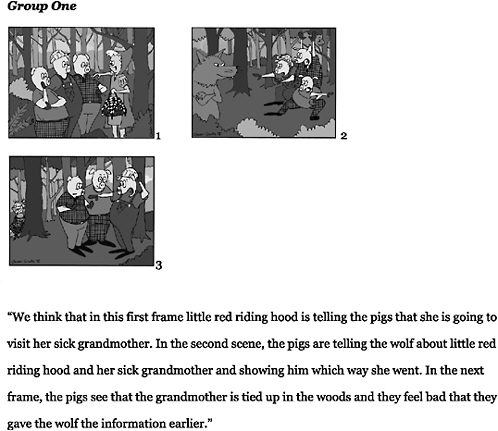 |
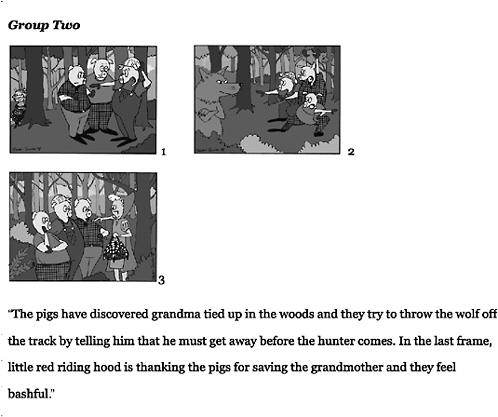
decisions were made. The sequences presented by different groups usually vary quite a bit (see Box 12-5 for two examples). This variation provides a context for discussing how inferences are drawn.
The initial discussion centers on students’ observations about the images. However, it quickly becomes apparent that each person does not place the same importance on specific observations and that even though groups may have observed the same thing, they may not have made the same decisions about the order of the cards. What ensues is a conversation about considerations that entered into the students’ decision making. Students realize that they are all examining the same images (the data), but that each also brings a lifetime of experience with cartoons and stories to the table. Together the students establish that the process of drawing inferences about the order of the cards is influenced by both what they observe (the data) and their own prior knowledge and beliefs. This notion is then generalized, and students see that all inferences can be thought of as having these two bases. They discuss how scientific arguments are usually a collection of several inferences, all of which are dependent on data and prior knowledge and beliefs. The teacher supports this discussion by pointing out examples of fruitful questioning and encouraging the students to think about what it means to foster a community in which communication about important ideas is expected.
In addition to introducing general norms for classrooms in which scientific argumentation is central, the cartoon activity serves to orient students to a framework for critiquing arguments in evolution. At one level, this framework is common to all science disciplines. In this capacity, the emphasis is on the importance of being explicit about how prior knowledge and beliefs influence the inferences drawn from particular data. At this general level, the activity is linked to the common MUSE framework of models and modeling as the teacher connects the ideas concerning inferences to those concerning models. The teacher does this by explaining that a causal model is an idea that is used to create explanations for some set of phenomena and that models are based on several inferences. Students then read some material on models and as a class discuss the ways in which models can be assessed. Through examples in the reading and from their own experience, the group settles on criteria for judging models: explanatory power and consistency with other knowledge. Note that, in contrast with the genetics course, there is no mention of predictive adequacy here as a major assessment criterion because explanation is much more central than prediction in the evolution course. This is one example of the assertion we have made previously: disciplines do rely on differing methods for making and evaluating claims. The demonstrative inference that is common in the genetics course gives way to a greater reliance on nondemonstrative inference in the evolution course. This occurs as students create Darwinian explanations. Such expla-
nations, with their characteristic narrative structure, are developed to make sense out of the diverse data (structural and behavioral characteristics of organisms, patterns in their molecular biology, patterns of distribution in both time and geography, and so on) that are characteristic of evolutionary argumentation.
A second evolution-specific function served by the cartoon activity is to introduce students to one of the more important undertakings of evolutionary biologists—the reconstruction of past events (the development of a trait, such as the vertebrate eye, or the speciation events that led to the “tree of life”). Such historical reconstructions do not have close analogues in genetic inquiry.
A second instructional component was added to the course when we observed students’ difficulties in understanding the concept of variation. These difficulties have been documented in the literature,32 and we have encountered them in our own classrooms. Because of the experiences students have with variability in most genetics instruction—in which they usually examine traits with discrete variations—the concept of continuous variation can be a significant challenge for them. We have seen that an incomplete understanding of variation in populations promotes students’ ideas that adaptations are a result of a single dramatic mutation and that selection is an all-or-none event operating on one of two to three possible phenotypes. Recognition of these problems has led us to incorporate explicit instruction on variability in populations and, perhaps more important, to provide opportunities for students to examine and characterize the variability present in real organisms before they begin using the concept in constructing Darwinian explanations.
One of the activities used for this purpose is a relatively simple one, but it provides a powerful visual representation on which students can draw later when thinking about variation in populations. Typically, students do not recognize the wide range of variation that is present even in familiar organisms. To give them experience in thinking about and characterizing variation, we have them examine sunflower seeds. Their task is to count the stripes on a small sample of seeds (but even this simple direction is less than straightforward since the class must then negotiate such matters as what counts as a stripe and whether to count one side or two).
Once they have come up with common criteria and have sorted their sample into small piles, the teacher has them place their seeds into correspondingly numbered test tubes. The result, once the test tubes have been lined up in a row, is a clear visual representation of a normal distribution. The subsequent discussion centers on ways to describe distributions using such concepts as mean, median, and mode. This activity takes place before students need to draw on their understanding of variation to construct explanations using the natural selection model.
Understanding the Darwinian Model
The second major section of the course engages students in examining three historical models that account for species’ adaptation and diversity. The students must draw on the framework established during the cartoon activity to accomplish this comparison. This means that as they examine each argument, they also identify the major inferences drawn and the data and prior knowledge and beliefs that formed the basis for those inferences. The three models are (1) William Paley’s model of intelligent design, which asserts that all organisms were made perfectly for their function by an intelligent creator; (2) Jean Baptiste de Lamarck’s model of acquired characteristics, which is based on a view that adaptations can result from the use or disuse of body parts and that changes accumulated during an organism’s lifetime will be passed on to offspring; and (3) Darwin’s model of natural selection. The models of Paley and Lamarck were chosen because each represents some of the common ideas students bring with them to the classroom. Specifically, it is clear that many students attribute evolutionary change to the needs of an organism and believe that extended exposure to particular environments will result in lasting morphological change. Many students are also confused about the role of supernatural forces in evolution. Darwin’s model is included in the analysis so students can see how the underlying assumptions of his model compare with those of the Paley and Lamarck models.
For students to compare the prior knowledge and beliefs of the authors, however, they must first become familiar with the models. To this end, each model is examined in turn, and students are discouraged from making comparisons until each model has been fully explored. All three models are presented in the same way. Students read edited selections of the author’s original writing, answer questions about the reading, and participate in a class discussion in which the proposed explanation for species diversity and adaptation is clarified and elaborated. In the following example, Claire and Casey are working with Hillary in a group during class. They are trying to analyze and understand an excerpt of original writing by Lamarck. Hillary is looking over the discussion questions:
|
Hillary |
It seems like Lamarck did think that species changed over time, so I can see that as an underlying assumption of his, but I’m having a hard time figuring out how he thought that happened. |
|
Casey |
I agree, he is definitely different from Paley who didn’t think things had changed at all. |
|
Claire |
But how did the change happen? It seems like |
|
|
Lamarck puts it on the organisms themselves, that they try to change. |
|
Hillary |
I’m not sure what you mean. |
|
Claire |
Well, he talks a lot about the usefulness of particular traits for an animal and about repeated use of a body part causing a change. |
Students are also given an opportunity to explore the natural phenomena or data that served as an inspiration for each author: they examine fossils as discussed by Lamarck, dissect an eye to examine the structure/ function relationships that so fascinated Paley, and are visited by a pigeon breeder who brings several of the pigeon varieties that Darwin described in his Origin of Species. Once students have developed an understanding of the explanation that each author proposed and some familiarity with the observations on which it was based, they examine the readings again to identify the prior knowledge and beliefs that each author may have held.
Following this discussion, the students compare the three models. First, they assess the explanatory power of the models, using each to explain phenomena other than those described in the original writings. For example, they attempt to use Paley’s model to explain the presence of fossils and Lamarck’s model to explain the structure of the eye. Sometimes the model can easily account for new phenomena; Lamarck’s model of use inheritance, for example, is easily adapted to explaining the diversity of pigeon varieties. In other instances, the students recognize the limitations of the model; Paley’s model, for instance, cannot easily account for the presence of fossils or extinct organisms. The students then compare the underlying assumptions or beliefs of the authors. Even if a model can account for diverse phenomena on its own terms, it is still necessary to examine and critique the underlying assumptions. Many students question the necessity of the supernatural force underlying Paley’s model, and still more find the role of need to be a questionable assumption in Lamarck’s model.
These explicit discussions of some of the major views students bring to the study of evolution lay the groundwork for the future use and extension of Darwin’s model. Comparing the assumptions of the three models enables students to distinguish between those beliefs that underlie the model of natural selection and those that do not. Unlike some classroom contexts, however, in which it is the students’ ideas that are laid bare and examined for inconsistencies, here we have developed a situation in which students’ ideas are represented by the models of Paley and Lamarck. We have found that through this approach, students are willing to attend to the differences between ideas rather than spending their time and energy being defensive; because they do not feel that their own ideas are being criticized, the discussions are fruitful.
These two activities foster a classroom community that operates from a common set of commitments. For our purposes, the most important of these is that Darwin proposed a naturalistic mechanism of species change that acts on variation among individuals within a species and that assumptions of supernatural influence and individual need are not a part of his model. Keeping this distinction in mind while using the natural selection model later in the course enables students to avoid some common misconceptions, or at least makes identification of those misconceptions more straightforward. For example, when students use the natural selection model to explain the bright coloration of the monarch butterfly, they often challenge each other when need-based or Lamarckian language is used.
Using the Darwinian Model
During the final weeks of the course, students are engaged in creating Darwinian explanations using the components of the natural selection model to make sense of realistic data they have been given. Each scenario is presented to the students as a case study, and they are given materials that describe the natural history of the organism. Photographs, habitat and predator information, mating behavior and success, and phylogenetic data are examples of the types of information that may be included in a given case. Students then weave the information into a narrative that must take into account all of the components of a natural selection model and describe the change over time that may have occurred (see Box 12-6 for one group’s Darwinian explanation). As students hone their abilities to develop and assess evolutionary arguments over three successive case studies, they are able to participate in realistic evolutionary inquiry.
In the first case study, students develop a Darwinian explanation for differences in seed coat characteristics among populations of a hypothetical plant species. The second case study involves explaining the bright, and similar, coloration of monarch and viceroy butterflies. The final case requires that students develop an explanation for how the sexual dimorphism exhibited by ring-necked pheasants might have arisen.
During each case study, the time is structured so that a group will consult with at least one other group as they develop their explanations. This task organization reinforces the nature of argumentation in evolutionary biology, as it includes the expectation that students will attend to the central feature of any Darwinian explanation—that it have a historical component. But it is not enough to just have a history. In tracing the possible historical development of a trait, students must weave a complex story that draws on available data, as well as their understanding of an array of biological models (e.g., genetic models), to explain the role of heritable variation, superfecundity, competition, and agents of selection. Within their research
|
BOX 12-6 Monarchs and viceroys are very similar in appearance, although this has not always been true. The brightness in both butterflies is viewed as an advantage in their environment—where a main predator is the blue jay—an advantage that may be explained by the Darwinian model. Each butterfly lays many more eggs than can survive on the limited resources in its environment. As a result of this limit, there is a struggle among the offspring for survival. As within all species, there exists natural variation among the populations of monarchs and viceroys, including variations of color. In the past populations, some butterflies were brightly colored and others were dull. Blue jays, a main predator of the monarch, rely on movement and coloration to identify their prey when hunting. They can vomit up bad-tasting or poisonous food, and exhibit an ability to learn to avoid such food in the future. As caterpillars, monarchs have as a source of food milkweed leaves, which contain cardenolides—poisonous or unpalatable substances. As the larva are growing, they ingest a large amount of cardenolides. When they become butterflies, these substances remain in their bodies, making them unpalatable to their predators. When blue jays eat monarchs, they react to the cardenolides by vomiting up their prey. They learn from this experience that they should avoid the brightly colored monarchs to avoid the cardenolides. The dull monarchs, although poisonous, were still consumed by their predators more because they more closely resembled nonpoisonous prey such as moths, grasshoppers, and lacewings. The brightly colored monarchs survived more than the dull ones and were more prolific. After many generations, most monarchs were bright because of their success in the environment. Because of the blue jays’ association of bright colors with bad food, the brightly colored viceroys, although not poisonous like the monarch, were also avoided, and this advantageous variation was passed on as with the monarch. |
groups, meetings between research groups, and whole-class discussions, students question one another using a variety of sophisticated stances. These include ensuring that there is consistency among the data, the natural selection model, and claims; that the history of the shift in a trait is feasible (i.e., consistent with genetics); and that the proposed selection agent could have brought about the change in the trait between times 1 and 2. The students question one another to ensure that their explanations are both internally
and externally consistent. In so doing, they normally propose more than a single explanation, thus recognizing that, in evolution at least, it is important to consider multiple interpretations. As they examine competing Darwinian explanations for the same phenomena, they invoke an evolution-specific argument-analysis norm—that the explanation of the history of a trait has to be consistent with the natural selection model. For example, the second case requires students to provide a Darwinian explanation for the similarity in color between the monarch and viceroy butterflies. Frequently students will say such things as “the viceroy needs to look like the monarch so that the birds won’t eat it.” When statements such as these are made, other students will often challenge the speaker to use Darwinian rather than Lamarckian language. The work on the cases allows students to practice using the Darwinian model in appropriate ways, and the interactive nature of all of the work in class affords them opportunities to think explicitly about and defend their own ideas.
The culminating activities for each of the three cases require public sharing of ideas in a forum where the expectation is that the presenting groups and audience members will consider thoughtfully the ideas before them. Each case has a different type of final presentation. The first case ends with a poster session, the second with a roundtable discussion, and the last with a research proposal and an oral presentation.
One particularly powerful experience students have occurs during the final case study. For the first two case studies, students use their understanding of the Darwinian model to account for the changes that may have occurred in particular populations and to explicitly tie data from the case materials to their claims. For the final case study, they must construct a Darwinian explanation for the sexual dimorphism observed between male and female ring-necked pheasants, and in addition, they must produce a research proposal to shed light on their explanation. Typically, students choose to focus their research proposal on a single aspect of their explanation. This activity requires that they think carefully about the components of their explanation and the confidence they place in each of those components. Thus in this instance they are not evaluating the entire explanation as a single entity, but are considering each part in relation to the others. Once they have decided on a research proposal, they must determine how their proposed research would strengthen their argument. Being able to examine an argument as a whole and according to its parts is an important skill that this task helps develop. This case also stimulates interesting conversations among groups. The nonpresenting groups act as a proposal review panel and interact with the presenting groups in an attempt to understand the proposal. Once all groups have presented, the students discuss the merits and shortcomings of each proposal and then decide individually which proposal should be funded.
CLASSROOM ENVIRONMENTS THAT SUPPORT LEARNING WITH UNDERSTANDING
We have found that much of what students learn in genetics and evolutionary biology units grounded in model-based inquiry depends on their active and thoughtful participation in the classroom community.33 To learn about the process of modeling and about discipline-specific patterns of argumentation, students must be critically aware of the elements that influence their own knowledge generation and justification. The MUSE curricula are designed to facilitate this type of student thinking through explicit discussion of students’ expectations for engaging in argumentation, the design of student tasks, and the use of various tools for interacting with and representing abstract concepts.
Knowledge-Centered
By the end of our courses, students are able to reason in sophisticated ways about inheritance patterns and about evolutionary phenomena. Realizing that goal, we believe, is due in large measure to careful attention to the core disciplinary knowledge, as well as persistent attention to students’ preconceptions and the supports required for effective conceptual change. The instructional activities we have described highlight a classroom environment that is knowledge-centered in putting both the core concepts and scientific approaches to generating and justifying those concepts at the center of instruction.
Learner-Centered
The classrooms are also learner-centered in several respects. The curriculum was designed to address existing conceptions that we had observed were creating problems for students as they tried to master new material. We also identified weaknesses in students’ knowledge base—such as their understanding of models and their ability to draw inferences and develop arguments—and designed activities to strengthen those competencies. The use of frequent dialogue in our courses allows an attentive teacher to continuously monitor students’ developing thinking.
Assessment-Centered
We have attempted to embed formative and authentic assessments throughout our courses. Assessment of student understanding needs to be undertaken with an eye to the various types of prior knowledge described above (misconceptions of science concepts, ideas about what science is,
and the extent to which students’ knowledge is integrated). We have seen, time and again, teachers becoming aware of students’ common struggles and beginning to “hear” their own students differently. Thus, an important feature of instructional activities that give students opportunities to make their thinking and knowledge public and therefore visible to teachers is that they make assessment and instruction seamless. This becomes possible when students articulate the process of arriving at a solution and not simply the solution itself.
Because students struggle with conceptual problems in the genetics unit, for example, we incorporate a number of assessments that require them to describe the relationships between models or ideas that they have learned (see Box 12-7). Whenever possible, we design formal assessments as well as written classroom tasks that reflect the structure of students’ work in the classroom. Our students spend a great deal of their class time working in groups, pouring over data, and talking with one another about their ideas. Thus, assessments also require them to look at data, propose explanations, and describe the thinking that led to particular conclusions.
In the evolution course, students are required during instruction to use the natural selection model to develop Darwinian explanations that account for rich data sets. To then ask them about data or the components of natural selection in a multiple-choice format that would require them to draw on only bits and pieces of knowledge for any one question appears incomplete at best. Instead, we provide them with novel data and ask them to describe their reasoning about those data using the natural selection model—a task analogous to what they have been doing in class. An instance of this type of assessment on the final exam asks students to write a Darwinian explanation for the color of polar bear fur using information about ancestral populations. In this way, during assessment we draw on students’ ideas and skills as they were developed in class rather than asking students to simply recall bits of information in contrived testing situations.
While assessments provide teachers with information about student understanding, students also benefit from assessments that give them opportunities to see how their understanding has changed during a unit of study. One method we have used is to require each student to critique her or his own early work based on what she or he knows at the conclusion of a course. Not only does this approach give teachers insights into students’ knowledge, but it also allows students to glimpse how much their knowledge and their ability to critique arguments have changed. Students’ consideration of their own ideas has been incorporated into the assessment tasks in both units. On several occasions and in different ways, students examine their own ideas and explicitly discuss how those ideas have changed. For example, one of the questions on the final exam in evolution requires students to read and critique a Darwinian explanation they created on the first
|
BOX 12-7 This exam question is one of several tasks designed to produce evidence of students’ understandings about the need for models to be consistent with one another and with the data they purport to explain. Below is a concept map that represents the relationships among specific models, models in general, and data. Use the map to respond to the tasks below.
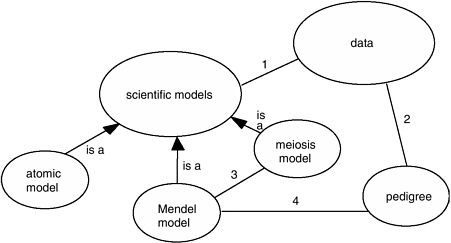 |
day of class (see Box 12-8). We have found this to be one of the most powerful moments for many students, as they recognize how much their own ideas have changed. Many students are critical of the need-based language that was present in their original explanation, or they find that they described evolutionary change as having happened at the individual rather than the population level.
|
BOX 12-8 On the first day of class, students were asked to explain how the carapace of Galapagos tortoises may have changed from the dome shape to the saddleback shape. As part of the final exam for the class, students were asked to critique the explanation they had given on the first day. Below are the original explanation and critique offered by one student. Original Answer The saddleback carapace came into being due to the need of migrating tortoises to adjust to a new environment. On Albermarle Island the domed shaped carapaces served well for shedding rain and eating ground vegetation. However, when the tortoises began to migrate to a smaller, drier island with less ground vegetation, they had to adapt in order to survive. The majority of the food was now higher up and the domed shell served as a hindrance. Over time, the saddleback carapace developed to allow the neck to extend further, thereby allowing the tortoises to reach the fleshy green parts of the prickly pear cactus. This evolutionary process created a new species of giant tortoise that could live successfully in a new environment. Critique on Final Exam In my original answer, I used an almost exclusive Lamarckian definition of evolution. In my introductory statement I stated that the saddleback carapace came into being due to the need of the tortoise to fit its environment. I needed to acknowledge the existence of variation within the tortoise population of the shape of the shell. My original explanation makes the evolutionary process sound like a physical change taking place during the life of the tortoise and then being passed on to the offspring. I now know that variations that are advantageous give animals a better chance of survival (survival of the fittest!) and allow them a better chance of passing on their advantageous trait to their offspring. In my original explanation I also touched on ideas of use and disuse to explain how the saddleback carapace came to be, this is a Lamarkian model of evolution which is incorrect. I did explain how the saddleback carapace was an advantage because it allowed the tortoise to eat higher vegetation. Since I didn’t understand evolution through the generations, I wasn’t able to describe how the species changed over time. Overall, I would say I had a basic but flawed understanding of evolution but I lacked the tools to explain evolution from a scientific and Darwinian perspective, until now. |
Community-Centered
As Chapter 1 suggests, the knowledge-centered, learner-centered, and assessment-centered classrooms come together in the context of a classroom community. The culture of successful scientific communities includes both collaboration and questioning among colleagues. It involves norms for making and justifying claims. At the source of the productivity of such a community is an understanding of central causal models, the ability to use such models to conduct inquiry, and the ability to engage in the assessment of causal models and related explanations. We have found that these outcomes can be realized in classrooms where students are full participants in a scientific community.34 Interestingly, one unexpected outcome of structuring classrooms so that students are expected to participate in the intellectual work of science has been increased involvement and achievement by students not previously identified as successful in science.
In addition to establishing expectations for class participation and a shared framework for knowledge assessment, MUSE curricula promote metacognitive reflection on the part of students by incorporating tasks that require discourse (formal and informal) at all stages of student work. While working in groups and presenting results to the class as a whole, students are required to share their ideas even when those ideas may not be fully formed. Moreover, recall that the context for idea sharing is one in which discipline-specific criteria for assessment of ideas have been established. Thus, discourse is anchored in norms of argumentation that reflect scientific practice to the extent possible.
Learning with Understanding
While the four features of classroom environments can be described individually, in practice they must interact if students are to deeply engage in learning for understanding. High school students have had more than 9 years of practice at playing the “game of school.” Most have become quite adept at memorizing and reiterating information, seeking answers to questions or problems, and moving quickly from one topic to another. Typically during the game of school, students win when they present the correct answer. The process by which one determines the answer is irrelevant or, at best, undervalued. The students described here are quite typical in this regard: they enter our genetics and evolution classes anticipating that they will be called upon to provide answers and are prepared to do so. In fact, seeking an end product is so ingrained that even when we design tasks that involve multiple iterations of modeling and testing ideas, such as within the genetics course, students frequently reduce the work to seeking algorithms that have predictive power instead of engaging in the much more difficult
task of evaluating models on the basis of their conceptual consistency within a family of related ideas.35
After studying how people solved problems in a variety of situations, Klayman and Ha36 noted the frequent use of what they call a “positive test strategy.” That is, solvers would propose a model (or solution) and test it by attempting to apply it to the situation most likely to fit the model in the first place. If the idea had explanatory or predictive power, the solver remained satisfied with it; if not, the solver would quickly test another idea. The positive test strategy was frequently applied by students in early versions of our genetics course.37 This method of problem solving does not map well to scientific practice in most cases, however: it is the absence of disproving evidence, and not the presence of confirming evidence that is more commonly persuasive to scientists. Moreover, testing a model in limited situations in which one expects a data–model match would be considered “confirmation bias” within scientific communities. Nevertheless, Klayman and Ha point out that this positive test strategy is often quite useful in real-life situations.
Given our students’ facility with the game of school and the general tendency to apply less scientific model-testing strategies when problem solving, we were forced to create tasks that not only afford the opportunity for reflection, but actually require students to think more deeply about the ways in which they have come to understand science concepts, as well as what is involved in scientific argumentation. We want students to realize that the models and explanations they propose are likely to be challenged and that the conflicts surrounding such challenges are the lifeblood of science. Thus, we explicitly discuss with our students the expectations for their participation in the course. Teachers state that the students’ task is not simply to produce an “answer” (a model in genetics or a Darwinian explanation in evolutionary biology), but also to be able to defend and critique ideas according to the norms of a particular scientific discipline. In other words, we ask the students to abandon the game of school and begin to play the game of science.
Examination of ideas requires more than simply providing space for reflection to occur; it also involves working with students to develop systematic ways of critiquing their own ideas and those of others. This is why we begin each course with an activity whose focus is the introduction of discipline-specific ways of generating and critiquing knowledge claims. These activities do not require that students will come to understand any particular scientific concepts upon their completion. Rather, they will have learned about the process of constructing and evaluating arguments in genetics or evolutionary biology. Specific criteria for weighing scientific explanations are revisited throughout each course as students engage in extended inquiries within these biological disciplines.
SUMMARY
For students to develop understanding in any scientific discipline, teachers and curriculum developers must attend to a set of complex and interrelated components, including the nature of practice in particular scientific disciplines, students’ prior knowledge, and the establishment of a collaborative environment that engages students in reflective scientific practice. These design components allow educators to create curricula and instructional materials that help students learn about science both as and by inquiry.
The students in the biology classrooms described in this chapter have developed sophisticated understandings of some of the most central explanatory frameworks in genetics and evolutionary biology. In addition, they have, unlike many high school students, shown great maturity in their abilities to reason about realistic biological data and phenomena using these models. Moreover, they have accomplished this in classrooms that are structured along the lines of scientific communities. This has all been made possible by a concerted collaboration involving high school teachers and their students, university science educators, and university biologists. That MUSE combined this collaboration with a research program on student learning and reasoning was essential. With the knowledge thus gained, we believe it is possible to help others realize the expectations for improving science education that are set forth in reform documents such as the National Science Education Standards.38 In particular, there has been a call for curricular reforms that allow students to be “engaged in inquiry” that involves “combin[ing] processes and scientific knowledge as they use scientific reasoning and critical thinking to develop their understanding of science.”39 Recommendations for improved teaching of science are solidly rooted in a commitment to teaching both through and about inquiry. Furthermore, the National Science Education Standards do not simply suggest that science teachers incorporate inquiry in classrooms; rather, they demand that teachers embrace inquiry in order to:
-
Plan an inquiry-based science program for their students.
-
Focus and support inquiries while interacting with students.
-
Create a setting for student work that is flexible and supportive of science inquiry.
-
Model and emphasize the skills, attitudes, and values of scientific inquiry.
It is just these opportunities that have been described in this chapter.
NOTES
|
1. |
We encourage readers to visit our website (www.wcer.wisc.edu/ncusla/muse/). The site includes discussions of student knowledge and reasoning, intended learning outcomes, instructional activities, instructional notes, assessments, examples of student work, teachers’ reflections, and connections to the National Science Education Standards and Benchmarks for Science Literacy. |
|
2. |
Wiggins and McTighe, 1998, Chapter 1. |
|
3. |
Grosslight et al., 1991. |
|
4. |
Grosslight et al., 1991; Harrison and Treagust, 1998. |
|
5. |
Cartier, 2000a. |
|
6. |
Cartier, 2000b. |
|
7. |
We consider a causal model to be an idea or set of ideas that can be used to explain particular natural phenomena. Models are complex constructions that consist of conceptual objects (e.g., alleles, populations) and processes (e.g., selection, independent assortment) in which the objects participate or interact. |
|
8. |
Cartier, 2000a; Kindfield, 1994; Wynne et al., 2001. |
|
9. |
Kindfield, 1994. |
|
10. |
Cartier, 2000a. |
|
11. |
Cartier, 2000a; Wynne et al., 2001. |
|
12. |
Cartier, 2000b. |
|
13. |
Darden, 1991. |
|
14. |
Meiosis is the process by which sperm and egg cells are formed. During meiosis, chromosomal replication is followed by two rounds of cell division. Thus, one cell undergoing meiosis produces four new cells, each of which contains half the number of chromosomes of the original parent cell. |
|
15. |
Kitcher, 1984, 1993. |
|
16. |
Kitcher, 1984, p. 356. |
|
17. |
Kitcher, 1984, p. 356. |
|
18. |
Mendel, 1959. |
|
19. |
Discontinuous traits are those for which two or more distinct categories of phenotypes (or variants) are identified. For example, Mendel studied the trait of height in pea plants. He noted that the pea plants were either short (18 in.) or tall (84 in.). In contrast, height is not a discontinuous trait in humans: human height is best characterized as continuously variable, or nondiscrete, because humans are not simply either 18 or 84 in. tall. Thus, the phenotype categories for height in humans are not clear-cut. |
|
20. |
Calley and Jungck, 2002. |
|
21. |
Achondroplasia is inherited in a codominant fashion. Individuals with two disease alleles (2,2) are severely dwarfed and seldom survive. Individuals who are heterozygous (1,2) are achondroplastic dwarfs, having disproportionately short arm and leg bones relative to their torsos. Thus while these two phenotypes differ from normal stature, they are distinct from one another. |
|
22. |
In the past, our students have developed the following explanations for protein action in traits inherited in a codominant fashion: |
REFERENCES
Bishop, B.A., and Anderson, C.W. (1990). Student conceptions of natural selection and its role in evolution. Journal of Research in Science Teaching, 27(5), 415-427.
Calley, J., and Jungck, J.R. (2002). Genetics construction kit. (The BioQUEST Library IV, version 1.1B3) [Computer software]. New York: Academic Press.
Cartier, J.L. (2000a). Assessment of explanatory models in genetics: Insights into students’ conceptions of scientific models. Research report 98-1 for the National Center for Improving Student Learning and Achievement in Mathematics and Science. Available: http://www.wcer.wisc.edu/ncisla/publications/main.html#reports/RR98-1.pdf [accessed February 3, 2003].
Cartier, J.L. (2000b). Using a modeling approach to explore scientific epistemology with high school biology students. Research report 99-1 for the National Center for Improving Student Learning and Achievement in Mathematics and Science. Available: http://www.wcer.wisc.edu/ncisla/publications/reports/RR99-1.pdf [accessed February 3, 2003].
Darden, L. (1991). Theory change in science: Strategies from Mendelian genetics. New York: Oxford University Press.
Demastes, S., Good, R., and Peebles, P. (1995). Students’ conceptual ecologies and the process of conceptual change in evolution. Science Education, 79(6), 637-666.
Demastes, S., Good, R., and Peebles, P. (1996). Patterns of conceptual change in evolution. Journal of Research in Science Teaching, 33(4), 407-431.
Demastes, S.S., Trowbridge, J.E., and Cummins, C.L. (1992). Resource paper on evolution education research. In R.G. Good, J.E. Trowbridge, S.S. Demastes, J.H. Wandersee, M.S. Hafner, and C.L. Cummins (Eds.), Proceedings of the 1992 Evolution Education Conference, Louisiana State University, Baton Rouge, LA.
Grosslight, L., Unger, C., Jay, E., and Smith, C.L. (1991). Understanding models and their use in science: Conceptions of middle and high school students and experts. Journal of Research in Science Teaching, 28, 799-822.
Harrison, A.G., and Treagust, D.F. (1998). Modeling in science lessons: Are there better ways to learn with models? School Science and Mathematics, 98(8), 420-429.
Kindfield, A.C.H. (1994). Understanding a basic biological process: Expert and novice models of meiosis. Science Education, 78(3), 255-283.
Kitcher, P. (1984). 1953 and all that: A tale of two sciences. The Philosophical Review, 93, 335-373.
Kitcher, P. (1993). The advancement of science: Science without legend, objectivity without illusions. New York: Oxford University Press.
Klayman, J., and Ha, Y. (1987). Confirmation, disconfirmation, and information in hypothesis testing. Psychological Review, 94, 211-228.
Mayr, E. (1982). The growth of biological thought: Diversity, evolution, and inheritance. Cambridge, MA: Belknap Press of Harvard University Press.
Mayr, E. (1997). This is biology: The science of the living world. Cambridge, MA: Belknap Press of Harvard University Press.
Mendel, G. (1959; Original publication date 1865). Experiments on plant hybridization. In J. Peters (Ed.), Classic papers in genetics. Upper Saddle River, NJ: Prentice Hall.
National Research Council. (1996). National science education standards. National Committee on Science Education Standards and Assessment, Center for Science, Mathematics, and Engineering Education. Washington, DC: National Academy Press.
O’Hara, R.J. (1988). Homage to Clio, or, toward a historical philosophy for evolutionary biology. Systematic Zoology, 37, 142-155.
Passmore, C.M., and Stewart, J. (2002). A modeling approach to teaching evolutionary biology in high schools. Journal of Research in Science Teaching, 39, 185-204.
Richards, R.J. (1992). The structure of narrative explanation in history and biology. In M.H. Nitecki and D.V. Nitecki (Eds.), History and evolution (pp. 19-53). Albany, NY: State University of New York Press.
White, B.Y., and Frederiksen, J.R. (1998). Inquiry, modeling, and metacogntion: Making science accessible to all students. Cognition and Instruction, 16, 3-118.
Wiggins, G., and McTighe, J. (1998). Understanding by design. Upper Saddle River, NJ: Merrill/Prentice-Hall.
Wynne, C., Stewart, J., and Passmore, C. (2001). High school students’ use of meiosis when solving genetics problems. The International Journal of Science Education, 23(5), 501-515.
