
4
Evaluation of the Fossil Energy Programs
INTRODUCTION
Research in the Office of Fossil Energy has been historically focused on two programs: the Office of Coal and Power Systems (CPS) and the Office of Natural Gas and Petroleum Technology (NGPT).
Early in DOE’s coal RD&D program, the focus was on converting coal to liquid and gaseous products to address the effects of the energy crises created first by the Arab oil embargo and then by the revolution in Iran. Over time, the focus changed. Developing new means of producing electricity from fossil fuels is currently at the heart of the CPS program. Coal is the most widely used fuel today for the generation of electricity. It is responsible for approximately 55 percent of the electric power in the United States. It is also a resource of which the United States has abundant supplies (estimated to be in excess of 100 years’ supply at current production rates). Growing demand for electric power, a lack of growth in nuclear and hydroelectric generation, and rising natural gas prices all combine to make it a priority for the United States to retain its existing coal-fired capacity and to develop new facilities (DOE, 2000a). This comes at a time of increasingly stringent source emission and environmental standards, including possible limits on carbon dioxide (CO2) emissions from power plants, and gives the DOE a core focus for the CPS program in coal gasification, environmental control technology, and combustion technologies.
The current objectives of the Office of Fossil Energy’s oil and gas program include expanding the domestic oil resources available to make low-sulfur gasoline and diesel fuel, and ensuring long-term domestic gas supply to meet a projected 32 trillion cubic foot (Tcf) need by 2020. The oil and gas R&D program is geared toward new technologies to keep existing fields productive and finding new fields with the least disturbance to the environment (DOE, 2000b).
Since its beginnings under the Interior Department and the Energy Research and Development Administration (ERDA) in the mid-1970s, the natural gas R&D upstream program has concentrated on solving problems related to unconventional gas resources (UGR), such as Eastern gas shales, Western tight sands, coal-bed methane, and gas hydrates. The focus on UGR continued into 1987, when R&D began to emphasize a national energy technology program keyed to the development of new tools and techniques for finding natural gas. That program was finally put in place after reorganization and realignment of programs were completed in 1994, when a transition began to a gas supply program focused on tools, techniques, and methods for imaging and diagnostics; the drilling, completion, and stimulation (DCS) program, and gas storage.
SELECTION OF THE CASE STUDIES
Case studies were completed by the committee for 22 of the Office of Fossil Energy’s RD&D programs funded between 1978 and 2000. These case studies comprise nearly $11 billion (73 percent) of the $15 billion appropriated to the office for RD&D during this period. Most of the remainder of the appropriated funds was for overhead (e.g., program direction), laboratory equipment, and facility maintenance. The case studies used as the basis for evaluating the benefits of the program over this time period are provided as Appendix F.
To facilitate the analysis, the fossil energy program was divided into four categories: (1) coal and gas conversion and utilization, (2) environmental characterization and control, (3) electricity production, and (4) oil and gas production. These are logical groupings of the technologies included in the fossil energy research portfolio over roughly two decades. Coal and gas conversion and utilization includes the following six technologies:
-
Atmospheric and pressurized fluidized-bed combustion for electricity production,
-
Integrated gasification combined cycle (IGCC) for fuel and electricity production,
-
Gas-to-liquid fuels,
-
Direct and indirect liquefaction for fuels, and
-
Coal preparation for cleaner coal production.
Since the fluidized-bed combustion and IGCC technologies are electricity production technologies, they could also fit in that category. However, the committee decided that much of the atmospheric fluidized-bed combustion (AFBC) program was devoted to industrial applications and that much of the early gasification program was centered on producing gas from coal for fuel supply, as well as industrial and other applications.
Environmental characterization and control include the following four technologies:
-
Flue gas desulfurization,
-
NOx emissions controls,
-
Coal combustion waste management and utilization, and
-
Emissions of mercury and other air toxics.
Electricity production includes the following three technologies:
-
Advanced turbines,
-
Fuel cells, and
-
Magnetohydrodynamic electricity production.
Finally, oil and gas production and upgrading includes the following nine technologies:
-
Seismic technology,
-
Well drilling, completion and stimulation,
-
Enhanced gas production (from coal-bed methane, Eastern gas shales, and Western tight gas sands),
-
Enhanced oil recovery,
-
Field demonstrations of extraction technologies,
-
Fuel production from oil shale, and
-
Downstream technology development.
Figure 4–1 shows the Office of Fossil Energy funding by year (OFE, 2000). The line represents funds as appropriated by Congress for the entire fossil energy (FE) program, including programs not evaluated by the committee, such as program direction, policy and management, plant and capital equipment, and cooperative R&D.
As Figure 4–1 depicts, very large budgets from 1978 through 1981 were provided in response to the energy crises of the 1970s and early 1980s. During this period, over 73 percent of the money was provided for technologies to produce liquid and gas fuel options from U.S. energy resources—coal and oil shale. In 1982, with the change of administrations, of energy philosophies, and of policies and as a result of the beginning of the decline in oil prices, fossil energy budgets declined very rapidly and have remained
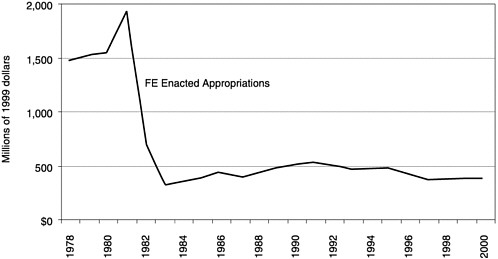
FIGURE 4–1 Funding for DOE’s Office of Fossil Energy, FY 1978 to FY 2000. SOURCE: OFE, 2000.
fairly constant since, even though major investments were made in clean coal technology (CCT) demonstrations in the early 1990s.
Table 4–1 shows the funding for each of the four categories of fossil energy programs broken into two distinctly different RD&D time periods, FYs 1978 to 1985 and FYs 1986 to 2000. In the late 1970s and early 1980s, federal funding was concentrated on RD&D related to developing alternatives for petroleum and natural gas. Some of these alternatives evolved into large-scale commercial demonstrations supported by the now-defunct Synthetic Fuels Corporation, but there was also significant funding for magnetohydrodynamic (MHD) electricity generation, industrial fluidized-bed combustion, shale oil, and fuel cells. During the 8-year period, 57 percent of the total funding went to the 22 fossil energy programs analyzed by the committee. Over the next 15 years, only 43 percent of the total funding went to the same programs.
As shown in Figure 4–2, over the 1978 to 2000 study period, 58 percent of the expenditures were for RD&D in coal utilization and conversion. Of this, approximately one-half was spent on building and operating large commercial-sized demonstration plants for direct liquefaction and gasification in the 1978 to 1981 time period. In 1978, the coal conversion and utilization portion of the budget represented 68 percent of the total fossil energy expenditures. However, since then, as funding for direct liquefaction and gasification (which underwent a fundamental refocusing from producing pipeline-quality gas and gas for the industrial sector to integrated gasification gas turbine combined-cycle) declined, this category represented a considerably lower percentage. In 2000, it represented only 30 percent of the overall fossil energy budget for the technology programs analyzed.
The share of DOE fossil energy funds devoted to environmental characterization and control was 4 percent of the total over the study period, partly because the Environmental Protection Agency (EPA) maintained a large program in this area prior to 1985. During the FY 1978 to FY 2000 study period, the share of funding in this program area varied considerably, from 0 percent to 13 percent. The principal factors that influenced annual funding were (1) SO2 and NOx control technology demonstrations conducted under the CCT demonstration program in the early 1990s and (2) mercury characterization and control initiatives in the 1990s.
TABLE 4–1 Fossil Energy Budgets for the 22 Programs Analyzed by the Committee (millions of constant 1999 dollars)
|
Reported Fossil Energy Budget |
FYs 1978–1985 |
FYs 1986–2000 |
Total |
|
Oil and gas production |
783.1 |
684.5 |
1,467.6 |
|
Coal conversion and utilization |
3,967.0 |
2,181.5 |
6,148.6 |
|
Environmental characterization and control |
91.5 |
318.7 |
410.2 |
|
Electricity production |
1,183.3 |
1,318.7 |
2,502.0 |
|
Total |
6,025.0 |
4,503.4 |
10,528.4 |
|
SOURCE: OFE, 2000. |
|||
The share of funds for the electricity production programs averaged 24 percent over the study period. Although funding for this program area remained fairly constant from 1982 through 2000, its importance (and priorities within the program) changed dramatically.
Magnetohydrodynamic power generation was the recipient of the majority of funds in this category until 1982 and a significant recipient until the program was terminated in 1994. The fuel cell program, on the other hand, was consistently funded at between $40 million and $50 million per year for most of the study period. The advanced turbine technology program, which began receiving DOE funds in 1992, has been a major recipient of funds since then, averaging $35 million per year. As a result, the electricity production programs now comprise 45 percent of the overall funding provided by the Office of Fossil Energy for the programs analyzed by the committee.
The share of funds devoted to the oil and gas programs over the study period was 14 percent, of which one-third was shale oil R&D early on. However, the percentage of the fossil energy R&D budget allocated to these programs rose steadily, from 12 percent in 1978 to 22 percent in 2000. The increase in the program’s share of funds is due more to declining budgets in other parts of the program than to increases in the oil and gas budgets.
Cost Sharing in the Fossil Energy Program
Since the beginning of the fossil energy RD&D program at DOE, cost sharing was used to (1) leverage federal funds, (2) obtain commitment from industry for RD&D projects, and (3) involve industry in the transfer of technologies to the commercial marketplace. Generally speaking, and with the exception of the large commercial demonstration projects, in the early days of DOE, industrial cost sharing was not deemed critical to program success. In many instances when cost sharing was required, it was loosely defined, allowing industry to use a variety of financial techniques to meet the cost-sharing goals. One common technique was in-kind contributions (e.g., including the value of equipment, buildings, land, and other capital resources originally used for purposes other than RD&D with DOE). Using these techniques, industry was in some cases able to meet the cost-share requirement with no direct expenditure. This resulted in some organizations receiving DOE contracts without being committed to commercializing the technology if successful. Even in the early commercial demonstration projects, cost sharing was often designed so that the initial project costs would be borne by the government (for feasibility studies, design studies, and even initial capital outlays), with industry’s share pro-
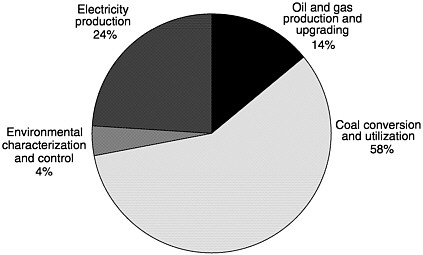
FIGURE 4–2 Overall budget, FY 1978 to FY 2000 ($10,528 million). SOURCE: OFE, 2000.
vided only if the industrial participants wanted to go forward with the commercial phases of the projects. The commercial decision was not made until after the government had spent considerable funds up-front to reduce the technical risks.
As the fossil energy RD&D program matured, its cost-sharing philosophy, along with the evaluation of the cost-share percent, has changed. Now, true cost sharing is required throughout all stages of technology development. Typically, cost-sharing requirements are less (on the order of 20 percent) for research projects and feasibility studies that are far from producing a commercial product. In the product development and commercial demonstration phases of a project, the industry percentage could be 50 percent or more. In addition, current-year cost sharing is required throughout each stage of project. This more recent approach, which requires true sharing of cost by industry during the technology development phase, encourages an earlier assessment of commercialization risks by industry and should increase the probability that the results of the DOE RD&D programs are commercialized.
The point of industry cost sharing is not just to reduce government expenditures but rather to ensure that the industrial partner has the resources and commercial commitment needed to bring a new technology to the marketplace once the technology’s viability has been shown. This reduces the number of projects that are conducted just to gain access to the research funds with no real commitment to the concept being funded.
As shown in Table 4–2, cost sharing for the fossil energy programs throughout the study period is estimated to have been approximately $9 billion, or 46 percent of overall funds spent. This includes $3 billion in cost sharing for oil shale demonstrations and $1 billion for direct liquefaction demonstrations in the late 1970s and early 1980s. Excluding the cost sharing from these programs, total cost sharing in constant 1999 dollars over the study period was about $5 billion, or 38 percent of overall expenditures. A considerable portion of the industry cost sharing in the coal programs resulted from the clean coal technology demonstration program.
LESSONS LEARNED FROM THE CASE STUDIES
Coal and Gas Conversion and Utilization
Figure 4–3 shows the share of the total funding of each of the technology programs in the coal and gas conversion and utilization category from 1978 to 2000. During this period, DOE expended $6.1 billion on this group of technologies. Seventy-five percent of the total budget in this area was provided for the direct liquefaction and IGCC programs (37 percent and 38 percent, respectively). One-half of the funds for this category of technologies was for direct liquefaction and IGCC during the period FY 1978 to FY 1981. The majority of funds in this period were for commercial-scale demonstrations driven by concerns about an energy crisis. For this reason, the committee opinion is that a more revealing analysis of costs and benefits is derived from excluding the early portions of those two programs (Figure 4–4).
In the opinion of the committee, DOE has played a significant role in the development of most of the technologies in this category. Specifically, the role of DOE in developing the technologies can be characterized as follows:
-
Atmospheric fluidized-bed combustion (AFBC). DOE played a major role (i.e., a role critical to the success of the program) in the development and demonstration of industrial-scale systems using low-valued, low-cost fuels (culm, petroleum coke, and medical wastes, among others) and a significant role (i.e., an important role but not critical to the
TABLE 4–2 Fossil Energy Programs’ Cost Sharing, 1978 to 2000 (millions of 1999 dollars)
|
Program |
DOE Costs |
Private Industry Costs |
Private Industry Cost Share (%) |
|
Oil and gas production and upgrading |
1,467.6 |
3,616 |
71 |
|
Drilling, completion, and stimulation |
79.3 |
32 |
29 |
|
Coal-bed methane |
28.6 |
10a |
26 |
|
Downstream technology |
48.2 |
6 |
11 |
|
Eastern gas shales |
137.4 |
35 |
20 |
|
Enhanced oil recovery |
177.1 |
47 |
21 |
|
Field demonstrations |
259.0 |
368 |
59 |
|
Oil shale |
447.6 |
3,000b |
87 |
|
Seismic technology |
105.5 |
109 |
51 |
|
Western tight gas sands |
184.9 |
9 |
5 |
|
Coal conversion and utilization |
6,148.6 |
4,464 |
42 |
|
Coal preparation |
292.1 |
15c |
5 |
|
Direct liquefaction |
2302.5 |
1,200 |
48 |
|
Fluidized-bed combustion |
843.0 |
800d |
49 |
|
Gas-to-liquids |
42.4 |
85 |
50 |
|
Indirect liquefaction |
320.4 |
164 |
34 |
|
Integrated gas combined cycle |
2,348.2 |
2,200 |
48 |
|
Environmental characterization and control |
410.2 |
450.1 |
52 |
|
Flue gas desulfurization |
223.6 |
301 |
57 |
|
Mercury and other air toxics |
42.4 |
6.2 |
13 |
|
NOx controls |
67.2 |
42.9 |
39 |
|
Waste management and utilization |
77.0 |
100 |
56 |
|
Electricity production |
2,502.0 |
537 |
18 |
|
Advanced turbines |
314.7 |
155 |
33 |
|
Fuel cells |
1,167.1 |
292e |
20 |
|
Magnetohydrodynamics |
1,020.2 |
90 |
8 |
|
Total |
10,571.0 |
9,067.1 |
46 |
|
aCost sharing was “significant,” but DOE provided no data. Here it is estimated at about 25 percent. bMost of this was spend independently by Exxon, Unocal, and Occidental. cCost sharing was “minimal;” here it is estimated at about 5 percent. dCost share estimate of $703 million available only in current dollars; constant (1999) dollar estimate is probably about $800 million. eAssumes about a 20 percent cost share. |
|||
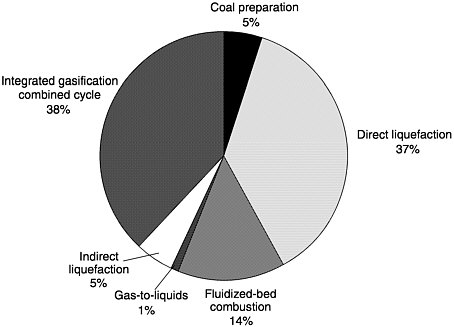
FIGURE 4–3 Budget for coal and gas conversion technologies, FY 1978 to FY 2000 ($6149 million). SOURCE: OFE, 2000.
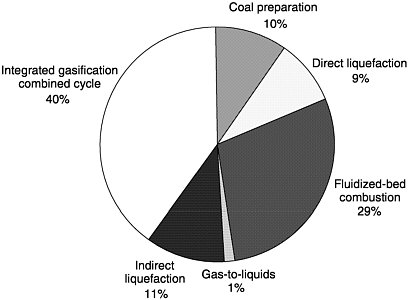
FIGURE 4–4 Adjusted budget for coal and gas conversion technologies, FY 1978 to FY 2000 ($2956 million). NOTE: Excludes budgets for direct liquefaction and IGCC from FY 1978 to FY 1982. SOURCE: OFE, 2000.
-
success of the program) in demonstrating systems for utility applications (it provided 20 percent of the cost).
-
Pressurized fluidized-bed combustion (PFBC). DOE played a major role in improving the efficiency and environmental performance of the technology and in large-scale demonstrations (it provided 45 percent of cost of the demonstrations).
-
Integrated gasification combined cycle (IGCC). DOE played a major role in large-scale demonstrations integrating the components into a total system for optimal electricity production and environmental performance (it provided approximately 50 percent of the cost of the CCT demonstrations).
-
Gas-to-liquids. DOE played a contributory role (i.e., it was one of many contributors of resources and ideas) in laboratory and pilot research on novel methods for producing synthesis gas from natural gas and converting natural gas to liquids that improved the technologies developed by industry and kept them current.
-
Direct liquefaction. DOE played a major role in funding basic, pilot-, and bench-scale research and development that improved the technologies developed by industry until the program was terminated in 2000.
-
Indirect liquefaction. DOE had a significant role in basic, pilot-, and bench-scale research and development that improved the technologies developed by industry and kept DOE current.
-
Coal preparation. DOE had a significant role in improving the removal efficiencies of ash, sulfur, and other impurities through fine grinding of coal and advanced separation techniques.
With the exceptions of AFBC and first-generation coal preparation (which DOE had little role in developing), this category consists of technologies that have not been extensively used on a commercial basis and therefore have not resulted in significant realized economic benefits. However, the committee believes these technologies offer important options and knowledge benefits. This is especially true in developing countries that are dependent on coal to meet their energy needs.
These benefits are not likely to be realized in the United States in the near term, because the expected increases in the prices of oil and gas are not great enough to make these coal technologies economic (although at the current gas price of about $5 per million Btu, considerable interest is being shown in new coal plants by utilities in the United States).
DOE’s significant involvement in the development and demonstration of AFBC is credited with $750 million in realized economic benefits from fuel cost savings associated with several commercial AFBC plants using a low-grade fuel, anthracite culm. Similarly, DOE is credited with 900,000 tons of NOx reductions over a 30-year life cycle for AFBC plants that were constructed because of their inherently low NOx emissions compared with the NOx control requirements that existed at the time. Also, the committee credits DOE with realized environmental benefits associated with reducing mounds of anthracite culm in Pennsylvania. Future benefits from the technology are expected to be limited to situations where low-cost, low-value fuels (e.g., petroleum coke and wastes) are available and compliance with future environmental requirements can be achieved cost-effectively. The largest potential for the technology may be in foreign markets.
Two very promising technologies, IGCC and indirect liquefaction, provide the opportunity for coal to be used under more stringent environmental requirements, possibly even under some carbon-constrained scenarios, if market conditions change (i.e., sustained high oil and natural gas prices). These technology options—in the case of IGCC, DOE played a major developmental role (mainly by cost-sharing the demonstration of commercial-sized systems under the CCT demonstration program) and, in the case of indirect coal liquefaction, a lesser role—offer large potential economic and environmental benefits. Indirect liquefaction has the potential to produce gasoline, diesel, methanol, and other superclean fuels cleanly and therefore also has potential security benefits. Indirect liquefaction will also benefit from commercial deployment of IGCC, which uses the same gasification and clean-up technology. At present, the United States faces most of the same pressures on its energy supply that it did in the 1970s. Yet the nation’s apparent energy policy has reacted with short-term responses to (1) accessibility of cheap fuels dictated by the international marketplace and (2) increasingly stringent environmental constraints. The long-term viability of a stable and inexpensive energy supply based primarily on domestic resources has been a low priority. If this objective had been accorded the highest priority, IGCC might well be further along in its applications. IGCC has been successfully demonstrated for coal-based electricity generation on a commercial scale in the United States and Europe and is being introduced commercially in refineries to convert low-valued fuels to chemicals and electricity. It offers the advantages of high efficiencies (which will improve as gas turbine technology improves) and the best potential (among coal-based systems) for cost-effective control of criteria pollutants, air toxics, and carbon emissions.
Coal preparation is used extensively today in the United States and internationally to reduce coal transportation costs and improve boiler performance. However, the technologies currently in use were developed without much DOE involvement. DOE has, however, played a significant role in enhancing the technology to remove more of the ash, sulfur and other impurities in coal and to improve coal recovery, especially fines, after washing. These technologies are now options for consideration as users look to optimize the costs of environmental compliance and energy production. However, based on discussions with potential users of the cleaned coal, the market prospects for advanced coal preparation appear to be very limited because more cost-effective options are now available that use high- and medium-sulfur coals without first cleaning them extensively. Nevertheless, DOE’s coal preparation RD&D has greatly improved our knowledge of coal chemistry and other factors important in understanding how to use coal more efficiently and cleanly.
Direct liquefaction is a technological option for producing liquid fuels from coal. It is currently being considered by China as a viable option to meet growing demand for liquid fuels in that country. However, the commercial viability of the technology is very dependent on the price of oil. High oil prices (in excess of $45/bbl and possibly significantly higher) will be required over the long term before the option is considered. In addition, concerns about its environmental performance (that have largely been addressed through advances of the technology) may impede its commercial potential.
Pressurized fluidized-bed combustion (PFBC) has provided significant knowledge benefits in solids handling and feeding under pressure, hot gas cleanup in difficult environments, and other areas that may have applications elsewhere. However, advanced PFBC technology, which is still undergoing development and demonstration, has serious economic and technical issues (especially that of protecting gas turbines against alkali vapors from the high-temperature combustor) and limited potential for meeting possibly very stringent future environmental requirements. In addition, it will have to compete with IGCC and gas turbine combined-cycle technologies, which have much greater potential for high-efficiency operation, low emissions, and progressive cost reductions. As a result, the realized benefits from PFBC technology are expected to be minimal. However, the technology could be an option for niche applications.
Environmental Characterization and Control
Figure 4–5 shows the share of the total funding of each of the technology programs in the environmental characterization and control category from FY 1978 to FY 2000. During this period, DOE expended $410 million on this group of technologies. Seventy percent of the DOE funding came after 1989, especially to support demonstration projects under the CCT program. Fifty-five percent of the funding in this category was for flue gas desulfurization RD&D. DOE has played a significant role in the development of many of the advanced technologies in this category. Specifically, the committee believes that the role of DOE in developing the technologies can be characterized as follows:
-
Flue gas desulfurization (FGD). DOE has played a significant role in the development and, more importantly, the demonstration of second-generation systems that offer improved process technology, removal efficiency improvements, and the ability to control emissions from a wider variety of boilers using a wider variety of coals than conventional systems.
-
Nitrogen oxides (NOx) control systems. DOE has played a significant role in the development and, more importantly, the demonstration of second-generation systems that offer reliable process technology, removal efficiency improvements, and the ability to control a wider range of large utility boilers.
-
Waste management and utilization. DOE has played a significant role in characterizing the solid wastes from con-
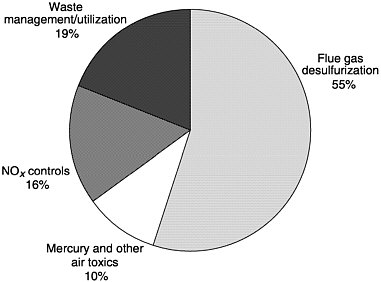
FIGURE 4–5 Budget for DOE’s fossil energy environmental programs, FY 1978 to FY 2000 ($410 million). SOURCE: OFE, 2000.
-
ventional and advanced coal-based systems, monitoring advanced technologies for wastes, and researching potential uses for the waste by-products.
-
Emissions of mercury and other toxic substances in the atmosphere (“air toxics”). DOE has played a significant role in characterizing the air toxics emissions from conventional and advanced coal-based technologies (and determining their fate) and in conducting research on technologies that could remove the toxic elements from the feed coal and flue gas. Emphasis has recently been placed on the characterization and control of mercury emissions, currently an air toxic of primary concern to EPA.
This group of technologies is heavily driven by environmental regulation. Given that energy production and use are very much principal producers of pollution, the committee believes that an appropriate role for DOE is to support the development of technology options and knowledge that allow utilities to select an appropriate system for their site-specific needs. The RD&D on the technologies in this category has realized economic benefits in the form of costs avoided by the use of less-expensive technologies than were available in the past (e.g., NOx reduction) or reduced environmental compliance costs associated with coal-fired power plant solid waste disposal and air toxics emissions control requirements.
The last two benefits, estimated by DOE to be worth billions of dollars, were a result of its collecting and analyzing detailed technical and economic information that enabled EPA to set less stringent control requirements than it might have done otherwise. In addition, DOE research on waste utilization resulted in economic benefits associated with the substitution of coal combustion wastes for extraction and processing of mineral resources. In these and in other areas, the RD&D conducted by DOE has resulted in technological options and knowledge that are being used by EPA and others to set environmental requirements and by utilities to assess their compliance options.
DOE’s significant involvement in second-generation NOx control technologies primarily stems from the role it played in the cost sharing of demonstrations (DOE’s share was 56 percent) of a variety of systems at full commercial scale in its clean coal technology demonstration program. This has given NOx equipment suppliers the opportunity to accelerate their commercial offering and sale of the technologies. Low NOx burners have been installed on approximately 200,000 MW of coal capacity. The large majority of these modifications are based on technologies that DOE had relatively little involvement in. However, advanced postcombustion NOx controls, in which DOE played a substantial role in demonstrating, have been installed on about 5000 MW of capacity, with another 40,000 MW on order. DOE support contributed significantly to the recent technology development that has realized a 40 to 60 percent reduction in NOx emissions from existing NOx control technology installed on 175,000 MW of coal-fired plant capacity and a 90 percent reduction in up to 100,000 MW of new selective catalytic reduction (SCR) units that are expected to be installed by 2005.
Joint DOE-industry development of advanced NOx control technology under the DOE RD&D program also affords power plant owners the opportunity to more cost-effectively control NOx emissions beyond existing environmental requirements. This could have at least two very important benefits. The first is that it would create low-cost emissions credits that could be traded with companies whose NOx compliance costs are higher. The second is associated with the economic benefits to the nation that can be realized by
lessening environmental stress or damage avoidance through overcompliance, especially in regions that are not attaining ambient air quality standards. For example, for the purposes of this study, the committee attributed a value of $2300 per metric tonne to the avoided damages associated with NOx emissions.
As with NOx controls, DOE’s most important role in FGD has been cost sharing ($117 million, or approximately 50 percent of DOE’s expenditure) the demonstration of a suite of advanced, reduced-cost, reliable, improved-efficiency systems for a wide range of U.S. coal and boiler applications. Since no new coal-fired boilers have been built for several years and the first-phase acid rain control provisions of the 1990 Clean Air Act Amendments (CAAA) have been met mainly by fuel switching and emissions trading, few advanced FGD systems have been installed. Therefore, realized economic benefits from the FGD program, estimated to be $1 billion, are limited to lower-cost compliance associated with (1) the application of advanced process technology to existing units and (2) the addition of several second-generation units to existing plants to meet the Phase 2 Acid Rain (Clean Air Act Title IV) SO2 reductions that are expected to be installed by utilities in the next 5 years. However, in large part, the benefits of FGD systems developed with DOE funds will occur in the future as new coal plants are built and existing plants will have to meet more stringent SO2 control requirements.
DOE, in partnership with the Electric Power Research Institute (EPRI), EPA, utilities, and others, has collected significant and valuable information characterizing solid wastes from conventional and advanced coal-based power systems. In addition, it has assessed waste disposal options and conducted research and demonstration on alternative waste utilization options. This research has resulted in realized economic benefits, estimated by the committee to be on the order of $3 billion, that derive from enabling EPA to set less stringent control requirements than it might otherwise have set. In addition, DOE’s research on waste utilization resulted in economic benefits associated with the use of coal combustion wastes and FGD sludge. DOE also provides knowledge that continues to be shared with EPA to assist in developing Resource Conservation and Recovery Act (RCRA) regulations governing disposal of coal wastes and that resulted in avoided costs of unnecessary regulation. The information on waste utilization options is available to both vendors and utilities. As a result, the avoided costs from this program are considered to be substantial.
As it did with the waste management program, DOE has played a substantial role in characterizing air toxic emissions from conventional and advanced power systems and is supporting research on control technology for mercury, currently viewed as the most severe air toxic problem facing coal-fired power plants. DOE, EPA, and EPRI collaborated on the most extensive study of hazardous air pollution from domestic utilities, enabling EPA to focus its regulatory efforts on the one believed to be of most concern—mercury. Realized economic benefits cannot be attributed to cost savings associated with focusing EPA on just one pollutant, mercury, at this time since regulations have not yet been promulgated. The information on air toxic emissions and emissions control options will be available to vendors and utilities to consider if EPA decides to promulgate regulations at some future time. As a result, the options and knowledge benefits from this program are considered to be substantial.
Electricity Production
DOE expended over $2.5 billion on electricity production technologies from 1978 through 2000. As shown in Fig-
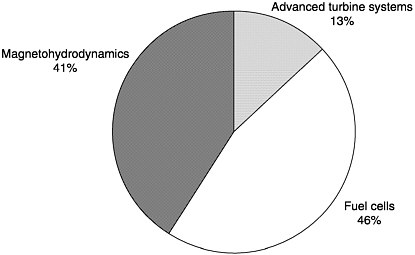
FIGURE 4–6 Reported budgets for electricity production technologies, FY 1978 to FY 2000 ($2502 million). SOURCE: OFE, 2000.
ure 4–6, MHD power production and fuel cells have dominated the funding in the category. DOE has played a significant role in the development of the technologies. Specifically,
-
For advanced turbine systems (ATS), DOE has been instrumental in accelerating the highly cost-shared development of gas turbines that have both high efficiencies and low NOx emissions.
-
For stationary source fuel cells, DOE has played the major role in cost-shared research, development, and demonstration of phosphoric acid, molten carbonate, and solid oxide systems.
-
For MHD power generation, DOE provided over $1 billion for research and pilot-scale tests of the major components of the system.
DOE’s programs in electricity production involve concepts that could improve the efficiency and reduce the pollution from producing electricity from fossil fuels and, in recent years, from biomass. The commercial use of DOE-supported technologies developed for electric power production will depend upon many market factors, but most importantly, two: fuel price and capital and operating costs. In addition, the new technologies must be very reliable, as conventional technologies have already proven to be, and must have low environmental and economic risks. As a result, from the time they are conceived, advanced electric power systems face many barriers to their commercial deployment.
Besides its support of MHD, fuel cells, and ATS, DOE has supported the development of other technologies (i.e., IGCC and FBC) that also have applications to electric power generation. Realized benefits from RD&D in each of these areas have been impeded by the market factors noted above. However, ATS provides options benefits for producing environmentally benign, economically viable, and reliable power using coal, gas, and biomass.
DOE’s involvement in the development of advanced turbines began in 1992. By that time, gas turbines were readily available and in widespread commercial use. In the committee’s view, the large increase in the use of gas turbine combined-cycle systems in the 1990s was not related to DOE’s involvement in the program. However, gas turbine combined-cycle systems used in the future will probably employ technology developed under the ATS program, for which DOE provided $315 million (and industry provided $155 million).
Gas turbines have increased in acceptability in recent years for two main reasons: the availability of a relatively inexpensive, clean fuel (i.e., natural gas) and the improvements that industry has made on the efficiency of gas turbines using aircraft technology spun off Department of Defense (DOD) programs. Gas turbines also have advantages of lower capital cost, shorter lead times for construction and startup, better environmental compliance, and the ability to come on line quickly for service as peaking plants. DOE programs focused on the development of next-generation technology for gas turbines. This next-generation technology may no longer use DOD-developed technology because of the need to increase efficiency and at the same time meet tight NOx control standards. The committee believes that the DOE ATS program is an excellent example of a DOE/industry collaboration that (1) focuses on stretch (but achievable) goals that could have a significant impact on future energy use and environmental compatibility, (2) works with other government agencies and academia and the national laboratories to design and implement the program, (3) integrates basic research into the program very effectively, and (4) provides a framework in which innovative ATS concepts can move from research to component test and finally demonstration with a continual increase in the nongovernment cost-sharing requirements. DOE structured this program to take the concepts through to a commercial-scale demonstration, an extremely critical element in a program of this type.
No realized benefits have resulted from the ATS program to date, and no significant benefits will be realized until after 2005. Even so, this has been a very successful and valuable program. It is expected that as new gas turbine combined-cycle plants are built in the future under tightening NOx requirements, ATS machines will probably be widely used. As they are deployed, significant economic and environmental benefits will result in comparison with current natural-gas-fired gas turbine combined-cycle systems. In addition, the ATS technologies will improve the performance (efficiency and air pollution emissions) of other electric power systems that use gas turbine technology (i.e., integrated gasification combined cycle). Because of their high efficiency, ATS will conserve natural gas and increase the competitiveness of coal and biomass gasification systems by reducing their fuel requirements. The higher efficiency of ATS will reduce CO2 emissions for the same amount of fuel burned. Finally, the ATS program has increased the knowledge base in a number of areas including NOx combustor designs, understanding of pollution formation, and high-temperature materials. DOE’s role in forcing technological improvements through the cost-sharing mechanism was critical in advancing the technologies more quickly than they would otherwise have developed.
DOE has expended $1.167 billion since 1978 on RD&D on fuel cells for stationary power applications (phosphoric acid, solid oxide, and molten oxide). When coupled with other systems (like combined-cycle turbines), fuel cells have the potential to produce very efficient and extremely clean power that could allow using a variety of fuels in a variety of applications. The development of fuel cells for stationary applications has, in large part, resulted from DOE’s persistence ever since it was established in funding fuel cell research. Although NASA successfully developed the technology for space power and DOE provided significant funds
for fuel cells, the DOE stationary fuel cell applications program has seen very little commercial success (other than in the form of heavily DOE-subsidized sales). The program’s future benefits are uncertain, because the capital cost of the technology remains high and stationary source phosphoric acid and molten carbonate fuel cell developers continue to decline in numbers. There are, however, indications that industry interest in solid oxide fuel cells may be growing.
In the opinion of the committee, this program shows that it is extremely difficult for DOE to force the development of new concepts with dollars alone. Technology advancement requires a partnership with industry, which has the market vision and resources to commercialize the results of the programs. In the fuel cell area, this has not happened. Rather, DOE has continued to move to different types of fuel cells—from low temperature to intermediate temperature and, finally, to high temperature. Each of these technologies has unique advantages, but each is also very different and faces increasingly difficult technical challenges. This program area appears to be one in which DOE has not done a good job of identifying clear goals for program success or of making the difficult decision to terminate elements of a program if goals are not met or prove not to be achievable.
MHD is another technology that got its start in a government agency outside of DOE, in this case the DOD. During the energy crises of the 1970s, the concept was viewed by some as having potential for efficient use of domestic coal resources. As a result, DOE allocated a great deal of funding for the technology to build pilot facilities and begin testing MHD components for electric power production. As development continued, it became obvious that the technology would be too costly and too complex for a changing electric power industry that would need to provide cost sharing. After many years of congressional appropriations (that were not requested by DOE), funding was terminated in 1993 after DOE had expended over $1 billion on the technology. The technology has not realized any economic or options benefits. However, some knowledge benefits arose in the course of developing MHD technology, including the following:
-
A database for technologies that require the injection of solids into pressurized chambers;
-
Contributions to the development of a combustor for subsequent clean coal technology projects;
-
A database for the design of pressurized, high-temperature gas heaters; and
-
A material database for boiler tube fabrication in a corrosive environment.
Although the early promise of increased energy efficiency in the use of coal may have been laudable, this is a prime example of a program where the result of RD&D clearly indicated the technology approach was impractical. The program should have been a candidate for termination long before funding actually stopped (and the DOE did try to end the program, but Congress kept appropriating funds). It is also an example of a program that attracted less than 10 percent cost sharing, an indicator of lack of commercial interest in developing the technology.
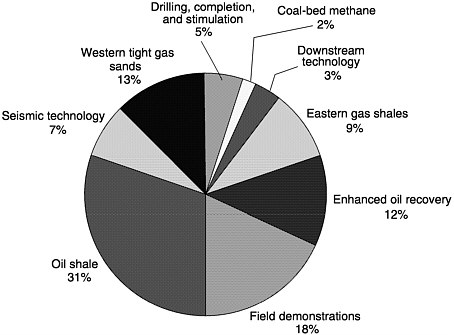
FIGURE 4–7 Reported budgets for oil and gas production research, FY 1978 to FY 2000 ($1468 million). SOURCE: OFE, 2000.
Oil and Gas Production and Upgrading
As shown in Figure 4–7, DOE expended nearly $1.5 billion on oil and gas production research from 1978 through 2000. Approximately one-third of the funding was to demonstrate shale oil technology at a commercial scale. Significant funds were also used between 1978 and 1984 on other oil and gas demonstrations. The FY 2000 budget for oil and gas production research was $46.1 million dollars, or approximately 12 percent of the total fossil energy budget. The magnitude of the FY 2000 budget is on the order of what a typical integrated oil company might spend on research in this area.
DOE has played an important role in a variety of oil and gas RD&D areas. Specifically, its role can be divided into five program areas as follows:
-
Seismic. DOE expertise and computer facilities at the national laboratories played a contributory role in improving seismic technology. For example, DOE was active in the development of cross-borehole seismic technology to enable better reservoir characterization.
-
Drilling, completion, and stimulation. DOE played a significant role in developments related to drilling, completion, and stimulation. For example, the development of polycrystalline diamond compact drill bits, mud pulse telemetry, and underbalanced drilling were all technologies supported in part by DOE.
-
Enhanced gas production. DOE played a significant role in supporting the development of technology to produce gas from coal beds, technology for fracturing Western tight gas sands, and technology for the development of Eastern gas shales.
-
Enhanced oil recovery (EOR) research and field tests. DOE played a contributory role in developing technology for enhanced oil recovery and testing it in the field. For example, tests of chemical flooding, carbon dioxide flooding, and thermal/heavy oil recovery were funded as joint industry projects.
-
Retorting Western shale. DOE played a modest role in the funding of large-scale retorting demonstration programs and a significant role in the mathematical modeling and testing of oil shale retorting technology.
-
Downstream fundamentals. DOE played a very significant role in developing thermodynamic databases needed for the design and operation of petroleum and petrochemical plants.
DOE’s role in oil and gas production has been primarily in the upstream (exploration and producing) side of the oil business. This seems appropriate since the major focus of DOE has been to increase oil and gas production and to expand the resource base in keeping with national energy strategies to improve domestic production. Although the oil and gas industries are large and financially well endowed, the committee found that niche government roles in oil and gas RD&D are appropriate. For example, DOE should continue to do the following:
-
Respond to mandates—for example, mandates to increase research programs that would produce more gas and oil in the United States led to the projects (and tax incentives) to increase coal-bed methane production, projects to fracture Western tight gas shales, projects to produce gas from Eastern gas shales, and shale oil research.
-
Fund high-risk projects that individual oil companies cannot justify—for example, many projects in the drilling, completion, and stimulation (DCS) areas are very risky and difficult for any one company to keep proprietary, since they are often implemented by service companies.
-
Utilize existing expertise at DOE and national laboratories—for example, seismic technology programs utilized national laboratory expertise and computer facilities and the downstream fundamentals program utilized the thermodynamic characterization expertise of the National Institute for Petroleum and Energy Research (NIPER), the national laboratory in Bartlesville, Oklahoma.
-
Support smaller companies and independent producers—for example, many of the projects in the DCS program support small- and medium-size service companies, which have limited R&D budgets. Also, projects to fracture Western tight gas shales supported independent producers in the West, which are usually too small to be able to support their own R&D programs.
Economic and security benefits have been realized from several of the oil and gas RD&D programs. The committee assessed DOE’s contribution to these realized benefits as follows:
-
That portion of the seismic technology program related to DOE’s investment is estimated by the committee to have resulted in incremental oil production of 360 million barrels, 113 million barrels of natural gas liquids, 780 billion cubic feet (Bcf) of natural gas, and realized economic benefits of $600 million.
-
The drilling, completion, and stimulation program resulted in realized economic benefits estimated by the committee to have been approximately $1 billion. In addition, the committee concluded that the program created knowledge benefits that had significant impacts on drilling systems (e.g., the polycrystalline diamond compact drilling bit), coring techniques, measurement techniques, and other technologies that are used commercially to reduce exploration, drilling, and completion costs.
-
That portion of the coal-bed methane program related to DOE’s investment is estimated by the committee to be $200 million. This represents one-third of the realized economic benefits estimated by DOE. The committee was of
-
the opinion that DOE’s investment in developing enabling technologies to produce coal-bed methane was important. However, equally important were the funding from the Gas Research Institute and Section 29 tax credits.
-
The Eastern gas shales program resulted in significant incremental shale gas production from the Appalachian Basin and incremental gas production in the Michigan and Fort Worth basins. Although the program also benefited substantially from R&D funding from the Gas Research Institute and tax credits (Natural Gas Policy Act, Section 29), DOE’s contribution is estimated by the committee to have led to 90 Bcf of additional gas production in 2000 and 1740 Bcf of cumulative additional gas production from 1978 to 2005. This resulted in realized economic benefits from royalties on federal lands, increased state severance taxes, and lower gas prices, which are estimated by the committee to be $600 million.
-
The Western gas sands program (also supported by the Gas Research Institute and given incentives from the Section 29 tax credit) is credited with a significant increase in gas production in the Rocky Mountain gas basins. The committee estimates the economic value of these realized benefits to be in excess of $800 million in increased net revenues and cost savings to gas producers in the Rockies, increased royalties on federal lands, and increased state severance taxes resulting from the RD&D program.
-
The EOR program successfully demonstrated thermal, gas, chemical, and microbial techniques and developed screening models and databases that stimulated production of 167 million barrels of oil equivalent and provided $625 million in cost savings to oil producers and nearly $90 million in incremental federal and state revenues.
-
DOE’s involvement in the field demonstration program, which tests different oil recovery technologies in the field, also resulted in significant realized economic benefits. It is estimated that DOE’s involvement will result in 1290 million barrels of incremental oil production and 1740 Bcf of incremental gas production over the period from 1996 to 2005. This resulted in realized economic benefits from royalties on federal lands and increased state severance taxes estimated by the committee to be $2.2 billion.
-
The program also resulted in unquantifiable benefits: downstream fundamental R&D program, important knowledge benefits in fuels chemistry, process fundamentals, thermodynamics, and other areas that have been important to commercial chemical and refinery process designs.
The committee viewed the return on the government’s investment in most of these programs to be significant in both economic and security terms. In addition, these programs and the shale oil RD&D programs resulted in modest options benefits (although under most currently reasonable future energy scenarios, it is unlikely that the shale oil option will be used); all of the programs resulted in knowledge benefits.
Overall, in the opinion of the committee, DOE’s program appears to have met its objectives of expanding the oil and gas resource base and increasing domestic production of oil and gas in response to mandates from Congress or the administration. It did this by utilizing DOE expertise and emphasizing high-risk projects. Also, DOE supports smaller companies and independent oil and gas producers, which make up a significant portion of the production capacity in the United States and which have limited resources to undertake R&D programs.
TABLE 4–3 Net Realized Benefits Estimated for Selected Fossil Energy R&D Programs
|
Technology |
R&D Cost (billion $)a |
Economic Benefits: Net Savings (billion $) |
Environmental Benefits: Cumulative Pollution Damage Reduction (million tons) |
Security Benefits: Increased Incremental Oil Production (million bbl) |
|
Drilling, completion and stimulation |
0.11 |
1 |
|
|
|
Seismic |
0.21 |
0.6 |
|
360 |
|
EOR and field demos |
0.85 |
2.9 |
|
1,457 |
|
Western gas sands |
0.19 |
0.8 |
|
|
|
Eastern gas shales |
0.17 |
0.6 |
|
|
|
Coal-bed methane |
0.04 |
0.2 |
|
|
|
Flue gas desulfurization |
0.53 |
1.0 |
2 |
|
|
Environmental characterization |
0.13 |
3.0 |
26c |
|
|
Atmospheric fluid bed |
1.3 |
0.8 |
|
|
|
Total |
3.53 |
10.9 |
28 |
1,984 |
|
aDOE R&D investment plus all private sector R&D cost share in billions of 1999 dollars. bImproved incremental production of oil was achieved but difficult to assess. cIncludes atmospheric fluidized-bed emissions. |
||||
TABLE 4–4 Fossil Energy RD&D Benefits
|
Type of Benefit |
Realized Benefits and Costs |
Options Benefits and Costs |
Knowledge Benefits and Costs |
|
Economic benefits and costs |
DOE RD&D costs: $10,916 milliona Benefits: $10.8 billion $1 billion from lower-cost FGD $3 billion from avoided waste disposal costs $750 million from lower culm combustion costs $6.1 billion from increased/accelerated oil and gas production Incremental oil production increase of 1.9 billion barrelsb Incremental gas production of 4.3 Tcfb Increased federal royalties and state severance taxesb Lower oil and gas prices |
Wide range of coal, oil, gas, and shale oil technologies available as market conditions change. Future avoided costs from air toxics information and control technologies. |
Substantially improved understanding of science of fossil energy production and consumption. Substantial tools/techniques/information on wide variety of issues associated with production and use of fossil fuels. |
|
Environmental benefits and costs |
26+ million tonnes NOx removed beyond control requirements (NOx + AFBC RD&D)c —Damage reduction estimated to be $60 billiond 2 million tonnes SO2 removed beyond control requirements (FGD RD&D)c —Damage reduction estimated to be $200 millionc Fewer oil/gas wells and dry holes; smaller footprints |
Wide range of technologies available to meet current and future environmental requirements. Increased utilization of coal wastes. |
Substantially improved science base on formation and control of pollution from fossil fuel facilities. Better data upon which to base environmental requirements. |
|
Security benefits and costs |
Increased oil reservese |
Availability of oil and technologies to increase reserves (drilling/completion and field demos). Availability of technologies to utilize coal and shale reserves to produce liquid fuels (indirect and direct coal liquefaction; shale oil) and to expand utilization of coal (IGCC). |
Substantially improved science base to understand geologic formations and oil and gas recovery techniques. |
|
aAll figures in 1999 dollars. bIncluded in $6.1 billion benefit from increased/accelerated oil and gas production. cThe committee supports DOE’s Office of Fossil Energy estimate of cumulative emissions reductions relative to current New Source Performance Standards (NSPS) plant emissions, as described in case studies in Appendix F. dAvoided emissions of SO2 and NOx are assumed to be valued using the lower of the avoided damage estimates of $100 to $7,500 and $2,300 to $11,000 per metric tonne, respectively. The open market value of mitigating a tonne of SO2 is from $100 to $300, so $100 was used to peg the lower end of the range for SO2. These environmental benefits are total: fossil energy plus others, including EPA and industry. eIncreased oil reserves result from the following RD&D programs: (1) seismic technology, (2) drilling, completion, and stimulation, and (3) enhanced oil recovery. In addition, several other fossil RD&D programs added gas reserves and allow coal to be used for power generation as an alternative to oil. |
|||
FINDINGS
Finding 1. As shown in Tables 4–3 and 4–4, the committee found that the DOE’s fossil energy program made a significant contribution over the last 22 years to the well-being of the United States through the development of fossil energy programs that led to realized economic benefits, options for the future, and significant knowledge. It is the committee’s judgment that these benefits have substantially exceeded their cost and led to improvements to the economy, the environment, and the security of the nation.
Finding 1a. Economic benefits. It is estimated that the realized economic benefits attributable to the fossil energy programs approach $11 billion (Table 4–5). The 22 DOE fossil energy programs analyzed in this study, which represent about 70 percent of the programs on an expenditure basis, can be divided into two periods. The first, from 1978 through 1985, is characterized by larger programs mainly designed to convert coal and shale to fuels in response to the energy crisis. The second period, from 1986 to 2000, is characterized by smaller programs designed to logically develop en-
TABLE 4–5 Realized Benefits from DOE RD&D Programs (billions of dollars)
|
Program |
1978–1985 |
1986–2000 |
1978–2000 |
|
Seismic |
0.0 |
0.6 |
0.6 |
|
Drilling, completion, and stimulation |
0.1 |
0.9 |
1.0 |
|
Enhanced oil recovery and field demonstrations |
1.0 |
1.9 |
2.9 |
|
Western gas sands |
0.8 |
0.0 |
0.8 |
|
Eastern gas shales |
0.6 |
0.0 |
0.6 |
|
Coal-bed methane |
0.2 |
0.0 |
0.2 |
|
Flue gas desulfurization |
0.0 |
1.0 |
1.0 |
|
Environmental characterization |
0.0 |
3.0 |
3.0 |
|
Atmospheric fluidized-bed combustion |
0.8 |
0.0 |
0.8 |
|
Total |
3.5 |
7.4 |
10.9 |
ergy technology over a long period of time, to increase oil and gas production and resources, to improve electricity generation efficiency, and to reduce the environmental impact of the use of fossil fuels. The second period is also characterized by more industry input and cost sharing. Of the nearly $11 billion in realized economic benefits, about $7.4 billion is attributed to the programs carried out between 1986 and 2000 with program expenditures of $4.5 billion. This results in a benefit to cost ratio of 1.6. The 1978 through 1985 programs are credited with benefits of about $3.4 billion against program expenditures of $6.0 billion, equivalent to a benefit-cost ratio of 0.57. The post-1985 programs were more cost-effective, reflecting a relaxation of the crisis atmosphere and more effective program management by DOE.
Slightly over $6 billion of the realized economic benefits were from the oil and gas programs, which developed information and technologies that were rapidly commercialized. The waste management program may be credited with $3 billion, because it developed information that resulted in the promulgation of less-stringent regulations. The flue gas desulfurization and fluidized-bed combustion programs provided benefits of almost $2 billion as a result of lower compliance costs and lower electricity costs, respectively.
As important, if not more so, considering the public benefits nature of federal RD&D, DOE’s Office of Fossil Energy has invested in technologies that are technologically ready for the market but have not yet been deployed commercially. These technologies (e.g., advanced turbine systems (ATS) and integrated coal gasification combined-cycle systems [IGCC]) have the potential to realize significant economic benefits in the future, when the energy marketplace is expected to change. ATS technology, funded jointly by DOE and industry, will be used in commercial plants as new gas turbine combined-cycle power plants are ordered. Using current capital cost estimates of between $1200 and $2000/kW, IGCC is expected to be deployed if natural gas prices remain above $4 or $6 per million Btu, and coal-based power plants are once again considered to be economically and environmentally viable by the public and by power generators.
This retrospective valuation did not review some elements of the current fossil energy RD&D program that are directed at the development of technologies for the more distant future. For example, the coal program’s work on carbon sequestration and the Vision 21 program were not assessed, because the benefits, if any, are expected to accrue beyond the time frame of the committee’s evaluation. No conclusions about the benefits of the unevaluated current fossil energy programs can be drawn from this study.
Finding 1b. Environmental benefits. Realized environmental benefits of a cumulative 25 million tons of NOx and 2 million tons of SO2 with environmental stress or damage avoidance value estimates of $60 billion and $200 million, respectively (see Table 4–4), can be attributed to the fossil energy programs and others. These emission reductions derive from the atmospheric fluidized-bed combustion program, the flue gas desulfurization program, and the NOx reduction program. The emissions reductions are in excess of those required by regulation (in the case of NOx control technology, the reduction is relative to current New Source Performance Standards (NSPS) plant emissions). However, in large part, technologies that were developed by DOE in the fossil energy programs do not provide, nor were they expected to provide, environmental benefits beyond what regulations require. Rather, they provide lower-cost options to meet the regulatory requirements and provide a technical database on which to base the consideration of more stringent environmental regulations. In this regard, the committee agrees that the technologies developed with DOE funds in the flue gas desulfurization and NOx control areas are likely to be used extensively in the future in both new and currently operating coal-fired power plants as the lowest-cost options to meet emissions requirements.
Finding 1c. National security benefits. National security has been enhanced by a number of the programs. Several of the technologies that resulted in realized economic benefits (e.g., enhanced oil production; field demonstrations; seismic; and drilling, completion, and stimulation) have resulted in security benefits by increasing oil production and oil reserves. Several other technologies that could provide security benefits are available to be deployed if oil prices rise substantially (e.g., indirect liquefaction, direct liquefaction, and shale oil). Furthermore, the ability to use the nation’s large coal reserves in an efficient, environmentally sound manner has been improved substantially by several programs in this category. The demonstration of IGCC as an efficient, environmentally benign means of utilizing coal makes the technology available for economic electricity production if natural gas prices were to remain above approximately $5 per
million Btu. No attempt was made to quantify the benefit of these options for the future.
Finding 1d. Knowledge benefits. Every one of the technologies reviewed in this study that were funded by DOE’s fossil energy program has had some potentially important knowledge benefits. In some cases, the knowledge benefits have the potential to give rise to significant economic, environmental, or security benefits as the technologies are developed and deployed. In other cases, the knowledge gained adds to the science and technology base that informs ongoing and future programs. Because this is a retrospective study, current programs would fall into this category. No attempt was made to quantify the social or economic benefit of the knowledge base.
Finding 2. Planning and management techniques were found to be critical to the success of the DOE fossil energy R&D program.
Finding 2a. Partnerships with industry were critical. Partnerships ensured better technology choices and earlier implementation of results. Private sector input to the goals and objectives of the program, coupled with the choice of an appropriate private sector partner, can lead to successful programs. For example, in the advanced turbine systems program, DOE was able to obtain from industry critical input into program goals that allowed it to assess whether vendors would buy into them if successful. DOE was also successful in assessing that the large contractors would have the resources and manufacturing infrastructure to commercialize the results of the R&D. However, the private sector participates in some programs primarily because of the significant DOE funding, but their ability to take products to the marketplace is often limited. This results in R&D programs that last for years but have little realized or practical output and that run the risk of being superseded by evolving energy strategies and policies.
Finding 2b. Cost sharing by industry has been found to be critical to program success. While cost sharing does not guarantee success, it is a strong indicator of it. In the demonstrations conducted during the energy crises of the 1970s and 1980s, government funding was used and there was minimal cost sharing on the part of industry (or cost sharing was offered only in later stages of projects) in the hope of accelerating deployment of advanced technologies. The failure rate of these programs was high. The sliding-scale approach to cost sharing, in which the industrial participants share more costs as the project matures from the exploratory research stage to the commercial demonstration stage, was found to be a successful approach and has been used successfully in many recent programs. For example, it was successfully applied in the advanced turbine systems program, where it helped to ensure that the best concepts were brought forward. The most capable nongovernmental partners were involved, thereby increasing the chances of an early and successful deployment of the technology.
Finding 2c. Rushing technology to the demonstration stage was found to be costly and often led to failure. In some early DOE programs, technologies were rushed to the demonstration stage before they were ready. For example, the early direct coal liquefaction program was a costly effort that yielded no direct economic benefits. This was due to premature demonstration resulting from political pressures to reduce U.S. oil imports during the energy crises of the 1970s. Because national concerns about rapidly increasing energy prices caused by U.S. dependence on foreign oil were high, DOE was under excessive pressure to find a quick fix. The MHD program is an example of DOE initiating pilot-scale testing of major components knowing that there were serious concerns about the cost and complexity of the technology that should have first been addressed in the laboratory and in smaller-scale testing. In addition, MHD was one of the programs that continued to receive funding from Congress for several years after DOE stopped requesting funds.
Finding 2d. Applied R&D programs were found to be more successful when coupled with a supporting research program directed at solving issues identified in the applied program. One example is the advanced turbine systems program, which utilized a university consortium to focus on technical issues identified in the program. This approach could be used as a model.
Finding 2e. DOE’s portfolio approach was found to provide a wider range of technological options. The DOE program consists of a good balance of near-term, intermediate-term, and long-term programs designed to provide a wide array of technological options (Table 4–6). Programs with near-term applications were primarily in the oil and gas sector. Programs with intermediate-term applications consisted of programs such as the advanced turbine systems and IGCC. Programs with longer-range potential are the coal liquefaction and environmentally focused programs.
Finding 2f. Good communication with EPA and the private sector was found to be effective in accelerating the deployment of environmentally clean technologies. A significant number of DOE’s programs have been focused on environmental issues as part of the national strategy. This is an important role for DOE and could be facilitated by more formal interaction with EPA and the private sector. At present there is no formal mechanism of communication or interaction between the parties. Where good communication was promoted, the benefits were large (e.g., in the solid waste management, air toxics control, and NOx control programs).
Finding 2g. The committee found that some DOE programs
TABLE 4–6 Fossil Energy Technology Case Studies Slotted in the Matrix Cells That Are Most Relevant Today
continued for a long time without any real promise of commercial success. Although all of the fossil energy research programs that were evaluated had potential for commercial success initially, some fell short of commercial market needs. While this is to be expected in all R&D programs, the costs can be minimized by recognizing market and commercialization constraints and focusing efforts on addressing those constraints before committing to or continuing large-scale spending. A current example is the stationary fuel cell program, which has a history of partial technological success but has failed to achieve expectations in market penetration. This program should have been reviewed critically to determine whether technical and economic barriers could be overcome and if potential market applications (considering the technology that will compete against fuel cells in these applications) warrant continued high levels of funding. Likewise, the PFBC program should have been reviewed during the early 1990s in light of rapidly changing environmental requirements, severe technical hurdles, and competition with IGCC and gas turbine combined-cycle technologies. A realistic peer review might have been useful in making these assessments.
Finding 2h. DOE was found to be successful in establishing programs to identify concepts and take them through all stages of research, development, and commercial demon-
stration. This program approach in partnership with industry has been critical to the commercialization of fossil energy technology. It is, as well, critical to independent petroleum producers and coal producers, which often do not have the sophistication and resources by themselves to carry research from the concept stage through the high-risk commercial demonstration stage.
RECOMMENDATIONS
Recommendation. DOE should use a benefits matrix and a consistent set of assumptions like the ones adopted for this study to help design, implement, and evaluate DOE programs. The use of such a methodology allows assessing the relative merits of a combination of economic benefits, options benefits, and knowledge benefits and their impact on national energy, environmental, and security strategies. While economic benefits are important, it is also important to have options for the future and a knowledge bank to draw upon when needed. Use of this matrix can facilitate a balanced judgment on the value and expected benefits to the nation of DOE programs. However, in applying this methodology, it is critical to use a consistent set of economic, environmental, and security parameters. It is also important to distinguish between the contributions made by DOE and the contributions made by others.
Recommendation. The committee recommends that DOE continue to maintain a diverse portfolio of programs and resist the temptation to overemphasize near-term, economically driven programs. A diverse portfolio of projects, some of which are geared to a short-term time frame and others a longer-range time frame, should be maintained. Some projects should have potential for realized economic benefits in the near term, some should create options for the future if energy prices or the market conditions change. Some should provide environmental benefits, some should provide energy security benefits, and some should provide knowledge to build on for the future. In general, a well-balanced portfolio puts the nation in a better position to face its future.
Recommendation. DOE should implement an independent critical program review. Many of the planning and management techniques discussed in the committee’s findings—such as sliding-scale cost sharing, partnerships with industry, managing a balanced portfolio—have been successfully implemented by DOE. The committee believes that implementing a periodic, independent, and critical review of the programs, particularly when considering expenditures for the scale-up of technology, would be beneficial. Examples of programs that would have benefited from periodic critical reviews include the magnetohydrodynamics program, the pressurized fluid-bed combustion program, and the fuel cell program. An extremely critical part of the management of any R&D portfolio is a proper review and go/no-go decision-making process. This has to be introduced at the various stages of a program to assure that the concept still has a realistic chance of meeting the original program goals and that the goals still match a changing market and environmental situation. It is important to do this before entering into full-scale demonstrations. The peer review process is critical. If properly implemented, it can form a sound basis deciding whether a program should be continued or terminated. DOE needs to develop a consistent mechanism for this review process.
REFERENCES
Department of Energy (DOE). 2000a. Description of the Office of Coal and Power Systems Programs. Available online at <http://www.fe.doe.gov/programs_coalpwr.html>.
DOE. 2000b. Description of the Natural Gas and Petroleum Technology Programs. Available online at <http://www.fe.doe.gov/programs_oilgas.html>.
Office of Fossil Energy (OFE). 2000. OFE response to questions from the Committee on Benefits of DOE R&D in Energy Efficiency and Fossil Energy: OFE Budget History. November 27, 2000.


