
5
Adolescent Vulnerability: Measurement and Priority Setting
Baruch Fischhoff and Henry Willis
INTRODUCTION
Adolescents face many threats to their health, safety, and well-being. Some are shared by their society as a whole (e.g., war, many diseases, crime). Others are unique to, or at least accentuated by, teens’ transitions to arenas beyond the control of their guardians. Many adults devote much of their lives to reducing these vulnerabilities. There are school, community, and religious programs. There are medical screening, treatment, and educational efforts. There are lectures, remonstrations, and rescues by parents. There are special laws governing adolescent driving and status offenses. There are summits and conferences, some with teen representation, some without.
Teens often are described as living in a fog of exaggerated personal invulnerability (Millstein and Halpern-Felsher, this volume; Quadrel et al., 1993). However, both the scientific evidence and direct discussion show teens as having many legitimate concerns on their minds (Blum et al., this volume; Fischhoff et al., 1998, 2000). They wonder if and how they’re going to get through this stage of their lives, with the world that they hope for reasonably intact. Chronic diseases are one part of that burden, especially when they induce moments of legitimate panic, like diabetes or asthma. Violence is another part, especially when teens feel as though they never know which minor incident (or sideways glance) is going to spin out of control. Fear about the continuity of the larger world is yet another part of the burden. It might weigh especially hard on teens attuned to signs of
eroding faith in government, assaults on the natural world (and on animals, with which many young people feel a special affinity), turmoil in racial relations, or growing income inequality. Even with the recent economic boom for some, many teens must worry about having a decent career (not to mention a meaningful one).
These external concerns notwithstanding, teens obviously do not always act in ways that serve their own best interests, even in terms of the goals they set for themselves (which need not correspond to the goals that adults set for them). Worrying about life in general is not incompatible, with teens sometimes underestimating the risks posed by particular behaviors (e.g., unsafe sex, drinking and driving). Nor need teens’ critical decisions be driven entirely by calm deliberation. Of course, adults, too, often have exaggerated feelings of control over life events and, occasionally, let emotion carry them away (Loewenstein, 1996; Weinstein, 1987). However, they may face a lower rate of fateful decisions than do young people, who are trying to set up their lives—including how they will deal with work, drugs, driving, drinking, and intimacy, among other things. Thus, teens themselves create risks that compound those that the world imposes on them.
THE NEED FOR INDICATORS
To deal effectively with these vulnerabilities, teens and adults need to know how big the threats are and how much can be done about them. That means knowing how big the overall burden of adolescent vulnerability is, in order to decide what personal and societal resources to devote to threats to adolescents (relative to other priorities). It means knowing the relative size of specific threats, and of the expected costs and benefits of opportunities for risk reduction, in order to identify the “best buys” in risk reduction. Where these questions cannot be answered confidently, better research is needed, for each link in the analytical chain. Systematic uncertainty reduction is the goal of research focused on patterns of problem behavior and predisposing conditions, creating either vulnerability or resilience (Blum et al., this volume; Jessor et al., 1991).
Where even the best buys are not very attractive, then social investments (including research) are needed to make better options available for youth. The shift from problem-focused interventions to positive youth development ones is a response to feelings of fundamental inadequacy in what we offer young people (Burt et al., this volume). A sweeping change in
policy requires a comprehensive look at the evidence, expressed in some common and relevant terms. Realizing this, both national and international bodies have called for routine reporting of comparable statistics on critical indicators of youth welfare (e.g., Department of Health and Human Services, 2000; Federal Interagency Forum on Child and Family Statistics, 1997; United Nations, 1989). Suitably chosen indicators provide targets for social action and allow tracking of changes over time.
Identifying the critical indicators is also a necessary condition for communications focused on the facts the teens, adults, and policy makers most need to know (Fischhoff, 2000; Millstein and Halpern-Felsher, this volume). Without such analysis, people may be denied guidance for effective action. They may have their time and trust wasted by streams of irrelevant communications. They may be faulted for failing to know facts that were hardly worth knowing, yet found their way onto someone’s improvised test of lay understanding. The resulting disrespect undermines respect for citizens and contributes to their disenfranchisement. It perpetuates a vicious circle, leading citizens to mistrust these dismissive experts, who fail to provide viable solutions or even needed information.
However, even the best data alone do not set priorities among threats to adolescents (or the natural environment or economic opportunity or anything else). Those priorities require value judgments regarding the relative importance of different outcomes. For example, Burt et al. (this volume) raise a not-so-hypothetical choice between two competing programs. One, focused on the most serious problem behaviors, could prevent “several of those ‘worst youth’ from fulfilling the worst, most costly, expectations for the outcomes of their behavior.” The other, focused on positive youth development, could prevent many less challenged youth from failing to fulfill their potential (“graduate from high school, go on to college or into the labor market, and lead productive lives”).
In a world of finite resources, such choices are inevitable. They face not only agencies with limited budgets, but also parents with limited time, energy, and interpersonal credibility (with their offspring). Parents must decide whether to focus on their teens’ driving, drinking, diet, drugs, exercise, hygiene, studies, friends, sports, volunteering, moods, allergies, or physical safety, among other things. Within options potentially under their control, parents, too, must decide whether to invest in problem-focused interventions (e.g., grounding, curfews, driver education) or youth development ones (e.g., home schooling, family activities, religion).
Overview
The choices that policy makers and parents make or advocate reflect some amalgam of their values (about what matters) and beliefs (about what works). This paper casts these youth-specific choices in the general terms of priority-setting research and practice. One goal of these general approaches is increasing the expected value of invested resources. A second is clarifying the roles of social policy and social science in decision making, both for choices that have become norms and for new proposals. A third goal is revealing the value assumptions embedded in ostensibly objective analyses, clarifying the extent to which their conclusions are predetermined by their framing. For example, analyses focused on problematic end states (e.g., risk behaviors, adverse health outcomes) can divert attention from common sources, which contribute to multiple end states without being the primary determinant of any (e.g., low literacy, low birthweight). End-state analyses also divert attention from any value that programs have, independent of their effects on risk outcomes, such as making a social statement or contributing to those who implement them. Abstinence programs and Drug Abuse Resistance Education (D.A.R.E.), for example, might be rationally justified on those grounds, even if they had little direct effect on teens’ sexuality or drug use. Whether they should be depends on what one values.
The next section, “Structuring Prioritization,” introduces some general concepts and nomenclature. The following section, “Social Mechanisms for Priority Setting,” contrasts two general approaches to determining priorities, differing in how explicitly they address value issues. The next section, “Deliberative Mechanisms for Priority Setting,” considers ways to determine the relevant values, with particular reference to analogous processes developed for setting environment priorities, over the past generation. The “Conclusion” speculates on the circumstances under which deliberate prioritization might and should occur.
STRUCTURING PRIORITIZATION
Trying to Separate Facts and Values
Implicitly or explicitly, any policy regarding adolescent welfare embodies some notion of the overall burden that teens bear and its various expressions. These notions are reflected in the overall resources that teen issues receive and their allocation across problems. Pursued deliberately, the
risk-assessment process has two stages: (1) characterizing the set of relevant adolescent vulnerabilities and (2) deciding what importance (or “weight”) to assign to each threat (see Chapter 5 Annex). The first stage is largely a matter of scientific fact, the second largely a matter of values.
This fact/value distinction was central to the National Research Council’s (1983) “red book,” a founding document of risk assessment. Research and experience have shown life and analysis to be more complicated than this seemingly tidy separation suggests (e.g., Crouch and Wilson, 1981; Fischhoff et al., 1981; Institute of Medicine, 1998, 1999; National Research Council, 1996). Nonetheless, it is a point of departure for translating adolescent concerns into risk-based terms. These terms may have value in their own right, as a way of clarifying the structure of choices (complementing comprehensive analyses, such as Blum et al., this volume, and Burt et al., this volume). They may also help to make the case for youth when health and policy debates are cast in risk terms (as may happen increasingly).
In the first stage, conventional scientific procedures are used to estimate the impacts on teens associated with different conditions. The application (and review) of these procedures should follow accepted scientific practice. However, doing so inevitably requires making value-laden assumptions, when the terms of the research are specified and its results are interpreted. These assumptions need to be determined explicitly, lest the values be hidden under a guise of analytic objectivity, or buried even more deeply in priorities arising from unstructured group processes or individual ruminations. The formalisms of risk assessment are intended to accomplish this task by making all steps in the prioritization process explicit and subject to external review.
Nonetheless, any procedure, formal or otherwise, affords an advantage to those having greater fluency in its application. Indeed, much of the opposition to risk-based decision making in other areas reflects a fear that the promise of openness will not be realized. Rather, a new cadre of technical specialists will interject themselves in the process. Risk analyses can, in principle, consider a broad set of considerations without the sometimes-controversial monetization required by economic analyses (the primary current form of integrative approach). However, that promise will not be realized if the analyses are impenetrable to nonspecialists. One hope of this exposition is to clarify the assumptions made in prioritization, however it is accomplished.
What Might Matter?
The first of those assumptions is which things to consider. Box 5-1 shows three widely distributed sets of measures, translated from the originals so that all indicators are formulated negatively. The first list, from Healthy People 2010, has primarily health effects and (fairly proximal) predisposing conditions. The former are relatively uncontroversial, as outcomes that any society would want to avoid—even if there are disagreements about the completeness of the set and the weight to assign its members. The latter are more problematic. These conditions could be justified as indicators because they lead to adverse outcomes, a scientific claim. If those outcomes are also on the first list, then including the predisposing conditions would represent double counting. On the other hand, these conditions might efficiently represent a suite of concerns that are hard to assess directly (e.g., the variety of respiratory effects associated with airborne particulates). If so, then they might both avoid double counting and draw needed attention to problems with diffuse effects.
However, placing a predisposing condition on the list also may reflect a value judgment, in the sense of its being considered bad, regardless of any associated health effects. For example, “irresponsible” sexual behavior may be treated as offensive, even if it does not lead to sexually transmitted diseases or undesired pregnancies. Such values should be reflected in the weights assigned to the different measures. Continuing the example, irresponsible sex should receive extra weight from individuals who are offended by the act, as well as being worried about the health outcomes it can cause.1
Thus, even this simple list could reflect rather different rationales. The reference document (Department of Health and Human Services, 2000) describes the extensive consultation process that led to selecting these indicators (11,000 public comments are still available at http://www.health.gov/healthypeople/), as well as the comprehensiveness of its view (467 objectives, organized into 28 focus areas). This very sweep led to a search for leading indicators that would focus attention. That selection process was guided by the indicators’ “ability to motivate action, the availability of data to mea-
sure their progress, and their relevance as broad public health issues” (p. 24). Thus, the task force considered both science (what will work) and values (what matters).
The report does not say how to resolve conflicts when initiatives directed at different problems compete for limited funds. Being on the list is, therefore, necessary, but not sufficient, for securing resources. The document assigns a “key role [to] community partnerships” for setting actual priorities (and implementing them) (DHHS, 2000, p. 4). However, limited guidance is provided for how such partnerships are to reach those priorities. As a result, prioritization is left to group (or political) processes: who gets to the table; who controls the agenda; who summarizes the proceedings. Stopping at this point may be entirely appropriate for these topics and the role of a federal agency. However, it leaves the process incomplete. Some of the approaches described here may be useful to those empowered to complete the work.
Deliberately Embedding Values in a Method
One place in which Healthy People 2010 does attempt to direct the process is in measuring those outcomes that a prioritizing group decides to value. It makes “eliminate health disparities” one of its two overarching goals, on a par with “increase the quality and years of healthy life.” It supports that focus by representing disparities in some of its measures (e.g., access to health care among different populations). Aggregate measures do not distinguish who suffers from a problem or benefits from a solution. Arguably, a life is a life and a cough is a cough, regardless of who suffers. However, ethical cases have been made for various forms of differential weighting. One common proposal assigns added weight to improvements benefiting individuals exposed to risks involuntarily (Lowrance, 1975; Starr, 1969). Those individuals might have been born with a problem or have had no political or economic influence over the conditions that created it. Involuntarily assumed risks also may have fewer compensating benefits (compared to risks that people chose to bring on themselves). Weighting involuntary risks more heavily provides a way to address such inequities.
It is also possible to value the people affected by risks differentially because of who they are, rather than what they have done—or have had done to them. Some such weighting inevitably is embedded in the procedures of any priority scheme. For example, mortality risk may be measured in terms of probability of death from each source being considered, or in
|
BOX 5-1 Healthy People 2010: Leading Health Indicators (DHHS, 2000) Outcomes Tobacco use Substance abuse Mental health problems Injury and violence Predisposing Conditions Overweight and obesity Physical inactivity Irresponsible sexual behavior Environmental pollution Lack of immunization Limited access to health care America’s Children Outcomes Poor health Chronic health conditions limiting activity Mortality Child bearing Cigarette smoking Alcohol use Substance abuse Victim of violent crime Abuse and neglect Predisposing Conditions Poverty Food insecurity |
terms of lost life expectancy arising from those deaths. Considering the number of years lost with each death puts a premium on deaths among young people. Using it focuses attention on threats that disproportionately affect them, such as accidents, relative to diseases of the aged, such as arte-
|
Housing problems Parental employment insecurity Lacking health insurance Difficulty speaking English Lacking math and reading proficiency Neither working nor in school UN Convention on the Rights of the Child Outcomes Nondiscrimination Survival and development Name and nationality Preservation of identity Contact with parents Freedom of expression, thought, conscience, religion, and association Privacy Health Standard of living adequate for physical, mental, spiritual, moral, and social development Protection from drug abuse, sexual exploitation, abduction, torture, and armed conflicts Leisure Predisposing Conditions Decisions made in the best interests of the child Access to information Special protection for refugees, disabled, adopted, without families, and minorities Health and social services Education developing personality, talents, and mental and physical abilities Age-appropriate justice, promoting sense of dignity and worth |
riosclerosis. Of course, focusing on deaths raises the profile of risks such as auto accidents relative to ones that cause mostly morbidity and misery (such as drugs). Whatever unit is used, it represents a value (even if that choice is made unwittingly).
The second list, created by the Federal Interagency Forum on Child and Family Statistics (1997), also includes both outcomes and predisposing conditions. Compared with Healthy People 2010, it has a larger set of health outcomes, while still not subsuming the previous list (e.g., mental health problems, unintentional injury). One could ask whether the compilers of the first list were not interested in activities limited by chronic health conditions (a value question) or believed that these outcomes were predicted from others in their list (a scientific question). As with the first list, the Predisposing Conditions also could be viewed as negative ends in their own right. Were that the case, then the second list would represent a broader definition of the conditions that our society owes its citizens. If not, then including these additional conditions reflects an alternative view of the facts regarding predisposing causes, with a larger role assigned to social and economic factors, such an employment and housing status.2
Evidence-Driven Criteria
The third set of criteria is taken from an international document, the United Nations (UN) Convention on the Rights of the Child (signed by all member countries except Somalia, which lacks a central government, and the United States). One obligation of signing countries is to compile statistics reporting on the state of their children, reflecting these concerns. Perhaps the most striking difference between this list and its predecessors is the emphasis on political rights. In Box 5-1, some of these are cast as outcomes, others as predisposing conditions (a distinction that we imposed on the Convention’s list). In the former role, these criteria are ends in themselves; in the latter, they are means to other ends. Reasonable individuals could disagree about these roles, and about the kinds of evidence needed to evaluate the importance of each. For example, one might consider any discrimination to be wrong or only discrimination that could be linked to end states, such as survival and development. In the latter case, the weight assigned to discrimination would depend on the strength of the demonstrated connection (as determined, perhaps, by the sort of root-cause analyses demonstrated by Blum et al., this volume, and Burt et al., this volume).
Neglecting discrimination, in the absence of such evidence, need not reflect indifference to this aspect of young people’s fate. Rather, the ties with direct effects may seem sufficiently strong that it is better to measure them than discrimination. Doing so avoids double counting (both causes and effects). Effects may be more observable and less controversial. One also may feel that discrimination is a separate effect, but belongs to some other jurisdiction, and hence is not an aspect of adolescent health and safety. The impact of that claim depends on whether the other jurisdiction actually assumes responsibility for assessing, and addressing, discrimination—and on whether it is, in fact, a problem. The UN Convention criteria are meant to serve the interests of young people in widely varying circumstances around the world. Problems that are egregious in some countries may be minor in other, more fortunate ones (e.g., in which few children are denied names or nationalities).
At least two of the UN criteria should discourage the adoption of measures that obscure disparities when looking at overall performance. One is discrimination, which might predict such disparities. The second is special protection for several inherently vulnerable populations. Without those protections, one might presume variation in the achievement of other criteria, even without assessing it.
Another apparent difference in the UN Convention criteria is the inclusion of such “positive” criteria such as education developing personality, talents, and mental and physical abilities. Like nondiscrimination, these criteria might be treated as ends or means. A society may be held to fail its children, if they fail to achieve their full potential. Or, the lack of effective investment in development may provide a predictor of other valued criteria. Like nondiscrimination, such education may be ignored because it belongs to another jurisdiction or because it is too hard to measure. Doing so requires an explicit theory for how various kinds and quantities of education achieve desired results. Where such measures of positive contribution are lacking, one might have to revert to the deficit model underlying most criteria.
Criteria for Criteria
The empirical constraints on measurement feature centrally in the selection rules described as guiding the choice of measures in America’s Children:
-
Easy to understand by broad audiences.
-
Objectively based on substantial research connecting them to child well-being and based on reliable data.
-
Balanced so that no single area of children’s lives dominates the report.
-
Measured regularly so that they can be updated and show trends over time.
-
Representative of large segments of the population, rather than one particular group.
Such practically oriented rules have significant, perhaps obvious, strengths and weaknesses. Easily understood measures can capture the popular imagination, mobilizing appropriate concern for young people. However, they can crowd out more subtle measures and may be “understood” in ways different from the applicable science. For example, the emerging interest in resilience (Masten, 2001) reflects a perception that apparently transparent deficit measures (showing how teens were damaged or what they could not do and did wrong) created an incomplete, misleading picture of development.
It is hard to argue with objective measurement, nor with having a strong research basis. However, standards of “objectivity” vary across disciplines, running the risk of capture by a particular perspective. In the present context, there might be a preference for standardized measures, suited to survey administration or data mining from public health records. That would come at the expense of more intense observation of individual young people (Kubey et al., 1996). The yield from such measures could, in principle, compensate for the lower reliability and smaller samples (due to more expensive measurement). However, that is not a simple argument, especially when it needs to be sufficiently persuasive to overcome accepted practices—and when change would disrupt the continuity of an established data set (however imperfect it might be).
There is a natural appeal to seeking a balance, across the areas of children’s lives, and representativeness, across the children being studied. These default assumptions render no child and no problem more important than any other. However, as mentioned, one of the earliest lessons in the development of risk assessment was that “a death is a death” is not an ethically neutral position. In the context of adolescent welfare and vulnerability, equal representation means, for example, assigning no special weight to the fate of teens from particularly challenged backgrounds (such as those
cited for special protection in the UN Convention). Even if differential weighting is inappropriate, a case still might be made for differential sampling, so as to increase the statistical power of attempts to understand the status of focal populations. For example, the 1997 National Longitudinal Study of Youth (Bureau of Labor Statistics, 1998) oversamples African American and Hispanic teens in order to understand better their status and its determinants. That strategy increases the chances of discovering risk factors and documenting them with the precision needed to drive social policy.
The appropriateness of having a balanced set of criteria depends on which areas are included and how they are categorized. Balance might be a charade if one believed that important domains have been ignored (e.g., predisposing causes, psychological impacts, political rights). Balanced attention to measures would not mean equal attention to problems if some areas were treated in much greater detail that others. That might happen for justifiable reasons (e.g., there are many different problems, with relatively distinct etiology, under “infectious diseases”) or more questionable ones (e.g., there are many more scientists working in one area who have had time to develop a larger suite of measures). Whether it leads to appropriate attention is partly a matter of values (does this form of balance reflect the weight that the problems deserve?) and partly a matter of science (do the selected measures capture their respective domains equally well?).
SOCIAL MECHANISMS FOR PRIORITY SETTING
Thus, these ambitious efforts to characterize threats to young people (and signs of well-being) are necessary, but not sufficient for setting priorities. Without measures, and the analysis that went into their creation and collection, there would be little systematic evidence to justify or allay concerns. However, both the selection and formulation of measures are value laden, in the sense of highlighting particular problems and specific formulations of them. Without an orderly process of selecting and applying values, one cannot know whether society is acting appropriately in its relative response to particular problems or its overall response to the burden on youth (as determined by aggregating across individual problems).
In principle, there are two ways of determining values. They are the methods of revealed preferences, looking at past behaviors, and expressed preferences, looking at current attitudes (Bentkover et al., 1985). Their respective strengths and weaknesses, in general, are well known (and might seem
obvious, were it not the case that each family of methods had such strong adherents and detractors).
Revealed Preferences
When people take action (including deliberate inaction), their behaviors reflect a willingness to accept the associated consequences (e.g., economic, social, psychological). That prospect should increase their investment in the decision-making process: how hard they think, how vigorously they collect data, how conscientiously they monitor subsequent developments. Unfortunately, without some independent assessment, action alone does not guarantee that people have understood the facts of a situation nor the implications of their own values for it. Substantial literatures document the potential fallibility of people’s judgments of facts and the malleability of their values (when people must articulate the implications of their basic values in novel situations) (e.g., Dawes and Hastie, 2001; Kahneman et al., 1982; McFadden, 1999). Thus, people’s choices may not reflect their preferences.
Even when choices are made under favored circumstances (with clear, informed thought), it can be difficult to discern the values they express. Economists, in particular, have developed sophisticated procedures for answering the question “why did they do that?”, suited to situations involving multiple decisions of a single type (each characterized by the same set of features). Nonetheless, even when they have been applied rigorously and have demonstrated their predictive ability in new situations, these equations have some inherent limits (Dawes, 1979). These include partitioning the importance attributed to related factors (multicollinearity) and determining whether predictors are the true drivers of behavior, or merely surrogates (when the two factors might denote rather different values).
Such analytical procedures are most comfortably applied to discerning the preferences revealed in choices among goods traded in properly functioning markets. Such markets have well-informed consumers, making free choices among options that offer the range of tradeoffs possible with existing technology (broadly defined to include both social and engineering knowledge). For example, some people buy presweetened cereals made from heavily refined grains, despite having whole-grain alternatives in close proximity and sugar packages on an aisle that they pass anyway. If the conventional assumptions hold, one might conclude that they prefer the taste and
texture of refined grains, and prefer to pay the premium for presweetening (compared to adding the same amount of sugar at the table).
Potential Failures of Revelation
Those conclusions are threatened when competitive market assumptions are violated. Imperfect markets can result from informational failures (when the parties to a transaction have inaccurate or unequal knowledge) and institutional ones (e.g., externalities, restraints on trade). In the example given, informational failures can arise when consumers do not know the nutritional advantages of whole grain and cannot infer them from the aggregate information on the standard label (which reflects all ingredients). The weight of the sugar is listed explicitly; however, many consumers would be hardpressed to set up and execute the calculations needed to estimate the cost premium for presweetening. Even if they could determine the implications of their choices, many consumers might not think it was worth the effort. That might reflect an accurate assessment of the transaction costs of running the numbers, compared to the expected return on that effort (including how accurately it will be done and how big a signal it will reveal). Or, it might reflect misinformation (perhaps abetted by advertising and packaging) or failure to think at all. Or, it might reflect a preference for making the children happy (or quiet), in which case nutrition plays little role in the buyer’s choice. In another context, debate rages over whether labeling foods containing genetically modified grains would provide consumers with vital information or misinform them by suggesting a nonexistent risk.
Inferring preferences from choices is also compromised by imperfections in the options available. For example, convenience stores sell only the most popular brands, limiting immediate choices and strengthening the market position of those brands (by increasing their economies of scale and providing the advertising of product placement). Even large stores vary widely in whether they provide more nutritious (or organic) foods, perhaps reflecting consumer preferences, perhaps suppressing them. Anything that reduces the availability of an option increases its cost and price, thereby raising the strength of preference needed to make the choice. Any market responds more to those with more money to spend, increasing the chances that they will find the desired options, with adequate accompanying information. Deliberate restraint of trade can further reduce options, as can imperfect research, development, and marketing processes—revealed when
a seemingly obvious product reaches the market, long after it was technologically feasible.
Social Revelation
Similar, and additional, complications arise when preferences are sought in collective actions. Thus, for example, in an ideal political system, government spending would reflect the preferences of a well-informed electorate, with each citizen receiving equal weight. The multiple failures in these processes are well known among those interested in such things (even if they disagree about sources and solutions). One possible reflection of the efficacy of political processes is seen in analyses of the amounts of money spent per life saved in different domains. Other things being equal, these amounts should be the same. If one program can save twice as many lives as another, for the same investment, then the money should be transferred there (as a “better buy” in life saving). However, analyses have shown wide disparities in the efficacy of programs (e.g., Tengs et al., 1995).
If one accepts these estimates of dollars spent and lives saved, then these programs do not reveal a consistent societal preference of willingness to pay for life saving. It is difficult to say, then, what they do reveal. One claim is that they reflect stable public values applied consistently to risk perceptions that vary widely in their accuracy (e.g., Breyer, 1993; Cohen and Lee, 1979). According to such claims, the public is disproportionately alarmed about some risks, forcing government and industry to pay disproportionate amounts for their control—consuming resources that would be better spent on controlling other risks (or on other social purposes). Unfortunately, there is rarely the evidence needed to evaluate rigorously the accuracy of these claims and the associated public perceptions (Fischhoff, 1999, 2000; Fischhoff et al., 1997; Lichtenstein et al., 1978; Millstein and Halpern-Felsher, this volume). Nor are there concrete plans for ensuring the transfer of funds to more efficient methods of risk reduction.
As a result, many other interpretations are possible. One is that the political system reveals consistent, informed beliefs that define the benefits of programs more broadly than “expected lives saved.” Citizens might, legitimately, care about reduced morbidity, enhanced resilience, and better education, not to mention the impacts of programs on citizen participation, economic development, and public morality (however defined), among other possible concerns. Unless they are guaranteed the fungibility of funds, from less efficient to more efficient ways of serving public needs,
citizens might refuse to cede any protections. However, these programs could just as well reflect the net impact of political processes having little to do with citizen concerns (e.g., lobbying, concessions made in trade negotiations, payoffs among legislative committee chairs, litigation).
Even within the domain of professionally managed, health-focused actions, the preferences revealed in actions can be obscure. For example, in 1998, Congress made the reauthorization of the National Institutes of Health (NIH) contingent on its adoption of an explicit procedure for prioritizing its expenditures. In the associated political debate, one form of evidence used to substantiate claims of incoherent expenditures was the ratio of dollars spent to deaths for various health problems. In this light, it was argued that HIV/AIDS received disproportionate resources. NIH’s (1998) response was that it followed a multiattribute approach to prioritization, considering factors such as consequences other than mortality, the losses associated with each death (as a quality adjusted life years [QALY] or disability adjusted life years [DALY] evaluations might try to capture), the opportunities for scientific progress, and the importance of research results for other problems. As a step toward applying these criteria more explicitly, NIH adopted one recommendation of an Institute of Medicine (1998) panel—creating a Council of Public Representatives to understand public preferences more directly.
Social Obstacles to Preference Revelation
As in markets for public goods, a natural advantage often accrues to those “good causes” that already have market share. They develop a cadre of supporters and dependents who will work to support existing programs—sometimes even if they have no demonstrated efficacy or inefficacy. The scientists working on these programs are more likely to have their own dedicated study sections (for evaluating proposals), training grants, fundamentally sympathetic journals, and opportunities to observe fortuitous interesting results. Studied problems are also more likely to have the large data sets that facilitate demonstrating their magnitude and progress. Thus, past preferences shape future preferences by keeping attention on traditional problems.
These challenges to inferring preferences from actions arise (in one form or another) whether the currency is program expenditures, philanthropic contributions, or volunteering time. The limits to relying on revealed preferences can be seen in the periodic realization that an issue has
been badly neglected, relative to investments in related issues. Women’s health, child abuse and neglect, and positive youth development are among the latent issues that have emerged over the past two decades, the importance of which was not revealed in existing funding priorities (Lerner, in press). It would not be hard to propose potential biases in these processes, which might be used to correct observed preferences. For example, Burt et al. (this volume) argue that “tangible” immediate effects of adolescents’ problems (e.g., juvenile justice, remedial education, chronic health, social assistance) are overemphasized, relative to “intangible” later costs (e.g., lost human potential). Doing so would mean moving away from being guided by revealed preferences to using them as an anchor upon which to base expressed preferences. It would mean concluding that we are not getting it right and need some direct intervention to set our priorities straight.
DELIBERATIVE MECHANISMS FOR PRIORITY SETTING
Expressed Preferences
Studies asking people for their values can, in principle, overcome some of these difficulties. Properly designed studies can explain the issues in ways that improve participants’ understanding. They can present alternative perspectives and help people to triangulate among them so that they can articulate the implications of their basic values for particular situations. Such studies can specify the exact issues that concern policy makers, as well as pose alternative ones. For that to happen, the studies need to attend to each stage of the design process: (1) characterizing the risks in common terms; (2) communicating those risks to the individuals doing the evaluation; and (3) allowing the evaluators to articulate and express their preferences.
This section considers the challenges facing the execution of each stage, illustrated by an approach developed in the Department of Engineering and Public Policy at Carnegie Mellon University (Fischhoff, 1995; Morgan et al., 1996). It was developed in response to a request from the Office of Science and Technology Policy for a way to set risk priorities that would meet the following criteria: (1) reflect the multiattribute character of risk; (2) ensure that participants understood the facts of their tasks; (3) reveal the logic of the expressed preferences; and (4) allow comparisons (and the search for consistency) across programs and agencies (Davies, 1996). We have considerable experience with this approach, as well as studies evaluating its reliability and validity (Florig et al., in press; Morgan et al., in press).
However, it is used here not to advocate its adoption, but to demonstrate the functions that any comprehensive approach to prioritization will have to fulfill, one way or another. Fortuitously for the present context, although originally concerned with environmental risks, we developed and tested the method with an experimental test bed dedicated to risks to children in schools. It was intended to provide study participants with a familiar setting and take advantage of statistics compiled in one of the last reports from the Office of Technology Assessment (1995). Sadly, schools provide a sufficiently diverse set of risks to test the generality of any method. Stimulus material characterizing risks at the hypothetical Centerville Middle School can be found at http://www.epp.cmu.edu/research/EPP_risk.html.3
Characterizing Risks
Priorities should be based on the best available technical information, but without having the data analyses prejudge value issues (in any of the ways discussed earlier). Leaving all the analytical options open can, however, result in an incomprehensible deluge of statistics showing every conceivable way of looking at the problem. One procedure for reducing the set of possibilities is identifying features that vary so little across the risks that they could not affect priorities. For example, threatening national security is an important feature, in the abstract, but not an issue for middle schools (unless, perhaps, they have an extraordinary cadre of hackers).4
Another approach is to take advantage of the empirical correlations among those features that do vary across the risks. Many studies (reviewed most recently by Jenni, 1997) have asked people to rate multiple hazards on various features, typically finding that two or three factors suffice to explain most of the variance in the ratings. Slovic (1987) calls these factors knowledge, dread, and number. Knowledge includes whether the risk is old,
familiar, and understood by science, as well as whether it produces effects that are immediate, observable, and known to those exposed. Dread includes whether risks are uncontrollable, catastrophic, global, fatal, inequitably distributed, not easily reduced, increasing over time, involuntary, personal or affect future generations,. Number includes the extent of individual and population risks of death and injury. It is not hard to see how risks high on many of these properties also might be high on others in the same factors.
Where these correlations hold, a factor could, in effect, be represented by any feature that loads heavily on it. We chose two features for each factor, both to give a richer feeling for its domain and to allow evaluators to choose the feature they found most meaningful. For example, old technologies tend to be understood better by science. However, somewhat different values are invoked by judging a risk more harshly because it is new and because it is understood poorly. For each factor, we chose features according to their comprehensibility, normative status, and supporting data. Knowledge was represented by “quality of scientific understanding” and “time between exposure and health effects”; dread by “greatest number of deaths in a single episode” and “ability of student/parent to control exposure”; and number by mortality and morbidity. To reduce framing effects (Kahneman and Tversky, 1979; Schwarz, 1999), we represented mortality risk in two formally equivalent measures: “number of deaths per year” and the “chance in a million of death per year for the average student.” To capture potential disparities in exposure, we included the “chance in a million of death per year for the student at highest risk.” We broke morbidity into four components, reflecting severity and duration. We represented the substantial uncertainties in the quantitative attributes with low, high, and best estimates. Finally, we created a composite attribute of “combined uncertainty in death, illness, and injury” by taking the mean of the geometric standard deviations of the mortality and morbidity attributes. Overall, this meant 11 independent attributes, not counting the 2 formats for mortality. An example appears in Box 5-2 (which is explained below).
Characterizing risks in terms of a common set of features creates a level playing field among them, in a way that is subject to public review. However, as discussed, doing so is only one element of task specification that can affect the resulting priorities (and actions following from them). Florig et al. (in press) discuss other design choices in creating our experimental test bed, as well as how they may have affected priorities. Our choices include:
|
BOX 5-2 School Bus Accidents Summary: Most school bus-related deaths occur among students who are outside the bus either getting on or getting off. Half of school bus injuries occur among students on the bus. At Centerville Middle School half of the 430 students ride the school bus, almost identical to the national average. Accidents involving more than one death are very rare. Because CMS buses use the Alvarez Expressway and cross the C&LL rail line, the risk of a catastrophic bus accident in Centerville is estimated to be between four and six times higher than the national average. School bus accident risk for Centerville Middle School*
SOURCE: Carnegie Mellon University (2001). |
||||||||||||||||||||||||||||||||||||||||||||||||||||||||||||
|
BOX 5-3 Accidental injuries (excluding sports) Airplane crashes Allergens in indoor air Asbestos Bites and stings Building collapse Common infectious diseases Commuting to school on foot, by bike, or by car Drowning Electric and magnetic fields from electric power Electric shock Fire and explosion Food poisoning Hazardous materials transport Intentional injury Injury or harm; self-inflicted Lead poisoning Less common infectious diseases Lightning Radon gas School bus accidents Team sports |
-
We sought a broad set of risks (see Box 5-3), each having morbidity or mortality potential, resulting in a range of outcomes that is narrower, but easier to characterize than those proposed by Burt et al. (this volume).
-
We grouped risks according to potential interventions (e.g., separating accidents into falls, sports, school buses, and commuting in private vehicles because interventions for each category lie in different jurisdictions).
-
When a risk (e.g., driving) had both proximal sources (e.g., drinking and driving) and predisposing ones (e.g., alcoholism), we focused on the former, given the stronger evidence for the linkage and lines of responsibility for action.
-
We omitted risks of inaction (e.g., not having effective programs to keep kids in school or to discourage risk behaviors, such as smoking and physical inactivity) because of their diffuse effects and sources.
-
We made no distinctions among students beyond their risk levels
-
(partially captured by the contrast between risk to the average and the most exposed student).
-
We restricted risk estimates to direct effects on students in the school, even when indirect effects are likely (e.g., transmission of infectious disease to siblings, emotional suffering among parents of injured students, worrying by parents when children are exposed to risks). The analyses by Blum et al. (this volume) and Burt et al. (this volume) suggest alternative conceptualizations.
Risk Communication
The suite of data needed to do these issues justice creates a significant cognitive challenge for the evaluators, who must both take it all in and overcome potential pitfalls in their own judgmental processes. Our approach addresses these issues in both how information is communicated and how individuals are led through it. This section discusses our communication strategies.
At the most prosaic level, we took advantage of research in document design (e.g., Schriver, 1989) to create an accessible layout, the first page of which appears in Box 5-2. Within it, information is organized in brief, conceptually distinct units intended to allow approaching information for different purposes. The top of the first page identifies the risk category (e.g., school bus accidents), followed by a one-paragraph description further defining it and roughly indicating its magnitude for several risk attributes. The remainder of the page presents the summary table. The second page provides a general discussion, including what is known and uncertain regarding each attribute. The third page begins with qualitative and quantitative discussions of the risk at the school. It includes comparisons with typical schools and homes, as well as government standards (e.g., the Environmental Protection Agency’s 4-picoCurie-per-liter-action-limit)—taking care not to give these comparisons any rhetorical force (so that participants feel free to apply their own standards). The brochure concludes with the actions that the school has taken regarding the risk, in order to (1) provide a realistic context; (2) focus on residual risks; and (3) distinguish risks from the feasibility or cost of risk management. Supplementary documents were available on site, elaborating on the information in the summary sheets and documenting their sources.
The wording of the brochures used simple, nontechnical language. Where possible, it took advantage of existing research on risk communica-
tion to improve comprehension (e.g., Fischhoff, 1999; Millstein and Halpern-Felsher, this volume; Morgan et al., 2001). The explanations of the phenomena were intended to provide participants with an intuitive, qualitative feel for the processes determining the quantitative levels of risk being described—as well as a feeling of empowerment for making these choices. Risks were expressed numerically to avoid the ambiguity of verbal quantifiers (e.g., Budescu and Wallsten, 1995). Terms known to lack clear, consensual definitions were avoided or defined (e.g., McIntyre and West, 1993). Successive drafts were evaluated with think-aloud protocols. Different individuals had ultimate editorial authority for the accuracy of the science and the appropriateness of the language. This division of labor was intended to avoid the stylistic incoherence and endless editing possible when anyone in the process feels entitled to tinker with the text.
Once risk estimates are individually comprehensible, participants must compare them. The brochure’s design was intended to facilitate sorting, shuffling, and categorizing. We also provided a large (28 cm × 43 cm) chart ranking the 22 risks according to each attribute. It allowed easy determination of relative rankings on any attribute, and showed how risks high on one attribute might be low on another.
Our goal was to ensure that risk rankers have an accurate, consensual understanding of the issues facing them, even if they choose to disagree about their resolution. Procedures exist for measuring the accuracy of the resultant understanding (Fischhoff et al., 1997). The adequacy of that understanding depends on the sensitivity of the task at hand. Sometimes, even a rough understanding of risks will allow distinguishing among them. Sometimes, greater precision is required.
Articulating Values
Once risks have been understood, setting priorities among them faces several challenges. One is the continuing cognitive load of keeping them in mind, even with aids like the brochures and summary sheets. The second is individuals’ need to articulate values for these specific questions, consistent with their basic values on the general issues. The third challenge is that when people lack prepared answers to a question, they can be subject to framing effects, such that ostensibly equivalent ways of posing questions can lead to different answers. Alternative frames may prime different values or suggest different investigator expectations. The fourth challenge is that individual values are often socially determined, in the sense that people want
to know what others think, reflecting their personal values and life experiences. The fifth is that any attempt to derive group values runs the risk of poorly mediated group processes suppressing some views and giving undue weight to others.
We designed the following process as a way to address these concerns: Individuals receive the risk summary information before their initial group meeting, with instructions to study it and reach tentative opinions. After that study, but before any group discussion, each participant evaluates the risks. Doing so is intended to help them to articulate their own values—and emphasize their legitimacy, independent of what is expressed in group discussions. These evaluations are done in two ways, intended to provide alternative perspectives on the issues and reduce the effects of any initial frame. One is holistic, the other analytic. The former has them rank the risks directly. The latter uses a simplified multiattribute procedure: participants rate the risk attributes in terms of relative importance, which the moderators convert into implied risk rankings. When the holistic and analytic rankings diverge, participants are encouraged to reflect on the reasons and seek reconciliation.
The ensuing group discussions are moderated to facilitate sharing perspectives and helping participants to articulate their opinions. Group size is set large enough to reduce any individual’s influence, but small enough to facilitate group discussion. The length of the discussion depends on the complexity of the issues and its fruitfulness.5 Consensus is sought as a way to focus the deliberations, but not forced, explicitly recognizing that there may be differences of opinion that a successful process will bring into focus. Toward the end, the holistic and analytic individual evaluations are repeated, both to create a record of those beliefs and to recognize further their legitimacy (e.g., for individuals who are reluctant to express their views publicly).
These discussions about the importance of risks often evoke concerns about the feasibility and cost of strategies for managing them (as might individual deliberations). Both the initial instructions and subsequent re-
minders distinguish these issues, asking participants to focus on importance. These instructions acknowledge that large risks may be neglected if nothing can be done about them. However, recognizing that fact is important, especially if it reveals too little investment in developing solutions. Conversely, small risks may be addressed if there are efficient solutions. However, that might mean they have received disproportionate attention in the past. When participants raise issues related to solutions, those are duly noted, both to acknowledge their eventual importance and to help participants make the conceptual distinction.
Thus, the procedure allows participants to triangulate group and individual perspectives, as well as holistic and analytic ones. It also allows policy makers to use results in different ways. They can take initial values or concluding ones, group values or individual ones (collected in private). Policy makers can consider the change between initial and final values, individuals’ agreement with other group members, the degree of consensus on particular risks (in absolute terms or relative to the general level of consensus), and the coherence between holistic and analytic values. That interpretation should depend on the circumstances. For example, a group’s consensus may mean little unless its membership has some policy significance (e.g., an identifiable interest group, accustomed to resolving such issues together). Otherwise, it was just a vehicle for exposing individuals to diverse views. In conclusion, participants evaluate the process, including how well they communicated their views, as measures of its success (and legitimacy).
The summary sheet ranks the risks by individual attributes. Although presented as effort saving, these rankings also show simple policies that participants could choose to adopt. One also could present rankings that reflect other, more complex principles, saving the more complex mental arithmetic that each requires. Those principles might be derived from the professional literature, ethical analyses, citizen interviews, or government regulations. For example, they might present the estimated (public or private) economic burden of each risk (to the extent that it can be calculated). Presenting them reduces the risk of participants missing perspectives that they would value or executing them poorly. It increases the risk of biasing expressed preferences, if the offerings are unbalanced.
CONCLUSION
Although this chapter makes the case for setting priorities systematically, it also shows the challenges that such exercises face. Recognizing these
challenges and possible ways to address them should improve the process. However, one still should ask whether the best possible systematic prioritization is advisable. It could fail a cost-effectiveness test, in the sense of being a poorer investment of management energy than the best possible systemic prioritization (focusing intently on whatever risks happen to draw one’s attention). It could fail a cost-benefit test, in the sense of leaving one worse off than without any systematic analysis.
Many factors affect the relative efficacy of spreading a given amount of decision-making resources over the broad set of risks (ensuring that each gains some attention) or focusing it on the few risks that seize public (or agency) attention:
-
How well is the overall world of risks understood? If relatively few risks have drawn any concerted attention, then it is more likely that resources have been misallocated, and a systematic review will be informative.
-
How much can be learned from a relatively quick look at individual risks? If a serious examination is required to learn very much, then it is harder to justify a broad review.
-
How likely is it that some risks have been systematically over- or underestimated (e.g., due to flawed reporting or analytical methods that emphasize particular concerns, perhaps ones that are quantified most easily)? Such suspicions increase the expected value of looking hard at those specific risks, rather than assuming that things are generally in order.
-
How much precision is needed to move from risk ranking to option ranking? If regulatory constraints or political inertia require strong evidence, then focusing on specific risks becomes essential—even if a broader look might show that they are not the most important targets for that focus.
-
How are risks prioritized—by a best guess or by a worst case estimate of their magnitude? A broad look might do more to shift the tails than the central tendencies of probability distributions over possible risk levels.
Bendor (1995) and Long and Fischhoff (2000) offer formal models for characterizing particular situations and simulating the expected yield of different strategies for prioritizing their risks. These models reflect concerns about the limits to analysis identified by Lindblom (1959), Simon (1957), and others. Even without running simulations, thinking about the formal properties of these situations should clarify what one wants, and can hope to get, from them. That assessment can be performed for the yield from
both conventional procedures and more innovative ones. For example, our risk-ranking procedure is intended to increase the feasibility of systematic evaluation by using the time and energy of risk rankers more efficiently. Whether used on many risks or a few, such a procedure should increase the accountability of rankers by showing what evidence and factors have been considered (even if the integrative decision rule is embedded in their holistic judgments).
If prioritization means anything, it should be capable of changing resource allocations. Individuals concerned with teens’ overall welfare should welcome an improvement in their ability to track the problems faced by teens (as a whole and by target subgroups). Such data should help to mobilize and allocate program resources. On the other hand, however valid the procedures, prioritization will tend to be opposed by individuals whose programs and concerns are relatively well supported—and to be endorsed by those who feel neglected. Analysis also can be used to frustrate and misdirect actions. “Further study” can be a ruse for protecting the status quo. Showing “better buys” in risk reduction is meaningless, or even disingenuous, unless there is a real opportunity to move funds from worse causes to better ones. When funds are not fungible, such comparisons can lead to canceling worthwhile programs without increasing support for better ones.6
Finally, some supporters and detractors of prioritization may be less concerned with adolescents than with how the choice of policy-making procedure affects civic governance. Policy-making procedures can range from direct democracy to having specialists act in the public’s name without any consultation—arguing that they not only have a better command of the facts, but also a better understanding of what the public really wants. Toward the latter extreme, one finds metrics like QALYs (quality-adjusted life years) (Tengs and Wallace, 2000), which represent citizens’ values by the views expressed by a one-time sample. Our own procedure lies further toward the former extreme, insofar as it allows the continuing involvement
of actual citizens, and not just summaries of their views. Thus, values shape both the priorities that we set on teens’ welfare and the procedures that we use to reach those priorities—just as they, in turn, shape our future society.
ANNEX
SETTING PRIORITIES BY WEIGHTING ATTRIBUTES
The essence of priority setting is to identify the issues that matter, decide how important each is in the focal context, and then evaluate each option, considering how it stacks up on each issue, weighted by the relative importance of those issues. Multiattribute utility theory formalizes this logic (Fischhoff et al., 1984; Keeney and Raiffa, 1976; vonWinterfeldt and Edwards, 1986). In it, the issues are called attributes and relative importance is represented by weights. Although many sophisticated applications are possible, a weighted sum is adequate for characterizing options in many situations (Dawes, 1979).
In the case of adolescent well-being, the multiattribute degree of concern evoked by a source of vulnerability might be expressed as:
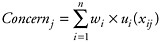
where j is the source of vulnerability, i is an attribute, n is the number of attributes, wi is the weight for attribute i, xij represents how source j performs in terms of attribute i, and ui is the utility attached to that degree of attribute i.
This appendix illustrates how this approach might be applied to setting priorities. The rows of Table 5-1 list 12 attributes that might be considered when evaluating threats to the health and safety of students in a school. They include aspects of both mortality (number of deaths per year, average chance of death, highest chance of death for any student, and greatest number of deaths in a single episode) and morbidity (number of more and less serious cases of long- and short-term injuries and illnesses per year). The attributes also include features that often have been found to affect risk perceptions (e.g., Fischhoff et al., 1978; Morgan et al., in press; Slovic, 1987). These are the time between exposure and health effects, the quality of scientific understanding, the uncertainty regarding the outcomes, and the ability of students or parents to control exposure.
The columns of Table 5-1 show four weighting schemes that might be applied to these attributes. Set A reflects a person concerned only with the
TABLE 5-1 Four Possible Sets of Weights for 12 Attributes of Adolescent Vulnerability
|
|
Importance Weighting Scheme |
|||
|
Attribute |
A |
B |
C |
D |
|
Number of deaths per year |
0.050 |
0.050 |
0.050 |
0.150 |
|
Chance in a million of death per year for the average student |
0.600 |
0.250 |
0.100 |
0.100 |
|
Chance in a million of death per year for the student at highest risk |
0.300 |
0.250 |
0.100 |
0.100 |
|
Greatest number of deaths in a single episode |
0.050 |
0.050 |
0.050 |
0.150 |
|
More serious long-term injuries or illnesses (cases per year) |
0 |
0.200 |
0.150 |
0.025 |
|
Less serious long-term injuries or illnesses (cases per year) |
0 |
0 |
0.200 |
0.025 |
|
More serious short-term injuries or illnesses (cases per year) |
0 |
0.200 |
0.150 |
0.025 |
|
Less serious short-term injuries or illnesses (cases per year) |
0 |
0 |
0.200 |
0.025 |
|
Time between exposure and health effects |
0 |
0 |
0 |
0.100 |
|
Quality of scientific understanding |
0 |
0 |
0 |
0.100 |
|
Uncertainty regarding death, illness, and injury |
0 |
0 |
0 |
0.100 |
|
Ability of student/parent to control exposure |
0 |
0 |
0 |
0.100 |
|
Sum of weights |
1.000 |
1.000 |
1.000 |
1.000 |
probability of death. Set B corresponds to an individual concerned with serious illness and injury, as well as death. Set C weights also consider less serious illness and injury.7 Finally, set D also pays attention to the “qualitative” aspects of the risk in the final four rows. Each set of weights has been normalized to total 1.0; they correspond to wi, in the formula for concern.
Table 5-2 characterizes each of 5 possible threats to adolescents in terms of these 12 attributes. The values are taken from an elaborate test bed created to study prioritization processes at a hypothetical Centerville Middle School. The values were assigned to reflect circumstances that might be found in a typical U.S. school, and internally consistent, considering the specifics of this hypothetical school (i.e., size, location, age).8 These values are represented by xij in the formula for concern. In the interests of simplicity, the utility assigned to each level of that attribute was set equal to the level, normalized to range from 0-1.0, across the five sources of vulnerability.
Combining attribute weights (wi) with the estimates of outcomes (xi) produces scores for overall concerns. Table 5-3 ranks the sources, from best (or least bad) to worst, for individuals with the four sets of values appearing in Table 5-3. For individuals focused on mortality (Set A), self-inflicted injury (i.e., suicide) draws the greatest concern and lead poisoning the least (in a school where lethal doses are impossible). If serious injury and illness also are important (Set B), then the less common infectious diseases at the school become the worst threat and the more common ones become more important. Giving weight to less serious injury and disease as well (Set C) further increases concern over common infectious diseases, and reduces that over intentional injury (whose nonfatal consequences at Centerville are rare). When weight is assigned to the qualitative attributes (rows 9–12 in Table 5-1), common infectious diseases drop in importance. They are understood very well, have immediate effects, and afford some measure of controllability (e.g., vaccination). As a result, they evoke little of the dread and discomfort associated with the less common infectious diseases or self-inflicted injury.
Thus, under the circumstances of this hypothetical school, relative concern over some of these sources of vulnerability varies considerably, depending on the weight given to the different attributes. On the other hand, lead poisoning merits relatively little concern, whatever the weighting scheme. Although its consequences can be terrible, in this (relatively new) school they are not that much of an issue. Lead poisoning might rank much higher in priorities set at an aging, urban school or in national priori-
|
8 |
The project description is at: http://www.epp.cmu.edu/research/risk_ranking.html. Summary sheets describing the risks can be found at: http://www.epp.cmu.edu/research/risk-summary-sheets/risk1.html. |
TABLE 5-2 Estimates of the Performance of 5 Sources of Adolescent Vulnerability on 12 Attributes
|
|
Sources of Vulnerability |
||||
|
Attribute |
Common Infectious Diseases |
Intentional Harm |
Lead Poisoning |
Less Common Infectious Diseases |
Self-Inflicted Harm |
|
Number of deaths per year |
0.067 |
0.233 |
0 |
1 |
1 |
|
Chance in a million of death per year for the average student |
0.071 |
0.286 |
0 |
1 |
1 |
|
Chance in a million of death per year for the student at highest risk |
0.008 |
0.333 |
0 |
0.117 |
1 |
|
Greatest number of deaths in a single episode |
0.04 |
0.107 |
0 |
1 |
0.107 |
|
More serious long-term injuries or illnesses (cases per year) |
0.0005 |
0.01 |
0 |
1 |
0.02 |
|
Less serious long-term injuries or illnesses (cases per year) |
0.2 |
0.05 |
1 |
0.2 |
0.3 |
|
More serious short-term injuries or illnesses (cases per year) |
1 |
0.075 |
0 |
1 |
0.25 |
|
Less serious short-term injuries or illnesses (cases per year) |
1 |
0.006 |
0 |
0.010 |
0.001 |
|
Time between exposure and health effects |
0.5 |
1 |
0 |
0.5 |
1 |
|
Quality of scientific understanding |
0 |
0.5 |
0 |
0 |
0.5 |
|
Uncertainty regarding death, illness, and injury |
0.318 |
0.636 |
1 |
0.318 |
0.409 |
|
Ability of student/parent to control exposure |
0.5 |
0 |
1 |
0.5 |
0 |
TABLE 5-3 Risk Rankings of 5 Sources of Adolescent Vulnerability Given Sets of Weights on 1 Set of 12 Attributes and Estimates from a Hypothetical Middle School
|
|
|
Set of Weights |
|||
|
Rank |
|
A |
B |
C |
D |
|
Best |
1. |
Lead poisoning |
Lead poisoning |
Intentional injury |
Common infectious disease |
|
|
2. |
Common infectious disease |
Intentional injury |
Lead poisoning |
Lead poisoning |
|
|
3. |
Intentional injury |
Common infectious disease |
Self-inflicted injury |
Intentional injury |
|
|
4. |
Less common infectious disease |
Self-inflicted injury |
Common infectious disease |
Self-inflicted injury |
|
Worst |
5. |
Self-inflicted injury |
Less common infectious disease |
Less common infectious disease |
Less common infectious disease |
ties that considered such schools. In that case, Centerville Middle School might have a mandate, and perhaps resources, to deal with a problem of relatively little local concern.
REFERENCES
Bendor, J. (1995). A model of muddling through. American Political Science Review, 89, 819-840.
Bentkover, J. D., Covello, V. T., & Mumpower, J. (Eds.). (1985). Benefits assessment: The state of the art. Dordrecht, The Netherlands: D. Reidel.
Breyer, S. (1993). Breaking the vicious circle: Toward effective regulation. Cambridge, MA: Harvard University Press.
Budescu, D. F., & Wallsten, T. S. (1995). Processing linguistic probabilities: General principles and empirical evidence. In J. R. Busemeyer, R. Hastie, & D. L. Medin (Eds.), Decision making from a cognitive perspective (pp. 275-318). New York: Academic Press.
Bureau of Labor Statistics. (1998). NLS1997 handbook. Washington, DC: U.S. Department of Labor.
Carnegie Mellon University. (2001). Engineering and public policy risk analysis and risk communication. Available: >http://www.epp.cmu.edu/research/EPP_risk.html>. [August 31, 2001].
Cohen, B., & Lee, I. S. (1979). A catalog of risks. Health Physics, 36, 707-722.
Crouch, E. A. C., & Wilson, R. (1981). Risk-benefit analysis. Boston: Ballinger.
Davies, J. C. (Ed.). (1996). Comparing environmental risks. Washington, DC: Resources for the Future.
Dawes, R. M. (1979). The robust beauty of improper linear models. American Psychologist, 34, 571-582.
Dawes, R. M., & Hastie, R. (in press). Rational choice in an uncertain world (2nd ed.). San Diego: Harcourt Brace.
Department of Health and Human Services. (2000). Healthy people 2010. Washington, DC: Author.
Federal Interagency Forum on Child and Family Statistics. (1997). America’s children: Key national indicators of well-being. Washington, DC: Author.
Fischhoff, B. (1995). Ranking risks. Risk: Health Safety & Environment, 6, 189-200.
Fischhoff, B. (1999). Why (cancer) risk communication can be hard. Journal of the National Cancer Institute Monographs, 25, 7-13.
Fischhoff, B. (2000). Need to know: Analytical and psychological criteria. Roger Williams University Law Review, 6, 55-79.
Fischhoff, B., Bostrom, A., & Quadrel, M. J. (1997). Risk perception and communication. In R. Detels, J. McEwen, & G. Omenn (Eds.), Oxford textbook of public health (pp. 987-1002). London: Oxford University Press.
Fischhoff, B., Downs, J., & Bruine de Bruin, W. (1998). Adolescent vulnerability: A framework for behavioral interventions. Applied and Preventive Psychology, 7, 77-94.
Fischhoff, B., Lichtenstein, S., Slovic, P., Derby, S. L., & Keeney, R. L. (1981). Acceptable risk. New York: Cambridge University Press.
Fischhoff, B., Parker, A., Bruine de Bruin, W., Downs, J., Palmgren, C., Dawes, R.M., & Manski, C. (2000). Teen expectations for significant life events. Public Opinion Quarterly, 64, 189-205.
Fischhoff, B., Slovic, P., Lichtenstein, S., Read, S., & Combs, B. (1978). How safe is safe enough? A psychometric study of attitudes towards technological risks and benefits. Policy Sciences, 8, 127-152.
Fischhoff, B., Watson, S., & Hope, C. (1984). Defining risk. Policy Sciences, 17, 123-139.
Florig, H. K., Morgan, M. G., Morgan, K. M., Jenni, K. E., Fischhoff, B., Fischbeck, P. S., & DeKay, M. (in press). A test bed for studies of risk ranking. Risk Analysis.
Institute of Medicine. (1998). Scientific opportunities and public needs: Improving priority setting and public input at the National Institutes of Health. Committee on the NIH Research Priority-Setting Process. Health Sciences Section. Washington, DC: National Academy Press.
Institute of Medicine. (1999). Toward environmental justice: Research, education, and health policy needs. Committee on Environmental Justice. Health Sciences Section. Washington, DC: National Academy Press.
Jenni, K. (1997). Attributes for risk evaluation. Unpublished doctoral dissertation. Department of Engineering & Public Policy, Carnegie Mellon University.
Jessor, R., Donovan, J. E., & Costa, F. M. (1991). Beyond adolescence. New York, NY: Cambridge University Press.
Kahneman, D., Slovic, P., & Tversky, A. (Eds.). (1982). Judgment under uncertainty: Heuristics and biases. New York: Cambridge University Press.
Kahneman, D., & Tversky, A. (1979). Prospect theory: An analysis of decision under risk. Econometrica, 47, 263-281.
Keeney, R. L., & Raiffa, H. (1976). Decisions with multiple objectives: Preferences and value tradeoffs. New York: John Wiley.
Kolata, G. (2001, April 8). Putting a price tag on the priceless. New York Times, Section 4, p. 4.
Kubey, R., Larson, R., & Csikszentmihalyi, M. (1996). Experience sampling method applications to communications research. Journal of Communication, 46(2), 99-120.
Lerner, R. M. (in press). Adolescence: Development, diversity, context, and application. Upper Saddle River, NJ: Prentice-Hall.
Lichtenstein, S., Slovic, P., Fischhoff, B., Layman, M., & Combs, B. (1978). Judged frequency of lethal events. Journal of Experimental Psychology: Human Learning and Memory, 4, 551-578.
Lindblom, C. (1959). The science of muddling through. Public Administration Review, 79-88.
Loewenstein, G. (1996). Out of control: Visceral influences on decision making. Organizational Behavior and Human Decision Processes, 65, 272-292.
Long, J., & Fischhoff, B. (2000). Setting risk priorities: A formal model. Risk Analysis, 20, 339-351.
Lowrance, W. (1975). Of acceptable risk. San Francisco: Freeman.
Masten, A. S. (2001). Ordinary magic: Resilience processes in development. American Psychologist, 56, 227-238.
McFadden, D. (1999). Rationality for economists? Journal of Risk and Uncertainty, 19, 73-105.
Macintyre, S., & West, P. (1993). What does the phrase “safer sex” mean to you? Understanding among Glaswegian 18 year olds in 1990. AIDS, 7, 121-126.
Morgan, K. M., DeKay, M. L., Fischbeck, P. S., Morgan, M. G., Fischhoff, B., & Florig, H. K. (in press). A deliberative method for ranking risks: Evaluating validity and usefulness. Risk Analysis.
Morgan, M. G., Fischhoff, B., Bostrom, A., & Atman, C. (2001). Risk communication: The mental models approach. New York: Cambridge University Press.
Morgan, M. G., Fischhoff, B., Lave, L., & Fischbeck, P. (1996). A proposal for ranking risks within federal agencies. In C. Davies (Ed.), Comparing environmental risks (pp. 111-147). Washington, DC: Resources for the Future.
National Institutes of Health. (1998). Setting research priorities at the National Institutes of Health. Washington, DC: Author.
National Research Council. (1983). Risk assessment in the federal government: Managing the process. Committee on the Institutional Means for Assessment of Risks to Public Health. Commission on Life Sciences. Washington, DC: National Academy Press.
National Research Council. (1996). Understanding risk: Informing decisions in a democratic society. Committee on Risk Characterization. P. C. Stern & H. V. Fineberg (Eds.). Commission on Behavioral and Social Sciences and Education. Washington, DC: National Academy Press.
Office of Technology Assessment. (1995). Risks to students in school (OTA-ENV-633). Washington, DC: U.S. Congress. Available: <http://www.ota.nap.edu/pubs.html>. [August 8, 2001].
Quadrel, M. J., Fischhoff, B., & Davis, W. (1993). Adolescent (in)vulnerability. American Psychologist, 48, 102-116.
Schriver, K. A. (1989). Evaluating text quality: The continuum from text-focused to reader-focused methods. IEEE Transactions on Professional Communication, 32, 238-255.
Schwarz, N. (1999). Self reports. American Psychologist, 54, 93-105.
Simon, H. A. (1957). Models of man. Cambridge, MA: MIT Press.
Slovic, P. (1987). Perceptions of risk. Science, 236, 280-285.
Starr, C. (1969). Social benefit versus technological risk. Science, 165, 1232-1238.
Tengs, T. O., Adams, M. E., Pliskin, J. S., Safran, D. G., Siegel, J. E., Weinstein, M. C., & Graham, J. D. (1995). 500 lifesaving interventions and their cost-effectiveness. Risk Analysis, 15, 369-390.
Tengs, T. O., & Wallace, A. (2000). One thousand quality of life estimates. Medical Care, 36, 583-637.
United Nations. (1989). Convention on the rights of the child. New York: Author.
vonWinterfeldt, D., & Edwards, W. (1986). Decision analysis and behavioral research. New York: Cambridge University Press.
Weinstein, N. D. (1987). Unrealistic optimism about susceptibility to health problems. Journal of Behavioral Medicine, 19, 481-500.


