
SAMPLE RETURN FROM PRIMITIVE BODIES
Donald Brownlee
Department of Astronomy
University of Washington
Abstract
This paper discusses the collection of samples from primitive solar system bodies. A comet or asteroid sample return mission, though expensive, can be only half the price of a major “flagship,” planetary mission. In addition to mission-targeted bodies, some 20,000 meteorites have landed on Earth at no cost. Over half of known meteorites found on Earth have been recovered from Antarctica. Meteorites are a wonderful resource, though they have some limitations. In addition to the normal meteorites, there are also the invisible meteorites—the cosmic dust particles—which are smaller than normal meteorites but are interesting because they provide an alternate and more representative sampling of bodies in the solar system.
Introduction
Most of the information we have about primitive solar system bodies comes from spectral reflectivity, which is a useful source of information but is not tied to astrobiology or mineralogy in a straightforward way. Asteroids exhibit different spectral reflectance types, and these have been studied in great detail. One of the most abundant is the so-called C-type, in which the dark material is typically attributed to carbon-rich materials, but in fact any material such as metal or sulfide can make a C-type spectrum. There are also types called P and D, which increase in reflectivity into the red region of the spectrum. In some cases there are matches with spectral reflectance of certain meteorite types. The most successful match is that of Vesta (and the Vestoids that are associated with Vesta) with the so-called howardite-eucrite-diogenite achondrite meteorites.
The meteorites come from the asteroid belt, with a few exceptions that appear to have come from Mars or the Moon. Most meteorites are delivered from the 1:3 resonance (referring to the ratio of the orbital period of the asteroids there to the orbit period of Jupiter) between 2.3 and 2.2 AU. There is a range of meteorite types that come from this small band of the solar system. The asteroid belt delineates the transition between the terrestrial planet and gas giant domains of the solar system, and there indeed appears to be a stratigraphy in the asteroid belt. The main belt is dominated by the C-type, the inner part is dominated by the E- and R-types, and the outer part is dominated by the P- and D-types.
The asteroids in the mid-belt commonly show OH in their reflectance spectrum—denoting the presence of hydrated minerals. Those farther out are thought to be very primitive—the common explanation for P-and D-types is that they have a high organic content, which is responsible for their dark, red higher reflectances. But these do not show OH. It is clear that the closer asteroids were heated above the melting point of water ice.
The black-body temperature today in the middle of the asteroid belt is about 180 K. In the primitive nebula, neither insolation nor the background gas could produce high enough temperatures to melt ice. There must have been an energy source that heated the asteroids and had a radial dependency. One of the most popular explanations is heating from short-lived radioisotopes such as 26Al and 60Fe. This imparts a radial dependence because the half-lives of these isotopes are compared to the accretion time of asteroidal-sized bodies, and plausibly those on the inner edge of the belt would form before those on the outer edge. Whatever the explanation, there was a heat source that had a radial dependence. In the 1:3 resonance, which is the source of many of our meteorites, bodies may have formed with a fair amount of ice in them and the ice then melted because of this mysterious heat source. The resulting liquid water then modified these rocks. Many of the primitive meteorites we have were thus relatively warm wet rocks for millions of years, and their parent asteroids may have had a much higher content of water in them than we see today.
In addition to meteorites, there are small particles, called cosmic dust particles, that come from both asteroids and comets. Some of these have quite unusual properties, including very high carbon content —up to 50 percent by
weight—much higher than meteorites. They can be collected from Earth's stratosphere as material rains down from space. It would be particularly attractive if we could collect dust particles directly from the tail of a known, documented comet. That is the role of the Stardust mission currently in space.
Sample Return Missions: Stardust
Figure 1 shows the Stardust spacecraft, which is a Discovery mission, with the collector and then the canister (on top), which is coming back to Earth in 2006. Stardust is collecting dust right now—very small particles that are believed to be streaming through the solar system from interstellar space. In 2004 Stardust will fly through the coma of comet Wild-2, collecting dust as close as 150 km from the comet 's nucleus as well as making in situ measurements with a mass spectrometer. After the Wild-2 encounter, the sample canister will eject from the spacecraft and parachute down to a landing in Utah in 2006.
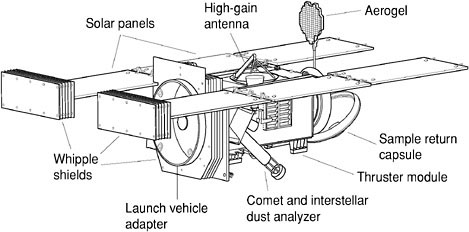
FIGURE 1. Schematic of the Stardust spacecraft with sample return capsule and other key parts marked.
Meteorites in Astrobiology
Meteorites do have an amazing variety of types, despite the fact that they come from a relatively limited range of semi-major axes in the solar system. Some of them have been heated to silicate melting temperatures, and some to the melting point of ice. While those objects clearly have been altered, others have been very well preserved.
One of the remarkable things about some meteorites is that there has been thermal alteration of material leading to significant changes in mineralogical structure—equilibration of one mineral to another. But the most chemically primitive meteorites, in terms of the highest abundance of volatile materials, remarkably seem to be the ones most affected by aqueous alteration—contact with liquid water. Therefore, from an astrobiology standpoint, it is interesting that meteorites have come from such a wealth of different environments that existed in one small strip of the solar system. They're all extremely old rocks—they go back to the origin of the solar system—and they were the most organic-rich materials that we know. How this fits into the astrobiology picture is as yet unknown. Certainly as we learn more about the relationships among meteorites, interplanetary dust, and their parent bodies (comets and asteroids), we will get a clearer picture of the evolution of organic material during the early history of the solar system.
MARS SAMPLE RETURN: LIFE DETECTION AT ALL LEVELS
Kenneth H. Nealson
Center for Life Detection
Jet Propulsion Laboratory
Abstract
The Mars sample-return (MSR) missions are presently in a state of reorganization as a result of the recent reports by the committees that examined the failed missions (Mars Climate Orbiter [MCO] and Mars Polar Lander [MPL]). There is little doubt that MSR is still an important and viable component of the Mars Exploration Program, and remains a central goal of the program, but the exact nature of the mission (e.g., the time of launch, the architecture of the mission, the international partners) cannot be specified. However, the basic components of sample return will remain the same: spacecraft assembly, launch, transit to Mars, landing on Mars, sample retrieval, launch of the sample to Mars orbit, sample retrieval in Mars orbit, return to Earth, Earth entry, sample retrieval and containment, and sample analysis. Life detection will play a prominent role throughout the mission, from the point of view of planetary protection, science protection, and life detection of terrestrial life forms, either extant or extinct.
Introduction
The MSR missions have been dominated by a desire for rapid sample return for several years, with a program for sample return aimed at the year 2008. This mission design included two separate launches (2003 and 2005) of lander-rover combinations that would retrieve samples (soil samples, drilled rock cores, and unconsolidated martian surface materials), place the samples into a sample container called an OS (orbiting sample), and launch the OS into low Mars orbit using the Mars Ascent Vehicle (MAV). After the second sample was placed in orbit, an orbiter was to be sent to fetch both samples and place them into the Earth Entry Vehicle (EEV), which would deliver them to the surface of the Earth via a hard landing at a site to be determined. Some variation on this was expected to occur with a sample returned to Earth at the target date of 2008.
With the unfortunate loss of two Mars missions (MCO and MPL), both the architecture and the timing of the MSR program are being reexamined. At this point in time it is difficult to present any details of the missions. What can be said with some authority is that MSR is still a major component of the Mars program, and the return of a pristine sample from the surface of Mars remains a major goal.
While neither the exact nature of the mission nor the timing of the MSR effort can be specified, it is possible to identify many parts of the mission and of the total program that will occur, and to discuss the role that life detection will play, in fact must play, in the various stages.
Mission Components
The components of the mission that will almost certainly occur in any future mission are shown in Table 1, although the details surrounding them may vary considerably.
For the purpose of the discussion, we divide the issue of life detection into two parts: earthly life, and extraterrestrial life. For the former, standard methods and logic can be used, while for the latter, other methods (so-called non-Earthcentric methods) must be employed.
The need for these analyses has been clearly noted by previous task groups of the NRC in reports presented in 1992 and 1997.1,2 In these reports it was noted that while earthly life is not likely to prosper on Mars, in the interest of protecting the science of the mission, it is necessary to fastidiously clean any spacecraft that will land on the surface of Mars. This so-called science protection is of great importance to avoid false positives during in situ life detection experiments, as well as those that might occur in returned samples as the result of “roundtrippers”— earthly contaminants that survive the transit in both directions.
TABLE 1 Mission Components
|
Mission Phase |
Activities Relevant to Life Detection |
|
Prelaunch |
Spacecraft fabrication and assembly Cleaning and sterilization Bioburden and cleanliness assessmenta |
|
Launch |
n/a Bioburden and cleanliness assessmenta |
|
Transit to Mars |
n/a |
|
Landing on Mars |
n/a |
|
Mars activities |
Sample retrieval Sample transfer to orbiting sample (OS) container Launch of Mars Ascent Vehicle Release of OS to Mars orbit (in situ science and analyses on Mars a) |
|
Retrieval of OS and transfer to Earth Entry Vehicle |
n/a |
|
Delivery to Earth by Earth Entry Vehicle |
n/a |
|
Retrieval of sample |
Validation of sample integritya Prelanding site analysesa |
|
Sample containment |
n/a |
|
Sample analysis |
Presentations in this volumea |
|
a Parts of the mission discussed in the remainder of this presentation. |
|
Assessment of Bioburden
The technology for detecting very low levels of bacteria, especially if they do not grow in culture media, is severely limited. One method that shows promise is that of fluorescence analyses of spacecraft surfaces using deep ultraviolet-excited broadband fluorescence. The advantage of the deep ultraviolet for this purpose is that no other stains need to be added, and yet at 248 or 224 nm, there is little fluorescence from minerals or metals, so that the signal-to-noise (S/N) ratio of the method is quite high. Once fluorescent spots are seen, they can be interrogated by more definitive methods (e.g., ultraviolet-Raman spectroscopy or other approaches) that can identify various groups of molecules indicative of earthly life at the appropriate size scale. Such an approach allows one to reduce the “search space ” by a general scanning method, saving the time-consuming Raman methods for those few spots where fluorescence is seen. Such methods should allow one to accurately (and perhaps robotically) assess the bioburden of spacecraft surfaces, one of the key challenges for life detection in MSR.
Another issue with regard to bioburden assessment relates to the types and numbers of various organisms and groups of organisms that are present. It seems likely that one of the best approaches will be that of molecular genetics, but with the low numbers of organisms present on the surfaces after cleaning, even these methods are severely challenged to deliver definitive results. This would seem to be an area that is ripe for improvement and adaptation to bioburden assessment, as recommended by the 1992 National Research Council report.3
Molecular Tagging of Earthly Organisms
Another approach being tested is that of developing molecular tags for labeling bacteria that may be attached to the spacecraft and end up in the sample chamber or interfere with in situ life detection experiments. Such methods, if successful, would allow treatment of the parts of the spacecraft that will come into contact with the Mars sample, so that any organisms (dead or alive, intact or fragmented) would be labeled and thus identifiable as of terrestrial origin. For organisms in hard-to-reach places and/or shielded from the ultraviolet light of the sun during the mission, this method would be particularly valuable. Several approaches to this tagging method are now under consideration.4,5
In Situ Science
With the potential restructuring and delay of the sample-return mission, it is conceivable that more emphasis will be put on in situ measurements on the martian surface. For all such studies, should they be done as independent missions or done as part of an MSR effort, the potential interference by contaminants from Earth will be a factor. For this reason, both an accurate knowledge of the bioburden and a tagging method that could identify earthly contaminants, would enhance the integrity of the mission immensely.
Sample Handing and Analysis
When samples are returned to Earth for analysis, presumably new approaches will be employed, using nonEarth-centric methods for life detection. Such methods are not yet available but are under development in several laboratories.6,7 A combination of non-Earth-centric, standard terrestrial life methods and screening for tagged materials might constitute a suitable approach for samples when returned.
Conclusions
There are a number of ways in which life detection will be of importance in the Mars program. The prospect of success will be greatly aided by improvements in methods for non-Earth-centric life detection, development of tagging methods, and improvements in molecular methods for terrestrial life detection. With these accomplishments, it should be possible to use a combination of these approaches to ensure both planetary protection and science protection adequate for the upcoming missions.
Acknowledgments
The help of many agencies in support of our work in life detection is gratefully acknowledged: the National Science Foundation in support of planetary atmospheric signatures; Department of Energy Natural and Accelerated Bioremediation Research program in support of methods for studying life associated with mineral interfaces; NASA Exobiology Program; and NASA Astrobiology Program for support in the development of biosignatures.
SEARCHING FOR LIFE ON EUROPA FROM A SPACECRAFT LANDER
Christopher F. Chyba
SETI Institute and
Department of Geological and Environmental Sciences
Stanford University
Abstract
An in situ search for life on Europa using a spacecraft lander should examine ice that appears to have been liquid recently and that seems most likely to have been derived from the ocean. An important lesson from the Viking missions to Mars is that searches for extraterrestrial life on Europa should establish the geological and chemical context needed to inform the results. The amount of sample available for life detection analysis could be maximized by the melting and filtration (and possibly the evaporation) of ice. In the case of sample return missions, both pristine and concentrated samples should be collected. Sample acquisition from below the radiation processing depth on Europa is essential. Sample acquisition and handling on Europa present difficult technical challenges.
Introduction: Definitions of Life
There is no broadly accepted general definition of life in the scientific community. A wide variety of definitions have been suggested, including metabolic, thermodynamic, biochemical, and genetic definitions. Each of these definitions fails in so far as it seems to include entities or phenomena that we do not wish to consider to be alive or excludes entities that are.8 To these definitions can be added others; Monod suggested that a necessary part of a definition of living entities must include the notion of purpose or “teleonomy,”9 whereas Shapiro and Feinberg propose that life should be defined as “the activity of a biosphere.”10 These definitions have their own important problems and in any case are unlikely to prove useful in a remote search for life. One must also be careful not to conflate (as I am somewhat guilty of here) the distinct ideas of “a living entity” and “life.”11,12
One working definition for life that has attracted attention in the origins-of-life community is what we call the “chemical Darwinian ” definition,13 that “life is a self-sustained chemical system capable of undergoing Darwinian evolution.”14 The word “chemical” has the effect of excluding computer “life” by fiat. But however useful the Darwinian definition may be for interpreting laboratory experiments, or guiding thinking about how “the origin of life” on early Earth is to be conceived (“the origin of life is the same as the origin of evolution” is a common corollary), it too is unlikely to be of utility in a remote search for life. How long do we wait to determine if a candidate entity is capable of undergoing Darwinian evolution?
In assessing the possibilities of life in various locations in the solar system, we instead fall back on the less ambitious, but practically useful, notion of “life as we know it,” meaning life based on a liquid water solvent, a suite of “biogenic” elements (most famously carbon present as organic molecules), and a useful source of free energy. From the point of view of in situ experiments to be conducted at these sites, what we need are definitions (or implicit definitions) that prove useful in a remote exploration context. I suggest that there are useful insights to be gained from the Viking search for life on Mars about how to conduct future searches for life and the role that varying definitions of life might play.
The Viking Search for Life on Mars
The Viking biology package contained three experiments,15,16 each of which can be described as a search for evidence of metabolism in martian soil samples. That is, the Viking biology package implicitly adopted a metabolic definition of life. One of the experiments, the labeled-release experiment, gave especially provocative results. Indeed, with respect to the labeled-release results, the head of the Viking biology team wrote in 1978, “If
information from other experiments . . . had not been available, this set of data would almost certainly been interpreted as presumptive evidence for biology.”17
Why then is it largely held in the scientific community that Viking failed to find life on Mars? There are several reasons. Theoretical modeling of the martian atmosphere and regolith suggests the production of oxidants (e.g., hydrogen peroxide) by the action of ultraviolet light, and these seem more or less able to account for the results of the three biology package experiments.18 In this view, while the biology package hoped to find unambiguous evidence of martian biology, it instead was initially misled by unanticipated martian nonbiological chemistry.
Perhaps most important, however, was the failure of the Viking gas chromatograph-mass spectrometer (GCMS) to find any organic molecules (released in stages at temperatures up to 500°C) in the martian soil at the part-per-billion level for molecules containing three or more carbon atoms (and at the part-per-million level for molecules containing one or two carbons).19 Although not intended as a life-detection experiment, the GC-MS provided a search for life that implicitly assumed a biochemical definition: no (detected) organics, no life. In effect, a metabolic search for life yielding apparently positive results was undercut by the negative results of a de facto search based on biochemistry.
The interpretation of the labeled-release results as due to the action of martian oxidants is still debated and may be premature.20,21 It is a remarkable fact that, a quarter century after Viking, it is still the case that the chemical oxidant hypothesis for the biology package results remains untested on the martian surface. Nevertheless, the extraordinary claim of life on Mars must defer to a plausible chemical explanation in the absence of more compelling evidence.
Lessons from Viking
With the benefit of 25 years' hindsight, I suggest that there are a number of lessons to be learned from the Viking experience on Mars for future remote spacecraft searches for life:
-
If the payload permits the luxury of more than one life detection experiment, a remote search for life is best conducted with experiments that in effect assume contrasting definitions of life.
-
Nevertheless, it is unlikely that, for example, the first Europa lander will permit more than 10 or 20 kg of science payload. In this case, it seems unlikely for the first lander that more than one life detection experiment will be present. In this case, the Viking experience suggests that the biochemical definition trumps other definitions. In the absence of a compelling case based on organic chemistry, it is unlikely that a biological interpretation of other experimental results will be accepted. At a minimum, then, we want to understand the organic chemistry present in our sample.
-
It is crucial to establish the geological and chemical context within which any biological experiments will be conducted. Had the presence of abundant oxidants in the martian soil already been demonstrated, very different experiments would have been flown in the Viking biology package.
-
The importance of negative results is axiomatic. Searches for life are best designed, where possible, to provide valuable information even if the searches fail to find any life.
-
We must nevertheless temper these conclusions with the realization that exploration need not, and often cannot, be hypothesis testing. Much of what we do in planetary missions is simple exploration.
Where Should We Land on Europa?
A europan lander is included as an upcoming mission in the current draft NASA Roadmap for solar system exploration. It is not premature to begin thinking about where a first lander mission should set down. At this time, however, it is difficult to give more than general guidelines to the answer to this question. Information from the Europa Orbiter mission will be crucial in helping us decide where to land. We should consider the option of a lander mission that would have the flexibility to launch to Europa prior to the full results from the Orbiter and be able to take advantage of the Orbiter data returned.
The first lander should touch down at a location that we think represents a site where liquid water from Europa's ocean has recently reached the surface. However, it is difficult on the basis of current knowledge to determine with confidence where these sites may be (or even if any exist). Current models for Europa's surface geology are still evolving rapidly, and it may yet be several years before they settle down and, perhaps, converge. (Even then, of course, there is no guarantee that they will converge to the correct model.) When first described, 22 chaos regions of Europa seemed possibly to provide candidate locations where the ocean may have reached the surface through catastrophic melt-through events. Now, however, models of viscous creep in Europa 's ice argue against this explanation.23 If lenticulae are in fact the expressions of solid-state diapirism in Europa's ice,24 they too may prove poor locations for the first lander. Whether large cracks represent sites where ocean water reaches Europa's surface on a diurnal basis remains controversial, but if so they might be of special interest for a search for life.25 It is unclear how to interpret “ponds” on Europa's surface that seem to indicate the eruption of liquid water from some source below the surface.26,27 However, if we had to choose a site for the first europan lander based on Galileo data alone, and assuming the ability to target a region only kilometers across, we might well decide to land in such a place.
Information from the Orbiter would play a major role in choosing among the various geomorphological models and selecting the most appropriate landing site. It now appears likely, in light of theoretical models, geological observations, and perhaps most importantly, Galileo magnetometer results, that an ocean exists beneath kilometers or tens of kilometers of Europa's surface ice.28,29 The first lander need not wait for the Orbiter to determine the presence of an ocean—the presence of an ocean, if not its detailed characteristics, now seems likely—but we would certainly want to make use of results from the Orbiter for landing site selection. Consistent with the recommendations of the National Research Council 's Committee on Planetary and Lunar Exploration in A Science Strategy for the Exploration of Europa,30 we should regard europan exploration as analogous to that of Mars, demanding a systematic program of exploration. Yet we do not require all the results of each Mars mission to be in hand before designing, building, and launching a subsequent mission. Rather, we recognize that Mars is a target of such importance that it will require multiple missions over many decades for its exploration, and we therefore interweave these missions in a way that incorporates new knowledge, as it becomes available, into an ongoing program.
Life Detection on Europa
A search for life on Europa should examine ice that appears to have been liquid recently and, in the best case, that seems most likely to have been derived from the ocean. Prior to or simultaneous with any experiments to search for life itself, however, a suite of measurements intended to establish chemical context should be performed. These would include determining the abundances of the major cations and anions present, the salinity, the pH, an analysis of the volatiles (e.g., CO2, O2, CH4) present in the water, and a search for organic molecules. In fact, the latter probably represents the highest-priority life detection experiment to be conducted. If sufficient payload were available, additional experiments might include high-sensitivity searches for certain specific indicative organic molecules (such as amino acid enantiomers), a determination of key stable isotope ratios (e.g., 12C/ 13C), or even fluorescent microscopy. But the chemical context should be established simultaneously or first.
What life detection sensitivity is required at Europa? Models cannot answer this question. Gaidos et al. have emphasized the difficulty of identifying sources of chemical disequilibrium on an ice-covered world and the concomitant difficulty of imagining large biomasses. 31 Photosynthesis is extremely difficult on Europa, though not entirely excluded.32 Estimates of the biomass that could be supported by possible europan hydrothermal vents are very uncertain,33 and the communication of biomass at the base of a 100-km-deep ocean with Europa's surface is uncertain. Ecosystems supported by the production of oxidants and organics in Europa's surface ice seem likely to yield low cell densities (see “Appendix” below).34
Because of these uncertainties, any search for life on Europa should scan a large amount of material in a manner that chooses particular sites for subsequent high-sensitivity investigation and/or take advantage of the opportunity to concentrate sample by melting and filtering (or perhaps evaporating) Europa's ice. I examine only the latter option in more detail here; both possibilities bear further investigation.
Sample Concentration and Handling
The amount of sample available for life detection on Europa should be maximized by the melting and filtration (or possibly evaporation) of ice. The capability to perform this sort of sample concentration is likely to be needed for both in situ exploration and sample return missions. In the case of sample return missions, both pristine and concentrated samples should be returned.
Moreover, sample acquisition from some depth into Europa's surface is essential. At a minimum, sampling should take place below the radiation-processing depth, and preferably below the impact gardening depth.35 Certainly this means that sample acquisition should take place more than a centimeter below the surface (assuming densities of 1 g cm −3) and preferably at depths greater than 10 cm.
Additionally, attention must be paid to the challenges of sample acquisition and handling for chemical or biological analyses. Whether the sample is acquired from the ice directly, from melting ice, or from melting ice and concentrating its contents, sample acquisition on Europa presents difficult technical challenges not previously encountered, with implications for technology development.
How much ice can we hope to process during a surface lander mission with a duration of about one month (the length of time likely to be permitted by the intense radiation environment at Europa's surface)? The energy required to melt 1 kg of ice on Europa, starting at an average surface temperature of 100 K, is given by

Here H fusion = 3.3 × 10⁵ J kg−1 is the heat of fusion of ice and C(T) is the temperature-dependent specific heat, which in J kg−1 K−1 for an absolute temperature T is C(T) = 7.04 T + 185, giving ΔE = 6 × 10⁵ J kg−1. For a dedicated spacecraft power source of 20 W (chosen for this example to be comparable to the total electric power expected to be available for the science payload of the planned Europa Orbiter mission),36 this calculation might suggest that ~100 liters is a likely upper limit for how much water could be melted and filtered during a month-long mission. However, a single dedicated radioisotope thermoelectric generator (RTG) “brick” could likely provide an order of magnitude more thermal power than this,37 so these numbers are strongly dependent on decisions yet to be made regarding the power that a lander could in fact dedicate to the task.
Melting and filtration has drawbacks, however. In particular, filtration alone will not capture soluble organics. Some of these could be captured through an adsorption column, with the necessary additional mass requirement. Alternatively, rather than filtering the water, one could imagine evaporating it—though vaporized organics would have to be captured in this case. Evaporation would require substantially more energy than melting; the relevant heat of vaporization for water is Hvapor = 2.5 × 10⁶ J kg−1, or nearly eight times the heat of fusion.38 All told, evaporation would require about ΔE = 3 × 10⁶ J kg−1, or five times as much energy (or five times less sample processed) as in the calculations above.
However, these calculations neglect the power requirements of the sampling system that would core into Europa's ice, withdraw samples, and introduce them into a melting chamber. This sampling system would likely pose substantial challenges and could limit the total amount of sample acquired over a mission lifetime to values lower than those suggested above. Melting directly at the surface (without withdrawing samples into a chamber) poses much greater power requirements due to heat conduction out into the ice. Indeed, the initiation of melting-sublimation at Europa's ice would require about a kilowatt of thermal power.39
Appendix: Radiation-powered Life on Europa
I recently estimated the biomass that could be supported by mixing the ice irradiation products HCHO and H2O2 into Europa's ocean.40 For growth limited by either energy or the carbon from HCHO, I found steady-state biomasses of ~2 × 10¹⁰ g and ~4 × 10⁷ g, respectively. E.J. Gaidos, K.N. Nealson, and J.L. Kirschvink of the California Institute of Technology have kindly informed me of a calculational error in the higher estimate. I correct that error here and briefly discuss its implications.
The calculation should be modified as follows: I estimate the efficiency, φ, for microbial biomass (dry weight) production by dividing the dry mass that can be produced per mole of adenosine 5'-triphospate (ATP), YATP, by the energy required for ATP production, EATP.41 For a variety of microorganisms growing anaerobically or aerobically, YATP ~10 g mol−1.42 Typically, EATP ~10 kcal mol−1,43 giving φ ~ 1 g kcal−1. Were all the available energy used by microorganisms, this value for φ would lead, following Chyba (2000), to a steady-state biomass ~5 × 10⁸ g. If microorganisms utilized only 10 percent of the available energy,44 this value would be reduced by a factor of 10.
A biomass of ~108 g corresponds to ~5 × 10²¹ aquatic cells.45 Were these cells distributed evenly throughout Europa's putative ocean—an unlikely scenario—average cell densities would be only about 1 cell per liter. Even if this water reached the surface and froze, such low cell densities would render life detection extremely difficult. For example, for an instrument (perhaps fluorescent high-performance liquid chromatography [HPLC]) with a sensitivity of ~105 cells, tens of thousands of liters of ice would have to be melted and filtered to yield sufficient sample for a detection. For comparison, a melter probe of 12-cm cross section that descended into Europa 's ice (such as those being developed at the Jet Propulsion Laboratory 46) and captured the resulting meltwater could provide about 103 liters of water for every 100 m of penetration depth.
These requirements could be greatly lessened if organisms were strongly concentrated in nutrient-rich regions near the ice-water interface, 47 as might be expected by analogy to the variable distribution of terrestrial microbes.48,49 For example, if the microorganisms maintained themselves within the upper 10 m of the ocean, ice derived from this layer could have concentrations of ~10 cells cm−3, requiring only ~10 liters of meltwater to be filtered. Biomass production at hydrothermal vents may also be possible at the bottom of Europa's ocean,50 a possibility not considered further here. These uncertainties emphasize the importance of establishing chemical and geological context as an early and ongoing step in any search for life on Europa. This search would be aided by a choice of landing site where water from the ocean seemed most likely to have reached the surface, and by an ability to concentrate and examine as much sample as practical.
Note added in proof: More recent estimates have been made by Chyba and Hand.51
Acknowledgments
This work was supported in part by the NASA Exobiology Program and a Presidential Early Career Award for scientists and engineers.
SAMPLE RETURN FROM TITAN FOR EXOBIOLOGY
Christopher McKay
Ames Research Center
National Aeronautics and Space Administration
Abstract
Titan, the largest moon of Saturn is a natural environment for studies of the abiotic synthesis of organic molecules. Remote sensing and laboratory simulations have provided a basis for understanding Titan 's organic chemistry. Soon in situ analysis will be conducted by the Huygens Probe. Further in situ and possibly sample return missions may be needed to provide a detailed understanding of how the atmospheric methane and nitrogen are converted to organic, possibly prebiotic, molecules.
Background
The surface pressure of Titan is 50 percent greater than that of Earth. The temperature at the surface is close to 94 K, decreasing to about 71 K at the tropopause, which is located at an altitude of 40 km.52,53 Above the tropopause, the temperature rises rapidly to 160-180 K. The atmosphere is composed primarily of N2 with less than 8 percent CH4.54,55 These molecules are the parent species for an active photochemistry resulting in the production of many hydrocarbons and nitriles in the stratosphere. Further chemistry and phase changes in the thermal environment of the stratosphere lead to the production of an extensive system of organic clouds and aerosols.
Titan has been associated with organic chemistry since early observations of Titan revealed that it had an atmosphere with methane present. The presence of methane and the reddish appearance of the satellite lead to the suggestion that solid organic aerosols were being produced in Titan's atmosphere by photochemistry. These observations prompted laboratory simulations in which gas mixtures with the composition of Titan's atmosphere irradiated with ultraviolet light, electrical discharge, or energetic electrons have produced a solid organic material —termed tholin.
The organic haze is not uniformly distributed on Titan and changes with season.56,57 The particles in the main haze deck are probably fractal in structure with an equivalent volume radius of 0.2 micron. The haze material is organic and, if similar to laboratory tholin, has a C/N ratio in the range of 2 to 4 and a C/H ratio of about unity.58 The haze significantly affects the thermal balance of Titan, causing an antigreenhouse effect that cools the surface by 9 K.59 Titan's faintly banded appearance suggests strong zonal winds in the lower stratosphere. Condensate clouds of ethane or methane, if present, are thin, patchy, or transient. In infrared wavelengths the surface can be detected through the haze.60
Laboratory simulations have been carried out in an effort to reproduce the solid organic material thought to compose the Titan haze. The optical properties of the laboratory material—tholin—match the broad features of the geometric albedo spectrum of Titan.61 If tholin provides a good analogue for the Titan haze then we can conclude that the haze is composed of refractory organics that, once condensed, do not evaporate and are ultimately deposited on Titan 's surface.
The following are key questions about Titan's haze and clouds:62
-
What produces the detached haze at high altitude?
-
What is the cause of the seasonal variation? It is not production itself and appears to be related to dynamics.
-
Is the haze material at high altitude, particularly the detached haze layer, of different composition than lower in the atmosphere? Are there seasonal changes in composition (e.g., does the C/N ratio vary with altitude and latitude)?
-
How is nitrogen incorporated into the haze?
-
What is the efficiency of haze particles as condensation nuclei for the various stratospheric hydrocarbons and nitriles and tropospheric methane?
-
Is the lower atmosphere cleared of haze by rainout?
-
What are the compositions, altitudes, and particle sizes associated with stratospheric condensate clouds? At what latitudes are they located, and at what times of the year?
-
What are the frequency of occurrence, areal extent, and altitudes of tropospheric methane clouds?
-
What is the relationship between the existence of methane clouds and the degree of methane supersaturation?
And, directly relevant to the upcoming Cassini mission and attempts to image the surface of Titan:
-
What are the optical properties of the haze and any condensation clouds in the 1- to 3-micron range?
Role of Sample Return
A sample return has the potential to return significant information that can address the questions listed above. In particular, a sample return could directly address the elemental composition and the organic molecules that constitute the haze. Detailed isotopic studies that would be relevant to the formation mechanisms of the haze could be readily done with a returned sample but would be difficult to determine in situ.
However, laboratory simulations can provide insights into the formation mechanisms. Moreover, in situ analysis of Titan's atmosphere is simplified because the atmosphere provides a medium for a descent probe or an aerobot. Many of the questions listed above could be answered with such in situ studies.
In conclusion, it would seem that a sample return from Titan should not be considered at this time. Further in situ experiments are warranted as well as continued laboratory simulations. If these point to enduring mysteries about Titan's organic haze, then such mysteries would warrant a sample return mission.
PLANETARY QUARANTINE
John D. Rummel
Office of Space Science
National Aeronautics and Space Administration
Abstract
NASA's commitment to exploring space while avoiding the biological contamination of other solar system bodies and protecting the Earth against potential harm from materials returned from space dates from the early beginnings of the space program, and in some ways from before that time. NASA has developed policies and regulations to achieve this commitment, and depends on advice from the U.S. National Research Council (NRC) and others in fulfilling it. NASA imposes constraints on individual missions depending on the target-body of exploration, and the nature of the planned contact. In applying NRC reports and other advice on planetary quarantine to real-world missions, NASA faces a number of practical problems and questions. These focus on the survival and detectability of Earth organisms, both on Earth and under conditions on or under other solar system bodies, and the potential for life to exist elsewhere and to be detectable by us, either on those bodies or in samples returned to Earth. Implementing a satisfactory and successful planetary quarantine effort demands a great deal of both sophistication and accuracy in assessing the presence and viability of Earth life, while straining the boundaries of life detection as practiced when searching for unknown life forms in poorly understood materials returned from other planets.
Introduction
The concept of planetary quarantine (now generally referred to as planetary protection) has had a long history—if only by suggestion —dating at least from nineteenth-century discussions of panspermia. The implications of planetary quarantine (or a lack thereof) were perhaps most famously explored in H.G. Wells's War of the Worlds—where invading martians were killed-off by Earth germs—although its introduction into the practice of spaceflight, in a practical sense, was to wait until the post-Sputnik era. Specifically, quarantine standards were adopted by the International Council of Scientific Unions (ICSU) in 1958,63,64 and later the U.S. National Academy of Sciences made the practice of planetary quarantine a specific recommendation in its 1958-1960 studies.65 From the first, the distinctions between the concept and its achievement were obvious to spacecraft engineers and scientists,66 but by the early 1970s, NASA policy and practice had reached a sufficient state of pragmatism that the Viking missions to Mars were able to be implemented successfully, while protecting both Mars and the spacecraft 's biology package from contamination by Earth organisms.
But the issue that concerned the Viking missions was one of “forward contamination”—the potential exportation of Earth organisms to another world. There were serious questions raised about the potential contamination of Mars and the potential to compromise the search for life there in a direct fashion, but overall, the issues associated with Viking were of concern chiefly to the science community. More recently, however, a series of robotic sample-return missions have been under study or are under way in NASA's program. Without the confounding presence of human astronauts, these missions have been or are being assessed with respect to their potential to return biological contamination to Earth—referred to as “back contamination”—and unlike the Viking missions, these missions are potentially of compelling interest to each and every resident on planet Earth. Indeed, the questions associated with both sorts of missions have recently become more focused—both because of our recent appreciation of the wide survival limits of terrestrial life and because of our growing awareness of just how pervasive and diverse microbial life can be. Such an expanded perspective is making the implementation of NASA's policy a more challenging proposition—both in theory and in practice.
Planetary Protection Policy
With planetary quarantine provisions having been recommended by scientific groups with membership from all spacefaring nations, there has been a top-level agreement that planetary protection provisions should be employed for all interplanetary missions. The specific nature of each nation's policy and its implementation have not been coordinated until quite recently. Increasingly, however, there has been a move toward elaborating an international standard, based on the current standard of the ICSU Committee on Space Research (COSPAR), on which NASA policy also is based.
NASA Policy
NASA's current planetary protection policy was established in 1967 and revised beginning in 1984. It is embodied in NASA Policy Directive NPD 8020.7,67 which sets out the policy and its scope, including the protection of planetary bodies for future exploration, and of Earth from extraterrestrial sources of contamination. Two subsidiary documents elaborate the policy's implementation. NPG 8020.12 is intended to delineate a uniform set of planetary protection requirements for all NASA robotic extraterrestrial missions,68 while NPG 5340.1 provides the basic procedures for performing microbial assays for assessing contamination levels of spacecraft.69
The current NASA policy with respect to forward contamination is focused on preserving future science opportunities, especially for biological and organic constituent exploration, and with respect to back contamination the policy addresses the protection of the Earth. The exact policy statement is the following:70
The conduct of scientific investigations of possible extraterrestrial life forms, precursors, and remnants must not be jeopardized. In addition, the Earth must be protected from the potential hazard posed by extraterrestrial matter carried by a spacecraft returning from another planet or other extraterrestrial sources. Therefore, for certain space-mission/target-planet combinations, controls on organic and biological contamination carried by spacecraft shall be imposed in accordance with directives implementing this policy.
This policy covers all spaceflight missions that may intentionally or unintentionally carry Earth organisms and organic constituents to the planets or other solar system bodies and any mission intended to return to Earth from another solar system body. The policy also requires that if NASA is to participate in non-NASA missions, those missions must follow COSPAR policy.
In NPD 8020.7, stewardship of the policy is given to the Associate Administrator for Space Science, while the management of the policy is delegated to the Planetary Protection Officer (PPO), who works on the Associate Administrator's behalf. Under this practice, the PPO is responsible for prescribing standards, procedures, and guidelines to achieve policy objectives. The PPO also certifies for each mission that all measures have been taken to meet policy objectives, including recommendations, as appropriate, of relevant regulatory agencies and any statutory requirements, and that international obligations assessed by the Office of the General Counsel and the Office of External Relations have been met and international implications have been considered. In order to make these certifications and to achieve the other goals of the policy, the PPO conducts reviews, inspections, and evaluations of plans, facilities, equipment, personnel, procedures, and practices of NASA organizational elements and NASA contractors, and by “taking actions as necessary to achieve conformance with applicable NASA policies, procedures, and guidelines.”71 NASA also seeks advice and recommendations on planetary protection “from both internal and external advisory groups, but most notably from the Space Studies Board (SSB) of the National Academy of Sciences [National Research Council].”72
Working both directly and through the Associate Administrator for Space Science, the PPO imposes constraints on program and project managers to meet the biological and organic contamination control requirements of the NASA policy in the conduct of research, development, test, preflight, and operational activities associated with solar system exploration missions. These constraints may require some missions to reduce spacecraft biological contamination, amend spacecraft operating procedures, provide an inventory of spacecraft organic constituents and organic samples from spacecraft construction, and comply with restrictions on the handling and methods by which extraterrestrial samples are returned to Earth. Throughout, of course, documentation of
spacecraft flyby operations, impact potential, and the location of landings or impacts of spacecraft on other bodies is required.
Another role for the PPO that is growing increasingly more important is in the area of education and outreach. Engineers working on robotic spacecraft are as a group not very familiar with the challenges of dealing with microbial life or organic contamination. A first group for education activities has thus been spacecraft designers and constructors. The rest of the science community, both space scientists and others dealing with the interdisciplinary questions related to living systems, are targeted for education in terms of both the challenges of dealing with planetary protection questions and the opportunities in doing so. Finally, the public (and its elected representatives) needs to be informed about the issues associated with both forward and back contamination. The back-contamination issue, in particular, involves a variety of cost-benefit questions that require a close alliance between the PPO and mission personnel in the area of public information.
International Policy Standards
Under Article IX of the Outer Space Treaty that entered into force on October 10, 1967,73 there are international obligations placed on spacefaring nations. The treaty states:
. . . parties to the Treaty shall pursue studies of outer space including the Moon and other celestial bodies, and conduct exploration of them so as to avoid their harmful contamination and also adverse changes in the environment of the Earth resulting from the introduction of extraterrestrial matter and, where necessary, shall adopt appropriate measures for this purpose . . . .
Some aspects of the early development of international standards for planetary protection are covered in C.R. Phillips' The Planetary Quarantine Program: Origins and Achievements.74 From its inception, much of the international discussion of planetary protection issues has been held under the aegis of COSPAR, which is one of the nongovernmental organizations that reports regularly to the United Nations Committee on the Peaceful Uses of Outer Space (COPUOS). COSPAR policy and U.S. policy are similar, in that they are both based on a model originally proposed by DeVincenzi and Stabekis. 75 While the U.S. policy has been elaborated in a series of documents, COSPAR policy has been promulgated only as resolutions, or as a series of endorsements by the COSPAR Council and Bureau of papers presented at COSPAR's regular meetings. To make its planetary protection policy more readily available and to engender focused and regular consideration of an international standard, COSPAR formed the Planetary Protection Panel in 1999. At the COSPAR 2000 meeting in Warsaw, Poland, a consolidated COSPAR planetary protection policy was presented and distributed as a draft through the Planetary Protection Panel.76
As future activities in planetary exploration increasingly involve multinational partnerships, agreed international standards in planetary protection will be of greater practical, as well as philosophical, importance.
Critical Decision Areas for Future Missions
There are significant decisions upcoming in solar system exploration that are related to the issues of forward and backward contamination. That these decisions need to be made in the near future is indicative of the more frequent missions that are now envisioned, as well as the growing realization about the potential for life to exist elsewhere, even in the extreme environments of extraterrestrial worlds in the solar system.
Forward Contamination of Europa
One example of a decision on forward contamination deals with future missions to Europa—perhaps Jupiter's most compelling satellite—and the planned Europa Orbiter mission in particular. With a likely liquid water ocean under a crust of water-ice which may be only a few kilometers thick, Europa may harbor environments that could be used by Earth organisms if they were to be introduced into them. Consequently, it is anticipated that an
upcoming advisory report by the SSB will suggest a fundamentally conservative approach to the introduction of contamination to a europan ocean.77
With respect to Europa, it will be important not to introduce a live, Earth organism into an environment where it might grow and spread. Since our knowledge of europan environments (and Earth organisms) is currently quite incomplete, contamination will best be avoided if any spacecraft that may crash or land on the surface of Europa is free of living cells. Such a decontamination may be accomplished prelaunch, or the characteristics of the environment in jovian orbit may be such that (through, say, radiation) live organisms will die after some finite period. Hence, critical issues for a nondecontaminated Europa orbiter include the stability of its final orbit, the amount of time an orbit can be maintained, and the probability of maintaining that orbit if the spacecraft fails. These issues trade off against the level to which the orbiter is cleaned prior to launch and the redundancy built into the spacecraft systems. Both additional levels of redundancy or bioload reduction during processing represent a cost to the flight project, and either may have other implications in terms of mission operations or the use of certain parts or facilities in the construction, assembly, and encapsulation of the spacecraft prior to launch.
It should also be noted that the detection and monitoring of contamination by Earth organisms will have to be done with extreme thoroughness and care. New technologies to enable the quick examination, identification, and control of terrestrial contamination will enable the assured processing and planetary protection status of future solar system exploration spacecraft.
Mars Sample Return—Back Contamination?
An interesting juxtaposition in implementing a planetary protection policy pertains to one of the basic motivations of space exploration. Humans are interested in the possibility of life elsewhere, but the potential for life on a planet complicates exploration missions. The chance of discovering other life forms particularly complicates missions that return samples of other bodies to Earth—where even organisms from other terrestrial continents have caused major ecological disturbances.78
Nonetheless, sample-return missions may be essential to understanding other bodies such as Mars, so NASA is looking for ways to accomplish these missions robotically without back contamination. In 1997, the SSB reported advice to NASA on provisions for Mars sample return missions,79 complementing its 1992 report on the prevention of forward contamination on Mars,80 and completing the initial update of planetary protection recommendations made by the SSB after the Viking missions of the mid-1970s.81 More recently, the SSB has provided recommendations on provisions to be taken to protect Earth when conducting sample return missions to small bodies of the solar system, including places as disparate as Europa, asteroids, and comets.82
The case for Mars is instructive as a model for the general problem of returning samples from another world where extraterrestrial life may exist, and it doesn't matter whether the life on that other body had a separate origin or is somehow related to life already on Earth. The SSB's 1997 Mars report, Mars Sample Return: Issues and Recommendations, provides a careful look at the subject of sample return, and conservative guidelines for the handling of samples from Mars.83 The basic recommendations of the report were the following:
-
Samples returned from Mars should be contained and treated as though potentially hazardous until proven otherwise;
-
If sample containment cannot be verified en route to Earth, the sample and spacecraft should be either sterilized in space or not returned to Earth;
-
Integrity of sample containment should be maintained through reentry and transfer to a receiving facility;
-
Controlled distribution of unsterilized materials should occur only if analyses determine that the sample does not contain a biological hazard; and
-
Planetary protection measures adopted for the first sample return should not be relaxed for subsequent missions without thorough scientific review and concurrence by an appropriate independent body.
These recommendations provide the backdrop for planning return missions from Mars, but it should be emphasized that they are far from complete. Even if the NRC recommendations are fully accepted by NASA (and
to date, they have been), each of the terms in these recommendations must be defined and the processes specified in terms pertinent to spacecraft engineers and operators—which is not a simple undertaking. Among the considerations that affect the whole mission are the following:
-
Reduction and/or characterization of spacecraft bioload to accomplish forward contamination goals and minimize the potential for Earth organisms to make the round trip and be misidentified as Mars organisms when the samples are returned;
-
Selection of Earth landing sites to minimize possible dangers and to ensure that the potential for life in a returned sample does not introduce nontechnical issues that are incompatible with mission goals and effective sample analysis and assessment;
-
Reliable isolation of the exterior of the sample return container from the martian surface during mission operations and subsequent containment of martian samples so that they are not released inadvertently on Earth (a high level of operational reliability, especially in the critical phase of Earth entry, and the ability to certify containment prior to committing to Earth entry, will be necessary); and
-
An acceptable means of establishing the absence of a biohazard in the sample, prior to its release for further scientific analysis.
This last requirement will involve a suite of tests that must be done within containment on Earth or with a sterilized sample (see Box 1). Note that the certification of a sterilization method for an unknown life form is, in and of itself, a conceptual challenge.
|
Box 1. Issues in Returned Sample Analysis and Testing Considerations:
|
Practical Planetary Quarantine
Unlike John Snow's famous 1854 study of the London cholera outbreak, where the expected source of the contagion was traced to the Broad Street pump by mapping cases, NASA intends to be proactive in preventing cross-contamination before cases occur. Any practical program of planetary protection that will actually accomplish its objectives must take into account the very ignorance of extraterrestrial conditions that the solar system exploration program is trying to amend and therefore must be somewhat conservative in its approach. Life detection as a general issue becomes focused on the detection of terrestrial contamination, a very pragmatic question to the contamination-control worker, followed by the more esoteric question of detecting extraterrestrial life, if it exists. In both cases, the implementation of planetary protection requirements involves the potential for interference both with mission operations and with the nature of the science that a mission can accomplish. Contamination control measures (either spacecraft cleaning or operational restrictions) may compromise some
science objectives, while the containment of returned samples and the completion of a biohazard protocol may introduce delays into the further distribution of samples to the science community.
Nonetheless, the costs of planetary protection are worth paying. If it occurs, planetary cross-contamination is a genie that almost certainly could not be put back into its bottle—and given the potential assessment of the benefits of space exploration versus the costs incurred by the introduction of any new harmful biological entity onto Earth, the cost of not conducting a sound planetary protection program is much greater than any of the real costs of implementing contamination controls. Increasingly as well, ethical considerations are becoming much more obvious and compelling in our assessment of a future for humans,84 and their robots, in the universe as a whole.
Acknowledgments
Thanks to Jonathan Lunine and John Baross for inviting this paper, and to Joan Esnayra and David H. Smith for waiting patiently for the manuscript.
REFERENCES FOR PAPERS IN SESSION 2
1. Space Studies Board, National Research Council, Biological Contamination of Mars: Issues and Recommendations, National Academy Press , Washington, D.C., 1992.
2. Space Studies Board, National Research Council, Mars Sample Return: Issues and Recommendations, National Academy Press, Washington, D.C., 1997.
3. Space Studies Board, National Research Council, Biological Contamination of Mars: Issues and Recommendations, National Academy Press, Washington, D.C., 1992.
4. W.C.W. Chan and S. Nie, “Quantum Dot Bioconjugates for Ultrasensitive Nonisotopic Detection, ” Science 281:2016-2018, 1998.
5. M. Bruchez, M. Moronne, P. Gin, S. Weiss, and A. P. Ativisatos, “Semiconductor Nanocrystals as Fluorescent Biological Labels,” Science 281:2013-2016, 1998.
6. K. Nealson and P. Conrad, “Life: Past, Present, and Future,” Phil. Trans. R. Soc. Lond. B 354:1923-1939, 1999.
7. P. Conrad and K. Nealson, “A Non-Earthcentric Approach to Life Detection,” Astrobiology 1:15-24, 2001.
8. C.F. Chyba and G.D. McDonald, “The Origin of Life in the Solar System: Current Issues,” Annu. Rev. Earth Planet. Sci. 23:215-249, 1995.
9. J. Monod, Chance and Necessity, Alfred A. Knopf, Glasgow, 1970.
10. R. Shapiro and G. Feinberg, “Possible Forms of Life in Environments Very Different from the Earth, ” in Extraterrestrials: Where Are They? B. Zuckerman and M.H. Hart (eds.), 2nd ed., Cambridge University Press, Cambridge, U.K., 1995, pp. 165-172.
11. G.R. Fleischaker, “Origins of Life: An Operational Definition,” Orig. Life Evol. Biosph. 20:127-137, 1990.
12. C.F. Chyba and G.D. McDonald, “The Origin of Life in the Solar System: Current Issues,” Annu. Rev. Earth Planet. Sci. 23:215-249, 1995.
13. C.F. Chyba and G.D. McDonald, “The Origin of Life in the Solar System: Current Issues,” Annu. Rev. Earth Planet. Sci. 23:215-249, 1995.
14. G.F. Joyce, “The RNA World: Life Before DNA and Protein,” in Extraterrestrials: Where Are They? B. Zuckerman and M.H. Hart (eds.), 2nd ed., Cambridge University Press, Cambridge, U.K., 1995.
15. H.P. Klein, “The Viking Biological Experiments on Mars,” Icarus 34:666-674, 1978.
16. N.H. Horowitz, To Utopia and Back: The Search for Life in the Solar System, W.H. Freeman and Co., New York, 1986.
17. H.P. Klein, “The Viking Biological Experiments on Mars,” Icarus 34:666-674, 1978.
18. N.H. Horowitz, To Utopia and Back: The Search for Life in the Solar System, W.H. Freeman and Co., New York, 1986.
19. K. Biemann, J. Oro, P. Toulmin III, L.E. Orgel, A.O. Nier, D.M. Anderson, P.G. Simmonds, D. Flory, A.V. Diaz, D.R. Rushneck, J.E. Biller, and A.L. Lafleur, “The Search for Organic Substances and Inorganic Volatile Compounds in the Surface of Mars,” Journal of Geophysical Research 82:4641-4658, 1977.
20. See, for example, G.V. Levin and R.L. Levin, “Liquid Water and Life on Mars,” Proceedings of the SPIE—The International Society for Optical Engineering 3441:30-41, 1998.
21. See, for example, H.P. Klein, “Did Viking Discover Life on Mars?” Orig. Life Evol. Biosph. 29:625-631, 1999.
22. M.H. Carr, M.J.S. Belton, C.R. Chapman, M.E. Davies, P. Geissler, R. Greenberg, A.S. Mcewen, B.R. Tufts, R. Greeley, R. Sullivan, J.W. Head, R.T. Pappalardo, K.P. Klaasen, T.V. Johnson, J. Kaufman, D. Senske, J. Moore, G. Neukum, G. Schubert, J.A. Burns, P. Thomas, and J. Veverka, “Evidence for a Subsurface Ocean on Europa,” Nature 391:363-365, 1998.
23. D.J. Stevenson, “Limits on the Variation of Thickness of Europa's Ice Shell,” Lunar Planet. Sci. abstr. 1506, CD-ROM, Lunar and Planetary Institute, Houston,Texas, 1999.
24. R.T. Pappalardo, J.W. Head, R. Greeley, R.J. Sullivan, C. Pilcher, G. Schubert, W.B. Moore, M.H. Carr, J.M. Moore, M.J.S. Belton, and D.L. Goldsby, “Geological Evidence for Solid-state Convection in Europa's Ice Shell,” Nature 391:365-368, 1998.
25. R. Greenberg, P. Geissler, B.R. Tufts, and G.V. Hoppa, “Habitability of Europa's Crust: The Role of Tidal-Tectonic Processes,” Journal of Geophysical Research 105:17551-17562, 2000.
26. R.T. Pappalardo et al., “Does Europa Have a Subsurface Ocean? Evaluation of the Geological Evidence,” Journal of Geophysical Research 104:24015-24055, 1999.
27. C. Thomas and L. Wilson, “Photoclinometric Analysis of Resurfaced Regions on Europa,” Lunar Planet. Sci. abstr. 1328, CD-ROM, Lunar and Planetary Institute, Houston, Texas, 1999.
28. R.T. Pappalardo, J.W. Head, R. Greeley, R.J. Sullivan, C. Pilcher, G. Schubert, W.B. Moore, M.H. Carr, J.M. Moore, M.J.S. Belton, and D.L. Goldsby, “Geological Evidence for Solid-state Convection in Europa's Ice Shell,” Nature 391:365-368, 1998.
29. K. Khurana, M.G. Kivelson, D.J. Stevenson, G. Schubert, C.T. Russell, R.J. Walker, and C. Polanskey, “Induced Magnetic Fields as Evidence for Subsurface Oceans in Europa and Callisto,” Nature 395:777-780, 1998.
30. Space Studies Board, National Research Council, A Science Strategy for the Exploration of Europa, National Academy Press, Washington, D.C., 1999.
31. E.J. Gaidos, K.H. Nealson, and J.L. Kirschvink, “Life in Ice-covered Oceans,” Science 284:1631-1633, 1999.
32. R.T. Reynolds, S.W. Squyres, D.S. Colburn, and C.P. McKay, “On the Habitability of Europa,” Icarus 56:246-254, 1983.
33. T.M. McCollom, “Methanogenesis as a Potential Source of Chemical Energy for Primary Biomass Production by Autotrophic Organisms in Hydrothermal Systems on Europa,” Journal of Geophysical Research, 104:30729-30742, 1999.
34. C.F. Chyba, “Energy for Microbial Life on Europa,” Nature 403:381-382, 2000.
35. See, for example, J.F. Cooper et al., “Energetic Ion and Electron Irradiation of the Icy Galilean Satellites, ” Icarus 149:133-159, 2001.
36. National Aeronautics and Space Administration (NASA), Europa Orbiter Mission and Project Description, <http://outerplanets.larc.nasa.gov/outerplanets/>, 1999.
37. W. Zimmerman and P. Shakkotai, “Hot Objects on Europa's Surface,” white paper presented to the National Research Council's Task Group on the Forward Contamination of Europa, July 1-2, 1999.
38. R.T. Reynolds, S.W. Squyres, D.S. Colburn, and C.P. McKay, “On the Habitability of Europa,” Icarus 56:246-254, 1983.
39. W. Zimmerman and P. Shakkotai, “Hot Objects on Europa's Surface,” white paper presented to the National Research Council's Task Group on the Forward Contamination of Europa, July 1-2, 1999.
40. C.F. Chyba, “Energy for Microbial Life on Europa,” Nature 403:381-382, 2000.
41. C.F. Chyba, “Energy for Microbial Life on Europa,” Nature 403:381-382, 2000.
42. A.H. Stouthamer, “The Search for Correlation Between Theoretical and Experimental Growth Yields,” in Microbial Biochemistry, J.R. Quayle (ed.), Int. Rev. Biochem. 21:1-47, 1979.
43. R.K. Thauer, K. Jungermann, and K. Decker, “Energy Conservation in Chemotrophic Anaerobic Bacteria,” Bacteriol. Rev. 41:100-180, 1977.
44. B.M. Jakosky and E.L. Shock, “The Biological Potential of Mars, the Early Earth, and Europa,” Journal of Geophysical Research 103:19359-19364, 1998.
45. W.B. Whitman, D.C. Coleman, and W.J. Wiebe, “Prokaryotes: The Unseen Majority,” Proc. Natl. Acad. Sci. USA 95:6578-6583, 1998.
46. Zimmerman and P. Shakkotai, “Hot Objects on Europa's Surface,” white paper presented to the National Research Council's Task Group on the Forward Contamination of Europa, July 1-2, 1999.
47. R. Greenberg, P. Geissler, B.R. Tufts, and G.V. Hoppa, “Habitability of Europa's Crust: The Role of Tidal-Tectonic Processes,” Journal of Geophysical Research 105:17551-17562, 2000.
48. See, for example, M.T. Madigan, J.M. Martinenko, and J. Parker, Brock Biology of Microorganisms, Prentice Hall, Upper Saddle River, New Jersey, 1997.
49. See, for example, W.B. Whitman, D.C. Coleman, and W.J. Wiebe, “Prokaryotes: The Unseen Majority,” Proc. Natl. Acad. Sci. USA 95:6578-6583, 1998.
50. T.M. McCollom, “Methanogenesis as a Potential Source of Chemical Energy for Primary Biomass Production by Autotrophic Organisms in Hydrothermal Systems on Europa,” Journal of Geophysical Research, 104:30729-30742, 1999.
51. C.F. Chyba and K.P. Hand, “Life Without Photosynthesis,” Science 292:2026-2027, 2001.
52. E. Lellouch, A. Coustenis, D. Gautier, F. Raulin, N. Dubouloz, and C. Frere, “Titan's Atmosphere and Hypothesized Ocean: A Reanalysis of the Voyager 1 Radio-Occultation and IRIS 7.7 mm Data,” Icarus 79:328-349, 1989.
53. G.F. Lindal, G.E. Wood, H.B. Hotz, D.N. Sweetnam, V.R. Eshelman, and G.L. Tyler, “The Atmosphere of Titan: An Analysis of the Voyager 1 Radio-Occultation Measurements,” Icarus 53:348-363, 1983.
54. V.G. Kunde, A.C. Aikin, R.A. Hanel, D.E. Jennings, W.C. Maguire, and R.E. Samuelson, “C4H2, HC3N, and C2N2 in Titan's Atmosphere,” Nature 292:686-688, 1981.
55. D.M. Hunten, M.G. Tomasko, F.M. Flasar, R.E. Samuelson, D.F. Strobel, and D.J. Stevenson, “Titan,” in Saturn, T. Gehrels and M.S. Matthews (eds.), University of Arizona Press, Tucson, 1984, pp. 671-759.
56. A. Coustenis and B. Bezard, “Titan's Atmosphere from Voyager Infrared Observations. IV Latitudinal Variations of Temperature and Composition,” Icarus 115:126-140, 1995.
57. R.D. Lorenz, M.T. Lemmon, P.H. Smith, and G.W. Lockwood, “Seasonal Change on Titan Observed with the Hubble Space Telescope WFPC-2,” Icarus 142:391-401, 1999.
58. P. Coll, D. Coscia, N. Smith, M.-C. Gazeau, S.I. Ramirez, G. Cernogora, G. Israel, and F. Raulin, “Experimental Laboratory Simulation of Titan's Atmosphere: Aerosols and Gas Phase,” Planet. Space Sci. 47:1331-1340, 1999.
59. C.P. McKay, J.B. Pollack, and R. Courtin, “The Greenhouse and Antigreenhouse Effects on Titan,” Science 253:1118-1121, 1991.
60. P.H. Smith, M.T. Lemmon, R.D. Lorenz, L.A. Sromovsky, J.J. Caldwell, and M.D. Allison, “Titan's Surface, Revealed by HST Imaging,” Icarus 119:336-349, 1996.
61. B.N. Khare, C. Sagan, E.T. Arakawa, F. Suits, T.A. Callcott, and M.W. Williams, “Optical Constants of Organic Tholins Produced in a Simulated Titanian Atmosphere: From Soft X-ray to Microwave Frequencies,” Icarus 60:127-137, 1984.
62. C.P. McKay, A. Coustenis, R.E. Samuelson, M.T. Lemmon, R.D. Lorenz, M. Cabane, P. Rannou, and P. Drossart, “Physical Properties of the Organic Aerosols and Clouds on Titan,” Planet. Space Sci. 49:79-99, 2001.
63. CETEX, “Development of International Efforts to Avoid Contamination by Extraterrestrial Exploration,” Science 128:887-889, 1958.
64. CETEX, “Contamination by Extraterrestrial Exploration,” Nature 183:925-928, 1959.
65. See, for example, G.A. Derbyshire, “Resumé of Some Earlier Extraterrestrial Contamination Activities,” in A Review of Space Research, National Academy of Sciences, Washington, D.C, 1962, p. 11.
66. See, for example, C.R. Phillips, The Planetary Quarantine Program: Origins and Achievements, 1956-1973 , NASA SP-4902, U.S. Government Printing Office, Washington, D.C., 1974.
67. National Aeronautics and Space Administration (NASA), Biological Contamination Control for Outbound and Inbound Planetary Spacecraft, NPD 8020.7E, NASA Headquarters, Washington, D.C, 1999.
68. National Aeronautics and Space Administration (NASA), Planetary Protection Provisions for Robotic Extraterrestrial Missions , NPG 8020.12B, NASA Headquarters, Washington, D.C., 1999.
69. National Aeronautics and Space Administration (NASA), NASA Standard Procedures for the Microbial Examination of Space Hard ware, NPG 5340.1C, NASA Headquarters, Washington, D.C., 1999.
70. National Aeronautics and Space Administration (NASA), Biological Contamination Control for Outbound and Inbound Planetary Spacecraft, NPD 8020.7E, NASA Headquarters, Washington, D.C, 1999.
71. National Aeronautics and Space Administration (NASA), Biological Contamination Control for Outbound and Inbound Planetary Spacecraft, NPD 8020.7E, NASA Headquarters, Washington, D.C, 1999.
72. National Aeronautics and Space Administration (NASA), Biological Contamination Control for Outbound and Inbound Planetary Spacecraft, NPD 8020.7E, NASA Headquarters, Washington, D.C, 1999.
73. United Nations, “Treaty on Principles Governing the Activities of States in the Exploration and Use of Outer Space, Including the Moon and Other Celestial Bodies, ” Article IX, U.N. Doc. A/RES/2222/(XXI), 25 Jan 1967; TIAS No. 6347, 1967.
74. C.R. Phillips, The Planetary Quarantine Program: Origins and Achievements, 1956-1973 , NASA SP-4902, U.S. Government Printing Office, Washington, D.C., 1974.
75. D.L. DeVincenzi, P.D. Stabekis, and J.B. Barengoltz, “A Proposed New Policy for Planetary Protection,” Adv. Space Research 3(8):13- 21, 1983.
76. J.D. Rummel, P.D. Stabekis, D.L. DeVincenzi, and J.B. Barengoltz, “COSPAR's Planetary Protection Policy: A Consolidated Draft, Adv. Space Res., in press.
77. Space Studies Board, National Research Council, Preventing the Forward Contamination of Europa, National Academy Press, Washington, D.C., 2000.
78. See, for example, M. Enserink, “Biological Invaders Sweep In,” Science 285:1834-1836, 1999.
79. Space Studies Board, National Research Council, Mars Sample Return: Issues and Recommendations, National Academy Press, Washington, D.C., 1997.
80. Space Studies Board, National Research Council, Biological Contamination of Mars: Issues and Recommendations, National Academy Press, Washington, D.C., 1992.
81. Space Science Board, National Research Council, Recommendations on Quarantine Policy for Mars, Jupiter, Saturn, Uranus, Neptune, and Titan, National Academy Press, Washington, D.C., 1978.
82. Space Studies Board, National Research Council, Evaluating the Biological Potential in Samples Returned from Planetary Satellites and Small Solar System Bodies, National Academy Press, Washington, D.C., 1998.
83. Space Studies Board, National Research Council, Mars Sample Return: Issues and Recommendations, National Academy Press, Washington, D.C., 1997.
84. See, for example, E. Hargrove, Beyond Spaceship Earth: Environmental Ethics and the Solar System , Sierra Club, Berkeley, California, 1987.


