
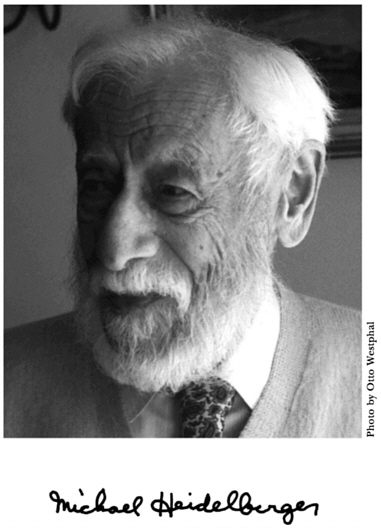
MICHAEL HEIDELBERGER
April 29, 1888–June 25, 1991
BY HERMAN N.EISEN
WHEN I FIRST MET Michael Heidelberger he was a professor in the Department of Medicine of Columbia University’s medical school, the College of Physicians and Surgeons. He seemed as old as Methusalah, though only 57 as I later realized. It was in 1944, and he seemed ancient not just because I was then so young, in my mid-twenties, a resident and instructor in the medical school’s Pathology Department, but rather, I think, because of his appearance and demeanor. Slender and short, his hair was snow white, his skin a remarkable almond-like color, and he moved and spoke slowly and deliberately, as though in complete sentences.
If scientists are classified according to Isaiah Berlin’s well-known taxonomic scheme for scholars into foxes with diverse accomplishments and hedgehogs having one great accomplishment, Heidelberger seemed the quintessential hedgehog. Though he was highly productive for much of his long life—he lived to be 103—nearly all of his many important contributions stemmed from a steadfast and innovative pursuit of his discovery, with Oswald Avery, that powerful antigens of the highly pathogenic pneumococcus are polysaccharides. This discovery ultimately enabled him and a small group of colleagues to show decisively that antibodies
are proteins (until then a debated issue), to establish from careful quantitative analyses of immune precipitates the multivalency of antibodies and antigens, and to develop a simple vaccine that in modified form is still useful almost 60 years after its effectiveness was first demonstrated in U.S. Army troops during World War II.
Michael Heidelberger was born in New York City in 1888. His grandparents were German Jews who had immigrated to the United States around 1850. Because he attended a fine private secondary school, the Ethical Culture High School, it is likely that his parents were in relatively comfortable circumstances. His undergraduate and graduate education were all received at Columbia University, where he earned a Ph.D. degree in organic chemistry in 1911. After a postdoctoral year in Zurich in the laboratory of the renowned Richard Willstater, he returned to New York to work at the Rockefeller Institute on a series of projects in association with more senior investigators.
Initially, with Walter Jacobs, he synthesized many drugs, especially aromatic arsenicals designed to treat various infectious diseases, including poliomyelitis and syphilis. One of their notable successes was a variant of Paul Ehrlich’s “magic bullet” for syphilis (606 or Salvarsan). Called Tryparsemide, it proved to be more effective against the trypanosomes that cause African sleeping sickness than against the treponemes responsible for syphilis. In recognition of its value in treating sleeping sickness, a serious problem in the Belgian Congo, he shared with Jacobs and others the Belgian Order of Leopold II award.
Subsequently, Heidelberger joined van Slyke and Baird Hastings in their studies on the reversible binding of oxygen to hemoglobin. Van Slyke and Hastings were experiencing difficulties in obtaining sufficient supplies of oxyhemoglobin, and Heidelberger was asked to help them. Though the
production of purified hemoglobin was hardly a task for an organic chemist, Heidelberger had no qualms about attacking the problem, and he succeeded in “soon making many grams at a time of crystalline equine oxyhemoglobin with virtually 100% oxygen-carrying power.”
The production of large amounts of hemoglobin required repeated centrifugation steps in a cold room at about 4 degrees. The taxing effect on his technician in having to repeatedly go in and out of the cold led Heidelberger to suggest that the company making the centrifuges incorporate cold-brine-carrying coils in the outer shield. Low temperature centrifugation could then be carried out with the instrument at ordinary room temperatures. The result was the first model of the International Equipment Company’s refrigerated no. 2 centrifuge, a white instrument that subsequently became an indispensable “workhorse” in most laboratories engaged in biochemistry or microbiology or immunology. Instead of reaping some of the financial benefits that must have flowed from this inventive idea, Heidelberger noted wryly, with his typically quiet humor, that he received $50 from the company for writing a descriptive manual for the new instrument.
Later, when Karl Landsteiner, the noted immunologist who had discovered human blood groups, moved from the Netherlands to become a member of the Rockefeller Institute, he asked Heidelberger to join him in studying the antigenic properties of oxy- and reduced hemoglobin. The resulting collaboration led to Heidelberger’s acquiring first-hand familiarity with immunological methods from the most accomplished immunologist of the era, an experience he put to great use several years later. But before that could happen he was asked by the director of the Rockefeller Institute, Simon Flexner, to serve as the chemist for the group then studying the pneumococcus, a major pathogen in man.
Before the introduction of sulfonamides in the late 1930s, and especially penicillin in the late 1940s, annual outbreaks of pneumonia, the principal disease caused by pneumococcal infection, kept city hospitals periodically jammed with the sick each winter. Antisera to pneumococci isolated from blood and sputum of infected patients led to the identification of several serologically distinguishable types, called I, II, and III (others, then lumped as type IV, were later divided into a great many other serologically distinguishable types). Death rates varied and in some outbreaks were as high as 25 percent from the type II pneumococcus. Those alive at the time remember how families dreaded the diagnosis in a family member. The only effective treatment throughout most of the 1920s and 1930s involved the injection of type-specific antisera, produced by pharmaceutical companies from horses and rabbits injected with killed pneumococci. The treatment required accurate typing of the organism responsible for the individual patient’s disease, and medical students at the time learned how to type pneumococci simply by adding a drop of type-specific antiserum to sputum from infected patients. A match between antiserum and microbe was revealed within minutes by an easily observed swelling of the bacteria’s outermost capsule (the Quelling reaction).
Avery and Raymond Dochez at the Rockefeller Institute then made the important finding that a patient’s serum or urine could specifically inhibit the Quelling reaction elicited with the pneumococci that were isolated from that patient or from others infected by the same type. They inferred that the specific soluble substance they had discovered was type-specific capsular material shed from the live, virulent pneumococci. Besides being present in serum and urine of patients, it was relatively abundant in supernatants of pneumococcal cultures. Avery, the microbiologist on the pneumonia
team, was bent on isolating and characterizing the capsular material, in part because recovery seemed to be tied to the appearance in the patient’s serum of antibodies specific for the capsule of the infecting pneumococcus. He sought to interest Heidelberger in its chemical nature, and Flexner finally persuaded Heidelberger to join the institute’s pneumococcus group.
When Heidelberger and Avery started their effort to purify the capsular material, they were faced with a choice of what pneumococcal type to begin with. They rejected type I because its capsules are small and type III because of some ambiguities in its serological reactivity. The choice of type II proved to be fortunate not only because of its abundance but also because of the structural simplicity of its capsule. In the course of carrying out purification steps the nitrogen content of each fraction was measured, because the capsular antigen was expected to be a protein, as was then thought to be the case with all antigens. As material of increasing purity was isolated, however, Heidelberger found that the nitrogen content surprisingly decreased progressively. As he tells the story with characteristic simplicity and honesty, “when it [the purified capsular material] was virtually nitrogen free, Fess [as Avery was called] said, ‘Could it be carbohydrate?’” To answer the question at the time, before the development of modern analytical tools, was a major undertaking. To begin with, it meant starting with large amounts of bacterial culture fluid, hydrolyzing the purified material, and analyzing various derivatives of the resulting sugars. Finally, the identity of the purified carbohydrate as the long sought specific soluble substance was accomplished by precipitating it with antiserum specific for pneumococcus type II, and then recovering the carbohydrate from the precipitate. Subsequently, the capsular material from many other pneumococcal types was isolated. The long and arduous
task of determining their diverse carbohydrate structures engaged the attention of Heidelberger and associates off and on for decades to come.
Despite his accomplishments at the Rockefeller Institute, Heidelberger was not offered a permanent position there and was urged by Flexner, the director, to move on. Why? Flexner said, perhaps correctly, that because Heidelberger’s accomplishments were made in association with outstanding senior investigators (Jacobs, Landsteiner, van Slyke, and Baird Hastings, then Avery), his work there “would be known as someone else’s.”
Accordingly, he accepted an offer to become “chemist” to the Mt. Sinai Hospital in New York, heading up their busy analytical chemistry lab, a job that left little time for research. Within a year, however, he was recruited by William Palmer, then the new head of the Department of Medicine at the College of Physicians and Surgeons and its prestigious teaching hospital (Presbyterian Hospital) to become chemist to the department. Palmer was highly respected as a physician and educator. He was also evidently an effective administrator and accumulated around him a group of accomplished clinician-scientists, building that department into one of best academic centers for internal medicine in the United States. Palmer had spent some time at the Rockefeller Institute in the van Slyke laboratory and had there become acquainted with Heidelberger during a short stay with the pneumonia group. He must have seen what a skillful and collegial chemist could contribute to those engaged in clinical research, and when he assumed the chairmanship of the new department he offered Heidelberger an appointment as chemist to the Presbyterian Hospital with an academic position as associate professor of medicine. One assumes that, because he did not have an M.D. degree, Heidelberger was more comfortable with the subsequent
changes in title to Professor of Biochemistry and finally to Professor of Immunochemistry. To support Heidelberger’s lab Palmer obtained a substantial gift from Edward Harkness, establishing a Harkness Research Fund. This would essentially free Heidelberger of the need to devote energy and time to raising funds, a situation that later generations of investigators could only regard with great wonder and envy.
Since the pneumococcal capsular antigen was a polysaccharide, and antibodies were thought to be proteins, Heidelberger realized that by measuring the amount of protein in specific precipitates made with the capsular antigen he could determine their antibody content. Together with Forrest Kendall, who had joined the Heidelberger lab, the protein content of immune precipitates was determined by measuring total nitrogen, using the Kjeldahl procedure that came to be the hallmark of laboratories carrying out Heidelberger-type quantitative immunochemistry.
Quantitative analyses of immune precipitates established that the proportions of antigen and antibody molecules in diverse antigen-antibody complexes varied systematically with the amounts of reactants introduced. The findings went a long way toward establishing the multivalency of antibodies and antigens and the lattice nature of the complexes they formed. More importantly perhaps, Heidelberger found out how to isolate pure, native antibody from immune precipitates. To measure the amount of protein (antibody) in polysaccharide antigen-antibody precipitates, the precipitates were routinely digested with sulfuric acid to yield ammonium sulfate for Kjeldahl determination. However, it was noted that the amount of material initially precipitated on mixing antiserum with polysaccharide antigens was reduced when precipitation reactions were carried out in high-salt concentration. Thus, by forming precipitates in the presence of “physiological” salt concentration, 0.15 M NaCl, then
washing them to remove trapped serum proteins, the precipitates could be dissolved in 0.5–1.0 M NaCl to eventually yield highly purified antibodies. These were subsequently analyzed by the then new methods of free electrophoresis and ultracentrifugation in collaboration with A.Tiselius and K.O.Pedersen, who had developed the required instrumentation and procedures. The studies revealed that antibodies came in two principal forms, distinguished by their mass and sedimentation rate: high molecular weight molecules designated 19S and low molecular weight ones termed 7S (now called IgM and IgG, respectively).
The isolation of purified antibodies from specific precipitates also helped solve another problem. It had long been known that antisera produced against bacteria, say staphylococci, exhibit diverse specific activities. An antiserum could, for example, protect animals against infection with those bacteria, agglutinate the bacteria, precipitate soluble components from culture medium in which they had been cultivated, and enhance their phagocytosis by white blood cells. These diverse manifestations were ascribed by some immunologists to different types of antibody molecules, called agglutinins (if they agglutinated the bacteria) or precipitins (if they precipitated soluble components) or opsonins (if they specifically enhanced leukocyte phagocytosis of the bacteria). In opposition to this pluralistic view, other immunologists (unitarians) maintained that a given antibody could, on associating with its antigen, give rise to any of these diverse responses, depending upon the state of the antigen (e.g., whether in solution or part of an intact microbe or taking place in a mouse).
The debate between the pluralists and unitarians was largely settled by Heidelberger and Elvin Kabat. Kabat was Heidelberger and Kendall’s first graduate student, and was described by Heidelberger as a whirlwind. Using purified antibody to
the pneumococcal polysaccharide that had been isolated from a precipitation reaction, they showed it could specifically precipitate the antigen from solution and agglutinate pneumococci of the appropriate type, demonstrating the identity of agglutinins and precipitins. The clincher followed from Heidelberger’s having previously shown that the capsular polysaccharide of type III pneumococcus was a polymer of cellobiuronic acid. By immunizing animals with an antigen made by linking cellobiuronic acid covalently to a carrier protein, Avery and W.F.Goebel showed that the resulting antiserum (anticellobiuronic acid) could specifically precipitate the type III polysaccharide, agglutinate type III pneumococci, and most notably, protect mice against a lethal infection with these bacteria.
Because of his appointment in a department of medicine, Heidelberger apparently felt obligated to work on some problems more obviously related to clinical issues than those centered on antigen-antibody precipitin reactions. He became involved, for example, in the purification and characterization of thyroglobulin. But the bacterial capsular polysaccharides he had discovered with Avery proved again to be the basis for his major contribution to clinical medicine, for the polysaccharides turned out to be critical virulence factors for the pathogenicity of pneumococci.
A study at the Rockefeller Institute suggested that antipolysaccharide antibodies in rabbit antipneumococcal sera were helpful in treating patients with pneumonia. The antibodies were of the 7S form (now called IgG). Having found out how to produce purified antibodies to particular types of pneumococci, Heidelberger’s lab was then able to provide antibodies to treat patients hospitalized with pneumonia. Once the type of pneumococcus responsible for a particular patient’s disease was identified (by testing sputum or blood or urine with type-specific antisera), the corre-
spending antibodies in partially purified form were given to that patient by intravenous injection. Precipitin tests carried out on the patient’s serum obtained about half an hour later indicated whether a sufficient amount of antibody had been given. If the test showed free antibody (antibody excess), no more was needed. But, if the free antigen (i.e., soluble polysaccharide shed by the bacteria in vivo) was detected rather than excess antibody, additional antibody was administered. Usually 400–600 mg of antibody was sufficient to establish antibody excess. The therapeutic effectiveness of this procedure was evident from the great decline in the number of deaths from pneumonia due to types of pneumococci for which purified antibodies could be provided (types I, II, and III).
With the entry of the United States into World War II, Heidelberger engaged in several war-related studies. One involved protection (presumably by antisera) against anthrax and the highly toxic castor bean protein called ricin, both of which the Germans were thought to be preparing to use against allied troops. Another project, carried out with Manfred Mayer (then a graduate student and later a leading figure in the study of complement) was aimed at developing the use of lysed red blood cells from malaria-infected individuals as a therapeutic vaccine in malaria-infected troops returning to the United States from the South Pacific.
But Heidelberger’s most significant war-related research effort stemmed again from the pneumococcal polysaccharides. In an effort to reduce the large number of cases of pneumonia in some Army camps, where recruits lived under crowded conditions, studies were carried out to determine whether injections of purified polysaccharide would elicit protective antibody responses. Volunteer medical students at the College of Physicians and Surgeons were first injected with around 50 µg of purified polysaccharide types I, II,
and V, and found to produce measurable amounts in serum of antipolysaccharide antibodies. Because the students could obviously not be deliberately challenged with virulent pneumococci to determine whether the antibodies were protective, a large-scale clinical trial was organized by Colin MacLeod. MacLeod had worked with Avery and Maclyn McCarty in the classic study that first showed genetic information to be carried in DNA (the DNA, in fact, that specified a pneumococcus’s type of capsular polysaccharide), and he later become a charismatic and brilliant head of the Microbiology Department at the New York University School of Medicine. In the trial he organized at an Army Camp in South Dakota, 8,500 individuals in one group were each injected with 1 ml containing 50–70 µg of polysaccharide types I, II, V, and VII, types that together accounted for about 60 percent of the cases at that camp. A similar number of individuals comprising a control group were injected with 1 ml saline. Over the ensuing 16 weeks there were 26 cases of pneumonia of types I, II, V, and VII in the control group and only 4 cases in the injected group, whereas control and injected groups experienced essentially the same number of cases of pneumonia due to other types of pneumococci. The clear and striking results of that wartime trial led to the continued use of the vaccine (or a variant of it, see below): It is now generally recommended that people who are at particular risk of coming down with pneumococcal pneumonia, especially the elderly, receive each autumn an injection of a mixture of pneumococcal polysaccharides.
The antipolysaccharide antibodies must be remarkably effective, as it appears that at extremely low levels they can prevent infection. Once formed, they persist for many months in serum with little decrease, perhaps because mammalian tissues lack enzymes that degrade polysaccharide antigens. It is now known that polysaccharides generally are T-
independent antigens (i.e., they are not recognized by the T cells that normally enhance antibody production by B cells). Currently, therefore, pneumococcal and other bacterial polysaccharide antigens are linked in vaccines to carrier proteins, the protein moiety providing the antigenic peptides that stimulate the T cells needed for optimal antibody responses. That essentially protein-free pneumococcal polysaccharide injected alone was so effective in protecting against pneumococcal infection in the World War II trial testifies to the remarkable potency of the antibodies they elicited. Because antibodies produced by memory B cells are more reactive (i.e., have higher affinity for their antigen) and are longer-lived than those made by naïve B cells, it is possible that the great success of the wartime trial organized by MacLeod came about because the protein-free polysaccharides selectively stimulated memory B cells.
Faced with mandatory retirement at age 65, Heidelberger was pleased to accept a position at the Institute of Microbiology connected with Rutgers University in New Jersey. The institute had been established by his friend Selman Waksman with royalties emanating from Waksman’s discovery of streptomycin. There Heidelberger continued to carry on with research and to participate in a course in immunochemistry. During his 27 highly productive years at the College of Physicians and Surgeons, his laboratory group had never numbered more than perhaps 4 or 5 associates, in contrast to many modern academic laboratories with their 20 to 30 postdoctoral associates. Hence the downsizing associated with the move from Physicians and Surgeons to the microbiology institute was not much of a change for Heidelberger, particularly as he enjoyed a steady flow of foreign visitors to work with him for various periods. Though conditions at the institute in New Jersey were highly congenial, the commuting arrangements were arduous, because he continued
to maintain his residence in New York. And so he was happy after nine years there to retire again, this time to an adjunct professorship in the Department of Pathology at the New York University School of Medicine. There he continued to work on polysaccharides, and was writing a paper a week before his death at the age of 103.
Any effort to describe Michael Heidelberger would be wanting if it ignored his lifelong interest in music. By all accounts he was an accomplished clarinetist and an active performer alone and with small groups. These included the chamber music sessions organized by Waldo Cohen at annual meetings of the Federation of American Societies for Experimental Biology. One notable musical came about at a small conference in Bermuda (organized to consider the validity of heterologous organ transplantation practiced by a notorious physician in Switzerland, involving among other things transplants of sheep testicles to elderly gentlemen). Afternoons at the meeting were left free for enjoyment of Bermuda’s wonderful beaches. But one afternoon it rained, and Heidelberger and his wife, an accomplished violinist, and Felix Haurowitz, a fine pianist (and the originator of the antigen template hypothesis to explain the diversity and specificity of antibodies), entertained the gathering with an impromptu performance of wonderful chamber music.
As expected, Heidelberger’s personal life had joys and sorrows. He was married twice, both times happily, but lived to mourn the passing of each wife, and he suffered the loss of his only child, Charles Heidelberger, a distinguished professor of biochemistry at the University of Wisconsin, who discovered 5-fluorouracil, a powerful agent still used for cancer chemotherapy.
Heidelberger’s published papers appeared in every decade of the twentieth century; he was twice president of the
American Association of Immunologists; he received a great number of awards and medals, including two Lasker awards, and an astonishing number (15!) of honorary degrees from American and European universities.
At his one-hundredth birthday he happened to be visiting a friend in Boston, and a party was arranged in his honor in a departmental library at the Harvard Medical School. Not surprisingly, to those who had not seen him for several years, he had grown even smaller and more frail, but they were not prepared to see that he had grown a long beard, white of course. It was, he explained, due to his hands having become too unsteady to continue shaving. But his intellectual powers were not noticeably diminished. Some in the gathering tried to guess how many papers he had written during his lifetime. When the question was put directly to him, he looked up and replied slowly, “three hundred and four.” Then pausing, his eyes twinkling, he added, “So far.” Given his consistency over a long lifetime as the epitome of rational and thoughtful behavior, one had to wonder if he had anticipated the question and with his quiet humor had enjoyed planning the answer.
For those prone to draw sharp distinctions between basic and applied research, it may be useful to ponder the accomplishments of the pneumonia group at the Rockefeller Institute with which Heidelberger was closely associated for a critical period. From that intensive study of the pneumococcus, and the infectious disease it causes in humans, there emerged the Heidelberger-Avery discovery that the potent capsular antigen of the pneumococcus was a polysaccharide and Avery, McCarty, and MacLeod’s demonstration that DNA is the carrier of genetic information for the polysaccharide’s production. Heidelberger’s continued pursuit of the immune response to those polysaccharides had a profound impact on immunology: It changed the concept of the antibody
from an essentially ill-defined set of serum activities to a protein molecule, measurable in conventional chemical units and isolable as a pure protein whose recognition of antigens could be analyzed in molecular terms. And his work led directly to the development of a simple vaccine that continues to this day to help reduce morbidity and mortality from what was once one of the most feared infectious diseases.
IN PREPARING this memoir I have drawn extensively on Heidelberger’s detailed autobiographical accounts that appeared in Annual Review of Biochemistry (48 [1979]:1–21), Immunological Reviews (83 [1985]:6–22), and the Annual Reviews of Microbiology (31 [1977]:1–12), an obituary prepared by Elvin Kabat (Journal of Immunology 148 [1992]:301–307), and on my own recollections.
SELECTED BIBLIOGRAPHY
1921 With W.A.Jacobs. Diazoamino compounds of arsanillic acid and its derivatives. J. Am. Chem. Soc. 43:1633–46.
1923 With K.Landsteiner. On antigenic properties of hemoglobin. J. Exp. Med. 38:561.
With O.T.Avery. The soluble specific substance of pneumococcus. J. Exp. Med. 38:73.
1924 With O.T.Avery. The soluble specific substance of pneumococcus. Second paper. J. Exp. Med. 40:301.
1925 With W.F.Goebel and O.T.Avery. The soluble specific substance of pneumococcus. Third paper. J. Exp. Med. 42:727.
1926 With W.F.Goebel. The soluble specific substance of pneumococcus. IV. On the nature of the specific polysaccharide of type III pneumococcus. J. Biol. Chem. 70:613.
1929 With F.E.Kendall. A quantitative study of the precipitin reaction between type III pneumococcus polysaccharide and purified homologous antibody. J. Exp. Med. 50:809.
1933 With F.E.Kendall and C.M.SooHoo. Quantitative studies on the precipitin reaction. Antibody production in rabbits injected with azo protein. J. Exp. Med. 58:137.
Contributions of chemistry to the knowledge of immune processes. Harvey Lect. 28:184.
1935 With F.E.Kendall. The precipitin reaction between type III pneumococcus polysaccharide and homologous antibody. III. A quantitative study and theory of reaction mechanism. J. Exp. Med. 61:563.
1936 With E.A.Kabat. Chemical studies on bacterial agglutination. II. The identity of precipitin and agglutinin. J. Exp. Med. 63:737.
With K.O.Pedersen and A.Tiselius. Ultracentrifugal and electrophoretic studies on antibodies. Nature 138:165.
With F.E.Kendall. Quantitative studies on antibody purification. I. The dissociation of precipitates formed by pneumococcus specific polysaccharides and homologous antibodies. J. Exp. Med. 64:161.
1937 With K.O.Petersen. The molecular weight of antibodies. J. Exp. Med. 65:393.
With F.E.Kendall. A quantitative theory of the precipitin reaction. IV. The reaction of pneumococcus specific polysaccharides with homologous rabbit antisera. J. Exp. Med. 65:647.
With E.A.Kabat. Chemical studies on bacterial agglutination. III. A reaction mechanism and a quantitative theory. J. Exp. Med. 65:885.
With E.A.Kabat. A quantitative theory of precipitin reaction. V. The reaction between crystalline horse serum albumin and antibodies formed in the rabbit. J. Exp. Med. 66:229.
1940 With H.P.Teffers and M.Mayer. A quantitative theory of precipitin reaction. VII. The egg albumin-antibody reaction in antisera from the rabbit and horse. J. Exp. Med. 71:271.
1942 With M.M.Mayer. Velocity of combination of antibody with specific polysaccharides of pneumococcus. J. Biol. Chem. 143:567.
With R.Schoenheimer, S.Ratner, and D.Rittenberg. The interaction of antibody protein with dietary nitrogen in actively immunized animals. J. Biol. Chem. 144:545.
With H.P.Teffers, R.Schoenheimer, S.Ratner, and D.Rittenberg. Behavior of antibody protein toward dietary nitrogen in active passive immunity. J. Biol. Chem. 144:555.
1945 With C.M.MacLeod, R.G.Hodges, and W.G.Bernhard. Prevention of pneumococcal pneumonia by immunization with specific capsular polysaccharides. J. Exp. Med. 82:445.
1946 With C.M.MacLeod, S.J.Kaiser, and B.Robinson. Antibody formation in volunteers following injection of pneumococci or their type-specific polysaccharides. J. Exp. Med. 83:303.
1948 With C.M.MacLeod and M.M.Dilapi. The human antibody response to simultaneous injection of six specific polysaccharides of pneumococcus. J. Exp. Med. 68:369.
1969 Karl Landsteiner, 1868–1943. In Biographical Memoirs, National Academy of Sciences, vol. 40, p. 177. Washington, D.C.: National Academy Press.


