
1
The Drama of the Commons
Thomas Dietz, Nives Dolšak, Elinor Ostrom, and Paul C. Stern
The “tragedy of the commons” is a central concept in human ecology and the study of the environment. The prototypical scenario is simple. There is a resource—usually referred to as a common-pool resource—to which a large number of people have access. The resource might be an oceanic ecosystem from which fish are harvested, the global atmosphere into which greenhouse gases are released, or a forest from which timber is harvested. Overuse of the resource creates problems, often destroying its sustainability. The fish population may collapse, climate change may ensue, or the forest might cease regrowing enough trees to replace those cut. Each user faces a decision about how much of the resource to use—how many fish to catch, how much greenhouse gases to emit, or how many trees to cut. If all users restrain themselves, then the resource can be sustained. But there is a dilemma. If you limit your use of the resources and your neighbors do not, then the resource still collapses and you have lost the short-term benefits of taking your share (Hardin, 1968).
The logic of the tragedy of the commons seems inexorable. As we discuss, however, that logic depends on a set of assumptions about human motivation, about the rules governing the use of the commons, and about the character of the common resource. One of the important contributions of the past 30 years of research has been to clarify the concepts involved in the tragedy of the commons. Things are not as simple as they seem in the prototypical model. Human motivation is complex, the rules governing real commons do not always permit free access to everyone, and the resource systems themselves have dynamics that influence their response to human use. The result is often not the tragedy described by Hardin but what McCay (1995, 1996; McCay and Acheson, 1987b; see also
Rose, 1994) has described as a “comedy”—a drama for certain, but one with a happy ending.
Three decades of empirical research have revealed many rich and complicated histories of commons management. Sometimes these histories tell of Hardin’s tragedy. Sometimes the outcome is more like McCay’s comedy. Often the results are somewhere in between, filled with ambiguity. But drama is always there. That is why we have chosen to call this book The Drama of the Com-mons—because the commons entails history, comedy, and tragedy.
Research on the commons would be warranted entirely because of its practical importance. Nearly all environmental issues have aspects of the commons in them. Important theoretical reasons exist for studying the commons as well. At the heart of all social theory is the contrast between humans as motivated almost exclusively by narrow self-interest and humans as motivated by concern for others or for society as a whole.1 The rational actor model that dominates economic theory, but is also influential in sociology, political science, anthropology, and psychology, posits strict self-interest. As Adam Smith put it, “We are not ready to suspect any person of being defective in selfishness” (Smith, 1977[1804]:446). This assumption is what underpins Hardin’s analysis.
Opposing views, however, have always assumed that humans take account of the interests of the group. For example, functionalist theory in sociology and anthropology, especially the human ecological arguments of Rappaport and Vayda (Rappaport, 1984; Vayda and Rappaport, 1968), argued that the “tragedy of the commons” could be averted by mechanisms that cause individuals to act in the interests of the collective good rather than with narrow self-interest. Nor has this debate been restricted to the social sciences. In evolutionary theory, arguments for adaptations that give advantage to the population or the species at cost to the individual have been under criticism at least since the 1960s (Williams, 1966). But strong arguments remain for the presence of altruism (Sober and Wilson, 1998).
If we assume narrow self-interest and one-time interactions, then the tragedy of the commons is one of a set of paradoxes that follow. Another is the classical prisoners’ dilemma. In the canonical formulation, two co-conspirators are captured by the police. If neither informs on the other, they both face light sentences. If both inform, they both face long jail terms. If one informs and the other doesn’t, the informer receives a very light sentence or is set free while the noninformer receives a very heavy sentence. Faced with this set of payoffs, the narrow self-interest of each will cause both to inform, producing a result less desirable to each than if they both had remained silent.
Olson (1965) made us aware that the organization of groups to pursue collective ends, such as political and policy outcomes, was vulnerable to a paradox, often called the “free-rider problem,” that had previously been identified in regard to other “public goods” (Samuelson, 1954). A public good is something to which everyone has access but, unlike a common-pool resource, one person’s use
of the resource does not necessarily diminish the potential for use by another. Public radio stations, scientific knowledge, and world peace are public goods in that we all enjoy the benefits without reducing the quantity or quality of the good. The problem is that, in a large group, an individual will enjoy the benefits of the public good whether or not he or she contributes to producing it. You can listen to public radio whether or not you pledge and make a contribution. And in a large population, whether or not you contribute has no real impact on the quantity of the public good. So a person following the dictates of narrow self-interest will avoid the costs of contributing. Such a person can continue to enjoy the benefits from the contributions provided by others. But if everyone follows this logic, the public good will not be supplied, or will be supplied in less quantity or quality than is ideal.
Here we see the importance of the tragedy of the commons and its kin. All of the analyses just sketched presume that self-interest is the only motivator and that social mechanisms to control self-interest, such as communication, trust, and the ability to make binding agreements, are lacking or ineffective. These conditions certainly describe some interactions. People sometimes do, however, move beyond individual self-interest. Communication, trust, the anticipation of future interactions, and the ability to build agreements and rules sometimes control behavior well enough to prevent tragedy. So the drama of the commons does not always play out as tragedy.
This volume examines what has been learned over decades of research into how the drama of the commons plays out. It should be of interest to people concerned with important commons such as ecosystems, water supplies, and the atmosphere. In addition, commons situations provide critically important test beds for addressing many of the central questions of the social sciences. How does our identity relate to the resources in our environment? How do we manage to live together? How do societies control individuals’ egoistic and antisocial impulses? Which social arrangements persist and which do not? In looking at the long sweep of human history and the thousands of social forms spread across it, these questions may become unmanageable to study in a systematic manner. The commons, however, provides a tractable and yet important context in which to address these questions. Just as evolutionary and developmental biology progressed by studying the fruitfly, Drosophila melanogaster, an organism well suited to the tools available, we suggest that studies of the commons and related problems are an ideal test bed for many key questions in the social sciences.2
As is evident in the chapters of this volume, commons research already draws on most of the methodological traditions of the social sciences. There are elegant mathematical models, carefully designed laboratory experiments, and meticulous historical and comparative case studies. The statistical tools applicable to large or moderate-sized data sets also are being brought to bear. As we will detail, research on the commons attracts scientists from a great diversity of disciplines and from all regions of the world. Advances in the social sciences are likely to come
from just such an admixture of methods and perspectives focused on a problem that touches on core theoretical issues of great practical importance.
This volume presents a series of papers that review and synthesize what we know about the commons, integrating what in the past have been somewhat disparate literatures and pointing directions for the future. It has several goals. First, for those not familiar with the rich literature since Hardin’s 1968 article, it is intended to provide a sound grounding in what has been learned. Second, for researchers in the field, it offers a state-of-the-art review that spans the field and shows connections that may not have been obvious in the past. Third, for researchers and those funding research, it conveys a sense of what has been accomplished with relatively modest funding and indicates the priorities for future work. Finally, although it is not a management handbook, it provides some guidance to those who design and manage institutions dealing with the commons by compiling the best available science for informing their choices.
This chapter offers a brief history of research on the commons, starting with Hardin’s influence but also acknowledging his predecessors. It describes the synthetic work that occurred in the mid-1980s. Building on that work, it clarifies the key concepts involved in understanding the commons. One of the major contributions of commons scholarship has been to make much clearer which concepts must be brought to bear and which distinctions made in understanding the commons. These include the crucial distinction between the resource itself, the arrangements humans use to govern access to the resources, and the key properties of the resource and the arrangements that drive the drama. The chapter concludes by sketching the plan of the book.
A SHORT INTELLECTUAL HISTORY OF THE FIELD
A Point of Departure
Hardin’s influential 1968 article in Science on “The Tragedy of the Commons” is one of the most often-cited scientific papers written in the second half of the twentieth century. The article stimulated immense intellectual interest across both the natural and social sciences,3 extensive debate, and a new interdisciplinary field of study. Scientific interest in the commons grew throughout the 1970s and early 1980s largely in reaction to Hardin’s article and the frightening news stories about sharp population declines of many species, particularly those from the ocean. Interest was fanned by the debate about limits to growth, and the increasing awareness of deforestation in tropical regions of the world.
Prior to the publication of Hardin’s article, titles such as “commons,” “common-pool resources,” or “common property” appeared only 17 times in the academic literature published in English and cataloged in the “Common-Pool Resource Bibliography” maintained by Hess at Indiana University.4 Between that time and 1984, before the Annapolis, Maryland conference organized by the Na-
tional Research Council (NRC) Panel on Common Property Resource Management, the number of such titles had grown to 115. The Annapolis conference in 1985 brought together a large number of scientists from different fields and different nations to examine common-pool resources and their management.5 The conference provided an opportunity for scholars to synthesize what was known in disparate disciplines as of 1985—which we summarize briefly in this chapter. This conference and several others held at about the same time stimulated even greater interest in the commons. From 1985 to 1990, the number of scholarly works on the commons more than doubled to 275. In the next 5 years (1991-1995), they nearly doubled again to 444 articles. Between 1996 and 2000, 573 new articles appeared on the commons. In 1990, the International Association for the Study of Common Property (IASCP) was officially established. Its first meeting at Duke University was attended by 150 scholars from multiple disciplines. As can be seen from Figure 1-1, a substantial increase of interest in this field has brought an ever greater number of scholars to the IASCP meetings. By 2000, more than 600 scholars attended these meetings.
A key characteristic in the field, in addition to its rapid growth, is the extraordinary extent of interdisciplinary and international participation. For example, scholars from a dozen disciplines and 52 countries attended the 2000 meeting of the IASCP. Although such broad participation challenges all involved to find
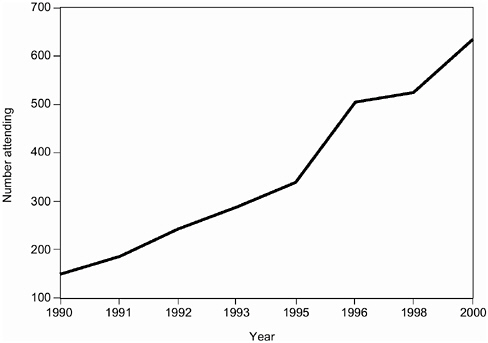
FIGURE 1-1 Attendance at IASCP meetings.
shared concepts and common technical language, the results have been well worth the effort.
Early Work on the Commons
Although Hardin’s article was the fulcrum for recent work on common-pool resources, scholars long before Hardin had expressed pessimism about the sustainable management of these resources. Aristotle observed that “what is common to the greatest number has the least care bestowed upon it. Everyone thinks chiefly of his own, hardly at all of the common interest” (Politics, Book II, ch. 3). The French naturalist, Marcet (1819) wrote in Conversations on Political Economy (1819, cited in Baumol and Oates, 1988) that open access to natural resources results in overexploitation of those resources and harvesting of the resources prior to their harvest time. Lloyd (1977 [1833]), whose work strongly influenced Hardin, similarly argued that a common-pool resource will be overused because of the higher value of present benefits of use compared to potential future costs of unrestricted use, especially when each individual user bears only a fraction of those costs but gains the entirety of present benefits. Further, Lloyd argued that an individual’s decisions regarding whether to withdraw another unit from a common-pool resource (in Lloyd’s analysis, whether to have another child) depends on the institutions that define the benefits and costs of such action.
Less pessimistic voices were raised earlier as well. In his classic study of Indian villages, the township in England and Scotland, and the complex, early village structures of Germany (the Mark) and Russia (the mir), Maine (1871) argued that village communities occur everywhere and facilitate their subsistence by allocating agricultural lands as private property and forest and pastures surrounding arable lands as common property. In describing the German version, Maine (1871:10) asserted: “The Township (I state the matter in my own way) was an organized, self-acting group of Teutonic families, exercising a common proprietorship over a definite tract of land, its Mark, cultivating its domain on a common system, and sustaining itself by the product.” In an in-depth analysis of Maine’s work, Grossi (1981) argues that Maine had identified how village communities in many settings had developed a keen sense of private property for agricultural plots combined with a common-property system for forested and pasture lands. Malinowski (1926) cautioned readers not to believe that any kind of property regime—including common property with joint owners—was a “simple” system that could be characterized as having only one set of consequences. He pointed out that:
Ownership, therefore, can be defined neither by such words as “communism” nor “individualism,” nor by reference to “joint-stock company” system or “personal enterprise,” but by the concrete facts and conditions of use. It is the sum of duties, privileges, and mutualities which bind the joint owners to the object and to each other. (1926:21)
Early Formal Analyses of the Commons by Resource Economists
The influential work of Gordon (1954) and Schaefer (1957) drew attention to the economic factors in the management of one type of common-pool resource— fisheries. Gordon and Schaefer modeled the effect of fishing effort (the quantity of fish harvested from a fishery) on ecologically sustainable yields as well as calculating the economic results of varying levels of effort. The so-called Gordon-Schaefer model has dominated the study and execution of fisheries management since the 1950s. Both scholars assumed that at low levels of fishing effort in a newly opened fishery, yield increases rapidly as a function of effort but with diminishing returns as more effort is needed to harvest additional units of fish. Beyond the “maximum sustainable yield,” however, further increases in harvesting would result in a decrease of total harvest and revenue because replenishment of the fish stock was presumed to depend on the size of the current fish stock, which falls below the level necessary for full replacement once fishing extracts more than this yield. By including the revenue occurring from fishing (yield times the fish price) and the costs of fishing effort, they defined the “maximum economic yield,” that is, the fishing effort at which the difference between fishing revenue and costs is maximum, and the level of the fishing effort under open access. The relationships they described are illustrated in Figure 1-2.
As shown in Figure 1-2, the underlying relationship between fishing effort measured on the horizontal axis and cost measured on the vertical axis is linear, while the relationship to revenue, also measured on the vertical axis, is curvilinear. This is due to the presumed basic biological relationships involved in determining maximum sustainable yield. Yield increases with effort until the maximum sustainable yield is reached; beyond that, the fish stock can replenish only at a lower rate—the population is simply drawn down. Whether the population is sustainable depends on the behavior of the harvesters.
If no rules exist related to access or amount of harvest (an open access situation), the equilibrium is a harvest rate that is larger than either the maximum sustainable yield (in biological terms) or the maximum economic yield (the harvest that yields the maximum difference between prices obtained and costs of fishing effort) (see Figure 1-2). This is because each fisher takes into account only the costs of his or her own effort and not the increased costs that individual effort imposes on others. The maximum economic yield (achievable if the rules regulating access and harvesting practices limit effort to the economically optimal strategy) turns out to be less than the biologically maximum sustainable yield. Based on this analysis, resource economists argued strongly that fisheries and other common-pool resources would be better managed by a single owner—preferably a private owner. Government ownership was, however, consistent with their argument. The single owner could then determine the maximum economic yield and manage the resource so as to obtain that yield (see, e.g., Crutchfield, 1964; Demsetz, 1967; Johnson, 1972).
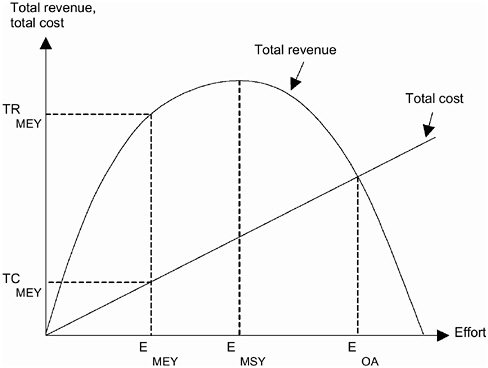
FIGURE 1-2 Relationships among fishing effort, cost, and revenue.
SOURCE: Townsend and Wilson (1987:317). Reprinted with permission.
NOTE: Total revenue, TR; total cost, TC; level of fishing effort; E; maximum economic yield, MEY; maximum sustainable yield; MSY; open access, OA. Profit is revenue minus cost and is represented by the vertical distance between the total revenue and total cost curves at any particular level of effort.
Gordon’s and Schaefer’s work emphasized the use of biological science and microeconomics in policy design. However, the science of fish population dynamics was not as well established as the Gordon-Schaefer model presumed. In particular, not all scientists accepted the underlying presumption of the “maximum sustainable yield” concept, that the stocks of adult fish and the regeneration rate in one time period depended only on the catching effort of the prior period. Gordon himself noted this. “Large broods, however, do not appear to depend on large numbers of adult spawners, and this lends support to the belief that the fish population is entirely unaffected by the activity of man” (Gordon, 1954:126). Wilson (Chapter 10) discusses why alternative views were ignored for so many years and argues that the quality of knowledge, scientific uncertainty, and the knowledge of nonscientists are important variables in common-pool resource management.
Many policy innovations of the 1960s and 1970s were based on the early
work of resource economists and consistent with Hardin’s thesis that “freedom in a commons brings ruin to all” (Hardin, 1968:1244). This literature stressed the importance of unitary ownership—including privatization as well as government ownership. However, the major policy innovation of this era was legislation in many countries—particularly developing countries—that transferred forests, pasture land, in-shore fisheries, and other natural resources from their previous property rights regimes to government ownership (see Arnold and Campbell, 1986).
Extensive research and experience since 1968 shows that these transfers of property rights were sometimes disastrous for the resources they were intended to protect. Instead of creating a single owner with a long-term interest in the resource, nationalizing common-pool resources typically led to (1) a rejection of any existing indigenous institutions—making the actions of local stewards to sustain a resource illegal; (2) poor monitoring of resource boundaries and harvesting practices because many governments did not have the resources to monitor the resources to which they asserted ownership; and (3) de facto open access conditions and a race to use of the resources. Thus, the presumption that government ownership was one of two universally applicable “solutions” to the “tragedy” was seriously challenged by these historical experiences.
Hardin’s Model and Its Limitations
Hardin argued that a “man is locked into a system that compels him to increase his herd without limit—in a world that is limited” (Hardin, 1968:1244). He further asserted that having a conscience was self-eliminating.6 Those who restrain their use of a common-pool resource lose out economically in comparison to those who continue unrestrained use. Thus, evolutionary processes will select for those who exercise unrestrained use and against those who restrain their own harvesting. Hardin’s solution was “mutually agreed upon” coercion. Two inferences were usually drawn from this formulation. One is that only what psychologists call aversive (coercive) controls can be effective, suggesting that effective rules cannot be based on creating internalized norms or obligations in resource users. The other is that agreements on rules must be reached only through the state (usually, the national government), suggesting that local governments and informal and nongovernmental institutions cannot develop effective ways to prevent or remedy situations that lead to tragedy (Gibson, 2001).
Challenges to the conceptual underpinnings, to the empirical validity, to the theoretical adequacy, and to the generalizability of Hardin’s model and the related work in resource economics were articulated throughout the 1970s and early 1980s. A key challenge to the Hardin model came from researchers familiar with diverse common property institutions in the field. They argued that Hardin had seriously confused the concept of common property with open access conditions where no rules existed to limit entry and use. As Ciriacy-Wantrup and Bishop (1975:715) expressed it, “common property is not everyone’s property.” They
and other researchers (see, e.g., Thompson, 1975) stressed that where common property existed, users had developed rich webs of use rights that identified who had a long-term interest in the resource and thus an incentive to try to avoid overuse. Few asserted that all common property regimes were optimally efficient or fair. Rather, the specifics of a particular regime had to be examined before presuming that an external authority should step in, violate local customs, and impose a new set of rules that were unlikely to be viewed locally as legitimate.
Another type of challenge came from game theorists. Early attempts to formalize commons situations using game theory typically posed the problem as a prisoners’ dilemma (PD) of the form described earlier, but extended the analysis from the classical two-player case to the N-person case (e.g., Dawes, 1980; however see Rubenstein et al., 1974; Stern, 1976, for early formulations that did not treat the commons as a PD game). When a PD game is played only once or is repeated with a definite ending time, a rational player has one—and only one— strategy that generates the highest immediate payoffs, assuming all players are using the same form of rationality. That strategy is to inform on the other players (called defection in the literature). Until recently, the dominant view has been that this one-shot, N-Person PD adequately models the nature of the situation faced in most commons settings. The research summarized by Kopelman et al. and Falk et al. in this volume shows that Hardin’s predictions hold under a one-shot condition with no communication, but not necessarily in a world where the game is played repeatedly, where there is no predefined endpoint, or where communication is possible (see Axelrod, 1984).
Some researchers have argued that games other than PD, such as the “assurance game” or the “game of chicken,” are more appropriate models for at least some of the situations facing users (Taylor, 1987). Unlike the PD game, which has a single equilibrium (and thus, each actor has a dominant strategy yielding a better individual outcome no matter what the other actor does), these games have multiple equilibria (and thus, neither actor has a dominant strategy), so both benefit from coordination.7
In a series of papers, Runge (1981, 1984a, 1984b) stressed that most users of a common-pool resource—at least in developing countries—live in the same villages where their families had lived for generations and intend to live in the same villages for generations to come. Given the level of poverty facing many villagers, their dependence on natural resources, and the randomness they all face in the availability of natural resources, Runge argued that it is implausible to assume that individuals have a dominant strategy of free riding. He suggested that users of common-pool resources in developing countries faced a repeated coordination game rather than a one-shot PD game. In such situations, all users would prefer to find ways of limiting their own use so long as others also committed themselves to stinting. Village institutions would provide mechanisms to enable users to arrive at agreements (within the village context) that would assure each user that others were conforming to the agreed-on set of rules. Thus, Runge and other
scholars conceptualized the game as a coordination problem rather than a dilemma.
Anthropologists and human ecologists also challenged the concept of an inexorable tragedy of the commons. Dyson-Hudson and Smith (1978) reasoned that resources had characteristics that were valued by those living near them. Some of these attributes also affected whether individuals could defend private property or whether they needed to develop rules of access and use to regulate how resources would be owned by an entire local community. Similarly, Netting (1976), based on his extensive study of private and common property in the Swiss Alps, developed a clear set of resource characteristics that he argued would be associated with diverse forms of property. He predicted that when (1) the value of per-unit production was low, (2) the frequency and dependability of yield was low, (3) the possibility of improvement was low, (4) the area required for effective use was large, and (5) the size of the group needed to make capital investments was large, communal property would be developed by the users. Similarly, when the opposite conditions were present, Netting predicted that users would develop some form of private property (see also Netting, 1981). Netting provided substantial evidence to support his claims, also showing that common-property regimes developed under the above conditions had been sustained for centuries without overexploiting resources.
Other anthropologists argued that no single dimension was responsible for making some resources communal and other resources privately held and that there was no unidirectional tendency for resources to move over time from common property to private property. Leach (1954) documented long cycles of changes in social structure and property rights in Upper Burma, and Bauer (1977) documented short cycles of such changes in Ethiopia. McCay (1980, 1981) illustrated a wide diversity of local organizations developed by inshore fishers to keep access relatively open to those who lived and worked in a community. McCay describes the efforts by these fishers to try to organize themselves using forms of common property even when confronted with “modern” capitalist forms of organization.
Thus, by the mid-1980s, more and more questions were being raised about Hardin’s model, the presumption that all commons situations were like a prisoners’ dilemma, and the wisdom of policies based on these analyses. Scholars familiar with the qualitative case study literature in Africa, Latin America, Asia, and the United States were beginning to point out that the policy reforms that transformed resources from governance as common property by local communities into state governance were actually making things worse for the resource as well as for the users. The governments that took these actions frequently did not have enough trained personnel on the ground to monitor the resources. Thus, what had been de facto common property with some limitations on access and use patterns became de jure government property—but due to the lack of enforcement, it frequently became de facto open access. Corrupt public officials also
faced opportunities to collect side payments from local resource users wishing to exploit resources that were officially government owned.
These questions and doubts were not discussed widely across scientific disciplines or communities, however, because each tended to use its own language and theory. As a result, very little bridging across disciplines and academic communities occurred before the mid-1980s. Scholars in one region of the world did not know about the research being undertaken by scholars in other parts of the world. Even scholars focusing on a single continent, such as Africa, who were studying forest resources were unaware of the findings of researchers studying pastoral resources or inshore fisheries on the same continent.
Panel on Common Property Resource Management: A First Synthesis
In September 1983, the National Research Council appointed a Panel on the Study of Common Property Resource Management.8 The panel recognized that one of its chief tasks was to create a framework whereby individuals from multiple disciplines could begin to communicate about the diverse property systems operating in different resource sectors. A framework was developed by Oakerson, drawing on many years of scholarship on institutions. The framework was used in a series of small meetings with scholars from diverse disciplines who each knew extremely well the patterns of user interactions around some common-pool resources. The challenge was finding a way that these scholars could communicate with one another and develop a common set of findings.
The panel organized a meeting in Annapolis, Maryland, in 1985 that provided a forum for exchange of ideas, synthesis, and growth. The Annapolis meeting was an unusual event for its era, given the diversity of disciplines, nations, and resource interests represented by the participants. The Oakerson framework was revised several times before and after the meeting and became the centerpiece of the final publication from the panel (Oakerson, 1986; National Research Council, 1986; see also Bromley et al., 1992).
In the last session at Annapolis, the panelists provided a cogent overview of lessons learned (Bromley, 1986; Ostrom, 1986; Peters, 1986). These included:
-
The need to define the performance of an institutional arrangement in terms of both environmental and human dimensions;
-
The importance of the initial situation as it affects emergence, performance, survival, and relative costs and benefits of institutional arrangements. Identifying correlations may be the best that social scientists could accomplish given the data available at the time;
-
The importance of the distinction between the characteristics of the resource (common-pool resource) and the regime that manages the resource (common property regime or some other kind of property regime). Analytical progress would be slow unless this distinction was taken seriously;
-
The need to compare and synthesize analyses of common-pool resources and common property regimes in various disciplines using a framework that enables scholars from different disciplinary backgrounds to communicate and compare findings;
-
The need, especially for international donors, to understand how various changes in property rights affect the distribution of income, wealth, and other resources that are important aspects of the creation and survival of institutional arrangements;
-
The need to understand how spatial and temporal heterogeneity in the resource endowment creates opportunities for some to benefit at the expense of others, thereby often exacerbating equity problems;
-
The need to compare the costs and benefits of various institutional arrangements for a given resource. Under some circumstances, common property regimes perform better than private property. This occurs when (a) the costs of creating and enforcing private property rights are high, (b) the economic value of the output produced from the resource is low, and (c) the benefits generated by the resources are distributed with high spatial uncertainty. Under these circumstances, a common property regime provides a way of reducing the risk of having no benefits at all in a given time period and thus may be preferable to private property (see Runge, 1986; Netting, 1976).
-
Resource users do not always choose to defect rather than cooperate. Individuals’ decisions depend on their bargaining power, the initial endowment of resources, their shared values, and other factors.
The panelists also identified the following unanswered questions and areas for future research:
-
How do multiple levels of management interact and affect performance?
-
What is the effect of group size on the performance of institutional arrangements?
-
What are the roles of different mechanisms for dispute settlement?
These three questions identified an ambitious and scientifically difficult agenda. One of these unanswered questions (the effect of group size) has been addressed repeatedly in the research since 1985 and is discussed in Chapter 2 and several other chapters in this book. However, the question turns out to be deceptively simple. Different findings have been obtained depending on the context. The relationships among multiple levels of management are addressed in Chapters 8 and 9 and here, too, the results are complex. Less work has been done on diverse mechanisms for dispute settlement; this remains an important area for research where the tradition of work on commons could link to that on conflict resolution. This topic is reconsidered in Chapter 13.
A number of related activities followed the Annapolis conference. One was
the publication of a series of book-length studies and edited volumes that led to a serious rethinking of the empirical foundations for the analysis of common-pool resources (see Berkes, 1986, 1989; Berkes et al.,1989; Blomquist, 1992; McCay and Acheson, 1987a, 1987b; Ostrom, 1990; Pinkerton, 1989; Tang, 1992). These studies were a serious challenge to the validity of Hardin’s analysis and to the implication that government and private property were the “only” ways to manage common-pool resources. They demonstrated that under some conditions, local groups using a common property regime could manage their resources quite well. This challenge led to a move from seeing Hardin’s formulation as a broad and accurate generalization to a special case that was observed only under certain circumstances. Furthermore, the rich case study literature illustrated a wide diversity of settings in which users dependent on common-pool resources have organized themselves to achieve much better outcomes than can be predicted by Hardin’s model (Cordell, 1990; Ruddle and Johannes, 1985; Sengupta, 1991; Wade, 1994). This research changed the focus of the field from a search for the correct overall conception and the single right policy to a search for understanding of the conditions under which particular institutional forms serve user groups well in sustaining their resource bases over long periods of time. Conditional propositions of this sort have sometimes been formulated as “design principles” for resource institutions (Ostrom, 1990), a formulation that has stimulated considerable research interest since (see the discussion and synthesis of this literature by Agrawal, this volume:Chapter 2).
The Annapolis meeting also led to the development of several comparative databases designed to facilitate quantitative work related to the evolving theories. The first of these began at the Annapolis meeting as a draft coding form intended to capture most of the key variables contained in the cases. The form was revised on the basis of suggestions made at the meeting and further reworked by researchers at Indiana University. It was applied initially to a cross-national study of irrigation systems and inshore fisheries. In-depth case studies were evaluated for their completeness in regard to the variables in the database, and about 50 cases were coded for each of these two sectors (Schlager, 1994; Tang, 1992). This approach allowed substantial growth in understanding of the basic patterns of commons management (see, e.g., Bardhan and Dayton-Johnson, this volume: Chapter 3). The database was revised and updated to enable the coding of information on more than 100 irrigation systems in Nepal. The coded information from the case studies was supplemented by site visits to more than 80 of the systems to confirm initial coding and fill in missing information (see Lam, 1998). Another key database was developed by the International Forestry Resources and Institutions (IFRI) research program, and is used by collaborative research centers in Bolivia, Guatemala, India, Kenya, Madagascar, Mexico, Nepal, Tanzania, Uganda, and the United States. The purpose of this network of collaborating research centers is to apply the same core measurements to a series of cases within a country and to revisit locations regularly so it will be possible to study dynamic
processes of common-pool resource management over time (see Gibson et al., 2000a).9Chapter 3 reviews some of the key research findings from more recently designed databases.
As the chapters that follow indicate, the present moment is not “the end of history” for research on commons. Rather, we seem to be at a point of rapid and exciting growth in work intended to aid our understanding of the dynamics of common-pool resources and the institutions that manage (and mismanage) them. New kinds of commons are being analyzed, new methodological tools and theoretical perspectives are being brought to bear, and ongoing work is increasingly synthetic and integrative. This effervescence in commons research is the motivation for this volume: A great deal has been learned and, based on that, research is moving forward at an exciting pace.
In the next section of this chapter we review the key concepts of commons research. The evolution of a clear conceptual framework has been an important part of commons research over the past decade. The growth in the field is being facilitated by clearer concepts and the concomitant recognition that similar ideas (albeit with different names) have emerged in several disciplines. As language and ideas are reconciled across disciplinary traditions, these relatively autonomous lines of work can cross-fertilize each other. So the discussion of conceptual developments is actually a continuation of our discussion of the history of the field and a prelude to the review of the current state of research.
CONCEPTUAL DEVELOPMENTS AND KEY TERMS
An important outgrowth of the 1985 meeting has been a serious effort to untangle the various meanings of commons, common-pool resource, common property regimes, and related theoretical terms. As Bromley (1986) indicated in his synthesis at the Annapolis meeting, serious confusion had been introduced by using a property term—“common property”—to refer to a resource characterized by specific features. The term “common property” implies a kind of management arrangement created by humans rather than a characteristic of the resource itself. The preferred term for resources from which it is hard to exclude users is “common-pool” resource. The term “common-pool” focuses on the characteristics of the resource rather than on the human arrangements used to manage it. Such a resource could be left as open access without rules or could be managed by a government, as private property, or by a common property regime. The term “common property resource” had become so embedded in the language used in the economics and policy literatures that making this conceptual advance has been difficult. The confusion was embedded in the title of the NRC panel that organized the Annapolis conference, and it is still used in the title of the official newsletter of the association that emerged from this effort (The Common Property Resource Digest). After a somewhat heated debate, the word “resource” was dropped from the name of the IASCP itself so that the association’s name in-
cludes the “property” term but not combined with the “resource” term. That both common-pool resource and common property resource can be abbreviated as CPR has added to the continued confusion. In this book, we do not use the CPR abbreviation at all to avoid further confusion.
Given this continued confusion, it is important that a clear set of definitions of key terms be presented in this initial chapter and used consistently throughout the book. In this chapter we focus on terms and concepts that now have gained relatively general agreement across disciplines. In Chapter 13, we turn to some of the newer conceptual developments in the field.
The term commons is used in everyday language to refer to a diversity of resources or facilities as well as to property institutions that involve some aspect of joint ownership or access. As mentioned, analytical advantages exist in separating the concept of the resource or good valued by humans from the concept of the rules that may be used to govern and manage the behavior and actions of humans using these resources.10 In this view, a common-pool resource is a valued natural or human-made resource or facility that is available to more than one person and subject to degradation as a result of overuse. Common-pool resources are ones for which exclusion from the resource is costly and one person’s use subtracts from what is available to others. The diversity of property rights regimes that can be used to regulate the use of common-pool resources is very large, including the broad categories of government ownership, private ownership, and ownership by a community.11 When no property rights define who can use a common-pool resource and how its uses are regulated, a common-pool resource is under an open-access regime.
Human beings use common-pool resources by harvesting or extracting some of the finite flow of valued goods produced by them or by putting in unwanted byproducts, thus treating the resource as a sink.12 In general, humans using resources of this type face at least two underlying incentive problems (Burger et al., 2001; Ostrom et al., 1994). The first is the problem of overuse, congestion, or even destruction because one person’s use subtracts from the benefits available to others. The second is the free-rider problem that stems from the cost or difficulty of excluding some individuals from the benefits generated by the resource. The benefits of maintaining and enforcing rules of access and exclusion go to all users, regardless of whether they have paid a fair share of the costs. The institutions that humans devise to regulate the use of common-pool resources must somehow try to cope with these two basic incentive problems. They struggle with how to prevent overuse and how to ensure contributions to the mechanisms used to maintain both the resource and the institution itself.
The Problem of Overuse
The first major characteristic of common-pool resources is the subtractability of resource units once extraction occurs. This characteristic is referred to by many
other names, including jointness of consumption and rivalness of consumption.13 All of these terms focus on the relationship that one person’s use has on the availability of resource units for others. One person’s harvest of fish, water, or timber subtracts from the amount left at any one time (and potentially, over time) for others. Because common-pool resources are subtractable, they can be easily congested, overharvested, degraded, and even destroyed. Many resources discussed in the theoretical literature on public goods are in fact common-pool resources because they have the attribute of subtractability, which classical public goods, such as world peace and scientific knowledge, do not have.
Some of the most challenging contemporary common-pool resource problems deal with the use of common-pool resources as sinks, which degrade through pollution. Common-pool sinks range in size from the global atmosphere, which is affected by the behavior of individuals in all countries of the world, to local watersheds and airsheds affected mainly by people at a single location. When a resource is a sink, the problem of overuse is putting too much of a contaminant into the resource as contrasted with the more familiar problem of taking too much out. Many watercourses suffer from both types of problems—too much water is extracted by each user, causing the costs of water for others to escalate, and too many pollutants are dumped into the resource, causing the quality of the water for others to decrease. Although the use of the common pool framework to understand sinks seems promising, this line of analysis is not as elaborate or as well studied as that examining resource extraction.
The Free-Rider Problem
This problem was originally defined in its most extreme form—the impossibility of excluding beneficiaries once improvements to any set of resources had been made (Musgrave, 1959).14 If the nature of certain resources made it truly impossible to solve the exclusion problem, however, institutions could not have any role in managing those resources. The contemporary view is that resources vary in the cost of excluding potential beneficiaries from deriving benefits from them. If it is not practical to exclude a user nor possible to force that user to contribute to the costs of developing and maintaining the resource, the noncontributing user is called a free rider. The cost of excluding potential users is often a function of technology. Prior to the invention of barbed wire fences, it was very expensive to exclude potential users from rangelands, but with barbed wire, it became more feasible to exclude those who did not have entry rights.
Thus, a core problem related to the use of common-pool resources is the cost of preventing access by potential users unless they agree to abide by a set of rules. In regard to a common-pool resource, users free ride when they harvest from or dump pollutants into the resource independently and take only their own costs and benefits into account. One “solves” the free-rider problem when rules are adopted and accepted that regulate individual actions so that social benefits and
social costs are taken into account. The specific rules adopted in efforts to manage a common-pool resource sustainably are extremely numerous, but can be broadly classified into several general categories (Ostrom, 1999): boundary rules, position rules, authority rules, scope rules, aggregation rules, information rules, and payoff rules. Whether any particular rule configuration solves the free-rider problem in regard to a particular resource system depends on how well the rules address the biophysical structure of the resource, whether they are perceived by users as legitimate and are enforced, and whether they are understood by participants in a similar manner.
Analyzing the problem of exclusion and resulting free riding requires that a distinction be made between the system providing the resource itself (a river, a forest, or a fishery) and the resource units of value to humans (water, timber, or fish). After resource units have been extracted from the system, the cost of excluding potential beneficiaries from consuming the extracted units is often relatively low and the resource units may be considered to be private goods. That is, it may be hard to control who gets to go fishing but easy to control who gets the fish once they are caught. Effective markets for bottled water, fish, and timber are based on a low cost of excluding beneficiaries from the harvested units. A potential user can be easily prevented from acquiring them without paying the market price by the legal system and a strong set of norms providing enforcement to prevent theft. Ironically, these effective markets for harvested products are a major source of the incentives for users to overharvest. Harvesters obtain the full benefits from their overuse through the market for the resource units and suffer only a proportion of the costs they impose on others by overusing the system that provides the resource units.
Common-pool resources share the problem of difficult exclusion with another important policy problem—the provision of public goods such as international peace, knowledge, and living in a just society (Olson, 1965; Young, 1989). Once these goods are provided by someone—frequently a governmental agency— no one living within the scope of their provision can be easily excluded from enjoying the benefits. Although common-pool resources and public goods share this one characteristic, they differ in regard to subtractability: one person’s use of a public good, such as the knowledge of a physical law, does not reduce the possibility for an infinite number of other persons to use the same knowledge.
As already noted, the key problem caused by high costs of exclusion for both common-pool resources and public goods is the free-rider problem. If exclusion is physically difficult and effective rules are not in place to limit who can use a resource and what can be withdrawn from it, then all harvesters face an incentive to increase their own harvesting rate without any concern for the impact of their actions on the costs for others (and eventually for themselves). Furthermore, the rules that govern a common-pool resource are themselves a public good because once they are provided, one person’s use of the rules does not subtract from their availability for use by others. Thus, appropriation or harvesting from a common-
pool resource has one structure of incentives that can lead to overuse. Providing rules to govern a common-pool resource has a second set of incentives that tempts participants to free ride on the time and effort required to craft effective rules because they will benefit from the adoption of such rules whether they contribute or not. The two sets of incentives work together to make the problem of avoiding overuse a real challenge. Contemporary scholars have stressed that there are actually many “games” involved in the governance and ongoing management of common-pool resources depending on many attributes of the resource and its users (see Ostrom et al., 1994).
Institutional Attributes
Institutions are the rules that people develop to specify the “do’s and don’ts” related to a particular situation. In regard to common-pool resources, rules define who has access to a resource; what can be harvested from, dumped into, or engineered within a resource; and who participates in key decisions about these issues and about transferring rights and duties to others. The stimulus for changes of institutional arrangements frequently has been fights over the distribution of resources (see Acheson and Knight, 2000; Knight, 1992; McCay, this volume:Chapter 11). Multiple types of institutional arrangements have been devised to try to reduce the problems of overuse and of free riding as well as distribution conflict.
As already noted, common-pool resources that do not have institutions governing their use are called open-access regimes. Institutions for governing use fit into three broad classes that are referred to as private property, common property, and government property. Each of these institutional types has a wide diversity of subtypes, and many hybrids exist as well. Something referred to as “government property,” for example, may mean that a national government owns the property and that a national agency directly uses and manages that resource for its own purposes. Or, the resource may be “owned” by a national, state, or local government but users may have various rights to access, withdraw, manage, and determine who else is allowed to use the resource.15 Use under a common-property regime may be restricted to members of a cooperative, an extended family, a formal corporation, a local community, or either a formally recognized or informally organized user group. A great variety of private-property regimes also have been devised to govern the use of common-pool resources (see Tietenberg, this volume:Chapter 6; see also Feeney et al., 1990).
Additional Attributes of Common-Pool Resources
Costly exclusion and subtractability are the two defining attributes of common-pool resources.16 A large number of other attributes are also important in shaping human resource use. Thus, developing a coherent theory of how institutions cope or do not cope effectively with the problems of overuse and free riding
requires consideration of this diversity of attributes. Furthermore, some resource systems—such as groundwater basins or airsheds—provide only pure common-pool resources. Others, such as forests, yield some products that are subtractive (e.g., timber) and others that are nonsubtractive (e.g., flood control) (Gibson et al., 2000a). Thus, an analyst trying to understand how institutions affect behavior in regard to forest resources may need to understand which aspects of a forest are common-pool resources and which are public goods. (Subtractive and nonsubtractive products are related, however. For example, cutting timber can reduce a forest’s ability to provide flood control.) We briefly describe three further attributes of resources that may have a major impact on the incentives that individuals face: renewability, scale, and cost of measurement.
Renewable or Nonrenewable Common-Pool Resources
Renewability relates to the rate at which resource units that are extracted (or used as a sink) replace themselves over time. The replacement rate over time can take any value between zero (nonrenewable) and one (instantly renewable). Mineral and oil resources are normally considered nonrenewable because once they are extracted from their source, no replacement is generated within a human time frame. Thus, the key problem faced in regulating nonrenewable resources is finding the optimal path toward efficient mining of the resource (Libecap, 1990).
On the other hand, biological species that are harvested for human use regenerate themselves in a cycle that varies from less than one year to decades, assuming the breeding stock and the breeding habitat are protected. Individuals who attempt to achieve sustainable use of such biological resources over time devise rules to limit the number of users; limit the technology, timing, quantity, or location of extraction; and protect the habitat of the species. The costs of designing, implementing, monitoring, and adapting these rules can vary substantially depending on the particular species characteristics, their habitat, the technology used, and the culture of the users. Resources that regenerate slowly are more challenging to manage because overharvesting may not be discovered until recovery of the resource is severely endangered. Fish that tend to cluster in groups are more likely to be destroyed with modern fishing technology because the marginal cost of searching for and harvesting the full extent of the fishery is much lower than for fish that spread out over a larger area (Clark, 1976, 1977).
Some human-made common-pool resources are renewed very rapidly once use has halted or been reduced. Broadcasting bandwidth, for example, is a common-pool resource because it is limited, one person’s use is subtractive, and thus congestion can occur if too many users try to use the same bandwidth at the same time. The resource regenerates immediately, however, when usage declines, so subtractability exists across users, but not across time. Such commons cannot be destroyed permanently by overuse. The type of rules that are effective for regulat-
ing the use of radio bandwidth may thus be quite different from those needed to regulate the use of a biological species.
Scale
Major international problems, such as river and lake pollution, transmission of air pollutants across long distances, global climate change, threats to biodiversity, declines of ocean fisheries, and control of the use of outer space and the North and South Poles, have called attention to the attribute of scale among common-pool resources (Benedick, 1991; Buck, 1998; Gibson et al., 2000b; Haas et al., 1993; Young, 1989). Many important similarities exist between local and global common-pool resources even though there are obvious differences. Research has moved beyond studying resources at a single level (local or international) to comparing common-pool resources across levels and drawing lessons from one level to another (Keohane and Ostrom, 1995; Ostrom et al., 1999). One obvious difference between local and global resources is the sheer extent of the resource and thus the cost of monitoring use patterns at widely diverse locations. Global and local resources differ in two additional ways. The number of actors using, or having a say in decisions about, a global resource is usually larger than is the case for local resources, and these actors are usually much more heterogeneous. Both of these factors can affect the level of cooperation likely to be achieved in designing and complying with rules.
The literature on local common-pool resources suggests that a greater number of resource users does not necessarily impede cooperation (Ostrom, 1990), even though this may increase costs of devising, monitoring, and enforcing the rules. It also may make it necessary to design nested sets of institutions rather than a single layer. The literature on cooperation in international arenas, however, suggests that cooperation is less likely with a larger number of actors. These actors often include not only countries that are sovereign decision makers, but also a large number of nonstate actors that play important roles (Benedick, 1991; Mitchell, 1995; Vogel, 1986). The institutions granting these nonstate actors access to the political decision-making process also may play an important role in determining the potential for cooperation (Dolšsak, 2001; International Human Dimensions Program, 1999; Weaver and Rockman, 1993; Young, 1997).
Heterogeneity of resource users may not have the same effects on local common-pool resources and on international resources. The literature on local common-pool resources suggests different, even opposing effects of heterogeneity among actors on cooperation. It has been argued that heterogeneity will induce cooperation (Olson, 1965) and that it will impede cooperation (Libecap, 1995). In empirical research, heterogeneity has been found to be a difficulty that users frequently are able to overcome so as to manage a common-pool resource (Lam, 1998; Varughese and Ostrom, 2001). This issue is discussed further by Bardhan
and Dayton-Johnson (Chapter 3). However, studies at the international level, especially studies of international peace and provision of international public goods, suggest that heterogeneity induces cooperation (Martin, 1993, 1995). Although most scholars agree that heterogeneity of resource users makes a difference, considerably more work is needed to clarify this concept and its effects.17
It has become increasingly clear that global and local common-pool resources are not only analytically similar, but interrelated. The use of resources at the local level affects international and global resources, and vice versa. Thus devising the rules for using international and global resources requires a careful examination of local characteristics of resource use. For example, to devise a workable international regime for the use of global atmosphere as a sink for greenhouse gases, it is important to understand that different resource users emit various greenhouse gases for various reasons, that these uses cannot all be measured with the same degree of reliability, and that different resource users have drastically different capabilities to reduce their resource use. Many of these issues of linkage and interplay among institutions at different scales are discussed more fully in Chapters 8 and 9.
Cost of Measurement
To devise effective institutions that limit the use of common-pool resources so that they do not suffer congestion, overuse, or destruction, one needs to be able to measure the quantity and location of resource units. Common-pool resources vary substantially from one another in the reliability and cost of measuring current stocks and flows and predicting future conditions. Schlager and colleagues (1994) identify two physical attributes of resources that have a strong impact on the ease of measurement: the capability for storage and the mobility of resources. Storage (for example, a dam on a water distribution system) allows managers and users to measure the stock of a resource and to allocate its use over time in light of good information about what is currently available. Mobile resources, such as wildlife and undammed river water, are much harder to measure and account for than stable resources, such as forests and pasture lands. Again, the mobility of the resource makes measurement, and thus management, of wildlife much more difficult than stable resources.
The Search for Effective Institutions
Devising better ways of governing resource systems will continue to be a major issue in the new century. Climate change, loss of biodiversity, ozone depletion, the widespread dispersal of persistent pollutants, and most other environmental problems involve the commons. Practitioners at international, national, regional, and local levels will continue to seek solutions and to debate the appropriate roles for government, private, and community ownership of natural re-
sources. Meanwhile, considerable scientific uncertainty exists about how various property regimes and associated institutional forms affect resource sustainability.
The best available knowledge strongly suggests that the search for a single best strategy will be futile. The best tool for sustainable management of a common-pool resource depends on the characteristics of the resource and of the users. Substantial agreement is slowly evolving that multiple institutional strategies are needed given the wide diversity of threatened physical and biological resources. It requires substantial ingenuity to design institutions that cope effectively with the attributes of a particular resource given the larger macro-political institutions, culture, and economic environment in which that resource is embedded. With improved understanding, it may become possible to diagnose resource use situations well enough to separate promising institutional forms from those unlikely to achieve desired goals and thus provide useful scientific information to supplement ingenuity.
Analysis of the performance of a broad array of policy options at diverse levels of organization will be required to advance our knowledge. Analysis is proceeding from the early, rough classification of a few major categories of property rights regimes toward more refined typologies, from bivariate propositions about which institutional forms work better to more complex theories that take contextual differences into account, and from analyses at a single level of social organization to those that take into account linkages among institutional forms at different levels. An important advance was the idea that institutions face major design challenges (e.g., fit with resource characteristics, monitoring the resource and the users, enforcement of rules). This led to a search for robust “design principles” (Ostrom, 1990). Outcomes may be more dependent on the ability of institutions to meet design challenges than on institutional attributes such as the type of property rights they establish. We discuss these issues in more detail in Chapter 13.
Furthermore, recognition is growing that institutional performance may be assessed using multiple evaluative criteria, including efficiency, sustainability, and equity. The criterion of economic efficiency focuses on the relationship of total individual and social benefits to total individual and social costs. Even though it is often difficult to measure social benefits and costs, the conceptual unerpinning for efficiency analysis is clear. An institutional arrangement is considered economically efficient if no reallocation of resources will improve the welfare of some individuals affected by the resource without making someone else worse off. The criterion of sustainability can be applied to both the resource and the institutions governing the resource. In regard to the resource, sustainability refers to the continuance (or even improvement) of the resource system, facility, or stock that generates the flow of resource units. In regard to an institution, sustainability refers to the continued use of the institution over time with adaptation occurring in the day-to-day rules within the context of a stable constitution. Equity criteria are used to evaluate the distribution of costs and
benefits either on the basis of the relationship between individuals’ contributions to an effort and the benefits they derive or on the basis of their differential abilities to pay. Beyond efficiency, sustainability, and equity, criteria such as accountability and adaptability are frequently invoked. No institutional arrangement is likely to perform well on all evaluative criteria at all times. Thus, in practice, some tradeoff among performance criteria is usually involved. Economic efficiency has frequently dominated the policy debate, but concerns of equity and sustainability of the resource may be more important to those directly affected by policy proposals.
STRUCTURE OF THE BOOK
An overview of a vibrant field of research can be organized in many ways. We have chosen to begin with chapters that review the most venerable traditions of research in the field and that at the same time display the diversity of methodological and theoretical tools that have been used to understand the commons. We hope this will give the reader a sense of the highly interdisciplinary and stimulating nature of the literature. We then move toward emerging topics in the commons literature, including the interplay between markets and other commons institutions and the problem of understanding the evolving relationships among local, national, and global institutions. Finally, we move to problems and approaches that are just on the horizon but that we believe will be central to any review of our understanding of the commons a decade hence. In our final chapter, we attempt to synthesize and suggest key problems for further research.
Chapters 2 through 12 provide reviews of key issues affecting the governance of common-pool resources. Generally, Chapters 2 through 9 summarize knowledge that has been developed in research over the past 15 years, while Chapters 10 through 12 give more emphasis to important issues that research has uncovered but that have not yet received detailed examination.
Chapters 2 through 5 are based on knowledge developed from quite different research methods. Agrawal (Chapter 2) examines the evidence regarding a number of empirical generalizations that have been proposed about the operation of institutions for managing common-pool resources. The chapter relies on evidence from structured qualitative case comparisons involving moderately large numbers of resource management institutions. Bardhan and Dayton-Johnson (Chapter 3) focus on the effects of heterogeneity among resource users, drawing evidence from quantitative analyses of irrigation systems. Kopelman, Weber, and Messick (Chapter 4) examine the effects of attributes of resource users, their groups, and the tasks they face by reviewing findings from experimental studies involving simulated common-pool resource users. Falk, Fehr, and Fischbacher (Chapter 5) use formal game theory to develop simple models that can generate empirically observed phenomena from a few behavioral assumptions. In addition to addressing important substantive issues in the theory of common-pool resource use, these
chapters illustrate the variety of disciplines and research approaches that are contributing to knowledge in the field and the kinds of knowledge that can come from these disciplines and approaches.
Chapters 6 and 7 focus on what has been learned from policy experiments with two classes of property rights regimes: tradable environmental allowances and community property. Tietenberg (Chapter 6) examines the variety of tradable permits arrangements that have been used to govern air and water emissions and access rights in fisheries. He discusses both expectations from economic theory and results in practice, summarizes the factors associated with variations in outcomes, and discusses possible reasons for the observed outcomes. Rose (Chapter 7) considers tradable environmental allowances and common property as ideal types of property rights and offers a number of empirically based hypotheses about the conditions favoring success of each institutional type.
Chapters 8 and 9 address key issues of scale and linkage across institutions. Young (Chapter 8) presents a classification of cross-scale linkages and examines the evidence on their operation in land use and sea use. He offers conclusions about the strengths and weaknesses of larger and smaller scale units and the tradeoffs involved in vesting powers at the different scales. Berkes (Chapter 9) draws on the case literature to discuss conditions under which involvement by the state facilitates or impedes the operation of local institutions. He then discusses several institutional forms with the potential to improve cross-scale linkages.
Chapters 10 through 12 raise issues that have not as yet received the concerted research attention they deserve. Wilson (Chapter 10) discusses the history of scientific fisheries management to raise issues about the appropriate roles of standard science and local knowledge in resource management and about the effect of scientific uncertainty on the ability to use deterministic scientific models as a main management tool. McCay (Chapter 11) addresses several issues of process that have not received much research attention in the literature on common-pool resources, though they have received attention in other contexts. These include getting environmental issues on the agendas of decision-making bodies, the conflict management roles of institutions, problems of deliberative process in environmental institutions, and the uses of incremental change in resource management. Richerson, Boyd, and Paciotti (Chapter 12) discuss resource management institutions from the perspective of cultural evolutionary theory. They present a dual inheritance theory of culture that is applicable to institutions, discuss how important empirical regularities about commons institutions fit this theory, and identify a set of as-yet unexplored hypotheses that flow from the theory.
Finally, Chapter 13 provides an overview of the current state of knowledge about the potential of institutional design to help human groups avoid tragedies of the commons. It characterizes the development of common-pool resource management as a research field, summarizes some key substantive lessons that have been learned to date, and identifies the practical challenges of institutional design
that have been uncovered by research. Finally, it suggests directions for future research, including further development of some ongoing lines of research and new attention to four critical but understudied issues: understanding the dynamics of resource management institutions, extending insights to more kinds of common-pool resources, understanding the effects of context on institutions, and understanding the operation of linkages across institutions.
NOTES
|
1 |
In thinking about environmental concern, it has been useful to distinguish self-interest, concern with the welfare of other humans, and concern with other species, ecosystems, and the biosphere itself (Stern et al., 1993). |
|
2 |
In a parallel argument, Axelrod (1997) suggests that game theory provides an Escherichia coli for the social sciences—an ideal experimental organism. We prefer the analogy to Drosophila melanogaster. E. coli has been studied primarily in the laboratory. Drosophila has been investigated both in the laboratory and in the field, and has been a key organism for making the link between the two (Dobzhansky et al., 1977; Rubin and Lewis, 2000). Thus it provides a closer parallel to the role the problem of the commons plays in the social sciences. |
|
3 |
See Hardin’s own discussion of the impact of his earlier article (Hardin, 1998). |
|
4 |
The first bibliography on common-pool resources was started in 1985 by Martin (1989, 1992). In 1993 Hess developed a computerized database on common-pool resources and incorporated the earlier citations. She has continued building the bibliographic database through systematic searches (Hess, 1996a, 1996b, 1999). As of April 2001, 29,800 citations were in the Common-Pool Resources database. A searchable online version of this database is available at: http://www.indiana.edu/~iascp/Iforms/searchcpr.html. |
|
5 |
This conference was cosponsored by the National Research Council, the U.S. Agency for International Development, the Ford Foundation, and the World Wildlife Fund. At about the same time as the NRC Panel on Common Property Resource Management was organized, Acheson and McCay organized two symposia and one workshop to bring together anthropologists from diverse subfields to examine the meaning of the concept “the commons” and to draw on the tools of sociocultural, economic, and ecological anthropology to examine basic questions of the commons (see McCay and Acheson, 1987b). |
|
6 |
Hardin’s argument is quite similar to the position held until recently by most evolutionary theorists: that selfish strategies would always obtain higher returns than reciprocal or cooperative strategies and drive out through competition any strategies other than selfish strategies. However, this view is losing its dominance. See Sober and Wilson (1998) and the discussion in Chapter 12. |
|
7 |
A “game of chicken” can be illustrated with two drivers rapidly driving toward each other in a single lane. They both realize they will collide unless at least one swerves, so that they miss each other. Each prefers that the other swerves. The choice facing each is to go straight or swerve. If both go straight, they crash. The best joint outcome is for one to go straight and the other to swerve, but one player obtains more than the other in this outcome. The “assurance game” (also called “stag hunt”) can be illustrated with two hunters following a stag. Catching the stag requires a joint effort of both, which yields the best joint outcomes. When a rabbit approaches the two hunters, they both face a temptation to catch a rabbit, which either can do alone, rather than chasing a stag with the uncertain help of the other. Going jointly for a stag is surely rational, but if the hunters have any reasons to doubt the effort of each other, then it is better to turn and start hunting a rabbit. For detailed discussion of the differences among these three types of games as applied to common-pool resources, see Ostrom et al. (1994). |
|
8 |
The panel was composed of Daniel W. Bromley, David H. Feeny, Jere L. Gilles, William T. |
REFERENCES
Acheson, J.M., and J. Knight 2000 Distribution fights, coordination games, and lobster management. Comparative Studies in Society and History 42(1):209-238.
Arnold, J.E.M., and J.G. Campbell 1986 Collective management of hill forests in Nepal: The community forestry development project. Pp. 425-454 in National Research Council, Proceedings of the Conference on Common Property Resource Management. Washington, DC: National Academy Press.
Axelrod, R. 1984 The Evolution of Cooperation. New York: Basic Books.
1997 The Complexity of Cooperation. Princeton, NJ: Princeton University Press.
Bauer, D.F. 1977 Household and Society in Ethiopia. East Lansing, MI: African Studies Center, Michigan State University.
Baumol, W.J., and W.E. Oates 1988 The Theory of Environmental Policy. 2d ed. Cambridge, Eng.: Cambridge University Press.
Benedick, R.E. 1991 Ozone Diplomacy: New Directions in Safeguarding the Planet. Cambridge, MA: Harvard University Press.
Berkes, F. 1986 Local-level management and the commons problem: A comparative study of Turkish coastal fisheries. Marine Policy 10:215-229.
Berkes, F., ed. 1989 Common Property Resources: Ecology and Community-Based Sustainable Development. London: Belhaven Press.
Berkes, F., D. Feeny, B.J. McCay, and J.M. Acheson 1989 The benefits of the commons. Nature 340:91-93.
Blomquist, A. 1992 Dividing the Waters: Governing Groundwater in Southern California. San Francisco: ICS Press.
Bromley, D.W. 1986 Closing comments at the conference on common property resource management. Pp. 591-597 in National Research Council, Proceedings of the Conference on Common Property Resource Management. Washington, DC: National Academy Press.
Bromley, D.W., D. Feeny, M.A. McKean, P. Peters, J.L. Gilles, R.J. Oakerson, C.F. Runge, and J.T. Thomson, eds. 1992 Making the Commons Work: Theory, Practice, and Policy. San Francisco: ICS Press.
Buck, S.J. 1998 The Global Commons: An Introduction. Washington, DC: Island Press.
Burger, J., E. Ostrom, R.B. Norgaard, D. Policansky, and B.D. Goldstein, eds. 2001 Protecting the Commons: A Framework for Resource Management in the Americas. Washington, DC: Island Press.
Chamberlin, J. 1974 Provision of collective goods as a function of group size. American Political Science Review 68:707-716.
Ciriacy-Wantrup, S.V., and R.C. Bishop 1975 Common property as a concept in natural resources policy. Natural Resources Journal 15(4):713-727.
Clark, C.W. 1976 Mathematical Bioeconomics. New York: Wiley Publishers.
1977 The economics of over-exploitation. In Managing the Commons, G. Hardin and J. Baden, eds. San Francisco: W.H. Freeman.
Cordell, J., ed. 1990 A Sea of Small Boats. Cambridge, MA: Cultural Survival.
Crutchfield, J.A. 1964 The marine fisheries: The problem in international cooperation. American Economic Review 54:207-218.
Dawes, R.M. 1980 Social dilemmas. Annual Review of Psychology 31:169-193.
Demsetz, H. 1967 Toward a theory of property rights. American Economic Review 62:347-359.
Dobzhansky, T., F.J. Ayala, G.L. Stebbins, and J.W. Valente 1977 Evolution. San Francisco: W.H. Freeman.
Dolšak, N. 2001 Mitigating global climate change: Why are some countries more committed than others? Policy Studies Journal, 29(3):414-436.
Dyson-Hudson, R., and E.A. Smith 1978 Human territoriality: An ecological reassessment. American Anthropologist 80:21-41.
Feeny, D., F. Berkes, B.J. McCay, and J.M. Acheson 1990 The tragedy of the commons: Twenty-two years later. Human Ecology 18(1):1-19.
Gibson, C. 2001 Forest resources: Institutions for local governance in Guatemala. Pp. 71-89 in Protecting the Commons: A Framework for Resource Management in the Americas, J. Burger, E. Ostrom, R.B. Norgaard, D. Policansky, and B.D. Goldstein, eds. Washington, DC: Island Press.
Gibson, C., M. McKean, and E. Ostrom, eds. 2000a People and Forests: Communities, Institutions, and Governance. Cambridge, MA: MIT Press.
Gibson, C., E. Ostrom, and T. Ahn 2000b The concept of scale and the human dimensions of global change: A survey. Ecological Economics 32(2):217-239.
Gordon, H.S. 1954 The economic theory of a common-property resource: The fishery. Journal of Political Economy 62(April):124-142.
Grossi, P. 1981 An Alternative to Private Property. Collective Property in the Juridical Consciousness of the Nineteenth Century. Chicago: University of Chicago Press.
Haas, P.M., R.O. Keohane, and M.A. Levy, eds. 1993 Institutions for the Earth: Sources of Effective International Environmental Protection. Cambridge, MA: MIT Press.
Hardin, G. 1968 The tragedy of the commons. Science 162:1243-1248. 1998 Extensions of the tragedy of the commons. Science 280(May):682-683.
Hess, C. 1996a Common Pool Resources and Collective Action: A Bibliography; Volume 3. Bloomington, IN: Indiana University Workshop in Political Theory and Policy Analysis.
1996b Forestry Resources and Institutions: A Bibliography. Bloomington, IN: Indiana University Workshop in Political Theory and Policy Analysis.
1999 A Comprehensive Bibliography of Common Pool Resources (CD-ROM). Bloomington, IN: Workshop in Political Theory and Policy Analysis.
Hoskins, W.G., and L.D. Stamp 1963 The Common Lands of England and Wales. London: Collins.
International Human Dimensions Program 1999 Institutional Dimensions of Global Environmental Change. Bonn, Ger.: International Human Dimensions Program.
Johnson, O.E.G. 1972 Economic analysis, the legal framework and land tenure systems. Journal of Law and Economics 15:259-276.
Keohane, R.O., and E. Ostrom, eds. 1995 Local Commons and Global Interdependence: Heterogeneity and Cooperation in Two Domains. London: Sage.
Knight, J. 1992 Institutions and Social Conflict. New York: Cambridge University Press.
Lam, W.F. 1998 Governing Irrigation Systems in Nepal: Institutions, Infrastructure, and Collective Action. San Francisco, CA: ICS Press.
Leach, E. 1954 Political Systems of Highland Burma. London: Bell Publishers.
Libecap, G. 1990 Contracting for Property Rights. New York: Cambridge University Press.
1995 The conditions for successful collective action. Pp. 161-190 in Local Commons and Global Interdependence: Heterogeneity and Cooperation in Two Domains, R. Keohane and E. Ostrom, eds. London: Sage.
Lloyd, W.F. 1977 [1833] On the checks to population. Pp. 8-15 in Managing the Commons, G. Hardin and J. Baden, eds. San Francisco: W.H. Freeman.
Maine, Sir Henry 1871 Village Communities in the East and West. New York and London: Henry Holt and Company.
Malinowski, B. 1926 Crime and Punishment in Savage Society. London: Kegan Paul, Trench and Trubner.
Martin, F. 1989 Common Pool Resources and Collective Action: A Bibliography; Volume 1. Bloomington, IN: Indiana University Workshop in Political Theory and Policy Analysis.
1992 Common Pool Resources and Collective Action: A Bibliography; Volume 2. Bloomington, IN: Indiana University Workshop in Political Theory and Policy Analysis.
Martin, L. 1993 Credibility, costs, and institutions: Cooperation on economic sanctions. World Politics 45:406-432.
1995 Heterogeneity, linkage and commons problems. Pp. 71-92 in Local Commons and Global Interdependence, R. Keohane and E. Ostrom, eds. London: Sage Publications.
McCay, B.J. 1980 A fisherman’s cooperative, limited: Indigenous resource management in a complex society. Anthropological Quarterly 53(January):29-38.
1981 Optimal foragers or political actors? Ecological analyses of a New Jersey fishery. American Ethnologist 8(2):356-382.
1995 Common and private concerns. Advances in Human Ecology 4:89-116.
1996 Common and private concerns. Pp. 111-126 in Rights to Nature: Ecological, Economic, Cultural, and Political Principles of Institutions for the Environment, S. Hanna, C. Folke, and K.G. Mäler, eds. Washington, DC: Island Press.
McCay, B.J., and J.M. Acheson, eds. 1987a Human ecology of the commons. Pp. 1-34 in The Question of the Commons. Tucson: University of Arizona Press.
1987b The Question of the Commons: The Culture and Ecology of Communal Resources. Tucson: University of Arizona Press.
Mitchell, R.B. 1995 Heterogeneities at two levels: States, non-state actors and international oil pollution. Pp. 223-254 in Local Commons and Global Interdependence: Heterogeneity and Cooperation in Two Domains, R. Keohane and E. Ostrom, eds. London: Sage.
Musgrave, R.A. 1959 The Theory of Public Finance: A Study in Public Economy. New York: McGraw-Hill.
National Research Council 1986 Proceedings of the Conference on Common Property Resource Management. Washington, DC: National Academy Press.
Netting, R.M. 1976 What Alpine peasants have in common: Observations on communal tenure in a Swiss village. Human Ecology 4(2):135-146.
1981 Balancing on an Alp: Ecological Change and Continuity in a Swiss Mountain Community. Cambridge, Eng.: Cambridge University Press.
Oakerson, R.J. 1986 A model for the analysis of common property problems. Pp. 13-30 in Proceedings of the Conference on Common Property Resource Management. National Research Council. Washington, DC: National Academy Press.
Olson, M. 1965 The Logic of Collective Action: Public Goods and the Theory of Groups. Cambridge, MA: Harvard University Press.
Ostrom, E. 1986 Issues of definition and theory: Some conclusions and hypotheses. Pp. 599-614 in National Research Council, Proceedings of the Conference on Common Property Resource Management. Washington, DC: National Academy Press.
1990 Governing the Commons: The Evolution of Institutions for Collective Action. New York: Cambridge University Press.
1998 The international forestry resources and institutions research program: A methodology for relating human incentives and actions on forest cover and biodiversity. Pp. 1-28 in Forest Biodiversity in North, Central, and South America, and the Caribbean: Research and Monitoring, F. Dallmeier and J.A. Comiskey, eds. Man and the Biosphere Series, Vol. 21. Paris: UNESCO.
1999 Coping with tragedies of the commons. Annual Review of Political Science 2:493-535.
Ostrom, E., J. Burger, C. Field, R.B. Norgaard, and D. Policansky 1999 Revisiting the commons: Local lessons, global challenges. Science 284:278-282.
Ostrom, E., R. Gardner, and J. Walker 1994 Rules, Games, and Common-Pool Resources. Ann Arbor: University of Michigan Press.
Ostrom, V., and E. Ostrom 1977 Public goods and public choices. Pp. 7-49 in Alternatives for Delivering Public Services: Toward Improved Performance, E.S. Savas, ed. Boulder, CO: Westview Press.
Peters, P.E. 1986 Concluding statement. Pp. 615-621 in National Research Council, Proceedings of the Conference on Common Property Resource Management. Washington, DC: National Academy Press.
Pinkerton, E., ed. 1989 Co-operative Management of Local Fisheries: New Directions for Improved Management and Community Development. Vancouver: University of British Columbia Press.
Rappaport, R.A. 1984 Pigs for the Ancestors: Ritual in the Ecology of a New Guinea People. New Haven, CT: Yale University Press.
Rose, C. 1994 Property and Persuasion: Essays on the History, Theory, and Rhetoric of Ownership. Boulder, CO: Westview Press.
Rubenstein, F.D., G. Watzke, R.H. Doktor, and J. Dana 1974 The effect of two incentive schemes upon the conservation of shared resources by five-person groups. Organizational Behavior and Human Performance 13:330-338.
Rubin, G.M., and E.B. Lewis 2000 A brief history of Drosophila’s contributions to genome research. Science 287:2216-2218.
Ruddle, K., and R.E. Johannes, eds. 1985 The Traditional Knowledge and Management of Coastal Systems in Asia and the Pacific. Jakarta: UNESCO.
Runge, C.F. 1981 Common property externalities: Isolation, assurance and resource depletion in a traditional grazing context. American Journal of Agricultural Economics 63:595-606.
1984a Institutions and the free rider: The assurance problem in collective action. Journal of Politics 46:154-181.
1984b Strategic interdependence in models of property rights. American Journal of Agricultural Economics 66:807-813.
1986 Common property and collective action in economic development. Pp. 31-62 in National Research Council, Proceedings of the Conference on Common Property Resource Management. Washington, DC: National Academy Press.
Samuelson, P.A. 1954 The pure theory of public expenditure. Review of Economics and Statistics 36:387-389.
Schaefer, M.B. 1957 Some considerations of population dynamics and economics in relation to the management of commercial marine fisheries. Journal of the Fisheries Research Board of Canada 14:669-681.
Schlager, E. 1994 Fishers’ institutional responses to common-pool resource dilemmas. Pp. 247-265 in Rules, Games, and Common-Pool Resources, E. Ostrom, R. Gardner, and J. Walker, eds. Ann Arbor: University of Michigan Press.
Schlager, E., W. Blomquist, and S.Y. Tang 1994 Mobile flows, storage and self-organized institutions for governing common-pool resources. Land Economics 70(3):294-317.
Schlager, E., and E. Ostrom 1992 Property rights and natural resources: A conceptual analysis. Land Economics 68(3):249-262.
Schnaiberg, A. 1980 The Environment: From Surplus to Scarcity. New York: Oxford University Press.
Sengupta, N. 1991 Managing Common Property: Irrigation in India and the Philippines. New Delhi: Sage.
Smith, A. 1977 [1804] A Theory of Moral Sentiments. New York: Oxford University Press.
Sober, E., and D.S. Wilson 1998 Unto Others: The Evolution and Psychology of Unselfish Behavior. Cambridge, MA: Harvard University Press.
Stern, P.C. 1976 Effect of incentives and education on resource conservation in a simulated commons dilemma. Journal of Personality and Social Psychology 34:1285-1292.
Stern, P.C., T. Dietz, and L. Kalof 1993 Value orientations, gender and environmental concern. Environment and Behavior 25:322-348.
Tang, S.Y. 1992 Institutions and Collective Action: Self-governance in Irrigation. San Francisco: ICS Press.
Taylor, M. 1987 The Possibility of Cooperation. New York: Cambridge University Press.
Thompson, E.P. 1975 Whigs and Hunters. London: Allen Lane.
Townsend, R., and J.A. Wilson 1987 An economic view of the commons. Pp. 311-326 in The Question of the Commons, B.J. McCay and J.M. Acheson, eds. Tucson: University of Arizona Press.
Varughese, G., and E. Ostrom 2001 The contested role of heterogeneity in collective action: Some evidence from community forestry in Nepal. World Development 29(5):747-765.
Vayda, A.P., and R.A. Rappaport 1968 Ecology, cultural and noncultural. Pp. 477-497 in Introduction to Cultural Anthropology, J.A. Cliffton, ed. Boston: Houghton Mifflin.
Vogel, D. 1986 National Styles of Regulation: Environmental Policy in Great Britain and the United States. Ithaca, NY: Cornell University Press.
Wade, R. 1994 Village Republics: Economic Conditions for Collective Action in South India. San Francisco, CA: ICS Press.
Weaver, R.K., and B.A. Rockman, eds. 1993 Do Institutions Matter? Government Capabilities in the United States and Abroad. Washington, DC: Brookings Institution.
Williams, G.C. 1966 Adaptation and Natural Selection: A Critique of Some Current Evolutionary Thought. Princeton, NJ: Princeton University Press.
Young, O. 1989 International Cooperation. Building Regimes for Natural Resources and the Environment. Ithaca, NY: Cornell University Press.
1997 Global Governance: Drawing Insights from the Environmental Experience. Cambridge, MA: MIT Press.


