
6
The Tradable Permits Approach to Protecting the Commons: What Have We Learned?
Tom Tietenberg
One of the new institutional approaches for coping with the problem of rationing access to the commons involves the use of tradable permits. Applications of this approach have spread to many different types of resources and many different countries. A recent survey found 9 applications in air pollution control, 75 applications in fisheries, 3 applications in managing water resources, 5 applications in controlling water pollution, and 5 applications in land use control (Organization for Economic Co-operation and Development, 1999:Appendix 1:18-19). And that survey failed to include many current applications.1
Tradable permits address the commons problem by rationing access to the resource and privatizing the resulting access rights. The first step involves setting a limit on user access to the resource. For fisheries this would involve the total allowable catch. For water supply it would involve the amount of water that could be extracted. For pollution control it typically specifies the aggregate amount of emissions allowed in the relevant control region. This limit defines the aggregate amount of access to the resource that is authorized. These access rights are then allocated on some basis (to be described) to potential individual users. Depending on the specific system, these rights may be transferable to other users and/or bankable for future use. Users who exceed limits imposed by the rights they hold face penalties up to and including the loss of the right to participate.
These approaches have been controversial.2 The controversy arises from several sources, but the most important concerns the allocation of the wealth associated with these resources. Although these approaches typically do not privatize the resources, as conventional wisdom might suggest, they do privatize at least to some degree access to and use of those resources. Because the access rights can
be very valuable when the resource is managed efficiently, the owners of these rights may acquire a substantial amount of wealth. Although the ability to reclaim the previously dissipated wealth for motivating sustainable behavior is an important strength of the system, the ethical issues raised by its distribution among competing claimants are a significant and continuing source of controversy (McCay, 1999).
Another source of controversy involves a broad class of externalities. In general, externalities are effects on the ecosystem or on other parties that are not reflected adequately in the decisions by those holding the access rights. This incomplete internalization of externalities could involve diverse concerns such as adverse effects on species of fish other than those regulated by tradable permits, on the spatial concentration of emissions, or on the consequences of particular upstream water uses on downstream users.
A final source of controversy is ideological. It suggests that because capitalist property rights are the major source of the problem, it is inconceivable that these same rights could be part of the solution.3
OVERVIEW
In this essay I review the experience with three main applications of tradable permit systems: air pollution control, water supply, and fisheries management.4
The next section provides a brief summary of the theory behind these programs and both the economic and environmental consequences anticipated by this theory. Some brief points of comparison are made with other competing and/ or complementary formal public policy strategies such as environmental taxes and legal regulation.
The essay proceeds with a description of the common elements these programs share and the design questions posed by the approach. These include the setting of the limit on access, the initial allocation of rights, transferability rules (both among participants and across time) as well as procedures for monitoring and enforcement. It continues by examining how these design questions have been answered by the air pollution, fishery, and water supply applications and how the answers have evolved over time. This evolution has been influenced by changing technology, increased familiarity with the system, and a desire to respond to some of the controversies surrounding the use of these approaches.
The penultimate section examines the hard evidence on the economic and environmental consequences of adopting these approaches. This evidence is juxtaposed with the expectations created by both the economic theory of tradable permits and the theory of choice between co-management and tradable permits by Rose (this volume:Chapter 7).
The final section brings together some tentative lessons that can be drawn from this experience.
THE BASIC ECONOMIC THEORY
Our inquiry begins by defining what is meant by an optimal allocation of a resource and by extracting the principles that can be used to design economic incentive policies that fulfill the optimality conditions. Optimality theory can help us understand the characteristics of these economic approaches in the most favorable circumstances for their use and assist in the process of designing the instruments for maximum effectiveness.
The Economic Approach to Optimal Resource Management
What is meant by the optimal allocation of a resource depends on how the “policy target” is defined. Several possible targets have been considered in the literature.5 Chronologically the first forays into instrument design were based on traditional concepts of economic efficiency. The economically efficient allocation of a resource, defined in partial equilibrium terms, maximizes the net benefits to society, where net benefits are defined as the excess of benefits over costs.6 Ignoring corner solutions (i.e., when the optimum involves either no use or total use), efficiency is achieved when the marginal benefit of that last unit used is equal to the marginal cost of its provision.
Because the resulting allocation of responsibility is quite sensitive to both spatial and temporal considerations, defining optimality in terms of efficiency imposes a heavy information burden both on modelers and on those charged with the responsibility for implementing the policies. Not only does an efficiency target make it necessary to track the physical relationships underlying the use of the resource, but it also requires monetizing the consequences (both human and nonhuman). Each of these steps is subject to data limitations and uncertainties.
Even when the information burdens associated with the efficiency criterion can be surmounted, it is not universally accepted as an appropriate criterion outside the discipline of economics. Applying this criterion has several somewhat subtle implications, some of which are quite controversial. Take as just one example the class of pollutants having a major impact on human health. The efficiency criterion implies, all other things being equal, targeting more resources toward controlling those emissions that affect larger numbers of people (because the marginal damage caused by a unit of emissions is higher in that setting). This particular allocation of control resources can result in lower individual risks for those in high-exposure settings. This contradicts a popular policy premise that suggests that citizens should face equal individual risks regardless of where they work or reside.7
To respond to both the information and moral concerns with an efficiency approach, the tradable permit approach starts from a sustainability perspective.8 Whereas efficiency may or may not be consistent with a sustainable allocation,
the tradable permits program starts by defining a sustainable target. The sustainable target may or may not be efficient,9 but it does provide a good opportunity to achieve sustainable outcomes even in cases where efficient allocations may not be compatible with sustainability.10
Value-Maximizing, Sustainable Policy Instruments
One of the insights derived from the empirical literature is that traditional command-and-control regulatory measures, which depended on government agencies to both define the goals and the means of meeting them, were, in many cases, insufficiently protective of the value of the resources.11 One of the principal theorems of environmental economics demonstrates that under specific conditions, an appropriately defined tradable permit system can maximize the value received from the resource, given the sustainability constraint (Baumol and Oates, 1971,1988).
The logic behind this result is rather simple. In a perfectly competitive market, permits will flow toward their highest valued use. Those that would receive lower value from using the permits (due to higher costs, for example) have an incentive to trade them to someone who would value them more. The trade benefits both parties. The seller reaps more from the sale than she could from using the permit, and the buyer gets more value from the permit than he pays for it.
A rather remarkable corollary (Montgomery, 1972) holds that this theorem is true regardless of how the permits are allocated initially among competing claimants. It is true regardless of whether permits are auctioned off or allocated free of charge. Furthermore, when permits are allocated free of charge, any particular initial allocation rule can still support a cost-effective allocation. Again the logic behind this result is rather straightforward. Whatever the initial allocation, the transferability of the permits allows them ultimately to flow to their highest valued uses. Because those uses do not depend on the initial allocation, all initial allocations result in the same outcome and that outcome is cost-effective.
The potential significance of this corollary is huge. It implies that with tradable permits, the resource manager can use the initial allocation to solve other goals (such as political feasibility or ethical concerns) without sacrificing cost-effectiveness. In Alaskan fisheries, for example, some of the quota has been allocated to communities (rather than individuals) to attempt to protect community interests (Ginter, 1995).12
Preconditions
Tradable permits systems may not maximize the value of the resource if the market conditions are not right. Circumstances when the conditions may not be right include the possibility for market power (Hahn, 1984), the presence of high
transaction costs (Stavins, 1995), and insufficient monitoring and enforcement.13 Because tradable permits involve an aggregate limit on access, however, the consequences of market power and/or high transaction costs typically affect costs more than environmental quality. Furthermore, even in the presence of these imperfections, tradable permit programs can be designed to mitigate their adverse consequences.14
Without effective enforcement, permit holders who don’t get caught may gain more by cheating than by living within the constraints imposed by their allocated permits. In contrast to the two previously mentioned imperfections, this one could lead to the degradation of the resource because the aggregate limit could be breached.
Another important precondition involves the absence of large uninternalized externalities.15 The presence of uninternalized externalities would imply that maximizing the net benefits of permit holders would not necessarily maximize net benefits for society as a whole, even with a fixed environmental target. For example, fishermen might catch the specified amount of the covered species, but they might use gear that destroys other components of the marine ecosystem. Polluters that reduce a covered pollutant by switching inputs could well increase emissions of another unregulated pollutant. The regulation could serve to protect one environmental resource at the expense of another.
Comparing Tradable Permits with Environmental Taxes
The mathematics underlying the theorems mentioned also can be used to demonstrate similar theoretical properties for environmental taxes. For every tradable permit system that maximizes the value of the resource, there exists an environmental tax that could achieve the same outcome. In principle, therefore, taxes and tradable permits exhibit a striking symmetry.
In practice, however, this symmetry disappears and striking differences can arise. Once a quantity limit is specified, the government has no responsibility for finding the right price in a tradable permit system; the market defines the price. With a tax system, the government must find the appropriate tax rate—no small task. And with a tax system, the resource rents normally are channeled to the government. With tradable permits, resource users typically retain them. Recent work examining how the presence of preexisting distortions in the tax system affects the efficiency of the chosen instrument suggests that the ability to recycle the revenue (rather than give it to permit holders) can enhance the cost-effectiveness of the system by a large amount. That work, of course, creates a bias toward taxes or auctioned permits and away from “grandfathered” permits (Goulder et al., 1999). How revenues are distributed, however, also affects the attractiveness of alternative approaches to environmental protection from the point of view of the various stakeholders. To the extent that stakeholders can influence policy
choice, “grandfathering” may increase the feasibility of implementation (Svendsen, 1999).
Over time the two systems may act quite differently as well if the government decides not to intervene in the market. In a tradable permits system, inflation will merely result in higher permit prices; the limit will remain intact. With taxes the amount of environmental protection will decline over time (as the real value of the tax declines) in the absence of some kind of indexing scheme. Conversely, technical progress that lowers compliance cost will result in more environmental protection under taxes than tradable permits. Finally, the presence of uncertainty about the benefits and costs can lead to a preference of one instrument or the other depending on the nature of the uncertainty (Weitzman, 1974).
DESIGN CONSIDERATIONS
Governance Structures
The academic community has emphasized the importance of co-management of environmental resources, with users having a substantial role. This is presumed to increase compliance.16
Although tradable permit systems in principle allow a variety of governance systems, the current predominant form in all three applications seems to be a system of shared management, with users playing a smaller role than envisioned by most co-management proposals. For those resource regimes in the United States, it is common for the goals to be set by the government (either at the national or state level) and considerable “top-down” management to be in evidence.
In the case of air pollution, specific quantitative ambient standards are set at the national level, and all programs must live within those limits. In the sulfur allowance program, a national program, the emissions cap also is set at the national level. In the RECLAIM system, the emissions cap was established by the local air quality management district, but the district is subject to the oversight of the national Environmental Protection Agency (EPA) and must show how its choice will enable it to meet the nationally set ambient standards.
Fisheries have a somewhat similar governance arrangement. The Secretary of Commerce and his implementing agency, the National Marine Fisheries Service, use their oversight and approval powers to attempt to assure that locally created approaches meet the various requirements of the Magnuson-Stevens Act, as amended.17 Unlike the ambient standards, which are quantitatively precise, these objectives are more vaguely specified. That allows the Secretary more discretion, which can be used either to exercise stronger control or to allow more community discretion.18 Subject to this oversight, regional fisheries councils de-
fine both the caps and the rules. Although representatives of access right holders usually are represented on these councils, other groups are represented as well.
Although the use of true co-management in air pollution control is rather rare, some limited forms are beginning to appear in both fisheries and water. Water user associations, for example, play a considerable role in allocating water resources in Chile. Although the Dirección General de Aguas has broad authority in water resource management, much of the actual control over river flows is exercised by the Juntas de vigilancia, associations made up of all users and users associations on a common section of a river (Hearne, 1998).
The absence of centralized control by California over its groundwater has resulted in the growth of a number of basin authorities controlled by water producers. The transfers of rights that take place among producers of groundwater can be seen as “informal” tradable rights markets.19 These informal markets appear to be much more likely to involve user-defined rules.
In fisheries, particularly those involving highly sedentary species such as lobsters, substantial local control by users typically is exercised.20 For example, Maine controls its lobster fishery by means of a zonal system. Fishers within these zones play a considerable role in defining the rules that govern fishing activity within their zone. Though none of the zones currently involve the use of tradable permits, that option is being discussed.
Following the U.S. Congress-imposed moratorium on individual transferable quotas (ITQs), some alternative self-regulation alternatives arose in fisheries. In the Pacific whiting fishery in the Bering Sea, the annual total allowable catch (TAC) of whiting is divided among various sectors, including the catcher-processor vessels, which hold 34 percent of the 1997-2001 TAC (National Research Council, 1999:130). In April 1997, the four companies holding limited entry permits in the catcher-processor sector agreed to allocate the quota among themselves, forming a cooperative for the purpose. To avoid possible antitrust prosecution, a potential barrier to user-based management agreements in the United States, members submitted their proposal to the Department of Justice, which approved it. Though this is not a formal tradable permit, the negotiations over allocations among participants have begun to take on some of the attributes of an informal market.
It should not be surprising that although tradable permit systems potentially allow for a considerable co-management role, only in fisheries and water is there any evidence of an evolution in this direction. The pollution and natural resource cases exhibit an important asymmetry. For air pollution control, the benefits from resource protection fall on the victims of air pollution, not on the polluters who use the resource; from a purely self-interest point of view, resource users (polluters) would be quite happy to degrade the resource if they could get away with it. On the other hand, water users and fishers both can benefit from protection of the resource. Their collective self-interest is compatible with resource protection. This
suggests that the incentives for collective action should be, and apparently are, quite different in these two cases.
The Baseline Issue
In general, tradable permit programs fit into one of two categories: a credit program or a cap-and-trade program. The credit program involves a relative baseline. With a credit program, an individual access baseline is established for each resource user. The user who exceeds legal requirements (say by harvesting fewer fish than allowed or emitting less pollution than allowed) can have the difference certified as a tradable credit.
The cap-and-trade program involves an absolute baseline and trades allowances rather than credits. In this case a total resource access limit is defined and then allocated among users. Air pollution control systems and water have examples of both types. Fisheries tradable permit programs are all of the cap-and-trade variety.
Credit trading, the approach taken in the Emissions Trading Program (the earliest program) in the United States, allows emission reductions above and beyond legal requirements to be certified as tradable credits. The baseline for credits is provided by traditional technology-based standards. Credit trading presumes the preexistence of these standards and it provides a more flexible means of achieving the aggregate goals that the source-based standards were designed to achieve.
Allowance trading, used in the U.S. Acid Rain Program, assigns a prespecified number of allowances to polluters. Typically the number of issued allowances declines over time and the initial allocations are not necessarily based on traditional technology-based standards; in most cases the aggregate reductions implied by the allowance allocations exceed those achievable by standards based on currently known technologies.
Despite their apparent similarity, the difference between credit- and allowance-based trading systems should not be overlooked. Credit trading depends on the existence of a previously determined set of regulatory standards. Allowance trading does not. Once the aggregate number of allowances is defined, they can, in principle, be allocated among sources in an infinite number of ways. The practical implication is that allowances can be used even in circumstances (1) where a technology-based baseline either has not been, or cannot be, established, or (2) where the reduction is short lived (such as when a standard is met early) rather than permanent.
The other major difference is that cap-and-trade programs generally establish an upper aggregate limit on the resource use, while the credit programs establish only an upper limit for each user. In the absence of some other form of control over additional users, an increase in the number of users can lead to an increase in aggregate use and the eventual degradation of the resource.
The Legal Nature of the Entitlement
Although the popular literature frequently refers to the tradable permit approach as “privatizing the resource” (Spulber and Sabbaghi, 1993; Anderson, 1995), in most cases it doesn’t actually do that. One compelling reason in the United States why tradable permits do not privatize these resources is because that could be found to violate the well-established “public trust doctrine.” This common law doctrine suggests that certain resources belong to the public and that the government holds them in trust for the public; they can’t be given away.21
Economists have argued consistently that tradable permits should be treated as secure property rights to protect the incentive to invest in the resource. Confiscation of rights could undermine the entire process.
The environmental community, on the other hand, has argued just as consistently that the air, water, and fish belong to the people and, as a matter of ethics, they should not become private property (Kelman, 1981). In this view, no end could justify the transfer of a community right into a private one (McCay, 1998).
The practical resolution of this conflict has been to attempt to give “adequate” (as opposed to complete) security to the permit holders, while making it clear that permits are not property rights.22 For example, according to the title of the U.S. Clean Air Act dealing with the sulfur allowance program: “An allowance under this title is a limited authorization to emit sulfur dioxide. … Such allowance does not constitute a property right” (104 Stat. 2591).
In practice this means that administrators are expected to recognize the security needed to protect investments by not arbitrarily confiscating rights. They do not, however, give up their ability to change control requirements as the need arises. In particular, they will not be inhibited by the need to pay compensation for withdrawing a portion of the authorization to emit as they would if allowances were accorded full property right status. It is a somewhat uneasy compromise, but it seems to have worked.
Adaptive Management
One of the initial fears about tradable permit systems is that they would be excessively rigid, particularly in the light of the need to provide adequate security to permit holders. Policy rigidity was seen as possibly preventing the system from responding either to changes in the resource base or to better information. This rigidity could seriously undermine the resilience of biological systems (Holling, 1978).
Existing tradable permit systems have responded to this challenge in different ways depending on the type of resource being covered. In air pollution control, the need for adaptive management typically is less immediate and the allowance typically is defined in terms of tons of emissions. In biological systems, such as fisheries, the rights typically are defined as a share of the TAC. In this
way the resource managers can change the TAC in response to changing biological conditions without triggering legal recourse by the right holder.23 Some fisheries actually have defined two related rights (Young,1999). The first conveys the share of the TAC, while the second conveys the right to catch a specific number of tons of harvest in a particular year. Separating the two rights allows a harvester to sell the right to catch fish in a particular year (perhaps due to an illness or malfunctioning equipment) without giving up the right of future access.24
Water has a different kind of adaptive management need. Considerable uncertainty among users is created by the fact that the amount of water can vary significantly from year to year.25 Because different users have quite different capacities for responding to shortfalls, the system for allocating this water needs to be flexible enough to respond to this variability or the water could be seriously misallocated.
These needs have been met by a combination of technological solutions (principally water storage) and building some flexibility into the rights system. In the American West, the appropriation doctrine that originated in the mining camps created a system of priorities based on the date of first use. The more senior rights then have a higher priority of claim on the available water in any particular year and consequently could be expected to claim the highest price (Howe and Lee, 1983; Livingston, 1998).26 Other systems, most notably in Australia, use a system of proportionality that resembles the share system in fisheries (Livingston, 1998).
An alternative approach to flexibility with security, the “drop-through mechanism,” involves a cascade of fixed-term entitlements, a variation of an approach currently used in the New South Wales fishery (Young, 1999) and proposed for use in controlling climate change (Tietenberg, 1998b). Under this scheme, initial entitlements (call them Series A Entitlements) would be defined for a finite period, but one long enough to encourage investments (say, for the sake of illustra tion, 30 years; see Figure 6-1). The rights and obligations covered by the Series A entitlements would be known in advance.27 Periodically (say, for illustration, every 10 years) a comprehensive review would be undertaken that would result in a new set of entitlements (Series B, Series C, and so forth) that also would have a 30-year duration. Emitters holding Series A Entitlements could have the option to switch to the new set of entitlements at any time earlier than the expiration of their Series A Entitlements. Once they switched they would be able to hold Series B Entitlements for their remaining life. This process would continue until it appeared no more reviews were necessary.
Defining the Aggregate Limits
In all three applications, the limits are defined on the basis of some notion of sustainable use. In air pollution control, the limits are defined to assure that the resulting concentrations fall below the Ambient Air Quality Standards (AAQS).
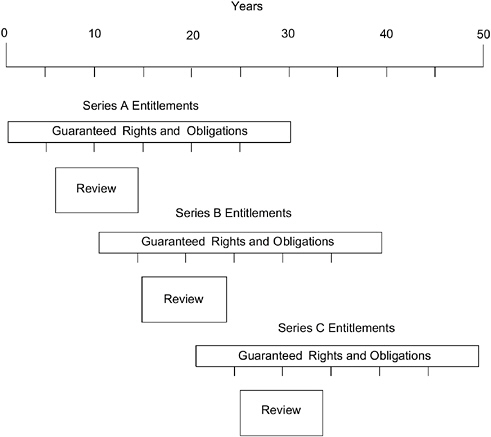
FIGURE 6-1 Building resilience into tradable permit systems.
SOURCE: Based on Figure 7-1 in Young and McCay (1995). Reprinted with permission.
The primary AAQS are defined at levels that protect human health.28 In water the aggregate limit typically is based on expected water flow (Easter et al., 1998). In formal tradable permit fisheries, the governing body routinely estimates the size of the fish stocks to determine the amount of fish that can be harvested in a given year so that fisheries can be sustained; this amount is termed the “allowable biological catch” (ABC). The catch level that fishermen are allowed to take, the total allowable catch, normally would be equal to or less than the ABC (National Research Council, 1999:3).
Initial Allocation Method
The initial allocation of entitlements is perhaps the most controversial aspect of a tradable permits system. Four possible methods for allocating initial entitlements are:
-
Random access (lotteries)
-
First come, first served
-
Administrative rules based on eligibility criteria
-
Auctions
All four of these have been used in one context or another. Both lotteries and auctions frequently are used in allocating hunting permits for big game. Lotteries are more common in allocating permits among residents while auctions are more common for allocating permits to nonresidents. First come, first served historically was common for water when it was less scarce. The most common method, however, for the applications discussed here is allocating access rights based on historic use.
Two justifications for this approach typically are offered.29 First, it enhances the likelihood of adoption.30 Not only does allocating entitlements to historic users cause the least disruption from historic patterns, but it involves a much smaller financial burden on users than an auction31 (Lyon, 1982; Tietenberg, 1985; Hausker, 1990; Grafton and Devlin, 1996). Second, it allocates permits to those who have made investments in resource extraction. In this sense it serves to recognize and to protect those investments.32
In the absence of either a politically popular way to use the revenue or assurances that competitors will face similar financial burdens, distributing the permits free of charge to existing sources could substantially reduce this political opposition. Though an infinite number of possible distribution rules exist, “grandfathered” rules tend to predominate. Grandfathering refers to an approach that bases the initial allocation on historic use. Under grandfathering, existing sources only have to purchase any additional permits they may need over and above the initial allocation (as opposed to purchasing all permits in an auction market).
Although politically the easiest path to sell to those subject to regulation, grandfathering has its disadvantages. The presence of preexisting distortions in the tax system implies that recycling the revenue can enhance the cost-effectiveness of the system by a large amount. This implies that from an efficiency or cost-effectiveness perspective, auctioned permits would be preferred to “grandfathered” permits (Goulder et al., 1999).
A second consideration involves the treatment of new firms. Although reserving some permits for new firms is possible, this option is rarely exercised in practice. As a result, under the free distribution scheme new firms typically have to purchase all permits, while existing firms get an initial allocation free. Thus the free distribution system imposes a bias against new users in the sense that their financial burden is greater than that of an otherwise identical existing user. In air pollution control, this “new user” bias has retarded the introduction of new facilities and new technologies by reducing the cost advantage of building new facilities that embody the latest innovations (Maloney and Brady, 1988; Nelson et al., 1993).33
Other initial allocation issues involve determining both the eligibility to receive permits and the governance process for deciding the proper allocation.34 Controversies have arisen, especially in fisheries, about both elements. In fisheries the decision to allocate permits to boat owners has triggered harsh reactions among both crew and processors.
In some fisheries the allocation to boat owners has transformed the remuneration arrangements from a sharing of the risks and revenues from a catch on a predefined share basis to a wage system. Though this transformation can result in higher incomes for crew (Knapp, 1997), the change in status has been difficult to accept for those used to being co-venturers, thereby sharing in both the risk and reward of fishing (McCay et al., 1989; McCay and Creed, 1990).
Processors also have staked their claim for quota (especially in Alaska), albeit unsuccessfully to date (Matulich et al., 1996). The claims are based on the immobility of the processing capital and the fact that allocating quota to boat owners changes the bargaining relationship in ways that could hurt processors (Matulich and Sever, 1999).
Finally, some systems allow agents other than those included in the initial allocation to participate through an “opt-in” procedure. This is a prominent feature of the sulfur allowance program, but it can be plagued by adverse selection problems (Montero, 1999, 2000b).
Transferability Rules
Although the largest source of controversy about tradable permits seems to attach to the manner in the permits are allocated initially, another significant source of controversy is attached to the rules that govern transferability. According to supporters, transferability not only serves to assure that rights flow to their highest valued use, but it also provides a user-financed form of compensation for those who decide voluntarily to no longer use the resource. Therefore restrictions on transferability only serve to reduce the efficiency of the system. According to critics, allowing the rights to be transferable produces a number of socially unacceptable outcomes, including the concentration of rights, the destruction of community interests, and the degrading of both the environment and traditional relationships among users.
Making the rights transferable allows the opportunity for some groups to accumulate permits. The concentration of permits in the hands of a few either can reduce the efficiency of the tradable permits system (Hahn, 1984; Anderson, 1991; Van Egteren and Weber, 1996) or can be used as leverage to gain economic power in other markets (Misiolek and Elder, 1989; Sartzetakis, 1997). Although it has not played much of a role in air pollution control, it has been a factor in fisheries (Palsson and Helgason, 1995).
Typically the problem in fisheries is not that the concentration is so high that it triggers antitrust concerns (Adelaja et al., 1998), but rather that it allows small
fishing enterprises to be bought out by larger fishing enterprises. Smaller fishing enterprises are seen as having a special value to society that should be protected.
Protections against “unreasonable” concentration of quota are now common. One typical strategy involves putting a limit on the amount of quota that can be accumulated by any one holder. In New Zealand fisheries, for example, these range from 20 percent to 35 percent, depending on the species (National Research Council, 1999:90-91), while in Iceland the limits are 10 percent for cod and 20 percent for other species (1999:102).
Another strategy involves trying to mitigate the potential anticompetitive effects of hoarding. The U.S. sulfur allowance program does this in two main ways. First, it sets aside a supply of allowances that could be sold at a predetermined (high) price if hoarders refused to sell to new entrants.35 Second, it introduced a zero-revenue auction that, among its other features, requires permit holders to put approximately 3 percent of allowances up for sale in a public auction once a year.36
Another approach involves directly restricting transfers that seem to violate the public interest. In the Alaskan halibut and sablefish ITQ program, for example, several size categories of vessels were defined. The initial allocation was based on the catch record within each vessel class, and transfer of quota between catcher vessel classes was prohibited (National Research Council, 1999:310). Further restrictions required that the owner of the quota had to be on board when the catch was landed. This represented an attempt to prevent the transfer of ownership of the rights to “absentee landlords.”
A second concern relates to the potentially adverse economic impacts of permit transfers on some communities.37 Those holders who transfer permits will not necessarily protect the interests of communities that have depended on their commerce in the past. For example, in fisheries a transfer from one quota holder to another might well cause the fish to be landed in another community. In air pollution control, owners of a factory might shut down its operation in one community and rebuild in another community, taking their permits with them.
One common response to this problem involves allocating quota directly to communities. The 1992 Bering Sea Community Development Quota Program, which was designed to benefit remote villages containing significant native populations in Alaska, allocated 7.5 percent of the walleye pollock quota to these communities (Ginter, 1995). In New Zealand the Treaty of Waitangi (Fisheries Claims) Settlement Act of 1992 effectively transferred ownership of nearly 40 percent of the New Zealand ITQ to the Maori people (Annala, 1996). For these allocations the community retains control over the transfers, and this control gives it the power to protect community interests. In Iceland this kind of control is gained through a provision that if a quota is to be leased or sold to a vessel operating in a different place, the assent of the municipal government and the local fishermen’s union must be acquired (National Research Council, 1999:83).
A final concern with transferability relates to possible external effects of the transfer. Although in theory transfers increase net benefits by allowing permits to
flow to their highest valued use, in practice that is not necessarily so if the transfers confer external benefits or costs on third parties.
Such external effects are not rare. In water, for example, transfers from one use to another can affect the quality, quantity, and timing of supply for other downstream users38 (Livingston, 1998). In air pollution control, transfers can affect the spatial distribution of pollution, and that can trigger environmental justice concerns (Tietenberg, 1995b).39 In fisheries quota could be transferred to holders with more damaging gear, or a higher propensity for bycatch. In all cases “leakage” provides another possible external effect. Leakage occurs when pressure on the regulated resource is diverted to an unregulated, or lesser regulated, resource, as when fishermen move their boats to another fishery or polluters move their polluting factory to a country with lower environmental standards.
Western U.S. water markets attempt to solve the externality problem by giving any affected party a chance to intervene in the transfer proceeding (Colby, 1995). In the case of a third-party intervention, the transferring parties bear the burden of establishing the absence of damage to third parties. Although this is probably an effective way to internalize the externality, it raises transaction costs significantly and has resulted in many fewer transfers than would have been the case otherwise (Livingston, 1998). Technology is now making an entrance in water markets (the Water Links electronic water exchange in California, for example) to lower transaction costs (Organization for Economic Co-operation and Development, 1999).
One strategy used in U.S. air pollution control policy to resolve the spatial externality problem is regulatory tiering. Regulatory tiering implies applying more than one regulatory regime at a time. Sulfur oxide pollution in the United States is controlled both by the regulations designed to achieve local ambient air quality standards as well as by the sulfur allowance trading program. All transactions have to satisfy both programs. Thus trading is not restricted by spatial considerations (national trades are possible), but the use of acquired allowances is subject to local regulations protecting human health via the ambient standards. The second regulatory tier protects against the harmful spatial clustering of emissions (by disallowing any specific trades that would violate the standards), while the first tier allows unrestricted trading of allowances. Because the reductions in sulfur are so large and most local ambient standards are not likely to be jeopardized by trades, few trades have been affected by this provision. Yet its very existence serves to allay fears that local air quality could be in jeopardy.
The Temporal Dimension
Standard theory suggests that a fully value-maximizing tradable permit system must have full temporal fungibility, implying that allowances can be both borrowed and banked (Kling and Rubin, 1997; Rubin, 1996). Banking allows a
user to store its permits for future use. With borrowing a permit holder can use permits earlier than their stipulated date.
No existing system that I am aware of is fully temporally fungible. Older pollution control programs have had a more limited approach. The Emissions Trading Program allowed banking, but not borrowing. The Lead Phaseout Program originally allowed neither, but part way through the program it allowed banking, at least until the program officially ended and any remaining credits became unusable. The sulfur allowance program has banking, but not borrowing, and RECLAIM has neither (Tietenberg, 1998c).
Why do so few programs have full temporal fungibility? The answers seem to lie more in the realm of politics than economics.
The first concern involves the potential for creating a temporal clustering of emissions. When intertemporal trades are defined on a one-for-one basis, it is possible for emissions to be concentrated in time. Because emissions concentrated in space or time cause more degradation than dispersed emissions (due to a nonlinearity in the dose-response function), regulators have chosen to put a priori restrictions on the temporal use of permits despite the economic penalty that imposes.
A second concern has arisen (particularly in the global warming context) where imposing sanctions for noncompliance is difficult. Some observers have noted that enforcing the cumulative emissions budget envisioned by the Kyoto Protocol on a nation that had borrowed heavily in the earlier years would become increasingly difficult over time (Tietenberg et al., 1998). Given the inherent difficulties in enforcing international commitments under the best of circumstances, opponents of borrowing propose to forestall this difficulty by eliminating any possibility of borrowing. They view the resulting increased compliance cost as a reasonable price to pay for taking the pressure off future enforcement.
Monitoring and Enforcement
Regardless of how well any tradable permit system is designed, noncompliance can prevent the attainment of its economic, social, and environmental objectives. Noncompliance not only makes it more difficult to reach stated goals, but it sometimes makes it more difficult to know whether the goals are being met.40
Although it is true that any management regime raises monitoring and enforcement issues, tradable permit regimes raise some special issues. One of the most desirable aspects of tradable permits, their ability to increase the value of the resource, is a two-edged sword because it also raises incentives for noncompliance. In the absence of an effective enforcement system, higher profitability from cheating could promote illegal activity. Insufficient monitoring and enforcement also could result in failure to keep a tradable permit system within its environmental limit.41
Do monitoring and enforcement costs rise under tradable permit programs? The answer depends both on the level of required enforcement activity (greater levels of enforcement effort obviously cost more) and on the degree to which existing enforcement resources are used more or less efficiently. Higher enforcement costs are not, by themselves, particularly troubling because they can be financed from the enhanced profitability promoted by the tradable permit system.42
Monitoring
In addition to the obvious potential for quota busting that all tradable permit approaches face, fisheries also can face problems with poaching (harvests by ineligible fishermen), unreported highgrading (discarding low-valued fish to make room in the quota for higher valued fish), and bycatch discards (nontargeted species caught and discarded) (National Research Council, 1999:175-180).
Whether these problems are intensified or diminished by the implementation of a tradable permit program depends (in part) on the economic incentives confronting participants. The incentives for highgrading, for example, depend on the magnitude of price differentials for various types and sizes of targeted species. As the price premium for fish of a particular size and type increases, the incentive to use quota for especially valuable fish increases along with the incentive to discard less valuable fish (Anderson, 1994).
Incentives for bycatch can vary considerably as well (Boyce, 1996; Larson et al., 1998). The more leisurely pace of fishing afforded by individual fishing quotas (IFQs) allows fishermen to avoid geographic areas or times when bycatch is more likely.43 At the same time, the more leisurely pace reduces the opportunity cost of hold space and, consequently, also may provide fishermen with new opportunities to retain a greater proportion of the bycatch as joint products. For example, the halibut fishery encounters significant bycatches of rockfish. Although most rockfish and thornyheads command high exvessel prices, most of this bycatch was discarded during the derby fishery because halibut were even more valuable. A greater portion of this bycatch is now being retained.
On the other hand, implementing an IFQ regime may favor some technologies over others. If the favored technologies typically involve more bycatch, bycatch rates can rise in the absence of enforcement.
Ultimately, therefore, whether highgrading, bycatch, and bycatch discard increase or decrease under an IFQ regime depends on local circumstances, on whether highgrading and bycatch discards are legal (or even required), and on the enforcement response.
Every monitoring system must identify both the information that is needed to monitor the operation of the tradable permit program and the management component that will gather, interpret, and act on this information. Data also should be
collected on transfers so that monitoring and analysis of the market can take place. Effective monitoring systems are composed of data, data management, and verification components.
In general, the smooth implementation of a tradable permit program requires two kinds of monitoring data. First, periodic data on the condition of the resource are needed to evaluate the effectiveness of the program over time. These data are used as the basis for adjusting environmental limits as conditions warrant. Second, managers need sufficient data to monitor compliance with the various limitations imposed by the regulatory system.
Monitoring compliance with a tradable permit program requires data on the identity of permit holders, amount of permits owned by each holder, permit, and permit transfers. Where programs have additional restrictions on permit use (such as type of equipment) or on quota transfers (only to “eligible” buyers), the data must be complete enough to contain this information and to identify noncomplying behavior in a timely manner.
One key to a smoothly implemented tradable program is ensuring that all data are input to an integrated computer system that is accessible by eligible users on a real-time basis. Such a system provides up-to-date information on permit use to both users and enforcement agencies. Ideally it also would allow short-notice transfers, such as when a vessel heading for shore has a larger than expected bycatch and needs to acquire additional quota for the bycatch species before landing. Facilitating this kind of flexibility would reduce the enforcement burden considerably by giving permit holders a legal alternative to illegal discarding without jeopardizing the objectives of the program.
The computer system also should provide easy data entry. Card swipe systems, such as those used in the Alaska halibut and sablefish IFQ fisheries, automatically input all the necessary identification data so that only landings (and hence permit use) need to be recorded. It is also possible to have the harvest level recorded directly from the scales (with appropriate adjustments for “ice and slime” or the degree to which the fish are already processed). Entry terminals that are connected to the master computer system should be available at all authorized landing sites.
Technology also has played an important role in the U.S. sulfur allowance system (Kruger et al., 2000). Both the collection and dissemination of the information derived from the continuous emissions monitors is now handled via the Web. Special software has been developed to take individual inputs and to generate information both for the public and for EPA enforcement activities. According to Kruger et al. (2000), the development of this technology has increased administrative efficiency, lowered transaction costs, and provided greater environmental accountability.
Information technology also permits greater accountability by making the information transparent. Evidence suggests that making the information available
online to the public may further increase compliance. It also increases the possibilities for public pressure and even legal action from nongovernmental environmental agencies and/or citizens (Tietenberg, 1998a).
To ensure the accuracy of reported data, it is necessary to build a number of safeguards into the program. In fisheries proper control procedures include both onshore and at-sea components. An onshore system of checks normally would include a requirement that sales be made only to registered buyers and that both buyers and quota shareholders co-sign the landing entries. These measures create an audit trail that could be monitored electronically for instances in which a comparison of processed product weight and recorded purchases suggests suspiciously high product recovery rates. The at-sea component would include both onboard observers, where the fishery is profitable enough to bear the cost, and random checks at sea by the appropriate authority (or perhaps by video monitoring). Onboard observers may be particularly important in fisheries where bycatch and highgrading are expected to be problems.
Enforcement
A successful enforcement program requires a carefully constructed set of sanctions for noncompliance. Penalties should be commensurate with the danger posed by noncompliance. Penalties that are unrealistically high may be counterproductive if authorities are reluctant to impose them and fishermen are aware of this reluctance. Unrealistically high penalties also are likely to consume excessive enforcement resources as those served with penalties seek redress through the appeals process.
In many cases, predetermined administrative fines can be imposed by the enforcing agency itself for “routine” noncompliance. For example, the Alaskan IFQ programs allow overages of up to 10 percent above the fisherman’s remaining IFQ balance to be deducted from the next year’s IFQ permit amount. Overages greater than 10 percent are considered a violation and are handled by enforcement personnel. In an ideal system, more serious noncompliance in terms of either the magnitude of the offense or the number of offenses could trigger civil penalties (fines and possible seizure of catch, equipment, and quota). Criminal penalties should be reserved for falsification of official reports and the most serious violations.
Other sanctions are possible. In the sulfur allowance program, for example, those found in noncompliance must not only pay a substantial financial penalty for noncompliance; they must also forfeit a sufficient number of future allowances to compensate for the overage. It is also possible to only allow those in compliance to transfer permits. Any egregious violations can lead to forfeiture of the right to participate in the program at all.
Income levels from fishing generally are bolstered by the implementation of an effective IFQ program. An effective program presumes effective enforcement.
Honest fishermen should be willing to contribute some of their increased rent to ensure the continued existence of an effective IFQ management regime.
EVALUATION CRITERIA
In assessing the outcomes of these systems I focus on three major categories of effects. The first is implementation feasibility. A proposed policy regime cannot protect the common pool resource if it cannot be implemented or if its main protective mechanisms are so weakened by the implementation process that it is rendered ineffective. What matters is not how a policy regime works in principle, but how it works in practice. The second category seeks to answer the question “How much protection did it offer not only to the common-pool resource, but also other resources that might have been affected either positively or negatively by its implementation?” Finally, what were the economic effects on those who either directly or indirectly use the resource?
Implementation Feasibility
The record seems to indicate that resorting to a tradable permits approach to controlling resources usually only occurs after other, more familiar, approaches have been tried and failed. In essence the costs of implementing a system like this generally are recognized as large, so incurring such large costs can be justified only when the benefits have risen sufficiently to justify the transition (Libecap, 1990).
Most fisheries that have turned to these policies have done so only after a host of alternative input and output controls have failed to stem the pressure being placed on the resource. A similar story can be told for air pollution control. The offset policy, introduced in the United States for controlling air pollution, owes its birth to an inability of any other policy to reconcile the desire to allow economic growth with the desire to improve the quality of the air.
It is also clear that not every attempt to implement a tradable permit approach is successful. In air pollution control, attempts to establish a tradable permits approach have failed in Poland (Zylicz, 1999), Germany (Scharer, 1999), and the United Kingdom (Sorrell, 1999). Programs in water pollution control generally have not been very successful (Hahn and Hester, 1989).
On the other hand, it does appear that the introduction of new tradable permit programs becomes easier with familiarity. Following the very successful lead phaseout program, in the United States, new supporters appeared and made it possible to pass the sulfur allowance program.44
It also seems quite clear that, to date at least, using a grandfathering approach to the initial allocation has been a necessary ingredient in building the political support necessary to implement the approach.45 Existing users frequently have
the power to block implementation, while potential future users do not. This has made it politically expedient to allocate a substantial part of the economic rent that these resources offer to existing users as the price of securing their support. Although this strategy reduces the adjustment costs to existing users, it generally raises them for new users.46
The design features of the programs are not stable over time; they evolve with experience. The earliest use of the tradable permit concept, the Emissions Trading Program, overlaid credit trading on an existing regulatory regime and was designed to facilitate implementation of that program. Trading baselines were determined on the basis of previously determined, technology-based standards and created credits could not be used to satisfy all of these standards. For some the requisite technology had to be installed.
More recent programs, such as the Acid Rain and RECLAIM programs, replace, rather than complement, traditional regulation. Allowance allocations for these programs were not based on preexisting technology-based standards. In the case of RECLAIM, the control authority (the South Coast Air Quality Management District) could not have based allowances on predetermined standards even if it had been inclined to do so. Defining a complete set of technologies that offered the necessary environmental improvement (and yet were feasible in both an economic and engineering sense) proved impossible. Traditional regulation was incapable of providing the degree of reduction required by the Clean Air Act.
Environmental Effects
One common belief about tradable permit programs is that their environmental effects are determined purely by the imposition of the aggregate limit, an act that is considered to lie outside the system. Hence, it is believed, the main purpose of the system is to protect the economic value of the resource, not the resource itself.
That is an oversimplification for several reasons. First, whether it is politically possible to set an aggregate limit may be a function of the policy used to achieve it. Second, both the magnitude of that limit and its evolution over time may be related to the policy. Third, the choice of policy regime may affect the level of monitoring and enforcement and noncompliance can undermine the achievements of the limit. Fourth, the policy may trigger environmental effects that are not covered by the limit.
The demonstration that the traditional regulatory policy was not value maximizing had two mirror-image implications. It implied either that the same environmental goals could be achieved at lower cost or that better environmental quality could be achieved at the same cost. In air pollution control, although the earlier programs were designed to exploit the first implication, later programs attempted to produce better air quality and lower cost.47
Setting the Limit
In air trading programs, the lower costs offered by trading were used in initial negotiations to secure more stringent pollution control targets (acid rain program, ozone-depleting gases, lead phaseout, and RECLAIM) or earlier deadlines (lead phaseout program). The air quality effects from more stringent limits were reinforced by the use of offset ratios for trades in nonattainment areas that were set at a ratio greater than 1.0 (implying a portion of each acquisition would go for better air quality). In addition, environmental groups have been allowed to purchase and retire allowances (acid rain program). Retired allowances represent authorized emissions that are not emitted.
In fisheries the institution of ITQs has sometimes, but not always, resulted in lower (more protective) TACs. In the Netherlands, for example, the plaice quota was cut in half (and prices rose to cushion the income shock) (Davidse, 1999).
Meeting the Limit
In theory the flexibility offered by tradable permit programs makes it easier to reach the limit, suggesting the possibility that the limit may be met more often under tradable permits systems than under the systems that preceded them. In most fisheries this expectation seems to have been borne out. In the Alaskan Halibut and Sablefish fisheries, for example, although exceeding the TAC was common before the imposition of an ITQ system, the frequency of excedences dropped significantly after the introduction of the ITQ (National Research Council, 1999).
A recent Organization for Economic Co-operation and Development review (1997:80) concludes:
The results of individual quota management on resource conservation have been mixed. For the most part, IQs [individual quotas] and ITQs have been effective in limiting catch at or below the TAC determined by management authorities. Catch was maintained at or below the TAC in 24 out of 31 fisheries for which information on this outcome was available. … In most cases, insufficient monitoring and enforcement allowed catches to exceed TACs.
Enforcing the Limit
Sometimes the rent involved in transferable permit programs is used to finance superior enforcement systems. In the sulfur allowance program, for example, the environmental community demanded (and received) a requirement that continuous emission monitoring be installed (and financed) by every covered utility. Coupling this with the rather stringent penalty system has meant 100 percent compliance.
The rents generated by ITQs also have provided the government with a source of revenue to cover the costs of enforcement and administration. In the many of
the IQ fisheries in Australia, Canada, Iceland, and New Zealand, industry pays for administration and enforcement with fees levied on quota owners.
Not all uses of tradable permits, however, offer as convincing a solution for the monitoring and enforcement problems. With respect to fisheries, one comprehensive review (Organization for Economic Co-operation and Development, 1997:84) found:
Higher enforcement costs and or greater enforcement problems occurred in 18 fisheries compared to five that experienced improvements. Enforcement proved particularly difficult in the high value fisheries, in multispecies fisheries, and in transnational fisheries. Support from industry for increased enforcement is common, as quota holders recognize that the illegal fishing by others damages the value of their quota rights and have an incentive to aid authorities with enforcement. ITQ management has led to increased co-operation between fishers and enforcement authorities in several cases, including the New Zealand fisheries in general, and the US wreckfish fishery. … Underreporting of catch and data degradation was documented for 12 fisheries, but improvements were made in six fisheries.
Effects on the Resource
In air pollution the programs typically have had a very positive effect on reducing emissions. In both the lead phaseout and ozone-depleting gas programs, the targeted pollutants were eliminated, not merely reduced. Both the acid rain and RECLAIM programs involve substantial reductions in emissions over time (Tietenberg, 1999).
In the fisheries what have been the effects on biomass? The evidence has been mixed. In the Chilean squat lobster fishery, the exploitable biomass has rebounded from a low of about 15,500 tons (prior to ITQs) to a level in 1998 of between 80,000 and 100,000 tons (Bernal and Aliaga, 1999). The herring fishery in Iceland has experienced a similar rebound (Runolfsson, 1999).
On the other hand, one review of 37 ITQ or IQ fisheries found that 24 experienced at least some temporary declines in stocks after instituting the programs. These were largely attributed to a combination of inadequate information on which to set conservative TACs and illegal fishing activity. Interestingly 20 of the 24 fisheries experiencing declines had additional regulations such as closed areas, size/selectivity regulations, trip limits, and vessel restrictions (Organization for Economic Co-operation and Development, 1997:82). These additional regulations apparently were also ineffective in protecting the resource.
Other Effects
In water one significant problem has been the protection of “instream” uses of water. In the United States, some states only protected private entitlements to water if it was diverted from the stream and consumed. Recent changes in policy
and some legal determinations have afforded more protections to these environmental uses of water.
In air pollution control, several effects transcend the normal boundaries of the program. In the climate change program, for example, it is widely recognized (Ekins, 1996) that the control of greenhouse gases will result in substantial reductions of other pollutants as a side effect. Other, more detrimental, effects include the clustering of emissions either in space or time.
In fisheries two main effects have been bycatch and highgrading. Bycatch is a problem in many fisheries, regardless of the means of control. The evidence from fisheries on how the introduction of ITQs affect bycatch and highgrading is apparently mixed. Two reviews (National Research Council, 1999:193; Organization for Economic Co-operation and Development, 1997:83) found that bycatch and highgrading may increase or decrease in ITQ fisheries depending on the fishery.
Economic Effects
Although the evidence on environmental consequences is mixed (especially for fisheries), it is somewhat clearer for the economic consequences. In the presence of adequate enforcement, tradable permits do appear to increase the value of the commons to which the permits apply. In air pollution control, this takes the effect of considerable savings in meeting the pollution control targets (Hahn and Hester, 1989; Tietenberg, 1990). For water it involves the increase in value brought about by transferring the resources from lower valued to higher valued uses (Easter et al., 1998). In fisheries it not only involves the higher profitability from more appropriately scaled capital investments (resulting from the reduction in overcapitalization), but also from the fact that ITQs frequently make it possible to sell a more valuable product at higher prices (fresh fish rather than frozen fish) (National Research Council, 1999). One review of 22 fisheries found that the introduction of ITQs increased wealth in all 22 (Organization for Economic Cooperation and Development, 1997:83).
In both water and air pollution, the transition was not from an open access resource to tradable permits, but rather from a less flexible control regime to a more flexible one. The transition apparently has been accomplished with few adverse employment consequences, though sufficient data to do a comprehensive evaluation do not exist (Goodstein, 1996).
The employment consequences for fisheries have been more severe. In fisheries with reasonable enforcement, the introduction of ITQs usually has been accompanied by a considerable reduction in the amount of fishing effort. Normally this means not only fewer boats, but also less employment. The evidence also suggests, however, that the workers who remain in the industry work more hours during the year and earn more money (National Research Council, 1999:101).
The introduction of ITQs in fisheries has also had implications for crew, processors, and communities. Traditionally in many fisheries, crew have been coventurers in the fishing enterprise, sharing in both the risk and reward. In some cases the shift to ITQs has shifted the risk and ultimately shifted the compensation system from a share of profits system to a wage system. Though this has not necessarily lowered incomes, it has changed the culture of fishing (McCay et al., 1989; McCay and Creed, 1990).
Processors can be affected by the introduction of ITQs in a number of ways. First, the processing sector is typically as overcapitalized as the harvesting sector.48 Because the introduction of ITQs typically extends the fishing season and spreads out the processing needs of the industry, less processing capacity is needed. In addition, the more leisurely pace of harvesting reduces the bargaining power of processors versus fishers. In some areas such as Alaska, a considerable amount of this processing capital may lose value due to its immobility (Matulich et al., 1996; Matulich and Sever, 1999).
Communities can be, and in some cases have been, adversely affected when quota held by local fishers is transferred to fishers who operate out of other communities. Techniques developed to mitigate these effects, however, seem to have been at least moderately successful (National Research Council, 1999:206).
Generally market power has not been a significant issue in most permit markets despite some tendencies toward the concentration of quota. In part this is due to accumulation limits that have been placed on quota holders and the fact that these are typically not markets in which accumulation of quota yields significant monopoly-type powers.49 In fisheries some concern has been expressed (Palsson, 1998) that the introduction of ITQs will mean the demise of the smaller fishers as they are bought out by larger operations. The evidence does not seem support this concern.50
LESSONS
What can be gleaned from this necessarily brief survey of the theory and implementation experience with tradable permits?
Evaluation
We begin by identifying the lessons that emerge from our evaluation of the factors affecting the implementation feasibility of transferable permits as well as the environmental and economic effects of their implementation.
-
The air pollution programs, on balance, seem to be the most successful in achieving both economic and environmental objectives. In part this seems to be due to the presence of fewer (though certainly not zero) externalities in these programs. Fisheries must cope with potentially severe bycatch problems in
-
multispecies fisheries. Water control authorities must cope with the consequences of trades on downstream users. These small-scale, complex resources with multiple externalities may be better managed by cooperative arrangements.
-
The academic community has emphasized the importance of co-management of environmental resources, with users having a substantial role. Although tradable permit systems in principle allow a variety of governance systems, only in fisheries and water is there any evidence of an evolution in this direction. The current predominant form in both air pollution control and fisheries seems to be a system of shared management, with users playing a smaller role than envisioned by most co-management proposals. For those resource regimes located in the United States, it is common for the goals to be set at the national level and considerable “top-down” management to be in evidence. The management of water resources seems closest to user-controlled co-management schemes. In those systems, the rights markets are at the “informal” end of the spectrum.
-
Although tradable permit systems in principle allow a variety of governance systems, the only evidence of an evolution toward true co-management has occurred in fisheries and water. The pollution and natural resource cases exhibit an important asymmetry. For air pollution control, the benefits from resource protection fall on the victims of air pollution, not on the polluters who use the resource. From a purely self-interest point of view, resource users (polluters) would be quite happy to pollute the air if they could get away with it. On the other hand, water users and fishers can both benefit from protection of the resource. Their collective self-interest is compatible with resource protection. This suggests that the incentives for collective action should be quite different in these two cases, and this difference could well explain the lower propensity for collective self-governance in the air pollution case.
-
A main element of controversy in tradable permits systems involves both the processes for deciding the initial allocation and the initial allocation itself. These problems seem least intense for air pollution and most intense for fisheries. Though a rich set of management and initial allocation options exists, current experience seems not to have been very creative in their use.
-
Tradable permit programs are sometimes held to be a relatively rigid approach to resource management. This expectation is created by the belief that once instituted, property rights cannot be changed. In fact, implemented tradable permit programs have exhibited a considerable amount of flexibility. A variety of new design features (such as zero-revenue auctions, bycatch quotas, and drop-through mechanisms) have emerged that are tailored to the characteristics of particular resources. These offer greater flexibility in meeting the needs of particular resource systems. For example, especially flexible adaptive management systems have evolved in programs designed to protect resources that exhibit higher degrees of supply variability (fisheries and water).
-
In their most successful applications, tradable permits have been able to simultaneously protect the resources and provide sustainable incomes for users.
-
Technology advances, such as computerized exchanges, are helping to lower transaction costs, thereby facilitating the capture of more of the rent.
-
The two elements that most jeopardize the success of a tradable permits program are inadequate enforcement and uninternalized externalities.
Unfulfilled Theoretical Expectations
Two important expectations flowing from the economic theory have proved to be an inaccurate characterization of reality:
-
The first is the theoretical expectation that transferable permit programs do not effect conservation of the resource because that is handled by the cap. In the theory, setting the cap is considered to be outside the system. Hence, it is believed, the main purpose of the system is to protect the economic value of the resource, not the resource itself. That is an oversimplification for several reasons. First, whether it is politically possible to set an aggregate limit may be a function of the policy used to achieve it. The use of grandfathered permits in the acid rain program, for example, made it possible to establish the limit on sulfur emissions. Second, in both fisheries and air pollution control, the evidence suggests that both the magnitude of the implemented limit and its evolution over time may be related to the policy. The flexibility and lower cost of meeting the limit offered by tradable permits systems can, and has, resulted in the acceptance of more stringent limits. Third, the choice of policy regime may affect the level of monitoring and enforcement, and noncompliance can undermine the achievements of the limit. Experience suggests that depending on the context, transferable permits can either improve or degrade the monitoring and enforcement situation. Fourth, the policy may trigger environmental effects that are not covered by the limit. Activity may be diverted from covered to uncovered resources.
-
The second theoretical expectation that falls in the light of implementation experience involves the tradeoff between efficiency and equity in a tradable permits system. Traditional theory suggests that tradable permits offer a costless trade-off between efficiency and equity because, regardless of the initial allocation, the ability to trade assures that permits flow to their highest valued uses. This implies that the initial allocation can be used to pursue equity goals without lowering the value of the resource. In practice, implementation considerations nearly always allocate permits to historic uses, whether or not that is the most equitable allocation. This failure to use the initial allocation to protect equity concerns has caused other means to be introduced to protect equity considerations (such as restrictions of transfers). The additional restrictions generally do lower the value of the resource. In practice, therefore, tradable permits systems have not avoided the trade-off between efficiency and equity so common elsewhere in policy circles.
This evidence seems to suggest that tradable permits are no panacea, but they do have their niche.
NOTES
|
1 |
Two examples of existing programs that did not make the list include the NOx Budget air pollution control program in the northeastern United States (Farrell et al., 1999) and programs to control conventional air pollutants in several states (Solomon and Gorman, 1998). For a large online bibliography covering these systems, see http://www.colby.edu/personal/t/thtieten/. |
|
2 |
Consider just three examples. In air pollution control, a legal challenge was brought in Los Angeles during June 1997 by the Los Angeles-based Communities for a Better Environment (Tietenberg, 1995a). In fisheries a challenge was brought against the halibut/sablefish tradable permits system in Alaska (Black, 1997) and Congress imposed a moratorium on the further use of a tradable permits approach in U.S. fisheries (National Research Council, 1999). Though both legal cases ultimately were thrown out, as of this writing the moratorium is still in effect, despite a recommendation by the National Research Council to lift it. |
|
3 |
One author, for example, compares a tradable permits system to the sale of indulgences in the Middle Ages (Goodin, 1994). |
|
4 |
For a previous survey that also examines tradable permit systems across resource settings, see Colby (2000). |
|
5 |
Another characteristic that affects the allocation of control responsibility is the degree to which the pollutant accumulates over time. In the interest of brevity I have not included that case. For an analysis of that case, see Griffin (1987). |
|
6 |
For a general equilibrium treatment that derives the efficient allocation using a utility framework, see Tietenberg (1973). |
|
7 |
As an interesting aside, the efficiency approach would tend to minimize health damage for a given level of expenditure, but it would do so by subjecting some individuals to a higher level of individual risk. |
|
8 |
In this essay, “sustainability perspective” is used to refer to an outcome in which the resource itself is preserved. Sometimes called “environmental sustainability” (Tietenberg, 2000:97), this approach is more restrictive than the conventional notions of weak sustainability and strong sustainability, which maintain the value of the total capital stock and natural capital stock respectively. |
|
9 |
In U.S. air pollution control, for example, an “acceptable” pollutant concentration level in the ambient air has been established on the basis of human health considerations. For fisheries the total allowable catch is usually defined in terms of the “allowable biological catch.” Because neither of these processes involves an explicit calculation of net benefits, they would be efficient only by coincidence. |
|
10 |
For an excellent formal treatment of the relationship between efficiency and sustainability in both renewable and nonrenewable resource contexts, see Heal (1998). |
|
11 |
For a detailed explanation of the circumstances leading to the increasing evolution of market-based approaches to pollution control, see Tietenberg et al. (1999). |
|
12 |
Unfortunately the usefulness of this corollary is limited whenever more than one goal needs to be satisfied by the initial allocation. This is commonly the case, for example, when the resource managers want to use the initial allocation both to build enough support to implement the program and to treat all claimants fairly. The allocations that satisfy each of those two goals may be quite different. |
|
13 |
Inadequate monitoring and enforcement, of course, plagues all policy instruments, not just tradable permit systems. |
|
14 |
In the case of market power in fisheries, the maximum number of permits that can be held by any individual or defined group routinely is limited by regulation.(National Research Council, 1999). In the case of transaction costs, it is possible to design administrative systems so as to minimize these costs (Tietenberg, 1998c). |
|
31 |
From the point of view of the user, two components of financial burden are significant: (1) extraction or control costs, and (2) expenditures on permits. Although only the former represent real resource costs to society as a whole (the latter are merely transfers from one group in society to another), to the user both represent a financial burden. The empirical evidence suggests that when a traditional auction market is used to distribute permits (or, equivalently, when all uncontrolled emissions are subject to an emissions tax), the permit expenditures (tax revenue) frequently would be larger in magnitude than the control costs; the sources would spend more on permits (or pay more in taxes) than they would on the control equipment (Tietenberg, 1985). |
|
32 |
The downside occurs when the investments being rewarded were initiated purely for the purpose of increasing the initial allocation of tradable permits. Not only are these investments inefficient, but rewarding them undermines the ethical basis for an initial allocation based on historic use. |
|
33 |
The “new source bias” is, of course, not unique to tradable permit systems. It applies to any system of regulation that imposes more stringent requirements on new sources than existing ones. |
|
34 |
Tradable permits systems are perfectly compatible with the principles of co-management. In this case the community would play a large role in defining the goals and procedures in the system; see National Research Council (1999:135-138). |
|
35 |
This setaside has not been used because sufficient allowances have been available through normal channels. That doesn’t necessarily mean the setaside was not useful, however, because it may have alleviated concerns that otherwise could have blocked the implementation of the program. |
|
36 |
The revenue is returned to the original permit holders rather than retained by the government, hence the name “zero-revenue auction” (Svendsen and Christensen, 1999). |
|
37 |
This concern does not arise in all communities because in several fisheries and in air pollution control, the effect of any particular transfer or set of transfers is negligible. |
|
38 |
These effects may be less pronounced in short river systems. This may be one of the reasons why tradable permit markets in water are so active in Chile (Hearne, 1998). |
|
39 |
In an unprecedented complaint filed in California during June 1997, the Los Angeles-based Communities for a Better Environment contends that RECLAIM is allowing the continued existence of toxic “hot spots” in low-income communities. Under RECLAIM rules, Los Angeles-area manufacturers can buy and scrap old, high-polluting cars to create emissions-reduction credits. These credits can be used to reduce the required reductions from their own operations. Under RECLAIM most California refineries have installed equipment that eliminates 95 percent of the fumes, but the terminals in question reduced less because the companies scrapped more than 7,400 old cars and received mobile source emission reduction credits, which they credited toward their reduction requirements. The complaint notes that whereas motor vehicle emission reductions are dispersed throughout the region, the offsetting increases at the refineries are concentrated in low-income neighborhoods (Marla Cone, Los Angeles Times, as cited in GREENWIRE, 7/23/97:http:/www.eenews.net/greenwire.htm). Though this particular complaint was eventually dismissed by the court, the forces of discontent that gave rise to the suit are far from silenced. |
|
40 |
In fisheries, for example, stock assessments sometimes depend on the size and composition of the catch. If the composition of the landed harvest is unrepresentative of the actual harvest due to illegal discards, this can bias the stock assessment and the total allowable catch that depends on it. Not only would true mortality rates be much higher than apparent mortality rates, but the age and size distribution of landed catch would be different from the size distribution of the initial harvest (prior to discards). In fisheries this is known as “data fouling.” |
|
41 |
Prior to 1988, the expected positive effects of ITQs did not materialize in the Dutch cutter fisheries due to inadequate enforcement. Fleet capacity increased further, the race for fish continued, and the quotas had to be supplemented by input controls such as a limit on days at sea (National Research Council, 1999:176). |
|
42 |
Not only has the recovery of monitoring and enforcement costs become standard practice in some fisheries (New Zealand, for example), but funding at least some monitoring and enforcement activity out of rents generated by the fishery already has been included as a provision in the most |
REFERENCES
Adelaja, A., J. Menzo, and B. McCay 1998 Market power, industrial organization and tradeable quotas. Review of Industrial Organization 13(5):589-601.
Anderson, L.G. 1991 A note on market power in ITQ fisheries. Journal of Environmental Economics and Management 21(2):291-296.
1994 An economic analysis of highgrading in ITQ fisheries regulation programs. Marine Resource Economics 9:189-207.
1995 Privatizing open access fisheries: Individual transferable quotas. Pp. 453-474 in The Handbook of Environmental Economics, D.W. Bromley, ed. Oxford, Eng.: Blackwell.
Annala, J.H. 1996 New Zealand’s ITQ system: Have the first eight years been a success or a failure? Reviews in Fish Biology and Fisheries 6:43-62.
Baumol, W.J., and W.E. Oates 1971 The use of standards and prices for protection of the environment. Swedish Journal of Economics 73:42-54.
1988 The Theory of Environmental Policy. Cambridge, Eng.: Cambridge University Press.
Bernal, P., and B. Aliaga 1999 ITQ’s in Chilean fisheries. In The Definition and Allocation of Use Rights in European Fisheries: Proceedings of the Second Workshop held in Brest, France, 5-7 May 1999, A. Hatcher and K. Robinson, eds. Portsmouth, Eng.: Centre for the Economics and Management of Aquatic Resources.
Black, N.D. 1997 Balancing the advantages of individual transferable quotas against their redistributive effects: The case of Alliance Against IFQs v. Brown. International Law Review 9(3):727-746.
Blomquist, W. 1992 Dividing the Waters: Governing Groundwater in Southern California. San Francisco: ICS Press.
Boyce, J.R. 1996 An economic analysis of the fisheries bycatch problem. Journal of Environmental Economics and Management 31(3):314-336.
Colby, B.G. 1995 Regulation, imperfect markets and transactions costs: The elusive quest for efficiency in water allocation. Pp. 475-502 in The Handbook of Environmental Economics, D.W. Bromley, ed. Oxford, Eng.: Blackwell.
2000 Cap and trade challenges: A tale of three markets. Land Economics 76(4):638-658.
Davidse, W. 1999 Lessons from twenty years of experience with property rights in the Dutch fishery. Pp. 153-163 in The Definition and Allocation of Use Rights in European Fisheries: Proceedings of the Second Workshop held in Brest, France, 5-7 May 1999, A. Hatcher and K. Robinson, eds. Portsmouth, Eng.: Centre for the Economics and Management of Aquatic Resources.
Easter, K.W., A. Dinar, and M.W. Rosegrant 1998 Water markets: transactions costs and institutional options. Markets for Water: Potential and Performance, K.W. Easter, A. Dinar, and M.W. Rosegrant, eds. Boston: Kluwer Academic Publishers.
Ekins, P. 1996 The secondary benefits of CO2 abatement: How much emission reduction do they justify? Ecological Economics 16(1):13-24.
Farrell, A., R. Carter, and R. Raufer 1999 The NOx Budget: Market-based control of tropospheric ozone in the northeastern United States. Resource and Energy Economics 21(2):103-124.
Fromm, O., and B. Hansjurgens 1996 Emission trading in theory and practice: An analysis of RECLAIM in Southern California. Environment and Planning C - Government and Policy 14(3):367-384.
Ginter, J.J.C. 1995 The Alaska Community Development Quota Fisheries Management Program. Ocean and Coastal Management 28(1-3):147-163.
Goodin, R.E. 1994 Selling environmental indulgences. Kyklos 47(4):573-596.
Goodstein, E. 1996 Jobs and the environment - An overview. Environmental Management 20(3):313-321.
Goulder, L.H., I.W.H. Parry, R.C. Williams, III, and D. Burtraw 1999 The cost-effectiveness of alternative instruments for environmental protection in a second-best setting. Journal of Public Economics 72(3):329-360.
Grafton, R.Q., and R.A. Devlin 1996 Paying for pollution - Permits and charges. Scandinavian Journal of Economics 98(2):275-288.
Griffin, R.C. 1987 Environmental policy for spatial and persistent pollutants. Journal of Environmental Economics and Management 14(1):41-53.
Hahn, R.W. 1984 Market power and transferable property rights. Quarterly Journal of Economics 99(4):753-765.
Hahn, R.W., and G.L. Hester 1989 Marketable permits: Lessons from theory and practice. Ecology Law Quarterly 16:361-406.
Hausker, K. 1990 Coping with the cap: How auctions can help the allowance market work. Public Utilities Fortnightly 125: 28-34.
Heal, G.M. 1998 Valuing the Future: Economic Theory and Sustainability. New York: Columbia University Press.
Hearne, R.R. 1998 Institutional and organizational arrangements for water markets in Chile. Pp. 141-157 in Market for Water: Potential and Performance, K.W. Easter, M.W. Rosegrant, and A. Dinar, eds. Boston: Kluwer Academic Publishers.
Holling, C.S. 1978 Adaptive Environmental Assessment and Management. New York: John Wiley & Sons.
Howe, C.W., and D.R. Lee 1983 Priority pollution rights: Adapting pollution control to a variable environment, Land Economics 59(2):141-149.
Kelman, S. 1981 What Price Incentives? Economists and the Environment. Westport, CT: Greenwood Publishing Group.
Kete, N. 1992 The U.S. acid rain control allowance trading system. Pp. 69-93 in Climate Change: Designing a Tradeable Permit System, T. Jones, and J. Corfee-Morlot, eds. Paris: Organization for Economic Co-operation and Development.
Kling, C.L. 1994 Environmental benefits from marketable discharge permits or an ecological vs. economical perspective on marketable permits. Ecological Economics 11(1):57-64.
Kling, C., and J. Rubin 1997 Bankable permits for the control of environmental pollution. Journal of Public Economics 64(1):99-113.
Knapp, G. 1997 Initial effects of the Alaska Halibut IFQ Program: Survey comments of Alaska fishermen. Marine Resource Economics 12(3):239-248.
Kruger, J.A., B. McLean, and R.A. Chen 2000 A tale of two revolutions: Administration of the SO2 trading program. In Emissions Trading: Environmental Policy’s New Tool, R.F. Kosobud, ed. New York: Wiley.
Larson, D.M., B.W. House, and J.M. Terry 1998 Bycatch control in multispecies fisheries: A quasi-rent share approach to the Bering Sea/ Aleutian Islands midwater trawl pollock fishery. American Journal of Agricultural Economics 80(4):778-792.
Libecap, G.D. 1990 Contracting for Property Rights. Cambridge, Eng.: Cambridge University Press.
Livingston, M.L. 1998 Institutional requisites for efficient water markets. Pp. 19-33 in Markets of Water: Potential and Performance, K.W. Easter, M.W. Rosengrant, and A. Dinar, eds. Boston: Kluwer Academic Publishers.
Lyon, R.M.
1982 Auctions and alternative procedures for allocating pollution rights. Land Economics 58(1):16-32.
Maloney, M., and G.L. Brady 1988 Capital turnover and marketable property rights. The Journal of Law and Economics 31(1): 203-226.
Matulich, S.C., R.C. Mittelhammer, and C. Reberte 1996 Toward a more complete model of individual transferable fishing quotas: Implications of incorporating the processing sector. Journal of Environmental Economics and Management 31(1):112-128.
Matulich, S.C., and M. Sever 1999 Reconsidering the initial allocation of ITQs: The search for a Pareto-safe allocation between fishing and processing sectors. Land Economics 75(2):203-219.
McCay, B.J. 1998 Oyster Wars and the Public Trust: Property, Law and Ecology in New Jersey History. Tucson: University of Arizona Press.
1999 Resistance to Changes in Property Rights Or, Why Not ITQs? Unpublished paper presented to Mini-Course, FishRights 99, Fremantle, Australia, November.
2001 Community-based and cooperative solutions to the “Fishermen’s Problem” in the Americas. In Protecting the Commons: A Framework for Resource Management in the Americas, J. Burger, R. Norgaard, E. Ostrom, D. Policansky, and B.D. Goldstein, eds. Washington, DC: Island Press.
McCay, B.J., and C.F. Creed 1990 Social structure and debates on fisheries management in the Mid-Atlantic surf clam fishery. Ocean & Shoreline Management 13:199-229.
McCay, B.J., J.B. Gatewood, and C.F. Creed 1989 Labor and the labor process in a limited entry fishery. Marine Resource Economics 6:311-330.
Misiolek, W.S., and H.W. Elder 1989 Exclusionary manipulation of markets for pollution rights. Journal of Environmental Economics and Management 16(2):156-66.
Montero, J.P. 1999 Voluntary compliance with market-based environmental policy: Evidence from the U.S. Acid Rain Program, Journal of Political Economy 107(5):998-1033.
2000a A Market-Based Environmental Policy Experiment in Chile. Working Paper of the Center for Energy and Environmental Policy Research, Massachusetts Institute of Technology. MIT-CEEPR 2000-005 WP (August).
2000b Optimal design of a phase-in emissions trading program. Journal of Public Economics 75(2):273-291.
Montgomery, W.D. 1972 Markets in licenses and efficient pollution control programs. Journal of Economic Theory 5(3):395-418.
National Research Council 1999 Sharing the Fish: Toward a National Policy on Fishing Quotas. Committee to Review Individual Fishing Quotas. Washington, DC: National Academy Press.
Nelson, R., T. Tietenberg, and M.R. Donihue 1993 Differential environmental regulation: Effects on electric utility capital turnover and emissions. Review of Economics and Statistics 75(2):368-373.
Nussbaum, B.D. 1992 Phasing down lead in gasoline in the U.S.: Mandates, incentives, trading and banking. Pp. 21-34 in Climate Change: Designing a Tradeable Permit System, T. Jones and J. Corfee-Morlot, eds. Paris: Organization for Economic Co-operation and Development.
Organization for Economic Co-operation and Development 1997 Towards Sustainable Fisheries: Economic Aspects of the Management of Living Marine Resources. Paris: Organization for Economic Co-operation and Development.
1999 Implementing Domestic Tradable Permits for Environmental Protection. Paris: Organization for Economic Co-operation and Development.
Palsson, G. 1998 The virtual aquarium: Commodity fiction and cod fishing. Ecological Economics 24(2-3):275-288.
Palsson, G. and A.Helgason 1995 Figuring fish and measuring men: The individual transferable quota system in Icelandic cod fishery. Ocean and Coastal Management 28(1-3):117-146.
Rubin, J. D. 1996 A model of intertemporal emission trading, banking, and borrowing. Journal of Environmental Economics and Management 31(3):269-286.
Runolfsson, B. 1999 ITSQs in Icelandic fisheries: A rights-based approach to fisheries management. Pp. 164-193 in The Definition and Allocation of Use Rights in European Fisheries: Proceedings of the Second Workshop held in Brest, France, 5-7 May 1999, A. Hatcher and K. Robinson, eds. Portsmouth, Eng. Centre for the Economics and Management of Aquatic Resources.
Sartzetakis, E.S. 1997 Raising rivals’ costs: Strategies via emission permits markets. Review of Industrial Organization 12(5-6):751-765.
Scharer, B. 1999 Tradable emission permits in German clean air policy: Considerations on the efficiency of environmental policy instruments. Pp. 141-153 in Pollution for Sale: Emissions Trading and Joint Implementation, S. Sorrell and J. Skea, eds. Cheltenham, Eng.: Edward Elgar Publishing Limited.
Solomon, B.D. and H.S. Gorman 1998 State-level air emissions trading: The Michigan and Illinois Models. Journal of the Air & Waste Management Association 48(12):1156-1165.
Sorrell, S. 1999 Why sulphur trading failed in the UK. Pp. 170-210 in Pollution for Sale: Emissions Trading and Joint Implementation, S. Sorrell and J. Skea, eds. Cheltenham, Eng.: Elgar Publishing Limited.
Spulber, N., and A. Sabbaghi 1993 Economics of Water Resources: From Regulation to Privatization. Hingham, MA: Kluwer Academic Publishers.
Stavins, R.N. 1995 Transaction costs and tradeable permits. Journal of Environmental Economics and Management 29(2):133-148.
Svendsen, G.T. 1999 Interest groups prefer emission trading: A new perspective. Public Choice 101(1-2):109-28.
Svendsen, G.T. and J.L. Christensen 1999 The US SO2 auction: Analysis and generalization. Energy Economics 21(5):403-416.
Tietenberg, T.H. 1973 Specific taxes and the control of pollution: A general equilibrium analysis. Quarterly Journal of Economics 87(4):503-522.
1985 Emissions Trading: An Exercise in Reforming Pollution Policy. Washington, DC: Resources for the Future.
1990 Economic instruments for environmental regulation. Oxford Review of Economic Policy 6(1):17-33.
1995a Design lessons from existing air pollution control systems: The United States. Pp. 15-32 in Property Rights in a Social and Ecological Context: Case Studies and Design Applications, S. Hanna and M. Munasinghe, eds. Washington DC: The World Bank.
1995b Tradeable permits for pollution control when emission location matters: What have we learned? Environmental and Resource Economics 5(2):95-113.
1998a Disclosure strategies for pollution control. Environmental & Resource Economics 11(3-4):587-602.
1998b Economic analysis and climate change. Environment and Development Economics 3(3): 402-405.
1998c Tradable permits and the control of air pollution—Lessons from the United States. Zeitschrift für Angewandte Umweltforschung 9:11-31.
1999 Lessons from using transferable permits to control air pollution in the United States. Pp. 275-292 in Handbook of Environmental and Resource Economics, J.C.J. Van den Bergh, ed. Cheltenham, Eng.: Edward Elgar Publishing Limited.
2000 Environmental and Natural Resource Economics. 5th ed. Reading, MA: Addison-Wesley.
Tietenberg, T., M. Grubb, A. Michaelowa, B. Swift, and Z.X. Zhang 1998 International Rules for Greenhouse Gas Emissions Trading: Defining the Principles, Modalities, Rules and Guidelines for Verification, Reporting and Accountability. Geneva: United Nations. UNCTAD/GDS/GFSB/Misc.6.
Tietenberg, T.H., K. Button, and P. Nijkamp 1999 Introduction. Pp. xvii-xxvi in Environmental Instruments and Institutions, T.H. Tietenberg, K. Button, and P. Nijkamp, eds. Cheltenham:Eng.: Edward Elgar Publishing Limited.
Van Egteren, H., and M. Weber 1996 Marketable permits, market power and cheating. Journal of Environmental Economics and Management 30(2):161-173.
Weitzman, M. 1974 Prices vs. quantities. Review of Economic Studies 41:447-491.
Young, M.D. 1999 The design of fishing-right systems - The NSW Experience. Ecological Economics 31(2):305-316.
Young, M.D., and B.J. McCay 1995 Building equity, stewardship and resilience into market-based property right systems. In Property Rights and the Environment: Social and Ecological Issues, S. Hanna and M. Munasinghe, eds. Washington, DC: Beijer International Institute of Ecological Economics and the World Bank.
Zerlauth, A., and U. Schubert 1999 Air quality management systems in urban regions: An analysis of RECLAIM in Los Angeles and its transferability to Vienna. Cities 16(4):269-283.
Zylicz, T. 1999 Obstacles to implementing tradable pollution permits: The case of Poland. Pp. 147-165 in Implementing Domestic Tradable Permits for Environmental Protection. Paris: Organization for Economic Co-operation and Development.


