
9
Cross-Scale Institutional Linkages: Perspectives from the Bottom Up
Fikret Berkes
The balance of evidence from the commons literature of the past few decades is that neither purely local-level management nor purely higher level management works well by itself. Rather, there is a need to design and support management institutions at more than one level, with attention to interactions across scale from the local level up. Here we use cross-scale interactions to refer to linking institutions both horizontally (across space) and vertically (across levels of organization). Cross-scale institutional linkages mean something more than management at several scales, isolated from one another. Issues need to be considered simultaneously at several scales when there is coupling or interaction between scales. Indeed, many cases of resource and environmental management are cross-scale in both space and time.
For example, many inshore tropical fisheries in island nations of the world, such as in the Caribbean, southeast Asia, and Oceania, are carried out by small-scale fishing units that do not range more than a day from a home port (Berkes et al., 2001). Fishers follow community norms, and if there is any regulation in these fisheries, it is community-based. However, many of the stocks they fish range into areas harvested by other groups around the island, and should ideally be managed over a larger area covering the whole island or several islands. Of course, some of the stocks, such as tunas, also travel across the national boundaries of these island states. The Caribbean flying fish stock, for example, ranges through at least six island nations, and requires bilateral and multilateral agreements for its management (Berkes et al., 2001).
Clearly, such fisheries cannot be managed at a single scale but rather must be managed at multiple scales. As there is coupling between scales, management institutions need to be linked both horizontally across geographic space and ver-
tically across levels of organization. Furthermore, in a globalized world, the need for cross-scale institutions and vertical linkages becomes even greater. Globalization intensifies coupling and renders local institutions increasingly vulnerable. Local rules with emphasis on “how” people should fish rather than “how much” (Wilson et al., 1994) break down in most modern commercial fisheries subject to national and international market pressures, requiring other measures such as quota management to cap the quantity of harvest (Hilborn and Walters, 1992) and the crafting of new and different kinds of institutions.
The focus on institutions emerges from the commons literature documenting a rich diversity of ways in which rules can be made to avert the commons dilemma. Much of this literature refers to local-level commons institutions, and the bulk of the scholarship is concerned with community-based management. There are commons issues at the global level as well, and at various levels from the local to the global, with a growing literature base. However, the links between the various scales of commons management have not received much attention. Yet these links and the cross-scale institutions that provide them are important in their own right.
Given the significance of cross-scale institutional linkages and their dynamics, surprisingly little research has been carried out in this area. There is a large literature on common property institutions, and a growing base of mostly empirical literature on co-management, or the sharing of management power and responsibility between the government and local-level institutions, but relatively little on cross-scale institutions per se. Ostrom (1990) has proposed a set of seven design principles, plus an eighth for nested systems, that appears to characterize robust common property institutions. These principles have been widely used to guide research, despite perceived shortcomings (e.g., Steins et al., 2000). Agrawal (this volume:Chapter 2) argues that the number of factors that may be critical for commons management may more likely be on the order of 35, and that existing theory is short in specifying what makes for sustainable commons management. Young (this volume:Chapter 8) has drawn attention to the importance of partnerships between or among different levels of agencies, and the potential of such arrangements in dealing with problems of vertical linkages in institutional interplay. He points out, however, that we are far from the formulation of well-tested propositions about the determinants of success and failure in these cross-scale management regimes.
The subject of this chapter is the investigation of cross-scale institutional linkages, including co-management arrangements, and the exploration of new research directions. Within this larger goal, the objectives are (1) to identify promising institutional forms for linking across levels of institutions, and (2) to investigate the dynamics of cross-scale institutions in reference to adaptive management and resilience.
The chapter begins with a review and synthesis of the impacts of higher level institutions (national and international) on local-level institutions, as a way of
introducing the importance of vertical and horizontal linkages. It summarizes a variety of ways in which larger scale institutions can interfere with or support smaller scale ones. This part deals with some of the same issues as the chapter by Young, except that Young approaches the problems by linking the national level to the global, whereas this chapter takes a perspective from the bottom up. The second section of the chapter proceeds to identify some institutional forms that facilitate cross-scale resource and environmental management, noting that there is as yet no accepted typology of these emerging cross-scale linking institutions. Some of these institutions are captured by the catch-all term, co-management. However, the chapter argues, this term hides complexity and is inadequate to encompass the full range of cross-linking institutions. As well, there is a need to move beyond the static analysis inherent in looking merely at institutional forms; we need to investigate processes of institutional change.
Hence, the third section focuses on the dynamics of cross-scale institutional linkages and the issue of scale. It develops the argument that the adaptive management approach may be useful in building a theory of cross-scale institutional linkages. A key concept is resilience, used here to refer to the ability of a system to absorb perturbations and to build capacity for self-organization, learning, and adaptation. Resilience thinking is a useful tool to link social systems and natural systems (Berkes and Folke, 1998). It helps to investigate scale issues not only from the institutional point of view per se, but also in regard to the fit between institutional scales and the ecosystem that generates resources at multiple scales (Folke et al., 1998).
Given that cross-scale institutional linkages have not been explored extensively, this chapter offers not a definitive review, but some concepts and hypotheses that may serve as a starting point for further research and theory development. The research agenda that comes out of this chapter is at an early rather than a mature stage.
The scope of the chapter is local to national, focusing on the link between local institutions and higher level government entities. Various cross-scale management issues involving different levels of government, for example, between federal- or state-level agencies or between the European Union and its member states, are outside the scope of this chapter. Also beyond the scope is the growing literature in political science and public administration on the relationships among national, state, and local levels of government.
EFFECTS OF HIGHER LEVEL INSTITUTIONS ON LOCAL INSTITUTIONS
The commons literature is full of examples of the impacts of the state on local institutions. Some of the mechanisms or processes by which higher level institutions impact local institutions include centralization of decision making; shifts in systems of knowledge; colonization; nationalization of resources; in-
creased participation in national and international markets; and national-level development projects. Table 9-1 provides examples of each of these six classes of impacts; here we expand on the first two.
Excessive centralization of resource management is not confined to countries with centrally planned economies such as the former Soviet Union. It is found in nearly all governments in which resource management functions have been taken over by a managerial elite. However, such centralization has not occurred uniformly across resource types and geographic areas. For example, in the adjacent Canadian provinces of Ontario and Quebec, the development of provincial resource management agencies took different paths. In Ontario, the provin-
TABLE 9-1 Effects of Higher Level Institutions on Local Institutions
|
Class of Impacts |
Examples |
|
Centralization of decision making |
The former Soviet Union centralized decision making for rational resource management and for setting production targets, sweeping away, in the process, local management systems and institutions such as the artels of the Ural Cossacks for managing fisheries of the Caspian Sea region (Kropotkin, 1914). |
|
Shifts in systems of knowledge |
From the 1950s onward, caribou management in the Canadian Arctic came to be based primarily on quantitative population models. Science replaced aboriginal management systems based on accumulated local observations and ethical rules (Berkes, 1999). |
|
Colonization |
To create revenues from timber extraction, the colonial regime in India dismantled local institutions for forest and grazing land management, moving the locus of control to the center (Gadgil and Guha, 1992). |
|
Nationalization of resources |
The Government of Nepal nationalized forests in 1957 (to curb deforestation), but the result was the creation of de facto open access because the government measure disempowered local institutions that had functioned in forest resource sharing (Messerschmidt, 1993). |
|
Increased participation in markets |
To take advantage of the demand for prawns in the international market, the government subsidized trawlers in the 1960s and the 1970s in Kerala, India, in an area previously dominated by small-scale, nonmechanized boats, touching off a social crisis and a resource crisis (Kurien, 1992). |
|
Development policies |
On lands occupied and used by Barabig pastoralists in Tanzania, state policies for the development of wheat agriculture, supported by international development agencies, resulted in the destruction of local institutions for sustainable land use (Lane, 1992). |
cial agency was already well organized by the end of the 1940s. Through the strong presence of this agency, wildlife management was centralized early on, even in northern Ontario, which is occupied predominantly by aboriginal groups. By contrast, in Quebec, the government management agency was only weakly present in the north, even as late as the 1970s. Perhaps as a result, local institutions for wildlife management were strongly present in the Cree areas of northern Quebec as late as the 1980s and effectively managed wildlife (Drolet et al., 1987). By contrast, in the Cree areas of northern Ontario, such institutions were almost nonexistent, presumably because they had been swept away by centralization (Berkes et al., 1991).
The replacement of local institutions by centralized ones often involves a change in the way knowledge is used for management. Local institutions tend to use their own folk knowledge, often referred to as local knowledge, indigenous knowledge, or traditional ecological knowledge, whereas centralized management agencies tend to use internationally accepted scientific practice and often assume away local knowledge and practice (Berkes, 1999; Williams and Baines, 1993). The shift of knowledge systems is one of the major impacts of government-level institutions on local institutions because it is often accompanied by a change in control over a resource. The differences between the two systems of knowledge can be substantial in the way resources are viewed.
A case in point is caribou management in the Canadian North (Berkes, 1999). A number of studies indicate that aboriginal hunters from the Arctic and the Subarctic monitor caribou distributions, migration patterns and their change, predator presence, individual behavior, sex and age composition of the herd, and fat deposits in animals. The Western science of caribou management also monitors much the same things, but there is a fundamental difference: decision making in scientific management is based primarily on population models. The aboriginal system, by contrast, is based on local observations and ethics, assumes that caribou are not predictable or controllable, and does not try to use harvest or population size estimates. Rather, it pays relatively high attention to fat content (an excellent integrative indicator of caribou health) and uses a qualitative mental model that provides hunters with an indication of trends over time.
This qualitative model reveals the direction (increasing or decreasing) in which the population is headed, without requiring the estimation of the population size itself (Berkes, 1999). This locally developed, aboriginal approach to management has potential to result in good resource management, but it is different from scientific management. Centralization of management leads to a shift in the knowledge system used. Government management of resources, based on universal science rather than on locally developed knowledge, undermines the knowledge systems, as well as the institutions, of northern aboriginal groups. Hence, the centralization of resource management and the assertion of “government’s science” becomes a political tool for the control of the local indigenous populations (Freeman, 1989).
In the list of impacts of higher level institutions on local-level ones in Table 9-1, many of the examples seem to show negative impacts. However, the designation of impacts as “negative” or “positive” is a value judgment. For example, impacts of modernization and economic development on local institutions may be seen as negative by some and positive by others. Increased participation in markets may result in the shift of control over a resource from the local institutions to the outside. But there are also counterexamples in which commercialization of a subsistence resource has resulted in the strengthening of local-level institutions.
An example is the evolution of the family-controlled beaver trapping territory system in eastern James Bay, Canada, with the advent of the fur trade after the 18th century. The ethnohistorical evidence is not conclusive, but Berkes (1989a) speculated that as the beaver resource became more valuable and scarce, tighter controls became necessary, shifting a loosely controlled communal system of use into a family-controlled system with a senior trapper (“beaver boss”) in charge. A model was proposed in which the local institutional strength was governed by two driving forces, the intensification of resource use (as a result of trade or other factors) and the incursion of outsiders (commercial hunters as stimulated by high fur prices) into the system. The model was consistent with the historical record of three cycles of exploitation—each of which involved creation of open access, resource decline, reassertion of local controls, and resource recovery (Berkes, 1989a).
In general, historical factors are often important in determining whether the impacts of higher level institutions on the local ones are positive or negative. A distinction should be made between processes and their outcomes. As pointed out by S. Stonich and P.C. Stern (personal communication, August 2000), a process such as decolonization might have either positive or negative impacts on local institutions, depending on how it is carried out. If it results in the centralization of power, for example, it would seem likely to have negative effects on local institutions. The same can be said about the process of commercialization of a subsistence resource. The speed of change may be one important factor; a local institution is more likely to adapt to a perturbation over a period of decades than a period of months. Ecological considerations, such as the level of exploitation of a resource as compared to its natural rate of replenishment, are also important. The locus of control of the resource is yet another factor. However, we do not have in hand well-tested propositions about the determinants of the outcome.
Higher level institutions can also impact local-level ones through deliberate interventions. The commons literature includes many examples of how certain forms of state involvement may strengthen or rejuvenate local-level institutions. These include state recognition of local institutions; development of enabling legislation; cultural revitalization; capacity building; and local institution building (see Table 9-2). Here we expand on the first and touch on the second of these five items.
TABLE 9-2 Strengthening Local-Level Institutions for Cross-Scale Interaction
|
Classes of Activities |
Examples |
|
State legitimization of local institutions |
If resource users have the right to devise their own institutions without being challenged by external authorities, they can enforce the rules themselves. This is the principle of “minimal recognition of rights to organize” (Ostrom, 1990). |
|
Enabling legislation |
Legislation that makes it possible, or creates the legal preconditions, in this case, for the effective functioning of local-level institutions. Enabling legislation may be used to provide legitimacy for locally devised rules, or it may in other ways empower local institutions (Peters, 1986). |
|
Cultural and political revitalization |
Resistance to dominant culture and political force; sometimes used to refer to broader social and political action in which the dominant group is overthrown, not only in form but also in ideology (Smith, 1999). Revitalization movements may be about empowerment and cultural rediscovery, as well as revival of local institutions. |
|
Capacity building |
The sum of efforts needed to nurture, enhance, and utilize the skills and capabilities of people and institutions at all levels—nationally, regionally, and internationally. It does not seek to resolve specific problems but rather seeks to develop the capacity within communities, governments, and other organizations to resolve their own problems (National Round Table on the Environment and the Economy, 1998). |
|
Institution building |
Institutions can be crafted (Ostrom, 1992). Local institutions for the commons also may arise spontaneously, but this often takes time. Local institutions may be helped along by creating a favorable environment that speeds up their development. Some NGOs specialize in such institution building. |
Legitimization or recognition of local-level institutions is a well-known theme in the commons literature. Among the design principles illustrated by long-enduring common property institutions analyzed by Ostrom (1990:90) is “the right of appropriators to devise their own institutions” without being challenged by external authorities. This, as Ostrom puts it, is the “minimal recognition of rights to organize.” If government recognizes locally developed rules, community institutions are in a better position to enforce these rules themselves. In some
cases, the state may go further and legally recognize local rules. However, this has some disadvantages as well as advantages. The inherent risk in codifying local rules, such as those of marine tenure systems, is that writing them down may “freeze” them in space and time, thereby reducing their flexibility (Baines, 1989).
Some of the aboriginal land claims settlements in Canada, New Zealand, and Australia provide examples of state recognition of local institutions. For example, Canada’s James Bay and Northern Quebec Agreement of 1975 explicitly and legally recognizes the hunter-trapper organizations of the Cree and their jurisdiction over certain kinds of resources, mainly fish and wildlife, and their management (Berkes et al., 1991). Government legislation that provides for state recognition of local institutions may be considered enabling legislation. The importance of enabling legislation was recognized early on by commons specialists, as reflected in the consensus of participants in the closing comments of the 1985 Conference on Common Property Resource Management (Peters, 1986).
Additional mechanisms to strengthen local-level institutions are provided by revitalization movements, capacity building, and local institution building. There is no widely accepted classification of these interventions and changes, and the classes can no doubt be subdivided further. However, detailed typologies necessarily will be fuzzy and of limited value. Perhaps more important, the consideration of mechanisms in support of local institutions highlights the dynamic nature of institutions. Ostrom’s idea that there is a bank or a “capital” of institutions from which institutions actually can be crafted (Ostrom, 1992) serves to highlight the dynamics of institutions.
Even though the literature is rich in cases, we lack theory and guiding principles, perhaps through the identification of driving forces, to build or strengthen local institutions. Promising lines of inquiry will perhaps emerge out of commons dilemma experiments (Kopelman et al., this volume:Chapter 4) and common-pool resource games (Falk et al., this volume:Chapter 5), as well as out of carefully constructed multivariate research on commons management regimes (Bardhan and Dayton-Johnson, this volume:Chapter 3). However, these approaches are unlikely to be sufficient by themselves because the historical and cultural context of cases is so important.
Critics have pointed out that some of the commons literature tends to concentrate on local-level institutions to the exclusion of the outside world that impacts them and shapes them (e.g., Steins et al., 2000). There is not much debate there; impacts of higher level institutions are clearly pervasive. Commons management cannot be done only at the local or the national level; it is cross-scale, with the larger scale institutions interfering with or supporting smaller scale ones through a diversity of mechanisms. We turn next to consider some institutional forms that facilitate interactions across scales of organization, and examine how institutions at various levels can be vertically linked, how they come into existence, and, in some cases, how they change.
PROMISING INSTITUTIONS FOR CROSS-SCALE LINKAGES
In recent years a literature has developed on forms of institutions with potential for cross-scale linkages. One of these forms is co-management (Jentoft, 1989; Pinkerton, 1989). Others include multistakeholder bodies; institutions oriented for development, empowerment, and co-management; the emerging class of institutions for “citizen science”; policy communities; and social movement networks. Much of this literature has not yet been connected to the commons research community, and the same can be said about the literature on public participation (e.g., Renn et al., 1995; Dietz and Stern, 1998). Table 9-3 lists some characteristics of each type. A seventh and somewhat different set concerns research and management approaches that enable cross-scale linkages. We discuss each in turn.
Co-Management Arrangements Between Communities and Governments
The simplest kind of cross-scale institutional linkage is the one that connects local-level management with government-level management in partnerships. Literature contains examples of co-management arrangements in a diversity of regions with a number of resource sectors. Many co-management initiatives are in progress in the areas of fisheries, wildlife, protected areas, forests, and other resources in various parts of the world, from Joint Forest Management in India (Poffenberger and McGean, 1996) to the implementation of aboriginal resource rights in the United States, Canada, New Zealand, and Australia.
Often there are legal reasons for instituting co-management arrangements, as in aboriginal land and resource claims (Singleton, 1998). But another reason for the growing interest is that effective resource management often requires partnerships to combine the strengths of government-level and local-level resource management and to mitigate the weaknesses of each (Pomeroy and Berkes, 1997). In some cases, as in the Philippines coastal fisheries, the development of co-management is related to the government’s problems with enforcement (Pomeroy, 1995). Conflict resolution is another primary reason for co-management arrangements, as documented in a Costa Rican coastal national park (Weitzner and Fonseca Borras, 1999). This is consistent with McCay’s observation (this volume:Chapter 11) that commons institutions often serve the purpose of conflict resolution.
Figure 9-1 shows the linkages in two co-management arrangements. The first (Figure 9-1a) is the Beverly-Qamanirjuaq Caribou Co-Management Board in northern Canada. Although this is not a co-management arrangement under land claims and not legally binding, it is a longstanding body (since 1982), and it is considered successful in resolving disputes and in enabling effective local input into what used to be a centrally managed resource (Kendrick, 2000). The second example (Figure 9-1b) is a formally legislated aboriginal land claims
TABLE 9-3 Characteristics of Some Institutional Forms That Enhance Cross-Scale Interplay
|
Institutional Form |
Vertical Linkages |
Power Sharing |
Area of Emphasis |
Examples |
|
Co-management |
Local-level users with the government level |
Formal power sharing in partnership |
A mechanism to enable local-level users to participate in management |
Aboriginal land claims agreements |
|
Multistakeholder bodies |
Multiple user groups and interests with the government level |
Often advisory |
Often a tool for public participation |
Model Forest stakeholder groups; see Table 9-4 |
|
Development empowerment co-management organizations |
Often a three-way relationship with users, NGOs, and government agencies |
Rarely formal power sharing |
Social development, empowerment |
Bangladesh fisheries; see Figure 9-2 |
|
Citizen science |
Local activist groups with government agencies |
Information and policy partnerships but rarely formal power-sharing |
Citizen activism for environmental management |
Watershed associations in Minnesota |
|
Policy communities |
The local level with the regional and international |
No formal power sharing |
Solving regional problems, with local input |
Epistemic communities in the Mediterranean Action Plan |
|
Social movement World networks |
Emphasis on horizontal linkages; some vertical linkages |
No formal power sharing |
North-South linkages to address impacts of higher level institutions |
The Third Network and the World Trade Organization agreement on trade-related IPRs |
settlement, the James Bay and Northern Quebec Agreement (Berkes, 1989b). In the second example, co-management applies not only to one species, as in the caribou case, but to an area with all the resources in it. As Figure 9-1 illustrates, in both cases, the co-management arrangement provides vertical linkages, not only between the local level and the government, but also with regional and provincial governments as appropriate.
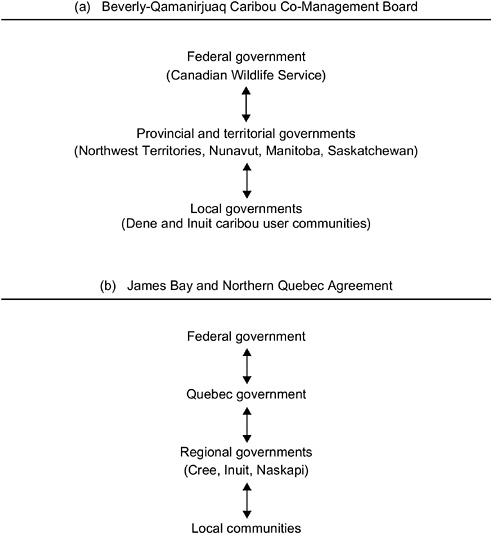
FIGURE 9-1 Cross-scale linkages in co-management arrangements: (a) Beverly-Qamanirjuaq Caribou Co-Management Board, and (b) James Bay and Northern Quebec Agreement, Canada.
Figure 9-1 shows the outline of vertical arrangements but hides the details of the actual interactions involved in the cases, from the signing of the agreement to its implementation. A co-management agreement goes only part of the way to produce a viable arrangement. Simply put, there is little incentive for government agencies to share the power they hold (Lele, 2000). There are good reasons to be skeptical of all claims of successful co-management—at least, of easy successes.
Detailed studies, such as Singleton’s (1998) on the Pacific Northwest salmon comanagement arrangements following the Boldt decision of 1974, indicate that building trust between the parties may require a long time, on the order of a decade. Longer term studies, such as those by Singleton (1998) and Kendrick (2000), characterize co-management, not as an end point, but as a process of mutual social learning in which each side learns from and adjusts to the other over a period of time.
Multistakeholder Bodies
A second and related form of cross-scale linkage is multistakeholder bodies. Characteristically, multistakeholder bodies link multiple user groups and interests, local and regional, with the government, and provide a forum for conflict resolution and negotiation among users. Table 9-4 provides a number of examples of stakeholder bodies. Some are established formally, as in the case of the Barbados, Norway, and U.S. examples. Some authors see stakeholder bodies, as compared to co-management arrangements with specific groups, as diffusing the powers to be shared. According to Murphree (1994), stakeholder groups “can easily transform interest into a conceptual collective by a vast and amorphous circle of stakeholders.”
Many stakeholder bodies are ineffective for these reasons: They are too easy to set up; they can turn into “talkshops”; and they can be used by governments as a forum to sound out ideas or as a mechanism to defuse an imminent conflict, without conceding any real shared management power to the parties. There are other cases, however, in which multistakeholder bodies have made a significant impact on the way management is carried out, as in U.S. Regional Fishery Management Councils (McCay and Jentoft, 1996). There are yet other cases in which multistakeholder groups have legally defined powers of management, as in the Lofoten cod fishery in Norway (Jentoft, 1989). Multistakeholder bodies are not always easy to distinguish from co-management. For example, the Lofoten regime is usually described as co-management, even though management powers on the users’ side is vested in a number of competing gear-groups and not in an institution that represents the fishers per se (Jentoft, 2000).
Development, Empowerment, Co-Management Arrangements
This form of linkages seems distinct from the first two sets in terms of the emphasis on community development and empowerment, with co-management as an incidental outcome. These arrangements often involve nongovernmental organizations (NGOs) or other capacity-building bodies. Often there are horizontal as well as vertical cross-scale linkages. Figure 9-2 illustrates four different arrangements of communities, government agencies, and NGOs in a pilot project designed to empower fishing communities in Bangladesh to take over their own
TABLE 9-4 Examples of Multistakeholder Bodies
|
Examples |
Description |
|
Committee on Resources and the Environment (CORE), British Columbia, Canada |
CORE established several roundtables in the mid-1990s to act as advisory bodies to the environment minister in the planning for a diversity of forest uses, reflecting “full range of public values.” Each roundtable had representation from some 20 user groups. |
|
Manitoba Model Forest, Canada |
One of 10 model forests across Canada (and similar to others in an international network), set up as a demonstration project for the sustainable use of a forested ecosystem; includes a multistakeholder group consisting of the various users and communities who live in the area. |
|
Lofoten Cod Fishery, Norway |
A co-management arrangement of long standing (Lofoten Act, 1895) in which the Norwegian government has devolved the fishery to the users (Jentoft, 1989). District committees of fishermen make yearly regulations and deal with user-group conflicts. Organized on gear-group representation and predominantly union based (Jentoft, 2000). |
|
Barbados Fisheries Advisory Committee |
A seven-member body set up by the Fisheries Act to advise the minister; it includes the various sectors of the fishing industry—fishermen, fish processors, boat owners, and fish vendors (McConney and Mahon, 1998). |
|
U.S. Regional Fishery Management Councils |
One of several regional bodies consisting of government officials and members of the public who reflect various fishery and coastal environmental interests. Charged with developing management plans for fisheries of the EEZ (McCay and Jentoft, 1996). |
|
Great Barrier Reef Management Authority, Australia |
The Great Barrier Reef Marine Park Act of 1975 established an authority that has the responsibility to seek out regional stakeholders to discuss management plans. Bodies representing the various uses of the reef, with priority going to those most dependent on the park’s resources, assist with ecosystem-based management of the larger reef area (Kelleher, 1996). |
fishing licenses from the government, rather than working for license-holding middlemen (Ahmed et al., 1997).
In more than a decade of institutional experimentation with pilot projects in Bangladesh, four strategies could be recognized. In the government agency-led strategy, development assistance was channeled directly through the government body, Bangladesh Department of Fisheries (Figure 9-2a). However, it soon became apparent that long-term development work in the communities did not fit with the 3-year rotation of civil servants. Hence, the strategy changed after a few years in favor of an NGO-led approach. In some of the communities in the pilot project phase, the NGO played a go-between role (Figure 9-2b). In others, the
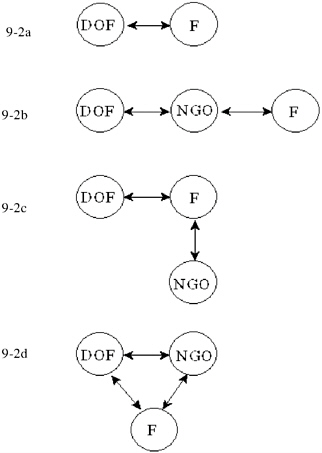
FIGURE 9-2 Different strategies in development, empowerment, and co-management arrangements from a project in Bangladesh (adapted from Ahmed et al., 1997).
NOTE: Bangladesh Department of Fisheries, DOF; fishing community, F; one of four Bangladesh nongovernmental organizations—Bangladesh Rural Advancement Committee (BRAC), Proshika, Caritas, Grameen—NGO.
community group interacted directly with the government; the NGO provided support for the community, with the potential of phasing itself out when the community became self-sufficient to conduct its own affairs (Figure 9-2c). In the government agency/NGO strategy, one field officer each from the government and the NGO worked jointly with the community, to give a three-way relationship for development and resource management until the NGO was ready to phase itself out (Figure 9-2d). These various strategies resulted in a rich variety of cross-scale linkages, including the vertical linking of the local level to the government level.
Is the Bangladesh case perhaps unique? Another long-term development case, this one from St. Lucia, West Indies, and involving a regional NGO that special-
izes in coastal resources and rural development, shows a great deal of similarity to the Bangladesh case despite differences in geographic area and in the nature of resource and development issues (Renard, 1994; Smith and Berkes, 1993). Of particular interest is the potential for the transmission of the development-empowerment experience horizontally from one group to another; from one area to another; from one country to another (in the Bangladesh/Grameen case); and from one resource sector (e.g., fisheries, forests, protected areas) to another (in the St.Lucia case).
Citizen Science
A fourth class for cross-scale linkages is emerging institutions for what might be termed “citizen science.” Examples include environmental stewardship groups in Canada (Lerner, 1993), regional associations for watersheds and lake water quality in Sweden (Olsson and Folke, 2001), watershed associations in Minnesota (Light, 1999), and People’s Biodiversity Registers in India (Gadgil et al., 2000). As a class, citizen science is characterized by citizen activism for environmental management and by the involvement of environmental NGOs, and hence it differs in its primary focus from development-empowerment organizations.
Many citizen science cases come from industrially developed countries that have strong traditions of civil society and well-developed environmental movements. As a class, they tend to use a mix of scientific knowledge and local observations, as in the Swedish case. Although many of the citizen science examples come from Western societies, there are some notable exceptions.
In India, “people’s science movements” have a history that goes back to the 1960s in the southern state of Kerala. In the 1970s, they took the form of alternative resource and environmental assessments with inputs from university scientists. Out of this emerged in the 1980s an activity called the village-level resource mapping program. People’s Biodiversity Registers (PBR) is a program that developed in the mid-1990s in a number of states in India, involving hundreds of communities. It aims to document rural and forest-dwelling people’s understanding of living organisms and their ecological setting, ongoing ecological change, their own development aspirations, and how they would like to see resources managed. The PBR program, using Participatory Rural Appraisal (PRA)-type methodologies and linking the local to the regional (and potentially to the national and the international), is probably the largest people’s science movement (Gadgil et al., 2000).
Policy Communities and Social Movement Networks
A number of institutions provide cross-scale linkages by connecting local issues with regional and international agencies. A relatively well-known set of institutions of this kind is what Haas (1992) has termed epistemic communities.
An example is the group of scientists, government experts, and NGO representatives who enabled the Mediterranean Action Plan. Members of such communities share principled beliefs, notions of validity, and policy goals that cut across political boundaries. Haas points out that the Mediterranean Action Plan brought together countries that are often in conflict, indicating that epistemic communities were significant in overriding such differences. More broadly, all policy issues bring together a “community” of players, from governments and other arenas. Thus, some scholars consider epistemic communities to be a subset of policy communities (Coleman and Perl, 1999). Others consider epistemic communities as unique, willful groups of individuals driven by their internalized beliefs about causation.
Auer (2000) pointed out that scholars in international relations have been investigating the environmental policy competencies of NGOs and intergovernmental organizations. Increasingly, nonstate actors, especially NGOs, are seen to be undertaking functions that states are either unwilling or unable to do. In addition to facilitating environmental negotiations between states, as in Haas’ epistemic communities, NGOs can perform key information gathering, dissemination, advocacy, and appraisal functions, thus facilitating cross-scale linkages.
The international Institutional Dimensions of Global Environmental Change project science plan discusses institutions for linking the local and the regional in two areas of the world, Southeast Asia and the Arctic (Young, 1999). The arctic region includes cross-scale institutions such as the Arctic Council and the Inuit Circumpolar Conference (ICC), which connect the Inuit people of several countries, thus providing horizontal as well as vertical linkages.
Cross-scale institutions like the ICC may be characterized more properly as social movement networks, rather than as policy communities. Such networks create links between local institutions in the South (developing countries) and supportive groups in the North (industrialized countries). For example, the Third World Network (2001) consists of citizen groups in the developing world and supportive groups in the North involved in environment/development issues in which international institutions such as the World Trade Organization have local impacts. The Third World Network addresses issues such as the protection of intellectual property rights of farmers and other biodiversity users against the patenting of life forms.
Collaborative Research and Management That Enable Cross-Scale Linkages
Research and researchers may have an impact on the institutions they study, especially if the approaches used tend to have a stimulating effect on cross-scale linkages. It may be useful to consider these collaborative research and management approaches (Blumenthal and Jannink, 2000) as a separate set because the emphasis is on a technique, rather than on a structure or an outcome, as in those in
Table 9-3. Table 9-5 lists four such approaches. Each has potential to provide linkages between the local level and the regional. Ecosystem-based management and adaptive management pay explicit attention to ecological-scale issues. Bioregionalism, which is a body of practice and not a collaborative methodology per se, is a special case of ecosystem-based management. It is of special interest
TABLE 9-5 Research and Management Approaches That Enable Cross-Scale Linkages
|
Approach |
Description |
|
Ecosystem-based management or ecosystem management |
Has come to include human uses of resources. The U.S. Forest Service adopted ecosystem management in 1992 as its official policy for managing national forests, and some other agencies followed suit. The policy came about mainly in response to increased spatial scales of management that require interagency and local landowner cooperation (Grumbine, 1994). However, how well ecosystem management may serve as an institution of cross-scale linkages is an open question. |
|
Adaptive management |
The scientific version of learning by doing. It uses the tools of systems modeling and iterative hypothesis testing, “adapting” management prescriptions by treating policies as hypotheses. Adaptive management typically focuses at the level of a local ecosystem. However, because different ecological interactions and resource use patterns occur at different scales, adaptive management, at least in the more recent applications, takes an explicitly cross-scale approach (Walters, 1986; Holling et al., 1998). |
|
Participatory Rural Appraisal (PRA) |
Derives from Rapid Rural Appraisal (RRA) and Agroecosystem Analysis (AEA), both in the area of development, and first appeared in the late 1970s (Chambers, 1994). All three methodologies help link up the scale of individual farms and villages with the regional scale of development. PRA is distinguished by its insistence on a grassroots, “farmer-first” approach, empowering decision making and application at the local level. |
|
Participatory Action Research (PAR) |
Similar to “action anthropology,” shares with PRA the emphasis on the empowerment of users at the local scale. PAR places research and researchers at the service of the community; researchers help the community to carry out its own research agenda, in accordance to its own priorities and values (Chambers, 1994). |
because of its explicit emphasis on matching the scale of livelihood systems to that of the ecosystem in which the group lives.
Participatory Rural Appraisal (PRA) and Participatory Action Research (PAR) both focus on research that empowers local communities (Chambers, 1994). These two approaches have a great deal in common with development-empowerment organizations. In fact, many of the NGOs that operate in the development area use PRA techniques routinely in sharing information across scale. By contrast, under the rules of PAR, researchers are at the service of the community, no more, no less. There is no information-sharing mandate, nor is there a mandate for cross-scale interplay, except at the initiative of the communities themselves.
The eclectic list of institutional forms for cross-scale interaction covered in this section is no doubt incomplete. For example, where do “encompassing organizations” (McCay, this volume:Chapter 11) fit in? Different typologies may be constructed by others, perhaps related to different disciplinary perspectives in planning, sociology, anthropology, political science, development, and other areas. The main point here is that there is, in fact, a diversity of cross-scale institutional forms in existence. The task is not so much to refine this list, but to increase the size of the commons practitioner’s tool kit by showing that “co-management” can be unpacked into a range of types of linkages and institutions. In this regard, the chapter parallels Tietenberg’s (this volume:Chapter 6) effort to expand the notion of tradable permits into a range of tradable rights and institutions.
What is exciting about these developments is that nearly all of these cross-scale institutions are new. In the 1980s, there was a great deal of concern in commons circles about the demise of many commons institutions. Was it a matter of time before all local-level commons institutions were swept away by government management and inexorable open access a la Hardin? What we have found in the past two decades is that institutions are emerging at least as fast as others are disappearing, and that these include cross-scale institutions as well as local-level ones. However, we know precious little about this dynamic. Is diversity the source of creation? Is it institutional capital? There is a need for studies that focus on institutional aspects of cross-scale management. More systematic information is needed on co-management and other cross-scale institutions, their reasons for success and failure, institution building, capacity building, and the design of supportive policies.
DYNAMICS AND SCALE IN CROSS-SCALE INTERACTIONS
What promising lines of inquiry are there for new research directions? In particular, what are some of the promising venues regarding scale and dynamics in researching cross-scale institutional linkages? As a way of introducing the importance of cross-scale institutional linkages, this chapter has reviewed the
conditions under which the involvement of the state may facilitate or impede local management. It has also explored several institutional forms with the potential to improve cross-scale linkages, noting the fluid and diverse nature of these forms. In fact, a rich diversity of institutional forms exists for linking local-level or community-based institutions with those at the regional, national, or international levels. As shown by the Bangladesh fisheries example, these institutional forms are highly dynamic, changing from area to area and year to year.
In addition to management regimes involving these institutional forms, cross-scale linkages also may be enhanced through the use of certain research and management approaches. Of the four such approaches considered in Table 9-5, adaptive management is of particular interest because of its explicit attention to scale and dynamics and because of its potential as a tool for linking social systems and natural systems. This section develops the contention that the adaptive management approach, with a consideration of resilience, is useful for both the theory and practice of cross-scale linkages.
Adaptive Management
Adaptive management was designed to integrate uncertainty into the decision-making process, and to ensure that policy makers and managers could learn from their successes as well as failures. As a resource management approach and planning tool, it was initially more technocratic than participatory (Holling, 1978). According to Lee (1999), it still “appears to be a ‘top down’ tool useful primarily when there is a unitary ruling interest able to choose hypotheses and test them.” But because it emphasizes learning by doing, feedback relations, and adaptive processes, it has become a particularly promising approach to study the dynamics of systems, both natural and social. Initially concerned with the dynamics of ecosystems, adaptive management also has been applied to the study of the dynamics of linked social and natural systems (Berkes and Folke, 1998).
As used by Hilborn and Walters (1992), adaptive management requires the following six components: (1) identification of alternative hypotheses; (2) assessment of whether further steps are needed to estimate the expected value of additional information; (3) development of models for future learning about hypotheses; (4) identification of policy options; (5) development of performance criteria for comparing options; and (6) formal comparison of options. Together, these steps provide the tools to deal with uncertainty and lay a foundation for learning. We deal with each in turn.
Steps (1), (2), and (4) explicitly require the manager to integrate uncertainty into the management strategy. This is a distinct break from the notion that science can deliver the information needed for resource management, simply and unambiguously. Adaptive management assumes inherent uncertainty in ecosystems and recognizes the limits of knowledge. There are scientific uncertainties that are too
expensive or time consuming to resolve, as well as others that are not resolvable due to the inherent uncertainty and unpredictability of nature (Wilson, this volume:Chapter 10).
The rationale for the consideration of uncertainty comes mainly from the recognition that natural systems and social systems are seldom linear and predictable, and from systems theory that emphasizes connectedness, context, and feedback. Processes in ecology, economics, and many other areas are dominated by nonlinear phenomena and an essential quality of uncertainty. These observations have led to the notion of complexity, developed through the work of many people and groups, notably the Santa Fe Institute (2001). In complex systems, small changes can magnify quickly and flip a system into one of many alternative paths. Such systems organize around one of several possible equilibrium states or attractors. When conditions change, the system’s feedback loops tend to maintain its current state—up to a point. At a certain level of change in conditions (threshold), the system can change rapidly and catastrophically. Just when such a flip may occur and the state into which the system will change are rarely predictable (Holling, 1986).
Turning to the issue of learning, steps (3), (5), and (6) of adaptive management require that managers learn from the outcome of the decisions made. Adaptive management emphasizes learning by doing, and this is accomplished by treating policies as hypotheses and management as experiments from which managers can learn. Organizations and institutions can learn as individuals do, and hence adaptive management is based on social learning. Lee (1993) details such social learning based on the extensive experience with the Columbia River basin, a region full of cross-scale institutions. By emphasizing the interaction between management institutions and the biophysical system, Lee (1993) argues that one cannot expect to manage the environment unless one understands the effects of this interaction.
The goal of adaptive management is different from conventional management. In adaptive management, the goal is not to produce the highest biological or economic yield, but to understand the system and to learn more about uncertainties by probing the system. Feedback from management outcomes provides for corrections to avoid thresholds that may threaten the ecosystem and the social and economic system based on it. Thus, adaptive management depends on feedbacks from the environment in shaping policy, followed by further systematic experimentation to shape subsequent policy, and so on; the process is iterative (Holling, 1986; Holling et al., 1998).
Adaptive management is an understudied area in commons research, except perhaps in fisheries. Lee’s (1993) work shows how the study of institutions and participatory processes can be combined with research on adaptive management. Many interdisciplinary scholars are looking for adaptive management-style alternatives to conventional scientific approaches in dealing with problems of complex systems. For example, in the area of sustainability, Kates et al. (2001) argue
that “sustainability science must differ fundamentally from most science as we know it.” The common sequential analytical phases of scientific inquiry, such as conceptualizing the problem, collecting data, developing theories, and applying the results, need to become, in the emerging sustainability science, parallel functions of social learning, adaptive management, and policy as experiment.
In particular, this new kind of science recognizes the need to act before scientific uncertainties can be resolved (Dietz and Stern, 1998). This is not only because it is difficult to get experts to agree on something but also because some uncertainties are not resolvable by science. Hence, as McCay (this volume:Chapter 11) suggests, it becomes important for commons management to design institutions and processes that bring scientists and resource users to work together. For example, the participation of fishers in decision making not only increases the likelihood that they “buy into” management decisions, but it also makes sure that the parties share the risk in decision making in an uncertain world, a much humbler role for the manager (Berkes et al., 2001).
Resilience
Partnerships of managers and users do not resolve scientific uncertainties, but they help place those uncertainties in an institutional context that encourages building trust among parties, learning by doing, and developing the capacity to respond—in short, building resilient institutions. Resilience is a central idea in the application of adaptive management. It has three defining characteristics. Resilience is a measure of (1) the amount of change the system can undergo and still retain the same controls on function and structure; (2) the degree to which the system is capable of self-organization; and (3) the ability to build and increase the capacity for learning and adaptation (Resilience Alliance, 2001).
Resilience is an emergent property in complex systems terminology, that is, a property that cannot be predicted or understood simply by examining the system’s parts. Resilience is a crucially important property of a system because the loss of resilience moves a system closer to a threshold, threatening to flip it from one equilibrium state to another. Just when the system will reach the threshold is difficult to predict; such changes constitute surprises or events which, even in hindsight, could not have been predicted (Holling, 1986). Conversely, increased resilience moves a system away from thresholds. Highly resilient systems can absorb stresses and perturbations without undergoing a flip; they are capable of self-organization and have the ability to build and increase capacity for learning and adaptation.
The idea of resilience has been applied mostly to ecosystem dynamics to study renewal cycles, equilibrium shifts, and adaptive processes in general. Use of the resilience idea is based on the assumption that cyclic change is an essential characteristic of all social and ecological systems. For example, resource crises (such as a forest fire) are important for the renewal of ecosystems. Such renewal
occurs through an “adaptive cycle” often consisting of exploitation-conservation-release-reorganization phases. Adaptive cycles are driven by naturally occurring crises. If renewal is delayed or impeded, a larger and more damaging crisis eventually occurs, endangering the structure and function of the system and its ability for self-organization. For example, strict fire controls in forests and parks prevent renewal. They can result in the accumulation of fuel loads (leaf litter) on the forest floor, making the forest susceptible to “fires of an extent and cost never experienced before” (Holling, 1986:300), such as the fire that swept nearly half of Yellowstone National Park in 1988.
The resilience idea has been applied to linked social-ecological systems. In a study of environmental management in several large ecosystems, Gunderson et al. (1995) found a close coupling between ecosystem crises and crises in the governmental agencies in charge of managing them. In several of the cases, environmental crises led to institutional crises, as in Chesapeake Bay and Florida Everglades, and solutions were accompanied by institutional learning and renewal. How far can the link between ecosystems and institutions be pursued? Resource crises do not always lead to institutional crises and renewal, as in the case of the Newfoundland cod collapse (Finlayson and McCay, 1998). However, there is considerable evidence to support the idea that crises do play a useful role in some cases by triggering renewal and reorganization in both ecosystems and institutions, thus building resilience (Gunderson et al., 1995).
Such considerations can lead to new empirical and theoretical work on linkages between social and ecological systems, and on the question of what produces adaptive capacity in institutions. Levin et al. (1998) and Levin (1999) have emphasized two clusters of features that make for a resilient system. One is the presence of effective and tight feedback mechanisms or a coupling of stimulus and response in space and time. For example, it is relatively easy to get a neighborhood association to act on a problem. But as problems become broader in scale (e.g., regional air pollution), the feedback loops become looser and the motivation to act becomes less.
Creating appropriate incentive structures can be done by tightening cost and benefit feedback loops, for example, by assigning property rights. In some cases when the market can work properly and social costs are taken into account, privatization is an effective measure (Levin et al., 1998). In other cases, the transfer of communal property rights to local groups can be effective. For example, under the Joint Forest Management program, local controls and profit-sharing arrangements between government and villagers restored the productivity of previously degraded forest areas in West Bengal, India (Poffenberger and McGean, 1996). Similarly, the transfer of property rights to local groups has fostered wild-life conservation in parts of Africa (Murphree, 1994).
A second feature of a resilient system is the maintenance of heterogeneity, and the availability of a diversity of options for selection to act on as conditions change. The resilience of any complex adaptive system is embodied in the diver-
sity of its components and their capacity for adaptive change. Heterogeneity helps maintain redundancy of function. Such redundancy would not be important if systems had one equilibrium state and conditions were relatively static. But often they are not. “Redundancy and heterogeneity are hand and glove; much redundancy is reflected, for example, in the heterogeneity within functional groups of species performing similar ecological roles” (Levin, 1999:202). What do these observations mean for social and institutional resilience?
The diversity of options idea is similar to Ostrom’s (1992) institutional capital. It is consistent also with Adger’s (2000) analysis of the resilience of institutions, and his emphasis on social capital, inclusivity of the institution, and the degree of development of trust relations among the parties. The heterogeneity/ redundancy idea brings an insight to the interpretation, for example, of the diversity of reef and lagoon tenure systems and other common property institutions observed in Oceania (Baines, 1989; Williams and Baines, 1993), and the folly of replacing such a diversity with a simple scientific resource management measure such as fisheries quotas (Wilson et al., 1994). Regarding cross-scale institutions, the insight from resilience and diversity is that it makes sense to continue to develop different kinds of co-management arrangements and other institutional forms. There is no such thing as an optimum arrangement that can be replicated everywhere.
Resilience thinking helps commons researchers to look beyond institutional forms, and ask instead questions regarding the adaptive capacity of social groups and their institutions to deal with stresses as a result of social, political, and environmental change. One way to approach this question is to look for informative case studies of change in social-ecological systems and to investigate how societies deal with change. From these cases, one can hope to gain insights regarding capacity building to adapt to change and, in turn, to shape change. These are, in fact, the objectives of a team project in progress (Folke and Berkes, 1998).
The resilience approach provides a promising entry point to move from static analysis of cross-scale linkages to the study of institutional dynamics. In highlighting change, it forces a reversal of the conventional equilibrium-centered thinking. As van der Leeuw (2000) puts it, rather than assuming stability and explaining change, one needs to assume change and explain stability. Adaptive management and resilience have been used to study the interactions of regional, national, and state-level agencies (Gunderson et al., 1995) and cross-scale interactions involving citizen participation in regional environmental management (Lee, 1993).
CONCLUSION
The chapter began with a review and synthesis of the impacts of higher level institutions on local-level institutions, as a way of introducing the importance of vertical and horizontal linkages and detailing the variety of ways in which larger
scale institutions can interfere with or, alternatively, support smaller scale ones. The second section pointed to some promising and emerging institutional forms for cross-scale linkages, concluding that co-management, as a catch-all term, is not adequate to encompass the full range of cross-linking institutions. The section emphasized that the consideration of institutional forms readily leads to the question of institutional dynamics. The third section raised the question of dynamics of institutions as a major subject area for future research, and made a case for the adaptive management approach, with a consideration of resilience, for building a theory of cross-scale institutional linkages.
Much of commons research brings together social sciences and natural sciences, and uses research methods and approaches from a variety of disciplines. But there is a need for tools to enable commons researchers to deal with people and environment as an integrated system. In particular, there is a need to study how institutions may respond to environmental feedbacks. The emphasis of adaptive management on feedback learning is important in this regard. As a key concept of adaptive management, resilience provides a window for the study of change, emphasizing learning, self-organization, and adaptive capacity. More work is needed on how societies and institutions develop ecological knowledge to deal with environmental change and, in turn, how they can act to shape change.
Emphasis on adaptive change and resilience is useful to deal with the dynamics of institutional change in relation to the dynamics of ecosystems and the goods and services they provide. Ecosystems generate natural resources and services (e.g., clean air and water) at multiple scales. But jurisdictional boundaries rarely coincide with ecosystem boundaries. Needed are cross-scale institutions that are in tune with the scales at which ecosystems function. The fact that there is often a mismatch in scale between institutions and ecosystems is considered part of the reason for resource mismanagement (Folke et al., 1998). Thus, a major task is to design cross-scale institutional linkages in a way that facilitates self-organization in cycles of change, enhances learning, and increases adaptive capacity.
Cases in the book, Linking Social and Ecological Systems, show that local-level institutions learn and develop the capability to respond to environmental feedbacks faster than do centralized agencies (Berkes and Folke, 1998). Thus, if management is too centralized, valuable information from the resource, in the form of feedbacks, may be delayed or lost because of the mismatch in scale. However, if management is too decentralized, then the feedback between the user groups of different resources, or between adjacent areas, may be lost. One way to tighten the feedback loops is to assign property rights to resources, thus creating incentives for sustainable resource use. The assigning of property rights may be a necessary condition but perhaps not a sufficient condition for sustainability.
Resource management systems cannot readily be scaled up or scaled down. As Young (1995) put it, “macro-scale systems are not merely small-scale systems writ large. Nor are micro-scale systems mere microcosms of large-scale systems.” Because of the interactions between scales (e.g., the island nations fishery ex-
ample), the appropriate level at which a commons issue should be addressed is never very clear. Instead of looking for the one “correct” scale for analytical purposes, it may be useful to start with the assumption that a given resource management system is multiscale, and that it should be managed at different scales simultaneously.
Such approaches are important in dealing with larger scale commons issues as well. In the area of global change, for example, researchers have started to address the question of match between multiscale institutions and ecosystems (Folke et al., 1998). These studies open up new areas of commons investigations by suggesting that the persistence of resource and environmental degradation may in part be related to cross-scale institutional pathologies, mismatches in scale, and lack of attention to cross-scale linkages.
REFERENCES
Adger, W.N. 2000 Social and ecological resilience: Are they related? Progress in Human Geography 24:347-364.
Ahmed, M., A.D. Capistrano, and M. Hossain 1997 Experience of partnership models for the co-management of Bangladesh fisheries. Fisheries Management and Ecology 4:233-248.
Auer, M. 2000 Who participates in global environmental governance? Partial answers from international relations theory. Policy Sciences 33:155-180.
Baines, G.B.K. 1989 Traditional resource management in the Melanesian South Pacific: A development dilemma. Pp. 273-295 in Common Property Resources, F. Berkes, ed. London: Belhaven.
Berkes, F. 1989a Cooperation from the perspective of human ecology. Pp. 70-88 in Common Property Resources, F. Berkes, ed. London: Belhaven.
1989b Co-management and the James Bay Agreement. Pp. 189-208 in Co-operative Management of Local Fisheries, E. Pinkerton, ed. Vancouver: University of British Columbia Press .
1999 Sacred Ecology: Traditional Ecological Knowledge and Resource Management. Philadelphia and London: Taylor & Francis.
Berkes, F., and C. Folke, eds. 1998 Linking Social and Ecological Systems. Management Practices and Social Mechanisms for Building Resilience. Cambridge, Eng.: Cambridge University Press.
Berkes, F., P.J. George, and R.J. Preston 1991 Co-management. Alternatives 18(2):12-18.
Berkes, F., R. Mahon, P. McConney, R.C. Pollnac, and R.S. Pomeroy 2001 Managing Small-Scale Fisheries: Alternative Directions and Methods. Ottawa: International Development Research Centre.
Blumenthal, D., and J.L. Jannink 2000 A Classification of Collaborative Management Methods. Conservation Ecology 4(2):13. Available: http://www.consecol.org/vol4/iss2/art13. [Accessed October 2001].
Chambers, R. 1994 The origins and practice of participatory rural appraisal. World Development 22:953-969.
Coleman, W.D., and A. Perl 1999 Internationalized policy environments and policy network analysis. Political Studies 47:691-709.
Dietz, T., and P.C. Stern 1998 Science, values, and biodiversity. BioScience 48:441-444.
Drolet, C.A., A. Reed, M. Breton, and F. Berkes 1987 Sharing wildlife management responsibilities with native groups: Case histories in Northern Quebec. Pp. 389-398 in Transactions of the 52nd North American Wildlife and Natural Resources Conference.
Finlayson, A.C., and B.J. McCay 1998 Crossing the threshold of ecosystem resilience: The commercial extinction of northern cod. Pp. 311-337 in Linking Social and Ecological Systems, F. Berkes and C. Folke, eds. Cambridge, Eng.: Cambridge University Press.
Folke, C., and F. Berkes 1998 Understanding Dynamics of Ecosystem-Institution Linkages for Building Resilience. Beijer Discussion Paper 112. Stockholm: Beijer International Institute of Ecological Economics.
Folke, C., L. Pritchard, Jr., F. Berkes, J. Colding, and U. Svedin 1998 The Problem of Fit Between Ecosystems and Institutions. IHDP Working Paper 2. Bonn: International Human Dimensions Programme on Global Environmental Change.
Freeman, M.M.R. 1989 Gaffs and graphs: A cautionary tale in the common property resource debate. Pp. 92-109 in Common Property Resources, F. Berkes, ed. London: Belhaven.
Gadgil, M., and R. Guha 1992 This Fissured Land. An Ecological History of India. Delhi: Oxford University Press.
Gadgil, M., P.R. Seshagiri Rao, G. Utkarsh, P. Pramod, and A. Chhatre 2000 New meanings for old knowledge: The People’s Biodiversity Registers programme. Ecological Applications 10:1251-1262.
Grumbine, R.E. 1994 What is ecosystem management? Conservation Biology 8:27-38.
Gunderson, L.H., C.S. Holling, and S.S. Light, eds. 1995 Barriers and Bridges to the Renewal of Ecosystems and Institutions. New York: Columbia University Press.
Haas, P.M. 1992 Introduction: Epistemic communities and international policy coordination. International Organization 46:1-35.
Hilborn, R., and C. Walters 1992 Quantitative Fisheries Stock Assessment: Choice, Dynamics and Uncertainty. New York: Chapman and Hall.
Holling, C.S., ed. 1978 Adaptive Environmental Assessment and Management. New York: Wiley.
Holling, C.S. 1986 The resilience of terrestrial ecosystems: Local surprise and global change. Pp. 292-317 in Sustainable Development of the Biosphere, W.C. Clark and R.E. Munn, eds. Cambridge, Eng.: Cambridge University Press.
Holling, C.S., F. Berkes, and C. Folke 1998 Science, sustainability and resource management. Pp. 342-362 in Linking Social and Ecological Systems, F. Berkes and C. Folke, eds. Cambridge, Eng.: Cambridge University Press.
Jentoft, S. 1989 Fisheries co-management. Marine Policy 13:137-154.
2000 The community: A missing link in fisheries management. Marine Policy 24:53-59.
Kates, R.W., W.C. Clark, and R. Corell, J.M. Hall, C.C. Jaeger, I. Lowe, J.J. McCarthy, H.J. Schellnhuber, B. Bolin, N.M. Dickson, S. Faucheux, G.C. Gallopin, A. Gruebler, B. Huntley, J. Jäger, N.S. Jodha, R.E. Kasperson, A. Mabogunje, P. Matson, H. Mooney, B. Moore III, T. O’Riordan, and U. Svedin 2001 Sustainability Science. Statement of the Friibergh Workshop on Sustainability Science. Science 292: 641-642.
Kelleher, G. 1996 Public participation on “The reef.” World Conservation 2:19.
Kendrick, A. 2000 Community perceptions of the Beverly-Qamanirjuaq Caribou Management Board. Canadian Journal of Native Studies 20:1-33.
Kropotkin, P. 1914 Mutual Aid: A Factor in Evolution. Boston: Extending Horizons.
Kurien, J. 1992 Ruining the commons and responses of the commoners. Pp. 221-258 in Grassroots Environmental Action, D. Ghai and J.M. Vivian, eds. London and New York: Routledge.
Lane, C. 1992 The Barabig pastoralists of Tanzania: Sustainable land in jeopardy. Pp. 81-105 in Grassroots Environmental Action, D. Ghai and J.M. Vivian, eds. London and New York: Routledge.
Lee, K.N. 1993 Compass and Gyroscope: Integrating Science and Politics for the Environment. Washington, DC: Island Press.
1999 Appraising Adaptive Management. Conservation Ecology 3(2):3. Available: http://www.consecol.org/vol3/iss2/art3. [Accessed October 2001].
Lele, S. 2000 Godsend, sleight of hand, or just muddling through: Joint water and forest management in India. Overseas Development Institute. Natural Resource Perspectives 53:1-6.
Lerner, S., ed. 1993 Environmental Stewardship: Studies in Active Earthkeeping. Geography Publication Series No. 39. Waterloo, Ont.: University of Waterloo.
Levin, S.A. 1999 Fragile Dominion: Complexity and the Commons. Reading, MA: Perseus Books.
Levin, S.A., and S. Barrett 1998 Resilience in natural and socioeconomic systems. Environment and Development Economics 3:225-236.
Light, S., compiler 1999 Citizens, Science, Watershed Partnerships, and Sustainability in Minnesota: The Citizens’ Science Project. Minneapolis: Minnesota Department of Natural Resources.
McCay, B.J., and S. Jentoft 1996 From the bottom up: Participatory issues in fisheries management. Society and Natural Resources 9:237-250.
McConney, P., and R. Mahon 1998 Introducing fishery management planning to Barbados. Ocean & Coastal Management 39:189-195.
Messerschmidt, D.A. 1993 Common Forest Resource Management: Annotated Bibliography of Asia, Africa and Latin America. Rome: Food and Agriculture Organization Community Forestry Note 11.
Murphree, M. 1994 The role of institutions in community-based conservation. Pp. 403-447 in Natural Connections: Perspectives in Community-based Conservation, D. Western and R.M. Wright, eds. Washington, DC: Island Press.
National Round Table on the Environment and the Economy 1998 Sustainable Strategies for Oceans: A Co-Management Guide. Ottawa: National Round Table on the Environment and the Economy.
Olsson, P., and C. Folke 2001 Local ecological knowledge and institutions for ecosystem management of crayfish populations: A case study of Lake Racken watershed, Sweden. Ecosystems.
Ostrom, E. 1990 Governing the Commons. The Evolution of Institutions for Collective Action. Cambridge, Eng.: Cambridge University Press.
1992 Crafting Institutions for Self-Governing Irrigation Systems. San Francisco: ICS Press.
Peters, P. 1986 Concluding statement. Pp. 615-621 in National Research Council, Proceedings of the Conference on Common Property Resource Management. Washington, DC: National Academy Press.
Pinkerton, E., ed. 1989 Co-operative Management of Local Fisheries. Vancouver: University of British Columbia Press.
Poffenberger, M., and B. McGean, eds. 1996 Village Voices, Forest Choices: Joint Forest Management in India. Delhi: Oxford University Press.
Pomeroy, R.S. 1995 Community based and co-management institutions for sustainable coastal fisheries management in southeast Asia. Ocean & Coastal Management 27:143-162.
Pomeroy, R.S., and F. Berkes 1997 Two to tango: The role of government in fisheries co-management. Marine Policy 21:465-480.
Renard, Y. 1994 Community Participation in St. Lucia. Washington, DC: Panos Institute, and Vieux Fort, St. Lucia: Caribbean Natural Resources Institute.
Renn, O., T. Webler, and P. Wiedemann 1995 Fairness and Competence in Citizen Participation: Evaluating Models for Environmental Discourse. Dordrecht, Neth.: Kluwer.
Resilience Alliance 2001 The Resilience Alliance: A Consortium linking ecology, economics, and social insights for sustainability. Available: http://www.resalliance.org/programdescription. [Accessed September, 2001].
Santa Fe Institute 2001 Homepage. Available: http://www.santafe.edu [Accessed September, 2001].
Singleton, S. 1998 Constructing Cooperation: The Evolution of Institutions of Comanagement. Ann Arbor: University of Michigan Press.
Smith, A.H., and F. Berkes 1993 Community-based use of mangrove resources in St. Lucia. International Journal of Environmental Studies 43:123-131.
Smith, L.T. 1999 Decolonizing Methodologies. Research and Indigenous Peoples. London: Zed Books.
Steins, N.A., V.M. Edwards, and N. Roling 2000 Re-designed principles for CPR theory. Common Property Resource Digest 53:1-5.
Third World Network 2001 Homepage. Available: http://www.twnside.org.sg/access.htm [Accessed September, 2001].
van der Leeuw, S.E. 2000 Land degradation as a socionatural process. Pp. 190-210 in The Way the Wind Blows: Climate, History and Human Action, R.J. McIntosh, J.A. Tainter, and S.K. McIntosh, eds. New York: Columbia University Press.
Walters, J.C. 1986 Adaptive Management of Renewable Resources. New York: McGraw-Hill.
Weitzner, V., and M. Fonseca Borras 1999 Cahuita, Limon, Costa Rica: From conflict to collaboration. Pp. 129-150 in Cultivating Peace: Conflict and Collaboration in Natural Resource Management, D. Buckles, ed. Ottawa: International Development Research Centre.
Williams, N.M., and G. Baines, eds. 1993 Traditional Ecological Knowledge: Wisdom for Sustainable Development. Canberra: Centre for Resource and Environmental Studies, Australian National University.
Wilson, J.A., J.M. Acheson, M. Metcalfe, and P. Kleban 1994 Chaos, complexity and communal management of fisheries. Marine Policy 18:291-305.
Young, O. 1995 The problem of scale in human/environment relationships. Pp. 27-45 in Local Commons and Global Interdependence, R.O. Keohane and E. Ostrom, eds. London: Sage.
Young, O., ed. 1999 Institutional Dimensions of Global Environmental Change. Science Plan. Bonn: International Human Dimensions Programme on Global Environmental Change.


