
2
Nature of the Challenge
The volume and diversity of geoscience data and collections are enormous. Although the volume of digital data also has grown tremendously in past decades, technological advances have reduced the actual physical space required to store and handle this increased volume (NSF/ONR, 2001). Such is not the case with the physical geoscience collections and media containing data that are the primary focus of this committee.1 Geoscience data and collections are both physical and digital, consequently they occupy space. This chapter contains assessments of the current volume of geoscience data and collections in the United States, the available space, the factors placing them at risk of loss, and priorities for what to retain.
VOLUME OF GEOSCIENCE DATA AND COLLECTIONS
Accurate assessment of the total volume of geoscience data and collections in the United States has been a challenge primarily because of inaccurate or insufficient metadata about geoscience materials. A second challenge is estimating how much material one entity will donate to another. Unanticipated donations have filled repositories much faster than expected, which has seriously challenged their management and their ability to accept further donations. The numbers in Table 2-1 represent estimates of total volume of geoscience data and collections in the United States. They are taken from recently published reports and from testimony and surveys the committee received. These estimates are not based on a complete inventory of information, because none yet exists. Therefore, the estimates in Table 2-1 should be viewed as minimum figures,2 in some cases perhaps too low by as much as an order of magnitude. In addition, similar surveys (by this committee and other entities) are voluntary, and responses never total 100 percent. For example, state geological survey data in Table 2-1 represent data for 39 of the 50 states; responses to the AGI (1997) survey did not include all petroleum companies; and a Canadian Society of Petroleum Geologists (CSPG) survey drew responses from 62 of 360 inquiries (CSPG, 2001). Furthermore, there are no authoritative estimates at all for certain types of data and collections, such as the number of fossils or mineral specimens held by industry or individuals. Indeed, many repositories and companies have imprecise estimates of their own holdings. For example, the CSPG survey indicated that 52 percent of respondents did not maintain an organized database of their holdings (CSPG, 2001).
These limitations notwithstanding, it is clear that the nation’s geoscience data and collections comprise large volumes. There are more than 100 million fossil specimens; more than 8 million boxes of core—containing more than 80 million feet of rock and sediment (or more than 15,000 miles, the equivalent of drilling more than twice the way though the Earth) (see Figure 2-1); more than 10 million boxes of cuttings; more than 40 million well logs; and more than 350 million line-miles of seismic data (or the equivalent of 140,000 times around the Earth) (see footnotes in Table 2-1). The size and scope of these numbers may be grasped by comparing them with the similar, but more familiar issue confronting libraries; the nation’s research libraries, for example, collectively contain an estimated 400 million books (ARL, 2000).
Despite the large volume of geoscience data in the United States, some portion is in immediate danger of being lost
|
1 |
Digital information about the physical collections (e.g., number of cores, intervals cored, locations, ages, images) are essential in the search for available data. However, these data about the data (metadata) can never take the place of the original because new or enhanced techniques typically cannot be applied to images and information (see for instance Sidebars 1-6 and 1-7). |
|
2 |
The committee decided to be conservative in its estimates of figures presented in this document. Thus, these (and other) numbers very likely represent the lowest in a range. |
TABLE 2-1 Minimum Estimates of the Volume of Geoscience Data and Collections in the United States
|
|
Units |
Industry |
State Surveys* |
Other† |
Academia |
Museums |
Individuals |
Total |
|
Collections |
|
|||||||
|
Core (rock/sediment) |
Boxes or equivalenta |
3,500,000b |
4,167,000c |
334,500d |
14,000c |
|
8,015,715 |
|
|
Cuttings |
Boxes |
8,750,000e |
1,600,000f |
52,000g |
|
10,402,000 |
||
|
Thin sections |
Slides |
105,000e |
420,000f |
122,000h |
|
647,000 |
||
|
Washed residues |
|
180,000i |
|
180,000 |
||||
|
Other well records |
|
2,000,000f |
45,000j |
|
2,045,000 |
|||
|
Fossils |
Specimens |
10,000,000k |
235,000f |
1,200,000l |
23,000,000m |
58,500,000l |
30,000,000k |
122,935,000 |
|
Minerals/rocks |
Specimens |
|
128,000f |
|
100,000f |
600,000f |
|
828,000 |
|
Core (ice) |
Tubes |
|
14,500n |
|
14,500 |
|||
|
Data |
|
|||||||
|
Seismic (2-d) |
Line-miles |
355,250,000e |
|
1,732,000c |
38,000o |
|
357,020,300 |
|
|
Seismic (3-d) |
Square miles |
90,000p |
|
160,000q |
|
249,849 |
||
|
Velocity surveys |
Paper and digital |
87,500e |
|
87,500 |
||||
|
Well logs |
Paper, films, fiche, tapes |
24,850,000e |
3,500,000c |
17,500,000o |
173,000o |
|
46,021,700 |
|
|
Scout tickets |
Fiche and paper |
8,750,000e |
1,781,000c |
11,129,000o |
300,500o |
|
21,960,350 |
|
|
Geochemical analyses |
Paper |
1,750,000e |
|
1,750,000 |
||||
|
*State and oil gas commissions and state departments of conservation. †Includes federal government. aBox = 10 feet of core. bAGI (1999). This is a minimum estimate. cAGI (1997) and NRC committee survey responses, 2001. dUSGS (120,000), ODP/DSDP (197,905), USACE (Alaska)—NRC committee survey responses, 2001, DOE (Yucca Mtn), and AGI (1997). eAGI (1999) reported 3.5 million boxes of core in all major oil companies; it then reported 1 million boxes potentially available for donation, together with other types of data. We assumed that this ratio of 3.5 total to donatable material was valid for all other types of data listed in the AGI report. fNRC committee survey responses, 2001. gUSGS; NRC committee survey response, 2001. hUSGS and ODP; NRC committee survey resonses, 2001. iODP; NRC committee survey response, 2001. jCWSR, LABSDC; NRC committee survey responses, 2001 (see Appendix F for acronyms). kAllmon (1997, 2000). lWhite and Allmon (2000). mIncludes university museums. nNICL; NRC committee survey responses, 2001. oDERL, HGRC, PII, IOGS, JLL, OCGSL, RELI, BELI, CGSI, EII, GP, MEL, OILF, OILW, SSPLA (AGI 1997). pElwyn Griffiths, ExxonMobil, personal communication, 2001. Estimate is for areas with known 3D coverage. An uncertainty of 20 percent is estimated due to an unknown amount of data from areas with more than one seismic survey. qIncludes offshore industry data copies submitted to MMS; Dellagiarino et al. (2000) (16,094); 1,667 other, AGI (1997). |
||||||||
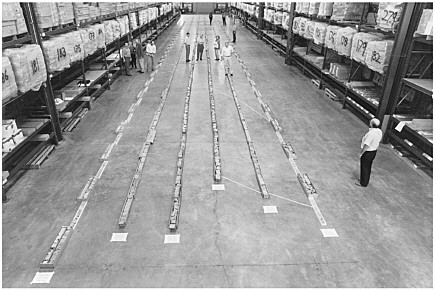
FIGURE 2-1 1,000 feet (333 boxes) of rock core laid out inside the Bureau of Economic Geology Core Facility, University of Texas at Austin. These rows represent data from four wells. Given the average increase in core and cuttings holdings annually, these 333 boxes represent approximately 2 months of average growth (see discussion in Sidebar 3-4). SOURCE: David M. Stephens, Bureau of Economic Geology, The University of Texas at Austin.
because of inadequate space or incentive to retain those worth keeping. Estimating the portion at risk is even more challenging than estimating the total volume. However, the committee estimates that half of all data and collections held by industry, and at least 25 percent of collections held by individuals, academia, and government are endangered. This means that millions of items—specimens, boxes of core and cuttings, tapes, fossils, and paper documents—are in peril of
|
SIDEBAR 2-1 Findings of the American Geological Institute (AGI) in 1997 Large amounts of geoscience data and materials already have been identified and are in need of storage and curation. As part of a multi-phase study, AGI surveyed private industry participating in geologic activities, largely the major independent petroleum and mining companies. Their 1997 report illustrates that the items in the following table could be expected as a minimum initial contribution of geoscience data and collections from the natural resources industries. Geoscience Data Available for Transfer from Natural Resources Industries to the Public Domain in 1997:
SOURCE: AGI, 1997. |
being lost. A single facility capable of holding just these endangered materials (i.e., 2 million boxes of core, 4 million boxes of cuttings, 12 million well logs, 150 million line-miles of seismic data, 10 million fossils, with no room for additional samples) would have to be at least 20 times as large as the current USGS Core Research Center in Lakewood, Colorado.
The primary sources of potentially available (and there-
TABLE 2-2 Examples of Transfer of Cores from Corporate-Owned Repositories to State Geological Surveys
|
Donating Company |
Year Donated |
Receiving Organization |
Number of Boxes Donated |
|
Shell Oil Co.a |
1994 |
BEG (see a); BEG shipped 2,134 boxes of core to NMBGMR (seeb) |
400,000d |
|
Burlington Resourcesb |
1997 |
NMBGMR |
535 |
|
Altura Energy Ltd.b |
1999 |
NMBGMR |
5,502 |
|
Amoco Productionc |
1999 |
Geological surveys of Oklahoma, Texas, Utah, New Mexico (NMBGMR) |
6,000 |
|
El Paso Energy/Sonatb |
1999 |
NMBGMR |
4,292 |
|
Altura Energy Ltd.a |
2000 |
BEGe |
85,000 |
|
BP Amoco |
2000 |
Kansas Geological Survey |
8,258 |
|
aSOURCE: George Bush and Scott Tinker, Bureau of Economic Geology (BEG), University of Texas at Austin. bSOURCE: Ron Broadhead, New Mexico Bureau of Geology and Mineral Resources (NMBGMR). cSOURCE: Jimmy Denton, BP Amoco, Tulsa. dPlus 50,000 boxes of cuttings. eAt the time this document was going to press, a major oil company was in negotiation with the BEG and another state geological survey involving a donation of similar size to the Shell Oil Co. donation of 1994. |
|||
fore threatened if no other facility can take them) geoscience data and collections are major oil companies, independent petroleum producers, and mineral extraction companies (AGI, 1997). An American Geological Institute survey (AGI, 1997) estimated how much material these groups would consider contributing to the public domain if facilities existed to receive the information. Sidebar 2-1 summarizes these results. Table 2-2 shows examples of donations of core from industry to the public sector since 1994.
A NATIONAL SHORTAGE OF SPACE
Although it is difficult to quantify the amount of space available in the nation’s repositories, many are essentially at or near capacity. Repository managers therefore are refusing to accept new data and collections because they simply do not have enough space in the repository. Figure 2-2 illustrates the amount of space available at state geological survey repositories around the United States, and Tables 2-3a and 2-3b summarize, respectively, the available space at state geological surveys and at other entities across the nation. Of the 35 responding state geological surveys, nearly two-thirds have 10 percent or less available space, and nearly one-quarter are entirely full. At least one-third of the state geological surveys listed in Table 2-3a have been forced to turn away geologic materials, and more than three-quarters of them could not add new space. The cross-section of other geoscience repositories around the country (Table 2-3b) reveals similarly low amounts of available space.
The following situation is typical: because of limited space, a repository can accept core and other physical data only if it discards a similar volume. The result is that every time something is added, something else must be removed. The repository can apply its own set of criteria, but without formal protocols to set priorities, valuable data and collections may be at risk from the limited assessment of a single individual. Repository managers may try to preserve geoscience data and collections in other ways, such as by offering discarded material to other qualified organizations or using it in other ways (e.g., student study sets).
Because of the vagaries in knowing how much new material might be offered, repository administrators often have difficulty estimating how quickly remaining space will fill up. Examples include the state geological surveys of Kansas, Kentucky, and Ohio, all of which have added new space
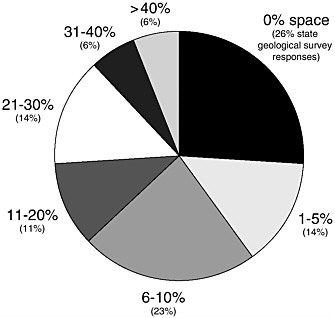
FIGURE 2-2 Percentage of available space for cores and samples at state geological surveys (based on data in Table 2-3a, which was compiled from 35 responses to the committee’s questionnaire). Nearly two-thirds (63 percent) of the state geological surveys that responded to the committee’s questionnaire reported that they have 10 percent or less remaining space for geoscience data and collections.
TABLE 2-3a Available Space and Refusal of Samples at 35 State Geological Surveys
|
State Geological Survey |
% Space Available |
Refused Samples? |
|
Alabama |
10 |
N |
|
Alaska |
30a |
Nb |
|
Arizona |
10 |
Yc |
|
Connecticut |
0 |
Y |
|
Delaware |
10 |
Yc |
|
Florida |
0 |
|
|
Hawaii |
50d |
N |
|
Illinois |
2 |
Ye |
|
Indiana |
0 |
Yc |
|
Iowa |
25 |
|
|
Kansas |
10 |
N |
|
Kentucky |
<5f |
N |
|
Louisiana |
0 |
Y |
|
Maine |
0 |
|
|
Michigan |
15 |
|
|
Minnesota |
25 |
|
|
Missouri |
20 |
Yc |
|
Montana |
0 |
Y |
|
Nebraska |
25 |
N |
|
Nevada |
50g |
Yh |
|
New Hampshire |
<0i |
Y |
|
New Mexico |
12 |
Yj |
|
New York |
<5f |
Nk |
|
North Carolina |
40 |
N |
|
North Dakota |
30 |
N |
|
Ohio |
16 |
N |
|
Oregon |
10 |
N |
|
South Dakota |
40 |
|
|
Tennessee |
0 |
|
|
Texas |
10 |
|
|
Utah |
10 |
|
|
Virginia |
5 |
Y |
|
West Virginia |
<10 |
|
|
Wisconsin |
0 |
Y |
|
Wyoming |
<5f |
N |
|
aLarge cargo transport containers (CONNEX containers) with shelves provide additional space for an already full repository. b“but does not actively try to obtain specimens.” c“have to be selective about what to accept.” d“In terms of percent, it’s hard to say. We can always store cuttings and core samples.” e“accept some collections to save them from disposal.” f“almost no space” or “very little” is interpreted to mean less than 5%. gOcean-transport containers have provided additional space to an already full repository. h“accept only a small representative set.” i“...we are losing space, not gaining.” jrefused very large donations of core unless accompanied by money to build new core storage facilities. kNYC core to Hofstra University, which is full. SOURCE: Questionnaire by the Committee on Preservation of Geoscience Data and Collections. |
||
TABLE 2-3b Repository Space for Long-term Archiving of Geoscience Data and Collections at a Cross-section of Non-State Geological Facilities in the United States
|
Facility Name |
% Space Available for Long-term Storage |
|
Smithsoniana |
<15 |
|
U.S. Army Corps of Engineersb |
0 |
|
U.S. Geological Survey Core Research Center |
10 |
|
Ocean Drilling Program |
11 |
|
C & M Storage Inc.c |
12 |
|
LA County Museum of Natural History |
0 |
|
University of Rhode Island |
30 |
|
California Well Sample Repository- Bakersfield |
10 |
|
Denver Earth Resources Library |
0 |
|
National Ice Core Laboratoryd |
10 |
|
Los Angeles Basin Subsurface Data Center |
33 |
|
National Lacustrine Core repository |
75 |
|
aIncludes space available for departments of paleobiology and mineral sciences at the National Museum of Natural History, Museum Support Center and Garber facility. bPercentage based on requirements in the U.S. Army Corps of Engineers document ER 1110-1-1803 that calls for retention of core for 5 years or longer if in litigation. In practice, most cores are kept through the construction and litigation phases, which typically span about 10 years (Michael Klosterman, USACE, personal communication, 2001). Therefore, the Army Corps has no policy to retain long-term data. cC&M Storage Inc. has the potential to expand a further 64% above current capacity with the addition of new buildings on land they own (Robert Shafer, C&M Storage, personal communication, 2001). dCompactorized shelving is planned, which will increase in available storage space. SOURCE: Questionnaire by the Committee on Preservation of Geoscience Data and Collections (see Appendices B and C). |
|
since 1990, yet none have more than 16 percent remaining. The Ocean Drilling Program, which is in an enviable position of knowing how much new material will be generated, estimates that it will require new space in 2004 (Frank Rack, Joint Oceanographic Institutions, personal communication, 2001). This is sufficient lead-time to plan to accommodate the material.
In contrast, a single donation of material from a major oil company (e.g., Table 2-2) easily has the potential to push a public facility beyond its limit unless the prospective donor also is willing to donate the building containing the materials, such as the case of Shell Oil’s Midland, Texas, facility, which was donated to the Bureau of Economic Geology, University of Texas (see Sidebar 2-2). Innovative public-private partnerships such as the Shell donation exemplify the importance of providing incentives for donation of geoscience data and collections to public entities.
Few managers of repositories currently view themselves as having the luxury to plan for regular additional growth; almost all major growth occurs unexpectedly (or with minimal advance notice) via donation of collections from other
|
SIDEBAR 2-2 Shell Oil’s Donation of Geoscience Data: A Success Story in Texas Shell Oil’s transfer of its core facility at Midland, Texas, to the Bureau of Economic Geology at the University of Texas illustrates one model for transferring geoscience data and collections from the private sector (Montgomery, 1999). From 1993 to 1997, Shell analyzed options for the geoscience data in its seven repositories. Shell determined that the $1 million annual maintenance costs were a significant financial burden to the company for areas it no longer considered central to its business, yet it also recognized the value of the cores and data. Shell chose to resolve the issue through an innovative public–private partnership. Shell deeded a collection of 2.2 million linear feet of core (450,000 boxes) to the University of Texas, together with its warehouse. Altura Energy, Ltd. donated money for the storage building. Shell also provided the university with a $1.3 million endowment (in 1995) to help cover annual operating costs. The amount of money donated was estimated by the BEG to be the amount necessary to begin an endowment to run the facility. The company retains full access to the material under the same arrangements as all others wishing to access the material. Initial operating costs were offset by a grant from the Department of Energy, which allowed the Shell endowment to increase to more than $3 million in 2002 (Douglas Ratcliff, BEG, personal communication, 2002). Although final details remain to be worked out with the federal side, these cores and data are now available in the public domain for the first time and can be used for scientific, educational, and commercial purposes. |
repositories. Most repositories, therefore, appear to be constantly on the edge of moderate to severe overcrowding. There are few acceptable ways to decrease space without losing useful geoscience data and collections. As space fills over time, repository managers are forced to turn away other geoscience data and collections. Acquiring additional space for the repository can alleviate the problem, but new space typically is small, so relief is only temporary. Although the overall costs of maintaining geoscience data and collections are low compared with those of reacquisition, the amount of money a single repository requires in a short time to alleviate the space problem can be prohibitive. Moreover, even repository managers who are fortunate enough to be able to construct or acquire new space usually overestimate the length of time it takes to fill the expanded repository—and the cycle begins again (see Figure 2-3).
The problem of limited space is not unique to the United States. A survey by the Canadian Society of Petroleum Geologists (CSPG, 2001) revealed that, of 14 large companies (those with more than 200 employees), 7 had destroyed core or cuttings at least in part because of space limitations (other factors included that the materials were deemed outdated or dilapidated, or the storage cost was untenable).
ADDITIONAL SOURCES OF LOSS OF GEOSCIENCE DATA AND COLLECTIONS
Although lack of space may be the main source of loss, threats to preservation of geoscience data and collections derive from many directions. Contributory to the potential destruction and loss of the nation’s geoscience legacy are: corporate mergers and restructuring, consolidation within government agencies and subsequent modifications to their chartered responsibilities, university and museum funding pressure, and retirement or reassignment of personnel, among many other examples (see Table 2-4).
Industry
Downsizing, consolidating, and public attitude toward exploration for and production of domestic resources have changed the basic structure and operating strategies for the petroleum and minerals industries. An increasing percentage of the exploration and operating budgets in both of these sectors is being re-directed to foreign ventures. The preservation of geological, geophysical, and geochemical data that have been collected by these companies is jeopardized by the cost to house and maintain domestic archives. Companies often consolidate to operate more efficiently at reduced cost. To do so usually means that something must be cast off.
Petroleum Industry
The largest domestic geoscience data and collections repositories are held by the major oil companies (ExxonMobil, Shell, BP Amoco, ChevronTexaco, and ConocoPhilips). These and other major oil companies collectively have spent billions of dollars obtaining, preserving, and curating large collections. To a great degree, the continued success of these large corporations rests on their recognition of the value and repeated use of their collections. These collections are commonly housed near research facilities where the raw material
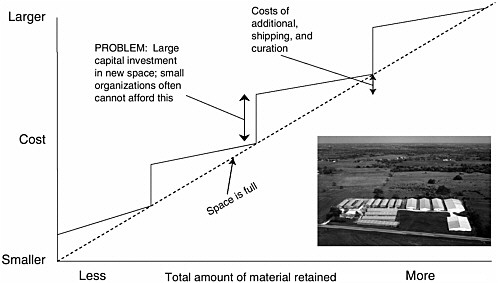
FIGURE 2-3 Cost of archiving geoscience data and collections versus total amount of material retained. Sharp increases in cost occur when capital expenditures are needed for new space. Inset: Aerial photograph of C&M Storage, Inc., the most recent buildings on the right-hand side of the image. Each additional building in this image would represent a vertical step in the main figure. SOURCE: American Images, Marshfield, Wisconsin.
may be easily accessed for study. As the focus of petroleum exploration turns international and to the deep offshore, however, interest in domestic onshore and shallow-offshore collections will wane and these collections may be lost.
Over a period of years and multiple transactions, consolidated and downsized companies can lose data and collec
TABLE 2-4 Threats to Geoscience Data and Collections (in alphabetical order)
|
Changing interests of some companies away from domestic exploration Company mergers and internal management priority changes within companies Decision makers not properly informed about geologic relevance Deterioration of materials or metadata over time Difficulty enforcing submission of required data and information on new materials Inadequate supporting information on existing samples (i.e., bad metadata) Lack of clear incentives to preserve samples Lack of expertise to evaluate materials Lack of space in existing repositories Penchant for collecting new information versus working with existing information Perceived legal liabilities Perceived ownership by researchers instead of institutions Reduction in force and other unreplaced departures Retirement or departure of staff without capturing their knowledge Samples pass into private collections Technology changes and data are not converted from old, obsolete formats Traditional archives (and libraries) are not interested in some collections |
tions simply through inability to track them (see Sidebar 2-3a). The trail of merged companies can be extensive. For example, EEX Corporation represents the amalgamation of 22 entities, and a single data administrator is charged with organizing data records of all 22 companies (Michael Padgett, EEX Corporation, personal communication, 2001). In another common situation, a company may decide to move its operations. At this point, data and collections often either are divested or placed in long-term storage. The risk of loss is compounded by the fact that most current repositories already are nearly full (Tables 2-3a,b) and may be unable to accept donations. A repository that can accept the contribution may be distant, which often means prohibitive crating and shipping expenses (see chapter 5), and the risk of damage during handling and transportation. Moreover, most repositories that can accept data and collections typically limit donations to those within their region or state. Finally, company staff who are most familiar with a collection and represent much of the institutional memory may be lost through downsizing or attrition.
Of the threats to preservation of geoscience data and collections outlined in Table 2-4, a number are illustrated in Sidebar 2-3b. The decision makers in this situation were not sufficiently informed of the geologic and economic significance of the cores, and time and money were therefore lacking for an adequate solution to the problem. Ultimately, the result was costly redrilling of wells in the area represented by the discarded cores.
Federal tax laws and regulations also are considerations in the donation of geoscience data and collections. Guidance
|
SIDEBAR 2-3 Regrettable Losses
Unfortunately, the containers with the surviving cores were moved several times and in the process the cores were jostled and destroyed. A few years later it was determined that additional cores were needed from the same sites and same areas to replace the lost cores. Fewer than 10 wells were drilled at a cost of $9 million. The original 122 wells cost approximately $1 million to drill. A comparatively modest investment in preservation would have resulted in an order-of-magnitude increase in available data (fewer than 10 versus 122 wells) SOURCE: Mel Wright, City of Long Beach (retired), personal communication, 2001. |
from the federal government on the donation of geoscience materials is key to successful transfer of collections from the private to the public domain (Kenneth Telchik, IRS, personal communication, 2001). Companies also may be wary of potential legal liability for donated material EPA considers hazardous. Petroleum residue, for example, if present in sufficient amounts within a rock core, renders the core hazardous at the time of disposal (Resource Conservation and Recovery Act, 42 U.S.C. § 6901 et seq. [1976]).
Small petroleum companies and individuals also have useful data that warrant saving. The owners may be willing to donate these materials, but usually without supporting funds, thus decreasing the likelihood of acceptance. Sidebar 2-4 includes a notable exception to this generality.
Minerals Industry
Unlike the situation in many other countries (see Sidebar 2-5), the United States has no requirements governing the disposition of geoscience records, reports, or collections from public lands obtained during the course of mineral exploration or mining. Many of these exploratory activities produce large volumes of geoscience data and collections (see Sidebar 2-6) that typically are not publicly available. Although drill samples may be retained by a company for a
|
SIDEBAR 2-4 Dibblee Foundation: Ensuring Knowledge Transfer In California, a group of geologists established the Thomas Wilson Dibblee, Jr. Geological Foundation. The foundation’s goals are to preserve and publish, and thus make available, the unpublished geological maps of Tom Dibblee, the preeminent field geologist in California history. The foundation has been active for 18 years and has published 76 maps to date. These maps are widely used in California by various groups, including the USGS, the U.S. Forest Service, municipalities, counties, and consulting geologists. Another 500 maps await attention. As 2001 ended, the Dibblee Foundation entered into negotiations with the Santa Barbara Museum of Natural History to take over the effort. Part of the donation of maps will include the necessary funding to continue capturing, preserving, and distributing the vast knowledge accrued by just one person over a very large area. Committee Conclusions of Best Practices: (1) community (user-driven) involvement; (2) financial contribution to support preservation and publication efforts. |
|
SIDEBAR 2-5 Australian and Canadian Assessment Reporting Requirements: A Contrast to Those in the United States In mineral exploration it is commonly the third- or fourth-generation explorer on the same piece of ground that ultimately makes the discovery. The reporting systems in place in Canada and Australia make the discovery process more efficient than in the United States. Current regulations for mining claims on public lands administered by the Bureau of Land Management or the U.S. Forest Service do not require the filing of geologic information collected on these lands as part of the annual assessment requirement. As a result, information remains the property of the exploration group and may be destroyed or lost once the claims become invalid and the lands become open to the public again. In contrast, mandatory reporting of information serves to supplement existing datasets when mineral exploration is carried out on public crown lands in Australia or Canada. For example, the Australian Minerals Act of 1978a has as its goal “to improve understanding of property.” Reports on all wells must be sent to the state government in digital format. These are held as proprietary (i.e., they remain closed) as long as the property is in private control. This process results in a growing archive of geologic information that is released from strict confidentiality whenever control of a property returns to the public domain. The full historic database becomes available for inclusion in federally or state-sponsored studies as well as to parties interested in conducting further geologic exploration on these lands. Australia and Canada now have the ability (and in the case of Australia, the requirement) for users to submit an annual work assessment report digitally. This report must include information such as geologic, geochemical, geophysical, or sample location maps, copies of assay and drilling reports, location and type of drill holes, drilling angle, logs of rock type for all drill holes, and results of any downhole surveys. The required content of the report varies among provinces in Canada (Don Birak, AngloGold North America Inc., personal communication, 2001). Some perceived disadvantages of the Australian and Canadian requirements for filing, archiving, and accessing geologic information are the burden of additional reporting, and concerns over loss of confidentiality (Don Birak, AngloGold North America Inc., personal communication, 2001). However, advantages to exploration companies include full access to the information on public lands, which leads to more timely data gathering, reduction of duplicative effort, and reduced costs. On the government level, full data disclosure of activities and findings submitted in a standard format results in ease and efficiency in data handling and updating files. For example, data gathered from other investigations, such as airborne geophysical data, can be integrated readily into preexisting map compilations to produce real-time updates. The fully compiled dataset can be re-processed as technology advances to produce better quality scientific products, and, ultimately better estimates of publicly held resources and their value. Two factors aid successful implementation of the Australian and Canadian reporting systems described above. In addition to public (crown) ownership of mineral rights in these countries, the second contributing factor is the smaller scale of activity and generation of new data compared with that of the United States. |
short period, they commonly are discarded unless they are offered to and accepted by a university or other group (Don Birak, AngloGold North America Inc., personal communication, 2001). Most of this activity is on western public lands administered by the Bureau of Land Management (BLM) or the U.S. Forest Service (USFS). As a result, much of the geologic information for large expanses of public terrain in the western United States either remains in the files of mining companies and geologic consultants or has been discarded at the completion of a project. As mining becomes a smaller portion of the domestic economy and many U.S. mining companies consolidate, the transfer of geologic archives from one company to its successor can be another source of danger for data and collections. If data do not pertain to a key asset, they often are discarded.
One of the few accessible, privately owned repositories of minerals-related geologic data is the Anaconda Collection, which is preserved at the University of Wyoming (maps and reports) and at Montana Tech (rocks, cores, and samples) (see Sidebar 3-7). However, only someone who has long-time intimacy with domestic mining could follow the anastomosing trail of the files of Magma Copper (files now with an Australian company, BHP-Billiton), Cyprus Minerals (now owned by Phelps Dodge Corporation), Amax Mining (files now with Kinross Gold Corporation and Phelps Dodge Corporation), New Jersey Zinc (files owned by a private in-
|
SIDEBAR 2-6 How Much Core and Cuttings Does the Average Minerals Exploration Project Produce? The following statistics give a sense of the volumes of material generated during minerals exploration. A small, single failed minerals exploration drilling program may generate 5,000 feet of continuous core from shallow holes at costs on the order of $350,000 to $500,000.a A similar program relying on rotary drilling would produce about 20,000 feet of chip samples spread over 30 to 40 holes at similar costs. A successful exploration project that evolves into a new mine commonly requires several hundred drill holes to adequately assess its economic potential. The drilling-related costs alone for a medium-sized project are on the order of $15 million to $30 million. Such a project would generate about 250,000 to 500,000 feet of chips and 50,000 to 200,000 feet of continuous core. A large project could easily double these numbers. However, subsurface exploration and development do not stop even after a mine opens. Ongoing exploration and development at an operating mine will incur annual, ongoing drilling costs of $1 million to $5 million to search for sustaining ore bodies. With success, drilling programs again expand to levels of tens of millions of dollars and many tens of thousands of feet of recovered drilling materials. |
dividual in the United States), Inspiration Copper (location of files not known), St. Joe Minerals (files now with Barrick Gold Corporation, and Doe Run Mining), and many others, as well as the now defunct minerals divisions of many oil companies. (For example, Standard Oil files are now with Rio Tinto Ltd.; Chevron files are in a number of hands, the two most important being AngloAmerican and Ivernia West Inc.) Consolidation and preservation of these data are imperative because they provide critical insight to the long-term supply of many strategic mineral commodities.
The Academic Sector
In the academic sector, scientific data and materials that underlie research reports likely will be lost over time. Scientists who assembled the data and collections usually retain possession of them, irrespective of the source of financial support for investigations (public or private). Many researchers harbor an intense sense of ownership of these materials. Furthermore, these data and collections sometimes are inadequately documented, which becomes a particularly visible problem after retirement or some other form of departure. Useful information is lost because of poor documentation, poor storage, and poor accountability. Another threat is the lack of allocation of funding for core and sample storage and maintenance within departmental operating budgets (Wayne Ahr, Texas A&M University, personal communication, 2001).
Some geoscience collections in academia (and elsewhere) are referred to as orphaned or endangered. Orphaned collec tions are collections of scientific value that are no longer wanted by the institution or individual that houses them, and the institution or individual, either publicly or de facto, has renounced its responsibility to care for the collection (Allmon and Lane, 2000; see Sidebar 2-7, for example). Endangered collections are those that lack curatorial support at the moment or are in imminent danger of permanently losing curatorial support. Such collections are particularly common at universities and colleges, especially when a faculty member who may have built or cared for the collection retires or leaves. Such collections either are discarded or adopted by a museum or, more rarely, another university. Museum collections rarely become orphans, unless a museum closes or changes its mission or scope of collections.
No national protocols have been established to find permanent homes for collections that become orphaned. The staff left behind may have little scientific expertise or interest and may make little or no attempt to find a permanent home. Such collections commonly languish and deteriorate until finally they are discarded (see Sidebar 2-8). Universities, in particular, have limited space and increasingly tight budgets. New faculty members who replace retirees need space for their own research. The death of a faculty member may exacerbate the problem if the person was the sole advocate for preservation of the collections. Orphaned collections that are rescued and adopted almost never come with funding from their institution of origin, which may make it difficult or impossible for a potential adopting institution to take on a collection, especially a large one. For many years, the National Science Foundation (NSF) funded other institutions’ adoption of orphaned collections. By the mid-1990s, however, NSF began to express strong reservations about providing funds to support the transfer of collections without careful justification for the merit of preserving a particular orphaned collection. Since the 1990s, several systems have been established to identify endangered and orphaned collections, mostly on the Internet (e.g., the Interactive Collections Availability List [ICAL]; see UCMP, 2002a) but the success of these systems has not been quantified.
The Government Sector
The scope and priorities of government agencies that deal with geoscience data and collections have changed with time, particularly at the federal level. For instance,
|
SIDEBAR 2-7 Extracts from an E-Mail Notice Sent by Killam Associates of Millburn, New Jersey, to the Paleontological Research Institution, Ithaca, New York (25 October, 2001) [What happens to the materials discussed below if they are not accepted by anyone?] “....The [New York City Department of Environmental Protection] NYCDEP has identified surplus rock core from its Water Tunnel #3 Project. The NYCDEP is offering to donate this core to local educational institutions, museums, and Geological Surveys to fuel geological research and foster educational programs. This core was collected by the City of New York to aid in the planning and design of its drinking water supply system. Currently the NYCDEP is in possession of nearly 80 surplus borings, each of which contains between approximately 400 to 750 feet of NX-sized (about 2.2" diameter) core. The borings are from various locations throughout Brooklyn, Queens and the Bronx, New York. Sometime within the next 6 months the city expects to send out a letter to parties potentially interested in obtaining this core for their own use. Logs and other information will likely be provided at that time. If you would like to be put on our mailing list of potential core recipients, please reply with the name of a contact person, a mailing address, and a contact phone number.” |
when federal agencies were consolidated several years ago, many of the functions of the U.S. Bureau of Mines were folded into the U.S. Geological Survey (USGS). With the evolving mission of the USGS, and the near-simultaneous reduction in force (Figure 2-4), their ability to focus staffing efforts on geoscience data and collections management has been hampered severely. Sidebar 2-9 illustrates the influence of the current interpretation of the Organic Act on the flow of geoscience data and collections from the USGS to the Smithsonian Institution. In a parallel trend to that of USGS staffing, the Smithsonian’s Collection Management program in NMNH has been unable to replace staff who retired or resigned in the last 10 years, which has resulted in a significant decline in the rate of cataloging (committee survey response, 2001).
The U.S. Army Corps of Engineers (USACE) collects geoscience data at each of its project sites. These projects involve construction of dams, levees, or other engineering structures. In total, more than 500 projects involving geologic investigations have been carried out around the country, and data currently are being collected at more than 35 sites. These data are housed at district offices, of which there are 40 across the country. Under USACE regulation (Engineer Regulation [ER] 1110-1-1803), rock cores and other geologic information must be retained for 5 years, or longer if litigation is ongoing. In practice, most cores are collected in the investigation phase of a project and are kept through construction and any litigation phases. This is typically a period of 10 years. Because there are no requirements to keep core beyond any litigation phase, there are no regulations to prevent core from being discarded. Of the 15 responses the committee received from USACE district offices, only 4 indicated success in giving away core to other groups (universities and state geological surveys). None of the four districts with the largest holdings of core had success in donating materials. At least 75 percent of core collected before 1985 has already been discarded (Michael Klosterman, USACE, personal communication, 2001). The period before 1985 coincides with that of USACE’s greatest project activity. The problem is exacerbated by lack of a central USACE database of holdings to track or allow searches of materials. Instead, information is held in paper files, microfiche, or in a variety of types of computer software, primarily at individual regional offices. Financial support for publishing geologic results has not been forthcoming within USACE, hence much of the wealth of geologic information USACE gathered has never been shared with the broader geologic community. Given that USACE geoscience data and collections likely have direct relevance to engineering issues and societal needs (e.g., dams, levees, roadways) the loss of this information is particularly troubling.
The committee concludes that no agency in the federal government is charged with keeping all national collections of scientific value, nor should it be. However, the committee also concludes that most agencies in the federal government that keep collections of scientific value are inadequately supported to do so, or even to evaluate the collections using criteria such as those outlined below.
INACCESSIBLE GEOSCIENCE DATA AND COLLECTIONS
Even if geoscience data are not permanently lost or destroyed, they may still be inaccessible to the public. Three broad categories of data and collections that currently are inaccessible to the public are: those temporarily lost, those held by companies or individuals and considered proprietary, and those in the public domain, but neither cataloged nor curated.
Data and collections in the public domain that are not truly accessible include information that has been stored
|
SIDEBAR 2-8 Examples of “Lost” Fossils Reliable details are elusive for fossil collections that institutions have discarded. Anecdotal accounts, however, are so numerous that it is reasonable to conclude that these losses are not uncommon. On further investigation, some prove to be apocryphal; others can be neither verified nor refuted. The common theme from the three examples in this sidebar is that the fossils evidently underwent no formal deaccession process.
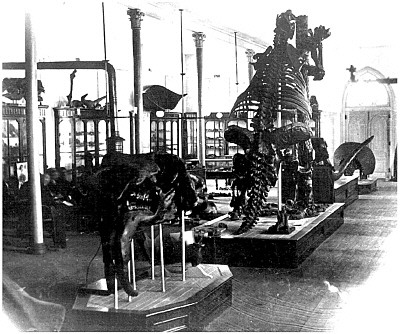 Megalonyx jeffersoni in the Indiana University Museum in the late 1800s. Loss of large, complete specimens such as this is especially tragic because of their rarity and scientific value. SOURCE: Indiana University Archives, Bloomington. |
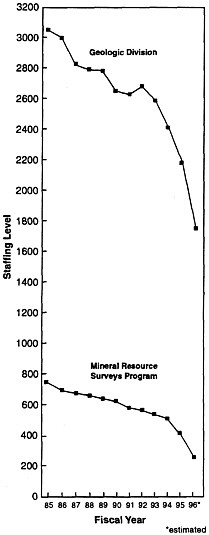
FIGURE 2-4 Staffing-level trends in the USGS’s Geologic Division and Mineral Resource Surveys Program (MRSP) from 1985 to 1996. From 1994 to 1996, the Geologic Division staff dropped by about 27 percent and the MRSP staff fell by 49 percent. Current staffing levels for both groups (the MRSP is now called the Mineral Resources Program) remain close to 1996 levels (Linda Gundersen and Kathleen Johnson, USGS, personal communication, 2002). SOURCE: Eaton, 1996; NRC, 1996b, p. 7; unpublished data provided by the USGS.
improperly, is not cataloged, lacks documentation, or is not well curated. If the material cannot be found, it is useless (see Sidebar 2-10).
PRIORITIES FOR PRESERVATION OF GEOSCIENCE DATA AND COLLECTIONS
The preceding sections of this chapter have outlined many factors that have led to the indiscriminate loss of geoscience data and collections with even more at risk of being lost. In such situations, a critical decision for those possessing the data becomes whether to retain or discard the data. Those who may be offered at-risk data face a similar decision: they must decide whether to accept or refuse the data. Space and cost commonly dictate the outcome of these management decisions. A well-rounded decision, however, can be made only if priorities are set for what to preserve.
In the course of setting priorities for accession and deaccession of geoscience data and collections, it became apparent to the committee that the broad range of data and collections precluded assignment of evaluative criteria across the board. Table 2-5 illustrates this point. Quality and completeness are less an issue for cuttings, which typically are less complete than cores. Moreover, cuttings tend to mix as they make their way up a drill hole. In contrast, it is the quality and completeness aspect of sediment and ice cores that makes them unique and powerful storehouses of important paleoclimatic information (among other types of information they record). For all other collections listed, the range of acceptable quality and completeness is variable and best left to those who know the most about what is acceptable at various levels (legal versus research versus teaching, in approximate decreasing quality control order). Accuracy is yet another metric that may not be a factor for some types of geoscience data and collections. For instance, maps, notes, and other unpublished materials may be highly inaccurate, but their historical context (if well documented) could be very valuable in understanding how someone was led astray. For geophysical information, the accuracy could be very poor, but some valid information can be extracted mathematically from even highly inaccurate data.
Replication of geoscience data and collections (i.e., multiple samples of the same or nearly the same item or items) probably is the most contentious of the criteria listed in Table 2-5. For very different reasons, having replicates of some geoscience data and collections actually can be a positive factor instead of a negative factor in their retention. For instance, replicate or nearly replicate information for engineering collections (i.e., multiple drill stem tests from the same well or from nearby wells) can be extremely useful in assembling the history of reservoir development and exploitation. Multiple specimens of the same fossil taxon allow evaluation of population information such as variability, which is assessed as a factor in whether a similar fossil is a new taxon or simply within the range of shapes that one might find in another taxon. Multiple fossil specimens also provide information about abundances of taxa, which are of fundamental importance in population and extinction dynamics. Mining cores can differ from most other cores in that, if a mine is opened and part or all of a deposit mined, the mine cores may be the only remaining record of the
|
SIDEBAR 2-9 The National Museum of Natural History and the U.S. Geological Survey The Smithsonian Institution has special relevance to the issue of geoscience data and collections preservation for at least three reasons: it houses the largest geoscience collection in the world; it serves as the national museum for the United States; and it has a long statutory connection with the USGS with regard to collections. (The Smithsonian was founded in 1846. The U.S. National Museum [USNM] was founded within the Smithsonian in the 1850s and ceased to exist in the 1970s, becoming the National Museum of Natural History [NMNH] and the National Museum of American History. The U.S. National Museum continues today only in the anachronistic acronym USNM on catalogue numbers in the NMNH collections.) The Organic Act of 1879, which established the USGS, states that all collections of fossils of the U.S. government, including those of the USGS, “when no longer needed for investigations in progress, shall be deposited in the National Museum.” For most of its history, the USGS paleontological staff and collections have been closely connected to the NMNH. This relationship changed in 1995, however, with a reduction-in-force at the USGS and the USGS’s decision to dispose of much of its fossil collections. In 1996, the NMNH and the USGS signed a memorandum of understanding (MOU) describing how the NMNH would dispose of the USGS collections. Under the MOU, the NMNH would take what it wanted and the remainder would be made available to other institutions, to be selected according to a set of criteria. Under this arrangement, the USGS–Menlo Park collections were transferred to the University of California Museum of Paleontology. Most of the USGS–Reston collections were transferred to the Virginia Museum of Natural History. Having now expired, the MOU is currently being renegotiated (Ross Simons, Smithsonian Institution, personal communication, 2002). Smithsonian staff currently (in 2001) interpret the Organic Act legislation as constituting a right of first refusal for USGS specimens. The Smithsonian has neither the space nor the scientific interest to accept all of the specimens USGS or anyone else might offer. The NMNH’s Department of Paleobiology reports that it has limited space for additional collections growth. Therefore, in practice, the Smithsonian continues to add to its collections, but to be highly selective in doing so. The NMNH sees itself as the keeper of the nation’s treasures, not the nation’s collections. The NMNH does not see itself as a repository of last resort for all orphaned collections or as the ultimate repository for all of the national collections generated or formerly housed by other federal agencies. In other words, it may accept, but is not obligated to take, collections from the USGS. The USGS follows Department of the Interior policies on museum property and its Museum Property Program requires accountability for all historical and museum collections under the bureau’s control. Research collections do not fall under this program, and USGS currently is developing a policy for managing these working collections (Allan Montgomery, USGS, personal communication, 2002). In practice, the USGS appears to have had limited interest in maintaining specimen collections for the long term. For example, the USGS employs only three staff members (down from eight in 1994) dedicated to preservation of geoscience data and collections at its Lakewood repository (Sidebar 3-2), and the storage space at that repository was reduced by 40 percent in 1995. Furthermore, volunteers curate the USGS’s irreplaceable, nationally ranked (and federally owned) paleontological collection. Lastly, as noted above, the USGS has given away two-thirds of its paleontological collections over the past 10 years. The committee visited the Smithsonian Institution in April 2001, and the USGS Lakewood facility in June 2001. SOURCE: Questionnaire responses and input during site visits. |
mined material.3 Consequently, multiple mining cores are less an issue than multiple rock cores from non-mined deposits. Finally, sediment and ice cores have an inherent fragility and sensitivity to storage conditions that make replicates (especially if kept in a separate facility or separate part of the same facility) a wise insurance policy against intellectual loss. In addition, seemingly identical sediment and ice cores from geographically separate areas are critical in assessing the geographic range and potential global impact of various climatic and climate-related events on Earth.
Upon inspection of Table 2-5, one might wonder about seemingly obvious criteria that are missing. One such criterion is use as a factor in assessing the importance of a single specimen, a group of holdings, or an entire collection. Use is an especially poor criterion for assessing priority for two reasons. First, use commonly relates to how well known (or
|
SIDEBAR 2-10 Examples of Inaccessible Geoscience Data and Collections
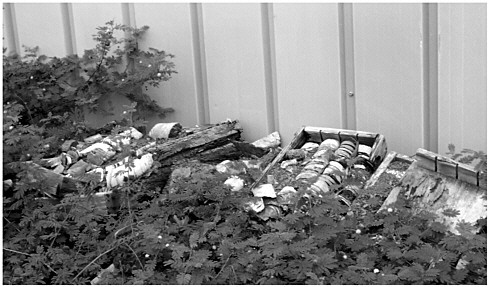 Cores stored outside at Oakridge National Laboratory, Tennessee, in Spring 2001. These cores are from the Tennessee Valley Authority’s Clinch River Breeder Reactor site. Rescue of cores in this state of degradation is unlikely given the probable loss of documentation associated with them. SOURCE: Richard Pawlowicz, Bechtel National, Inc., San Diego, California. |
TABLE 2-5 Criteria for Determining Which Geoscience Data and Collections to Preserve
|
Criteria |
Well Documentedd |
Irreplaceablee |
Potential Applicationsf |
Accurate |
Quality/ Completeness |
Non-Replicative |
|
Collections: |
|
|||||
|
Cuttings |
X |
x |
x |
X |
_ |
X |
|
Engineeringa |
X |
x |
x |
X |
x |
_ |
|
Fossils |
X |
x |
x |
X |
x |
_ |
|
Geophysicalb |
X |
x |
x |
_ |
x |
X |
|
Maps/Notesc |
X |
x |
x |
_ |
x |
X |
|
Mining Cores |
X |
x |
x |
X |
x |
_ |
|
Other Rock Cores |
X |
x |
x |
X |
x |
X |
|
Sediment & Ice Cores |
X |
x |
x |
X |
X |
_ |
|
X = present or necessary for preservation (i.e., absence = candidate for deaccession). x = may be present and may be a factor for preservation (i.e., absence may not be a factor for deaccession). _ = not present and not necessary for preservation (i.e., absence is not a factor in deaccession). Criteria are arranged from left to right in approximately decreasing order of importance (but see text for further explanation and elaboration). Collections are arranged alphabetically. aIncludes drill stem tests, completion records, site reports, and other engineering data/reports on CD, computer disk, fiche, paper, tape, or some other quasi-stable medium. bIncludes seismic data, down-hole geophysical data, fly-over geophysical data, and other geophysical data on CD, computer disk, fiche, paper, tape, or some other quasi-stable medium. cIncludes unpublished materials on CD, computer disk, fiche, paper, tape, or some other quasi-stable medium, whether or not they were used in the production of published products. dAll collections must be well documented before any other assessment of their utility and future can be done. Indeed, whether or not a rock, fossil, core, or other item is replaceable or not is completely unknown in the absence adequate documentation to assess uniqueness. That said, if part of a collection is not replaceable, but only documented well enough to know that it is unique, it probably should be kept anyway. Documentation includes, but is not limited to, information about age, location, depth, collector or author, date acquired, and associated materials. eImpossible or highly unlikely to collect a similar sample (e.g., a mine core from a completely mined-out locality; a sample from a politically inaccessible part of the world; a sample requiring great time and effort to recollect such as a deep ice core from Antarctica or Greenland). fThis category in particular should be weighed judiciously by a science advisory board comprised of members of the user community. |
||||||
not) a collection is. A critical collection, key fossil, or pivotal core may be completely unused if its whereabouts is unknown to most people. This most often occurs because of inadequate metadata (data about the collection). Clearly, in these instances, if the collection were known, it would be used. Consequently, its lack of use is an inappropriate measure of its importance or future relevance (if appropriate metadata are provided).
Use statistics are inappropriate for a second reason; immediate use is not necessarily an indicator of future use, even if the metadata are well known and well established (see chapter 1 for examples of unanticipated use). Future use is difficult to predict, but almost always hinges on the otherwise assessable criterion of documentation. Poorly documented geoscience data and collections almost never have any future.
Also not present in the criteria listed in Table 2-5 is cost. The committee specifically avoided the issue of cost in determining which geoscience data and collections to discard and which to keep because this is best determined at a local level.
Table 2-6 summarizes general guidelines for assessing donation and reception priorities for donors and recipients of geoscience data and collections. Table 2-5 and Table 2-6 should be used in concert with each other. They also should be used with caution. It was neither the committee’s desire to be overly prescriptive or limiting about setting priorities for accepting geoscience data and collections, nor was it the committee’s intent that these criteria be applied without consideration and input from user communities. For this reason, the committee concludes that close, meaningful involvement of external science advisory boards, which includes membership of an expert able to assess metadata issues and other issues of discovery and accessibility, is vital. Sidebar 2-11 illustrates the role of such a board in advising the managers of the National Ice Core Laboratory in Lakewood, Colorado. The science advisory structure for the Ocean Drilling Program is illustrated in Figure 4-1.
Science advisory boards are in the best position to give realistic recommendations (as opposed to the unrealistic recommendation of keep everything) about what to keep against the backdrop of what might be needed in the future. Because of the complexity of such decisions, they should never be left to any single person. Broad, community-based input using community-driven criteria is the best approach for assessing which geoscience data and collections merit retention and which should be discarded.
|
SIDEBAR 2-11 Managing Ice Cores at the National Ice Core Laboratory The National Ice Core Laboratory (NICL), at the Denver Federal Center in Lakewood, Colorado, manages ice cores collected and used primarily by NSF- and USGS-funded researchers, and other government personnel. A web-based catalog (www.nicl.usgs.gov) enables potential users to determine current holdings. Through an outreach program, NICL introduces people of all ages to ice-core science. With holdings of 15,700 meters (51,509 feet) of ice core (see photograph in sidebar) at -36° Celsius, NICL is currently at 90 percent capacity. Implementation of a staged plan for a new, mobile racking system will increase available space from 10 to 48 percent, thus deferring space problems for several years. NICL has operated under an inter-agency agreement between the USGS and NSF since opening in 1993. The annual budget ($477,000 in 2000) is shared equally between these partners. USGS has responsibility for facility operations, while NSF provides oversight that includes periodic performance reviews. Science management (including decision making on sample allocation and accession and deaccession protocols) is coordinated by the University of New Hampshire under a competitive contract. The director of scientific management bases his or her guidance on advice from an Ice Core Working Group (ICWG). The ICWG is a group of 11 experts from universities and the USGS who actively work on ice cores and/or use data derived from ice cores. Accession and deaccession protocols are promulgated by NSF using a subgroup of the ICWG as an advisory committee. This removes NICL from potential conflicts of interest on such matters. To be accepted by NICL, ice cores must arrive with site information and logging information for each meter section of core. This information should be in digital form. For smaller-diameter (4-inch) cores of opportunity, a removal date must be established upon accession. Because of the necessary high levels of coordination for deep drilling projects in Greenland and Antarctica, NICL has advance notice of incoming large-diameter (5.2-inch) cores and can plan accordingly. Currently approximately 1,000 meters per year (3,281 feet per year) of new core are collected in a typical drilling season. This plan may include deaccession of older core, a process overseen by the ICWG. Criteria for deaccession, each assessed on a scale of 1 to 5 by scientists, are age, continuity, volume, robust dating, published information, number of requests, core quality, duplication, drilling method, specific utility, uniqueness, and site accessibility. Deaccessioned ice offers a testing ground for new analytical methodologies such as extraction of CO2 from air bubbles (Sidebar 1-7). Deaccesioned cores are advertised through e-mail and print to a broad cross-section of the scientific community. In June 2001 approximately 1,588 meters (5,210 feet) of core were on the deaccession list, and another 477 meters (1,565 feet) were shipped to scientists and school outreach programs in the preceding year. Ice is not discarded until NICL needs the storage space, and only then after many others have passed on the opportunity to take the ice themselves. Committee Conclusions of Best Practices: (1) web-based catalogue of metadata; (2) inter-agency and federal/university support; (3) community-based, science- and user-oversight committee; (4) well-documented and well-advertised deaccession protocols that result in little wasted core; (5) adequate fiscal support (as of 2001). The committee visited NICL in June, 2001. 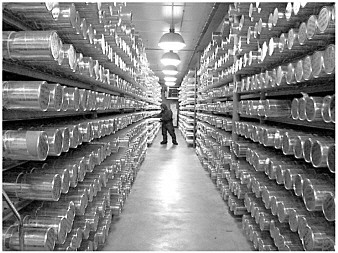 Inside the National Ice Core Laboratory. The ice core storage room is maintained at a temperature of –33°F (–36°C). About three-quarters of the NICL collection is in 1-meter (3.3-foot) tubes, the other quarter is in 1.5-meter (5-foot) tubes. Each tube contains part of a single core. SOURCE: Geoffrey Hargreaves, NICL. |
TABLE 2-6 Guidelines for Assessing Donation and Reception Priorities for Donors and Recipients of Geoscience Data and Collectionsa
|
Responsible party |
Guidelines for Assessment |
||
|
Donors |
1. |
Provide digital inventory or other documentation of donated materials. |
|
|
|
2. |
Document uniqueness, significance, completeness, and other known context of donated materials. |
|
|
|
3. |
Ask the recipient for a written plan for curation and access in order to determine the repository’s commitment to curation and access. |
|
|
|
4. |
Provide financial support for transportation and curation (if possible). |
|
|
Recipients |
1. |
Assess appropriateness of donation for repository mission and/or expertise by evaluating: |
|
|
|
A. |
uniqueness and relevance of donation vis-à-vis repository goals; |
|
|
|
B. |
likelihood of obtaining similar material from the same place or time; |
|
|
|
C. |
esthetic and/or preservational qualities, including completeness and significance. |
|
|
|
2. |
Provide written plan for curation and access. |
|
|
|
3. |
Assess cost (if any) to render donation useful (if it can be rendered useful). |
|
|
|
4. |
Solicit financial and/or volunteer support from the donor if required to curate the donation adequately. |
|
|
Donors and recipients |
1. |
A donation is not useful if it is undocumented. |
|
|
|
2. |
A donation is a burden to a repository if it cannot be curated adequately. |
|
|
aThese guidelines should be used in conjunction with the matrix provided in Table 2-5. |
|||


