
-
Students should be fluent in mathematics through the precalculus level (see the discussion below). In particular, by the time they are ready to study advanced physics, students should be skilled in algebraic manipulation and have a firm grasp of basic trigonometry. Emphasis should also be placed on the use of proportions to solve problems, estimation skills, the use of international units, and scientific notation (powers of 10). Acquiring all necessary mathematical skills may well take several years of study before a student enters the advanced physics program. The panel encourages high school physics teachers to work closely with the mathematics departments of their schools to develop the necessary courses of instruction.
Mathematics is the language used to describe the fundamental laws of physics. Just as it is very difficult to teach physics to students who barely understand English (or the language of instruction), it is equally difficult to teach physics to students who do not “speak mathematics.” At the level of advanced physics study in high school, speaking mathematics consists primarily of facile manipulation of algebraic equations and an intuitive grasp of the significance of those equations. For example, students should have no doubt that linear relationships lead to straight-line graphs, and that the presence of curvature in a graph implies that the relationship cannot be linear.
While knowledge of calculus is unquestionably helpful in the study of advanced physics, it is not absolutely essential. Ideas such as the derivative and integral can be introduced in physics classes by discussing the slope of tangent lines and the area under curves. However, the level of mathematical skill of students may well play a role in the selection of optional physics topics (as discussed later in this chapter).
THE MOST IMPORTANT OBJECTIVES
There was strong consensus within the panel that the most important objectives for advanced study in high school physics are not tied to particular topics in physics. The panel is far more concerned with promoting more general dispositions, abilities, and habits of mind. In particular, advanced study in physics should help students further develop the following:
-
Excitement, interest, and motivation for further study in physics
-
Facility with mathematics as a means of communicating, examining, and refining ideas
-
Scientific imagination and creativity
-
Scientific habits of mind, or the abilities and inclinations:3
-
To look for and examine assumptions hidden in the student’s own and others’ reasoning
-
To seek precision and clarity in forming and communicating ideas, including the use of mathematics
-
|
3 |
We note that the Theory of Knowledge course included in the IB program (see Chapter 3) deals with the habits of mind listed here. This is an advantage of the IB program; since it is a program rather than a course, one teacher need not do everything. |
-
To design and conduct empirical investigations to answer scientific questions
-
To identify and reconcile inconsistencies between the student’s understanding and observations
-
To develop, implement, test, and revise models of physical phenomena
-
To develop and learn to work within a framework of theoretical principles
DESIGNING A CURRICULUM TO MEET THESE OBJECTIVES
The Central Role of Newtonian Mechanics
Although the objectives listed in the previous section can be met through a thorough study of many different areas of physics, some commonality among programs is clearly desirable, especially when advanced programs serve as substitutes for physics courses in college. Given the central role of Newtonian mechanics in physics, both historically and conceptually, the panel recommends that any advanced study of physics include Newtonian mechanics. Mechanics provides an ideal framework for achieving the objectives cited above. At the same time, familiarity with mechanics is universally expected of students entering college who have completed an advanced high school physics program.
Maximizing the Commonality of Advanced Programs in Newtonian Mechanics
Because the study of Newtonian mechanics serves as the foundation of any good program of advanced physics study, the panel recommends that the set of topics addressed be standardized as much as possible across the nation. While the exact details of such a nationwide mechanics syllabus can be agreed upon at a future time, the panel makes the following two recommendations:
-
The syllabus should include the study of rotational dynamics. It is important for students to learn to apply the laws of mechanics to extended bodies, not just point particles. Not only is the physics content important, but the study of rotational dynamics also presents substantial intellectual challenges that help prepare students for the challenges of their future higher education.
-
There should be no distinction made between the study of mechanics with and without calculus. Whether or not the mathematical background of the students includes calculus, the concepts necessary for physics (e.g.,
 ) can and should be introduced.
The primary goal of the study of Newtonian mechanics is to develop conceptual understanding, rather than the ability to perform complex mathematical manipulations. For example, it is not necessary for advanced high school students to learn how to calculate the
moment of inertia of a cylinder about some given axis, but it is important for them to understand rotational kinetic energy and angular momentum.
The Role of Calculus in the New Common Mechanics Unit
The panel stresses that the new mechanics unit recommended above is by no means a noncalculus introduction to mechanics. Indeed, the concepts of calculus are absolutely essential to the physics subject matter. Specifically, the panel emphasizes the following points:
-
Teachers with qualified students are encouraged to use formal calculus. Such students are eager to apply their mathematical prowess and should be encouraged to do so. It is likely that such students would continue their calculus-based study of physics in a second-semester course such as AP Physics C Electricity and Magnetism.4
-
The final examination for the new unit would not require students to use formal calculus. In all other respects, however, the new examination should be at about the same level as the current exam for AP Physics C Mechanics. This recommendation is in harmony with the current trend on that examination: less reliance on technical mathematics and increasing emphasis on conceptual physics (see Chapter 3).
-
The final examination for the new unit would test students’ knowledge of the concepts of both differential and integral calculus required to develop the physics. For example, students would be required to know that instantaneous velocity can be obtained as the slope of the graph of displacement versus time, and that the work done by a force that varies as a function of position can be obtained from the area under the force curve.
Comparison of the New Mechanics Unit with Current AP Mechanics
Students who today would study AP Physics Mechanics C would find the new unit to be very much in line with their expectations for that course. There would be less emphasis on formal mathematics and more on conceptual understanding, but the general level of the treatment of the physics would be the same as that of current AP Physics C Mechanics. All the important physics currently found in AP Physics C Mechanics would still be covered and tested on the final examination.
Students who today would study AP Physics B would find the new mechanics unit to be a more comprehensive and in-depth treatment of the subject than that found in current Physics B courses, primarily because of the inclusion of rotational dynamics. Therefore, the primary effect
|
4 |
AP Physics C Mechanics and AP Physics C Electricity and Magnetism are one-semester calculus-based courses, each leading to its own separate AP examination. AP Physics B is a two-semester noncalculus course leading to a single comprehensive AP Physics B examination. For a detailed discussion of the AP Physics program, see Chapter 3. |
for AP Physics students of the creation of a common mechanics unit as recommended by the panel would be to raise the standards in mechanics for Physics B to the level of Physics C.
Coverage of Other Areas of Physics
The breadth of material included in introductory college courses almost always requires rapid, superficial treatment. Unfortunately, the emphasis on breadth to the exclusion of depth is also growing at the secondary level, as more states are adopting encompassing frameworks and standards for science instruction. The panel believes, however, that for students to appreciate physics as a field of inquiry, it is more important for them to develop depth of understanding in the areas they study than to study any particular areas. The amount of additional material beyond Newtonian mechanics that can be covered in a particular course depends on its length. For a 1-year program, the panel believes strongly that students should study at most one other major area of physics.5 In a 2-year program, the number of topics can be increased as long as the essential goal of depth of understanding is attained.
Additional Areas That Match Instructors’ Talents and Resources
The panel believes that advanced physics programs should be able to choose from among various options the extra topics that best meet their needs. We offer the following possible optional topics for illustration only; a detailed list of options and a syllabus for each need to be carefully developed:
-
Electricity and magnetism/circuits
-
Models of light and sound (geometrical optics, mechanical waves, physical optics)
-
Complex systems (thermal and statistical physics, computer-assisted conceptualization, chaos)
-
Atomic, nuclear, and particle physics
Again, we are not proposing here the specific makeup of these other options; we are proposing that they be developed. In each case, physics teachers and students would be motivated to pursue greater depth of coverage in a limited area. We note that the ability to develop such options gives advanced high school instruction the flexibility needed to address emerging areas of physics, as discussed below.
Second-Semester Options
In this section, we provide additional detail on some optional curricula that could be used in the second semester of an advanced physics program. In describing these options, we assume that students have already completed the new common mechanics unit discussed above. Our goal is not to specify these curricula completely; that is a task for other organizations, such as the College Board and the International Baccalaureate Organisation (IBO). Rather, the brief summaries below are intended to give the reader a better understanding of the overall content and goals of these example courses.
AP Physics C Electricity and Magnetism. This existing semester course is already familiar to many readers; it is the usual follow-up for students who take the current AP Physics C Mechanics course during the first semester. The content of the course is specified in the 2000/2001 edition of the Advanced Placement Course Description: Physics, published by the College Board (1999a) and known as the “Acorn Book.” (See Chapter 3 for a detailed discussion of the AP Physics program.)
The course is highly mathematical and covers Maxwell’s equations in integral form. There are numerous applications of calculus, as well as an introduction to direct-current circuits. Capacitance and inductance are introduced, and the time-dependence of currents and voltages in simple circuits is studied. The panel recommends decreased emphasis on the technical mathematical details and more emphasis on conceptual understanding. However, there is nothing to prevent this curriculum from being used as a second-semester option in its present form.
Biomedical Physics. The IBO has already defined a syllabus for the study of this topic in the IB Diploma Programme Guide: Physics (IBO, 2001). (See Chapter 3 for a detailed discuss of the IB Physics program.) This noncalculus course covers the following major topics:
-
Fluid statics, fluid flow, and the physics of the cardiovascular system
-
Rotational statics, with application to the muscular-skeletal system
-
Hearing—normal function, defects, and correction
-
Radiation—types, sources, properties, and detection
-
Medical imaging
-
Biological effects, hazards, dosimetry, and diagnostic uses of radioactive sources
The course is currently designed to be covered in 30 hours, or approximately half a semester. Therefore, if the course were used as a semester option, several of these very interesting topics could be covered in greater depth, consistent with the fundamental goal of achieving deep conceptual understanding.
Special and General Relativity. This is another area for which the IBO has already created a detailed syllabus for a noncalculus course. The major topics covered by that syllabus include the following:
-
Frames of reference and Galilean relativity
-
Postulates and fundamental concepts of special relativity
-
Historical context and experimental support for special relativity
-
Postulates and fundamental concepts of general relativity
-
Experimental support for general relativity
Once again, the course is designed to be covered in 30 hours. However, this rich and intensely interesting subject lends itself to in-depth study in a myriad of ways. Indeed, a relativity option is likely to generate excitement and motivation for further study in physics—a key goal of advanced physics study cited earlier.
Fields at the Forefront of Current Physics Research as Optional Topics
One of the frustrating aspects of conventional physics instruction for new students is that they must spend years studying classical physics before they learn about fields at the forefront of current physics research. The teacher of an advanced high school program might well choose to use the time available after completing the required mechanics foundation to explore one of these fields.
Unlike conventional advanced physics study, which attempts to accelerate students in classical physics, the goal here would be advancement by enrichment. Such enrichment is an excellent way to generate enthusiasm for further study in physics, which, as noted above, is a key goal of any advanced high school physics program.
Examples of such enrichment might include a course on special and general relativity along the lines of Taylor and Wheeler’s (1992) Spacetime Physics; a course that looks at quantum mechanics from a qualitative point of view; a course investigating nonlinear dynamics; a course in electricity and magnetism using a laboratory-based approach, such as the ZAP! program by Pine, Morrison, and Morrison (1996); and a course in the history of particle physics, from the discovery of the electron to the confirmation of quarks. The intent of such courses would be to explore the topic with a depth and breadth commensurate with the mathematical sophistication of the students taking the course and the expertise of the teacher.
There are several potential advantages to this type of enrichment:
-
The topics involved would often be exciting and speculative, appealing to students’ taste for the exotic, and could motivate students to work and think at a more sophisticated level.
-
Students would have more opportunities to exercise their critical and creative abilities than is the case in the highly defined and codified curriculum typical of the present AP and IB programs.
-
Students could be better able to grasp the big picture of what is taking place in current physics research and to decide whether they want to be a part of that effort.
-
Some course designs could provide real opportunities for long-term student-designed experiments and open-ended investigations.
-
Students and teachers would have an incentive to use the Internet to identify research being done, to try out simulations, and to participate in distance learning opportunities or in organized forums addressing particular course topics in which researchers might cooperate as participants.
-
Students and teachers might have an incentive to work with professionals from outside the school with expertise appropriate to the course, promoting both learning and broader collegial connections. College courses may already exist that could be adapted to create such courses.
There are also potential difficulties with such undertakings:
-
The offerings might have to compete with more conventional advanced courses for a limited number of students.
-
Colleges would be unlikely to grant credit or placement for these course offerings, since their content probably would not match that of college courses.
-
Schools might not be willing to allocate the human and material resources needed to develop such courses.
-
Teachers with sufficient expertise to teach the courses might not be available.
In addition to the above difficulties, no mechanism currently exists to validate that these course offerings provide the appropriate depth of understanding for advanced high school physics programs. Development of a mechanism for reviewing, certifying, and disseminating curricula and for training and certifying teachers in the use of such curricula would therefore be an essential part of advancement by enrichment. One possible approach would be for the American Physical Society and the American Association of Physics Teachers (AAPT) to establish a joint committee to operate as a Clearinghouse for Advanced Programs in Physics (CAP). Curriculum developers would submit proposed curricula to the CAP, which would then review them for quality of physics content, pedagogy, and interest to students. A curriculum passing the review would be certified as a CAP-Physics curriculum. Curricula submitted during development might be issued a provisional certificate and reviewed again after the curriculum was in final form.
Once a curriculum had been granted a certificate, its developers could offer summer training institutes for teachers, subject to standards for such institutes issued by the CAP. Such standards might mandate a minimum time for the training and the makeup of the instructional staff. Teachers that completed the training satisfactorily, which might well involve passing a final examination on content, would be certified to offer the course in their schools. A school
offering such a course, taught by a certified instructor, would be able to indicate the course on student transcripts as a “CAP course.”
Since CAP courses would not be designed to substitute for college courses, the CAP would not need to operate a testing program. It would, however, serve as an information source on available certified curricula and on summer institute programs for teacher certification. On the other hand, curriculum development groups might wish to have their own testing program, and test data could serve as additional evidence that a curriculum was suitable for CAP certification.
The key advantage of the CAP concept is that it would bring together many existing programs rather than having them continually reinvented by different groups. Most current curriculum projects that would be suitable for submission to the CAP already have teacher training provisions. The CAP would add nationally recognized certification of quality and disseminate certified curricula to schools across the nation.
Inclusion of Meaningful, Challenging, Real-World Experiences
Science at its heart is the process of how we come to know about and understand the physical world around us, including how living things interact with and are part of that world. What distinguishes science from other ways of thinking is reliance on evidence about the physical world and the importance of reproducible, principled consistency in judging the truth and utility of conjectures, laws, and theories. The panel strongly believes that all science courses at all levels—including advanced science courses in high schools—should include a significant component of experience with real-world phenomena and the way scientific conceptions are tested against observations of those phenomena. The panel acknowledges that in practice, the interplay between theory and experiment is often complex. The important point is that science requires both components, and science instruction should reflect that interplay.
At the advanced high school physics level, students should already have had considerable experience with these activities in earlier physics and physical science courses6 in the form of laboratory exercises, demonstrations, and perhaps even independent investigations. The panel believes that advanced physics courses should provide additional experiences for students in formulating their own conjectures and explanations, as well as in making the connections between real-world phenomena and the concepts, principles, and theories developed by the scientific community.
What form should these additional real-world experiences take? Evidence7 indicates that traditional “cookbook” methods of laboratory instruction, in which students follow narrowly
defined procedures to verify well-known principles, have little effect on students’ conceptual understanding; on the other hand, substantial improvements in understanding are possible through rigorous, interactive laboratory experiences. Although much has been made of the need for “hands-on” activities in science, it is clear that what really matters is not “hands-on” but “minds-on.” Cookbook labs are ineffective because students typically do very little thinking while they are working their way through the list of step-by-step instructions. Cookbook labs are mind-numbing experiences that lead students to describe their laboratory work as boring or a waste of time (National Research Council, 1997b). Indeed, in view of the fact that the time spent doing cookbook labs could be spent doing something more productive, it is doubtful that doing cookbook labs is better than doing no laboratory work at all.8
The research evidence against cookbook labs is not overwhelming, but we know of no research in their favor. The panel believes that the issue should be looked at from this point of view: What evidence is there that cookbook labs are of sufficient value to justify the enormous amount of time spent on them in physics programs across the nation? As far as we know, no evidence comes anywhere close to justifying this huge investment of effort.
Experimental work in advanced courses should provide experience with the way scientists use experiments—both for gathering data to build theoretical models and for exploring the applicability of these models to new situations. To that end, exploration of phenomena should generally precede and motivate the formal introduction of theoretical concepts. Moreover, students should make as many scientific decisions as possible, from the conception and design of the experiment all the way through the analysis, presentation, and critical review of the results.
The panel urges teachers of advanced physics courses to consider using a wide range of experiences, including the following:
-
Open-ended labs that require students to make decisions about what to observe, how to observe it, and how to interpret the data
-
Labs that focus on allowing students to confront preconceptions and reconcile them with actual observations, with less emphasis on numerical data acquisition and analysis
-
Demonstrations that encourage students to predict what is going to happen and then follow up with discussion that reconciles predictions and observations
-
Take-home labs that can be done with relatively simple equipment and everyday items
-
Exercises that work with data available on the Internet (e.g., data on sunspots gathered over many years as an indicator of periodic cycles in sunspot activity)
The panel would argue that a specific list of experiments is not useful; there are too many variations in the availability of time and equipment for such a list to be helpful. Both the College Board and the IBO provide lists of labs that are commonly used in advanced secondary school physics courses, as well as in introductory college and university physics courses. Those lists can serve as a rough guide for teachers, although innovation is certainly to be encouraged. The panel also recommends that teachers of advanced courses be familiar with the AAPT’s position papers on The Role of Laboratory Activities in High School Physics and The Goals of the Introductory Physics Laboratory, which describe aspects of the goals of experimental work in more detail.9
The way the experience is designed is more important than the specific topic. For example, a lab dealing with pendulum motion could be constructed as a rote exercise in data gathering to verify the dependence of the period of the pendulum’s oscillatory motion on the length of the pendulum, but it would be better to design the experience as scientific inquiry. For example, the teacher might point out that some recent speculations about a so-called “fifth fundamental force” or extra space–time dimensions for gravity predict that the period of the pendulum motion should depend on the nature of the material of the pendulum bob—iron might behave differently from brass. The teacher might then ask what measurements should be carried out to test that idea, and how well those measurements can be used to reject or confirm the idea. Still better would be a lab in which students would play with some pendulums first, and then themselves come up with questions to ask about pendulum motion.
USE OF ASSESSMENTS THAT MEASURE DEPTH OF UNDERSTANDING
Assessments are a very important feature of any advanced physics program. Scoring well on a final examination is a tangible goal that both students and teachers can strive to achieve. Success on such examinations leads to feelings of triumph and looks good on college applications. In many cases, examination scores are also a major component of the school administration’s evaluation of teacher performance.
Because of the high stakes involved, it is too often the assessments, rather than educational goals, that drive the instructional process. A prime example is the AP Physics B examination with its vast coverage of subject matter (see Chapter 3). In view of this fact, it is imperative that the assessments used accurately measure depth of understanding, the primary goal of advanced physics instruction. Unless the assessments encourage and reward students and teachers for exploring physics deeply in the ways described above, they will not do so; instead, they will do what is necessary to score well on the assessments. Ensuring that tests emphasize conceptual understanding is an important way to encourage better teaching practices.
|
9 |
These papers are available at the AAPT Web site—www.aapt.org—under “AAPT Statements and Policies.” |
|
Box 2-1. Useful Resources for Developing Real-World Experiences Although by no means exhaustive, the following is a list of some resources that members of the panel have found particularly helpful in developing meaningful real-world experiences. More information about many of these resources is given in Chapter 4:
|
In the next section, we offer some general recommendations for creating desirable written examinations. Written examinations are the most practical means of assessing the performance of a large number of candidates, but are certainly not the only means. In particular, we draw the reader’s attention to the internal assessment component of the IB Physics program discussed in Chapter 3.
Designing Good Written Examinations
A good written examination in an advanced physics program should:
-
Emphasize conceptual questions, rather than mathematical techniques. Here we are not distinguishing questions that are conceptual from those that are mathematical; conceptual questions may well involve mathematics. Rather, we are distinguishing questions that assess conceptual understanding from those that assess mainly technical mathematical skill.
-
Require explanation of the candidate’s reasoning. The goal of an advanced course is not just to provide the correct answer, but also to communicate the reasoning process that leads to that answer.
|
10 |
Further information can be found by going to http://www.aapt.org/ [4/17/2002] and clicking on Programs and then PTRA. |
-
Eliminate free-response questions that lead students through arguments by means of multiple interdependent parts. Instead, shorter questions that call for original reasoning in a complex unfamiliar setting are desirable. Open-ended questions posed in a real-life setting can help strengthen the connection between physics and the world around us, and are thus recommended.
-
Construct multiple-choice questions that reflect common student misconceptions. Research is required to determine adequate distracters (incorrect multiple-choice answers). Ideally these distracters should be obtained from answers given previously by students to free-response questions. Additional improvements include multiple-choice questions that have more than one correct answer (multiple-completion questions) and multiple-choice questions that require not only the selection of a correct answer, but also the selection of a correct justification.
-
Allow sufficient time for most well-prepared students to complete every question. Emphasis must be placed on what a student knows—not how quickly the student can recall and use that knowledge.11
-
Use innovative kinds of questions that probe depth of understanding. Many alternative forms of assessment exercises exist, and some of these have been shown to be valuable. For example, students could be asked to score or rank a number of student solutions to a free-response question. Such an exercise would require not only understanding the question posed, but also distinguishing among different models and recognizing the correct one.
-
Written examinations cannot accurately assess laboratory skills, and should not attempt to do so. However, questions involving analysis and interpretation of data are both reasonable and desirable. In addition, students can be asked to outline the design of simple experiments based on their general knowledge. Since there is no required list of experiments that all students must perform, such questions must not depend too strongly on the specifics of any particular experimental technique. Recent AP Physics examinations contain many good examples of questions that satisfy these criteria.
Need for Improved Scoring Techniques
The scoring of written examinations must emphasize the evaluation of student understanding. A rigid scoring rubric in which points are awarded for highly specific correct responses to small parts of each question is not appropriate because it reduces the reader’s ability to respond to student thinking (both correct and incorrect) not anticipated by the rubric. Rather, the reader should evaluate the student’s response as a whole. A maximum score should be given only for complete and clear physical reasoning leading to the correct conclusions. Lower scores should be given for missing or erroneous reasoning, even if the conclusions reached are correct.
To understand this recommendation, it is important to distinguish between the allocation of maximum possible scores to different parts of the test and scoring rubrics of the type we decry. It is surely reasonable to allocate 10 points to problem 1, 15 points to problem 2, and so on. Similarly, it is reasonable to further subdivide the maximum possible credit for problem 1 among parts 1a, 1b, and 1c, as long as these parts are truly independent of each other. What is not reasonable, in our view, is to allocate 1 point for the statement of Newton’s second law, 1 point for solving the resulting equations, 1 point for the numerical answer, and so on. Such rigidity makes it impossible to properly evaluate the student’s reasoning, which is what we should be most interested in. Similar difficulties arise if parts 1a, 1b, and 1c are interdependent, since that will often allow students to answer the parts in many different orders and a wide variety of ways. If a question contains multiple interdependent parts (a practice against which the panel has argued above), it is better to evaluate the entire question as a whole.
To be clear, we are not advocating the abolition of all standardization of grading. Maintaining consistency in grading is indispensable to the fairness of the examination. Rather, we are advocating more flexible rubrics of the kind given on the College Board Web site in, say, U.S. History or English Literature. General guidelines are desirable; rigid rules for awarding each point are not. Moreover, we applaud the care shown by both the AP and IB programs in monitoring the consistency of the grading process and would expect such monitoring to continue.
Importance of High Standards for Success on Final Examinations
If the smaller and more manageable curriculum proposed earlier in this chapter were adopted, we would expect successful students to know the material in that curriculum thoroughly. Therefore, we recommend high standards of performance on the final examination for these students. While it is beyond the scope of the panel’s work to propose specific standards, we believe the standards for awarding grades should be substantially higher than those currently in use by the two dominant programs. Currently, students can earn a grade of 5 in AP Physics B with raw scores that range anywhere from 106 to 180 points.12 The panel is unanimous in asserting that this range is too broad; students who earn scores at the upper end of the range are better qualified than those at the lower end of the range. While this wide score range might serve a purpose in the current AP Physics program by allowing teachers to focus on some aspects of the curriculum at the expense of others without their students being penalized, a narrower score range would be more appropriate in the context of the more manageable curriculum proposed by the panel.
Less is known about the marking of IB assessments than about the scoring of AP examinations. However, the range of scores, particularly at the top, raises similar concerns about IB standards. The panel notes that IB students can obtain top marks on their examinations by earning 57 percent of the points for a 6 and 70 percent of the points for a 7.13
Additional evidence that standards for success on AP Physics examinations should be higher can be found in an abstract by Howard Wainer of the Educational Testing Service that appeared recently (March 2001) on the College Board Web site. It states that students who were allowed to skip their first course in physics by virtue of success on the AP examination did not do as well as students without AP experience in their second college physics course. This is particularly troubling in view of the fact that students with AP experience usually are among the most successful academically and normally outperform non-AP students. In fact, according to the abstract, AP students outperformed non-AP students in all but three disciplines: physics, economics, and U.S. government.
3
Extent to Which the AP and IB Programs Implement Recommended Practices
This chapter presents a critical review of the AP and IB programs in light of the recommended practices set forth in Chapter 2. Before proceeding, it is important to make note of the differing background and goals of AP and IB Physics.
Today, the AP and IB Physics programs constitute the two most significant factors in defining what is meant by advanced study of physics in the United States. Most students entering the postsecondary education system each year who are identified as having completed an advanced physics course have participated in these two programs.
The reasons for the creation of the two programs were substantially different, and this led naturally to substantial differences in their approaches to advanced physics instruction. All judgments made in any comparison of the programs must be viewed through the lens of their distinctive history and present structure.
THE AP PHYSICS PROGRAM
In this section, we respond directly to the questions under the panel’s charge (see Appendix A) related to curriculum and assessment for the AP Physics program. Where necessary, we distinguish between AP Physics B, a broad survey course without calculus, of the type often taken by students majoring in biology or health-related fields; and AP Physics C, a calculus-based introductory course in mechanics and electricity and magnetism, of the type generally taken by students concentrating in the physical sciences or engineering.
We note at the outset that both AP Physics B and AP Physics C are 1-year courses that are often taken by high school students as a first physics course,14 although that is not
recommended by the College Board. As noted in Chapter 2, many students spend their entire academic year studying just the mechanics portion of AP Physics C. The additional time available makes it more reasonable to use advanced mechanics as a first course in physics.
Degree to Which the Factual Base of Information Provided by the AP Curriculum and Related Laboratory Experiences Is Adequate for Advanced High School Study in Physics
There is no question that the factual base of information provided by the AP Physics curriculum and related laboratory experiences is fully adequate for a good advanced program. This factual base for AP Physics is determined by the College Board through a poll of a large number of colleges to determine the content of their first-year physics courses (College Entrance Examination Board [CEEB], 2001).
The College Board does not mandate any specific laboratory experiences. Instead, it makes the general statement that in introductory college courses, approximately 20 percent of the credit awarded can be attributed to laboratory performance (CEEB, 2001, p. 10). In addition, the effectiveness of laboratory experiences is greatly dependent on the particular implementation of laboratory instruction in each individual high school (see Chapter 2). Therefore, it is impossible to determine the adequacy of laboratory experiences definitively for the entire AP Physics program.
Extent to Which the AP Curriculum and Assessments Balance Breadth of Coverage with In-Depth Study of Important Topics in Physics
AP Physics C is a reasonable-sized 1-year physics course with respect to the content covered. It is, in fact, one implementation of the model presented in Chapter 2—Newtonian mechanics with an electricity and magnetism option. Indeed, students are examined separately on mechanics and electricity and magnetism, and can choose to take either or both examinations. AP Physics C is appropriately balanced between breadth and depth. However, it makes mathematical demands that are not appropriate for all students.
By contrast, AP Physics B is a gigantic course that is nearly impossible to cover properly in a single year. It encourages cursory treatment of very important topics in physics in a way the panel believes is inappropriate for an advanced high school course. Such a large amount of material should clearly be spread over 2 years. If the recommendations presented in Chapter 2 were implemented, AP Physics B would cease to exist as a 1-year program.
We emphasize that an advanced physics curriculum should focus more on conceptual understanding and less on mathematical manipulation. For example, it is much more important that students understand intuitively the consequences of shorting out a circuit element than that they be able to solve numerous simultaneous linear equations obtained from Kirchhoff’s laws. To better illustrate the difference between these two kinds of knowledge, Box 3-1 presents a case
study done by Professor Eric Mazur of Harvard University, a member of this panel (Mazur, 1997).
|
Box 3-1. Excerpt from Peer Instruction: A User’s Manual MEMORIZATION VERSUS UNDERSTANDING To understand these seemingly contradictory observations, I decided to pair, on subsequent examinations, simple qualitative questions with more difficult quantitative problems on the same physical concept. An example of a set of such questions on dc circuits is shown in Figure 1.1. These questions were given as the first and last problem on a midterm examination in the spring of 1991 in a conventionally taught class (the other three problems on the examination, which were placed between these two, dealt with different subjects and are omitted here).
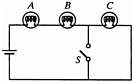
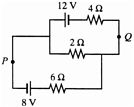 Figure 1.1 Conceptual (top) and conventional question (bottom) on the subject of dc circuits. These questions were given on a written examination in 1991. |


