
Earth Systems Engineering and Management
The Biotechnology Discourse
BRADEN R. ALLENBY
As a result of the Industrial Revolution and concomitant changes in human population, technological systems, scientific knowledge, culture, and economic systems, we now live in a qualitatively different world from any humanity has previously experienced. The dynamics of many fundamental natural systems—from the grand cycles of nitrogen, carbon, phosphorus, and sulfur to the hydrologic cycle to atmospheric and oceanic systems to the biosphere at all scales—are now dominated by the activity of the human species (Allenby, 1998; McNeill, 2000; Turner et al., 1993). Unless there is a precipitous reduction in the scale of human activity, we must now accept the ethical responsibility for rational engineering and management of human-natural systems.
This will require Earth systems engineering (ESE), which can minimize the risk and scale of unplanned or undesirable perturbations in coupled human-natural systems and, at the same time, manage large, evolving projects and technologies with complex governance, ethical, scientific, cultural, and religious dimensions and uncertainties. Unfortunately, scientific and technical knowledge to support ESE is weak or nonexistent; and the institutional and ethical capacity to complement ESE is, if anything, even more primitive. Therefore, ESE must be considered a capacity that will have to be developed in the coming decades rather than a capacity that can be implemented in the short term.
The technological orientation of ESE reflects the central role of technology as the means by which human cultures interact with the physical, chemical, and biological world. Biotechnology, for example, taken as a general human capability, is a primary means by which we now structure fundamental natural systems. In agriculture, biotechnology has been the most important mechanism by which
the anthropogenic world has evolved (Redman, 1999). Agricultural activities throughout history have affected natural systems from the species level to the biome level. The clearing of forests in Europe and North Africa from the eleventh to fourteenth centuries marked the beginning of human contributions to the increase in carbon dioxide, which has affected global atmospheric chemistry. In this sense, ESE is not “new”: humans have been engineering Earth systems for centuries. What is new, and has led to the creation of the anthropogenic world, is the scale of human activity and the increasing influence of human activities on natural systems. ESE as applied to biotechnology, and more broadly to the human experience, is, therefore, the assumption by humans of responsibility for what we as a species are already doing. With responsible ESE, we can develop the capability to act more rationally and ethically in the future.
In the context of ESE, “technology” must be understood in its broadest sense as the means by which individuals and human societies improve the quality of life. Technology is the intermediary through which humans affect the physical world and shape their future. The difference between engineering an artifact and engineering an Earth system can indicate the importance of ethics, philosophy, and even theology in ESE. A design team engineering a toaster, for example, works in an existing cultural and ethical context that presupposes a market system within which a device to toast bread can be engineered, manufactured, sold, and used, and assumes that society accepts this pattern. The ethical dimensions of the project are explicitly established in legal and regulatory structures—product safety, environmental requirements, and the like. The ignorance of the religious or ethical dimensions of a project is one reason technologists tend to resist the idea that their activities are culturally determined.
The same cannot be said of ESE, which is not an artifact in an existing context; ESE is the cultural and ethical context itself. Consider the efforts being made to reengineer the Everglades, a unique biological community, to preserve remaining species and habitat in the face of dramatically increasing human presence in Florida. Designing the Everglades is not just a question of building a dike here or creating a channel there; it entails selecting an objective—for example, continued human presence and some protection for wading birds—that cannot be justified solely on objective grounds. The ethical and, indeed, religious dimensions of the Everglades project are important design objectives and constraints.
Similarly, one cannot think of the engineering of the carbon cycle with the intent of stabilizing climate systems without recognizing that ethical and religious dimensions are critical determinants of the design process. Deciding how to address global climate change—for example, the push by environmentalists to phase out the use of fossil fuels—will have enormous implications for the options available to the human species in the future. The methods selected will necessarily be designed to lead to a certain kind of world—for example, a “natural” world that consumes minimal amounts of materials and energy or a high-technology, rapidly evolving world. For our purposes, it doesn’t matter which vision is right;
what is important is that ethical considerations will determine how humans use ESE to influence the evolution of natural systems.
In approaching ESE as a broadly technological discourse, we must be aware of the most crucial difference between science and technology.1 The goal of science is understanding physical reality and the objective implications of suggested future paths. The goal of technology is to generate options for the future. In a way, it is similar to art. Both are forward-looking activities that not only embody fundamental values but also validate and even create them. As exercises of the human imagination, they not only define present reality but also posit a future vision of the world. Indeed, for the Greeks and throughout the European Middle Ages, art and technology were not differentiated. The Greek word for both was techne, meaning art or artifice; even today the British maintain the Royal Society of Arts, Manufactures, and Commerce. Unlike science, therefore, technology (and art) exercises a considerable power that is not widely appreciated (Noble, 1997). Science is concerned with what is; technology creates what will be. The implications are obvious: scientific understanding can be continually tested against reality while technology has far more degrees of freedom.
We can examine some aspects of the anthropogenic world by focusing on biotechnology, one of the most important technologies of our era. Biotechnology raises a fundamental question about the kind of biosphere humans ought to design.
The question clearly reflects the ethical and religious dimensions of human experience. Human institutions are not yet ready to address this fundamental question, however. For example, in the time frames being discussed in the climate negotiation process (decades to centuries), the biosphere is essentially plastic at all scales. We already genetically engineer agricultural crops, trees, and bacteria. Even if Europe agrees to forego such technologies, countries like India and China, which must rely on as many technological options as possible to avoid massive civil upheavals and famine, are unlikely to do so. Thus, considering climate change without considering explicitly the potential for innovations in biotechnology would be a victory of ideology over reality and an indication of how far we have to go. In some regions and cultures, powerful groups oppose all genetic engineering and biotechnological activity. Some of this opposition is based on scientific concerns, which can be addressed through additional research. But much of the opposition is ideological. Ideological arguments cannot be resolved through rational discourse, but they are also unlikely to prevail. The power and capability that bioengineering will provide to those societies that adopt it will in all probability ensure that those cultures become increasingly powerful. As a result, the development of biotechnologies is likely to continue.2
This leads to another important point. Under traditional international law, only countries are considered competent to make treaties, negotiate agreements, and represent citizens in international forums. Participants in the negotiations on measures to mitigate global climate change, for example, are all nation states; private firms and nongovernmental organizations (NGOs) have been lobbying
behind the scenes. However, private firms, NGOs, and communities of different kinds share in the development and implementation of international policy (Mathews, 1997). Formal practice, however, has yet to catch up with this new reality, and the roles of these entities have yet to be defined (Figure 1).
An informal structure of international and regional governance has evolved for several reasons. First, the financial power of many transnational corporations is equal to that of many small countries. In addition, private firms, by and large, are the repositories of technological sophistication. Therefore, they must be primary participants in finding technological solutions to environmental and human rights issues (Netherlands Ministry of Housing, Spatial Planning, and the Environment, 1994). As a corollary, these firms are under significant pressure to include environmental and social dimensions in their performance (Allenby, 1999).
The growing importance of firms is balanced by the growing importance of NGOs. In fact, a number of governments, especially in Europe, rely on NGOs to perform many functions that were formerly performed by governments, such as distributing food aid in African countries. NGOs have also spearheaded many significant environmental and social campaigns, such as the opposition to genetically modified organisms, confrontations over working conditions in factories in the developing world, and sometimes violent attacks on trade and international financial institutions. Polls routinely show that NGOs have more credibility on environmental issues than scientists, private firms, and even government regulators. NGOs have two significant characteristics: (1) they tend to be issue-specific; and (2) few institutional safeguards regulate their establishment. Virtually anyone
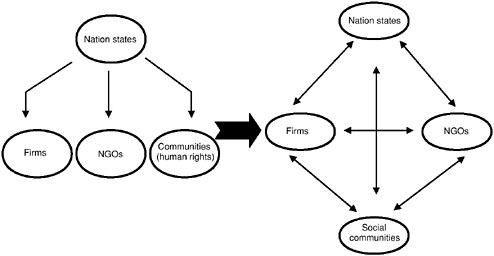
FIGURE 1 The evolution of international governance. Source: Allenby, 1999.
can set up an NGO to represent almost any position within legal constraints. Although this is very democratic, it also means that there are few controls on NGOs that choose to act irresponsibly (Economist, 2000).
The importance of communities—defined by geography or interests—has also increased. In several regions, particularly in Africa, the nation-state structure has not taken hold, and representatives of communities, rather than of the nation state, more accurately reflect the concerns of citizens (Cooper, 1996). Communities affected by a proposed activity, such as the siting of a toxic waste dump, may also participate in governance dialogues if they believe their interests are not being represented. The growth of the Internet and the communications infrastructure has made it much easier for communities of interest to consolidate and represent their concerns in the governance process.
The final element of the anthropogenic Earth is the economic structure. The interesting—and contentious—aspect of biotechnology is that it integrates living systems into the economy. Even a casual overview of the history of agriculture, fisheries, and forestry reveals that this is nothing new. But the scale and emotional and ideological implications are new. With genetic engineering, for example, genes and organisms can be subtly transformed from living things with an inherent value to commodities with a monetary value (in Marxist terms, “commoditized”). This shift has profound ethical and theological implications that are not well understood. However, the example of biotechnology provides a rough framework (Figure 2).
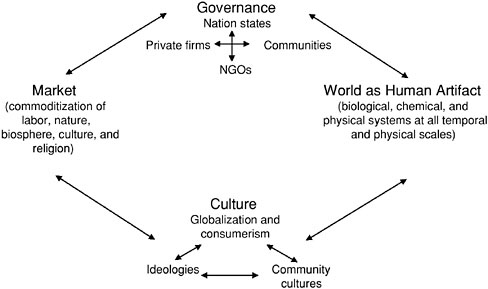
FIGURE 2 The engineered Earth. Source: Allenby, 2002. Used by permission, Darden Graduate School of Business, University of Virginia.
Biotechnology is one of the most important—if not the most important—area of human ESE activity. Biotechnology and the associated economic, political, ethical, and cultural issues provide a lens through which the complexity and challenges of ESE can be clarified.
NOTES
REFERENCES
Allenby, B. 1998. Earth systems engineering: the role of industrial ecology in an engineered world. Journal of Industrial Ecology 2(3): 73–93.
Allenby, B. 1999. Corporate responsibilities. Nature Biotechnology 17 (Biovision Supplement): BV31–BV32.
Allenby, B. 2002. Observations on the Philosophic Implications of Earth Systems Engineering and Management. Batten Working Paper Series. Darden Graduate School of Business, University of Virginia.
Cooper, R. 1996. The Post-Modern State and the World Order. London: Demos.
Economist. 2000. NGOs: sins of the secular missionaries. Economist 354(8155): 25–27.
Mathews, J.T. 1997. Power shift. Foreign Affairs 76(1): 50–66.
McNeill, J.R. 2000. Something New Under the Sun: An Environmental History of the Twentieth Century World. New York: W.W. Norton & Co.
Needham, J. 1991. Science and Civilization in China. Vol. 2. History of Scientific Thought. Cambridge, U.K.: Cambridge University Press.
Netherlands Ministry of Housing, Spatial Planning, and the Environment. 1994. Netherlands National Environmental Policy Plan Two—The Environment: Today’s Touchstone. VROM94059/b/2–94. The Hague: Netherlands Ministry of Housing, Spatial Planning, and the Environment.
Noble, D.F. 1997. The Religion of Technology: The Divinity of Man and the Spirit of Invention. New York: Alfred A. Knopf.
Redman, C.L. 1999. Human Impact on Ancient Environments. Tucson: University of Arizona Press.
Turner, B.L., W.C. Clark, R.W. Kates, J.F. Richards, J.T. Mathews, and W.B. Meyer, eds. 1993. The Earth as Transformed by Human Action: Global and Regional Changes in the Biosphere over the Past 300 Years. Cambridge, U.K.: Cambridge University Press.


