
2
Determining Emission Factors
INTRODUCTION
The U.S. Environmental Protection Agency (EPA) has asked the committee to address a number of specific questions (see Executive Summary) relative to characterizing emissions from animal feeding operations (AFOs). The committee has addressed these questions based on the following assumptions developed in earlier sections of this report: (1) emissions estimates are needed at the individual AFO level (Finding 2); (2) it is not practical to measure emissions at all individual AFOs (Finding 3); (3) therefore a modeling approach to predict emissions at the individual AFO level has to be considered; and (4) it is necessary to establish the set of independent variables that are required to characterize AFO emissions at the individual AFO level (Finding 4).
Most local, state, and federal agencies rely on emission factors to develop emission inventories for various substances released to the atmosphere. As defined by the Emission Factor and Inventory Group in the EPA Office of Air Quality Planning and Standards, an emission factor is (EPA, 1995b):
A representative value that attempts to relate the quantity of a pollutant released to the atmosphere with an activity associated with the release of the pollutant.
Emission factors are generally expressed as mass per unit of activity related to generating the emission per unit time or instance of occurrence. EPA (2001a) proposed defining emission factor as the mass of the substance emitted
per animal unit (AU) per year. EPA and the USDA have different definitions of AU (see Appendix B). Throughout this report, the EPA definition is used.
Emission factors are usually derived from calculations based on measured data. Actual measurements of concentrations and flow rates yield a value for an emission rate, the mass of a substance emitted per unit time (e.g., kilograms of ammonia [NH3] per year). Sometimes it is more appropriate to measure the flux of an emitted substance, the mass emitted per unit area of the source per unit time (e.g., kilograms of NH3 per hectare-year). An emission rate can be estimated from flux measurements by integrating emissions over the whole area of the emitting source. Emission rates for an AFO can be estimated from emission factors through the simple expression in Equation 2-1:
ER = AU × EF,
(Eq. 2-1)
where ER is the emission rate, AU is the number of animal units associated with the source, and EF is the emission factor in units of mass per AU per unit time. Equation 2-1 illustrates that the uncertainty contained in the numerical values selected for AU and EF are also present in the derived values for ER.
The main goal of the approach outlined by EPA (2001a) is to develop a method for estimating emissions at the individual AFO level that reflects the different kinds of animal production units commonly used in commercial-scale animal production facilities. Specifically, the approach attempts to subdivide the populations of AFOs according to the different production or manure management systems that are commonly used and to develop emission factors for model farms characterized by the processing steps. Assignment of emission factors to each of the individual processing steps within a model farm leads to an estimate of the annual mass of emissions. An estimate of the emissions from an individual AFO can then be made by associating it with the proper model farm, accounting for the AUs housed there, and adding the contributions from the processing steps (housing, manure storage, and land application).
The central assumption of this approach is that the individual processing steps within each identified manure management system are the principal factors that influence emissions. In other words, although there is inherent variability in emissions within each processing step that constitutes a manure management system, the act of subdividing the AFO population into model farms succeeds in decreasing this inherent variability to the point that single emission factors for individual processing steps, when combined, can adequately describe emissions from a model farm and thus from individual AFOs that are assigned to a given model farm category. It is further implied in this approach that the dominant factor controlling the magnitude of the calculated emissions is the number of AUs housed and not other unaccounted-for or unknown factors. This also explains the emphasis on finding the correct
emission factors for the individual processing steps since there is an implied supposition that such unique values must exist (EPA, 2001a).
The data quality objectives (defined as the quality of data that will be necessary to solve a problem or provide useful information; Kateman and Pijers, 1981) required to meet the needs of the EPA Office of Air and Radiation are not specified by EPA (2001a). Whatever method is eventually selected to estimate emissions from individual AFOs, the derived estimate will contain some degree of uncertainty. Here the committee emphasizes the data quality that can be assigned to measurements of emissions, and to subsequently derived emission rates and emission factors. This discussion is placed in the context of the five specific questions from the EPA.
SCIENTIFIC CRITERIA
What are the scientific criteria needed to ensure that reasonable and appropriate estimates of emissions are obtained? In this report, “reasonable and appropriate estimates of emissions” is taken to mean emission estimates with acceptable estimates of uncertainty. For emission rates from AFOs—as with all numerical measurements and numerical calculations based on them—uncertainty can be described in terms of accuracy and precision (Taylor, 1987).
Accuracy
In this report “accuracy” is taken to mean the measure of systematic bias in the average of a set of measurements or estimates, and “precision” is taken as the measure of overall reproducibility. Systematic bias can arise from the measurement technology selected to characterize concentrations or from the selection of AFOs that are not representative of the larger population. Typically, concerns about accuracy are limited to the calibration of the analytical instrumentation used. While accurate calibration is an important component of the measurement process, it does not address the possibility that the analytical instrumentation selected may be ill-suited for the task or that bias may be introduced by the experimental design. Possible sources of systematic bias that should be considered include a predominance of daytime sampling when emissions are often higher; ignoring times during the year when buildings are empty; sampling locations that are not representative of exhaust air composition; odor panel sensitivities; and lack of adequate background sampling, especially at larger facilities with multiple housing units in close proximity. The representativeness of the emission factors reported in the scientific literature and used by EPA (2001a) is a major concern since the EPA’s Office of Air and
Radiation has no criteria for how to select the AFOs whose measurements are to be used (e.g., whether the AFO was being operated optimally or not), nor have AFOs been chosen at random. Management of an AFO can have a significant impact on its emissions. AFOs at which individual emission measurements have been made have been selected largely based on access (finding operators willing to allow access to their facilities) and the physical characteristics of the sites (as required by criteria associated with the emission measurement technique selected). Thus, calculating a mean emission factor from screened published data by no means guarantees that the calculated value is representative of the AFO population.
Because there are no universally accepted analysis methods, the presence of systematic bias in emission measurements is best evaluated via intercomparison studies in which emissions are determined by two or more separate analytical techniques with differing overall experimental designs. An assessment of accuracy can also be made through the use of elemental (nitrogen [N], carbon [C], or sulfur [S]) mass balances. Nutrient excretion factors (see Appendix B) offer an independent means to set upper limits on possible emission rates. Reported emission rates in excess of nutrient excretion rates should be viewed with suspicion; they may indicate measurement conditions atypical of normal operation, or a fatal flaw in the overall experimental design or instrumentation used in the study.
Precision
Assigning an estimate of precision to measurements of concentrations emitted from different components in a manure management system is not a simple task. One method is to make paired observations with similar instrumentation over the same space and time (Cochran, 1977). The variance is then obtained as follows:
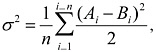
(Eq. 2-2)
where Ai and Bi represent the ith pair of observations and n represents the number of pairs (Cochran, 1977). This approach often requires duplication of equipment that may not be possible. Spatial variations in emissions may also become important for area sources such as lagoons or cropland receiving manure or lagoon water. Robarge et al. (2002) applied Equation 2-2 (with n = 90 paired observations) to estimate precision, expressed as percent coefficient of variation (CV) associated with ambient atmospheric concentrations of gaseous and particulate species measured using annular denuder technology (Purdue,
1992). For ammonia (NH3) and sulfur dioxide (SO2), the calculated CV was <10 percent. For nitrous (HONO) and nitric (HNO3) acids, the CV values were 17.5 and 31 percent, respectively; for particulate ammonium (NH4+), sulfate (SO42-), and nitrate (NO3-), CVs were 13, 18, and 25 percent, respectively.
Determining the precision of emission concentration measurements is also complicated by the fact that such measurements are actually part of a time series with a substantial degree of covariance between measurements. Emissions of gaseous chemical species are highly dependent on microbial decomposition and conversion processes and on physical transport across air-liquid or air-solid interfaces. These processes are in turn dependent on temperature, and variations in temperature are not random but are autocorrelated. The presence of a significant degree of positive autocorrelation in data requires corrections of the standard error of the mean. The variance is underestimated if it is calculated using standard statistical formulas (Code of Federal Regulations, 2001).
The presence of autocorrelation in emissions data also suggests reconsideration of the sampling frequency in order to characterize emissions. Limiting sampling to one or several short series of sequential measurements (as is often done to reduce cost) may in fact be an inefficient and possibly ineffective way to determine actual diurnal or seasonal variations of emissions with time.
Assigning an estimate of precision to an emission factor for an individual AFO is more challenging than assigning it to a set of concentration and airflow measurements. The relative uncertainty associated with emission factors from individual AFOs can be obtained by remembering that emission factors are an estimate of emissions of particulate matter (PM) or a chemical species from a source. According to Equation 2-1, multiplying an emission factor by the AU, yields an emission rate. Integration of the emission rate over time (e.g., one year) yields the total mass emission from the source. For AFOs the total mass emission for a gaseous species containing nitrogen, carbon or sulfur must be a percentage of the total amount of that element excreted. If the individual AFO is in a steady state with regard to the excreted elements nitrogen, carbon, and sulfur, then the percent emissions of these elements should be relatively constant when averaged across several years. A certain percentage is retained for periods longer than one year (e.g., sludge accumulated at the bottom of treatment lagoons), but most of the elements excreted are applied to agricultural land for row crops and grasses, with the remainder emitted as gases or lost in leachate.
The percentage of an excreted element lost as air emissions must fall between 0 and 100 percent, and it is highly unlikely to be at either extreme. Adoption of nutrient management plans further decreases the range of potential emission, since a certain percentage of the excreted nutrients will be used to support crop growth. The problem of determining the relative uncertainty associated with emissions from an individual AFO, then reduces to determining
the variation in the percentages of nitrogen, carbon, and sulfur lost from year to year. By way of example, if 60 percent of the excreted nitrogen on a swine AFO is assumed to be emitted to the atmosphere as NH3 (the value of 60 percent is selected for illustration purposes only and is not a value endorsed by the committee to be used to characterize AFOs), a 1 percent CV associated with this number would mean an uncertainty of ±0.6 percent, while a 10 percent CV would mean an uncertainty of ±6 percent. Given the dependence of NH3 volatilization on ambient air temperature, it is highly unrealistic to expect uncertainties of 1 percent CV; such uncertainties can be approached only in a laboratory environment. Values of CV of 10 percent or greater are probably much more realistic for real AFOs.
Continuing with the example of 60 percent of the excreted nitrogen emitted as NH3, the range in uncertainty in emissions, and therefore calculated emission factors, associated with a 10 percent CV can be calculated directly based on the amount of nitrogen excreted and the number of animal units housed. For a finisher swine operation housing 10,000 head (4,000 AUs; 2.5 head per AU), the annual amount of nitrogen excreted is 1.37 x 10⁵ kg using a nitrogen excretion factor of 13.7 kg N/yr per head (Doorn et al., 2002). (This nitrogen excretion factor assumes that 70 percent of nitrogen intake is excreted.) If 60 percent of excreted nitrogen is emitted as NH3, these numbers translate into an emission factor of 20.6 kg N/AU per year. Although the actual variation is not known, for the purpose of this example, a CV of 10 percent will be assigned, yielding a standard deviation of ±2.1 kg N/AU per year. Given a normal distribution in the percentage of excreted nitrogen lost as NH3, 95 percent (approximately two times the standard deviation) of the derived emission factors for this single AFO fall in the range of 16.4 to 24.8 kg N/AU per year. Carrying through the same calculations, and assuming instead that 80 percent of excreted nitrogen is released as ammonia, yields emission factors ranging from 21.9 to 32.9 kg N/AU per year.
As noted above, these calculations are for illustration purposes only to demonstrate how a relatively modest variation in emissions from a single AFO (10 percent CV) translates into a range of potential emission factors. Yearly variations in emissions are to be expected and cannot be ignored. After careful evaluation of ammonia emissions from swine houses by various methods, Doorn et al. (2002) recommended a general emission factor for houses of 3.7 ± 1.0 kg NH3/yr per finished hog, which is a 27 percent CV. Groot Koerkamp et al. (1998) reported CVs ranging from 17 to 49 percent for different livestock and housing systems in England, the Netherlands, Denmark, and Germany, with between-season CVs ranging from 24 to 57 percent. Although the yearly variation in emissions from single AFOs is not well characterized, the assumed value of 10 percent CV used in the above calculations appears quite conservative compared to these measures of precision reported.
Viewing emissions as a percentage of an element excreted offers a means of estimating the relative uncertainty associated with emissions from individual AFOs. The approach will be most successful for those gaseous species (NH3, CH4 [methane], or H2S [hydrogen sulfide]) whose emissions comprise a substantial portion of the element (nitrogen, carbon or sulfur) excreted. For gaseous species whose emissions represent relatively minor fractions of these excreted elements (e.g., volatile organic compounds [VOCs]), the percent emission becomes less certain, but the approach still makes it possible to set an upper limit on emissions, and the use of percent CV values to estimate relative uncertainty still applies. This approach cannot be used for PM, whose emissions are not a direct function of the amount of a given element excreted, nor can it be applied to odors.
In summary, to ensure that reasonable and appropriate estimates of emissions are obtained from AFOs, the measured and derived emission values must have accompanying measures of uncertainty, including accuracy and precision. Accuracy does not depend simply on instrument calibration; representativeness must be considered since AFOs may not be selected at random and there are no standard methods for measuring emissions. All measurements of emissions should be assumed to have systematic bias and should be compared to other measurements or derived data, such as excretion factors and mass balances. Methods to obtain an estimate of precision do exist and should be included in experimental designs. Short-term sequential measurements will undoubtedly be autocorrelated, and deriving estimates of precision by applying normal statistical techniques to such data will underestimate uncertainties. There are methods for deriving estimates of variance from highly autocorrelated data (Code of Federal Regulations, 2001).
PUBLISHED LITERATURE
What are the strengths, weaknesses and gaps of published methods to measure specific emissions and develop emission factors that are published in the scientific literature?
Ammonia
Several well-designed research studies have been published establishing some of the factors that contribute to variations in NH3 emissions. For example, Groot Koerkamp et al. (1998) reported wide variations in emissions for different species (cattle, sows, and poultry) measured in different European countries, across facilities within a country, and between summer and fall. Amon et al. (1997) demonstrated that emissions increase as animals age.
Differences due to the manure storage system have been demonstrated (Hoeksma et al. 1982). Climate, including temperature and moisture, also affects NH3 emissions (Hutchinson et al., 1982; Aneja et al., 2000). Zhu et al. (2000) reported diurnal variation in emission measurements. With so many sources of variation in NH3 emissions, it is unreasonable to apply a factor determined in one system, over a short period of time, to all AFOs within a broad classification.
Although NH3 emissions have been reported under different conditions, there are few reliable data to estimate total NH3 emissions from all AFO components for all seasons of the year. Twenty-seven articles were used for NH3 emission factors by EPA (2001a); of these, only eleven with original measurements were from peer-reviewed sources. Additional data were taken from six progress reports from contract research. Two of these (Kroodsma et al., 1988; North Carolina Department of Environmental and Natural Resources, 1999) were identified as “preliminary,” and in one case (Kroodsma et al., 1988), the airflow measurement equipment was not calibrated.
Emission factors for NH3 were also taken from nine review articles (EPA, 2001a); three of these modeled or interpreted previously reported information with the objective of determining emission factors (Battye et al., 1994; Grelinger, 1998; Grelinger and Page, 1999). Several of the reviews reported factors used in other countries, but not the original research used to develop them. Other reviews summarized data from primary sources that were already considered. Thus, the review articles may not provide new information.
Most measurements and estimates reported did not represent a full life cycle of animal production. As animals grow or change physiological state, their nutrient excretion patterns vary, altering the NH3 volatilization patterns (Amon et al., 1997). A single measurement over a short period of time will not capture the total emission for the entire life cycle of the animal. In addition, most measurements for manure storage represent only part of the storage period. The emissions from storage vary depending on length of storage, changing input from the animal system, and seasonal effects such as wind, precipitation (Hutchinson et al., 1982), and temperature (Andersson, 1998). Only one article reported measurements over an entire year (Aneja et al., 2000), although the measurements may not have been continuous. In this case, NH3 emissions were measured from an anaerobic lagoon using dynamic flow-through chambers during four seasons. Summer emissions were 13 times greater than those in winter, and the total for the year was 2.2 kg NH3-N per animal (mean live weight = 68 kg) per year.
Expressing NH3 emission factors on a per annum and per AU basis facilitates calculation of total air emissions and accounts for variation due to size of AFOs, but it does not account for some of the largest sources of variation in emissions. Clearly, there is a great deal of variation in reported measurements among AFOs represented by a single model. For example, only two references
were provided for beef drylot NH3 emission factors, but the values reported were 4.4 and 18.8 kg N/yr per animal (See Table 8-11, EPA, 2001a). For swine operations with pit storage, mean values reported in eight studies ranged from 0.03 to 2.0 kg/yr per pig of less than 25-kg body weight (See Table 8-17, EPA 2001a). This higher rate represents 66 percent of the nitrogen estimated to be excreted by feeder pigs per year (See Table 8-10, EPA, 2001a). The actual variation among AFOs represented by a single model cannot be determined without data representing the entire population of AFOs to be modeled. This would require greater replication and geographic diversity. Much of the variation among studies within a single type of model farm can be attributed to different geographic locations or seasons and the different methods and time frames used to measure the emission factors.
The approach in EPA (2001a) was to average all reported values in selected publications—both refereed and non-refereed—giving equal weight to each article. Emission factors reported in some represented a single 24-hour sample, while in others, means of several samples were used. Emission factors from review articles were averaged along with the others. Properly using available data to determine emission factors, if it could be done, would require considering the uniqueness and quality of the data in each study for the intended purpose and weighting it appropriately. The causes of the discrepancies among studies would also have to be investigated.
Adding emissions from housing, manure storage, and field application, or using emission factors determined without considering the interactions of these subsystems, can easily provide faulty estimates of total emissions of NH3. If emissions from a subsystem are increased, those from other subsystems must be decreased. For example, most of the excreted nitrogen is emitted from housing, much of the most readily available nitrogen will not be transferred to manure storage. If emissions occur in storage, there will be less nitrogen for land application. The current approach ignores these mass balance considerations, and simply adds the emissions using emission factors determined separately for each subsystem.
Dividing the total manure nitrogen that leaves the farm by the total nitrogen excreted can identify some potential overestimation of emission factors. For example, using emission factors in Table 8-21 of EPA (2001a) for swine model farms, the total ammonia nitrogen emissions for 500 AUs in Model S2 can be estimated to be 1.12 x 10⁴ kg/yr. (Three significant digits are carried for numerical accuracy from the original reference and may not be representative of the precision of the data.) The total nitrogen excreted by 500 AUs of growing hogs is 1.27 x 10 4 kg/yr (EPA, 2001a). Thus, one calculates that 90 percent of estimated manure nitrogen is volatilized to ammonia, leaving only 10 percent to be accumulated in sludge, applied to crops, and released as other forms of nitrogen NO [nitric oxide], N2O [nitrous oxide], and N2). Thus, these emission
factors suggest that almost all excreted nitrogen is lost as NH3, which seems unlikely.
Nitric Oxide
Although nitric oxide was not specifically mentioned in the request from the EPA, the committee believes that it should be included in this report because of its close relationship to ammonia. An appreciable fraction of manure nitrogen is converted to NO by microbial action in soils and released into the atmosphere. NO participates in a number of processes important to human health and the environment. The rate of emission has been widely studied but is highly variable, and emissions estimates are uncertain.
Attempts to quantify emissions of NOx from fertilized fields show great variability. Emissions can be estimated from the fraction of the applied fertilizer nitrogen emitted as NOx, but the flux varies strongly with land use and temperature. Vegetation cover greatly decreases NOx emissions (Civerolo and Dickerson, 1998); undisturbed areas such as grasslands tend to have low emission rates, while croplands can have high rates. The release rate increases rapidly with soil temperature—emissions at 30°C are roughly twice emissions at 20°C.
The fraction of applied nitrogen lost as NO emissions depends on the form of fertilizer. For example, Slemr and Seiler (1984) showed a range from 0.1 percent for NaNO3 (sodium nitrate) to 5.4 percent for urea. Paul and Beauchamp (1993) measured 0.026 to 0.85 percent loss in the first 6 days from manure nitrogen. Estimated globally averaged fractional applied nitrogen loss as NO varies from 0.3 percent (Skiba et al., 1997) to 2.5 percent (Yienger and Levy, 1995). For the United States, where 5 Tg of manure nitrogen is produced annually, NOx emissions directly from manure applied to soil are roughly 1 percent or 0.05 Tg/yr, neglecting emissions from crops used as animal feed. Williams et al. (1992) developed a simplified model of emissions based on fertilizer application and soil temperature. They estimated that soils accounted for a total of 0.3 Tg or 6 percent of all US NOx emissions for 1980.
Natural variability of emissions dominates the uncertainty in the estimates. In order of increasing importance, errors in land use data are about 10-20 percent, and experimental uncertainty in direct NO flux measurements is estimated at about ±30 percent. The contribution of soil temperature to uncertainty in emissions estimates stems from uncertainty in inferring soil temperature from air temperature and from variability in soil moisture. Williams et al. (1992) show that their algorithm can reproduce the observations to within 50 percent. A review of existing literature indicates that agricultural practices (such as the fraction of manure applied as fertilizer, application rates used, and tillage) introduce variability in NO emissions of about a factor of two.
Variability of biomes to which manure is applied (such as short grass versus tallgrass prairie) accounts for an additional factor of three (Williams et al., 1992; Yienger and Levy, 1995; Davidson and Klingerlee, 1997). Future research may have to focus on determining the variability of emissions, measured as a fraction of the applied manure nitrogen, with agricultural practices, type of vegetative cover, and meteorological conditions.
Hydrogen Sulfide
Most of the studies on hydrogen sulfide emissions from livestock facilities were conducted recently and included current animal housing and manure management practices. Several recent publications from Purdue University document H2S emissions from mechanically ventilated swine buildings (Ni et al., 2002a, 2002b, 2002c, 2002d). A pulsed fluorescence SO2 analyzer with an H2S converter was used to measure H2S concentrations in the air, and a high-frequency (16 or 24 sampling cycles each day) measurement protocol was used for continuous monitoring. In one of the studies reported, H2S emission from two 1,000-head finishing swine buildings with under-floor manure pits in Illinois was monitored continuously for a six-month period from March to September 1997. Mean H2S emission was determined to be 0.59 kg per day, or 6.3 g per day per 500-kg animal weight. Based on emission data analysis and field observation, researchers noticed that different gases had different gas release mechanisms. Release of H2S from the stored manure, similar to carbon dioxide and sulfur dioxide, was through both convective mass transfer and bubble release mechanisms. In comparison, the emission of NH3 was controlled mainly by convective mass transfer. Bubble release is an especially important mechanism controlling H2S emission from stirred manure. The differences in release mechanisms for different gases are caused mainly by differences in solubility and gas production rates in the manure. Some measurements from swine buildings were also conducted in Minnesota (Jacobson, 1999; Wood et al., 2001).
Very few data are available on H2S emission from other types of livestock facilities, such as dairy, cattle, and poultry. Using emission data from swine operations to estimate emission factors for other species such as dairy and poultry is not scientifically sound. Outside manure storage, such as storage in tanks or anaerobic lagoons, can be important sources of H2S emissions. Emission data for such sources are lacking in the literature.
EPA (2001a) stated that H2S emissions from solid manure systems— such as beef and veal feedlots, manure stockpiles, and broiler and turkey buildings—were insignificant, based on the assumption that these systems are mostly aerobic. Such an assumption is not valid because it is not based on scientific information. Published data indicate that a significant amount of H2S
is emitted from the composting of poultry manure when the forced aeration rate is low (Schmidt, 2000). It is very likely that H2S is emitted from other solid manure sources as well. H2S is produced biologically whenever there are sulfur compounds, anaerobic conditions, and sufficient moisture. Wet conditions occur in animal feedlots and uncovered solid manure piles during precipitation or in rainy seasons. Scientific studies should be conducted to provide emission data.
Nitrous Oxide
Nitrous oxide is both a greenhouse gas and the main source of stratospheric NOx, the principal sink for stratospheric ozone; predominately biological processes (nitrification and denitrification) produce N2O in soils; fertilization increases emissions. Although EPA (2001a) states that “emission factors for N2O were not found in the literature,” a large body of research exists on N2O emissions from livestock, manure, and soils. Time constraints prevent a thorough review of the literature, but this section condenses the main points of a few recent papers and attempts to summarize the state of the science.
N2O emissions were reviewed for the Intergovernmental Panel on Climate Change (Intergovernmental Panel On Climate Change, 2001; see also Mosier et al., 1998) with the objective of balancing the global atmospheric N2O budget and predicting future concentrations. Although substantial uncertainties exist regarding the source strength for N2O, agricultural activities and animal production are the primary anthropogenic sources. According to the Intergovernmental Panel on Climate Change (2001) these biological sources can be broken down into direct soil emissions, manure management systems, and indirect emissions. These three sources are about equally strong, each contributing about 2.1 Tg N/yr to the atmospheric N2O burden. Total anthropogenic sources are estimated to be 8.1 Tg N/yr, and natural sources about 9.9 Tg N/yr, for a total of 18 Tg N/yr (Prather et al., 2001).
Soils
The Intergovernmental Panel on Climate Change estimated soil N2O emissions as a fraction of applied nitrogen. They assumed that 1.25 percent of all fertilizer nitrogen is released from soils as N2O, with a range of 0.25 to 2.25 percent. Estimating direct soil N2O emissions is subject to the same uncertainties as NO emissions. The fraction of applied nitrogen emitted as N2O varies with land use, chemical composition of the fertilizer, soil moisture, temperature, and organic content of the soil. Of the global value of 2.1 Tg N/yr emitted directly from soils, Mosier et al. (1998), using the Intergovernmental Panel on Climate Change method, estimates that manure fertilizer contributes
0.63 Tg/yr. Using the Intergovernmental Panel on Climate Change method, 5 Tg/yr of manure nitrogen in the United States would yield 0.06 Tg N/yr as N2O. Li et al. (1996) employed a model that accounts for soil properties and farming practices and concluded that the Intergovernmental Panel on Climate Change method underestimates emissions. They put annual N2O emissions from all crop- and pastureland (including emissions from manure and biosolids applied as fertilizer) in the United States in the range of 0.9 to 1.1 Tg N/yr, although this number includes what Mosier et al. (1998) refers to as “indirect” sources.
Nitrification is primarily responsible for NO production, but both nitrification and denitrification lead to N2O release from soils, and both aerobic and anaerobic soils emit N2O. The following studies show some of the variability in estimates of the efficiency of conversion of manure nitrogen to N2O emission. Paul and Beauchamp (1993) measured 0.025 to 0.85 percent of manure nitrogen applied to soil in the lab lost as N2O, but Wagner-Riddle et al. (1997) found 3.8 to 4.9 percent from a fallow field. Petersen (1999) observed 0.14 to 0.64 percent emission from a barley field. Lessard et al. (1996) measured 1 percent emission of manure nitrogen applied to corn in Canada. Yamulki et al. (1998) measured emissions from grassland in England and found 0.53 percent of fecal nitrogen and 1.0 percent of urine nitrogen lost as N2O over the first 100 days. Whalen et al. (2000) applied swine lagoon effluent to a spray field in North Carolina and observed 1.4 percent emission of applied nitrogen as N2O. Flessa et al. (1995) applied a mixture of urea and NH4NO3 to a sunflower field in southern Germany and measured an N2O emission of >1.8 percent of the nitrogen applied. Long-term manure application (possibly linked to increased organic content of soils) appears to increase N2O production. Rochette et al. (2000) determined that after 19 years of manure application, 1.65 percent of applied nitrogen was converted to N2O. Chang et al. (1998) followed the same soil for 21 years of manure application and found 2-4 percent of manure nitrogen converted to N2O. Flessa et al. (1996) determined a total emission of N2O from cattle droppings on a pasture equivalent to 3.2 percent of the nitrogen excreted. Clayton et al. (1994) showed that grassland used for cattle grazing could convert a larger portion of fertilizer ammonium nitrate (NH4NO3) nitrogen to N2O (5.1 percent versus 1.7 percent for ungrazed grassland). Williams et al. (1999) applied cow urine to pasture soil in the lab and observed a 7 percent partition of the nitrogen to N2O.
Manure Management
Several recent studies indicate that N2O emissions from manure can be large (Jarvis and Pain, 1994; Bouwman, 1996; Mosier et al., 1996; Intergovernmental Panel on Climate, 2001). For example, Jungbluth et al. (2001) measured 1.6 g N2O/d per 500 kg of livestock emitted directly from dairy
cattle; Amon et al, (2001) measured 0.62 g N2O/d per 500 kg of livestock. Groenestein and VanFaassen (1996) found 4.8 to 7.2 g N/d per pig as N2O.
The Intergovernmental Panel on Climate Change (2001) estimates N2O emissions from animal production (including grazing animals) as approximately 2.1 Tg N/yr. These estimates are based on an assumed average fraction of manure nitrogen converted to N2O and are subject to variability due to temperature, moisture content, and other environmental factors in a manner similar to soil emissions. Berges and Crutzen (1996) estimated the rate of N2O emissions by measuring the ratio of N2O to NH3. They determined that 40 Tg N/yr of cattle and swine manure in housing and storage systems generates 0.2-2.5 Tg N/yr as N2O; they did not account for additional emissions outside the housing and storage systems.
Indirect Emissions
Formation of N2O results indirectly from the release of NH3 to the atmosphere, and its subsequent deposition as NH3-NH4+ or nitrate, or from their leaching and runoff (Intergovernmental Panel on Climate Change, 2001). Human waste in sewage systems is another indirect path to atmospheric N2O. On a global scale, leaching and runoff give an estimated 1.4 Tg N/yr; atmospheric deposition, 0.36 Tg N/yr; and human sewage, about 0.2 Tg N/yr— for a total of about 2 Tg N/yr. Dentener and Crutzen (1994) pointed out that atmospheric reactions involving NH3 and NO2 could lead to production of N2O; however the strength of this source is unknown.
Summary
The uncertainty in emissions of N2O from AFOs is similar to that for NO—roughly a factor of three. While no-till agriculture decreases emissions of most greenhouse gases (Civerolo and Dickerson, 1998; Robertson et al., 2000) it appears to increase N2O. The means for decreasing emissions do exist. Smith et al. (1997) suggested that substantial reductions in N2O could be achieved through matching fertilizer type to environmental conditions and by using controlled-release fertilizers and nitrification inhibitors. Timing and placement of fertilizer and controlling soil conditions could also help decrease N2O production. The vast body of work on emissions of N2O from agricultural activities cannot be thoroughly reviewed in the short time frame of this study.
Methane
Four original research articles, an agency report, one doctoral thesis, and one review article are cited in EPA (2001a) in estimating emission factors for CH4. Much research was overlooked since a number of papers and reports describing CH4 emission rates can be found in the literature. Fleesa et al. (1995) reported CH4 fluxes of 348 to 395 g per hectare (ha) per year in fields fertilized with manure. A value of 1 kg/m2 per year CH4 (carbon equivalents) has been reported for an uncovered dairy yard (Ellis et al., 2001). Amon et al. (2001) concluded that methane emissions were higher for anaerobically treated dairy manure than for composted manure.
EPA (2001a) estimates the CH4 production potential of manure as the maximum quantity of CH4 that can be produced per kilogram of volatile solids in the manure. However, a considerable amount of CH4 is lost during eructation (belching), which this estimate does not take into account.
In estimating the CH4 emission factor for the model farm, EPA (2001a) did not take several factors into consideration, such as the difficulty associated with measuring emissions without having a negative impact on animals. New methods have been designed to measure CH4 emissions under pasture conditions with minimal disturbance of the animals (Leuning et al., 1999). There are some limitations to this technique; it does not work well with low wind speeds or rapid changes in wind direction, and requires high-precision gas sensors. Methane production increases while cattle are ruminating (digesting) feedstuffs—both grass and high-energy rations. In one study, lactating beef cattle grazing on grass pasture were observed to have 9.5 percent of the gross energy intake converted to CH4 (McCaughey et al., 1999). During periods when the cattle are fed a high-grain diet, approximately 3 percent of gross intake energy is converted to CH4 (Johnson et al., 2000).
Methods for estimating CH4 emissions from other sources—such as rice paddies, wetlands, and tundra in Alaska—have been well studied. However, the models used to extrapolate emissions over these large areas may not apply to AFOs because of the different variables that must be taken into account. This is a knowledge gap that has to be addressed.
Particulate Matter
A limited number of studies have reported emission factors for particulate matter for various confinement systems. One of the most recent reports includes the results of an extensive study that examined PM emissions from various confinement house types, for swine, poultry, and dairy in several countries in Northern Europe (Takai et al., 1998), and a few studies report cattle or dairy drylot emissions in the United States (Parnell et al., 1994; Grelinger,
1998; Hinz and Linke, 1998; USDA, 2000). Some of this work was cited by EPA (2001a). Two PM10 emission factors for cattle were reported for drylot feed yards by Grelinger (1998) and USDA (2000). Another emission factor for poultry broiler house emissions was also included (Grub et al., 1965).
According to the EPA (1995b) AP-42 document, emission factor data are considered to be of good quality when the test methodology is sound, the sources tested are representative, a reasonable number of facilities are tested, and the results are presented in enough detail to permit validation. Whenever possible, it is desirable to obtain data directly from an original report or article, rather than from a compilation or literature summary. Only a very limited number of published papers have been used to estimate PM emission factors for AFOs. Some of the papers utilized do not appear to be of the highest quality or relevance to modern operations. Takai et al. (1998) and Grub et al. (1965) appeared in the peer-reviewed literature, but other work cited was not. Takai et al. (1998) represents one of the most extensive studies conducted on livestock houses to date; it made 231 field measurements of dust concentrations and dust emissions from livestock buildings across Northern Europe. Factors included in their study design were country (England, the Netherlands, Denmark, and Germany); housing (six cattle housing types, five swine housing types, and three poultry housing types); season (summer and winter); and diurnal period (day and night). Each field measurement was for a 12-hour period, and each house was sampled for a 24-hour period, or two 12-hour samples per house. Where possible, measurements were repeated at the same house for both seasons (Wathes et al., 1998).
One reference (Grelinger, 1998) appeared in a specialty conference proceedings (non-peer reviewed), and it is not clear how the emission rates were derived. USDA (2000) summarizes results from other cattle studies. The Grub et al. (1965) study was more than 35 years old and reported emission factors for a poultry confinement configuration (chambers 2.4 m by 3.0 m by 22.1 m high, ventilated at a constant airflow rate) that is not used in current operations.
The sizes of ambient particulate matter varied from study to study, ranging from “respirable” and “inhalable” to total suspended particulates (TSPs). Takai et al. (1998) sampled inhalable dust using European Institute of Occupational Medicine (IOM) dust samplers. The respirable fraction was measured using cyclone dust samplers with a 50 percent cut diameter of 5 micrometers (µm). Grub et al. (1965) measured dust rather than PM10; it is not clear whether the emission factors quoted represented dust or PM10 estimated from the dust. Grelinger (1998) measured TSP and obtained PM10 by multiplying by 0.25. USDA (2000) reported that TSP was measured rather than PM10, according to the AFO project data summary sheets in EPA (2001a). The representativeness of emission factors in the literature is also questionable. For example, the emission factors reported by Takai et al. (1998) were based on data collected for very brief periods, one to two days at each barn. Relevant work
was overlooked in the estimation of cattle feedlot PM emissions (e.g., Parnell et al., 1994), or it is not clear from EPA (2001a) whether that work was included in the USDA (2000) publication cited. Auvermann et al. (2001) extensively reviewed the PM emission factors suggested for AFOs (for both feedlots and feed mills) in AP-42 (EPA, 1995b). They pointed out that the PM10 emission factor for cattle feedlots specified in AP-42 was five times as high as the more recent values determined by Parnell et al. (1994). EPA (2001a) did not discuss the AP-42 emission factors.
When more than one study was found that examined PM emissions, the results were not consistent among studies. The two poultry house emission factors differed by an order of magnitude and were simply averaged to characterize PM emissions from poultry houses, even though the Grub et al. (1965) study was of questionable relevance to today’s production systems. The two drylot cattle yard PM emission factors differed by a factor of five and were averaged to characterize the PM emissions from drylots.
Relevant work was overlooked by EPA (2001a) for the estimation of cattle feed yard PM emissions. Recent work by Holmen et al. (2001) using Lidar (light detection and ranging) was not included. Parnell et al. (1994) was not cited, but it is not clear whether that work was included in USDA (2000), which was cited. Potential PM emissions from land spraying with treatment lagoon effluent are assumed to be negligible and thus were not considered further by EPA (2001a).
For PM, unlike most other air pollutants, emission factors developed for use in emission inventories and for dispersion modeling can, ideally, be reconciled using receptor modeling techniques. Receptor modeling makes use of the fact that atmospheric PM is composed of many different chemical species and elements. The sources contributing to ambient PM in an airshed also have specific and unique chemical compositions. If there are several sources and if there is no chemical interaction between them that would cause an increase or decrease, then the total PM mass measured at a “receptor” location will be the sum of the contributions from the individual sources. By analyzing the PM for various chemical species and elements, it should then be possible to back-calculate the contributions from various sources in the airshed. A variety of techniques are available for doing this; some (e.g., the chemical mass balance model; Watson et al., 1997) rely on the availability of predetermined source chemical composition libraries and are based on regression to determine the amounts contributed by various sources. Other receptor models are based on multivariate techniques and do not require source “fingerprints” determined a priori, but do require large numbers of receptor samples so that statistical methods can be applied. Target transformation factor analysis (Pace, 1985) and positive matrix factorization (Ramadan et al., 2000) are two examples of multivariate techniques that do not require explicit source composition data. Source apportionment may be especially useful for understanding the
contributions from AFOs to the ambient PM in an airshed. Both receptor and dispersion modeling are associated with a significant level of uncertainty. The best approach is to use a combination of methods and attempt to reconcile their results.
Volatile Organic Compounds
Emissions of volatile organic compounds from stationary and biogenic sources are significant, but limited data are available in most regions of the world. This situation makes it difficult to determine the impact of VOCs on a global basis. However, the United States (EPA, 1995a) and Europe have accumulated extensive data on the quantities and sources of their VOCs emitted to the atmosphere.
The three references in EPA (2001a) on VOC emission factors, Alexander, 1977; Brock and Madigan, 1988; and Tate, 1995, came from microbiology textbooks. Thus, the basis for determining VOC emission factors was rather weak.
Despite the paucity of data, attempts are being made to shed light on the estimation of emission factors for VOCs. For example, some for pesticides have been determined by the Environmental Monitoring Branch of the Department of Pesticide Regulation in Sacramento, California (California Environmental Protection Agency, 1998, 1999, 2000). The applicability of these efforts to VOC emissions from AFOs is unknown at this time.
Ongoing studies to determine emission rates of VOCs were not included in EPA (2001a). Scientists from Ames, Iowa, have developed techniques to collect and measure VOCs emitted from lagoons and earthen storage systems (Zahn et al., 1997). They found that 27 VOCs were prevalent in most samples, and could be classified as phenols, indoles, alkanes, amines, fatty acids, and sulfur-containing compounds. Emission rates for many of these were determined at several sites, and the data have been transferred to EPA and state air quality specialists.
According to EPA (2001a), estimation of VOC emissions from confinement facilities, manure storage facilities, and manure application sites is difficult because of the lack of a reasonable method for estimating CH4 production. CH4 does not provide an appropriate basis for predicting VOC volatilization potential in livestock management systems. Gas transfer velocities for CH4 and VOCs differ by several hundredfold (MacIntyre et al., 1995). In addition, surface exchange rates for some VOCs are influenced by solution-phase chemical factors that include ionization (pH), hydrogen bonding, and surface slicks (MacIntyre et al., 1995). Physical factors such as temperature, irradiance and wind are also major factors in the emission rates of sparingly soluble VOCs from liquid or semisolid surfaces (MacIntyre et al., 1995; Zahn et
al., 1997). The differences in wind and temperature exposures between outdoor and indoor manure management systems can account for between 51 and 93 percent of the observed differences in VOC emissions (MacIntyre et al., 1995). This analysis suggests that exposure factors can account for differences observed in VOC flux rates, VOC air concentrations, and odor intensities. Therefore, the equation used to model the emission factor for VOCs in EPA (2001a) cannot be extrapolated for the majority of livestock operations.
Receptor modeling techniques can provide information on air quality impacts due to VOC emissions from AFOs. For example, Watson et al. (2001) reviewed the application of chemical mass balance techniques for VOC source apportionment. Multivariate methods have also been applied to source apportionment of ambient VOCs (Henry et al., 1995). Receptor modeling techniques to apportion VOCs from AFOs may be limited because many of the expected compounds may be formed in the atmosphere, react there, or have similar emission profiles from many sources.
To understand the contribution of AFO VOCs to ozone formation and gain insight into effective control strategies, measurements of individual compounds are essential. This is a difficult task because of the large number of compounds involved. The most widely used analytical technique involves separation by gas chromatography (GC) followed by detection using a flame-ionization detector (FID) or mass spectrometer (MS). The latter is useful for identification of non-methane hydrocarbons using cryofocusing. VOC detectors that can be used for real-time measurements of typical ambient air are commercially available. New portable devices that use surface acoustic wave technology have been developed for field measurements of VOCs. Their sensitivity is not adequate to measure the low levels that may be harmful to humans. Research to support the development of more sensitive devices is needed.
There is a lack of information on the acute and chronic toxicological effects of VOCs from agricultural operations on children and individuals with compromised health. Recent epidemiological studies (without environmental measurements of VOCs) have shown higher incidences of psychological dysfunction and health-related problems in individuals living near large-scale swine production facilities (Schiffman et al., 1995; Thu et al., 1997). Further studies are needed to better understand the risks associated with human exposure to VOCs from AFOs.
Odor
In a recent review, Sweeten et al. (2001) define odor as the human olfactory response to many discrete odorous gases. Regarding the constituents of animal odors, Eaton (1996) listed 170 unique compounds in swine manure odor
while Schiffman et al. (2001) identified 331. Hutchinson et al. (1982) and Peters and Blackwood (1977) identified animal waste as a source of NH3 and amines. Sulfides, volatile fatty acids, alcohols, aldehydes, mercaptans, esters, and carbonyls were identified as constituents of animal waste by the National Research Council (1979), Miner (1975), Barth et al. (1984), and the American Society of Agricultural Engineers (1999). Peters and Blackwood (1977) list 31 odorants from beef cattle feedlots. Zahn et al. (2001) found that nine VOCs correlated with swine odor. The sources of odors include animal buildings, feedlots, manure handling, manure storage and treatment facilities, and land applications.
Sweeten et al. (2001) also outline various scientific and engineering issues related to odors, including odor sampling and measurement methods. Odors are characterized by intensity or strength, frequency, duration, offensiveness, and character or quality. Odor concentration is used for odor emission measurement. Several methods are available for measuring odor concentrations including sensory methods, measurement of concentration of specific odorous gases (directly or indirectly), and electronic noses.
Human sensory methods are the most commonly used. They involve collecting and presenting odor samples (diluted or undiluted) to panelists under controlled conditions using scentometers (Huey et al., 1960; Barneby-Cheny, 1987; Miner and Stroh, 1976: Sweeten et al. 1977, 1983, 1991), dynamic olfactometers, and absortion media (Miner and Licht, 1981;Williams and Schiffman, 1996; Schiffman and Williams, 1999). Among sensory methods the Dynamic Triangle Forced-Choice Olfactometer (Hobbs et al., 1999; Watts et al., 1994; Ogink et al.1997) appears to be the instrument of choice. Currently, there is an effort among researchers from several universities, including Iowa State University, the University of Minnesota, Purdue University, and Texas A& M University, to standardize the measurement protocol for odor measurement using the olfactometer.
Some odor emission data are available in the literature, particularly for swine operations (e.g., Powers et al., 1999). However, there are discrepancies among the units used in different studies. Standard measurement protocols and consistent units for odor emission rates and factors have to be developed. As shown in a recent review (Sweeten et al., 2001), the data (see Table 2-1) on odor or odorant emission rates, flux rates, and emission factors are lacking for most livestock species (and for different ages and housing) and are needed for the development of science-based abatement technologies. Further research in well-equipped laboratories is needed as a precursor to rational attempts to develop emission factors for odor and odorants.
TABLE 2-1. Odor Emission Rates from Animal Housing as Reported in the Literature
|
Animal Type |
Location |
Odor Emission (OU/s-m2)a Flux Rate |
Reference |
|
Nursery pigs (deep pit) |
Indiana |
1.8a |
Lim et al., 2001 |
|
Nursery pigsb |
Netherlands |
6.7 |
Ogink et al., 1997; Verdoes and Ogink, 1997 |
|
Nursery pigs |
Minnesota |
7.3-47.7 |
Zhu et al., 1999 |
|
Finishing pigs |
Minnesota |
3.4-11.9 |
Zhu et al., 1999 |
|
Finishing pigsc |
Netherlands |
19.2 |
Ogink et al., 1997; Verdoes and Ogink, 1997 |
|
Finishing pigsd |
Netherlands |
13.7 |
Ogink et al., 1997; Verdoes and Ogink, 1997 |
|
Finishing pigs (daily flush)e |
Indiana |
2.1 |
Heber et al., 2001 |
|
Finishing pigs (pull-plug)e |
Indiana |
3.5 |
Heber et al., 2001 |
|
Finishing pigs (deep pit) |
Illinois |
5.0 |
Heber et al., 1998 |
|
Farrowing sows |
Minnesota |
3.2-7.9 |
Zhu et al., 1999 |
|
Farrowing sows |
Netherlands |
47.7 |
Ogink et al., 1997; Verdoes and Ogink, 1997 |
|
Gestating sows |
Minnesota |
4.8-21.3 |
Zhu et al., 1999 |
|
Gestating sows |
Netherlands |
14.8 |
Ogink et al., 1997; Verdoes and Ogink, 1997 |
|
Broilers |
Australia |
3.1-9.6 |
Jiang & Sands, 1998 |
|
Broilers |
Minnesota |
0.1-0.3 |
Zhu et al., 1999 |
|
Dairy cattle |
Minnesota |
0.3-1.8 |
Zhu et al., 1999 |
|
Note: Rates have been converted to units of OU/s-m2 for comparison purposes. a Net odor emission rate (inlet concentration was subtracted from outlet concentration). b Number of animals calculated from average animal space allowance. c Pigs were fed acid salts. d Multiphase feeding. e Odor units normalized to European Odor Units based on n-butanol. SOURCE: Adapted from Sweeten et al. (2001). |
|||
CHARACTERIZING VARIABILITY
How should the variability in emissions be characterized that is due to regional differences, daily and seasonal changes, animal life stage, and different management approaches? Each model farm proposed by EPA (2001a; Appendix D) includes three variable elements: a confinement area,
manure management system, and land application method. The manure management system was subdivided into solid separation and manure storage activities. The model farm assumes that emissions depend primarily on the category identified for each individual element. The potential influences of regional differences, hourly, daily and seasonal changes, animal life stages, and different management approaches are not explicitly considered.
Climatic and Geographic Differences
Differences in climate will influence emissions from AFOs because of differences in temperature, rainfall frequency and intensity, wind speed, topography, and soils. EPA (2001a) notes several possible influences of climatic differences by acknowledging the influence of air temperature on gaseous emissions and the effect of rainfall frequency on stocking densities at cattle and dairy feedlots. Climatic differences per se were excluded from the criteria used to select emission factors from the scientific literature; however the van’t Hoff-Arrhenius equation was used to adjust CH4 conversion factors for mean temperature differences (See Chapter 8; EPA, 2001a).
Increases in mean ambient temperature are expected to increase gaseous emission rates from several components of the model farms, including manure storage and land to which manure has been applied. It is unclear how averaging reported emission factors would remove this influence of temperature, especially if the selected emission factors used were mostly determined in climatic region of the country. The same logic applies to estimates of emissions from housing units or land. Depending on one or two published emission factors from one region of the country results in a possible systematic bias because of climatic differences. This bias is still present when emission factors for one species are applied to others by adjusting them to reflect differences in excretion rates, or by assuming that emissions from an anaerobic poultry lagoon are similar to those from an anaerobic swine lagoon (See Chapter 8, EPA, 2001a).
Differences in emissions from AFOs may also arise because of other geographic differences such as availability of land for manure or lagoon effluent disposal, rates of evapo-transpiration, and differences in soil texture and drainage that can impact application rates of lagoon water, or differences in soil microenvironments that affect microbial action and the resulting gaseous emissions. The breed of a given animal species (e.g., selection for cold or heat tolerance) and feed formulations (due to changes in animal maintenance requirements) may also vary in response to geographic and climatic differences.
It is difficult to project how these various sources of uncertainty will combine to influence gaseous emissions and whether these factors will have significant impact on total percentages of nitrogen, carbon or sulfur lost in
gaseous species, when averaged over a year’s time. Climatic differences do not negate the mass balance flow of elements through AFOs, so that, unless there is a significant change in storage of an element within the manure management system, changes in total emissions (air and water) can come about only because of changes in excretion (resulting from changes in feed formulation or efficiency of animal nutrient utilization). Differences may not be as important for annual emissions of major gaseous species (such as NH3 and CH4) as for VOCs and PM.
Hourly, Daily, and Seasonal Changes
Changes in emissions from individual AFOs due to hourly, daily, and seasonal variations are discussed here because measurements to characterize emissions are usually conducted for short periods of time, preferably during different seasons of the year. Failure to account for short-term cycles in an experimental design used to characterize emissions could result in significant systematic error in a derived emission factor, when extrapolated to a one-year time period.
Individual AFOs are essentially a collection of different biological systems each operating with its own hourly, daily, and seasonal cycles. At the scale of the individual animal, there are daily cycles in activity related to eating, defecating, and moving about (the latter being particularly important for generating PM from cattle feedlots). Microbial cycles that produce emissions may be closely tied to animal activity through the amount and frequency of defecation. As an animal grows, the amount and composition of its feed intake change, as does the amount and composition of its manure (National Research Council, 1994, 1998, 2000, 2001). This gives rise to corresponding changes in total microbial activity and emissions. Lactating animals experience changes in productivity throughout their natural cycle, with changes in feed consumed and nutrients excreted (National Research Council 1998, 2000, 2001). Although the capacity within an AFO remains essentially constant, a number of different animals may occupy this space during the year, depending on the production cycle used. Thus, the cycling of animals through an AFO is another source of variation in emissions.
Upsets in daily rhythms of animals must also be considered, because they may result in changes in feed uptake and nutrients excreted for a period of several days. Such upsets may occur due to illness, drastic short-term changes in weather, or breakdowns of farm equipment. Depending on the manure management system being employed, such event-driven processes may not be significant in terms of emissions of NH3 or CH4 but may have a major impact on other emitted species such as VOCs and PM. Other event-driven processes that can occur include lagoon turnover, flush cycles for housing units, and manure
scraping at feedlots. As noted by EPA (2001a), these events can result in enhanced emissions.
The impact of daily cycles on emissions is not important when averaged over a yearly time scale, provided a sufficient number of observations are made to account for such cycles. However, given the paucity of emissions data deemed valid for the development of emission factors to characterize the model farms, it is not possible to determine to what extent such cycles may have impacted published emission measurements. As noted earlier, averaging published emission factors does not compensate for the presence of systematic bias that may be present as a result of a failure of the experimental design to account adequately for such cycles.
Animal Life Stage
Reference has already been made to differences in feed formulations that occur during the life cycles of most animals produced at AFOs, and the subsequent effects on the amount and composition of fecal matter and urine excreted. In this section, a specific example is provided (Figure 2-1) of changes in the rate of nitrogen excreted for “grow-finish” swine produced at AFOs in the southeastern United States. The data are based on a growth model (Agricultural Research Council, 1981) used by a commercial swine producer to adjust feed formulations. To prevent the disclosure of proprietary information, data have been normalized to 100 percent for the highest rate of nitrogen excretion per day.
As expected, the relative amount of nitrogen excreted daily tends to increase as the pig grows, reflecting changes in the daily total nitrogen consumed. The actual feed formulation is changed four times during the growth cycle of the hog (not twice as assumed by EPA, 2001a) to account for changes in nitrogen required for maintenance and growth. The changes in the relative amount of nitrogen excreted per day with changes in formulation are not simply an artifact of the model but reflect periods of adjustment by the animal to the changes in feed composition. Overall there is a series of curvilinear increases in the amount of nitrogen excreted per day for finishing swine under this model, with nitrogen excretion nearly doubling during the latter half of the animal’s growth period. The emphasis in Figure 2-1 is on total nitrogen excreted. Expressed as a percentage of body weight, the nitrogen excreted would actually be decreasing throughout the growth cycle.
Figure 2-1 illustrates that if daily housing emissions of NH3 are directly related to daily nitrogen excretion and the model is an accurate representation of nitrogen excretion, then there will not be a simple increase in emissions from the
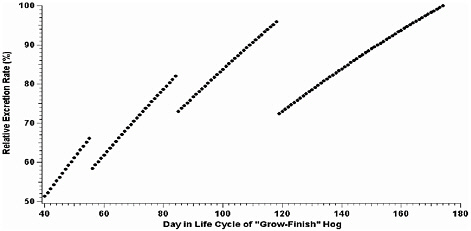
FIGURE 2-1. Relative excretion rate of nitrogen versus day in the life cycle of a grow-finish hog at a commercial swine production facility in the southeastern United States. Animals attain the designation of grow-finish hog at approximately day 40 in their life cycle and are finished at about day 174. Note: Relative excretion rates refer to kilograms of nitrogen per day excreted on day n relative to day 174.
confinement unit with time. Thus, averaging together emission measurements made from several different housing units with different age animals, or from the same housing unit during different times during one growth cycle, may significantly under- or overestimate emissions, depending on the age of the animals when sampled. Actual emissions, however, will also depend on the manure collection practices (flush frequency, pit recharge, pull plug, or pit storage) associated with the confinement unit. A manure collection practice that accumulates manure for relatively long periods of time, such as pit storage, may act to smooth the variations in emissions due to variations in daily excretion of nitrogen. At a minimum the data displayed in Figure 2-1 demonstrate that the same sampling scheme may not be applicable to all swine confinement units and that measurements of emissions may have to be weighted to account for differences in animal age.
Management
Optimal management is vital to the success of individual AFOs for the production of quality animals, and should also result in decreased emissions. Appropriate drainage and manure removal minimizes PM generation from cattle
feedlots (Sweeten et al., 1998). Effects of animal health on feeding habits is important to maintain consistent nutrient uptake efficiency and prevent feed spoilage. This attention includes maintenance of proper ventilation for animals in confined housing units, maintenance of drainage systems to remove wastes from housing units on a frequent basis, and regular (perhaps daily) visual inspection of animals and their daily routines. Adherence to nutrient management plans will reduce the potential for of excessive air emissions or surface runoff resulting from overapplication of nutrients to crops. Anaerobic lagoons should not exceed design-loading rates and should be maintained at the proper pH range for waste stabilization.
Assessing the overall quantitative impact of effective management on decreasing emissions is currently not possible due to the paucity of emissions data. However, management practices should not be excluded in assessing emissions from individual AFOs. One way to achieve this goal would be to determine whether managers at AFOs where measurements of emissions are scheduled are in compliance with animal industry guidelines for decreasing emissions, including odors. An illustration of one such program is the America's Clean Water Foundation’s (ACWF) On Farm Assessment and Environmental Review (OFAER) project (2002), which reportedly provides livestock producers a confidential, comprehensive, and objective assessment of water quality, odor, and pest risk factors at their operations. (Reference to the OFAER program is for illustration purposes only and should not be construed as an endorsement of this program by the committee or the National Research Council.) The OFAER project currently has the participation of approximately 3,200 AFOs nationwide. Using voluntarily provided emission factors from individual AFOs may produce the database necessary to assess the impact of management on emissions.
In summary, the answer to the question of how the variability in emissions due to regional differences, hourly, daily, and seasonal changes, animal life stage, and different management approaches should be characterized is through consideration of these factors in experimental designs for measuring emissions and deriving emission factors. Average ambient temperatures are the main differences among different regions of the country. Selecting an emission factor based on data from one region (e.g., the southeastern United States) and extrapolating it to other regions or even to other animal types is questionable at best, and must necessarily introduce systematic bias into the derived emission rates for individual AFOs. Because of the importance of temperature effects on microbial activity and gas exchange across different interfaces, accounting for regional differences must include actual measurements of emissions at AFOs across the United States.
Consideration of daily and seasonal changes and animal life stages speaks to the need to consider variations in emissions that occur on the same time scale as most field measurements of emissions at AFOs. Proper characterization of these variations will require experimental designs that
encompass the full life cycle of the animals under production and consider whether measured emission rates are nonlinear during the typical animal life cycle. If emissions are in fact nonlinear, then observations of emission rates have to be weighed accordingly when extrapolating to a one-year time frame.
Since AFOs will probably never be chosen at random for field measurements of emissions, selection criteria should be developed for what constitutes an acceptable AFO for field measurements. These criteria should include an evaluation of management and reflect the growing volunteer effort to address water quality and odor and pest issues, for example the ACWF OFAER project.
STATISTICAL UNCERTAINTY
How should the statistical uncertainty in emissions measurements and emissions factors be characterized in the scientific literature? As noted earlier in this chapter, uncertainty can be described in terms of accuracy and precision. Deviations from accuracy (systematic bias) for individual measurement technologies will be addressed in more detail in the final report. This section addresses the broader issue of uncertainty associated with published emissions data and their use in deriving emission factors.
An example of the uncertainty associated with published emission rates from AFOs is illustrated in Table 2-2 adapted from Tables 9 and 10 in a recent review paper (Arogo et al., 2001) summarizing recently published measurements of NH3 flux (kilograms of NH3-N per hectare per day) from primary anaerobic swine lagoons. Multiplying the fluxes by the lagoon surface areas gave the daily emission rates for various seasons. The majority of observations listed in Table 2-2 were from “farrow-finish” AFOs, with the remainder from “farrow-wean,” “grow-finish,” and “breed-wean” facilities. The range in lagoon pH values was 6.8-8.3, but the majority were between 7.4 and 8.2.
The variability in the calculated emission rates in the table is evident in the range of values listed for each combination of measurement method and measurement period, with typical factors of 3 to 7. Seasonal differences in emission rates are also evident, with the ratio of summer to winter rates being as large as 10 or more. Within-lagoon variation in total ammoniacal nitrogen (TAN) is much less, but between lagoons the values vary by factors as high as 10. There is also no obvious association between TAN concentrations in the lagoons and calculated emission rates. The range of rates for individual lagoons is evidence of the uncertainty that must be associated with emission factors derived from published emission rates. Failure to document this uncertainty in tabulated values of emission factors can lead to unrealistic expectations
TABLE 2-2. Calculated Emission Rates of Ammonia from Primary Anaerobic Swine Lagoons as a Function of Measurement Method and Measurement Period
|
Measurement Methoda |
Period |
TANb mg/L |
Emission Rate (kg NH3-N/d) |
Reference |
|
Micromet. |
Aug-Oct |
917-935 |
29-51 |
Zahn et al. (2001) |
|
Micromet. |
Summer |
230-238 |
11.2-140 |
Harper et al. (2000) |
|
Micromet. |
Winter |
239-269 |
4.6-6.7 |
Harper et al. (2000) |
|
Micromet. |
Spring |
278-298 |
11-34 |
Harper et al. (2000) |
|
Micromet. |
Summer |
574 |
42-59 |
Harper and Sharpe (1998) |
|
Micromet. |
Winter |
538 |
14-33 |
Harper and Sharpe (1998) |
|
Micromet. |
Spring |
741 |
14-42 |
Harper and Sharpe (1998) |
|
Micromet. |
Summer |
193 |
7.0-20 |
Harper and Sharpe (1998) |
|
Micromet. |
Winter |
183 |
14-22 |
Harper and Sharpe (1998) |
|
Micromet. |
Spring |
227 |
7.2-16 |
Harper and Sharpe (1998) |
|
Chamber |
Summer |
587-695 |
145 |
Aneja et al. (2000) |
|
Chamber |
Fall |
599-715 |
30 |
Aneja et al. (2000) |
|
Chamber |
Winter |
580-727 |
11 |
Aneja et al. (2000) |
|
Chamber |
Spring |
540-720 |
63 |
Aneja et al. (2000) |
|
TG OP-FTIR |
May |
- |
93-305 |
Todd et al. (2001) |
|
TG OP-FTIR |
November |
- |
20-169 |
Todd et al. (2001) |
|
Chamber |
September |
101-110 |
0.44-2.7 |
Aneja et al. (2001) |
|
Chamber |
November |
288-311 |
0.04-0.14 |
Aneja et al. (2001) |
|
Chamber |
November |
350 |
0.17-0.62 |
Aneja et al. (2001) |
|
Chamber |
Feb/March |
543-560 |
0.35-2.6 |
Aneja et al. (2001) |
|
Chamber |
March |
709-909 |
0.32-1.2 |
Aneja et al. (2001) |
|
Chamber |
April-July |
978-1143 |
319 |
Heber et al. (2001) |
|
Chamber |
May-July |
326-387 |
48 |
Heber et al. (2001) |
|
a Micromet. = micrometeorological; TG OP-FTIR = tracer gas open path fourier transform infrared spectroscopy; Chamber = dynamic flow through chamber. b TAN = total ammoniacal nitrogen. SOURCE: Data derived from Tables 9 and 10, Arogo et al., 2001 |
||||
regarding the accuracy of emissions calculated for individual AFOs. In addition, large uncertainties associated with emission rates for the principal components of a manure management system reduce the probability of documenting success in the application of emission reduction technologies.
As a first approximation, estimates of the variance associated with emission rates, such as those in Table 2-2 can be obtained using normal
statistical procedures. If estimates of the variance are included in published reports, then the variance associated with the derived emission factor can be calculated by using well-known formulas for the propagation of error (Beers, 1957), and assuming no significant autocorrelation between sequential observations. As noted earlier, emissions from AFOs are most likely parts of time series with autocorrelation between observations, especially those taken over relatively short periods of time (hours or days). The presence of autocorrelation within a data set means that calculated values for the variance of the sample mean using standard statistical procedures will be biased low, and that the overall uncertainty for a derived emission factor will be underestimated.
When values of the variance associated with emission rates are not included in the published literature, very rough approximations of the population variance can be obtained from the range of reported values (Natrella, 1963; Deming, 1966). For example, if it is assumed that the data follow a normal distribution and the reported range in emission rates encompasses 95 percent of the sample population, the estimate of the population standard deviation (σ ) is
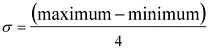
(Eq. 2-3)
Values for the denominator in Equation 2-3 range from 3.5 (random) to 4.9 (triangular) for other assumed shapes of the data distribution (Natrella, 1963). For the purposes of this report, the data are assumed to follow a normal distribution.
Applying Equation 2-3 to the data in Table 2-2, and assuming that each population mean is equal to the average of the minimum and maximum values, we find percent CV values ranging from 8.4 to 42.6 for the individual combinations of measurement method and measurement period, with a mean (for 17 entries) of about 25 percent. This is similar to values noted earlier for field measurements (Groot Koerkamp et al., 1998; Doorn et al., 2002), and reinforces the argument that the uncertainty associated with published values of emission rates (or flux) cannot be ignored when deriving emission factors. These calculations illustrate that at a minimum, a derived emission factor for NH3 emissions for a single AFO based on the data in Table 2-2 will probably have an associated CV of at least 25 percent. This is a minimum estimate because our calculations using the data in Table 2-2 are based only on the within-study variance.
The approach for estimating uncertainty represented by Equation 2-3 can provide only a rough estimate of the standard deviation of the sample population. If the reported range in emission rates represents a limited number of observations, then the assumption that the range encompasses 95 percent of the possible observable values is less likely to be true. Proper characterization of
the uncertainty associated with emissions in the published literature, therefore, also requires knowledge of the number of observations. This is especially important when averaging values for derived emission factors as is done by EPA (2001a). Simple averaging implies equality in the uncertainties associated with the emission rates used to determine emission factors. In reality, the actual numbers of observations associated with reported values in the published literature vary substantially among investigators, requiring serious consideration of weighted averaging as a more valid means of calculating emission factors. Developing a weighting protocol will require examination of the experimental design employed for each set of emissions data considered, determining the most likely sources of variation in the reported values, and considering whether the experimental design gathered sufficient data to obtain realistic estimates of this variation. Weighted averaging is not considered by EPA (2001a).
The model farm construct proposed by EPA (2001a) attempts to reduce the uncertainty in deriving emission factors for individual AFOs by subdividing the overall AFO population according to the manure management systems used. Subdivision of large sample populations into smaller subsets is an acceptable procedure to reduce uncertainty (i.e., improve sample quality). The measurement of emissions from an individual AFO (or component of an individual AFO) will necessarily be interpreted as being representative of all AFOs in a defined subset of the larger sample population. However, further subdivision of the sample population also increases the need for data in terms of emission rates and emission factors. This approach must necessarily reach a point of diminishing returns.
Emission rate measurements obtained on two AFOs using the same management schemes for animal housing and manure handling will likely not be the same. To include both operations in the same sample AFO population will therefore require the overall uncertainty in the emission factor to be increased to allow both to be part of the same statistical population. Attempting to use only a mean value for a sample population to characterize an individual member of that population must necessarily have a large degree of uncertainty associated with it. To decrease this uncertainty, specific information concerning the individual member of the sample population to be characterized must be included in deriving the estimated value. This necessarily will increase the complexity of the model used to describe individual members of the population and therefore the size of the database required to accomplish the desired goal.
In summary, an example has been given of how the statistical uncertainty in emissions measurements and emissions factors can be characterized in the scientific literature, provided sufficient information is available in published reports. The example speaks solely to the issue of precision and cannot address the question of accuracy (systematic bias) of the reported values. However, issues concerning systematic bias have been addressed elsewhere in this chapter. Failure of investigators to note the degree
of uncertainty associated with their reported values for emission rates may be a reflection of the limited number of observations upon which their reported values are based. Equal weighting should not be given to reported emission rates and derived emission factors when the actual number of observations on which these reported values are based differs significantly among investigators. All other things being equal, reported values for emissions based on a relatively large number of observations should be given greater weight than those derived from relatively few observations.
As presented in this chapter, a wide range of factors can influence air emissions of gases, PM, and other substances from AFOs. Combinations of these factors that will be most useful in pursuing regulatory goals will depend on research-based information about the strength of the relationship between each combination of factors and the rate of emission of a particular pollutant.
Finding 5: Reasonably accurate estimates of air emissions from AFOs at the individual farm level require defined relationships between air emissions and various factors. Depending on the character of the AFOs in question, these factors may include animal types, nutrient inputs, manure handling practices, output of animal products, management of feeding operations, confinement conditions, physical characteristics of the site, and climate and weather conditions.


