
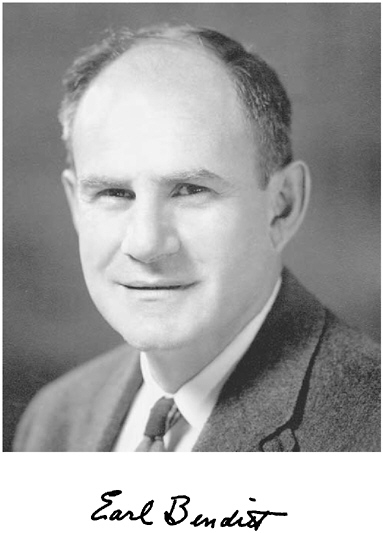
EARL PHILIP BENDITT
April 15, 1916–May 27, 1996
BY DAVID LAGUNOFF AND GEORGE M. MARTIN
EARL PHILIP BENDITT, a preeminent twentieth-century experimental pathologist, was born in Philadelphia 16 years after the start of the century and died the width of the country away in Seattle 4 years before the century’s end. Benditt maintained a lifelong enthusiasm for the methodologies the century provided for the assessment of biologic form and function and for the statistical modes useable to assess the acquired numbers. For his studies of disease processes he exploited quantitative histochemistry and electron microscopy, utilized biochemical techniques, and in the late 1980s turned increasingly to the tools of molecular biology for his experiments. From electrophoresis using the Tiselius apparatus to acrylamide gels to in situ hybridization, he mastered procedures as he needed them. The propensity to embrace any discipline that might help to elucidate the natural history of disease was a central feature of Benditt’s commitment to experimental pathology.
Benditt was raised in Philadelphia through the Depression in a large Jewish family; his father worked in the family tobacco business begun by his grandfather, a German-Jewish cigar maker. Benditt’s father went to great lengths to provide him with adventures in the widening world. When
Benditt was 14 it was arranged through an uncle for Benditt to accompany an itinerant professor from Berkeley on a motorcycle trip from Philadelphia to California. The professor, who according to Benditt’s postcards home, must have taken a secret vow of silence at least for the term of the trip and was not too familiar with the workings of the vehicle; so it fell to Benditt, who rode in the sidecar, to make the necessary emergency repairs en route. Benditt’s return home was by bus.
Intelligence and diligence assured Benditt’s success in high school but not acceptance to Haverford College. He was rejected there because, as the admissions director wrote his father, “for upwards of a year it has been impossible for us to accept any more applicants from Jewish patrons.” Swarthmore, a Quaker-founded, liberal arts college with an outstanding record of graduates who became scientists or physicians and sometimes, as in Benditt’s case, both, had room for him, and he whas admitted in 1933. He did extremely well in the educational program invested as it was with a spirit of inquiry by the college president, Frank Aydelotte, soon to become the director of the Institute for Advanced Studies at Princeton University. Christian Anfinsen, another member of the National Academy of Sciences and a Nobel-prize winner, was a classmate and friend. Benditt graduated from Swarthmore in 1937, Phi Beta Kappa, with highest honors in mathematics and biology, as well as a varsity letter in swimming. Family legend has it that Benditt aspired to be an engineer but was redirected to medicine by his mother, aided and abetted by a general practitioner uncle. Benditt maintained a great respect for the skills and achievements of caring practitioners of medicine spanning the generations from his influential uncle to his son Joshua.
Benditt’s record at Swarthmore earned him a coveted place at Harvard Medical School then, like Haverford, an
institution with a quota for Jews. He found the traditional approach to education at Harvard stultifying after his experience at Swarthmore and often escaped in the afternoons and on weekends to the art museums of Boston or to art classes. There is in the family’s possession a competent bust of his friend Ward Fowler, a graduate of Swarthmore and a classmate at Harvard, as well as other pieces that Benditt sculpted during that period. He later wrote that teaching medical students as “apprentices by example after example becomes a dreadfully time consuming process in an area so large as the field of medicine.” “It accounts,” he continued, “for the narrower and narrower specialization . . . [and] . . . leads to the problem of the blind men and the elephant.” “Medicine as it is taught today,” he observed, “is an appalling and frustrating thing to the medical student.” Benditt’s boredom under the educational system at Harvard was relieved at the end of his second year by an invitation from Lawrence Irving, the chair of biology at Swarthmore, to join with Peter Morrison in a summer research expedition to Gaspé in Quebec to study the decrease in oxygen capacity of blood in Atlantic salmon as the fish moved from brackish to fresh water during their journey to spawn. Years later when Irving and Morrison had migrated to Alaska’s Institute for Arctic Research and Benditt had reached Seattle, a project developed to look at the blood vessels of aging Pacific salmon returning up river.
At Harvard Benditt’s interest in research found expression his senior year in work on thiamine pyrophosphate in A. Baird Hastings’s laboratory. On graduation Benditt returned to Philadelphia’s General Hospital for two years of clinical internship and residency. With the entry of the United States into World War II in December 1941, Benditt anticipated joining the Air Force, but the discovery of a small, tuberculous pulmonary lesion kept him out of the service
permanently and in bed at a sanitarium for a cure accelerated by the urgent need for residents at the hospital. Benditt was able to complete his two years of clinical training by December 1943 and was ready to move on to the University of Chicago for a residency in pathology. Just before leaving Philadelphia, he met Marcella Wexler who would marry him in 1945 after a year of long-distance courting.
The University of Chicago under Robert M. Hutchins, was a perfect fit for Benditt with its aggressive intellectualism, a medical school embedded in a Division of Biological Sciences, and a Department of Pathology with a Ph.D. program and a tradition of providing residents with ample opportunities for research. A number of Benditt’s peers in the program had similarly been attracted by the research orientation of the department, notably Robert Wissler, Clarence Lushbaugh, Olaf Skinsnes, and Frank Johnson. Faculty at the University of Chicago in 1943 who were to influence him included Paul Cannon, the chairman; Paul Steiner, a fastidious and highly knowledgeable anatomic pathologist (it was purported that Steiner on occasion would perform an autopsy in black tie and tux—white gloves were optional); and Eleanor Humphreys, a consummate surgical pathologist with wide interests in biology. Benditt recalled receiving an urgent message in 1953 from the surgical pathology lab to look at a hot new paper by Watson and Crick. Cannon was successor to H. Gideon Wells, a seminal figure in pathology in the United States and author of an influential book Chemical Pathology; Being a Discussion of General Pathology from the Standpoint of the Chemical Processes Involved. Cannon, like Wells before him and Benditt after him, was elected to membership in the National Academy of Sciences. George Gomori was another faculty member at Chicago who had a significant impact on Benditt’s career. Gomori, a pathologist by training with an appoint-
ment in the Department of Medicine, was a brilliant, innovative investigator and the acknowledged originator of enzyme histochemistry.
A large part of the pathology department’s research effort throughout the war was devoted to studies of protein malnutrition under Cannon’s direction. Benditt participated in these studies from his early days in the residency program. Between a 1944 paper with Wissler and Cannon on surgical infection in the presence of protein deficiency and a 1950 paper with Wissler and Jaffe on the arrest of dietary cirrhosis by feeding methionine and choline, he published 13 papers on a range of aspects of protein malnutrition in rats. A separate scientific venture was the examination of serum protein profiles using a Tiselius apparatus. Together with Sheldon Walker, he looked at serum from patients with syphilis, scleroderma, and diverse other connective tissue diseases. During this period one of Benditt’s talents that he would use to good advantage throughout his career was manifested: the ability to attract bright medical students and residents into his orbit. Don Rowley was the first of a line of scientific acolytes to join Benditt at the University of Chicago and the University of Washington. Rowley and Benditt shared a love of sailing that was to bring them not only to own a “Star” but also to assemble a dinghy in the morgue in the basement of Billings Hospital, using the pathology department’s tools for the job. They were discovered delicto flagrante by Cannon, who according to Rowley, told them simply but firmly to “get the dinghy out of there!” Benditt as a chairman was equally forgiving in the face of a graver indiscretion by one of his junior faculty members. A luncheon party had been arranged in the lab by a visiting postdoc at which the main course was delicately fried, breaded legs from rats sacrificed for their mastcells. Benditt, who had come upon the feast unknowingly, tried a leg prof-
fered to him as chicken. He questioned the size of the chicken from which the diminutive legs had come and the lingering flavor of ether before politely taking his leave.
In 1949 an interest in inflammation led to a series of experiments with Al Dorfman on the “spreading factor” present in hyaluronidase preparations. When Benditt was able to prove that the active factor was not hyaluronidase, he turned to an examination of other edemogenic factors. Studies of ovomucoid, a protein present in egg whites, confirmed the dependence of its effects on mast cell degranulation, thereby launching a series of studies on these tissue cells of inflammation that was to extend over the next 10 years. With Rowley he established that rat mast cells, in addition to the previously identified histamine, contained and released serotonin. With David Lagunoff, another medical student recruit at the University of Chicago, he isolated rat peritoneal mast cells and demonstrated the presence of 5-hydroxytryptophan decarboxylase in the cells to account for their serotonin content. Using an ingenious semiquantitative method for studying competitive enzyme inhibition histochemically, he and Margaret Arase, a talented and devoted technologist, identified a mast cell esterase with an inhibitor profile closely paralleling that of chymotrypsin. The histochemical reagent they used for these studies was one Gomori had originally synthesized as a potential substrate for acetylcholinesterase that instead was selectively hydrolyzed by unknown enzymes in neutrophils and mast cells. At the University of Washington, the mast cell enzyme was isolated, characterized as a protease, sequenced by Rick Woodbury in Neurath’s laboratory, and found to be a protease distinct from any of the known forms of chymotrypsin. The identification of serotonin as an inflammatory mediator synthesized by mast cells led to studies with Ruth Wong
of the enterochromaffin cell, another storage site for serotonin.
By 1957, when Benditt was recruited to the University of Washington to build an academic pathology department, he had risen to the rank of associate professor, he had passed his boards in anatomic pathology, and the Benditt family had increased to include three boys: John, Allen, and Joshua. A fourth son, Charles, was born in Seattle. On his return from his first visit to the Pacific northwest, Benditt wrote Gomori, who had moved to southern California, “Despite the fact that it rained the three days that I was in Seattle, it looked much less bleak than Chicago under similar circumstances and less bleak than Chicago has looked for the last two days with the temperature in the low 20s and the gray skies and the grime.” Needless to say, it was not the climate, not the clean streets, not the rather miserly salary the university was offering that attracted Benditt to the University of Washington. It was the opportunity to build a department capable of carrying out an “investigative approach to the study of disease using new concepts and new tools,” working “with people like H. Stanley Bennett in Anatomy, . . . Hans Neurath in Biochemistry, . . . Ruch in Physiology, Evans in Microbiology, Williams in Medicine and Harkins in Surgery, all explorers in medicine and biology.” After Benditt joined this group he was vigorous in his defense of the complete set of basic science departments. When the Department of Pharmacology was threatened with extinction, he insisted on its continuation, resulting eventually in the recruitment of Ed Krebs back to the University of Washington.
Benditt brought with him to Seattle two graduating residents from the Chicago program, Bob Priest and George Martin, together with a modest National Institutes of Health grant to jump-start research in the department. Lagunoff
arrived from an internship to be a postdoctoral fellow the following year. In rapid succession Russell Ross, Edward Smuckler, and Oscar Iseri joined the group as graduate students and Ben Trump moved over from the anatomy department soon after. Ross, originally trained as a dentist, was the department’s first Ph.D., Smuckler the second. Within five years Benditt had created a full-fledged academic department virtually from the ground up and acquired an impressively expanded renewal of his Reaction to Injury grant (a grant that was the first million-dollar award to the University of Washington, one that has lived on and is at this writing in its forty-sixth year). New faculty he recruited in the early years included Rich Prehn, Buster Alvord, Bernie Wagner, and Karle Mottet. In 1962 Benditt turned down the possibility of a chair at a prestigious East Coast medical school in favor of the potential he saw at the University of Washington for continuing to build a department that would excel in research, while, as Cannon had advised on Benditt’s taking leave of Chicago, keeping “experimental pathology in balance with the urgent needs of practical pathology.” Benditt was well aware of the conflict between the “need for action in treating disease and the slow deliberate search for etiology.” Even before Benditt arrived at the University of Washington he had agreed to relinquish the future clinical laboratories in spite of the projected loss of income this entailed. Benditt viewed the clinical labs as a distraction from his central goals but helped ensure that the laboratories were in capable hands.
The restructured department rose rapidly to compete with older established programs in the country. It was a department imbued from the start with Benditt’s vision of pathology as the basis of a “rational and dynamic conception of disease processes,” built with knowledge from biochemistry, biophysics, and morphology, combining these to
create pathology’s own discipline. In his early years in Seattle Benditt was involved in virtually every project in the department: the biochemistry of liver injury with Smuckler; wound healing with Ross; the morphology of renal disease with Trump and subsequently Gary Striker; studies of mast cell structure and function with Lagunoff; the influence of basement membrane on tissue regeneration with Ruddy Vracko; abnormalities of collagen cross-linking with Roy Page; catecholamine injury to myocardium with Denny Reichenbach; and serum oxidases with Martin. If Archilochus’s dichotomy of the hedgehog that knows one big thing and the fox that knows many things can be applied to scientists in the sense Isaiah Berlin applied it to nineteenth-century Russian writers, Benditt was a consummate fox.
As the young investigators he had recruited to his projects matured they gradually assumed control of their own work, and Benditt’s research focused increasingly on amyloidosis and atherosclerosis. Although he retained an interest in the studies of his students as they moved out of his orbit, he invariably encouraged their independence and supported them without reservation when they chose to leave the department.
As early as 1950 Benditt had been interested in the nature of amyloid. He conjectured then on the determinants of the insolubility of the deposits, wondered if hyaluronidase could dissolve the amyloid, and considered the possibility that oxidative cross-linking analogous to insect cuticle hardening might account for its stability. At the University of Chicago he maintained a colony of flour beetles, and at the University of Washington he had the histology lab process cuticles from wild cockroaches captured late evenings in the halls of the medical school wing by a willing if not enthusiastic assistant professor. Initial attempts in Seattle
to reproducibly generate mouse amyloid failed. Then in 1962 a patient with ulcerative colitis presented with signs of renal failure and extensive amyloid in her renal biopsy. Although amyloid frequently occurs in the presence of chronic inflammation, ulcerative colitis is a peculiar exception. Exceptions aside, the death of the patient provided ample amyloid to support Benditt’s initial studies. He and Lagunoff planned the first experiments using the fragile criteria of an elevated tryptophan content of amyloid, indicated by a histochemical reaction, and the fibrillar character of the deposits as seen with the electron microscope to instruct the isolation. Nils Eriksen undertook the definitive extractions, which depended on removing as much soluble protein as possible and then solubilizing the amyloid with high molar concentrations of urea. Eriksen, a biochemist, had started working with Benditt at the time Benditt arrived in Seattle and was a major participant throughout the studies on amyloid. His finding of a characteristic low-molecular-weight electrophoretic band in the extracts provided a robust basis for isolation of the protein from additional human cases, Pekin duck, and monkey liver. With the help of Mark Hermodson and Lowell Ericksson in Ken Walsh’s sequencing lab in the Biochemistry Department, N-terminal sequences were obtained and then the complete sequence of the monkey amyloid. A premature claim by George Glenner that all amyloids consisted of N-terminal portions of immunoglobulin light chains was readily shown to be mistaken by Benditt and Eriksen, who were able to divide amyloids into two groups, A and those that were not A, which they termed B and included Glenner’s light chain amyloid. The amyloid A isolated by Benditt and his collaborators and independently by Mordechai Pras, Ed Franklin, and Dorothy Zucker-Franklin was later termed AA, and it together with the immunoglobulin light chain amyloid, AL,
turned out to be the first of a long list of amyloids formed from distinct proteins. Benditt and Eriksen went on to identify the circulating protein from which the amyloid A protein derived as an apolipoprotein, apoSAA, associated with HDL particles. Together with Eriksen, Joseph Hoffman, Rick Meek, and Ron Hansen, Benditt continued his amyloid studies as the field burgeoned, identifying cells of the monocyte/macrophage lineage as a potential local source of apoSAA to augment that derived from hepatocytes as an acute phase protein and probing the significance of the multiple genetic variants of apoSAA.
The other major focus of Benditt’s research from the late 1960s on was atherosclerosis. In the course of a renewal of his Reaction to Injury grant, which had by then expanded into a program project, Benditt made a deliberate decision to open a new line of investigation, extending his previous studies of the pathology of the microvasculature to the examination of elastic and muscular arteries involved in atherosclerosis and hypertension. He and Ned Moss, a resident and then a fellow, carried out initial studies on the spontaneous, nonfatty, atherosclerotic lesions of chickens and subsequent studies on lesions aggravated by feeding the chickens cholesterol. John Poole, a visiting professor from Oxford, examined with Benditt the ultrastructural aspects of the response of rat aorta to injury induced by a suture through its wall. These studies added to the growing evidence for a key role of smooth muscle cells in the pathogenesis of atherosclerosis. Stephen Schwartz, after his pathology residency, began work with Benditt on the intima of the rat aorta. Their studies explored the development of the intima, and they designed cell kinetic methods to study replication of endothelial and vascular smooth muscle cells.
In 1965 Stan Gartler, a member of the Genetics Depart-
ment and a close friend of Benditt’s, carried out a clever experiment with Dave Linder, a pathologist from Oregon. They used the early random inactivation of one of the two X chromosomes in women and the resulting mosaicism to prove that leiomyomas of the uterus consisted of individual clonal growths. The experimental design depended on the derivation of the tumors from African American women heterozygous for the glucose-6-phosphate dehydrogenase locus on the X chromosome. The presence of multiple atheromatous plaques in aortas and coronary arteries led Benditt to consider that these proliferative lesions could be benign tumors of vascular smooth muscle analogous to leiomyomas of the uterus; Gartler’s experimental system provided an elegant first test of the hypothesis. If atheromas were smooth muscle tumors, then they too should be monotypic. Benditt recruited his eldest son, John, to join him for extended times in the cold-room dissecting plaques and then separating the isoforms of glucose-6-phosphate dehydrogenase by starch gel electrophoresis. The results were highly consistent with the hypothesis. A clear majority of small non-coalescent lesions predominantly contained a single enzyme isoform, and there was no strong bias for either isoform. He also showed that some very small samples, 0.1-0.3mm3, of media beneath the plaques and of normal vessel wall were not monotypic.
Ross, following a sabbatical at the Strangeways Research Laboratory in Cambridge, began to culture vascular smooth muscle cells and with Michael Stemerman induced intimal smooth muscle proliferative lesions in femoral arteries of nonhuman primates by removing the endothelium with a balloon catheter. In 1973 Ross and Glomsett published an influential review in Science proposing that the smooth muscle proliferation in atherosclerosis was a response to endothelial injury, unfortunately neglecting Benditt’s work
and the evidence for monoclonality. Meanwhile George Martin had turned his attention to cellular aspects of aging and proposed that atherosclerotic lesions might be related to manifestations of cell senescence.
Thus, in the department three divergent views on the pathogenesis of atherosclerosis were simultaneously being promulgated. Schwartz was soon to join the controversy as an independent investigator. Tensions were inevitable, but they were largely held in check and the department survived in part because of the intellectual debt each of the others owed Benditt and in part because of Benditt’s magnanimity. In 1981, with Benditt’s support, Ross succeeded him as department chair; Martin and Schwartz stayed on in the department to build their own research dynasties in aging and vascular biology, respectively. Trump, Smuckler, and Lagunoff by that time had become chairmen elsewhere. Other chairs of pathology departments who were influenced by their experience in Benditt’s department include Don Thrush, Tom Norris, and Mary Lipscomb.
Benditt pursued the possibility that analogously to neoplasms, atherosclerotic plaques could be initiated by somatic mutation in a single cell. A series of papers with Mark Majesky, a graduate student, and Mont Juchau in the department of pharmacology explored the possibility that chemical mutagens could be factors in the induction of atherosclerosis. Repeating previous work by others, they induced intimal smooth muscle lesions in chicken abdominal aorta after prolonged treatment with benz(a)pyrene or 7,12-dimethyl-benzanthracene. When several doses of the latter carcinogen were followed by chronic treatment with methoxamine, a putative tumor promoter, lesions occurred in the thoracic aorta. Benditt also stimulated interest in the possibility of virally induced mutations in smooth muscle cells but played only a small personal role in such studies.
Although the observation of monotypic plaques was confirmed by several laboratories, the significance of the finding for the generation of plaques was questioned over the years by several investigators, including Martin, who based his concerns on evidence for clonal attenuation and succession in proliferating cultures of normal diploid human skin fibroblasts. Beginning in 1995 Charles Murry, working with Schwartz, revisited the question of monoclonality with a different X-chromosome probe suggested by Benditt. Using methylation in the first exon of the androgen receptor gene to examine X-chromosome inactivation in samples from thick sections of vessel wall, Murry confirmed the monotypia of atherosclerotic plaques but found evidence that monotypic patch size in the media beneath either plaques or diffuse intimal thickening, although usually smaller than that of plaques, was in contrast to Benditt’s original findings, of a size that could reasonably be expected to give rise to plaques from division of more than a single progenitor cell. Benditt participated at the onset of these experiments and was, according to Schwartz, prepared to accept the early evidence from these experiments, but unfortunately Benditt’s terminal illness prevented his review of the completed work. While he was in the hospital Martin brought him the news that the mutation responsible for Werner’s syndrome, a progeroid syndrome with accelerated development of atherosclerosis, was a member of a family of DNA helicases. Benditt was delighted and lifted a knowing finger accompanied by “Aha, DNA repair!” Whatever the ultimate understanding of the genesis of the atherosclerotic plaque, there is no gainsaying the fact that Benditt’s study of plaque clonality initiated a new and crucial phase in the study of atherosclerosis
For his fiftieth Swarthmore reunion Benditt observed of pathology, “It occurs to me we must be sharing the excitement felt by those physicians and investigators who in the
second half of the nineteenth century participated in the advances in histology, physiology, and microbiology that began to unravel the mysteries of pathology . . .” In a more personal vein he reported, “I can survey with considerable pleasure the Department’s growth from ground zero to its present status” and continued, referring to his relinquishing the chairmanship, “Retirement marked an end to a happy phase of my career.” When Benditt assumed an emeritus professorship in 1986, his published papers numbered 218. In the next 10 years he published an additional 33 papers. The publications during this latter period remained concentrated on amyloid and atherosclerosis. Two additional papers from Steve Schwartz’s lab bearing Benditt’s name were published posthumously.
Benditt was not known, particularly by medical students, as a great lecturer. Students at the University of Chicago were reputed to re-enact a Benditt lecture by turning to the blackboard, writing with chalk so that no one could see what they were writing, meanwhile conversing with the board. It was not that he was not able to present a clear, concise, didactic lecture, as he proved on many occasions. The problems arose in the course of a lecture when, seemingly forgetting his audience, he would become engaged in an ongoing critical review of the information he was conveying, requiring frequent caveats, corrections, and revisions as he proceeded.
Social gatherings at the Benditts’ home were always interesting: the food was good, Benditt could be counted on to cook a perfect salmon, and conversation centered variously on Benditt’s interests in Kuhn’s theories on scientific progress, Tycho Brahe’s data on the motion of the planets, or the state of pathology and Marcella’s interests in the arts, but Benditt was sometimes a bit lax when it came to social amenities. At a dinner party he hosted for a prospec-
tive faculty member, a lack of proper introductions left the recruit and his spouse puzzled by the presence of an unidentified and largely silent member of the party, only to be told on inquiry of the host at the end of the evening that the tall, taciturn character in question was the dean of the medical school. Benditt’s wry sense of humor was not to be underestimated. While serving as a consultant to a major drug company, he was subjected to a detailed harangue, economically justifying the inadvisability of undertaking the development of an HIV vaccine. At the conclusion of the presentation, Benditt offered his agreement with the conclusion on the condition that the company remove from its logo the word “ethical.”
Benditt had little patience with bad experiments or unsupported conclusions. He was adept at demolishing an opponent in a scientific polemic but always had the time to listen attentively to someone’s latest results and the insight to propose at least five cogent alternative experiments to anyone who approached him with a scientific problem, often before the supplicant could finish a description of the problem. Benditt’s sheer enthusiasm for research was able to counteract even the most disastrous of outcomes of experiments by neophytes. In Lipscomb’s case she was finishing her residency with six months in research with Benditt. He proposed that she test the possibility that amyloid in Pekin ducks was transmissible. Lipscomb carefully raised a group of ducks from eggs and injected her amyloid-free domestic ducks with liver extracts from a group of Chinese ducks with amyloid. The next morning every one of the injected domestic ducks was dead in the pond. Benditt was ready to immediately begin planning the follow-up experiment, and Lipscomb went on, inspired, to a successful career as an experimental pathologist.
Benditt derived great satisfaction from his family and
was proud of their accomplishments. Marcella was a writer, an editor, and a community activist; their sons established successful careers in their own spheres, John as a science writer and editor, Alan as a New York actor, Joshua as an academic pulmonologist, and Charles as an architectural designer.
In addition to his work as a scientist, a teacher, and an administrator, Benditt was active in a variety of university and public undertakings. He was elected to membership in the National Academy of Sciences in 1975. He served on numerous committees, local, national, and international. He was the elected president of the Histochemical Society and of the American Society for Investigative Pathology, when it was still the American Association of Pathologists; he served on National Institutes of Health study sections and the Board of Scientific Counselors of the National Institute of Environmental Health Sciences; and he participated in two politically sensitive reviews of the effects of dioxin exposure on the health of veterans of the war in Viet Nam conducted by the Institute of Medicine and the Food and Drug Administration. His scientific work was recognized by an array of honors. He was Dammin lecturer at Harvard, Lichtfeld lecturer at Oxford, MacArthur lecturer at Edinburgh, Wellcome Foundation lecturer at Cornell, and Veterans Administration Distinguished Physician. In 1980 the American Society for Investigative Pathology bestowed on Benditt the Rous-Whipple Award and four years later the Gold Headed Cane.
Inside Benditt the empirical scientist there was a natural philosopher fighting to assert himself. The laws of thermodynamics, Bernard’s concept of homeostasis, Weissmann’s idea of continuity of the species through the “germ plasma,” Darwin’s exposition of natural selection as the force driving evolution, and Virchow’s emphasis on cells as the site
of disease processes were recurring themes in his explorations into the philosophic basis of pathology. At the University of Chicago he found a kindred, wide-ranging mind in Heinrich Klüver, a reclusive, well-read experimental psychologist best known for his description with Paul Bucy of the temporal lobe syndrome but also as the developer of the useful Luxol fast blue stain for myelin sheaths. The two kept in touch for many years after Benditt left Chicago.
Although Benditt’s long-running National Institutes of Health grant was entitled “Reaction to Injury,” he rejected the popular idea that disease could be defined simply as a response to adverse circumstances. His earliest philosophical efforts were directed toward a thermodynamic definition of normality of biological function in terms of maximum energetic efficiency and a corresponding definition of disease as a deviation from optimal function, rather than from average function. Later he came to view disease less rigidly as a “failure of organizational regulation and of proper interaction with the environment of the several parts of an organism.” In 1971, returning to the roots of the word itself, he defined disease as “a distortion of the operations and/or the structures of the body beyond the ordinary comfortable limits of the living state.” While snippets of his efforts at developing a logical, self-consistent philosophic basis for pathology appeared in print, Benditt never published an extended exposition of his ideas, perhaps because he was never quite satisfied with his formulations and was repeatedly revising them in the belief, held by many of us, that there would always be time enough tomorrow and the next day to find the ideal words to express his vision. Sadly his life was ended too soon by complications following surgery for an abdominal aortic aneurysm. There is among Benditt’s papers a curious 1971 letter from Klüver quoting
Harvey Cushing’s advice: “Learn to live forever; live as to die tomorrow.”
Benditt obviously enjoyed the roles of department chairman, public figure, and acknowledged seer, but he was from the time of his first studies of salmon blood to the end of his life a laboratory scientist planning the next experiment, expectantly awaiting the results, analyzing the data, rethinking the problem, re-doing the experiment, and finally writing the paper. He had little patience with idle research driven by a need to generate publications. One of his favorite cartoons was Abner Dean’s drawing of “Bright Young Men” busily, mindlessly, contentedly extending a massive complex of useless, endless plumbing. He believed that experiments should be designed to rigorously test meaningful hypotheses. Benditt’s scientific contributions are unarguably substantial, but of equal or perhaps even greater importance is the legacy inherited by his students of a spirit and practice of intense inquiry into the nature of disease that they in turn will surely pass on to their students.
WE ARE GRATEFUL first and foremost to Marcella Benditt for her help in recollecting Earl’s life. We also wish to thank Robert Wissler, Stephen Schwartz, Lawrence Loeb, Mary Lipscomb, and Charles Murry for their willingness to share their memories of Earl with us. We of course absolve them of responsibility for any inadvertent misrepresentations that they may find in the biography. Finally, we apologize to all of those who worked with Earl over the years whom we have failed to mention in this too brief, incomplete biography but who were important to him and affected by him: Tom Barrett, John French, Victor Gould, Alan Gown, Thomas Grayston, Ray Haines, Henry Harris, John McDougall, Johsel Namkung, Sigurd Normann, to name but a few among many.
SELECTED BIBLIOGRAPHY
1941 With P. Morrison and L. Irving. The blood of the Atlantic salmon during migration. Biol. Bull. 80:429-40.
1947 With E. M. Humphreys, R. L. Straube, R. W. Wissler, and C. H. Steffee. Studies in amino acid utilization. II. Essential amino acids as a source of plasma protein and erythrocytes in the hypoproteinemic rat. J. Nutr. 33:85-94.
1953 With J. E. French. Histochemistry of connective tissue. I. The use of enzymes as specific histochemical reagents. J. Histochem. 1:315-20.
1955 With R. L. Wong, M. Arase, and E. Roeper. 5-Hydroxytryptamine in mast cells. Proc. Soc. Exp. Biol. Med. 90:303-304.
1956 With D. A. Rowley. 5-Hydroxytryptamine and histamine as mediators of the vascular injury produced by agents which damage mast cells in rats. J. Exp. Med. 103:399-412.
1958 With M. Arase. Enzyme kinetics in a histochemical system. J. Histochem. Cytochem. 6:431-34.
1961 With R. McAlister and G. M. Martin. Evidence for multiple caeruloplasmin components in human serum. Nature 190:927-29.
With R. Ross. Wound healing and collagen formation. I. Sequential changes in components of guinea pig skin wounds observed in the electron microscope. J. Biophys. Biochem. Cytol. 11:677-700.
1962 With D. Lagunoff, N. Eriksen, and O. A. Iseri. Amyloid. Extraction and preliminary characterization of some proteins. Arch. Pathol. 74:323-30.
With R. E. Priest and S. J. Normann. Diet-induced myocardial infarction in rat. Arch. Pathol. 74:375-80.
With E. A. Smuckler and O. A. Iseri. An intracellular defect in protein synthesis induced by carbon tetrachloride. J. Exp. Med. 116:55-72.
1966 With N. Eriksen. Amyloid. III. A protein related to the subunit structure of human amyloid fibrils. Proc. Natl. Acad. Sci. U. S. A. 55:308-16.
With R. C. Page. Molecular diseases of connective and vascular tissues. I. The source of lathyritic collagen. Lab. Invest. 15:1643-51.
1970 With N. S. Moss. The ultrastructure of spontaneous and experimentally induced arterial lesions. II. The spontaneous plaque in the chicken. Lab. Invest. 23:231-45.
With R. Vracko. Capillary basal lamina thickening. Its relationship to endothelial cell death and replacement. J. Cell Biol. 47:281-85.
1971 With J. C. F. Poole and S. B. Cromwell. Behavior of smooth muscle cells and formation of extracellular structures in the reaction of arterial walls to injury. Am. J. Pathol. 62:391-414.
With N. Eriksen, M. A. Hermodson, and L. H. Ericsson. The major proteins of human and monkey amyloid substance. Common properties including unusual N-terminal amino acid sequences. FEBS Lett. 19:169-73.
With N. Eriksen. Chemical classes of amyloid substance. Am. J. Pathol. 65:231-52.
1973 With J. M. Benditt. Evidence for a monoclonal origin of human
atherosclerotic plaques. Proc. Natl. Acad. Sci. U. S. A. 70:1753-56.
1977 With S. M. Schwartz. Aortic endothelial cell replication. I. Effects of age and hypertension in the rat. Circ. Res. 41:248-55.
1980 With N. Eriksen. Isolation and characterization of the amyloid-related apoprotein (SAA) from human high density lipoprotein. Proc. Natl. Acad. Sci. U. S. A. 77:6860-64.
1983 With T. B. Barrett, P. Sampson, G. K. Owens, and S. M. Schwartz. Polyploid nuclei in human artery wall smooth muscle cells. Proc. Natl. Acad. Sci. U. S. A. 80:882-85.
With T. Barrett and J. K. McDougall. Viruses in the etiology of atherosclerosis. Proc. Natl. Acad. Sci. U. S. A. 80:6386-89.
1990 With D. Gordon, M. A. Reidy, and S. M. Schwartz. Cell proliferation in human coronary arteries. Proc. Natl. Acad. Sci. U. S. A. 87:4600-4604.
1992 With R. L. Meek and N. Eriksen. Murine apoSAA3 is an HDL apoprotein and is secreted by macrophages. Proc. Natl. Acad. Sci. U. S. A. 89:7949-52.


