





Below is the uncorrected machine-read text of this chapter, intended to provide our own search engines and external engines with highly rich, chapter-representative searchable text of each book. Because it is UNCORRECTED material, please consider the following text as a useful but insufficient proxy for the authoritative book pages.
9 Cholesterol SUMMARY Cholesterol plays an important role in steroid hormone and bile acid biosynthesis and serves as an integral component of cell mem- branes. Given the capability of all tissues to synthesize sufficient amounts of cholesterol for their metabolic and structural needs, there is no evidence for a biological requirement for dietary cholesterol. Therefore, neither an Adequate Intake nor a Recom- mended Dietary Allowance is set for cholesterol. There is much evidence to indicate a positive linear trend between cholesterol intake and low density lipoprotein cholesterol concen- tration, and therefore increased risk of coronary heart disease (CHD). A Tolerable Upper Intake Level is not set for cholesterol because any incremental increase in cholesterol intake increases CHD risk. Because cholesterol is unavoidable in ordinary diets, eliminating cholesterol in the diet would require significant changes in patterns of dietary intake. Such significant adjustments may introduce undesirable effects (e.g., inadequate intakes of protein and certain micronutrients) and unknown and unquantifiable health risks. Nonetheless, it is possible to have a diet low in cholesterol while consuming a nutritionally adequate diet. Dietary guidance for minimizing cholesterol intake is provided in Chapter 11. 542
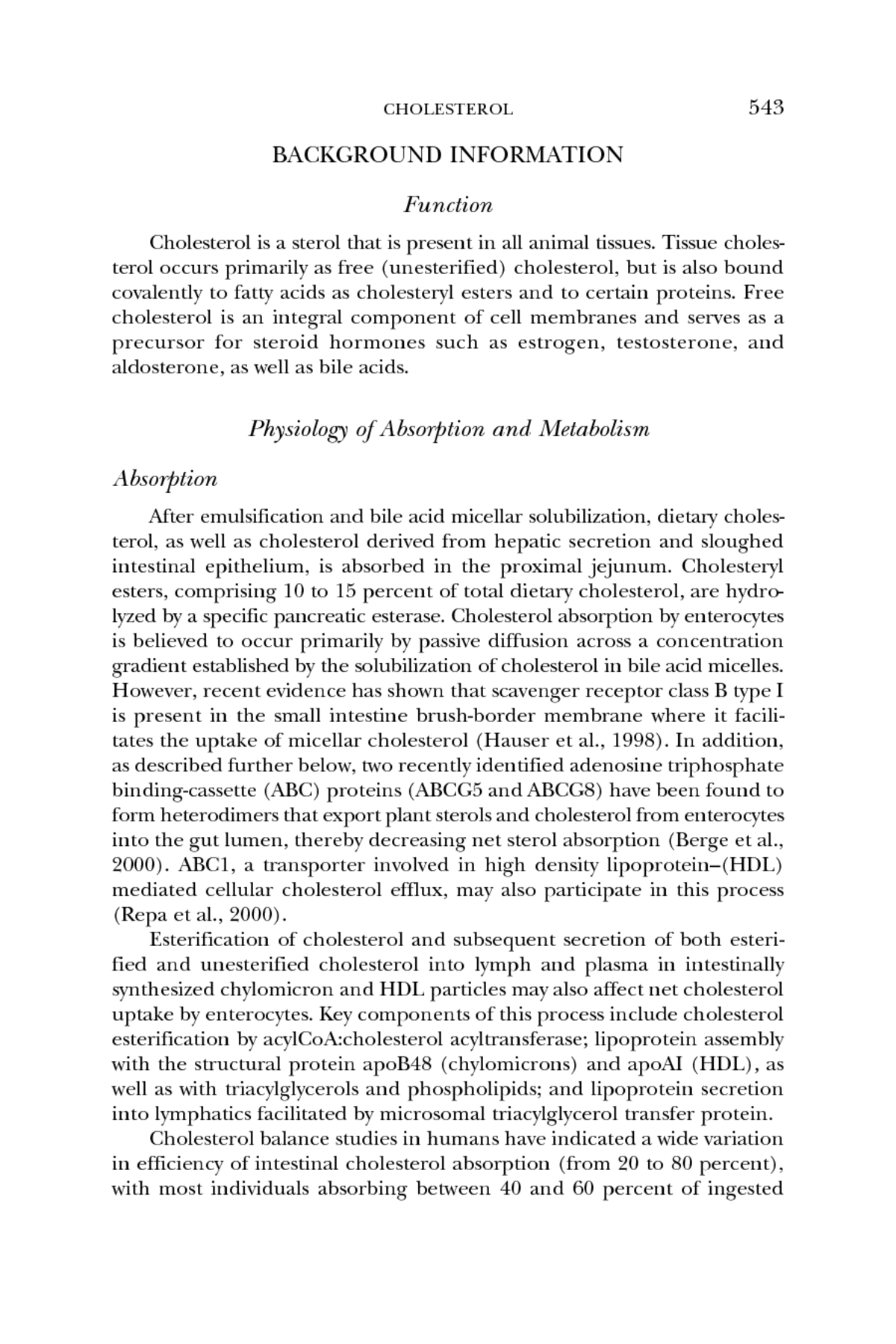
543 C HOLESTEROL BACKGROUND INFORMATION Function Cholesterol is a sterol that is present in all animal tissues. Tissue choles- terol occurs primarily as free (unesterified) cholesterol, but is also bound covalently to fatty acids as cholesteryl esters and to certain proteins. Free cholesterol is an integral component of cell membranes and serves as a precursor for steroid hormones such as estrogen, testosterone, and aldosterone, as well as bile acids. Physiology of Absorption and Metabolism Absorption After emulsification and bile acid micellar solubilization, dietary choles- terol, as well as cholesterol derived from hepatic secretion and sloughed intestinal epithelium, is absorbed in the proximal jejunum. Cholesteryl esters, comprising 10 to 15 percent of total dietary cholesterol, are hydro- lyzed by a specific pancreatic esterase. Cholesterol absorption by enterocytes is believed to occur primarily by passive diffusion across a concentration gradient established by the solubilization of cholesterol in bile acid micelles. However, recent evidence has shown that scavenger receptor class B type I is present in the small intestine brush-border membrane where it facili- tates the uptake of micellar cholesterol (Hauser et al., 1998). In addition, as described further below, two recently identified adenosine triphosphate binding-cassette (ABC) proteins (ABCG5 and ABCG8) have been found to form heterodimers that export plant sterols and cholesterol from enterocytes into the gut lumen, thereby decreasing net sterol absorption (Berge et al., 2000). ABC1, a transporter involved in high density lipoproteinâ(HDL) mediated cellular cholesterol efflux, may also participate in this process (Repa et al., 2000). Esterification of cholesterol and subsequent secretion of both esteri- fied and unesterified cholesterol into lymph and plasma in intestinally synthesized chylomicron and HDL particles may also affect net cholesterol uptake by enterocytes. Key components of this process include cholesterol esterification by acylCoA:cholesterol acyltransferase; lipoprotein assembly with the structural protein apoB48 (chylomicrons) and apoAI (HDL), as well as with triacylglycerols and phospholipids; and lipoprotein secretion into lymphatics facilitated by microsomal triacylglycerol transfer protein. Cholesterol balance studies in humans have indicated a wide variation in efficiency of intestinal cholesterol absorption (from 20 to 80 percent), with most individuals absorbing between 40 and 60 percent of ingested
544 DIETARY REFERENCE INTAKES cholesterol (Ros, 2000). As discussed below, such variability, which is likely due in part to genetic factors, may contribute to interindividual differ- ences in plasma cholesterol response to dietary cholesterol. In addition, cholesterol absorption may be reduced by the cholesterol content of a meal and by decreased intestinal transit time (Ros, 2000). Although fatty acids are required for intestinal micelle formation, there is no strong evidence that fat content (or other dietary constituents such as fiber) has a significant effect on cholesterol absorption. An average of 250 mg/d of plant sterols (e.g., sitosterol, stigmasterol, and campesterol) are consumed in the diet, but the absorption of such sterols (approximately 5 percent) is considerably lower than that for cho- lesterol (Ling and Jones, 1995; Salen et al., 1970). They are not known to have important biological effects in humans at the levels consumed in the diet. An exception is sitosterolemia, a rare genetic disorder that is charac- terized by markedly increased absorption and tissue accumulation of plant sterols and elevated plasma cholesterol levels (Lütjohann et al., 1996; Salen et al., 1992). Recently, patients with this disorder have been shown to have mutations in genes encoding ABCG5 and ABCG8, indicating the impor- tance of these transporters in regulating sterol absorption presumably by promoting the export of nearly all plant sterols, and a portion of cholesterol, from intestinal cells (Berge et al., 2000). Moreover, increased expression of these genes induced by cholesterol feeding may be of importance in limiting cholesterol absorption (Berge et al., 2000). The ability of very high intakes of plant sterols to lower plasma cholesterol concentrations by reducing cholesterol absorption may also involve regulation of this trans- port process (Miettinen and Gylling, 1999). Metabolism Intestinally derived cholesterol is transported in the circulation to other tissues via chylomicrons, and to a lesser extent HDL, mainly in the form of cholesteryl ester. The hydrolysis of chylomicron triacylglycerols in peripheral tissues by lipoprotein lipase and subsequent remodeling by lipid transfer proteins yields a âremnantâ particle that is internalized by receptors, primarily in the liver, that recognize apoprotein E and perhaps other con- stituents. Cholesterol released by intracellular cholesteryl esterase activity can be stored in hepatocytes; re-esterified and secreted into plasma in lipoproteins, primarily very low density lipoproteins (VLDL); oxidized and excreted as bile acids; or directly secreted into the bile. Free and esterified cholesterol circulate in the blood in humans principally in low density lipoproteins (LDL). Cholesterol homeostasis in hepatocytes is of critical importance for the regulation of plasma LDL cholesterol concentrations (Dietschy et al.,
545 C HOLESTEROL 1993). Increased cellular cholesterol content leads to suppression of syn- thesis of LDL receptors via a series of steps resulting in interaction of sterol regulatory element-binding protein (SREBP) 1 and 2 transcription factors with a sterol response element in the LDL receptor gene (Brown and Goldstein, 1999). Increased plasma LDL concentrations can result from reduced hepatic LDL uptake, as well as reduced uptake of VLDL and intermediate density lipoproteins, leading to increased metabolic conver- sion of these particles to LDL (Kita et al., 1982). Metabolic studies in humans have indicated that a high cholesterol diet induces both increased LDL synthesis and reduced receptor-dependent fractional removal rate of LDL particles (Packard et al., 1983). There are a number of other genes involved in cholesterol and lipo- protein metabolism in which hepatic regulation can be affected by choles- terol availability either directly via SREBPs or indirectly by the action of other transcription factors, such as liver X receptors (Repa and Mangelsdorf, 2000). These genes play a role in cholesterol regulatory pathways, including those involved in cholesterol synthesis that are suppressed by cholesterol (e.g., 3-hydroxy-3-methylglutaryl coenzyme A [HMG CoA] reductase) and others involved in bile acid production from cholesterol that are activated by cholesterol (e.g., 7 α-hydroxylase). Thus, increased hepatic cholesterol delivery from diet and other sources results in a complex admixture of metabolic effects that are generally directed at maintaining tissue and plasma cholesterol homeostasis. However, as described below, empirical observations in humans have indicated that increased dietary cholesterol does result in a net increase in plasma LDL cholesterol concentrations, probably as a consequence of reduced hepatic LDL receptor activity. All cells are capable of synthesizing cholesterol in sufficient amounts for their structural and metabolic needs. However, certain tissues (e.g., adrenal glands and gonads) derive a significant proportion of cholesterol by uptake from plasma lipoproteins. Cholesterol synthesis via a series of intermediates from acetyl CoA is highly regulated. The enzyme HMG CoA reductase catalyzes the rate-limiting step in cholesterol synthesisâthe for- mation of mevalonic acid from HMG CoA. The genes for this enzyme and a number of other proteins involved in cholesterol metabolism, such as the LDL receptor, are regulated by intracellular sterols and other signal- ing molecules to maintain tissue cholesterol homeostasis, as described above. Endogenous cholesterol synthesis in humans is approximately 12 to 13 mg/kg/d (840 to 910 mg/d for a 70-kg individual) (Di Buono et al., 2000). Another group of diet-derived sterols with potential biological effects are oxysterols (Vine et al., 1998), which are cholesterol oxidation products that can be found in cholesterol-rich processed foods such as dried egg yolk, although typical levels of oxysterols in the diet are generally low
546 DIETARY REFERENCE INTAKES (van de Bovenkamp et al., 1988). These cholesterol oxidation products can have major effects on cholesterol metabolism and have been shown to be highly atherogenic in animal models (Staprans et al., 2000; Vine et al., 1998). Their role in human nutrition remains to be established. Overall, body cholesterol homeostasis is highly regulated by balancing intestinal absorption and endogenous synthesis with hepatic excretion of cholesterol and bile acids derived from hepatic cholesterol oxidation. FINDINGS BY LIFE STAGE AND GENDER GROUP Given the capability of all tissues to synthesize sufficient cholesterol for their metabolic and structural needs, there is no evidence for a biologi- cal requirement for dietary cholesterol. As an example, many Tarahumara Indians of Mexico consume very low amounts of dietary cholesterol and have no reported developmental or health problems that could be attrib- uted to this aspect of their diet (McMurry et al., 1982). Therefore, neither an Adequate Intake (AI) nor an Estimated Average Requirement (EAR) and Recommended Dietary Allowance (RDA) are set for cholesterol. The question of whether cholesterol in the infant diet plays some essential role on lipid and lipoprotein metabolism that is relevant to growth and development or to the atherosclerotic process in adults has been diffi- cult to resolve. The idea that the early diet might have relevance to later lipid metabolism was first raised by Hahn and Koldovsky (1966) in pre- ´ maturely weaned rat pups and later supported by observations that normal weaning to a high intake of cholesterol resulted in greater resistance to dietary cholesterol in later adulthood (Reiser and Sidelman, 1972; Reiser et al., 1979). This led to the hypothesis that cholesterol in human milk may play some important role in establishing regulation of cholesterol homeostasis. Since human milk typically provides about 100 to 200 mg/L (Table 9-1), whereas infant formulas contain very little cholesterol (10 to 30 mg/L) (Huisman et al., 1996; Wong et al., 1993), it is not surprising that plasma cholesterol concentrations are higher in infants fed human milk than in formula-fed infants. Formula-fed infants also have a higher rate of cholesterol synthesis (Bayley et al., 1998; Cruz et al., 1994; Wong et al., 1993). However, the available evidence suggests that this effect is tran- sient. Differences in cholesterol synthesis and plasma cholesterol concen- tration are not sustained once complementary feeding is introduced (Darmady et al., 1972; Friedman and Goldberg, 1975; Mize et al., 1995). Also, no clinically significant effects on growth and development due to these differences in plasma cholesterol concentration have been noted between breast-fed and formula-fed infants under 1 year of age. One explanation may be that the developing brain synthesizes the cholesterol required for myelination in situ and does not take up cholesterol from
547 C HOLESTEROL TABLE 9-1 Cholesterol Content in Term Human Milk of Women in the United States Reference Stage of Lactation Cholesterol Content (mg/L) n Picciano et al., 18 6â12 wk postpartum 1978 (pp) Early morning 157 Midday 151 Evening 178 Mellies et al., 33 1 mo pp 201 1979 2 mo pp 195 3 mo pp 97 4 mo pp 220 5 mo pp 156 6 mo pp 283 7 mo pp 289 8 mo pp 220 9 mo pp 260 10 mo pp 210 11 mo pp 135 12â13 mo pp 151 Clark et al., 10 2 wk pp 110 1982 6 wk pp 97 12 wk pp 103 16 wk pp 104 Bitman et al., 6 3 wk pp 122 1983 6 wk pp 112 12 wk pp 103 Lammi-Keefe et al., 6 8 wk pp 1990 0600 h 88 1000 h 107 1400 h 111 1800 h 110 2200 h 112 Jensen et al., 10 12 wk pp 1995 0600â1000 h 140 1000â1400 h 162 1400â1800 h 217 1800â2200 h 220 2200â0600 h 129 Bayley et al., 14 4 mo pp 120 1998
548 DIETARY REFERENCE INTAKES plasma (Edmond et al., 1991; Haave and Innis, 2001; Jurevics and Morell, 1994). The effects of early cholesterol intake and weaning on cholesterol metabolism later in life have been studied in a number of different animal species (Hamosh, 1988; Kris-Etherton et al., 1979; Mott et al., 1990) and in short-term studies with infants and children. Studies in baboons fed breast milk or formulas with or without cholesterol and with varying fat composi- tions found that early cholesterol intake had little effect on serum choles- terol concentrations in young adults up to about 8 years of age (Mott et al., 1990). However, adult baboons that had been breast fed had lower high density lipoprotein (HDL) cholesterol concentrations, higher very low density lipoprotein + low density lipoprotein (LDL):HDL ratios, and more extensive atherosclerotic lesions than those that had been formula fed (Lewis et al., 1988; Mott et al., 1990, 1995). These differences were not explained by variations in the saturated and unsaturated fat content of the formulas and milk. The major metabolic difference associated with the differences in plasma lipoproteins was lower rates of bile acid synthesis and excretion among the baboons that had been breast fed. The possible relations of early breast and bottle feeding with later cholesterol concentrations and other coronary heart disease risk factors were explored in several short-term studies and larger retrospective epide- miological studies, but these observations are inconsistent (Fall et al., 1992; s Kolacek et al., 1993; Leeson et al., 2001; Ravelli et al., 2000). The relationship between early dietary cholesterol intake from milk or formula and serum cholesterol concentration in infancy and that observed in children and young adults following their usual diets was either absent (Andersen et al., 1979; Friedman and Goldberg, 1975; Glueck et al., 1972; Huttunen et al., 1983), in favor of formula feeding compared to breast feeding during infancy in 7- to 12-year-old children (Hodgson et al., 1976), or in favor of feeding human milk compared to formula feeding in men and women. The disparate findings may be due to confounding factors such as duration of breast feeding, since human-milk feeding for less than 3 months was associated with higher serum cholesterol concentrations in men at 18 to 23 years of age, or the type of formula fed since formula composition, especially quality of fat, which has changed dramatically in s the last century (Kolacek et al., 1993). A follow-up study of nearly 6,000 elderly men for whom early feeding methods had been recorded found higher total and LDL cholesterol concentrations and increased risk of coronary heart disease (CHD) mortality in men who had been exclusively fed human milk than in those who had been fed human milk and bottle fed or fed human milk and weaned at 1 year of age. Men who had been exclusively bottle-fed during infancy also had higher total and LDL choles-
549 C HOLESTEROL terol concentrations and CHD mortality than men who had previously been fed human milk (Fall et al., 1992). The available data do not warrant a recommendation with respect to dietary cholesterol intake for infants who are not fed human milk. How- ever, further research to identify possible mechanisms whereby early nutri- tional experiences affect the atherosclerotic process in adults, as well as the sensitive periods in development when this may occur, would be valuable. INTAKE OF CHOLESTEROL Food Sources Cholesterol is present in foods of animal origin. High amounts of cholesterol are present in liver (375 mg/3 oz slice) and egg yolk (250 mg/ yolk). Although generally low in total fat, some seafood, including shrimp, lobster, and certain fish, contain moderately high amounts of cholesterol (60 to 100 g/half-cup serving). One cup of whole milk contains approxi- mately 30 mg of cholesterol, whereas the cholesterol contained in 2 per- cent and skim milk is 15 and 7 mg/cup, respectively. Therefore, products that contain milk (e.g., cheese, ice cream, and cottage cheese) are moderate sources of cholesterol. One tablespoon of butter contains approximately 12 mg of cholesterol, whereas margarine does not contain cholesterol. The majority of cholesterol is consumed from eggs and meat (FASEB, 1995). Dietary Intake Based on intake data from the Continuing Survey of Food Intakes by Individuals (1994â1996, 1998), the median cholesterol intake ranged from approximately 250 to 325 mg/d for men and 180 to 205 mg/d for women (Appendix Table E-15). ADVERSE EFFECTS OF OVERCONSUMPTION Hazard Identification Plasma Total, HDL, and LDL Cholesterol Concentrations Numerous studies in humans have examined the effects of dietary cholesterol on plasma total and lipoprotein cholesterol concentrations (Tables 9-2 and 9-3, Figures 9-1 and 9-2), and empirical formulas have been derived to describe these relationships. Although most studies have
550 DIETARY REFERENCE INTAKES TABLE 9-2 Effects of Adding Dietary Cholesterol to Defined Diets with Strict Control of Dietary Intake on Serum Cholesterol Concentration Baseline Dietary Added Dietary Cholesterol Cholesterol Reference (mg/d) (mg/d) n Beveridge et al., 6 13 81 1960 9 13 140 9 13 280 9 13 621 6 13 1,282 10 13 2,481 9 13 4,490 Connor et al., 2 0 475 1961a 2 0 950 2 0 1,425 Connor et al., 3 0 2,400 1961b 1 0 1,650 1 0 1,900 1 0 4,800 Steiner et al., 1962 6 0 3,000 Wells and Bronte- 3 0 17 Stewart, 1963 3 0 42 3 0 67 3 0 88 3 0 142 3 0 267 3 0 517 3 0 1,017 3 0 1,517 3 0 3,017 Connor et al., 1964 6 0 729 5 0 725 Erickson et al., 6 0 742 1964 6 0 742 Hegsted et al., 1965 10 116 570 10 306 380 10 116 570
551 C HOLESTEROL Change in Serum Total Percent of Cholesterol Calories from (mmol/L) Fat P:S Ratio 0.06 30 0.08 0.10 30 0.08 1.17 30 0.08 0.43 30 0.08 0.59 30 0.08 1.20 30 0.08 0.87 30 0.08 1.71 40 0.76 1.64 40 0.76 1.99 40 0.76 1.47 40 0.88 2.43 40 0.88 2.97 40 0.88 2.53 40 0.88 1.30 40 0.68 0.44 15 0.56 15 0.66 15 0.80 15 0.96 15 1.03 15 1.18 15 1.09 15 1.29 15 1.23 15 1.03 40 0.25 0.74 40 1.7 0.61 41 1.6 0.69 41 1.6 0.75 39 5.4 0.29 39 0.05 0.70 39 0.68 continued
552 DIETARY REFERENCE INTAKES TABLE 9-2 Continued Baseline Dietary Added Dietary Cholesterol Cholesterol Reference (mg/d) (mg/d) n Keys et al., 1965 22 50 470 22 50 1,410 22 50 33 22 50 1,400 22 50 1,410 National Diet-Heart 81 126 495 Study Research 81 126 495 Group,1968 57 401 495 57 154 495 Quintão et al., 1971 4 43 2,441 1 43 499 1 44 197 2 53.5 4,002 Mattson et al., 1972 14 0 297 14 0 594 14 0 888 Anderson et al., 12 3 291 1976 12 3 291 Nestel and Poyser, 4 210 500 1976 2 257 500 2 334 532 1 103 439 Quintão et al., 1977 6 0 3,250 Bronsgeest-Schoute 21 98 567 et al., 1979a, 21 98 567 1979b 9 124 607 9 124 607 Lin and Connor, 2 45 1,081 1980 McMurry et al., 12 0 600 1981
553 C HOLESTEROL Change in Serum Total Percent of Cholesterol Calories from (mmol/L) Fat P:S Ratio 0.36 40 0.70 40 0.41 40 0.80 40 1.3 0.75 40 0.08 0.12 30 2.31 0.27 39 0.5 0.32 40 0.08 0.18 40 0.96 0.96 40 0.93 0.88 40 0.93 â0.80 40 0.93 0.13 40 0.93 0.34 39 0.31 0.61 39 0.31 1.05 39 0.31 0.23 35 0.26 0.21 35 4.7 1.56 40 1.9 0.25 40 1.9 0.76 40 1.9 0.67 40 1.9 0.74 0.32 44 2 0.25 44 2 0.70 34 0.2 0.66 34 0.2 2.45 40 0.8 0.93 40 0.8 continued
554 DIETARY REFERENCE INTAKES TABLE 9-2 Continued Baseline Dietary Added Dietary Cholesterol Cholesterol Reference (mg/d) (mg/d) n McMurry et al., 8 0 905 1982 Nestel et al., 1982 6 200 1,500 Schonfeld et al., 11 300 750 1982 9 300 1,500 6 300 750 6 300 1,500 6 300 750 6 300 1,500 Maranhão and 13 40 1,350 Quintdo, 1983 Applebaum- 9 137 897 Bowden et al., 1984 Beynen and Katan, 6 114 526 1985b Katan et al., 1986 94 110 500 Zanni et al., 1987 9 130 745 9 130 745 Johnson and 10 200 400 Greenland, 1990 Ginsberg et al., 20 128 155 1994 20 128 340 20 128 730 Sundram et al., 17 192 7 1994 17 192 13 Fielding et al., 20 200 403 1995 22 200 435 Ginsberg et al., 13 108 169 1995 13 108 559
555 C HOLESTEROL Change in Serum Total Percent of Cholesterol Calories from (mmol/L) Fat P:S Ratio 0.88 20 0.7 0.42 31 1 0.47 40 0.32 0.72 40 0.32 0.13 40 0.8 0.70 40 0.8 0.05 40 2.5 0.26 40 2.5 1.19 40 0.93 0.28 40 0.82 0.25 42 0.46 0.5 42 0.16 0.58 31 2.1 0.39 31 0.64 0.26 30 1.5 0.14 27 0.89 0.16 27 0.93 0.29 28 0.87 0.06 31 0.21 â0.35 31 0.25 0.50 39 0.81 0.76 36 0.28 0.16 28 0.89 0.41 28 0.86
556 DIETARY REFERENCE INTAKES TABLE 9-3 Effects of Adding Dietary Cholesterol to Self-Selected Diets with Strict Control of Dietary Intake on Serum Cholesterol Concentration Baseline Added Dietary Dietary Cholesterol Cholesterol Reference (mg/d) (mg/d) n Slater et al., 1976 25 314 482 Kummerow et al., 21 250 470 1977 Porter et al., 1977 55 301 235 59 301 235 Flynn et al., 1979 56 260 540 60 260 540 Mistry et al., 1981 37 522 1,500 14 480 750 Roberts et al., 16 196 532 1981 Packard et al., 7 180 1,290 1983 Beynen and 6 207 1,596 Katan, 1985a 6 207 1,596 Oh and Miller, 21 474 654 1985 Edington et al., 33 120 188 1987 135 120 188 McNamara et al., 39 192 628 1987 36 288 575 Kestin et al., 1989 10 180 686 15 204 735 Clifton et al., 1990 Normal: 11 185 681 Hypercholesterolemic diet-insensitive: 22 185 681 Hypercholesterolemic diet-sensitive: 23 185 681
557 C HOLESTEROL Change in Serum Total Percent of Cholesterol Calories (mmol/L) from Fat P:S Ratio â0.09 0.05 40 0.16 38 0.03 38 0.49 38 0.00 38 0.75 41 0.62 41 0.40 40 1.47 38 0.17 0.48 46 0.5 0.61 46 0.5 0.27 35 0.62 0.13 26 0.8 0.12 35 0.6 0.16 35 1.45 0.13 35 0.27 â0.02 41 0.37 0.04 36 0.85 0.06 29 0.6 0.19 29 0.6 0.36 29 0.6 continued
558 DIETARY REFERENCE INTAKES TABLE 9-3 Continued Baseline Added Dietary Dietary Cholesterol Cholesterol Reference (mg/d) (mg/d) n Kern, 1994 8 585 2,393 8 548 2,462 McCombs et al., 12 213 938 1994 11 197 888 Clifton et al., 1995 67 151 691 53 208 939 Sutherland et al., 12 349 250 1997 14 349 250 Romano et al., 10 200 800 1998 11 200 800 3 Defined DietsâData from Table 9-2 - Self-Selected DietsâData from Table 9-3 2.5 Linear (Defined DietsâData from Table 9-2) Linear (Self-Selected DietsâData from Table 9-3) 2 Change in Serum TC (mmol/L) 1.5 y = 0.0008x + 0.1737 R2 = 0.1844 1 y = 0.0004x + 0.0108 R 2 = 0.1942 0.5 0 -0.5 -1 0 200 400 600 800 1000 1200 Change in Dietary Cholesterol (mg/d) FIGURE 9-1 Relationship between change in dietary cholesterol (0 to 1,000 mg/d) and change in serum total cholesterol (TC) concentration.
559 C HOLESTEROL Change in Serum Total Percent of Cholesterol Calories (mmol/L) from Fat P:S Ratio 0.14 44 0.59 â0.22 44 0.65 0.57 35 0.49 0.16 34 0.54 0.36 35 0.31 0.34 35 0.30 0.18 34 0.15 34 0.29 30 0.46 30 Defined Diets (data from Table 9-2) Self-Selected Diets (data from Table 9-3) 3.5 3.5 3.0 2.5 Cholesterol (mmol/L) 3.0 Change in Serum 2.0 Change in Serum Cholesterol (mmol/L) 1.5 1.0 2.5 0.5 0.0 -0.5 2.0 -1.0 0 100 200 300 400 500 600 700 800 900 1000 1100 Change in Dietary Cholesterol (mg/d) 1.5 1.0 0.5 0.0 -0.5 -1.0 1000 1500 2000 2500 3000 3500 4000 4500 5000 5500 0 50 Change in Dietary Cholesterol (mg/d) FIGURE 9-2 Relationship between change in dietary cholesterol (0 to 4,500 mg/d) and change in serum cholesterol (TC) concentration.
560 DIETARY REFERENCE INTAKES reported a linear relationship between changes in dietary cholesterol and total serum cholesterol concentration, other studies, including a meta- analysis of 27 controlled metabolic feeding studies of added dietary choles- terol (Hopkins, 1992), have indicated a curvilinear univariate relationship that is quasilinear in the range from 0 to 300 to 400 mg/d of added dietary cholesterol. The range of added dietary cholesterol in the studies was 17 to 4,800 mg/d. The meta-analysis also identified a diminishing increment of serum cholesterol with increasing baseline dietary cholesterol intake. With a baseline cholesterol intake of 0, the estimated increases in serum total cholesterol concentration for intakes from 100 to 400 mg/d of added dietary cholesterol were 0.16 to 0.51 mmol/L, whereas for a baseline cho- lesterol intake of 300 mg/d, the estimated increases in serum total choles- terol were 0.05 to 0.16 mmol/L (Hopkins, 1992). Another meta-analysis showed that dietary cholesterol raises the ratio of total cholesterol to high density lipoprotein (HDL) cholesterol, therefore adversely affecting the cholesterol profile (Weggemans et al., 2001). Other predictive formulas for the effect of 100 mg/d of added dietary cholesterol, which did not consider baseline cholesterol intake and are based on compilations of studies with a variety of experimental conditions, have yielded estimates of 0.1 mmol/L (Hegsted, 1986), 0.057 mmol/L (Howell et al., 1997), and 0.065 mmol/L (Clarke et al., 1997), the latter two involving meta-analyses with adjustment for other dietary variables. Furthermore, pooled analyses of the effects of 100 mg/d of added dietary cholesterol on plasma lipoprotein cholesterol concentrations (Clarke et al., 1997) indicated an estimated increase of 0.05 mmol/L in low density lipoprotein (LDL) and 0.01 mmol/L in HDL (ratio of 5 LDL:1 HDL). There is evidence that the increase in HDL is largely accounted for by higher levels of apoE-containing HDL particles (Mahley et al., 1978), but the significance in atherosclerosis protection is not established. Hegsted and coworkers (1993) reported that the majority of the increase in serum total cholesterol concentration with increased cholesterol intake was due to an increase in LDL cholesterol concentration. The incremental serum cholesterol response to a given amount of dietary cholesterol appears to diminish as baseline serum cholesterol intake increases (Hopkins, 1992). There is also evidence from a number of studies that increases in serum cholesterol concentration due to dietary choles- terol are blunted by diets low in saturated fat, high in polyunsaturated fat, or both (Fielding et al., 1995; National Diet-Heart Study Research Group, 1968; Schonfeld et al., 1982), although this effect has not been observed by others (Kestin et al., 1989; McNamara et al., 1987). There is considerable evidence for interindividual variation in serum cholesterol response to dietary cholesterol, ranging from 0 to greater than 100 percent (Hopkins, 1992). It has been reported that such responsive-
561 C HOLESTEROL ness is relatively stable within individuals (Beynen and Katan, 1985b) and appears to be correlated with serum cholesterol response to saturated fatty acids (Katan et al., 1988). Intrinsic differences in intestinal cholesterol absorption (Sehayek et al., 1998), suppression of hepatic cholesterol syn- thesis by dietary cholesterol (Dietschy et al., 1993; McNamara et al., 1987; Nestel and Poyser, 1976; Quintão et al., 1971), and LDL catabolism (Dietschy et al., 1993; Mistry et al., 1981) may all contribute to the observed variation in dietary cholesterol response. There is increasing evidence that genetic factors underlie a substantial portion of interindividual variation in response to dietary cholesterol. An instructive case is that of the Tarahumara Indians, who in addition to consuming a diet low in cholesterol, have both low intestinal cholesterol absorption and increased transformation of cholesterol to bile acids (McMurry et al., 1985). However, with an increase in dietary cholesterol from 0 to 905 mg/d, their average plasma cholesterol concentration increased 0.88 mmol/L (from 2.92 to 3.8 mmol/L), the same value pre- dicted by the formula of Hopkins (1992), indicating the likelihood of above-average responsiveness of other aspects of cholesterol or lipoprotein metabolism. Variations in several genes have been associated with altered respon- siveness to dietary cholesterol. The common E4 polymorphism of the apoE gene has been associated with increased cholesterol absorption (Kesäniemi et al., 1987) and with increased plasma LDL cholesterol response to dietary saturated fat and cholesterol in some, but not all studies (Dreon and Krauss, 1997). The recent finding that apoE is of importance in regulating cholesterol absorption and bile acid formation in apoE knockout mice (Sehayek et al., 2000) lends support to a possible role for this gene in modulating dietary cholesterol responsiveness in humans. The A-IV-2 vari- ant allele of the apo A-IV gene has been found to attenuate the plasma cholesterol response to dietary cholesterol (McCombs et al., 1994). Recently, the A-IV-2 allele has been associated with reduced intestinal cholesterol absorption in diets high in polyunsaturated fat but not in diets high in saturated fat (Weinberg et al., 2000). However, this has not been con- firmed in other studies (Weggemans et al., 2000). Finally, the recent dis- covery that defects in the ABCG5 and ABCG8 genes can lead to markedly increased intestinal absorption of both cholesterol and plant sterols (Berge et al., 2000) points to the possibility that more common variants of these genes may contribute to variation in cholesterol absorption and dietary cholesterol response in the general population. There are numerous other candidate genes that could modulate plasma lipid and lipoprotein response to dietary cholesterol by affecting cholesterol absorption, cellular cholesterol homeostasis, and plasma lipo- protein metabolism. Among the most likely candidates are those regulated
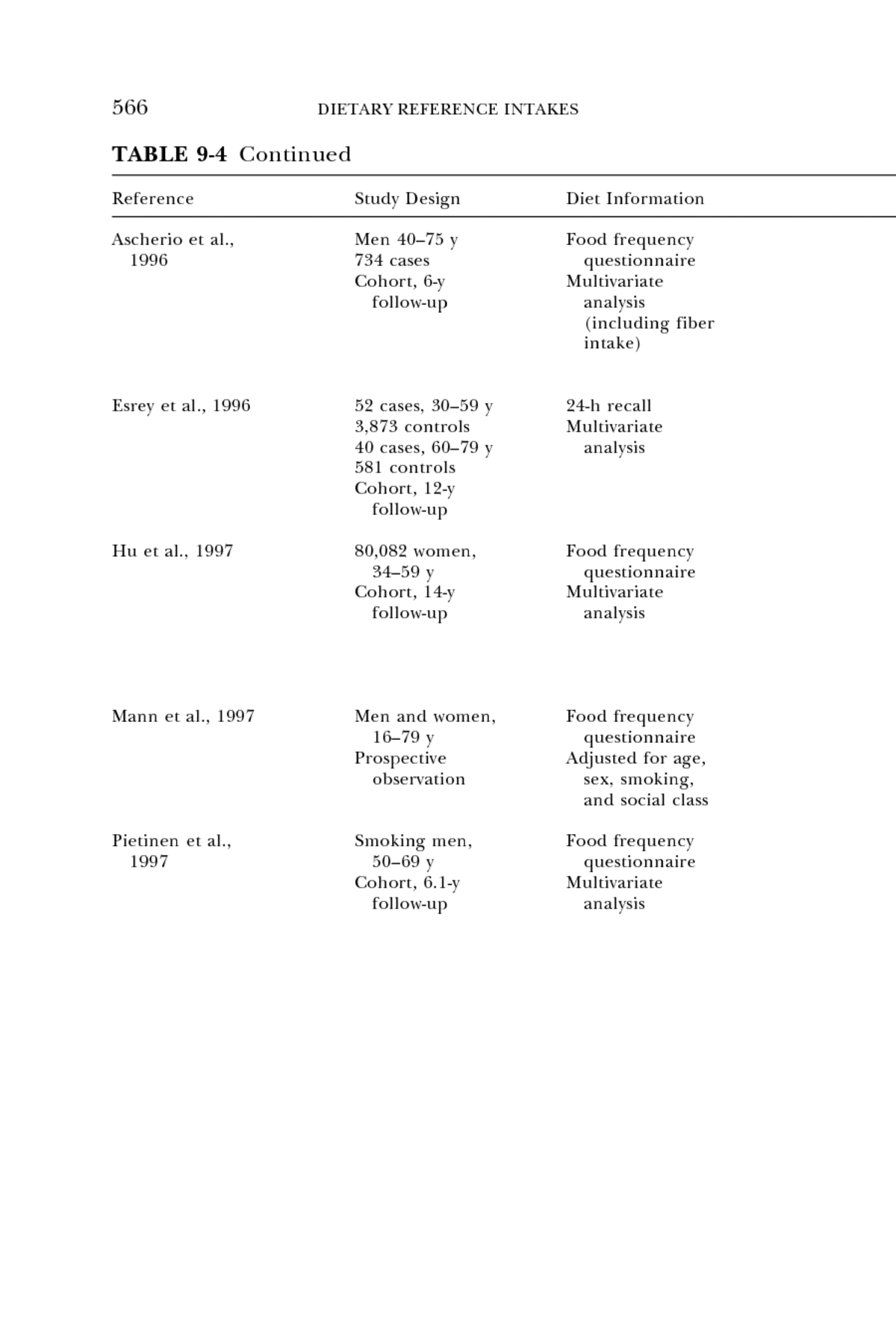
562 DIETARY REFERENCE INTAKES by lipid-responsive nuclear transcription factors, including sterol regula- tory element-binding proteins, peroxisome proliferator-activated receptors, and orphan nuclear receptors. Studies in animal models have generated data in support of the possibility that variations among these genes may be of importance in influencing dietary cholesterol response in humans, but to date such human data are lacking. Nevertheless, the existence of marked interindividual variability in dietary cholesterol response among and within various animal models points to the likelihood that some of the mecha- nisms underlying this variability will also apply to humans. Cardiovascular Disease and CHD An association of dietary cholesterol with cardiovascular disease is based on several lines of evidence, including studies in animal models, epidemiological data in humans, and the effects of dietary cholesterol on plasma lipoproteins (Table 9-4). There is compelling evidence that dietary cholesterol can induce atherosclerosis in several animal species, including rabbits, pigs, nonhuman primates, and transgenic mice (Bocan, 1998; McNamara, 2000; Rudel, 1997). However, given the existence of marked inter- and intraspecies differences in cholesterol metabolism and athero- genic mechanisms, it is not possible to extrapolate these data directly to humans. A number of prospective epidemiological studies have investigated the relationship of dietary cholesterol and other nutrients to the development of coronary heart disease (CHD) (reviewed in Kritchevsky and Kritchevsky, 2000; McNamara, 2000). Significant univariate relationships of cholesterol intake to risk for CHD have been observed in the Seven Countries Study (Kromhout et al., 1995) and the Honolulu Heart Program (McGee et al., 1984). A significant relative risk was also observed in the Western Electric Study, which remained significant after adjustment for a number of covariates, including dietary fat and serum cholesterol concentration (Stamler and Shekelle, 1988). More recently, in a study of 10,802 health- conscious men and women in the United Kingdom, a univariate relation- ship of cholesterol intake to ischemic heart disease mortality was observed (Mann et al., 1997). However, a number of other epidemiological studies have not demon- strated a significant independent relationship of dietary cholesterol intake and CHD (Esrey et al., 1996; Kromhout and de Lezenne Coulander, 1984; Pietinen et al., 1997; Posner et al., 1991). In a cohort of 43,757 male health professionals, dietary cholesterol intake was significantly related to age-adjusted risk for myocardial infarction and fatal CHD (p < 0.003 and 0.002, respectively) across cholesterol quintiles ranging from median intakes of 189 to 422 mg/d (Ascherio et al., 1996). However, the risk was
563 C HOLESTEROL attenuated with multivariate analyses (p < 0.07 and 0.03), which included other risk factors such as body mass index, smoking habits, alcohol consumption, physical activity, history of hypertension or high blood cholesterol, family history of myocardial infarction, and profession. The risk became insignificant after adjustment for fiber intake, which was reported to be significantly inversely related to CHD risk in this cohort. A similar cohort analysis in a group of 80,082 female nurses showed a posi- tive but nonsignificant relationship between dietary cholesterol and CHD in quintiles of median intakes ranging from 132 to 273 mg/1,000 kcal/d (Hu et al., 1997). In both the male Health Professionals Follow-up Study and the female Nursesâ Health Study cohorts, there was no relationship of egg intake to CHD risk with intakes of up to 1 egg/d (Hu et al., 1999). There was, however, a significant increase of CHD risk associated with higher ranges of egg consumption in patients with diabetes. This finding was corroborated in a European study, but after multivariate analysis adjust- ing for fiber intake, the association was no longer significant (Toeller et al., 1999). Measures of atherosclerosis using imaging techniques have also been assessed in relation to diet. Angiographically assessed coronary artery disease progression over 39 months in 50 men was weakly related to cholesterol intake in univariate, but not multivariate, analysis (Watts et al., 1994). In 13,148 male and female participants in the Atherosclerosis Risk in Commu- nities Study, carotid artery wall thickness, an index of early atherosclerosis, was significantly related to dietary cholesterol intake by univariate analyses; multivariate analysis was not performed (Tell et al., 1994). The lack of consistency in observations relating dietary cholesterol intake to clinical cardiovascular disease and CHD endpoints may be due to many factors, including the limited ability to detect such effects (e.g., due to relatively small increases in LDL cholesterol concentration and inaccu- racies in dietary intake data) and to the limited ability to distinguish the effects of dietary cholesterol independent of energy intake and other dietary variables that may be positively (e.g., saturated fat intake) or negatively (e.g., fiber intake) associated with dietary cholesterol and heart disease risk. Another uncertainty relates to interpreting the effects of dietary cholesterol on blood cholesterol concentrations. Evidence indicates that increased dietary cholesterol results, on average, in increased blood concentrations of both LDL and HDL cholesterol, and it is possible that the net impact on cardiovascular disease risk depends on the relative changes in these lipoproteins, as well as on other unmeasured mediators of atherogenesis. Finally, the considerable interindividual variation in lipid response to dietary cholesterol may result in differing outcomes in differ- ent populations or population subgroups.
564 DIETARY REFERENCE INTAKES TABLE 9-4 Dietary Cholesterol and Coronary Heart Disease (CHD) Reference Study Design Diet Information Kromhout and Men, 40â59 y Dietary history de Lezenne 14 cases Coulander, 1984 857 controls Cohort, 10-y follow-up McGee et al., 1984 456 cases 24-h recall 6,632 controls Adjusted for age Cohort, 10-y follow-up Kushi et al., 1985 Men Dietary history 110 cases Adjusted for age 891 controls and cohort Cohort, 20-y follow-up McGee et al., 1985 8,006 men 24-h recall Cohort, 10-y Adjusted for age follow-up Posner et al., 1991 Men 45â55 y 24-h recall Cohort, 16-y Multivariate follow-up analysis Tzonou et al., 1993 Men and women Dietary history 329 cases 570 controls Case-control Tell et al., 1994 Men and women, Food frequency 45â64 y questionnaire Cohort Watts et al., 1994 50 men Dietary history 26 lipid-lowering diet 24 usual care Intervention
565 C HOLESTEROL Results a Comments Mean cholesterol intake (mg/1,000 kcal) No association between cholesterol Cases 145 intake and CHD Controls 143 Mean cholesterol intake (mg/1,000 kcal) Significant positive association Cases 256 between cholesterol intake and Controls 241 incidence of CHD Mean cholesterol intake (mg/1,000 kcal) Significantly greater cholesterol Cases 266 intake in CHD deaths Controls 248 Cholesterol intake Rate of CHD death Cholesterol intake as mg/1,000 kcal (mg/1,000 kcal) (per 1,000) positively associated with CHD â8 < 125 death, but not when intake â 16 125â175 measured as mg/d â 14 175â225 â 12 225â275 â 13 275â325 â 20 > 325 Cholesterol No association between cholesterol intake (mg/d) RR of CHD intake and risk of CHD 300 1.0 529 0.99 Mean cholesterol intake (mg/d) No association between cholesterol Men Women intake and CHD Cases 345 322 Controls 350 292 Cholesterol intake was positively associated with carotid artery wall thickness Mean cholesterol intake (mg/d) Cholesterol was positively associated Diet 215 with progression of coronary Usual 341 artery disease continued
566 DIETARY REFERENCE INTAKES TABLE 9-4 Continued Reference Study Design Diet Information Ascherio et al., Men 40â75 y Food frequency 1996 734 cases questionnaire Cohort, 6-y Multivariate follow-up analysis (including fiber intake) Esrey et al., 1996 52 cases, 30â59 y 24-h recall 3,873 controls Multivariate 40 cases, 60â79 y analysis 581 controls Cohort, 12-y follow-up Hu et al., 1997 80,082 women, Food frequency 34â59 y questionnaire Cohort, 14-y Multivariate follow-up analysis Mann et al., 1997 Men and women, Food frequency 16â79 y questionnaire Prospective Adjusted for age, observation sex, smoking, and social class Pietinen et al., Smoking men, Food frequency 1997 50â69 y questionnaire Cohort, 6.1-y Multivariate follow-up analysis
567 C HOLESTEROL Results a Comments Mean cholesterol RR for MI No significant association between intake (mg/d) or fatal CHD cholesterol intake and risk for MI 189 1.00 or fatal CHD after adjustment for 246 0.86 fiber intake 290 0.98 338 0.94 422 1.03 Mean cholesterol intake (mg/d) Cholesterol intake was not Age (y) 30â59 60â79 significantly associated with CHD Cases 427 423 mortality Controls 416 355 Quintile of RR of A positive but nonsignificant cholesterol intake CHD association between cholesterol 1 1.00 intake and risk of CHD 2 1.19 3 1.14 4 1.32 5 1.25 Tertile of IHD death Increased IHD mortality with cholesterol intake rate ratio increased cholesterol intake 1st 100 2nd 181 3rd 353 Median cholesterol RR of coronary No association between cholesterol intake (mg/d) death intake and risk of coronary death 390 1.00 477 0.90 543 0.81 621 0.86 768 0.92 continued
568 DIETARY REFERENCE INTAKES TABLE 9-4 Continued Reference Study Design Diet Information Hu et al., 1999 37,851 men, Food frequency 40â75 y questionnaire 866 cases Multivariate Cohort, 8-y analysis follow-up 80,082 women, 34â59 y 939 cases Cohort, 14-y follow-up Toeller et al., Diabetic men and 3-d dietary records 1999 women, 14â61 y Multivariate Cross-sectional analysis (including fiber intake) a RR = relative risk, MI = myocardial infarction, IHD = ischemic heart disease, OR = odds ratio, CVD = cardiovascular disease. Cancer As shown in Tables 9-5 through 9-8, no consistent significant associa- tions have been established between dietary cholesterol intake and cancer, including lung, breast, colon, and prostate. Several case-control studies have suggested that a high consumption of cholesterol may be associated with an increased risk of lung cancer (Alavanja et al., 1993; Byers et al., 1987; Goodman et al., 1988; Hinds et al., 1983; Jain et al., 1990). This positive association was shown in one cohort study (Shekelle et al., 1991), but not in three others (Heilbrun et al., 1984; Knekt et al., 1991; Wu et al., 1994). DoseâResponse Assessment The main adverse effect of dietary cholesterol is increased serum LDL cholesterol concentration, which would be predicted to result in increased risk for CHD. Serum HDL concentration also increases, although to a
569 C HOLESTEROL Results a Comments Egg intake Mean cholesterol RR of No significant association between (eggs/wk) intake (mg/d) CHD egg consumption (up to 1 egg/d) Men and risk of CHD <1 237 1.00 1 266 1.06 2â4 330 1.12 5â6 404 0.90 â¥7 536 1.08 Women <1 228 1.00 1 258 0.82 2â4 342 0.99 5â6 436 0.95 â¥7 557 0.82 Cholesterol No significant association between intake (mg/d) OR for CVD cholesterol intake and CVD risk 15â236 1.00 after adjusting for fiber intake 236â335 0.80 335â461 0.86 462â2,165 0.96 lesser extent, but the impact of such a diet-induced change in CHD risk is uncertain. As reviewed above, on average, an increase of 100 mg/d of dietary cholesterol is predicted to result in a 0.05 to 0.1 mmol/L increase in total serum cholesterol, of which approximately 80 percent is in the LDL fraction. This effect of added cholesterol is highly variable among individuals and is considerably attenuated at higher baseline cholesterol intakes. The LDL cholesterol concentration increase would predict approximately a 1 to 2 per- cent increase in CHD, with possibly offsetting effects of increased HDL cholesterol concentration. Epidemiological studies have limited power to detect effects of such magnitude and thus do not provide a meaningful basis for establishing adverse effects of dietary cholesterol. Therefore, it would seem reasonable to define the lowest-observed-adverse-effect level for dietary cholesterol as the lowest level shown to increase total or LDL cholesterol concentration. However, no studies have examined the effects of very small increments of dietary cholesterol in numbers of subjects suffi- ciently large enough to permit statistical treatment of the data. An increase
570 DIETARY REFERENCE INTAKES TABLE 9-5 Dietary Cholesterol and Risk of Lung Cancer Reference Study Design Dietary and Other Information Hinds et al., Men Dietary history 1983 188 cases Adjusted for smoking, age, 294 controls ethnicity, and Case-control occupational exposure Heilbrun et al., Men 24-h recall 1984 109 cases Adjusted for age and 7,420 controls smoking Cohort, 15-y follow-up Byers et al., Men and women Food frequency 1987 450 cases questionnaire 902 controls Adjusted for age and Case-control smoking Goodman et al., Men and women Dietary history 1988 336 cases Adjusted for age, 865 controls ethnicity, and pack- Case-control years of smoking Jain et al., Men and women Dietary history 1990 839 cases Adjusted for cumulative 772 controls cigarette smoking Case-control Knekt et al., Men Dietary history 1991 117 cases Adjusted for age, 4,421 controls smoking, and Cohort, 20-y energy intake follow-up
571 C HOLESTEROL Resultsa Comments Cholesterol intake (mg/d) RR of lung cancer Increased lung cancer risk was 0â143 1.00 positively associated with 144â285 1.65 cholesterol intake 286â500 2.28 ⥠501 3.50 Cholesterol intake (mg/d) RR of lung cancer No significant association 0â299 1.00 between lung cancer risk 300â499 0.71 and cholesterol intake 500â749 0.99 ⥠750 0.98 Quartile of RR of lung cancer Weak but nonsignificant cholesterol intake Men Women association between 1 (low) 0.7 1.1 cholesterol intake and lung 2 0.9 1.7 cancer risk in men, but not 3 1.2 1.2 in women 4 (high) 1.0 1.0 Mean cholesterol Significant positive association intake (mg/d) Men Women between lung cancer risk Cases 385 249 and cholesterol intake in Controls 332 245 men, but not in women Quartile of OR for lung cancer cholesterol intake Men Women 1 (low) 1.0 1.0 2 2.3 0.6 3 1.8 1.5 4 (high) 2.2 0.9 Cholesterol intake (mg/d) OR for lung cancer Significant increase in risk of < 235 1.00 lung cancer in highest 235â342 0.87 quartile with cholesterol 343â468 0.99 intake > 468 mg/d > 468 1.58 Cholesterol intake (mg/d) RR of lung cancer Cholesterol intake was not < 441 1.00 associated with risk of 441â609 0.80 lung cancer > 609 1.03 continued
572 DIETARY REFERENCE INTAKES TABLE 9-5 Continued Reference Study Design Dietary and Other Information Shekelle et al., Men Dietary history 1991 57 cases Adjusted for age, smoking, β-carotene intake, and 1,821 controls Cohort, 24-y percent of calories follow-up from fat Alavanja et al., Women Food frequency 1993 429 cases questionnaire, 1,021 controls Multivariate analysis All nonsmokers Case-control Wu et al., Women Food frequency 1994 212 cases questionnaire Cohort, 6-y Adjusted for age, smoking, follow-up occupation, physical activity, and total energy intake Swanson et al., Women Food frequency 1997 587 cases questionnaire 624 controls Multivariate analysis Case-control a RR = relative risk, M = men, W = women, OR = odds ratio. in serum cholesterol concentration was observed with as little as 17 mg/d of cholesterol added to a cholesterol-free diet, but only three subjects were studied (Wells and Bronte-Stewart, 1963). Serum cholesterol concentrations increase with increased dietary cho- lesterol (Figures 9-1 and 9-2), and the relationship of serum cholesterol concentration to CHD risk or mortality increases progressively (Neaton and Wentworth, 1992; Sorkin et al., 1992; Stamler et al., 1986; Weijenberg et al., 1996). Therefore, it is not appropriate to set a Tolerable Upper Intake Level (UL) for dietary cholesterol because increased risk may occur at a very low intake level and at a level that is exceeded by usual diets.
573 C HOLESTEROL Resultsa Comments Cholesterol intake (mg/d) RR of lung cancer Cholesterol intake (specific to 198â604 1.00 consumption of eggs) was 605â794 1.30 positively associated with 795â1,909 1.94 risk of lung cancer Cholesterol intake (mg/d) OR for lung cancer No significant association < 120 1.00 between cholesterol intake 120â162 0.63 and risk of lung cancer 163â214 0.71 215â302 1.14 > 302 1.09 Quartile of Cholesterol intake was not cholesterol intake RR of lung cancer associated with risk of 1 (low) 1.0 lung cancer 2 0.6 3 0.9 4 (high) 0.9 Cholesterol intake Cholesterol intake was not (mg/1,000 kcal) RR of lung cancer associated with risk of < 102 1.00 lung cancer 102â126 1.21 127â148 0.88 149â176 1.04 > 176 1.22 RISK CHARACTERIZATION Intakes above an identified Tolerable Upper Intake Level (UL) indi- cate a potential risk of an adverse health effect. There is much evidence to indicate a positive linear trend between cholesterol intake and low density lipoprotein cholesterol concentration, and therefore increased risk of coronary heart disease (CHD). A UL is not set for cholesterol because any incremental increase in cholesterol intake increases CHD risk. Because cholesterol is unavoidable in ordinary, nonvegan diets, eliminating choles- terol in the diet would require significant changes in patterns of dietary intake. Such significant adjustments may introduce undesirable effects (e.g., inadequate intakes of protein and certain micronutrients) and unknown and unquantifiable health risks. Nonetheless, it is possible to
574 DIETARY REFERENCE INTAKES TABLE 9-6 Dietary Cholesterol and Risk of Breast Cancer Reference Study Design Dietary and Other Information Hirohata et al., Caucasian women Dietary history 1987 161 cases 161 hospital controls 161 neighborhood controls Case-control Jones et al., Women 24-h recall 1987 99 cases Multivariate analysis 5,386 controls Cohort, mean 10-y follow-up Willett et al., Women Food frequency 1987 601 cases questionnaire Cohort, 6-y Multivariate analysis follow-up van den Brandt Women 55â69 y Food frequency et al., 1993 Cohort, 3.3-y questionnaire follow-up Multivariate analysis Franceschi Women Food frequency et al., 1996 2,569 cases questionnaire 2,588 controls Multivariate analysis Case-control a RR = relative risk, OR = odds ratio. have a diet low in cholesterol while consuming a nutritionally adequate diet. Dietary guidance for minimizing cholesterol intake is provided in Chapter 11. RESEARCH RECOMMENDATIONS ⢠Studies are needed to identify possible mechanisms whereby early nutritional experiences, such as dietary cholesterol, affect the atherosclerotic
575 C HOLESTEROL Resultsa Comments Mean cholesterol intake (mg/d) No significant differences Cases 286 in cholesterol intake Controls 267â289 between breast cancer cases and controls Cholesterol intake (mg/d) RR of breast cancer No association between < 130 1.00 cholesterol intake and 130â233 1.33 risk of breast cancer 233â415 0.79 > 415 0.70 Mean cholesterol intake (mg/d) RR of breast cancer No association between 204 1.00 cholesterol intake and 262 1.06 breast cancer 325 1.02 345 1.07 436 0.91 Quintile of cholesterol intake RR of breast cancer No association between 1 1.00 cholesterol intake and 2 0.84 risk of breast cancer 3 0.85 4 0.85 5 1.09 Cholesterol intake (mg/d) OR for breast cancer No association between < 224 1.00 cholesterol intake and 225â281 0.93 risk of breast cancer 282â335 0.90 336â414 0.97 > 414 0.91 process in adults and the sensitive periods in development when this may occur. ⢠The molecular mechanisms that regulate absorption of dietary cholesterol need to be determined. ⢠Specific genetic variants that contribute to wide interindividual variation in low density lipoprotein (LDL) cholesterol response to dietary cholesterol need to be delineated.
576 DIETARY REFERENCE INTAKES TABLE 9-7 Dietary Cholesterol and Risk of Colon Cancer Reference Study Design Dietary and Other Information Willett et al., Women Food frequency 1990 Cohort, 6-y questionnaire follow-up Adjusted for age and total energy intake Sandler et al., Men and women Food frequency 1993 236 cases questionnaire 409 controls Adjusted for age, Case-control alcohol intake, body mass index, and calories Giovannucci Men Food frequency et al., 1994 205 cases questionnaire Cohort, 6-y Adjusted for age and follow-up total energy intake Le Marchand 698 male case- Food frequency et al., 1997 control pairs questionnaire 494 female case- Multivariate analysis control pairs Case-control Pietinen et al., Male smokers Food frequency 1999 Cohort, 8-y questionnaire follow-up Multivariate analysis a RR = relative risk, OR = odds ratio.
577 C HOLESTEROL Resultsa Comments Cholesterol intake (mg/d) RR of colon cancer Increased risk of colon < 247 1.00 cancer associated with 247â299 1.09 cholesterol intake 300â344 0.75 > 406 mg/d 345â406 1.07 > 406 1.39 OR for colorectal No association between Cholesterol intake (mg/d) adenomas cholesterol intake and < 156 1.0 risk of colorectal 156â189 0.78 adenomas 190â227 0.73 228â289 0.89 > 289 0.99 Quintile/median No association between cholesterol intake (mg/d) RR of colon cancer cholesterol intake and 1/198 1.0 risk of colon cancer 2/262 1.27 3/313 0.99 4/369 1.07 5/467 1.07 OR for colorectal cancer Cholesterol intake Quartile of cholesterol intake from eggs Men Women (limited to cholesterol 1 (low) 1.0 1.0 from eggs) was 2 1.8 1.3 positively associated 3 1.8 1.5 with risk of colorectal 4 (high) 2.0 2.0 cancer Quartile/median No association between cholesterol intake (mg/d) RR of colorectal cancer cholesterol intake and 1/378 1.0 risk of colorectal 2/501 1.2 cancer 3/594 1.1 4/759 1.0
578 DIETARY REFERENCE INTAKES TABLE 9-8 Dietary Cholesterol and Risk of Prostate Cancer Reference Study Design Dietary and Other Information Kolonel et al., 452 cases Dietary history 1988 899 controls Adjusted for age Case-control and ethnicity Andersson 522 cases Food frequency et al., 1996 536 controls questionnaire Case-control Adjusted for age and energy Key et al., 328 cases Food frequency 1997 328 controls questionnaire Case-control Vlajinac et al., 101 cases Dietary history 1997 202 controls Adjusted for energy Case-control and significant nutrients a OR = odds ratio. ⢠Other factors (dietary and constitutional) that contribute to the wide interindividual variation in LDL cholesterol response to dietary cholesterol also need to be delineated. ⢠Studies are needed to better define the relation between dietary cholesterol intakes and LDL cholesterol concentrations over a broad range of cholesterol intakes, from very low to high. ⢠The relationship between dietary cholesterol intakes and body pools of cholesterol needs to be determined. REFERENCES Alavanja MCR, Brown CC, Swanson C, Brownson RC. 1993. Saturated fat intake and lung cancer risk among nonsmoking women in Missouri. J Natl Cancer Inst 85:1906â1916. Andersen GE, Lifschitz C, Friis-Hansen B. 1979. Dietary habits and serum lipids during first 4 years of life. A study of 95 Danish children. Acta Paediatr Scand 68:165â170.
579 C HOLESTEROL Resultsa Comments Age and OR for Significant positive Quartile of cholesterol prostate cancer association between < 70 ⥠70 intake cholesterol intake and 1 (low) 1.0 1.0 risk of prostate cancer, 2 1.2 1.6 but no clear gradient 3 1.2 1.7 effect 4 (high) 1.3 1.6 Cholesterol intake (mg/d) OR for prostate cancer No association between < 241 1.00 cholesterol intake and 241â301 0.71 risk of prostate cancer 302â390 0.85 > 390 0.96 Mean cholesterol intake No significant difference (mg/d) in cholesterol intake Cases 341 between prostate Controls 351 cancer cases andcontrols Tertile of cholesterol intake OR for prostate cancer No significant association 1 1.00 between cholesterol 2 0.97 intake and risk of 3 0.60 prostate cancer Anderson JT, Grande F, Keys A. 1976. Independence of the effects of cholesterol and degree of saturation of the fat in the diet on serum cholesterol in man. Am J Clin Nutr 29:1184â1189. Andersson S-O, Wolk A, Bergström R, Giovannucci E, Lindgren C, Baron J, Adami H-O. 1996. Energy, nutrient intake and prostate cancer risk: A population- based case-control study in Sweden. Int J Cancer 68:716â722. Applebaum-Bowden D, Haffner SM, Hartsook E, Luk KH, Albers JJ, Hazzard WR. 1984. Down-regulation of the low-density lipoprotein receptor by dietary cho- lesterol. Am J Clin Nutr 39:360â367. Ascherio A, Rimm EB, Giovannucci EL, Spiegelman D, Stampfer M, Willett WC. 1996. Dietary fat and risk of coronary heart disease in men: Cohort follow up study in the United States. Br Med J 313:84â90. Bayley TM, Alasmi M, Thorkelson T, Krug-Wispe S, Jones PJH, Bulani JL, Tsang RC. 1998. Influence of formula versus breast milk on cholesterol synthesis rates in four-month-old infants. Pediatr Res 44:60â67. Berge KE, Tian H, Graf GA, Yu L, Grishin NV, Schultz J, Kwiterovich P, Shan B, Barnes R, Hobbs HH. 2000. Accumulation of dietary cholesterol in sitosterolemia caused by mutations in adjacent ABC transporters. Science 290:1771â1775.
580 DIETARY REFERENCE INTAKES Beveridge JMR, Connell WF, Mayer GA, Haust HL. 1960. The response of man to dietary cholesterol. J Nutr 71:61â65. Beynen AC, Katan MB. 1985a. Effect of egg yolk feeding on the concentration and composition of serum lipoproteins in man. Atherosclerosis 54:157â166. Beynen AC, Katan MB. 1985b. Reproducibility of the variations between humans in the response of serum cholesterol to cessation of egg consumption. Athero- sclerosis 57:19â31. Bitman J, Wood L, Hamosh M, Hamosh P, Mehta NR. 1983. Comparison of the lipid composition of breast milk from mothers of term and preterm infants. Am J Clin Nutr 38:300â312. Bocan TMA. 1998. Animal models of atherosclerosis and interpretation of drug intervention studies. Curr Pharm Des 4:37â52. Bronsgeest-Schoute DC, Hautvast JGAJ, Hermus RJJ. 1979a. Dependence of the effects of dietary cholesterol and experimental conditions on serum lipids in man. I. Effects of dietary cholesterol in a linoleic acid-rich diet. Am J Clin Nutr 33:2183â2187. Bronsgeest-Schoute DC, Hermus RJJ, Dallinga-Thie GM, Hautvast JGAJ. 1979b. Dependence of the effects of dietary cholesterol and experimental conditions on serum lipids in man. II. Effects of dietary cholesterol in a linoleic acid-poor diet. Am J Clin Nutr 33:2188â2192. Brown MS, Goldstein JL. 1999. A proteolytic pathway that controls the cholesterol content of membranes, cells, and blood. Proc Natl Acad Sci USA 96:11041â 11048. Byers TE, Graham S, Haughey BP, Marshall JR, Swanson MK. 1987. Diet and lung cancer risk: Findings from the Western New York Diet Study. Am J Epidemiol 125:351â363. Clark RM, Ferris AM, Fey M, Brown PB, Hundrieser KE, Jensen RG. 1982. Changes in the lipids of human milk from 2 to 16 weeks postpartum. J Pediatr Gastroenterol Nutr 1:311â315. Clarke R, Frost C, Collins R, Appleby P, Peto R. 1997. Dietary lipids and blood cholesterol: Quantitative meta-analysis of metabolic ward studies. Br Med J 314:112â117. Clifton PM, Kestin M, Abbey M, Drysdale M, Nestel PJ. 1990. Relationship between sensitivity to dietary fat and dietary cholesterol. Arteriosclerosis 10:394â401. Clifton PM, Abbey M, Noakes M, Beltrame S, Rumbelow N, Nestel PJ. 1995. Body fat distribution is a determinant of the high-density lipoprotein response to dietary fat and cholesterol in women. Arterioscler Thromb Vasc Biol 15:1070â1078. Connor WE, Hodges RE, Bleiler RE. 1961a. Effect of dietary cholesterol upon serum lipids in man. J Lab Clin Med 57:331â342. Connor WE, Hodges RE, Bleiler RE. 1961b. The serum lipids in men receiving high cholesterol and cholesterol-free diets. J Clin Invest 40:894â901. Connor WE, Stone DB, Hodges RE. 1964. The interrelated effects of dietary choles- terol and fat upon human serum lipid levels. J Clin Invest 43:1691â1696. Cruz MLA, Wong WW, Mimouni F, Hachey DL, Setchell KDR, Klein PD, Tsang RC. 1994. Effects of infant nutrition on cholesterol synthesis rates. Pediatr Res 35:135â140. Darmady JM, Fosbrooke AS, Lloyd JK. 1972. Prospective study of serum cholesterol levels during first year of life. Br Med J 2:685â688. Di Buono M, Jones PJH, Beaumier L, Wykes LJ. 2000. Comparison of deuterium incorporation and mass isotopomer distribution analysis for measurement of human cholesterol biosynthesis. J Lipid Res 41:1516â1523.
581 C HOLESTEROL Dietschy JM, Turley SD, Spady DK. 1993. Role of liver in the maintenance of cho- lesterol and low density lipoprotein homeostasis in different animal species, including humans. J Lipid Res 34:1637â1659. Dreon DM, Krauss RM. 1997. Diet-gene interactions in human lipoprotein metabolism. J Am Coll Nutr 16:313â324. Edington J, Geekie M, Carter R, Benfield L, Fisher K, Ball M, Mann J. 1987. Effect of dietary cholesterol on plasma cholesterol concentration in subjects follow- ing reduced fat, high fibre diet. Br Med J 294:333â336. Edmond J, Korsak RA, Morrow JW, Torok-Both G, Catlin DH. 1991. Dietary choles- terol and the origin of cholesterol in the brain of developing rats. J Nutr 121:1323â1330. Erickson BA, Coots RH, Mattson FH, Kligman AM. 1964. The effect of partial hydrogenation of dietary fats, of the ratio of polyunsaturated to saturated fatty acids, and of dietary cholesterol upon plasma lipids in man. J Clin Invest 43:2017â2025. Esrey KL, Joseph L, Grover SA. 1996. Relationship between dietary intake and coronary heart disease mortality: Lipid research clinics prevalence follow-up study. J Clin Epidemiol 49:211â216. Fall CHD, Barker DJP, Osmond C, Winter PD, Clark PMS, Hales CN. 1992. Rela- tion of infant feeding to adult serum cholesterol concentration and death from ischaemic heart disease. Br Med J 304:801â805. FASEB (Federation of American Societies for Experimental Biology). 1995. Third Report on Nutrition Monitoring in the United States. Washington, DC: U.S. Govern- ment Printing Office. Fielding CJ, Havel RJ, Todd KM, Yeo KE, Schloetter MC, Weinberg V, Frost PH. 1995. Effects of dietary cholesterol and fat saturation on plasma lipoproteins in an ethnically diverse population of healthy young men. J Clin Invest 95:611â618. Flynn MA, Nolph GB, Flynn TC, Kahrs R, Krause G. 1979. Effect of dietary egg on human serum cholesterol and triglycerides. Am J Clin Nutr 32:1051â1057. Franceschi S, Favero A, Decarli A, Negri E, La Vecchia C, Ferraroni M, Russo A, Salvini S, Amadori D, Conti E, Montella M, Giacosa A. 1996. Intake of macro- nutrients and risk of breast cancer. Lancet 347:1351â1356. Friedman G, Goldberg SJ. 1975. Concurrent and subsequent serum cholesterols of breast- and formula-fed infants. Am J Clin Nutr 28:42â45. Ginsberg HN, Karmally W, Siddiqui M, Holleran S, Tall AR, Rumsey SC, Deckelbaum RJ, Blaner WS, Ramakrishnan R. 1994. A dose-response study of the effects of dietary cholesterol on fasting and postprandial lipid and lipo- protein metabolism in healthy young men. Arterioscler Thromb 14:576â586. Ginsberg HN, Karmally W, Siddiqui M, Holleran S, Tall AR, Blaner WS, Ramakrishnan R. 1995. Increases in dietary cholesterol are associated with modest increases in both LDL and HDL cholesterol in healthy young women. Arterioscler Thromb Vasc Biol 15:169â178. Giovannucci E, Rimm EB, Stampfer MJ, Colditz GA, Ascherio A, Willett WC. 1994. Intake of fat, meat, and fiber in relation to risk of colon cancer in men. Cancer Res 54:2390â2397. Glueck CJ, Tsang R, Balistreri W, Fallat R. 1972. Plasma and dietary cholesterol in infancy: Effects of early low or moderate dietary cholesterol intake on sub- sequent response to increased dietary cholesterol. Metabolism 21:1181â1192. Goodman MT, Kolonel LN, Yoshizawa CN, Hankin JH. 1988. The effect of dietary cholesterol and fat on the risk of lung cancer in Hawaii. Am J Epidemiol 128:1241â1255.
582 DIETARY REFERENCE INTAKES Haave NC, Innis SM. 2001. Cholesterol synthesis and accretion within various tissues of the fetal and neonatal rat. Metabolism 50:12â18. Hahn P, Koldovsky O. 1966. Utilization of Nutrients During Postnatal Development. ´ New York: Pergamon Press. Hamosh M. 1988. Does infant nutrition affect adiposity and cholesterol levels in the adult? J Pediatr Gastroenterol Nutr 7:10â16. Hauser H, Dyer JH, Nandy A, Vega MA, Werder M, Bieliauskaite E, Weber FE, Compassi S, Gemperli A, Boffelli D, Wehrli E, Schulthess G, Phillips MC. 1998. Identification of a receptor mediating absorption of dietary cholesterol in the intestine. Biochemistry 37:17843â17850. Hegsted DM. 1986. Serum-cholesterol response to dietary cholesterol: A re- evaluation. Am J Clin Nutr 44:299â305. Hegsted DM, McGandy RB, Myers ML, Stare FJ. 1965. Quantitative effects of dietary fat on serum cholesterol in man. Am J Clin Nutr 17:281â295. Hegsted DM, Ausman LM, Johnson JA, Dallal GE. 1993. Dietary fat and serum lipids: An evaluation of the experimental data. Am J Clin Nutr 57:875â883. Heilbrun LK, Nomura AMY, Stemmermann GN. 1984. Dietary cholesterol and lung cancer risk among Japanese men in Hawaii. Am J Clin Nutr 39:375â379. Hinds MW, Kolonel LN, Lee J, Hankin JH. 1983. Dietary cholesterol and lung cancer risk among men in Hawaii. Am J Clin Nutr 37:192â193. Hirohata T, Nomura AMY, Hankin JH, Kolonel LN, Lee J. 1987. An epidemiologi- cal study on the association between diet and breast cancer. J Natl Cancer Inst 78:595â600. Hodgson PA, Ellefson RD, Elveback LR, Harris LE, Nelson RA, Weidman WH. 1976. Comparison of serum cholesterol in children fed high, moderate, or low cholesterol milk diets during neonatal period. Metabolism 25:739â746. Hopkins PN. 1992. Effects of dietary cholesterol on serum cholesterol: A meta- analysis and review. Am J Clin Nutr 55:1060â1070. Howell WH, McNamara DJ, Tosca MA, Smith BT, Gaines JA. 1997. Plasma lipid and lipoprotein responses to dietary fat and cholesterol: A meta-analysis. Am J Clin Nutr 65:1747â1764. Hu FB, Stampfer MJ, Manson JE, Rimm E, Colditz GA, Rosner BA, Hennekens CH, Willett WC. 1997. Dietary fat intake and the risk of coronary heart disease in women. N Engl J Med 337:1491â1499. Hu FB, Stampfer MJ, Rimm EB, Manson JE, Ascherio A, Colditz GA, Rosner BA, Spiegelman D, Speizer FE, Sacks FM, Hennekens CH, Willett WC. 1999. A prospective study of egg consumption and risk of cardiovascular disease in men and women. J Am Med Assoc 281:1387â1394. Huisman M, van Beusekom CM, Lanting CI, Nijeboer HJ, Muskiet FAJ, Boersma ER. 1996. Triglycerides, fatty acids, sterols, mono- and disaccharides and sugar alcohols in human milk and current types of infant formula milk. Eur J Clin Nutr 50:255â260. Huttunen JK, Saarinen UM, Kostiainen E, Siimes MA. 1983. Fat composition of the infant diet does not influence subsequent serum lipid levels in man. Athero- sclerosis 46:87â94. Jain M, Burch JD, Howe GR, Risch HA, Miller AB. 1990. Dietary factors and risk of lung cancer: Results from a case-control study, Toronto, 1981â1985. Int J Cancer 45:287â293.
583 C HOLESTEROL Jensen RG, Lammi-Keefe CJ, Ferris AM, Jackson MB, Couch SC, Capacchione CM, Ahn HS, Murtaugh M. 1995. Human milk total lipid and cholesterol are dependent on interval of sampling during 24 hours. J Pediatr Gastroenterol Nutr 20:91â94. Johnson C, Greenland P. 1990. Effects of exercise, dietary cholesterol, and dietary fat on blood lipids. Arch Intern Med 150:137â141. Jones DY, Schatzkin A, Green SB, Block G, Brinton LA, Ziegler RG, Hoover R, Taylor PR. 1987. Dietary fat and breast cancer in the National Health and Nutrition Examination Survey. I. Epidemiologic follow-up study. J Natl Cancer Inst 79:465â471. Jurevics HA, Morell P. 1994. Sources of cholesterol for kidney and nerve during development. J Lipid Res 35:112â120. Katan MB, Beynen AC, De Vries JHM, Nobels A. 1986. Existence of consistent hypo- and hyperresponders to dietary cholesterol in man. A m J Epidemiol 123:221â234. Katan MB, Berns MAM, Glatz JFC, Knuiman JT, Nobels A, de Vries JHM. 1988. Congruence of individual responsiveness to dietary cholesterol and to satu- rated fat in humans. J Lipid Res 29:883â892. Kern F. 1994. Effects of dietary cholesterol on cholesterol and bile acid homeostasis in patients with cholesterol gallstones. J Clin Invest 93:1186â1194. Kesäniemi YA, Ehnholm C, Miettinen TA. 1987. Intestinal cholesterol absorption efficiency in man is related to apoprotein E phenotype. J Clin Invest 80:578â581. Kestin M, Clifton PM, Rouse IL, Nestel PJ. 1989. Effect of dietary cholesterol in normolipidemic subjects is not modified by nature and amount of dietary fat. Am J Clin Nutr 50:528â532. Key TJA, Silcocks PB, Davey GK, Appleby PN, Bishop DT. 1997. A case-control study of diet and prostate cancer. Br J Cancer 76:678â687. Keys A, Anderson JT, Grande F. 1965. Serum cholesterol response to changes in the diet. II. The effect of cholesterol in the diet. Metabolism 14:759â765. Kita T, Brown MS, Bilheimer DW, Goldstein JL. 1982. Delayed clearance of very low density and intermediate density lipoproteins with enhanced conversion to low density lipoprotein in WHHL rabbits. Proc Natl Acad Sci USA 79:5693â 5697. s s Kolac ek S, Kapetanovic T, Zimolo A, Luz ar V. 1993. Early determinants of cardio- ´ vascular risk factors in adults. A. Plasma lipids. Acta Paediatr 82:699â704. Kolonel LN, Yoshizawa CN, Hankin JH. 1988. Diet and prostatic cancer: A case- control study in Hawaii. Am J Epidemiol 127:999â1012. Knekt P, Seppänen R, Järvinen R, Virtamo J, Hyvönen L, Pukkala E, Teppo L. 1991. Dietary cholesterol, fatty acids, and the risk of lung cancer among men. Nutr Cancer 16:267â275. Kris-Etherton PM, Layman DK, York PV, Frantz ID. 1979. The influence of early nutrition on the serum cholesterol of the adult rat. J Nutr 109:1244â1257. Kritchevsky SB, Kritchevsky D. 2000. Egg consumption and coronary heart disease: An epidemiologic overview. J Am Coll Nutr 19:549Sâ555S. Kromhout D, de Lezenne Coulander C. 1984. Diet, prevalence and 10-year mortality from coronary heart disease in 871 middle-aged men. The Zutphen Study. Am J Epidemiol 119:733â741.
584 DIETARY REFERENCE INTAKES Kromhout D, Menotti A, Bloemberg B, Aravanis C, Blackburn H, Buzina R, Dontas AS, Fidanza F, Giampaoli S, Jansen A, Karvonen M, Katan M, Nissinen A, Nedeljkovic S, Pekkanen J, Pekkarinen M, Punsar S, Räsänen L, Simic B, Toshima H. 1995. Dietary saturated and trans fatty acids and cholesterol and 25-year mortality from coronary heart disease: The Seven Countries Study. Prev Med 24:308â315. Kummerow FA, Kim Y, Hull J, Pollard J, Ilinov P, Dorossiev DL, Valek J. 1977. The influence of egg consumption on the serum cholesterol level in human sub- jects. Am J Clin Nutr 30:664â673. Kushi LH, Lew RA, Stare FJ, Ellison CR, el Lozy M, Bourke G, Daly L, Graham I, Hickey N, Mulcahy R, Kevaney J. 1985. Diet and 20-year mortality from coronary heart disease. The Ireland-Boston Diet-Heart Study. N Engl J Med 312:811â818. Lammi-Keefe CJ, Ferris AM, Jensen RG. 1990. Changes in human milk at 0600, 1000, 1400, 1800, and 2200 h. J Pediatr Gastroenterol Nutr 11:83â88. Leeson CPM, Kattenhorn M, Deanfield JE, Lucas A. 2001. Duration of breast feed- ing and arterial distensibility in early adult life: Population based study. Br Med J 322:643â647. Le Marchand L, Wilkens LR, Hankin JH, Kolonel LN, Lyu L-C. 1997. A case-control study of diet and colorectal cancer in a multiethnic population in Hawaii (United States): Lipids and foods of animal origin. Cancer Causes Control 8:637â648. Lewis DS, Mott GE, McMahan CA, Masoro EJ, Carey KD, McGill HC. 1988. Deferred effects of preweaning diet on atherosclerosis in adolescent baboons. Arterio- sclerosis 8:274â280. Lin DS, Connor WE. 1980. The long term effects of dietary cholesterol upon the plasma lipids, lipoproteins, cholesterol adsorption, and the sterol balance in man: The demonstration of feedback inhibition of cholesterol biosynthesis and increased bile acid excretion. J Lipid Res 21:1042â1052. Ling WH, Jones PJH. 1995. Dietary phytosterols: A review of metabolism, benefits, and side effects. Life Sci 57:195â206. Lütjohann D, Björkhem I, Ose L. 1996. Phytosterolaemia in a Norwegian family: Diagnosis and characterization of the first Scandinavian case. Scand J Clin Lab Invest 56:229â240. Mahley RW, Innerarity TL, Bersot TP, Lipson A, Margolis S. 1978. Alterations in human high-density lipoproteins, with or without increased plasma-cholesterol, induced by diets high in cholesterol. Lancet 2:807â809. Mann JI, Appleby PN, Key TJ, Thorogood M. 1997. Dietary determinants of ischaemic heart disease in health conscious individuals. Heart 78:450â455. Maranhão RC, Quintão ECR. 1983. Long term steroid metabolism balance studies in subjects on cholesterol-free and cholesterol-rich diets: Comparison between normal and hypercholesterolemic individuals. J Lipid Res 24:167â173. Mattson FH, Erickson BA, Kligman AM. 1972. Effect of dietary cholesterol on serum cholesterol in man. Am J Clin Nutr 25:589â594. McCombs RJ, Marcadis DE, Ellis J, Weinberg RB. 1994. Attenuated hypercholester- olemic response to a high-cholesterol diet in subjects heterozygous for the apolipoprotein A-IV-2 allele. N Engl J Med 331:706â710. McGee DL, Reed DM, Yano K, Kagan A, Tillotson J. 1984. Ten-year incidence of coronary heart disease in the Honolulu Heart Program. Relationship to nutri- ent intake. Am J Epidemiol 119:667â676. McGee D, Reed D, Stemmerman G, Rhoads G, Yano K, Feinleib M. 1985. The relationship of dietary fat and cholesterol to mortality in 10 years: The Hono- lulu Heart Program. Int J Epidemiol 14:97â105.
585 C HOLESTEROL McMurry MP, Connor WE, Goplerud CP. 1981. The effects of dietary cholesterol upon the hypercholesterolemia of pregnancy. Metabolism 30:869â879. McMurry MP, Connor WE, Cerqueira MT. 1982. Dietary cholesterol and the plasma lipids and lipoproteins in the Tarahumara Indians: A people habituated to a low cholesterol diet after weaning. Am J Clin Nutr 35:741â744. McMurry MP, Connor WE, Lin DS, Cerqueira MT, Connor SL. 1985. The absorp- tion of cholesterol and the sterol balance in the Tarahumara Indians of Mexico fed cholesterol-free and high cholesterol diets. Am J Clin Nutr 41:1289â1298. McNamara DJ. 2000. Dietary cholesterol and atherosclerosis. Biochim Biophys Acta 1529:310â320. McNamara DJ, Kolb R, Parker TS, Batwin H, Samuel P, Brown CD, Ahrens EH. 1987. Heterogeneity of cholesterol homeostasis in man. Response to changes in dietary fat quality and cholesterol quantity. J Clin Invest 79:1729â1739. Mellies MJ, Burton K, Larsen R, Fixler D, Glueck CJ. 1979. Cholesterol, phytosterols, and polyunsaturated/saturated fatty acid ratios during the first 12 months of lactation. Am J Clin Nutr 32:2383â2389. Miettinen TA, Gylling H. 1999. Regulation of cholesterol metabolism by dietary plant sterols. Curr Opin Lipidol 10:9â14. Mistry P, Miller NE, Laker M, Hazzard WR, Lewis B. 1981. Individual variation in the effects of dietary cholesterol on plasma lipoproteins and cellular choles- terol homeostasis in man. Studies of low density lipoprotein receptor activity and 3-hydroxy-3-methylglutaryl coenzyme A reductase activity in blood mono- nuclear cells. J Clin Invest 67:493â502. Mize CE, Uauy R, Kramer R, Benser M, Allen S, Grundy SM. 1995. Lipoprotein- cholesterol responses in healthy infants fed defined diets from ages 1 to 12 months: Comparison of diets predominant in oleic acid versus linoleic acid, with parallel observations in infants fed a human milk-based diet. J Lipid Res 36:1178â1187. Mott GE, Jackson EM, McMahan CA, McGill HC. 1990. Cholesterol metabolism in adult baboons is influenced by infant diet. J Nutr 120:243â251. Mott GE, Jackson EM, DeLallo L, Lewis DS, McMahan CA. 1995. Differences in cholesterol metabolism in juvenile baboons are programmed by breast-versus formula-feeding. J Lipid Res 36:299â307. National Diet-Heart Study Research Group. 1968. Faribault second study. National Diet-Heart Study final report. Circulation 37:I260âI274. Neaton JD, Wentworth D. 1992. Serum cholesterol, blood pressure, cigarette smoking, and death from coronary heart disease. Overall findings and differ- ences by age for 316,099 white men. Multiple Risk Factor Intervention Trial Research Group. Arch Intern Med 152:56â64. Nestel PJ, Poyser A. 1976. Changes in cholesterol synthesis and excretion when cholesterol intake is increased. Metabolism 25:1591â1599. Nestel P, Tada N, Billington T, Huff M, Fidge N. 1982. Changes in very low density lipoproteins with cholesterol loading in man. Metabolism 31:398â405. Oh SY, Miller LT. 1985. Effect of dietary egg on variability of plasma cholesterol levels and lipoprotein cholesterol. Am J Clin Nutr 42:421â431. Packard CJ, McKinney L, Carr K, Shepherd J. 1983. Cholesterol feeding increases low density lipoprotein synthesis. J Clin Invest 72:45â51. Picciano MF, Guthrie HA, Sheehe DM. 1978. The cholesterol content of human milk. A variable constituent among women and within the same women. Clin Pediatr 17:359â362.
586 DIETARY REFERENCE INTAKES Pietinen P, Ascherio A, Korhonen P, Hartman AM, Willett WC, Albanes D, Virtamo J. 1997. Intake of fatty acids and risk of coronary heart disease in a cohort of Finnish men. The Alpha-Tocopherol, Beta-Carotene Cancer Prevention Study. Am J Epidemiol 145:876â887. Pietinen P, Malila N, Virtanen M, Hartman TJ, Tangrea JA, Albanes D, Virtamo J. 1999. Diet and risk of colorectal cancer in a cohort of Finnish men. Cancer Causes Control 10:387â396. Porter MW, Yamanaka W, Carlson SD, Flynn MA. 1977. Effect of dietary egg on serum cholesterol and triglyceride of human males. Am J Clin Nutr 30:490â495. Posner BM, Cobb JL, Belanger AJ, Cupples LA, DâAgostino RB, Stokes J. 1991. Dietary lipid predictors of coronary heart disease in men. The Framingham Study. Arch Intern Med 151:1181â1187. Quintão E, Grundy SM, Ahrens EH. 1971. Effects of dietary cholesterol on the regulation of total body cholesterol in man. J Lipid Res 12:233â247. Quintão ECR, Brumer S, Stechhahn K. 1977. Tissue storage and control of choles- terol metabolism in man on high cholesterol diets. Atherosclerosis 26:297â310. Ravelli ACJ, van der Meulen JHP, Osmond C, Barker DJP, Bleker OP. 2000. Infant feeding and adult glucose tolerance, lipid profile, blood pressure, and obesity. Arch Dis Child 82:248â252. Reiser R, Sidelman Z. 1972. Control of serum cholesterol homeostasis by choles- terol in the milk of the suckling rat. J Nutr 102:1009â1016. Reiser R, OâBrien BC, Henderson GR, Moore RW. 1979. Studies on a possible function for cholesterol in milk. Nutr Rept Int 19:835â849. Repa JJ, Mangelsdorf DJ. 2000. The role of orphan nuclear receptors in the regula- tion of cholesterol homeostasis. Annu Rev Cell Dev Biol 16:459â481. Repa JJ, Turley SD, Lobaccaro J-MA, Medina J, Li L, Lustig K, Shan B, Heyman RA, Dietschy JM, Mangelsdorf DJ. 2000. Regulation of absorption and ABC1- mediated efflux of cholesterol by RXR heterodimers. Science 289:1524â1529. Roberts SL, McMurry MP, Connor WE. 1981. Does egg feeding (i.e., dietary choles- terol) affect plasma cholesterol levels in humans? The results of a double- blind study. Am J Clin Nutr 34:2092â2099. Romano G, Tilly-Kiesi MK, Patti L, Taskinen M-R, Pacioni D, Cassader M, Riccardi G, Rivellese AA. 1998. Effects of dietary cholesterol on plasma lipoproteins and their subclasses in IDDM patients. Diabetologia 41:193â200. Ros E. 2000. Intestinal absorption of triglyceride and cholesterol. Dietary and pharmacological inhibition to reduce cardiovascular risk. A therosclerosis 151:357â379. Rudel LL. 1997. Genetic factors influence the atherogenic response of lipoproteins to dietary fat and cholesterol in nonhuman primates. J Am Coll Nutr 16:306â312. Salen G, Ahrens EH, Grundy SM. 1970. Metabolism of β-sitosterol in man. J Clin Invest 49:952â967. Salen G, Shefer S, Nguyen L, Ness GC, Tint GS, Shore V. 1992. Sitosterolemia. J Lipid Res 33:945â955 Sandler RS, Lyles CM, Peipins LA, McAuliffe CA, Woosley JT, Kupper LL. 1993. Diet and risk of colorectal adenomas: Macronutrients, cholesterol, and fiber. J Natl Cancer Inst 85:884â891. Schonfeld G, Patsch W, Rudel LL, Nelson C, Epstein M, Olson RE. 1982. Effects of dietary cholesterol and fatty acids on plasma lipoproteins. J C lin Invest 69:1072â1080.
587 C HOLESTEROL Sehayek E, Nath C, Heinemann T, McGee M, Seidman CE, Samuel P, Breslow JL. 1998. U-shape relationship between change in dietary cholesterol absorption and plasma lipoprotein responsiveness and evidence for extreme inter- individual variation in dietary cholesterol absorption in humans. J Lipid Res 39:2415â2422. Sehayek E, Shefer S, Nguyen LB, Ono JG, Merkel M, Breslow JL. 2000. Apolipoprotein E regulates dietary cholesterol absorption and biliary choles- terol excretion: Studies in C57BL/6 apolipoprotein E knockout mice. Proc Natl Acad Sci USA 97:3433â3437. Shekelle RB, Rossof AH, Stamler J. 1991. Dietary cholesterol and incidence of lung cancer: The Western Electric Study. Am J Epidemiol 134:480â484. Slater G, Mead J, Dhopeshwarkar G, Robinson S, Alfin-Slater RB. 1976. Plasma cholesterol and triglycerides in men with added eggs in the diet. Nutr Rep Int 14:249â260. Sorkin JD, Andres R, Muller DC, Baldwin HL, Fleg JL. 1992. Cholesterol as a risk factor for coronary heart disease in elderly men. The Baltimore Longitudinal Study of Aging. Ann Epidemiol 2:59â67. Stamler J, Shekelle R. 1988. Dietary cholesterol and human coronary heart disease. The epidemiologic evidence. Arch Pathol Lab Med 112:1032â1040. Stamler J, Wentworth D, Neaton JD. 1986. Is relationship between serum choles- terol and risk of premature death from coronary heart disease continuous and graded? Findings in 356,222 primary screenees of the Multiple Risk Factor Intervention Trial (MRFIT). J Am Med Assoc 256:2823â2828. Staprans I, Pan X-M, Rapp JH, Grunfeld C, Feingold KR. 2000. Oxidized cholesterol in the diet accelerates the development of atherosclerosis in LDL receptor- and apolipoprotein E-deficient mice. Arterioscler Thromb Vasc Biol 20:708â714. Steiner A, Howard EJ, Akgun S. 1962. Importance of dietary cholesterol in man. J Am Med Assoc 181:186â190. Sundram K, Hayes KC, Siru OH. 1994. Dietary palmitic acid results in lower serum cholesterol than does a lauric-myristic acid combination in normolipemic humans. Am J Clin Nutr 59:841â846. Sutherland WHF, Ball MJ, Walker H. 1997. The effect of increased egg consump- tion on plasma cholesteryl ester transfer activity in healthy subjects. Eur J Clin Nutr 51:172â176. Swanson CA, Brown CC, Sinha R, Kulldorff M, Brownson RC, Alavanja MCR. 1997. Dietary fats and lung cancer risk among women: The Missouri Womenâs Health Study (United States). Cancer Causes Control 8:883â893. Tell GS, Evans GW, Folsom AR, Shimakawa T, Carpenter MA, Heiss G. 1994. Dietary fat intake and carotid artery wall thickness: The Atherosclerosis Risk in Communities (ARIC) Study. Am J Epidemiol 139:979â989. Toeller M, Buyken AE, Heitkamp G, Scherbaum WA, Krans HMJ, Fuller JH. 1999. Associations of fat and cholesterol intake with serum lipid levels and cardio- vascular disease: The EURODIAB IDDM Complications Study. E xp Clin Endocrinol Diabetes 107:512â521. Tzonou A, Kalandidi A, Trichopoulou A, Hsieh C-C, Toupadaki N, Willett W, Trichopoulos D. 1993. Diet and coronary heart disease: A case-control study in Athens, Greece. Epidemiology 4:511â516. van de Bovenkamp P, Kosmeijer-Schuil TG, Katan MB. 1988. Quantification of oxysterols in Dutch foods: Egg products and mixed diets. Lipids 23:1079â1085.
588 DIETARY REFERENCE INTAKES van den Brandt PA, vanât Veer P, Goldbohm RA, Dorant E, Volovics A, Hermus RJJ, Sturmans F. 1993. A prospective cohort study on dietary fat and the risk of postmenopausal breast cancer. Cancer Res 53:75â82. Vine DF, Mamo JCL, Beilin LJ, Mori TA, Croft KD. 1998. Dietary oxysterols are incorporated in plasma triglyceride-rich lipoproteins, increase their suscepti- bility to oxidation and increase aortic cholesterol concentration of rabbits. J Lipid Res 39:1995â2004. Vlajinac HD, Marinkovic´ JM, Ilic´ MD, Kocev NI. 1997. Diet and prostate cancer: A case-control study. Eur J Cancer 33:101â107. Watts GF, Jackson P, Mandalia S, Brunt JNH, Lewis ES, Coltart DJ, Lewis B. 1994. Nutrient intake and progression of coronary artery disease. A m J Cardiol 73:328â332. Weggemans RM, Zock PL, Meyboom S, Funke H, Katan MB. 2000. Apolipoprotein A4-1/2 polymorphism and response of serum lipids to dietary cholesterol in humans. J Lipid Res 41:1623â1628. Weggemans RM, Zock PL, Katan MB. 2001. Dietary cholesterol from eggs increases the ratio of total cholesterol to high-density lipoprotein cholesterol in humans: A meta-analysis. Am J Clin Nutr 73:885â891. Weijenberg MP, Feskens EJM, Kromhout D. 1996. Total and high density lipoprotein cholesterol as risk factors for coronary heart disease in elderly men during 5 years of follow-up. The Zutphen Elderly Study. Am J Epidemiol 143:151â158. Weinberg RB, Geissinger BW, Kasala K, Hockey KJ, Terry JG, Easter L, Crouse JR. 2000. Effect of apolipoprotein A-IV genotype and dietary fat on cholesterol absorption in humans. J Lipid Res 41:2035â2041. Wells VM, Bronte-Stewart B. 1963. Egg yolk and serum-cholesterol levels: Impor- tance of dietary cholesterol intake. Br Med J 1:577â581. Willett WC, Stampfer MJ, Colditz GA, Rosner BA, Hennekens CH, Speizer FE. 1987. Dietary fat and the risk of breast cancer. N Engl J Med 316:22â28. Willett WC, Stampfer MJ, Colditz GA, Rosner BA, Speizer FE. 1990. Relation of meat, fat, and fiber intake to the risk of colon cancer in a prospective study among women. N Engl J Med 323:1664â1672. Wong WW, Hachey DL, Insull W, Opekun AR, Klein PD. 1993. Effect of dietary cholesterol on cholesterol synthesis in breast-fed and formula-fed infants. J Lipid Res 34:1403â1411. Wu Y, Zheng W, Sellers TA, Kushi LH, Bostick RM, Potter JD. 1994. Dietary choles- terol, fat, and lung cancer incidence among older women: The Iowa Womenâs Health Study (United States). Cancer Causes Control 5:395â400. Zanni EE, Zannis VI, Blum CB, Herbert PN, Breslow JL. 1987. Effect of egg choles- terol and dietary fats on plasma lipids, lipoproteins, and apoproteins of normal women consuming natural diets. J Lipid Res 28:518â527.
