
CHAPTER SIX
Functional Organic and Hybrid Materials
CHAPTER SUMMARY
The Panel on Functional Organic and Hybrid Materials addressed what its members expect to be defining general concepts that will emerge in the next two decades to fundamentally change the science and engineering of organic and hybrid materials. Many of these changes will be truly revolutionary. The panel predicts that organic materials of high and low molar mass will continue to increase their penetration of military materials applications for the foreseeable future because of the clear advantages they have in terms of functional flexibility, low weight, and facile processibility—all leading to economic gain over the life cycle. This prediction is based on an extrapolation of materials developments over the last 50 years.
The panel has identified a number of research opportunities, among them:
-
Promotion of the convergence and integration of organic and Si electronics and other semiconductor and photonics into hybrid architectures;
-
New synthetic strategies to produce high yields of selected polymers with completely defined chemical structures and with enhanced homogeneity and purity;
-
Computer modeling and simulation, accessible to experimentalists, to optimize chemical and structure selection for specific functionalities (organic materials, especially macromolecular, that display high photovoltaic and thermoelectric figures of merit are particularly valuable for military applications);
-
Use of organic materials to provide robust defenses against laser threats to personnel and equipment; and
-
Novel catalyst systems to provide in situ defenses by neutralizing chemical and biological attack.
DoD investments in such areas will maximize the development of important novel organic materials with specific military applications. If these opportunities are pursued, the panel expects that:
-
Modeling will become a routine first step in organic materials development.
-
Synthesis and processing of organic materials will tend to converge.
-
Polymers of high purity with totally controlled microstructure will become available, with important applicabilities.
-
Aggregates of organic materials on the nanometer scale will yield new opportunities in material functionality.
-
Combinations of low- and high-molar-mass organic molecules with inorganic materials will become widespread, offering unique functional advantages.
INTRODUCTION
The Panel on Functional and Organic Hybrid Materials believes that organic materials of low or high molar mass are destined to play a vastly increased role throughout the entire spectrum of military applications for the foreseeable future. By virtue of their functional flexibility, facile processibility, and intrinsic low weight—all of which contribute to an economic advantage over the application life cycle—their penetration into regimes hitherto held by metallic and other inorganic materials will continue at an unabated, and perhaps accelerated, pace.
In this chapter, the panel discusses what it believes to be the defining general concepts that will emerge in the next two decades to fundamentally change the science and engineering of organic and hybrid materials. Advances based on these materials are foreseen in electronic and photonic devices, eye protection against laser weapons, lightweight full-color displays, photovoltaic energy collectors, protection against chemical and biological agents, and many other areas. Many of these changes will be
truly revolutionary. The chapter concludes with a discussion of R&D priorities that can help to bring about these revolutionary changes in the areas of greatest interest to the U.S. military.
DOD NEEDS FOR FUNCTIONAL ORGANIC AND HYBRID MATERIALS
Electronic Devices
The military will always have a need for low-cost expendable and long-term durable electronic devices. Though current silicon technology is viable for today’s devices, there will be a need for molecular electronic devices in the future. Single electron-conducting molecules, including small clusters of metal atoms (hybrid systems), may be the basic technology for advanced electronic circuits and components in future small electronic devices (Lewin, 2001). Gimzewski (2000) projects that Si-based complementary metal oxide semiconductors (CMOS) will reach their limit in 10-20 years. Molecular electronics is expected to surpass this technology, providing that new fabrication methods and probes will allow individual or very small numbers of molecules to be connected to create actual devices.
The current capabilities of information technology (IT) are primarily associated with information processing and transmission. In the future it is expected that acquiring and acting on information will be a critical need, and current semiconductor technology is not projected to meet these challenges. Polymer electronics (organic electronic materials) may be the enabling technology for future IT needs.
Microelectronics today is already on the road to nanoelectronics, but there are exponentially increasing costs and diminishing returns associated with building new integrated circuit (IC) fabrication capabilities. This high infrastructure cost is limiting competition and innovation from smaller companies, while the technical miniaturization challenges (wiring, power dissipation, etc.) are increasing rapidly. Alternative technologies are required to advance IT needs in the next 20 years (Xu, 2000).
Current electronic systems have excellent information-processing speeds, but the hardware is difficult to reconfigure or rapidly evolve into more powerful systems. Molecular computers based on combinatorial syntheses of complex families of materials may be used to create new reconfiguration and evolution concepts. This could ultimately connect
electronic processing speed with molecular design, structure, and flexibility (McCaskill and Wagler, 2000).
Current state-of-the-art molecular electronics technologies will have many challenges over the next 10-20 years, but they have the potential to deliver 1,000 times better performance in IT application areas than can be achieved with existing materials and systems (Wada et al., 2000).
Quantum effects associated with nanometer size dimensions are already considered in the design of microelectronic devices. Thus, it is possible that all organic molecular electronics will find either a significant niche apart from conventional CMOS systems or that hybrid products will be created using both technologies (Seabaugh and Mazumder, 1999).
Polymers, including composites and hybrid systems, are easy to process/fabricate, low-cost, lightweight, and flexible; they can have unique structural features and be made very durable. Thus, polymer electronic devices may become competitive with semiconductor and metal devices (Rughooputh and Rughooputh, 1999).
Miniaturization in electronic circuits, and ultimately devices, will reach the scale of atoms or small numbers of molecules (molecular electronics). There already have been many instances where single molecules have been embedded between electrodes and demonstrated basic digital electronic functions (Ellenbogen and Love, 2000).
Among the challenges still remaining are to theoretically design new materials using computational chemistry, synthesize these materials, and assemble and connect the molecular circuits and components to create practical devices (Joachim et al., 2000).
Photonics
In 2020 the military will need to effectively control the human-to-human, human-to-machine (weapon or network), and machine-to-machine interfaces. This means being able to rapidly sense or obtain large volumes (terabytes) of information, quickly analyze the information, and react accurately in time frames (nano- to picoseconds) that may not be possible today with current electronic and photonic devices. For these reasons it is projected that a number of advanced developments must be made in the area of photonics in order to design and produce devices and equipment that will process the massive amount of information that the military needs to be effective in future operations, both in peacetime and in conflict.
Optical Limiting Materials
Progress in compact laser systems made laser weapons possible, but it is a challenging task to protect sensors and eyes from laser light damage because there is a wide range of laser systems with different temporal and spectral characteristics. Two strategies can be employed to achieve sensor protection: all-optical switches and optical limiters. Both devices use nonlinear optical effects. The challenge will be to synthesize materials that exhibit large enough optical nonlinearity and chemical and photochemical stability. If such optical limiting materials can be synthesized, their impact on soldier protection will be enormous.
Organic Light-Emitting Materials
Low-cost, addressable, lightweight, full-color displays on flexible organic substrates with efficiencies in the 50-100 lumen/watt range or higher have substantial implications for information dispersion at the soldier level. Their development will require integration of several technologies. From a fabrication point of view, the printing technology that can in principle apply to polymer materials (less obviously to low-molecular-weight organics and probably not at all to inorganics) will give integrated all-macromolecule systems a competitive advantage. However, probable advances in other display methodologies make the equation less predictable. Other areas of military application are in solid state organic light-emitting diode (OLED) and polymer light-emitting diode (PLED) lighting, again taking advantage of simpler fabrication.
Polymeric materials also form the basis for polymer lasers. At present there have been many displays of stimulated emission in chromophores using optical pumping. Electrically pumped systems have been demonstrated from low-molecular-weight organics and are certainly imminent from macromolecules also. Many technical issues remain, including the architecture of cavity designs, but it is highly probable that electrically pumped polymer lasers will become available soon. The materials issues to be resolved deal with obtaining sufficiently high excitation densities by avoiding defect structures and morphologies. Again, host-guest polymer systems represent an attractive focus for research over the next 2 decades. The implications of having low-cost, efficient polymer lasers in information storage and retrieval systems are profound (McGhee and Heeger, 2000; Friend et al., 1999).
Molecular Magnetic Materials
It is anticipated that through 2020 the field of molecular magnetic materials will produce advances in lightweight motors and electric generators that incorporate organic- and polymer-based magnets for substantial weight savings. The field will continue to expand in terms of materials options, synthesis and processing choices, and new phenomena unique to the organic-, molecule-, and polymer-based architecture. It is expected that the magnetic ordering temperature for some examples of this class will exceed 600 K together with approximate thermal stability. It also is expected that the organic-, molecule-, and polymer-based magnets will be combined with organic- and polymer-based conducting, semiconducting, and photonic materials in integrated multifunctional smart materials. An example of such integration would be “spintronics” devices that are all-organic. New processing options, such as self-assembly of structures, will be commonplace.
Photorefractive Materials
The photorefractive effect has long been recognized to possess great potential for military applications (Günter and Huignard, 1998; Solymar et al., 1996), including high-capacity optical memories, dynamic hologram formations, massive interconnections, high-speed tunable filters, phase conjugation, real-time handling of large quantities of information, and real-time relay lines for phase-array antenna processing. Numerous device concepts using inorganic materials have been explored. However, only a handful evolved into military devices to date. Inorganic materials are difficult to prepare with defined composition (impurity levels) and are expensive. The successful demonstration of new devices based on organic photorefractive materials depends heavily on the emergence of new materials and processes.
Photovoltaics
Soldiers are equipped with sophisticated electronics and communications gear. Portable power for soldiers is the most immediate application for large-area flexible photovoltaics. Field stations and mobile armor units would also benefit from access to such devices. While the efficiencies of
inorganic semiconductor-based photovoltaic devices are being improved, there is great appeal for an organic counterpart. Organic materials, either as low-molar-mass compounds on a flexible support or as polymers, are attractive due to the typical prospects of facile large-area fabrication, mechanical flexibility, potential very low cost, and the ability to tune optical properties to match the absorption characteristics of the solar spectrum.
Membranes
Three major military needs for membrane materials have been identified in the next 20 years: (1) soldier protection from chemical and biological agents, which will be the driver of development of “smart” membrane technologies. Such membranes ideally will protect the soldier while detecting and reporting the nature of the chem/bio agent, followed by decontamination and reactivation of the sensing elements; (2) membranes with high throughput and selectivity for water purification; and (3) membranes for power (especially portable) sources.
Metal Organic Catalysts
The principal areas important to metal organic catalysts for future materials for defense are smart materials, fuel conversion, and self-healing structures. In the case of smart materials, embedded catalysts are expected to act through a feedback loop as both sensors and actuators; an example is a metal organic that senses a biohazard and actuates a catalytic antidote.
For fuel conversion, the catalysts may be for fuel reforming, along with a fuel cell, or for producing nutritional substances on the battlefield. One pressing need is for electrocatalysts for direct methanol oxidation. For fuel cells that run on hydrogen, the difficulty is hydrogen storage. One solution would be to generate hydrogen on demand by direct oxidation of methanol, a fuel that is easier to store and transport. These electrocatalysts, which typically contain Pt and Ru, require a delicate balance in the metal-on-hydrous oxide structure (Long et al., 2000). More rugged materials that protect this structure are needed.
The third area is self-healing structures. Here the need is for catalysts embedded in textiles that can initiate polymerizations to repair tears and punctures (White et al., 2001).
SPECIFIC AREAS OF OPPORTUNITY
This section describes the challenges and opportunities presented if functional organic and hybrid materials are to be inserted into militarily important applications. In addition, a few crosscutting and high-risk opportunities for use of these materials are described.
Electronic Devices
The basic components needed to create electronic devices on a molecular scale are wires, switches, rectifiers, and transistors.
Molecular Wires
An organic solid [tetrathiafulvalene (TTF)–tetracyanoquinodimethane (TCNQ)] that exhibited metal conductivity below 59 K was reported some time ago (Heeger and Garito, 1972; Cowan and Wiygul, 1986). Later, Shirakawa et al. (1977) reported a doped polyacetylene material that had a room-temperature conductivity of 500 (ohm-cm)−1.
Work has continued in this area with primary attention to polythiophenes, polypyrroles, and other highly conjugated organic, heterorganic, and organometallic systems (Skotheim, 1986; Joachim et al., 2000). Certain modified polythiophene structures (Figure 6-1) have shown superconductivity properties at 2.5 K (Schön et al., 2001; Skotheim, 1986).
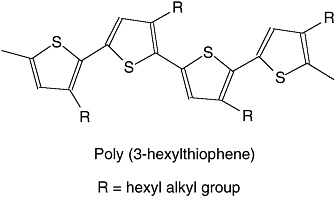
FIGURE 6-1
Superconducting organic polymer.
Another approach to creating potential molecular wires is using σ bonds that are associated with polyorganosilane materials (Figure 6-2). These polymers exhibit semiconducting properties like photoconductivity, high hole drift mobility, and electroluminescence. They can be designed and fabricated into either rigid or flexible polymer chains that can be precisely connected to silicon surfaces (Fujiki, 1996). These types of polyorganosilane hybrid materials could find applications in bridging conventional silicon-based circuits with molecular organic-base building blocks or components (Fujiki, 1996).
Carbon nanotubes represent a special class of wires in that they are inherently conductive but their conductivity is propagated via tube-to-tube contact points or through substrate-tube-substrate connection geometries. Actually, the electronic structure of nanotubes can be metal-like or semiconducting, depending on the diameter of the tube and on the geometrical arrangement of the carbon atoms. This ability to have or create conducting or semiconducting properties has allowed several researchers to design and build nanotube diodes, T and Y junctions, and field-effect transistors (FETs) (Collins and Avouris, 2000; Lefebvre et al., 2000; Meyyappan and Srivastava, 2000; Dekker, 1999).
Switches
A simple molecular switch allows transport of electrons through a molecule while at the same time being able to disrupt the transport process in the molecule via conformational changes or other reversible reactions. For example, photochromic molecules can undergo a photo-induced intramolecular change in their molecular orbital structure that can favor or reduce electron transfer, depending upon the final molecular configuration
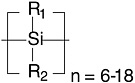
FIGURE 6-2
Potential molecular wire material that takes advantage of σ bonds in polyorganosilane materials. R1 and R2 are alkyl groups (branched and linear).
(Fraysse et al., 2000). Also, supermolecular structures, rotaxanes, are reported to have mechanical switching capabilities (Bissell et al., 1994).
Organic molecules that can be electronically switched on or off for extended periods might be used as the basic components of memory and logic devices. The molecules of choice are highly conjugated donor/ acceptor functionalized phenylene ethynylene oligomers that are very sensitive to their local environments. When these molecules are constrained in a well-ordered monolayer stack of dodecanethiolate, their switching ability between conductive (on) and nonconductive (off) states under an electronic field is severely reduced. When their environment is changed to a less ordered structure, they can switch ability much more rapidly (Jacoby, 2001).
It has also been shown that when several thousands of these types of molecules are configured between gold electrodes, they can be switched between conductive and nonconductive states that allow data to be written, read, and erased just as in magnetic storage media (Reed, 1999a,b; Reed et al., 1997, 1998).
Rectifiers
Molecules that allow electrical conductivity in one direction through the molecule but not the other can be classified as rectifiers (Aviram and Ratner, 1994). An example of this type of molecule is γ-(n-hexadecyl) quinolinum tricyanoquinodimethane (C16H33Q-3CNQ) (Figure 6-3). This particular molecule has a high dipole moment (43 debyes) zwitterionic ground state (donor + –π bridge – acceptor–) and a first excited state with lower polarity (donor ° – π bridge – acceptor°) and corresponding lower dipole moment (3 to 9 debyes). The ability to affect the flow of current in
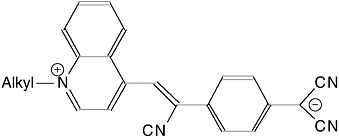
FIGURE 6-3
Molecular rectifier.
one direction and then in the opposite direction is a function not only of the difference in dipole moments of the molecule but also of how the molecule is configured between the electrodes of a test cell (Aviram and Ratner, 1974).
A Langmuir-Blodgett monolayer film of C16H33Q-3CNQ has been shown to rectify by intramolecular tunneling, while monolayers and multilayers tend to rectify as macroscopic film structures. These systems also show rectification between 105 K and 370 K, but there are concerns about voltage recycle capabilities and alignment stability of the film structures (Metzger et al., 1997).
Polymer Transistors
Transistors, as the major building blocks of any electronic circuit, should be the focus of interdisciplinary research teams in the future. Integrated circuits have been created using polymers in such conventional fabrication techniques as inkjet printing and microcontact printing (Garnier et al., 1994; Gelinck et al., 2000).
Figure 6-4 is a representation of a polymer field-effect transistor. The electrodes (gate, sources, and drain) were deposited by inkjet technology and the semiconducting or dielectric layers were created by conventional spincoating techniques. The polyimide channels were fabricated using photolithography and oxygen plasma processes on glass substrates, but polymer film materials, flexible or rigid, could be used as well. This particular all-organic polymer transistor had a high mobility of 0.02 cm2/V-sec and its on-off current switching ratio was 105 (Sirringhaus et al., 2000).
Other recent developments in non-inorganic transistor technologies include the use of an organic semiconductor (pentacene) as the thin-film active layer transistor constructed on a glass substrate (Klauk et al., 1999). In the most recent molecular scale transistor (field-effect transistor), monolayers of 4,4’-biphenyldithiol were self-assembled on a gold substrate and then sandwiched under another gold top electrode. Two of these transistors (approximately 1,000 molecules) were used to create a “0” to “1”/ “1” to “0” input switch (Schön et al., 2001).
Electronic Circuits
It has now been established that most, if not all, of the individual basic molecular-scale building blocks that are required to create electronic circuits have been demonstrated. The next step is to create economically viable and highly reliable electronic circuits that are equivalent or superior
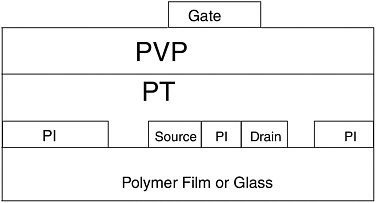
FIGURE 6-4
Representation of a polymer field-effect transistor. Gate, source, and drain = conducting polymer [poly(3,4-ethylenedioxythiophene) doped with polystyrene sulfonic acid]; PVP = polyvinyl phenol (dielectric); PT = poly(9,9-dioctylfluorene–co-bithiophene) (semiconducting); PI = polyimide (insulated). SOURCE: H. Sirringhaus, University of Cambridge, U.K., private communication, October 4, 2002.
to silicon technology but that operate on a molecular scale. Although a number of interesting organic/hybrid transistor components can be designed and put together and operate simple logic circuits, there still needs to be much research before we have a practical molecular processor that will replace semiconductor solid-state microelectronics (Drury et al., 1998; Reed, 1999a,b).
Alternative technologies like carbon nanotubes or molecular electronics vying to replace silicon technology for computing and data storage must meet certain criteria, such as high levels of integration (>109 transistors/circuit), high reproducibility (better than ±5 percent) and reliability (operating time >10 years), and very low cost (<1 microcent/transistor).
It is important to investigate new architecture alternatives to a CMOS-based conventional architecture that can take advantage of the unique electronic properties of the emerging nanomaterials. The use of genetic algorithms to generate novel architectures, evolvable hardware, and neuron model structures is now contemplated; such explorations may lead to computer systems based on nanomaterials and nanoelectronic devices. Since the future of nano or molecular electronics depends on the efficient commercial production of nanomaterials and it may be impossible to produce such materials without defects, it is also critical to invest in research on fault-tolerant architectures.
Opportunities and Challenges
The premise that molecular electronics will completely replace CMOS technology is probably not realistic. There is, however, a considerable amount of research in nanoscale CMOS, tunneling devices with III-V transistors, and single-electron devices that is projected to remain active throughout the 21st century. A current estimate of the time it will take for molecular electronics to become competitive with other technologies is between 2050 and 2100 (Seabaugh and Mazumder, 1999). Regardless of what time frame is projected for the replacement of CMOS electronic devices, the real need for miniaturization must be addressed. If molecular electronics is to provide a solution, partial or otherwise, for miniaturization of electronic devices, a number of major research and development hurdles must be cleared before high-performance, economic, and reliable devices can be produced at the molecular scale.
One of the first challenges for circuits composed of molecular wires, rectifiers, transistors, and so on is fabrication or assembly and connection of all the individual components. Photolithography chemistry, physics, and technology will have to be specifically adapted to the types of polymers and organic or organometallic building blocks that make up the circuitry. Though self-assembly of wires and rectifiers might be possible in the device fabrication process, the wires will still have to be attached to the termination points of the other components. Durability will also be important.
For all these reasons, the two major areas of molecular electronics research that need to be expanded between now and 2020 are
-
Advanced computational design and then synthesis of durable molecular organic, polymer, and hybrid building blocks; and
-
Advanced technologies for fabrication/assembly and component connection (Zhirnov and Herr, 2001; Kemp et al., 1998; Kelley et al., 1999).
A summary of some of the opportunities and challenges for the individual components required for molecular electronic circuits is given in Table 6-1.
TABLE 6-1 Summary of Where Research Is Needed to Develop Practical Molecular Electronics
|
Molecular Component |
Opportunities |
Challenges |
|
Molecular wires |
Viable method of connecting single molecules to a metal contact Use of self-assembly techniques to create molecular connections |
Fabrication of single molecules between electrodes Maintaining molecular contact between electrodes during military operations Long-term durability of the electrical conductivity or resistance of the organic molecule |
|
Rectifiers |
A single monolayer film that exhibits current rectification by intramolecular tunneling |
Voltage recycle capabilities over extended periods Maintaining alignment of the film structure over time |
|
Molecular switches (bistable molecules or ions) and transistors |
Ultrafast, nanoscale low-power circuits Billions of switches/transistors on a single chip Processing of increased information densities, especially if coupled to photonic devices (optical signal multiplexing and optical storage) |
Control of the switch (limiting switching errors at the molecular level) Reversibility of the switch Readability at the molecular level Input/output attachments (nanowires or optical circuits) Heat generation and dissipation Fabrication using new techniques (scanning tunneling microscopy) |
Photonics
Photonics can be defined as the science and technology associated with the manipulation of photons (light energies) for commercial and military applications. Photonics is concerned with the generation, transmission, switching or modification, amplification, and reception of light energy—which can be equated to information processing. Writing, sending, and reading information (optical communication) or manipulating information (optical computing) are just some of the areas that are important to the military, today and in 2020 (Bane and Bradley, 1999; Stix, 2001; McCarthy, 2001; Drollette, 2001).
The technological foundation of photonics associated with telecommunications is the use of devices both passive (optical fiber/waveguides,
beam splitters/combiners, couplers, filters, and optical multiplexers) and active (light sources, optical switches or modulators, and detectors) (Figure 6-5). A future all-optical or hybrid (electronic/photonic) computer may have many of the same components, with the same functions as telecommunications equipment (Figure 6-6), but their size and time scale for operation will be considerably different (Eldada, 2001).
Light Generation
Semiconductor lasers (fixed and tunable), light-emitting diodes (LEDs), electroluminescent phosphors, and even miniature halogen or metal halide arc lamps are widely used today in telecommunications, sensor products, medical diagnostic applications, optical circuits, equipment inspection, and optical recording/reading devices. There is a major effort to commer-cialize organic LEDs for display applications. These light sources will be
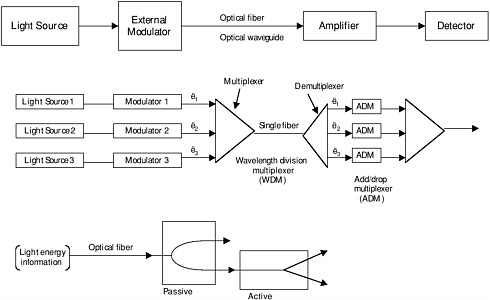
FIGURE 6-5
Photonic devices in the telecommunications industry. SOURCE: Reprinted by permission from Eldada (2001). Copyright 2001 by the International Society for Optical Engineering (SPIE), Bellingham,WA.
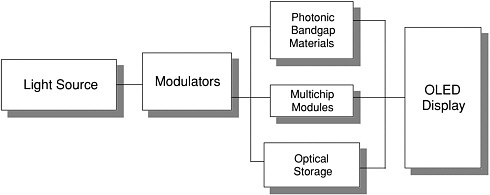
FIGURE 6-6
Potential photonic components for incorporation into all- or hybrid-optical computers. SOURCE: Reprinted by permission from Eldada (2001). Copyright 2001 by the International Society for Optical Engineering (SPIE), Bellingham, WA.
incorporated into devices that will be used by the military in the near future through 2020 (see discussion on OLEDs) (Giamundo, 2001; Krueger and Read, 2001).
Light Modulation (Optical Switching)
The telecommunications industry needs not only sources of bright, multiwavelengths of light energy but also a mechanism by which information is created within the light wave before it is transmitted to its destination. One method of creating information is to rapidly turn the light sources on or off (modulation) to create a digital signal. This method has limited capabilities (on/off rates of 2-3 GB/s) for rapid data generation. A better device technology keeps the light source output energy constant but very rapidly externally modulates (on/off rates of 10-40 or greater GB/s) the light signal after it is generated. These high-speed modulator devices can be fabricated out of either inorganic or organic-base materials; but the organic/polymer modulator devices are still in the research and early commercial development phase (Thomas et al., 2000a; Gogonea and Multhaupt, 1996).
High-speed, organic polymer-based, optical intensity modulators or switches operate on the principle of second-order molecular optical nonlinearity, or nonlinear polarization of highly unsaturated and aromatic
compounds (chromophores) attached to a polymer backbone in an electric field. The electro-optic (EO) phenomena in the polymer come from chromophores that have a high second-order nonlinear optic effect and from the alignment of the chromophore molecules in an electric field. The two major factors that influence the EO effect of a chromophore are dipole moment (µ) and first molecular hyperpolarizability (β). Advances in molecular modeling software now make it possible to accurately calculate both µ and β for almost any type of chromophore; these calculations show excellent correlations with experimentally determined EO coefficients (Burland et al., 1994). All of the state-of-the-art EO chromophores have the basic structures shown in Figure 6-7.
It should be noted that all-optical processing (switching, computing) will require similar types of highly conjugated molecules, but these applications will depend upon the third-order, rather than the second-order, optical nonlinear effects of the molecule (Dalton et al., 1999a).
The most common device for either modulation or light-switching is a Mach-Zehnder interferometer that uses the polymer-chromophore as the waveguide and a special electrode configuration that activates the chromophore (changes its refractive index), causing an on/off disruption of the light propagating through the device (Figure 6-8) (Dalton et al., 1999a,b).
Light Transmission (Optical Fibers and Wave Guides)
The primary method for transmitting light over long distances (optical communications) is by using silica-base optical fibers, which have very low optical loss characteristics. This technology is continually being improved (Thomas et al., 2000a,b).
Polymeric optical fibers, the competing technology, have inherently high optical losses, but a number of synthetic approaches (deuteration or fluorocarbon modifications and graded index configurations) have improved their light transmission properties. Polymer optical fibers may never

FIGURE 6-7
Basic structures of electro-optic chromophores.
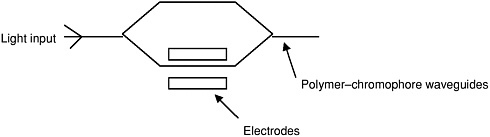
FIGURE 6-8
EO polymer-chromophore waveguide electro-optical modulator or switch. SOURCE: Reprinted by permission from Dalton et al. (1999a). Copyright 1999 by the American Chemical Society, Washington, DC.
replace silica fiber technologies for long-distance communication, but there are short-distance applications (transportation, sensors, product inspections) where polymer fibers have advantages (Kaino, 1992; Theis, 1992).
One area where polymers might compete with silica substrates is in flat planar waveguides, multichip modules, and other integrated optical circuit devices. Silica substrates for integrated optics are already well established; products like single beam splitters, thermo-optic switches, dense wavelength division multiplexers (Bragg gratings, arrayed waveguides and add/drop multiplexers [ADM]) are created using sophisticated integrated silicon-based optical circuits. These devices are highly reliable and can be scaled to a number of complex footprints, which helps maintain a cost structure that is economic for both the manufacturer and the user (Okamoto, 2000). However, polymers are easily processed or fabricated into products similar to silica-based products but that have lower costs and greater complexity of design and that are potentially easier to make connections with. They have achieved very high durability performance ratings in the laboratory (Driemeier, 1990; Wang et al., 1990).
Light Amplification
Optical amplifiers can be designed to enhance a signal directly inside a light source (semiconducting amplifiers) before feeding it into an optical circuit, or to preamplify a signal before it goes into a photodetector. In-line fiber optical amplifiers consist of silica glass fibers that have their cores doped with small amounts of erbium. A small perturbation (weak light
signal) of the populated atomic energy levels of the f-shell of the erbium (Er) atoms stimulates the emission from these populated levels to cause amplification. The use of stimulated Raman scattering effects directly inside the optical fiber is another way to amplify a weak optical signal. It should be noted that erbium-doped fiber amplifiers (EDFAs) operate only at wavelengths between 1,500 and 1,600 mµ. Semiconducting amplifiers and Raman amplifiers can amplify a much wider range of telecommunications wavelengths (Thomas et al., 2000a).
There have been a number of examples of rare-earth complexes of Er3+, Nd3+, and Sm3+ being chelated, incorporated into polymer fibers or waveguides, and examined for their short-length amplification properties. If the stability of these hybrid metal/organic-polymer amplifiers can be improved, they might be used in a number of devices that contain complex (high-loss) optical circuits. Current technology is limited to a narrow range of energy wavelengths, but new developments in materials could expand the use of these types of amplifiers (Koeppen et al., 1997).
Photonic Bandgap Materials
The interaction of light with a material is strongly influenced by the dielectric constant or refractive index. Yablonovitch (2001) postulated that a material having the right pattern of defects or periodic structures should be able to trap and channel photons much as semiconductors control electrons. Semiconductors have crystalline structures that keep electrons in a specific energy range (electronic bandgap) that does not allow them to flow freely through the material. Doping a semiconductor with ions can alter or control the flow of electrons to create electronic circuits. If a pattern or lattice structure is created that has different optical properties, light can be trapped in an optical bandgap. This trapped light will not propagate unless a defect is created in the lattice that allows passage of the light in the materials (Yablonovitch, 2001).
A number of inorganic periodic structures have been fabricated that allow millimeter wavelengths of energy to be turned around a 90 degree corner, which is impossible for an optical fiber or waveguide. The advantage of these photonic bandgap materials is that they can control light in fully integrated optical circuits and thus become a basic foundation or building block for an optical computer (Levi, 1999).
Although the early work in photonic bandgap material is based on inorganic waveguide materials, it is possible to develop periodic dielectric structures based on incompatible blends of polymers. Block copolymers
may be developed for photonic bandgap materials that can self-assemble into one-, two-, and three-dimensional periodic structures (Edrington et al., 2001).
Optical Storage
For a discussion of where polymer materials can be used in new optical storage media, see the section on photorefractive polymers.
Optical Computing
Very large scale integration is approaching certain limitations for silicon-base chips, and the increasing density of interconnections on chips could influence the development of all-optical or hybrid (electronic/ optical) computers. The potential advantages for all-optical or hybrid computers derive from the fact that photons move faster (speed of light) than electrons, and that it is possible to make many optical interconnec-tions for future massively parallel processing (MPP) computer systems. Optical interconnects can support high bandwidths (multiplexing capability), are reliable with low power consumption, and are immune to electromagnetic interference (EMI) effects while having low crosstalk capabilities. Guided wave technologies will be used to provide interconnection sites between chip-to-chip, module-to-module, and board-to-board components in all-optical or hybrid processors/computers (Karim and Awwal, 1992; Abdeldayem et al., 2000).
Photonic Materials: Summary
The photonic devices of the future will have to be configured so as to receive both electronic and photonic data from multiple sources (humans, sensors, machines). Once the information is received, it must be converted into all-optical signals and either analyzed in real time or stored optically for later information processing needs. It is also possible that the analyzed information packets will need to be transmitted rapidly to a receiver (human or machine) for further analysis, data confirmation, or storage. This final information packet might be used to activate another system as a final output of the analysis (Figure 6-9).
Table 6-2 contains a summary of where organic and polymeric materials need to be developed to create photonic devices that will have advantages over other technologies and meet military application needs in the future.
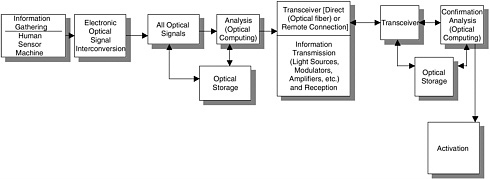
TABLE 6-2 Summary of Where Organic and Polymeric Materials Might Be Used in Military Photonic Devices in 2020
|
Technology |
Application |
Advantages |
|
Light sources such as organic light-emitting diodes (OLEDs) |
Displays Low-power generation of multiple light signals |
Flexible; can cover a wide range of viewing angles Multispectral signal processing |
|
Polymer optical fibers, polymer waveguides, and polymer/hybrid optical amplifiers |
Telecommunications Multiple-device connections Multichip modules Optical computer architecture and signal routing Signal enhancement |
Not influenced by power surges Not subject to electrical shorts Not sensitive to electromagnetic interference No crosstalk between channels Light in weight Devices easy to reconfigure, connect, and integrate |
|
Polymer photonic modulators and switches |
RF signal distribution and control in space systems Rapid communication Optical computing applications Electrical-to-optical signal conversion Millimeter-wave signal generation Optical beam steering Detection of signals |
High bandwidth (50 GHz or higher) Lightweight Not sensitive to electromagnetic interference High sensitivity at low cost Radiation resistant Low dispersion in the index of refraction between IR and millimeter-wave frequencies Easy to fabricate Low power consumption |
|
Photonic bandgap materials, photorefractive polymers |
Optical computers Optical data storage |
Rapid computational processing speeds Able to process and analyze very large banks of diverse data |
Optical Limiting Materials
Optical switches and optical limiters both use nonlinear optical (NLO) effects; the difference between the systems is illustrated in Figure 6-10. All-optical switches require a material that has a fluence threshold at which the material will turn completely opaque. Different schemes to achieve all-
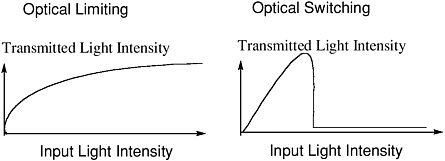
FIGURE 6-10
Schematic representation of optical limiting and switching.
optical switching using nonlinear optical effects have been extensively studied. Most of the device concepts use third-order NLO properties that are generally not yet large enough in almost every known material.
In optical limiters, light transmission is saturated when the light intensity reaches a certain level. Optical limiting can also be achieved by using different materials and mechanisms. Two-photon absorption and Kerr effects are two instantaneous nonlinear processes. Excited state absorption and free charge carrier absorption are accumulative nonlinear optical processes that require absorption and dissipation of light energy, and that can also be applied to optical limiting. The past several decades have seen studies of various optical limiting materials, such as inorganic semiconductor materials, organic or organometallic molecules, fullerenes, and nanometer semiconductor or metallic clusters (Tutt and Boggess, 1993; Spangler, 1999; Perry, 1997). Among these materials, carbon-60 and metallophthalocyanine complexes exhibit the best performance under certain conditions (Perry, 1997; Sun and Riggs, 1999; Miller et al., 1998; Tutt and Kost, 1992; Perry et al., 1996). Organic molecules with large two-photon absorption have also been synthesized and extensively investigated.
Organic Light-Emitting Materials
Significant electroluminescence (EL) in low-molecular-weight materials like alq3 was demonstrated in the 1980s and in polymeric materials like poly phenylene vinylene (PPV) in the early 1990s. In both cases the prevailing mechanism is singlet decay from electron-hole recombination to
excitons. The process is beset by nonradiative alternative decay mecha-nisms that severely limit quantum efficiencies. Nevertheless, as a result of intensive worldwide academic and industrial research, improved designs, materials, and fabrication processes have brought this area to the commercial exploratory stage in the relatively short period of one decade.
Technical issues that have received prominent attention include a priori design of high intrinsic quantum-efficient low-molecular-weight and polymeric light-emitting materials covering the full spectral range, blends and other nanostructured (self-assembled) materials of high efficiency, charge injection and mobility in organic materials, device architecture and ancillary drive designs, charge transport materials, rigid and flexible electrode substrate alternatives to indium-tin oxide (ITO), device mechanisms and lifetime improvements, and stimulated emission and lasing from EL materials.
Organic LEDs using both low molecular weight and polymeric lumiphores are now in full-scale production in the United States, Japan, and Europe. These are typically monochromatic displays, though full-color versions are on the immediate horizon, with applications in mobile telephone and small-scale (e.g. automobile) lighting. The efficiencies and lifetimes of these displays make production economically viable, though competition with new inorganic LEDs like III-nitride compounds and with alternative display technologies makes it possible that OLED display technology will secure only a niche footing.
In certain areas, OLED technology is likely to prevail by 2020. It is probable that architectures incorporating conformable, flexible substrates of any desired size will be created. These will incorporate active matrix full-color RGB pixels driven by hybrid or all-organic three-element circuitry. The economic advantages of such designs will largely center on low-cost fabrication, including roll-to-roll printing technologies.
The structure-property relationships required to optimize lumiphores include the challenge of predicting bandgaps and electron affinities by computational techniques. These will probably be developed by 2020, will permit color tuning (already available on a semi-empirical basis), and will be able to use more stable, higher work-function cathodes. To achieve high-efficiency white light emission, a multichromophore system must be devised either with conventional layer design or with nanostructured chromophore blends. The latter imply sophisticated morphological control and also offer the challenge of obtaining quantum-well or -dot structures of higher gain. Currently, three quarters of the excitonic energy is lost to
triplet excitation states. By devising systems that facilitate intersystem crossing processes using heavy-atom or other effects, the theoretical quantum efficiencies can be significantly increased. Because many nonradiative decay paths arise because of impurities in the chromophore or from reactions occurring at interfaces, synthetic strategies to overcome these problems will be essential. Understanding of charge transfer processes at organic-metal or organic-organic interfaces is at a relatively primitive stage; increased attention to this area—theoretical, computational, and experimental—could have large payoffs.
Molecular Magnetic Materials
Magnetism arises from the quantum mechanical coupling (exchange interaction) between the spins located on atomic sites in a solid. Until 1985, all known magnets were based on the ordering of spins located on d-orbitals of transition metal ions and f-orbitals of rare-earth ions. The number of natural magnetic materials is limited; most are composed of transition metals (Fe, Co, Ni, and Gd), alloys, and oxides and prepared by high-temperature metallurgical or ceramic processes. In 1985 a revolutionary new platform technology was reported—organic-based magnets (Miller et al., 1985).
Though the first reported organic-based magnet (decamethyl-ferrocenium tetracyanoethanide [DMeFc][TCNE]) ordered magnetically only below 5 K, this discovery offered an opportunity to use the methodology of synthetic organic chemistry to prepare magnets by design using lowtemperature synthesis and processing options (Miller et al., 1988; Ovcharenko and Sagdeev, 1999).
The best candidates for high-temperature ferromagnetic materials are those containing magnetic transition metal ions. Purely organic ferromagnetic materials are difficult to prepare and the several reported systems are controversial. Prussian blue, Fe4III[FeII(CN)6]3xH2O (x = 14–16), a highly symmetrical octahedral coordination compound, is the simplest ferromagnetic molecular material; it undergoes a magnetic phase transition at 5.6 K. If the iron ions are replaced by other metal ions in variable ratios, very high critical spin transition temperatures (Tc) can be obtained. The highest Tc values are observed for V3[Cr(CN)6]2 and Cr3[Cr(CN)6]2 (Gadet et al., 1992; Mallah et al., 1992; Ferlay et al., 1995). The compound V0.42IIV0.58III[Cr(CN)6]0.862.8H2O is used to prepare a thermomagnetic
switch and a device for absorbing solar energy. Another class of materials that exhibits high-temperature magnetic ordering is prepared from compounds of metals with the tetracyanoethylene radical anion (TCNE) with the composition of M(TCNE)2(CH2Cl2)y (Zhang et al., 1998; Manriquez et al., 1991). Depending on the nature of the metal ions, a wide range of Tc is observed [Tc = 75 K, M = MnII; Tc = 75 K, M = FeII; Tc = 350 K, M = VII].
Materials based on fullerenes and their derivatives are of interest. For example, tetrakis(dimethylamino)ethylene-fullerene shows ferromagnetism below 17 K and 3-aminophenyl-methano-fullerene-cobaltocene below 19 K (Narybetov et al., 2000; Allemand, 1991; Mrzel, 1998). More recently, a weak ferromagnetic signal was detected in polymeric C60 samples at temperatures up to about 227°C (Makarova et al., 2001). Although the origin of this magnetism is unclear, the results are exciting enough to justify further investigation.
As of 2001 more than a dozen new families of organic-, molecule-, and polymer-based magnets had been reported, with many of these families having numerous known members. The magnetic ordering temperature, Tc, was raised in 1991 to 400 K (125°C) with the preparation of V(TCNE)~2. In this case Tc is even above the decomposition temperature (350 K) (Manriquez et al., 1991).
By 2001 new processing choices had become available. For example, the V(TCNE)~2 with Tc of 400 K could initially be prepared only by reaction in solution. In 2000 it was reported that a low-temperature chemical vapor deposition (CVD) process operating at 40°C could be used to prepare films of V(TCNE)~2 that adhere to a wide variety of substrates, including glass, silicon, and Teflon (Pokhodnya et al., 2000). Further, these CVD-prepared films are substantially more air stable (unprotected samples remain magnetic in air for over two hours compared to less than a minute for the fine powders).
New phenomena particular to organic-, molecule-, and polymer-based magnets are appearing. These include organic semiconductors that are also magnets at temperatures considerably above room temperature. The magnetism of one class of molecule-based magnets could be increased or decreased in magnitude and ordering temperature by applying light of the correct wavelength. This phenomenon can occur below 20 K. A second class of organic-based magnets was reported to have photoinduced magnetism at temperatures as high as 75 K, nearly a fourfold increase in the temperature range for this phenomenon (Pejakovic et al., 2000). Yet another new phenomenon is the unusually strong frequency-dependent response to applied magnetic field for some systems.
Beyond ferromagnetic properties, paramagnetic molecules are also interesting and useful. An example is molecules that undergo photoinduced spin-crossover, a process in which the molecules transition from a low-spin to a high-spin state. More recently, Kahn and Martinez (1998) have described compounds that can undergo spin-crossover under thermal condition. They found that as the spin state changes, the color of the materials also changes. The information is stored as long as the temperature is kept within the hysteresis loop. Cooling down the materials erases the information. These materials can be used in display devices and are very interesting for such military applications as information storage and optical switches.
Molecular Magnetic Materials: Summary
Molecular magnetic materials can be expected to offer a range of properties that can be tuned by design and implemented by the methodology of synthetic chemistry. These tunable properties will include controlled mass density, mechanical flexibility, low-temperature processibility, high strength, solubility, low environmental contamination, compatibility with polymers for composites, biocompatibility, high magnetic susceptibilities, high magnetizations, high remanent magnetizations, low magnetic anisotropy, optical transparency, metallic, semiconducting or insulating conductivity, spin-polarized transport, and erasable photoinduced magnetism.
Given the pace of innovation in this field and the centrality of magnetic materials to many of today’s technologies, we can expect that by 2020 there will be widespread use of organic- and polymer-based magnets both in current and in not-yet-proven technologies.
However, organic magnetic materials face strong competition from inorganic nanostructured magnetic materials, which have developed very rapidly in recent years. Nanoclusters made from transition metal like Co, Ni and alloys like FePt can be solubilized with organic ligands (Black et al., 2000; Sun et al., 2000). The size of these nanoparticles can be well controlled and they can self-assemble into three-dimensional superlattices (a typical example is the FePt nanoalloy particle). The self-assembly can be thermally transformed into ferromagnetic nanocrystal thin films that can be used in memory devices.
Despite the challenges and competition, organic magnetic materials possess unique features that other materials cannot match, among them versatility in structural modification to fine-tune properties, new properties like photo-induced spin crossover transitions, and ease in processing.
Photorefractive Materials
Organic photorefractive (PR) materials, which exhibit weak intermolecular interactions, are typically soft amorphous solids (Günter and Huignard, 1998; Solymar et al., 1996; Ducharme et al., 1991). In these materials, charge carriers are generated through dissociation of the tightly bonded excitions, not by interband ionization as in inorganics. The photogenerated carriers are transported under an electric field via intersite hopping. Due to the amorphous and disordered nature of the network, the depth of the traps in organic materials has a rather dispersed distribution. The EO response is provided by an individual molecular chromophore with an electronic origin (Moerner et al., 1997; Wang et al, 2000). The particular advantages of amorphous organic PR materials include a low dielectric constant, easy processing, and a high EO coefficient.
Although the PR effect is a complex phenomenon, a significant development of organic PR materials has been achieved in less than 10 years (Moerner et al., 1997; Wang et al, 2000). The advances in molecular engineering have produced numerous polymeric and molecular PR materials and three fundamentally different strategies for preparing PR polymers and organic materials: composite polymeric materials, fully functionalized polymers, and monolithic molecular materials.
Composite materials consist of polymer hosts (EO polymers, photoconductive polymers, or inert polymers) doped with different functional species as necessary for the PR effect. This approach has been successful for many PR systems. In general, there are four bases for composite PR polymers: (1) NLO polymers, (2) photoconducting polymers, (3) inert host polymers, and (4) liquid crystal matrices. In the first, a second-order NLO polymer is doped with charge sensitizers and charge-transporting molecules. In the second, a photoconducting polymer is doped with second-order NLO molecules and charge sensitizers. The third uses inert polymers as the host matrix for NLO chromophores and charge-generating and transporting species. The final class of PR materials is nematic liquid crystals doped with photosensitizers. In these materials, the major contribution to the photorefractive effect comes from the birefringence caused by reorientation of the liquid crystal molecules (Wiederrecht, 2001). Various polymers and molecular components are used in preparing PR composite materials, and numerous combinations of composites can be prepared. Several composite systems are outstanding in their PR performances
(Moerner et al., 1997; Wang et al., 2000). Overmodulation of the diffraction efficiency, large net optical gain, and large video frequency response time have been achieved.
A second option is fully functionalized polymers that contain all of the necessary functions for the PR effect in a single polymer chain (Wang et al., 2000). Different functional polymers have been reported to exhibit PR effects, including functional polyurethanes, functional conjugated polymers, functional polyimides, and conjugated polymers containing transition metal complexes. The most promising of these systems is the functional conjugated polymer containing metal porphyrin and phthalocyanine complexes. In this system, net optical gain and high diffraction efficiency exist. Unlike the composite materials, these functional polymers are thermodynamically stable and will not undergo phase separation.
More promising is a simple class of amorphous PR molecular materials exhibiting high PR performances. These materials show excellent processibility and transparency, long-term stability and durability, significant orientational enhancement, large net optical gain, and high diffraction efficiency.
Several prototype devices clearly show the advantages of using organic PR materials; these include devices for storage, retrieval, and subsequent erasure of digital data pages with a data density of 0.5 Mbit/cm2 and for novelty filters and security systems.
To explore the practical application of organic PR materials, the ideal characteristics of materials for optical applications are high resolution, better energy sensitivity, broad wavelength sensitivity, real-time capabilities, good stability and compactness, and low cost. Although organic PR materials are among the most sensitive materials, numerous problems need to be solved. Improvements are needed to generate materials that respond faster, require lower applied voltage, and operate at the target wavelengths of telecommunication interest (1.3 and 1.5 µm).
Further improvements will depend on better understanding of the photochemical and photophysical details of the whole PR process: PR mechanisms in organic materials are still not well understood. These reasons may be due to the complexity of both the PR effect itself and PR materials. This is especially true for polymeric materials. A better mechanistic understanding will surely assist in the search for new PR materials with improved macroscopic properties. Funding of both device research and fundamental science is recommended.
Photovoltaics
The generation of electrical energy from sunlight is drawing much attention. Military interest derives primarily from the fact that such power can be generated and used (or stored) on demand. While the efficiencies of inorganic semiconductor-based photovoltaic devices are being improved, there is great appeal for an organic counterpart. Organic materials, either as low-molar-mass compounds on a flexible support or as polymers, are attractive because typically they offer the prospects of facile, large-area fabrication, mechanical flexibility, much lower cost, and fine-tuning of optical properties to match the absorption characteristics of the solar spectrum. To date, many limitations of organic materials have been recognized, and much fundamental research is still needed to address them.
The key component of a photovoltaic device is a material that can exhibit good photo-induced charge carrier generation with subsequent collection of carriers (Wallace et al., 2000). The basic steps are light absorption, charge separation, and charge collection. Light absorption can be quite efficient, although many conjugated polymer systems have rather large bandgaps and little absorption from the visible into the near-IR region.
A major problem with organic-based systems is limited charge separation of photo-induced carriers. The electron-hole (e-h) pairs created when light is absorbed are often bound as excitons with a relatively low dissociation tendency. Excitons are mobile, but their diffusion lengths are much smaller (<10 nm) than typical optical absorption lengths (>100 nm). It is desirable to efficiently dissociate excitons to allow holes and electrons to freely migrate to opposite electrodes. The third step, carrier transport, can be limited by low carrier mobilities. The challenge is organic materials that mitigate these limitations. Hybrid systems (e.g., silicon/organics) may offer some possibilities for improvement, although the ultimate goal is totally organic photovoltaic materials.
Strategies for enhancing carrier mobility include creating higher-purity, structurally perfect materials, perhaps as polycrystalline films with large crystal sizes, which can also help to increase the exciton diffusion length. Also, materials with bipolar (n and p) transport capability can help in exciton dissociation. Multicomponent organic materials might provide multiple absorption pathways and high interfacial areas between electron
and hole transport regions that can provide a mechanism for exciton dissociation. A promising approach is the creation of molecular interfaces in a conjugated polymer, such as a substituted poly(p-phenylene vinylene) doped with C60, which acts as an electron acceptor leading to e-h pair separation (Yu et al., 1995). A recent example is use of the discotic liquid crystal hexa-peri-hexabenzocoronene in combination with a perylene dye to produce thin films with vertically segregated perylene and hexabenzocoronene regions that have a large interfacial surface area that promotes e-h pair separation and subsequent transport. Incorporated into diode structures, these self-assembled films show photovoltaic response with external quantum efficiencies of more than 34 percent near 490 nm (Schmidt-Mende et al., 2001).
Finding the appropriate morphology and electrical and optical properties will depend heavily on processing conditions, so these must be carefully controlled. The self-assembly of liquid crystals is a promising approach, and there are opportunities for simultaneous synthesis and processing of organic-based photovoltaic devices. Toward that end, one proposal is to prepare stretch-oriented, conjugated polymer films with conductive polymer-dipolar-molecular materials acting as antennae and diodes to convert light to electric power (Marks, 1993).
There is another important practical consideration, namely, the stability of organic materials upon repeated exposure to light in the presence of oxygen and moisture. New materials with all chemical bonds having high dissociation enthalpies must be designed and synthesized, along with improved means of encapsulating devices. Attention must be given to electrodes attached to the organic components and how to minimize degradation at the electrode-organic interface. Finally, there is a need for new transparent electrodes that allow sunlight into the device with minimal absorption and with properties that make the electrodes amenable to large-area processing. While ceramics like tin-doped indium oxide are popular, there are opportunities for new organic transparent electrode materials. Here the bandgap would need to be small, so that doping-induced optical absorption would appear in the IR rather than the visible region of the spectrum.
Device processing considerations will also be important. Low-cost continuous coating processes are desirable.
The field of organic photovoltaics has been a modestly active research area. This panel believes it deserves much more attention if the goal of all
organic devices is to be realized in the next two decades. Like many others, this area is highly interdisciplinary. Steps must be taken to ensure that researchers interact productively in and between teams.
Membranes
Polymers are uniquely suited to be membrane materials because they can be processed as large-area films with properties that are readily tunable via chemical composition and processing. Applications include membrane-based separations (e.g., desalination of water by reverse osmosis) that represent an important class of operations in the chemical industry, ion-transporting films as solid electrolytes in power sources and organic LED devices, and protective clothing for combat personnel.
In separations applications, the penetrant material is allowed to pass through the membrane either by sieving through pores (for penetrants >2 nm in diameter) or by specific molecular interactions between the penetrant and the membrane material (typically for penetrants < ca. 2 nm). An example of the former is ultrafiltration. Reverse osmosis is an example of the latter: Water molecules interact with the membrane while solvated inorganic ions do not (solution-diffusion mechanism). Both mechanisms may be in play between these extremes (e.g., in nanofiltration). Ion-conducting membranes for power sources require electrical properties resulting from interconnectivity of ion-conducting paths, good dimensional stability, and, in fuel cells, the ability to suppress diffusion of anode and/or cathode reactants between the electrodes. High-temperature (120-180°C operation) membranes are being examined for hydrogen-based fuel cells to increase efficiency and minimize poisoning of catalyst sites by carbon monoxide from fuel reformate streams. In battery applications, membrane research is directed at structures that promote the facile transport of specific ions (e.g., Li+) and on developing truly solid (e.g., nonplasticized) electrolytes having a high intrinsic free volume and hence high ion mobility.
Polymeric membranes will continue to present opportunities for significant growth in chemical and biochemical separations, sensors, gas and water purification, and electrolyte separators for batteries, fuel cells, and supercapacitors. There is increasing interest in highly selective membranes for various sensor applications where component separation before detection is essential. Water purification, especially desalination and
wastewater treatment, will become even more important because of an expanding population and limited supplies of fresh water. Membrane materials that can self-heal (i.e., repair pin-holes or tears) will be particularly useful. Fundamental research on membranes will have spin-off potential in the medical arena in such areas as wound healing.
Membrane-based separation processes attempt to maximize selectivity while maintaining a high throughput. The medium is often asymmetric membranes, which have a thin skin affording selectivity and a porous backing layer that enhances throughput. Ideally, this two-layer arrangement would be largely unnecessary if the porosity of the membrane could be precisely controlled to molecular dimensions, affording true size-selective and, through functionalization of the pores, chemoselective separation. Indeed, inorganic materials like zeolites exhibit such characteristics; zeolite/polymer hybrids show promise as flexible membranes with good selectivity. Also, recent work on molecular imprinting of highly crosslinked polymers suggests strategies for preparing polymeric materials with similar capabilities that still retain many desirable features of polymers (flexible films and fibers, facile processing, easily tuned selectivity via organic functionality).
Block copolymers provide a useful platform by self-assembly of dissimilar block components into thermodynamically stable nanophases. As an example, in new proton-conducting block copolymer membranes for fuel cells, nanoscopic conducting domains spontaneously organize during processing. Block copolymers are also being considered as protective membranes for soldiers that can be selective about absorbing toxic agents yet be breathable for comfort due to the dual roles of the compositionally different, phase-separated domains.
A key challenge for defense interests will be producing breathable protective clothing for armed forces personnel that has embedded sensors and related electronics for the rapid assessment of environmental conditions and the binding and detoxification of various agents. Here, membranes will need to be smart (have sensing and reporting capability) in addition to having selectivity for toxic agents versus, for example, water. Also, materials that actually change barrier properties in response to a stimulus (chemical, electrical, magnetic) are desirable. Very thin membranes will require sensors and actuators of very small z dimension; here carbon nanotubes may play a role. Advances in materials processing and nanotechnology anticipated over the next two decades will have a direct
and major impact in achieving multifunctional smart materials at reasonable cost.
Electrically and magnetically active polymers should also be considered, either as active membrane materials themselves or as embedded sensing and information-processing elements. For example, in electrically conducting polymers, the pore dimensions might be tuned using an electrical potential concomitant with oxidation/reduction chemistry and diffusion of counterions. Multicomponent polymer systems may also undergo dimensional and hence permeability changes as a result of field-induced modulation of microphase morphology.
This panel believes that membrane research will be a fertile area for DoD over the next two decades. Significant resources should be allocated to the fundamental science of modeling, synthesis, and processing of membrane materials, with an eye toward development of smart materials that can report on the local environment and change properties as needed, and can also repair defects. Attention should also be given to membranes capable of cleaning water with minimal energy expenditure, and to ion-transporting membranes for high-performance power generation (Koros et al., 1992).
Metal Organic Catalysts
A catalyst is a material that promotes a chemical reaction without becoming part of the product. By lowering the energy barrier for a chemical reaction, catalysts increase the reaction rate. In most chemical reactions, the goal is selectivity: chemoselectivity, stereoselectivity, chiral selectivity. To increase yield of the desired chemical product, the strategy is to find conditions that produce a controlled reaction, such as hydrogenation, hydroformylation, disproportionation, isomerization, carbonylation, or oxidation. In each case, a catalyst is used to promote the reaction and increase the yield.
Metal-organic catalysts are primarily metal alkyls, alkyls of Zr, Co, and Rh. Selectivity is a major factor in choosing a metal organic catalyst. For example, chiral selectivity allows the choice between two forms of a molecule that mirror each other; while one form may be beneficial or desirable, the mirror image may be harmful (Borman, 2001).
The focus of work on metal organic hybrids is homogeneous catalysis that can displace heterogeneous catalysts (Herrmann and Cornils, 1997).
The popularity of heterogeneous catalysts stems from the fact that they do not need to be recycled, and they have long service life, but homogeneous catalysts offer high activity on a metal-content basis. While it is difficult to recycle homogeneous catalysts, in some cases they can be recovered.
Metal organics contain ligands that keep the metal ion in a monatomic state of stereochemistry. The metal ion presents coordination sites for performing redox chemistry and coordination chemistry. Metal organic catalysts work on C-H, C-C, and C-F bonds.
Homogeneous catalysts should be studied in a step-by-step process to gain a mechanistic understanding of complexation, oxidative additions, reductive elimination, and insertion/migration mechanisms.
It is hard to draw a distinction between homogeneous and heterogeneous catalysts (Davies et al., 2001). The latter are designed to be completely removed from solution by filtration, but traces of heterogeneous catalyst may end up in the product. Presently, many of the encapsulating methods used with homogeneous catalysts render their behavior similar to that of heterogeneous catalysts. The newer methods of entrapping metal organics, such as sol-gel processing, reduce the leaching of the catalyst to the levels expected for heterogeneous catalysts (Blum et al., 1999). The rapid emergence of new encapsulating technologies, along with the high-throughput screening possible with combinatorial chemistry, has brought a wealth of new catalysts (Senkan, 2001).
Based on the successes of homogeneous metal organic catalysis, many new directions are being pursued. Two successes were hydroformylation, e.g., in the synthesis of Vitamin A, and carbonylation, e.g., in the conversion of methanol to acetic acid. There are active research programs looking into new ligands and new entrapment schemes, and there is interest in more sophisticated metal organics, such as metallocenes (Togni and Halterman, 1998), that are interesting for alkene polymerization. In addition, study of metallocenes should improve the fundamental understanding of mechanisms for designing better catalysts.
Among new directions for metal organic catalysts are the use of rare earth ions and bimetallic organic catalysts (Blum et al., 2000). In addition, nanoclusters of metals are a new development in precious metal organic catalysts. There are active efforts to produce metal organic catalysts supported on mesoporous materials and zeolites. Other new topics are organometallic chemistry in cells, and analogs to enzyme biocatalysis with metal organics.
Advances in synthesis have improved methodologies for designing metal organic catalysts. Work on polyoxometalates has led to stronger metal-ligand bonds (Schroden et al., 2001), and the capability of forming clusters. Sol-gel processes have been used to create better supports and high-surface-area materials (Avnir et al., 1998). Sol-gel processing also has been used to encapsulate catalysts to protect them from degradation.
New methods of complexation have given better ways to anchor catalysts. Silsesquioxanes are a class of materials that expand the types of support structures available (Zheng et al., 2001). With silsesquioxanes, mesoporous materials, and zeolites, other support structures are needed to prevent clustering and loss of activity. A new development in sol-gel encapsulation is the successful incorporation of an acid (molybdic acid) and a base (N-2-aminoethylamino-propylated silica) in the same silica matrix. This concept allows sequential acid- and base-catalyzed reactions to take place. Further extension of the concept is needed.
The perceived benefits of these hybrid organic-inorganic materials in the context of metal organic catalysts are that an inorganic matrix (1) improves thermal stability, (2) enhances chemical stability, (3) reduces air sensitivity, and (4) may increase selectivity through chromatographic behavior of the matrix porosity of the metal organic catalyst. Clearly, further R&D is required to optimize methods.
Transparent Electrodes/Organic Interfaces
A crosscutting issue in hybrid materials technology is transparent electrodes. In OLEDs, liquid crystal displays, photodetectors, solar cells, optical filters, electrical heating, anti-fogging devices and touch-screen sensors, the prevailing material is ITO. In passively driven displays, the anode and cathode are ITO on rigid substrates. In actively driven displays, the ITO is used in conjunction with thin-film transistor (TFT) arrays. The ITO layer is typically 100-500 nm thick, with >80 percent transmission in the visible light range. The ITO layer must be electrochemically compatible with metals like Al and maintain a low resistance (5-10 ohm/square). In addition, the ITO layer has to survive all processing of other layers in the device, including cleaning, patterning, UV/ozone exposure, and heating.
For all devices that rely on ITO, the present needs are for lower cost, fewer processing steps, reduced sensitivity to atmosphere to eliminate need
for vacuum equipment, and better adhesion to flexible substrates to permit roll-to-roll processing. This list of improvements presents challenges that may or may not be met by ITO. Other transparent conductors, such as antimony-doped tin oxide (ATO), fluorine-doped tin oxide (FTO), and possibly ZnO, are being pursued. Parallel efforts need to be carried forward on both the processing and the chemistry sides to meet the requirements of planarization and adhesion.
Higher-Risk Developments
Examples of material developments that are as yet on the far horizon include the following:
Organic Thermoelectrics
These materials (especially the macromolecular ones) could provide extremely versatile power generation or cooling for a very wide range of military applications. Present (metallic) materials are expensive and difficult to fabricate and typically use heavy elements. Figures of merit (300 K) over Z = 1 have been demonstrated, but higher Zs are a material challenge (see Appendix D).
Organic Room-Temperature Superconductors
Oligomeric and polymeric regioregular thiophenes have demonstrated superconductivity in special circumstances at <5 K. As with ceramic/ metallic superconductivity, what is needed is a material that will not only substantially increase Tc and current carrying capacity but also be easy to process. Such materials may become available by 2020; if so, they will have profound implications for myriad device and data-processing applications.
RESEARCH AND DEVELOPMENT PRIORITIES
In this chapter, the panel outlines its assessment of the opportunities that functional and organic hybrid materials offer for revolutionary new military capabilities by 2020. From this analysis, the panel has extracted five broad R&D priorities, discussed below, that are considered critical to the realization of these opportunities.
Convergence and Integration of Organic and Si (and Other Semiconductor) Electronics and Photonics in Hybrid Architectures
Opportunities will continue to arise for the use of polymers as components in hybrid materials systems, along with metals, ceramics, and electronic materials. Familiar composite materials (e.g., graphite-reinforced epoxy) will find additional applications, but significant potential is seen for new materials combination, such as organic electroactive materials and silicon for hybrid electronic and optical devices. Major issues will need to be addressed, such as how to match sometimes disparate properties like thermal expansion and optical absorption.
New Synthetic Strategies to Produce High Yields of Selected Polymers with Completely Defined Chemical Structures, Enhanced Homogeneity, and Purity
Synthesis and processing today are typically separate operations. This will change over the next two decades as opportunities emerge to carry out simultaneous synthesis and processing. This idea is not new (e.g., reaction injection molding or chemical vapor deposition), but it will become more widespread. Of particular interest will be polymers and small molecules that self-assemble into ordered molecular structures (e.g., liquid crystals) or morphological structures (e.g., block copolymers). Combinatorial synthesis of polymers will become more routine. The panel anticipates the emergence of combinatorial processing approaches to rapidly identify conditions for fabricating polymers to achieve maximum properties.
Polymerization techniques have limited opportunities to control the sequence of adding two or more monomers. Block copolymers are possible with successive addition of monomer charges to active chain ends, and alternating copolymers can be obtained under special circumstances. However, there currently is no viable means to prepare, for example, vinyltype copolymers with sequence control (e.g., poly[(monomerA)1– (monomerB)2]n). This is in stark contrast to peptide synthesis on ribosomes within biological cells, which employ a template to code for specific amino acids that are enzymatically linked. A major opportunity and challenge is thus sequence-controlled polymerization of a wide variety of monomers using systems that mimic the functions of ribosomes. Electrochemical polymer synthesis is an attractive option because properly
patterned electrodes may simultaneously serve as solid templates for synthesis and as energy sources. The panel notes that other lessons from biology, such as self-assembly and development of hierarchical structures, will continue to be borrowed and built on.
Polymers are by nature complex materials, typically having a distribution of chain lengths, isomer content, degrees of orientation, and fractional crystallinity (if any). Thus, structure in polymeric materials can be hard to define compared to small molecules. This difference will gradually disappear over the next two decades with synthesis of long-chain molecules with greater compositional and structural precision. The implications will be significant: Very precise structure/property relationships will be possible, and through the integration of modeling, synthesis and processing, properties can be maximized.
Many common examples of nanoscale (one dimension of <100 nm) organic materials exist, including block copolymer films and collagen fibers that function as scaffolds for tissues and organs. However, there will be an increasing push to exploit the properties of individual molecules, or very small aggregates of molecules, for the next generation of electronic and optical devices. For example, carbon nanotubes and collections of only a few organic molecules are being studied as components of diodes, transistors, and memory elements. The ability to create well-defined organic molecular structures and manipulate them to form complex and functional arrangements will drive a revolution in information storage and processing, sensing, and communications.
Computer Modeling and Simulation, Accessible to Experimentalists, to Optimize Chemical and Structure Selection for Specific Functionalities
The creation of new organic materials will begin with broad evaluation of properties using high-level modeling and simulation to determine critical parameters (isomeric structure, molecular weight, degree of chain orientation) that influence a property of interest. In particular, modeling will be used to predict complex organization of functional low-molar-mass molecules and polymers, as is beginning to be done for the difficult problem of predicting protein-folding motifs. Modeling will also extend to synthesis routes to define the best approach, as well as to processing. Much guiding information will be in hand before any wet chemistry is done.
Organic Materials to Provide Robust Defenses Against Laser Threats to Personnel and Equipment
The challenge will be to synthesize materials that exhibit enough optical nonlinearity and chemical and photochemical stability. If such optical limiting materials can be synthesized, their impact on soldier protection will be enormous.
Catalyst Systems to Provide in Situ Defenses by Neutralizing Chemical and Biological Attack
Metal organic catalysts have a role to play in making materials multifunctional in the true sense of “smart” materials. In case of chemical or biological attack, embedded catalysts are expected to act as both sensors and actuators through a feedback loop. An example is a metal organic that senses a biohazard and actuates a catalytic antidote. However, new production methods, lower-cost catalysts, and new support structures will be necessary before these materials can realize their potential.
REFERENCES
Abdeldayem, H., D.O. Frazier, M.S. Paley, and W.K. Witherow. 2000. Recent advances in photonic devices for optical computing. Available online at <http://science.nasa.gov/headlines/images/nanosecond/thepaper.pdf>. Accessed February 21, 2002.
Allemand, P.M., K.C. Khemani, A. Koch, F. Wudlf, K. Holczer, S. Donovan, G. Gruner, and J.D. Thompson. 1991. Organic molecular soft ferromagnetism in a fullerene-C60. Science 253(5017):301-303.
Aviram, A., and M. Ratner. 1974. Molecular rectifiers. Chem. Phys. Lett. 29:277-283.
Avnir, D., L.C. Klein, D. Levy, U. Schubert, and A.B. Wojcik. 1998. Organo-silica sol-gel materials. Pp. 2317-2362 in The Chemistry of Organic Silicon Compounds, Vol. 2. Z. Rappoport and Y. Apeloig, eds. New York: Wiley & Sons.
Bane, P.W., and S.P. Bradley. 1999. The light at the end of the pipe. Scientific American 281(4):110-115.
Bissell, R.A., E. Cordova, A.E. Kaifer, and J.F. Stoddart. 1994. Chemically and electrochemically switchable molecular shuttle. Nature 369:133-137 [see also Borman, S. 1994. Reversible molecular switch synthesized. Chem. Eng. News, May 16, pp. 8-9, and Borman, S. 1999. Key step made toward molecular computing. Chem. Eng. News 77(29):11-12].
Black, C.T., C.B. Murray, R.L. Sadstrom, and S.H. Sun. 2000. Spin-dependent tunneling in self-assembled cobalt-nanocrystal superlattices. Science 290(5494):1131-1134.
Blum, J., D. Avnir, and H. Schumann. 1999. Sol-gel encapsulated transition-metal catalysts. Chemtech 29(2):32-38.
Blum, J., F. Gelman, R. Abu-Reziq, I. Miloslavski, H. Schumann, and D. Avnir. 2000. Sol-gel entrapped heteronuclear transition metal catalysts. Polyhedron 19(5):509-512.
Borman, S. 2001. William Who?Chem. Eng. News, 79(45):37-39.
Burland, D.M., R.D. Miller, and C.A. Walsh. 1994. Second-order nonlinearity in poledpolymer systems. Chem. Rev. 94(1):31-75.
Collins, P.G. and P. Avouris. 2000. Nanotubes for electronics. Scientific American (International Edition) 283(6):62-69.
Cowan, D.O. and F.M. Wiygul. 1986. The organic solid state. Chem. Eng. News, July 21, pp. 28-45.
Dalton, L., A. Harper, A. Ren, F. Wang, G. Todorova, J. Chen, C. Zhang, and M. Lee. 1999a. Polymeric electro-optic modulators: From chromophore design to integration with semiconductor very large scale integration electronics and silica fiber optics. Ind. Eng. Chem. Res.38:8-33.
Dalton, L., W.H. Steier, B.H. Robinson, C. Zhang, A. Ren, S. Garner, A.T. Chen, T. Londergan, L. Irwin, B. Carlson, L. Fifield, G. Phelan, C. Kincaid, J. Amend, and A. Jen. 1999b. From molecules to opto-chips: Organic electro-optic materials. J. Mater. Chem. 9(9):1905-1920.
Davies, I.W., L. Matty, D.L. Hughes, and P.J. Reider. 2001. Are heterogeneous catalysts precursors to homogeneous catalysts? J. Am. Chem. Soc. 123(41):10139-10140.
Dekker, C. 1999. Carbon nanotubes as molecular quantum wires. Physics Today 52(5):22-28.
Driemeier, W. 1990. Bragg-effect grating couplers integrated in multicomponent polymeric waveguides. Optics Letters 15(13):725-727.
Drollette, D. 2001. Future-proofing defense. Photonics Spectra, May, pp. 104-112.
Drury, C.J., C.M.J. Mutsaers, C.M. Hart, M. Matters, and D.M. de Leeuw. 1998. Low-cost all-polymer integrated circuit. Applied Physics Letters 73(1):108-110 [see also Jacoby, M. 2001. Carbon nanotube computer circuits. Chem. Eng. News 79(36):9; Crone, B., A. Dodabalapur, Y.Y. Lin, R.W. Filas, Z. Bao, A. LaDuca, R. Sarpeshkar, H.E. Katz, and W. Li. 2000. Large-scale complementary integrated circuits based on organic transistors. Nature 403:521-523].
Ducharme, S., J.C. Scott, R.J. Twieg, and W.E. Moerner. 1991. Observation of the photorefractive effect in a polymer. Phys. Rev. Lett. 66(14):1846-1849.
Edrington, A.C., A.M. Urbas, P. DeRege, C.X. Chen, T.M. Swager, N. Hadjichristidis, M. Xenidou, L.J. Fetters, J.D. Joannopoulos, Y. Fink, and E.L. Thomas. 2001. Polymer-based photonic crystals. Adv. Mater. 13(6):421-425.
Eldada, L.2001. Advances in telecom and datacom optical components. Opt. Eng. 40(7):1165-1178.
Ellenbogen, J.C., and J.C. Love. 2000. Architectures for molecular electronic computers: 1. Logic structures and an adder designed from molecular electronic diodes. Proceedings of the IEEE 88(3):386-426.
Ferlay, S., T. Mallah, R. Ouhes, P. Veillet, and M. Verdaguer. 1995. A room-temperature organometallic magnet based on prussian blue. Nature 378(6558):701-703.
Fraysse, S., C. Coudret, and J.-P. Launay. 2000. Synthesis and properties of dinuclear complexes with a photochromic bridge: An intervalence electron transfer switching “on and off.”Eur. J. Inorg. Chem. 7:1581-1590.
Friend, R.H., R.W. Gymer, A.B. Holmes, J.H. Burroughes, R.N. Marks, C. Taliani, D.D.C. Bradley, D.A. Dos Santos, J.L. Bredas, M. Logdlund, and W.R. Salaneck. 1999. Electroluminescence in conjugated polymers. Nature 397(6715):121-128.
Fujiki, M. 1996. A correlation between global conformation of polysilane and UV absorption characteristics. J. Am. Chem. Soc. 118:7424-7425.
Gadet, V., T. Mallah, I. Castro, M. Verdaguer, and P. Veillet. 1992. High-Tc molecular-based magnets—A ferromagnetic bimetallic chromium(III) nickel(II) cyanide with Tc = 90-K. J. Am. Chem. Soc. 114(23):9213-9214.
Garnier, F., R. Hajlaoui, A. Yassar, and P. Srivastava. 1994. All-polymer field-effect transistor realized by printing techniques. Science 265:1684-1686.
Gelinck, G., T. Geuns, and D. de Leeuw. 2000. High-performance all-polymer integrated circuits. Appl. Phys. Lett. 77:1487-1489 [see also Levi, B.G. 2001. New printing technologies raise hopes for cheap plastic electronics. Physics Today 54(2):20-22].
Giamundo, S. 2001. A little enlightenment. Photonics Spectra, May, pp. 154-158.
Gimzewski, J.K. 2000. Nanomechanics and quantum mechanics of molecular systems. IEEE Seminar on Nanotechnology and Quantum Computing (Ref. No. 00/140), p. 6/1-2 [see also Gimzewski, J.K. 1998. Molecules, nanophysics and nanoelectronics. Physics World 1(6):29-33].
Gogonea, S.B., and G.R. Multhaupt. 1996. Nonlinear optical polymer electrets. IEEE Transactions on Dielectrics and Electrical Insulation 3(5):677-705.
Günter, P., and J.P. Huignard. 1998. Photorefractive Materials and Their Applications, Vol. 1, 2. P. Günter and J.P. Huignard, eds. New York: Springer.
Heeger, A.J., and A.F. Garito. 1972. Magnetic properties of conducting organic salts. American Institute of Physics Conference Proceedings, 18th Annual Conference on Magnetism and Magnetic Materials sponsored by IEEE. Am. Inst. Phys. 10(2):1476-1492.
Herrmann, W.A., and B. Cornils. 1997. Organometallic homogeneous catalysts—Quo vadis? Angew. Chem. Int. Ed. Engl. 36(10):1049-1067.
Jacoby, M. 2001. Molecular electronics. Chem. Eng. News 79(26):13 [see also Science 292:2303 (2001) and Appl. Phys. Lett. 78:3735 (2001); Tour, J.M. 2000. Molecular electronics. Synthesis and testing of components. Accounts of Chemical Research 33(11):791-804].
Joachim, C., J.K. Gimzewski, and A. Aviram. 2000. Electronics using hybrid molecular and mono molecular devices. Nature 408(6812):541-548.
Kahn, O., and C.J. Martinez. 1998. Spin-transition polymers: From molecular materials toward memory devices. Science 279(5347):44-48.
Kaino, T. 1992. Polymer optical fibers. Pp. 1-38 in Polymers for Lightwave and Integrated Optics, L.A. Hornak, ed. New York: Marcel Dekker.
Karim, M.A., and A.A.S. Awwal. 1992. Optical Computing: An Introduction, New York: Wiley.
Kelley, T.W., E.L. Granstrom, and C.D. Frisbie. 1999. Conducting probe atomic force microscopy: A characterization tool for molecular electronics. Advanced Materials 11(3):261-264.
Kemp, M., V. Mujica, A. Roitberg, and M.A. Ratner. 1998. Molecular wire interconnects: Chemical structural control, resonant tunneling and length dependence. VLSI Design 8(1-4):65-74.
Klauk, H., D.J. Gundlach, and T.N. Jackson. 1999. Fast organic thin film transistor circuits. IEEE Electron Device Letters 20(6):289-291.
Koeppen, C., S. Yamada, S. Jiang, G. Jiang, A.F. Garito, and L.R. Dalton. 1997. Rare-earth organic complexes for amplification in polymer optical fibers and waveguides. J. Opt. Soc. Am. B—Optical Physics 14(1):155-162.
Koros, W.J., M.R. Coleman, and D.R.B. Walker. 1992. Controlled permeability polymer membranes. Annu. Rev. Mater. Sci. 22:47-89.
Krueger, A., and I. Read. 2001. Chameleon lasers. Photonics Spectra 35(5):142-148.
Lefebvre, J., R.D. Antonov, M. Radosavljevic, J.F. Lynch, M. Llaguno, and A.T. Johnson. 2000. Single-wall carbon nanotube based devices. Carbon 38(11-12):1745-1749.
Levi, B.G. 1999. Visible progress made in three-dimensional photonic crystals. Physics Today 52(1):17-19.
Lewin, D.I.2001. Beyond the wall: Computing with molecules. Computing in Science and Engineering 3(1):17-20.
Long, J.W., R.M. Stroud, K.E. Swider-Lyons, and D.R. Rolison. 2000. How to make electrocatalysts more active for direct methanol oxidation—avoid PtRu bimetallic alloys! J. Phys. Chem. B 104(42):9772-9776.
Makarova, T.L., B. Sundqvist, R. Hohne, P. Esquinazi, Y. Kopelvich, P. Scharff, V.A. Davydov, L.S. Kashevarova, and A.V. Rakhmanina. 2001. Magnetic carbon. Nature 413(6857):716-718.
Mallah, T., S. Thiebaut, M. Verdaguer, and P. Veillet. 1992. High-Tc molecular-based magnets—ferrimagnetic mixed-valence chromium(III)-chromium(II) cyanides with Tc at 240-Kelvin and 190-Kelvin. Science 262(5139):1554-1557.
Manriquez, J.M., G.T. Yee, R.S. McLean, A.J. Epstein, and J.S. Miller. 1991. A room-temperature molecular organic based magnet. Science 252(5011):1415-1417.
Marks, A. 1993. Light polarizing electrically conducting film, U.S. Patent 5,229,624 [July 20].
McCarthy, D.C. 2001. Tools to beat the bandwidth. Photonics Spectra 35(5):84-92.
McCaskill, J.S., and P. Wagler. 2000. From reconfigurability to evolution in construction systems: Spanning the electronic, microfluidic and biomolecular domains. Lecture Notes in Computer Science 1896:286-299.
McGhee, M.D., and A. Heeger. 2000. Semiconducting (conjugated) polymers as materials for solid-state lasers. Adv. Mater. 12(22):1655-1668.
Metzger, R.M., B. Chen, U. Hopfner, M.V. Lakshmikantham, D. Vuillaume, T. Kawai, X.L. Wu, H. Tachibana, T.V. Hughes, H. Sakurai, J.W. Baldwin, C. Hosch, M.P. Cava, L. Brehmer, and G.J. Ashwell. 1997. Unimolecular electrical rectification in hexadecylquinolinium tricyanoquinodimethanide. J. Am. Chem. Soc. 119(43):10455-10466 [see also Dagani, R.2000. Taking baby steps to moletronics. Chem. Eng. News 78(1):22-26].
Meyyappan, M., and D. Srivastava. 2000. Carbon nanotubes. IEEE Potentials 19(3):16-18 [see also Menon, M., and D. Srivastava. 1998. Carbon nanotube based molecular electronic devices. Journal of Materials Research 13(9):2357-2361].
Miller, J.S., P.J. Krusic, A.J. Epstein, W.M. Reiff, and J.H. Zhang. 1985. Linear-chain ferromagnetic compounds—Recent progress. Mol. Cryst. Liq. Cryst. 120(1-4):27-34.
Miller, J.S., A.J. Epstein, and W.M. Reiff. 1988. Molecular ferromagnets. Account of Chemical Research 21(3):114-120.
Miller, M.J., A.G. Mott, and B.P. Ketchel. 1998. General optical limiting requirements. Pp. 24-29 in Proceedings on Nonlinear Optical Liquids for Power Limiting and Imaging, San Diego, CA, C.M. Lawson, ed. Bellingham, WA: SPIE.
Moerner, W.E., A. Grunnet-Jepsen, and C.L. Thompson. 1997. Photorefractive polymers. Annu. Rev. Mater. Sci. 27:585-623.
Mrzel, A., A. Omerzu, P. Umek, D. Mihailovic, Z. Jaglicic, and Z. Trontelj. 1998. Ferromagnetism in a cobaltocene-doped fullerenne derivative below 19 K due to unpaired spins only on fullerene molecules. Chem. Phys. Lett. 298(4-6):329-334.
Narybetov, B., A. Omerzu, V.V. Kabanov, M. Tokumoto, H. Kobayashi, and D. Mihailovic. 2000. Origin of ferromagnetic exchange interactions in a fullerene-organic compound. Nature 407(6806):883-885.
Okamoto, K. 2000. Fundamentals of Optical Wave Guides. New York: Academic Press.
Ovcharenko, V.I., and R.Z. Sagdeev. 1999. Molecular ferromagnets. Russian Chemical Reviews 68(5):345, and references therein.
Pejakovic, D.A.M., L. Jamie, J.S. Miller, and A.J. Epstein. 2000. Photoinduced magnetism, dynamics, and cluster glass behavior of a molecule-based magnet. Phys. Rev. Lett. 85:1994-1997.
Perry J.W. 1997. Organic and metal-containing reverse saturable absorbers for optical limiters. P. 813 in Nonlinear Optics of Organic Molecules and Polymers, H.S. Nalwa, and S. Miyata, eds. New York: CRC.
Perry J.W., K. Mansour, I-Y.S. Lee, X-L. Wu, P.V. Bedworth, C.T. Chen, D. Ng, S. Marder, P. Milles, T. Wada, M. Tian, and H. Sasbe. 1996. Organic optical limiter with a strong nonlinear absorptive response. Science 273(5281):1533-1536.
Pokhodnya, K.I., A.J. Epstein, and J.S. Miller. 2000. Thin-film V[TCNE]x magnets. Adv. Mater. 12:410-413.
Reed, M.A. 1999a. Progress in molecular scale devices and circuits. Pp. 104-107 in 57th Annual Device Research Conference Digest, June 28-30, 1999. Piscataway, NJ: IEEE.
Reed, M.A. 1999b. Molecular scale electronics. Proceedings of the IEEE 87(4):652-658 [see also Peercy, P.S. 2000. The drive to miniaturization. Nature 406:1023-1026; Miller, J.S. 1990. Molecular electronics. Advanced Materials 2:378; 2:495-497; 2:601-603].
Reed, M.A., C. Zhou, C.J. Muller, T.P. Burgin, and J.M. Tour. 1997. Conductance of a molecular junction. Science 278:252-254 [see also Reed, M.A., J. Chen, A.M. Rawlett, D.W. Price, and J.M. Tour. 2001. Molecular random access memory cell. Appl. Phys. Lett. 78(23):3735-3737].
Reed, M.A., C. Zhou, M.R. Deshpande, C.J. Muller, T.P. Burgin, L. Jones, and J.M. Tour. 1998. Molecular electronics: Science and technology, A. Aviram, and M. Ratner, eds. Ann. NY Acad. Sci. 852:133-144.
Rughooputh, S.D., and H.C.S. Rughooputh. 1999. Polymers for electronics and communications. Pp. 55-60 in 5th IEEE Africon, Electrotechnological Services for Africa. IEEE Region 8, eds. IEEE.
Schmidt-Mende, L., A. Fechtenkötter, K. Müllen, E. Moons, R.H. Friend, and J.D. MacKenzie. 2001. Self-organized discotic liquid crystals for high-efficiency organic photovoltaics. Science 293:1119-1122.
Schön, J.H., A. Dodabalapur, Z. Bao, C. Kloc, O. Schenker, and B. Batlogg. 2001. Gate-induced super conductivity in a solution-processed organic polymer film. Nature 410(6825):189-192 [see also Freemantle, M. 2001. Super conducting organic polymer. Chem. Eng. News 79(11):14].
Schroden, R.C., C.F. Blanford, B.J. Melde, B.J.S. Johnson, and A. Stein. 2001. Direct synthesis of ordered macroporous silica materials functionalized with polyoxometalate clusters. Chem. Mater. 13(3):1074-1081.
Seabaugh, A.C., and P. Mazumder. 1999. Scanning the issue. Special Issue on Quantum Devices and Their Applications. Proceedings of the IEEE 87(4):535-536.
Senkan, S. 2001. Combinatorial heterogeneous catalysis—A new path in an old field. Angew. Chem. Int. Ed. Engl. 40(2):312-329.
Shirakawa, H., E.J. Louis, A.G. Macdiarmid, C.K. Chiang, and A.J. Heeger. 1977. Synthesis of electrically conducing polymers: Halogen derivatives of polyacetylene (CH)x. J. Chem. Soc. Chem. Commun. (16):578-580.
Sirringhaus, H., T. Kawase, R.H. Friend, T. Shimoda, M. Inbasekaran, W. Wu, and E.P. Woo. 2000. High-resolution inkjet printing of all-purpose transistor circuits. Science 290(5499):2123-2126.
Skotheim, T.A. 1986. Handbook of Conducting Polymers, Vol. 1 and Vol. 2, Skotheim, T.A., ed. New York: Marcel Dekker [see also Novák, P., K. Muller, K.S.V. Santhanam, and O. Haas. 1997. Electrochemically active polymers for rechargeable batteries. Chem. Rev. 97(1):207-281].
Solymar, L., D.J. Webb, and A. Grunnet-Jepsen. 1996. The Physics and Application of Photorefractive Materials, A. Hasegawa, M. Lapp, B.B. Snavely, H. Stark, A.C. Tam, and T. Wilson, eds. Oxford: Clarendon Press.
Spangler, C.W.1999. Recent development in the design of organic materials for optical power limiting. J. Mater. Chem. 9(9):2013-2020, and references therein.
Stix, G. 2001. The triumph of the light. Scientific American 284(1):80.
Sun, S.H., C.B. Murray, D. Weller, L. Folks, and A. Moser. 2000. Monodisperse FePt nanoparticles and ferromagnetic FePt nanocrystal superlattices. Science 287(5460):1989-1992.
Sun Y.P., and J.E. Riggs. 1999. Organic and inorganic optical limiting materials: From fullerenes to nanoparticles. Int. Rev. Phys. Chem. 18(1):43-90, and references therein.
Theis, J. 1992. Polymer optical fibers in data communications and sensor applications. Pp. 39-69 in Polymers for Lightwave and Integrated Optics, L.A. Hornak, ed. New York: Marcel Dekker.
Thomas, G.A., D.A. Ackerman, P.R. Prucnal, and S.L. Cooper. 2000a. Physics in the whirlwind of optical communications. Physics Today 53(9):30-36.
Thomas, G.A., B.I. Shraiman, P.F. Glodis, and M.J. Stephen. 2000b. Towards the clarity limit in optical fibre. Nature 404(6775):262-264.
Togni, A., and R.L. Halterman, eds. 1998. Metallocenes: Synthesis, Reactivity, Applications. Weinheim and New York: Wiley-VCH.
Tutt, L.W., and T.F. Boggess. 1993. A review of optical limiting mechanisms and devices using organics, fullerenes, semiconductors and other materials. Prog. Quantum Electronics 17(4):299-338, and references therein.
Tutt, L.W., and A. Kost. 1992. Optical limiting performance of C-60 and C-70 solutions. Nature 356(6366):225-226.
Wada, Y., M. Tsukada, M. Fujihira, K. Matsushige, T. Ogawa, M. Haga, and S. Tanaka. 2000. Prospects and problems of single molecule information devices. Japanese Journal of Applied Physics, Part 1—Regular Papers, Short Notes & Review Papers 39(7A):3835-3849.
Wallace, G.G., P.C. Dastoor, D.L. Officer, and C.O. Too. 2000. Conjugated polymers: New materials for photovoltaics. Chemical Innovation 30:14-22.
Wang, M.R., R.T. Chen, G.J. Sonek, and T. Jannson. 1990. Wavelength-division multiplexing and demultiplexing on locally sensitized single-mode polymer microstructure waveguides. Optics Letters 15(7):363-365.
Wang, Q., L.M. Wang, J.J. Yu, and L.P. Yu. 2000. Fully functionalized photorefractive polymers incorporating transition metal phthalocyanine and porphyrin complexes as photosensitizers. Adv. Mater. 12(13):974-979.
White, S.R., N.R. Sottos, P.H. Geubelle, J.S. Moore, M.R. Kessler, S.R. Sriram, E.N. Brown, and S. Viswanathan. 2001. Autonomic healing of polymer composites. Nature 409(6822):794-797.
Wiederrecht, G.P. 2001. Dynamic holography in photorefractive liquid crystals. P. 319 in Optical Sensors and Switches, V. Ramamurthy and K.S. Schanze, eds. New York: Marcel Dekker.
Xu, J.M. 2000. Plastic electronics and future trends in microelectronics. Synthetic Metals 115:1-3.
Yablonovitch, E. 2001. Photonic crystals: Semicondutors of light. Scientific American 285(6):46-55.
Yu, G., J. Gao, J.C. Hummelen, F. Wudl, and A.J. Heeger. 1995. Polymer photovoltaic cells: Enhanced efficiencies via a network of internal donor-acceptor heterojunctions. Science 270:1789.
Yu, L., Q. Wang, M.-K. Ng, and L. Wang. 2001. Photorefractive effect in polymeric and molecular materials. P. 257 in Optical Sensors and Switches, V. Ramamurthy and K.S. Schanze, eds. New York: Marcel Dekker.
Zhang, J., J. Ensling, V. Ksenofontov, P. Gutlich, A.J. Epstein, and J.S. Miller. 1998. [M-II(tcne)(2)].xCH(2)Cl(2) (M = Mn, Fe, Co, Ni) Molecule-based magnets with Tc values above 100 K and coercive fields up to 6500 Oe. Angew. Chem. Int. Ed. Engl. 37(5):657-660.
Zheng, L., R.J. Farris, and E.B. Coughlin. 2001. Synthesis of polyethylene hybrid copolymers containing polyhedral oliogomeric silsesquioxane prepared with ring-opening metathesis copolymerization. J. Polymer Science: Part A: Polymer Chemistry 39(17):2920-2928.
Zhirnov, V.V., and D.J.C. Herr. 2001. New frontiers: Self-assembly and nanoelectronics. Computer 34(1):34-43.


