




Below is the uncorrected machine-read text of this chapter, intended to provide our own search engines and external engines with highly rich, chapter-representative searchable text of each book. Because it is UNCORRECTED material, please consider the following text as a useful but insufficient proxy for the authoritative book pages.
â4â Enhancing Informed Consent I NFORMED VOLUNTARY CONSENT is one of the bedrock principles of ethical research with human participants. The 1947 Nuremberg Code afï¬rmed the principle of voluntary consent to participate in research, and U.S. and international policies and regulations from the beginning incorporated informed consent as a key element of ethi- cal research (see Chapter 3). Following the Belmont report (National Commission for the Protection of Human Subjects of Biomedical and Behavioral Research, 1979), which articulated the principle of respect for persons, and as that principle gained in importance, federal regu- lations elaborated the requirements for informed consent and its doc- umentation. By âinformed consent,â we mean that a personâs decision to partic- ipate in research is made by the individual (or by his or her legally au- thorized representative), without pressure to hurry the decision, with- out coercion or undue inï¬uence from the investigator to participate, and with relevant information about the research that is provided in understandable language (see Faden and Beauchamp, 1986). For mini- mal-risk research, a process that allows consent to be truly informed chieï¬y respects individual autonomy (voluntariness). For more-than- minimal-risk research, such a process is critical not only for autonomy, but also to allow the individual to make reasoned judgments related to potential harms and beneï¬ts of participation. In the Common Rule provisions for human participant protection, two of the seven criteria for institutional review board (IRB) approval of research (45 CFR 46.111âsee Box 1-1 in Chapter 1) are that in- formed consent will be sought and that it will be appropriately docu- mented, usually by a participantâs signing a written consent form in advance of participation. Other sections of the regulations specify el- ements of informed consent and special conditions when consent ele- ments may be waived (see Boxes 4-1 and 4-2); and required documen- tation of informed consent, including when advance written consent may be waived (see Box 4-3). 81
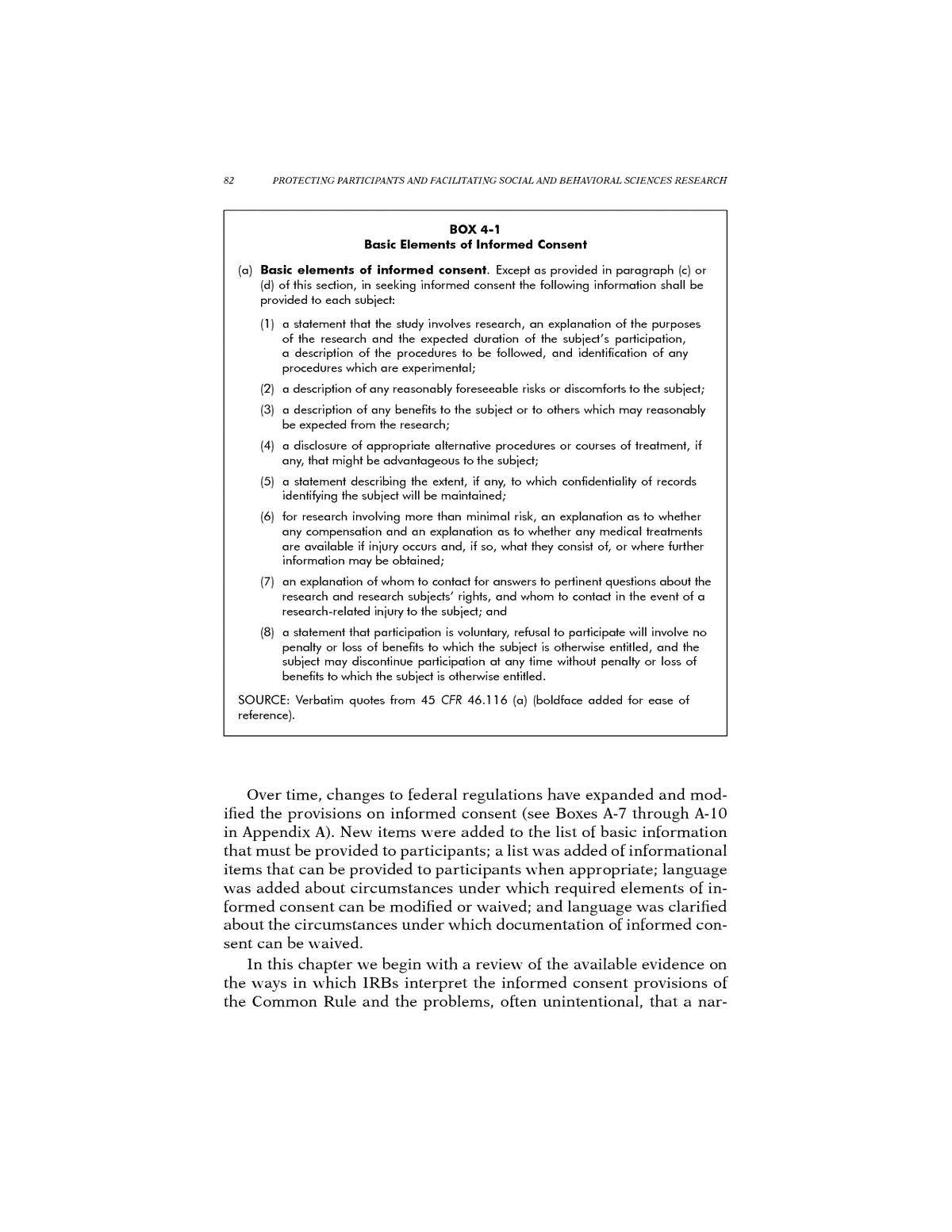
82 PROTECTING PARTICIPANTS AND FACILITATING SOCIAL AND BEHAVIORAL SCIENCES RESEARCH BOX 4-1 Basic Elements of Informed Consent (a) Basic elements of informed consent. Except as provided in paragraph (c) or (d) of this section, in seeking informed consent the following information shall be provided to each subject: (1) a statement that the study involves research, an explanation of the purposes of the research and the expected duration of the subjectâs participation, a description of the procedures to be followed, and identiï¬cation of any procedures which are experimental; (2) a description of any reasonably foreseeable risks or discomforts to the subject; (3) a description of any beneï¬ts to the subject or to others which may reasonably be expected from the research; (4) a disclosure of appropriate alternative procedures or courses of treatment, if any, that might be advantageous to the subject; (5) a statement describing the extent, if any, to which conï¬dentiality of records identifying the subject will be maintained; (6) for research involving more than minimal risk, an explanation as to whether any compensation and an explanation as to whether any medical treatments are available if injury occurs and, if so, what they consist of, or where further information may be obtained; (7) an explanation of whom to contact for answers to pertinent questions about the research and research subjectsâ rights, and whom to contact in the event of a research-related injury to the subject; and (8) a statement that participation is voluntary, refusal to participate will involve no penalty or loss of beneï¬ts to which the subject is otherwise entitled, and the subject may discontinue participation at any time without penalty or loss of beneï¬ts to which the subject is otherwise entitled. SOURCE: Verbatim quotes from 45 CFR 46.116 (a) (boldface added for ease of reference). Over time, changes to federal regulations have expanded and mod- iï¬ed the provisions on informed consent (see Boxes A-7 through A-10 in Appendix A). New items were added to the list of basic information that must be provided to participants; a list was added of informational items that can be provided to participants when appropriate; language was added about circumstances under which required elements of in- formed consent can be modiï¬ed or waived; and language was clariï¬ed about the circumstances under which documentation of informed con- sent can be waived. In this chapter we begin with a review of the available evidence on the ways in which IRBs interpret the informed consent provisions of the Common Rule and the problems, often unintentional, that a nar-
ENHANCING INFORMED CONSENT 83 row interpretation can cause for research that uses such methods as surveys, interviews, observations, laboratory experiments, and anal- yses of existing data. Such methods are commonly used in the so- cial, behavioral, and economic sciences (SBES) and are also frequently used in biomedical research. We also review the available evidence on how consent procedures may affect comprehension of risks and bene- ï¬ts and participation in research and recommend a research program to improve consent procedures and forms for different types of SBES research and populations studied. The remaining sections of the chapter present our analysis and rec- ommendations on useful guidance the Ofï¬ce for Human Research Pro- tections (OHRP) should develop for IRBs (which can also aid research- ers) on applying the Common Rule provisions on informed consent. We consider four topics: informed consent issues for certain vulnerable and special populations (e.g., language minorities); issues regarding consent of third parties (i.e., people who are not being directly inter- viewed or observed in a study); when it is appropriate and good prac- tice to waive written signed advance consent; and when one or more elements of informed consent may be omitted from the consent process and documentation. We stress that informed consent is best thought of as a process, whereby an investigator interacts with potential participants to inform them about study goals, harms, risks, and beneï¬ts, and other pertinent information about the project (see Institute of Medicine, 2002:Ch. 4). The process should be designed to respect individualsâ rights and to allow them to make informed choices about the risks and obligations they are willing to accept to participate in a research project. Depend- ing on the nature of the research, the consent process may require explaining and obtaining consent for the research in advance, or at the time when data collection actually begins, or repeatedly throughout the project to be sure the participant understands the steps in the research and their implications. In contrast, documentation of consent, while important, should be viewed as secondary to the consent process. Doc- umentation should be tailored to facilitate and not impede or confuse the actual process of obtaining informed consent, which may oftenâ but not alwaysâinclude obtaining a signed written consent form. We urge OHRP to begin immediately to work with relevant pro- fessional associations, IRBs, investigators, and representatives of re- search participants to develop detailed guidance, with examples for types of research and populations studied, on informed consent pro- cesses and to add to and modify the guidance as needed in the future (see discussion in Chapter 7). Without authoritative guidance on such topics as when it is appropriate to waive written consent and in a cli-
84 PROTECTING PARTICIPANTS AND FACILITATING SOCIAL AND BEHAVIORAL SCIENCES RESEARCH BOX 4-2 Additional Elements of Informed Consent and Provisions for Waiver or Alteration (b) Additional elements of informed consent. When appropriate, one or more of the following elements of information shall also be provided to each subject: (1) a statement that the particular treatment or procedure may involve risks to the subject (or to the embryo or fetus, if the subject is or may become pregnant) which are currently unforeseeable; (2) anticipated circumstances under which the subjectâs participation may be terminated by the investigator without regard to the subjectâs consent; (3) any additional costs to the subject that may result from participation in the research; (4) the consequences of a subjectâs decision to withdraw from the research and procedures for orderly termination of participation by the subject; (5) a statement that signiï¬cant new ï¬ndings developed during the course of the research which may relate to the subjectâs willingness to continue participation will be provided to the subject; and (6) the approximate number of subjects involved in the study. (c) An IRB may approve a consent procedure which does not include, or which alters, some or all of the elements of informed consent set forth above, or waive the requirement to obtain informed consent provided the IRB ï¬nds and documents that: (1) the research or demonstration project is to be conducted by or subject to the approval of state or local government ofï¬cials and is designed to study, evaluate, or otherwise examine: (i) public beneï¬t service programs; (ii) procedures for obtaining beneï¬ts or services under these programs; (iii) possible changes in or alternatives to those programs or procedures; or (iv) possible changes in methods or levels of payment for beneï¬ts or services under those programs; and (2) the research could not practicably be carried out without the waiver or alteration. (d) An IRB may approve a consent procedure which does not include, or which alters, some or all of the elements of informed consent set forth above, or waive the requirements to obtain informed consent provided the IRB ï¬nds and documents that: (1) The research involves no more than minimal risk to the subjects; (2) The waiver or alteration will not adversely affect the rights and welfare of the subjects; (3) The research could not practicably be carried out without the waiver or alteration; and (4) Whenever appropriate, the subjects will be provided with additional pertinent information after participation. SOURCE: Verbatim quotes from 45 CFR 46.116 (b), (c), (d) (boldface added for ease of reference).
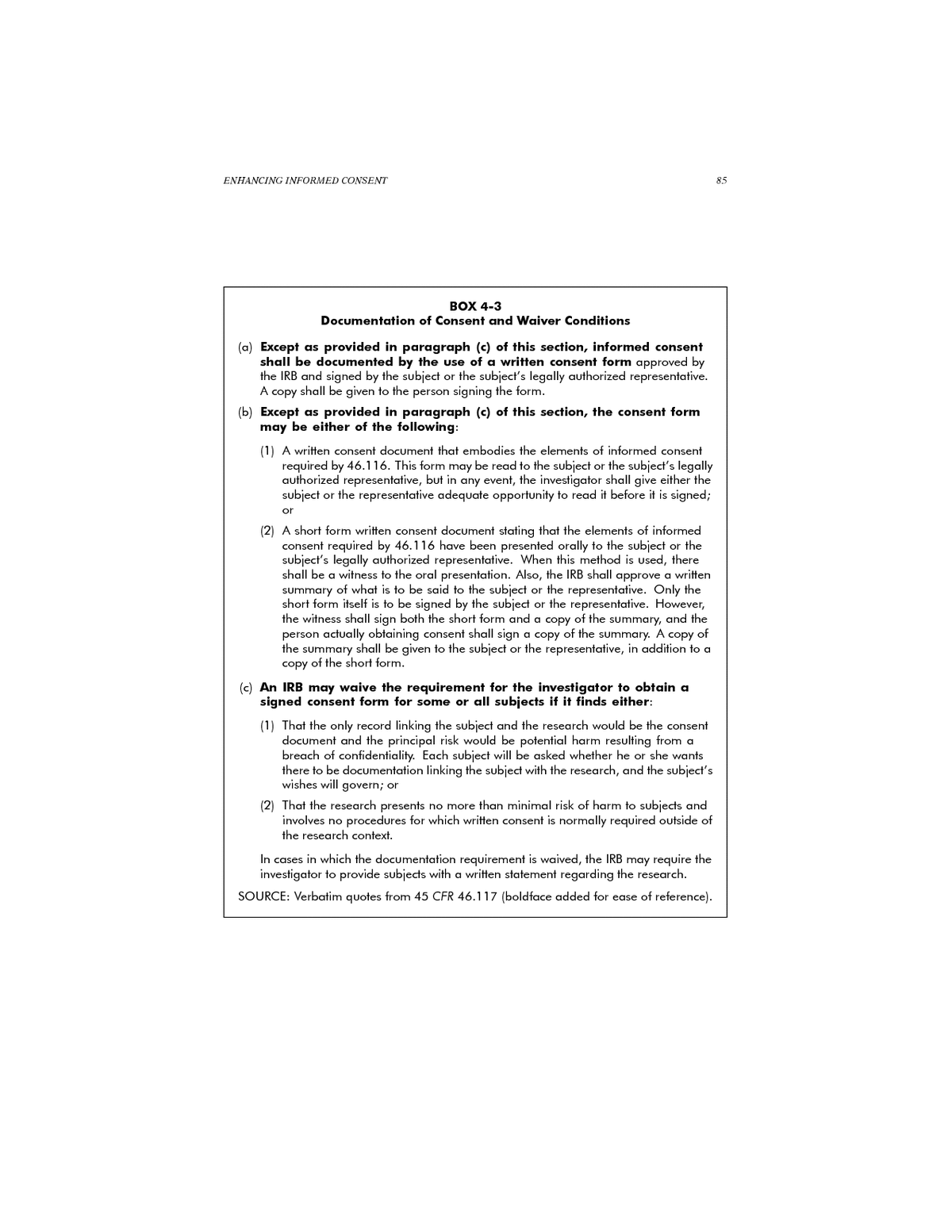
ENHANCING INFORMED CONSENT 85 BOX 4-3 Documentation of Consent and Waiver Conditions (a) Except as provided in paragraph (c) of this section, informed consent shall be documented by the use of a written consent form approved by the IRB and signed by the subject or the subjectâs legally authorized representative. A copy shall be given to the person signing the form. (b) Except as provided in paragraph (c) of this section, the consent form may be either of the following: (1) A written consent document that embodies the elements of informed consent required by 46.116. This form may be read to the subject or the subjectâs legally authorized representative, but in any event, the investigator shall give either the subject or the representative adequate opportunity to read it before it is signed; or (2) A short form written consent document stating that the elements of informed consent required by 46.116 have been presented orally to the subject or the subjectâs legally authorized representative. When this method is used, there shall be a witness to the oral presentation. Also, the IRB shall approve a written summary of what is to be said to the subject or the representative. Only the short form itself is to be signed by the subject or the representative. However, the witness shall sign both the short form and a copy of the summary, and the person actually obtaining consent shall sign a copy of the summary. A copy of the summary shall be given to the subject or the representative, in addition to a copy of the short form. (c) An IRB may waive the requirement for the investigator to obtain a signed consent form for some or all subjects if it ï¬nds either: (1) That the only record linking the subject and the research would be the consent document and the principal risk would be potential harm resulting from a breach of conï¬dentiality. Each subject will be asked whether he or she wants there to be documentation linking the subject with the research, and the subjectâs wishes will govern; or (2) That the research presents no more than minimal risk of harm to subjects and involves no procedures for which written consent is normally required outside of the research context. In cases in which the documentation requirement is waived, the IRB may require the investigator to provide subjects with a written statement regarding the research. SOURCE: Verbatim quotes from 45 CFR 46.117 (boldface added for ease of reference).
86 PROTECTING PARTICIPANTS AND FACILITATING SOCIAL AND BEHAVIORAL SCIENCES RESEARCH mate of fear in which IRBs may be blamed for any harm that occurs to research participants, IRBs will have no incentive to use the ï¬exibil- ity in the Common Rule to develop the most beneï¬cial consent proce- dures for particular research protocols (see discussion in Chapter 6). OHRP guidance, informed by research on effective informed consent procedures, will also help researchers improve practice on this vitally important element of human research participant protection.1 IRB FOCUS ON INFORMED CONSENT Data from the available studies of IRBs indicate that issues of in- formed consent account for a large share of the time and resources that IRBs devote to reviewing research protocols and that investigators, in turn, devote to revising their protocols in order to secure IRB approval. The 1975 Michigan survey carried out for the National Commission for the Protection of Human Subjects of Biomedical and Behavioral Research found that 40 percent of research protocols reviewed by the sampled IRBs between July 1974 and June 1975 were modiï¬ed as a result of the IRB review process: the most common modiï¬cation, re- quired for 24 percent of protocols, concerned informed consent (Gray, Cooke, and Tannenbaum, 1978:1096-1097). Almost all such modiï¬- cations involved the content of consent forms; less than 1 percent in- volved the consent process (e.g., timing or setting of consent, who ob- tained consent). The 1995 Bell survey (Bell, Whiton, and Connelly, 1998) reported data on protocol modiï¬cation in terms of IRBs, not protocols; those data show clearly that, by 1995, IRBs were more likely to modify pro- tocols and to require changes to informed consent documents than they had been in 1975. Thus, 34 percent of IRBs in 1995 required modiï¬ca- tions to every protocol in their workload (Bell, Whiton, and Connelly, 1998:61), compared with only 14 percent of IRBs that required modi- ï¬cation of every protocol in their workload in 1975 (Gray, Cooke, and Tannenbaum, 1978:1096).2 1 OHRP provides access to an IRB Guidebook on its website at http://ohrp.osophs. dhhs.gov/irb/irb guidebook.htm [4/10/03]. The guidebook was originally developed in 1981 for the Presidentâs Commission for the Study of Ethical Problems in Medicine and Biomedical and Behavioral Research and updated in 1993; it has useful information and guidance on such topics as informed consent, but the guidance is quite general for the most part. 2 The 1995 Bell survey data are not consistent as reported. As reported, 73 percent of IRBs disapproved 75 percent or more of protocols as submitted, another 10 percent dis- approved between 50 and 75 percent, and 6 percent disapproved fewer than 50 percent.
ENHANCING INFORMED CONSENT 87 As of 1995, IRB chairs were most likely to report deï¬ciencies in protocols involving the language of consent formsâ60 percent said such a deï¬ciency occurred often; the next highest percentages were 13 percent of chairs reporting that cost information was often omitted from consent forms, and 11 percent of chairs reporting that consent forms often omitted or understated risks of participation. Investigator reports of most commonly required protocol modiï¬cations conï¬rmed the IRB focus on consent forms: 78 percent of investigators said they were required to change the consent form, and 21 percent said they were required to change consent procedures.3 Applying Common Rule Consent Provisions Few quantitative data are available on how IRBs apply the informed consent provisions of the Common Rule. The 1975 Michigan survey does report that informed consent was obtained in almost 90 percent of projects, usually in writing. For the remaining projects, investigators said that the return of questionnaires implied consent, that the project used only routine procedures, or that it used existing records gathered for other purposes.4 The 1975 survey also reported that some informa- tion was withheld from participants in 15 percent of studies, usually to eliminate sources of bias or because of the belief that the participant would not understand the information. Omitted information usually pertained to a speciï¬c medication or treatment (e.g., in a double-blind study) or the purpose of speciï¬c procedures. In 2 percent of studies, participants were given false information, usually concerning the pur- pose of procedures and usually to avoid bias in the results. Although quantitative data are lacking, anecdotal evidence suggests that IRB practices with regard to informed consentâparticularly doc- umentation of consentâare one of the sorest points for researchers who are engaged in minimal-risk research. For example, Sieber, Platt- ner, and Rubin (2002) conclude: These numbers add up to 89 percent, not 100 percent. However, this discrepancy does not invalidate a conclusion that IRBs were more likely in 1995 than in 1975 to require modiï¬cations to protocols. 3 The large percentage of protocols for which modiï¬cations were required to consent forms suggests that IRBs could provide clearer guidance to researchers on appropriate content and language (see Chapter 7). 4 Gray, Cooke, and Tannenbaum (1978:1101) conjecture that âin some cases investi- gators who reported that they did not obtain informed consent may have meant only that they did not use a consent form. The confusion of the substance of consent with its doc- umentation is not an uncommon error and may have negative implications for informed consent.â
88 PROTECTING PARTICIPANTS AND FACILITATING SOCIAL AND BEHAVIORAL SCIENCES RESEARCH In the current regulatory climate, many IRBs treat all social and behavioral research as if it were very risky. They interpret the Common Rule as literally as possible, ignor- ing any cultural or procedural inappropriateness this may entail, and generating an extensive paper trail to prove that they have done what they construe the Common Rule to re- quire. . . . Some results of this environment of fear include: (a) a self-defeating quest for entirely risk-free research in a world where nothing is entirely risk free, (b) long delays in ap- proving protocols, and (c) extremely bureaucratic interpre- tations of the requirement of informed consent. These three problems are intertwined. The focus on very minor or un- likely risks has resulted in lengthy negotiations between IRBs and investigators, and overly detailed, insultingly paternal- istic informed consent procedures. Sieber, Plattner, and Rubin (2002) cite the following examples pro- vided to them by researchers of inappropriate IRB actions with respect to documentation of consent: ⢠requiring participants who are members of a preliterate society to read and sign a consent form; ⢠requiring written consent of members of cultural groups who consider it insulting to sign an agreement, as if their word were not to be trusted; ⢠requiring written consent in situations when oral consent or im- plicit consent is adequate (e.g., answering a survey question) and requiring written consent only serves to discourage otherwise willing participants; ⢠requiring written consent in advance of a mail survey of individu- als who had previously agreed to be contacted for such research; and ⢠requiring written consent of students who are asked by their in- structor to make judgments and discuss their reasons as a peda- gogical exercise in which no data are collected and no research is conducted. Is the IRB Focus on Informed Consent Effective? Given the intense focus of IRBs on informed consent, particularly consent forms, three key questions are relevant: First and foremost,
ENHANCING INFORMED CONSENT 89 does it increase the protection that is afforded to human research par- ticipants? Second, does a focus on consent result in improved con- sent forms? Third, does it help or hinder research in other ways? The available data suggest that consent forms are not understood by many participants and that IRB-required revisions to consent forms do not improve their readability or understandability. There is no evi- dence on whether IRB attention to consent forms improves the level of protection for participants, but there is some evidence that requiring advance signed written consent inhibits participation for some people who would otherwise not hesitate to join a minimal-risk research study. Readability of Consent Forms The 1975 Michigan survey devoted considerable attention to eval- uating the consent forms that were used by the research projects in- cluded in the study. Only 18 percent of the forms were complete or nearly complete when measured on an index consisting of six elements required by the 1974 regulations: the purpose of the research, the pro- cedures involved, the risks, the beneï¬ts, a statement that participants can withdraw from the research, and an invitation to ask questions. The purpose was omitted from 23 percent of the forms, and risk was omitted from 30 percent (however, 70 percent of this 30 percent were said by the investigators to involve a very low probability of minor harm to participants). The Michigan survey also developed a âreading ease scoreâ in which the âstandardâ was the language used in Time magazine. Only 6 per- cent of the consent forms analyzed were as easy or easier to read than Time; 17 percent were âfairly difï¬cultâ (at the level of Atlantic Monthly); 56 percent were âdifï¬cultâ (scholarly); and 21 percent were âvery difï¬cultâ (scientiï¬c or professional). This distribution was similar across types of institutionsâuniversities, medical schools, hospitals, and otherâalthough university consent forms were somewhat easier to read than others (13% were at the level of Time or below). There was almost no correlation between the completeness of consent forms and their readability.5 Turning to the effects of IRB review, there was no signiï¬cant dif- ference in average completeness or readability scores between con- 5 Of course, the appropriate readability level relates to the population to be studied. Informed consent materials for research involving university faculty would not need the same degree of readability as research involving the general population. Other issues of readability include type size, which may need to be larger for older people, and appro- priate translation for people who are not literate in English (see âInformed Consent for Special Populationsâ below).
90 PROTECTING PARTICIPANTS AND FACILITATING SOCIAL AND BEHAVIORAL SCIENCES RESEARCH sent forms as proposed to IRBs and consent forms as approved by IRBs. Moreover, looking only at consent forms that were modiï¬ed in response to an IRB, there was also no signiï¬cant difference in com- pleteness or readability scores before and after IRB review for these forms either. Finally, the less readable or less complete forms were no more likely than the more complete or more readable forms to be singled out for change by IRBs. Whether the effects of IRB review of consent forms are still as neg- ligible as found by the 1975 Michigan survey is not known. One study of all approved consent forms at two universities in 1988 and 1991 sug- gests that IRBs were no more effective in that period than 15 years ear- lier (Goldstein et al., 1996). This study found that the average reading score of 284 consent forms was 12.2, or roughly a 12th grade reading level, which is above the average reading level of the general popula- tion (about 10th grade). Fewer than 10 percent of all consent forms were written at a 10th grade level or below. Readability scores were not related to whether the consent form was revised at the behest of the IRB, the year of the study, or the university. However, survey studies had more readable consent forms than clinical drug trials, and having a higher number of female than male IRB members related to more readable forms. Research on alternative consent forms in biomedical research has found that readability is not the only issue. For example, a study in which participants had low levels of literacy were given a standard can- cer trial consent form (written at a college level) and a simpliï¬ed form (written at a 7th grade reading level). The participants overwhelmingly preferred the simpler form and found it easier to read. However, their comprehension was low regardless of which form was used (Davis et al., 1998). It is clear that even after years of research on informed consent, largely covering written consent forms for biomedical research and treatment (see bibliographies in Sugarman, McCrory, and Hubal, 1998; Sugarman et al., 1999), there are still no agreed-upon procedures that are demonstrated to provide adequate, comprehensible information to prospective research participants. Furthermore, it is clear that, on av- erage, IRB efforts to improve participant protection by focusing on consent forms have had relatively little effect and, as such, have di- verted scarce time and resources of IRB members and investigators alike, particularly when empirical information is lacking about effec- tive ways to improve consent forms and procedures.
ENHANCING INFORMED CONSENT 91 Effects of Consent Requirements on Participation There is a small literature that helps illuminate the effects of in- formed consent requirements on willingness to participate in research. For research that is of minimal risk, understanding how information presented in certain ways could discourage participation of individuals who would otherwise be willing to volunteer is important for develop- ing consent procedures that inform participants but do not unneces- sarily degrade the research by adversely affecting the size or compo- sition of the sample. Such understanding is also helpful for determin- ing when it may be appropriate and good practice to waive elements of informed consent. For research that is of more than minimal risk to participants, understanding the effects of different informed con- sent procedures is critical for developing the most effective means for clearly communicating the risks and beneï¬ts of participation. Data exist on participation in surveys and laboratory experiments, primarily in the SBES domain, as well as the desires and concerns of participants regarding the consent process. Singer (1993) reviews the literature published before 1993;6 Singerâs (2003) is the ï¬rst relevant empirical study to be reported since then. With regard to the detail provided in survey introductions, Singer (1993:363) sums up early practice as follows: Prior to the spate of studies on informed consent procedures in the late 1970s (National Research Council, 1979; Reamer, 1979; Singer, 1978a, 1978b, 1984; Singer and Frankel, 1982), conventional survey wisdom had advocated keeping the in- troduction short, so as not to lose the respondentâs interest or attention; and some evidence from experiments with mail questionnaires had suggested that a general explanation of purpose was preferable to a more detailed one, which might antagonize some respondents (Blumberg, Fuller, and Hare, 1974). At the same time, some investigators supported fuller disclosure of research purposes to respondents. . . . Some support for the efï¬cacy of fuller disclosure came from a study by Hauck and Cox (1974), in which refusals were re- duced after respondents had been given a more nearly com- plete and accurate description of the studyâs purpose. Singerâs review (1993:365) of studies conducted from 1978 through the early 1990s of the effects on survey participation of providing dif- 6 Work on informed consent issues in survey research was initially stimulated by en- actment of the 1974 regulations for protection of human research participants (see Chap- ter 3) and by enactment of the Privacy Act of 1974 (Dalenius, 1983). Declining response rates also played a role (Steeh, 1981).
92 PROTECTING PARTICIPANTS AND FACILITATING SOCIAL AND BEHAVIORAL SCIENCES RESEARCH ferent amounts of detail about the content and purpose of the survey concluded that, âWithin the limits tested, information about content has no perceptible effect on response rates or quality.â However, from results of self-administered questionnaires given to respondents at the conclusion of their participation in the main survey, she concluded that ârespondents who are given more information about sensitive content are more likely to report, in retrospect, that they expected the ques- tions and that they were not upset or embarrassed by them; they also show less measured anxiety.â (The latter ï¬nding is from a laboratory experiment: Holliman et al., 1986.) With regard to the form of consent (written, oral, tacit), Singer (1993:369) found some evidence that âso-called âpassiveâ consent meth- ods capture the intentions of most potential respondents, and that âac- tiveâ methods exclude some who in fact are willing to participate, but not to sign their name.â For example, Singer (1978a) reported that 7 percent of respondents in an experiment who were asked to sign a consent form refused to do so: they were not unwilling to participate; they were unwilling to sign the form. These ï¬ndings were replicated by Trice (1987). Similarly, Ellickson and Hawes (1989) and Moberg and Piper (1990) found that most people who failed to return a signed consent form in the mail did not intend to refuse participation (based on a subsequent telephone query). In September 2000, Singer (2003) undertook a small study of sur- vey respondents (n = 275) to ascertain their understanding of informed consent, including perceptions about the kind and degree of risk in- volved, and to ascertain the relationship between respondentsâ atti- tudes and their behavior. Questions were added to 1 monthâs sample of interviews in the University of Michigan Survey of Consumer Attitudes (SCA). Respondents to the SCA were read hypothetical introductions to two surveys ï¬elded at the University of Michiganâthe National Sur- vey of Family Growth, conducted under contract to the National Cen- ter for Health Statistics, which deals with sexual behavior, pregnancy, childbearing, schooling, work, and medical care; and the Health and Retirement Survey, conducted with a grant from the National Institute on Aging, which deals with personal ï¬nances, changes in health, and health care needs. The introductions were similar to those actually used but modiï¬ed to make statements about risks and beneï¬ts as com- parable as possible. Half the introductions requested a signature on a consent form and the other half did not. The results indicated (as in earlier research, e.g., Singer, 1978a) that respondents do not understand or remember everything in the intro- duction but, given their perceptions, they act rationally. In the Singer (2003) research, respondentsâ perceptions of risks, beneï¬ts, and risk-
ENHANCING INFORMED CONSENT 93 beneï¬t ratios related signiï¬cantly to their expressed willingness to par- ticipate in the survey described to them. This research also replicated earlier ï¬ndings with regard to the effects of requiring written signed consent. At least 13 percent of the respondents in the Singer (2003) study said they would be willing to participate but would not be willing to sign a consent form. Singer (2003:21) concludes: This ï¬nding is crucial to the argument that IRBâs should permit researchers to modify the way consent is documented, especially in a study where the risk is minimal. The re- quest for a signature does not appear to protect respon- dentsâ rights; on the contrary, it may subvert their expressed desire for participation. And it reduces the generalizability of survey ï¬ndings, which depend on accurate measurement of all the designated members of the sample. RESEARCH TO IMPROVE CONSENT PROCEDURES Recommendation 4.1: Social, behavioral, and economic science researchers should conduct research on procedures for obtaining and documenting informed consent that will facilitate comprehension of beneï¬ts, harms, and risks of harm, conï¬dentiality protection, and other key features of research protocols for different types of SBES research and populations studied. There are many challenges to developing effective consent proce- dures that truly support a voluntary, informed decision to participate (or not) in research and that do not place inappropriate barriers in the way of participation. Despite several decades of research on consent forms and practice (mostly in biomedical research), and despite inten- sive IRB attention to documentation of consent, there appears to have been little progress in devising more effective forms and procedures for achieving informed consent. Research on consent practices in SBES research is limited. We believe it is incumbent on SBES researchers to seek support for sustained research efforts on informed consent that would inform good research practice and also enable OHRP to develop useful guidance for IRBs. The National Institutes of Health recently had a program to study ethical issues in research, such as informed consent procedures and issues. This program should be continued and expanded. Support for research on informed consent for different types of SBES research methods, settings, and populations studied (including such populations
94 PROTECTING PARTICIPANTS AND FACILITATING SOCIAL AND BEHAVIORAL SCIENCES RESEARCH as immigrants, refugees, language minorities, and people engaged in illegal or deviant behavior) is also needed. Such research should include experiments with different kinds of consent processes. For example, a comparison could be performed among three alternative consent procedures: having an investigator engage a prospective participant in conversation about the research without requiring the individualâs signature on a form;7 having an in- dividual read and sign a standard consent form; and having an indi- vidual read and sign a consent form designed on the basis of cognitive research and testing for maximum readability and ease of understand- ing. Measured outcomes could include the degree of comprehension of the material, the number and type of questions the prospective partic- ipants ask about the research, individualsâ willingness to participate, and (for participants) the extent of satisfaction with the decision to participate in the research. Similar outcomes could be measured in studies that compared how often and at what stages participants are reminded of the nature of the research and given opportunities to ask questions. Studies could also be conducted on effective ways to train investigators in the design and implementation of appropriate consent procedures. INFORMED CONSENT FOR SPECIAL POPULATIONS Recommendation 4.2: The Ofï¬ce for Human Research Protections should develop detailed guidance for IRBs and researchers on appropriate consent procedures for differ- ent types of populationsâincluding language minorities and such vulnerable groups as undocumented immigrantsâ studied in social, behavioral, and economic sciences research. The process of informed consent emphasizes the elements of disclo- sure, competence, comprehension, and, ï¬nally, a voluntary decision to consent or refuse to participate. Too often ignored are the underlying assumptions embedded in the notion of voluntary informed consentâ assumptions about language and the meanings attached to words and concepts and assumptions about relationships and the social position of individuals in families, institutions and communities. Obtaining con- sent that is both informed and voluntary may be challenging for re- searchers working in international settings and with populations who are vulnerable because of their immigrant or refugee status or because 7 Documentation of consent in this instance could consist of having the investigator document the discussion and attest that participation was the individualâs own decision.
ENHANCING INFORMED CONSENT 95 they are involved in illegal activities or deviant behavior, as we discuss below. Informed consent for SBES research involving infants, young chil- dren, and adolescents raises special issues as well. Because we con- sidered informed consent and other ethical practices for research with human participants in the context of the Common Rule (subpart A of 45 CFR 46), which applies to the general population, our report does not address special concerns for children (or other people with dimin- ished capacity for informed consent, such as mentally retarded peo- ple). We note that subpart D of 45 CFR 46 provides added protection for children of three kinds. First, if children are involved, then sur- vey, interview, or observational research that would be exempt from IRB review if it only involved adults may not be exempted. (An excep- tion is observational research in which the researcher does not partic- ipate in the activities being observed.) Other kinds of eligible research (e.g., research involving educational tests) may be exempted even if the research is conducted with children. Second, research with chil- dren requires both the assent of the child and the informed consent of the childâs parents or guardian for participation. Third, research of more than minimal risk for children may only be conducted if the research satisï¬es a series of additional criteria (see 45 CFR 46.405, 406, 407). For in-depth discussions of informed consent and other eth- ical practices in SBES research with children, see Fisher and Tryon (1990); Grodin and Glantz (1994); Sieber (1992:Ch.10); and Stanley and Sieber (1991). Consent Issues for Certain Vulnerable Populations Social science and economic studies of illegal behavior (e.g., drug abuse) or highly sensitive topics (e.g., alcoholism, sexual abuse, or do- mestic violence) require special attention to two key issues. First, it is vitally important that measures are in place to protect the privacy and conï¬dentiality of research participants (see discussion in Chapter 5) and that these measures are appropriately addressed in the informa- tion that is provided to prospective participants in seeking their con- sent. Second, it is important that care is taken to minimize the poten- tial for coercion, by which we mean a threat to take away a privilege or freedom or to discriminate against someone who refuses to participate. Successful negotiation of informed consent means that individuals are able to participate freely and voluntarily. The perception on the part of a potential participant that refusal to be in a study could result in negative social, economic, or legal consequences diminishes the possi- bility of voluntary consent. The obverse of coercion is also important
96 PROTECTING PARTICIPANTS AND FACILITATING SOCIAL AND BEHAVIORAL SCIENCES RESEARCH to considerânamely, an inappropriate incentive, by which we mean a promise to provide a special privilege.8 Such a promise (e.g., to in- tervene on the personâs behalf in a legal action) could induce someone to participate in a risky study for which the person might otherwise decline participation. Issues associated with the protection of conï¬dentiality and con- cerns about coercion are also important considerations for investiga- tors working with refugee or immigrant populations or conducting re- search in international settings. The issue of protecting conï¬dentiality remains key, particularly in studies involving illegal immigrants be- cause of the implications for incarceration or deportation. The po- tential for coercion may exist if individuals do not understand what it means to be involved in a research projectâbecause of language bar- riers or diverse cultural beliefs about the nature of research and the beneï¬ts associated with itâor because threats are used in the recruit- ment process (e.g., a threat to hinder a refugeeâs application for per- manent status). Conversely, a promise of special treatment (e.g., an offer to speed up a refugeeâs application for permanent status) could compromise voluntary, informed consent. Another important factor for investigators to consider when work- ing with refugee or immigrant populations or conducting international research is the emphasis placed on personal autonomy in the Western paradigm of informed consent. In addition to language barriers and different beliefs concerning the nature of scientiï¬c research, effective communication may be thwarted when participants and researchers have diverse opinions about who has the authority to decide whether or not someone can participate in a study. In the United States, indi- viduals are expected to make decisions for themselves if they are men- tally competent adults, and, given parental permission, minors have the right to assent to or decline research participation. However, in many places throughout the world, decisions are not necessarily made by the individual, but instead by family members or community repre- sentatives. Beliefs about personhood, individual autonomy, and deci- sional capacity are embedded in the social context of family ties and community obligations. In some cultural settings, religious or tribal leaders, the household head, or a personâs extended family may play a signiï¬cant role in major decisions. The challenges of meeting U.S. requirements for written documen- tation of informed consent in studies with immigrant populations or in international settings may be particularly problematic when study par- 8 See discussion of ï¬nancial incentives, which are ordinarily appropriate in SBES research, in âSurvey Researchâ below.
ENHANCING INFORMED CONSENT 97 ticipants are reluctant to formalize a document with their signature or thumbprint because of previous experiences that resulted in their vic- timization, including the loss of personal property or land when âlegalâ documents were used against them. Verbal consent would be appro- priate for minimal-risk research with these populations. Language, Translation, and the Use of Interpreters Misunderstandings and miscommunication about social science and economic research are more likely to occur when investigators and potential participants speak different languages and when informed consent documents must be translated. The situation is exacerbated when there are no equivalent expressions for particular concepts or when the concept of informed consent is unfamiliar. The language used to describe the purpose of a study and its associated risks and beneï¬ts may be confusing and, in some cases, intimidating for the in- dividual being asked to participate in a research project. Two dimen- sions of language are important to consider in obtaining informed con- sent: ï¬rst, the choice of words, that is, the speciï¬c terms that will be used in the consent discussion; and, second, the use of language to ex- press concepts related to the research itself and such concepts related to informed consent as âvoluntary participationâ and âconï¬dentialityâ (Marshall, 2001). Investigators working with populations who speak a different lan- guage (e.g., immigrant or refugee populations in their own country or abroad) depend on accurate and meaningful translations of informed consent documents. A process of back-translation is recommended when translation of consent forms is required: researchers translate the consent form from one language to another, then it is translated back to the original language by someone else, preferably by someone who is not associated with the study. Investigators then evaluate the form to determine that it has communicated accurately and effectively the meaning of the research. Such translation and back-translation may need to be carried out by translators who live in the locality and participate in the culture of the study population in order to ensure that the translated consent form is appropriate. In some cases, an interpreter may be employed to obtain consent from participants in research. The use of an interpreter may signiï¬- cantly reduce linguistic barriers, but potential problems remain (Barnes et al., 1998; Kaufert and OâNeil, 1990; Kaufert and Putsch, 1997; Mar- shall, 1992a, 1992b; Marshall et al., 1998; Putsch, 1985). The inves- tigator must rely on the translator to communicate the research ob- jectives correctly. Translators are often portrayed as straightforward
98 PROTECTING PARTICIPANTS AND FACILITATING SOCIAL AND BEHAVIORAL SCIENCES RESEARCH interpreters of information exchanged between researchers and poten- tial research participants. This perspective, however, underestimates the complexities of interpretation in which the translator must negoti- ate not only language, but also cultural and contextual factors (Carrillo, Green, and Betancourt, 1999; Kaufert and OâNeil, 1990; Kaufert and Putsch, 1995; Marshall, 1992b; Marshall and Koenig, 1996; Putsch, 1985). Challenges associated with interpretation include: the inabil- ity to translate equivalent expressions across languages; paraphrasing language that results in omissions or erroneous substitutions of terms; different levels of comprehension among participants in the interac- tion; and the inï¬uence of diverse cultural beliefs and values about re- search among participants. Moreover, if family members or friends act as interpreters, there may be a tendency for them to exaggerate, camouï¬age, or minimize information (Putsch, 1985). Finally, cultural norms governing the structure and content of inter- actions between researchers and those invited to participate in studies are vitally important to effective communication (Barnes et al., 1998; Kaufert and OâNeil, 1990; Kaufert and Putsch, 1997; Koenig and Gates- Williams, 1995; Marshall and Koenig, 1996). Beliefs and expectations regarding what is considered to be âappropriateâ discussion in interac- tions vary considerably across cultures and are affected by social fac- tors that reinforce differences in the relative power experienced and expressed by the individuals involved in the interaction. The topics dis- cussed, the timing of the conversation, and who participates in the con- versation inï¬uence profoundly the process of informed consent. For example, in many cultural environments, women are subordinate to their husbands, fathers, or male heads of households. In these situ- ations, particularly if the person obtaining consent is a man, women may not believe it is right to question the investigator about the study. Perhaps the most serious negative consequence of this form of deferral to âauthorityâ is that some individuals may not believe they have the right to refuse to participate. Language and communication are powerful tools that affect what actually occurs in the informed consent discussion. The process of informed consent is always situated in a cultural context, reinforced and constrained by the dynamics of social and political power. THIRD-PARTY CONSENT Recommendation 4.3: The Ofï¬ce for Human Research Pro- tections should develop detailed guidance for IRBs and re- searchers, including speciï¬c examples, on when it is and
ENHANCING INFORMED CONSENT 99 is not necessary to obtain consent from third parties about whom participants are asked to provide information. Much SBES research involves collecting data from and solely about individual participantsâfor example, surveys of individual attitudes or knowledge of public affairs and laboratory experiments in which re- sponses to speciï¬c stimuli are recorded. Quite often such studies will also collect data on background characteristics of the individual, such as age, race, education, and personal income. Not infrequently, however, SBES research may ask participants to provide data about other people. Sometimes the data about others are needed for context and to develop a richer explanatory modelâ for example, information on characteristics of a personâs family, such as number of members, relationships, ages, educational levels, and family income in studies of work-leisure tradeoffs or voting behavior. Sometimes the data about others are the main object of researchâfor example, studies of the effects of parental childrearing practices (as perceived by the participant) on the participantâs adult experiences. Traditionally, household surveys, including major federal govern- ment surveys (e.g., the Current Population Survey, the Consumer Ex- penditure Survey), have asked one household member to provide infor- mation for all members of the household about such topics as employ- ment, marital status, expenditures, and income. For more accurate reporting, some surveys (e.g., the Survey of Income and Program Par- ticipation) strive to obtain self-reports for each household member but accept proxy responses for household members who are away or other- wise cannot be contacted in the allotted time. Oral histories and ethno- graphic studies typically ask respondents for considerably detailed in- formation about other people in their families, communities, or other social groups. Recently, concerns about third-party consent for studies that ask respondents for information about others (third parties) have become more prominent in discussions of ethical research. In particular, dis- cussion has centered on a study of twins who were asked for detailed information about their parents, including sexual characteristics and medical history, which resulted in a public complaint from a parent of a participant that the research violated his privacy and his consent should have been obtained (see Botkin, 2001). Determining when it is necessary to obtain third-party consent is not straightforward. Such determination requires careful attention to the level of risk of the research, the setting in which it is conducted, the nature of the data to be obtained on others, and the characteristics of the study population. No hard-and-fast rules can or should apply.
100 PROTECTING PARTICIPANTS AND FACILITATING SOCIAL AND BEHAVIORAL SCIENCES RESEARCH Several illustrative situations and our conclusions regarding the ap- propriateness of third-party consent follow.9 ⢠Respondent Attributes When information about third parties rep- resents an attribute of the respondent, such as a perception or at- titude, then third-party consent usually is not relevant and should not be sought. For example, studies of participantsâ perceptions of parental childrearing practices or perceptions of supervisor ethics do not require third-party consent because data being collected are attributes of the respondent. Whether the data are accurate or not regarding the third party is not relevant; the study is ex- amining the reasons for or effects of participantsâ perceptions of others. ⢠Third-Party Anonymity Some studies may inquire about one or more of a group of people who interacted with the participant, such as the participantâs teachers, employers, or sex partners. When the questions are framed in such a manner that the third parties remain anonymous to the researcher as well as to oth- ers, then consent is rarely if ever necessary for their protection. For example, a series of questions might ask about a participantâs âï¬rst supervisorâ without identifying the individual in any way. Of course, if the âï¬rst supervisorâ is also the personâs current super- visor, then the issue of third-party consent is less easily dismissed. If there are adequate measures for conï¬dentiality protection to guard against disclosure of third parties as well as respondents, then it is likely that third-party consent is not needed. The nature of the questions being asked will also be a factor in a decision on consent. ⢠Authorized Proxy Response When the desired respondent cannot participate because of disability or other incapacity and an autho- rized representative of the individual is present, then consent can be obtained from that representative as provided in the Common Rule (see Box 4-3). ⢠Household Proxy When surveys or participant observation re- search pertain to an entire family or household, the issue is whe- ther consent must be obtained from every member for one mem- ber to respond for the family or household as a whole. (Similar issues are discussed below for ethnographic research in group 9 See also the statement of the National Human Research Protections Advisory Com- mittee adopted at its January 28-29, 2002, meeting; available at http://ohrp.osophs.dhhs. gov/nhrpac/documents [4/10/03].
ENHANCING INFORMED CONSENT 101 settings.) When the research is minimal risk and does not require written consentâfor example, most mail and telephone surveysâ then we do not believe it is necessary to obtain third-party consent for one respondent to provide answers for other family members or the household as a whole. Research deemed to be minimal risk should not be harmful to the respondent or any third party, and there is a reasonable expectation when a family member agrees to respond to such research that he or she is trusted to do so for other family members. (Of course, the designated respondent may provide less accurate information about other members than the members would themselves, but that is an issue of data quality and not of informed consent.) For more-than-minimal-risk surveys or observational research on families or households, it may often be the case that self-reporting should be the goal and that informed consent should be obtained from each reporter. In some situations, it may be necessary to interview some family members at different times from others in order to pro- tect privacy, as well as to enhance data quality. For example, a study of spousal relations and perceptions might conduct separate as well as joint interviews of the two spouses. The consent material provided in such a study should clearly inform each spouse of the intent to inter- view each about the other. WAIVING WRITTEN CONSENT Recommendation 4.4: The Ofï¬ce for Human Research Protections should develop detailed guidance for IRBs and researchersâwith clear examples for a variety of social, be- havioral, and economic sciences research methods and study environmentsâon when it is appropriate to waive signed written consent. The Common Rule requirement for obtaining a signed written con- sent form may be waived under one of two conditions: (1) the signed form would be the only link of the participant to the research and the only risk would be disclosure of such participation; or (2) the research is minimal risk and is of a type for which written consent is not nor- mally required outside of the research context (see Box 4-3). While minimal-risk biomedical research might not often qualify under the second exemption given that medical treatment usually requires peo- ple to sign a consent form except for the simplest procedures, minimal- risk SBES research could often qualify under this exemption. Many
102 PROTECTING PARTICIPANTS AND FACILITATING SOCIAL AND BEHAVIORAL SCIENCES RESEARCH methods of SBES research involve activities that would rarely require signing a written consent form outside the research context (e.g., be- ing observed in social activities by random bystanders, being asked to respond to a market survey, etc.). We review below types of survey, un- structured interview, observational, and secondary analysis research for which it is appropriate to waive signed written consent and note other consent issues such research poses. Survey Research Survey research using probability samples of households or individ- uals who represent a speciï¬ed universe (e.g., the U.S. civilian noninsti- tutionalized population, people aged 55 and older, college graduates, or likely voters) has been a mainstay of SBES research in many disci- plines since the 1940s. In order to obtain generalizable valid results, it is critical that a high percentage of sample cases respond to a survey. Sample cases who do not respond cannot be replaced without affecting the ability to make population estimates from the survey and to esti- mate the sampling error of those estimates. Furthermore, the failure to obtain responses from most sample cases may introduce systematic biases in the survey estimates for which reweighting and other meth- ods do not compensate. These properties of survey methodology mean that recruitment procedures should be designed to inform prospective participants about the research, but the procedures should not raise unwarranted fears about the possible risks of participation or impose barriers to participation. For this same reason, namely, to maximize response, investigators often provide ï¬nancial incentives, such as cash or small gifts, to survey participants, and such incentives are generally appropriate. At a time when people have many demands on their attention and receive a large volume of unsolicited mail and telephone calls, it is becoming standard survey practice to recognize the burden on respondents by providing some type of reimbursement. Surveys may be lengthy, they may in- volve the cost of travel to the interview site or parking fees, or they may require special arrangements to accommodate family and work responsibilities such as babysitting costs. Normally, incentives include monetary reimbursement commensurate with respondentsâ opportu- nity costs for time and direct costs for travel, gift certiï¬cates, or small gifts such as vitamins or refreshments. The form and value of the in- centive will vary, depending on the nature of the study and the potential burdens for respondents. To facilitate survey research, we conclude that signed written con- sent should be waived, as a matter of standard practice, for minimal-
ENHANCING INFORMED CONSENT 103 risk mail, telephone, and in-person surveys of the general adult popu- lation that do not involve unusual incentives for participation and do not raise serious third-party consent issues (see âThird-Party Consent,â above; see sections below for speciï¬c issues for risk assessment and consent in mail, telephone, and in-person surveys). Traditionally, sur- vey research has not had a practice of obtaining signed consent for par- ticipation, and there is no evidence that the absence of written consent has jeopardized the rights or welfare of human participants. Indeed, the evidence reviewed above is that requiring written signed consent for minimal-risk surveys will discourage participation by some people who otherwise are willing to participate. IRBs should carefully review survey protocols to be sure that the information that investigators provide to respondents by such means as interviewer scripts, advance letters, informational leaï¬ets, and the like adequately fulï¬lls the Common Rule requirements, particularly with regard to procedures for respecting privacy and protecting conï¬- dentiality. Documentation of consent to provide an audit trail can be assured in such ways as requiring that interviewersâ presentation of scripts in telephone surveys are recorded or monitored; requiring that interviewers in personal surveys sign a statement that appropriate in- formation was provided to respondents for their (tacit) consent; and calling back a sample of respondents to conï¬rm that appropriate in- formation was provided. Such procedures as callbacks and telephone monitoring are commonly used to validate that interviewers in fact ad- ministered the questionnaire and did not make up the information. It would be straightforward to add validation of the consent process to these procedures, if the protocol does not already provide for their use for this purpose. Mail Generally, mail surveys of the general population should be treated as minimal risk and, hence, not require written consent, even if the subject matter appears to be sensitive. The reason is that there is no interaction between the investigator and the participant and therefore no danger that a participant will feel threatenedâthe participant can simply toss the survey in the trash.10 It is possible to imagine scenarios 10 However, mail surveys of speciï¬c populations (e.g., cancer patients, people on ther- apy for HIV or AIDS) should have procedures to minimize the risk that respondents might be embarrassed or otherwise put at risk if someone other than the intended recip- ient opened the questionnaire package. Usually surveys to specially deï¬ned populations will be preceded by a letter or telephone call regarding participation and specifying pro- cedures to protect privacy.
104 PROTECTING PARTICIPANTS AND FACILITATING SOCIAL AND BEHAVIORAL SCIENCES RESEARCH in which a respondent could have an adverse psychological reaction to a mail survey question. However, unless the study universe is known to include people who are likely to have serious adverse reactions to the question content (in which case a mail survey is probably not appro- priate for the research in the ï¬rst place), highly improbable scenarios should not drive the requirements for informed consent. Because there is no opportunity in a mail survey to interpret in- formation needed for informed consent (unless a respondent calls to ask for more information), it is critical that all materials mailed to re- spondents are appropriately targeted to the study universe in terms of reading level and language used. Because breach of conï¬dentiality is almost always the only risk that could accrue to mail survey respon- dents, the survey materials should be clear about the level of conï¬den- tiality protection that will be provided and the purposes for which the respondentâs data will be used (e.g., whether the data will be made available for any research purposes, including matching studies). Telephone Surveys conducted by telephone, unlike mail surveys, involve inter- action between the interviewers and participants.11 However, they are almost always minimal risk because the interaction is at armâs length, there is no intervention involved (the respondent is not subjected to any treatment), and the respondent may break off the interview at any time by hanging up the telephone. Thus, as for mail surveys, signed con- sent is rarely, if ever, necessary for participants in telephone surveys of the general population and for the same reasonsâsuch documentation does not provide any added protection to the respondent, and it will likely reduce participation. The interviewerâs script should provide information the respondent needs in order to decide whether to participate, such as provisions for protecting conï¬dentiality and the right of the respondent to refuse to answer questions and to break off the interview at any time. The IRB should determine that the interviewer script is understandable for the population of interest. The IRB should also establish that the investiga- tor has procedures in place for quality control of interviewing, includ- ing a procedure to check that interviewers are adhering to the portion of the script that pertains to informed consent. 11 Mail surveys often use telephone follow-up for people who did not mail back a com- pleted questionnaire; the comments on telephone surveys apply to telephone follow-up as well.
ENHANCING INFORMED CONSENT 105 In-Person Surveys conducted in face-to-face interactions may represent mini- mal-risk or more-than-minimal-risk research depending on the nature of the study, the setting in which the research is conducted, and the vulnerability of the study population. Most often, written informed consent should be waived for in-person surveys involving minimal-risk research. In these situations, verbal consent is usually adequate. In studies involving more than minimal risk to the participants, written consent may be appropriate, but if research participants could come to harm because of potential stigmatization, emotional distress, or phys- ical injury should there be a breach of conï¬dentiality, it may be better to obtain consent verbally rather than create a paper record that could intentionally (e.g., by subpoena) or accidentally become public. In many research studies involving face-to-face interviews, investi- gators must contact prospective participants prior to conducting the in-person survey. In these situations, investigators often send a letter requesting the individualâs participation, indicating how he or she was identiï¬ed, and describing the purpose, procedures, risks, and harm involved in the study, along with information about voluntariness of participation, protection of conï¬dentiality, and incentives (if relevant). In some studies, it may be appropriate to have the initial contact made by a person known to the participant. For example, in a study involv- ing face-to-face surveys with a population of student athletes, it would be appropriate for the athletesâ coaches to send a letter or to verbally describe the study and inform the prospective participants whom they should contact if they are interested. Unstructured or Semistructured Interviews Unstructured or semistructured interviews are used by research- ers conducting focus groups, oral histories, and some forms of eth- nographic studies. They also may be used as one methodological tool in a study involving the application of several approaches to data col- lection. In some situations, interviews may be audiotaped and then transcribed. The primary characteristic of an unstructured interview is its allowance for informal discussion of particular topics. Investigators who use unstructured or semistructured interviews confront unique ethical challenges when the study sample involves vulnerable populations or the interview addresses sensitive informa- tion about an individual. Deciding whether informed consent elements should be waived or whether to seek written or verbal consent requires a judgment based on the nature of the research, the population of in-
106 PROTECTING PARTICIPANTS AND FACILITATING SOCIAL AND BEHAVIORAL SCIENCES RESEARCH terest, and the seriousness of the risks involved for participants in sign- ing an informed consent document. For example, verbal consent may be appropriate if participants are illiterate or vulnerable because of their legal status or involvement in illicit activities. Verbal consent may also be appropriate if the research is conducted in a cultural settingâ nationally or internationallyâin which signing a document to partici- pate in research is viewed as inappropriate. Ethnographers often work in ï¬eld settings in which they have fre- quent informal interactions with study participants. It would be bur- densome for both the researcher and the study participants to contin- ually obtain consent under these conditions. Verbal or written consent for semistructured interviews conducted during focus groups, oral his- tories, or ethnographic research should clearly identify strategies in place to protect the conï¬dentiality of individuals. If audiotapes are used, individuals should be informed how the tapes will be stored, who has access to them, and when they will be destroyed or permanently archived. As in all cases, the process of informed consent should be evaluated against the standard of assuring participant respect and pro- tection and not adherence to a particular consent procedure. Observational and Ethnographic Studies Observational studies include those in which the investigator is ob- serving public situations when participants are anonymous and un- aware of the researcher, in which case consent is not relevant (see street-crossing observation example in Box 2-3 in Chapter 2), and those in which the researcher is known to the participants. Ethnographic re- search may involve direct, sustained observation of group behavior or the use of participant observation, in which the researcher is both a member and observer of a group. In both cases, the observation typi- cally involves a period of intense social interaction and engagement be- tween the ethnographer and individuals involved in the study. During this time, data (e.g., ï¬eld note observations, interview results, archival materials) are systematically collected. In ethnographic research involving direct observation of group ac- tivities, arrangements should be made before the implementation of the project to inform group members that the ethnographer will be present in the course of routine activities. In closed systems such as a hospital unit or an ofï¬ce or school setting, informed consent should be obtained from all those who are at the facility on a regular basis. Deciding whether to obtain written or verbal consent depends on the speciï¬c situation, including the vulnerability of the population being studied and the sensitivity of the information being collected. For ex-
ENHANCING INFORMED CONSENT 107 ample, in an ethnographic study of an intensive care unit in a hospital, verbal informed consent should be obtained from all staff members. Patients, their visitors, and other individuals who are not present on a regular basis but whose behavior may be observed in public activities should be alerted to the presence of an ethnographer if it is feasible to do so. Informed consent should always be obtained from individuals who are interviewed. In some group observations, it may not be possible or necessary to obtain written or verbal informed consent from every person present. For example, at informal gatherings of visitors and staff at a nurseâs station in a busy unit of a medical center, it would be intrusive to intro- duce the ethnographer, explain the study to every person who passed by, and obtain consent. In contrast, an ethnographerâs presence at a family conference to discuss patient care and treatment decisions should be explained and permission obtained to observe the proceed- ings; if anyone is uncomfortable with the observation, it cannot pro- ceed. If individual informed consent is going to be obtained from the participants in small group interactions, they should be advised about the methods designed to protect conï¬dentiality. Participant observation differs from other kinds of ethnographic re- search in that the researcher is a participant in the groupâfor exam- ple, a member of the local chapter of a political party in a study of grassroots politicsâwhile at the same time the researcher observes the group. Often, other members of the group are not aware that they are being observed, and this technique raises a variety of ethical issues (see Wax, 1979; Bernard, 2000, 2001). For example, although the in- tent is to avoid altering the behavior of the group that might occur if the presence of an observer were known, it is possible that the behav- ior of the participant observer intentionally or unintentionally alters the behavior of other members of the group. If participant observation is designed to involve deception by not telling other members of the group that they are being observed, the IRB must decide whether it is permissible to waive some of the elements of informed consent (see âOmitting Elements of Informed Consent,â below). Analyses of Existing Data Economists, sociologists, political scientists, psychologists, and other analysts often conduct research using existing data sets of indi- vidual records of variable size. When publicly available microdata sets are studied that were collected from research participants who gave consent for the original data collection for research purposes, no con- sent is required for secondary analysis. Indeed, IRBs should routinely
108 PROTECTING PARTICIPANTS AND FACILITATING SOCIAL AND BEHAVIORAL SCIENCES RESEARCH exempt such research from review, given that the data have been pro- cessed using good practices to protect conï¬dentiality (see Chapters 5 and 6). Increasingly, secondary analysis involves abstraction and use of ex- isting records as well as or instead of research microdataâfor exam- ple, analysis of administrative records (e.g., state unemployment in- surance records or food stamp case records), medical records, or aca- demic records. Waiver of informed consent is appropriate when par- ticipants agreed to the use of their records for research when those records were originally collected and adequate conï¬dentiality safe- guards are in place. However, consent may not have been obtained at the time of collection, often because many records were collected in years past when research use of the data was not considered or when consent for such use was not a common practice. In some of these cases, it may be possible to obtain consent, and consent may be neces- sary to protect the study participants, so consent should be obtained. In cases when it is not possible to recontact participants to obtain con- sent, whether their records can be used without consent will depend on judgments about the researcherâs ability to assure appropriate protec- tion of the participants. If protection is believed to be adequate, then the records may be used. If protection is believed to be compromised, then the records may not be used. The decision must be made on a case-by-case basis. However, given evolving views about informed con- sent and increasingly complex issues surrounding conï¬dentiality pro- tection, greater effort must be made to ï¬nd ways to respect and protect people whose records may be used for research in the future than was done in the past. Greater effort must be made to obtain consent at the time of original data collection. OMITTING ELEMENTS OF INFORMED CONSENT Recommendation 4.5: The Ofï¬ce for Human Research Pro- tections should develop detailed guidance for IRBs and re- searchers, including speciï¬c examples, on when it is accept- able to omit elements of informed consent in social, behav- ioral, and economic sciences research. The Common Rule acknowledges the appropriateness, under some circumstances, of omitting or modifying some of the required elements of the consent process. Although issuance of a waiver may seem to require extraordinary circumstances, the federal guidelines regarding waivers are quite straightforward. Some or all elements of informed consent may be altered or omitted if the research meets four criteria:
ENHANCING INFORMED CONSENT 109 it is minimal risk; the waiver or alteration would not adversely affect participantsâ rights and welfare; the research could not practicably be carried out otherwise; and whenever appropriate, participants will be provided with additional pertinent information after participation (see Box 4-2, section d). Furthermore, when a basic element of informed consent is clearly inapplicable to the proposed research, we argue that such an element should be omitted as a matter of common sense. For example, ele- ment (4) (see Box 4-1), which requires disclosing appropriate alterna- tive procedures or courses of treatment, if any, that might be advanta- geous to the participant, is clearly oriented to biomedical or behavioral clinical research. Including that element in the consent form for, say, a study using structured or semistructured interviews would just add length and confusion to the form.12 Some SBES research may purposefully manipulate a condition of the research environment by deceiving participants about aspects of the researchâpassively by withholding information about the true pur- pose of the research, or actively by presenting information that is not correct in order to observe reactions to the condition created by that information. Deception should only be used when the welfare of par- ticipants has been carefully considered and judged to be protected and when other methods for studying the phenomenon of interest have been considered and judged not to be feasible. Research involving deception is most often conducted in laboratory experiments in which the experimenter wants to create some belief or psychological state (deception is also sometimes used in participant ob- servation and in ï¬eld experiments; see the employment discrimination example in Box 2-2 in Chapter 2). In a conformity study, for example, a participant may be asked to write down a position and then be told that a speciï¬ed proportion of other people in the room hold the op- posite opinion. The intent of the research is to determine the effects of varying the proportion in opposition on the willingness of a partici- pant to stick with his or her original position. The deception is judged not to put participants at risk of physical or psychological harm, and the study results could not be valid if participants were aware that the experimenter was manipulating the proportion of people with the op- posing view. 12 Our review of IRB websites at 47 major research institutions found that 28 percent of these IRBs do not indicate that statements about irrelevant elements of informed con- sent can be omitted from the consent document, and 9 percent require that statements about all of the basic elements be included in the consent document regardless of the nature of the research.
110 PROTECTING PARTICIPANTS AND FACILITATING SOCIAL AND BEHAVIORAL SCIENCES RESEARCH Because, historically, deception has been used in social psychologi- cal research it is not surprising that the American Psychological Associ- ation (APA) wrestled with issues of deception as early as the 1940s and 1950s. The topic took on increasing importance in the 1960s and 1970s in light of the controversy about such experiments as those conducted by Milgram and others (see Faden and Beauchamp, 1986:167-187; see also Box 3-1 in Chapter 3). In 1963, 38 percent of articles in journals in personality and social psychology reported uses of deception, as did 47 percent of articles published in the Journal of Personality and Social Psychology in 1971 (Faden and Beauchamp, 1986:172, 179).13 In 1973 the APA adopted a major revision of its code of ethics, which attempted to balance two concerns: the recognition âafter al- most 20 years of debate and self-studyâ that informed consent is a âmoral idealâ for psychological research; and a view that the âstrict application of informed consent would invalidate valuable research ï¬ndings and would compromise the psychologistâs ability to conduct meaningful researchâ (Faden and Beauchamp, 1986:185). The 1973 code was fairly general in its prescriptions. In the early 1990s, APA adopted a more explicit code in addition to a statement of principles. The code (revised in 2002, see http://www.apa.org/ethics [4/10/03]) es- sentially incorporates the Common Rule provisions: It explicitly and strictly limits the use of deception to research for which deception is necessary for valid results and the research is likely to have signiï¬cant scientiï¬c, educational, or applied value; the research is not expected to cause physical pain or severe emotional distress; and participants are debriefed about the deception as soon as possible after data collection. Discussion of deception needs to recognize that the term does not have a clear deï¬nition and can take on many meanings (see Smith, 1979), including deception about one or more aspects of a research protocol with the intention for full debrieï¬ng at the conclusion of the research; consent to participate in research in which participants are not fully informed; and consent to participate in research not knowing which of several treatments one will receive. Deception can also vary in the salience of the omitted or misleading feature, the extent of risk posed by the deception, and the extent of likely beneï¬t from obtaining valid research results consequent on the deception. It is not always clear where the boundary lies between deception and abbreviation of information about the study in order to reduce cog- nitive burden (e.g., informing prospective survey respondents of the main topics of the survey rather than showing them the entire ques- 13 This journal specializes in research using deception designs; it is not typical of psy- chological journals.
ENHANCING INFORMED CONSENT 111 tionnaire). Similarly, it is not always clear where the boundary lies between deception that is justiï¬ed and necessary to produce valid re- search and deception that is so disrespectful of participants that it can- not be justiï¬ed. In considering research protocols that involve one or another form of deception, IRBs and researchers should take care not to use the term pejoratively: deception is often well justiï¬ed on scien- tiï¬c grounds, but, at the same time, a researcher should not make that decision in isolation. The Common Rule and professional codes of ethics recognize the complexity of the issue and permit deception in appropriate circum- stances, although the Common Rule restricts its use to minimal-risk research.14 As with other aspects of informed consent (e.g., waiving written documentation or allowing proxy response for third parties), a key decision is the determination that a study is not of more than minimal risk, taking account of the research setting, method used, and population studied. For this reason, we recommend that OHRP pro- vide guidance, with speciï¬c examples, to help IRBs make these judg- ments and to improve research practice. CONCLUSION Informed, voluntary consent is a critically important principle of human research participant protection and one of the most difï¬cult to implement in an effective manner. We hope that a combination of sys- tematic research on consent procedures and development of detailed guidance for IRBs and researchers will raise the standard of practice for seeking and documenting consent to participate in research in ways that increase the protection and respect for human participants and are commensurate with the risks of the research. 14 It would be useful for IRBs, researchers, and participant representatives to debate the ethics of high-beneï¬t research that requires deception for valid research results and is of more than minimal risk. Such research may be justiï¬ed in some instances, but is unlikely to be approved given the current regulations and climate of fear in which IRBs operate.
