
6
Schools, Colleges, and Universities
Schools of art and design, colleges, and universities are fertile ground for fostering work in information technology and creative practices (ITCP). As sources of knowledge, education, and training, they facilitate the acquisition of new and different skills and insights. In addition to providing a place for exploring new types of activities and new mixes of skills and knowledge, they bridge old and new knowledge and techniques and ways of thinking and doing, providing a place to see (and study) how the new builds on—and differs from—the old. As the institutional home for students, they provide a ready source of talented and motivated labor to support work in ITCP—a practical reality that encourages some ITCP practitioners to be involved with such institutions.1
Academic environments are designed to enable broad, deep, and long-term creative explorations, but how they embrace change, whether within a discipline or in a multi- or transdisciplinary activity, varies enormously. Some generate new programs and embrace new areas readily, while others find programmatic and structural change more difficult, given the challenges and/or inertia in leadership, institutional culture, and the allocation of resources. Approaches to crossdisciplinary opportunities—which today come from many directions— vary, depending on the institution’s relative emphasis on research or teaching, the seniority and size of its faculty, and faculty members’ willingness and ability to collaborate across disciplinary boundaries.
ITCP activities have begun to proliferate in academia—more visibly and vigorously in departments of art and design than in computer
science departments. This imbalance of interest is not necessarily bad; it is analogous to the linkage of computational science2 programs to other sciences (e.g., computational physics or chemistry) rather than to computer science. In particular, ITCP can be seen in the emergence of various new-media (or digital media or digital arts) activities. These activities relate to ITCP in name, but they appear to vary greatly in their intellectual rigor and vigor and in their impact on preexisting programs in the arts and design.
This chapter begins with a presentation of the specific organizational mechanisms that directly support and promote work in ITCP. Efforts within the mainstream schools and departments—of computer science, art, and design—to advance ITCP work are then discussed. The chapter concludes with cross-cutting observations and implications.3
ORGANIZATIONAL MODELS FOR SUPPORTING WORK
There are three broad categories of academic ITCP organizations: specialized centers, workshops, and service units. Specialized centers are of the greatest interest in the present context because they tend to produce work that balances and integrates disciplines at the deepest levels and for the longest periods of time. However, workshops and service units can also make valuable contributions by working or fostering work across disciplines, as detailed below.
SPECIALIZED CENTERS
The specialized center is the most visible model for academic work in ITCP. The (relatively) standalone type operates largely autonomously from mainstream academic departments, and the derivative type obtains significant funding from one or more mainstream academic departments within one or more universities. And, of course, there are various gradations of specialized centers between standalone
and derivative. Representing points along a spectrum, the specialized centers described here are often positioned according to their links to their host academic communities. Specialized centers can serve as a cooperating unit for joint appointments of faculty and staff in mainstream departments, which can encourage intellectual cross-fertilization.
In contrast with more decentralized attempts to evolve existing academic units or to incorporate ITCP elements within traditional units, the standalone center aims to focus on ITCP work from the outset. Experts skilled in one or more areas are convened in a single organizational unit to conduct work in ITCP. Many of the concepts and principles of studio-laboratories apply to academic standalone centers,4 although the context is different.
The Media Lab at MIT may be the best-known example of a standalone ITCP research center, at least within the United States. It opened its doors in 1985, growing steadily from an interest in computation at the Massachusetts Institute of Technology School of Architecture and Planning and expanding its scope to include multiple arts and rather different fields, such as materials science, which it incorporates through its own hiring as well as joint appointments. It has become both one of the largest centers focused on ITCP5 and the subject of discussions about whether it should be considered a model, given the mixed success of larger, enduring organizations in the ITCP space in general6 and some of the specific problems it has encountered in its own growth.7 Areas of interest include the computational properties of physical systems of all types; the overlay of digital information on the physical world (e.g., tangible media, discussed in Chapter 4); and global outreach, especially to developing nations.8 The challenge for the Media Lab is to sustain a high level of energy and success as it continues to mature and grow, and to avoid losing its edge by allowing past successes to dominate plans for the future. At present, the model has attracted interest in other countries (e.g., India), where sister facilities are contemplated.
An example of a derivative center is the newly established Center for Research in Interactive, Telematic, and Immersive Culture (CRITIC) at the University of California at Irvine, a cross-disciplinary graduate program in the arts, computation, and engineering that is jointly supported by the School of the Arts, the School of Engineering, and the
|
4 |
See Chapter 5 for a discussion of studio-laboratories. |
|
5 |
As of 2003, the Media Lab has about 30 faculty members and senior research staff, 170 graduate students (somewhat evenly divided in master’s and doctoral programs), and about 150 undergraduate students. |
|
6 |
See Chapter 5. |
|
7 |
For further commentary on the Media Lab, see David H. Freedman, 2000, “The Media Lab at a Crossroads,” Technology Review 103(5): 70-79, available online at <http://www.technologyreview.com/articles/freedman0900.asp>. |
|
8 |
For additional information about the Media Lab, a unit of the School of Architecture and Planning at MIT, see <http://www.media.mit.edu>. |
ITCP activities have begun to proliferate more visibly and vigorously in departments of art and design than in computer science departments.
The standalone center aims to focus on ITCP work from the outset.
(soon to be) School of Information and Computer Science, with additional support from the School of Humanities. Course materials are printed with the disclaimer “may cause permanent damage to axiomatic assumptions.”9
The CRITIC will be complemented by a research program in a cross-disciplinary, multientity project, the California Institute for Telecommunications and Information Technology (Cal-(IT)2).10 Although centered on science and technology, Cal-(IT)2 has hooks into the arts and social sciences, and accordingly, it has a range of institutional links. A New Media Arts “strategic application” component11 focuses on computer games and visualization environments “to provide creative research challenges likely to have impact on distance learning, collaborative work environments, and understanding large complex data sets.”12 It, in turn, involves the Center for Research in Computing and the Arts (CRCA) at the University of California at San Diego, an “organized Research Unit . . . whose mission is to foster advanced research and production at the crossroads between digital technology and new art forms.”13 CRCA activities include interactive networked multimedia, virtual reality, computer-spatialized audio, and live performance techniques for computer music and graphics; it also explores artists’ software systems. Cal-(IT)2 is an ambitious experiment in holism and maximal crossdisciplinary effort. Like other large and multifaceted academic centers that build on preexisting components, it is hard, especially at the early stages, to understand how much true substantive integration is actually being achieved.
Whereas Cal-(IT)2 spans two universities in one state, other derivative centers have broader geographical reach (although this remains uncommon). An example is the Graphics and Visualization Center that involved Brown University, the California Institute of Technology, Cornell University, the University of North Carolina at Chapel Hill, and the University of Utah. One of the earliest National Science Foundation-supported science and technology centers for IT, the now-defunct center explored options for future interactive graphical environments, from algorithms to user interfaces, and it was itself a laboratory for tools to support remote collaboration. Additional specialized ITCP centers are described briefly in Box 6.1 to further illustrate the nature of these centers.14
|
9 |
As described to the committee by the center’s founder, Simon Penny. |
|
10 |
|
|
11 |
Within Cal-(IT)2, this component has a special name, “Arts Layer.” |
|
12 |
|
|
13 |
See <http://www.crca.ucsd.edu/>. |
|
14 |
One important dimension that can be used to characterize specialized centers is whether one world view is dominant (and if so, which one). For example, the Electronic Visualization Laboratory is closer to the computer science field than to the arts or design world, while the Institute for the Study of the Arts is closer to the arts and design world than to the field of computer science. |
WORKSHOPS
Flexible, informal means of promoting truly creative practices are needed, because any institution designed to support some particular conception of creative practice (such as a specialized center) will discourage movement beyond that paradigm, increasingly so as the institution becomes more established. In many universities, workshops, seminars, and other ad hoc convenings provide a quasi-informal meeting ground for testing multi- and transdisciplinary work focused on a knotty problem or a complex area. Such flexible, low-cost mechanisms for bringing disparate people together are inherently bottom-up, intimate, and conversational; typically, drafts of papers are read and discussed, and students, faculty, and visitors mingle across disciplinary divides. At the University of California at Los Angeles, for example, an cross-disciplinary initiative with the acronym SINAPSE (Social Interfaces and Networks in Advanced Programmable Simulations and Environments) provides a variety of forums to encourage discussion and debate of IT issues. This approach has proved effective in encouraging conversations among humanists, scientists, and artists.
There is also much potential for ITCP in a different type of workshop, harking back to the medieval, hands-on space for technological experimentation and testing of thoughts. Part alchemical laboratory, part well-stocked high-tech site, a media lab is the less formal, less expensive correlate to the full-fledged research center. It offers faculty and students a dedicated place for experimentation and an opportunity to produce the kinds of results that can happen only with new media. Media labs may be constituted temporarily, perhaps based on a theme, for periods of 3 to 6 weeks—long enough to permit doing new intellectual and technical work and to support identifying viable problems and projects, but still without imposing the burden—and risk—of making permanent institutional arrangements. Participants can sign up and work anonymously and/or collaboratively, but without fanfare—much as members of the academic community, in the days before the personal computer, flocked to shared computing centers. McMaster University’s Multimedia program offers such a facility for faculty and, with the aid of a large grant, is in the process of developing open-source software with collaborative input from a variety of faculty at McMaster and other Canadian institutions. The University of California at Santa Barbara, in conjunction with its Transcriptions project, has also established a high-tech meeting place to encourage collaborative and creative work on curriculum and research projects that incorporate IT.15
|
15 |
From the project Web site (<http://transcriptions.english.ucsb.edu/about/index.asp#concept>): “The goal of [Transcriptions] is to demonstrate a paradigm—at once theoretical, instructional, and technical—for integrating new information media and technology within the core work of a traditional humanities discipline. Transcriptions seeks to ‘transcribe’ between past and present understandings of what it means to be a literate, educated, and humane person.” |
Workshops and other ad hoc convenings provide a quasi-informal meeting ground for testing multi- and transdisciplinary work focused on a knotty problem or a complex area.
|
BOX 6.1 Selected Specialized Centers
|
Fortunately, the costs of most such efforts to promote creative practices tend to be modest. At the low end (e.g., to support a seminar series), the incremental costs might involve little more than refreshments, photocopying, and a quarter-time graduate student assistant; to provide the well-stocked high-tech site described above would, though, involve hardware, software, networking, facilities, and technical support costs.
SERVICE UNITS
As is true across society, academic environments depend on IT tools and infrastructure for their day-to-day activities in general and also for the support of ITCP work specifically. As such, supporting services are valuable—indeed essential—to the work of today’s university. For this discussion, though, the question of interest is how (or whether) such supporting services can directly affect the rise of new intellectual activity aimed at understanding what IT itself could become and how it can be integrated with elements from the arts and design world to represent and explore ideas in different ways. Whether the assistance takes the form of consultation with a database software expert in a centralized IT department or is provided through a service course (e.g., “Introduction to Programming for Humanists”), the support provided by service units does not usually lead directly to deep insight into IT—how IT is developed, how it works, how it could be meaningfully incorporated into other work, and how it could be extended in support of new explorations and objectives. Mastery of a new set of IT-based tools16 is only the first step for artists and designers involved in such efforts, as it has been for scientists. It is not clear that there is in the arts and design an analogue to the IT service unit, other than the selective use of artists or designers, who tend to be incorporated as needed into technical projects rather than centralized in a service unit.
Service organizations can be important in stimulating ITCP work in environments where such explorations are otherwise difficult to launch. In addition to the classical IT service unit, a library—already a nexus of multiple disciplines that embodies IT in its daily practices— could help foster IT’s introduction into arts and design-oriented departments, especially in institutions without engineering schools or computational science programs. The transformation of both libraries and the schools that prepare library professionals illustrates a fundamental attention to IT as a tool for and means of cross-disciplinary exploration.17 For example, specialized digital libraries such as the Perseus Digital Library at Tufts University can simplify access to disparate literatures and thus help enable work based on multiple disciplines.18 Physical spaces are also evolving, such as Vassar’s Me
|
16 |
Understanding how information technology works has been called IT fluency. See Computer Science and Telecommunications Board, National Research Council, 1999, Being Fluent with Information Technology, National Academy Press, Washington, D.C. |
|
17 |
Two institutions of higher education that were previously more narrowly focused on library science and now have a much broader, social science and policy-rich curricula are the University of Michigan’s School of Information and the University of California at Berkeley’s School of Information Management and Systems. See <http://www.si.umich.edu> and <http://www.sims.berkeley.edu/>. |
|
18 |
See <http://www.perseus.tufts.edu/>. A general resource on collaborative facilities for academic environments is under development as a project that is hosted by Dartmouth College and sponsored by the Coalition for Networked Information. See <http://www.dartmouth.edu/~collab>. |
Service organizations can be important in stimulating ITCP work in environments where such explorations are otherwise difficult to launch.
dia Cloisters, a collaborative space in the college’s main library that is equipped with state-of-the-art technology,19 and the Media Union at the University of Michigan, which brings together information resources, information technology, production studios, and the combined talents of information professionals from across campus units to facilitate cross-disciplinary collaboration as well as integrative learning and exploration.20
FOSTERING ITCP WORK WITHIN MAINSTREAM DEPARTMENTS AND DISCIPLINES
COMPUTER SCIENCE
Computer science is a young discipline (departments and degrees in the field emerged in the 1960s) with roots in mathematics and electrical engineering. Although it drew from other disciplines, and as what Herbert Simon called an “artificial science”21 would seem to have inherent flexibility, its recent history of cross-disciplinary interaction—that is, in the period when ITCP has been emerging—has been mixed. In the late 1980s and early 1990s, for example, attention to applications of computer science was sometimes questioned in the computer science community, in part because of concern about the potential for diversion of resources to other fields using computing.22 As applications have proliferated, respect by the field for research in computer science has most often been accorded to work defined as contributing to advances in the science and engineering that are fundamental to the field itself, whether or not an application problem has inspired the activity. Collaboration with, or engagement of, any field is judged within computer science by that criterion—which is a reflection of the basic view that good work in the field advances the field.23
This somewhat limited focus, however, is not conducive to the exploration of new relationships called for in ITCP work.
Examples of ITCP Work
There are computer science faculty members pursuing ITCP work,24 although the number is relatively low, in the committee’s estimation, compared to the number of art and design faculty who pursue ITCP work.25 For example, Ken Goldberg, a professor of industrial engineering and operations research at the University of California at Berkeley, explores ITCP through robotics, including telerobotics (operated over the Internet), which he has extended into telepistemology (see Box 6.2 for a description of his work). For about 15 years he has been “using art work as a way of challenging— questioning, critiquing—this world that I was operating in, the world of robotics and engineering.” His work has attempted to explore the human and philosophical side of issues in control technologies. He observed that the engineer/researcher in him wants to discuss operations, steps, and motives very precisely, whereas the artist in him is both skeptical about and has an appreciation for the benefits of saying less.
As described in Chapter 2, Michael Mateas, a new faculty member at the Georgia Institute of Technology, uses the term “expressive AI” for his combination of art studio practice and artificial intelligence (AI) research practice; he uses AI to build interactivity into cultural artifacts, applying technology to enable a “negotiation of meaning between the artist and the audience.” In describing his work to the committee,26 Mateas sketched out the principal schools of thought in AI and then differentiated what he did from them, explaining differences in the goals of art or cultural production and AI research and in the ability to shape the internal workings of a device as they relate to the audience experience.27 In sum, “there is new AI technology being invented that would not be invented or discovered or even thought about by someone doing AI research who’s not interested in art. But it is focused on art practice.”
|
24 |
They include David Salesin at the University of Washington and Roger Dannenberg at Carnegie Mellon University, members of the committee. Also see the program of the conference MOSAIC 2000, available online at <http://www.cs.washington.edu/mosaic2000/program.html>. |
|
25 |
The committee does not have specific quantitative evidence to support this claim, which reflects the committee’s expert judgment, based on professional networking by its members. |
|
26 |
In January 2001, when he was a doctoral student at Carnegie Mellon University. |
|
27 |
Conventional AI, as with other computer science, focuses on quick and efficient completion of a task, whereas cultural production focuses on poetics and rich possibilities for interpretation by an audience; AI is concerned with generalities (principles), whereas cultural production focuses on the potential of a specific work, per se; and AI aims at realism while cultural production aims at abstraction, which may exaggerate or change a part of the world. Also see Box 2.3. |
|
BOX 6.2 Telerobotics The study of knowledge acquired at a distance, telepistemology, tries to comprehend how epistemology can inform the understanding of robotics, and to what extent telerobots can furnish new insight into classical questions about the nature and possibility of knowledge. Ken Goldberg, the editor of The Robot in the Garden,1 sees a fine line between how people perceive traditional virtual reality, where interactions take place in synthetic space, and telematic reality, where there is a physical space but it is distant. How people interact in telematic reality is a central concern of telepistemology, and it raises important technical and moral questions. Technical questions include whether telerobotics provides access to real knowledge and the degree to which telerobotic experiences are equivalent to proximal experiences. Moral questions concern how people should act in telerobotically mediated environments and to what degree technological mediation affects human values. One of Goldberg’s telerobotic art projects, Telegarden (Figure 6.2.1), tries to provide insight into some of these questions by focusing on how information arises from live interaction with remote physical environments. Goldberg describes Telegarden, which has been housed at the Ars Electronica Center in Austria since 1995, as a telerobotic art installation on the Internet where remote users direct a robot to plant and water seeds in a real garden. The Telegarden receives, on average, more than 1500 hits a day.2 Based on the feedback received from visitors to the Telegarden site, Goldberg and his colleagues have been able to reflect on how perception, knowledge, and agency, important principles of telepistemology, are being defined in telerobotic interaction. For example, they have found that people are skeptical of the experience, often wondering whether the Telegarden is real in the physical sense or a digital simulacrum.3 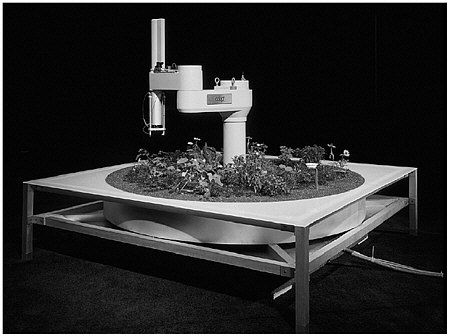 FIGURE 6.2.1 Telegarden. Image courtesy of Ken Goldberg.
|
Different institutions may be culturally better suited to different models of ITCP work. For example, committee members’ experiences, and testimony to the committee, suggest that Carnegie Mellon University (CMU) generates cross-disciplinary activities in various forms with relative frequency and success as compared to many other universities. In the CMU culture, it is generally acceptable to work in any discipline from a basis in any other, an unusually open posture (albeit bounded by expectations for performance that can be evaluated within the home discipline28). Work in different disciplines is accepted, too: There is a separate history of computer scientists with academic appointments who are also significant creative artists, namely composers. One can speculate that such a development took place because composers were more likely to program computers than were other artists or designers.
Regardless of setting, a key element of success is effective training; more than talking about opportunities is needed. In the early days of a new area of study, people put in a lot of time to educate themselves in the new domain. Time matters, and accordingly, so does institutional support for the investment of time necessary for learning.
What goes on within the walls of academia is only part of the ITCP story, however. Computer science laboratories and departments have both official programs of activities and a panoply of unofficial activities—a penumbra—that extends the interface between the academic and the non-academic, both feeding and drawing from popular interests off campus. Comparisons might be drawn to the intellectual fringe around industries that deal with pop culture, or the marginal art production feeding off the core, which serves as a magnet. It is important to sustain that penumbra (supporting such activities as short-animation/student festivals, for example) as it relates to part of a strategy of nurturing academic ITCP on the computer science side. This is the arena in which collaborations with independent artists may be achieved.
Among the most notable of such interactions—and the most visible—were the computer graphics and computer music collaborations among computer scientists and artists and designers dating back to the early years of the computer science field. Computer graphics evolved in part through interactions with scientific (and other) users whose needs for visualizing complex processes could be met with this technology.29 See Box 6.3.
|
28 |
Also note the further comments on criteria for tenure in the section “Challenges in Computer Science Departments,” below. |
|
29 |
Scientific visualization has itself evolved with computational power in ways that reinforce the values of an artistic approach to making sense of growing quantities of data. Thus, for example, artist Donna Cox was an early employee of the National Center for Supercomputing Applications at the University of Illinois at Urbana-Champaign, where she has collaborated with computer scientists and other scientists on the challenge of visualizing the processes for which supercomputing generates enormous volumes of data. |
|
BOX 6.3 Beyond Academia: Computer Science Reaches Out to the Community The development of computer music and computer graphics collaborations among computer scientists and artists dates back to the early years of computer science. Computer graphics emerged from computer science research in the 1960s, spurred by vigorous Defense Advanced Research Projects Agency (DARPA; then ARPA) funding,1 but it also grew up in a variety of pockets of filmmakers working in close association with both academic and industry-based laboratories. Computer music also took a variety of paths, linked to corporate research programs as well as university computer centers. Much of the foundational work in computer-generated sound occurred at Bell Labs, under the leadership of Max Mathews and John Pierce, who from the earliest days employed qualified composers to collaborate in the study of both the acoustics of instruments and the design of high-level languages for composition.2 Links to computer science departments were highly visible as well. Stanford University’s Center for Computer Research in Music and Acoustics, which leverages computer technology as an artistic medium and research tool,3 grew out of the Stanford Artificial Intelligence Lab, and centers for hybrid analog-digital computer music were located at Princeton University, the University of Toronto, and Columbia University in the 1960s. (The formal properties of avant-garde music were well suited to procedural representation even earlier than this, as exemplified by the work of Xenakis in the 1950s, who worked with IBM researchers in France to devise stochastic composition under computer control.4) As smaller systems came within reach of independent composers and more academic music departments in the 1970s, composers themselves tended to take the lead in devising both hardware and software components. By the 1980s, easily programmable commodity hardware became affordable, and a communication protocol—the musical instrument digital interface (MIDI)—made it possible for both researchers and commercial practitioners to adapt the cumulative know-how in languages and synthesis techniques across a broad spectrum of musical styles. Indeed, an unanticipated consequence of this widely adopted protocol was an important factor in enabling the growth of new-media art forms, such as interactive installation and performance art: The musical event-generator could as easily talk to image-making, lighting, motion-detection, or robotic machinery as to synthesizers or sound-processing devices. |
Challenges in Computer Science Departments
One of the biggest challenges to be addressed in departments of computer science seems to be a culture that discourages ITCP work— although sometimes subtly. Committee members and briefers to the committee recounted personal stories of their art and design interests generally not being viewed as productive. As one individual explained, “A faculty member told me that it was a complete waste of time and that I should stop doing the ‘flaky’ stuff. That caused me to go underground.” This person decided to limit conversations with other technical colleagues about artistic work and did not include the work in the case for promotion, observing that relevant activities such as seminars were treated as over and above conventional responsibilities. Another briefer characterized the department’s reaction to art and design work as “friendly toleration.”
|
In computer graphics, the technical issues addressed in the 1960s by the DARPA contractors (Massachusetts Institute of Technology, Stanford University, Carnegie Mellon University, University of Utah) dealt primarily with the problems of three-dimensional modeling and simulation—fueling the decades-long quest for the Holy Grail of immersive photo-realistic virtual environments.5 Important contributions were made to the commercial motion picture industry by university laboratories in the 1970s—notably the New York Institute of Technology—which sustained the core set of early DARPA researchers before price and performance factors leaped forward in the 1980s and made a market for commercial graphics a reality. The National Film Board (NFB) of Canada collaborated with the Canadian National Research Council in producing some of the most widely viewed and convincing artistic computer animations before 1975. This collaboration was decisive for the NFB’s early adoption of digital techniques, and it fostered a community of advanced users with strong links to the academic work in Canadian labs (at the Universities of Waterloo, Toronto, and Montréal) that helped to underwrite the knowledge base feeding the successful cluster of Canadian graphics software firms—Alias, SoftImage, Sideffects, and Discrete Logic. The scientific and entertainment graphics community coalesced around the professional organization SIGGRAPH (the Special Interest Group on Computer Graphics and Interactive Techniques of the Association for Computing Machinery), which has been successively extending its scope to include other scientific specialties, such as human-computer interaction, and media genres, such as computer games. It is perceived as emphasizing commercial applications, which have games as a driver for computer graphics. |
The criteria for tenure in computer science tend to reinforce such negative attitudes toward ITCP work. Although they vary among computer science departments, criteria for tenure at a research university typically include the ability to win a strong endorsement in confidential assessments by subject experts at other institutions and the quality and quantity of published research, as well as the quality of the candidate’s research program, supervision of doctoral students, and general teaching record. If the subject experts on a tenure committee do not include anyone familiar with ITCP work, or if that ITCP work does not produce a bounty of published research in major technical journals, efforts devoted to ITCP work may not advance a computer scientist’s career within the department.
Another challenge is related to the rise of computing and data communications across the board in academic environments, with elements of computer science increasingly being taught in other departments—a situation that makes some computer scientists skeptical
One of the biggest challenges to be addressed in departments of computer science seems to be a culture that discourages ITCP work—although sometimes subtly.
about collaborating with colleagues who may be viewed as lacking the credentials to be hired in the computer science department itself. When computer science is taught as a service course to meet specific needs, other departments may be less motivated to reach out to computer scientists for help with deeper, challenging problems in computing and communications. The computer science diaspora in academia has typically focused on developing skills of immediate application in another field, whether programming (at the more sophisticated level) or the use of common software tools (at the less generic user level). Whether they are expected to teach computer science (CS) courses for majors in other departments or whether those departments internalize such courses, computer scientists tend to see such activity as something less than “doing real computer science.” Also, the emphasis of such courses on meeting immediate needs and delivering a targeted service is not conducive to thinking about collaborations.
The willingness and ability of academic computer scientists to engage with artists and designers depends on institutional support, as noted above, and on other particulars of a given department—whether, for example, the department is in a school of engineering, whether a bachelor of arts degree is an option, and so on. Recently, to improve the richness of its cross-disciplinary interactions, the CS department at MIT planned to make about half of its new appointments joint with another unit at MIT:30 One course per year would be taught in each department, salary and promotion decisions would be made jointly, and the research expected from the new faculty member would appeal to each department, with selection standards the same as for core (non-joint) faculty. The first person hired in the CS department under this plan was a physical chemist, and the partnering department was bioengineering. It was expected that he would be exposed to new methods in computer science and in turn would contribute to new problems demanding new CS solutions—and thus motivating fruitful cross-disciplinary interaction. How this department’s open-ended plan for cross-fertilization is realized and whether it will contribute to ITCP will depend, in part, on whether artists (for instance) can also be hired. That prospect is uncertain, in part because of questions about how to assess candidates who are so different from computer scientists and how to compensate people who span departments with substantially different salary structures.31
Whatever the mechanism for forming collaborations for ITCP across departments and disciplines, they must include researchers working with shared goals and must address intellectually challeng
ing computer science problems. One approach to ascertaining whether a project is intellectually challenging might be to ask whether it could lead to a suitable computer science doctoral thesis. Computer science faculty tend to value work that advances the state of the art in computer science. For dual appointments, the issue may be whether the work helps to redefine computer science for the future or to create a new field.
One approach to establishing credibility for, and perhaps encouraging, ITCP work and programs within computer science departments would be to appoint a senior researcher as the leader of cross-disciplinary activities. Sending such a signal may be even more important for collaborations that would include a field traditionally regarded as far from computer science. In addition, institutional paths are needed that allow faculty members to break out of narrow specializations and that encourage cross-disciplinary Ph.D. programs, although market realities may argue for a “home” department in computer science or another technical area. Programs with cross-disciplinary minors could also be established or expanded. Cross-departmental activities such as distinguished lecture series and topical study groups or seminars could also be adopted.
A key criterion in assessing specific options for cross-disciplinary appointments will be their potential to advance the interests of graduate students, who are the backbone of a computer science department’s research program. It will be necessary to frame interesting new, cross-disciplinary problems that provide appropriate entrées to careers for graduate students (perhaps more at the master’s than at the doctoral level).
ART PRACTICE AND DESIGN
Within the academic environment, the arts range broadly from traditional fine arts—the visual arts, music, drama, dance, photography, film and video, and so on—to design, architecture, crafts, and the history and criticism of the arts.32 The rise of IT has touched all of these areas, some more than others, blurring some of the traditional distinctions among them. The emphasis of arts programs varies with the institution: Some take a more humanities-based approach, teaching artistic expression and critical theory as a way of understanding cultural problems, or a more theoretical approach, studying the fine arts’ interrelationships with all aspects of contemporary culture; others prepare students for careers in commercial graphics design, fashion, or animation and special effects. And some academic art environments have a broader range of exposure to IT than others.
|
32 |
The rise of IT in the 1990s is viewed as an important cultural phenomenon with far-reaching implications for visual artists who wish to interact with, and represent, the world in which they live. |
One approach to establishing credibility for ITCP work and programs within computer science departments would be to appoint a senior researcher as the leader of crossdisciplinary activities.
The outreach from the arts to information technology, like that from the humanities,33 echoes the sciences’ earlier reaching out to IT. Computational science has been dominated by people and activity based on one or another science, although new, hybrid programs— academic programs, industrial and academic laboratories—have emerged. Within the field of computer science, computational science has tended to be viewed as an outside(rs’) activity, in part because the majority of the impetus came from the various sciences that saw in computer science useful tools. This is part of the previously noted computer science diaspora. Response from within computer science required recognition that the field could gain inspiration from these other fields, rather than serve only the one-way function of supplying those fields. Similar concerns and patterns shape academic ITCP, still embryonic. Further complicating the picture is the fact that ITCP may involve more than the pairing of arts with computer science (or electrical engineering). This is illustrated in particular by the recent trend to involve as well ideas and activities from the life sciences, given growing use of IT in that domain and the visual or music performance potential that results.34
Some arts programs have embraced IT, even creating independent areas of study; many have simply broadened their current programs by adding courses in various software packages, thereby treating IT as another tool. Arts programs are increasingly encouraging intermedia and cross-disciplinary artwork as IT tools blur the distinctions between traditional art disciplines. Some art schools are more skeptical of IT’s potential as “new media” and argue that computers and software, input devices such as digital cameras and scanners, and displays such as LED screens and projectors are nothing more than tools that replicate and simulate traditional media without presenting any new problems in visual theory.
|
33 |
See Computer Science and Telecommunications Board, 1997, “Computing and the Humanities: Summary of a Roundtable Meeting,” ACLS Occasional Paper 41, American Council of Learned Societies, New York, N.Y., available online at <http://www.acls.org/op41-toc.htm>. |
|
34 |
Take the case of the artist as creator of new life forms. Eduardo Kac, of fluorescent green-bunny fame (see his Web site at <http://www.ekac.org>; see also Eduardo Kac, 1998, “Transgenic Art,” Leonardo Electronic Almanac 6(11): 289-296), in another project, biblically titled “Genesis,” mutated E. coli bacteria into genesis bacteria. What is of specific interest from the perspective of IT is that the genomic code was translated into Morse code, which was then converted into DNA base pairs. The complicated production of this synthetic gene is not the concern here. What is significant, however, is that these cultured fluorescent bacteria remain invisible until IT intervenes. A microscope with an internal ultraviolet (UV) light source, a Web server, and an over-life-size video projection make visible the separation and interaction processes of these newly created entities. Both the onsite and the online observer can intervene in the procedure of bacteria transformation by manipulating the UV light source. A further aspect of this installation (shown at the Ars Electronica conference in 1999) is the DNA-Music-Synthesis—turning the physiology of the DNA into a musical parameter. The real as well as the online viewer is influential here, too, since she can control the rate of mutation and the sequencing. |
Arts programs are increasingly encouraging intermedia and cross-disciplinary artwork as IT tools blur the distinctions between traditional art disciplines.
SCHOOLS OF ART AND DESIGN
To understand the emergence of ITCP from the academic arts perspective, it is helpful to consider how major schools of art and design approach IT. The Rhode Island School of Design (RISD), for example, observes that “computers are natural allies in the creative process, with the emphasis on using new technologies to express artistic vision. Breakthroughs in digital media have transformed virtually every discipline taught here.”35 Indeed, IT has influenced the development of RISD programs in graphic design, apparel, ceramics, architecture, photography, film, animation, video, and illustration— providing new ways to address a shared concern in visual literacy and creative problem solving.
RISD’s integration of digital media into its more traditional course work follows the typical pattern of the integration of IT into arts education—the first and most natural step in the process is to use software to create a model of a potential artwork before the work is realized in a traditional medium, such as paint or marble. Applications such as Adobe PhotoShop, and any number of three-dimensional modeling applications, allow students to experiment with image composites and collage, placement of colors, and general composition before working with physical materials. However, in 2002, RISD announced a new graduate department to explore innovative approaches to digital media. Expanding on a media art focus, the vision of the new department is to provide a diverse environment for multidisciplinary and transdisciplinary exploration of digital media.
Schools such as the California Institute of the Arts (CalArts36) have focused on preparing undergraduates for professional careers in art, design, film, music, and theater. Information technology has been wholeheartedly incorporated into all of the above programs, and a new, cross-disciplinary study option has been created. Graduate students have the option of undertaking a new concentration in Integrated Media, designed for students who are fluent with (or want to be fluent with) computer programming and digital technologies as basic elements in their artwork. Programming is taught to increase mastery of IT (beyond learning how to use an existing package).
New York’s School of Visual Art (SVA) boasts an impressive list of technical courses in its M.F.A. program in computer art, including C++ programming, UNIX, interactive multimedia, interface design, and sound—a list that shows a range from key skills development (e.g., programming) to explorations in applying those skills. The SVA’s computer art M.F.A. was the first of its kind, established in 1987.37
|
35 |
RISD’s Web site even features a technology statement. See <http://www.risd.edu/technology.cfm>. |
|
36 |
See <http://www.calarts.edu>. |
|
37 |
Information on the School of Visual Arts is available online at <http://www.sva.edu/mfacad/facilities.html>. |
A course called “Public Art/Private Spaces” in CMU’s College of Fine Arts explores IT’s effect on the notion of public space, and it directs students toward the creation of a public artwork that addresses these issues. “With the ubiquity of advertising, cell phones, surveillance cameras and wireless computers it is increasingly difficult to define the parameters of public space. In this course, students will consider how visual artwork and performance are incorporated into what is considered ‘public space.’”38 Carnegie Mellon’s M.F.A. program is rooted in critical theory and a conceptual approach to art making, and consequently has incorporated IT into its broader cultural concerns as well as into the practical aspects of streamlining the art-making process and working in new media. Also see Box 6.4 for an example of a program in electronic literature.
The Department of the Arts at Rensselaer Polytechnic Institute (RPI) provides a contrasting model to CMU, as it operates as the sole creative arts department within the School of Humanities and Social Sciences. Stressing “integrated electronic arts” in the wider context of a technological university, the Arts Department at RPI offers both a concentrated graduate master’s degree in electronic arts practice and an undergraduate dual degree in electronic media, art, and communication. Without the richness of creative resources and disciplinary specialties found in colleges or faculties of fine arts, RPI’s faculty of primarily electronic artists must attempt to cater to both the high end of experimental, research-oriented graduate ITCP practice, as well as a large and ever growing undergraduate demand for a hybrid bachelor’s degree. After experiencing rapid growth in the late 1990s, the RPI Arts Department is now poised to become the anchor academic partner for the new Experimental Media and Performing Arts Center, which will provide exhibition and performance venues for both locally developed and internationally curated ITCP work.
The arts and design departments and colleges have generally embraced information technology as a new tool to accomplish work. However, somewhat fewer programs in the practice of arts and design have focused on ITCP work—to examine how IT may be able to enable new forms of art and design and new ways of making such work available, as well as how IT may be able to change profoundly the practice within traditional art and design categories. In some respects, art and design departments were challenged just as society at large to identify how advances in IT could be used beneficially. In one sense, expectations are higher for arts and design departments than for computer science departments: Most people would readily conclude that some kind of profound development in the arts and design should emerge from advanced IT capability. By contrast, it is somewhat less clear how ITCP could and should affect computer science departments and whether the nature of this influence should be minor or major.39
|
38 |
See <http://www-art.cfa.cmu.edu/academic/descriptions.html>. |
|
39 |
The committee argues for a major impact—see the discussion in Chapter 4. |
|
BOX 6.4 School of Literature, Communication, and Culture at the Georgia Institute of Technology About 15 years ago, the English Department of the Georgia Institute of Technology (Georgia Tech) received a large institutional grant from the National Endowment for the Humanities to transform itself. The department broadened its scope to include electronic media, leading to the adoption of a new name: the School of Literature, Communication, and Culture (LCC). Aggressive recruitment for media arts faculty followed, and with a number of new members secured, the school began to focus on growth. First an M.A. program in information design and technology was created. Then a series of workshops were convened at corporate sites, which proved to be an excellent financial resource as the workshops soon raised more than $1 million in discretionary funds. This revenue went toward the purchase of up-to-date equipment and to fund traditional courses, research, and projects in literary studies. Today, the LCC is widely recognized as one of the premier programs in electronic literature. The transformation of a traditional English Department into a non-traditional electronic media school has resulted in both advantages and obstacles. The success and prestige that the school enjoys within Georgia Tech and the new-media community at large have created visibility that would have been unavailable if it had remained a traditional English department. With the help of creative campaigning by the LCC, the engineers and scientists of Georgia Tech, faculty members who hold the majority of clout within the university, have had little trouble understanding the benefits and advantages of a program in digital media. The school offers two graduate programs, continuing education programs, and an undergraduate major, two minors, and three certificate programs.1 The changes also have created tensions. The new focus involves commercial considerations to a much greater extent than one finds in a traditional English department—perhaps welcomed by some faculty, but troubling to others. Related to this tension is the concern that the department might be morphing into a fancy kind of trade school, away from an established place in the world of scholarship—in other words, that teaching highly marketable electronic skills might come at the expense of intellectual and scholarly inquiry. One solution may be to approach electronic literacy as a rhetorical practice, rather than a skill.
|
As departments within universities, art practice and design programs must adhere to the same general guidelines for tenure as computer science departments. However, there are some important differences attributable to the discipline and profession. Perhaps the central difference involves what constitutes a publication. In both cases, completed work must be made public in some way. Computer science emphasizes the publication of articles and technical reports (and books to a lesser extent). Publication in the arts and design may occur through exhibition, performance, or other means; there can be a scholarly publication associated with a completed work, but not necessarily (and in computer science, there may be a prototype or working system that corresponds to a scholarly article, but not necessarily).40
At first glance, co-hires in computer science and the arts and design may seem to be an attractive prospect.
CROSS-CUTTING ISSUES
Academic organizations can be—and often are—incubators for new fields that emerge from the interstices of the old ones. That was the case for computer science—and for the study of film and video, for example. Both of those arenas, however, illustrate how emerging fields of study have to struggle to gain respect in the academic community. This struggle implies that at early stages, resources and institutional policies can constrain potential.
HIRING FACULTY
At first glance, co-hires (appointments with nearly 50 percent in each department—in computer science and the arts and design) may seem to be an attractive prospect. The co-hire becomes steeped in diverse settings related to ITCP and can draw on a tremendous range of expertise and resources. However, entering into a joint appointment or major collaboration across disciplines introduces challenges and risk, especially for junior faculty who have yet to attain tenure, inasmuch as decisions about their promotion and tenure may depend on assessments by people accustomed to more traditional avenues. The demands of the tenure process may be one reason that venturing into new and cross-disciplinary areas seems more suitable to senior faculty41—but it is often the young who show more interest in new areas, especially those involving IT in a new context.
Thus, the committee believes that faculty should have their primary home in one department. This home department’s criteria are used for tenure and promotion decisions. The faculty member would attend the home department’s faculty meetings and seek mentorship from the ranks of this department. In some instances, a minority appointment in a second department can be desirable to encourage cross-departmental ITCP research and teaching (which may result, for example, in teaching a course in the second department occasionally, perhaps jointly with another faculty member whose primary appointment is in the second department). The utility of zero-percent appointments42 is questionable, especially if the reality is that the faculty member seldom becomes involved in any way with the second department.
One alternative is to create voluntary clusters of interested people within an art, design, or computer science department who would teach material on the edge of the respective department. For example, there could be an art/IT group within an art department. It is important to locate IT quasi-formally within all fields simultaneously—even if it is only at a voluntary cluster level at first. This parallel existence would serve to familiarize larger groups of faculty and students with ITCP possibilities and help to increase the awareness of ITCP work. The idea of voluntary clusters could also be enabled and bolstered by the workshop concept (see the section “Workshops” above).
Some programs in ITCP areas depend on adjunct faculty. As in other domains, the limited use of adjunct faculty can be quite beneficial in bringing different perspectives (often from areas in the relevant practitioner community) into academia. However, dependence on adjunct faculty in ITCP centers as a cost-savings measure is a flawed long-run strategy, although budget pragmatics may offer no alternative in the short-run in some instances. A large cadre of adjunct faculty jeopardizes sufficient stability among the faculty to develop the deeper insights that can derive from projects that extend beyond one term or one academic year. Furthermore, a large cadre of adjunct faculty promotes the idea of second-class citizenship in the academic community for those who pursue ITCP work.
ENCOURAGING MULTISKILLED INDIVIDUALS AND COLLABORATIONS
Academic environments feature metamorphosis in core disciplines—computer science, various arts and design—and more or less independent cross-disciplinary activities, which aim to generate multiskilled people and support their work. Both individuals with skills from multiple disciplines and people willing and able to collaborate across disciplines appear important for sustaining cross-disciplinary programs.43 Suitable training and institutional support for either category are still emerging.
A challenge is to overcome the tendency of the communities within the ITCP realm to fear becoming marginalized in collaborations, to fear being treated as technicians in support of another’s work. Ensuring sharing of responsibility and recognition is prerequisite for collaboration and for acquisition of cross-disciplinary skills. That challenge may be greatest on the computer science side, from which ITCP has to be able to draw to achieve its full potential.
Because the best collaborations seem to be modest-sized efforts that grow from the bottom up (graduate students often may be the
A large cadre of adjunct faculty promotes the idea of second-class citizenship in the academic community for those who pursue ITCP work.
ones to make and promote connections across boundaries because they are not yet fully invested in the models and norms of a particular field), broader exposure and effective evangelism may be needed to overcome the disciplinary inertia that can militate against interactions with people who seem very different. Administrators need to recognize that effective cross-disciplinary activity is harder and can involve more work than traditional intradisciplinary efforts.44 Accordingly, they should provide incentives for people from different disciplines to work together and should make it easy to get started by minimizing the red tape, while maintaining perspective on academic goals and on how best to structure the means toward those ends. Investments are needed in planning and preparation and in guidance for students. For example, the tendency for fellowships to be attached to departments may limit flexibility. Further complications stem from differences across disciplines and departments in compensation, teaching load, graduate student culture (e.g., autonomy in dissertation selection, expectations for authorship credit on published work, and career expectations beyond the terminal degree), and support (i.e., it is not unusual for computer science graduate students to receive research assistantships during much of their course of study, but this is much less common in the arts and design fields). Although these differences can be found in comparisons between any pairs of fields, they are greater in cases involving major historical, cultural, and resource disparities, such as those between the arts and design on the one hand and information technology and computer science on the other (see Chapter 8 for further discussion).45
Some universities such as Carnegie Mellon can draw on strengths in both computer science and art, both of which attract a critical mass of talent from which interactions may flow. The case of CMU illustrates the benefits that can accrue from large scale, which is a circumstance that may not be broadly transferable. For example, the Human-Computer Interaction Institute at CMU has organized a series of lunches engaging people from the computer science and design departments, and a recent course drew from both the robotics and art departments to explore robotic art. Few institutions could bring together on a regular basis audiences with such a wealth of expertise
and experience, but those able to do it have a significant advantage in the support of ITCP work.
Administrators also have to resist the urge to direct large sums of money to anything digital. A new organization, for example, is not necessarily the best solution, at least in the beginning. And they also need to beware of the faddism that can accompany identification of cross-disciplinary opportunities. In particular, university administrators may feel tension about their institutions being perceived as (or becoming) fancy trade schools if programs lack a recognized research base.
However, in the long run, the creation of a specialized center is desirable to consolidate common interests as demonstrated by the initiatives of individual faculty members. ITCP work must develop its own world view, and while that will necessarily be built largely from the parent disciplines, a more neutral context is required so that the inherent problems and contradictions can be negotiated.
DESIGNING CURRICULA
Questions arise about kinds of degree programs and how they should relate to skills. There is an art to evolving courses—in computer science and in the arts and humanities—to promote cross-fertilization, and it is not clear that there are replicable models. Different approaches will be needed where the emphasis is on increasing breadth versus depth of knowledge. On the arts side, a challenge is to move beyond treating IT as black-box tools and to enable more exploration of the workings of IT, to foster deeper integration of art and IT. On the computer science side, a big constraint is the already tight engineering curriculum that shapes most degree programs (though most programs include some social science and humanities courses as a part of a general education requirement). The challenges begin with delivering arts and humanities (or social science) courses in ways that make clear the relevance to computer science students, and computer science courses in ways that link to other issues and contexts, thereby opening the doors to cross-disciplinary inquiry. The next level of challenge pertains to curriculum. As Sentman and Hope ask,
Is there a common, clearly defined concept of what students should know and be able to do after completing a program that combines work in two or more disciplines? How do collaborative programs aid in the development of knowledge and skills both in the component disciplines and in intellectual approaches and techniques for making connections?46
One illustration of how curriculum design is thought through is provided by the standards for joint accreditation by the National Association of Schools of Music and the Accreditation Board for Engineering and Technology of baccalaureate degree programs combining studies of music and electrical engineering. Addressing admission, faculty, facilities and equipment, library facilities, curricular structure, specific course requirements by category, and essential competencies, experiences, and opportunities, the standards spell out what would and would not be acceptable for joint accreditation, and they provide guidelines for the operation of “combination degree programs” in music and electrical engineering.47 That effort illustrates implementation that responds to fundamental concerns raised by Sentman and Hope: “Connect the work of the arts unit to professional work in other disciplines. Teach by example the interconnections of the arts professions with other intellectual and professional activities . . . .”48
Of concern to the committee is the narrowness or shallowness of some of the new offerings, which seem little more than venues for learning and applying skills in certain software packages (e.g., PhotoShop), and the observation that in some contexts, the rise of new activities involving IT seems to dominate preexisting programs (with the acquiescence of those in charge of such programs), with questionable results for curricula and degree programs. While initial interest may begin with superficial use of IT, there is a need to think through, in the long run, the emphasis of academic activities on intellectual content relative to process: Generating in-depth knowledge, skills, and competence requires intellectual content, not just method.
Truly good curricula that support ITCP work are difficult to design, because they must reflect a sufficiently broad scope of learning and inquiry while also incorporating the core of some body of knowledge. Graduates are best served by gaining both exposure to ITCP work and grounding in some discipline.49 The practical realities of the employment marketplace—which tends to reward specialization and degree name recognition—suggest that jettisoning any attempt at specialization is perilous for the student.
The time is ripe for academic experimentation with ITCP, given broad trends among disciplines. It is a time when disciplines are fragmenting or have become so porous as to lose their former shape and identity. First formulated in the early 19th century in Hegel’s
Berlin, the now classic university fields and professions are undergoing a complex process of reconceptualization and restructuring. Just as the opposition between brain and body is being rethought, so, too, is the binary model separating the arts from the sciences, culture from nature, and biological from engineered systems.50


