


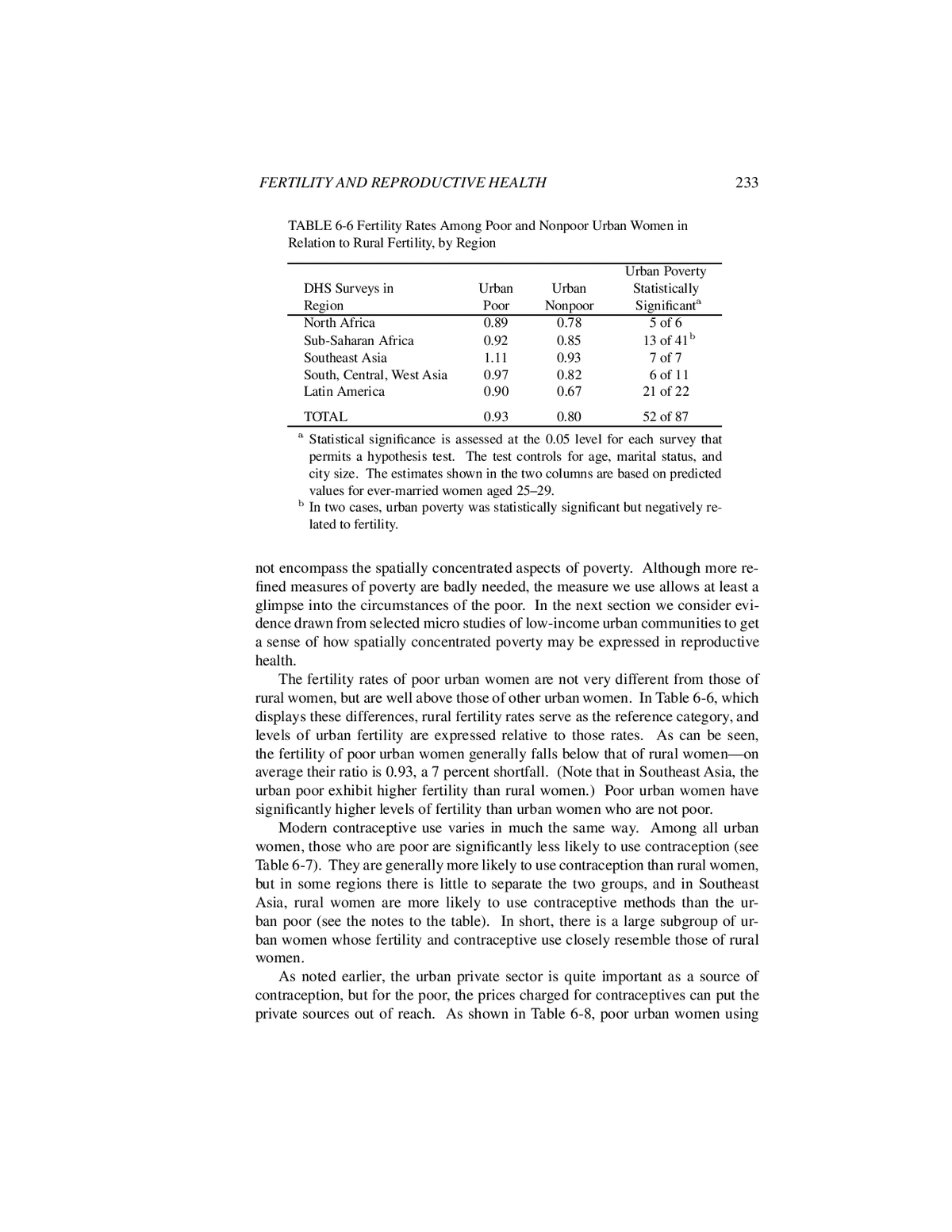


Below is the uncorrected machine-read text of this chapter, intended to provide our own search engines and external engines with highly rich, chapter-representative searchable text of each book. Because it is UNCORRECTED material, please consider the following text as a useful but insufficient proxy for the authoritative book pages.
Cities Transformed: Demographic Change and Its Implications in the Developing World 6 Fertility and Reproductive Health Many aspects of urban life have the potential to affect fertility and reproductive health, but not all of these can be said to be distinctively urban. The broad fea- tures of the urban economyâits dominance by industry and services, its work- places situated outside the homeâwere noted so long ago in discussions of the demographic transition (Notestein, 1953) that they have almost ceased to be re- garded as urban. Indeed, as discussed earlier in this report, many rural areas have been assuming similar characteristics, especially in the regions surrounding large cities. Lower infant and child mortality is also broadly characteristic of cities, and lower mortality reduces some of the risks parents face in adopting strategies of low fertility. But the mechanisms are not obviously urban in character; surely lower mortality would exert much the same sort of influence in rural villages. Mi- grants are a distinctive presence in urban environments, and the fact that they have recently made transitions from other contexts raises issues of disruption, adjust- ment, and selectivity. Apart from migration, however, there remains the question of what is gained by situating fertility and reproductive health decisions within specifically urban contexts. What does this âembeddingâ achieve? Does it bring to light any implications for services and programs? To begin, we should offer a word of explanation on the meaning of the phrase âreproductive health.â It refers to âa state of complete physical, mental, and social well-being and not merely the absence of disease or infirmity, in all matters re- lating to the reproductive system and its processesâ (United Nations, 1994: 202). The concept provides a framework for thinking about sex and reproduction, high- lighting not only family planning, conception, and birth, but also the imbalances in decision-making autonomy between men and women, the possibilities of coer- cion and even violence in their relations, and the different health risks to which they may be knowingly or unknowingly exposed. A broad perspective is espe- cially helpful where adolescents are concerned, because young men and women are often woefully ignorant about matters of conception and health risk, are still 199 Copyright National Academy of Sciences. All rights reserved.
Cities Transformed: Demographic Change and Its Implications in the Developing World 200 CITIES TRANSFORMED testing the limits of their autonomy in decision making vis-`a-vis their elders and the other sex, and yet must often make choices that can foreclose options for adult life and compromise their later decision-making powers. Programs in the area of reproductive health include those dealing with contraception, but also encom- pass initiatives aimed at sexual violence; reproductive tract infections; and sexu- ally transmitted diseases (STDs), including HIV/AIDS. They extend as well to services intended to ensure healthy pregnancies and deliveries and safe abortion. With this set of issues in mind, we turn in the first section of the chapter to the distinctive features of urban environments. Two features warrant special attention. First, the socioeconomic diversity and the forms of social interaction found in cities may encourage urban parents to make deeper investments in their childrenâs schooling, a strategy that typically entails lower fertility. Social interaction may also focus attention on the means by which lower fertility can be achieved, that is, on modern contraception. It is possible that urban environments influence the ways in which adolescents make their transitions to adulthood and the terms upon which marriage search is conducted. Second, the urban services and program en- vironment differs in many ways from that of rural areas. It is much more diverse, especially in the roles taken by the private sector and in the multiplicity of gov- ernmental units that have a say in the management and delivery of health services. It is remarkable how little research attention has been paid to the specifically urban aspects of reproductive health programs. The problem is not that these programs are mainly rural; especially in the areas of STDs and HIV/AIDS, many programs are situated in cities and address health issues that are of special concern to urban populations. Rather, the problem is that the conceptual frameworks that inform program design and evaluation do not appear to have been thoroughly ap- praised from an urban perspective. The service providers who work in cities may well be attentive to urban possibilities and constraints, but the research literature has conspicuously failed to provide them with concepts and guidelines tailored to their environments. Having set forth the main concepts in the first section of the chapter, we give in the second section an empirical overview of urban fertility, contraceptive use, and selected measures of reproductive health, drawing from the survey data supplied by the Demographic and Health Surveys (DHS). We next explore the fertility transitions that are under way in cities, seeking to differentiate the transitions that accompany economic development from those produced by economic crises. The succeeding sections of the chapter consider three urban groups of particular im- portance: the urban poor, migrants, and adolescents. We then offer reflections on the distinctive features of urban service delivery. The final section presents conclusions and recommendations. THE URBAN DIMENSION Urban residents face a variety of constraints and opportunities that influence decisions about marriage search, the number of children to bear, and the manner Copyright National Academy of Sciences. All rights reserved.
Cities Transformed: Demographic Change and Its Implications in the Developing World FERTILITY AND REPRODUCTIVE HEALTH 201 in which children are raised. Like rural parents, those in urban areas strive to pro- tect their childrenâs health and their own. Rural and urban parents no doubt hold similar fundamental values, but they face different economic and social environ- ments and may find that they must adopt productive and reproductive strategies specific to these environments. In what follows, we first discuss the features of urban settings that can influence family building and the pursuit of reproductive health. We then examine the programs and services that can determine whether urban families have access to the means to reach their goals. Social and Economic Contexts There can be little doubt that a great number of family reproductive strategies are on display in cities. Consider the case of Natal, a Brazilian city of some 680,000 residents within the urban agglomeration. By no current standard would Natal be considered a megacity, and yet across its neighborhoods one sees an astonishing range of fertility levels. Franca (2001) illustrates this diversity, showing that the total fertility rates (TFRs) of Natalâs neighborhoods can be as different as those of Switzerland and Nigeria (see Figure 6-1). This spatial expression of reproductive diversity suggests, although it does not prove, that urban neighborhoods must exert an important influence on fertility decisions. As argued in previous chapters, the fact that cities exhibit a diversity of reproductive strategies is not sufficient to make Germany Switzerland Italy Sudan Nigeria Total fertility rate Less than 2.00 2.10â3.00 3.10â4.00 4.10â5.00 5.10â6.00 No data FIGURE 6-1 Total fertility rates in the neighborhoods of Natal, Brazil, as com- pared with rates in Europe and sub-Saharan Africa. SOURCE: Franca (2001). Copyright National Academy of Sciences. All rights reserved.
Cities Transformed: Demographic Change and Its Implications in the Developing World 202 CITIES TRANSFORMED the case for neighborhood effects. The spatial diversity must persist when controls are introduced for individual socioeconomic characteristics, and it must be shown that forms of interaction take place within neighborhoods that shape individual knowledge and behavior. Of course, interactions limited to defined spaces, such as neighborhoods, do not exhaust the possibilities. As Chapter 2 makes clear, city residents can participate in multiple networks and associations, only some of which may intersect in their neighborhoods of residence. For example, the separation of workplace from place of residence that is characteristic of cities allows for the development of spatially separated reference groups. In our view, the theories set forth in Chapter 2 make a persuasive case for the proposition that neighborhoods, networks, and reference groups influence fer- tility and reproductive health decisions in the cities of poor countries. But this case rests mainly on analogies with the experience of rich countries. For the poor countries with which we are concerned, the empirical evidence on urban social interaction and fertility is meager indeed. In a few aspects of urban reproductive healthâsexual networks and STDs in particularâthe social interactions are bet- ter documented. In the broader realm of health, the empirical record is quite rich, offering many examples that illustrate the operation of neighborhood effects and the influence of spatially concentrated disadvantage (see Chapter 7). But with respect to fertility and much of reproductive health, research is still in a documen- tation and data-gathering phase. A first step in assembling the documentation is to show that spatial units such as neighborhoods are something more than the aggregation of their residentsâ characteristics. To merit consideration, they must have some separable, durable traits with an urban character.1 In very recent research, Weeks, Getis, Yang, Rashed, and Gadalla (2002) assemble evidence that is suggestive of neighbor- hood effects in Cairo. Examining geocoded census data for Greater Cairo, they discover a wide range of fertility rates across the cityâs shiakhas (see Box 6.1) and, more to the point, are able to show that substantial spatial differences remain after controls are introduced for the usual socioeconomic predictors of fertility. It ap- pears that in Cairo, at least, the spatial component is durable enough to withstand this first round of testing. But evidence of social interaction, whether in the confines of neighborhoods or in social networks arrayed across the urban space, is required to isolate the dis- tinctively urban features of decision making in fertility and reproductive health. As we have argued, the early Taichung study (Freedman and Takeshita, 1969) pro- vided strong evidence that the social networks of urban women supply conduits for the exchange of information about contraception (see Chapter 2). Recent mul- tilevel, longitudinal research on social networks in the periurban and rural areas of 1 Inmultilevel models with individuals clustered within areas, statisticians often introduce unmea- sured areal traitsâtermed ârandomâ or âfixedâ effects, depending on their relation to the measured traitsâand commonly find these effects to be statistically important even with controls in place for individual characteristics. Copyright National Academy of Sciences. All rights reserved.
Cities Transformed: Demographic Change and Its Implications in the Developing World FERTILITY AND REPRODUCTIVE HEALTH 203 BOX 6.1 Spatial Differences in Fertility Rates: Greater Cairo In ongoing research using geographic information systems (GIS) in Greater Cairo, Weeks, Getis, Yang, Rashed, and Gadalla (2002) have uncovered substantial differences in fertility rates across this cityâs neighborhoods. Census data were used to map fertility rates by shiakhasâsmall districts within the Cairo metropolitan area that are akin to U.S. census tracts. As can be seen in the map below, the lowest fertility rates were found near the center of Cairo (near Talaat Harb Square) and the highest at the suburban edges, where men and women tend to be less educated, higher percentages of women are married, and fewer women work outside the home. Many of the high-fertility shiakhas have fertility levels similar to those of rural Egyptian villages. Multivariate analyses revealed that neighborhood context has a substantial impact on fertility even net of controls for conventional predictors of fertility. Weeks and colleagues also discovered substantial variation by shiakha in the coefficients of these predictors. Copyright National Academy of Sciences. All rights reserved.
Cities Transformed: Demographic Change and Its Implications in the Developing World 204 CITIES TRANSFORMED Ghana, Kenya, and Malawi has reconfirmed the importance of these networks to contraceptive use (Behrman, Kohler, and Watkins, 2001; Casterline, Montgomery, Agyeman, Aglobitse, and Kiros, 2001). We are not aware of any other studies of this sort that are set in the cities of developing countries. For the moment, there- fore, the urban case must rest almost entirely on a persuasive theory. The key theoretical concepts are those of diversity and spatial proximity. Be- cause they are highly diverse in social and economic terms but relatively compact in spatial terms, urban populations present a greater range of accessible models of behavior than is seen in rural areas and offer greater possibilities for social comparison. In cities, for instance, an uneducated young mother may find a few better-educated friends and peers in her social networks. Whether through conver- sation or by example, these women can give her a keener sense of the time that is involved in properly preparing a child for success in school. When the urban poor live near others with somewhat higher incomes, they may be able to recognize in their neighborsâ behavior new strategies for upward economic mobility. Urban settings also present a parade of new consumption possibilities (as seen in con- sumer durables, for example), and the prospects for securing them may motivate desires for smaller families. As Granovetter (1973) argues, individuals are often connected to novel infor- mation and social examples by the âweak tiesâ of their social networks. For the urban poor, social exclusion and spatial segregation can inhibit the formation of such weak ties, or disconnect them. The poor then lose out on opportunities to evaluate novel behavioral strategies and lack the full range of local models who could illustrate their implications. As urban parents and would-be parents survey their environments, they are likely to come upon some examples illustrating how important education is to up- ward mobility and others illustrating either its relative unimportance or the risks of squandering educational investments. The examples provided in networks and neighborhoods may also demonstrate that substantial infusions of parental time and resources are needed to protect and support human capital investments in chil- dren. Recognizing that they have limited time and money, parents may conclude that only a few children can be afforded if such an innovative reproductive strategy is to be pursued. By this route, they may be prompted to consider modern con- traception, another relatively new dimension of choice, with each contraceptive method presenting uncertain benefits, costs, and (perceived) risks to health. These considerations are packaged in the literature under the heading of the âquantityâquality trade-offâ (see, among others, Willis, 1973; Knodel, Chamra- trithirong, and Debavalya, 1987; Parish and Willis, 1993). The theory describes how in certain situations, families will find it in their best interest to bear fewer children but to invest more in developing the human capital of each child. In Chapters 4 and 5, we present empirical evidence showing that childrenâs school enrollment rates are decidedly higher in the cities of developing countries than in rural villages, and that fertility rates are decidedly lower. These are not isolated Copyright National Academy of Sciences. All rights reserved.
Cities Transformed: Demographic Change and Its Implications in the Developing World FERTILITY AND REPRODUCTIVE HEALTH 205 empirical regularities, but alternative positions along the two axes of a quantityâ quality transition. The costs and benefits perceived by rural households tend to produce family strategies involving higher fertility and lower human capital in- vestments in children.2 Urban configurations of benefits and costs, however, lead to lower-fertility, higher-investment strategies (Caldwell, 1976; Stecklov, 1997; Lee, 2000). Two motivating factors are involved in the quantityâquality transition: the perceptions that net economic returns to schooling are high and that the full costs of child-rearing strategies supportive of schooling are also high (Montgomery, Arends-Kuenning, and Mete, 2000). Some parents can see at first hand how schooling is required for advancement in the workplace. Others must acquire a sense of schoolingâs economic returns from social observations and comparisons and from the media. Parents may also need to acquire information about appropri- ate child-rearing strategies. As some research has shown (notably LeVine, Dexter, Velasco, LeVine, Joshi, Stuebing, and Tapia-Uribe, 1994; Stuebing, 1997), moth- ers who have had some schooling themselves tend to employ more verbal, time- intensive styles of interaction with their children. Such attentiveness has the effect of raising the costs of child rearing for parents while increasing the present and future benefits for their children. Other opportunity costs of schooling also need to be weighed: time in school is time subtracted from family or wage work, and this may be an important consideration for the poor. Even if poor parents agree that schooling promises their children substantial returns, they may not be able to invest in it to the extent that richer parents can. The negative and threatening aspects of urban diversity can also affect parental views of the time and supervisory effort required in child rearing. As Randall and LeGrand (2001: 31) note for Senegal: The city (especially Dakar) is viewed as an environment in which bringing up children well is particularly difficult, where parents must face the effects of the economic crisis (poverty, unemployment, crowding), the presence of bad elements, and the ease for children to escape from parental authority and bring themselves up in the streets. 2 In traditional rural societies, children provide status, resources, and old-age support to their par- ents, and these are incentives for higher fertility. But rural populations are not excluded from the quantityâquality transition. The rural fertility transitions of Kenya (Brass and Jolly, 1993) and Thai- land (Knodel, Chamratrithirong, and Debavalya, 1987) can be viewed as examples in which rural parents invested in their children so as to better prepare them for urban livelihoods. In a sense, urban populations provide distant reference groups for rural populations, and in some cases, connections through migration and relatives can provide rural villagers with specific urban examples. In Vietnam, as noted by White, Djamba, and Dang (2001: 3), âParents must now cope with rising costs of education and other expenses, if they want to guarantee the social mobility of their children. This strategy of grooming children for good jobs started among the rich and urban residents, but it expanded to other groups across the society.â Copyright National Academy of Sciences. All rights reserved.
Cities Transformed: Demographic Change and Its Implications in the Developing World 206 CITIES TRANSFORMED Compared to life in villages, in cities more parental time and invest- ment is required to produce a well-brought up child, and this, along with the costs of supporting a family, motivates family size limitation. As these authors describe the situation, in Dakar the temptations and proximity of social risks for children have the effect of raising the full costs of child rearing. Parental anxieties are no doubt heightened by the ubiquitous presence of street children, who serve as vivid reminders of what can happen if parents do not remain vigilant. For urban adolescents and young unmarried adults, the surrounding social and economic environment also presents a great diversity of novel and untested be- havioral options. Indeed, in some countries the very notion of adolescenceâa period interposed between childhood and full adulthoodâis a recent develop- ment, and adolescents may lack guidance on how to negotiate this new terrain. Amin, Diamond, Haved, and Newby (1998) describe the case of young female garment workers in Dhaka, Bangladesh, who must reconcile the strictures of pur- dah (the strict isolation of women inside the home) with their own factory wage work, which takes them outside the home and into direct contact with men in the roles of coworkers, bosses, and potential social partners. As most of these young women are recent migrants from rural villages, their own parents can provide little by way of guidance about city environments and risks. In conversation, the gar- ment workers exhibit a mix of pride and anxiety about their new situations. They take up distinctive habits of dress to signal their special status while allowing their parents to conduct marriage search in the traditional manner. These women will enter marriage with cash dowries that they have amassed through their own work, and will also be equipped with some knowledge of how to negotiate with men as partnersâresources unknown to the Bangladeshi brides of generations past. The terrain such young women are traversing is new for them; in Hong Kong and Sin- gapore, by contrast, women began to face similar choices a quarter-century ago (Salaff, 1981). The Program and Services Environment The services and reproductive health programs found in cities offer some re- sources that can be of use in spacing and limiting births, other resources meant to ensure safe conditions at delivery and swift assistance should complications arise, and still others that provide protection against sexually transmitted and related diseases. Rural areas also have services and programs of this general kind. What, then, are the important urban/rural differences in the program environment? Many of the studies that touch on these issues are found in what might be called a âgray literature,â that is, in project reports and memoranda. These mate- rials must reflect a great deal of specific expertise and experience in reproductive health that could be drawn upon in a comprehensive review. To date, however, Copyright National Academy of Sciences. All rights reserved.
Cities Transformed: Demographic Change and Its Implications in the Developing World FERTILITY AND REPRODUCTIVE HEALTH 207 researchers have not collated and organized this knowledge in a way that distills its lessons for program design, service delivery, and evaluation. The panelâs own efforts to survey the literature identified seven distinctive features of urban service environments that deserve further consideration. First, the diverse composition of cities and the absence of certain social con- trols on behavior that are exercised in rural villages may raise the profile of some reproductive health problems. Urban sexual networks, the role of prostitution, subpopulations of drug users, and communities of migrants separated from their families all can increase the risks of STDs and HIV/AIDS. In city life, adoles- cents can elude the watchful eyes and discipline of family elders and neighbors and find themselves at risk of violence, pregnancy, and disease. Urban socioe- conomic composition is also expressed in the levels of demand for preventive services, such as contraception, and at least on average, city residents have greater abilities to pay for preventive and curative care. Second, many countries are undertaking ambitious programs of governmental decentralization, and these political reforms are introducing new municipal, state, and regional units of government (see Chapter 9 for a full account). In the era be- fore these reforms were initiated, responsibility for the delivery of family planning and reproductive health services generally rested with national ministries, which held the requisite funds and technical expertise. Decentralization has introduced many uncertainties. As vertically organized delivery systems give way to more complex forms involving multiple units of government, what becomes of the ex- pertise and funds previously concentrated in the national ministries? Are national staff relocated and reassigned, or are municipal and regional units of government asked to acquire their own staff to oversee service delivery (Aitken, 1999)? What sorts of transfers from upper to lower tiers of government will sustain the repro- ductive health care system? How is information about health to be returned from the local to the national level to guide resource allocation? These appear to be highly complex matters, and it is surprising that they have attracted relatively little research attention to date. Scattered case studies are availableâChapter 2 describes interesting recent results for the Philippines (Schwartz, Racelis, and Guilkey, 2000; Schwartz, Guilkey, and Racelis, 2002)â but nothing akin to a comprehensive review has been published. Of course, decen- tralization is still new, and it is often difficult to distinguish between the reforms being proposed and those actually being implemented. In principle, at least, the developments at the municipal and local levels might generate opportunities for local governments to engage indirectly in service delivery through monitoring and contractual relationships with the local private sector and nongovernmental organizations. Third, the private sector is a distinctive and prominent presence in urban repro- ductive health, and indeed, in urban health care more generally (see Chapter 7). The urban private sector is highly heterogeneous, offering an array of expertise that ranges from traditional healers to chemist shops to highly trained surgeons. Copyright National Academy of Sciences. All rights reserved.
Cities Transformed: Demographic Change and Its Implications in the Developing World 208 CITIES TRANSFORMED Fee-for-service arrangements take on greater importance in the private sector, and service pricing raises questions of equity and ability to pay.3 In some countries, private providers interact with their clients through health insurance mechanisms, especially when patients are in the employ of the public-sector or âformal-sectorâ private firms. Rural areas generally lack the scale, diversified economies, and con- centrations of resources needed to support much private-sector activity in health. Some drugs and supplies can be purchased in rural markets, and traditional forms of health care are much in evidence, but on the whole it is the public sector that must provide rural villages with modern forms of care. Fourth, the question of access to services takes on a different cast in urban ar- eas. In urban settings, it is inadequateâand potentially misleadingâto conceive of access as being measured by the physical distance to services. The greater density and variety of urban transport can greatly reduce the time it takes to reach services by comparison with access time in rural areas. Much less time is likely required to locate emergency care, such as that needed in cases of hemorrhage and other complications of childbirth, than is the case in most villages. However, time costs can still loom large in discouraging preventive and nonemergency forms of care. These costs should not be underestimated, particularly when services are located far from main transport routes and the clusters of residence and employ- ment for the urban poor. Moreover, delays in obtaining care are not just a matter of time and transport. In poor city neighborhoods, there can be as little knowl- edge of reproductive health as in remote rural villages. In both settings, delays in seeking health care can arise from the need to consult with men and family elders and obtain from them the funds needed to purchase care. Fifth, the quality aspect of service delivery merits comment. It is a common assumption that urban reproductive health services are of higher quality than rural services. As will be seen, careful comparisons have not always supported this view. Some aspects of quality have been found to differâfor instance, urban clinics are more likely than their rural counterparts to have electricityâbut in terms of the interactions between staff and clients, the information exchanged, and the availability of essential supplies, the situations of urban and rural clinics can be much the same. Sixth, the roles that may be played in service delivery by communities and community organizations no doubt differ a great deal between cities and rural villages. Urban neighborhoods can be defined according to social criteria, in- volving notions of belonging, inclusion, and exclusion that may be difficult for outsiders to discern. The social capital of urban communitiesâthe matrix of for- mal and informal associations that can provide support, information, and a means of linking individuals to servicesâalso appear to have a distinctive character. Some service delivery systems that were developed for rural populations, such as 3 Public-sector services, even if ostensibly free, often require patients to pay for drugs and supplies or to make side payments. Copyright National Academy of Sciences. All rights reserved.
Cities Transformed: Demographic Change and Its Implications in the Developing World FERTILITY AND REPRODUCTIVE HEALTH 209 community-based distribution networks, may need to be substantially adapted to serve urban populations (Tsui, Wasserheit, and Haaga, 1997). Strategies for communicating about reproductive health that work well in rural villages may also need to be adjusted to the circumstances of urban life. Cities are characterized by a diversity and multiplicity of information. In large cities, information emanates from so many sources that a potential user of contraception may well find herself overwhelmed and unable to discern the quality of any single source. Individuals may have to rely on their social networks and local associ- ations for guidance to services. The localized networks of the urban poor may not offer them many leads, and the poor may not learn of new reproductive health services and initiatives unless special efforts are made to reach them. Seventh, urban/rural differences in the costs of service provision need to be considered (Tsui, Wasserheit, and Haaga, 1997). It is difficult to persuade highly skilled health personnel to locate in remote rural villages absent a substantial wage premium. Professionals with school-age children are generally reluctant to sac- rifice their urban educational opportunities and often can do no more than take a tour of duty in the countryside. Rural health services requiring this sort of labor must pay higher real wages and cope with higher rates of turnover. Health ser- vices that depend on electricity and piped water may well be costlier to organize in rural areas. On the other hand, there may be offsetting savings stemming from the lower costs of rural housing, and some health professionals may prefer the slower pace of rural life. AN EMPIRICAL OVERVIEW This section provides a sketch of fertility, marriage, contraceptive use, conditions at childbirth, and HIV/AIDS that draws comparisons between urban and rural ar- eas and, where possible, highlights differences among cities by population size.4 It is the common view that, with regard to reproductive health, cities are far better served than rural areas. Expert assessments often suggest that urban services are more plentiful and generally of higher quality. Table 6-1 can be taken as represen- tative of this consensus. The figures shown are summaries of the responses of in- country evaluators of maternal care to a questionnaire that was standardized across countries (Bulatao and Ross, 2000). In each of the dimensions shown in the table, the experts are more likely to classify urban than rural services as being adequate. One does expect cities to exhibit advantages in many aspects of reproduc- tive health. But as will be seen, the advantages that are suggested by averages taken over urban populations as a whole often conceal a great deal of intraurban heterogeneity. In fertility and contraceptive use, the urban averages appear to in- dicate an urban socioeconomic advantage. On closer inspection, however, cities are found to be more varied than might have been thought. As we consider more 4 See Table C-3 in Appendix C for a list of cities in the 1â5 million range and those over 5 million. Copyright National Academy of Sciences. All rights reserved.
Cities Transformed: Demographic Change and Its Implications in the Developing World 210 CITIES TRANSFORMED TABLE 6-1 Percentages of Experts Rating Access to Urban and Rural Maternal Health Services as âAdequateâ for Pregnant Women Maternal Service Urban Rural District hospitals open 24 hours 81 58 Antenatal care 89 56 Delivery care by trained professional attendant 75 44 Postpartum family planning services 61 36 Treatment for postpartum hemorrhage 69 35 Management of obstructed labor 69 33 Treatment of abortion complications 68 32 Provision of safe abortion services 45 21 SOURCE: Bulatao and Ross (2000: Table 4). refined measures of fertility control and reproductive health and probe the cir- cumstances of urban subgroups and smaller cities, the urban advantage becomes less and less obvious. In particular, the urban poor can be shown to suffer from disadvantages that often resemble those of rural populations. Figure 6-2 presents a regional comparison of TFRs in the urban/rural and city size dimensions. On average, the urban TFR falls short of the rural TFR by about one child per woman, a difference that is evident in all regions except Southeast Asia. Fertility levels tend to fall with city size. This tendency is especially marked in Latin America; it is apparent to a degree in sub-Saharan Africa, with the excep- Rural 6 < 100,000 100,000â 500,000 500,000â 1 million Total Fertility Rate 1 millionâ 5 million 4 > 5 million 2 0 Total Sub-Saharan Africa South, Central, West Asia North Africa Southeast Asia Latin America FIGURE 6-2 Total fertility rates in rural and urban areas, by region and city pop- ulation size. Copyright National Academy of Sciences. All rights reserved.
Cities Transformed: Demographic Change and Its Implications in the Developing World FERTILITY AND REPRODUCTIVE HEALTH 211 tion of Lagos (the only city of 5 million population or more in this region), but is less evident in the other regions. Southeast Asia exhibits little fertility differ- ence by city size until one considers Bangkok, Manila, and Jakarta (the cities of over 5 million), where fertility rates are decidedly lower. Outside Southeast Asia (a region in which rural populations have often been given high priority in gov- ernment family planning programs), the fertility rates of the smallest towns and cities (those of under 100,000 population) appear to fall well below those of rural areas. This gap between rural areas and small cities again raises the question of what qualities of âurbannessâ such small urban areas can possess to render them so distinctive in relation to rural villages. The intraurban diversity in the TFRs of Natal and Cairo (see Figure 6-1 and Box 6.1) is well hidden in the fertility averages presented in Figure 6-2. Natal falls in the middle rank of Latin American cities, but by Francaâs (2001) account, its fertility levels cover the full range shown in the figure. Likewise, Cairoâs fer- tility average does not begin to suggest the extent of its intracity range. Chapter 8 presents evidence from Lam and Dunn (2001) on the variation in urban earnings, showing that most of the total variation is intraurban in nature, the cross-city vari- ation making a relatively small contribution. It is tempting to speculate that were fertility rates similarly decomposed, the greater portion of their variation would also be found within cities. The fertility patterns seen in the DHS data are not unlike what was seen in the 1970s and early 1980s in the World Fertility Surveys (WFS).5 As with the DHS analyses, an inspection of fertility levels by place of residence revealed important urban/rural differences, although these were seldom as large as the differences in fertility by level of womanâs education. The differences emerged most clearly in the regions of the developing world that were already urbanized, such as Latin America and a few countries in the Middle East. In many countries surveyed by the WFS, the differences between the smaller cities and rural areas (1.5â2.5 children per woman) were found to be larger than the differences between large and small urban areas, which were on the order of 1.0 child or less (Cleland, 1985; World Fertility Survey, 1984). It is curious, in retrospect, that this aspect of the urban/rural fertility difference failed to attract much attention. If the WFS analyses yielded clear results as to fertility levels, they left un- resolved the question of the urban connection to fertility transitions. Some re- searchers (Cleland, 1985; Cleland and Hobcraft, 1985; Cleland and Wilson, 1987) saw little in these surveys to suggest any strong relationship between urbaniza- tion and fertility decline. Indeed, some WFS surveys suggested that urbanization could increase marital fertility by discouraging breastfeeding and other traditional 5 The WFS was an international comparative survey program carried out in 42 developing countries and 20 developed countries between 1972 and 1984 (World Fertility Survey, 1984). In these surveys, place of residence was classified in terms of major urban areas, other urban areas, and rural areas. Copyright National Academy of Sciences. All rights reserved.
Cities Transformed: Demographic Change and Its Implications in the Developing World 212 CITIES TRANSFORMED birth-spacing practices.6 We return to the subject of fertility transitions in the next section of the chapter. All social and economic forces influencing fertility, including those operat- ing in urban environments, must exert their influence indirectly through a set of what are termed âproximate determinantsâ (Bongaarts and Potter, 1983). These determinants fall into three categories: the formation and maintenance of sexual unions; the deliberate control of fertility (exercised mainly through contraception and induced abortion); and residual factors affecting fertility in the absence of deliberate control, such as fecundability, sterility, postpartum infecundability, and intrauterine mortality. Little can be said about the urban aspects of this third set of proximate determinants, but the DHS surveys allow an inspection of the first two.7 Sexual Unions and First Marriage Cities are often portrayed as social arenas in which a variety of sexual pressures are brought to bear on unmarried adolescent girls. Some of the adult social controls applied in rural settings are probably ineffective in cities, and parental supervision has its limits. One therefore expects to find evidence of earlier sexual experimentation and intercourse in cities; with marriage typically occurring at a later age, this would leave urban adolescents facing longer periods of exposure to pregnancy and the risk of STDs. There must be a great deal of truth to these views, but it is difficult to find them confirmed in the standard demographic surveys. To judge from the DHS surveys, urban women have their first experience of intercourse, on average, when they are 1.0â1.5 years older than the average rural woman.8 In examining data 6 This possibility has been examined in other research. A study in Cebu (Philippines) found urban women to be significantly less likely to breastfeed than rural women, and among those who breastfed, the urban durations of feeding were shorter. The differences may be attributable to work outside the home, interventions by hospital staff, and the availability of free infant formula (Adair, Popkin, and Guilkey, 1993). Analyses by Muhuri and Rutstein (1994) of DHS survey data for Africa revealed that average breastfeeding duration was 3 months shorter in urban than in rural areas. Brockerhoff (1994) examined the breastfeeding practices of rural-to-urban migrants, and found that their breastfeeding lengths were closer to those of urban natives than those of rural nonmigrants, although a tendency was evident for migrants to lengthen their breastfeeding with longer durations of city residence (Brocker- hoff, 1995b). The shorter breastfeeding lengths of recent migrants may be evidence of the âdisruptive effectsâ of migration described later in this chapter. 7 Sterility may be more common in urban areas because of STDs. Evidence on this point is weak. One study of male temporary migrants in Burkina Faso suggested that sterility (probably from STDs acquired in Abidjan, where many Burkinabe go for work) may have been among the causes of their lower fertility levels (Hampshire and Randall, 2000). 8 Our results were derived from the reports of ever-married women aged 25 and over. We expect that their reports of first intercourse, although retrospective, would tend to be more reliable than the reports of young unmarried women. The basis for this expectation is admittedly thin. See Mensch, Hewett, and Erulkar (2001) for a review of what little is known regarding the reliability of survey responses on adolescent sexual activity in developing countries. This study compares several inter- viewing techniques and, rather surprisingly, finds little in the comparison to suggest that conventional survey methods (such as those employed by the DHS teams) are clearly biased. Copyright National Academy of Sciences. All rights reserved.
Cities Transformed: Demographic Change and Its Implications in the Developing World FERTILITY AND REPRODUCTIVE HEALTH 213 TABLE 6-2 Average Age at First Marriage for Women, Rural and Urban Areas DHS Surveys Number of Rural Urban in Region Surveys Women Women North Africa 6 17.98 19.86 Sub-Saharan Africa 42 17.51 18.48 Southeast Asia 7 18.48 20.10 South, Central, West Asia 11 17.61 18.59 Latin America 24 19.09 20.15 TOTAL 90 18.05 19.16 NOTE: Restricted to ever-married women aged 25 and older. on premarital intercourse, the panel found that, although urban women are more likely than their rural counterparts to report having had premarital intercourse, the differences are rather small, amounting to a few percentage points.9 The reliability of survey data on first intercourse is simply unknown; one can neither dismiss these data nor vouch for their trustworthiness. It is worth emphasizing that the DHS data are for women, and data for men might well show evidence of earlier urban sexual activity. Other studies have found that urban adolescents become sexually active at young ages, although comparisons with rural adolescents are not always made. Agyei, Birirwum, Ashitey, and Hill (2000) examined age at first intercourse in a sample of unmarried Ghanaians aged 15â24, and found little difference among those living in Accra, in periurban areas, and in rural villages.10 For urban Botswana, Meekers and Ahmed (2000) found that the great majority of adoles- cents were sexually experienced by the age of 17 to 18; many of them had had multiple sexual partners. Interestingly, girls who were enrolled in school were less likely to be sexually active, but the enrolled boys were more likely to be ac- tive. Meekers and colleagues interpreted this finding as a reflection of the better economic prospects facing boys with secondary schooling, which enhances their attractiveness as potential marriage partners. If data on sexual intercourse are of unknown reliability, survey data on age at first marriage are believed to be relatively trustworthy, although in some regions (e.g., sub-Saharan Africa), there are stages in the process of becoming married that do not allow the event to be confined to a single age or date. Table 6-2 sum- marizes DHS data on mean age at first marriage for urban and rural women, the 9 The DHS question on first intercourse allows a response of âat marriage.â Premarital intercourse is identified in DHS surveys by a gap of a year or more between age at first intercourse and age at first marriage; women with a shorter gap than this cannot be identified as having had premarital intercourse. 10 In this sample, 67 percent of the boys had had intercourse and 78 percent of the girls; the authors do not present urban/rural breakdowns. The mean age at first intercourse was calculated for the ado- lescents who had ever had intercourse; the lack of an urban/rural difference may be partly an artifact of selection bias. Copyright National Academy of Sciences. All rights reserved.
Cities Transformed: Demographic Change and Its Implications in the Developing World 214 CITIES TRANSFORMED estimates being based on the reports of all ever-married women aged 25 and older at the time of the survey interview.11 Urban women marry about a year later than rural women on average. In some regions, such as North Africa and Southeast Asia, the difference in marriage age is closer to 1.5 years. Table 6-3 provides reassurance that these differences in age at marriage are not attributable to the use of ever-married samples. This table summarizes data from the DHS surveys that include never-married women. Only a few surveys in Asia and North Africa are represented in the set, but all sub-Saharan and Latin American surveys are in- cluded. In all regions and for all age groups, the proportion of women married by a given age is consistently lower in cities than in rural areas. The urban/rural differences are especially pronounced for women in the 15â19 age group. Several factors could account for the urban/rural difference in age at marriage. Young urbanites of both sexes are likely to postpone marriage while they are en- rolled in secondary school. City economies may provide more productive niches for women than are found in rural villages, thereby giving women a measure of economic independence not easily obtainable in the countryside. Young men may find it necessary to experiment with different types of city jobs before they locate one with sufficient stability and earnings to support family building. Migration can produce an imbalance in the number of unmarried men and women, thus cre- ating a mismatch among potential mates. And if young migrants come to the city alone, they may not live near family members who could engage in marriage search on their behalf. Contraception For many of the reasons mentioned, urban women are generally thought to be more likely than their rural counterparts to use contraception, and an analysis of the DHS data confirms this supposition. As can be seen in Figure 6-3, the level of modern contraceptive use is markedly higher in urban than in rural areas, and it increases with city size when the full sample is considered. Within regions, the strongest association between city size and contraceptive use appears in Latin America and North Africa, with high levels of use appearing in Cairo (the only city of 5 million and above in North Africa) and the largest cities of Latin America. As is the case with TFRs, Southeast Asia shows little urban/rural or city size difference in contraceptive use. In sub-Saharan Africa, current use is progress- ively higher as one moves along the continuum from rural areas to cities in the 1â5 million population range, although it then falls somewhat in Lagos. A similar patternâa slightly lower level of use in the largest citiesâis evident in the rather eclectic region of South, Central, and West Asia, whose largest cities are Dhaka, Madras, Delhi, Calcutta, Mumbai, Karachi, and Istanbul. 11 The restriction to ever-married women allows surveys from North Africa, South Asia, and parts of Southeast Asia to be included, these being regions where never-married women were ineligible for interviews in a number of countries. Copyright National Academy of Sciences. All rights reserved.
TABLE 6-3 Proportions Ever-Married by Age, All Women, Rural and Urban Areas Rural Urban DHS Surveys Number of in Region Surveys Under 15 15â19 20â24 25â29 Under 15 15â19 20â24 25â29 North Africaa 1 0.08 0.56 0.85 0.94 0.06 0.39 0.68 0.85 Sub-Saharan Africa 38 0.16 0.70 0.91 0.95 0.11 0.57 0.83 0.92 Southeast Asiab 2 0.03 0.42 0.77 0.88 0.02 0.28 0.63 0.81 South, Central, West Asiac 3 0.00 0.49 0.90 0.96 0.00 0.38 0.86 0.94 Latin America 24 0.09 0.57 0.84 0.91 0.05 0.44 0.75 0.87 Cities Transformed: Demographic Change and Its Implications in the Developing World TOTAL 68 0.13 0.64 0.88 0.94 0.08 0.50 0.80 0.90 NOTE: Based on DHS surveys that included women irrespective of marital status, from all three rounds of the DHS program. The estimates for ages under 15 are based on the reports of women who were aged 15 or older at the time of the survey; likewise, the estimates for those aged 15â19 are based on women who were at least 20 years old, and so on for the other age categories. a Morocco (1992) is the only survey in this region. b Surveys of the Philippines (1993 and 1998). c Surveys of Kazakhstan (1995), the Kyrgyz Republic (1997), and Uzbekistan (1996). Copyright National Academy of Sciences. All rights reserved. 215
Cities Transformed: Demographic Change and Its Implications in the Developing World 216 CITIES TRANSFORMED 50 Rural 40 < 100,000 Percentage Using Contraception 100,000â 500,000 500,000â 1 million 30 1 millionâ 5 million > 5 million 20 10 0 Total Sub-Saharan Africa South, Central, West Asia North Africa Southeast Asia Latin America FIGURE 6-3 Current use of modern contraceptives, rural and urban areas, by city size. The larger role of the private sector in urban than in rural contraception is evident in Table 6-4 and Figure 6-4. Table 6-4 summarizes the sources employed by current users of contraception. Both rural and urban women depend on public sources for their contraceptive suppliesâthe urban percentage ranges from 39 to 67 percentâbut the percentage among rural women is much higher, and urban women are far more likely to use private medical sources. This is to be expected, for rural areas generally lack the diversity of pharmacies, chemist shops, private clinics, and hospitals that is found in cities. As shown in Figure 6-4, the use of private sources generally increases with city size, although these sources are used somewhat less commonly in the largest cities. Unmet Needs and Unintended Fertility An unmet need for contraception exists when a woman who says she wants no more children (or none soon), and who is in a sexual union and believes herself capable of conceiving, nevertheless uses no modern contraception. Her situation, as she herself depicts it, appears to indicate a demand for contraception, but some- thing intervenes to prevent its use. Unmet need is often interpreted as a measure of the extent to which demand is satisfied through existing public and private sources of contraceptive supplies. There is some controversy about whether this emphasis on the supply side is really warranted. Unmet need is inferred from the reports of women, who may have to contend with husbands and family elders who Copyright National Academy of Sciences. All rights reserved.
Cities Transformed: Demographic Change and Its Implications in the Developing World FERTILITY AND REPRODUCTIVE HEALTH 217 TABLE 6-4 Proportions of Current Users of Contraceptive by Source of Method, Rural and Urban Areas Rural Urban DHS Surveys Private Other Private Other in Region N a Public Medicalb Private Public Medicalb Private North Africa 3 0.51 0.48 0.01 0.39 0.60 0.01 Sub-Saharan Africa 31 0.68 0.24 0.08 0.62 0.31 0.07 Southeast Asia 5 0.75 0.22 0.03 0.55 0.44 0.02 South, Central, 10 0.81 0.14 0.05 0.67 0.25 0.07 West Asia Latin America 14 0.50 0.48 0.03 0.39 0.59 0.03 TOTAL 63 0.66 0.29 0.05 0.56 0.39 0.06 a Number of surveys. Analyses restricted to ever-married women. b This category includes private hospitals, doctors, and clinics; it also includes pharmacies and (in some countries) chemist shops and other providers who can claim some professional expertise. Percentage Using Private Medical Sources 60 Rural < 100,000 100,000â 500,000 500,000â 1 million 1 millionâ 40 5 million > 5 million 20 0 Total Sub-Saharan Africa South, Central, West Asia North Africa Southeast Asia Latin America FIGURE 6-4 Percentage using private medical sources among current users, rural and urban areas, by city size. Copyright National Academy of Sciences. All rights reserved.
Cities Transformed: Demographic Change and Its Implications in the Developing World 218 CITIES TRANSFORMED Rural 30 < 100,000 100,000â 500,000 Percentage with Unmet Need 500,000â 1 million 1 millionâ 5 million 20 > 5 million 10 0 Total Sub-Saharan Africa South, Central, West Asia North Africa Southeast Asia Latin America FIGURE 6-5 Unmet need for contraception, rural and urban areas, by city size. do not share the womanâs views about whether additional children are desirable. Moreover, it may not be the availability of contraceptive supplies as much as the quality of service provision that hinders method use. The unmet need measure focuses on modern contraception, whereas women may find their contraceptive needs well satisfied by traditional methods of birth spacing. With these points noted, however, it is useful to approach the analysis of unmet need by thinking broadly of supply and demand. Urban women are likely to have greater demand for contraception, and cities are believed to be better supplied with contracep- tive servicesâbut this leaves open the possibility of a greater urban gap between supply and demand. Figure 6-5 depicts the extent of unmet need for contraception in the urban/rural and city size dimensions. It is plain that rural areas have higher levels of unmet need. Even in Southeast Asia, where little urban/rural difference in fertility and contraceptive use has been seen thus far, the rural unmet need for contraception is higher. Evidently, despite the lower levels of potential demand for contraception in rural areas, rural women are relatively undersupplied with adequate public and private services. An alternative interpretation is that rural women more often con- front husbands and mothers-in-law whose pressures for more children override the womanâs own preferences. The city size differences seen in Figure 6-5 are intriguing. Viewed on the average (the set of bars labeled âTotalâ), they suggest generally lower levels of unmet need in larger cities. But inspection of the regional detail reveals a richer Copyright National Academy of Sciences. All rights reserved.
Cities Transformed: Demographic Change and Its Implications in the Developing World FERTILITY AND REPRODUCTIVE HEALTH 219 pattern. In several regions, it appears that levels of unmet need are higher in the largest cities or in the largest two city size categories than in cities in the middle range. The smallest cities and towns generally have the highest levels of unmet need among all urban areas. In view of the role that will be played by small cities in accommodating future population growth, it is clear that attention must be given to their need for services. Unmet need provides one measure of exposure to the risk of unintended preg- nancy and childbearing. But even women who use modern contraceptionâthose whose needs are âmetâ by the standard criteriaâdo not necessarily use their methods consistently and effectively. To understand the degree of fertility con- trol that is actually exercised in cities and rural areas, it is necessary to examine the incidence of unwanted and mistimed pregnancy. To take this step is to enter an area riven by methodological controversies and plagued by fundamental gaps in the data (Bongaarts, 1990). Surveys are not thought to provide reliable estimates of induced abortion, and survey-based estimates of unintended pregnancy are therefore limited to the pregnancies that are taken to term. Survey questions have been devised to assess whether these births were unintended at the time of conception, but there is considerable dispute about the meaning of such retrospective assessments. The DHS surveys provide womenâs reports of the intendedness of their recent births, and the panel examined reports on unwanted and mistimed births occurring during the 3 years preceding the interview. To a first approximation (detailed re- sults not shown), the rural and urban rates of unwanted childbearing are found to be about equal, as are the rural and urban rates of mistimed childbearing. The dif- ferences by city size are also quite small.12 The contrast with the patterns of unmet need for contraception is interesting. It appears that although urban women are more likely than their rural counterparts to use modern contraception when they wish to avert births, they may not use their contraceptive methods effectively and may then experience unintended births at about the same rate as do rural women. The urban/rural differences in this aspect of reproductive health are surprisingly small.13 Indeed, if rates of abortion could only be taken into account, it might be found that urban women experience even higher rates of unintended pregnancy than are suggested by their levels of unintended births. In a sample of unmarried 12 These findings are based on the application of Poisson models to births in the 3 years preceding the DHS survey. Some 62 surveys contained data on unwanted and mistimed fertility. A woman with a birth in this period was asked whether, at the time of conception, she had not wanted any more children or had not wanted a child soon. The former are the unwanted births and the latter the mistimed births. An age-specific fertility rate is the sum of the rate of unwanted births at that age, the rate of mistimed births, and the rate of intended births. 13 An analysis of urban/rural differences in eight of the Indian states covered in that countryâs 1992 DHS survey (Kulkarni and Choe, 1998) revealed higher unwanted fertility in the urban areas of four states (those with higher fertility overall) and higher rural unwanted fertility, or little urban/rural difference, in the remaining four states. Copyright National Academy of Sciences. All rights reserved.
Cities Transformed: Demographic Change and Its Implications in the Developing World 220 CITIES TRANSFORMED Ghanaians (Agyei, Birirwum, Ashitey, and Hill, 2000), some 37 percent of young women (aged 15â24) had been pregnant, and among those residing in Accra, about half had had an abortion. This study included a (small) sample of rural women, who were somewhat less likely to have been pregnant and also less likely to have had an induced abortion. We know of no other direct comparisons of abortion between urban and rural women, but there are several revealing analyses of ur- ban subgroups.14 One recent study found abortion to be widespread in Abidjan (Desgr´ees du LoËu, Msellati, Viho, and Welffens-Ekra, 2000). Abortion is illegal in CËote dâIvoire, yet nearly one-third of the women surveyed who had ever been pregnant had had one. Studies set in Shanghai, Havana, Santo Domingo, and Ile- Ife and Jos in Nigeria revealed that city natives had higher rates of abortion than city residents of rural origin (Shi-xun, 1999; Vasquez, Garcia, Catasus, Benitez, and Martinez, 1999; Paiewonsky, 1999; Okonofua, Odimegwu, Aina, Daru, and Johnson, 1996). In a low-income neighborhood in Santiago, Chile, women living in poor housing were more likely to have had an abortion than those with good- quality housing (Molina, Pereda, Cumsille, Oliva, Miranda, and Molina, 1999). Women in three squatter settlements in Karachi, Pakistan, were estimated to have a lifetime rate of 3.6 abortions per woman (Jamil and Fikree, 2002a). And rural migrants were found to be likely to seek clandestine, illegal abortions in cities where illicit providers were more plentiful (Tamang, Shrestha, and Sharma, 1999; Tai-whan, Hee, and Sung-nam, 1999; Jamil and Fikree, 2002a,b). In Santiago, researchers found that focusing family planning interventions on women at high risk for abortion could help lower the abortion rate in a low-income neighborhood (Molina, Pereda, Cumsille, Oliva, Miranda, and Molina, 1999). Women who have just had an abortion are often more than willing to consider the use of family planning; however, family planning counseling is not always made a part of postabortion care. In a study of incomplete abortion in hos- pitals in Karachi, 49 percent of women said they had wanted to use contraceptives after aborting, but only 27 percent had been given any family planning counseling (Jamil and Fikree, 2002b). It appears, then, that the lower levels of fertility found in cities relative to rural villages and the higher levels of contraceptive use may not be reliable indicators of the urban state of reproductive health, even in the family planning dimension. Differences between small and large cities need to be considered, as do more refined measures of fertility control. The panelâs examination of unmet need for 14 At the national and urbanâregional level, there appears to be a strong inverse relationship between rates of contraceptive use and abortion rates. Evidence to this effect is found in Bogota, Colombia, and Mexico City during the 1970s and 1980s: here, as abortion rates dropped, contraceptive preva- lence increased (Singh and Sedgh, 1997). Reducing abortion rates by providing adequate access to contraceptives is especially important in light of the dangerous complications that can result from un- safe, clandestine abortions performed by unskilled providers. The World Health Organization (1998) estimates that 20 million unsafe abortions are performed annually worldwide and that almost all of these are in Africa, Asia, and Latin America. Approximately 80,000 women die every year from complications of unsafe abortions. Copyright National Academy of Sciences. All rights reserved.
Cities Transformed: Demographic Change and Its Implications in the Developing World FERTILITY AND REPRODUCTIVE HEALTH 221 contraception indicated more diversity across city sizes and regions than is often recognized, and an analysis of unwanted and mistimed fertility gave little hint of an urban advantage. To be sure, these are simple descriptive analyses, and a much more thorough investigation is in order than this panel was able to undertake. We return to these issues below in examining the situation of the urban poor. Maternal Care Although we cannot examine each facet of urban maternal health, we can consider two of the most important from the programmatic standpoint. We focus here on the attendance of trained personnel at the time of childbirth and the place of delivery, which are indicators of the resources at hand in situations of high risk for mother and child. As can be seen in Figure 6-6, the percentage of women whose deliveries are attended by trained physicians or nurse/midwives is very low in rural areas and generally increases with city size. On average, only 20 percent of rural births are attended, a level far below the range of 40â60 percent seen in urban areas. It is also noteworthy that the smallest towns and cities have lower proportions of attended births than do the larger cities. No doubt this difference is due to the lack of skilled health personnel in such small places. A privateâpublic split in maternal care is evident in the kinds of institutions in which childbirth takes place. Figure 6-7 summarizes results on the percentage of women delivering their recent births at home, in a public-sector institution, and 60 Rural < 100,000 100,000â Percentage Births Attended 500,000 500,000â 1 million 40 1 millionâ 5 million > 5 million 20 0 Total Sub-Saharan Africa South, Central, West Asia North Africa Southeast Asia Latin America FIGURE 6-6 Percentage of women with all recent births attended by physicians or nurse/midwives, rural and urban areas, by city size. Copyright National Academy of Sciences. All rights reserved.
Cities Transformed: Demographic Change and Its Implications in the Developing World 222 CITIES TRANSFORMED 60 Rural < 100,000 100,000â 500,000 500,000â 1 million Percentage 40 1 millionâ 5 million > 5 million 20 0 Home Public Private Place of Delivery FIGURE 6-7 Percentages of women delivering recent births at home, in a public- sector institution, or in a private-sector institution, rural and urban areas, by city size. in a private-sector institution. In general, as one moves up the city size scale, relatively fewer women deliver at home, and more deliver in private institutions. Regional analyses (not shown) reveal that this relationship generally holds within regions, although the largest cities can be exceptions. The most striking finding is that the majority of rural women deliver their children at home, while the majority of urban women give birth in public institutions. HIV/AIDS The anonymity of city life, more permissive social and sexual norms, the presence of sex workers, migrants with new sexual networks, and many other factors may contribute to the high urban prevalence of STDs and HIV/AIDS. Although rural HIV prevalence rates are approaching and even surpassing urban rates in some countries, it is still generally true that prevalence is higher in urban areas. There is substantial evidence that large cities have higher prevalence than smaller cities (Boerma, Nunn, and Whitworth, 1999). In urban sub-Saharan Africa, HIV seroprevalence rates are estimated to be not only high but still on the increase in many populations (see Table 6-5). To judge from studies of pregnant women, over 31 percent of women in urban Botswana, Copyright National Academy of Sciences. All rights reserved.
Cities Transformed: Demographic Change and Its Implications in the Developing World FERTILITY AND REPRODUCTIVE HEALTH 223 TABLE 6-5 Estimated Levels and Trends in Seroprevalence for Pregnant Urban Women, Selected Countriesa Sero- Sero- Percentage Initial positive Later positive Point Country Date (%) Date (%) Change Angola 1995 1.20 1999 3.40 2.2 Benin 1994 1.10 1998 2.50 1.4 Botswana 1994 27.80 1997 34.00 6.72 Burkina Faso 1991 7.80 1996 10.00 2.2 Burundi 1986 14.70 1998 19.10 4.4 Cameroon 1992 3.95 1994 5.70 1.75 Chad 1995 2.40 1999 6.20 3.8 C.A.R. 1986 4.70 1996 11.70 7 Congo (Brazzaville) 1987 3.10 1993 7.20 4.10 Congo (Kinshasa) 1985 6.90 1991 9.20 2.3 Djibouti 1993 4.00 1995 6.10 2.1 Cote dâIvoire 1989 6.00 1997 15.90 9.9 Ethiopia 1991 10.70 1996 17.90 7.2 Gabon 1998 0.50 1994 1.70 1.2 Ghana 1992 1.20 1996 2.20 1 Guinea 1990 1.10 1996 2.10 1 Guinea-Bissau 1990 0.90 1997 2.50 1.6 Kenya 1992 14.40 1995 18.50 4.1 Lesotho 1991 5.50 1996 20.60 15.1 Liberia 1992 3.70 1993 4.00 0.30 Malawi 1991 22.00 1995 27.60 5.60 Mali 1988 1.30 1994 4.40 3.10 Mozambique 1994 10.70 1998 17.00 6.30 Namibia 1991 4.20 1996 16.00 11.80 Niger 1988 0.50 1993 1.30 0.80 Nigeria 1992 2.90 1994 5.40 2.50 Rwanda 1989 26.80 1992 28.90 2.10 South Africa 1994 6.40 1997 16.10 9.70 Swaziland 1993 21.90 1998 31.60 9.70 Tanzania 1986 3.70 1996 13.70 10 Togo 1995 6.00 1997 6.80 0.80 Uganda 1996 15.30 1997 14.70 â0.6 Zambia 1990 24.50 1994 27.50 3 Zimbabwe 1990 23.80 1995 30.00 6.20 Bahamas, The 1990 3.00 1993 3.60 0.60 Barbados 1991 1.30 1996 1.10 â0.2 Belize 1993 0.20 1995 2.30 2.10 Dominican Republic 1995 1.20 1999 1.70 0.50 Guatemala 1991 0.00 1998 0.90 0.90 Guyana 1990 1.50 1991 1.87 0.37 (continued) Copyright National Academy of Sciences. All rights reserved.
Cities Transformed: Demographic Change and Its Implications in the Developing World 224 CITIES TRANSFORMED TABLE 6-5 (continued) Sero- Sero- Percentage Initial positive Later positive Point Country Date (%) Date (%) Change Haiti 1989 7.10 1993 8.40 1.30 Honduras 1992 2.00 1995 4.10 2.10 Panama 1993 0.80 1995 0.90 0.10 Trinidad & Tobaggo 1991 0.20 1999 3.40 3.20 Burmab 1992 0.50 1997 1.42 0.92 Cambodia 1995 3.00 1998 4.90 1.90 SOURCE: Urban and rural data are from the HIV/AIDS Surveillance Data Base, Inter- national Programs Center, U.S. Census Bureau, January 2000. Estimated total country HIV percentage is from UNAIDS (2000). a Estimated Total Country is for Jan. 1, 2000, except for Djibouti which is from 1995. b Military recruit data. 32 percent in urban Rwanda, and 27 percent in urban Malawi and Zambia are HIV-positive. Even in West Africa, where HIV prevalence has been estimated to be low, it is on the increase in urban Nigeria and Cameroon (United States Gov- ernment, 1999). Seroprevalence rates for 1997 in capital or major cities indicate that on average, almost one-quarter of the adult population of Eastern and South- ern Africa has contracted the disease, a level much higher than that in rural areas (Caldwell, 1997). According to the U.S. Census Bureauâs HIV/AIDS Surveillance Data Base, estimates of HIV prevalence are significantly higher in most urban ar- eas as compared with rural areas, particularly among high-risk subgroups (United States Government, 1999). Many researchers believe the colonization and subsequent urbanization of sub- Saharan Africa brought about shifts in family formation patterns and gender re- lations that have contributed to the spread of the AIDS epidemic. Dislocation and migration caused by economic, political, and environmental crises and war have created an atmosphere permissive of multipartner relationships in societies where polygyny had always been somewhat common (Cohen and Trussell, 1996; Caldwell and Caldwell, 1993; Quinn, 1996; Caldwell, 1995, 2000). In Asia, HIV levels have fallen slightly in Bangkok (a major center for the epidemic) after rising throughout the early 1990s. In urban Cambodia and Burma (Myanmar), however, HIV rates continue to increase. Between 1992 and 1996, for example, HIV prevalence among sex workers in Phnom Penh increased from 10 to 42 percent. In India, the epidemic appears to be taking hold in Mumbai but remaining steady in Calcutta (United States Government, 1999). HIV transmission in Latin America and the Caribbean is increasing in many cities, mainly as a result of heterosexual transmission and needle sharing among injection drug users. For example, in Tegucigalpa, HIV rates among sex workers Copyright National Academy of Sciences. All rights reserved.
Cities Transformed: Demographic Change and Its Implications in the Developing World FERTILITY AND REPRODUCTIVE HEALTH 225 increased from 6 percent in 1989 to 14 percent in 1997. In Rio de Janeiro only 3 percent of sex workers were estimated to be infected in 1987, but by 1993, 11 percent were HIV-positive (United States Government, 2001). Migration has been a major factor in the spread of HIV, especially in Africa, where it has introduced the disease into many smaller cities and rural areas. International migrationâoften by refugees displaced by civil war, famine, and political crisisâalso moves HIV across borders and into cities and countries where it has not previously been prominent. Commercial sex work is a viable source of income for many migrants, but a risk factor for AIDS. Truck drivers, military per- sonnel, traders, and other transient populations also spread the disease. In the re- gions surrounding large cities such as Bangkok, circular migration appears to play a role, combined with a globalized sex tourism industry and widespread use of in- jected heroin (Quinn, 1995). Poor migrants are likely to be at high risk for AIDS. In Abidjan, for instance, it is believed that more than one-half of all prostitutes are Ghanaian migrants (Decosas, Kane, Anarfi, Sodji, and Wagner, 1995), and over 80 percent of these prostitutes are thought to be HIV-positive. Because they are of foreign origin and low status, these Ghanaian prostitutes are highly unlikely to seek treatment or services from reliable sources, and it is difficult for intervention programs to reach them (Decosas, Kane, Anarfi, Sodji, and Wagner, 1995). Using data from the DHS, the panel examined the proportion of ever-married women who are aware of AIDS and, among those who are aware, the propor- tion knowing that condom use or limiting sex partners reduces risk. Figure 6-8 80 Rural Percentage Knowing of Protection < 100,000 100,000â 60 500,000 500,000â 1 million 1 millionâ 5 million > 5 million 40 20 0 Total Southeast Asia Latin America Sub-Saharan Africa South, Central, West Asia FIGURE 6-8 Among women aware of AIDS, percentage knowing that using con- doms or limiting sexual partners reduces risk, rural and urban areas, by city size. Copyright National Academy of Sciences. All rights reserved.
Cities Transformed: Demographic Change and Its Implications in the Developing World 226 CITIES TRANSFORMED summarizes this information.15 Relatively few DHS surveys collect data on AIDS awareness, and these data do not suggest a clear relationship between knowledge and city size. Although they are not well informed about risks, urban women appear to be somewhat better informed than rural women. FERTILITY TRANSITIONS AND ECONOMIC CRISES A comparison of trends in urban and rural fertility is desirable on several counts. To project populations, it is important to know how national fertility rates are likely to be affected by urban/rural differences in fertility. As noted earlier, urban TFRs are generally lower than rural rates. If the difference between these rates is expected to remain roughly constant over time, national fertility rates will ap- proach the urban rates as greater proportions of the national population become urban. Matters are more complicated when urban and rural fertility rates follow different trajectories over time. A comparison of trends also sheds some light on the socioeconomic mech- anisms producing national fertility decline. Urban areas are often said to be the âleadersâ in fertility decline and rural areas the âlaggards,â with lower-fertility atti- tudes and behavior diffusing from the cities to the countryside (for a critical view, see Montgomery and Casterline, 1993). Especially in recent decades, fertility declines appear to be linked to the economic crises that have gripped many low- income countries. The notion of a âcrisis-ledâ fertility transition first achieved currency in the early 1990s, the idea being that changes in behavior initially forced upon populations by economic crises can persist even as economic recoveries get under way (Working Group on Factors Affecting Contraceptive Use, 1993). City populations are often believed to be among the first to suffer from real income contractions, the ill effects of privatization, and the removal of government subsi- dies. The effects of such crises are explored in more detail in Chapter 8; an initial look at the fertility implications is taken here. The time trends in urban TFRs are depicted in Figure 6-9, which combines estimates from the WFS with estimates from the DHS.16 In each region, a down- ward trend is detectable, together with a good deal of variation. If all estimates are combined and an adjustment is made to net out country-specific time-invariant factors (i.e., the country âfixed effectsâ), a regression coefficient for trend indi- cates that the annual decline in urban total fertility is about 0.08 children per year, 15 We combine the answers to survey questions on the awareness of AIDS with questions on whether condom use and partner limitation can reduce risk. Women who are not aware of AIDS are scored as 0; women aware of the disease but with no knowledge of these preventive measures are also scored 0; and women who are aware of the disease and know of the preventive measures are scored 1. The estimates shown in the figure are age-adjusted to reflect the knowledge of ever-married women aged 25â29. 16 The WFS data on urban TFRs are taken from Ashurst, Balkaran, and Casterline (1984). To derive a figure for all urban areas, we averaged the WFS estimates for major cities and other urban areas. Copyright National Academy of Sciences. All rights reserved.
North Africa Southeast Asia Latin America DHS surveys 4.5 WFS surveys DHS surveys 4.5 5 WFS surveys DHS surveys WFS surveys 4.0 4.0 3.5 4 3.0 3.5 Urban Total Fertility Rate Urban Total Fertility Rate Urban Total Fertility Rate 2.5 3 3.0 2.0 2.5 1.5 2 1979 1984 1989 1994 1970 1975 1980 1985 1990 1995 2000 1970 1975 1980 1985 1990 1995 2000 Cities Transformed: Demographic Change and Its Implications in the Developing World Survey Year Survey Year Survey Year South, Central, West Asia Sub-Saharan Africa 7 DHS surveys 7 WFS surveys 6 5 5 DHS surveys Urban Total Fertility Rate Urban Total Fertility Rate WFS surveys 4 3 Copyright National Academy of Sciences. All rights reserved. 3 1 1975 1980 1985 1990 1995 2000 1970 1975 1980 1985 1990 1995 Survey Year Survey Year 227 FIGURE 6-9 Urban total fertility rates by region and survey year, estimates from WFS and DHS surveys.
Cities Transformed: Demographic Change and Its Implications in the Developing World 228 CITIES TRANSFORMED this being statistically significant.17 It is difficult to determine what portion of this trend is attributable to economic development. In a fixed-effects regression applied to the full sample, using the log of gross national product (GNP) per capita as an explanatory variable, the GNP measure did not attain statistical significance. Region-specific estimates were more variable, however, and it appears that the role of GNP cannot be effectively isolated by these regressions. The rural/urban differences in fertility can be seen in Figure 6-10, where the vertical axis of each figure represents the rural TFR for a given survey less the ur- ban rate for that survey. (Similar patterns emerge from relative measures, i.e., rural fertility rates divided by urban.) No trend is obvious to the eye. The application of fixed-effects regression methods to the full sample produces a trend coefficient of about â0.01, which is both substantively and statistically insignificant. Region- specific estimates suggest an increasing urban/rural gap in sub-Saharan Africa (at about 0.04 children per year) and a decreasing gap in Latin America (â0.03 chil- dren per year), but neither of these is large enough to be of real interest. In the full sample, there is evidence of offsetting effects of GNP per capita and time, with the regression yielding positive coefficients for trend and negative for GNP, but within regions the evidence is mixed. Confining attention to the DHS surveys, one can examine 34 pairs of surveys covering some 23 countries.18 For these countries, urban TFRs declined in 31 of the 34 pairs of surveys; they also declined in rural areas in 24 survey pairs. Where fertility declined in both rural and urban settings (22 surveys), the urban decline slightly exceeded the rural on average.19 In summary, insofar as broad patterns and trends can be revealing, it appears that urban/rural fertility gaps are surprisingly durable. Fertility declines are under way in both rural villages and cities, but there is no clear indication as yet of steeper declines in the villages. It is reasonable to think that the urban/rural gap must eventually close, but for the moment it appears persistent. The question of whether fertility rates have been driven down by economic crisis has often been raised with respect to sub-Saharan Africa, a region where the beginnings of fertility decline in the late 1980s and 1990s coincided with eco- nomic crises and slow economic growth. There is a surface plausibility to the sug- gestion that crisis has provoked fertility decline, but the mechanisms need careful inspection. 17 The region-specific trend estimates from fixed-effects models are â0.085 for North Africa; â0.108 for sub-Saharan Africa; â0.068 for Southeast Asia; â0.090 for South, Central, and West Asia; and â0.053 for Latin America. All these estimates are significant at the 0.001 level. 18 The countries where fertility change can be examined are Bangladesh, Bolivia, Brazil, Cameroon, Colombia, the Dominican Republic, Egypt, Ghana, Guatemala, Indonesia, Kenya, Madagascar, Mali, Morocco, Niger, Peru, the Philippines, Senegal, Tanzania, Togo, Uganda, Zambia, and Zimbabwe. The gap between DHS surveys ranges from 3 to 10 years, but on average is 5.3 years. 19 If the surveys are weighted, the weight being the inverse of the number of surveys fielded in the country, the mean declines are 0.68 and 0.53 children in urban and rural areas, respectively. Copyright National Academy of Sciences. All rights reserved.
North Africa Latin America Southeast Asia 2.7 2 3 2.2 1 2 1.7 0 1.2 Rural TFR less Urban TFR 1 Rural TFR less Urban TFR Rural TFR less Urban TFR -1 0.7 0 0.2 -2 1979 1984 1989 1994 1970 1975 1980 1985 1990 1995 2000 1970 1975 1980 1985 1990 1995 2000 Cities Transformed: Demographic Change and Its Implications in the Developing World Survey Year Survey Year Survey Year South, Central, and West Asia Sub-Saharan Africa 3 2 2 1 1 Rural TFR less Urban TFR Rural TFR less Urban TFR 0 Copyright National Academy of Sciences. All rights reserved. 0 -1 1975 1980 1985 1990 1995 2000 1970 1975 1980 1985 1990 1995 Survey Year Survey Year 229 FIGURE 6-10 Rural total fertility rates less urban rates by region and survey year, estimates from WFS and DHS surveys.
Cities Transformed: Demographic Change and Its Implications in the Developing World 230 CITIES TRANSFORMED In the standard models of fertility developed by economists, roles are reserved for the current level of household income and for expected future income. Wage rates and the prices of goods enter the budget constraints of these models, also in current and future periods. Theories of the quantityâquality transition make a place for the economic returns to investments in schooling, and sophisticated versions of the theory (e.g., Parish and Willis, 1993) recognize the liquidity con- straints that, by preventing poor families from borrowing against future income, require them to adjust their behavior to fit within current income. Economic models of marriage draw attention to the differences in current and future wages between women and men, which are hypothesized to influence the returns to mar- riage. The theories that focus on economic crises do not introduce any new con- cepts to this list. Rather, they draw attention to the net effects of combinations of forces. Boserup (1985) gives the essence of the crisis argument, which is further developed by Lesthaeghe (1989). A crisis-led fertility transition is brought on by several simultaneous or nearly simultaneous shocks: contractions in real incomes, associated with programs of privatization and exchange rate devaluation in some countries; price increases due to the removal of subsidies and the imposition of fees and user charges for ser- vices that previously had none; and reductions in the quality of public services in health and education. According to the Working Group on Factors Affecting Con- traceptive Use (1993), which examined the implications for sub-Saharan Africa in the early 1990s, such shocks appeared to have the potential to unsettle what had been high-fertility demographic regimes, removing much of the economic logic that supported high fertility. Whether economic recovery would restore the old logic was unclear in the view of these authors. While economic crises offered opportunities for governments to seize upon temporary motivations for lower fertility by extending services, the crises also reduced the funds available for governments to do so. Hence, in the view of this group, whether crises could lead to sustained fertility transitions was much in doubt. The empirical basis for the argument was closely scrutinized in a companion study (Working Group on De- mographic Effects of Economic and Social Reversals, 1993), which concluded that the demographic effects of crisis varied from country to country in Africa, with no clear empirical connection to macroeconomic performance. As of the early 1990s, then, fertility decline could not be linked definitively to economic crisis or stagnation in sub-Saharan Africa. Many of the socioeconomic elements shaken by the African crises of the 1980s have now settled into place, leaving the economies of the region with drasti- cally reconfigured prices and public sectors, and leaving in tatters much of the logic that supported high fertility in earlier eras. Recent research in Dakar, Ba- mako, Yaound´e, and Antananarivo shows that residents of these cities are adjust- ing their marriage and fertility behavior in response to high unemployment rates and reduced access to formal-sector salaried employment (Antoine, Ou´edraogo, and Pich´e, 1999; Antoine, Razafindrakoto, and Roubaud, 2001). Agyei-Mensah Copyright National Academy of Sciences. All rights reserved.
Cities Transformed: Demographic Change and Its Implications in the Developing World FERTILITY AND REPRODUCTIVE HEALTH 231 (2002) sees signs across a wide range of settings that urban fertility is declining precipitously, with the declines being especially notable in capital cities. TFRs have fallen below 3.0 children per woman in Accra (2.66 in 1998), Nairobi (2.61 in 1998), Lom´e (2.91 in 1998), and Harare (2.98 in 1999), and the TFR is rapidly approaching that level in Yaound´e (3.1 in 1998, down from 4.4 in 1991). In a careful study of Addis Ababa, Yitna (2002) documents a decline in TFRs from 5.26 children per woman in 1974â79 to 3.17 a decade later, further to 2.2 children in 1989â1994, and further still to 1.76 children in 1998. The largest de- clines took place in teenage fertility, and these are attributable to a postponement of marriage. In 1978 only 6.5 percent of women aged 25â29 in Addis Ababa had never married; by 1995, that figure had risen to 41.8 percent. Yitna also sug- gests that an urban housing shortage and strict housing controls contribute to de- layed marriage, as does a high level of unemployment among young adults. (See Box 6.2 for a similar analysis of economic crises in Mongolia.) By comparison with marriage, rising levels of contraceptive use appear to have had only a modest impact on fertility, and even that appears to be confined to the 1990s. Shapiro and Tambashe (2001) argue that a general fertility transition is well under way across sub-Saharan Africa, typically unfolding in three phases: an initial urban decline; then rapid urban fertility decline and the beginnings of ru- ral decline; and, eventually, more rapid rural than urban decline.20 As did the earlier Working Group on Demographic Effects of Economic and Social Rever- sals (1993), these authors attempted to assess the role of economic crises, using change in gross domestic product (GDP) per capita as an explanatory variable, but they could find almost no evidence of direct linkage. The effects of economic decline are most likely to be indirect, operating through postponement of mar- riage, as in the case of Addis Ababa. Although the effects cannot be traced con- fidently from national macroeconomic indicators to the level of individuals and families, there is every reason to think that the macro factors must operate with a concentrated force on the lives of the urban poor. THE URBAN POOR In this and the next two sections of the chapter, we consider several subgroups of the urban population that are of particular interest: the urban poor, migrants, and adolescents. This section documents some of the demographic disadvantages 20 As noted above, evidence for more rapid rural decline is slim. According to a previous analysis of data on sub-Saharan Africa from the DHS (Cohen, 1998a), fertility in the urban areas of all countries surveyed by 1996 was lower than fertility in the rural areas. However, in the countries that experienced relatively large fertility declines, these declines occurred in both rural and urban areas. In countries that had only small national fertility declines, fertility dropped only in urban areas, and therefore, urban/rural gaps in fertility rates increased. In the late 1970s and early 1980s, many African countries had urban fertility rates of more than 6.0 children per woman. By the mid-1990s, urban fertility rates in several African countries had fallen to under 4.0 children (Cohen, 1998a). Copyright National Academy of Sciences. All rights reserved.
Cities Transformed: Demographic Change and Its Implications in the Developing World 232 CITIES TRANSFORMED BOX 6.2 Demography During Crises: The Mongolia Case Fertility declines associated with social and economic crisis often take a distinctive form, expressed in a collapse in rates of marriage (sometimes accompanied by a rise in out- of-wedlock births) and postponement of fertility among married couples. The effects of economic crisis can be seen in a number of countries of West Asia, and the case of Mongolia has been examined by Becker and Hemley (1998). In the decade between 1989 and 1999, Mongoliaâs total fertility rate declined by half, from 4.6 to 2.3 children per woman. The decline was especially great for women over age 30. Only crude birth rate data are available for aimag (provinces), but these data (shown in the figure below) suggest that fertility has declined more rapidly in Mongoliaâs three large cities than in the country as a whole, with an especially rapid decline in the secondary cities of Erdenet and Darhan. The fertility collapse has been accompanied by a large decline in registered marriages, which fell by some 35 percent over the decade. The demographic indicators reflect the economic trends. Per capita gross domestic product in constant prices declined by 22 percent between 1989 and 1995 but recovered thereafter, rising slowly from 1995 to 1999. Most of the response appears to have been completed by 1996, when the Mongolian economy stabilized. 35.00 Mongolia Ulan-Baatar Orhon Darhan-Uul Crude Birth Rate 30.00 25.00 20.00 15.00 1990 1992 1994 1996 1998 Year that are associated with urban poverty. It begins by contrasting the circumstances of poor urban women with those of urban nonpoor and rural women, relying on data from the DHS. It then examines the implications of spatially concentrated poverty, drawing on a set of case studies of urban slums and squatter communities. Poverty: An Aspatial Analysis Recall that for the DHS analyses, poverty is defined in relative terms, with the lowest quartile of urban households in each survey being classified as poor (see Appendix E). The poverty measure refers to individual households and does Copyright National Academy of Sciences. All rights reserved.
Cities Transformed: Demographic Change and Its Implications in the Developing World FERTILITY AND REPRODUCTIVE HEALTH 233 TABLE 6-6 Fertility Rates Among Poor and Nonpoor Urban Women in Relation to Rural Fertility, by Region Urban Poverty DHS Surveys in Urban Urban Statistically Region Poor Nonpoor Significanta North Africa 0.89 0.78 5 of 6 Sub-Saharan Africa 0.92 0.85 13 of 41b Southeast Asia 1.11 0.93 7 of 7 South, Central, West Asia 0.97 0.82 6 of 11 Latin America 0.90 0.67 21 of 22 TOTAL 0.93 0.80 52 of 87 a Statistical significance is assessed at the 0.05 level for each survey that permits a hypothesis test. The test controls for age, marital status, and city size. The estimates shown in the two columns are based on predicted values for ever-married women aged 25â29. b In two cases, urban poverty was statistically significant but negatively re- lated to fertility. not encompass the spatially concentrated aspects of poverty. Although more re- fined measures of poverty are badly needed, the measure we use allows at least a glimpse into the circumstances of the poor. In the next section we consider evi- dence drawn from selected micro studies of low-income urban communities to get a sense of how spatially concentrated poverty may be expressed in reproductive health. The fertility rates of poor urban women are not very different from those of rural women, but are well above those of other urban women. In Table 6-6, which displays these differences, rural fertility rates serve as the reference category, and levels of urban fertility are expressed relative to those rates. As can be seen, the fertility of poor urban women generally falls below that of rural womenâon average their ratio is 0.93, a 7 percent shortfall. (Note that in Southeast Asia, the urban poor exhibit higher fertility than rural women.) Poor urban women have significantly higher levels of fertility than urban women who are not poor. Modern contraceptive use varies in much the same way. Among all urban women, those who are poor are significantly less likely to use contraception (see Table 6-7). They are generally more likely to use contraception than rural women, but in some regions there is little to separate the two groups, and in Southeast Asia, rural women are more likely to use contraceptive methods than the ur- ban poor (see the notes to the table). In short, there is a large subgroup of ur- ban women whose fertility and contraceptive use closely resemble those of rural women. As noted earlier, the urban private sector is quite important as a source of contraception, but for the poor, the prices charged for contraceptives can put the private sources out of reach. As shown in Table 6-8, poor urban women using Copyright National Academy of Sciences. All rights reserved.
Cities Transformed: Demographic Change and Its Implications in the Developing World 234 CITIES TRANSFORMED TABLE 6-7 Predicted Contraceptive Use for Women Aged 25â29 by Residence and, for Urban Areas, Poverty Status Statistical Significance Urban Poor Urban Poor DHS Surveys All Urban Urban vs. Urban vs. in Region Rural Poor Nonpoor Nonpoora Ruralb North Africa 0.26 0.37 0.48 5 of 6 6 of 6 Sub-Saharan Africa 0.08 0.13 0.22 31 of 41 37 of 40 Southeast Asia 0.44 0.40 0.47 6 of 7 7 of 7 South, Central, West Asia 0.33 0.35 0.44 11 of 11 11 of 11 Latin America 0.32 0.37 0.47 18 of 22 22 of 22 TOTAL 0.22 0.26 0.35 71 of 87 83 of 86 NOTE: See notes to Table 6-6. a Significance assessed at the 0.05 level. The figures listed are the numbers of surveys in which a test could be applied. b Significant difference (at the 0.05 level) in predicted values, as assessed using the delta method for estimating variances. The differences between the urban poor and rural women are positive and significant in 66 cases (North Africa, 6; Sub-Saharan Africa, 34; East and Southeast Asia, 1; South, Central, West Asia, 9; and Latin America, 16). Of the 17 surveys showing a negative and significant difference, the cases of Indonesia (all 4 surveys), and the Dominican Republic (all 3 surveys) are noteworthy. Colombia (1990) and Uzbekistan (1996) have significant negative differences of more than 8 percentage points, the largest in this set of surveys. TABLE 6-8 Proportion of Contracepting Women Using Private Medical Sources of Contraception, by Residence and Poverty Status DHS Surveys All Urban Urban in Region Rural Poor Nonpoor North Africa 0.52 0.49 0.62 Sub-Saharan Africa 0.29 0.33 0.37 Southeast Asia 0.20 0.29 0.46 South, Central, West Asia 0.26 0.23 0.36 Latin America 0.49 0.49 0.64 TOTAL 0.35 0.36 0.46 NOTE: See notes to Table 6-4. The figures shown are predicted values for ever-married women who currently use a modern method of contraception, based on esti- mates from a probit model adjusted for age in rural areas and for age and city size in urban areas. The predicted values are for women aged 25â29. Surveys from several countries were excluded because they had too few users of contraception from private sources to allow multivari- ate estimation. Copyright National Academy of Sciences. All rights reserved.
Cities Transformed: Demographic Change and Its Implications in the Developing World FERTILITY AND REPRODUCTIVE HEALTH 235 contraception are much less likely than other urban women to obtain their methods from private sources.21 Indeed, the urban poor are only slightly more likely than rural women to use such sources, which is surprising in view of the prominence of the urban private sector. That the urban poor rely less on private sources may well reflect their inability to pay. It is also possible, however, that public-sector family planning programs have targeted the communities of the urban poor as sites for clinics and outreach programs, in this way making the public sources of methods more convenient.22 Higher fertility and lower contraceptive use are not necessarily indicative of disadvantage: the urban poor may find it rational and in their interest to adopt strategies of higher fertility. To conclude that there is a disadvantage in fertility, one must have measures suggesting that the poor are less able to exercise control over the number and spacing of their births. Estimates of unmet need for contra- ception provide one such indicator. Examining these estimates by poverty status (Table 6-9), we find that the urban poor suffer from a clear disadvantage relative to other urban women, having higher levels of unmet need. As we have come to expect, in Southeast Asia they have slightly higher levels of unmet need than rural women. Poor urban women can also be exposed to higher levels of other reproductive health risks than urban nonpoor. When poor women give birth, they are much less likely than other urban women to have their deliveries attended by a physi- cian or nurse/midwife (see Table 6-10). The gap between poor and nonpoor ur- ban women is statistically significant and is as large as 20 percentage points in the case of Southeast Asia.23 The urban poor are, however, relatively fortunate by comparison with rural women, whose deliveries are attended even less often. The absence of trained personnel at childbirth may result in unnecessary delays in diagnosing the need for medical intervention, and by leaving it to family and neighbors to decide where emergency care should be sought, may create further delays in reaching modern care. In times of crisis, trained nurses and midwives are voices of authority whose recommendations can override the concerns of husbands and family elders about the monetary costs of care. Poor urban women are also less likely to know how to protect themselves against the risks of STDs, including HIV/AIDS. As can be seen in Table 6-11, poverty status makes a significant difference in the level of AIDS 21 In sub-Saharan Africa, urban poverty is rarely a statistically significant influence on the use of private sources, attaining significance only in 3 of 25 surveys. In other regions, however, urban poverty is almost always significant (24 of 29 surveys). 22 Findings from a study in Jakarta, Indonesia, revealed that poor mothers were significantly more likely to use posyandus (local health posts established by the Indonesian government) than were wealthier mothers (Kaye and Novell, 1994). 23 Again the relative poverty measure fails to distinguish clearly among urban women in sub-Saharan Africa, where it is statistically significant in only 13 of 40 surveys. In the other regions, however, the poverty measure is significant in 38 of 44 surveys. Copyright National Academy of Sciences. All rights reserved.
Cities Transformed: Demographic Change and Its Implications in the Developing World 236 CITIES TRANSFORMED TABLE 6-9 Predicted Unmet Need for Ever-Married Women Aged 25â29 by Residence and, for Urban Areas, Poverty Status Statistical Significance Urban Poor Urban Poor DHS Surveys All Urban Urban vs. Urban vs. in Region Rural Poor Nonpoor Nonpoor Rurala North Africa 0.27 0.16 0.12 2 of 3 3 of 3 Sub-Saharan Africa 0.34 0.31 0.24 12 of 30 26 of 30 Southeast Asia 0.22 0.23 0.16 5 of 5 5 of 5 South, Central, West Asia 0.24 0.22 0.15 4 of 9 7 of 9 Latin America 0.25 0.16 0.10 10 of 13 13 of 13 TOTAL 0.29 0.25 0.19 33 of 60 54 of 60 NOTE: See notes to Table 6-6. a Significant difference (at the 0.05 level) in the predicted values of unmet need for the urban poor and rural residents. Of the 54 surveys with significant differences between the urban poor and rural residents, 39 showed lower levels of unmet need among the urban poor (the difference is 7.5 percentage points in the average survey), and some 15 showed that the urban poor have significantly higher levels of unmet need (an average difference of 5.3 percentage points). The level of unmet need for the urban poor exceeded that for rural women in no surveys in North Africa; 9 surveys in Sub-Saharan Africa; 3 in East and Southeast Asia; 2 in South, Central, and West Asia; and 1 in Latin America. The difference exceeded 3 percentage points in the surveys for Burkina Faso (1993), CËote dâIvoire (1994), Ghana (1993), Mozambique (1997), Rwanda (1992), Senegal (1992 and 1997), and Zambia (1992). TABLE 6-10 Proportion of Women with All Recent Births Attended by Physicians or Nurse/Midwives, by Residence and, for Urban Areas, Poverty Status DHS Surveys All Urban Urban in Region Rural Poor Nonpoor North Africa 0.19 0.39 0.57 Sub-Saharan Africa 0.15 0.32 0.41 Southeast Asia 0.31 0.47 0.67 South, Central, West Asia 0.27 0.34 0.49 Latin America 0.27 0.44 0.59 TOTAL 0.21 0.37 0.50 NOTE: The estimates shown in the table are age-adjusted to reflect the experience of ever-married women aged 25â29. Copyright National Academy of Sciences. All rights reserved.
Cities Transformed: Demographic Change and Its Implications in the Developing World FERTILITY AND REPRODUCTIVE HEALTH 237 TABLE 6-11 Among Those Aware of AIDS, Knowledge That Using Condoms and Limiting Sexual Partners Can Reduce the Risk of AIDS, by Residence and, for Urban Areas, Poverty Status DHS Surveys All Urban Urban in Region Rural Poor Nonpoor Sub-Saharan Africa 0.57 0.64 0.73 Southeast Asia 0.22 0.25 0.39 South, Central, West Asia 0.63 0.69 0.71 Latin America 0.54 0.66 0.81 TOTAL 0.54 0.62 0.72 awareness and prevention,24 although the level of knowledge is even lower in rural areas.25 Urban health services in several African cities are quite weak in terms of pre- vention programs for HIV/AIDS and other STDs (Rossi, 2000), but even here there is evidence that targeted interventions can make a difference. One such programâin Kinshasa, Zaire, for female sex workersâwas highly successful in reducing STD and HIV incidence and prevalence (Laga, Alary, Nzila, Manoka, Tuliza, Behets, Goeman, St. Louis, and Piot, 1994). Social marketing programs appear to have had some success in urban settings in Mozambique, Zambia, and Zimbabwe (Agha, Karlyn, and Meekers, 2001; Agha, 1998; Meekers, 2001). These programs promote the use of condoms by advertising and distributing them at bars, nightclubs, hotels, and other areas where individuals who are at high risk of exposure to HIV congregate. However, those who use condoms are less likely to use them with their spouse than with other partners and may not use them in each sexual encounter. A study of men in urban Zimbabwe, for example, found that 91 percent used condoms with casual partners and 77 percent used them with nonmarital regular partners, but only 11 percent used them with their spouses (Meekers, 2001). To sum up, poor urban women appear to be more exposed to the risks of unintended pregnancy than are nonpoor urban women; at the time of delivery, they are not as likely to be protected by trained medical personnel; and they lack the knowledge to protect themselves effectively against the risks of HIV/AIDS and other STDs. In most of the surveys we examined, these poor women retain an advantage over rural women, but the margin of difference can be very slim, and in 24 In sub-Saharan Africa, the poverty measure is statistically significant in 12 of 21 surveys; in the other regions, it is significant in 2 of 2 surveys in Southeast Asia; not significant in the single survey for South, Central, and West Asia; and significant in 7 of 7 surveys in Latin America. 25 Evidence from other studies also suggests that poor women lack information about AIDS. In South Africa, for example, researchers found that better-educated women were more aware of AIDS (Pick and Cooper, 1997). Copyright National Academy of Sciences. All rights reserved.
Cities Transformed: Demographic Change and Its Implications in the Developing World 238 CITIES TRANSFORMED some instances, rural women appear to be less disadvantaged than the urban poor. If there is an urban advantage in reproductive health in general, it is obviously distributed most unevenly. Spatially Concentrated Poverty The DHS analyses are helpful in describing the situation of the poor, but they do not allow the spatially concentrated aspects of urban poverty to be seen clearly. To understand the implications of concentrated poverty, one must leave the gener- alized terrain of the DHS and examine studies of specific city neighborhoods and low-income communities. The selective nature of these micro studies is a cause for concern. Researchers might be drawn to study the poorest of urban neigh- borhoods because these are the places most likely to supply vivid illustrations of the deprivations of poverty. It is possible that micro studies tend to exaggerate the deprivations experienced by the urban poor. We do not know whether any serious bias arises from the selection of research sites, but it is a point to bear in mind. Sample selection issues were carefully considered for the recent Nairobi Cross- Sectional Slums Survey (African Population and Health Research Center, 2002), which was designed so as to represent statistically those Nairobi settlements that have been designated as âinformal settlementsâ by the national statistical office. Box 6.3 describes a number of findings from this study. The design permits com- parison of low-income communities with other settlements in Nairobi, as well as with cities elsewhere in Kenya and with the Kenyan rural population. This assessment reveals a number of dimensions in which poor urban women are dis- advantaged or at risk, including earlier ages at first intercourse, involvement with multiple sexual partners, lack of knowledge of contraceptive sources, and absence of trained personnel at the time of childbirth. As the conditions of the urban poor are scrutinized, it often appears that the time and money costs of access to services are understood by women less as eco- nomic than as social barriers. When services require payment in cash, women must often negotiate for the money with their husbands and other family members. A lack of independence and autonomy in decision making emerges in many ac- counts. For instance, a study set in Lahore, Pakistan, found that poor urban women lacked control over their fertility because they were unaware of the contraceptive methods available and had to defer to husbands in decisions about their use (see Box 6.4). Likewise, Pasha, Fikree, and Vermund (2001) studied the unmet need for contraception in a Karachi squatter settlement, finding that it stemmed from several sources: a divergence between the womanâs own fertility goals and those of her mother-in-law, a perceived lack of autonomy and economic self-sufficiency, and a lack of communication about sexual matters with the womanâs spouse. In a study of urban Mumbai, poor women complained that they had neither the time nor the money to seek out reproductive health care. A number of the Mumbai Copyright National Academy of Sciences. All rights reserved.
Cities Transformed: Demographic Change and Its Implications in the Developing World FERTILITY AND REPRODUCTIVE HEALTH 239 BOX 6.3 Fertility and Reproductive Health in Nairobiâs Slums A study was recently undertaken to document the demographic and health characteristics of slum residents by comparison with other residents of Nairobi, other Kenyan cities, and rural areas (African Population and Health Research Center, 2002). The table below shows some of the results on fertility and reproductive health. Nairobi Other Measure Slums Nairobi Cities Rural Kenya Total Fertility Rate 4.0 2.6 3.5 5.2 4.7 Ideal Family Size 3.2 2.9 3.3 4.0 3.8 Use Modern Contraceptivesa 39.1 46.8 37.0 29.0 31.5 Obtain Contraceptives from 41.7 46.9 45.5 29.3 33.2 Private Sourcesb Births at a Health Facility 52.3 75.6 64.4 36.2 42.1 Births Attended by Doctor, 54.3 76.4 67.9 38.4 44.3 Nurse, Trained Midwife Median Age at First 16.9 17.9 17.3 17.2 17.3 Intercourse, Women 15â24 Had Multiple Sexual Partners 13.5 7.4 n.a. n.a. 6.8 in Past 12 Months Know a Source for Condoms 56.0 65.0 n.a. n.a. 60.0 NOTE: n.a. means not available. a Currently married women. b Current users. The Nairobi slums have a significantly higher total fertility rate (at 4.0 births per woman) than the rest of Nairobi (2.6) and other Kenyan cities (3.5), although fertility is lower in these slums than in the countryside (5.2). Yet residents of the slums say they think 3.2 children would be the ideal, a number only slightly above that found elsewhere in Nairobi and in other Kenyan cities. Contraceptive use is lower in the slums, and there are indications of an unmet need for family planning services. Only half (52.3 percent) of births to the women living in these low-income communi- ties were delivered in a health facility, and only about half (54.3 percent) of the deliveries were attended by a doctor, nurse, or trained midwife. To be sure, these are higher than the national proportion, but much lower than for the remainder of Nairobi and other cities. The median age at first intercourse for women aged 15â24 is 17, about a year younger than elsewhere in Nairobi, but not much different from the ages seen in other cities and rural areas. Other analyses indicate that age at first intercourse may have been declining in recent years (African Population and Health Research Center, 2002). When compared with women living elsewhere in Nairobi, slum women are nearly twice as likely to have had multiple sexual partners in the past year. A significant proportion of unmarried women with low educational attainment living in the slums did not know how to avoid HIV infection. Even though the majority of the women were aware of condoms, almost half did not know where they could be obtained. Copyright National Academy of Sciences. All rights reserved.
Cities Transformed: Demographic Change and Its Implications in the Developing World 240 CITIES TRANSFORMED BOX 6.4 Intraurban Differences in Womenâs Autonomy and Fertility Control in Lahore, Pakistan Some 650 women from low, middle, and high socioeconomic communities in Lahore were interviewed to assess the degree of control they could exercise over their fertility (Hamid, 2001). Women were said to have control of their fertility if they were aware of at least two modern methods of contraception; had access to such methods; and were able to decide whether to use them, independently or jointly with their husbands. By this definition, 75 percent of women in the low socioeconomic area lacked control over their fertility, as did 65 percent in the middle socioeconomic area. By contrast, only 36 percent of women in the high socioeconomic communities lacked control. women expressed fears that their husbands or mothers-in-law might prevent them from going to the clinic (Mulgaonkar, Parikh, Taskar, Dharap, and Pradhan, 1994). It appears that intrahousehold conflicts and a lack of decision-making autonomy for women are urban as well as rural concerns. Although they would be exceptionally revealing as summary measures of reproductive health, comparisons of maternal mortality rates in rural and poor urban communities are rare, doubtless because large samples are required for re- liable estimates of these rates. Box 6.5 describes one of the few studies avail- able, in which comparisons were made among several low-income settlements in Karachi and a variety of rural Pakistani communities. Although the estimated maternal mortality ratio for Karachi was the lowest in the group, it does not dif- fer significantly from the estimates for some of the rural sites. Yet Karachi has a number of modern hospitals and clinics, and the options for transport would ap- pear to be plentiful. Why is there no greater urban advantage? In Karachiâs poor neighborhoods, it has not been customary for husbands and other male decision makers to be present at the time of childbirth, and delays arise from the need to consult them when complications arise. In addition, poor families tend to seek local care first, going from place to place in the neighborhood before making an effort to reach the modern facilities outside the neighborhood (Fariyal Fikree, personal communication, 2002). The reproductive morbidities affecting poor urban women were examined by Mayank, Bahl, Rattan, and Bhandari (2001), who studied some 1700 pregnant women in Dakshinpuri, a New Delhi slum. The maternal mortality rate in this urban sample was estimated at 645 deaths per 100,000, a level not much differ- ent from that of rural India. The Dakshinpuri study was prospective in design, recording evidence of reproductive morbidities during each womanâs pregnancy and following the women through to childbirth. Pregnant women in this low- income community were found to have little understanding of the health risks associated with their pregnancies. A number of them suffered from potentially se- rious ailmentsâover two-thirds were clinically diagnosed as anemic, and 12 per- cent were found to be seriously anemic. Lower reproductive tract infections were Copyright National Academy of Sciences. All rights reserved.
Cities Transformed: Demographic Change and Its Implications in the Developing World FERTILITY AND REPRODUCTIVE HEALTH 241 BOX 6.5 Urban/Rural Differences in Maternal Mortality: Pakistan Fikree, Midhet, Sadruddin, and Berendes (1997) fielded a large sample survey in 1989â 1992 that included low-income settlements in Karachi, together with four rural comparison districts in the province of Balochistan (Pishin, Loralai, Lasbela, and Khuzdar) and two rural districts (Abbottabad and Mansehra) in the North-West Frontier. Among the rural sites, Pishin and Lasbela lie within 20 miles of Karachi, whereas Loralai and Khuzdar are far from modern sources of maternal care. Both of the sites in the North-West Frontier are remote, but one (Abbottabad) has a university hospital. Estimates of maternal mortality ratios (MMRs), together with their confidence bands, are shown in the figure below. As can be seen, the MMR estimate for Karachi is the lowest among all sites, but the rural estimates are significantly different only for the re- mote districts of Loralai and Khuzdar. The rural district of Pishin has an estimated MMR very similar to that of low-income Karachi. The rural North-West Frontier district of Ab- bottabad, no doubt benefiting from its university hospital, also has an MMR that differs insignificantly from that of low-income Karachi. It appears that the urban poor can suffer from health disadvantages not unlike those that afflict rural residents. In the poor communities of Karachi, some 68 percent of births are delivered at home, and 59 percent are attended by traditional birth attendants (TBAs). Yet rural women are even more likely to deliver at home and have family members or TBAs in attendance. Why, then, is the urban health advantage not greater? An earlier study of Karachi slums (Fikree, Gray, Berendes, and Karim, 1994) suggests that when acute pregnancy and deliv- ery complications arise, local care is sought before women are brought to the hospital, and there can be delays in locating male decision makers and obtaining their consent to hospital care. 800 Maternal Mortality Ratio (per 100,000 live births) 600 400 200 0 Karachi Pishin Lasbela Loralai Khuzdar Abbottabad Mansehra Study Site Copyright National Academy of Sciences. All rights reserved.
Cities Transformed: Demographic Change and Its Implications in the Developing World 242 CITIES TRANSFORMED discovered in 35 percent of pregnant women.26 Yet relatively few women under- stood that high fevers and swelling of the face, hands, or feet might be symptoms of conditions that could endanger their pregnancy. (The symptoms of anemia, recognizable by a characteristic pallor or shortness of breath, antenatal bleeding, and convulsions, were better appreciated as indicators of serious risk.) In this community, antenatal care is provided free of charge in the local health clinic, and the vast majority of women make use of this care. However, the quality of the care the women receive is grossly inadequate; for example, fewer than 10 percent of women attending the clinic were given any advice about the danger signs of pregnancy. Better-educated women in Dakshinpuri tend to be more attentive to indications of ill-health and report more episodes of serious morbidity. In the low-income ar- eas of Karachi as well, literate women and those of somewhat higher economic status are more likely to make use of contraception (Fikree, Khan, Kadir, Sajan, and Rahbar, 2001). It may be that the potential benefits stemming from socioe- conomic diversity within low-income neighborhoods have not been fully appre- ciated. In communities such as Dakshinpuri, for example, do illiterate families learn about pregnancy risks and danger signs from the experiences of their lit- erate neighbors? Or are there social barriers and forms of exclusion operating even within these low-income settlements that limit beneficial social interaction? A study of Bulawayo, Zimbabwe, draws attention to a lack of communication within the community about new reproductive health services, which appears to have suppressed demand (Rossi, 2000). MIGRANTS Migrants are distinctive among all urban groups in that they have recently ex- changed one spatialâsocial context for another. What might be the implications for their fertility and reproductive health? It is difficult to give a definitive answer because the literature on migrants has been dominated by studies of rural-to-urban migrants, even though this may not be the largest group in numerical terms. The panelâs examination of DHS data for urban women of reproductive age (Chap- ter 4) found that among the women who had moved to their current residence in the preceding 5 years, about two-thirds had arrived from another town or city. Urban-origin migrants may find that their new environment closely resembles the old, whereas rural-origin migrants would be expected to find the contrast much starker. We summarize below what is known about fertility, contraceptive use, and reproductive risk among rural-to-urban migrants. 26 The clinical tests found higher percentages of women with anemia and reproductive tract infec- tions (RTIs) than womenâs self-reports would have indicated. This may be because RTIs are often asymptomatic, or because the vaginal discharge associated with RTIs is considered to be a normal part of a womanâs life. Copyright National Academy of Sciences. All rights reserved.
Cities Transformed: Demographic Change and Its Implications in the Developing World FERTILITY AND REPRODUCTIVE HEALTH 243 Three propositions have been advanced about the urban demographic behav- ior exhibited by such migrants. The selectivity hypothesis holds that as a group, rural-to-urban migrants are socioeconomically distinct from the populations of their rural origins in terms of education, work experience, age, marital status, and family-size preferences (Ribe and Schultz, 1980; Goldstein and Goldstein, 1981, 1983; White, Moreno, and Guo, 1995). In some respects, then, rural-to- urban migrants might have more in common with their new urban neighbors than with their counterparts in the village. Migrants are also likely to have distinctive personal traits, such as tolerance of risk, an openness to innovation, and uncom- mon energy and drive, these being qualities that might manifest themselves in any context. The disruption hypothesis focuses on the period surrounding the move. Child- bearing can be interrupted by the stress that accompanies migration and by the physical separation of spouses. According to this theory, fertility is displaced in time by migrationâthe short-term fertility deficit emerging at the time of a move is later erased (Ribe and Schultz, 1980; Potter and Kobrin, 1982; Hervitz, 1985; Goldstein and Goldstein, 1981, 1983, 1984; White, Moreno, and Guo, 1995). Finally, without denying that migration can be disruptive, the adaptation hy- pothesis emphasizes the urban environments in which migrants find themselves after their move, arguing that migrants refashion their fertility behavior to fit the realities of their new environments. As Bond, Valente, and Kendall (1999) find in a study of Chiang Mai, Thailand, migrants begin to construct new social networks upon moving to the city, taking up with new friends, mixing with city workmates, and engaging with romantic and sexual partners. These urban networks supply new contexts for decisions affecting fertility and reproductive health. According to the adaptation hypothesis, rural-to-urban migrants take up many of the outlooks and reproductive strategies of urban natives (Goldstein and Goldstein, 1983). This hypothesis has attracted a good deal of empirical support (e.g., Farber and Lee, 1984; Lee and Farber, 1984). The well-documented age pattern of migration, in which rates peak in the late teens and early twenties (Rogers and Castro, 1981; Rogers, 1995), implies that many migrant women will begin their reproductive careers in the city. Drawing on DHS surveys in Africa, Brockerhoff (1995b) found that unmarried rural women were more than twice as likely as married women to migrate to urban areas.27 The married women who migrated were found to be less likely than urban natives to live with their husbands during their first few months in the city, as predicted by the disruption hypothesis. Evidence from the DHS generally conforms to the hypothesis of adaptation. A study of DHS data from 13 surveys in Africa between 1986 and 1992 found that rates of pregnancy among migrant women were lower than those among urban 27 The unmarried women were found no more likely to marry subsequently than their rural counter- parts, making it doubtful that their moves could have been driven by near-term prospects for marriage. Copyright National Academy of Sciences. All rights reserved.
Cities Transformed: Demographic Change and Its Implications in the Developing World 244 CITIES TRANSFORMED natives during their first 3 years in the city, rose slightly higher by the fifth year, and then declined to levels like those of natives (Brockerhoff, 1995b). The panel examined all DHS surveys with information on migration and subsequent urban fertility and came to a similar conclusion (detailed results not shown). There is some evidence (not always strong) of disruption effects immediately following a move, but when fertility rates are estimated for migrants with 5 yearsâ duration in the city, the rates are not generally distinguishable from those of urban natives (and longer-term migrants) of the same age. In short, the literature appears to have settled on a consensus: within a few years of moving, rural-to-urban migrants exhibit urban birth rates that are about the same as those of natives when age, education, and other factors are taken into account (White, 2000). There are cases in which migrants are found to have lower lifetime fertility than urban natives. White, Djamba, and Dang (2001) examined the case of Viet- nam, where fertility at the national level fell from an average of 5.6 children per woman in 1979 to 2.3 children in 1997. Using data on individual birth histo- ries, which permit comparisons of fertility before and after migration, White and colleagues found that migration is strongly implicated in the Vietnamese fertil- ity decline. A relaxation of governmental controls over migration accompanied the introduction of the Doi Moi program of economic reforms, and the combina- tion of policies appears to have spurred rural-to-urban migration, especially of the temporary variety. There is evidence of a disruption effect from migration in indi- vidual birth histories, but Vietnamese migrants generally tend to marry later than nonmigrants and to delay their first births. Other things being held constant, the migrantsâ delay of marriage and first birth yields somewhat fewer children over a reproductive lifetime than is the case for urban natives. The effects found by White and colleagues are surprisingly strong for temporary migrants, who may postpone childbearing because they expect they may need to undertake yet further moves. The case of China, where controls over migration were also relaxed at roughly the same time that economic reforms were introduced, exhibits features similar to those of Vietnam. It was thought in the 1980s that âtemporaryâ rural-to-urban migrants (those lacking an urban registration) might be moving to cities to evade the one-child policy, raising fears of an increase in urban birth rates.28 These fears proved to be groundless. A study of Hubei Province showed that migrant fertility was no higher there than the fertility of urban natives, and might well be lower because of spousal separation (Goldstein, White, and Goldstein, 1997). A study in Anhui province came to a similar conclusion, suggesting that temporary migrants in China may actually have lower fertility than long-term urban residents (Liu and Goldstein, 1996). This is similar to what White, Djamba, and Dang (2001) found for Vietnam. 28 By moving out of their hukou, families could avoid having to register and pay fines for second- and higher-order births. Copyright National Academy of Sciences. All rights reserved.
Cities Transformed: Demographic Change and Its Implications in the Developing World FERTILITY AND REPRODUCTIVE HEALTH 245 The achievement of rough equality in levels of fertility says little about the other reproductive health needs of migrants, however, especially since their fer- tility is often suppressed by spousal separation rather than by modern contracep- tive use. The family planning needs of Chinaâs temporary migrants are likely to go unaddressed because they lack the easy access to government family plan- ning agencies that is enjoyed by registered city residents (Goldstein, White, and Goldstein, 1997). Brockerhoff (1995b) argues that in Africa, many rural-to-urban migrants are unfamiliar with modern contraceptives, and upon arrival in the city may continue with the familiar traditional methods or use no method at all.29 Although they may come to agree with urban small-family norms, migrants may lack the information that would enable their desires to be acted uponâthey may be unaware of the available services, have poor access to them, or be un- able to pay. Rural-to-urban African migrants were found to have lower levels of contraceptive use during their first 2 years of city residence than urban married women (Brockerhoff, 1995b). In this study, levels of contraceptive use among migrants begin to approximate those of natives in the second and third years of residence, but the temporary deficits in contraceptive use could put some migrants at risk of unintended pregnancy. To address such concerns, the panel analyzed the DHS data on unmet need for contraception with attention to the womanâs migration status (whether she had moved to her current residence in the preceding 5 years) and found surpris- ingly little difference between migrants and nonmigrants. Likewise, analyses of unwanted and mistimed fertility revealed little by way of a migrantânonmigrant difference. Even when separate effects were estimated for rural-origin migrants, few significant findings emerged. Simple descriptive analyses such as these are far from being definitive, however, and it may be that migrants who live in poor neighborhoods have distinctive needs that could be uncovered by a more detailed investigation. Several studies of access to urban maternal health services have found that the poor, and rural migrants in particular, are less likely to seek prenatal care. In Cochabamba, Bolivia, young rural migrants living in periurban areas are sig- nificantly less likely to use prenatal care and to have a trained birth attendant at delivery (Bender, Rivera, and Madonna, 1993). Similar findings from Cape Town, South Africa, indicate that in large squatter settlements with many rural migrants, women tend to postpone prenatal care and have fewer prenatal visits, and are like- lier to have preterm and low-birthweight babies than other women in the city (Rip, Keen, Woods, and Van Coeverden De Groot, 1988). Studies such as these provide evidence of the joint effects of poverty and migration, but do not separate out the migrant component. 29 It is sometimes suggested, however, that migrant women may be more likely to try different con- traceptive methods and may share information about their experiences with families and friends in their rural home villages (Lim, 1993). Copyright National Academy of Sciences. All rights reserved.
Cities Transformed: Demographic Change and Its Implications in the Developing World 246 CITIES TRANSFORMED It is well known that male migrants who are single or living apart from their spouses often frequent prostitutes and take other sexual partners. In order to un- derstand the implications of this for the transmission of HIV/AIDS, VanLand- ingham, Suprasert, Sittitrai, Vaddhanaphuti, and Grandjean (1993) conducted an extensive survey of single men in Chiang Mai, Thailand, where some 62 percent of men are migrants from villages in the north of the country. Among the men who had ever had sexual intercourse, some 90 percent had visited a prostitute at some time, and 38 percent had done so in the 6 months preceding the survey.30 With reference to these recent visits, only about half (53 percent) of the Thai men said that they always used a condom; some 6 percent never did, and another 19 percent used them intermittently.31 In this part of Thailand, where the prevalence of HIV/AIDS is high, such behavior courts fatal risks. Furthermore, because men who visit sex workers also tend to engage in intercourse with their girlfriends, the potential is high for infection to spread beyond the circles of sex workers and their clients.32 As VanLandingham, Suprasert, Sittitrai, Vaddhanaphuti, and Grandjean (1993) note, the circumstances of Chiang Mai are not unlike those found in many cities of Southeast Asia, where migrants can dominate employment in the personal service industries. Prostitution is not an uncommon profession among women who move from the countryside (Jones, 1984; Rodenburg, 1993). Prostitutes are in need of reproductive health services to protect themselves, including contraceptives and both information and services related to STDs and HIV/AIDS, but there is also a powerful public health rationale based on externalities. The direct connections of prostitutes to male migrants and the broader sexual networks of migrants, encom- passing girlfriends and wives, make prostitutes critical targets for health interven- tions.33 Although the expanded urban social networks of migrants may increase the likelihood of exposure to HIV/AIDS and other STDs, these networks can also provide opportunities for education and intervention. Bond, Valente, and Kendall (1999) describe several promising approaches based on peer group meetings mod- erated by health educators, as well as initiatives set in dormitories and other sites where migrants live and work. 30 The study focused on several groups of men: university students, soldiers, clerks, and a group of construction workers and municipal employees. The students were much less likely to have had intercourse (34 percent had done so, against 80 percent or more for the other groups of men). 31 In this study, men who had migrated from rural areas were found to have had their first intercourse at a slightly younger age than nonmigrants, and were somewhat more likely to have visited a sex worker recently. 32 Bond, Valente, and Kendall (1999) document the overlaps among several types of high-risk be- havior in Chiang Mai, including drug use, smoking, heavy consumption of alcohol, and unprotected sex. 33 For an introduction to health interventions that emphasizes the roles of social networks, sexual networks, and networks of high-risk behavior, see Friedman and Aral (2001). Copyright National Academy of Sciences. All rights reserved.
Cities Transformed: Demographic Change and Its Implications in the Developing World FERTILITY AND REPRODUCTIVE HEALTH 247 URBAN ADOLESCENTS An enormous population of young people is coming of age in Africa, Asia, and Latin America. In sub-Saharan Africa, about one person in every four is between 10 and 19 years old (Population Reference Bureau, 2001). As countries continue to urbanize, more and more of these adolescents will be growing up in cities. Yet the nature of urban adolescent life is not well understood, and much remains to be learned about its distinctive features. Vulnerable groups of adolescentsâorphans, street children, and sex workersâhave not been given sufficient research attention (Rossi, 2000). Although no comprehensive treatment of the issues is available, the literature can offer revealing portraits of adolescence in selected countries. Mensch, Ibrahim, Lee, and El-Gibaly (2000) explore the gender differences in the experiences of unmarried Egyptian boys and girls aged 16â19 using both urban and rural samples. Egyptian boys generally gain autonomy and mobility as they proceed through adolescence. Upon reaching puberty, by contrast, girls see an end to the relative freedom they enjoyed as children, and are expected to withdraw from public spaces and exhibit modesty in all their behavior. Sec- ondary schooling extends somewhat the ages at which adolescent girls are able to circulate in public spaces, but domestic work and other constraints tend to keep Egyptian girls at home. They spend less time than boys visiting friends, relatives, and peers. These divergent gender trajectories may well be expressed in the so- cial confidence and decision-making authority that young men and women bring to marriage. By comparison with rural adolescents in Egypt, urban boys and girls express beliefs in somewhat later marriageâby about a year in this studyâs urban sam- ple (net of own and parental education and household economic status). In other respects, however, it is not obvious that urban boys and girls hold any more pro- gressive views than their rural counterparts. With regard to decision making within households, urban girls place some emphasis on the need for shared de- cision making between spouses and greater gender equality. However, these atti- tudes are not commonly shared by urban boys. Schooling is associated positively with an emphasis on equality and joint decision making, but the link is decidedly stronger for girls than for boys. In summary, urban environments in Egypt are linked to later desired ages at marriage, but at least for boys, these environments do not appear to exert much influence on beliefs about gender equality within marriage. The fertility behavior of urban adolescents is also poorly documented in gen- eral. Part of the difficulty is that in some regions, surveys cannot ask fertility- related questions of unmarried adolescents. Hence, if information about adoles- cents is scanty in general, it is especially so for those living in cities, who are less likely to be married. To judge from the scattered studies available, it appears that out-of-wedlock teen births have been common in urban sub-Saharan Africa and Latin America, and may be increasingly so (Alan Guttmacher Institute, 1998). Copyright National Academy of Sciences. All rights reserved.
Cities Transformed: Demographic Change and Its Implications in the Developing World 248 CITIES TRANSFORMED In South Africa, however, there is little evidence of any long-term upward trend in the percentage of women giving birth in their teens, which has consis- tently ranged between 30 and 40 percent (Kaufman, de Wet, and Stadler, 2000). The determinants of teen sexual activity were examined in a large survey of ado- lescents in urban and rural areas of South Africaâs province of KwaZuluâNatal (Kaufman, Clark, Manzini, and May, 2002). This study examined the likelihood of sexual intercourse in the 12 months preceding the survey, and among those ado- lescents with recent sexual partners, the likelihood of consistent use of condoms. The study is especially noteworthy in the context of this reportâit gives careful attention to the neighborhood and other multilevel effects that figure prominently in the discussion of Chapter 2. In KwaZuluâNatal province, some 49 percent of the boys and 46 percent of the girls reported having had intercourse in the preceding year; among those who had had intercourse, condoms were reported to have been used at the time of last intercourse by 49 percent of the boys and 46 percent of girls. Recent intercourse was much more likely among the black South African adolescents than among the whites or Indians in the sample, but for blacks no urban/rural difference could be detected, other things held constant.34 For adolescent girlsâbut not for boysâseveral measures of neighborhood context appeared to reduce the likelihood of recent sex. These context measures included the proportion of other neighborhood adolescents enrolled in primary or secondary school, and, among those aged 20 and above, the proportion who had graduated from secondary school. These indicators were strongly associated with lower likelihood of recent intercourse, other things being held constant. Such contextual effects are consistent with theories of social learning and peer or role model effects, as described in Chapter 2, in which local reference groups draw attention to the returns to schooling and underscore the dangers of activities, such as early sex, that might threaten school completion.35 In the South African neigh- borhoods in which wage rates for adolescents were relatively high, the likelihood of recent intercourse was found to be relatively low for girls, although no effect on the likelihood of intercourse could be detected for boys. Among those adolescents who were sexually active, measures of household poverty were associated with a lesser likelihood of condom usage (for girls), and having an adult in the household with secondary schooling sharply increased the 34 The factors held constant included the adolescentâs age, quality of housing, and whether the house- hold contained an adult with 12 or more years of schooling, the last of these having a pronounced negative effect on the likelihood of girls having had recent sex, although no apparent effect for boys. 35 Note, however, that teen mothers in South Africa have schooling options open to them that would not have been available in other developing countries (Kaufman, de Wet, and Stadler, 2000). They are permitted to return to school after giving birth, and many teen mothers evidently take advantage of this opportunity (a practice that gives rise to unusually long intervals between first and second births). The keen desire to continue schooling is due partly to its connection with brideprice: schooling is regarded as much enhancing the womanâs economic potential in marriage. Copyright National Academy of Sciences. All rights reserved.
Cities Transformed: Demographic Change and Its Implications in the Developing World FERTILITY AND REPRODUCTIVE HEALTH 249 likelihood of condom use for both girls and boys.36 The educational context measures, however, displayed inconsistent effects, and other contextual measures (neighborhood levels of involvement in community groups, sports associations, and religious groups) exhibited little interpretable influence on either intercourse or condom use. The effects of local labor market conditions were similar for boys and girls, with higher wages being associated with a greater likelihood of condom use. As Kaufman et al. (2002: 25) conclude, âif young people perceive that it is possible to work for reasonable wages, they are more likely to engage in safer sex practices.â A complementary study of teen childbearing in urban South Africa provides a glimpse of the complexities of adolescence in this environment. Kaufman, de Wet, and Stadler (2000) examined the consequences of teen pregnancy and childbearing through interviews with teen mothers and young men in their early twenties, many of whom were already fathers. (The urban interviews were conducted in Soweto, the collection of townships to the southwest of Johannesburg.) Although accounts of rape and coercion often appear in studies of adolescent pregnancy elsewhere, the participants in this South African study infrequently mentioned coercion and forced sex in discussions of why girls get pregnant; these were acknowledged as possibilities, but not represented to the interviewers as common occurrences. (It may be that in South Africa, a certain amount of coercion in sexual relationships is taken to be ânormal.â) In both Soweto and the studyâs rural sites, young women readily admitted that they had considered abortion upon discovering their preg- nancies, and they tried to give the interviewers a realistic sense of the pros and cons involved in the decision to take their own pregnancies to term. As in the KwaZuluâNatal study described above, Kaufman and colleagues found no sharp urban/rural differences here. The recent Nairobi Cross-Sectional Slums Survey, mentioned above, found that adolescents in the slums initiate sex earlier than those in the rest of Kenya (almost 1 year earlier for girls and 6 months earlier for boys). Moreover, in con- trast to what was found in the South African study, one-quarter of Nairobi girls reported that coercive pressures were applied in these first encounters (Magadi and Zulu, 2002). In some cities, many young women are believed to be involved with much older menââsugar daddies,â as they are knownâwho supply them with money and gifts in exchange for sex. Poor adolescents are believed to be es- pecially vulnerable to such relationships. In cities such as Nairobi and Yaound´e, sugar daddies appear to be much in evidence (Luke, 2002; Meekers and Calves, 1997). They are especially risky sex partners because sugar daddies have more nonmarital sex in general than other urban men, and more relationships with pros- titutes in particular. 36 The effects of poverty on teen pregnancy have been highlighted in other studies of South Africa, one example being that of Pick and Cooper (1997) for a periurban area of Cape Town, in which teenage pregnancy was found to be very common among less-educated women. Copyright National Academy of Sciences. All rights reserved.
Cities Transformed: Demographic Change and Its Implications in the Developing World 250 CITIES TRANSFORMED Adolescent girls present special difficulties for reproductive health programs because their need for protection comes into conflict with traditional values em- phasizing that for girls, sex is to occur only within marriage. Even clinic staff and outreach workers can be uncomfortable in dealing with adolescents (Magnani, Gaffikin, LeËao de Aquino, Seiber, de Conceic¸aË o Chagas Almeida, and Lipovsek, 2001). For their part, adolescents may fear being recognized in clinics or scolded by clinic staff (for South Africa, see the discussion in Kaufman, de Wet, and Stadler, 2000). Several studies have shown that urban youth are unlikely to ap- proach their parents for advice about reproductive health but willingly seek such information from their peers, which is unlikely to be reliable (Senderowitz, 1995; Center for Population Options, 1992; Dietz, 1990; Meekers, Ahmed, and Mo- latlhegi, 2001; Magnani, Seiber, Zielinkski Gutierrez, and Vereau, 2001; Speizer, Mullen, and Amegee, 2001). Not surprisingly, studies of the services that succeed in attracting teens find that services need to be perceived as being conveniently located and of high qual- ity (Magnani, Gaffikin, LeËao de Aquino, Seiber, de Conceic¸aË o Chagas Almeida, and Lipovsek, 2001). It is interesting that adolescents appear to be much con- cerned about whether their communities accept and endorse the provision of ser- vices for youth. Studies of Salvador, Brazil, and Lusaka, Zambia, revealed that community acceptance was more important to adolescents than the âyouth-friend- linessâ of the services that were provided (Magnani, Gaffikin, LeËao de Aquino, Seiber, de Conceic¸aË o Chagas Almeida, and Lipovsek, 2001; Nelson, Magnani, and Bond, 2000). Effective programs also take account of the diversity of sexual experiences among youth; they strive to build on existing skills and knowledge; and they make use of a greater variety of providers, including those in the private sector (Hughes and McCauley, 1998). The private sector may be especially important in supplying teens with pro- tection against HIV/AIDS and other STDs. Condoms and birth control pills are readily available at many urban pharmacies, and adolescents often feel that such settings offer them greater anonymity and convenience than is the case for public- sector clinics (Meekers, Ahmed, and Molatlhegi, 2001). As will be discussed later, the quality of care available at pharmacies can be poor; they can fail to pro- vide teens (and others) with correct and adequate information about contracep- tives and STDs (Magnani, Gaffikin, LeËao de Aquino, Seiber, de Conceic¸aË o Cha- gas Almeida, and Lipovsek, 2001; Meekers, 2001). Social marketing programs (including Social Marketing for Adolescent Sexual Health [SMASH], which has run projects in Botswana, Cameroon, Guinea, and South Africa) are beginning to focus on how to make best use of the private sector in marketing contraceptives to youth. In many countries, both adolescents and adults regard condom use as unnecessary and even insulting within steady sexual relationships (Van Rossem and Meekers, 2000; Population Services International and Population Reference Bureau, 2000). It has proven difficult for reproductive health programs to counter Copyright National Academy of Sciences. All rights reserved.
Cities Transformed: Demographic Change and Its Implications in the Developing World FERTILITY AND REPRODUCTIVE HEALTH 251 this view. For instance, a program among city youth in Cameroon drew upon peer education, promotions in night clubs, mass media campaigns, and other strategies and evidently succeeded in increasing the use of condoms for birth control. How- ever, its efforts did not increase condom use for prevention of STDs (Van Rossem and Meekers, 2000; Population Services International and Population Reference Bureau, 2000). In addition to clinics, schools and workplaces are potentially important in- tervention sites for adolescents. In contrast with the situation in high-income countries, where most adolescents attend secondary schools, in poor countries many adolescents remain in middle or even primary school, and many never proceed to secondary schooling. The age heterogeneity of primary and middle school students probably discourages frank talk by health educators about the specifics of reproductive health. Successful programs have been implemented outside schools, such as through employers of young people (e.g., garment fac- tories, hotels), through advertising targeted to youth, and through private health providers. These programs are just as important as school-based efforts, espe- cially in regions where school enrollment among adolescents is low (Senderowitz and Stevens, 2001). A focus on school and work may miss urban girls, however. Girls are much less likely than boys to take part in school-based or community youth activities; they may be expected to work at home and, as in Egypt, may be required to refrain from public interactions. Reaching girls in such environments requires creative effort. In one example, a program in Maqattam, a community on the outskirts of Cairo, offers cash to girls who delay marriage until age 18. The monetary reward gives girls some leverage with their parents, as well as a sense of empowerment (Mensch, Bruce, and Greene, 1998). URBAN SERVICE DELIVERY As we noted at the beginning of this chapter, to date there has been no compre- hensive appraisal of reproductive health services in urban areas. In discussing the urban poor, migrants, and adolescents, we referred to literature specific to these subgroups. Below we discuss aspects of service delivery that can affect urban populations as a whole. The panelâs review of the reproductive health literature indicated several areas in which research is much needed. Decentralization of Reproductive Health Services In many countries, the political economy of reproductive health care is undergo- ing a fundamental transformation. With decentralization and health-sector reform, local authorities are becoming responsible for implementing what were once cen- tralized, vertically organized programs of service delivery. The full implications of these developments are not yet known, but there are likely to be both positive Copyright National Academy of Sciences. All rights reserved.
Cities Transformed: Demographic Change and Its Implications in the Developing World 252 CITIES TRANSFORMED and negative aspects. The allocation of responsibilities to local government units should increase the flexibility of service delivery and heighten sensitivities to lo- cal needs and resources. Yet the division of responsibilities also raises questions about how effort will be coordinated across governmental lines, which tiers of government will monitor equity in access to services, and how health externalities that spill over local governmental boundaries will be managed. Free-rider prob- lems can arise in decisions about the siting of hospitals and clinics, as when one local government is reluctant to finance services for fear that they will be used by residents of a neighboring locality. Governmental responsibilities can be dis- puted, as in the case of periurban areas where lines of governmental authority are unclear, and small cities may be placed within large regional frameworks in which their needs are given insufficient attention. In theory, decentralization puts management in the hands of those âcloser to the ground,â who are thought to better understand local conditions and needs. It allows flexible allocation and use of resources, promotes capacity building through local investment in personnel and systems, and gives communities the op- portunity to participate in decision making about health. But decentralization also requires greater management capabilities and knowledge of reproductive health at all levels of government, and such systems can work effectively only if there are strong linkages and two-way communication across levels of government. The in- crease in the number of contending groups and interests in a decentralized system can hinder service delivery, as noted by Aitken (1999: 117): In the Philippines, a newly appointed provincial governor stopped the implementation of a . . . health project in his province because he opposed the family planning component. In Colombia, a Na- tional Womenâs Health Policy was passed in 1992 under a sympa- thetic minister, but three years later there was still no action because no funds had been budgeted at the state level. More recently, as part of the Colombian health-sector reform, new agencies called Empre- sas Promotoras de Salud (EPSs) have been made responsible for the purchase of health services for individuals. Because the law did not specify which family planning services were to be covered by the new health plan, the EPSs decided that contraceptives were not preventive health measures and have been unwilling to cover them. In addition, local participation need not imply any openness to the local poor, who can be effectively excluded unless mechanisms for monitoring their participation are put in place (Policy Project, 2000; Langer, Nigenda, and Catino, 2000; Hardee, Agarwal, Luke, Wilson, Pendzich, Farrell, and Cross, 1998). In view of the difficulties involved, it would not be surprising to find gross inefficiencies arising in the early stages of decentralization reforms. In India and Nepal, for example, lack of experience with reproductive health at the local level Copyright National Academy of Sciences. All rights reserved.
Cities Transformed: Demographic Change and Its Implications in the Developing World FERTILITY AND REPRODUCTIVE HEALTH 253 appears to have led to poor planning and implementation of reproductive health programs (Hardee, Agarwal, Luke, Wilson, Pendzich, Farrell, and Cross, 1998). In the Philippines, where a devolution of responsibilities for primary health care took place in the early 1990s, cities and municipalities began to spend more per capita on health, sometimes by reducing expenditures on other local services. Although the share of local expenditures going to family planning remained low, the increase in total expenditures appears to have had a positive influence on the use of family planning (Schwartz, Guilkey, and Racelis, 2002). In Uganda, de- centralization led local governments to invest heavily in the construction of new clinics, perhaps with an eye to their local political constituencies, but they gave less emphasis to programs in family planning and maternal and child health, which could be used by nonresidents. Cross-district effects were also seen in this case. Where their neighbors were investing in public health care, some health districts responded by shifting their own spending to private health care (Akin, Hitchinson, and Strumpf, 2001). It is not obvious that decentralization will improve social welfare unless higher-level tiers of government can establish systems of transfers and incentives that constrain and, when necessary, redirect the actions of local governments. Improving the Quality and Accessibility of Care Is the quality of reproductive health services higher in urban than in rural areas? That is the common belief (recall Table 6-1), and it receives support from some studies, but not from all. To assess the evidence on family planning services, the Family Planning Service Expansion and Technical Support (SEATS) project con- ducted a comprehensive examination of family planning service delivery in the ur- ban and rural areas of several countries in Africa (Rossi, 2000). This study found surprisingly little evidence of an urban advantage in the quality of service deliv- ery (Pearlman, Jones, Gorosh, Vogel, and Ojermark, 1998). However, evidence in support of an urban advantage in service quality has appeared in a comparison of clinics in Lima with those in the rural areas of Peru (Mensch, Arends-Kuenning, Jain, and Garate, 1997). Direct urban/rural comparisons of the kind made in these studies are unusual, and the lack of research makes it impossible to draw strong conclusions. Clearly, however, it should not be assumed that urban services are superior in the quality of care provided. Somewhat more research is available on the time costs borne by urban resi- dents to reach and receive reproductive health services, which have not been fully appreciated. Time costs are increased when clinics are open for only a few hours each day, when services are located far from the workplaces and homes of clients, and when crowding produces long waits at the clinic. Because many city residents work full-time, some of them juggling two or more jobs, they can find it difficult to attend health clinics during working hours and would benefit from longer hours of operation. Copyright National Academy of Sciences. All rights reserved.
Cities Transformed: Demographic Change and Its Implications in the Developing World 254 CITIES TRANSFORMED According to a study of a family planning program in Jakarta, short hours at the government-sponsored clinic were a contributing factor in discouraging adop- tion of contraception (Lubis, 1986). In Kingston, Jamaica, facilities were found to be highly concentrated near hospitals, major roads, and suburban commercial zones, sites that are inconvenient for many residents and particularly so for the urban poor (Bailey, Wynter, Lee, Jackson, Oliver, Munroe, Lyew-Ayee, Smith, and Clyde, 1996). Similarly, in Cape Town, South Africa, access to many fa- cilities was found to require private transportation (Hoffman, Pick, Cooper, and Myers, 1997). Rip, Keen, Woods, and Van Coeverden De Groot (1988) exam- ined prenatal care in a periurban area of Cape Town, trying to discover why many women did not use antenatal health services until the second trimester of their pregnancies. It became clear that use of the clinic was being discouraged by its inconvenient location, and that a clinic sited in the neighborhood would be likely to encourage prenatal care. (Women were also discouraged by long wait- ing times.) Similar research in the barrios of Caracas, Venezuela, and other sites (Rakowski and Kastner, 1985; Wawer, Lassner, and Hanff, 1986) revealed the im- portance of service location to access. Even if the time costs of access are lower than those in rural areas, these costs can play an important role in the reproductive health of poor urban residents. The Private Sector in Family Planning Services funded and delivered by the public sector have been a mainstay of re- productive health in rural and urban areas alike. As we have seen, the urban poor can be as dependent on the public sector as rural residents. Even though they are generally more expensive, private services are often preferred by urban womenâeven by poor womenâbecause they are more accessible and appear to be of higher quality (Bailey, Wynter, Lee, Jackson, Oliver, Munroe, Lyew-Ayee, Smith, and Clyde, 1996; Lubis, 1986). The favelas of Rio de Janeiro, for exam- ple, have many public health clinics and more than a few public hospitals, but most women obtain their contraceptives through private physicians and pharma- cies. Women may prefer these sources for their convenience, greater privacy, and shorter waiting times and longer hours of operation, as well as the greater range of contraceptive choices available by comparison with public clinics (Wawer, Lass- ner, and Hanff, 1986). However, the poorest women have little choice but to rely on free or low-cost public clinics. In some countries, the private sector consists mainly of pharmacies because nonprofit and other for-profit services are not well developed. In countries such as Bangladesh, the public sector appears to have all but abandoned cities to the pri- vate sector (Tantchou and Wilson, 2000; Ross, Stover, and Willard, 1999; Hardee, Agarwal, Luke, Wilson, Pendzich, Farrell, and Cross, 1998). Recent research in Dhaka found that 80 percent of contraceptive users pay for their family plan- ning services (Routh, Thwin, Kane, and Baqui, 2000). A study of Faisalabad and Copyright National Academy of Sciences. All rights reserved.
Cities Transformed: Demographic Change and Its Implications in the Developing World FERTILITY AND REPRODUCTIVE HEALTH 255 Larkana, Pakistan, also found that both current family planning users and those who intend to use family planning in the future are willing and able to pay for hormonal methods of contraception. This was found to be true even for the very poor, probably because the monetary cost of family planning is so low (Kress and Winfrey, 1997; Afolabi Bambgoye and Ladipo, 1992). Many residents rely on pharmacies and commercial vendors to provide them with quick, convenient, and relatively inexpensive access to a variety of family planning methods, including condoms and even treatment for some reproductive health problems, such as STDs. In urban Nepal, it was found that social marketing of contraceptives through shops was successful because the shops were located close to workplaces and homes; they were also well stocked with supplies and appeared to offer some measure of privacy (Shrestha, Kane, and Hamal, 1990). The quality of private care at such outlets is not necessarily better, and some- times appears to be worse, than the care supplied by government health services (Kaye and Novell, 1994). Private services may specialize in meeting narrowly medical or surgical needs and fail to offer basic services where these are unprof- itable. Among the private-sector health facilities in several African cities, only 35 percent offer family planning services (Rossi, 2000). In urban Nepal, for ex- ample, contraceptive retailers proved to be relatively well informed about some aspects of the oral pill, but in need of training about its side effects and the con- traindications for use, as well what to do should a pill be missed (Shrestha, Kane, and Hamal, 1990). A study of private pharmacists in Hanoi, Vietnam, also found that many of them were treating patients for STDs without referral to a physician. The pharmacists were often providing incorrect treatment and giving either wrong or grossly inadequate advice for follow-up care, partner notification, and condom use (Chalker, Chuc, Falkenberg, Do, and Tomson, 2000). Nongovernmental organizations (NGOs) can be quite successful in establish- ing private, nonprofit reproductive health programs, particularly when government programs are limited and the poor need greater access to services. In Santiago, Chile, an integrated maternal and child health program was set up by an NGO in a very poor neighborhood. This NGO clinic offered a greater number of family planning choicesâall free of chargeâthan did the public clinic. The program appeared to have positive results with regard to contraceptive use, breastfeeding, and child health. Patients judged the quality of the program to be high, and the providers themselves believed they had learned new skills and gained accep- tance in the community (Alvarado, Zepeda, Rivero, Rico, L´opez, and D´ıaz, 1999). Sometimes NGO programs can fill a need that is not already being addressed by either government or private for-profit clinics. CONCLUSIONS AND RECOMMENDATIONS It has long been known that urban levels of fertility are lower than rural levels (this was the case even in historical Europe, as noted in Chapter 1) and, in the Copyright National Academy of Sciences. All rights reserved.
Cities Transformed: Demographic Change and Its Implications in the Developing World 256 CITIES TRANSFORMED modern era, that urban women are more likely to use contraception. Lower fertil- ity is an element of family reproductive strategies that emphasize investments in the human capital of children and modes of child rearing that are time-intensive. The combination of lower fertility and greater educational investments in chil- dren distinguishes urban populations from rural. On theoretical grounds, as we have noted, there is reason to think that patterns of social interaction in cities may serve to focus attention on the benefits of childrenâs schooling. But rural families are beginning to adopt similar strategies, perhaps to prepare their chil- dren for urban or urbanized livelihoods, and fertility rates are also falling in rural areas. In studies of historical populations, delayed marriage is accorded a large role in lower urban fertility, and it still plays a major part. Demographers and demo- graphic surveys have tended to focus exclusively on age at marriage as the indi- cator of interest, but another and possibly more interesting aspect has to do with the nature of marriage search and the terms upon which marriage is entered. Ur- ban economies in some settings can now offer young unmarried women a modest measure of economic resources and enable them to enter marriage with a greater degree of autonomy and social confidence than might previously have been pos- sible. Studies of adolescence are beginning to focus on how attitudes toward gender equality in marriage take shape; it appears that schooling has an influ- ence, but it is possible that girls may be more influenced than boys. The urban element in gender beliefs has not been much studied, but we suspect that the diver- sity of urban life and the variety of urban reference groups and role models may well affect how adolescent girls come to understand the limits and possibilities of adult life. Our major conclusions relate to differences and similarities in reproductive behavior and outcomes across space and class, and are based on reviews of the literature and analyses of the DHSâUnited Nations urban database. These con- clusions provide the foundation for a set of recommendations for programs and research. Conclusions Fertility behavior and trends The urban/rural gap in fertility levels has remained roughly constant since the late 1970s in each of the developing regions of Africa, Asia, and Latin America. The panelâs analysis of urban and rural fertility trends since the late 1970s uncovered no clear tendency for rural fertility rates to fall more rapidly than urban rates. As far as could be determined, the urban/rural gap in fertility levels has not changed much in these regions. Eventually, however, some measure of convergence is to be expected, as rural fertility rates continue to decline and urban fertility rates level off. Copyright National Academy of Sciences. All rights reserved.
Cities Transformed: Demographic Change and Its Implications in the Developing World FERTILITY AND REPRODUCTIVE HEALTH 257 Reproductive health and access to services The urban advantage in terms of reproductive health and access to family plan- ning and health care services is smaller than anticipated. The question of whether an urban advantage exists in reproductive health might not have been thought es- pecially interesting. Cities are obviously better endowed with health services of all kinds than rural areas and have both a larger and a more diverse private sector. This would appear to imply easier access to reproductive health services, greater effective control over the number and spacing of births, and a lower incidence of unintended pregnancy. Yet as the panel explored the issues with the data avail- able, we found evidence of a smaller urban advantage than would have been antic- ipated. Urban women do have lower levels of unmet need for contraception than rural women, and in general, the levels of unmet need tend to be lower in large cities than in small. But the incidence of mistimed and unwanted births does not appear to be any lower in cities, and it appears to vary little by city size. The urban advantages for maternal health are more clearly evident. Urban women are much more likely than rural women to have a physician or nurse/midwife present at childbirth, and we found this to be the case even among the urban poor. The urban poor are little better off than rural residents in several dimensions of reproductive health and access to services, and in some cases, they appear to be worse off. When attention is focused on poor urban residents, especially those who live in settlements of concentrated poverty, the urban advantage in terms of unmet need for contraception and mistimed and unwanted births almost dis- appears, and can even be reversed to become a disadvantage. In other areas of reproductive health, too, the situation of the urban poor resembles closely that of rural populations. In a comparison of a Karachi slum with rural areas of Pakistan, the maternal mortality rates suffered by the urban poor were found to be similar to those of some rural areas. Likewise, in one of the few studies in which the quality of urban reproductive services could be compared with that of rural services, little quality difference could be detected (Rossi, 2000). In summary, as we pass from broad generalizations about urban populations as a whole to a narrower focus on the urban poor, the contrasts with rural populations become much less marked. The urban poor operate with very little of the information they need to make good decisions about reproductive health. Time costs and transport pose difficul- ties for the poor that should not be underestimated. Pregnancy risks are not well understood by poor women or men, nor are other reproductive morbidities. There is some evidence to suggest that social interaction within low-income communi- ties may be beneficial, helping to circulate information about new services, and the mechanisms by which the poor come to be aware of health services deserve further study. Smaller cities are significantly underserved in terms of reproductive health services compared with larger cities. The disadvantages of smaller cities are ev- ident in several (if not all) of the health dimensions considered in this chapter. Copyright National Academy of Sciences. All rights reserved.
Cities Transformed: Demographic Change and Its Implications in the Developing World 258 CITIES TRANSFORMED Levels of unmet need are higher in these cities, and levels of contraceptive use are lower. Women in small cities are also less likely to know how to protect them- selves against HIV/AIDS. As this infection spreads from the large cities to rural areas and smaller cities, both the urban poor and the residents of small cities need to be carefully considered in health policies and programs. Recommendations Decentralization of reproductive health The decentralization initiatives being undertaken by many national governments are introducing a new cast of policy makers and program implementors at the regional and local levels of government. The implications of decentralization for reproductive health are not well understood, and an analytic comparative review of country experience is now badly needed. Service delivery The panelâs analysis revealed four priority areas for service de- livery: ⢠Reach the urban poor. ⢠Improve services in smaller cities. ⢠Create appropriate services for adolescents. ⢠Augment HIV/AIDS prevention programs. Data collection Although national-level demographic measures are available in the DHS and other national-level surveys, the samples are not generally of a size that permits cities to be characterized reliably, to say nothing of neigh- borhoods within cities. As countries urbanize, however, data at finer spatial resolutions will increasingly be needed. High priority should be given to collecting demographic data that will allow comparisons among the situa- tions of rural areas, smaller cities, poor neighborhoods in large cities, and nonpoor neighborhoods in these cities. National-level surveys will continue to play an important role in comparative analyses of urban and rural popu- lations. We make specific recommendations for the DHS in Chapter 10 and Appendix F. Research We have advocated multilevel perspectives on fertility and reproductive health research, with a focus on the implications of intraurban diversity, neighborhood effects, social networks, and social capital. In view of the deficiencies in reproductive health information that characterize poor urban populations, research is much needed on how the poor acquire information about reproductive health and how they are linked to health services. Copyright National Academy of Sciences. All rights reserved.
