
2
Overview of the STAR Program1
The Science to Achieve Results (STAR) program is the primary funding mechanism of the Environmental Protection Agency (EPA) for supporting extramural research grants and graduate fellowships in engineering and the environmental sciences. The program was established to augment EPA’s research and scientific activities by funding independent but coordinated research efforts at academic and nonprofit research institutions.
Before the establishment of the STAR program, EPA supported its regulatory mission through research conducted at or sponsored by an array of laboratory and other technical facilities across the nation. The Office of Research and Development (ORD) operated 12 research laboratories, four assessment offices, and four field stations (EPA 2003a).
The ORD laboratories were headed by managers who had extensive resources within their control, including funds for supporting intramural and extramural research. There was the perception by many people that deci
sion making was highly decentralized; laboratory managers had substantial local autonomy and control over funding decisions. There was no coherent and transparent policy for judging and selecting proposals or cooperative agreements, and peer review, as it is commonly used in the scientific community, often was not used (Johnson 1996).
The growing U.S. environmental agenda placed an increasingly heavy burden on ORD for new research results; it was increasingly difficult for ORD to respond in a timely manner, and laboratory managers relied more heavily on contracts and cooperative agreements for meeting the demands. Before 1992, ORD funding for contracts was roughly $160 million, for cooperative agreements $100 million, and for research grants $40 million. Those funding divisions created problems related to the proper management of the research and to ensuring that the work was responsive to the needs of the program offices (Johnson 1996).
This chapter reviews the evolution of the STAR program; the components of the current program, including the research fields it covers; and the procedures for selecting research topics and awarding grants.
EVOLUTION OF THE PROGRAM
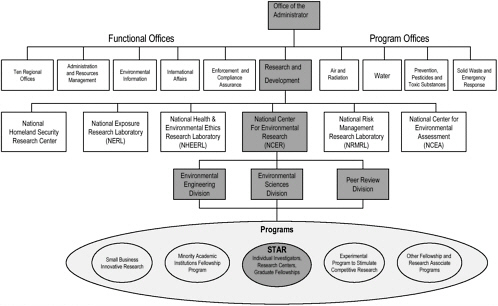
Robert Huggett, the assistant administrator of EPA for ORD, reorganized ORD and initiated the STAR program in 1995 by reallocating $57 million in funds from other ORD-sponsored research efforts (primarily the “exploratory research” program). The STAR program was assigned to one of the agency’s newly established research centers, the National Center for Environmental Research and Quality Assurance, now known as the National Center for Environmental Research (NCER) (see Figure 2-1). The program’s research focus has been developed specifically to meet the research needs of EPA and is run in accordance with the ORD Strategic Plan (EPA 2001).
Although the STAR program apparently was not established with a defined mission or set of goals, EPA has developed a set of 6 goals for the program (P. Preuss, EPA, Washington, D.C., personal commun., August 5, 2002):
-
Achieve excellence in research.
-
Focus on the highest-priority environmental science and engineer-ing needs to assist EPA in its mission.
-
Develop the next generation of environmental scientists.
-
Achieve high levels of accountability and integrity.
-
Form partnerships and leverage resources.
-
Communicate and integrate research results.
The program began with three components: focused requests for grant applications, an exploratory research grants program (which invited grant applications to conduct exploratory research in environmental physics, chemistry, and biology without designating particular program foci), and a graduate fellowship program (EPA 1996a). During the intervening years, the components and management of the program have changed in response to changing agency needs, experience gained in operating the program, and external reviews.
The program grew rapidly during its first 4 years, but its funding has since remained relatively constant, with the total STAR budget fluctuating around $100 million per year, as indicated in Figure 2-2. In its initial year, the STAR program accounted for 11% of total R&D expenditures. Over the intervening years, total expenditures for ORD have fluctuated between $500 and $600 million, and the STAR program now accounts for about 18% percent of the ORD total.
Accounting for changes in prices, of course, the value of the STAR funds has increased less than the expenditures. For instance, when deflated by the consumer price index, the value of the STAR grants was about the same in 2002 as in 1997, 2 years after the program began. The problem of increasing costs is most noticeable in the fellowship component of the program. Tuition costs have typically been increasing at twice the rate of inflation over the last decade and in some regions have almost doubled (College Board 2001). EPA pays for the increases as long as tuition does not exceed $12,000 (including fees), but it has not adjusted the cap to reflect increasing tuition costs since the program began.2 At high-cost institutions, the fellowships may therefore be much less adequate than they were when the program began (although still larger than those offered by many other fellowship programs).
During its 8-year life, the STAR program has evolved in several ways. Some of the changes have accompanied changes in the program’s funding. The average size of the individual investigator and center grants has in
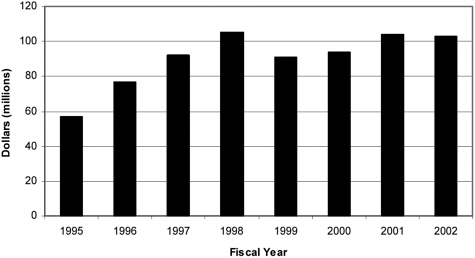
FIGURE 2-2 STAR program appropriations. Source: P. Preuss, EPA, presentation to National Research Council committee, March 18, 2002.
creased from $289,000 in FY 1995 to $743,000 in FY 2001 (J. Puzak, EPA, Washington, D.C., unpublished material, 2002). As EPA allocated more funds to the STAR program, it was able to induce other agencies with similar interests to enter into partnerships and provide supplementary funds (Figure 2-3). The agency has increased the funding of research fellowships approximately in proportion to the total funding for the STAR program (see Figure 2-4), and this has resulted in an increase in the number of fellowships awarded. However, because the size of EPA’s grants has increased, the increased funding has not resulted in an increase in the number of grants awarded.
The program has evolved in other respects. Part of the evolution has been in response to changing agency research priorities. The amount of money allocated to the exploratory grants program has diminished; the emphasis has shifted to “focused” research solicitations, although some of these solicitations may also support some very basic, or “core,” research efforts.
EPA has modified, improved, and strengthened important elements of the program as it has gained experience in managing a peer-reviewed, competitive research program. For instance, the improved quality of the peer
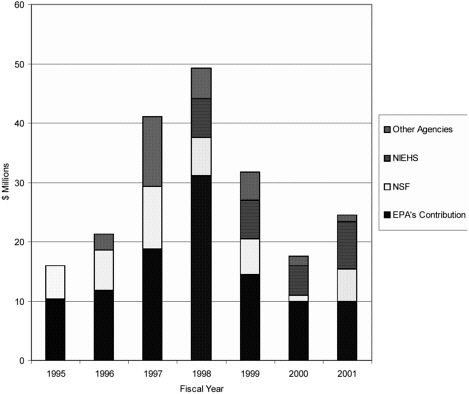
FIGURE 2-3 Funding for STAR partnerships. NIEHS, National Institute of Envi-ronmental Health Sciences; NSF, National Science Foundation. Source: P. Preuss, EPA, presentation to National Research Council committee, March 18, 2002.
review panels reflects the agency’s experience in selecting panel members, identifying possible conflicts of interest, and managing an independent peer-review process. The agency has also substantially improved the information provided to the public on the substance and progress of individual grants.
Similarly, many of the early requests for applications (RFAs) were quite general, and as a result the proposals submitted were not always well focused on the agency’s specific research needs. Where the agency considered this to be a problem, it has made the RFAs more focused. That also was apparently one of the reasons for reducing the exploratory research grants program.The agency recognized that some research topics could be
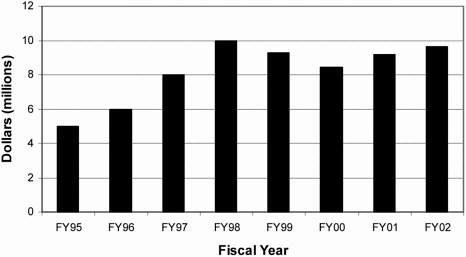
FIGURE 2-4 STAR graduate fellowship program obligations. Source: J. Puzak, EPA, Washington, D.C., unpublished material, 2002.
addressed better by interdisciplinary teams of researchers than by individual researchers working under uncoordinated grants. For that reason, the STAR program began to provide more funding to interdisciplinary “research centers.”3
Modifications have occurred as the program has matured. In the first years, the focus understandably was on establishing and improving the grant-making process. The agency has since increased emphasis on reviewing the progress of individual research efforts, encouraging coordination among researchers, and stimulating cooperation between intramural and extramural research efforts. The primary mechanism for accomplishing those ends is the “progress review” meetings, which include all the principal investigators working on a particular topic.
Similarly, now that some of the early research projects have been completed, the agency is increasing its emphasis on developing effective ways of communicating research results to potential users. Some of the specific communication efforts are described later in this chapter.
Finally, the agency has modified the STAR program in response to its many external reviews. Those reviews and the agency’s responses to them are summarized in Appendix B of this report.
COMPONENTS OF THE PROGRAM
The STAR program has three main components: individual investigator awards, research centers, and student fellowships.
Individual Investigator Awards
Individual investigator awards provide funding to individual investigators or small teams of cooperating investigators who propose to conduct research on topics identified by the agency. The proposals are investigatorinitiated through universities, colleges, and nonprofit research institutions. Awards are generally for 3 years and for about $50,000 to $1,000,000. In most years, the STAR program has funded 170-200 individual investigator awards (EPA 2003b).
In some cases, the RFAs are issued jointly by EPA and one or more other federal agencies or organizations—most significantly, the National Science Foundation (NSF) and the Department of Health and Human Services—interested in similar research issues.4 In any year, an additional 30-50 grants are awarded by the other agencies and organizations for the joint RFAs; these awards supplement the STAR awards and are not included in the STAR program statistics.
Research Centers
The research centers fund multidisciplinary efforts involving a number of scientists working in complementary fields. The multidisciplinary aspect
of the centers allows research programs to incorporate, for instance, exposure assessment and health-effects research with validation of riskmanagement and health-prevention strategies. Several research organizations or institutions may be involved in one center. Most centers are funded for 5 years, and the amount of the award typically exceeds $5 million over the life of the grant. Centers can also be jointly funded. For instance, the National Institute of Environmental Health Sciences (NIEHS) and EPA jointly fund the Centers of Excellence in Children’s Environmental Health and Disease Prevention Research. Figure 2-5 shows the amount of funding obligated for research centers and the shift from individual investigator awards to research centers. In FY 1995, all the research funds were for individual investigator awards; in FY 2001, about one-third of the STAR grant obligations went to support research centers.
Fellowships
The STAR Graduate Fellowship Program was established to “encourage promising students to obtain advanced degrees and pursue careers in environmentally related fields” (EPA 2002a). About 125 fellowships are awarded each year, although the Office of Management and Budget (OMB) proposed eliminating funding for this program in FY 2002 (P. Preuss, EPA, personal commun., March 18, 2002). The program is the only federal fellowship program designed exclusively for students pursuing advanced degrees in environmental sciences.5
The STAR fellowships provide more financial support than most other fellowships (Hogue 2002). For instance, NSF fellowships offer a total of $27,300 annually to doctoral students for 3 years. STAR fellowships provide a total of up to $34,000 per year and are available to both master’s and doctoral students. Of the total amount, $17,000 can be used for a stipend,
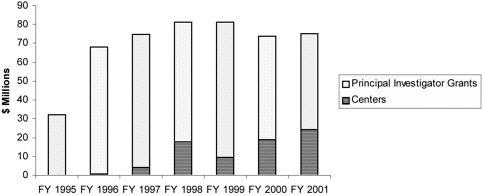
FIGURE 2-5 Grant obligations to individual investigators and research centers.
Source: J. Puzak, EPA, Washington, D.C., unpublished material, 2002.
$12,000 for tuition and fees, and $5,000 for other authorized expenses. Students enrolled in master’s programs may receive up to 2 years of support and doctoral students may receive up to 3 years of support (EPA 2003c).
In addition to contributing to the STAR goal of “develop[ing] the next generation of environmental scientists,” EPA hopes that these fellowships will assist the agency in its goal of “recruiting and retaining the next generation of well trained and highly qualified scientists” (EPA 2001; Preuss 2002a). That is an increasingly important issue for the agency in that it foresees the retirement of more than the average number of its scientific staff in the near future.
STAR fellowships are highly competitive: only 10% of applicants receive funding (NCSE 2003). Prospective applicants are evaluated on the basis of rigorous peer review, academic and employment records, and potential. Fellowships have remained constant at about 10% of STAR funding. However, the program solicited no fellowship applications in FY 2003, because OMB eliminated STAR’s funding for this program.
RESEARCH FIELDS
The STAR program has been involved in a wide variety of research since its inception. Table 2-1 indicates the numbers of awards and amounts of support the STAR program has “committed” to different topics during its first 7 years of operation.
TABLE 2-1 Annual Commitments by Topica (in Millions of Dollars)
|
|
FY 1995 |
FY 1996 |
FY 1997 |
FY 1998 |
FY 1999 |
FY 2000 |
FY 2001 |
|||||||
|
|
No. |
$ |
No. |
$ |
No. |
$ |
No. |
$ |
No. |
$ |
No. |
$ |
No. |
$ |
|
AIR |
||||||||||||||
|
Chemistry and physics |
11 |
3.1 |
11 |
3.7 |
|
|
10 |
4.0 |
|
|
|
|
|
|
|
Ozone |
1 |
0.4 |
12 |
5.1 |
7 |
10.5 |
|
|
|
|
|
|
|
|
|
Air toxics |
|
|
6 |
3.0 |
3 |
1.4 |
5 |
2.3 |
4 |
1.7 |
|
|
|
|
|
Particulates |
2 |
1.0 |
6 |
1.8 |
9 |
3.7 |
14 |
44.9 |
8 |
4.5 |
|
|
4 |
3.8 |
|
Miscellaneous |
9 |
4.1 |
3 |
1.5 |
|
|
|
|
5 |
1.7 |
|
|
|
|
|
Subtotal |
23 |
8.6 |
38 |
15.1 |
19 |
15.6 |
29 |
51.2 |
17 |
7.9 |
0 |
0.0 |
4 |
3.8 |
|
WATER AND WATERSHEDS |
||||||||||||||
|
Water and watersheds |
23 |
9.0 |
11 |
8.8 |
10 |
8.1 |
9 |
6.5 |
8 |
6.6 |
|
|
|
|
|
Drinking water |
|
|
6 |
2.0 |
8 |
3.6 |
10 |
3.5 |
12 |
5.2 |
12 |
6.0 |
3 |
3.2 |
|
Contaminated sediments |
|
|
3 |
1.7 |
5 |
1.8 |
|
|
|
|
|
|
|
|
|
Algae blooms |
|
|
|
|
4 |
1.0 |
7 |
3.0 |
2 |
0.9 |
|
|
9 |
3.1 |
|
Miscellaneous |
14 |
4.4 |
6 |
1.9 |
|
|
|
|
9 |
7.0 |
2 |
0.7 |
|
|
|
Subtotal |
37 |
13.4 |
26 |
14.4 |
27 |
14.5 |
26 |
13.0 |
31 |
19.7 |
14 |
6.7 |
12 |
6.3 |
|
HUMAN HEALTH |
||||||||||||||
|
Children’s health |
|
|
5 |
3.0 |
|
|
8 |
27.1 |
9 |
5.3 |
5 |
4.1 |
10 |
18.3 |
|
Endocrine disruptors |
|
|
9 |
4.0 |
15 |
6.3 |
|
|
9 |
6.4 |
|
|
4 |
7.9 |
|
Miscellaneous |
8 |
3.1 |
9 |
4.0 |
21 |
12.3 |
9 |
3.6 |
2 |
6.3 |
|
|
2 |
1.9 |
|
Subtotal |
8 |
3.1 |
23 |
11.0 |
36 |
18.6 |
17 |
30.7 |
20 |
18.0 |
5 |
4.1 |
16 |
28.1 |
|
ECOSYSTEMS |
||||||||||||||
|
Environmental biology |
27 |
8.6 |
13 |
4.5 |
14 |
4.4 |
17 |
5.0 |
|
|
|
|
|
|
|
Regional assessments |
|
|
10 |
8.2 |
|
|
4 |
1.6 |
6 |
5.7 |
3 |
1.2 |
|
|
|
Ecological indicators |
|
|
|
|
9 |
6.7 |
22 |
12.8 |
8 |
5.1 |
8 |
28.1 |
3 |
7.6 |
|
Miscellaneous |
|
|
|
|
7 |
4.4 |
|
|
|
|
|
|
9 |
3.4 |
|
Subtotal |
27 |
8.6 |
23 |
12.7 |
30 |
15.5 |
43 |
19.4 |
14 |
10.8 |
11 |
29.3 |
12 |
11.0 |
|
TECHNOLOGY |
||||||||||||||
|
Sustainable development |
8 |
1.5 |
13 |
3.2 |
11 |
3.1 |
14 |
3.5 |
40 |
10.8 |
|
|
15 |
4.8 |
|
Exploratory engineering |
19 |
4.4 |
5 |
1.8 |
11 |
3.2 |
9 |
2.7 |
10 |
2.2 |
|
|
|
|
|
|
FY 1995 |
FY 1996 |
FY 1997 |
FY 1998 |
FY 1999 |
FY 2000 |
FY 2001 |
|||||||
|
|
No. |
$ |
No. |
$ |
No. |
$ |
No. |
$ |
No. |
$ |
No. |
$ |
No. |
$ |
|
Bioremediation |
|
|
5 |
2.4 |
5 |
2.1 |
3 |
1.3 |
|
|
|
|
4 |
1.5 |
|
Advanced computing |
|
|
16 |
8.6 |
|
|
|
|
7 |
5.1 |
|
|
|
|
|
Miscellaneous |
|
|
14 |
4.5 |
|
|
|
|
|
|
|
|
|
|
|
Subtotal |
27 |
5.9 |
53 |
20.5 |
27 |
8.4 |
26 |
7.5 |
57 |
18.1 |
0 |
0 |
19 |
6.3 |
|
SOCIOECONOMIC |
||||||||||||||
|
Valuation and decision-making |
14 |
2.0 |
7 |
1.5 |
8 |
1.5 |
11 |
1.9 |
9 |
1.7 |
1 |
0.3 |
7 |
2.1 |
|
Incentives |
18 |
3.5 |
|
|
|
|
|
|
|
|
13 |
2.8 |
11 |
2.3 |
|
Community monitoring |
|
|
|
|
|
|
8 |
3.6 |
8 |
3.5 |
9 |
3.1 |
8 |
2.8 |
|
Miscellaneous |
9 |
1.9 |
|
|
3 |
0.7 |
|
|
|
|
|
|
|
|
|
Subtotal |
41 |
7.4 |
7 |
1.5 |
11 |
2.2 |
19 |
5.5 |
17 |
5.2 |
23 |
6.2 |
26 |
7.2 |
|
OTHER |
||||||||||||||
|
Futures |
6 |
1.3 |
|
|
|
|
|
|
8 |
1.0 |
3 |
1.0 |
29 |
11.6 |
|
Global and climate change |
7 |
2.7 |
5 |
8.2 |
1 |
0.3 |
|
|
6 |
5.3 |
4 |
5.6 |
|
|
|
Environmental statistics |
|
|
2 |
5.8 |
|
|
4 |
1.1 |
3 |
0.7 |
2 |
0.8 |
1 |
6.3 |
In some instances, particularly in the case of research centers, the commitments are for support in future years, and the funds are not allocated in the year when the commitments are made. Thus, the amount of support “committed” can differ substantially from the amount appropriated to or obligated by the program, the more common measures of government budgetary activities.6 In FY 1998, for instance, the program made commitments totaling $137 million, including sizable commitments to a number of new research centers. That amount substantially exceeded the amount of money appropriated for the program or obligated or expended by the program during that year. Because the commitments had to be honored by obligations in later years, the amounts committed in those years (for example, FY 2000) fell below the amounts appropriated and obligated.
In FY 2000 and 2001, the largest commitments were made in drinking water, children’s health, endocrine disruptors, ecologic indicators, environmental futures, global and climate change, environmental statistics, and hazardous waste. However, substantial work was also being supported in other topics, such as the health effects of fine particles, which had received sizable commitments with multiyear obligations in earlier years.
Individual investigator grants have been awarded in every topic. Five kinds of research centers have been funded: five Airborne Particulate Matter Centers, 12 Centers of Excellence in Children’s Environmental Health and Disease Prevention Research, five Hazardous Substances Research Centers, five Estuarine and Great Lakes Program Centers, and four Statistics Centers.
In much of its analysis, the committee focused on three particular research topics: particulate matter as an air pollutant, ecologic indicators, and endocrine disruptors. Looking at those in more detail may be helpful in understanding how the STAR program operates; however, these three examples may not necessarily be representative of the other research conducted within the STAR program. The committee selected them because the STAR program had provided them with substantial support in recent years, they represent a mix of small and large grants and of individual investigator awards and research centers, some committee members had a substantial familiarity with the fields and the work being done by STAR
grantees,7 and substantial information on the programs was available to the committee.
Particulate Matter
The Clean Air Act charges EPA with conducting research and developing and implementing regulations to control criteria air pollutants that have the potential to affect human health and welfare adversely, and it specifically identifies particulate matter (PM) as one of the pollutants. EPA has been conducting and sponsoring research on particles since the agency’s beginning. Following the publication of the 1997 criteria document for particulate matter, a fine particle standard was established, and many questions were raised that required additional research for the subsequent criteria document to be issued 5 years later. The STAR research program on PM has enabled EPA to respond to this need more comprehensively than it could by just using its intramural program. STAR research has focused on the human health effects of PM less than 2.5 µm in diameter. Table 2-2 shows the number of RFAs, number of investigator-initiated awards, and funding levels for PM research supported by the STAR program from FY 1995 through FY 2001.
The STAR PM research program includes both individual-investigator awards and research centers. Although some PM research was funded as early as 1995, STAR issued its first RFA specifically for investigator-initiated research on PM in 1997. The original focus of the program included research on the causal mechanisms of PM toxicity; intermediate biologic end points thought to be related to morbidity; ultrafine, fine, and coarse particles; exposure assessment for PM and associated copollutants; and the composition of components of PM, such as organic compounds (nonvolatile and semivolatile) and biologics.
In addition to examining health effects of and exposures to PM, several RFAs have examined the chemistry and physics of PM, modeling, ambient measurement and analysis, and emissions. The RFAs have become more specific and focused as EPA has learned that more narrowly defined RFAs are more able to advance the state of the science (S. Katz, EPA, personal commun., August 8, 2002).
TABLE 2-2 Commitments Made by the STAR Program for Research on Particulate Matter
|
|
Individual Investigator Awards |
Research Centers |
|||||||
|
|
Size of Awards, $1,000s |
Size of Awards, $1,000s |
|||||||
|
Fiscal Year |
No. RFAsa |
No. Grantsa |
Average |
Low |
High |
No. Grantsa |
Average |
Low |
High |
|
1995b |
2 |
14 |
378 |
172 |
590 |
0 |
— |
— |
— |
|
1996b |
3 |
8 |
415 |
333 |
521 |
0 |
— |
— |
— |
|
1997 |
2 |
9 |
423 |
211 |
601 |
0 |
— |
— |
— |
|
1998 |
1 |
9 |
530 |
199 |
736 |
5 |
8,226 |
7,747 |
8,716 |
|
1999 |
1 |
8 |
565 |
319 |
764 |
0 |
— |
— |
— |
|
2000 |
0 |
0 |
— |
— |
— |
0 |
— |
— |
— |
|
2001 |
1 |
4 |
950 |
833 |
1,239 |
0 |
— |
— |
— |
|
aOnly one RFA was issued for research centers. bIn FY 1995 and 1996, no RFAs were issued specifically for res earch on particles, but some particle research grants were awarded under more general RFAs. Source: J. Puzak, EPA, Washington, D.C., unpublished material, 2002. |
|||||||||
EPA issued an RFA to launch five PM centers in 1998 as recommended by the National Research Council report Research Priorities for Airborne Particulate Matter: I. Immediate Priorities and Long-Range Research Portfolio (NRC 1998) and in accordance with a congressional mandate. The PM research centers program provides about $8 million per year for 5 years—roughly $1.5-1.8 million per year per center. The PM centers were established to “advance the understanding of PM health effects, how they occur, and improve understanding of populations who are susceptible to health effects from exposure” (EPA 2002b). The centers provide an opportunity for interdisciplinary research that allows for the leveraging of resources and the forming of partnerships in advancing the understanding of the health effects of PM. EPA established the following four priorities for the PM centers (EPA 2002b):
-
“Exposure: Improve assessments of personal exposures to PM in normal human populations and in sensitive populations (that is, the elderly, individuals with respiratory or cardiovascular disease, and children).
-
Dosimetry and Modeling: Develop new models regarding the amount of particulate matter deposited in the lungs of exposed individuals. This is critical in understanding the relationships between individual exposure and health responses of sensitive populations.
-
Toxicology: Identify which constituents or properties of PM are most responsible for human health effects and how these effects occur. Reducing uncertainty in this area is important for human health risk assessment.
-
Epidemiology: Improve understanding of which groups are partic-ularly susceptible to health effects from PM exposure” (EPA 2002b).
The following are the five PM centers funded by STAR:
-
Harvard University PM Center, focusing on ambient particle health effects, exposure, susceptibility, and mechanisms.
-
New York University PM Center, focusing on the health risks posed by PM components.
-
Northwest PM Center (includes the University of Washington and Washington State University), focusing on combustion-derived fine-particle composition, exposure, and health effects.
-
Rochester PM Center, focusing on characterization, health effects, and pathophysiologic mechanisms of ultrafine particles.
-
Southern California PM Center (includes University of California, Los Angeles; the California Institute of Technology; the Rancho Los Ami
gos Medical Center; the University of California, Irvine; the University of California, Riverside; and the University of Southern California), focusing on sources of exposure to, and health effects of PM.
In addition to the PM research funded through the STAR program, EPA conducts PM research in other parts of ORD—including the National Exposure Research Laboratory (NERL), the National Health and Environmental Effects Research Laboratory (NHEERL), and the National Risk Management Research Laboratory (NRMRL)—and in the Office of Air and Radiation. PM research planning and coordination in EPA is guided by the recommendations of the National Research Council Committee on Research Priorities for Airborne Particulate Matter and EPA’s multiyear plan for PM. A PM program manager assists in coordinating research across the agency through a research coordinating team.
Aside from EPA’s PM research program, a workgroup under the Committee on Environment and Natural Resources coordinates PM research with other federal agencies, including NIEHS, the Department of Energy, the National Oceanic and Atmospheric Administration (NOAA), the National Institute of Standards and Technology, and the National Institutes of Health. EPA has not funded PM research jointly with other agencies. However, EPA issued an RFA on the role of PM air pollution in cardiovascular illness and mortality in 2002 and solicited the assistance of NIEHS and the National Heart, Lung, and Blood Institute (NHLBI) in advertising it to a larger audience of cardiovascular researchers who might otherwise not be aware of EPA research solicitations. In August 2002, EPA held a workshop that was cosponsored by NIEHS, NHLBI, and others to gather input from the environmental health science and cardiovascular research communities on the most appropriate and productive directions for research in environmentally related cardiovascular disease. EPA is expecting more joint collaborations in the future.
Ecologic Indicators
The ecologic-indicators program is part of EPA’s Environmental Monitoring and Assessment Program (EMAP), which was established to develop tools to monitor and assess the ecologic health of the nation’s environmental resources. The indicators are ultimately intended for the development of biologic criteria for use in national assessments of ecologic conditions and for assessments of ecologic conditions on regional and watershed scales. When the STAR program was established, $12 million was trans
ferred from the EMAP budget to support the development of environmental indicators, and EMAP funds have continued to support this research program.
ORD’s Ecological Research Strategy defined ecologic indicators as “any expression of the environment that quantitatively estimates the condition of the ecological resource, the magnitude of the stress, the exposure of the biological components to stress, or the amount of change in the condition” (EPA 1998). The STAR program has been involved in ecologic indicators and assessment research since FY 1997. It consists primarily of core research, focusing on the development of indicators that integrate resource types, incorporate multiple levels of biologic organization, and address multiple spatial scales.
The ecologic-indicators program has three research objectives:
-
“to stimulate the development, evaluation, and integration of indica-tors, suites of indicators, indices, and models to improve local, regional, national, and global monitoring and assessment of ecological integrity and sustainability;
-
to develop indicators of functional processes that contribute to ecological integrity and sustainability; and
-
to develop indicators that identify effects of particular stressors of ecological integrity and sustainability. This program includes initiated research awards and research centers” (EPA 1997).
Table 2-3 shows the number of RFAs, number of awards, and funding levels for ecologic-indicator research supported by the STAR program from FY 1995 through FY 2001.
The 1997 RFA solicited proposals on the development of techniques and indicators that characterize and quantify the integrity and sustainability of ecosystems at local, regional, national, and global scales. One of the 1998 RFAs focused on the development of research and monitoring programs using ecologic indicators and investigating the ecologic effects of environmental stressors at pilot sites around U.S. marine and coastal sites. The RFA was issued jointly with NOAA and the National Aeronautics and Space Administration (NASA). NOAA was interested in monitoring coastal ecosystems, and NASA in developing remote-sensing capabilities. The other 1998 RFA identified three priorities:
-
“The development of landscape characterization indicators that incorporate multiple resources and spatial scales. Indicators that are useful at regional and broader scales are emphasized primarily for local use.
TABLE 2-3 Commitments Made by the STAR Program for Research on Ecologic Indicators
|
|
Individual Investigator Awards |
Research Centers |
|||||||
|
|
Size of Awards, $1,000s |
Size of Awards, $1,000s |
|||||||
|
Fiscal Year |
No. RFAsa |
No. Grantsa |
Average |
Low |
High |
No. Grantsa |
Average |
Low |
High |
|
1995 |
0 |
0 |
— |
— |
— |
0 |
— |
— |
— |
|
1996 |
0 |
0 |
— |
— |
— |
0 |
— |
— |
— |
|
1997 |
1 |
9 |
742 |
295 |
1,300 |
0 |
— |
— |
— |
|
1998 |
2 |
22 |
584 |
197 |
898 |
0 |
— |
— |
— |
|
1999 |
1 |
8 |
634 |
224 |
895 |
0 |
— |
— |
— |
|
2000 |
0 |
0 |
— |
— |
— |
4 |
5,953 |
5,812 |
6,000 |
|
2001 |
0 |
0 |
— |
— |
— |
1 |
5,901 |
5,901 |
5,901 |
|
aOnly one RFA was issued for research centers. Four centers were awarded grants from this RFA in FY 2000 and one was awarded a grant in FY 2001. Source: J. Puzak, EPA, Washington, D.C., unpublished material, 2002. |
|||||||||
-
The development of indicators that span multiple resource types (e.g., forests, streams, wetlands, estuaries, rangelands). Any indicator that incorporates or integrates multiple scales and multiple levels of biological organization within the context of spanning multiple resources is also emphasized.
-
The development of indicators within a single resource type (for example, forests, streams, wetlands, estuaries, rangelands) that link different levels of biological organization or multiple spatial scales. The opportunity to apply cellular and molecular genetic techniques to address genetic diversity in conjunction with other levels of biological organization and multiple spatial scales is emphasized” (EPA 1998).
The 1999 RFA emphasized indicators that “(1) integrate between or among resource types, (2) incorporate multiple levels of biological organization (gene, organism, population, community, landscape), and (3) address multiple spatial scales (local, watershed, regional, national, global)” (EPA 1999). The 2000 and 2001 RFAs solicited proposals related to the development of classification schemes and associated reference conditions for use in the application of biocriteria to specific aquatic resources, such as the Great Lakes, or to ecosystems composed of wetlands, large rivers, ephemeral systems, reservoirs, lakes, streams, estuaries, near-shore coastal environments, and coral reef communities.8
Most of EPA research on the development of ecologic indicators is conducted through the STAR program. The laboratories in ORD are involved primarily in the “proof of concept” or “implementation” of the indicators in the field (B. Levinson, EPA, personal commun., August 5, 2002). Research on the development of ecologic indicators is not typically conducted elsewhere in EPA.
Endocrine Disruptors
ORD first listed endocrine disruptors as a high-priority research topic
in its research plan in December 1995 and later developed an endocrine disruptors research plan that focused on: biologic-effects studies, exposure studies, and studies on the linkage between exposure and effects. The goal of the endocrine disruptors research program is “to evaluate potential health effects associated with endocrine disruptors and to determine the extent of current exposures” (EPA 1996b). The endocrine-disruptors research funded through the STAR program addresses the effects of endocrine disruptors on both human health and the environment. EPA is one of the few agencies that provide extramural funding for examining the effects of endocrine disruptors on wildlife (E. Francis, EPA, Washington, D.C., personal commun., August 6, 2002).
The STAR endocrine-disruptors research program consists only of individual investigator-initiated awards. EPA issued the first RFA in 1996 and later ones in 1997, 1999, and 2001 (see Table 2-4). The RFA in 1996 was very broad, requesting grant proposals in human health effects, ecologic effects, human exposure evaluations, and ecologic exposure evaluations. The 1997 RFA also covered a broad array of topics, but the RFAs have since become more focused.
EPA’s endocrine-disruptor research is coordinated with a substantial amount of associated research sponsored or conducted by other agencies; some of this research is sponsored jointly with EPA. For instance, in 1999, EPA funded a solicitation jointly with the Department of the Interior and NOAA; the RFA involved both the population-level effects of endocrine disruptors in wildlife and the human health effects of endocrine disruptors during development. The 2001 RFA was funded jointly by NIEHS, the National Cancer Institute, and the National Institute for Occupational Safety and Health. It requested applications pertaining to epidemiologic studies on the effects of exposure to endocrine disruptors, particularly reproductive and developmental effects in humans.
In addition to the STAR program, several ORD laboratories are conducting research on endocrine disruptors. NHEERL conducts a wide array of research on the topic, including developing protocols for screening and testing, determining dose-response curves, and investigating modes of action. NRMRL, NERL, and the National Center for Environmental Assessment are also involved in endocrine-disruptor research. However, those research efforts are different from the research sponsored by the STAR program, which is used to identify data gaps and fund complementary research. For instance, the STAR program is attempting to fill information gaps concerning exposure to endocrine disruptors and epidemiologic research because the ORD laboratories have little capacity to undertake such research themselves.
TABLE 2-4 Commitments Made by the STAR Program for Research on Endocrine Disruptors
|
|
Individual Investigator Awards |
Research Centers |
|||||||
|
|
Size of Awards, $1,000s |
Size of Awards, $1,000s |
|||||||
|
Fiscal Year |
No. RFAs |
No. Grants |
Average |
Low |
High |
No. Grants |
Average |
Low |
High |
|
1995 |
0 |
— |
— |
— |
— |
0 |
— |
— |
— |
|
1996 |
1 |
9 |
430 |
190 |
599 |
0 |
— |
— |
— |
|
1997 |
1 |
15 |
423 |
159 |
598 |
0 |
— |
— |
— |
|
1998 |
0 |
— |
— |
— |
— |
0 |
— |
— |
— |
|
1999 |
2 |
9 |
709 |
257 |
1,265 |
0 |
— |
— |
— |
|
2000 |
0 |
— |
— |
— |
— |
0 |
— |
— |
— |
|
2001 |
1 |
4 |
1,982 |
967 |
2,779 |
0 |
— |
— |
— |
|
Source: J. Puzak, EPA, Washington, D.C., unpublished material, 2002. |
|||||||||
OPERATION OF THE PROGRAM
The STAR program may receive over 1,000 grant proposals per year (not counting fellowship applications), 10-15% of which are likely to be funded (EPA/SAB/BOSC 2000). Because almost all the grants are for a duration of more than 1 year, the STAR staff is responsible for managing 650-750 research grants at any time (EPA 2002a). The grant award process, which is the same for both individual investigator awards and research centers, is depicted in Figure 2-6.
Planning
The STAR grants process begins in the ORD research planning process. The STAR program was designed, from its beginning, to be integrated into and complement EPA’s overall research and development program. The integration begins with the preparation of multiyear research plans for particular subjects of interest to the agency—for instance, the health effects of fine PM or ecologic indicators of water quality. For the most part, the plans are internal working documents and are not available to the public. Multiyear plans become public if they are submitted to EPA’s Science Advisory Board for review. That was done with the multiyear plans for water quality and pollution prevention in 2001 (EPA/SAB 2001a).
The plans, which typically have a horizon of 5-7 years, are developed by an intra-agency team that includes representatives of the various EPA research laboratories and centers, interested program offices, and regional offices. Each plan is developed under the leadership of a program manager who is employed in some unit of ORD. Because they are internal EPA working documents, there typically is no input or review by other agencies, EPA advisory committees, or other members of the public. The plans set forth the research agenda, including topics and schedules, and assign responsibilities for undertaking the research to different ORD units. One of those units is NCER, which manages the STAR program. The research topics assigned to STAR are those in which ORD lacks expertise or is otherwise not capable of carrying out the required research on the schedule set forth in the plan. The plans are reviewed, and if appropriate modified, by the responsible intra-agency team annually or, if necessary, more frequently. New information, scheduling changes, or shifts in priorities are some of the reasons for modifying plans.
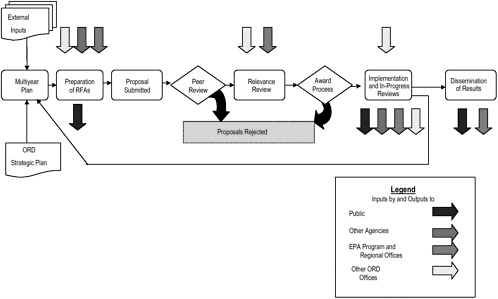
Opportunity Communication
The primary vehicles for communicating STAR research opportunities are the RFAs prepared by STAR staff in cooperation with representatives of other EPA offices. They describe (typically in 2-10 pages) the specific subjects in which the agency intends to provide STAR grants. The topics selected for RFAs are those previously identified in the agency’s multiyear research plans. If the research is to be sponsored jointly with other agencies or organizations, they will also be involved in preparing the RFA. The RFAs specify the type of research desired, whether grants will be awarded to individuals or research centers, the expected size of grant awards, and the deadline for proposals.
The STAR project officer and the leader of the appropriate research coordinating team use the multiyear plans to guide their preparation of RFAs. The draft RFAs are reviewed and approved by the appropriate program offices and representatives of regional offices and other ORD units to ensure that they are consistent with the intention of the multiyear plan. If the research is to be funded in part by other agencies, they are also involved in the preparation, review, and approval of the RFA.
RFAs are announced in the Federal Register, posted on the NCER Web site for at least 90 days, and e-mailed to individuals and institutions that have indicated an interest in receiving them by signing up on the STAR Web site. In addition, STAR and other EPA staff, or a cooperating agency or organization, may advertise RFAs at professional meetings and conferences and send copies to institutions or individuals they know to be conducting research in the subjects of the RFAs. To eliminate the appearance of potential conflicts of interest, the STAR program does not accept “preproposals.”
Proposal Review
NCER has established an independent Peer Review Division for receiving, processing, and conducting initial reviews of proposals submitted in response to RFAs. The division’s major responsibility is to organize and manage the peer-review panels responsible for evaluating the scientific merit of the proposals. The panels are composed of scientists who have undergone rigorous conflict-of-interest review. In some cases, because so many U.S. researchers are involved with EPA or the other institutions submitting the proposals, the conflict-of-interest requirements require the agency to identify Canadian, European, or other foreign scientists to sit on
the peer-review panels. The STAR project officers have an opportunity to suggest scientific disciplines that should be represented on a panel and provide names of potential reviewers. However, project officers have no role in the selection of panel members.
When a panel has been selected, every member receives abstracts of all the proposals, and three or more panel members are selected to be principal reviewers for each proposal. The principal reviewers receive the entire grant application. For a complex RFA, such as the one issued to establish the multidisciplinary PM centers, 8-10 principal reviewers may be selected. The principal reviewers, who are typically given 3-4 weeks to complete their review, are responsible for reviewing the proposal in detail—ranking it as “excellent,” “very good,” “good,” “fair,” or “poor”—and preparing comments based on the following evaluation guidelines (Bryan 2002):
-
“Research Proposal. Comment on the originality and creativity of the proposed research, the appropriateness and adequacy of the research methods used, and the appropriateness and adequacy of the Quality Assurance Narrative Statement. Also comment on the proposed approach. Is the research approach practical and technically defensible, and can the project be performed within the proposed time period? Could the research potentially contribute to scientific knowledge in the topic area of the solicitation? Is the proposal well prepared with supportive information that is self explanatory and understandable?
-
Investigators. Comment on the qualifications of the principal investigator(s) and other key personnel, including research training, demonstrated knowledge of pertinent literature, experience, and publication records. Will all key personnel contribute a significant time commitment to the project?
-
Facilities and Equipment. Comment on the availability and/or adequacy of the facilities and equipment proposed for the project. Identify any deficiencies that may interfere with the successful completion of the research.
-
Responsiveness. Comment on how well the proposal has responded to the research needs identified. Does the proposal adequately address all of the objectives specified for this topic area?
-
Budget. Although your evaluation of scientific merit should not be based on budget information, please comment on the appropriateness and/or adequacy of the proposed budget and its implications for the potential success of the proposed research. Input on requested equipment is of particular interest.”
When the panel meets, the science review administrator responsible for organizing the panel serves as chair. The STAR project officer is allowed to attend the panel meetings to gain insight into the strengths and weaknesses of the different proposals but is not allowed to influence the panel’s deliberations. Panel meetings may continue for 2-3 days. Every proposal that has received at least one “excellent” or two “very good” rankings from the principal reviewers is brought up for review and discussion by the entire panel. Any panel member can request that any other proposal also be discussed.
The panel members discuss the strengths and weaknesses of each proposal until all the members feel qualified to assign it a ranking. The members often agree unanimously to assign it to one of the five categories; when there is no unanimous agreement, an average panel ranking is calculated. One of the principal reviewers of each proposal, designated the rapporteur, then prepares a written summary of the written and oral review comments of all the panel members. The panel summary is signed by all the principal reviewers.
When all the proposals have been addressed, the rankings are reviewed to determine whether there is a consensus that the ranking of any of the individual proposals should be adjusted up or down. Only the proposals that have been ranked in the top two categories—“excellent” and “very good”—are given further consideration. The EPA panel coordinator is responsible for sending a declination letter to each applicant whose proposal did not fall in the top two categories with a copy of the panel summary regarding the proposal.
If an RFA is being jointly funded, the cooperating agency or organization may take on the responsibility of conducting the scientific peer-review process. If EPA is responsible for peer review, the cooperating institution can participate in it under the same restrictions as the STAR project officer and at the conclusion of the process may identify the particular proposals it wishes to fund.
During FY 2001, 24 panels involving a total of 350-400 reviewers were established to review 700-odd grant applications.
For proposals eligible for EPA funding, the next step is a relevance review. This review is intended to ensure that funded projects have high relevance to the agency’s mission and program needs. The review is conducted by the STAR project officer, and the procedures are not as formally established as those of scientific peer review. The process involves identifying representatives of the other units of ORD, of the program offices that have an interest in the RFA topic, and of the regional offices to form a
relevance-review panel. Those representatives are also subjected to conflictof-interest review.
The relevance-review panel members are usually supplied with abstracts of all the proposals ranked excellent or very good by the peer-review panel, the summary of comments on these proposals from the peer-review panel, and a list of evaluation criteria. They are typically given 2-3 weeks for their review, which includes preparing written comments and scoring. However, in some cases, they may be given an entire proposal or the detailed reviewer comments, and the time available for review may be adjusted to respond to workloads and work schedules. For both scientific peer review and relevance review, the evaluation criteria are used as a guide, and no specific weighting is given to the individual criteria.
The relevance-review panel meets, typically with some members participating by telephone; discusses each of the proposals; and, by consensus, ranks them from greatest potential value to the agency down to least potential value. The project officer prepares a summary of the relevance-review evaluations and comments and presents it with his or her recommendations to the director of NCER for final funding decisions.
Award Process
At this stage, some flexibility is built into the system. If an unusually high number of excellent, highly relevant proposals have been received, additional funds may be made available to support research conducted under a particular RFA. If few worthy proposals are received, available funding may be decreased. The director of NCER may also modify the ranking of the proposals, although the director usually accepts the ranking presented.9 The project officer and director may also agree on modifications that the project officer suggests the principal investigators make to specific proposals that have been accepted for funding. The modifications
would be in response to comments made by the review panels or in an effort to make the proposals more responsive to the needs of the agency. Table 2-5 shows the success rate—15%—of proposals submitted in response to RFAs issued in 2001.10 The success rates in 1999 and 2000 were somewhat lower—11% and 13%, respectively. The success rate in FY 2001 was slightly higher—17% as opposed to 15%—if the RFAs for which ratings information was not available are included. Although the program typically funds a high proportion of the proposals rated excellent by the peer-review panels, it is able to support only about 60% of the proposals rated as excellent or very good.
The project officer may then review the selected proposals to identify budget or other modifications to recommend. The recommendations and a summary of the peer-review panel’s comments are sent to the principal investigator, who has to prepare a written response indicating, for each comment or suggestion, how the work and budget will be modified or why no modification is necessary. The interactions between the principal investigator and the project officer at this stage are considered to provide the same advantages as the preproposal discussions used by some other funding organizations without creating concerns about potential conflicts of interest, because funding decisions have already been made. The principal investigator submits a response, a modified proposal and budget, and all the certifications and other submissions required under federal rules, for final processing. The final grant package is reviewed by grant specialists in NCER to ensure that it is complete and is expected to proceed smoothly through the administrative grant-making process before being forwarded to the EPA grants office for funding.
The entire research-grant process takes 1-2 years from the initial announcement of the RFA to the time the grants are actually awarded. The time required for the various steps is indicated in Table 2-6. Much of the time is taken up in responding to administrative requirements; for instance, because the members of a peer-review panel are compensated for the time they spend in reviewing proposals and attending the panel meeting, the agency has to enter into a separate contract with each panel member. NCER
TABLE 2-5 Grant-Application Success in 2001
|
|
Applications Ranked Excellent |
Applications Ranked Very Good |
All Applications |
||||
|
Topic |
No. |
No. Funded |
No. |
No. Funded |
No. |
No. Funded |
Success Rate |
|
Air |
3 |
2 |
12 |
9 |
53 |
11 |
21% |
|
Water and watershedsa |
3 |
3 |
5 |
5 |
26 |
8 |
31% |
|
Human healtha |
4 |
4 |
20 |
10 |
80 |
14 |
18% |
|
Ecosystems |
0 |
0 |
10 |
3 |
36 |
3 |
8% |
|
Technology |
11 |
10 |
32 |
23 |
185 |
33 |
18% |
|
Socioeconomica |
3 |
3 |
21 |
14 |
121 |
17 |
14% |
|
Other |
7 |
7 |
52 |
18 |
242 |
25 |
10% |
|
Total |
31 |
29 |
152 |
82 |
743 |
111 |
15% |
|
Success Rate |
94% |
|
54% |
|
15% |
|
|
|
aRankings were not available for all applications in this topic, and data include only awards whose rankings were available. Source: Adapted from J. Puzak, EPA, Washington, D.C., unpublished material, December 12, 2002. |
|||||||
TABLE 2-6 Time Requirements for Processing Research Grants
|
Processing Step |
Time Required |
Comments |
|
Preparation and approval of RFA |
1-3 months |
Can take longer if other agencies involved |
|
Announcement open (time from announcement to issue of deadline for proposals) |
3-5 months |
Larger and more-complex proposals (such as research centers) are given more time |
|
Peer-review panel |
3-4 months |
Have to enter into individual contract with each panel member |
|
Relevance review |
4-6 weeks |
Depends on conflicting demands, such as budget preparation, on EPA staff members involved in review |
|
NCER director’s approval |
2-3 weeks |
|
|
Researchers prepare final proposals and required documentation |
1-3 months |
|
|
Final review and signoff on grant packages in ORD |
1-2 months |
Could be shortened with addi-tion of administrative staff |
|
Processing by EPA grants administration |
1-2 months |
|
|
Source: B. Levinson, EPA, personnal commun., November 6, 2002. |
||
is hiring additional administrative staff to deal with some of the administrative requirements. That may not noticeably speed up the grant-making process, but it will at least reduce the project officers’ workload and allow them to pay more attention to the substance of the research efforts, to monitoring research progress, and to communicating research results to potential users.
One important reason for undertaking such a careful final review of a proposal, with its sometimes extensive interaction with the principal investigator, is that almost all STAR grants for individual researchers are fully funded when they are awarded. (Research centers, however, are funded on an annual basis as long as sufficient funding is included in the agency’s appropriations and the centers perform adequately.) Even when the agency does not initially fund a grant fully, it makes a commitment to the grantee
to provide complete funding as long as Congress appropriates sufficient money and the grantee satisfies federal administrative requirements and submits the required annual progress reports. Commitments that have not been fully funded are given first priority for funding in later budget years (J. Puzak, EPA, Washington, D.C., personal commun., November 6, 2002).
Implementation and Evaluation
During the 3-5 years of a grant period (many grantees also receive, at their request, a 1-year, no-cost extension to the grant period), the STAR project officer is expected to monitor grant performance, including the submission of the annual progress reports and the grantee’s compliance with federal requirements, such as the OMB data-quality guidelines. Project officers also attempt to visit all the research centers and institutions that receive large individual grants to check on research progress.
A major mechanism for evaluating research in progress is the scheduling of progress-review workshops, which are focused on specific topics, as determined by the project officer, and bring together all the STAR researchers and ORD staff working on the topic in question to discuss their progress and issues that have appeared in the course of the research. The key EPAfunded researchers and representatives of ORD laboratories doing associated research are expected to attend these meetings. Representatives of other EPA offices and federal agencies cooperating in the research effort are also invited, and the meetings are open to the public.
In addition to providing an opportunity for peer review of research in progress, the meetings allow researchers to interact with one another. Although the greatest value of the workshops is probably the information exchange that occurs, EPA may also make the workshop proceedings available to the public. EPA reports that progress-review “workshops have been held in every program area, although there is not an annual workshop for every program area” (Preuss 2002b).
With those monitoring mechanisms, the agency believes that it tracks grantees “more closely than other agencies” (Preuss 2002b).
Efforts to coordinate STAR-sponsored research with the other units of ORD and with the program offices continue while the research is being conducted. If strong coordination is desired, the funding mechanism can be made a “cooperative agreement,” which allows EPA staff to work cooperatively with the researchers, rather than a grant, which requires the researchers to work independently. The progress-review meetings are another mech
anism for coordination. At a minimum, EPA staff and the public have access to the annual progress reports, which are posted on the NCER Web site for STAR research grants, and the program and regional offices can request the preparation of STAR “research capsule reports” (described below).
Dissemination of Results
The other activity that occurs after grants are awarded is the dissemination of information about the research efforts to potential users and the public. Many research programs pay little attention to dissemination, relying primarily on the researchers themselves, using such normal academic communication channels as conferences and journals, to spread the word. However, efforts through the STAR program are more aggressive. The office provides information concerning each grant that it awards on its Web site shortly after the award is made. It then requires grantees to prepare annual progress reports, and these too are made available to the public through the STAR Web site. A recently improved search engine allows users to quickly obtain a list of all STAR projects and reports dealing with a particular subject.
In addition to the individual project reports, the STAR program prepares and publishes the following reports on its Web site:
-
STAR reports, typically 4-6 pages long, which provide summary descriptions of research in progress on selected research topics for the general public. As of November 2002, STAR had released 10 of these reports (EPA 2002c).
-
STAR research capsules, prepared at the request of EPA program and regional offices, which provide brief summaries of all the individual research projects that STAR is supporting on specific scientific issues. As of November 2002, STAR had released 18 of these reports (EPA 2002d).
-
Progress-review workshop proceedings, which contain the presenta-tions made at selected progress-review workshops. As of November 2002, NCER had released nine of these proceedings, although it had sponsored many more workshops than that (EPA 2002e).
-
State-of-the-science reports, which will summarize all the current scientific information related to selected environmental issues, regardless of who sponsored the research that provided the information. These reports are being prepared by contractors; none had been released by November 2002.
In addition to making that information available to those who have sufficient interest to visit and search the STAR Web site, STAR program officers apparently spend a substantial amount of time, including weekly conference calls, communicating research progress to the EPA program and other ORD offices (EPA/BOSC 2002). Communication to other potential user groups is more difficult, but the STAR program has experimented with some unusually aggressive mechanisms. In the mid-Atlantic region, for instance, a special pilot project was established to communicate STAR efforts to state and local agencies and public-interest groups and to determine the apparent relevance of the STAR research to the missions of the agencies and groups (Bradley 2002). In November 2002, STAR and EPA Region 1 (New England) sponsored a workshop at which STAR grantees in the region discussed their research with a similarly diverse group of interested parties. The workshop was well attended, and the participants strongly supported the program’s effort to communicate its research findings more quickly and efficiently (E. Abt, NRC staff, Washington, D.C., personal commun., Dec. 11, 2002). Apparently, the workshop was considered so successful that similar efforts are being considered in other regions.
In spite of those efforts, the effective dissemination of research results to the diverse potentially interested audiences remains a challenge and is one of the issues highlighted in several reviews of the STAR program (for example, EPA/BOSC 2002).
FELLOWSHIPS
The process for awarding STAR fellowships is similar to but simpler than the process of awarding research grants. A notice indicating the availability of the grants, the eligibility criteria, the submission requirements, and the deadline for submissions is published in the Federal Register and on the STAR Web site, and copies are sent to graduate schools that have programs in environmental sciences and to individuals and organizations that have requested notification. The fellowship announcement is generally posted in mid-August and remains open for about 90 days, closing in midNovember. Potential applicants can sign up on the Web site to receive email notifications about fellowships.
The fellowship applications are submitted to the Peer Review Division of NCER, which conducts the peer review for the applications. That division first reviews the applications to ensure that they are complete and satisfy the eligibility requirements. It then establishes a fellowship review panel composed of academics. The panel members are subject to similar
conflict-of-interest requirements as members of the peer-review panels for grants.
Each fellowship application is assigned to three panel members designated as principal reviewers. They are responsible for reviewing, ranking, and preparing written comments on each of the applications they are assigned. The panelists receive the applications 4 weeks before the peer review meeting and assign each application to one of five categories—“excellent,” “very good,” “good,” “fair,” or “poor” on the basis of the following criteria (J. Gentry, EPA, Washington, D.C., personal commun., August 9, 2002):
-
“Goals and objectives (all applicants). Comment on the serious-ness of the applicant’s dedication to the stated career goals and objectives. Comment on the student’s organizational, analytical, and written skills.
-
Entering master’s student (applicants who at the time of submis-sion are applying for or enrolled in a master’s program and have completed less than 1 year toward this degree). Comment on the strength of the applicant’s planned course of study and probability of success of any proposed project.
-
Entering doctoral student without another graduate degree (applicants who at the time of submission are applying for or are enrolled in a doctoral program, have completed less than 1 year toward this degree, and have no other graduate or other professional degree [MS, DVM, or JD]). Comment on the strength of the applicant’s planned course of study and probability of success of any proposed project.
-
Beginning doctoral student with another graduate degree (ap-plicants who at the time of submission are applying for or enrolled in a doctoral program, have completed less than 1 year toward this degree, but have completed another graduate or professional degree [such as MS, DVM, MD]). Comment on how the applicant’s proposed doctoral program builds on his/her previous education or research projects. Why and how will any proposed research project advance the applicant’s academic or career goals?
-
Continuing doctoral student (applicants who at the time of sub-mission are enrolled in a doctoral program and have completed more than 1 year, but less than 4 years toward this degree). Comment on the applicant’s research project as to its technical and social application, potential for success, and benefits expected.”
During the panel meeting, only applications that have been rated excellent or very good by the principal reviewers typically are discussed, al
though a principal reviewer can ask that a particular application be discussed even if it has not received a sufficiently high ranking by all three principal reviewers. After the panel reaches agreement on the ranking of an application, a panel summary is prepared that contains a summary of the review comments and panel ranking; the summary is provided to the applicant.
Typically, more applications are ranked excellent by the peer-review panel than EPA can afford to fund. The final decision about which of the “excellent” applications receive funding is made by the NCER staff according to such criteria as achieving a balance of fellowships among universities, filling identified shortfalls in particular disciplines, achieving a rough proportion among disciplines between the number of “excellent” applications and the number of fellowships awarded, and emphasizing applications in disciplines that EPA considers particularly important to fulfilling its science mission. The emphasis is on disciplines rather than on the specific research that applicants intend to undertake and whether it is relevant to EPA’s mission. The entire review process is completed by March. Applicants are notified and first-year funding provided to successful applicants in June.
The fellowship awards are for 2 years (for master’s candidates) or 3 years (for Ph.D. candidates). EPA issues each successful applicant a letter committing the agency to the full term of funding contingent on the applicant’s remaining a student in good standing as demonstrated by an annual report provided by the student’s academic institution and academic adviser. Fellowships may be terminated if the EPA project officer determines that the fellow is not performing up to the standards of the program.
PREVIOUS EVALUATIONS OF THE PROGRAM
Given its relatively short life, the STAR program has been subject to an unusual number of reviews and evaluations by advisory committees and other internal and external groups (Table 2-7). The present review by a committee of the National Research Council is the most recent, and the committee has been informed that the EPA Office of the Inspector General is in the process of, or at least considering, undertaking another review (Harris 2002). NCER invited some of the reviews (such as this one) to obtain independent evaluations of its success in implementing an effective research program and suggestions on how the program could be improved. Others have been imposed on the organization.
TABLE 2-7 Summary of Reviews of the STAR Program
|
Year |
Author |
Title of Report |
|
1998 |
Board of Scientific Counselors (BOSC) of EPA’s ORD |
Program Review of the National Center for Environmental Research and Quality Assurance (NCERQA). Final Report of the Ad Hoc Subcommittee on the Review of NCERQA (EPA/BOSC 1998). |
|
2000 |
EPA’s Science Advisory Board and ORD’s BOSC |
A Joint SAB/BOSC Report: Review of the Science to Achieve Results (STAR) Program (EPA/SAB/BOSC 2000). |
|
2000 |
General Accounting Office (U.S. Congress) |
Environmental Research: STAR Grants Focus on Agency Priorities, but Management Enhancements are Possible (GAO 2000). |
|
2001 |
EPA’s Science Advisory Board |
The Science to Achieve Results (STAR) Water and Watersheds Grants Program: An EPA Science Advisory Board Review (EPA/SAB 2001b). |
|
2001 |
EPA and National Science Foundation |
Evaluation Report: A Decision Making and Valuation for Environmental Policy Interim Assessment (EPA/NSF 2000). |
|
2002 |
EPA’s Science Advisory Board |
Interim Review of the Particulate Matter (PM) Research Centers of USEPA: An SAB Report (EPA/SAB 2002a). |
|
2002 |
ORD’s BOSC |
Program Review of NCER (EPA/BOSC 2002). |
|
? |
EPA’s Office of the Inspector General |
EPA’s Office of the Inspector General is considering conducting another review of the STAR program (Harris 2002). |
The recommendations from those reviews and EPA’s initial responses to them are summarized in Appendix B. Almost all the reviews have been generally supportive of the program and have focused on how it might be even more effective. The STAR program appears to have implemented many of the recommendations, and these recommendations have contributed to the modifications of the program described in this chapter.
Although the committee believes that objective, independent reviews of government programs can have substantial benefits, it also recognizes that such reviews can be expensive in the resources devoted to them and in the disruption that they can cause in the organization being reviewed. At the very least, anyone considering another review should carefully consider the results of previous efforts to ensure that the new review will truly be valuable.
CONCLUSIONS AND RECOMMENDATIONS
• The STAR program is a crucial element of EPA’s research efforts. It allows the agency to fill information gaps that are not addressed completely by its intramural program and to respond to new issues that EPA laboratories are not able to address. In addition to those primary purposes of the program, it provides the agency access to independent information, analyses, and perspectives. It helps to maintain environmental research and analysis capabilities in many of the nation’s academic and nonprofit research institutions. Finally, the program provides for the education of future leaders in environmental science and engineering. For these reasons, the STAR program should continue to be an important part of EPA’s research program.
• As the STAR program has evolved, it has developed a grant-award process that in many ways exceeds those in place at other organizations that have extramural research programs. The agency has an aggressive planning process to identify the specific research that should be supported. The scientific peer-review process has been well established, and the proper mechanisms are in place to avoid conflicts of interest and to ensure independent reviews. The agency also puts an unusual amount of effort into preparing research solicitations and funding projects that have high relevance to its mission and program needs.
• As the STAR program has developed, it has been able to induce other agencies with similar interests to enter into partnerships and provide supplementary funds. STAR should continue to partner with other govern
ment and nongovernment organizations to support research of mutual interest and of relevance to EPA’s mission, explore innovative approaches for carrying out this research, and sponsor a diverse portfolio of research that alerts the agency to emerging issues and provides independent analyses of issues that the agency is currently addressing.
• When projects are under way, the STAR program actively monitors their progress and coordinates the efforts of the independent researchers with one another as appropriate and with the conduct of related research by EPA staff.
• The STAR program has begun to emphasize communication of research results to potential users and has taken some remarkably aggressive steps to promote it.
REFERENCES
Bradley, P. 2002. Mid-Atlantic Integrated Assessment (MAIA) Pilot Program Overview. Presentation at the First Meeting on Review of EPA’s Research Grants Program, March 19, 2002, Washington, DC.
Bryan, E. 2002. Peer Review Process for EPA’s National Center for Environmen-tal Research’s Science to Achieve Results Program. Presentation at the Third Meeting on Review of EPA’s Research Grants Program, June 6, 2002, Wash-ington, DC.
College Board. 2001. Trends in College Pricing 2001. College Board Publica-tions, New York.
EPA (U.S. Environmental Protection Agency). 1996a. Report to Congress. The Science to Achieve Results (STAR) Program. EPA/600/R-96/064. Office of Research and Development, U.S. Environmental Protection Agency, Washing-ton, DC [Online]. Available: http://es.epa.gov/ncer/publications/archive/ reportcong.html [accessed Jan. 13, 2003].
EPA (U.S. Environmental Protection Agency). 1996b. Research Opportunities. U.S. Environmental Protection Agency Announces the Availability of 1996 Grants for Research on Endocrine Disruptors Role of Interindividual Variation in Human Susceptibility to Cancer RiskBased Decisions for Contaminated Sediments. National Center for Environmental Research, Office of Research and Development, U.S. Environmental Protection Agency [Online]. Available: http://es.epa.gov/ncer/rfa/archive/grants/96/rfa2.html [accessed Jan. 13, 2003].
EPA (U.S. Environmental Protection Agency). 1997. Ecosystem Indicators. Research Opportunities. National Center for Environmental Research, Office of Research and Development, U.S. Environmental Protection Agency [On-line]. Available: http://es.epa.gov/ncer/rfa/archive/grants/97/ecosystem.html [accessed Jan. 13, 2003].
EPA (U.S. Environmental Protection Agency). 1998. Ecological Research Strat-egy. EPA/600/R-98/086. Office of Research and Development, U.S. Environ-mental Protection Agency, Washington, DC [Online]. Available: http://www.epa.gov/ordntrnt/ORD/WebPubs/final/eco.pdf [accessed Jan. 13, 2003].
EPA (U.S. Environmental Protection Agency). 1999. 1999 STAR Grants for Research: Ecological Indicators. Research Opportunities. National Center for Environmental Research, Office of Research and Development, U.S. Environ-mental Protection Agency [Online] . Available: http://es.epa.gov/ncer/rfa/ archive/grants/99/batch.html [accessed Jan. 13, 2003].
EPA (U.S. Environmental Protection Agency). 2001. Office of Research and Development Strategic Plan. Office of Research and Development, U.S. Environmental Protection Agency [Online]. Available: http://www.epa.gov/ ospinter/strtplan/documents/final.pdf [accessed Jan. 13 2003].
EPA (U.S. Environmental Protection Agency). 2002a. Welcome to EPA’s Na-tional Center for Environmental Research Homepage. National Center for Environmental Research, Office of Research and Development, U.S. Environ-mental Protection Agency [Online]. Available: http://es.epa.gov/ncer/about/ [accessed Jan. 13, 2003].
EPA (U.S. Environmental Protection Agency). 2002b. Airborne Particulate Matter (PM) Research Centers. National Center for Environmental Research, Office of Research and Development, U.S. Environmental Protection Agency [On-line]. Available: http://es.epa.gov/ncer/centers/airpm/ [accessed Jan. 13, 2003].
EPA (U.S. Environmental Protection Agency). 2002c. STAR Reports. National Center for Environmental Research, Office of Research and Development, U.S. Environmental Protection Agency [Online]. Available: http://es.epa.gov/ ncer/publications/starreport/index.html [accessed Jan. 13, 2003].
EPA (U.S. Environmental Protection Agency). 2002d. STAR Research Capsules by Topic. National Center for Environmental Research, Office of Research and Development, U.S. Environmental Protection Agency [Online]. Available: http://es.epa.gov/ncer/publications/topical/topic.html [accessed Jan. 13, 2003].
EPA (U.S. Environmental Protection Agency). 2002e. Progress-Review Workshop Proceedings. National Center for Environmental Research, Office of Research and Development, U.S. Environmental Protection Agency [Online]. Available: http://es.epa.gov/ncer/publications/workshop/ [accessed Jan. 13, 2003].
EPA (U.S. Environmental Protection Agency). 2002f. Fall 2002 Science to Achieve Results Fellowships for Graduate Environmental Study. 2002 RFA. National Center for Environmental Research, Officer of Research and Devel-opment, U.S. Environmental Protection Agency.
EPA (U.S. Environmental Protection Agency). 2003a. ORD Lab & Office Loca-tions. Office of Research and Development, U.S. Environmental Protection Agency [Online]. Available: http://www.epa.gov/ord/htm/map.htm [accessed Jan. 13, 2003].
EPA (U.S. Environmental Protection Agency). 2003b. Research Opportunities -Environmental Research Grant Announcements. National Center for Environ-mental Research, Office of Research and Development, U.S. Environmental Protection Agency [Online]. Available: http://es.epa.gov/ncer/rfa/ [accessed Jan. 13, 2003].
EPA (U.S. Environmental Protection Agency). 2003c. STAR Fellowships. Na-tional Center for Environmental Research, Office of Research and Develop-ment, U.S. Environmental Protection Agency [Online]. Available: http:// es.epa.gov/ncer/fellow/ [accessed Jan. 13, 2003].
EPA/BOSC (U.S. Environmental Protection Agency Board of Scientific Counsel-ors). 1998. Program Review of the National Center for Environmental Re-search and Quality Assurance (NCERQA). Final Report of the Ad Hoc Sub-committee on the Review of NCERQA. Board of Scientific Counselors, Office of Research and Development, U.S. Environmental Protection Agency, Wash-ington, DC. April 30, 1998.
EPA/BOSC (U.S. Environmental Protection Agency Board of Scientific Counsel-ors). 2002. Program Review of NCER. Board of Scientific Counselors, Of-fice of Research and Development, U.S. Environmental Protection Agency, Washington, DC. October 25, 2002.
EPA/NSF (U.S. Environmental Protection Agency and National Science Founda-tion). 2000. Interim Assessment for the Decision Making and Valuation for Environmental Policy Grants Program. Final Report. Prepared for National Science Foundation and U.S. Environmental Protection Agency, by Aspen Systems Corporation. April 17, 2000.
EPA/SAB (U.S. Environmental Protection Agency Science Advisory Board). 2001a. Water Quality and Pollution Prevention Multiyear Plans: An SAB Review. A Review by the Research Strategies Advisory Committee (RSAC) of the EPA Science Advisory Board (SAB). EPA-SAB-RSAC-02-003. Sci-ence Advisory Board, U.S. Environmental Protection Agency, Washington, DC [Online]. Available: http://www.epa.gov/science1/fiscal02.htm [accessed Jan. 13, 2003].
EPA/SAB (U.S. Environmental Protection Agency Science Advisory Board). 2001b. The Science to Achieve Results (STAR) Water and Watersheds Grants Program: An EPA Science Advisory Board Review. A Review by the Ecolog-ical Processes and Effects Committee (EPEC) of the EPA Science Advisory Board. EPA-SAB-EPEC-02-001. Science Advisory Board, U.S. Environmen-tal Protection Agency, Washington, DC [Online]. Available: http://www.epa. gov/science1/fiscal02.htm [accessed Jan. 13, 2003].
EPA/SAB (U.S. Environmental Protection Agency Science Advisory Board). 2002. Interim Review of the Particulate Matter (PM) Research Centers of the USEPA: An EPA Science Advisory Report. A Review by the PM Research Centers Interim Review Panel of the Executive Committee of the U.S. EPA Science Advisory Board (SAB). EPA-SAB-EC-02-008. Science Advisory Board, U.S. Environmental Protection Agency, Washington, DC. May 2002
[Online]. Available: http://www.epa.gov/science1/fiscal02.htm [accessed Jan. 13, 2003].
EPA/SAB/BOSC (U.S. Environmental Protection Agency Science Advisory Board and Board of Scientific Counselors). 2000. A Joint SAB/BOSC Report: Review of the Science to Achieve Results (STAR) Program. EPA-SAB-EC-00-008. Science Advisory Board, Board of Scientific Counselors, U.S. Envi-ronmental Protection Agency. [Online]. Available: http://www.epa.gov/ sab/pdf/ec0008.pdf [accessed Jan. 13, 2003].
GAO (U.S. General Accounting Office). 2000. Environmental Research: STAR Grants Focus on Agency Priorities, But Management Enhancements Are Possi-ble: Report to the Chairman, Subcommittee on VA, HUD, and Independent Agencies, Committee on Appropriations, House of Representatives. GAO/RCED-00-170/B-142370. U.S. General Accounting Office, Washington, DC.
Harris, J.K. 2002. Use of Science to Achieve Results (STAR) Grants in Achieving EPA’s Strategic Goals. Memorandum to H.L. Longest II, Acting Assistant Administrator for Research and Development, from J.K. Harris, Director for Cross-Media Issues, Office of Program Evaluation, Office of the Inspector General, Washington, DC. March 13, 2002.
Hogue, C. 2002. Graduate program cut from budget. Chem. Eng. News 80(17): 22.
Johnson, J. 1996. Rebuilding EPA science. Environ. Sci. Technol. 30(11):492A-497A.
NCSE (National Council for Science and the Environment). 2003. Description of the EPA STAR Fellowship Program. National Council for Science and the Environment, Washington, DC [Online]. Available: http://www.cnie.org/ NCSE/SciencePolicy/? [accessed Jan. 13, 2003].
NRC (National Research Council). 1998. Research Priorities for Airborne Particu-late Matter. 1. Immediate Priorities and a Long-Range Research Portfolio. Washington, DC: National Academy Press.
Preuss, P.W. 2002a. National Center for Environmental Research, History, Goals, and Operation of the STAR Program. Presentation at the First Meeting on Review of EPA’s Research Grant Program, March 18, 2002, Washington, DC.
Preuss, P.W. 2002b. Response to NAS Committee Queries. Presentation at the Third Meeting on Review of EPA’s Research Grant Program, June 6, 2002, Washington, DC.


