
11
Alcohol in the Media: Drinking Portrayals, Alcohol Advertising, and Alcohol Consumption Among Youth
Joel W. Grube*
Widespread concern exists about the potential effects that media portrayals of drinking, alcohol product placements, and alcohol advertising may have on alcohol consumption and problems among young people. Television, radio, film, and popular music are often identified as potential sources through which young people learn about alcohol and as potential influences on young people’s drinking and drinking problems (e.g., American Academy of Pediatrics, 1996; Gerbner, 1995; Stockdale, 2001; Strasburger, 1993a, b; Villani, 2001). In particular, public health advocates routinely call for stricter self- or governmental regulation of television, film, music, and alcohol advertising (e.g., American Academy of Pediatrics, 1996; Hacker and Stuart, 1995; Hill and Casswell, 2001; Mosher, 1994; Strasburger, 1993a, b). Community action is frequently focused on reducing local alcohol advertising (e.g., Center for Science in the Public Interest, 1992; Woodruff, 1996). The effects of alcohol portrayals and advertising on young people (e.g., Atkin, 1993; Strasburger, 1993a, b) and targeting of youth (Center of Alcohol Marketing, and Youth, 2000a, 2000b, 2003) and minority communities by advertisers (e.g., Abramson, 1992; Alaniz and Wilkes, 1995; Scott, Denniston,
and Magruder, 1992) have been raised as particularly salient issues. Recent changes in alcohol advertising policies, such as the decision by distillers to end a self-imposed ban and begin advertising on television, has raised further concerns about alcohol advertising and its potential effects on young people (Snyder, Fleming-Milici, Mitchell, and Proctor, 2000).
DRINKING PORTRAYALS IN THE MEDIA
Television
Adolescents are heavy users of television. Extrapolating from recent data obtained from a nationally representative survey, 11- to 13-year-olds watch 27.7 hours and 14- to 18-year-olds watch 20.2 hours of broadcast and taped television programming each week (Roberts, Foehr, Rideout, and Brodie, 1999a). As a result, they are immersed in drinking portrayals and alcohol product placements. A recent content analysis of primetime television from the 1998-1999 season, for example, indicates that 71 percent of all programming depicted alcohol use and 77 percent contained some reference to alcohol (Christensen, Henriksen, and Roberts, 2000). Among those programs most popular with teenagers, 53 percent portrayed alcohol use; 84 percent of TV-14-rated programming, 77 percent of TV-PG programming, and 38 percent of TV-G programming depicted alcohol use. More episodes portrayed drinking as an overall positive experience (40 percent) rather than a negative one (10 percent), although negative consequences were mentioned or portrayed in 23 percent of episodes. Underage drinking was relatively rare. Only 2 percent of regular characters under the age of 18 were depicted drinking alcohol. In another recent content analysis, however, characters between the ages of 13 to 18 were found to account for 7 percent of all alcohol incidents portrayed (Mathios, Avery, Bisogni, and Shanahan, 1998). When it occurs, youthful drinking or expressed desire to drink is often presented as a means of appearing to be adult and grownup (Grube, 1995). Other research suggests that drinkers tend to be regular characters, of high socioeconomic status, attractive, and glamorous (Mathios et al., 1998; Wallack, Grube, Madden, and Breed, 1990), although youthful drinkers are depicted in a less favorable light than older drinkers. Drinking is often treated as humorous and is associated with valued outcomes such as camaraderie (Hundley, 1995). Although common when considered at the program level, the prevalence of drinking characters is considerably below that for the U.S. population. Thus, in a recent analysis of primetime programming, only 11 percent of characters over the age of 34 were drinkers compared with 52 percent of similarly aged adults in the U.S. population (Long, O’Connor, Gerbner, and Concato, 2002). Only 14 percent of characters between ages 18 and 34 drank and only 2 percent
of those under 18 drank, compared with 61 percent and 19 percent, respectively, for the U.S. population in these age groups.
Little research has addressed the potential effects of exposure to drinking on television on young people’s drinking beliefs and behaviors. Generally speaking, correlational studies have found small, but statistically significant, relations between television viewing and alcohol-related beliefs and behaviors. Thus, Tucker (1985) found that high school boys who were heavier television viewers drank more than lighter viewers. Similarly, Neuendorf (1985) reported that television viewing was related to beliefs about drinking among 10- to 14-year-old adolescents: Heavier viewers were more likely than lighter viewers to agree that people who drink are happy and you have to drink to have fun at a sporting event.
More recently, in a prospective study of 1,533 ninth-grade students, it was found that television viewing was related to initiation of drinking over an 18-month period (Robinson, Chen, and Killen, 1998). Specifically, each 1-hour increase in television viewing at baseline was associated with a 9 percent increased risk of initiating drinking during the following 18 months (OR = 1.09), after controlling for age, gender, and other media use. Unexpectedly, however, each hour of watching taped programming and movies on video was associated with an 11 percent average decrease in drinking initiation. Moreover, drinkers and nondrinkers did not differ in weekly hours of television viewing at baseline, and television viewing was not associated with increases in consumption among those young people who were already drinkers at baseline. A final study investigated reported television viewing and scores on a risky behavior scale that included drinking for a sample of 14-to 16-year-old adolescents (Klein et al., 1993). Although significant positive relations were found between viewing and involvement in risky behaviors for specific genres (e.g., cartoons), the results were inconsistent across genres and no effect was found for overall TV viewing. Moreover, data relating specifically to drinking were not presented.
These correlational studies suffer from potentially serious conceptual and methodological problems. Conceptually, none of the studies directly measured exposure to televised drinking portrayals. Rather, they relied only on measures of overall television viewing. The problem with such measures is that children watching equal amounts of television may be differentially exposed to alcohol portrayals depending on their program preferences and attention levels. More importantly, all of these studies used correlational analyses that cannot provide evidence for the direction of the relationship between television viewing and drinking beliefs and behaviors. Some unconsidered third variable may influence both viewing and drinking. This interpretation cannot be entirely discounted, even for the single longitudinal study.
In addition to the correlational studies, the influence of televised portrayals of drinking on young people has been addressed in experimental studies (Kotch, Coulter, and Lipsitz, 1986; Rychtarik, Fairbank, Allen, Foy, and Drabman, 1983). In both of these studies, children who were shown videotaped segments from popular television series containing drinking scenes expressed more favorable attitudes and beliefs about drinking than did children exposed to similar segments without drinking.
Although these studies are suggestive, they are problematic. First, the effects were small and selective. In one case (Kotch et al., 1986) significant effects were found for boys but not girls, and then only for a few of the measures of alcohol beliefs that were obtained. Second, the possibility exists that the children may have perceived the drinking in the video as representing the experimenter’s expectations regarding their task in the experimental situation. Thus, they may have been responding to what they believed the experimenter wanted them to do, rather than the actual drinking scenes. Third, the experimental situation in both cases is highly artificial, making it difficult to generalize the results to the real world. Self-selection, differential attention, and other factors that operate in the natural viewing situation are not present. A major concern is the fact that exposure to the drinking portrayals in these studies is brief. The experimental situation simply cannot provide a parallel to the real world where exposure occurs more or less regularly over relatively long periods of time. It is likely that the cumulative effects of such long-term exposure are far more important than any effects of short-term exposure.
In sum, the available evidence regarding the influence of televised alcohol portrayals on young people is inconclusive, at best. Further research using more sophisticated research designs and analytic techniques will be necessary to provide a more definitive answer to this question.
Film
Adolescents spend considerably less time viewing movies and movie videos than they do television. Extrapolating from recent national survey data, 11- to 13-year-olds spend an average of 6.2 hours per week and 14- to 18-year-olds spend an average of 4.7 hours per week watching movies (Roberts et al., 1999a). In terms of alcohol content in films, recent content analyses indicate that alcohol was shown or consumed in 93 percent of the 200 most popular movie rentals for 1996-97 (Roberts, Henriksen, and Christensen, 1999b). Underage use of alcohol occurred in only about 9 percent of these films. Alcohol and drinking were presented in an overwhelmingly positive light. Drinking was associated with wealth or luxury in 34 percent of films containing alcohol references, and pro-use statements or overt advocacy of use occurred in 20 percent of these films. Anti-use statements
appeared in 9 percent of films with alcohol references; 6 percent contained statements on limits as to when, where, and how much alcohol should be consumed; and 14 percent depicted refusals to drink. Drinking in film is often associated with risky activities such as crime or violence (38 percent), driving (14 percent), and sexual activity (19 percent).
Portrayals of negative consequences of drinking are relatively rare. In all, 57 percent of films with alcohol references portrayed no consequences to the user. Similar findings have emerged from other content analyses. Thus, at least one lead character drank in 79 percent of the top money-making American films from 1985 to 1995 (Everett, Schnuth, and Tribble, 1998). Moreover, 96 percent of those films contained references supportive of alcohol use whereas only 37 percent contained references discouraging alcohol use. Surprisingly, an analysis of all G-rated English-language, animated feature films available on video cassette revealed that 47 percent (38 of 81) depicted alcohol or drinking (Thompson and Yokota, 2001). Of the 81 films, 13 contained scenes set in bars or nightclubs. In 15 of the 38 films containing alcohol, some consequences were depicted, but in most cases these consequences were minor (hiccupping, staggering, flushing). None of the films contained an overt health warning about alcohol use, and good or neutral characters accounted for the majority of drinking portrayals (67 percent).
Studies on the effects on youth of exposure to depictions of drinking in films are rare. In one study (Bahk, 2001), college students were exposed to one of two versions of A Star Is Born, one of which depicted negative consequences of drinking for the lead character (e.g., performing poorly at a concert, fighting, dying in a drinking-related crash) and the other with the negative consequences edited out, leaving primarily positive consequences. The results indicated that viewing the positive consequences version, relative to the negative consequences version, led to more favorable attitudes toward drinking and to stronger intentions to drink. The effects were strongest for attitudes toward drinking for tension reduction and amusement and intentions to drink for stress management.
In a similar study (Kulick and Rosenberg, 2001), college students were exposed to a series of eight film clips with or without depictions of spirits consumption. Participants were randomly assigned to one of three conditions: a negative portrayal condition, a positive portrayal condition, or a control condition. In the negative portrayal condition, five of the clips contained drinking scenes portraying undesirable outcomes. In the positive portrayal condition, six of the clips contained drinking scenes with desirable outcomes. In the control condition, none of the clips contained drinking scenes. After viewing all of the clips twice, the participants completed measures of intentions to drink spirits and alcohol expectancies. Results indicated that participants in the positive portrayal condition had signifi-
cantly more positive alcohol expectancies compared with controls, although they did not differ significantly from those in the negative portrayals condition (p < 0.09). The negative portrayals condition did not differ significantly from controls. In terms of negative expectancies, participants in both the positive and negative portrayals conditions had higher scores than the controls, but did not differ from one another. The groups did not differ in intentions to drink spirits in the next week.
In sum, alcohol portrayals are common in films, even in those with ratings indicating they are intended for children and adolescents. These portrayals are typically positive or neutral and drinking is associated with desirable outcomes and characteristics. Few studies have investigated the effects of film portrayals of drinking on young adults, adolescents, and children. The findings from these studies are mixed. Although evidence from one study shows that such portrayals can have small effects on drinking attitudes and intentions, the results from a second study are ambiguous. In addition, as with experimental studies of alcohol portrayals on television, it is not clear how relevant these studies are to the real-world viewing situation because they address only the short-term effects of limited and brief exposures in an artificial setting. Experimental demand also remains an issue for these studies.
Music and Music Video
Music, either radio or recordings, is a popular form of entertainment for young people. Thus, 11- to 13-year-olds spend 11.2 hours per week and 14- to 18-year-olds spend 9.3 hours per week listening to music on radio, CD, or tape (Roberts, 1999a). Research on alcohol-related content in song lyrics is comparatively rare. A recent content analysis (Roberts et al., 1999b) examined 1,000 of the most popular songs in 1996-97 across five genres of music popular with youth. This study found that 17 percent of all the lyrics contained references to alcohol and that alcohol was mentioned more frequently in rap music (47 percent) than in other genres such as country-western (13 percent), top 40 (12 percent), alternative rock (10 percent), and heavy metal (3 percent). Overall, 22 percent of songs with alcohol mentions referred to beer or malt liquor, 34 percent to wine or champagne, 36 percent to hard liquor or mixed drinks, and 31 percent to generic terms such as “booze.” A common theme was getting intoxicated or high (24 percent), although drinking was also associated with wealth and luxury (24 percent), sexual activity (34 percent), and crime or violence (13 percent). Consequences of drinking were mentioned in only 9 percent of the songs with alcohol references, and anti-use messages occurred in only 3 percent. Product placements or brand-name mentions occurred in 30 percent of them and were especially common in rap music (48 percent).
An analysis of alcohol depictions in rap music (Herd, 1993) found the portrayal of alcohol use to convey elements of disinhibition, rebellion, identity, pleasure, sensuality, and personal power. Similar to the ambivalent attitudes toward alcohol use expressed in country-western music (Chalfant and Beckley, 1977; Connors and Alpher, 1989), rap music vacillated between pro-drinking and anti-drinking attitudes. This analysis further associated the commodification of rap music by the malt liquor industry with an increase in malt liquor portrayals in rap songs.
DuRant et al. (1997) analyzed 518 music videos from MTV, BET, CMT, and VH1 for portrayals of alcohol and tobacco use. They found that portrayals of substance use varied by network and music genre, with MTV having the highest percentage of videos that portrayed alcohol and tobacco use, and CMT with the lowest percentage of tobacco use in videos. In terms of music genre, rap music videos contained the highest percentage of depictions of alcohol use, whereas rhythm and blues videos showed the least alcohol use. Additionally, alcohol use was found in a higher proportion of music videos that had any sexual content than in videos that had no sexual content.
In one of the only studies to address the relationship between music video viewing and alcohol use, Robinson et al. (1998) examined the association between media exposure and self-reported alcohol use. They collected baseline and 18-month follow-up data on media usage (television watching, video watching, playing computer or video games, and watching music videos) and lifetime and 30-day alcohol use for a sample of ninth graders. They found a 31 percent increased risk of drinking initiation within the next 18 months for each 1-hour increase in watching music videos. Although longitudinal in nature, causality is an issue in this study and the possibility remains that both exposure to music videos and initiation to drinking are related to a third unmeasured predisposing factor.
ALCOHOL ADVERTISING
In part, concern about alcohol advertising may stem from its pervasiveness. In 2000 the alcoholic beverage industries spent $1.42 billion advertising alcohol in the U.S. (Center for Science in the Public Interest, 2002). Most of these expenditures ($893 million) were concentrated in broadcast media (see Figure 11-1). Beer advertising accounted for the majority of alcohol advertising expenditures ($910.3 million). Overall, 95 percent of all televised beer advertising expenditures are in sports programming, more than half of televised beer advertisements appear on Saturday or Sunday afternoons, and more than a third appear during primetime, when large segments of the audience are underage (Snyder et al., 2000). Moreover, alcohol advertising expenditures in the United States (Figure 11-2) have
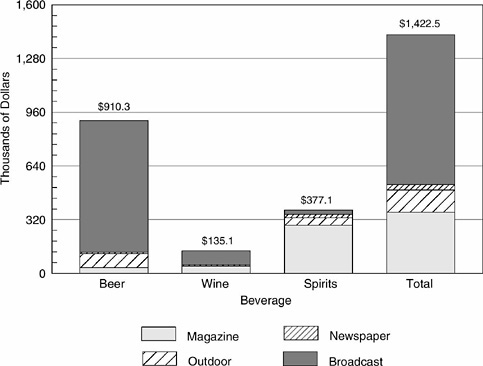
FIGURE 11-1 Alcohol advertising expenditures by beverage by medium, 2000.
SOURCE: Center for Science in the Public Interest (2002).
risen steadily in recent years. Thus, for example, between 1995 and 2000, these expenditures rose 37 percent, from $1.04 billion to $1.42 billion (Center for Science in the Public Interest, 2002). Whether young people are deliberately targeted by alcohol advertisers or not, they are exposed to alcohol advertising on television, in print media, and on radio (Center for Science in the Public Interest, 2000a, b; 2003). Estimates show, for example, that televised alcohol advertising reached 89 percent of the youth audience, with an average underage television viewer being exposed to 245 alcohol advertisements annually and the 30 percent heaviest viewers being exposed to 780 alcohol advertisements (Center for Science in the Public Interest, 2000b).
Images in Alcohol Advertising
Content analysis suggests that many alcohol advertisements link drinking with valued personal attributes such as sociability, elegance, and physical attractiveness and with desirable outcomes such as success, relaxation, romance, and adventure (e.g., Atkin and Block, 1981; Postman, Nystrom,
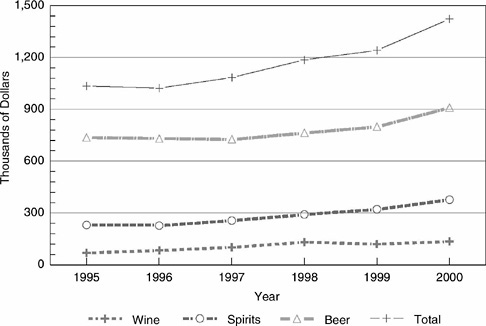
FIGURE 11-2 Alcohol advertising expenditures, 1995-2000.
SOURCE: Center for Science in the Public Interest (2002).
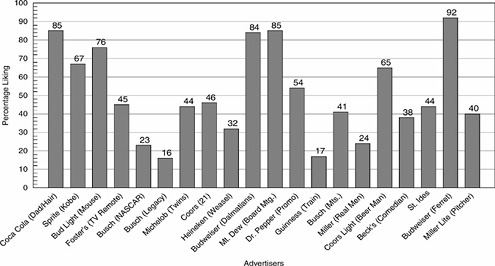
Strate, and Weingartner, 1988; Strickland, Finn, and Lambert, 1982). Moreover, young people find some alcohol advertising appealing and are attracted to it. In a recent study (Chen and Grube, 2001; Martin et al., 2002), 450 fifth through eleventh graders were asked to rate 20 beer and soft drink advertisements. Overall, soft drink advertisements were rated more favorably than beer advertisements. Nonetheless, the young people identified some beer advertisements as being among their favorites in the 20 (Figure 11-3). In fact, the most liked advertisement overall was for beer and featured the Budweiser® lizards and ferret. More than 90 percent of the young people liked this advertisement. Other beer advertisements were also popular, including a Bud Light advertisement featuring a computer-animated mouse (76 percent) and a Budweiser advertisement featuring the Clydesdale horses and Dalmatian dogs (84 percent). In general, children and adolescents find alcohol advertising with celebrity endorsers, humor, animation, and popular music to be particularly appealing (Atkin and Block, 1983; Chen and Grube, 2001; Martin et al., 2002). Adolescent boys are especially attracted to alcohol advertisements depicting sports (Slater et al., 1997; Slater et al., 1996). In general, adolescents and adults find lifestyle or image-oriented alcohol advertising to be more appealing than alcohol ad-
vertisements that promote only product quality (Covell, Dion, and Dion, 1994; Kelly and Edwards, 1998; Kelly, Slater, and Karan, 2002). Image advertising is especially preferred among younger adolescents (e.g., seventh graders) and particularly by younger males (Kelly and Edwards, 1998). Lifestyle or image-oriented advertising also appears to result in more favorable attitudes toward alcohol brands and products among young people when compared with strictly product-oriented or informational advertising (Kelly et al., 2002).
Does alcohol advertising increase alcohol consumption and problems among youth? This question is addressed here by reviewing the recent research on alcohol advertising and by critically considering the evidence about the effects that exposure to these advertisements may have on alcohol beliefs and attitudes and on the prevalence of drinking and drinking problems among young people.
Does Alcohol Advertising Affect Drinking or Drinking Problems?
Earlier reviews have concluded that the evidence for the effects of alcohol advertising on drinking beliefs and behaviors is limited at best (e.g., Atkin, 1995; Calfee and Scheraga, 1994; Fisher, 1993; Nelson, 2001). The available research on the effects of alcohol advertising can be grouped into three types of studies: (1) experimental or laboratory studies, (2) ecological studies, and (3) survey and other correlational studies. Each of these types of studies will be considered in turn.
Experimental Studies
Experimental studies investigate the effects that short-term exposure to alcohol advertising under controlled conditions has on drinking beliefs and behaviors. Typically, a group of experimental participants will be exposed to one or more alcohol advertisements embedded within a television program, within a series of “neutral” advertisements, or, in the case of print advertising, within a booklet or magazine. The drinking beliefs or behaviors of this experimental group are then compared to a control group that watches the same program, sees the same collection of advertisements, or reads the same booklet, but without the embedded alcohol advertisements. The results of earlier experimental studies have been mixed with some studies finding no effects (e.g., Kohn, Smart, and Ogborne, 1984; Sobell et al., 1986) and other studies finding small or short-term effects for some study participants (e.g., Kohn and Smart, 1987).
Apparently only a single recent study has been published that experimentally manipulated exposure to alcohol advertising (Lipsitz, Brake, Vincent, and Winters, 1993). This study was intended to investigate the
effects of television beer advertising on alcohol expectancies among young people who were not yet regular drinkers. Groups of fifth and eighth graders were exposed to videotapes containing five beer commercials, the same five beer commercials plus two antidrinking public service advertisements, or five soft drink commercials. Results of a memory task indicated that the children paid attention to the advertisements and remembered seeing the beer and soft drink commercials. Despite the attention given to the advertisements, however, neither exposure to the beer advertisements alone nor to the beer advertisements in combination with the antidrinking PSAs affected scores on the alcohol expectancy scales.
The results of these experimental studies offer only very limited evidence that alcohol advertising promotes more favorable drinking beliefs or increases consumption. Laboratory studies of alcohol advertising effects, however, can be criticized on at least four grounds (cf. Atkin, 1995; Grube, 1993; Lastovicka, 1995; Thorson, 1995). First, although laboratory experimental studies can control for extraneous factors and allow for strong causal inferences, they often lack realism. In the typical study, respondents will be exposed to alcohol advertising in an artificial setting (e.g., school-room) that does not resemble the natural viewing situation. As a result, it is difficult to draw conclusions about the “real-world” effects of alcohol advertising on beliefs and behaviors based on these laboratory studies.
Second, it has been noted that advertisers target specific audiences with particular advertisements (Thorson, 1995). If the stimulus advertisements do not contain images, themes, or music that appeal to the participants in a specific study, then it is unlikely that any effects will be observed.
Third, laboratory experiments on the effects of alcohol advertising can only address the effects of short-term exposure to a limited number of advertisements. The relevance of such studies for understanding the cumulative effects of exposure to hundreds or thousands of alcohol advertisements over many years is questionable. Laboratory studies may be more appropriate for studying short-term disinhibitory or priming effects than ascertaining if advertising has long-term effects on beliefs or behaviors. That is, this research paradigm may be most relevant to understanding if exposure to alcohol advertising elicits immediate and short-term increases in consumption among those already favorably predisposed to drinking (e.g., Kohn and Smart, 1987).
Fourth, it may be naive to expect alcohol advertising experiments, as typically implemented, to produce significant effects on beliefs or behaviors. In particular, it seems unlikely that exposure to a handful of alcohol advertisements in a laboratory setting could produce a measurable effect against the high background rates of such advertising to which respondents are already exposed in their everyday lives.
Ecological Studies
Generally, ecological or econometric studies have focused on the relationship between alcohol industry advertising expenditures and aggregated (e.g., per capita) alcohol consumption, sales, or problems. A few studies have investigated the effects of alcohol advertising restrictions or bans.
Advertising Expenditures
In a recent study (Saffer, 1997), the relationship between variations in local television, radio, and outdoor alcohol advertising and motor vehicle fatalities was investigated using data for the years 1986 to 1989 in the top 75 media markets in the United States. Alcohol advertising was represented as the sum of expenditures over media types (television, radio, outdoor) weighted for relative media impact based on the estimated number of people exposed to each. Alcohol advertising was found to be significantly related to total and nighttime vehicle fatalities, although the effects appeared to be greater for older than for younger (18- to 20-year-old) drivers. The effect of variations in the cost of advertising on motor vehicle fatalities was also investigated in separate analyses. The cost of advertising was found to be negatively related to motor vehicle fatalities, presumably because higher costs reduce the amount of advertising and thus consumption.
This study has a number of strengths and offers the strongest ecological evidence that alcohol advertising might influence drinking problems. The investigation of local variations in advertising and including a consideration of different media types are important innovations that have not been duplicated in other ecological studies. They are important because the lack of variation in advertising expenditures when aggregated across media at the national level may make it difficult to detect advertising effects (e.g., Saffer, 1995). Nonetheless, making causal inferences based on this study is problematic. Even though important background and demographic variables were controlled, the possibility that the relationship between alcohol advertising and motor vehicle fatalities is spurious and results from some third variable such as differences in regional drinking norms cannot be entirely discounted.
The remaining recent ecological studies of alcohol advertising expenditures have generally produced null findings regarding the effects of advertising on overall consumption and problems. Thus, for example, using annual data from the United States from 1964 to 1990, Nelson and Moran (1995) investigated the effects of real advertising expenditures for beer, wine, and spirits on consumption of these beverages. Although the results varied somewhat among estimation procedures, none of the same beverage advertising coefficients were significant for beer or spirits. The same-beverage coeffi-
cients for wine, however, were significant and positive. That is, wine advertising was related to increased wine consumption. All of the advertising effects, however, were quite small. Moreover, wine advertising decreased spirits consumption while spirits advertising decreased wine consumption. Alcohol advertising expenditures were unrelated to total alcohol consumption once income, price, age structure, and advertising for all other goods were controlled. Overall, these results were interpreted as indicating that alcohol advertising does not increase total consumption, but rather reallocates market shares among brands and beverages.
Similar conclusions were reached in a study of the effects of brand-level advertising on spirits consumption in the United States from 1976 to 1989 (Gius, 1996). Specifically, it was found that brand advertising was positively related to own-brand consumption for spirits, whereas rival brand advertising was not significantly related to own-brand consumption. This pattern was interpreted as indicating that alcohol advertising does not change overall consumption of spirits, but rather leads simply to a reallocation of market shares.
The effects of advertising on alcohol consumption and on spirits consumption also have been investigated using national data from the United States for the years 1959 through 1982 (Goel and Morey, 1995). This study found that the effects of both current and lagged (previous year’s) advertising expenditures for alcohol were negative. That is, advertising appeared to decrease consumption. These effects were interpreted by the authors as indicating that alcohol advertising leads to a redistribution of market shares without increasing overall demand. One further possibility is that the alcohol manufacturers may increase advertising when demand begins to decrease. That is, advertising may be a function of sales as well as sales being a function of advertising (cf. Saffer, 1995, 1996, 1998).
Beer, wine, and spirits advertising were investigated using quarterly data from 1963 to 1992 for the United Kingdom (Duffy, 1995). This study did not consider cross-beverage advertising effects, but did allow for the possibility that changes in advertising do not immediately affect consumption, but rather may have lagged or delayed effects. Advertising was represented in this study by quarterly per capita expenditures on television, radio, and press. Alcohol consumption was measured by quarterly consumer expenditures on beer, wine, and spirits. The effects for wine and spirits advertising were occasionally positive and significant in some models, but were small and most often nonsignificant. The advertising effects for beer advertising were not significant and positive in any of the models, although a small negative effect was found in one model. When the most stable and best predictive model was considered, one advertising coefficient for spirits was significant and positive, but small. Although this study has
many strengths, aggregating advertising across media types and the lack of consistency among the models raise some issues.
Fisher and Cook (1995), using U.S. data for the years 1970 to 1990, investigated changes in per capita consumption as a function of changes in advertising as well as cross-sectional associations. Considering the cross-sectional analyses first, they found that expenditures on magazine advertising were associated with increased spirits consumption. This finding is consistent with the fact that spirits advertising in the U.S. is primarily through print media (Center for Science in the Public Interest, 2002; Snyder et al., 2000). They also found that total wine and spirits advertising (across all media) increased wine, spirits, beer, and total consumption. Interestingly, total beer advertising decreased spirits consumption, as would be expected if market shares were being shifted. Overall, the authors concluded that these findings provided some support for the effects of advertising on consumption, and in some cases the observed advertising effects were substantial. When models of change, rather than static models, were considered, no evidence that changes in advertising expenditures were related to changes in consumption was found. Spirits advertising, however, was found to decrease wine market share. The findings of this study provide little or no evidence that changes in alcohol advertising increase overall alcohol consumption, although it may realign market shares.
Other recent ecological studies reach similar conclusions. Thus Coulson, Moran, and Nelson (2001) report a series of analyses using quarterly advertising expenditures, taking into account the relative audience reach of different media types. Some significant effects of alcohol advertising were found, although they were quite small. Thus, spirits advertising had a positive effect on spirits consumption one quarter (3 months) later, and a contemporaneous positive effect on wine consumption. Wine advertising, however, had a negative effect on spirits consumption after one quarter and a positive contemporaneous effect on wine consumption. It was concluded that the effects of alcohol advertising on overall consumption were negligible.
Similar results have been reported for advertising expenditures on per capita alcohol consumption in Ontario, Canada (Larivière, Larue, and Chalfant, 2000). Although the results were unstable and varied considerably depending on model specification, they suggested that spirits consumption was positively related to advertising expenditures, whereas beer and wine consumption were negatively related to advertising expenditures. Larivière et al. concluded that advertising effects were subtle, may vary by beverage, and probably affect brand or product allocation, rather than overall consumption. On the basis of similar data for the United Kingdom and United States, respectively, Duffy (2001) and Nelson (1999) conclude
that a 100 percent increase in alcohol advertising would result in a 1 percent increase in total consumption.
Advertising Restrictions
In addition to considering alcohol advertising expenditures, some ecological studies have attempted to ascertain if restrictions on alcohol advertising have a discernible effect on drinking and drinking problems. Early studies in this area concluded that advertising restrictions have little, if any, overall effect on increasing consumption. Thus, for example, a study of state-level alcohol control laws in the United States (Ornstein and Hanssens, 1985) indicated that allowing outdoor (billboard) advertising was actually related to decreased spirits consumption and had no effect on beer consumption. However, allowing price advertising, especially on billboards, significantly increased both spirits and beer consumption. This effect was interpreted as indicating that price advertising leads to greater competition, lower prices, and therefore greater consumption. The analyses also suggested that allowing retailers and distributors to give away alcohol-related novelties (a form of promotion) increased consumption of both spirits and beer. Even so, the effects of price advertising and novelties were relatively small compared with those of other regulatory policies (e.g., drinking age) and economic factors (e.g., price). In another study (Makowsky and Whitehead, 1991), the effects of removing a total ban on alcohol advertising in Saskatchewan, Canada, were investigated for beer, spirits, wine, and total alcohol sales. The analyses indicated that lifting the ban increased beer sales, decreased spirits sales, and had no effect on wine or total sales. That is, lifting the ban may have resulted in a substitution effect of beer for spirits, but did not appear to increase overall consumption.
Some support for the effectiveness of restrictions on broadcast alcohol advertising in reducing alcohol consumption and alcohol problems (i.e., liver cirrhosis mortality, motor vehicle fatalities) is provided by a study of 17 European and North American countries (Saffer, 1991, 1993a). In a series of analyses controlling for income, price, tourism, kilometers of roadway, and percentage of alcohol consumed in the form of beer and wine, it was found that restrictions on alcohol advertising were related to lower rates of consumption and reduced motor vehicle fatalities. Specifically, countries with partial restrictions had alcohol consumption rates that were about 16 percent lower than countries with no restrictions, and countries with complete restrictions had consumption rates that were 11 percent lower than countries with partial restrictions. The corresponding reduced rates for motor vehicle fatalities were 10 percent and 23 percent, respectively. No significant effects were observed for cirrhosis mortality rates.
This study, however, has been seriously criticized. A reanalysis of the
data (Young, 1993) suggested there was evidence of model misspecification and reverse causation, with those countries experiencing low rates of alcohol problems being more likely to adopt alcohol advertising bans than countries with high rates of alcohol problems. That is, it appears that both low problem rates and advertising restrictions may be a result of preexisting conservative drinking styles. Moreover, the reanalysis also suggested that partial alcohol advertising bans might actually increase alcohol consumption through substitution. For example, bans on spirits advertising were associated with increases in beer consumption. Other studies (Nelson and Young, 2001; Nelson, 2001) using more recent data and a somewhat longer time series have investigated the effects of bans on broadcast alcohol advertising in the same 17 countries on per capita alcohol consumption, cirrhosis deaths, and traffic fatalities. These studies concluded that a total ban on broadcast alcohol advertising had no measurable effects on alcohol consumption, cirrhosis deaths, or traffic fatalities, although the number of countries with such bans was quite small (N = 4). Bans on broadcast spirits advertising were related to increases in consumption and road fatalities and were not significantly related to cirrhosis rates. The authors also note that such bans may be relatively ineffective because they are often circumvented through substitution of nonbanned media and the use of new technologies and marketing strategies. Contamination from neighboring areas where no bans are in effect is also problematic.
In contrast, a more recent analysis of longer time series of data (1970-1995) from 20 countries indicated that both partial bans and complete bans on alcohol advertising may reduce consumption (Saffer and Dave, 2002). It was estimated that each added restriction on alcohol advertising (e.g., disallowing spirits advertising on television) reduced consumption by 5 to 8 percent. These effects were found even after controls for price, income, alcohol culture (percentage of alcohol consumed as beer and wine), cigarette advertising bans, and government activism in the economy. Importantly, this study addressed criticisms raised concerning previous studies (e.g., Young, 1993). In particular, it took into account reciprocal effects between consumption and alcohol advertising bans. In this regard, it was found that not only did advertising bans decrease consumption, but consumption also affected advertising bans. Specifically, countries with higher alcohol consumption were more likely to institute total bans on alcohol advertising compared with lower consumption countries.
In general, the findings from the ecological studies provide little consistent support for a relationship between aggregate alcohol advertising expenditures or advertising restrictions and aggregate alcohol sales, consumption, or problems. They do provide stronger evidence that alcohol advertising may lead to changes in brand or beverage preferences without increasing total consumption. The ecological research on alcohol advertis-
ing, however, has been criticized on a number of grounds (cf. Calfee and Scheraga, 1994; Fisher, 1993; Saffer, 1993b, 1995, 2002). Aggregation of advertising data across media types is one recurrent problem; it is interesting to note that one study that took differential media impact into account found significant advertising effects (Saffer, 1997). It is worth noting, however, that other studies investigating the independent contributions of separate media types have found no such effects (e.g., Nelson, 1999). In a related aggregation issue, it has been argued (Saffer, 1993b) that ecological studies have not considered the possible cumulative effects of advertising over many years. As a result, they may underestimate advertising effects. Studies investigating lagged effects of advertising over relatively lengthy time series, however, have found no advertising effects (e.g., Fisher and Cook, 1995; Coulson et al., 2001), although time series analysis, even with lags, may not be an appropriate method for detecting cumulative effects. Although the effects of advertising on brand or product preferences may decay rapidly, this may not be the case for any effects of advertising on overall drinking predispositions. Conversely, because advertising is pulsed or concentrated in relatively short intervals, using data that are aggregated at the yearly level may mask or hide short-term advertising effects (Saffer, 1993b, Saffer and Dave, 2002). Again, however, ecological studies considering quarterly data have not found advertising effects (e.g., Nelson, 1999; Coulson et al., 2001). Aggregating advertising expenditures and sales data over large geographical areas (e.g., nationally) may mask potential advertising effects because of the relative lack of variability in such data. In this regard, it is important to note that the one study that considered variations in alcohol advertising at the regional level (Saffer, 1997) found significant effects on vehicle fatalities. In a related issue with studies using aggregated data, it has been suggested that studying alcohol advertising cross-nationally is potentially important because variations in such advertising are usually at the margin, and quite small in relation to the total amount of alcohol advertising in the environment within any one country. As a result, normally occurring changes in levels of alcohol advertising can be expected to have only minimal effects, if any, in single-country studies (Saffer, 1995, 1996, 1998).
An additional cautionary note regarding ecological analyses of alcohol advertising is that they may misspecify the underlying models by ignoring mediated effects. For example, one effect of advertising may be to increase competition among brands, thereby reducing price and, as a result, increasing consumption (Nelson, 2001; Nelson and Young, 2001; Tremblay and Okuyama, 2001). If such a model holds, then one would not expect a significant direct effect from advertising to consumption if price is also included in a simple series analysis. This would be the case even if advertising were, in fact, an important indirect determinant of alcohol consumption
and problems through its effects on price. Although some researchers have dismissed the significance of such indirect effects (Nelson, 2001), they may be practically important. In the present example, if advertising does indeed lead to reductions in prices, then restricting advertising might increase price and reduce consumption. Thus, for example, a case study (Tremblay and Okuyama, 2001) tentatively suggests that lifting the ban on broadcast spirits advertising may have led to price reductions and consequently to increased consumption of spirits. Unfortunately, appropriate analytic procedures that allow for assessing indirect effects, as well as direct effects, for the most part have been lacking in the ecological literature on alcohol advertising.
Another limitation of the existing ecological studies is that they have not considered special populations that may be more susceptible to or exposed to advertising. In particular, it has been argued that young people, or certain groups of young people, may be especially influenced by alcohol advertisements (e.g., Atkin, 1993) and that minority populations have been specially targeted by alcohol advertising (e.g., Scott et al., 1992; Abramson, 1992). It is possible that advertising may be more important at some stages of the drinking process (e.g., initiation) than others (continuation of established drinking patterns). Although aggregate consumption rates for youth are highly correlated with those for adults (Nelson, 2001), they are not identical. The effects of alcohol advertising on aggregated youth drinking thus remains an empirical question.
Survey and Other Correlational Studies
For the most part, survey studies of alcohol advertising have focused on children and adolescents. In general, the survey studies have addressed a fundamentally different question from those addressed in the ecological studies. Rather than asking if alcohol advertising affects overall consumption among young people, these studies ask who might be affected and by what processes. These are questions that cannot be addressed with aggregated data and the types of analyses typically used in ecological studies. In addition, rather than relying on measures of potential exposure at the population level (e.g., advertising expenditures), survey studies have focused at the individual level and specifically on young people known to be more or less exposed to, attentive to, or attracted to alcohol advertising. Early survey studies found small, but significant, positive relationships between reported exposure to alcohol advertising and drinking beliefs and behaviors among young people (Aitken, Eadie, Leather, McNeill, and Scott, 1988; Atkin and Block, 1981; Atkin, Hocking, and Block, 1984; Atkin, Neuendorf, and McDermott, 1983). These effects were small, however, and some studies failed to find substantively meaningful relationships between
alcohol advertising and drinking beliefs and behaviors among young people (e.g., Adlaf and Kohn, 1989; Strickland, 1982, 1983).
More recently, research has focused more on attentional and affective processes that may mediate between exposure to alcohol advertising and drinking beliefs and behaviors. Specifically, it has been proposed that attention to and positive affect toward alcohol advertising and the characters and images it contains may be factors that are important in determining whether alcohol advertising influences drinking beliefs and behavior (e.g., Austin and Nach-Ferguson, 1995; Grube, 1995; Grube and Wallack, 1994; Thorson, 1995). In one study a small sample of high school students were exposed to videotaped television beer advertising with and without sports content (Slater et al., 1997). The advertisements were embedded in either a sports program or an entertainment program. It was found that girls responded more negatively to beer advertisements and counter-argued them more than boys did, particularly when they had sports content. Of most relevance here, non-Hispanic white adolescents who were more favorable toward the beer advertisements were also more likely to report current drinking and future intentions to drink. The effects, however, were small and were not replicated among Latino adolescents. Moreover, because of the cross-sectional nature of the study, it is not clear what the causal relationship is. In particular, it cannot be determined if a favorable orientation to alcohol advertisements predisposes young people to drinking or if being predisposed to drinking makes young people more favorable toward alcohol advertisements.
The relationship between evaluation of alcohol advertising and drinking was also investigated in a study of 7- to 12-year-old children (Austin and Nach-Ferguson, 1995). It was found that liking alcohol advertisements was positively related to experimentation with alcohol. This effect was relatively robust, accounting for about 11 percent of the variance in the drinking measure. In a similar study with at-risk preadolescents, it was found that identification with the characters in alcohol commercials predicted expectancies regarding the positive effects of drinking (Austin and Meili, 1994). In a similar study, with third, sixth, and ninth graders, both rated desirability of characters in alcohol advertisements and identification with those characters predicted positive alcohol expectancies and, indirectly, a risky behavior index that included drinking (Austin and Knaus, 2001). These patterns of results were replicated and extended using a sample of ninth and twelfth graders from central California (Pinkleton, Austin, and Fujioka, 2001). A “predrinking behavior” index was also constructed by having the respondents rate the extent to which they would like to have each of a series of clothing and toy items with alcohol-related logos. Perceived desirability, identification, and ratings of advertisement production and content quality were found to be related to alcohol expectancies, the
predrinking index, and an alcohol-behavior index. Again, however, all of these studies were cross-sectional and rely on simple correlational and regression techniques, thus precluding causal interpretations of these relationships.
Another study used survey data obtained from fifth- and sixth-grade school children (Grube and Wallack, 1994; Grube, 1995). Awareness of alcohol advertising was ascertained by presenting them with a series of still photographs taken from television commercials for beer. In each case, all references to product or brand were blacked out. They were asked whether they had seen each advertisement and, if so, to identify the product being advertised, and, if they knew that, the brand of the product. The most important findings from this survey were that awareness of advertising was related to increased knowledge of beer brands and slogans and to more positive beliefs about drinking. Awareness of alcohol advertising also had a significant indirect effect on intention to drink as an adult that was mediated through positive beliefs. Importantly, these effects were maintained even though the reciprocal effects of beliefs and knowledge on awareness of advertising were controlled through the nonrecursive modeling. The findings were interpreted as suggesting that awareness of alcohol advertising may predispose young people to drink rather than the other way around.
A series of recent studies from New Zealand have reached similar conclusions. In one study of 10- to 17-year-olds (Wyllie, Zhang, and Casswell, 1998b), respondents were given a written description of and shown a still photograph taken from three television beer advertisements. They were then asked how often they had seen each advertisement and how much they liked each of them. Liking was significantly related to intention to drink as an adult. This effect accounted for a substantial proportion of the variance in these drinking intentions. The effect of liking on current drinking behaviors was more modest and nonsignificant (p < 0.06). Importantly, the reciprocal effects of drinking and drinking intentions on liking were not significant. Stronger results were reported in a recent study of 18- to 29- year-olds (Wyllie, Zhang, and Casswell, 1998a) using similar procedures. In this case, liking of alcohol advertisements was positively related to endorsement of positive statements about drinking and to current alcohol consumption. Most importantly, liking of the advertisements was related to increased numbers of self-reported drinking problems. The reciprocal effects of drinking and drinking beliefs on liking of alcohol advertisements were not significant in the model.
Another recent survey study (Connolly, Casswell, Zhang, and Silva, 1994) represents an advance over previous studies because it used a longitudinal design. Recall of alcohol advertisements at age 15 was positively related to beer drinking 3 years later at age 18 among young men. Unexpectedly, among young women, those who recalled more alcohol advertis-
ing at age 15 reported drinking less beer at age 18 than did those recalling fewer advertisements. Although this study is important because it reports the first published longitudinal data showing a significant relationship between alcohol advertising and later drinking, it is problematic for a number of reasons. Most importantly, the analyses did not control for drinking or predisposition to drink at the earlier waves of the study. It is possible that those young men who recalled more advertisements at age 15 were already drinkers at that time and that the differences observed 3 years later were simply a continuance of this pattern. The fact that recall of alcohol advertising was related to decreased drinking among the young women further obscures the interpretation of this study.
A final survey study (Casswell and Zhang, 1998) investigated the relations among liking of alcohol advertising at age 18 and beer drinking and drinking-related aggression at age 21. The study used data from later waves of the previously described study (Connolly et al., 1994). The results indicated that liking alcohol advertising at age 18 was related to higher levels of beer consumption at age 21 and to alcohol-related aggression at that same age. The effects of liking of advertising on aggression were mediated through effects on drinking. Importantly, these effects were obtained even though drinking at age 18 was included as a predictor in the analyses. These findings are thus most consistent with the interpretation that alcohol advertising predisposes young people to drink, rather than drinking predispositions influencing attention to and affect toward alcohol advertising.
Preliminary analyses from other more recent studies (summarized in Martin et al., 2002) have replicated and extended these findings. Thus, one of these studies found that young people with more positive affective responses to alcohol advertising held more favorable drinking expectancies, perceived greater social approval for drinking, believed drinking was more common among peers and adults, intended to drink more as adults, and drank with higher frequency and in greater quantities. Interestingly, the effects of affective response to alcohol advertising on drinking behavior and intentions appear to be largely mediated through expectancies and normative beliefs. That is, a major consequence of alcohol advertising may be to increase young people’s beliefs about the likelihood of positive consequences of drinking and the normativeness of drinking. In a second of these recent studies, exposure to alcohol advertising was found to be related to increases in drinking over time. The converse, that drinking would affect exposure to alcohol advertising, was not supported.
In sum, survey studies generally find significant associations between reported exposure to, attention to, and recall of alcohol advertising, on the one hand, and drinking beliefs and behaviors, on the other. These relationships, however, tend to be modest for the most part. Moreover, a number
of these studies have used small and nonrepresentative samples, raising questions about generalizability. In addition, because of the cross-sectional designs of most of these studies and the failure to control for previous drinking in one of the longitudinal studies, it is difficult to make statements about causality. The emerging studies (Martin et al., 2002) are suggestive of advertising effects and may provide a more definitive answer once more complete analyses become available.
SUMMARY
Alcohol portrayals are relatively common on television, in film, and in music and music videos. These portrayals are largely positive or neutral, often associating drinking with positive consequences or desirable attributes. Negative consequences of drinking are rarely portrayed. Only a few studies have investigated the effects of exposure to alcohol portrayals in popular media. Generally, the findings from these studies are mixed and inconclusive.
Overall, the research on the effects of alcohol advertising also presents mixed and inconclusive findings. With some notable exceptions (e.g., Saffer, 1997), experimental and ecological studies have produced little or no evidence that alcohol advertising affects drinking beliefs, behaviors, or problems among young people. In contrast to experimental and ecological studies, however, survey research studies on alcohol advertising and young people consistently indicate that there are small, but significant, correlations between awareness of and affect toward alcohol advertising and drinking beliefs and behaviors among young people. Children and adolescents who are more aware of and favorably disposed to alcohol advertisements hold more favorable beliefs about drinking, intend to drink more frequently as adults, and drink more frequently and in larger quantities than do other young people. Taken as a whole, the survey studies provide some evidence that alcohol advertising may influence drinking beliefs and behaviors among some children and adolescents.
A growing body of research is confirming and extending these findings (cf. Martin et al., 2002). This evidence, however, is far from conclusive. Because of the cross-sectional design of most of the published studies, causal inferences are difficult. Alcohol advertising may predispose young people to drink or the opposite may be true instead. That is, young people who are favorable toward drinking may seek out information about alcohol and thus be more attentive to alcohol advertisements.
Although studies using longitudinal data and nonrecursive modeling techniques suggest that responses to advertising affect many drinking behaviors, further research is needed. Longitudinal studies that follow the
samples of young people from childhood to late adolescence and that adequately control for past drinking behaviors and predisposition would be particularly useful.
REFERENCES
Abramson, H. (1992). Booze makers buy into racial/ethnic communities. Marin Institute for the Prevention of Alcohol and Other Drug Problems, 4(Winter), 1-12.
Adlaf, E.M., and Kohn, P.M. (1989). Alcohol advertising, consumption and abuse: A covariance-structural modeling look at Strickland’s data. British Journal of Addiction, 84, 749-757.
Aitken, P.P., Eadie, D., Leathar, D., McNeill, R.E.J., and Scott, A. (1988). Television advertisements for alcoholic drinks do reinforce under-age drinking. British Journal of Addiction, 83, 1399-1419.
Alaniz, M.L., and Wilkes, C. (1995). Reinterpreting Latino culture in the commodity form: The case of alcohol advertising in the Mexican-American community. Hispanic Journal of Behavioral Sciences, 17, 430-451.
American Academy of Pediatrics. (1996). Impact of music lyrics and music videos on children and youth. Pediatrics, 98, 1219-1221.
Atkin, C.K. (1993). Effects of media alcohol messages on adolescent audiences. Adolescent Medicine: State of the Art Reviews, 4, 527-542.
Atkin, C.K. (1995). Survey and experimental research on effects of alcohol advertising. In S.E. Martin (Ed.), The effects of the mass media on use and abuse of alcohol (pp. 39-68). Bethesda, MD: National Institute on Alcohol Abuse and Alcoholism.
Atkin, C.K., and Block, M. (1981). Content and effects of alcohol advertising (Report No. PB-82-123142). Washington, DC: Bureau of Tobacco, Alcohol, and Firearms.
Atkin, C.K., and Block, M. (1983). Effectiveness of celebrity endorsers. Journal of Advertising Research, 23, 57-61.
Atkin, C.K., Hocking, J., and Block, M. (1984). Teenage drinking: Does advertising make a difference? Journal of Communication, 28, 71-80.
Atkin, C.K., Neuendorf, K., and McDermott, S. (1983). The role of alcohol advertising in excessive and hazardous drinking. Journal of Drug Education, 13, 313-325.
Austin, E.W., and Knaus, C. (2001). Predicting the potential for risky behavior among those “too young” to drink as a result of appealing advertising. Journal of Health Communication, 5, 13-27.
Austin, E.W., and Meili, H.K. (1994). Effects of interpretations of televised alcohol portrayals on children’s alcohol beliefs. Journal of Broadcasting and Electronic Media, 38, 417-435.
Austin, E.W., and Nach-Ferguson, B. (1995). Sources and influences of young school-age children’s general and brand-specific knowledge about alcohol. Health Communication, 7, 1-20.
Bahk, C.M. (2001). Perceived realism and role attractiveness in movie portrayals of alcohol drinking. American Journal of Health Behavior, 25, 433-446.
Calfee, J.E., and Scheraga, C. (1994). The influence of alcohol advertising on alcohol consumption: A literature review and an econometric analysis of four European nations. International Journal of Advertising, 13, 287-310.
Casswell, S., and Zhang, J.F. (1998). Impact of liking for advertising and brand allegiance on drinking and alcohol-related aggression: A longitudinal study. Addiction, 93, 1209-1217.
Center for Science in the Public Interest. (1992). Mad at the ads! A citizens’ guide to challenging alcohol advertising practices. Washington, DC: Author.
Center for Science in the Public Interest. (2002). Alcohol advertising expenditures, 2001. Available: http://www.cspinet.org/booze/fctindex.htm [April 21, 2003].
Center on Alcohol Marketing and Youth. (2000a). Overexposed: Youth as a target of advertising in magazines. Washington, DC: Author.
Center on Alcohol Marketing and Youth. (2000b). Television: Alcohol’s vast adland. Washington, DC: Author.
Center on Alcohol Marketing and Youth. (2003). Radio daze: Alcohol ads tune in underage youth. Washington, DC: Author.
Chalfant, H.P., and Beckley, R E. (1977). Beguiling and betraying: The image of alcohol use in country music. Journal of Studies on Alcohol, 38, 1428-1433.
Chen, M.J., and Grube, J.W. (2001, June). TV beer and soft drink advertising: What young people like and what effects. Paper presented at the annual meeting of the Research Society on Alcoholism, Montreal, Quebec, Canada.
Christensen, P.G., Henriksen, L., and Roberts, D.F. (2000). Substance use in popular primetime television. Washington, DC: Office of National Drug Control Policy.
Connolly, G.M., Casswell, S., Zhang, J.F., and Silva, P.A. (1994). Alcohol in the mass media and drinking by adolescents: A longitudinal study. Addiction, 89, 1255-1263.
Connors, G.J., and Alpher, V.S. (1989). Alcohol themes within country-western songs. International Journal of the Addictions, 24, 445-451.
Coulson, N.E., Moran, J.R., and Nelson, J.P. (2001). The long-run demand for alcoholic beverages and the advertising debate: A cointegration analysis. Advertising and Differentiated Products, 10, 31-54.
Covell, K., Dion, K.L., and Dion, K.K. (1994). Gender differences in evaluations of tobacco and alcohol advertisements. Canadian Journal of Behavioural Science, 26, 404-420.
Duffy, M. (1995). Advertising in demand systems for alcoholic drinks and tobacco: A comparative study. Journal of Policy Modeling, 17, 557-577.
Duffy, M. (2001). Advertising in consumer allocation models: Choice of functional form. Applied Economics, 33, 437-456.
DuRant, R.H., Rome, E.S., Rich, M., Allred, E., Emans, S.J., and Woods, E.R. (1997). Tobacco and alcohol use behaviors portrayed in music videos: A content analysis. American Journal of Public Health, 87, 1131-1135.
Everett, S.A., Schnuth, R.L., and Tribble, J.L. (1998). Tobacco and alcohol use in top-grossing American films. Journal of Community Health, 23, 317-324.
Fisher, J.C. (1993). Advertising, alcohol consumption, and abuse: A worldwide survey. Westport, CT: Greenwood Press.
Fisher, J.C., and Cook, P.A. (1995). Advertising, alcohol consumption, and mortality: An empirical investigation. Westport, CT: Greenwood Press.
Gerbner, G. (1995). Alcohol in American culture. In S.E. Martin (Ed.), The effects of the mass media on use and abuse of alcohol (pp. 3-29). Bethesda, MD: National Institute on Alcohol Abuse and Alcoholism.
Gius, M.P. (1996). Using panel data to determine the effect of advertising on brand-level distilled spirits sales. Journal of Studies on Alcohol, 57, 73-76.
Goel, R.K., and Morey, M.J. (1995). The interdependence of cigarette and liquor demand. Southern Economic Journal, 62, 451-459.
Grube, J.W. (1993). Alcohol portrayals and alcohol advertising on television. Alcohol Health and Research World, 17(1), 61-66.
Grube, J.W. (1995). Television alcohol portrayals, alcohol advertising, and alcohol expectancies among children and adolescents. In S.E. Martin (Ed.), The effects of the mass media on use and abuse of alcohol (pp. 105-121). Bethesda, MD: National Institute on Alcohol Abuse and Alcoholism.
Grube, J.W., and Wallack, L. (1994). Television beer advertising and drinking knowledge, beliefs, and intentions among schoolchildren. American Journal of Public Health, 84, 254-259.
Hacker, G.A., and Stuart, L.A. (1995). Double dip: The simultaneous decline of alcohol advertising and alcohol problems in the United States. Washington, DC: Center for Science in the Public Interest.
Herd, D. (1993). Contesting culture: Alcohol-related identity movements in contemporary African-American communities. Contemporary Drug Problems, 20, 739-758.
Hill, L., and Casswell, S. (2001). Alcohol advertising and sponsorship: Commercial freedom or control in the public interest? In N. Heathers, T.J. Peters, and T. Stockwell (Eds.), International handbook of alcohol dependence and problems (pp. 823-846). New York: John Wiley.
Hundley, H.L. (1995). The naturalization of beer in Cheers. Journal of Broadcast and Electronic Media, 39, 350-359.
Kelly, K.J., and Edwards, R.W. (1998). Image advertisements for alcohol products: Is their appeal associated with adolescents’ intention to drink? Adolescence, 33, 47-59.
Kelly, K.J., Slater, M.D., and Karan, D. (2002). Image advertisements’ influence on adolescents’ perceptions of the desirability of beer and cigarettes. Journal of Public Policy and Marketing, 21(2), 295-304.
Klein, J.D., Brown, J.D., Childers, K.W., Oliveri, J., Porter, C., and Dykers, C. (1993). Adolescents’ risky behavior and media use. Pediatrics, 92, 24-31.
Kohn, P., and Smart, R. (1987). The impact of television advertising on alcohol consumption: An experiment. Journal of Studies on Alcohol, 48, 161-166.
Kohn, P., Smart, R., and Ogborne, A. (1984). Effects of two kinds of alcohol advertising on subsequent consumption. Journal of Advertising, 13, 34-48.
Kotch, J.B., Coulter, M.L., and Lipsitz, A. (1986). Does televised drinking influence children’s attitudes toward alcohol? Addictive Behaviors, 11, 67-70.
Kulick, A.D., and Rosenberg, H. (2001). Influence of positive and negative film portrayals of drinking on adolescents’ alcohol outcome expectancies. Journal of Applied Social Psychology, 31, 1492-1499.
Larivière, É., Larue, B., and Chalfant, J. (2000). Modeling the demand for alcoholic beverages and advertising specifications. Agricultural Economics, 22(2), 147-162.
Lastovicka, J.L. (1995). A methodological interpretation of experimental and survey research evidence concerning alcohol advertising effects. In S.E. Martin (Ed.), The effects of the mass media on use and abuse of alcohol (pp. 69-81). Bethesda, MD: National Institute on Alcohol Abuse and Alcoholism.
Lipsitz, A., Brake, G., Vincent, E.J., and Winters, M. (1993). Another round for the brewers: Television ads and children’s alcohol expectancies. Journal of Applied Social Psychology, 23, 439-450.
Long, J.A., O’Connor, P.G., Gerbner, G., and Concato, J. (2002). Use of alcohol, illicit drugs, and tobacco among characters on prime-time television. Substance Abuse, 23, 95-103.
Makowsky, C.R., and Whitehead, P.C. (1991). Advertising and alcohol sales: A legal impact study. Journal of Studies on Alcohol, 52, 555-567.
Martin, S.E., Snyder, L., Hamilton, M., Fleming Milici, F., Slater, M., Stacy, A., Chen, M.J., and Grube, J.W. (2002). Alcohol advertising and youth. Alcoholism: Clinical and Experimental Research, 26, 900-906.
Mathios, A., Avery, R., Bisogni, C., and Shanahan, J. (1998). Alcohol portrayal on primetime television: Manifest and latent messages. Journal of Studies on Alcohol, 59, 305-310.
Mosher, J.F. (1994). Alcohol advertising and public health: An urgent call for action. American Journal of Public Health, 84, 180-181.
Nelson, J.P. (1999). Broadcast advertising in the U.S. and demand for alcoholic beverages. Southern Economic Journal, 66, 774-790.
Nelson, J.P. (2001). Alcohol advertising and advertising bans: A survey of research methods, results, and policy implications. Advertising and Differentiated Products, 10, 239-295.
Nelson, J.P., and Moran, J.R. (1995). Advertising and U.S. alcoholic beverage demand: System-wide estimates. Applied Economics, 27, 1225-1236.
Nelson, J.P., and Young, D.J. (2001). Do advertising bans work? An international comparison. International Journal of Advertising, 20, 273-296.
Neuendorf, K.A. (1985). Alcohol advertising and media portrayals. Journal of the Institute of Socioeconomic Studies, 10, 67-78.
Ornstein, S.I., and Hanssens, D.M. (1985). Alcohol control laws and the consumption of distilled beer and spirits. Journal of Consumer Research, 12, 200-212.
Pinkleton, B.E., Austin, E.W., and Fujioka, Y. (2001). The relationship of perceived beer ad and PSA quality to high school students’ alcohol-related beliefs and behaviors. Journal of Broadcasting and Electronic Media, 45, 575-597.
Postman, N., Nystrom, C., Strate, L., and Weingartner, C. (1988). Myths, men and beer: An analysis of beer commercials on broadcast television, 1987. Falls Church, VA: AAA Foundation for Traffic Safety.
Roberts, D.F., Foehr, U.G., Rideout, V.J., and Brodie, M. (1999a). Kids and media @ the new millennium. Palo Alto, CA: Kaiser Family Foundation.
Roberts, D.F., Henriksen, L., and Christensen, P.G. (1999b). Substance use in popular movies and music. Washington, DC: Office of National Drug Control Policy.
Robinson, T.N., Chen, H.L., and Killen, J.D. (1998). Television and music video exposure and risk of adolescent alcohol use. Pediatrics, 102, e54.
Rychtarik, R.G., Fairbank, J.A., Allen, C.M., Foy, D.W., and Drabman, R.S. (1983). Alcohol use in television programming: Effects on children’s behavior. Addictive Behaviors, 8, 19-22.
Saffer, H. (1991). Alcohol advertising bans and alcohol abuse: An international perspective. Journal of Health Economics, 10, 65-79.
Saffer, H. (1993a). Advertising under the influence. In M.E. Hilton and G. Bloss (Eds.), Economics and the prevention of alcohol-related problems (pp. 125-140). Bethesda, MD: National Institute on Alcohol Abuse and Alcoholism.
Saffer, H. (1993b). Alcohol advertising bans and alcohol abuse: Reply. Journal of Health Economics, 12, 229-234.
Saffer, H. (1995). Alcohol advertising and alcohol consumption: Econometric studies. In S.E. Martin (Ed.), The effects of the mass media on use and abuse of alcohol (pp. 83-99). Bethesda, MD: National Institute on Alcohol Abuse and Alcoholism.
Saffer, H. (1996). Studying the effects of alcohol advertising on consumption. Alcohol Health and Research World, 20, 266-272.
Saffer, H. (1997). Alcohol advertising and motor vehicle fatalities. Review of Economics and Statistics, 79, 431-442.
Saffer, H. (1998). Economic issues in cigarette and alcohol advertising. Journal of Drug Issues, 28, 781-793.
Saffer, H., and Dave, D. (2002). Alcohol consumption and alcohol advertising bans. Applied Economics, 34(11), 1325-1334.
Scott, B.M., Denniston, R.W., and Magruder, K.M. (1992). Alcohol advertising in the African-American community. Journal of Drug Issues, 22, 455-469.
Slater, M., Rouner, D., Domenech-Rodriquez, M., Beauvais, F., Murphy, K., and Van Leuven, J.K. (1997). Adolescent responses to TV beer ads and sports content/context: Gender and ethnic differences. Journalism and Mass Communication Quarterly, 74, 108-122.
Slater, M., Rouner, D., Murphy, K., Beauvais, F., Van Leuven, J.K., and Domenech-Rodriquez, M. (1996). Adolescent male reactions to TV beer ads: The effects of sports content and programming context. Journal of Studies on Alcohol, 57, 425-433.
Snyder, L.B., Fleming-Milici, F., Mitchell, E.W., and Proctor, D.C.B. (2000). Media, product differences and seasonality in alcohol advertising in 1997. Journal of Studies on Alcohol, 61, 896-906.
Sobell, L., Sobell, M., Riley, D., Klanjer, F., Leo, G., Pavan, D., and Cancilla, A. (1986). Effect of television programming and advertising on alcohol consumption in normal drinkers. Journal of Studies on Alcohol, 47, 333-340.
Strasburger, V.C. (1993a). Adolescents, drugs, and the media. Adolescent Medicine: State of the Art Reviews, 4, 391-415.
Strasburger, V.C. (1993b). Children, adolescents, and the media: Five critical issues. Adolescent Medicine: State of the Art Reviews, 4, 479-493.
Stockdale, J.E. (2001). The role of the media. In E. Houghton and A.M. Roche (Eds.), Learning about drinking (pp. 209-242). Philadelphia: Brunner-Routledge.
Strickland, D.E. (1982). Alcohol advertising: Orientations and influence. Journal of Advertising, 1, 307-319.
Strickland, D.E. (1983). Advertising exposure, alcohol consumption and misuse of alcohol. In M. Grant, M. Plant, and A. Williams (Eds.), Economics and alcohol: Consumption and controls (pp. 201-222). New York: Gardner Press.
Strickland, D.E., Finn, T.A., and Lambert, M.D. (1982). A content analysis of beverage alcohol advertising: Magazine advertising. Journal of Studies on Alcohol, 43, 655-682.
Thompson, K.M., and Yokota, F. (2001). Depiction of alcohol, tobacco, and other substances in G-rated animated feature films. Pediatrics, 107, 1369-1373.
Thorson, E. (1995). Studies of the effects of alcohol advertising: Two underexplored aspects. In S.E. Martin (Ed.), The effects of the mass media on use and abuse of alcohol (pp. 159-195). Bethesda, MD: National Institute on Alcohol Abuse and Alcoholism.
Tremblay, V.J., and Okuyama K. (2001). Advertising restrictions, competition, and alcohol consumption. Contemporary Economic Policy, 19, 313-321.
Tucker, L.A. (1985). Television’s role regarding alcohol use among teenagers. Adolescence, 20, 593-598.
Villani, S. (2001). Impact of media on children and adolescents: Ten year review of the research. Journal of the American Academy of Child Adolescent Psychiatry, 40, 392-401.
Wallack, L., Grube, J.W., Madden, P.A., and Breed, W. (1990). Portrayals of alcohol on prime-time television. Journal of Studies on Alcohol, 51, 428-437.
Woodruff, K. (1996). Alcohol advertising and violence against women: A media advocacy case study. Health Education Quarterly, 23, 330-345.
Wyllie, A., Zhang, J.F., and Casswell, S. (1998a). Positive responses to televised beer advertisements associated with drinking and problems reported by 18 to 29-year-olds. Addiction, 93, 749-760.
Wyllie, A., Zhang, J.F., and Casswell, S. (1998b). Responses to televised alcohol advertisements associated with drinking behavior of 10-17-year-olds. Addiction, 93, 361-371.
Young, D.J. (1993). Alcohol advertising bans and alcohol abuse: Comment. Journal of Health Economics, 12, 213-228.


