
UNDERSTANDING EPILEPSY
EPILEPSY—Neurological disorder characterized by sudden attacks of motor or sensory malfunction with or without loss of consciousness or involuntary muscle contraction.
In imperial Rome, epileptics were encouraged to enter the Coliseum and drink the blood of wounded gladiators. This magical “cure” was thought to be effective in banishing the seizures that caused epileptics to be feared and shunned by other citizens. Throughout the Middle Ages, epilepsy was believed to be an infectious disease, and epileptics were routinely confined to insane asylums during the 18th and 19th centuries. Even as late as 1933, epileptic inmates of U.S. mental health institutions were forcibly sterilized in an erroneous attempt to prevent them from passing their genes on to their children.
Today, there is still no cure for epilepsy. Medications can effectively control seizures in 70% of patients. Others, whose seizures are caused by abnormal electrical activity in parts of the brain that can safely be removed, undergo surgery. However, medications can have serious side effects, and brain surgery is an option in only a very small percentage of cases. This still leaves about 30% of patients whose seizures cannot be controlled by medication or surgery, highlighting the need for continuing research into the brain and epilepsy.
In the laboratory of Dr. Michael Rogawski at the National Institutes of Health (NIH), scientists are seeking to understand the mechanisms of abnormal electrical activity in the brain at the cellular and molecular level and to develop drugs that will control seizures without side effects. “Epilepsy is a chronic disease that can be a severe impediment to living a normal life,” Rogawski explains, due to the difficulties caused by frequent or uncontrolled seizures and the disabilities that can be associated

NIH (National Institutes of Health)—A federal agency whose mission is to acquire new knowledge to help prevent, detect, diagnose, and treat disease and disability. NIH is the federal focal point for medical research in the United States.
with the disease or the drugs used to treat it. Because brain activity in epileptics is normal between seizures, “it’s a challenge to develop a drug that will target only the abnormal activity without interfering with normal brain functions.”
ANTICONVULSANT—A drug or procedure able to stop a seizure.
The study of epilepsy in the laboratory begins in vitro. Researchers have learned to simulate a seizure in a culture of neurons, creating a “seizure in a dish.” Unlike bacteria or plant cells, animal neurons when grown in a petri dish (cell model) are capable of forming simple connections that are similar to the connections made between neurons in the brain. This process makes it possible to assess the potential anticonvulsant properties of new drugs. “When trying to characterize the molecular actions of the drugs, we study them in cultured neurons,” Rogawski says. Cultured rat neurons lack the complex connections between brain regions that are present in whole brains or brain slices but are still useful in the early stages of research. After a chemical compound’s activity has been thoroughly studied in a cell model, the researchers use 1/2-mm-thick brain slices from young adult rats. The use of a brain slice (tissue model) allows researchers to understand how electrical activity in one region of the brain affects and interacts with another part of the brain. Researchers are able to obtain dozens of brain slices from a single animal, allowing them to perform several studies using only a single rat brain and reducing the number of animals needed for this type of research. “We can then wash potential drugs over the surface of the slice instead of injecting the whole animal,” Rogawski says. If a new drug looks promising, the researchers then test the drug in animals (organism model). Without administering the drug directly to an animal model, scientists could not be certain that a drug would have therapeutic value or be safe in people. He explains that “the brain is an incredibly complex, interconnected organ. Cells or slices in a dish, while useful in the earlier stages of research, cannot completely predict the effect of a drug on an intact brain.”
IN VITRO—An artificial environment outside a living organism such as a petri dish.
NEURON—A type of cell that conducts electrical impulses; also called a nerve cell; found in the brain, spinal column, and nerves.
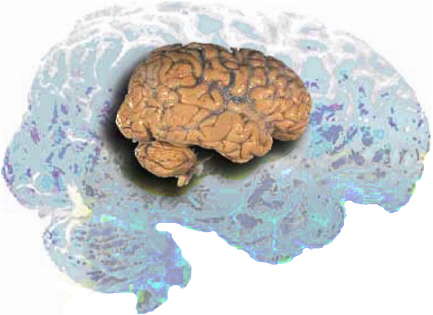
“Once a drug has been shown to be effective in preventing seizures in an animal model, we look for side effects in that model,” Rogawski says. Does the drug interfere with motor coordination or memory, for example? Researchers also need to determine the dose that will prevent seizures with the lowest incidence of side effects, work that also can only be performed in whole animals.
Drugs developed in Rogawski’s laboratory at NIH are now being tested in people, a potential boon to the 2.5 million Americans who have epilepsy. Although advances in cell culture and computer modeling have reduced the need for animals in research, Rogawski notes, “We still have an absolute requirement for animal models,” in studying diseases like epilepsy. “The brain has billions of neurons … and the complexity of that system is far greater than a computer can simulate. It is absolutely essential to study the action of potential new drugs in a complete nervous system.”
Rogawski’s research takes advantage of the fact that epilepsy is not only a human disease. Seizures occur frequently in many purebred dogs and in baboons, as well as other species. But Rogawski and his colleagues use primarily rats and mice in their research. “They breed easily and we can control their genetics much more easily,” he says.
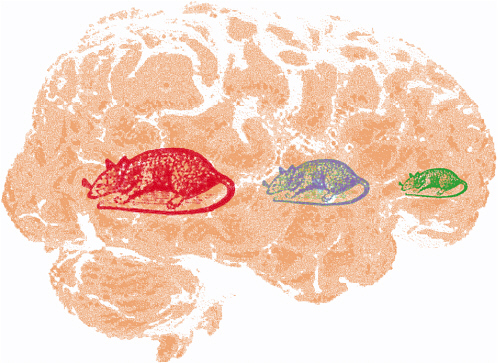
Genetically modified rats and mice, like those used in Rogawski’s research, are an important new tool for researchers. By altering a specific gene, scientists are able to breed rodents with diseases similar or identical to those in humans. Genetically modified rats and mice are often
excellent models of human disease, which is one of the reasons that 90% of all animals used in U.S. research today are rats and mice.

GENOME—All of the genetic material or DNA of an organism.


