
5
Scientific Knowledge as a Global Public Good: Contributions to Innovation and the Economy
Dana Dalrymple1
“The preeminent transnational community in our culture is science,” Richard Rhodes, 1986
“If the potential of modern science is to be realized, there is no alternative to global public goods and institutions,” Lawrence Summers, 2000
INTRODUCTION
Scientific knowledge in its pure form is a classic public good. It is a keystone for innovation, and in its more applied forms is a basic component of our economy. Although recent technical advances have stimulated its generation and greatly accelerated its spread, other forces may limit its public-domain characteristics.
The concept of public goods is not new. Although it is being applied in an increasing number of areas of social importance, this does not yet seem to be true of the natural sciences. Science is seldom mentioned in the public goods literature, or public goods in scientific literature. Yet the combination is a logical and useful one. A few economists and health specialists have recognized this, but the same cannot be said of the scientific community more generally.2
The related concept of public domain is also not new. Although it is even broader conceptually (see Drache, 2001), it has found a more specific meaning, particularly among lawyers, in the context of intellectual property rights (IPRs). Lawyers, however, seem to assume the availability of public goods and scientific knowledge and their focus may be limited to national and local legal systems.
Why such limited or partial attention to what should seem a most appropriate and useful common concept? Is it because the three professional groups most likely to be involved—scientists, economists, and lawyers—have not viewed public goods in a broader and more integrated light? This symposium provides a most appropriate opportunity to begin to try to bridge the gap.
In doing so, a few definitions might help set the stage. Data and information are at once both key components in the generation of scientific knowledge and among its major products: they are both inputs and outputs (Arrow, 1962, p. 618). However, knowledge in general is broader, less transitory, and more cumulative. It is derived from perception, learning, and discovery. Scientific knowledge, in particular, is organized in a systematic way and is testable and verifiable. It is used to provide explanations of the occurrence of events (Mayr, 1982, p. 23).
The topic itself is, of course, quite ambitious. Moreover, this may be the first attempt to take it on in a fairly comprehensive way. Hence I will only attempt to provide an introduction. Three main topics will be taken up, in varying proportion: (1) principal concepts, (2) provision and use, and (3) implementation. The focus will be on scientific knowledge at the international level, particularly with respect to developing countries. My perspective is that of an agricultural economist and sometime historian. My approach involves a rather wide-ranging review of literature blended with long personal experience in international agricultural research. Others might well follow quite different routes and illustrate different dimensions. I encourage them to do so.
PRINCIPAL CONCEPTS
In examining scientific knowledge as a global public good, I will start by building on several venerable concepts and components. Some of them have been partially woven together before; others have not. Each has its own history and is important to understanding the whole. And they need to be combined with some contemporary economic perspectives.
Historical Perspectives
The starting point is public goods, which were long considered, at most, at the national level and for public institutions and services. Hence there is a need to expand the definition in several directions: to knowledge as a global public good, to global scientific knowledge, and to recognition of the role played by IPRs.
Knowledge as a Public Good
Adam Smith laid the basis for the concept of public goods in The Wealth of Nations in 1776 when he stated:
The third and last duty of the sovereign is that of erecting and maintaining those public institutions and those public works, which, though they may be in the highest degree advantageous to a great society, are, however, of such a nature, that the profit could never repay the expense to any individual or small number of individuals, and for which it cannot be expected that an individual or small number of individuals should erect or maintain.
The development of more sophisticated theories of public goods began in the last quarter of the 19th century (Machlup, 1984, p. 128). Recent use of the term by economists is usually traced back to two short articles by Paul Samuelson in the mid-1950s (1954, 1955). It became a central concept in public finance, in part due to the writings of Musgrave and Buchanan (Machlup, 1984, pp. 128-129; Olson, 1971; Buchanan, 1968). Public goods, as they have generally come to be known, have two distinct characteristics: (1) they are freely available to all and (2) they are not diminished by use. These properties are often expressed by economists, as we shall see later, in terms of non-excludability and non-rivalry.
In the context of scientific knowledge, a “good” is viewed here, following some dictionary variants, as having or generating two key qualities: (1) it is tangible in the sense that it is capable of being treated as a fact, or understood and realized; and (2) it has intrinsic value in terms of relating to the fundamental nature of a thing. It is neutral with respect to the “good” effect on society, although that also is usually presumed to be good (to be discussed later), and excludes money.
The public goods characteristic of ideas and knowledge has long been noted, first by St. Augustine, sometime between 391 and 426 (Wills, 1999), and then by Thomas Jefferson, in 1813 in a frequently cited letter on patents (1984).3 Their views were carried further by Powell in 1886 when he stated: “The learning of one man does not subtract from the learning of another, as if there were to be a limited quantity to be divided into exclusive holdings. . . . That which one man gains by discovery is a gain to other men. And these multiple gains become invested capital. . . .”
The Nature and Spread of Scientific Knowledge4
The adjective “scientific” can be traced to Aristotle and at some point entered the Romance languages. Its use in English, however, dates only to about 1600 and was synonymous with knowledge. In its earlier incarnations, it referred to demonstrable knowledge as compared with intuitive knowledge. It was at first referred to as natural philosophy in English. Emphasis was on deductive logic, which was useful for confirming what was already known, but not for original discovery.
The situation began to change in the early 1600s with the writings of Francis Bacon, who was a believer in inductive logic and the experimental method. The latter made it possible to discover and understand new facts about the world. From about 1620, with the publication of his Novum Organuum, there was a shifting of the philosophical point of view toward Bacon’s interpretation. This process reached its full realization by 1830.
With the new meaning of science—“natural philosophers” would no longer do—there was an increasing need for a new word for its practitioners. In 1834, William Whewell of Cambridge University rather casually proposed the term “scientist.” In 1840 he more seriously but very briefly said: “We need very much a name to describe a cultivator of science in general. I should incline to call him a Scientist” (Whewell, 1840/1996, p. cxii).5
Bacon, among his other insights, was perhaps the first to record his views on the wider nature of knowledge when he wrote: “For the benefits of discoveries may extend to the whole human race” and “for virtually all time” (Bacon, 1620/2000, p. 99). He clearly saw the benefits of attempting to reach beyond national boundaries, as was evident in his treatment of three levels of ambition, the third of which was put in these terms: 6 “But if a man endeavor to establish and extend the power and dominion of the human race itself over the universe, his ambition . . . is without a doubt both a more wholesome thing and more noble than the other two” (Henry 2002, p. 16).7
The age of global exploration that followed Columbus did much to bring about a global exchange of biological material and associated information. In the view of one historian, “Nothing like this global range of knowledge had ever been available before,” and it proved to be “a boost to Europe’s incipient ‘scientific revolution’.” “In this way, the exchange “made a major contribution to the long-run shift in the world balance of knowledge and power as it tilted increasingly toward the West” (Fernández-Armesto, 2002, p. 167).
Bonaparte gave a different twist to the process. As part of his “expedition” to Egypt in 1798, which included some of the finest scientific minds in France, he founded the “Institute of Egypt.” The essential goals of the institute’s researchers, in contrast to the military side, “were the progress and propagation of sciences in Egypt” and “the conquest of knowledge and the application of knowledge to man’s lot” (Herold, 1962, pp. 28, 151, 164-176; also see Solé, 1998).
Other approaches were undertaken by other European colonial powers during the next century. Botanical gardens were to play a particular role (Drayton, 2000; Plucknett et al., 1987; Pardey et al., 1991). Brazilian rubber seeds and the Peruvian cinchona tree, a source of quinine, were prime targets (Alvim, 1994, p. 426; Drayton, 2000, pp. 236, 249; Honigsbaum, 2000). In the latter case, collecting expeditions were defended—with some justification—as a “duty to humanity” (Honigsbaum, 2001, p. 81). Science and research played a larger role later, notably in the Spanish Caribbean, in helping improve the production of export crops (McCook, 2002).
Development of Intellectual Property Rights8
Many forms of knowledge are, of course, presently linked with IPRs. IPRs may seem a product of modern times, but they had their roots in the Middle Ages, when less attention may have been given to the social dimension. Concern about their effect on social welfare appears to have been of more recent and domestic origin.
Patents have existed in various forms since the late 1400s. The first general promise of exclusive rights to inventors was made in a statute enacted in Venice in 1474 (Machlup, 1984, p. 163). They became more widely adopted in Europe in the 1600s. The U.S. Congress first passed a patent statute in 1790 and in 1836 the Patent Office was established. It had a trained and technically qualified staff. Kahn (2002) states that the system was based on the presumption that social welfare coincided with the individual welfare of inventors. Courts subsequently “explicitly attempted to implement decisions that promoted economic growth and social welfare.”
Copyrights have also existed in various forms since the late 1400s. In the United States, the earliest federal law to protect authors was passed in 1790. Policymakers, according to Kahn, felt that copyright protection would serve to increase the flow of learning and information, and by encouraging publication would contribute to the principles of free speech. Moreover, the diffusion of knowledge would also ensure broad-based access to the benefits of social and economic development.
In practice, patents were fairly narrowly construed and copyright was interpreted more casually. Kahn views this as appropriate: social experience shows that they warrant quite different treatment if net social benefits are to be realized.
Contemporary Economic Perspectives
The next step in building a conceptual base is to move to some more recent perspectives, largely by economists, about the role played by knowledge in thinking about economic growth and then, in a more applied way, in international development programs.
Knowledge and Economic Growth
The role of knowledge, and particularly of scientific knowledge, in economic growth has received relatively little concerted study.9 Kenneth Boulding was one of the first to draw attention to the connection.10 In 1965, he stated at a meeting of the American Economic Association:
The recognition that development, even economic development, is essentially a knowledge process has slowly been penetrating the minds of economists, but we are still too much obsessed by mechanical models, capital-income ratios, and even input-output tables, to the neglect of the study of the learning process (Boulding, 1966, p. 6).
Only Machlup (1980, 1984) appears to have taken up the subject in a comprehensive manner, but even he did not get very far into the development side.
Why? Part of the problem is that it is difficult to reduce knowledge to numerical form so that it can be used in economic models. As Boulding also said: “One longs, indeed, for a unit of knowledge, which might perhaps be called a ‘wit,’ analogous to the ‘bit’ used in information theory; but up to now at any rate no such practical unit has emerged” (Boulding, 1966, pp. 2-3; also see Desai 1992, p. 249 and Romer, 1994, p. 20). Another problem was that there was an uneasy relationship between growth economics that was macroeconomic in orientation and development economics that was more microeconomic and multidisciplinary in its approach (Ruttan, 1998; Altman, 2002).
Romer, a macroeconomist, did go on to do some seminal work (first reported in 1986, with further contributions in 1990, 1993, and 1994). It was based on the assumption that long-run growth is driven primarily by the accumulation of knowledge. Knowledge (harking back to Powell, 1886) was considered the basic form of capital. New knowledge is the product of research and will grow without bound. In the industrial sector its production may have an increasing marginal product, in part because the creation of new knowledge by one firm can have a positive effect on the production possibilities of other firms because knowledge cannot be perfectly patented or kept secret. Hence, knowledge, even if generated for private gain, has an important public good characteristic. Romer suggested that an intervention that shifts the allocation of current goods away from consumption and toward research is likely to improve welfare.
Knowledge for Development
The importance of knowledge for development was reflected by the World Bank during the period when Joseph Stiglitz was chief economist. At that time the bank devoted its World Development Report for 1998-1999 to “Knowledge for Development.” It distinguished two types of knowledge: technical and attributes.11 The uneven distribution of the former was referred to as the knowledge gap and the latter as an information problem. Both are more severe in developing than in developed countries.
Closing the knowledge gap was viewed as involving three steps: (1) acquiring knowledge from the rest of the world and creating it locally through research and development, (2) absorbing knowledge, and (3) communicating knowledge. The Green Revolution, “the decades-long worldwide movement dedicated to the creation and dissemination of new agricultural knowledge,” was presented as “A paradigm of knowledge for development.”
In a separate article, Stiglitz (1999) reiterated some of these points, but went on to note that although “research is a central element of knowledge for development,” it is also a “global public good requiring public support at the global level.” The latter requires collective action, and “The challenge facing the international community is whether we can make our current system of voluntary, cooperative governance work in the collective interests of all.” This indeed is a central question.
PROVISION AND USE
The provision and use of scientific knowledge for the benefit of society are inviting to dream about, but are of course more difficult to realize. In this section an attempt will be made to identify and relate some of the more important steps and considerations. They start with some relevant aspects of the nature of knowledge, then move to the generation and embodiment of knowledge, factors influencing embodied knowledge, and finally consideration of the regulatory structure (as it applies to IPRs) to the provision and use of knowledge-based goods.
Nature of Knowledge
As the World Bank (1998-1999, p. 1) put it in one of its more lyrical moments, “Knowledge is like light, weightless and intangible, it can easily travel the world, enlightening the lives of people everywhere.” There is, of course, more to the story as the bank quickly goes on to admit. Although easy to transmit, knowledge can be expensive to produce. And scientific knowledge must normally be transformed into some more tangible form, sometimes referred to as embodied knowledge (processes, products, policies) to be of social benefit. The latter are often grouped under the category of technology.
Relationship of Science and Technology
Science is traditionally viewed as providing the insights needed for the development of technologies. Barzun (2000, p. 205) notes that earlier in history, technology—in the form of the practical arts—“came earlier and was for a long time the foster mother of science.” He continues, “Inventors made machines before anybody could explain why they worked . . . practice before theory.” Similarly, David (1992, p. 216) notes that “Technological mastery may run far ahead of science and is in many regards both a stimulus to scientific inquiry and the means whereby such inquiries can be conducted.”
Over time, the relative role of science has probably increased and in the minds of many, the relationship has reversed. In Barzun’s words, “science finds some new principle and applied science . . . embodies it in a device for industry for domestic use.” The unqualified version of this concept is sometimes termed the simplest linear model and is probably greatly oversimplified (see David, 1992, p. 216). In reality, many feedback loops are involved.
The role of the public and private sectors in this process has also changed somewhat. Traditionally, the public sector has been associated with the provision of basic knowledge and the private sector with more applied technology and products. The former might be exemplified at the extreme end by federal support for high-energy physics and, more usefully, to basic health research. But there are exceptions to this pattern: one is agricultural research, originally one of the most important areas of federal support for research, which is relatively applied in nature (for background, see Dupree, 1957). And, more recently, certain portions of the private sector have become very involved in some important basic research, such as on the human genome, which has at least partially found its way into the public domain. Whether the private sector will find a satisfactory profit in some of this remains to be seen, but it has altered the basic paradigm.
The conventional model has also been altered by the increasing number and variety of interactions, formal and informal, between the public and private-public sectors. The usual pattern has the public sector financing the private sector to produce what will become public goods (however, some intellectual property issues may complicate this picture). But some arrangements, and these are more unusual, have the private sector providing support to universities, in part to gain access to their scientists and scientific knowledge.
Scientific Goods and Bads
The term public “good,” despite a more neutral definition adopted at the outset of this chapter, usually implies a positive social benefit. In the case of science, however, there is often considerable question about the degree to which some “goods” are good.
This was not always the case. During the first flush of science in the 1800s, it would appear that it was viewed quite positively. In 1884, John Wesley Powell, possibly reflecting the more ebullient spirit of the times stated “The harvest that comes from well-directed and thorough scientific research has no fleeting value, but abides through the years, as the greatest agency for the welfare of mankind.” The belief that science could be harnessed for the benefit of all continued and perhaps peaked in the 1950s (Watson, 2002, p. 375).
This viewpoint, to the extent that it was shared, began to change with the advent of atomic energy and its unfortunate direct and indirect long-term effects. For other products of science, the outcome was more mixed. Silent Spring revealed the dark side of DDT, but it is still one of the best and lowest-cost methods of mosquito control in developing countries (Honigsbaum, 2001, p. 286; UNDP, 2001, p. 69). As Freeman Dyson (1979, p. 7), a physicist, has written: “Science and technology, like all original creations of the human spirit, are unpredictable. If we had a reliable way to label our toys as good and bad, it would be very easy to use technology wisely.”
This, of course, is not the case, and so the presumed and actual “goods” and “bads” of science continue to be reported and debated daily. The agricultural area has shared fully (and perhaps more than proportionally lately), particularly with respect to biotechnology and genetically modified organisms, which can be, or become, all things—good, bad, and indifferent—depending on timing and circumstances.
This uncertainty, along with the possibility that the research may not accomplish even what it was originally intended to do, also has economic implications. It means that not all scientific research activities are in retrospect necessarily a good investment. This is true of both public and private research.12
Generation and Embodiment of Scientific Knowledge
Scientific knowledge is usually the product of a process. Sometimes it is informal and individual, but most often it is more formal and communal. Here we will look very briefly at the linkage of invention and scientific theory, the introduction of the research laboratory, and of the generalized process of moving from ideas and scientific knowledge to public goods.
Linkage of Invention and Scientific Theory
Invention is as old as mankind. But it often consisted of chance, trial and error, and individual intuition. Such activities seldom led to further innovative activity or to sustained economic growth. This was, according to Mokyr (2002), because invention without a scientific base was difficult to duplicate and quickly ran into diminishing returns. And such science as existed was not very concerned with practical applications.
The situation began to change around 1750 with the growth of what Mokyr calls “propositional” knowledge, which includes both scientific and artisanal or practical knowledge. During a subsequent period, which he calls the “Industrial Enlightenment,” a set of social changes occurred that resulted in growth of scientific knowledge, an increase in the flow of information, and an attempt to connect technique with theory. The process was facilitated because it was a period of relatively open science: knowledge was a public good. But up until about 1850, the contribution of formal science to technology remained modest.
Establishment of Research Laboratories
It has been stated that in the 1800s, a century that was differentiated from its predecessors by technology, “The greatest invention . . . was the invention of the method of invention” (Whitehead, 1925, pp. 140, 141). Research laboratories “institutionalized the process of transforming intellectual and physical capital into new knowledge and new technology” (Ruttan, 2001, p. 82). The paths were somewhat different in agriculture and industry.
The early stages of innovation were fairly simple in agricultural societies. In the late 1700s and early 1800s, more progressive (and often more affluent) farmers experimented and expanded the envelope of knowledge. However, by the mid-1800s, the advantages of a more structured approach became increasingly evident in the United States. The House Committee on Agriculture, in its report establishing the U.S. Department of Agriculture in 1862, stated that accurate knowledge of nature “can be obtained only by experiment, and by such and so long continued experiments as to place it beyond the power of individuals or voluntary associations to make them” (Congressional Globe, 1862). Thereafter, public-sponsored research at the federal and state level gradually began to accelerate in the United States.13
Industrial research also dates from the latter half of the 1800s. The first corporate research laboratories were established in Europe by the chemical industry, particularly the dyestuffs sector, in the late 1860s and 1870s (Homburg, 1992; Mokyr, 2002, p. 85). Edison was the first individual in the United States to establish a significant-
research organization when he did so at Menlo Park, New Jersey, in 1876. The first U.S. industrial laboratory was established by General Electric in Schenectady, New York, in 1900 (Reich, 1985).
Since the turn of the 20th century, public and private research laboratories have played a key role in innovation and creation of new knowledge. It has not been, in historical terms, a long period.
From Ideas to Public and Private Goods
Given some thoughts about the nature of knowledge and research structures, it may now be useful to attempt to show how they and other elements interact in the process of moving from ideas to public and private goods and to social benefit. My view of the highly interactive process is outlined in Figure 5-1.
There are roughly four stages. The first is the generation of ideas and concepts by researchers and others. The second stage is the process of moving, through an interactive research process, from (a) ideas and concepts to (b) disembodied or pure knowledge, and from there to (c) embodied or applied knowledge (technology for short). The third stage involves the intellectual property dimension, which I will return to in greater degree below. The fourth stage is the movement of the “goods”—public, public-private, and private—into use in society and the resulting, one hopes, social benefits. In the first three stages, actions taken will likely be influenced, although to a differing degree, by perceptions of social needs and opportunities.
Throughout, there may be considerable crossover between the public and private sectors. Research initiated in the public sector can end up being utilized by the private sector and vice versa. Numerous other forms of interaction may occur. The result can be a hybrid good (van der Meer, 2002). This pattern, which is growing, can be very productive and useful for society, but it may also complicate the intellectual property dimension.
Factors Influencing Use and Adoption
It is one thing to provide knowledge-based public goods. Their adoption and productive use is another. Many factors may be involved. Three important categories follow from the previous section.
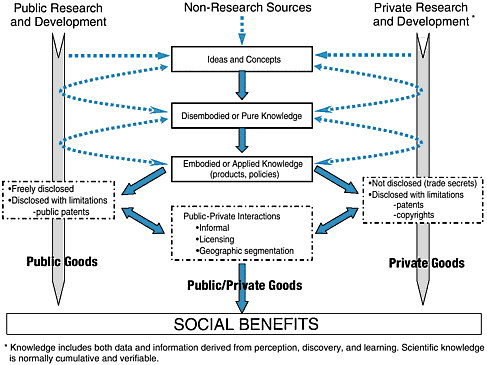
FIGURE 5-1 The evolution of scientific knowledge into public and private goods.
User Characteristics
Although the availability of knowledge-based public goods is a necessary condition, it is not a sufficient one. Potential users must themselves have a sufficient degree of knowledge to identify, understand, and possibly adapt the public goods available to them. They must also have an appropriate policy and legal environment, adequate infrastructure, and adequate financial resources. The more one gets into technology, the greater the degree of need for adaptation to local conditions. This is particularly true in the agricultural area where environmental and natural resource conditions are important and may vary sharply. Adaptation may well involve a further research and development capacity at the regional, national, and local level.
“Good” Characteristics
The main identifying characteristics of public goods, in economic terms, are their nonrival nature and their non-excludability. Nonrival means that use by one firm or individual does not limit use by another. Nonexcludable means use is not denied to anyone. These conditions are seldom found in totally pure form and may be limited for most purposes to (a) disembodied or pure knowledge; (b) noncopyrighted publications; and (c) some products of public research programs, such as those produced by federal laboratories.14
Virtually everything else, strictly speaking, is an impure public good or a private good. But the degree of impurity varies widely and in most cases contains a significant public goods dimension. Moreover, the impurity, insofar as it involves a useful private-sector contribution, may play an important role in improving the quality and usefulness of the product and maximizing social welfare. And purely private products may contribute significantly to social welfare.
The Path to Market
I have attempted to integrate these economic characteristics with intellectual property considerations in a market power context in Figure 5-2. Clearly, the left side represents the relatively pure public goods situation and the right side the relatively pure private good situation. The extreme forms of each variant are not very common. This leaves the middle as the most prevalent category composed of partially rival and excludable goods. Partial excludability is maintained with governmental participation—principally through copyrights, patents, or trade secrets.15
The differing paths result in differing degrees of market power or control, ranging from none (or pure competition) to complete (or a monopoly). Again the extremes are uncommon, but may be personified on the pure competition end by, as I have mentioned, some products of public research in agriculture and on the monopolistic end by actual trade secrets by the private sector. Most everything else results in partial market power. But in any case, as a recent study concluded, “ . . . knowledge has become to an even greater degree than before the principal source of competitive advantage for companies and countries” (Commission on Intellectual Property Rights, 2002, p. 13).
|
14 |
Many state universities are beginning to patent and license their products as a source of revenue. |
|
15 |
Both Figures 5-1 and 5-2 contain reference to public patents. These are patents taken out by a public entity to ensure that the patented item stays in the public domain. It is made available under license at no cost or at a very nominal charge. This was, for instance, standard practice at Tennessee Valley Authority during the 1950s (personal communication from Vernon Ruttan). Such patents are now uncommon. The principal reason is that the Bayh-Dole Act of 1980 allowed federal government contractors and grantees to take title to any subsequent inventions. Moreover, as a result of the Technology Transfer Act of 1986, the federal government may keep royalties from licensing its inventions. Defensive patents under 35 U.S.C.157, which provides for invention registration, are still possible, but probably would also be limited by the more general profit focus. (The previous four sentences are based on a personal communication from Richard Lambert, the National Institutes of Health, August 9, 2002.) |
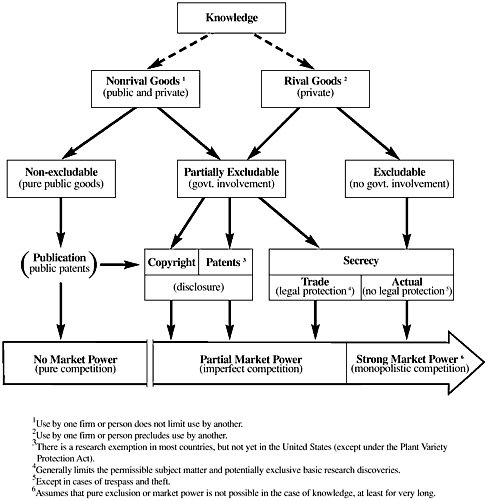
FIGURE 5-2 Knowledge-based public and private goods and the path to market: an economic and intellectual property perspective. Sources: Romer (1990, 1994) and Eisenberg (1987).
Intellectual Property Systems and Scientific Information
Clearly the various forms of intellectual property play a key role in the innovation process for knowledge-based public goods, especially those with some degree of private-sector involvement. What is their likely effect on the generation, flow, and use of scientific information? Fortunately, Eisenberg (1987) and a more recent Commission on Intellectual Property Rights (CIPR) (2002) have examined several of these issues.16
Secrecy
Secrecy may seem like an odd item to include under intellectual property systems, but one of the principal types—trade secrets—relies on a legal system for enforcement. Legal trade secrecy affords a remedy in court when individuals disclose information to others who subsequently breach this confidence or who otherwise misappropriate the information acquired. Actual trade secrecy is a strategy for protection in circumstances where not all the requirements for legal trade secrecy have been met. Eisenberg (1987) thinks that, although both types involve substantial nondisclosure, legal trade secrecy may be more disruptive of scientific communication than actual secrecy.
Patent Law
Patent laws may be more congruent with scientific norms because they are based on disclosure.17 The fit, however, may be less than perfect because (a) patents may operate to delay the dissemination of knowledge to other researchers, and (b) the granting of rights to exclude others from using patented inventions for a period of years threatens the free use and extension of new discoveries. Eisenberg (1987, p. 180) concludes that, although there are substantial parallels between patent laws and scientific norms, “the conjunction may nevertheless cause delay in the dissemination of new knowledge and aggravate inherent conflict between the norms and reward structure of science.” Resolution, she thinks, will involve adjustments on both sides.
Although the purpose of the patent system was to stimulate invention and provide an incentive to technical progress, the CIPR (2002, p. 123) states that over time, “The emphasis has shifted toward viewing the patent system as a means of generating resources required to finance R&D and to protect investments.” The system, in their view, fits best a model of progress where the patented product is the result of a discrete outcome of a linear research process. By contrast, they note that for “many industries, and in particular those that are knowledge-based, the process of invention may be cumulative, and iterative, drawing on a range of prior inventions invented independently . . . .” (p. 124). They suggest that the cumulative model fits more current research than the discrete model. Hence a patent system that was developed with a discrete model in mind may not be optimal for a more knowledge-based cumulative model.
Copyright
The degree to which copyrights have played a significant role in stimulating or limiting the dissemination of scientific information to date seems to be uncertain, but this may be in the process of changing, and not for the better. As the CIPR (2002, p. 18) has noted, copyright protects the form in which ideas are expressed, not the ideas themselves. The form, however, may have a significant impact on their use, and this is becoming more of an issue in view of changes in information technology.
In any case, copyrights probably have been of much greater importance to developed than to developing nations. This position may also change: the CIPR (2002, p. 106) stated, “We believe that copyright-related issues have become increasingly relevant and important for developing countries as they enter the information age and struggle to participate in the knowledge-based global economy.” In this case, “The critical issue . . . is getting the right balance between protecting copyright and ensuring access to knowledge and knowledge-based products” (p. 106).
In addition to economic questions, there can also be more philosophical concern about basic rights. As Kahn (2002, p. 53), in a paper also prepared for the commission, put it, “Even in cases where a strong copyright may be necessary to provide the incentives to create, it might be advisable to place limits of the power of exclusion in order to promote social and democratic ends such as the diffusion and the progress of learning.” We will doubtless hear much more about these issues in the future.
IMPLEMENTATION: AN EXAMPLE
To this point, I have largely dealt with concepts relating to scientific knowledge as an international public good. Although many of the individual components have an extended history, heretofore they do not seem to have been linked together to the degree that one might expect. If so, this might suggest that the overall concept is fairly theoretical and untested—possibly not implementable. Fortunately, that is not the case. There is a substantial instance of, as Barzun was earlier quoted as saying, “practice before theory” (Barzun, 2000, p. 205).
In the early 1970s, the Consultative Group on International Agricultural Research (CGIAR) was established and has operated until recently without any knowledge of many of the more conceptual issues discussed here. And
|
17 |
There is a complication in the case of plant germplasm. As Ronald Cantrell, the Director General of the International Rice Research Institute, puts it, “Germplasm is unlike other types of intellectual property in that the average practitioner cannot completely benefit from the disclosure unless a cross can be made with the patent protected germplasm” (personal communication, August 19, 2002). This underlines the need for research exemptions (see Figure 5-2, footnote 3). |
yet, in retrospect, it conforms very closely to what one might envisage a group oriented to science-based global public goods to be like and to do. It provides both confirmation of the concept and insights about what is involved in implementing it.18
Origin and Nature
The CGIAR is an informal group of donors—numbering about 60—who together sponsor 16 international agricultural research centers largely located in, and working on, problems of importance in agriculture and natural resources in developing nations. The centers are established as independent organizations with international status, boards, and staffs. They are both regional and global in their orientation and as public entities produce public goods. Their focus is on applied research and the development of improved technologies and policies that can be widely adopted, although they generally require local adaptation.
The CGIAR system includes a chair who is a vice president of the World Bank, a small group of international organizations as cosponsors (the Food and Agriculture Organization of the United Nations throughout and some others that have come and gone19), a general secretariat housed at the World Bank, and the Technical Advisory Committee (TAC) housed at the Food and Agriculture Organization. TAC has been a particularly useful component: it was recognized at the outset that the donor representatives to the CGIAR would not necessarily be scientists and that some outside source of continuing scientific and technical advice would be needed.20 The TAC members, totaling about 14, were half drawn from developed countries and half from developing counties. The group is currently being transformed into a Science Council with somewhat modified duties.
A group such as the CGIAR was vitally needed by developing nations for several reasons. The principal one was that, as of the 1960s, little research attention had been given to food crops for domestic consumption. The principal emphasis of colonial powers was on tropical export crops, often grown under plantation conditions. Thus national research systems, with a few exceptions, had relatively little capacity in commodities targeted to domestic food use. Moreover, the private sector was almost completely inactive in this area. Thus the developing countries found it difficult to increase agricultural productivity to meet the needs of an expanding population. Early efforts to simply bring in foreign technology virtually all failed because of the previously mentioned need for adaptation. Training programs proved to have much more value.
The CGIAR and its centers provided the opportunity to generate the global public scientific goods that could be adapted to regional and national needs (and in some instances used directly). The research efforts were and are carried out in a collaborative manner with national scientists so there is a built-in feedback loop. Concurrently, during the 1970s and 1980s, donors such as the U.S. Agency for International Development, invested heavily in the improvement of national research programs, both with respect to facilities and training. By the early 1980s, a vast improvement had taken place in the national research programs in many developing countries. Since then, however, the funding situation in many developing countries has stagnated or declined and the CGIAR itself began to experience similar difficulties.
|
18 |
This section draws on my involvement with the CGIAR system since 1972 and material that has been reported in greater detail in Dalrymple (2002). Historical background on the CGIAR is provided in Baum (1986). Current information on the CGIAR and its centers can be obtained from the group’s Web site (www.cgiar.org). An introduction to other international and bilateral agricultural research programs is contained in Gryseels and Anderson (1991, pp. 329-335). Further information on public-private relationships in agricultural research is provided in Byerlee and Echeverria (2002). |
|
19 |
The relationship of the World Bank with the CGIAR is reviewed by Andersen and Dalrymple (1999). The United Nations Development Program was a charter member of this group but in recent years has sharply diminished its support for the provision of many public goods (including the CGIAR); instead it has, somewhat paradoxically, initiated a series of studies and reports that elucidate the virtues of global public goods (see, for example, Kaul, Grunberg and Stern, 1999). The United Nations Environment Program was a member for a while but withdrew for financial reasons. Recently the International Fund for Agricultural Development has become a member. |
|
20 |
The TAC model has reportedly been emulated by the Global Environmental Facility and the Global Water Partnership. |
Promise and Perils
The basic original premise of the CGIAR has been realized to a remarkable, but variable, degree. The system has worked quite well, although it has had its problems, and the center organizational pattern has proved sound. Synergies and spillovers of collaborative research in the crop area have been substantial. In addition to their own research, the centers accumulate, utilize and organize, and pass on data and information in every direction. They have become focal points for knowledge in their particular areas of work and national programs have been stimulated. Increases in productivity and in turn the food supply have resulted in a lowering of prices to consumers below what they would have been otherwise. The overall result is a significant contribution to innovation and to the economies of the developing nations (Evenson and Gollin, 2002).
A group such as the CGIAR, however, continually faces program and management challenges and financial perils. These are not unique to public research, but are multiplied at the international level. The array of pressing problems is immense; views on what should be tackled vary (local views may vary from those at the national, regional, and global level); and the operation and management of research facilities in a developing country, with a mixture of international and local staff, can be challenging. The task can be further complicated by a variety of external or exogenous issues such as nationalistic inhibitions about sharing biodiversity, concerns about IPRs, and the global debate about genetically modified organisms.21
The budget for all of this is rather modest—only $337.3 million in 2001, and has stagnated for the past decade. It represents only a small portion (less that 5 percent) of all public funding for agricultural research in developing nations. And it is totally dependent on voluntary contributions from year to year. Unlike many other multilateral programs, the CGIAR has not been established by treaty. This is an advantage in that it can operate more informally and has considerable flexibility. It is, however, a disadvantage in that when some donor nations face a budget crunch, recently the case for Japan, treaty commitments take first place. Also, long-term support for multilateral programs in science and technology is probably not near the top of the list for many donors. There have been recent efforts to develop an endowment to provide stability of funding for the center genebanks at least, but this has a way to go.
This situation is compounded by a shift in the nature of the funding. There are two major categories: (a) unrestricted (core institutional support) and (b) restricted (special projects). The unrestricted provides most of the support for the longer-term and more globally oriented research, which is where the system has its strongest comparative advantage. Much of the restricted funding is for more localized and shorter-term research or development activities that are generally specified by the donor. Because the CGIAR centers have no other source of institutional support, as they are not governmental agencies, unrestricted funding is very important. Yet an increasing proportion of the funding is restricted—reaching about 57 percent in 2001. Two forces appear to be at play. The first, largely external, occurs when a large donor of unrestricted funding faces severe budget cuts, or as new donors come in with constraints on the use of their funds. The second is more internal and may be a combination of donor fatigue with long-term institutional support, a desire to adapt to emerging or changing priorities (or simply something new or flashier), and a wish to more clearly identify with specific projects.22
Clearly the CGIAR needs to broaden its funding base beyond developmental groups where science has, at best, a somewhat tenuous hold. Most of the national programs that support science, such as the National Science
Foundation in the United States, focus on domestic project grants.23 If such grants could be expanded to provide more of an international dimension, it could certainly provide help in terms of project support, but it would do nothing for the fundamental problem of institutional support.24 That may well prove to be the Achilles heel of international research efforts.
Prospects
Thus it seems that the 30 years of the CGIAR experience confirms the promise of the concept of knowledge-based global public goods. It demonstrates that, although it is not an easy task, it is possible to establish a structure for carrying out a global program in science and technology. It illustrates that such programs can be operated, again not without difficulty, over a wide area and an extended period of time. It shows that these programs can be productive, stimulate innovation, and make many contributions to society. But it also illustrates the perils of maintaining such a program, and particularly retaining a global focus, even in times that call out for it. The problems of funding long-term public scientific programs at the global level, in the absence of an international funding mechanism (which undoubtedly would have its own problems), are indeed the heart of the matter.
CONCLUDING REMARKS
Scientific knowledge in its relatively pure form is, as stated at the outset, the epitome of a global public good. It is normally freely available to all and is not diminished by use—indeed it may grow with use. Moreover, due to the miracles of modern communication, it can be transmitted around the world almost instantly. It can provide the basis for major contributions to the innovation process and to economic growth.
But to play these roles, a number of conditions must be met. First, there must be a process for generating knowledge somewhere, and this may not be an inexpensive or simple process. Second, knowledge must be embodied in some sort of socially useful technology, which also requires effort and resources. Third, both knowledge and technology must retain some sort of public goods dimension in terms of being freely available to be of maximum social benefit. Fourth, there must be some ability on the part of recipients or users to adapt the technology to their conditions and needs.
These steps—and others may also be involved—involve an interplay of research of various types and IPRs in the form of patents and copyrights. The research process takes many forms but where it is publicly financed, the products traditionally have been public goods. Where they were sponsored by the private sector, proprietary rights are involved. And when this happens, as is increasingly the case with IPR in both sectors, the public domain dimension is certainly complicated and even diminished in quantitative terms. There may also be a qualitative effect in that research investment may be directed into areas where the social rates of returns are below the private rates of return (see David, 1992, p. 230; van der Meer, 2002, p. 126).
While IPRs are, so far, less a problem in developing countries, those nations generally suffer a more basic restraint—weak research programs in both the public and private sectors. Over 30 years of experience with the CGIAR has demonstrated that it is possible to help fill this gap, but not without some effort and resources. The
|
23 |
International center scientists may participate in grant proposals submitted to, say, the National Science Foundation (NSF), but there are few such examples. One basic problem is that CGIAR centers are focused on applied research, whereas NSF grants are usually for more advanced research, normally headed by a domestic institution. This orientation, however, would be significantly broadened by a provision in the authorization bill for the NSF for fiscal year 2002-2007 (H.R. 4664), which cleared Congress on November 15, 2002, and was sent to the White House. Section 8, Specific Program Authorizations, item 3C on Plant Genome Research, provides for “Research partnerships to focus on — (i) basic genomic research on crops grown in the developing world . . . (iv) research on the impact of plant biotechnology on the social, political, economic, health, and environmental conditions in countries in the developing world . . . Competitive, merit-based awards for partnerships under this subparagraph . . . shall include one or more research institutions in one or more developing nations . . . ” (italics added). If approved by the President, the next, and probably more difficult, step is the appropriation process. |
|
24 |
The International Foundation for Science, headquartered in Stockholm, has rather limited resources and is oriented to relatively small grants to developing country scientists. (For more information see www.ifs.se/). A Global Research Alliance, with a secretariat in South Africa and an evident interest in industrial research, was formed in mid-2002 (www.research-alliance.net). |
principal problem is, not surprisingly, the maintenance of long-term public funding in the face of a seemingly endless array of other urgent calls on their use. These forces are particularly prevalent in foreign assistance programs (the key source of funding for the CGIAR), and may be complicated by political issues at both ends and natural disasters and civil disturbances in developing nations. Some promising international health research activities currently are getting under way with the support of a major foundation, but the narrow base of support may provide a problem in the future.
Thus, there is a substantial gap between potential and reality. On one hand, both scientific promise and communication opportunities were never greater. On the other hand, funding for the provision of public goods needed by much of humankind, particularly those in developing nations, is seriously constrained. IPRs, meant to facilitate innovation and economic growth, may, in some cases, be coming to have a less benign effect due to their quantitative and qualitative effects on the public domain.
The situation calls for a wider and deeper understanding of the international public goods dimension of scientific and technical knowledge. As Stiglitz (1999, p. 320) has commented: “The concept of public goods is a powerful one. It helps us think through the social responsibilities of the international community.” Similarly, Sachs (2000b) has stated: “. . . international public goods are not just a nice thing that we need to add on. They are the fundamental thing that has been missing from our template for the past 30 years.”
But to bring this wider understanding about, there will have to be—for a start—a closer and more interactive relationship between scientists, economists, and lawyers. Much could be gained if bridges could be built between them and with policy makers. This paper has been an initial attempt to begin to do so and to provide a framework for further thought. I would be delighted if it prompted further consideration of this most vital subject.
REFERENCES
Altman, D. 2002. “Small-Picture Approach to a Big Problem: Poverty,” New York Times, August 20, C2.
Alvim, P. 1994. “Non-Chemical Approaches to Tropical Tree Crop Disease Management: the Case of Rubber and Cacao in Brazil,” in Anderson, J. R., Agricultural Technology: Policy Issues for the International Community. CAB International, Wallingford (U. K.), 426.
Anderson, J., and D. Dalrymple. 1999. The World Bank, The Grant Program, and the CGIAR; A Retrospective Review. The World Bank (Washington), Operations Evaluation Department. OED Working Paper Series No. 1.
Arrow, K. 1962. “Economic Welfare and the Allocation of Resources for Invention,” in The Rate and Direction of Inventive Activity: Economic and Social Factors (A Report of the National Bureau of Economic Research). Princeton University Press, Princeton, 609-626.
Bacon, F. 2000 (1620). The New Organon. Ed. by L. Jardine and M. Silverthorne. Cambridge University Press, Cambridge, ix, xiv, 66.
Barzun, J. 2000. From Dawn to Decadence: 1500 to the Present, 500 Years of Western Cultural Life, Harper/Collins, New York.
Baum, W. C. 1986. Partners Against Hunger: The Consultative Group on International Agricultural Research. The World Bank, Washington, D.C.
Bernal, J. D. 1965. Science in History: The Emergence of Science (Vol. 1). M.I.T. Press, Cambridge, 32.
Boulding, K. E. 1966. “The Economics of Knowledge and the Knowledge of Economics” in American Economic Review 56 (2), 1-13.
Buchanan, J. 1968. The Demand and Supply of Public Goods. Rand McNally & Company, Chicago.
Byerlee, D. and K. Fisher. 2002. “Assessing Modern Science: Policy and Institutional Options for Agricultural Biotechnology in Developing Countries” in World Development 30, 943-944.
Byerlee, D. and R. Echeverria. (Eds.), 2002. Agricultural Research Policy in an Era of Privatization. CABI Publishing, Wallingford and New York.
CIPR/Commission on Intellectual Property Rights. 2002. Integrating Intellectual Property Rights and Development Policy: Report of the Commission on Intellectual Property Rights. Commission on Intellectual Property Rights, London. See [www.iprcommission.org]. Reviewed in “Intellectual Property: Patently Problematic,” The Economist, September 14, 2002, 75-76.
Congressional Globe. 1862. “U.S. Department of Agriculture,” Vol. 33, February 17, 855-856. See Office of Technology Assessment (1981, 31).
Dalrymple, D. G. 1990. “The Excess Burden of Taxation and Public Agricultural Research” in Echeverria, R. G. (Ed.), Methods for Diagnosing Research System Constraints and Assessing the Impact of Agricultural Research, Vol. II. International Service for National Agricultural Research, The Hague, 117-137.
Dalrymple, D. G. 2002. “International Agricultural Research as a Global Public Good: A Review of Concepts, Experience, and Policy Issues.” U.S. Agency for International Development, Office of Agriculture and Food Security, Washington, unpublished paper, September 2002.
David, P. 1992. “Knowledge, Property, and the System Dynamics on Technological Change.” Proceedings of the World Bank Annual Conference of Development Economics. World Bank, Washington, D.C., 215-255.
David, P. 1993. “Intellectual Property Institutions are the Panda’s Thumb: Patents, Copyrights, and Trade Secrets in Economic theory and History,” in Global Dimensions of Intellectual Property Rights in Science and Technology, National Academies Press, Washington, D.C.
Desai, A., 1992. “Comment on ‘Knowledge, Property, and the System Dynamics of Technological Change’ by David,” Proceedings of the World Bank Annual Conference on Development Economics. World Bank, Washington, D.C.
Drache, D. (Ed.). 2001. The Market or the Public Domain? Global Governance and the Asymmetry of Power. Routledge, London and New York.
Drayton, R. 2000. Nature’s Government: Science, Imperial Britain, and the ‘Improvement’ of the World. Yale University Press, New Haven and London.
Dupree, A. H. 1957. Science in the Federal Government: A History of Policies and Activities to 1940. The Belknap Press of Harvard University Press, Cambridge.
Dyson, F. 1979. Disturbing the Universe. Harper & Row, New York.
Eisenberg, R. S. 1987. “Proprietary Rights and the Norms of Science in Biotechnology Research,” Yale Law Journal 97 (December), 177-231.
Evenson, R. and D. Gollin, D. (Eds.). 2002. Crop Variety Improvement and its Effect on Productivity: The Impact of International Agricultural Research. CAB International, Wallingford and New York (forthcoming).
Fernández-Armesto, F. 2002. Near a Thousand Tables: A History of Food. The Free Press, New York.
Gryseels, G. and J. Anderson, J. 1991. “International Agricultural Research” in Pardey, P., Roseboom, J., Anderson, J. (Eds.), Agricultural Research Policy: International Quantitative Perspectives. Cambridge University Press, Cambridge, 309-339.
Hayek, F. A. 1937. “Economics and Knowledge,” Economica 4, 33-54.
Hayek, F. A. 1945. “The Use of Knowledge in Society,” American Economic Review 35, 519-530.
Henry, J. 2002. Knowledge is Power; Francis Bacon and the Method of Science. Icon Books, Cambridge, 6, 8, 16 (quote).
Herold, J. C. 1962. Bonaparte in Egypt. Harper & Row, New York.
Homburg, E. 1992. “The Emergence of Research Laboratories in the Dyestuffs Industry, 1870-1900,” British Journal for the History of Science 25, 91-111.
Honigsbaum, M. 2001. The Fever Trail: In Search of the Cure for Malaria. Farrar, Straus and Giroux, New York.
Jefferson, T. 1984. Letter to Isaac McPherson, August 13, 1813. In: Thomas Jefferson, Writings. The Library of America, New York, 1291.
Jamison, D. 2001. “WHO, Global Public Goods, and Health Research and Development” in Global Public Policies and Programs: Implications for Financing and Evaluation, ed. by C. Gerrard, M. Ferroni, A. Mody. World Bank, Operations Evaluation Dept., Washington, D.C., 107-111.
Jha, P., et al. 2002. “Improving the Health of the World’s Poor,” Science 295, 2036-2039.
Kahn, B. Z. 2002. “Intellectual Property and Economic Development: Lessons form American and European History.” Commission on Intellectual Property Rights, London., 21-24 (patents), 37-38 (copyright), 48. Source: www.ipcommission.org.
Kaul, I., Grunberg, I. and M. Stern (Eds.). 1999. Global Public Goods: International Cooperation in the 21st Century. Published for the United Nations Development Program by Oxford University Press, Oxford.
Longhorn, R., Henson-Apollonio, V., and J. White, J. 2002. Legal Issues in the Use of Geospatial Data and Tools for Agriculture and Natural Resources Management: A Primer. International Maize and Wheat Improvement Center (CIMMYT), Mexico, D. F.
Machlup, F. 1980. Knowledge: Its Creation, Distribution, and Economic Significance, vol. I, Knowledge and Knowledge Production. Princeton University Press, Princeton.
Machlup, F. 1984. Knowledge: Its Creation, Distribution, and Economic Significance. vol. II, The Economics of Information and Human Capital. Princeton University Press, Princeton.
Mayr, E. 1982. The Growth of Biological Thought: Diversity, Evolution, and Inheritance. The Belknap Press of Harvard University Press, Cambridge, MA.
McCook, S. 2002. States of Nature: Science, Agriculture, and Environment in the Spanish Caribbean, 1790-1940. University of Texas Press, Austin, 27-49.
Merton, R. K. 1997. “De-gendering ‘Man of Science’: The Genesis and Epicine Character of the Word Scientist” in Sociological Visions. Ed. by Kai Erikson. Rowman & Littlefield, Lanham (Md.), 225-253.
Mokyr, J. 2002. The Gift of Athena: Historical Origins of the Knowledge Economy. Princeton University Press, Princeton.
Office of Technology Assessment. 1981. “The Role and Development of Public Agricultural Research,” An Assessment of the United States Food and Agricultural Research System. Office of Technology Assessment, Congress of the United States, Washington, D.C., 27-49. (Chp. III, prepared by D. Dalrymple.)
Olson, M. 1971. The Logic of Collective Action: Public Goods and the Theory of Groups. Harvard University Press, Cambridge, 14.
Pardey, P., Roseboom J. and J. Anderson. 1991. “Regional Perspectives of National Agricultural Research” in Pardey, Roseboom, Anderson. Eds., Agricultural Research Policy: International Quantitative Perspectives. Cambridge University Press, Cambridge, 215, 236, 247.
Plucknett, D., Smith, N., Williams, J. and N. Anishetty. 1987. Gene Banks and the World’s Poor. Princeton University Press, Princeton, 41-58.
Powell, J. W. 1884. In: Testimony Before the Joint Commission. U.S. Congress (49th Congress, 1st Session). Senate Misc. Doc. 82, 1886 (testimony on December 18, 1884), 180.
Powell, J. W. 1986. In: Testimony Before the Joint Commission (letter to W. B. Allison, February 26, 1886), 1082.
Reich, L. S. 1985. The Making of American Industrial Research: Science and Business at GE and Bell, 1876-1926. Cambridge University Press, New York, 43, 62-71.
Rhodes, R. 1986. The Making of the Atomic Bomb. Simon & Schuster, New York, 749-788 (opening quote from 788).
Romer, P. 1986. “Increasing Returns and Long-Run Growth,” Journal of Political Economy 94, 1002-1037.
Romer, P. 1990. “Endogenous Technological Change,” Journal of Political Economy 98, 71-102.
Romer, P. 1993. “Idea Gaps and Object Gaps in Economic Development,” Journal of Monetary Economics 32, 543-573.
Romer, P. 1994. “The Origins of Endogenous Growth.” Journal of Economic Perspectives 8, 3-22.
Ross, S. 1962. “Scientist: The Story of a Word,” Annals of Science 18, 65-85.
Ross, S. 1991. Nineteenth-Century Attitudes: Men of Science. Kluwer Academic Publishers, Boston, 1-39.
Ruttan, V. W. 1998. “The New Growth Theory and Development Economics: A Survey,” The Journal of Development Studies 35, 1-26.
Ruttan, V. W. 2001. Technology, Growth, and Development: An Induced Innovation Perspective. Oxford University Press, New York, Oxford, 82-85, 436-437.
Sachs, J. 1999. “Helping the World’s Poorest,” The Economist, August 14, 17-19.
Sachs, J. 2000a. “New Map of the World,” The Economist, June 24, 81-83.
Sachs, J. 2000b. “Globalization and the Poor.” Unpublished talk presented to the CGIAR on October 23 and recorded in the “Transcript of Proceedings,” CGIAR Secretariat Library, World Bank, Washington, D. C.,194-216.
Samuelson, P. 1954. “The Pure Theory of Public Expenditure,” Review of Economics and Statistics 36, 387-389.
Samuelson, P. 1955. “Diagrammatic Exposition of a Theory of Public Expenditure.” Review of Economics and Statistics 37, 350-356.
Smith, A. 2000 (1776). The Wealth of Nations. The Modern Library, New York, 778.
Solé, R. 1998. Les Savants de Bonaparte. Editions du Seuil, Paris.
Stiglitz, J. 1999. “Knowledge as a Global Public Good,” in Kaul, Grunberg and Stern (1999), Eds., 308-325 (listed above).
Summers, L. 2000. Speech to the United Nations Economic and Social Council (ECOSOC), New York, July 5. (Text available from Federal News Service, Washington; via Lexis-Nexis database service.)
UNDP (United Nations Development Program). 2001. Human Development Report 2001: Making New Technologies Work for Human Development. Oxford University Press, New York.
Van der Meer, K. 2002. “Public-Private Cooperation in Agricultural Research: Examples from the Netherlands” in Byerlee and Echeverria (Eds.), 125-126.
Watson, P. 2002. The Modern Mind: An Intellectual History of the 20th Century. Harper/Collins (Perennial Edition), New York
Whewell, W. 1840 (1996). The Philosophy of the Inductive Sciences. Rotledge/Thoemmes Press, London, Vol. 1 (Vol. 2 in l846 edition, 560).
Whitehead, A. N. 1925 (1957). Science and the Modern World (Lowell Lectures 1925). Macmillan, New York.
Wills, G. 1999. Saint Augustine. Viking/Penguin, New York, 145.
World Bank. 1998-1999. World Development Report: Knowledge for Development. Oxford University Press, New York, iii-v, 1-7, 131-133.
World Health Organization (WHO). 1996. Investing in Health R&D. Geneva, WHO/TDR 96-1.
WHO. 2001. Macroeconomics and Health: Investing in Health for Economic Development. Geneva, 23-14, 81-85. See www.cmhealth.org. Summary in Jha, et al. (2002), listed above.


