
9
The Impact of Technology on Living Environments for Older Adults
Ann Horgas and Gregory Abowd
The purpose of this chapter is to discuss how technology can have a positive impact on the living environments and routine life activities of older adults. A living environment is a generic term that is used to indicate place of residence. Technology is broadly defined as the application of scientific knowledge resulting in artifacts that support the practical aims of human life. Routine life activities are a collection of activities of daily living that are needed for an individual to maintain functioning and quality of life.
In this chapter we discuss the most common types of housing available for older adults, focusing specifically on independent living, assisted living, and nursing homes. We provide definitions for each of these different living environments and discuss factors that influence housing options. In addition, we consider the technological advancements that have been made in each of these living environments and emphasize those that might be developed in the future. Finally, we discuss specific mediating and moderating factors, such as cohort effects and accessibility, that might influence the interaction of technology and living environments.
TYPES OF LIVING ENVIRONMENTS
Living environment is a generic term that is used to indicate place of residence. A word that is more commonly used to indicate residence is the word “home.” At the most fundamental level, housing provides for
basic human needs, as in food, clothing, and shelter. Across the life span, however, living environment, or home, takes on great personal meaning. This meaning may reflect the attainment, or lack thereof, of any of a number of different dimensions, including status and achievement (e.g., home ownership), responsibility (e.g., maintaining a family home), security (e.g., safety), and autonomy and privacy (e.g., personal choice and freedom). These different aspects of housing may take on different salience throughout an individual′s life span. At the end of life, independence, autonomy, and safety are especially relevant. Older adults strive to maintain their independence and autonomy in a safe living environment. In addition to personal meaning, living environments have societal and political relevance as well. These include issues of affordability, adequacy, accessibility, and appropriateness of housing (Maddox, 2001). Thus, living environments are a critical issue for older adults, and for our society, as America ages.
There are three main types of living environments for aging adults that we discuss: independent living (e.g., private housing), assisted living, and nursing homes. According to the census of 2000, approximately 95 percent of adults aged 65 and older reside in private households (Cohen and Miller, 2000). These data also point out that the number of elders who maintain a private household declines across age groups. In addition, the proportion of elders who live alone increases across successive age groups and varies markedly by sex (see Figure 9-1). Among those aged 85+, the
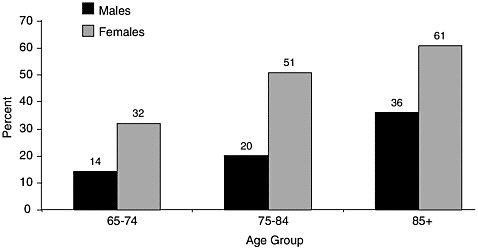
FIGURE 9-1 Percent of older adults living alone in the United States, by age group.
SOURCE: Kinsella and Velkoff (2001, p. 66).
majority of women live alone according to recent census data (Kinsella and Velkoff, 2001). Given the preference of older adults to “age in place,” private homes will remain an important housing option in the future, particularly for the young-old, and will be important targets for increased technology to help elders remain there.
The second type of living environment for older adults is assisted living housing (ALH). ALH is a relatively new type of residential option that was developed in the 1990s. It is characterized as a housing-and-services setting where older adults with disabilities can live in private, disability-adapted houses and apartments and receive services tailored to their needs (Kane, Ouslander, and Abrass, 1999). ALH is actually a broad term that encompasses a variety of licensed care facilities, such as residential care facilities, personal care homes, adult foster homes, or small group homes. For the purposes of this chapter, we use the general term “assisted living” to mean a group residence, not licensed as a nursing home, that provides or arranges for personal care and routine nursing care for people with disabilities (Kane and Wilson, 1993). These facilities take many forms but most commonly consist of self-contained, private-occupancy apartments in a range of sizes, styles, and amenities. ALH typically provides access to services such as medical and nursing care, monitoring of residents (including monitoring of medications, medical conditions, falls, and so forth), meal services, and housekeeping. ALH also provides residents with a range of structured activities (such as exercise or reading groups), transportation (to stores and healthcare providers), and social activities (e.g., holiday parties, informal contact with neighbors and friends).
ALH housing is premised on the widely held personal and societal preference of older adults with functional disabilities to live independently for as long as possible in communities designed to provide the security of having reliable services available for use as needed (Maddox, 2001). ALH has emerged as a very attractive housing option for many older adults. The consumer demand for housing that is private, provides needed services, is “noninstitutional,” and provides residents with choice and control has been very high. Private-sector developers have been responsive to consumer demand, and the number of assisted living facilities in the United States has grown dramatically. By 1998, there were at least 28,000 ALH facilities in the United States (Mollica, 1998). It has been estimated that as many as 1.5 million older adults currently reside in ALH (U.S. General Accounting Office, 1999), and this trend is expected to continue.
Prior to the development of ALH, nursing homes were the only option for older adults who needed healthcare services that could not be provided at home. In contrast to assisted living facilities, nursing homes are a more medical environment, characterized by minimal personal au-
tonomy and maximal dependence on formal caregivers. Uniformed nursing assistants provide 80-90 percent of all direct care in this setting. Nursing homes were considered to be a longterm care facility; that is, older adults who were too physically frail, too cognitively impaired, or too socially isolated to remain at home moved into a nursing home, and most lived there until death. Admission to a nursing home was often feared and avoided for many reasons, including the connotation of these facilities as “the last stop” before death, the poor quality of care provided in them (Institute of Medicine, 1986), and the lack of autonomy and privacy.
Currently, there are approximately 17,000 nursing homes in the United States providing care for over 1.6 million elders (U.S. General Accounting Office, 1999). As shown in Figure 9-2, whether one is a resident of in a nursing home is highly age related. According to the 1999 National Nursing Home Survey, approximately 12 percent of older nursing home residents in the United States are in the 65-74 age range, whereas 47 percent are in the 85 and older age group (U.S. General Accounting Office, 1999). These age differences are particularly pronounced for women.
Since the 1980s, there have been dramatic changes in nursing homes. The Institute of Medicine report in 1986 drew attention to poor quality and prompted nursing home reform. This resulted in a number of changes to improve the quality of care for residents, including mandatory assessment of residents′ status, care planning, and documentation, as well as mandatory training for nursing assistants. In addition, the regulatory and
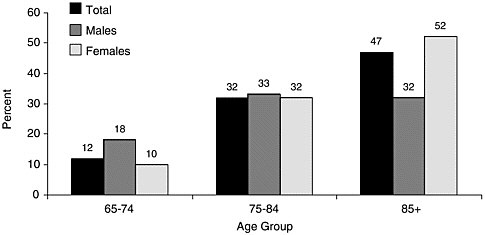
FIGURE 9-2 Age and sex distribution of nursing home residents in the United States.
SOURCE: U.S. General Accounting Office (1999, Table 13).
reimbursement climate has changed and, for the first time in decades, the rates of nursing home occupancy have begun to decrease slightly (Kane et al., 1999). This trend probably reflects an increased availability of alternative care settings, including home-based care and ALH. The nature of nursing home care has changed dramatically over the past decade or so; nursing homes have shifted to providing subacute care (e.g., care after discharge from hospital stay and care for more medically complex patients) and/or care for the most frail, most cognitively impaired elders who can no longer be cared for at home or in less-restrictive environments.
Independent living, ALH, and nursing homes are often viewed on a continuum. The most healthy, most independent elders live at home; the most frail, most dependent elders live in nursing homes. Indeed, over the past decade or so, continuing care retirement communities have been developed to capitalize on this continuum of care model. These retirement communities typically have independent living apartments or houses, assisted living facilities, and a nursing home on the same grounds. Residents can move between levels of care as their health and functioning demand. For example, they can move into a nursing home room while recovering from a fracture or acute medical event and then move back into their own home when ready; they may be guaranteed care from the time they enter the community until death. Typically, residents of continuing care retirement communities are financially advantaged (a large financial buy-in is often required) and healthy at the time of entry (medical screening prior to admission is required, and persons with some medical conditions such as stroke or cancer are often ineligible). These retirement communities are often located near, and in some cases affiliated with, major universities, thus attracting well-educated alumni as residents. Thus, they represent a highly selected living environment. Still, the continuum of care model is one that is attractive to many older adults, their families, and service providers. Recently, there has been a dramatic upswing in the development of communities that cater to elders and that provide access to a variety of services and levels of care. Many of these are rental communities that are more accessible to people of diverse financial means. These retirement communities recognize the fact that the housing demands of older adults vary over time and that aging individuals require options that enable them to move between living environments as needed.
What determines where older adults live? Most people prefer to “age in place.” That is, they prefer to continue living in their private home, with their personal possessions, and their familiar community and surroundings. For many people, this is not only a preference, but also a reality. Others choose to relocate as they age. They may do this
proactively, either to minimize the work and responsibility of home ownership, to pursue retirement leisure activities, or to be closer to relatives and friends. Some elders may “downsize” or move into a retirement community in anticipation of age-related declines. For the vast majority, however, the move from a private dwelling into an alternative living environment is the consequence of some event, such as a serious fall, illness, death of spouse, or gradually declining health or cognition that necessitates increased healthcare and services. Thus, they move to a living environment that provides them with services because they need to.
FUNCTIONAL STATUS AND INDEPENDENCE
Functional status is one very important determinant of a living environment. Functional status is an index of individuals′ ability to perform self-care tasks in two general domains: activities of daily living (ADLs) and instrumental activities of daily living (IADLs). ADLs are basic self-care tasks such as bathing, dressing, toileting, transferring, continence, and feeding (Katz, Ford, Moskowitz, Jackson, and Jaffe, 1963). IADLs are tasks that require higher levels of functioning, such as food preparation, shopping, doing laundry, light housekeeping, using the telephone, managing medications, managing money, and using transportation (Lawton and Brody, 1969). In general, performance of IADLs is necessary for maintenance of one′s household, and thus necessary for independent living in the community. Disability in IADL tasks (higher-level tasks) often precedes disability in basic tasks (ADLs). Recently, two additional types of activities of ADLs have been added to the literature. Advanced ADLs (Wolinsky and Johnson, 1991) refer to activities that require higher levels of cognitive capacity, such as telephone use, managing finances, and managing medications. Another term, enhanced activities of daily living (EADLs), denotes the behaviors of active elders who are able to adapt to new environments and exhibit the willingness to accept new challenges (Rogers, Meyer, Walker, and Fisk, 1998). EADLs include social communication, continuing education, community volunteering, and part-time work.
There are multiple assessment tools that are used to measure these important concepts of functional status and independence. Regardless of the measure used, there is a steep increase with age in the proportion of persons who report ADLs, IADLs, and EADLs limitations. In the United States as of 1996, 44 percent of community-dwelling women and 42 percent of men age 75 years and older reported difficulty or inability to perform at least one daily activity (Kramarow, Lentzner, Rooks, Weeks, and Saydah, 1999). Among community-dwelling elders age 85 and older, approximately 55 percent of women and 42 percent of men report ADLs
disability. Functional disability results from both physical and cognitive conditions. Osteoarthritis, fractures, stroke, and osteoporosis are some of the specific medical conditions that limit physical functioning. Cognitive losses associated with dementia (e.g., Alzheimer′s disease, multi-infarct dementia, and others) also limit functional ability. Cognitive and physical limitations often occur together in advanced age; thus elders are at increased risk for functional impairments as they age.
Functional disability is a key determinant of moving into an assisted living facility or nursing home. It has been reported that the average older adult living in an assisted living facility requires assistance in three IADLs and that about 50 percent of these residents have some level of cognitive impairment (Mollica, 1998). In contrast, nursing home residents have an average of 4.7 ADL limitations, and between 75 and 86 percent have cognitive impairment (Cohen and Miller, 2000). Thus, ALH residents have functional disabilities, largely in the IADL domain, that require supportive services whereas nursing home residents are substantially more impaired and more dependent in both IADL and basic ADL functioning.
In addition to functional status, there are other factors that influence transitions from independent living to assisted living to nursing home. These include acute illness (such as stroke), progression of chronic diseases (both cognitive and physical), and lack of social support. Indeed, it has been stated that the difference between needing and not needing nursing home care depends on the availability of social support (Kane et al., 1999). It is has been estimated that for every person over age 65 in a nursing home, there are approximately 1-3 people equally disabled living in the community (Kane et al., 1999). The people in the community, however, typically have more resources, support services, and family caregivers available to assist them. In addition, these elders may have more access to, and ability to use, the various technological means that are available to help them maintain their functioning.
Other factors that often determine placement in ALH or nursing homes are conditions that are particularly difficult to manage at home, like incontinence and behavior problems associated with cognitive and mental disorders (e.g., wandering, disruptive, or aggressive behaviors). Thus, there are a number of factors that determine the living environments of older adults. Functional status, however, plays a key role in triggering a transition from more independent housing to that offering supportive services or total care. When independently living elders can no longer manage ADLs, and lack family or resources to assist them, they require an alternative home environment that will enable them to maintain the highest level of functioning possible. Increasingly, this alternative living environment is an assisted living facility. Technology may play an
important role in enabling older adults to live in a less-restrictive environment for as long as possible and may delay transitions into assisted living or nursing home facilities.
The topic of housing and living environments for older adults has been of some interest to gerontologists over the past several decades. In 1973, Lawton and Nahemow introduced the term “person-environment fit” as an important factor in determining the well-being and functioning of older adults. Person-environment fit refers to the match between individuals′ personal needs and capabilities and the available resources and demands of the living environment. Later, Parmelee and Lawton (1990) emphasized the importance of balancing individuals′ needs for autonomy and security in housing options for elders. Kane and Kane (2001) stressed the need for an integrated approach to meeting the needs of older adults; that is, a merging of the therapeutic (e.g., medical) and social service (e.g., rehabilitative and compensatory) models of care. Thus, technology is likely to play different roles in different living environments.
TECHNOLOGICAL DEVELOPMENTS RELATED TO LIVING ENVIRONMENTS
In this section we review a variety of technologies that have been developed to support the independence and security of an aging population in a variety of living environments. We first provide a categorization of the technologies based on the needs served. The categories of technology we consider are
-
assistive devices that compensate for motor, sensory, or cognitive difficulties;
-
monitor and response systems, both for emergency response to crisis situations and for early warning for less critical and emerging problems; and
-
social communication aids.
Assistive Devices
As is well known, aging results in changes to many human capabilities (Mynatt and Rogers, 2002). Age-related changes in motor movement include slowing, inability to make continuous motions, and lack of or variable coordination (Vercruyssen, 1997; Ketcham and Stelmach, this volume). Sensory difficulties are also common, and much is known about changes in vision and audition (Schneider and Pichora-Fuller, 2000; Schaie, this volume). For many years, devices that replace or compensate for deficiencies in motor and sensory capabilities have been readily available, and many of these are suitable for both the young and the old.
Difficulties in gross motor movement are mitigated by devices that either perform the motor function, such as powered wheelchairs and stair climbers, or provide assistance, such as well-placed grab bars in bathrooms or power-assisted chairs that facilitate sitting and rising. Hearing aids and low-light visual cues (e.g., magnifiers, large-print materials) are available to assist those declining senses. These physical deficiencies make it hard to operate many of the small appliances and controls that are commonplace in homes today. Consider, for example, setting a digital clock for daylight saving time or programming speed dial buttons on the phone. Researchers at places like the University of Florida′s Rehabilitation Engineering Research Center on Technology for Successful Aging (http://www.rerc.ufl.edu/) evaluate the effectiveness of a variety of designs for adaptive household appliances and controls. At the Georgia Institute of Technology, computer vision researchers have prototyped the Gesture Pendant as a wearable device to control a variety of home appliances through simple hand gestures (Starner, Auxier, Ashbrook, and Gandy, 2000).
Perhaps more interestingly from the perspective of this chapter, the field of cognitive aging has matured and we better understand how changes in cognitive function occur as part of the natural process of aging (Craik and Salthouse, 2000; Schaie, this volume). Declines are apparent in attributes such as the capacity of working memory, on-line reasoning, and the ability to attend to more than one source of information. Other abilities remain largely intact, such as recall of rehearsed material, vocabulary and reading, and ability to focus on a single source of information.
Technological support for cognitive aging, often referred to as cognitive orthotics, is a very promising direction for research, evidenced by a recent survey on assistive technology for cognition by LoPresti, Mihailidis, and Kirsch (in press). The applications of cognitive orthotics range from simple reminder systems to more-elaborate interactive robotic assistants.
LoPresti et al. provide a useful categorization of cognitive orthotics along two separate dimensions. The technological interventions are first distinguished by whether they support executive function or information processing. Executive functions include planning, task sequencing and prioritization, self-monitoring, problem solving and self-initiation, and adaptability. These executive skills are related to memory, attention, and orientation. Information processing concerns the ability of the brain to properly process and integrate sensory information, with deficiencies leading to problems in the processing of visual-spatial, auditory, sensory-motor, and language information, as well as difficulties in understanding social cues. For the purposes of this chapter, technological support for executive functions is emphasized. The second dimension for technologi-
cal aids concerns whether they attempt to strengthen a person′s intrinsic abilities or seek to provide extrinsic support. Intrinsic aids are often classified as rehabilitation technologies, whereas extrinsic aids are considered as compensation technologies. Our bias here is on the extrinsic, or compensation technologies, because we are trying to address issues of support for aging of otherwise healthy individuals.
This whole area of cognitive orthotics is of growing interest. For example, the reader is referred to the results of a 2002 workshop on cognitive aids from within the computer science community (see http://www.cs.washington.edu/homes/kautz/ubicog/). Also, Jorge, Heller, and Guedj (2001) report on a recent workshop relating ubiquitous computing and universal access in providing for older adults. An appendix to this chapter lists the URLs for Web sites of a number of research centers that are active in technology for application to living environments. Table 9-1 provides an overview of cognitive orthotics research, some of which we further highlight in this section. The table briefly characterizes the purpose for each technology and distinguishes between mature commercial products, emerging technologies that could soon be available commercially, and more far-reaching research visions.
Some cognitive orthotics research focuses on support for extreme cognitive dysfunction, such as Alzheimer′s disease or severe dementia. For example, within the Gloucester Smart House consortium (http://www.bath.ac.uk/bime/projects/smart/), devices such as a locator for lost possessions are designed to be usable by people with dementia and their caretakers in order to prolong independent living. Mihailidis, Fernie, and Cleghorn (2000) conducted a pilot study and observed that a person with severe dementia would complete an ADL in response to a computerized device that used a recorded voice for cueing. The computerized device monitored and prompted a subject through hand washing. In response to problems discovered with their first prototype, Mihailidis, Fernie, and Barbenel (2001) used artificial intelligence to develop a new cognitive orthotic for people with moderate to severe dementia. The COACH (cognitive orthosis for assisting activities in the home) was a prototype of an adaptable device to help people with dementia complete hand washing with less dependence on a caregiver.
There is also research that aims to design systems for people in the less-severe stages of memory impairment. Many people have difficulty locating important objects around the home, so commercial versions of the Gloucester Smart House object location system are available at high-end consumer outlets like the Sharper Image. These solutions work for a small number of specialized objects, like keys. One of the research efforts at the University of Rochester′s Center for Future Health (http://www.futurehealth.rochester.edu) involves computer vision researchers trying
TABLE 9-1 Categorization of Cognitive Orthotics
|
Technology |
Impairment Addressed |
Maturity |
|
IQ Voice Organizer, from Voice Powered Technology, Inc., Burlington, N.J. |
Prospective memory aid that plays back recorded messages at specified times |
Commercial product |
|
NeverMiss DigiPad, from ICP Inc., Montreal, Quebec, Canada |
Prospective memory to record and play back messages without time trigger |
Commercial product |
|
CellMinder, from Institute for Cognitive Prosthetics, Bala Cynwyd, Pa. |
Prospective memory aid that links personal computer calendar tasks with cell phone to send reminders |
Commercial product |
|
ISAAC, from Cogent Systems, Inc., Orlando, FLa. |
Prospective memory aid consisting of a handheld unit customized with services to assist the cognitively disabled with routine tasks |
Commercial product |
|
Planning and Executive Assistant and Trainer (PEAT), from Attention Control Systems, Mountain View, Calif. |
Prospective memory aid consisting of handheld reminding device with intelligent support for revising schedules |
Comnmercial product |
|
Easy Alarms, from Nisus Software, Inc., Solana Beach, Calif. |
Prospective memory aid that provides calendar assistance with daily prompts |
Commercial product |
|
Essential Steps, from MASTERY Rehabilitation Systems, Inc. Bala Cynwyd, Pa. |
Prospective memory aid with software to provide graphical and audio cues to support task completion |
Commercial product |
|
COGORTH (Levine and Kirsch, 1985) |
Prospective memory aid with specialized programming language to specify multistep tasks with prompting |
Emerging |
|
ProsthesisWare (Chute and Bliss, 1994) |
Prospective memory aid with object-oriented programming support for customized ADL definition to monitor and cue individual |
Emerging |
|
VIC 2.0 Recipe assistant (Steele et al., 1989) |
Prospective memory to assist subject with severe aphasia to follow a simple recipe |
Research |
|
Friedman (1993) |
Prospective memory aid using location-aware wearable computer to provide faded prompting for scheduled tasks. |
Research |
|
COACH (Mihailidis et al., 2000) |
ADLs support for detecting hand washing, also providing prospective task support |
Research |
|
Cook′s Collage (Mynatt and Rogers, 2002) |
Retrospective memory aid using visual cues to provide support for resumption from interruption in cooking tasks |
Research |
|
MemoClip (Beigl, 2000) |
Prospective memory aid as a wearable appliance that provides location-based reminders |
Research |
|
Memory Glasses (DeVaul et al., 2000) |
Short-term retrospective memory and navigation aid based on wearable sensors |
Research |
|
Three-tiered Control Architecture (Bonasso, 1996) |
Prospective memory for general ADLs using environmental and biosensors |
Research |
|
AutoMinder (Pollack et al., 2003) |
General ADLs support consisting of intelligent reasoning system underlying robotic assistant |
Research |
to develop more flexible object tracking systems to assist with the location of a wider variety of lost objects within the home. The Nursebot Project at Carnegie Mellon University, University of Pittsburgh, and University of Michigan (http://www-2.cs.cmu.edu/~nursebot/) has been investigating ways that a robotic assistant, Pearl, can assist in eldercare (Montemerlo, Pineau, Roy, Thrun, and Verma, 2002). One of the cognitive aids being developed uses a system called Autominder, developed by Pollack and colleagues at Michigan, to remind an older person about his or her ADLs (Pollack, Brown, Colbry, McCarthy, Orosz, Peintner, Ramakrishnan, and Tsamardinos, 2003). Several commercial products provide support for prospective memory aids (see Table 9-1). Within the Aware Home Research Initiative at the Georgia Institute of Technology (http://www.awarehome.gatech.edu), researchers are focusing on short-term retrospective memory. Mynatt and Rogers (2002) proposed initial designs for a visual collage to assist one to resume routine cooking tasks after an interruption. This simulated memory aid records and displays salient near-term actions from a recipe so that, upon resumption from an interruption, the cook can determine things such as how many cups of flour have already been added to the mixing bowl.
As Table 9-1 shows, many cognitive orthotics are designed to support prospective memory, that is, remembering tasks that need to be performed and carrying out these tasks at the appropriate time (Ellis, 1996). This research has progressed from using very basic and inexpensive timing technologies (e.g., calendars, timers, and watches) to much more sophisticated and forward-thinking applications of artificial intelligence. One of the most important examples of prospective memory tasks is medication compliance. Medication compliance devices range from plastic boxes divided into sections labeled by time and day to electronic systems that provide auditory cues (Fernie and Fernie, 1996). For an individual living alone, remembering to take medication at the right time and in the right order can make the difference between remaining independent or not.
Monitor and Response Systems
We have all seen the classic “I′ve fallen and I can′t get up!” commercials. This caricature is sometimes humorous, but it is representative of an important class of technology that provides monitoring of health and well-being status, communication to interested parties, and in some cases provides automated responses to perform some corrective action. These monitor and response systems can operate in the short term to sense a crisis situation, such as a fall, and provide a way to make a call for help. Medical alert systems like those from the American Senior Safety Agency
(http://seniorsafety.com/), American Medical Alarms, Inc. (http://www.americanmedicalalarms.com/), and LifeFone (http://www.lifefone.com/) all allow a greater degree of freedom for an older person, and peace of mind for adult children, by allowing independence while providing a safety net in case of medical crisis. Some devices might automatically detect a crisis (such as a fall). Others depend on activation by the individual (or someone nearby) to initiate a call for help.
Monitoring systems can be classified along a number of dimensions:
-
What information is being recorded or transmitted? It could be medical information (e.g., heart rate, respiration, blood pressure, medication compliance, incontinence), movement data (e.g., restlessness in bed, gait patterns), or simply awareness information (e.g., a video transmission to a relative).
-
Over what period of time are data analyzed? The capture of information can be for instantaneous purposes only (e.g., a “GrannyCam” usually transmits images over the Internet to be viewed in real time only) or over a period of time for trend analysis, as you would expect for vital signs in a telemedicine application or in medication monitoring for compliance in a home or assisted living environment.
-
How is information reported to relevant individuals? Medical alert systems provide a phone call to a response agency. Telemedicine applications report over a secure channel to an electronic patient record that can be consulted by trusted medical professionals or even by the individual being monitored. Cameras are used to provide easy monitoring for family (usually over the Internet, serving an important social communication function discussed below) or remote caregivers (at a nursing station, for example).
-
What is the role of the older person in using the technology? Does the monitoring require any instrumentation or active cooperation on the part of the individual being monitored? For example, do they have to wear an infrared badge for a positioning system, or is it passive, with the environment instrumented to measure a naturally occurring phenomenon using devices such as a motion detector or face recognition system?
There are many examples of these monitoring systems for an aging population. Some address the safety and security of individuals who may wander. Devices can either prevent undesired wandering (e.g., automatically closing doors or gates to a house or community grounds to protect Alzheimer′s patients) or remind others to take corrective action (e.g., at nighttime when someone inappropriately leaves the bed). A system like the Vigil Integrated Care Management SystemTM (http://www.vigil-
inc.com/), which can detect cases of incontinence via special moisture sensors on bed sheets, allows staff to schedule preemptive nighttime wakings to prevent accidents in the future. Simple load sensors in the beds of residents at Elite Care′s Oatfield Estates Cluster in Milwaukie, Oregon (http://www.elite-care.com), feed a visualization to allow caretakers to detect periods of restlessness in the night. Some of the more advanced research in this area is trying to use passive means to perform early detection of chronic, but treatable, conditions. For example, researchers at the University of Rochester′s Center for Future Health (http://www.futurehealth.rochester.edu/) are using computer vision techniques to determine asymmetries in gait patterns during visits to the doctor. These data can provide early warnings of the possible onset of a wide range of common neurological and musculoskeletal disorders such as stroke, Parkinson′s disease, and arthritis. Similarly, the same vision technology that underlies the Gesture Pendant (Starner et al., 2000) can detect asymmetric tremors indicative of Parkinson′s disease and can be used to track the effectiveness of medication regimes to control the disease. Although monitoring technology is not used in these cases to treat the condition of an individual, early detection can increase the effectiveness of medical intervention and counseling for the afflicted.
Cognitive orthotics discussed above rely on context-sensitive reminders, and these often require a way to monitor a person′s environment and activities (LoPresti et al., in press). Some research is focused on monitoring ADL tasks in the home using a variety of sensing technologies. Sensors and switches attached to various objects, or optical and audio sensors embedded in the environment, are used to detect which task a person is performing. Trials with several subjects indicate that this method of tracking a person′s actions is a good way to monitor the state of a person′s health and independence (Bai, Zhang, Cui, and Zhang, 2000; Nambu, Nakajima, Kawarada, and Tamura, 2000; Ogawa, Ochiai, Shoji, Nishihara, and Togawa, 2000). Friedman (1993) developed a wearable microcomputer with a location-sensing system and additional sensors to determine task-related information. Using these inputs, together with the user′s schedule, the computer provided voice prompts as needed and only as needed to help the user maintain his or her schedule. Continued evidence of difficulty adhering to the schedule would cause the computer to automatically call for human assistance (Friedman, 1993). By providing prompts only as needed, the system could “fade” (gradually reduce) cues and therefore decrease the user′s dependence on them. Because the system does not rely solely on a timed schedule to determine the user′s possible activities, it could allow more user independence.
Social Communication Aids
Much of what has been presented so far is in the form of technological interventions to alleviate a physiological or cognitive problem that results from aging. The social aspects of aging, however, are also an important part of the equation in determining the health, safety, functioning, and autonomy of older adults. Peace of mind is an important element for the individual and a distributed family (Mynatt and Rogers, 2002). It has been stated that “geographic distance between extended family members exacerbates the problem by denying the casual daily contact that naturally occurs when families are co-located” (Mynatt, Rowan, Craighill, and Jacobs, 2001, p. 333).
Technology can connect individuals with information. Over the past decade, the burgeoning Internet has introduced a wealth of health information to many who would otherwise not have access to it. More relevant to this chapter, technology can connect individuals with other individuals or groups. Synchronous forms of communication, such as the popular instant messaging, or less popular videophones or even “smart intercoms,” whole-house communication systems that leverage knowledge of where individuals are located (Nagel, Kidd, O′Connell, Dey, and Abowd, 2001), present compelling visions of seamless communication aids. Asynchronous forms of communication, such as electronic mail, newsgroups, and on-line forums (e.g., see SeniorNet at http://www.seniornet.org/php/) are all examples of communication technologies that have hit the mainstream. When elders see clear benefits of communication technologies, acceptance is likely (Melenhorst, Rogers, and Caylor, 2001), and there is evidence that they are willing and capable of learning new skills, as reported in a National Science Foundation study of SeniorNet (see http://www.seniornet.org).
One particularly novel asynchronous communication aid has been suggested by Mynatt and colleagues (Mynatt et al., 2001). A digital family portrait is an electronic equivalent of the picture of a loved one that is often found in our homes. However, the digital family portrait is also used to portray a qualitative and dynamic account of the well-being of the subject by means of icons embedded in the frame of the picture. Monitoring systems in the home of the subject are used to provide summaries of daily life. The digital family portrait shows a history of one month′s activity, providing an aesthetically acceptable communication aid aimed directly at supporting awareness for a distant adult child. This use of technology will try to approximate the subtle peace of mind that comes from physical proximity.
Relating Technology Aids to Living Environments
We have presented several categories of technological aids to provide assistance to an aging population. These technologies take on different roles depending on the living environment (e.g., independent living, assisted living, or nursing home).
In the home, the goal is to maintain independent functioning, security, autonomy, and safety. Examples are safety and security devices that actively prevent day or nighttime wandering into dangerous places or outside the home for individuals who live alone or alerts of wandering for a partner or caregiver living with that individual. Communication technologies that promote social interaction are very important, providing both synchronous and asynchronous means of connecting with distant relatives and friends. Motor, sensory, and cognitive assistive devices will also be important to compensate for any age-related difficulties.
In assisted living facilities, monitoring for falls, wandering, and general safety and security continue to be important, despite the availability of nearby caregiving staff. In this context, monitoring devices can assist caregivers to provide prompt and effective care. Monitoring of medication management and medical conditions takes on greater emphasis in this setting because the older adults who live there are likely to have more health problems and to be more frail. In a nursing home setting, in which the supervision and assistance is more critical, medication and general medical monitoring are also important to help caregiving staff provide prompt and efficient care and to maximize frail elders′ remaining skills, functioning, and quality of life. The need for social communication is important across all living environments, although the type, availability, and ability to use various technologies may vary across settings.
TECHNOLOGY ASSISTANCE IN OTHER ENVIRONMENTS
In this chapter the focus has been almost exclusively on living environments. We recognize, however, that not all time is spent at home. Elders go out to eat, shop, be with friends, go to church, and visit medical facilities and doctors′ offices, and this desire does not suddenly disappear just because we get older. How can technology address the needs of an aging population when they are not in their own living environment? Chapter 10 in this volume addresses issues of transportation, both private and public. In public spaces, generic assistive devices, such as handicap-enabled bathroom stalls, work much like they do in a living environment and facilitate functioning in these alternative environments.
Monitoring applications and individually targeted services, however, are more difficult. In public spaces, such as hotels, shopping malls, and
parks, it is more difficult to build systems based on knowledge of the individual. Many of the sensing technologies used in living environments today, such as the Vigil Dementia System (see http://www.vigil-inc.com/pdf/Room%20Layout.pdf for a schematic), rely on knowledge of who the normal resident is. If a motion detector over the bathroom door is tripped in the middle of the night, it can be assumed that it is the lone occupant of the apartment who has entered the bathroom. This same technique will not work in a public restroom. Monitoring and perception of activity in public spaces present a greater challenge, particularly for passive forms of monitoring, in which the individual is wearing no special instrumentation (e.g., computer vision). Tagging techniques, such as radio-frequency identification used on freeways and in airports and hotels to identify frequent customers, are much more effective, although their acceptability for general-purpose tracking remains dubious.
SUMMARY AND CONCLUSIONS
Over the next few decades, the aging population will face numerous changes and challenges. Many of these will involve changes in health and functioning and will impact where older adults live. The vast majority of elderly Americans live at home, often with the assistance of family, friends, and professional home-care services to assist them as their functional abilities decline. Over the past decade, assisted living facilities have been developed and have proven to provide a desirable living environment for those who require some assistance in functional ADLs and more monitoring and security. Nursing homes remain an option for those individuals who require more-intensive assistance, especially with basic ADLs, due to cognitive or health declines. As elders age and face functional declines, they may choose, or be forced, to relocate. Thus, elders may select living environments that optimize their health, safety, and functioning.
Technology may serve as a compensatory mechanism to assist the aging population, especially in the cognitive and security domains, and also as a mechanism that optimizes their daily life (Baltes and Baltes, 1990). Technology assistance in this chapter has been categorized as (a) assistive devices that compensate for motor, sensory, or cognitive difficulties; (b) monitor and response systems, both for emergency response to crisis situations as well as for early warning of less-critical and emerging problems; and (c) social communication aids. There is substantial research being conducted in each of these domains, but we emphasize the particular importance of cognitive orthotics to support the specific needs of cognitive aging.
In addition, current evidence suggests that aging adults are receptive to technology and find it usable. In the coming decades, as the baby boomer generation ages, we can expect to see an even greater demand for technology. Cohort effects refer to differences between groups depending on when they were born. For example, the baby boomers represent a distinct cohort of individuals born between 1946 and 1964. Much has been written about this cohort, and it has been noted that compared with today′s seniors, the boomer vanguard is better educated and more technologically adept. Thus, this cohort of people, as they age, may increasingly look to technology to help them maintain their health and independence and to optimize their living environments.
Some question the openness of older individuals to technological interventions. As Mynatt and Rogers (2002, p. 27) indicate, older adults “are willing to use new technologies, contrary to some stereotyped views.” Older adults are more accepting if they are provided with adequate training (Rogers, Fisk, Mead, Walker, and Cabrera, 1996) and if the benefits of the technology are clear to them (Melenhorst et al., 2001). A recent study by Mann, Marchant, Tomita, Fraas, and Stanton (2002) suggests strong consumer acceptance for home health monitoring among frail elders.
A recent report from Forrester Research explains why healthcare can and should become more home centric (Barrett, 2002). The big technological enabler is residential broadband, which will reach 37 percent of U.S. households by 2004. The other technology of importance is wireless home networks. These will become increasingly important as computers become a fixture of more and more households. This trend may increase further as the baby boomer cohort ages and retires. Baby boomers are less trusting of medical authority and may look for alternatives to traditional long-term care solutions as they age. These reasons all point to a future in which the vast majority of assistance and healthcare for elders is provided in the home environment. Thus, technological improvements in the home will be increasingly important in the provision of home care. Questions remain as to the affordability of these technological advances, and thus the accessibility of these options for individuals of lower financial means.
Despite these issues, technology—both current and future—is a common feature of many living environments today and is likely to be increasingly important over the next few decades. Technology can facilitate the safety and security of older adults and can compensate for age and disease-related declines in health and functioning. Using technology, older adults may be able to delay or avoid moving from their home to alternative living environments and may maximize their ability to live independently. Specifically, technology applied across living environments can provide cognitive assistance, monitoring, and social communication, thus optimizing “home” for many older adults as they age.
REFERENCES
Bai, J., Zhang, Y., Cui, Z., and Zhang, J. (2000). Home telemonitoring framework based on integrated functional modules. Paper presented at the World Congress on Medical Physics and Biomedical Engineering. Chicago, IL.
Baltes, P., and Baltes, M. (1990). Psychological perspectives on successful aging: The model of selective optimization with compensation. In P. Baltes and M. Baltes (Eds.), Successful aging: Perspectives from the social sciences (pp. 1-34). Cambridge, England: Cambridge University Press.
Barrett, M.J. (2002). Healthcare unbound. A briefing from the Forrester Research, Inc. Cambridge, MA., March 7-8 in New Orleans.
Beigl, M. (2000). Memoclip: A location-based remembrance appliance. Personal Technologies, 4(4), 230-234.
Chute, D.L., and Bliss, M.E. (1994). ProthesisWare. Experimental Aging Research, 20, 229-238.
Cohen, M.A., and Miller, J. (2000). The use of nursing home and assisted living facilities among privately insured and non-privately insured disabled elders. Washington, DC: U. S. Government Printing Office.
Craik, F.I.M., and Salthouse, T.A. (2000). The handbook of cognitive aging (2nd ed.). Mahwah, NJ: Lawrence Erlbaum.
DeVaul, R., Schwartz, S., and Pentland, A. (2000). The memory glasses project. Available: http://www.media.mit.edu/wearables/mithril/memory-glasses.html [April 2003].
Ellis, J. (1996). Prospective memory or the realization of delayed intentions: A conceptual framework for research. In M. Brandimonte, G.O. Einstein, and M.A. McDaniel (Eds.), Prospective memory: Theory and applications (pp. 1-22). Mahwah, NJ: Lawrence Erlbaum.
Fernie, G., and Fernie, B. (1996). The potential role of technology to provide help at home for persons with Alzheimer′s disease. Paper presented at the 18th Annual Conference of the Alzheimer′s Society of Canada, Ottawa, ON.
Friedman, M. (1993). A wearable computer that gives context-sensitive verbal guidance to people with memory or attention impairments. In Proceedings of the Rehabilitation Society of North America (RESNA) (pp. 199-201). Arlington, VA: RESNA.
Institute of Medicine. (1986). Improving the quality of care in nursing homes. Washington, DC: National Academy Press.
Jorge, J., Heller, R., and Guedj, R. (2001). 2001 EC/NSF Workshop on Universal Accessibility of Ubiquitous Computing: Providing for the Elderly. Setubal, Portugal: ACM Press.
Kane, R.L., and Kane, R.A. (2001). Emerging issues in chronic care. In R.H. Binstock, and L.K. George (Eds), Handbook of aging and the social sciences (5th ed., pp. 406-425). New York: Academic Press.
Kane, R., and Wilson, K.B. (1993). Assisted living in the United States: A new paradigm for residential care for frail older persons. Washington, DC: American Association of Retired Persons.
Kane, R.L., Ouslander, J.G., and Abrass, I.B. (1999). Essentials of clinical geriatrics (4th ed.). New York: McGraw-Hill.
Katz, S., Ford, A., Moskowitz, R., Jackson, B.A., and Jaffe, M.W. (1963). The index of ADL: A standardized measure of biological and psychosocial function. Journal of the American Medical Association, 185, 914-919.
Ketcham, C.J., and Stelmach, G.E. (2004). Movement control in the older adult. In National Research Council , Technology for adaptive aging (pp. 64-92). Steering Committee for the Workshop on Technology for Adaptive Aging. R.W. Pew and S.B. Van Hemel (Eds.). Board on Behavioral, Cognitive, and Sensory Sciences. Division of Behavioral and Social Sciences and Education. Washington, DC: The National Academies Press
Kinsella, K., and Velkoff, V.A. (2001). U.S. Census Bureau, An aging world. (P95/01-1.) Washington, DC: U.S. Government Printing Office.
Kramarow, E., Lentzner, H., Rooks, R., Weeks, J., and Saydah, S. (1999). Health and aging chartbook: Health, United States, 1999. Hyattsville, MD: National Center for Health Statistics.
Lawton, M.P., and Brody, E.M. (1969). Assessment of older people: Self-monitoring and instrumental activities of daily living. Gerontologist, 9, 179-186.
Levine, S.P., and Kirsch, N.L. (1985). COGORTH: A programming language for customized cognitive orthoses. In Proceedings of the Rehabilitation Engineering Society of North America (RESNA) (pp. 359-360). Arlington, VA: RESNA.
LoPresti, E.F., Mihailidis, A., and Kirsch, N. (in press). Technology for cognitive rehabilitation and compensation: State of the art. Neuropsychological Rehabilitation.
Maddox, G.L. (2001). Housing and living environments: A transactional perspective. In R.H. Binstock and L.K. George (Eds.), Handbook of aging and the social sciences (5th ed., pp. 426-423). New York: Academic Press.
Mann, W.C., Marchant, T., Tomita, M., Fraas, L., and Stanton, K. (2002). Elder acceptance of home monitoring devices. Journal of Long Term Home Health Care, 3(2), 91-98.
Melenhorst, A.S., Rogers, W.A., and Caylor, E.C. (2001). The use of communication technologies by older adults: Exploring the benefits from the user′s perspective. In Proceedings of the Human Factors and Ergonomics Society 46th Annual Meeting. Santa Monica, CA: Human Factors and Ergonomics Society.
Mihailidis, A., Fernie, G., and Barbenel, J.C. (2001). The use of artificial intelligence in the design of an intelligent cognitive orthotic for people with dementia. Assistive Technology, 13, 23-39.
Mihailidis, A., Fernie, G.R., and Cleghorn, W.L. (2000). The development of a computerized cueing device to help people with dementia to be more independent. Technology and Disability, 13(1), 23-40.
Mollica, R. (1998). State assisted living policy, 1998. Portland, ME: National Academy for State Health Policy.
Montemerlo, M., Pineau, J., Roy, N., Thrun, S., and Verma, V. (2002). Experiences with a Mobile Robotic Guide for the Elderly. In Proceedings of the AAAI National Conference on Artificial Intelligence 2002. Menlo Park, CA: AAIA.
Mynatt, E.D., and Rogers, W.A. (2002). Developing technology to support functional independence of older adults. Ageing International, 27(1), 24-41.
Mynatt, E.D., Rowan, J., Craighill, S., and Jacobs, A. (2001). Digital family protraits: Providing peace of mind for extended family members. In Proceedings of the 2001 ACM Conference on Human Factors in Computing Systems (CHI 2001). Seattle, WA: ACM Press.
Nagel, K., Kidd, C., O′Connell, T., Dey, A., and Abowd, G.D. (2001). The family intercom: Developing a context-aware audio communication system. In Proceedings of Ubicomp 2001. Atlanta, GA: Ubicomp.
Nambu, M., Nakajima, K., Kawarada, A., and Tamura, T. (2000). A system to monitor elderly people remotely, using the power line network. Paper presented at the World Congress on Medical Physics and Biomedical Engineering, Chicago, IL.
Ogawa, M., Ochiai, S., Shoji, K., Nishihara, M., and Togawa, T. (2000). An attempt of monitoring daily activities at home. Paper presented at the World Congress on Medical Physics and Biomedical Engineering, Chicago, IL.
Parmelee, P.A., and Lawton, M.P. (1990). The design of special environments for the aged. In J.E. Birren and K.W. Schaie (Eds.), Handbook of the psychology of aging (3rd ed., pp. 464-488). San Diego, CA: Academic Press.
Pollack, M.E., Brown, L., Colbry, D., McCarthy, C., Orosz, C., Peintner, B., Ramakrishnan, S., and Tsamardinos, I. (2003). Autominder: An intelligent cognitive orthotic system for people with memory impairment. Robotics and Autonomous Systems, 44(3-4), 273-282.
Rogers, W.A., Meyer, B., Walker, N., and Fisk, A.D. (1998). Functional limitations to daily living tasks in the aged: A focus group analysis. Human Factors, 40(1), 111-125.
Rogers, W.A., Fisk, A.D., Mead, S.E., Walker, N., and Cabrera, E.F. (1996). Training older adults to use automatic teller machines. Human Factors, 38(3), 425-33.
Schaie, K.W. (2004). Cognitive aging. In National Research Council, Technology for adaptive aging (pp. 43-63). Steering Committee for the Workshop on Technology for Adaptive Aging. R.W. Pew and S.B. Van Hemel (Eds.). Board on Behavioral, Cognitive, and Sensory Sciences. Division of Behavioral and Social Sciences and Education. Washington, DC: The National Academies Press.
Schneider, B.A., and Pichora-Fuller, M.K. (2000). Implications of perceptual deterioration for cognitive aging research. In F.I.M. Craik and T.A. Salthouse (Eds.), The handbook of aging and cognition (2nd ed., pp. 155-219). Mahwah, NJ: Lawrence Erlbaum.
Starner, T., Auxier, J., Ashbrook, D., and Gandy, M. (2000). The gesture pendant: A self-illuminating, wearable, infrared computer vision system for home automation control and medical monitoring. Proceedings of IEEE International Symposium on Wearable Computing (ISWC 2000) (pp. 87-94). Atlanta, GA: IEEE.
Steele, R.D., Weinrich, M., and Carlson, G.S. (1989). Recipe preparation by a severely impaired aphasic using the VIC 2.0 interface. In Proceedings of the Rehabilitation Engineering Society of North America (RESNA) (pp. 218-219). Arlington, VA: RESNA.
U.S. General Accounting Office. (1999). Assisted living: Quality of care and consumer protection issues. Washington, DC: U.S. General Accounting Office.
Vercruyssen, M. (1997). Movement control and speed of behavior. In A.D. Fisk and W.A. Rogers (Eds.), Handbook of human factors and the older adult (pp. 55-86). San Diego, CA: Academic Press.
Wolinsky, F., and Johnson, R. (1991). The use of health services by older adults. Journal of Gerontology: Social Sciences, 46, S345-357.
APPENDIX: Research Centers Active in Technology for Living Environments
Nursebot: Robotic assistants for the elderly from Carnegie Mellon University, University of Michigan. Pittsburgh, and University of Michigan (http://www-2.cs.cmu.edu/~nursebot/).
Aware Home Research Initiative at Georgia Institute of Technology (http://www.awarehome.gatech.edu).
Center for Future Health at the University of Rochester (http://www.futurehealth.rochester.edu).
Changing Places/House_n: The MIT Home of the Future Consortium (http://architecture.mit.edu/house_n/web/).
Rehabilitation Engineering Research Center on Technology for Successful Aging at the University of Florida (http://www.rerc.ufl.edu/).
Assisted Interactive Dwelling (AID) House in Edinburgh, Scotland (http://www.dinf.ne.jp/doc/english/Us_Eu/conf/tide98/77/bonner_steve.html).
Gloucester Smart Home for People with Dementia (http://www.bath.ac.uk/bime/projects/smart/).
Extending Quality of Life for Older People (EQUAL) initiative in the United Kingdom (http://www.equal.ac.uk).
Helen Hamlyn Research Centre, Royal College of Art in London, England (http://www.hhrc.rca.ac.uk/).
Research Group for Inclusive Environments, University of Reading, England (http://www.rdg.ac.uk/AcaDepts/kc/nhe/).
Institute of Human Ageing, Department of Primary Care, University of Liverpool (http://www.liv.ac.uk/HumanAgeing/).
Age Concern Institute of Gerontology, King′s College London, England (http://www.kcl.ac.uk/kis/schools/life_sciences/health/gerontology/top.html).
Honeywell Independent LifeStyle Assistant™ (http://www.htc.honeywell.com/projects/ilsa/). For a list of related projects and products, see http://www.htc.honeywell.com/projects/ilsa/content/weblinks_researcherTechnology.html.
Assisted Cognition project at the University of Washington (http://www.cs.washington.edu/assistcog/).


