
5
Addressing the Threats to Atlantic Salmon in Maine
A STRATEGY FOR CONSERVATION AND RESTORATION
The complex and dynamic nature of terrestrial, aquatic, and marine ecosystems makes conservation and restoration—especially of threatened and endangered species—a daunting task. Because water connects all three ecosystem types to each other and to Atlantic salmon, to other organisms, and to people, watersheds become the logical unit for an ecosystem approach to conservation and restoration.
The 1997 Conservation Plan (Maine Atlantic Salmon Task Force 1997) provides the foundation for wide range of current efforts in Maine. It describes threats and associated mitigation or management options. Like any plan, it can be improved with the benefit of 5 years of intensive research and operational experience in Maine as well as information from other parts of the world. Principally, it would be improved by more clearly prioritizing, sequencing, and coordinating plans and actions in an adaptive management framework. This means every activity is a field experiment that generates data, information, and experience while sustained progress is made toward conservation and restoration goals. A well-documented cycle of planning, implementation, performance monitoring, and subsequent adjustment or refinement is used to rapidly converge on optimal solutions and methods. Pairing an untreated area, stream reach, or watershed as a reference condition (to account for the complex influences of natural variation) with a similar site where a management action is applied, yields timely information about overall effectiveness (both eco-
logical and economic). Replicated across several sites, the scientific method supplants well-intentioned trial and error as an efficient and systematic way of improving conservation and restoration efforts.
The following sections deal in more detail with specific threats.
DAMS
As described in Chapter 3, dams block passage and later riverine environments both below and above them. Mitigating the threat they pose is usually most completely achieved by removing them, but enhancing passage alone can be at least somewhat effective if they affect only short stretches of river. Mitigating their effects has been discussed in more detail in NRC (1996a) and Heinz Center (2002). The decision analysis example on enhancing habitat in Chapter 4 and the discussion of the costs of dam removal at the end of this chapter provide additional information on addressing the threats to dams, as does the summary of the 1997 Conservation Plan (Maine Atlantic Salmon Task Force 1997) toward the end of this chapter.
HATCHERIES
Possible Goals for Hatcheries
At this stage in the decline of wild populations of Atlantic salmon in the state of Maine, the goals of hatcheries need to be explicit. The recent steep declines in salmon numbers, in spite of increases in hatchery production and the very recent change to river-specific stocking, mean that efforts need to be concentrated on rebuilding wild populations in Maine’s rivers. It is helpful to specify immediate goals aimed at dealing with the current extinction crisis as well as ongoing goals that would continue to apply even as signs of rebuilding are seen. It would also be helpful to adapt earlier assumptions and goals to current conditions and scientific knowledge.
Immediate Goals
The goal of hatcheries in response to the extinction crises in Maine should be to conserve genetic quality—a broad term that includes the concepts of genes adapted to local conditions, complementary and coadapted genes, and appropriate genetic diversity—in the remaining wild populations of Atlantic salmon, allowing these survivors to persist. In this respect, the hatcheries might serve as living gene banks. The operation of the Craig Brook National Fish Hatchery is compatible in part with this
goal. The large Craig Brook National Fish Hatchery could be altered to fill this role, but it is currently a production hatchery for several stocks separated by natal river. Therefore, changes would be needed in its functioning. Less effort to produce large quantities of releasable fry should make at least some facilities available for careful management of limited brood stock. In addition, some effort could be redirected to working with scientists to address research questions that have already been raised as well as new ones that will emerge as the project proceeds. The most urgent goal is to preserve the genetic structure of the remaining populations, while the longer-term processes of habitat expansion and rehabilitation are pursued. An equally pressing goal should be the acquisition of basic information and research needed to ensure at least two return spawners for each spawning female in the wild.
Ongoing Goals
The ongoing goals of hatcheries should include the preservation of technical knowledge and public education about the biology and ecology of salmon in the wild. The successful production biologists at hatcheries acquire the skill of culturing Atlantic salmon. The skill cannot be fully communicated in technical reports, because it depends on experience and is best taught by practitioners. This skill must be maintained. Many people are fascinated by hatcheries. Hatcheries should be more integrated into public education and designed for site visits. Atlantic salmon have long been an icon for environmental awareness.
Resources should be directed toward adaptive management studies, allowing managers to put research findings into evolving practice in a timely fashion. In the short term, there is a need to better understand how genetic, ecological, and physiological processes affect the ability of hatchery-released fish to survive and successfully reproduce in rivers of Maine, compared with naturally reproduced fish.
Unclear Goals
The goal of providing enough fish to support the commercial or recreational fishery, if such a goal is still imagined, is not clearly articulated. Efforts to subsidize the fishery have been unsuccessful thus far, although fisheries for anadromous salmonids have been subsidized with varying degrees of success through hatchery production elsewhere in North America and other countries. Clearly, current hatchery operations in Maine cannot support recreational or commercial fisheries for anadromous Atlantic salmon. It is possible to establish a small recreational fishery for salmon by rearing fish to adulthood in a hatchery and then releas-
ing them into rivers, but that would not satisfy the Endangered Species Act (ESA) or the stated goals of Maine and federal officials to establish wild salmon populations. If salmon runs in Maine were restored to their pre-dam sizes (before about 1750), they would probably support both recreational and commercial fishing, especially if they were carefully regulated. It is outside the committee’s charge to consider other goals than salmon rehabilitation in Maine’s rivers, but we have heard comments suggesting that other fish species should be stocked in them if neither recreational nor commercial fishing for salmon can ever be expected.
Reducing Threats Posed by Hatchery Programs
In pursuing the immediate and ongoing goals listed above, it is critically important to consider the growing evidence of genetic and ecological threats posed by hatchery programs. Whenever managers decide to include hatcheries as part of a broader recovery strategy, they need to prevent or reduce those threats through application of practices designed to adhere to “best-practice” genetic, evolutionary, and ecological principles (Miller and Kapuscinski 2002). Although many of the protocols currently used reflect best practices, a more comprehensive vision of how to use hatcheries as part of a program of protection and rehabilitation is needed. That includes recognition of adverse effects that hatcheries can have on the genetic makeup of salmon population, both those than can be reduced by careful practice and those that cannot.
The genetic makeup and phenotypic traits of hatchery-propagated salmonids often differ from those of the wild populations that they are meant to rehabilitate and with which they will interact. Hatchery fish phenotypes commonly differ in ways that will influence ecological interactions between them and wild fish. A meta-analysis of hatchery effects on pre-spawning behavior shows strongly that hatchery rearing results in increased pre-adult aggression and decreased response to predators that may, in part, explain their decreased subsequent survival in the wild (in 15 of 16 case studies) (Einum and Fleming 2001). Somewhat less frequently, hatchery salmonids show changes in growth rates, migration and feeding behaviors, habitat use, and morphology, as reviewed below. Recent evidence of a genetic basis for resistance to pathogens, also as reviewed below, suggests that hatchery programs can inadvertently reduce the genetic quality needed for disease resistance.
Genetic Hazards
Hatcheries used to rehabilitate depressed populations can impose a variety of genetic hazards. Extinction is the extreme hazard from which
recovery is impossible. The other hazards are all a form of degradation of what is called genetic quality. Genetic quality refers to the overall quality of the genotypes in the population in terms of their effect on the ability of fish to survive, thrive, and respond to changes in their natural environments. (It assumes that the natural environment itself has not been so degraded that it cannot support the populations.) Genetic quality includes individually “good” genes, which confer fitness to individuals that possess them; compatible and co-adapted genes, which provide superior fitness through their complementation of genes at other loci (Andersson 1994, Carrington et al. 1999, Penn and Potts 1999); and appropriate genetic diversity, which confers evolutionary potential by allowing for a variety of genotypes to be produced from various matings but does not counteract other aspects of genetic quality. For example, domestication selection is a well-known hazard of supportive breeding programs (Fleming and Gross 1989; McGinnity et al. 2003; NRC 1996a; Reisenbichler 1997; Waples 1991a, 1999). Domestication selection is a form of degradation of genetic quality by reducing the fitness of hatchery fish in their natural environment.
Many aspects of hatchery programs (supportive breeding) can affect genetic quality. For example, in nature, breeding is not random with respect to genetics (Andersson 1994). By making pair matings or even using other protocols, hatcheries usually limit or work against sexual selection (mate choice) and life-history decisions that help to maintain genetic quality in natural populations (Fleming and Gross 1989, Grahn et al. 1998, Wedekind 2002). Sexual selection can increase fitness by increasing the viability of offspring (Møller and Alatalo 1999). Hatchery protocols typically select against precocious males (e.g., jacks in Pacific salmon and mature parr and grilse in Atlantic salmon), which contribute to genetic quality (Gross 1996; Gross and Repka 1998a,b). Thus, maximizing genetic diversity by preventing mate choice might not be an effective conservation strategy (Wedekind 2002).
Some of the components of genetic quality and the ways that they can be degraded in hatcheries are discussed below. There is increasing documentation of the empirical reality of these genetic hazards (Kapuscinski and Brister 2001, McGinnity et al. 2003, Miller and Kapuscinski 2002, Shaklee and Currens 2002). Hatchery managers can somewhat reduce these risks and can totally avoid certain others by applying appropriate genetic guidelines (Miller and Kapuscinski 2002). Current protocols in place at the Craig Brook hatchery for river-specific supportive breeding of distinct population segment (DPS) brood stocks generally adhere to current guidelines for reducing or avoiding some genetic hazards. Current practices that raise residual concerns are discussed in some detail below. Further information is available elsewhere (Miller and Kapuscinski 2002
and references therein). It is impossible to avoid degrading all aspects of genetic quality at the same time in a hatchery. The committee reiterates that avoiding extinction probably should take priority over all of the other genetic considerations.
Extinction
Demographic processes in the hatchery program can cause extinction under certain conditions. An extreme example would be a hatchery catastrophe in which an entire population of fish brought into captivity is killed. In addition, genetic processes in the hatchery can contribute to extinction risk in subtler ways, as suggested by recent studies attributing increased rates of extinction to reduced levels of genetic variability (Newman and Pilson 1997, Saccheri et al. 1998). The current DPS-river supportive breeding and propagation program at the Craig Brook hatchery reduces the risk of purely demographic extinction by bringing only a portion of a river’s parr or returning adults into captivity (Buckley 2002a,b). Additional analyses of extinction risk are being developed with the aim of including them in the Recovery Plan (USASAC 2003).
There is a trade-off between leaving the whole population together and splitting it, however. Splitting an already small population into wild-and captive-reproductive subunits simultaneously increases the risk of losing genetic variability within one or both subpopulations, as discussed in the next section. For example, as run sizes in the Penobscot have declined over the last decade, collections of adults for hatchery breeding have progressively become a greater fraction of the adult returns. Specifically, females spawned in the hatchery rose from 17% of all returning MSW adults in 1986 to 86% in 1998 (K.F. Beland, Maine Atlantic Salmon Commission, unpublished data, 2003), and adults of both sexes collected for hatchery spawning made up over 60% of all returning adults in 2000 and 2001 (Buckley 2002a), up from 17% in 1986. This trend increases the overall exposure of the Penobscot population to loss of genetic quality.
The current supportive breeding program for the six DPS rivers (all except the Ducktrap River and Cove Brook) and the hatchery propagation of Penobscot fish minimizes the extinction risk due to loss of genetic variability by including one-on-one matings and tracking contributions of each family to fry releases and adult returns via genetic markers (Buckley 2002a). However, it does not eliminate loss of genetic quality. By overriding mate selection and perhaps by sampling error, it reduces the likelihood of genetic complementation. For example, the major histocompatibility complex (MHC) is involved in disease resistance (see e.g., Arkush et al. 2002), and one-on-one matings probably reduce genetic complemen-
tation at that complex of genes and thus reduce genetic resistance to disease.
Loss of Within-Population Genetic Variability
Loss of within-population genetic variation has several causes, the most important of which is genetic drift due to sampling gametes in finite populations. Loss of genetic variation due to drift occurs at a rate inversely proportional to the genetically effective population size (Ne). The Ne refers to the size of an “ideal” population that has the same rate of loss of heterozygosity (a common measure of genetic variation) as the actual population has, the “ideal” population being defined on the basis of demographic characteristics such as an even sex ratio, stable population size, no immigration, and a Poisson distribution of progeny number. Estimates of Ne for populations of salmonids have typically been smaller than the actual number of reproducing adults, ranging between 4% and 73% of the number of reproductive adults (Ardren and Kapuscinski 2003, Bartley et al. 1992, Heath et al. 2002).
In a process known as the extinction vortex (Gilpin and Soulé 1986), inbreeding and loss of genetic variability due to genetic drift can result in reduced fitness. This loss of fitness may reduce Ne, resulting in greater inbreeding and further loss of variability, which reduces fitness further. The continuing reduction in population size exposes the population to ever-increasing demographic risk of extinction. Considerable interest has been devoted to the threats to wild and captive populations associated with inbreeding and loss of genetic variability, and much of this work refers directly to fishes in general, and salmonids in particular (Allendorf and Phelps 1980; Allendorf and Ryman 1987; Cross and King 1983; Ryman and Ståhl 1980; Ståhl 1983, 1987; Waples 1991a).
Loss of within-population genetic variability is the most common hazard associated with decisions regarding numbers of adults in the hatchery to be mated and how they are to be mated. For instance, the high fecundity of salmon fosters a temptation to produce large numbers of progeny from a few parental fish in each breeding season, artificially creating a “genetic bottleneck” that significantly reduces genetic variability among the progeny. Current protocols at the Craig Brook hatchery for DPS river brood stocks appropriately avoid this obvious pitfall (Buckley 2002a,b). Those protocols include collecting enough parr or adults to ensure reasonable numbers of reproducing adults, one-on-one matings to ensure that each adult contributes, application of genetic profiles to avoid mating close relatives, and use of genetic markers to track families of DPS fish through the hatchery and beyond. Appropriate features of hatchery mating of Penobscot adults include the one-on-one mating design and the
collection of genetic data that can be analyzed to avoid matings of close relatives, although the latter is less crucial for this larger population (compared to DPS captive brood stock) and does not appear to have been carried out as of 2002 (Buckley 2002a).
Loss of Genetic Variability from Supportive Breeding
Supportive breeding, as defined above, augments Ne for the hatchery component of the population, but it also entails a potential risk of increasing the loss of within-population genetic variability in the wild. When supportive breeding meets its intended rebuilding goal, it increases the total population size through a higher reproductive output from the captive breeders than from those reproducing in the wild. That increases the reproductive success of the captive (hatchery) segment of the population relative to that of the wild segment of the population. The resulting large increase in the variance of family size within the total population (wild plus captive) is sufficient to reduce the effective population size as a whole (Ryman and Laikre 1991, Ryman 1994, Ryman et al. 1995b, Wang and Ryman 2001). See Appendix C for a detailed discussion of this problem. Often, an overall reduction of effective size cannot be avoided when applying supportive breeding that successfully increases the population census size. However, that problem may not be overly important in the case of declining populations, such as the severely depleted salmon populations in Maine, for which supportive breeding may yield a higher Ne value than would occur in its absence.
Most Atlantic salmon populations in Maine are severely depleted and continue to decline, and for such populations, the positive effects of increasing the actual population size outweighs the potential short-term genetic drawbacks caused by reductions of the Ne. Thus, the need for supportive breeding is urgent. However, no extensive analysis has been done on the genetic impact of supportive breeding on populations that would continue to decline if left on their own (but see Duchesne and Bernatchez [2002] for the special case of binomially distributed family sizes). Clearly, in the extreme situation of a population that would go extinct without supportive breeding, it would be better to maintain a genetically depauperate population than to let it die. It is at least possible that some current populations are small enough for the situation to be considered extreme. Using the general model and variable designation for supportive breeding that is outlined in Appendix C, an example is depicted in Figure 5-1. A declining initial population (N) of 50 is supported with progeny from five captive fish with a much higher average reproductive rate (adult to adult) than the wild fish. The support immediately results in a growing actual population. The Ne stops declining, in-
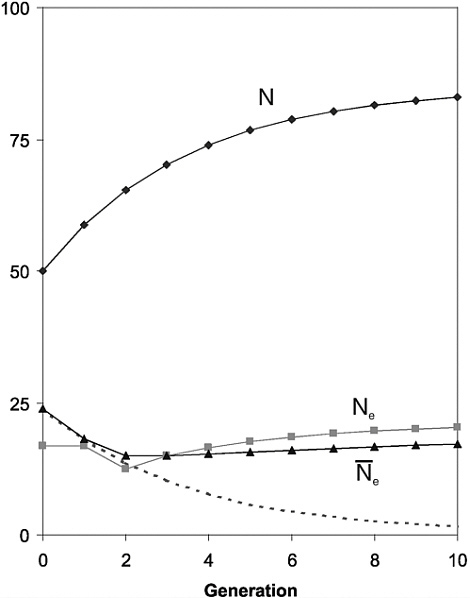
FIGURE 5-1 Census size (N), effective size (Ne), and cumulative harmonic mean of effective size ( ) during 10 generations of supportive breeding in a population of 50 individuals that would be declining if left on its own (initial N = 50). In each generation a fixed number of Nc = 5 individuals are caught at random and brought into captivity for reproduction. The mean number of progeny per individual is μc = 10 in captivity and μw = 1.5 in the wild, with variances σ2w = 7.5, and σ2c = 50 (five times the corresponding initial μ-value). The dashed line indicates the effective size in the absence of supportive breeding.
creases at a much slower rate than actual population size, and levels out at an Ne that is considerably smaller than N but still much larger than it would have been without support. This example only depicts a particular set of parameter values, and the expected effect of a support program must be evaluated with respect to specific conditions and options. It appears, for example, that the program in Figure 5-1 could be made more “genetically successful” by reducing the variance of family size in captivity or by increasing the number of captive fish in later generations, when the total population size has increased. However, those scenarios have not been evaluated numerically by the committee.
The above considerations lead to advice on how to reduce the adverse genetic effects of supportive breeding by holding the number of progeny to be stocked from each mating to a constant. If the mean and variance of reproductive rate are equal (the usual Poisson assumption), then (ignoring the overlapping generations),
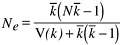
where  is the mean number of progeny per individual, and V(k) is the variance (Wright 1938). Under Poisson assumptions, V(k) = , reducing the equation to,
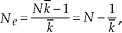
and in a growing ( >1) population, Ne is only slightly smaller than N. With much greater than Poisson variance in reproductive output (the usual case, V(k) >> ), the reduction of Ne is greater, that is, Ne << N. However, if V(k) is reduced to 0 by holding the number of progeny per mating to a constant size, , then Ne is increased to
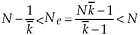
Thus, given that one-on-one matings are being used in the hatchery, maximum Ne is achieved by holding the number of progeny per mating to a constant.
Loss of Genetic Variability among Populations (Population Identity)
Crosses made among fish from multiple populations result in loss of genetic distinctness of each individual population (that is, population identity). One potentially adverse outcome of mixing distinct populations
is a reduction in fitness in the admixed population due to disruption of local adaptation or of co-adapted gene complexes (reviewed by Hallerman 2002, Kapuscinski and Brister 2001). Atlantic salmon in Maine, like many fish species, are part of a larger metapopulation, in which relatively isolated subpopulations are connected by low levels of gene flow via straying migrants (NRC 1996a, 2002a). Isolation allows subpopulations to adapt to local environmental conditions. There is almost no hard evidence on the degree to which remnant populations of Atlantic salmon in Maine rivers are locally adapted. The assumption, however, must be that those few fish that return to spawn are at least as well adapted to local conditions as those that fail to return. Sheehan (T. Sheehan, NMFS, personal communication, 2002) conducted a “common-garden” study of three river-specific populations, in which progeny of fish from different rivers are raised in similar environmental conditions. The progeny showed different growth trajectories, a result that is consistent with that expected from locally adapted populations. While Sheehan’s study is not definitive, because of design limitations, it is suggestive of the kind of local adaptation that is common in wild populations of salmonids and that forms the basis of the concern for maintaining the remnants of the natural metapopulation structure of wild salmon in Maine.
Low amounts of migration can counter the inevitable loss of genetic variability in isolated populations without overwhelming local forces of adaptation. Massive hatchery mixing of distinct gene pools, however, is likely to overwhelm the local forces of natural selection, because the proportion of breeders coming from another gene pool is typically much larger and the level of genetic differences between the imported and local populations can be much greater (due to ease of transporting salmon from far distant locations). The Craig Brook stocking program avoids this genetic hazard through separate rearing and crossing of river-specific groups for each of the DPS and Penobscot rivers.
Outbreeding between genetically distinct populations can sometimes improve fitness in the wild, but such outbreeding enhancement is most likely when hybridization alleviates pre-existing inbreeding depression within one or both pre-mixed populations (Waples 1995). Although Ferguson et al. (1988) found some evidence of superior fitness of first-generation hybrids between two non-inbred populations of cutthroat trout, superior fitness of hybrids often disappears in subsequent generations when the hybrids backcross to a parental population (Gharrett and Smoker 1991). To date, evidence of inbreeding depression is lacking in Atlantic salmon populations in Maine, despite their depressed status. Natural straying probably occurs often enough to provide gene flow without disrupting local adaptation (NRC 2002a).
Domestication Selection
Domestication selection refers to any change in the selection regime of an artificially propagated population relative to that experienced by the natural population (Waples 1999). Consequently, the genetic composition of a population within a hatchery program is likely to differ from what it would be in the absence of hatchery propagation. The hatchery fish can be expected to adapt genetically to the different selection regime in the hatchery environment, even when hatchery operators do not intentionally practice selective breeding. The basic idea is that significant alterations of the population’s genetic composition, due to different selection pressures under husbandry, will reduce a population’s subsequent fitness in the wild (e.g., Fleming and Gross 1989, Reisenbichler 1997, Waples 1991a).
Domestication selection can occur in multiple ways (Busack and Currens 1995; Campton 1995; Waples 1991a, 1999). Hatchery practices can involve intentional selection on traits such as size or age at spawning. A recent modification to the DPS brood-stock mating protocol at the Craig Brook hatchery (to mate only 4-year old adults) could increase the risk of this kind of domestication selection, because there probably is a partial genetic basis (heritability) for sexual maturation at a given age, and variability of that trait in Atlantic salmon may have adaptive value in the wild (Hutchings and Jones 1998).
Another potential source of domestication selection is nonrandom collection of hatchery brood stock from a spawning population. That does not appear to be a problem for DPS brood stock, because considerable effort goes into random collection of wild parr to bring into the captive breeding program. Hatchery propagation of Penobscot fish is more vulnerable to this hazard, depending on the extent to which annual collections of returning adults at the Veazie Dam represent all portions of the run. This concern is the basis for a proposal to collect brood stock both in early summer and in the fall (Beland et al. 1997), but no mention of this issue appears in subsequent reports on hatchery brood-stock management (Buckley 2002a,b).
A third form of domestication selection is the unintentional selection that occurs in the hatchery environment. For example, changes in agonistic behavior, probably due to crowding, rearing conditions, or feeding methods, between wild and hatchery fish is observed frequently (reviewed by Einum and Fleming 2001). It may be possible to reduce, though not completely avoid, that source of domestication selection by establishing more natural rearing conditions and applying more natural practices during rearing and at release from the hatchery (Miller and Kapuscinski
2002). Pacific salmon hatcheries are making some efforts in that direction, such as using the Natural Rearing Enhancement System (Maynard et al. 1995, 1996) and various conservation-hatchery strategies (Flagg and Nash 1999). Current protocols at the Craig Brook hatchery do not appear to pay much attention to this form of domestication selection, but the hatchery is still in the first generation of supportive breeding, and there is time to make mid-course corrections (as an adaptive-management adjustment).
A fourth, less-recognized form of domestication selection is the release of juvenile fish from patterns of natural selection that would have been imposed on them had they been in the natural environment (Fleming and Gross 1989, Waples 1991a). Perhaps the greatest concern here is the total removal of sexual selection, through mate choice, which occurs when salmon reproduce naturally in rivers (Fleming and Gross 1989). There is growing evidence of the genetic benefits, including better fitness in the wild, of natural mate choice (reviewed in Appendix D), although the underlying genetic mechanisms are poorly understood. There is also a probable trade-off between increasing the naturalness of sexual selection and decreasing the loss of genetic variability within populations. Reducing domestication selection that is due to loss of mate choice might be achieved by allowing adults to choose their own mates. Reducing loss of variability within populations is best achieved by maximizing Ne by appropriate artificial crosses made in the hatchery. Both genetic hazards cannot be reduced simultaneously. At present, practices at Craig Brook hatchery focus on reducing the loss of genetic variability within populations and ignore the risk of domestication selection that is due to loss of sexual selection.
Domestication and its consequent maladaptation to the wild can happen in a fairly small number of generations of hatchery breeding and has been shown to reduce predator avoidance (Berejikian 1995) and increase aggression or competitive ability of hatchery fish (Holtby and Swain 1992; Johnsson et al. 1996; McGinnity et al. 2003; Mesa 1991; Ruzzante 1991, 1992, 1994; Swain and Riddell 1990, 1991; see also review by Einum and Fleming 2001). The reason for genetically based differences in aggressiveness between hatchery and wild fish might be unintentional artificial selection (imposed when fish are chosen for brood stock) or selection for strong performance under animal husbandry conditions (reviewed by Jonsson 1997). For salmon, increased aggression in wild offspring of matings between hatchery and wild fish would make them more vulnerable to predators (Johnsson and Abrahams 1991). The current strategy at the Craig Brook hatchery of returning adults to the wild after they have been mated once helps to reduce the accumulation of domestication across brood years and generations.
Disease Hazards
One concern about stocking hatchery fish is that they may transmit disease or parasites to wild fish. Disease transmission between cultured salmon (hatchery stocked or commercially farmed) and wild salmon is very likely bidirectional. It has been extremely difficult to determine the incidence of disease transmission from hatchery to wild fish, as well as the impacts such transmission would have on wild stocks (Flagg et al. 2000, Håstein and Lindstad 1991).
Disease can be caused by parasites, bacteria, viruses, or fungi. Many disease-causing organisms tolerate only freshwater or seawater. Epizootics in hatcheries and sea cages are readily observable, whereas epizootics in wild salmon are not. Sick wild salmon quickly disappear. Disease outbreak is considered to occur at the intersection of three components: susceptible host, virulent pathogen, and adverse environment. The ideal method of control is prevention through a clean environment and a healthy, well-fed fish.
Vertebrate Parasites
The sea lamprey (Petromyzon marinus) is probably the only vertebrate parasite on Atlantic salmon, but incidence and impacts on Maine salmon are unknown.
Crustacean Parasites
In the marine environment, the most problematic parasites are copepod crustaceans known as sea lice (Caligus elongates) and salmon lice (Lepeophtherius salmonis). Lice loosen the skin and can expose the flesh. About 30 lice can be enough to kill a smolt (Grimnes and Jakobsen 1996). In British Columbia, salmon lice have been implicated in the decline of pink salmon runs (Oncorhynchus gorbuscha). In the Broughton Archipelago, which has many salmon farms, more than 3.6 million adults spawned in 2000, but only 147,000 returned in 2002. (Pink salmon have an obligate 2-year life cycle; thus, roughly the same number of fish that had spawned in 2000 were expected to return in 2002.) Although a cause-effect relationship between lice and salmon numbers was not established, lice were present on Broughton salmon in large numbers. In adjacent areas without farms or lice, the populations did not decline (PFRCC 2003). These crustacean parasites have caused disease outbreaks in Maine salmon net-pens. There is a major effort to control lice on Atlantic salmon in sea cages because, in addition to causing direct harm, they are vectors for the virus causing infectious salmon anemia (ISA) and the bacterium causing
furunculosis (Aeromonas salmonicida). Sea lice are more common in wild fish in areas with sea cages (PFRCC 2003).
Helminth Parasites
In freshwater, the ectoparasite Gyrodactylus salaries is a major disease problem in Norway. Gyrodactylus is a monogenean trematode, also known as a flatworm or fluke, that browses on skin mucus. It has almost totally killed off young salmon in some rivers in Norway (Håstein and Linstad 1991). Its distribution in wild salmon is thought to be caused by stocking infected fish (Johnsen and Jensen 1991).
Pathogenic Bacteria
The skin and digestive tract of fishes are colonized by many bacteria, most of which are not pathogenic. The most common bacterial disease affecting Atlantic salmon is furunculosis caused by Aeromonas salmonicida (Austin et al. 1989). Furunculosis appears as boils on the sides of salmon in both freshwater and seawater. Johnsen and Jensen (1994) associated the spread of this disease in wild Atlantic salmon in Norway with escapes from fish farms and natural migrations of wild salmon. Enteric redmouth (ERM) is caused by Yersinia ruckeri. Epizootics can occur following stress or poor water quality. Vaccines are available against ERM. Coldwater disease is caused by the bacterium Flavobacterium psychrophilum) and is a problem in Atlantic salmon in New England. Hitra disease caused by the bacterium Vibrio salmonicida became a serious problem in Maine beginning in 1993 (Griffiths 1994).
Pathogenic Viruses
The most alarming viral infection in Maine Atlantic salmon has been infectious salmon anemia (ISA, also known as hemorrhagic kidney syndrome). The ISA virus (ISAV) was first identified in Maine in 2001. The ISAV poses no threat to humans and other mammals. Information about ISA can be obtained from the U.S. Department of Agriculture (USDA 2002) and from Scotland where ISAV was first identified in 1998 (JGIWG 2000). The virus is an influenza-type virus (orthomyxovirus) that mutates rapidly, thus eluding attempts to make a vaccine. It is found in wild and farm Atlantic salmon. Symptoms appear after about 1 year in seawater. Basically, the whole organism is affected. Mortality is estimated by the USDA at 2–50%. Disease has cost Maine salmon growers about $24 million and unknown costs to public agencies for disease control and prevention, and Atlantic salmon are now under careful scrutiny for signs of ISA.
Another virus endemic to Maine is the virus causing infectious pancreatic necrosis (IPN). The IPN virus (IPNV) affects farm salmon but has not caused a serious mortality in salmon in Maine. The final known virus is a lethal retrovirus called salmon swimbladder sarcoma virus (SSSV). This was detected first in 1998 in a hatchery-reared parr captured in the Pleasant River. SSSV causes cancer in salmon.
Pathogenic Fungi
Most fungi encountered by salmon are not pathogenic. Saprolegniasis is a fungal disease caused by Saprolegnia diclina type 1. The fungus affects the skin. It is associated with high levels of androgens and therefore has a higher incidence in mature males (Olafsen and Roberts 1993; Gaston 1988).
Genetic Variation in Susceptibility to Disease
Genetic variability in the degree of resistance to disease occurs in salmon as in other vertebrates. Arkush et al. (2002) compared the pathogen resistance of chinook salmon with different genotypes of a gene in the major histocompatibility complex (MHC). In two of five comparisons, “significant genetic effects on disease resistance” were found. The authors concluded that small wild populations and hatchery populations with lowered genetic variability would have increased susceptibility to pathogens. With small wild populations, disease susceptibility is not directly controllable or even necessarily the most important concern, but the protocols described above (also Flagg and Nash [1999], among others) to increase Ne in hatchery populations and their progeny probably will help reduce disease susceptibility as well.
Prevention and Treatment of Disease
Management practices in both freshwater hatcheries and sea cages are designed for disease prevention. The most important elements of prevention are high quality water and a good diet. A major effort is under way in Maine to control sea lice, a known vector of ISA and furunculosis. Salmon are treated for sea lice with hydrogen peroxide, pyrethrin, ivermectin (a neurotoxin), and other pesticides. In British Columbia, the Pacific Fisheries Resources Conservation Council recommended strategic fallowing of net-pens, accelerated marketing of mature fish, and application of chemicals to kill lice as a measure to reduce the incidence of lice infections associated with salmon farms (PFRCC 2003). The Craig Brook facility has protocols in place to prevent disease transmission. The facility brings wild-caught brood stock to the facility and holds them in outdoor
tanks. Blood is sampled and tested for ISA virus. There is no on-site expert in fish health; assigning one should be considered.
Behavioral Hazards
Ecological interactions between hatchery and wild fish are problematic. Behaviors of hatchery-propagated fish differ from those of their wild conspecifics because of differences in the genetic or environmental control over expression of behavioral traits. Differences may also be due to different interactions between genetic and environmental controls. Genetically based alteration of behavior in hatchery fish can occur through loss of population identity or domestication selection, two of the genetic hazards discussed previously. Environmental control over behavioral traits occurs because fish phenotypes are strongly shaped by the rearing environment (see Pakkasmaa 2000, Wootton 1995). Hatchery rearing inevitably affects fish development by changing food and feeding regimes, density, substrate, exposure to predators, and interactions with conspecifics.
Numerous studies have found altered behaviors of hatchery fish, compared with their wild counterparts, that are probably both environmental and genetic in origin (reviewed in Einum and Fleming 2001). Hatchery rearing of salmonids frequently results in increased pre-adult aggression and decreased response to predators (reviewed in Einum and Fleming 2001). Differences in aggression have a substantial environmental component, although there are indications of genetic influences as well. The lack of exposure to predators in hatchery populations appears to result in a reduced response to predation risk, both as an environmental effect and as a response to relaxed selection in hatchery populations. Changes in growth rates are common but less consistent. Changes in other fitness-related behavioral traits, such as migration, feeding, habitat use, morphology, and breeding behavior, also occur. Those and other changes are probably responsible for decreased survival of released hatchery fish in the wild.
Altered behaviors of hatchery-reared fish may disrupt or harm the reproductive success or survival of wild fish. Although releases of hatchery fish are often implemented to compensate for reduced production caused by human-induced habitat degradation, a range of potential ecological problems may be associated with this practice. First, stocking of large numbers of fish into a limited habitat will, at least initially, inevitably affect population density. The effects of such stocking can include changes in the frequency of competitive interactions, the amount of available food, or the behavioral response of predators and hence influence growth and survival of the wild fish (Einum and Fleming 2001, reviewed in Flagg et al. 2000). Second, hatchery fish will almost certainly differ phenotypically and genetically from wild fish (see above). Such differ-
ences can affect how stocked and wild fish interact beyond those due to pure density dependence (see Nickelson et al. 1986). Third, there may be predatory effects, such as released hatchery fish preying on wild fish and influencing the behavior and dynamics of predator populations, an effect that can indirectly affect wild fish (reviewed in Flagg et al. 2000). Fourth, hatchery fish can transmit disease and parasites to wild fish.
Several other potential behavioral changes in hatchery-reared fish might have detrimental effects on wild fish. For example, released fish might influence the timing of migration of wild fish. Hansen and Jonsson (1985) suggested that wild smolts were attracted to shoals of released smolts and joined them when migrating downstream. Furthermore, releasing fish might increase interspecific (i.e., with brown trout) hybridization rates (Jansson and Öst 1997, Leary et al. 1995). Although little is known about the frequency of early parr maturation among hatcheryreared fish, the high growth rates experienced in the hatchery will probably increase the potential for early maturation following release.
Increasingly, evidence shows that the altered behaviors of hatchery fish are maladaptive, resulting in poor survival and reproductive success in the wild. Hatchery fish experience reduced survival, compared with wild fish (15 of 16 studies reviewed by Einum and Fleming 2001, metaanalysis p ≤ 0.001). The success of hatchery-produced fish after release is reduced by phenotypic divergence from their wild conspecifics. The reduction occurs because environmental and genetic risks to fish in hatcheries cannot be avoided entirely, and many of the genetically based risks are negatively correlated, so efforts to reduce one risk increase other risks.
Changes in behavioral, life-history, and morphological traits associated with reproduction also occur under hatchery conditions (reviewed in Fleming and Petersson 2001) and may have important implications for the ability of released fish to contribute to natural productivity. A review of 31 studies of introgression of hatchery genetic material into wild populations (Fleming and Petersson 2001) reported that 14 studies showed little or no evidence of incursion of hatchery genotypes into wild populations, despite prolonged hatchery releases. Natural selection may have purged hatchery-origin genotypes from the population due to the maladaptive traits of hatchery fish, although the studies reviewed were not designed to test that possibility in the wild. Many of the studies involved anadromous populations. In contrast, 16 of the 17 studies showing an incursion involved nonanadromous populations, suggesting that anadromous populations are more resistant to introgression (see also Hansen et al. 2000, Utter 2000). That resistance—whatever its underlying cause—will also undermine efforts to rebuild wild populations primarily through release of hatchery fish, although it should also protect them from genetic incursion.
Conclusions—Hatcheries
Hatcheries sometimes give a false sense of comfort about abundance and persistence of natural populations and of positive action toward rebuilding depleted populations. Commitment and allocation of limited resources to other rehabilitation efforts can be sidetracked by this misconception.
-
The evidence from over 130 years of stocking is indisputable. Hatchery production has not rescued Atlantic salmon in Maine. The committee judges that hatcheries alone will not be sufficient to prevent extinction, no matter how well they are operated.
-
Some of the earlier human adverse effects on the freshwater environment have been ameliorated over the past 20 years, yet runs are still declining, despite continued stocking and improved stocking practices (e.g., using fish from local Maine streams).
-
Additionally, hatcheries can have adverse effects on natural populations. We can reason from first principles and numerous case studies, reviewed above, that hatcheries should be used sparingly in rehabilitation of natural populations.
-
Due to a lack of appropriate monitoring, there is a dearth of information about the genetic and ecological effects of historical and current stocking of hatchery fish on wild populations in Maine. There has never been an adequate assessment of whether stocked salmon provide a net long-term benefit to natural populations, and that problem is not restricted to Maine. The success of hatchery programs that aim to rebuild depleted populations lies in their ability to allow fish to bypass the high mortality of early life in the wild and then survive, breed, and produce offspring that will contribute to natural reproduction in the wild (Waples et al. in press). In that sense, “contribute” means that the stocked fish should not take away from the production of the wild population but rather add to it.
-
Current procedures for management of DPS river and Penobscot brood stock and offspring at the Craig Brook hatchery clearly avoid one genetic hazard posed by hatcheries—loss of population identity.
-
The genetic hazards posed by hatcheries other than loss of population identity cannot be completely avoided. Of those, current procedures at Craig Brook hatchery are appropriate for reducing the probability of extinction, loss of genetic variability within populations, and domestication selection. The recent move to mate DPS brood stock only at age 4 may increase the genetic risk of domestication selection.
-
As long as the hatchery program relies solely on artificial matings (versus allowing some or all adults to choose their own mates in some sort of spawning channel), domestication selection cannot be avoided. This form of domestication selection can substantially undermine the abil-
-
ity of hatchery-propagated returning adults to contribute to rebuilding of fish numbers in Maine’s rivers. In addition, some degree of domestication selection is inevitable, because the genotypes best adapted to captivity are more likely to survive than others. Inasmuch as the captive environment differs from the natural environment, domestication selection will occur.
Recommendations—Options for Future Roles of Hatcheries
The committee recommends using hatcheries as only one option in an integrated strategy that includes rehabilitation of habitat, fishery management, and other appropriate strategies. Additionally, any stocking of hatchery fish should include direct monitoring of their performance and their effects on wild fish. Genetic marking based on inherent allelic differences between families (see Eldridge et al. 2002) would be helpful in the current DPS river-specific hatchery program. Some steps in that direction appear to have been taken for fish held and mated at Craig Brook hatchery (Buckley 2002a,b). Making a properly designed monitoring program a central part of hatchery stocking is the only way to determine whether releases of hatchery fish are helping or hurting efforts to rebuild wild salmon in Maine’s rivers. The following recommendations address the hatchery component of such an integrated approach. The situation is becoming desperate due to extremely small numbers of returns in 2001–2002 in all rivers except the Penobscot, and numbers of returns in the Penobscot have also been falling fast.
Genetic Management in Hatcheries
Parties responsible for designing and implementing hatchery practices should periodically review existing practices in light of evolving scientific understanding regarding genetic hazards posed by hatcheries. When new insights become available, appropriate mid-course corrections should be designed and implemented. This process could include comparing hatchery practices with genetic guidelines, such as those of Miller and Kapuscinski (2002), specifically designed for hatcheries to rebuild depressed fish populations, particularly migratory salmon species. Those guidelines address four major phases of hatchery operations that can impose genetic hazards on the captive-bred fish or on wild fish with which they interact after release: (1) brood-stock collection, (2) spawning (including mating protocols), (3) rearing, and (4) release into the wild. The discussion of alternative ways to meet a general guideline may be particularly helpful when logistical and unexpected problems prompt hatchery managers to modify practices.
Life Stage of Salmon at Stocking
If decision makers choose to continue the current hatchery-stocking programs, better understanding is urgently needed about the effect that the life stage stocked has on the ability of hatchery-released fish to return as adults and contribute to the next generation of wild fish in the river. Such understanding can only be gained by building into some portion of hatchery-stocking activities an adaptive-management experiment that will allow systematic comparison of results from stocking fry versus smolts. Basically, unambiguous information is needed on whether hatchery-released smolts, after they return to the river as adults, have higher, equal, or lower reproductive success (the average number of in-river parr produced per spawning adult) than hatchery-released fry. The ideal measurement of reproductive success per spawning adult would be the number of offspring that go to sea and return as adults to spawn in the river. The study would greatly advance understanding if it measured reproductive success per spawning adult as the number of parr or outmigrating smolts in the river. It is also important to know what fraction of the released smolts return to spawn, as compared with the average fraction of released fry that return to spawn.
The consideration is based on measuring success as λ · N0 (λ is the replacement rate per egg, and N0 is the number of eggs [say, 7,000] per female). Then, for eggs raised to the smolt stage before release, the question is whether the number of returning adults is less or more than the corresponding value for eggs raised only to the fry stage. There are survival and reproductive trade-offs between these stocking strategies, and the net balance 130 years after stocking began is still not clear.
That question could be examined through the use of DNA-based genetic markers to identify the genotype of all pairs of adults mated in the hatchery (generation 0, G0), thus providing the information for assigning parentage of offspring that return as adults to the river (G1) and of their naturally produced offspring that hatch in the river (G2). Recently, the Craig Brook hatchery appears to have initiated genetic marking, at least for a portion of the matings made in the Dennys River and Penobscot River brood stock, that could be used later to distinguish returns from fry versus smolt releases (Buckley 2002a,b)
Recommendations for Rebuilding Wild Salmon Populations in Maine
The committee recommends two major options for future use of hatcheries as part of a comprehensive effort to rebuild wild salmon populations in Maine.
Gene Banking
The Craig Brook hatchery program for DPS rivers could be revised to provide a gene bank—that is, keeping a representative sample of the remnant populations in captivity as a backup source of germplasm, an insurance policy in case aggressive rehabilitation efforts in other areas, particularly habitat improvements, fail to rebuild numbers of wild fish in the rivers. Thus, the gene bank would propagate and stock hatchery off-spring into the river only under the special circumstances discussed below. The committee considered two feasible alternatives for a gene bank.
Single-Generation, Live Gene Banking of Fish in the Hatchery
This alternative is similar to that being done in the DPS rivers, except that no fish would be stocked. A representative sample of fry or parr would be collected from each DPS river to encompass the genetic diversity of the population, as much as possible. Collecting too many juveniles should be avoided. Only enough should be collected to achieve an adequate effective population size (Ne) in the hatchery (see previous description of Ne in this chapter and in NRC 2002a). Determining what is adequate is a judgment based on the number of fish in the river, information about genetic quality, and other considerations described in this report and elsewhere. An adequate number probably would be more than 100.
Having captured the available genetic diversity, the objective would be to avoid spawning the fish in captivity. These fish would be maintained in the hatchery for as long as possible (until they are 6 or 7 years old). Under certain circumstances, for example, if the wild population seems about to disappear or if rehabilitation or other events seem to have substantially improved available habitat in a stream without a surviving run of salmon, the wild fish could be used as brood stock for reintroducing fish into the population. If the wild population maintains itself, however, the fish would not be mated to propagate offspring for release, and the natural process of population adaptation and recovery would not be impeded by any combination of the hatchery-based threats reviewed in this chapter. Rather, after several years, the fish would be sacrificed and a new group of juveniles collected for the living gene bank to begin a second iteration.
The committee assumes that this option would be implemented as insurance, in concert with aggressive pursuit of habitat improvements and other activities (such as dismantling of dams and improvements in fish passage), to give wild fish a better chance of survival. One advantage of this option is that it minimizes impediments to wild-fish adaptation to
prevailing local environmental conditions. Another advantage is that it would provide a true indication of the current state of environmental conditions for Atlantic salmon, conditions that hatchery releases might otherwise obscure.
Lacking other approaches to salmon recovery, gene banking alone would ultimately be ineffective. Disadvantages of this option include expense, risk of losing entire banked populations through disease or system failure, the need to periodically tap wild populations for new juveniles, the inevitable loss of genetic quality that would occur, and the difficulty of gaining political support.
Cryopreservation of Sperm
This alternative would involve collecting and freezing milt from adult males to fertilize females at a later date. Because sperm quality (sperm number, ability of each spermatozoon to fertilize eggs, frequency of mutations, and meiotic problems) decreases with the age of the sample, new samples would need to be collected regularly from returning adults. In addition, continuous sampling of sperm would allow the gene bank to represent the ongoing adaptation to natural conditions that is occurring in wild populations. The approach would be much less expensive than live gene banking, because no live fish would have to be maintained in the hatchery. Thus, funds could potentially be redirected to other forms of restoration. However, the rationale and efficacy of the approach would need to be carefully explained. The main disadvantage of this approach is that the female genetic component would be dependent on having a continuous wild population. It would be better to cryopreserve fertilized embryos or both eggs and sperm, but neither alternative is technically feasible at this time. If either one becomes feasible, if should be reevaluated.
Comparison of Stocked and Unstocked Rivers
This option would stress evaluation of the hatchery-stocking program, something that has been lacking. Adult fish from several year classes and from six of the DPS rivers are being maintained and spawned at the Craig Brook National Fish Hatchery, and the offspring are being stocked in a river-specific fashion as swim-up fry. In the current program, even if hatchery fish are shown to contribute genetically to subsequent generations, there is no way of assessing whether they augment natural production within the rivers or displace some wild production. This new option involves maintaining the current stocking program in some streams but not in others. The latter streams would serve as reference sites for more reliable evaluation of the effects of stocking in the maintained
streams. The aim would be to assess the contribution of stocking to population persistence, facilitating adaptive management. The committee recommends expanding the program beyond the DPS rivers.
This approach would involve pairing rivers with similar characteristics, one to be stocked and the other not. For the stocked rivers, all released fish should be marked with a physical tag, such as coded-wire tags or adipose fin clips. Marking is possible even shortly after the swim-up fry stage by tagging with half-sized coded wire tags (Kaill et al. 1990, Peltz and Miller 1990). Returning fish could be screened for the presence or absence of the tags, without requiring their sacrifice. Each stream should be monitored annually for returning adults. Some indication of straying rate could be determined if a tagged fish entered a stream that was not stocked. Tissue samples (e.g., fin clips) should also be collected from all adults, both from the brood stock and from returning fish to the river. Given the small population sizes, genetic markers could be used to develop estimates of the genetic contribution of hatchery versus wild adults to subsequent generations. It would be reasonable for a gene bank to contain representative samples of juveniles from all the unstocked rivers, as described in the Gene Banking section. This would provide some insurance against the risk of extinction of fish from these rivers.
Drawbacks of this approach include expense (for rearing and monitoring), potentially harmful effects on certain populations from either stocking or not stocking them, and the diversion of funds for other restoration work. If populations were to disappear in streams where stocking is discontinued, future recovery might depend on introduction of fish from other rivers, natural straying, or both. However, only six of the eight DPS rivers are being stocked (all except Cove Brook and the Ducktrap), and that provides an opportunity to compare stocking and not stocking. However, there could be considerable improvement in understanding the performance of stocking as a restoration tool. Information garnered from this option would significantly enhance the ability of managers to adapt future management plans, determining how best to deploy precious resources and what effort to place on hatcheries, as compared with other intervention actions.
Recommendations for the Penobscot
The Penobscot drainage is the largest in Maine, and it contributes more than half of all the returning Atlantic salmon in most years. The large size and dendritic drainage pattern of the Penobscot watershed provide a diverse array of habitats. As a result, the evidence for genetic differentiation of populations among the various tributaries is compelling (NRC 2002a). The mainstem is much larger than most of the tributaries
that have salmon, such as Cove Brook and Kenduskeag Stream. There are various options, but whichever one is adopted, the committee recommends close monitoring of conditions. If sharp declines are seen in unstocked populations, the stocking program can be restarted easily and quickly before the point of no return is reached. If the unstocked populations hold their own or begin to rebound, it might be wise to adjust the stocking strategy for other populations. In any case, an adaptive management strategy should be followed, using the outcomes of the carefully monitored early experiments to guide ongoing management choices.
Recommendations for the Kennebec
NMFS and FWS (1999) characterize the Gulf of Maine DPS as including “all coastal watersheds with native populations of Atlantic salmon north of and including tributaries of the lower Kennebec River (below Edwards Dam) to the mouth of the St. Croix River at the US-Canada border.” The agencies later excluded the salmon populations from the lower Kennebec drainage from the DPS. The Kennebec is the second largest watershed in Maine and historically has produced similar numbers of Atlantic salmon (Atkins 1869, Kendall 1935). The largest impact on the survival of Atlantic salmon in Maine will be obtained by conserving and nurturing the Penobscot populations, but the second largest impact can be obtained by restoring Atlantic salmon to the Kennebec.
With the removal of Edwards Dam on the lower Kennebec, the possibility of salmon recovery in the upstream Kennebec main stem has become a matter of considerable interest. Viable populations of Atlantic salmon are in Togus Stream and Bond Brook tributaries, both joining the main stem below Edwards Dam. Strays from other rivers have been documented within the drainage (Beland 1986, Baum 1997). It is not entirely clear whether the current populations represent the remnants of persistent aboriginal populations within the drainage (Baum 1997, Beland 1986, Buckley 1999, Foye et al. 1969, Havey 1968, Vail et al. 1995), but neither Togus Stream nor Bond Brook was incorporated into the DPS (NMFS and FWS 1999).
The report on the genetic status of Maine’s salmon (NRC 2002a) included salmon from Togus Stream and Bond Brook (collectively labeled Kennebec) in its comparison of genetic assignment success rates among Maine drainages (King et al. 1999). A close examination of the data (NRC 2002a, Table 3) shows that the salmon populations of the Kennebec drainage are more distinct than are those of the current DPS rivers. The current populations are wild (as defined in Chapter 1), and they should figure prominently in any restoration effort. The committee concludes that there is nothing to lose by not stocking the Kennebec (NRC 2002b). Atlantic
salmon seem to be recolonizing the upper Kennebec main stem above the Togus Stream and Bond Brook tributaries. There is preliminary evidence that salmon are already spawning as far upriver as Ticonic Falls, 19 miles above the former dam site (P. Christman, Maine Atlantic Salmon Commission, personal communication, 2002). The opportunity to observe the course of that rebound, in the absence of stocking, should not be missed.
The Kennebec also provides an excellent opportunity for fishery managers and biologists to determine whether dam removal will be sufficient to allow recolonization and expansion of the wild fish populations upstream of previous impediments. A review of accumulated experience in the Bond Brook and the Togus Stream suggests that some recolonization of the upstream Kennebec main stem can be expected. For the short term, salmon should be allowed a chance to rebound naturally in the Kennebec without hatchery augmentation. Conditions should be monitored closely, however. If the population of wild salmon does not rebound naturally in the Kennebec, an enhancement program can be implemented (presumably using Togus Stream and Bond Brook brood stock), but if the main stem population rebounds naturally, subsequent stocking should be avoided. In addition, the Androscoggin—also emptying into Merrymeeting Bay—is blocked by a large dam (although it does have a fishway), thus serving as a control for the Kennebec.
Stocking Related Species
The committee strongly discourages the stocking of landlocked salmon and brown trout into streams containing anadromous Atlantic salmon populations. Problems posed by landlocked salmon include competition for food resources and possibly spawning sites, mistaken retention of anadromous fish by recreational anglers who think or claim that they are landlocked salmon, bycatch of anadromous fish, and potential hybridization with anadromous fish. Stocking of other nonnative fishes, such as large- and smallmouth bass, should also be avoided.
AQUACULTURE
Options for Aquaculture
The committee performed a decision analysis of the options given below as an illustrative example; that analysis appears in Chapter 4. The purpose of the example is to illustrate how to think systematically about the options while including technical, societal, and economic factors. Because the appropriate weightings for those factors can be determined
only by the people who have an interest in the outcomes, we have not based recommendations on the analysis.
-
On-land and other physical containment for salmon farms. This option allows for full separation and nearly complete containment. Like land-based production facilities, closed or contained floating facilities, water recirculation or controlled inflow and outflow of water, and other containment technologies can reduce disease and parasite transmission and escapes. The option allows for the protection of wild populations alongside the development of aquaculture. However, although closed systems are more secure than net-pen, no system is escape-proof, and land-based recirculating systems can be uneconomical. Current prices for salmon might be too low to support this option (and some others).
-
Zoning. This option allows for the relocation of cage sites away from important Atlantic salmon populations. The magnitude of most environmental impacts on wild salmon diminishes as distance is increased between the cage site and the natal rivers and migratory routes. This option is being considered by Norway. The establishment of protection areas where salmon aquaculture is restricted or prohibited may protect wild populations of salmon. Such protection areas may minimize genetic, behavioral-ecological, disease, parasite and environmental impacts. Offshore cage aquaculture, which is now being considered, is another possibility. If and when that becomes a practical option, the committee recommends careful risk and benefit assessment. Brooks et al. (1998), however, suggested that the net-pens in Maine are in the best available locations for dispersal of nutrients and solids released from the pens. Thus, moving the pens could produce adverse effects on water quality elsewhere, even if it solved other problems.
-
Biological containment. Making farm fish sterile is a biological containment strategy for reducing the likelihood of their interbreeding with wild salmon. The present approach to sterility, called induced triploidy, involves tricking newly fertilized eggs to retain an extra pair of chromosomes by applying a mild temperature or pressure shock at the right moment. Methods to induce triploidy are easy to learn and require relatively inexpensive, simple equipment. Protocols for large-scale induction of triploidy have been worked out for Atlantic salmon. Although the effectiveness of triploidy induction varies greatly (e.g., 10–95% success rates [MacLean and Laight 2000]), success can be determined through relatively inexpensive and nonlethal screening of treated fish before transfer to net-pens (Kapuscinski 2001). In one of few field tests of this approach, triploid adult salmon migrated back to natal freshwaters at a much lower rate than control salmon, thus reducing the numbers that could compete or try to mate with wild fish (Cotter et al. 2000). Triploids
-
may have enough sex hormones in their bloodstream to enter into normal courtship and spawning behavior, interfering with the reproduction of wild relatives. This concern appears to be mostly with triploid males (Inada and Taniguchi 1991, Kitamura et al. 1991, Cotter et al. 2000), and making the farm fish all female in addition to making them sterile may reduce the concern.
Induced sterility, however, addresses only some concerns (genetic and behavioral-ecological) and not others (such as disease). Moreover, it does not fully eliminate potential behavioral-ecological interactions, because farm salmon will enter the environment on a recurring basis where competition with wild relatives and predation on other species may occur (Kitchell and Hewitt 1987). Disadvantages may also exist in terms of yield, fish health, and other marketing factors.
-
Tagging (physical and genetic) all farm fish. Physical tagging or marking could be used to identify farm salmon in the wild and facilitate their separation from wild fish. This option can be used to determine the source of escapes and to assess the interactions of escaped farm salmon with wild populations. Genetic tagging would allow for the tracking of genetic introgression and potential removal of farm and hybrid offspring.
-
Weirs. Weirs are used to separate wild and farm fish during upstream migration and thus reduce impacts of escapes. Currently, weirs are on the Dennys, Pleasant, and Narraguagus rivers, with plans for collection facilities on the East Machias and Machias rivers. Ideally, they would be used in conjunction with tagging of farm fish. Public funds would probably be used to construct and maintain these and additional structures. In addition, this option would entail increased handling of wild fish and migratory delays, both of which might affect survival and reproductive performance. Those effects might be reduced if it were possible to identify tagged farm fish by video stationed at the weir (e.g., Lamberg et al. 2001) and have an electronic gating system to separate them. However, weir systems, and particularly those involving video, become nonfunctional in high-water conditions, which often coincide with peaks in salmon migration. In addition, ice formation in the fall requires dismantling parts of the weir to prevent damage before the upstream salmon runs are complete.
-
Genetic makeup of farm fish. This option would require the use of local North American genetic material. There is a deep phylogeographic discontinuity in genetic structure (based on allozymes and mitochondrial and nuclear microsatellite DNA) between North American and European Atlantic salmon (reviewed in NRC 2002a). All things being equal, reducing the genetic distance between the farm and wild fish would likely reduce potential genetic impacts. However, all things may not be equal, and local North American strains may be more successful at interbreed-
-
ing with wild Maine salmon, resulting in a more rapid introgression of nonadaptive domestic traits into wild populations. Any reduction in reproductive performance in the wild from using nonlocal (European) strain fish would have to be great enough to compensate for the additional genetic risks imposed by using such strains (Fleming 1996). However, if there were successful interbreeding, the offspring of farm and wild fish would be easier to detect genetically if the genetic makeup of farm fish were very different from that of local wild fish.
The committee sees a need for additional research and analysis on the effects of escapes of farm fish of differing genetic origins. Until that research and analysis are complete, the committee judges it safer for farms to use local North American fish. Neither tactic would eliminate the effects resulting from the introgression of domesticated (farm) traits into wild populations. Moreover, potential ecological impacts remain.
-
Disease management. Disease could be reduced by better management of stocking density in pens and by area-management strategies. Aquaculture production should be conducted in accordance with appropriate fish-health protection and veterinary controls, including the application of appropriate husbandry techniques to minimize risk of diseases (vaccination, use of optimal stocking densities, careful handling, frequent inspection of fish, proper diet and feeding regimens, detailed health inspections, and strict controls over transport of fish). There should be incentives or regulations to promote disease and parasite treatment beyond a cost-benefit perspective to maximize production while minimizing expenses. Current practices need to more fully integrate the costs of the impact of disease transference and magnification from farm to wild fish. Conditions would improve, but the dangers of disease outbreaks would not be eliminated, and other ecological and genetic concerns would not be addressed.
-
Effluent guidelines. These guidelines would cover biological pollutants, as well as nutrients, organic matter, and chemicals, and provide incentives to prevent water pollution by establishing settling ponds, recirculation systems, floating bags and tanks, polyculture systems, and other cost-intensive measures. This option would not address concerns associated with escapes.
-
International agreements. Cooperative agreements with Canada should be implemented to reduce the impacts of salmon farming on wild salmon, especially in the Cobscook and Passamaquoddy Bay areas.
Some of the measures that provide opportunities for coexistence between cultured and wild fish are initially costly to the industry. But maintenance of genetic diversity in wild populations may be crucial in the long run both for wild populations and for cultured strains. Thus, it remains to
be seen what the final costs will be if effective measures to protect native populations are not taken immediately.
Research on the Socioeconomic Effects of Changes in Aquaculture
In Chapter 4, the committee considers several options for reducing the risk to wild Atlantic salmon of salmon farms. It also describes a decision analysis based on those options. As the discussion of the decision analysis points out, the people who will have to live with the consequences of the decisions and who might have to pay for them should be involved in the analysis. But that analysis will be difficult even for people with local knowledge and a stake in the outcomes because much is unknown about the consequences of those decisions. For example, nobody knows whether more or fewer Maine residents would be employed in salmon farming if it moved inland than are employed now. Nobody knows what the mixture of employment would be among those currently working on the farms and new employees—how far would they have to move, if at all; what would be the socioeconomic consequences to individuals of such moves; and how difficult would it be to find and train new workers if they were needed? Similar questions could be asked about most of the options described in Chapter 4.
However, changes to the aquaculture industry are inevitable, even if it does no more to reduce risk to wild salmon than is being done now. Technology and economic factors change, as do political and environmental ones. To the degree that socioeconomic factors associated with the industry are understood, it will be less difficult to adapt the industry to reduce risks to wild salmon. Even if it does not change, many socioeconomic factors related to aquaculture have not been quantified, and better knowledge of them could be used to the benefit of Maine’s residents and the industry itself. Therefore, the committee recommends research into the socioeconomic factors associated with the aquaculture industry.
FISHING
Fishing conducted in Maine and elsewhere was and has the potential to be a source of direct mortality for anadromous Maine Atlantic salmon, as described in Chapter 3. Directed fishing for anadromous Atlantic salmon in Maine and its adjacent marine waters has been prohibited since 2000, although some directed fishing continues in Greenland and St. Pierre and Miquelon (Chapter 3). Also, bycatch and poaching continue to cause the deaths of an unknown number of anadromous Atlantic salmon in Maine and at sea. Any fishing mortality is serious for populations of
salmon as depleted as Maine’s are, and any reduction in that mortality would help.
Adult anadromous Atlantic salmon can be confounded with landlocked Atlantic salmon and brown trout, which they strongly resemble. Anglers can believe or pretend that they have caught a landlocked Atlantic salmon or a brown trout—fish that can be legally retained subject to regulations in Maine—when they in fact have caught an andromous Atlantic salmon, which cannot legally be retained. Juvenile Atlantic salmon, especially as they approach the smolt stage, can be mistaken for small landlocked salmon or brown, rainbow, and brook trout. The committee has seen no data on the frequency of such mistaken retention, but it has heard anecdotes. The mistakes are likely to occur at least occasionally. Even if the accidentally caught salmon are not retained, hooking them can cause some deaths even if the fish are released, especially at high temperatures. At sea, various fishing methods have the potential to capture Atlantic salmon. Again, little information is available on the frequency of such captures.
Prohibiting all fishing for all species in waters inhabited by anadromous Atlantic salmon is not acceptable currently, and is unlikely to produce large benefits for Atlantic salmon. However, several approaches short of total prohibition could be helpful.
Stocking gamefish that resemble anadromous Atlantic salmon or compete with or prey on them in streams with imperiled anadromous Atlantic salmon populations is probably detrimental to Atlantic salmon and should be carefully evaluated wherever it occurs. Seasonal closures, at least for other salmonids at times when anadromous Atlantic salmon are most likely to be accidentally taken, also could reduce bycatch mortality in such waters. Size limits also can be protective, as described in Chapter 6.
The committee has heard the view that it would be better to use Maine’s streams as habitat for gamefish that are easy to establish than to attempt to restore salmon runs in them. This consideration is not within the committee’s statement of task. It and related considerations are more appropriately within the purview of local and national decision makers. However, the listing of Atlantic salmon as endangered under the ESA in the eight DPS rivers and the task of this committee both derived from the view that the conservation of biological diversity, including genetic diversity, is an important societal goal. The stocking of gamefish that would adversely affect the survival and restoration of wild Atlantic salmon in those rivers is clearly contrary to that goal.
MORTALITY OF SALMON IN ESTUARIES AND THE OCEAN
As described in Chapter 3, declining rates of returns of adult anadromous Atlantic salmon to Maine’s rivers indicate increased mortality after the young salmon leave freshwater. While it is not possible to determine from return rates alone how much of the increased mortality occurs as smolts transition from freshwater to saltwater in the estuaries and how much occurs at sea, there are reasons to be concerned about both environments.
Changes in ocean conditions could affect salmon in many ways. They could affect the migration routes salmon take, their physiology, the amount and kinds of food available to them, and the degree to which they are preyed on. While most of those factors are not easily dealt with by human intervention, knowledge of how they affect salmon would still help to focus efforts on appropriate restorative actions in other environments used by salmon, and they could help to understand the likely effects and urgency of such interventions.
If the increased mortality is associated with the interaction of contaminants in freshwater with the physiological stress of the transition from freshwater to saltwater, it is probably amenable to human intervention. It is of great importance to establish first whether there is such an interaction, and second what the main contaminants are. Contaminants can interact with salmon transitioning from freshwater to saltwater through changes in pH or temperature or through direct toxic effects. Knowing whether they are present and how they are acting on salmon is critical to a successful effort to rehabilitate salmon populations in Maine.
RESEARCH AND MONITORING
Research and monitoring are needed to understand the status and trends of populations of wild salmon in Maine and to understand the effects and effectiveness of management and other human actions on salmon. The committee has pointed out knowledge gaps that make managing salmon more difficult. Yet research can affect the fish. At the Maine Atlantic Salmon Task Force (1997) pointed out, “Despite careful handling, fish may die from trauma when fisheries biologists capture salmon to collect necessary growth and population data.”
In most cases, the number of fish killed by research is so small that it is not a serious consideration, but in several Maine rivers there are so few wild salmon that killing even one parr or smolt could affect the population. In addition, some kinds of handling and sampling seem likely to entail greater risks than others. The committee has concerns in particular about research that requires fish to be anesthetized, samples of blood or
scales to be taken from very small fish, and the fish to be caught and held for long periods in strong currents, as might occur in a rotary-screw trap for smolts during high flows. The value of any information obtained needs to be weighed carefully against the possibility of the death of any wild fish subjected to handling, especially where wild populations are very small.
Noninvasive Methods of Estimating Numbers of Wild, Hatchery, and Farm Salmon in Streams
Accurate estimates of the annual abundance of various life stages of wild, hatchery, and farm salmon in Maine rivers and knowledge of other aspects of their genetic makeup are important for adaptive management. However, obtaining such information entails varying degrees of risks to the fish, especially when the fish are small. Therefore, the benefit of obtaining such data via electroshocking and rotary screw traps must be balanced against the risks of increased physiological stress and decreased survival posed by these collection methods and the subsequent handling of collected fish. It seems undesirable to add such stressors to wild salmon at a time when their numbers are as desperately low as they are at present. Therefore, the committee recommends the development of noninvasive fish counting (using visible external marks of hatchery and farm fish) to be used on a carefully selected representative sample of stream sites. For instance, in Norway underwater video systems for monitoring anadromous salmonids migrating up rivers are effective in registering fish and providing data on species and fish size (Lamberg et al. 2001). Underwater video recording is best developed for adults migrating up river but warrants consideration for adapting to counting a sample of parr in streams or outmigrating smolts.
If noninvasive sampling is infeasible or too costly at present, the committee suggests that until wild fish numbers rebuild substantially, invasive sampling be limited to counting smolts migrating down river with minimal holding time when rotary screw traps are used and that the collection of blood and other tissues be discontinued. That would reduce further stress to wild fish. Although genotyping of sampled fish would also be precluded, the committee judges that increasing the survival rates of wild salmon is more important in most cases than gaining additional data because of the low population sizes.
GOVERNANCE
As explained previously, the committee has not been able to assess the overall effectiveness and efficiency with which government agencies
are contributing to the restoration and conservation of Atlantic salmon in Maine. Nor has the committee been able to evaluate the extent to which government agencies and other governance institutions and arrangements are capable of learning and adapting to new information and changing conditions in the natural and human environments. Barriers to learning from policy and other initiatives within and across institutions may have constrained the effectiveness of previous efforts to reverse the decline of wild Atlantic salmon in Maine as elsewhere (NRC 1996a). Such barriers need to be documented and addressed. Examples of such analyses are given in Burger et al. (2001) and NRC (2002e).
One strategy for dealing with this problem is to design policies based on the principles of adaptive management. From this perspective, policy initiatives need to be designed as experiments so that their impacts can be monitored, and lessons learned from these experiments can be used to inform future policy initiatives. Adaptive management could be particularly valuable in the design of initiatives, such as dam removal, that are unlikely to have negative impacts on remaining salmon. It is more appropriate, however, for situations where resource decline or extinction are not yet major issues. Adaptive management is not a no-cost or no-risk strategy because experiments can have unanticipated negative impacts and because there are costs associated with monitoring the effects of policy initiatives.
Additionally, the committee sees a need for the State Planning Office, or other legitimate authority, to conduct a systematic assessment of governance to determine whether there are gaps in authority; overlapping authority; conflicts of goals, interests, and values among agencies and groups; and adequate cooperation among government agencies as well as between these agencies and NGOs. Among other things, the study should determine whether the current ecology of governance contains disincentives or incentives for experimentation or other forms of learning; it should also determine the extent to which the public processes used to date have contributed to the development of effective strategies for conservation and rehabilitation of salmon habitat and salmon populations that are perceived as legitimate and credible by the different interest groups affected by these strategies. This is especially important since governance will play a major role in determining the success of efforts to restore and conserve Atlantic salmon in Maine.
To help guide this investigation, the committee notes that research done elsewhere on the rehabilitation of badly depleted salmon stocks has found that governance can pose a threat to salmon (and to other species) when governance institutions and their jurisdictional boundaries do not match the spatial, temporal, and functional scales of the salmon problem. One consequence of this mismatch is poor coordination of local, regional,
national, and international rehabilitation efforts. One potential solution to this problem is to reshape governance structures to be consistent with salmon biology. This could involve developing multistakeholder governance institutions for each drainage basin, each nested within larger-scale governance bodies to address larger effects such as climate change and aquaculture (NRC 1996a).
The complexity of the natural history of Atlantic salmon, the extremely small remaining populations, and the broad range of threats to their survival identified in this report point to the challenging nature of the risk situation confronting any program for recovery of Atlantic salmon in Maine. This report contains a preliminary risk assessment for Atlantic salmon in Maine carried out by the committee that identifies many risk factors and ranks those factors. It also contains some partial decision analysis trees related to two key threats to Atlantic salmon: dams and aquaculture.
The development of a successful recovery program for Atlantic salmon in Maine will require a deeper and more sustained process of risk characterization and risk assessment than it was possible or feasible for this committee to undertake. Contrary to general practice, risk characterization involves much more than the translation of results of technical analyses into accessible language for decision makers. To date, this appears to have been the central component of efforts to diagnose the problem of Atlantic salmon in Maine. To be effective, risk characterization requires diverse and sustained participation by the full range of interested and affected parties throughout the process of diagnosing the situation, characterizing risks, risk assessment, decision analysis, and implementation of the recovery program (NRC 1996b).
A broad range of participants needs to be involved in the risk-characterization, risk-assessment, and decision-analysis process to design and implement an effective recovery program. Risk characterization is the outcome of an “analytic-deliberative process,” with analytic referring to the collection of reliable, replicable information on hazards and exposures and deliberative referring to informal and formal processes for communication and collective consideration of issues (NRC 1996b, pp. 3–5). Those participating in the risk-characterization, risk-assessment, and decision-analysis process need to consider the magnitude of uncertainty and its sources and character. They need to get the right science, the right participation, and the participation right; and they need to develop an accurate, balanced, informative synthesis characterizing risk.
ADDITIONAL CONSERVATION OPTIONS WITH MULTIPLE ENVIRONMENTAL BENEFITS
The committee carefully considered a number of well established options that are not specifically targeted to help recovery of Atlantic salmon, but have been used to restore or enhance habitat for aquatic biota. The idea of adopting strategies that are likely to benefit wild Atlantic salmon and that are even more likely to improve the condition of other aquatic resources is particularly appealing. As is true for the other recommended options, all interested stakeholders should be involved in these decisions. Most of the options have been used effectively in other environmental and natural resource management programs, often in combination. The committee offers these recommendations not to compete with or displace the central tasks described above but to complement and reinforce them. The need for action on the ground expressed in other parts of this report clearly extends to these recommendations.
Among the 14 goals of the 1997 Conservation Plan for seven Maine Rivers (Maine Atlantic Salmon Task Force 1997), several focus on salmon habitat. These include (1) habitat protection, (2) water quality monitoring and management, (3) regulation of water withdrawals, (4) removal or mitigation of barriers to fish passage, and (5) protection or restoration of wetlands—an interrelated set of ecosystem attributes linked by water. This section provides detailed examples of strategies that relate to spatial data and management information systems, roads, irrigation withdrawals and return flow, agricultural chemicals, riparian forest buffers, forest management planning, forestry best management practices (BMPs), and recreational use and that reduce the adverse impacts of residential, commercial, and industrial development.
Although implicit in the 1997 conservation plan and other documents published by state and federal agencies and NGOs, it is not clear whether management objectives are being inventoried and analyzed in a way that systematically compares the merits, costs, benefits, and likelihood of success between watersheds. If it does not already exist, developing and maintaining a spatially referenced database of Maine rivers (and the principal tributaries of major rivers, such as the Penobscot and Kennebec) that includes the following attributes would be useful for strategic planning and comparison of watersheds.
-
Area
-
Mean daily stream flow
-
Minimum and maximum flow of record (or estimates)
-
Stream flow normalized by watershed area ([m3/sec]/km2)
-
Number of National Pollutant Discharge Elimination System permits
-
Total wastewater discharge
-
Generalized land cover and land use (percent forest, percent agriculture, percent urban)
-
Water withdrawal permits
-
Number of dams
-
Total height of dams
-
Total area of Atlantic salmon habitat
-
Maximum number of salmon returning, 1960–present, etc.
After completing the first iteration of the watershed assessment, a more detailed functional inventory of dams and other obstructions (culverts, bridges, channelized reaches, waterfalls, any hydraulic conditions or structures that inhibit fish passage) to fish passage could be developed to evaluate cumulative effects and design optimal conservation strategies. (The development of a detailed database for dams could occur in parallel with the watershed database to reduce delays in planning and implementation and could build on existing inventories, such as that by Elder (1987b).) The functional inventory of dams could include a number of key attributes.
-
Location (global positioning system [GPS] coordinate)
-
Proportion of watershed area above dam
-
Height
-
Condition (breached, leaking, intact)
-
Fish passage structure (Yes/No? type, condition, effectiveness, etc.)
-
Total habitat units above dam
-
Habitat units between dam and next upstream obstacle
-
Current use
-
Historical use
-
Potential for contaminated sediments
-
Any other useful metrics
Both databases could be queried, sorted, and routinely updated to provide an objective foundation for project planning, sequencing, and implementation.
Roads
With the exception of large dams on the lower reaches of rivers, no human alteration of the landscape has a greater, more ubiquitous impact on aquatic habitat than roads. Every road-stream crossing has the potential to be a barrier to fish passage and a major source of sediment. A welldesigned road, either paved or unpaved, has a slight crown along the centerline to direct rain or snowmelt off to the sides. In some cases,
stormwater flows harmlessly off into the adjacent forest or fields and is termed “country drainage” by engineers. More often it is collected in ditches or swales that parallel the road, sometimes for long distances. As the volume and velocity of flow increases, so does the quantity of sediment that can be transported. Clay, silt, and fine sand that accumulate in road ditches arethe first to be transported to streams during rain and snowmelt events. Soil particles also carry nutrients, metals, and other potential non-point-source (NPS) pollutants on their charged surfaces. In addition, fine sediment increases turbidity in streams. Unless deliberate efforts are made to divert or store water and sediment along the way, they flow unimpeded into streams at every road crossing.
Even in large forested areas with low road densities, the alteration of natural pathways of flow can be significant. Removing forest cover increases the amount of precipitation reaching the surface. The earthwork, compaction, and surfacing (e.g, crushed stone, clay caps, bank-run gravel) needed to construct roads greatly limits the rate at which water can enter the soil. As a result, larger quantities of lower quality water are generated, concentrated, and directed downstream. These pulses of stormwater and sediment can destabilize stream channels, fill or cover redds, and contribute to eutrophication and acidification of streams.
A wide range of BMPs can be used to prevent and minimize the adverse impacts of roads on aquatic habitat. They include, but are not limited to, (1) careful route planning to keep roads on resistant terrain and minimize the number of road-stream crossings, (2) bridge and culvert designs with hydraulic characteristics that permit fish passage in both directions for different life stages, (3) bioengineering techniques to stabilize embankments (either cut or fill slopes) associated with road construction, (4) stormwater management practices to eliminate or reduce the hydraulic connections between roads and streams, (5) aggressive soil erosion control on new construction or unstable areas, and (6) regular preventive maintenance to prevent debris dams or beaver from blocking culverts. Although unglamorous, the last item is especially important to maintaining aquatic habitat quality. When a culvert is blocked, the road embankment becomes an earthen dam at least until the water flows over the road or pressure causes the saturated fill to give way. When the embankment fails, it sends a torrent of water, sediment, and debris downstream. In areas with multiple road-stream crossings, this can lead to a domino effect involving downstream structures. When true-cost accounting of long-term forest management is used, due diligence with BMPs and preventive maintenance are a bargain compared with replacing culverts, bridges, and road fills; dealing with enforcement orders and lawsuits for environmental and property damage; and the increased risk of motor vehicle accidents.
Irrigation Withdrawals and Return Flow
To remain competitive in international markets glutted with cultivated blueberries from more temperate areas, some farmers and most large commercial operations in Maine have begun to irrigate wild blueberry heaths throughout the growing season. This practice typically produces a threefold increase in crop yield and greatly reduces the fluctuations usually associated with the vagaries of New England weather. In fallow fields (berries are produced every other year), irrigation leads to more vigorous growth, an increase in root reserves for the following year, and a subsequent increase in flowering and fruit production. The season of peak blueberry irrigation usually corresponds with the annual minimum flows in Maine’s streams and rivers (July and August). Direct withdrawal from streams causes unavoidable increases in water temperature, associated decreases in dissolved oxygen concentration, and as a result, increased stress for Atlantic salmon and other aquatic organisms. Some large operations (e.g., Cherryfield Foods, Inc.) have installed deep wells to supply irrigation water. Other growers (e.g., Lincoln Sennett) have constructed ponds to store snowmelt and spring rain for growing season application. As long as wells and ponds do not intercept appreciable quantities of water that would have entered streams and rivers, these forms of supply are clearly preferable to direct pumping.
As with any crop, when irrigation water is applied in excess of the plants’ physiological requirements, the surplus water percolates through the root zone carrying whatever chemical constituents it has mobilized. If, for example, the fields are located on deep glacial outwash deposits, water from the root zone flows vertically (10 to 30 meters) until it reaches deep groundwater systems. By contrast, in areas of shallow (e.g., 1 or 2 meters) glacial till, water flows laterally over impermeable bedrock. This “return flow” to streams can be rapid and problematic if it carries nutrients, pesticides, or other agricultural chemicals. Because the blueberry farms in the Down East rivers are located in large blocks along the lower reaches, their influence is concentrated in the area traversed by all adult fish on their way upstream to spawn and all smolts on their way to the sea.
Agricultural Chemicals
Low-bush wild blueberry (Vaccinium angustifolium) is a small woody shrub that once grew in the understory of sparse forests, openings created by wildfires, or larger patches when soil and site conditions were too poor to support trees. It now grows in expansive fields (totaling about 40,000 acres across the Down East watersheds) that are intensively managed to maximize yields. Wild blueberries exhibit substantial clonal variation,
which helps to limit the severity of insect and disease impacts in a monoculture. While not strictly an organic crop, blueberry growers are eager to promote the health benefits (high antioxidant content) and “wild mystique” of their product especially in the bakery trade and European and specialty markets (WBANA 2001). Therefore, most growers, especially large commercial operations, strive to minimize the use of agricultural chemicals.
Blueberry growers have supported the University of Maine’s research and extension efforts since 1945. As a result, traditional practices and trial and error approaches have been supplanted by integrated pest management (IPM), integrated crop management (ICM), and other methods and approaches aimed at increasing efficiency and reducing cumulative environmental impact. Current research on water use efficiency holds promise for the improvement of irrigation practices, particularly the reduction or elimination of return flow. The establishment or enhancement of riparian buffers and windbreaks also shows an increasing awareness of potential off-site impacts. Prescribed fire is used to limit weed competition and prevent natural regeneration of trees and other forest vegetation in the blueberry fields. Although its effects should be quantified, it is likely that burning is more desirable than the use of herbicides especially in the Down East watersheds. Water quality data are so limited in the Down East region that it is not possible to quantify the effect, if any, of agricultural chemicals on Atlantic salmon and other parts of the aquatic ecosystem. A multiyear program of soil solution, groundwater, and stream chemistry, in an “above and below” or paired watershed (reference and treatment) design that includes flow proportional sampling is needed. Biomonitoring methods using aquatic macroinvertebrates also may help to assess mechanisms, patterns, and trends.
Riparian Forest Buffers
The riparian area is the transition between terrestrial and aquatic ecosystems (NRC 2002d). Vegetation in the riparian zone is critically important to the biotic integrity of aquatic ecosystems. Trees and other forest vegetation provide a suite of ecological services:
-
Shade that helps to regulate water temperature
-
Root support to stabilize banks and floodplains
-
Inputs of organic carbon that comprise the base of the food web
-
Leaf litter to protect soil from erosion and maintain high surface permeability
-
Large woody debris to form pool habitat
-
Hydraulic roughness to dissipate the energy of flood flows
-
Nutrient uptake and assimilation
-
Travel corridors for terrestrial wildlife and amphibians
To maintain these ecological services, the width of riparian forest buffers should be modified in relation to landform (both the floodplain and adjacent uplands) and the character and condition of the forest (Verry et al. 2000). While fixed-width buffer strips (usually 100 feet) are certainly preferable to gaps, one-size-fits-all does not fit most situations. Contemporary methods use the height of mature trees, slope, and landform to devise an appropriate and conservative (in both senses of the word) riparian forest buffer. The largest landowner in the Down East region, International Paper Company (formerly lands of Champion International), maintains a 1,000-foot buffer along the main stem of rivers that traverse its forestland. In an area where trees rarely exceed 100 feet, this represents corporate decision making in the face of ecological, regulatory, and political uncertainty. Notably, International Paper’s mapping and harvest planning also includes riparian forest buffers on headwater tributaries. This avoids the common approach of designating large buffers on large rivers while neglecting small headwater streams that constitute the majority of the system. As a result, NPS pollution that enters in upstream areas flows right past large downstream buffers.
Project SHARE is undertaking a regionwide assessment of riparian forest buffers (RFBs). Using aerial photography, satellite imagery, geographic information systems (GIS), and field inspections, they will identify stream reaches that lack RFBs and devise site-specific restoration plans. They also have established a native plant nursery to produce growing stock (both trees and shrubs) that is appropriate for local conditions. The USDA Forest Service Northeastern Area is providing funding and technical assistance for this project.
Forest Management Planning
A brief summary is needed to explore the potential interaction of forestry and Atlantic salmon in Maine. Contemporary forest management involves the harvesting of trees to generate a sustainable supply of wood fiber for paper, lumber, and other forest products while avoiding or mitigating adverse impacts on other resources—water, fisheries, wildlife, recreation, aesthetics, and spiritual values. Long-term forest management on large public and industrial landholdings typically uses a 20-year strategic planning horizon (with detailed forest growth and yield projections that extend 100 to 200 years into the future) to systematically organize operations at the landscape scale. A 5-year business plan is used to optimize interrelated components and to determine sequencing of key components,
such as (1) harvest areas and silvicultural prescriptions, (2) road construction, reactivation, or reclamation, (3) harvest schedules and expected volumes, and (4) plans and practices to protect other forest resources. Annual operating plans contain detailed schedules, contracts, budgets, health and safety, and staffing requirements, and contingency plans for unseasonable weather, natural disturbances (e.g., wildfires, floods), and short-term fluctuations in mill production schedules. Five-year plans are updated annually to reflect changes in the forest, including natural disturbance events. The 20-year plan serves as the benchmark as the 5-year plan is implemented.
Recent advances in computing and mapping technology have enhanced the detail and accuracy of forest management plans in several important ways. GIS have largely replaced conventional maps and aerial photographs that were the foundation of management planning from the 1930s through the late-1980s. GIS databases allow planners and managers to intersect, combine, or overlay themes or digital maps that represent multiple attributes of forest ecosystems. Digital imagery from satellites (10 to 30 meter resolution) or conventional aircraft (0.5 to 1 meter resolution) provides accurate depictions of forest vegetation types, wetlands, streams, rivers, and lakes. When coupled with field surveys using sample plots located with GPS and/or low-altitude flyovers with helicopters or light planes, the species composition, biomass, character, and condition of forest stands can be accurately mapped over large areas. This includes tree, shrub, and herbaceous cover in recently harvested areas. Sample plot and aerial survey data are extended over the remainder of the forest using the GIS and a wide range of statistical methods. Other ecosystem measurements are used to quantify the influence, positive or negative, of forest management and compliance with environmental laws and regulations. These efforts may include road stability surveys, stream reach assessments, water quality measurements, biomonitoring with aquatic macroinvertebrates, wildlife and recreational user surveys. How these data are used in planning and operations varies widely in the public and private sector. Whether environmental monitoring is proactive or reactive is largely a function of the corporate philosophy of the firm or agency.
There are several ways that state-of-the-art forest management planning could help to conserve Atlantic salmon populations in Maine. The first is simply by using terrain (digital elevation model), soils, land-cover data, and the GIS to map areas with management restrictions. These include, but are not limited to, (1) the designation of conservative riparian buffers along streams, lakes, and rivers, (2) contract restrictions on equipment and operating conditions (e.g., frozen or dry season only, slopes less than 15%), or (3) acceptable silvicultural systems (e.g., small group selection, patch cuts, patch retention). The second is to distribute the spatial
pattern and temporal sequence of harvesting in a way that anticipates and avoids adverse cumulative effects on aquatic ecosystems.
A recent review and synthesis of long-term paired watershed studies by Hornbeck and colleagues (1993, 1997) suggest that reductions of forest biomass or forest area of 20% to 30% are needed to generate significant changes in water yield (stream flow volume and timing). Without significant increase in soil moisture and stream flow, nutrients mobilized by decomposition of organic matter are used by the trees and other forest vegetation adjacent to the openings or patches left by harvested trees. Even if the volume or area harvested exceeds 20% to 30% of any given watershed, the hydrologic influence of timber harvesting is short-lived in temperate climates. As the total leaf area of the regenerating stand approaches the mature trees that were cut, water yield returns to pre-harvest levels, usually in 3 to 5 years. The 1997 conservation plan notes that harvest areas for the period 1990 to 1994 ranged from 2% to 10% of the Down East watersheds. Depending on the spatial distribution, regeneration success, and growth rates, this may be far below the threshold identified by Hornbeck and colleagues (1993, 1997) or exceed thresholds at the subwatershed scale. In the latter case, the influence of timber harvesting near smaller tributaries with unobstructed, high-quality salmon habitat could be substantial even though they are protected with riparian forest buffers.
After delineating watersheds across a range of spatial scales—from first-order streams, to second- and third-order tributaries, up to the entire watershed for each river—analysts could use the GIS to test the spatial arrangement and temporal sequence of harvesting operations in proposed annual, 5-year, and 20-year plans. Using a spatially distributed model such as SNAP (Scheduling and Network Analysis Program, Sessions and Sessions 1997), a decision rule of, for example, 30% forest biomass removal would restrict subsequent harvests for a 5-year period in that headwater area. By summing all the harvested areas at intermediate and landscape scales, the same space and time thresholds could be evaluated. Of course, this requires landholdings of sufficient size to balance constraints on harvested area and time between entries, losses of fiber to natural disturbance, forest growth and yield, and the volume and grade requirements of the mills. It also adds additional complexity to road network design, use, and maintenance. In other words, since roads are clearly a more significant cause of adverse impacts than harvesting, a spatial and temporal harvesting pattern that requires a greater net road mileage would be counterproductive. In fact, minimizing the length of the active road network and the number of road-stream crossings could be used as additional objective functions in the model. Iterative or Monte Carlo simulation methods can be used to enumerate a broad range of possible management scenarios.
Forestry Best Management Practices
The profession of forestry was established in North America in response to the waste and destruction caused with industrial logging, floods, and catastrophic fires in late-1800s. While many associate best management practices (BMPs; more appropriately named conservation-management practices [CMPs] in Canada) with the Clean Water Act and other 1970s-vintage environmental laws and regulations, they have always been a central part of a professional forester’s work. The work of Civilian Conservation Corps (CCC) in the 1930s could be largely characterized as the landscape- or even national-scale application of BMPs. For example, the reforestation of eroding farm fields, pastures, cutover and burned areas; stabilization and improvement of roads; construction of bridges over perennial streams (to replace fords and undersized box culverts); and a wide range of other activities transformed millions of acres in a decade of unprecedented effort and commitment. Unfortunately, World War II, the post-war building boom in the 1950s and 1960s, rapid mechanization of logging and road construction, coupled with the erosion of management standards and a strong conservation ethic, led to a general relapse to 1890s standards of practice. Progressive companies and diligent government agencies now require a suite of BMPs to protect the functions and values of forest ecosystems.
A comprehensive system of BMPs is needed to reinforce the effectiveness of individual practices and ensure that overall efforts are cost-effective and durable. Key principles for the adaptation or development of BMPs for regional and site-specific conditions include the following:
-
BMPs should be integrated with routine planning and operations; they should not be an after-the-fact addition or reaction to undesirable conditions.
-
Leaf litter and soil surface should be protected because it helps to retain the favorable hydraulic properties of forest soils (e.g., permeability and infiltration rate) and to avoid overland flow, soil erosion, nutrient mobilization, and sediment transport.
-
Whenever overland flow occurs, it should be deliberately dissipated or dispersed before it increases in volume and momentum.
-
Hydrologic connections between roads and harvest units and streams, lakes, and wetlands should be avoided.
-
Timber harvesting, road construction, road reclamation, and post-harvest site stabilization efforts should be adjusted to terrain and weather conditions.
-
Biological and physical control measures should be combined to enhance their effectiveness.
Forestry BMPs have been developed, tested, and refined for decades and number in the hundreds. Some examples of BMPs derived from the principles enumerated above, in addition to those already discussed for roads and riparian areas, include the following:
-
Contract specifications, terms, and conditions that clearly state acceptable start and end dates, provisions for delays and extensions based on field conditions, performance standards for all aspects of the operation, performance bonds held in escrow accounts to motivate such factors as compliance and equipment type, size, and weight limits.
-
Temporary bridges or brush mats to cross ephemeral streams or wetlands.
-
Seeding of exposed soil with annual winter rye to ensure rapid revegetation while limiting the permanent introduction of exotic grasses and herbaceous plants (the rye dies and adds organic matter to soil as native species recolonize the site).
-
Limiting the size of log landings by matching the log haul to harvest production rates (maximizing throughput to minimize the size of the disturbed area).
-
Strict hazardous materials handling procedures in relation to heavy equipment maintenance and refueling operations.
-
Gates on temporary logging roads to limit access by all-terrain and four-wheel-drive vehicles…and associated damage.
-
Supervision by professional foresters on an as-needed basis (e.g., daily, weekly, random unannounced visits) to ensure compliance with contract specifications.
Recreational Use
Many forms of outdoor recreation (snowshoeing, cross-skiing, snowmobiling, canoeing, kayaking, hiking on well-designed trails, hunting, etc.) generate little or no impact on soils, water, and aquatic ecosystems. All-terrain and off-road vehicles (ATVs and ORVs) are a recent and notable exception. ATVs (“quads” or “four-wheelers”) and ORVs (four-wheel-drive trucks and sport-utility vehicles) can cause substantial damage to soils, water, and aquatic ecosystems unless their use is carefully planned and managed. Whenever people reenact television commercials by fording streams, climbing steep banks or hills, and mixing, rutting, and compacting soil, they cause a host of environmental impacts. This damage may be inadvertent or intentional, but in either case, their actions can negate months or years of work to control NPS pollution in one Saturday afternoon.
COSTS OF OPTIONS
Estimating the costs of the options the committee has recommended for improving the survival prospects of Atlantic salmon in Maine is complex. The least difficult aspect of them—and the only one the committee addresses below—is the direct monetary costs of executing the options. Even those costs are accompanied by uncertainty, but a rough idea of their order of magnitude is provided below for some of the options, along with a discussion of the uncertainties associated with the estimates. The committee cannot provide any estimates of indirect costs and benefits, but they are important when considering the costs of various actions, and so they are discussed briefly here.
Many costs and benefits are not directly associated monetarily with a particular option. For example, time often is spent in lobbying for various outcomes, negotiating, legal activity, reviewing permit applications, consulting with colleagues and experts, and so on. These are real costs but only rarely are they directly accounted for. Other costs accrue over time, for example, as an accumulation of adverse effects of pollution or dams, adverse financial effects on businesses that are required to contribute to costs of executing options, or the accumulated effects on planning of uncertainty over what measures will be taken and when.
Different groups, organizations, and individuals have various interests. They can be affected differently by factors related to these options, some benefiting more than others from the status quo, others benefiting more than others from the proposed options. Most of the human activities that affect the survival of Atlantic salmon in Maine generate benefits to at least some people. To the extent that those activities are constrained for any reason, including protecting salmon, some costs will occur in the form of foregone benefits. In a few cases, such as a dam in disrepair that generates no power and provides no flood protection or recreational benefits, an action to protect salmon will probably have only direct costs and benefits, but such cases will be in the minority. Similarly, liming a small acidified stream probably has few hidden costs. But for the others, the hidden or indirect costs and benefits can be substantial.
For example, if a dam that blocks fish passage is retained, the dam’s owners benefit from any net revenues generated by the dam and property owners adjacent to the pool behind the dam benefit from owning waterfront property. On the other hand, other groups and individuals suffer from the absence of migratory fish above the dam and from the loss of a free-flowing river there.
Different groups bear costs and enjoy benefits differently. For example, if a dam is removed, any loss of revenue associated with that removal directly affects the dam’s owners, and any loss of tax revenue
affects the relevant taxing jurisdiction. Property owners adjacent to the pool behind the dam lose the benefit of owning waterfront property. Other groups, however, benefit from the presence of migratory fish in new stretches of the river and from the existence of a free-flowing river. If an option affects the profitability of a salmon farm, its owners bear the loss. In addition, there are broader societal effects of options. In the case of the salmon farm, jobs could be lost if it loses profitability, and shareholders could be affected economically. In addition, jobs likely would be lost by those who provide products such as feed to the industry, and its demise could also affect retail and real-estate sales. But salmon anglers, commercial fishers, and the tourist industry could perhaps benefit from increased populations of wild salmon.
An additional complication is the uncertainty surrounding the effect of an option on salmon and its effect on other species of interest. There is no guarantee that implementing any of the options the committee recommends, or even all of them together, will lead to a recovery of wild salmon populations in Maine. That uncertainty is at least partially offset by the high probability that other species as well as a variety of ecosystem goods and services, such as provision of clean air and water, will benefit from the options. Other complications include the difficulty of taking into account the costs and benefits that might accrue to future generations; the costs and benefits of secondary effects, such as coming into compliance with environmental laws and regulations or the consequences of altering commercial operations; and other societal consequences. Many of the above issues are discussed in greater detail in Heinz Center (2002), especially with respect to dam removal.
The above and other factors should be considered for a full evaluation of the costs and benefits of the options and decisions about what actions to take. Even though the committee cannot provide quantitative estimates of those factors, they are important when considering the costs of various actions, and they should be taken into account.
Dam Removal
The cost of removing a dam depends on many factors, including the dam’s size; how it was constructed; the need for compensation to its owners or users or beneficiaries; the amount of administrative, political, and legal work that is done. The societal costs and benefits of removing dams are also difficult to quantify (American Rivers et al. 1999, Heinz Center 2002). Below we provide some examples.
Edwards Dam
This privately owned dam, 917 feet long and 24 feet high, on the Kennebec River was removed in 1999. The Federal Energy Regulatory Commission (FERC) denied the request for relicensing. Following an appeal, a settlement was reached whereby the owners avoided building a $9 million fish ladder that would have been required by agreeing to the dam’s removal. They paid the city of Augusta, a co-licensee, $100,000 to make up for lost revenue. Bath Iron Works, a shipbuilder, agreed to contribute $2.5 million in exchange for favorable consideration of its request to expand its shipyard on the river, and the Kennebec Hydro Developers Group of upstream dam operators contributed $4.75 million in return for extra time allowed for the installation of fish passage devices at their dams (Associated Press 1998). The money was used to remove the dam and to restore fish habitat. American Rivers et al. (1999) reported that it cost $2.9 million to remove the dam, including $800,000 for engineering and permitting, and that $4.85 million was provided for associated fish restoration efforts in the basin.
The costs listed above total more than $7 million. However, that is not the total cost of removing the dam. The Kennebec Hydro Developers Group has saved money by being allowed to postpone the installation of fish-passage devices, and the Bath Iron Works had the opportunity to increase revenue by expanding its shipyard. The time spent by all the people involved in reviewing license applications, filing appeals, lobbying, and other related activities is not included in the total. Societal benefits and costs are not included.
The Edwards Dam was one of the larger Maine dams obstructing the passage of salmon and adversely affecting their habitat. It took approximately 6 years to remove the dam: the license expired in 1993, the relicensing application was first denied in 1997, the agreement was signed in 1998, and the dam came down in 1999. Smaller dams, especially those that do not generate any power, would cost less and probably take less time to remove than Edwards, although there often are objections to the removal of dams that have large pools behind them. The objections often focus on loss of recreational opportunities and loss of water-front by property owners.
Grist Mill Dam
The Grist Mill Dam (GMD) on Souadabscook Stream is at the head-of-tide on this tributary to the Penobscot River and is the first obstacle anadromous fish encounter on returning to freshwater in this drainage. The dam was 14 feet high, 75 feet wide, and its removal in October 1998
cost $56,000 (American Rivers et al. 1999). Additional upstream dams were breached as well. Four salmon-spawning sites were discovered upstream of GMD in December 1998 (American Rivers et al. 1999). The process that led to the dam’s removal took approximately 3 years.
Other Dams
Estimated costs of dam removal have exceeded $100 million for the Glines Canyon and Elwha dams on the Elwha River in northwest Washington (NRC 1996a). The NRC report (1996a) indicated that the large main-stem Columbia and Snake river dams would be much more expensive to remove; perhaps that cost could exceed $1 billion for each of those larger dams. The costs can be as low as thousands of dollars for removing small brush or even earth dams (e.g., $1,500 for the removal of the 3-foot-high Amish dam on Muddy Creek, PA, reported by American Rivers et al. [1999]). Several dams removed in Wisconsin, at least one of which was 13 feet high, cost a few hundred thousand dollars each, including restoring adjacent lands (American Rivers et al. 1999, Wisconsin River Alliance 2001). The recent agreement to remove two Penobscot River dams has an agreed-on initial cost of $25 million to be raised over 5 years (Richardson 2003).
Estimated Cost of Removing Maine Dams
Dams blocking Maine’s rivers and streams range widely in size and construction materials. Most are smaller than the Edwards Dam. Assuming a cost of from $100,000 to $3 million per dam and the removal of three to five dams per year, the cost of this option would be between $300,000 and $15 million per year. The bearers of the cost would have to be determined by negotiation, legal action, or other processes. More information on estimating costs of dam removal is provided by the Heinz Center (2002).
Liming (Deacidifying) Streams
Liming is a method of reducing the acidity of streams by adding limestone, primarily calcium carbonate (CaCO3). It often is regarded as one of the lower-cost methods of rehabilitating acid streams (Helfrich et al. 2000, Weigmann et al. 1993). However, costs vary according to the size of the stream and the equipment used. The cost of the limestone is the smallest expense, about $25–$100 per ton in 1993, including transportation. A rotary-drum limestone dispenser capable of dispensing 500 tons of limestone per year would have cost about $132,000 plus $16,500 for
maintenance and perhaps $25,000 per year for the limestone, or an annual cost of a little more than $40,000. For 2,200 tons of limestone per year, the estimated costs in 1993 were $55,000 for an electric doser plus $12,100 per year to maintain and $110,000 for the limestone for an annual cost of $122,100. It would thus appear that this option, which would probably not incur significant ancillary political and societal costs, would be on the order of $100,000 initial cost plus $50,000–$100,000 per year for each stream treated.
Hatcheries
The committee’s recommendations for improving hatchery operations would not require major additional expenditures in addition to what is currently being spent on federal hatchery operations for Atlantic salmon in Maine. However, there would be some additional costs. Tagging fry would cost some money and determining whether they are tagged and reading the tags would cost as well. A properly conducted research program involving paired streams might require additional employees and support and equipment.
Salmon Farms
The cost of many of the committee’s suggested modifications of salmon farming cannot be reliably estimated because the costs of salmon farming operations are proprietary and because many factors—for example, the willingness of employees to move to work at a new site, the costs of various permitting and other legal and political requirements—are unknown. Nonetheless, it is clear that most of the modifications would likely cost enough to eliminate the profitability of salmon farms. Tagging all the fish reared on farms could be done most economically with an otolith tag, such as Terramycin, but even so, it would add significant additional expense to the operations. In addition, it would not provide a way to determine the source of any captured escapees. Coded-wire tags would allow identification of the origin of a particular fish but would be more expensive than otolith tags. This means that requiring most of the suggested modifications to salmon farms would result in the elimination of the salmon-farming industry in Maine, with the attendant costs of unemployment and other societal costs or it would require public or private subsidies.


