
5
Implementing Improved Road Weather Research and Management Programs
Coordinating the research and services described in Chapter 4 will entail a complex management structure that engages the many entities conducting road weather research and related services and products. Up to the present, research relevant to road weather problems has been conducted largely independently in the meteorological and surface transportation communities. Many road weather services and products have been produced by the private sector and implemented by individual states. To attain the vision for the road weather system of the future, laid out in Chapter 2 of this report, the committee believes that a focused, coordinated research program is needed. Many of the research needs and opportunities that this program should address are presented in Chapter 4. In this chapter existing research programs are described, followed by a discussion of why they are not able to meet the future needs for road weather research. Options for an organizational, management, and funding strategy to meet future needs are then presented. Finally, the need to develop robust technology transfer and education is discussed.
CURRENT ROAD WEATHER RESEARCH EFFORTS
Highway Research Programs
Highway research is coordinated by the Federal Highway Administration (FHWA), the states, the National Cooperative Highway Research Program, academia, and the private sector. Federal funding, derived largely from dedicated revenues in the highway trust fund, supports FHWA research, more than half of state highway research, and the National Cooperative Highway Research Program. These programs coordinate with each other informally, and in some cases through formal partnerships, though more commonly through professional relationships and collaborations
TABLE 5-1 Funding for Surface Transportation Research
|
Transportation Research Program |
FY 2001 ($ in millions) |
|
Federal Highway Administration |
|
|
Surface transportation research |
86.1 |
|
Technology deployment |
39.6 |
|
Training and education |
15.8 |
|
Intelligent transportation systems |
42.5 |
|
University transportation centers |
23.9 |
|
State Highway |
|
|
National Cooperative Highway Research Program |
30.6 |
|
Other federal funds |
185 |
|
State funds |
153 |
|
Private Sector |
75–150 |
|
Totala |
621–696 |
|
aTotal federal funds spent on surface transportation in FY 2001 were $393 million. SOURCE: TRB (2001b). |
|
among decision makers, researchers, program managers, and state highway personnel. See Table 5-1 for a summary of research funding for surface transportation.
In FY 2001 the FHWA spent nearly $184 million on surface transportation research, technology deployment, training and education, and intelligent transportation system research and development (TRB, 2001b). About $2.5 million of this funding is devoted to road weather research and development (see Table 5-2). The FHWA also supports the Turner-Fairbank Highway Research Center, the Highway Safety Information System database,1 and the Intelligent Transportation Systems Joint Program Office. The FHWA conducts some research itself and contracts for the remainder with private firms, universities, and research institutes. The administration typically selects its research contractors through merit-based competition. In recent years, however, Congress has designated more research projects and research performers. Congressional designations under the Transportation Equity Act for the 21st Century for 1999, 2000, and 2001 amounted to 44
TABLE 5-2 Funding for Federal Meteorological Research (in millions of dollars)
|
|
FY 2001 |
FY 2002 |
FY 2003 |
|
Department of Agriculture |
15.5 |
15.5 |
32.9 |
|
Department of Commerce |
102.7 |
109.2 |
102.1 |
|
Department of Defense |
97.8 |
72.3 |
54.0 |
|
Department of Transportation |
27.8 |
26.4 |
27.5 |
|
Aviation |
25.1 |
24.0 |
25.0 |
|
FHWA |
2.7 |
2.4 |
2.5 |
|
Environmental Protection Agency |
6.4 |
6.4 |
7.5 |
|
National Aeronautics and Space Administration |
165.7 |
154.3 |
154.5 |
|
Aviation |
35.3 |
35.3 |
55.7 |
|
National Science Foundation |
188.9 |
202.0 |
218.9 |
|
Totala |
604.8 |
586.1 |
597.4 |
|
Aviation |
60.4 |
59.3 |
80.7 |
|
Other Transportation |
2.7 |
2.4 |
2.5 |
|
aAlthough the Department of Energy does conduct meteorological research, they do not specifically report the amount in their annual budget, thus their portion is not included in the total. SOURCE: OFCM Federal Plans for Meteorological Services and Supporting Research and the National Science Foundation Summary of Budget Request to Congress from FY02 (OFCM, 2001; NSF, 2002), FY03 (OFCM, 2002a; NSF, 2003), and FY04 (OFCM, 2003; NSF, 2004). |
|||
percent, 42 percent, and 51 percent of the FHWA’s research and technology spending, respectively (TRB, 2001b). According to a recent report of the Transportation Research Board, the FHWA’s research program has produced “incremental improvements leading to lower construction and maintenance costs, better system performance, added highway capacity, reduced highway fatalities and injuries, reduced adverse environmental impacts, and a variety of user benefits” (TRB, 2001b).
The Department of Transportation’s Research and Special Programs Administration administers the University Transportation Centers program, which was initiated under the Surface Transportation and Uniform Relocation Assistance Act of 1987. The act authorized the establishment and operation of transportation centers, designated through a competitive process, in each of the 10 federal regions. The program was reauthorized by
Intermodal Surface Transportation Efficiency Act and again by the Transportation Equity Act for the 21st Century, which provided up to $158.8 million for grants to establish and operate as many as 33 centers throughout the United States in FY 1998 to 2003. University programs must match the federal funds they receive, usually on a one-to-one basis, with federal, state, or other funds. Ten of these centers, designated as regional centers, were selected competitively in 1999. The other 23 centers are located at universities specified in the Transportation Equity Act for the 21st Century.
Each state highway agency conducts applied research to address technical questions about planning, design, construction, rehabilitation, maintenance, and environmental conditions of highways in the state. Projects are typically expected to produce rapid results that can be immediately applied to specific problems within the state. A 1999 survey by the American Association of State Highway and Transportation Officials (AASHTO) found that approximately $322 million was spent by states on research that year, $144 million of which were federal funds provided through the State Planning and Research Program and $32 million were from other federal funds made available for state research.
Many states also participate in pooled-fund projects, which leverage the limited funds available in individual states to tackle problems of mutual interest. The largest pooled-fund project is the National Cooperative Highway Research Program, a voluntary program established in 1962. The states contribute 5.5 percent of their State Planning and Research Program funds to the National Cooperative Highway Research Program, a total of $30.6 million in FY 2001. General topic areas for projects are selected by AASHTO’s Standing Committee on Research with assistance from its Research Advisory Committee and approval by its board of directors. The Transportation Research Board convenes expert panels to select the researchers for each topic.
Research is also conducted by a number of private sector companies and associations. Their research agendas are largely problem oriented and profit driven. Funding for private sector research in 2001 was estimated to be $75 to $150 million (TRB, 2001b).
The highway research community has conducted a number of special highway research initiatives designed for problems that are particularly challenging or are ready for significant advances. The most recent example was the Strategic Highway Research Program, a five-year, $150 million program authorized by Congress in 1987. The program was recommended by the Transportation Research Board to improve the performance of highway materials and highway construction and maintenance practices (TRB,
1984). The program yielded substantial advances in winter maintenance practices, particularly by identifying the value of RWIS proactive anti-icing and evaluating the effectiveness of several new chemicals to control snow and ice.
A recent Transportation Research Board report requested by Congress identified several topics for a follow-on to the Strategic Highway Research Program, named the Future Strategic Highway Research Program. The report recommended a research program aimed at developing a systematic approach to highway renewal, preventing or reducing the severity of highway crashes, providing highway users with reliable travel times, and systematically integrating environmental, economic, and community requirements into the analysis, planning, and design of new highway capacity. The proposed efforts are currently being considered for inclusion in the reauthorization of the Transportation Equity Act.
Some highway research is also conducted by the federal government through the Federal Motor Carrier Safety Administration, the National Highway Traffic Safety Administration, the Federal Transit Administration, and the U.S. Department of Transportation’s Research and Special Programs Administration. Intermodal research projects that address highway issues are conducted by the U.S. Department of Transportation’s Office of Intermodalism and in some cases by other agencies such as the Federal Aviation Administration and the Federal Transit Administration.
Meteorological Research Programs
Similar to the case for transportation, meteorological research is conducted by many different entities, although in the case of meteorology most research is funded by the federal government. Reflecting the many effects that weather has on human activities, seven federal agencies support meteorological research: the Departments of Agriculture, Commerce, Defense, and Transportation; the Environmental Protection Agency; the National Aeronautics and Space Administration; and the National Science Foundation. The Office of the Federal Coordinator for Meteorology coordinates research and operational activities conducted by individual agencies.
The total federal expenditures on meteorological research in FY 2003 were $597 million (see Table 5-2), with the largest portions contributed by the National Science Foundation (37 percent in FY 2003) and the National Aeronautics and Space Administration (26 percent in FY 2003). The Department of Commerce, which houses the National Oceanic and Atmospheric Administration, National Weather Service, National Environmental
Satellite Data Information Service, National Ocean Service, and the Office of Atmospheric Research, has the largest overall expenditures on meteorology when operational activities are considered ($1.529 billion in FY 2003). Only 7 percent of the Commerce meteorological budget, or $102.1 million, is devoted to research. Much of the federal funding is used to support universities and nonprofit research institutes, such as the National Center for Atmospheric Research, which conducts the majority of meteorological research.
States and the private sector also support some meteorological research, albeit less than the federal government. Most states have a state climatologist and also contribute funding to regional climate centers and to state agencies with meteorological requirements. Private sector meteorology is very operationally oriented and invests a significant but unknown amount of money in developing new meteorological products and services for the media and industry, and in providing consulting services to lawyers, engineers, and architects. About 400 commercial weather companies and independent contractors operate in the United States, with revenues of about $500 million (NRC, 2003b). Market incentives encourage private companies to generate innovative products and ways of presenting weather information. These products are usually developed to address specific customer requirements.
The U.S. Weather Research Program is a partnership among several federal agencies, the American Meteorological Society, academia, and the private sector intended to coordinate efforts among these groups to accelerate forecast improvements of high-impact weather and facilitate full use of advanced weather information. The program aims to reduce the effects of weather-induced disasters, minimize the costs of routinely disruptive weather, take advantage of improved weather information, and assist the military. The current federal agencies participating in the program include the National Oceanic and Atmospheric Administration as the lead agency, the National Science Foundation, National Aeronautics and Space Administration, Department of Energy, Department of Transportation, Department of Agriculture, and the navy (USWRP, 2003). The program is looking to broaden its membership, particularly to include agencies to which improved meteorological information could be beneficial (OFCM, 2002a).
CHALLENGES FACING ROAD WEATHER RESEARCH
Despite the significant funding devoted separately to both surface transportation and meteorological research, an important finding of this com-
mittee’s investigation is that road weather research is greatly underfunded in both the transportation and meteorological sectors, in part because there is no permanent funding. As a comparison, approximately a combined $60 million a year has been devoted to aviation weather research for the past decade by the Department of Transportation and the National Aeronautics and Space Administration (see Table 5-2) resulting in a substantial decrease in weather-related accidents. It is reasonable to expect that a comparable investment in road weather could yield a significant reduction in roadway accidents occurring in adverse weather conditions.
In the preceding section various funding programs in both the surface transportation and meteorological research arenas have been described. Each community can be characterized as supporting a large number of worthy investigations competing for limited dollars. In general this is an environment that makes it even more difficult to develop an effective and lasting interdisciplinary research program. Road weather research proposals compete in a field of a large number of topics that more clearly fall within established transportation or meteorology funding programs. Investigators are often reluctant to fully embrace interdisciplinary programs, given the tendency of funding to be of limited longevity and, in some cases, the merit of the research not being fully recognized within one’s discipline.
Addressing research and operational needs of the road weather problem requires an effective engagement of a variety of entities spanning the meteorological and highway transportation endeavor. Research will need to be conducted by experts in government, academia, and the private sector who understand the roadway environment, how weather affects it, what meteorological information will help improve surface transportation, and how to deliver such information to users on and off the roadway. Researchers will need to interact with many funding mechanisms and stakeholders from both the transportation and the meteorological communities. Critical governmental stakeholders include federal and state highway agencies, federal agencies that produce or use weather services, emergency managers, and agencies that represent other modes of transportation on the federal, state, and local levels. The private sector plays an important role in developing new instruments and technologies, in road construction and maintenance contracted out by government agencies, in providing highly targeted meteorological products to specific users, and in using information to improve operations (e.g., just-in-time delivery by freight haulers). Adding further complexity is the necessary extension of road weather research topics from purely operational arenas, with imposed real-time requirements, to unresolved scientific challenges requiring ongoing fundamental investiga-
tions. Effective technology transfer must also be established to avoid results languishing in the “valley of death”; that is, the transition period between research and operational implementation (NRC, 2000).
If road weather research is to advance, professionals in the transportation and atmospheric science communities who have not worked closely in the past and who often do not have a shared understanding of the issues must coordinate their efforts. There are often significant differences in the ways various communities communicate and in the ways they address scientific and engineering challenges. Interaction between researchers with different areas of expertise must be fostered by creating opportunities for meaningful collaboration and by articulating clear objectives of the road weather research enterprise that are understood and accepted by both communities.
One approach to fostering collaborations between experts is the use of short-term, targeted funding programs to address specific challenges. These efforts may be effective in advancing understanding of the specific objective but may not realize the full potential benefit of working across disciplines because researchers may seek funding to work on their part of the problem rather than working together on the problem. Furthermore, investigators generally retreat to their own discipline as soon as the programmed research is completed. In the road weather research area there have been a number of successful funding programs of this type, including the Strategic Highway Research Program of the early 1990s and the Maintenance Decision Support System in more recent years. Although these early starts are promising, this committee believes that road weather research would benefit from a more permanent funding structure and the development of a lasting alliance of the benefiting communities. Attaining this goal involves the growth of an interdisciplinary community with a common vision, a sharing of ideas and methods, and long-term involvement of institutions and investigators. This second outcome is more desirable although more difficult to attain. Creating research centers specifically to bring together the range of expertise needed to address the road weather problem is one effective way to build this type of interdisciplinary community.
In addition to creating opportunities for meaningful collaboration, new interdisciplinary research will benefit from a clear articulation of the objectives, priorities, and path to implementation. On this topic, lessons can be learned from the aviation weather research community, as it has developed what is now a relatively stable and effective program. The Task Force on Aviation Weather Forecasting was particularly important in defining an effective path (NRC, 1994) and the Federal Aviation Administration then
took the lead in fully delineating the goals for a new national aviation weather program. Nationwide leadership was critical in focusing and coordinating the efforts of researchers at many different institutions. The road weather community is just beginning to develop such a focused research plan, largely under the leadership of the FHWA.
PROPOSED ROAD WEATHER RESEARCH PROGRAM
It is clear to the committee that road weather is a scientific and technical challenge that now can be met with appropriate policy, implementation of available technology based on current knowledge, and research that addresses the many areas where knowledge is lacking. Over the course of the next 15 years a focused road weather research program could deliver improved road weather understanding and technology to the nation, saving lives and money while increasing the efficiency of road transportation. Such a program, with clearly defined goals, could oversee a suite of research activities as well as efforts to foster the implementation of an operational road weather capability. The recommendations that follow in this chapter, combined with the more technical recommendations in Chapter 4, are designed to help shape and guide such a focused program.
The committee’s recommended framework for a focused road weather research program is based on careful review of the current scientific and technological opportunities and constraints as laid out in Chapters 3 and 4 of this report. Also considered was the institutional environment that such a program would need in order to thrive, including interaction with multiple funding mechanisms, researchers from many disciplines, a variety of stakeholders, and practitioners in the public and private sectors. In the committee’s view the recommended program elements could provide an effective structure for addressing these multiple concerns. The committee expects that program leadership would conduct careful cost-benefit and other policy analyses to determine an optimum strategy for implementing the program.
Recommendation: Establish a focused, coordinated national road weather research program.
The committee finds that there are substantial research questions and opportunities in road weather that warrant a long-term national commitment and therefore recommends the establishment of a focused, coordinated national road weather research program. Sufficient knowl-
edge and experience exist today to initiate such a program; however, some aspects of the program exist only in concept and thus will require additional research and experience before they can be completely defined and implemented. A road weather research program is timely in that it can take advantage of investments being made in weather and in transportation research and infrastructure. An incremental investment in integrating these efforts will reap substantial benefits by producing a national road weather information system as part of the nation’s emerging infostructure.
The goals of the road weather research program should be to
-
maximize the use of available road weather information and technologies;
-
expand road weather research and development to enhance roadway safety, capacity, and efficiency while minimizing environmental impacts; and
-
effectively implement new scientific and technological advances.
The committee believes that the goals of this road weather research program can best be met through a nationally led program that supports regional research centers, national demonstration corridors, and a nationwide solicitation to support individual investigator-led research projects. Establishing and sustaining such a program long enough to achieve its goals will require dedicated funding sources over at least 15 years.
The proposed program would initially seek to take advantage of current capabilities, both in separate research endeavors that have not yet integrated their efforts and in existing observational, laboratory, and computational infrastructure. As the program matures it would also support new research and development that would build on the early accomplishments. Such a focused program would foster the development of a more cohesive road weather research community, both by bringing together researchers from different disciplines and by creating opportunities to educate the next generation of road weather researchers.
At all stages research supported by the program would be closely integrated with the development of operational capabilities and road weather information products for specific stakeholders. It will be critical for the program to foster interaction between the research community and users of
the research results and to integrate user needs into all stages of research and development. Indeed, the private sector can serve as an important conduit for transferring research results to operations.
Establish Regional Research Centers
The committee recommends the establishment of regional research centers to develop new technologies, foster technology implementation on regional roadways, and facilitate interaction between federal, state, and local governments, the private sector, and academia. Such centers are an attractive alternative to individual state programs because many states in a particular region share the same road weather challenges. These regional centers should be interdisciplinary, incorporating weather and transportation researchers as well as relevant practitioners in the public and private sectors. They should be funded competitively with due consideration given to reflect different weather conditions and transportation problems common to their regions.
Multiple regional research centers are preferable to a single national center because different regions of the country face quite different weather conditions. Regional centers enable much more direct interaction with stakeholders who ultimately use research results. In addition to addressing the needs of their regions, individual centers should specialize to avoid redundant research on the road weather challenges that are multiregional or even national in scale; for example, one center could specialize in fog as a visibility impediment (a national problem), while another could specialize in evacuation strategies (a problem affecting hurricane-prone regions). The selected regions may or may not coincide with federal transportation regions. Opportunities to coordinate with existing regional centers and other research initiatives at national laboratories, universities, and state departments of transportation should be considered when selecting regions to house these centers.
The committee believes that it will be necessary to establish several regional centers to adequately cover the breadth of road weather problems and provide sufficient interaction with stakeholders. The road weather research program should provide base funding that is dedicated to establishing and operating these research centers. This funding should support efforts to assemble a critical mass of researchers, acquire space and other infrastructure, and support stakeholder interaction. To ensure that these centers are doing the best possible research but also have enough stability to pursue
longer-term research agendas, the committee recommends that support for the centers be awarded competitively with five-year contracts.
Because regional research centers may require substantial investment in infrastructure before research can be conducted, the center selection should consider collocating with and leveraging resources, such as computing centers and strong university research programs. An alternative to regional centers that avoids some of these initial costs is the concept of “technology development teams,” which typically include researchers selected competitively from various research centers; the selection process can, however, sometimes favor larger research efforts over individual researchers. This concept has been used successfully by the Federal Aviation Administration’s Aviation Weather Research Program to provide efficient and flexible operationally relevant research results. Because surface transportation has a broader, more distributed stakeholder community, it is not clear how effective technology development teams would be in addressing road weather. If the technology development team approach is chosen, strong and effective linkages to the private sector should be built into the team structure.
Establish National Demonstration Corridors
As a means both to demonstrate the effectiveness of road weather improvements and to facilitate nationwide implementation of research results, the committee recommends the establishment of national demonstration corridors along two U.S. interstate highways. Special programs should be established for the federal government to partner with states and their private sector entities to showcase road weather products and services. Many of the recommendations in this report for new technology should be implemented first along these corridors. A major objective for these corridors is for adjacent states to work together to provide a seamless stream of road weather information to users.
The corridors will provide opportunities for researchers to implement and test new technologies and tools designed to address weather problems. Because they would be specially designated, these demonstration corridors would be a highly visible and easily identifiable way to showcase the results of the research. Another advantage of these test corridors would be the ability to install a permanent enhanced road and weather observation network. Such a network would allow multiple projects to leverage this asset, and each project would only be required to install a reduced set of temporary observing platforms. Establishing such corridors would also provide a
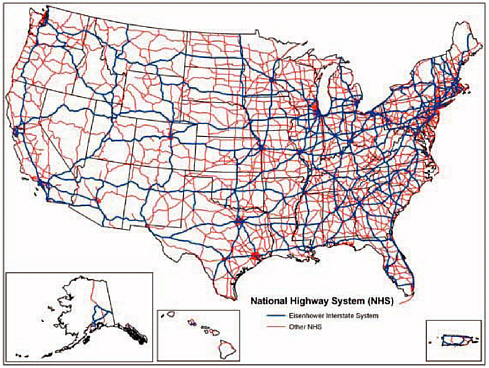
FIGURE 5-1 Map of the National Highway System. SOURCE: U.S. Department of Transportation.
logical tie to the proposed regional research centers as a means to foster cooperation in the road weather research program. Partnerships involving all key parties will develop naturally around these demonstration roadways.
The committee suggests that one north-south and one east-west interstate highway (Figure 5-1) be designated as national road weather demonstration corridors. These interstates should traverse areas with diverse weather conditions, topography, and geography. This will allow highway problems such as flooding, fog, evacuation, landslides, and winter weather to be addressed to a large extent. Criteria for selecting the corridors should include the extent to which instrumentation and equipment installed for other purposes along the selected interstate could be incorporated as part of the road weather demonstrations, as well as the willingness of state departments of transportation located along the route to be active participants. Further, the corridors should pass through several states that are early adopters of intelligent transportation system technology and are agreeable to serving as leaders in the implementation of the national road weather re-
search program. For example, Interstate 35, a major North American Free Trade Agreement highway connecting Canada, the United States, and Mexico, may be a good candidate for a designated corridor; it traverses several climate zones and offers opportunities for early success because several states along this route already have invested in intelligent transportation system technology.
Various transportation research and development efforts, including the Strategic Highway Research Program, have employed demonstration projects, and some intelligent transportation system research is being implemented and tested with demonstration projects. The demonstration corridor concept is consistent with transportation research strategies previously used with success. These experiences have shown that successful implementation of results by a single state department of transportation can be extremely beneficial in gaining the support of other states. Therefore, the committee anticipates that the departments of transportation in each state through which the demonstration corridors pass could serve a role similar to that of the lead states in the Strategic Highway Research Program.
The committee foresees the road weather research program as providing seed money to develop these national corridors and then evaluate the results of the demonstrations. Actual implementation of new technologies would likely cost significantly more. The committee expects that costs associated with buying, installing, and operating technologies to be showcased would likely be covered by the states involved in the program, using other federal and state funds. Once the corridors are established, some of this funding would go to research to evaluate the feasibility and cost-effectiveness of implementing the demonstration technology more widely.
Establish Dedicated Road Weather Research Funding in the FHWA
Transportation research and management are currently highly decentralized, largely implemented by states, and meteorological research and operations are spread across several federal agencies, universities, and research centers. The private sector has provided many of the targeted road weather services to date. Yet, for the proposed road weather research program to succeed, centralized leadership at the federal level is essential in setting research priorities, administering grants, providing a central repository for research findings, ensuring accountability, and fostering the transfer of new knowledge and technology to operational practice. The Federal Aviation Administration’s Aviation Weather Research Program provides a
good model for the federal leadership needed for a road weather research program. The committee recommends that the FHWA have the leading role in the national road weather research program and that the National Oceanic and Atmospheric Administration (NOAA) be a lead partner in this effort. The federal government should establish an interagency coordinating council to guide the national road weather research program. In addition to the FHWA, participation on this council should include at a minimum NOAA and the National Science Foundation, especially through their joint U.S. Weather Research Program. It is no less critical that the leadership of the proposed road weather research program foster effective partnerships with the private sector in a manner that provides clear processes for interaction.
The committee recommends that long-term dedicated funding for road weather research sufficient to achieve the program’s goals be established as new funding in the FHWA. The committee estimates that the research program will require on the order of $25 million per year based on an assessment of unmet needs, the capacity of the research community to conduct the program effectively, and costs for comparable transportation research initiatives in other areas, such as the Aviation Weather Research Program. The committee believes that many of the research and development challenges that have been identified will require more than a decade to solve, thus a long-term research and development program with appropriate funding commitments is required.
Although the FHWA is recommended as the primary funding recipient, the committee recommends that the dedicated funds for this program be highly leveraged with other initiatives that have an affinity with road weather research and development. The Aviation Weather Research Program is a good example; most of the focused research tracks in that program have produced results that can be integrated into the road weather program. The new funds will provide the necessary resources to focus both new research and the leveraged research from other programs to address unmet needs in the surface transportation community. Ongoing research sponsored by NOAA and the National Science Foundation and research in the U.S. Weather Research Program (about $60 million in FY 2002) can be leveraged similarly. This new FHWA funding would be a small increment to the current federal support for either transportation research (about $400 million, see Table 5-1) or meteorological research (about $600 million, see Table 5-2).
Fostering a Vigorous Private Sector
In addition to the need for an immediate infusion of federal funding, public-private-academic partnerships are needed to take up the research challenge, but this will be complicated by the several components of the public sector (federal, state, regional, and local) that will need to cooperate to achieve optimum results. This issue of public-private-academic partnerships in meteorology has received increasing attention in recent years. The National Research Council recently completed a study, Fair Weather: Effective Partnerships in Weather and Climate Services (NRC, 2003b), which found that boundaries in responsibilities between the public sector, private sector, and academia are not rigid. In general, each sector has played the following roles:
-
The public sector is responsible for protecting life and property and enhancing the national economy. To carry out its mission it maintains an infrastructure of observation, communications, data processing, and prediction systems and conducts research on which the public, private, and academic sectors rely.
-
Academia is responsible for advancing science and educating future meteorologists.
-
The private sector is responsible for creating products and services tailored to the needs of its companies or clients and for working with the public sector to communicate forecasts and warnings that may affect public safety.
This three-sector system has led to extensive and flourishing weather services that greatly benefit the U.S. public and the economy. The report concluded that it was counterproductive and diversionary to establish detailed and rigid boundaries for each sector that specify who can do what and with what tools. Instead efforts should focus on improving the processes by which the sectors interact. These lessons clearly apply to the roles of government, academia, and the private sector in pursuing road weather research and development.
The committee recommends that steps be taken to foster effective public-private-academic partnerships in the area of road weather research and technology implementation. Essential partners in this effort include FHWA, NOAA, National Science Foundation, American Association of State Highway and Transportation Officials, academia, state and local governments, the private sector, and nongovernmental organizations and associations
such as the Intelligent Transportation Society of America and the American Meteorological Society.
The committee believes that the preceding recommendations concerning regional research centers, a focus on national demonstration corridors, and widely accessible databases will facilitate such partnerships. Indeed, the contributions of all sectors are essential to a successful implementation of the program recommended here. The committee endorses the recommendations of Fair Weather: Effective Partnerships in Weather and Climate Services (NRC, 2003b) as they would apply to the road weather research program. Well-coordinated research and operational implementation objectives in the public sector will focus the efforts of the academic sector and provide the private sector with increased opportunities to improve their products and services and thus grow their industry.
Research Program to Be Guided by Measures of Cost-Effectiveness
The research program described in this document should result in a great number of research findings that can be developed further into new road weather applications (products, services, tools, and technologies). Indeed, multiple potential solutions may be developed to address a particular aspect of a road weather problem. Thus, it is important that decisions about which applications to develop and then deploy widely be guided by careful cost-benefit analyses. This cost-benefit information must be presented in ways that can be easily used by decision makers in allocating scarce resources. In assessing cost-effectiveness, a fairly broad definition of costs and benefits should be considered; for example, in addition to considering those costs and benefits that can be directly quantified, other indirect factors, such as environmental impacts that might result from reducing the amount of chemicals that drain off the roadway, must be considered.
As an example of how cost-effectiveness analyses can be useful, this report recommends that additional pavement sensors may be needed to provide the level of information necessary to make informed decisions about winter roadway maintenance. However, before installing large numbers of new sensors, research should be done to assess the marginal benefits and costs associated with adding more sensors as well as how those costs and benefits differ based on such factors as geographic location. A result of this research might be a methodology for determining the optimal number and location of sensors.
TECHNOLOGY TRANSFER
It is one of the ironies of federally sponsored research that many promising results are not effectively implemented in practical applications. Many results that do make it into practice take seemingly inordinate amounts of time to do so (NRC, 2000). For example, about 100 research products resulted from the Strategic Highway Research Program, a $150 million, five-year research program. A few of the lesser products, such as new signing concepts for work zones, were put into practice relatively quickly by several highway agencies and private sector contractors. The major subject of this research, improved asphalt pavements, has taken many years to implement across the nation. This slow application of research results is due in part to the lack of provisions to foster implementation at the state and local levels in the original program design. It was generally assumed that highway agencies would see the immediate benefits of the research results and simply implement them without any external stimulus. While some of this happened, years of effort by the FHWA, state departments of transportation, the American Association of State Highway and Transportation Officials (AASHTO), and the private sector have been required to produce meaningful impacts across the nation. In the case of the major asphalt research results, implementation was finally brought about by identifying lead states and assembling producer-user groups in states and regions that focused on implementation. AASHTO proceeded to develop and adopt new specifications, and the FHWA provided strong support and leadership to the project.
This report is focused on identification of research required for the surface transportation community. As illustrated by the Strategic Highway Research Program asphalt example, an essential component of the overall research effort is the transfer of results to operational users in an effective and timely manner. No matter how potentially valuable the research findings may be, if the resulting technology is not effectively transferred from the research community, this value is lost to stakeholders working in the roadway environment. In the road research community one reason for the research-to-operations barrier for the surface transportation community is that research, procurement, and operations often are disconnected in a transportation agency. Thus, the needs of the end user are seldom considered until moving into the implementation phase. Once a project has reached this point, change becomes so difficult and expensive that it is discouraged. Lack of any sense of ownership by the end users, who are often the ones responsible for making the technology work in the field,
leads to spotty, slow implementation and consequently a low benefit-cost ratio. The old “failure to plan is planning to fail” adage could be rewritten to read “failure to fully understand and respond to user needs, abilities, and prevailing culture will result in failure to implement.”
Early and continuing engagement of user or stakeholder communities throughout the research and development process is a critical aspect of technology transfer. “End-to-end” research and development sometimes is used to describe the identification of research needs, conducting the research, presenting the research for peer review, developing identifying applications from the research results, and finally deploying the applications and validating them in an operational environment. Unfortunately the last step is often the most problematic primarily because so few organizations have learned to do it well. The committee has identified several elements of effective transfer that have been validated over many decades.
-
Early and Continuing Involvement of Operational Stakeholders: Operational users of the technology should be made a part of the technology transfer team from the beginning. Their continuing involvement ensures that the transfer path is efficient, expeditious, and relevant to the needs of the operational community.
-
Highly Resolved User Requirements: Requirements for use of the new technology in an operational environment must be defined with as much resolution as possible to ensure effective implementation. This process includes time horizons for key operational decisions, specific weather-related information required for decision making, cost-benefit analysis of the weather-related decisions made by the user, level of technical competence of the users, training requirements, and documentation requirements. The more that is known about the user’s operational processes, the more effective the transfer will be.
-
Iterative Development Process: An iterative process that can be described as an ongoing dialogue between the development team and the user community characterizes successful transfers of technology. Early prototypes are based on a careful analysis of the user’s requirements. These prototypes are evaluated and modified in several iterations to continually improve the performance of the technology. Improvements cease when cost of further iterations is judged to exceed value derived from the next change.
-
Validation in an Operational Setting: It is essential to validate the new applications or technology in operational settings that represent all the modes of operation that the user may experience. This is often a step that is left out of the transfer process and results in a failed attempt to transfer the
-
technology since problems that surface only in an operational environment are not detected and addressed during the validation phase.
-
Comprehensive Training and Documentation: Successful technology implementation over the long-term requires training for all users and educational programs for those in the operational community who will maintain and upgrade the technology. Complete documentation for each group of users is also essential.
Recommendation: Enable efficient technology transfer.
The committee recommends that the national road weather research program involve operational users as part of the research and development effort from the beginning. The user community for road weather information is broad and includes the general public, commercial shipping and bus transit companies, emergency managers, those who build, maintain, and operate the nation’s roadways, and vehicle manufacturers. Early user involvement helps to ensure that the technology transfer path will be efficient and expeditious, and will produce results relevant to the needs of the user community.
EDUCATION AND TRAINING OF ROAD WEATHER INFORMATION USERS
User education programs should be developed as the research proceeds (1) to build community between researchers and users through feedback; (2) to develop constituencies supporting deployment of new technologies; and (3) to ensure that road users gain sufficient benefit from deployed road weather information systems to justify the expense. The proposed road weather research program should include support for this type of outreach activity. This section provides a brief discussion about the need to educate those who are the targeted users of road weather information. Many very diverse users of road weather information, including the traveling public, commercial vehicle operators, road maintainers, and emergency vehicle operators, must be educated on the value of using road weather information in their decision making and then trained on how to use the new technologies and informational tools as they are deployed.
The focus of the following sections is on training of road weather information users; however, training for the providers of this information is no less important. New professionals in the road weather industry must be trained on the job because they do not gain the necessary skills in either undergraduate or graduate academic programs. Including road weather in
the curriculum used to train meteorologists and transportation researchers could go far toward building a more robust road weather research community (Osborne, 2001). Increasing support for road weather research at universities, a likely outcome of the proposed program, will create opportunities for graduate and undergraduate students to participate in such research projects as part of their education.
Education and Training of the Driving Public
To justify the expense of developing and deploying a road weather information system, the public must prepare for and then properly react to inclement weather encountered while on the roadways, purchase vehicles incorporating new technologies that enhance response to weather hazards, and access and use specialized weather data in decisions involved in trip planning, route selection, and safe vehicle operation. For these things to occur the driving public must receive proper education and training on road weather information and how to apply it. Such training begins with new drivers, who typically receive training through a combination of interactive instructional materials and hands-on modules. Instructional materials may include some weather modules, but training on driving in inclement weather is not mandatory nationwide. A national effort to develop training modules for weather-degraded road conditions could yield improvements in highway safety. Development of such modules should take advantage of experts in weather, in the physics of highway transit and automotive response, and in human factors to maximize their efficacy.
The driving public also needs to be continually updated about and trained to use new tools and technologies designed to improve vehicle performance under inclement weather; for instance, the anti-lock brake system is a safety feature now available in many new car models, but veteran drivers may not be aware of the difference between this feature and the classic braking system, nor may they be aware of how to use the system properly. Thus, informative manuals and hands-on training need to be a fundamental component of all new tools and technologies as they become available. Veteran drivers may need supplemental training if they move or travel to regions where they encounter weather and road conditions not previously experienced. For example, someone who travels from Miami to Minneapolis in winter may not know how to handle snowy or icy roads, and thereby may pose a threat to themselves and others. Rare weather conditions, such as snow in the Southwest, or rapidly changing situations, such as a cloudburst, ground fog, blowing dust, or even the first snow of the
season, may also pose dangers. Opportunities for continuing training could help the driving public learn how to properly respond to these situations.
A wealth of weather information is available to roadway users today and even more will be available in the future, but drivers that know what information is available and how to access and use it are in the minority. Many know that weather nowcasts and forecasts are available on commercial radio and television but are unaware of other sources, such as from Web sites or 511 (the telephone number for receiving traveler information, ultimately to be available nationwide), that provide more detailed data tailored to their needs. Effective outreach to the driving public is needed to inform them about new road weather information and tools. As traveler weather information services evolve the public must become aware of the opportunity to keep informed about the driving environment and understand their obligation to respond accordingly.
Drivers of commercial vehicles used for long-haul shipping or just-in-time delivery will need specialized training on how to use enhanced road weather information to increase safety and efficiencies (and hence a competitive edge) for their companies. This training must address both how to best operate vehicles in inclement weather and how to interpret weather information and use it to make optimal decisions. Parallel complementary training for dispatchers, who make choices about routes and timing for deliveries, will also be necessary to gain full benefit.
An output of a long-term road weather research program will be the development of “intelligent agents” that will be embedded in “smart” vehicles and personal information management systems (the successors to today’s personal data assistants). Such devices will automatically access the necessary weather data and inform their users in tailored ways that reflect the user preferences and needs, automatically suggest routes and itineraries, and free the driver to focus on vehicle operation. The development of such sophisticated personal tools is unlikely to reduce the need for education and training—it will just change their nature.
Education and Training of Roadway Maintainers and Operators
A recent study to identify weather information needs for surface transportation showed that within any given surface transportation sector, all users did not clearly understand how weather information could make a positive, significant difference in their operations (OFCM, 2002a). The study also revealed a polarization in user sophistication in using weather data and in comprehension of how better information could improve operations.
These findings speak to the need for training of roadway maintainers and operators on how to use enhanced weather information. Such training will be critical for successful implementation of improved road weather technologies and services. Because many meteorological phenomena are highly seasonal, annual refresher training will be important. Technology now allows many decision support systems to incorporate just-in-time refresher training, essentially coaching a user through an unfamiliar situation. To be most effective, educational programs should allow feedback from the users, enabling evaluation of new road weather products and information and allowing assessment of the effectiveness of the instruction.
State, county, and municipal employees responsible for road maintenance and construction, emergency management, law enforcement, and traffic management will need training as new road weather technologies and tools are deployed. In particular, equipment operators often have little or no exposure to emerging technology, and therefore may view it as a threat to their jobs rather than as a tool to help them perform their work more effectively. Introducing new information and technology to them must be done incrementally, providing extensive but practical training with user-friendly displays in a way that allows all workers to understand how their efforts contribute to solving the overarching problem.
A number of mechanisms are available for training transportation professionals on new technologies and tools, including pilot projects, operational demonstrations, and tabletop exercises,2 all of which allow the users to test out the new technologies in a real-world setting. Computer training modules are also emerging as an effective way to train roadway maintainers and operators. This approach allows for appropriate and understandable information to be disseminated in a timely manner and can provide a user-friendly, interactive training interface. Such modules can be made available on a CD, or the Web, which allows more frequent updates. In fact, a Web site could be staffed by people who could help users navigate the site and answer questions pertinent to the users’ immediate needs (see http://www.comet.ucar.edu/modules/).
Training and education of those responsible for maintaining and operating the nation’s roads will likely be performed by various public and private
organizations. Federal oversight would be useful in terms of interagency coordination, facilitating transfer of knowledge from one state to another, and identifying user training needs. Because the private sector likely will play an important role in developing practical applications of road weather information, it also should be involved in education and training of surface transportation professionals.
Recommendation: Improve education and training of road weather information users.
The road weather research program should incorporate training on the use of road weather information and technology into driver education nationwide. This training needs to start with new-driver education and be reinforced periodically as new technology is introduced or other circumstances arise, such as when a driver moves to a new region with a different climate. In commercial settings continuing education on road weather information is recommended for drivers and dispatchers. Special efforts are needed in the education and training for such groups such as road maintainers, emergency managers, and traffic managers. When new products or decision support tools are deployed, educational and outreach programs, pilot projects, operational demonstrations, and “table-top exercises” should be conducted on a regional basis.
RESEARCH SYNERGIES AND EFFICIENCIES WITH OTHER MODES OF TRANSPORTATION
The federal government currently supports numerous research efforts on the impact of weather on other modes of transportation, including aviation, rail, and transit. Some of these projects investigate micrometeorological problems near the surface. Others have developed tools and techniques that may be applicable to road weather research. Given the limited fiscal resources available to support road weather research, it is important that the road weather research community be knowledgeable of the research being conducted on other modes of transport, and adopts, adapts, and applies the results of that research where applicable. Where there is common interest in a meteorological phenomenon, such as fog, the road weather research community should collaborate with researchers in the aviation weather community. It is also likely that important topics in road weather research
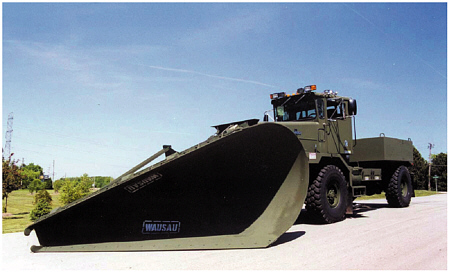
FIGURE 5-2 Airport runway snowplow. SOURCE: Schmidt Engineering and Equipment, Inc.
will have applicability to other modes; for example, the removal of ice and snow from hard-surfaced lanes is applicable to frozen railway switches and to clearing of snow and ice from airport runways and along city transit routes (Figure 5-2). Likewise, research on how to detect and predict surface visibility is applicable to all modes of transportation.
Each transportation mode also conducts research and development focused on tactical and strategic decision support systems. Techniques for building these tools, stakeholder interaction, and operational deployment are needed across all modes of transportation. Some situations, such as evacuations caused by hurricane landfall or spread of hazardous materials, require coordination of roadway, air, rail, and transit modes, making it appropriate to consider all modes when conducting this sort of research.
Lessons can be learned from aviation weather research, which has been conducted for decades, and has much applicability to all surface transportation modes. The Federal Aviation Administration’s Aviation Weather Research program has two decades of research results in thunderstorm forecasting, icing, visibility, decision support systems, and crosswinds. Other transportation modes can clearly make use of the accomplishments of this research. In addition, lessons can be learned from the aviation weather experience about how to build an interdisciplinary research program with
close ties to operational applications. Given the large investment in aviation weather that the nation has made in the last decade or so, learning from and collaborating with the aviation research community should be an early step in the development of a national road weather research program.
Recommendation: Seek out synergies and efficiencies between road weather research and parallel efforts regarding other modes of transportation.
The committee recommends that the road weather research program routinely monitor research parallel to surface operations in aviation, rail, and transit to exploit applicable overlap. Many aspects of the proposed road weather research program could benefit research in aviation, rail, and other modes of transportation. Indeed, there are many synergies and efficiencies to be gained by coordinating research on meteorological phenomena that affect all modes and on the development of decision support resources. In particular the well-established aviation weather research programs offers many lessons learned that should be examined by the emerging road weather research program.


