
3
Hydrogen Fluoride1
Acute Exposure Guideline Levels
SUMMARY
Hydrogen fluoride (HF) is a colorless, highly irritating, corrosive gas. Reaction with water is rapid, producing heat and hydrofluoric acid. HF is used in the manufacture of artificial cryolite; in the production of aluminum, fluorocarbons, and uranium hexafluoride; as a catalyst in alkylation processes during petroleum refining; in the manufacture of fluoride salts; and in stainless-steel pickling operations. It is also used to etch glass and as a cleaner in metal finishing processes.
HF is a severe irritant to the eyes, skin, and nasal passages; high concentrations may penetrate to the lungs, resulting in edema and hemorrhage. Data on irritant effects in humans and lethal and sublethal effects in six species of mammal (monkey, dog, rat, mouse, guinea pig, and rabbit) were available for developing acute exposure guideline levels (AEGLs). The
data were considered adequate for deriving the three AEGL classifications for the five exposure periods. Regression analyses of the reported concentration-exposure durations for lethality in the animal species determined that the relationship between concentration and time is C2×t=k (where C=concentration, t=time, and k is a constant).
The AEGL-1 was based on an exposure at 3 parts per million (ppm) (range, 0.85–2.93 ppm) for 1 hour (h), which was the threshold for pulmonary inflammation, as evidenced by an increase in the percentage of several inflammatory parameters such as CD3 cells and myeloperoxidase in the bronchoalveolar lavage fluid of 20 healthy exercising adult subjects (Lund et al. 1999). There were no increases in neutrophils, eosinophils, protein, or methyl histamine at this or the next higher average exposure concentration of 4.7 ppm (range, 3.05–6.34 ppm). There were no changes in lung function and only minor symptoms of irritation at that concentration (Lund et al. 1997). Although healthy adults were tested, several individuals had increased immune factors, indicating atopy. The 3-ppm concentration was divided by an intraspecies uncertainty factor (UF) of 3 to protect susceptible individuals. Because there were no effects on respiratory parameters of healthy adults at concentrations up to 6.34 ppm in the Lund et al. (1997) study and at concentrations up to 8.1 ppm for 6 h/day (d) with repeated exposures in a supporting study (Largent 1960, 1961), the calculated AEGL-1 values will be protective of asthmatic individuals. Although the Lund et al. (1999) study duration was only 1 h, the longer exposures at higher concentrations in the supporting study (Largent 1960, 1961), and the fact that adaptation to mild sensory irritation occurs, support application of the 1-ppm concentration for up to 8 h.
The 10-minute (min) AEGL-2 was based on an absence of serious pulmonary or other adverse effects in rats during direct delivery of HF to the trachea at 950 ppm for an exposure period of 10 min (Dalbey 1996; Dalbey et al. 1998a). The reported concentration-exposure value of 950 ppm for 10 min was adjusted by a combined UF of 10–3 for interspecies variation, because the rat was not the most sensitive species in other studies (but direct delivery to the trachea is a sensitive model), and an intraspecies UF of 3 to protect susceptible individuals. The resulting 10-min value clearly is below the serious injury categories of data from tests in monkeys, rats, dogs, mice, guinea pigs, and rabbits.
The 30-min and 1-, 4- and 8-h AEGL-2 values were based on a study in which dogs exposed at 243 ppm for 1 h exhibited blinking, sneezing, and coughing (Rosenholtz et al. 1963). Rats exposed at a similar concentration (291 ppm) developed moderate eye and nasal irritation. The next higher
concentration (489 ppm for 1 h) resulted in respiratory distress and severe eye and nasal irritation in the rat, signs more severe than those ascribed to AEGL-2. The moderate eye and nasal irritation observed in dogs at 243 ppm was considered the threshold for impaired ability to escape. The 1-h value of 243 ppm was adjusted by a total UF of 10–3 for interspecies variation, because the dog is a sensitive species for sensory irritation, and 3 to protect susceptible individuals. The values were scaled across time using Cn×t=k, where n=2. The n value was derived using concentration-exposure duration relationships from animal lethality studies. It should be noted that the resulting 30-min AEGL-2 of 34 ppm is similar to the 32-ppm concentration that could be tolerated by human subjects for only minutes in the Machle et al. (1934) study. Using a larger total UF such as 30 would reduce the 1-h value to 8 ppm, a concentration that resulted in only slight irritation in healthy adults during repeated, intermittent exposures (Largent 1960, 1961). Because the time-scaled 8-h value of 8.6 ppm was inconsistent with the Largent (1960, 1961) study in which humans subjects inhaling 8.1 ppm intermittently suffered no effects other than slight irritation, the 8-h AEGL-2 was set equal to the 4-h AEGL-2.
The 10-min AEGL-3 was based on the reported 10-min lethal threshold of 1,764 ppm reported in orally cannulated rats (Dalbey 1996; Dalbey et al. 1998). That value was rounded to 1,700 ppm and adjusted by UFs of 3 for interspecies differences (LC50 values [concentrations lethal to 50% of subjects] differ by a factor of approximately 2–4 between the mouse and rat) and 3 to protect susceptible individuals. The total UF for the 10-min AEGL-3 was 10. Application of a larger UF would reduce the 10-min AEGL-3 to a value below the 10-min AEGL-2.
The 30-min and 1-, 4-, and 8-h AEGL-3 values were derived from a 1-h exposure that resulted in no deaths in mice (Wohlslagel et al. 1976). The data indicated that 263 ppm was the threshold for lethality. A comparison of LC50 values among species indicated that the mouse was the most sensitive species in the lethality studies. The 1-h value of 263 ppm was adjusted by an interspecies UF of 1, because the mouse was the most sensitive species, and an intraspecies UF of 3 to protect susceptible individuals. A modifying factor (MF) of 2 was applied to account for the fact that the highest nonlethal value was close to the LC50 of 342 ppm. The resulting value was scaled to the other AEGL-specified exposure periods using Cn×t=k, where n=2. A total factor of 6 is reasonable and sufficient, because application of a total factor of 20 (3 each for inter- and intraspecies uncertainties and 2 as a MF) would reduce the predicted 6-h AEGL-3 to 5.4 ppm, a concentration below the peak 8.1-ppm concentration that produced only irrita-
tion in humans (Largent 1960, 1961). Because HF is well scrubbed at low concentrations, and because the time-scaled 8-h AEGL-3 value of 15 ppm was inconsistent with data from repeated exposures in animal studies, the 8-h value was set equal to the 4-h value.
The AEGLs for HF are summarized in Table 3–1.
1. INTRODUCTION
HF is a colorless, highly irritating, corrosive gas with a molecular weight of 20.01 and a density of 1.27. It is extremely soluble in water; reaction with water produces heat and forms hydrofluoric acid. At atmospheric pressure, the gas is monomeric; at higher pressures, polymerization takes place, producing a gas of density greater than monomeric HF (Perry et al. 1994). Although HF is lighter than air and would disperse when released, a cloud of vapor and aerosol that is heavier than air may be formed under some release conditions (EPA 1993). Additional chemical and physical properties are listed in Table 3–2.
Anhydrous HF is manufactured and used in the United States for the production of aluminum, fluorocarbons, cryolite, and uranium hexafluoride; in solutions used for glass etching, cleaning, stainless steel pickling, and chemical derivatives; as a catalyst for the production of gasoline; and for nuclear applications (EPA 1993; Perry et al. 1994).
Recent production data were not located. In 1992, HF was manufactured in the United States by three companies at 10 sites with a total production capacity of 206,000 tons; U.S. production is approximately 90% of capacity. In addition, several aluminum producers make HF for on-site use. In 1991, users and/or producers of HF included 13 fluorocarbon production facilities and approximately 51 petroleum refineries that had HF alkylation units. Due to the phase-out of chlorofluorocarbon production, HF production was expected to fall slightly by 1996 (EPA 1993).
Contact of liquid HF with the skin can produce severe burns; the gas is corrosive to the eyes and mucous membranes of the respiratory tract. The acute inhalation toxicity of HF has been studied in several laboratory animal species, and its irritant properties have been studied in human volunteers. Large differences in the concentrations causing the same effects in animal studies indicate that difficulties in measurement techniques were encountered by investigators in some of the early studies, thus limiting the value of their quantitative data. In addition, experimental details and descriptions of effects were inadequate in some of the studies.
TABLE 3–1 Summary Table of AEGL Values (ppm [mg/m3])
|
Classification |
10 min |
30 min |
1 h |
4 h |
8 h |
End Point (Reference) |
|
AEGL-1 (Nondisabling) |
1.0 (0.8) |
1.0 (0.8) |
1.0 (0.8) |
1.0 (0.8) |
1.0 (0.8) |
Threshold, pulmonary inflammation in humans (Lund et al. 1997, 1999) |
|
AEGL-2 (Disabling) |
95 (78) |
34 (28) |
24 (20) |
12 (9.8) |
12 (9.8) |
NOAEL for lung effects in cannulated rats (Dalbey 1996; Dalbey et al. 1998a);a sensory irritation in dogs (Rosenholtz et al. 1963)b |
|
AEGL-3 (Lethal) |
170 (139) |
62 (51) |
44 (36) |
22 (18) |
22 (18) |
Lethality threshold in cannulated rats (Dalbey 1996; Dalbey et al. 1998a);c lethality threshold in mice (Wohlslagel et al. 1976)d |
|
a10-min AEGL-2 value. b30-min and 1-, 4-, and 8-h AEGL-2 values. c10-min AEGL-3 value. d30-min and 1-, 4-, and 8-h AEGL-3 values. Abbreviations: mg/m3, milligrams per cubic meter; ppm, parts per million. |
||||||
2. HUMAN TOXICITY DATA
2.1. Acute Lethality
No data were located regarding human deaths following inhalation-only exposure to HF. However, several studies indicate that humans have died from accidental exposure to hydrofluoric acid (Kleinfeld 1965; Tepperman 1980; Braun et al. 1984; Mayer and Gross 1985; Chan et al. 1987; Chela et al. 1989; ATSDR 1993). These accidents involved acute inhalation of HF in combination with dermal exposure involving severe dermal lesions. Deaths were attributed to pulmonary edema and cardiac arrhythmias, the latter a result of acidosis from pronounced hypocalcemia
TABLE 3–2 Chemical and Physical Data for Hydrogen Fluoride
|
Parameter |
Value |
Reference |
|
Synonyms |
Hydrofluoric acid gas, anhydrous hydrofluoric acid |
Budavari et al. 1996 |
|
Molecular formula |
HF |
Budavari et al. 1996 |
|
Molecular weight |
20.01 |
Budavari et al. 1996 |
|
CAS Registry Number |
7664–39–3 |
Budavari et al. 1996 |
|
Physical state |
Gas |
Budavari et al. 1996 |
|
Color |
Colorless |
Budavari et al. 1996 |
|
Solubility in water |
Miscible in all proportions |
Perry et al. 1994 |
|
Vapor pressure |
760 mm Hg at 20°C |
ACGIH 2002 |
|
Density (water=1) |
1.27 at 34°C |
Perry et al. 1994 |
|
Melting point |
−87.7°C |
Perry et al. 1994 |
|
Flammability |
Not flammable |
Weiss 1980 |
|
Boiling point |
19.5°C |
Perry et al. 1994 |
|
Conversion factors |
1 ppm=0.82 mg/m3 1 mg/m3=1.22 ppm |
ACGIH 2002 |
and hypomagnesemia following dermal fluoride uptake. No doses or exposure levels could be determined.
2.2. Nonlethal Toxicity
Ronzani (1909) and Machle et al. (1934) cite early reports in which a concentration of HF at 0.004% (40 ppm) was used in the treatment of tuberculosis. No exposure times were stated. The sharp, irritating odor of HF is noticeable at 0.02–0.13 ppm (Sadilova et al. 1965; Perry et al. 1994).
Three groups of investigators studied the irritant effects of acute HF exposures in human volunteers. An additional study reported on exposures over a period of 10–50 d. Studies of industrial exposures and accidental releases were located, but exposure concentrations either were intermittent or were not measured; furthermore, those studies were confounded by the presence of other chemicals.
2.2.1. Experimental Studies
The studies using human volunteers are summarized in Table 3–3. Machle et al. (1934) exposed two male volunteers to concentrations of HF at 0.1, 0.05, and 0.026 mg/L (32, 61, and 122 ppm) for very short exposure periods. Inhalation of HF at 122 ppm produced marked conjunctival and respiratory irritation within 1 min and smarting of the exposed skin. At 61 ppm, eye and nasal irritation were marked, but smarting of the skin was not reported. Irritation of the eyes and nose was mild at 32 ppm, and that concentration was “tolerated” with discomfort. At all concentrations, irritation of the larger airways and a sour taste in the mouth were present. Repeated exposures (undefined) failed to produce adaptation.
Collings et al. (1951) subjected two volunteers to an atmosphere containing HF and silicon tetrafluoride during an 8-h work shift; the subjects left the area for 15 min every 2 h and during a lunch break. The average concentration of fluoride during the exposure was 3.8 milligrams per cubic meter (mg/m3) (4.6 ppm); the concentration of HF alone was not measured, but would presumably have been ≤4.6 ppm. According to the authors, “both subjects experienced the anticipated irritant effect of thegases and the remarkably rapid acclimation which is so well known.” No further details on irritant effects were stated.
Largent (1960, 1961) exposed five male volunteers (ages 17–46) to variable concentrations of HF for 6 h/d over a period of 10–50 d. Average individual concentrations over the exposure period ranged from 1.42 ppm to 4.74 ppm (average, 3.2 ppm; total range, 0.9–8.1 ppm). Effects were no more severe in two subjects who were exposed at concentrations up to 7.9 ppm and up to 8.1 ppm over a 25 d and 50 d period, respectively, than in the other subjects. Although it was stated that one subject tolerated 1.42 ppm for 15 d (6 h/d) without noticeable effects, exposure of the same subject at 3.39 ppm for 10 d at a later time resulted in redness of the face and, by day 11, some flaking of the skin. The subjects experienced very slight irritation of the eyes, nose, and skin at ≤2 ppm and noted a sour taste in the mouth during the exposures. It is not clear whether the subject exposed at 1.42 ppm for 15 d also experienced those effects. Application of a coating of face cream prior to exposure was found to prevent any discomfort or redness of the shaved facial skin. Any signs of discomfort disappeared after cessation of exposure. Systemic effects were not observed. Two subjects in this study displayed slightly different levels of sensitivity. One subject suffered from a cold for a few days during which there was heightened discomfort. Another subject did not use cosmetic cream.
TABLE 3–3 Summary of Sensory and Irritant Effects in Humans
|
Concentration (ppm) |
Exposure Time |
Effects |
Reference |
|
0.02–0.13 |
NA |
Odor threshold |
Perry et al. 1994; Amoore and Hautala 1983; Sadilova et al. 1965 |
|
0.2–0.7 |
1 h |
No to low sensory and upper airway irritation; no change in FEV1, decrease in FVC; no change in components of BAL |
Lund et al. 1997, 1999 |
|
0.85–2.9 |
1 h |
No to low sensory and upper airway irritation; no change in FVC, FEV1; BAL showed increase in CD3 cells, lymphocytes, with no increase in neutrophils, eosinophils, protein |
Lund et al. 1997, 1999 |
|
3.0–6.3 |
1 h |
No eye irritation, but upper (3/14 subjects) and lower (1/14 subjects) respiratory airway irritation;a no change in FVC, FEV1; BAL showed increase in CD3 cells, lymphocytes, myeloperoxidase, cytokine, with no increase in neutrophils, eosinophils, protein |
Lund et al. 1997, 1999 |
|
1.42 |
6 h/d, 15 d |
No noticeable effect (single subject) |
Largent 1960, 1961 |
|
2.59–4.74 (average) 0.9–8.1 (range) |
6 h/d, 10–50 d |
Slight irritation of the skin, nose, and eyes; sour taste in mouth |
Largent 1960, 1961 |
|
4.6 (average)b 3.5–7.1 (range) |
7 h |
Irritant effect followed by adaptation |
Collings et al. 1951 |
Lund et al. (1995) exposed 15 healthy male volunteers to concentrations at 1.5–6.4 mg/m3 (1.83–7.8 ppm) for 1 h in order to study sensory irritation, as indicated by inflammatory cells in bronchoalveolar lavage (BAL) fluid and changes in pulmonary parameters. HF induced a bronchial inflammatory reaction as indicated by an increase in the fraction of lymphocytes and neutrophils in the BAL fluid. The fraction of CD5 positive cells (cluster determinants, a subpopulation of T cells) increased from a pre-exposure value of 0.6% to 6.3% at 20–24 h after exposure. There were no changes in spirometry measurements. The data were reported in an abstract, and no further details were given.
In a more recent publication that appears to be a continuation of the above study, 20 healthy, nonsmoking male volunteers, ages 21–44 y, were exposed to a constant concentration within the range of 0.24–6.34 ppm for 1 h in a 19.2-m3 chamber (Lund et al. 1997). Three subjects per exposure group were exposed twice with a 3-month (mo) interval between exposures. In order to analyze a dose-response relationship, the exposures were divided into ranges of 0.2–0.7 ppm (nine subjects); 0.85–2.9 ppm (seven subjects); and 3.0–6.3 ppm (seven subjects). Two of the subjects had hay fever; one of those and an additional subject had an increased total IgE immunoglobulin level. The exposure groups of these subjects were not identified. The authors stated that the rest of the subjects were not atopic or allergic. Exposure concentrations were monitored by an electrochemical sensor. Exact exposures were measured by collecting air samples on cellulose pads impregnated with sodium formate and analyzed with a fluoride selective electrode. Upper and lower airway and eye irritation were subjectively scored on a scale of 0 (no symptoms) to 5 (severe symptoms). In addition, FEV1 (forced expiratory volume in one second) and FVC (forced vital capacity) were measured before, during (every 15 min), and at the end of the exposures and again at 4 and 24 h post-exposure. Subjects rested during the first 45 min of exposure; during the last 15 min the subjects exercised on a stationary bicycle.
Five subjects reported minor upper and lower respiratory symptoms (mild coughing or expectoration and itching of the nose) before entering the chamber. Symptoms increased after the 1-h exposure, but none of the subjects in the lower two exposure groups reported symptom scores of greater than 3. Specific scores for symptoms were not reported in the publication; however, a score of 1–3 was defined as low. The mean FVC was significantly decreased after exposure in the lowest exposure group, from 5.1 liters (L) to 4.8 L. The lack of significant changes in the higher exposure groups makes it unlikely that the change in FVC in the lowest group was a result
of chemical exposure. In the highest exposure group, no eye irritation was reported, but three subjects reported upper airway irritation (itching or soreness of the nose or throat) with scores of greater than 3, and one subject reported a lower airway irritation (chest tightness, soreness, coughing, expectoration, or wheezing) with a score of greater than 3. Specific symptoms and actual scores were not reported. The authors noted that lower airway symptoms were not reported to a significant degree in relation to exposure to HF, and none of the subjects had obvious signs of bronchial constriction. The authors note that the study was not blind and that the symptoms may have been overreported; however, the exposed subjects were unaware of the exposure concentration.
In a second publication addressing the same study (Lund et al. 1999), the authors reported whether or not changes in BAL fluid components occurred 24 h after 1-h exposures at the above concentrations. In particular, they looked at an inflammatory response as indicated by changes in types of white blood cells and several noncellular components compared with measurements taken 3 weeks (wk) before the exposures. The aspirated BAL was divided into bronchial and bronchoalveolar portions, the latter reflecting the more distal air spaces of the lung. Results were provided in the form of cell differentials (%, median and interquartile ranges), making absolute comparisons difficult. The percentage of CD3-positive cells was significantly increased in the bronchial portions of the BAL in the two higher exposure groups and in the bronchoalveolar portions of the BAL in the highest exposure group (3.0–6.3 ppm). CD (cluster determinant) cells are a subpopulation of T cells (i.e., lymphocytes from the thymus) that are recognizable by a selective monoclonal antibody. Although neutrophils were not increased, myeloperoxidase and interleukin-6 (a cytokine) increased significantly in the bronchial portion in the highest exposure group. There were no dose-response related differences in percentages of lymphocytes, eosinophils, neutrophils, and macrophages among the groups for either portions of the BAL, although for the exposure groups combined, the percentage of lymphocytes increased slightly but significantly and the percentage of macrophages decreased slightly but significantly compared with pre-exposure values in both portions of the BAL. Methyl histamine and intercellular adhesion molecule-1 in the bronchial portion were unchanged and, surprisingly, several protein components, including albumin and total protein, were decreased in the bronchoalveolar portion. Although the authors refer to an inflammatory response, they considered the effects minor and could not identify a clear concentration-response relationship. Increases in neutrophils, eosinophils, mast cells, or serum protein in the
BAL are considered biomarkers of inflammation (NRC 1989); there were no concentration-related increases in any of those BAL components in the study.
2.2.2. Worker Exposure
Chronic exposures in industrial situations have led to skeletal fluorosis in exposed workers. Concentrations of airborne HF in those studies are often estimated or unknown, and exposures are usually to both HF and fluoride dusts (NIOSH 1976; ATSDR 1993). However, studies with long-term exposure levels can be used to determine no-effect concentrations. For example, Derryberry et al. (1963) reported that there were no statistically significant differences in several respiratory parameters between a control group and a group of 57 workers engaged in the manufacture of phosphate fertilizer. Exposure to dust and HF gas combined resulted in fluoride concentrations ranging from 0.50 mg/m3 to 8.32 mg/m3, with an average for the group of 2.81 mg/m3 (HF at 3.6 ppm) over a 14-y period.
Machle and Evans (1940) studied a group of workers exposed to HF and, to a lesser extent, calcium fluoride dust during the manufacture of hydrofluoric acid. Over a 5-y period, the workers were exposed intermittently, in the vicinity of equipment or while repairs were made, to concentrations of fluoride at 0.011–0.021 mg/L (HF at 14–27 ppm). Medical examinations revealed no clinical or roentgenologic evidence of damage.
A case of chronic poisoning of a worker exposed to HF at an alkylation unit of an oil company was documented by Waldbott and Lee (1978). During his 10 y of almost daily exposure, acute episodes occurred 10–15 times a year. Acute symptoms consisted of intense eye irritation, tearing, blurred vision, marked dyspnea, nausea, epigastric pain, vomiting, and sudden weakness. The worker had repeated minor HF “burns” on the skin. Unfortunately, no monitoring data were available. Estimates of exposure concentrations given by the worker and his coworkers (e.g., a concentration of >25 ppm during acid-tank gauging) are of limited value. During the 10-y period the previously healthy worker suffered increasingly worsening back and leg pains, loss of memory, osteoarthritis, restrictive and obstructive lung disease, and hematuria.
Abramson et al. (1989) cited worker exposures to HF at 0.2–4.1 mg/m3 (0.2–5 ppm) in aluminum smelter plants. Although asthma and chronic obstructive lung disease appear to be associated with work in aluminum smelters, the confounding factors of multiple chemical exposure, small sample size, and cigarette smoking did not support a causal relationship.
2.2.3. Accidents
Three documented cases of accidental release of HF were located. A fourth accident was cited in an EPA (1993) report. Over a 48-h period, approximately 53,000 lb of anhydrous HF and 6,600 lb of isobutane were released from a petrochemical plant in Texas in October, 1987 (Wing et al. 1991). The nearest residential community was 0.25 miles from the plant. Within 20 min of the release, persons within 0.5 miles of the plant were evacuated; eventually a 5-square-mile area was evacuated (3,000 people). Samples taken downwind (distance not stated) 1 h after the release contained 10 ppm; samples obtained after 2 h contained “minimal traces” of HF. The most frequently reported symptoms in people who presented at emergency rooms at two area hospitals were eye irritation (41.5%), throat burning (21.0%), headache (20.6%), shortness of breath (19.4%), throat soreness (17.5%), chest pain (16.9%), cough (16.4%), and nausea (15%).
Dayal et al. (1992) conducted follow-up evaluations of subjects involved in the Texas HF-exposure incident. Two years after the accident, 10,811 individuals were surveyed. Symptom surveys were completed by 1,994 of the 10,811. Individuals were balanced for gender, age, and predisposition across exposure categories of high, intermediate, none, and discordant (unknown or not well defined). A mathematical model was used to predict isodensity curves of HF concentrations at the time of the accident. However, no concentrations were mentioned in the study. Three symptoms were used for exposure assessment: burning or irritation of the throat, burning or irritation of the eyes, and coughing or difficulty breathing. Symptoms reported immediately after the accident were compared with symptoms reported 2 y later. There was a strong dose relationship between the exposure symptoms reported following the accident and those reported 2 y later. Although substantial improvements in health were apparent 2 y after the accident, some symptoms persisted, notably breathing problems and eye symptoms. The authors discussed the problems of recall bias and behavioral sensitization, which would result in an overestimation of the effects.
In another incident, a cloud of gases was released from an oil refinery near Tulsa, Oklahoma, on March 19, 1988 (Himes 1989). The major constituent of the cloud was HF, which may have reached an airborne concentration of 20 ppm. A total of 36 people, including emergency personnel responding to the incident, were treated at area hospitals for acute chemical exposure. There were no fatalities. No measurements were taken and no further details of the incident were given.
In a third incident, 13 workers at an oil refinery were exposed to hydrofluoric acid mist at a maximum concentration of 150–200 ppm for approxi-
mately 2 min (Lee et al. 1993). Prompt treatment with nebulized calcium gluconate was administered. The workers were medically evaluated within an hour of exposure, at which time the only symptoms were minor upper respiratory tract irritation.
EPA (1993) cited a study by Trevino (1991) that described an industrial accident in Mexico that resulted in exposure of seven workers at approximately 10,000 ppm for several minutes. Periodic examinations for up to 11 y after exposure revealed no long-term or delayed effects. No measurement methods and no further details of the study were provided.
2.3. Developmental and Reproductive Toxicity
No studies were located regarding reproductive or developmental effects in humans resulting from inhalation exposure to HF. Fluoride is rapidly absorbed following oral ingestion, crosses the placenta in limited amounts, and is found in placental and fetal tissue (ATSDR 1993). Studies on the incidence of reproductive or developmental effects in areas using fluoridated water have found no correlation between fluoridation levels and birth defects (ATSDR 1993).
2.4. Genotoxicity
No data concerning the genotoxicity of HF in humans were identified in the available literature.
2.5. Carcinogenicity
Although several studies indicated an increase in respiratory cancers among workers in several industries who could be exposed to HF or fluoride dusts, the confounding factors of exposure to other chemicals and smoking status, along with the lack of clear exposure concentrations, make the studies of questionable relevance (ATSDR 1993). The potential carcinogenicity of fluoride is debatable. EPA has not yet evaluated fluoride for potential human carcinogenicity.
2.6. Summary
Four studies with human volunteers reported both measured concentrations and exposure durations. Human volunteers could “tolerate” a concentration at 32 ppm for 3 min, reporting only mild irritation of the eyes and nose (Machle et al. 1934). The highest concentration that could be voluntarily tolerated for more than 1 min was 122 ppm. Irritation was slight in humans during repeated exposures (6 h/d for up to 50 d) at mean concentrations of 2.59–4.74 ppm (range 0.9–8.1 ppm), but not at 1.42 ppm for 15 d. In general, concentrations at ≤2 ppm for 6 h/d were considered only slightly irritating (Largent 1960, 1961). Male subjects (3–4 of 14) reported upper and lower respiratory irritation of >3 on a scale of 0 to 5 at 3.0–6.3 ppm (Lund et al. 1997). None of the subjects had obvious symptoms of bronchial constriction (Lund et al. 1999). No human lethality studies following inhalation-only exposures were located. No data on developmental and reproductive effects, genotoxicity, or carcinogenicity following inhalation exposures were located.
3. ANIMAL TOXICITY DATA
3.1. Acute Lethality
Data on single exposures to HF resulting in mortality are available for the monkey, rat, mouse, guinea pig, and rabbit. Those data are summarized in Table 3–4. Results of a study with an animal model that simulates human mouth-breathing are reported in Table 3–5, and studies using repeated exposures are reported in the text.
3.1.1. Nonhuman Primates
Groups of four male and female rhesus monkeys were exposed to concentrations of HF at 690, 1,035, 1,575, 1,600, 1,750, or 2,000 ppm for 1 h (MacEwen and Vernot 1970). No deaths occurred at 690, 1,575, or 1,600 ppm; one death occurred in the group exposed at 1,035 ppm; and three deaths occurred in both the group exposed at 1,750 ppm and the group exposed at 2,000 ppm. Using probit analysis, the authors calculated a LC50 of 1,774 ppm (95% confidence limit, 1,495–2,105). Massive lung hemorrhage and edema were present in animals that died. Signs of toxicity during exposures included respiratory distress, paresis, salivation, lacrimation, nasal
TABLE 3–4 Summary of Acute Lethal Inhalation Data in Laboratory Animals
|
Species |
Concentration (ppm) |
Exposure Time |
Effecta |
Reference |
|
Monkey |
1,774 |
1 h |
LC50 |
MacEwen and Vernot 1970 |
|
690 |
1 h |
No deaths |
||
|
Rat |
25,690 |
5 min |
100% mortality |
DiPasquale and Davis 1971; MacEwen and Vernot 1971; Higgins et al. 1972 |
|
18,200 |
5 min |
LC50 |
||
|
12,440 |
5 min |
10% mortality |
||
|
Rat |
4,970 |
5 min |
LC50 |
Rosenholtz et al. 1963 |
|
Rat |
2,689 |
15 min |
LC50 |
Rosenholtz et al. 1963 |
|
Rat |
2,042 |
30 min |
LC50 |
Rosenholtz et al. 1963 |
|
Rat |
2,300 |
1 h |
LC50 |
Haskell Laboratory 1990 |
|
1,563, 1,827 |
1 h |
LC01 |
||
|
Rat |
2,039 |
1 h |
10% mortality |
Dalbey et al. 1998a |
|
1,224 |
1 h |
No deaths |
||
|
Rat |
1,395 |
1 h |
LC50 |
Wohlslagel et al. 1976 |
|
1,108 |
1 h |
20% mortality |
||
|
1,087 |
1 h |
No deaths |
||
|
Rat |
1,307 |
1 h |
LC50 |
Rosenholtz et al. 1963 |
|
Rat |
1,276 |
1 h |
LC50 |
MacEwen and Vernot 1970 |
|
480 |
1 h |
No deaths |
||
|
Rat |
966 |
1 h |
LC50 |
Vernot et al. 1977; MacEwen and Vernot 1874 |
|
848 |
1 h |
No deaths |
||
|
Rat |
190 |
6 h |
100% mortality |
Morris and Smith 1982 |
TABLE 3–5 Mortality Data in Orally Cannulated Ratsa
discharge, gagging, sneezing, and vomiting. Skin burns were observed post-exposure; those healed after several days.
3.1.2. Rats
Groups of 10 young male Wistar rats were exposed to HF at various measured concentrations (concentration range not stated) for 5, 15, 30, or 60 min (Rosenholtz et al. 1963). The survivors were weighed daily and observed for 14 d after exposure. LC50 values of 4,970, 2,689, 2,042, and 1,307 ppm, respectively, were calculated. During the exposures, there were signs of irritation of the conjunctiva and nasal passages. They lasted 7 d post-exposure and included reddened conjunctivae, pawing at the nose, marked lacrimation, nasal secretion, and sneezing. In addition to some delayed deaths, respiratory distress, body-weight loss (10–15% during days 3–7 post-exposure), and several days of general weakness also was seen in some animals. After the first 7 d, surviving rats rapidly gained weight and reached a weight level equal to that of controls.
Pathologic examinations were performed on groups of rats exposed in the lethal range for 15 min or 30 min (Rosenholtz et al. 1963). Post-exposure periods ranged from 1 h to 84 d. Gross and microscopic examination revealed concentration-dependent lesions in the kidney, liver, nasal passage,
bone marrow, and skin. Those lesions included nasal passage necrosis and associated acute inflammation (the external nares and nasal vestibules turned black), selective renal tubular necrosis, hepatocellular intracytoplasmic globules, dermal collagen changes with acute inflammation, and possible myeloid hyperplasia of the bone marrow. Many of the lesions showed signs of reversibility by 48 h to 7 d after exposure.
Groups of 10 adult Wistar rats were exposed to HF at concentrations ranging from 12,440 ppm to 25,690 ppm for 5 min to calculate the 5-min LC50 (DiPasquale and Davis 1971; MacEwen and Vernot 1971; Higgins et al. 1972). Exposure concentrations were continuously monitored using specific ion electrodes. HF produced pulmonary edema of varying degrees of severity in most of the exposed rats. Pulmonary hemorrhage was a common finding in rats that died during or shortly after exposure at concentrations above the LC50. In exposures below the LC50, delayed deaths occurred about 24 h after exposure; occasionally, deaths occurred 3–4 d later. The 5-min LC50 was 18,200 ppm. Mortality was 10% at 2,440 ppm and 100% at 25,690 ppm (Higgins et al. 1972).
Groups of eight male Wistar rats were exposed to HF at 480–2,650 ppm for 1 h (MacEwen and Vernot 1970). No deaths occurred at 480 ppm. The LC50, calculated by probit analysis, was 1,276 ppm (95% confidence limit, 1,036–1,566). Massive lung hemorrhage and edema were present in animals that died. Signs of toxicity during exposures included respiratory distress, paresis, salivation, lacrimation, and nasal discharge. In a similar study, groups of five male Sprague-Dawley rats were exposed at 848, 1,097, or 1,576 ppm for 1 h (MacEwen and Vernot 1974; Vernot et al. 1977). No deaths occurred at 848 ppm. The LC50 was 966 ppm with 95% confidence limits of 785–1,190 ppm.
Groups of 10 male Sprague-Dawley-derived rats were exposed at 1,087, 1,108, 1,405, 1,565, or 1,765 ppm for 1 h (Wohlslagel et al. 1976). Animals were observed for toxic signs and mortality for up to 14 d post-exposure. Some animals that died following exposure or were sacrificed after the 14-d observation period were examined histologically. The 1-h LC50 was 1,395 ppm. Signs during the exposures included eye and mucous membrane irritation, respiratory distress, corneal opacity, and erythema of the exposed skin. Pathologic examinations of rats that died during or after exposure revealed pulmonary congestion, intra-alveolar edema, and some cases of thymic hemorrhage. A concentration of 1,087 ppm was not lethal (0/10 deaths), whereas a concentration of 1,108 ppm resulted in two deaths in 10 subjects.
In another study, exposure of rats to fluoride at 148 mg/m3 (HF at 190 ppm) for 6 h resulted in 100% mortality within 3 h post-exposure (Morris
and Smith 1982). Discharge of fluid from the external nares was observed prior to death, but no lung lesions were present.
Groups of 4 male rats were exposed head-only to various concentrations of anhydrous HF for time periods of 5, 15, or 30 min or 1 h (Haskell Laboratory 1988a,b). The HF was diluted with either dry (<10% relative humidity) or humid (40–60% relative humidity) air. In this study, the acute toxicity of HF appeared to be related to relative humidity, and LC50 values were lower under the humid conditions. (LC50 values under dry and humid conditions, respectively, were 5 min, 14,640 ppm and 10,700 ppm; 15min, 6,620 ppm and 2,470 ppm; 30 min, 2,890 and 1,020 ppm; and 1 h, 1,620 ppm and 540 ppm.) Subsequent work showed those values to be in error.
Because of the 3-fold difference in the two 1-h LC50 values at the high and low relative humidities, the above experiments were repeated using the same protocol but a different air sampling and collection device (Haskell Laboratory 1990). The results showed no effect of humidity on toxicity, but indicated difficulties with the sampling and analytical techniques in the earlier study. In this study, there was little difference between 1-h LC50 values at low (2,240 ppm) and high (2,340 ppm) relative humidities. Thus, the 1-h LC50 for head-only exposed rats was estimated at 2,300 ppm. Using probit analysis, LC01 values of 1,563 ppm (95% confidence limit, 1,004–1,781) and 1,827 ppm (95% confidence limit, 1,085–2,027) were reported for dry and humid air, respectively. Deaths occurred within the first 7 d post-exposure. Clinical signs were similar to those in the 1988 study and included signs of respiratory distress (labored breathing, lung noise, and/or gasping); ocular and nasal discharges, corneal opacity, necrotic lesions of the eyes, face, and ears; and severe weight loss among survivors during the 14-d recovery period. Most deaths occurred within 1–2 d of exposure, although a few deaths occurred up to 10 d post-exposure.
Dalbey et al. (1998a; see also Dalbey 1996) exposed groups of 10 or 20 female Sprague-Dawley rats to concentrations at 1,224 ppm or 2,039 ppm for 1 h; mortality was observed over a 14-d period. One death occurred in the 2,039-ppm group. In the same study, direct effects of HF on the trachea and lungs were studied using a mouth-breathing model in which groups of 10 or 20 rats were exposed via cannula to the trachea. This mouth-breathing model avoids the scrubbing effect of the nose. The durations of these experiments were 2, 10, or 60 min, the latter for comparison with mortality data in other studies. Each group of HF-exposed animals was compared with an identical group of sham-exposed controls. End points emphasized effects on the respiratory tract, the anticipated target site, but other organs were also evaluated. When the groups were composed of 20 rats, 10 rats were used for bronchoalveolar lavage (BAL), hematology, and serum chem-
istry. The remaining 10 were used for pulmonary function tests, histopathology, and organ weights. All animals were observed for clinical signs of toxicity immediately after exposure and before sacrifice on the following day. On the basis of preliminary results, sacrifice at 1 d after exposure provided data on the time of peak effects from HF. One group (exposed at 1,454 ppm for 10 min) was included to allow the authors to follow possible progression of lesions observed on the day after exposure; half of the animals were sacrificed at 3 wk after exposure, and the other half were sacrificed at 14 wk after exposure. Groups exposed at 3,847 ppm and 7,014 ppm for 10 min and 1,224 ppm and 2,039 ppm for 1 h were tested solely for mortality. Nose-breathing rats (plus orally cannulated animals) in groups exposed at 3,847 ppm and 7,014 ppm for 10 min were not sacrificed on the day after exposure, but were observed for 2 wk instead. Mortality in those groups was compared with published data on nose-breathing rats and allowed direct comparison of the mouth-breathing model with nose-breathing groups. Deaths were observed at the following concentrations and exposure times: 4,887 ppm and 8,621 ppm for 2 min (2/20 and 1/20 rats, respectively) and 1,764, 3,847, and 7,014 ppm for 10 min (1/20, 5/10, and 8/10 rats, respectively). No deaths occurred in orally cannulated rats inhaling 20 ppm or 48 ppm for 1 h. The data on orally cannulated rats are provided in Table 3–5 (above).
The primary sites of damage following acute exposures via cannula to the trachea appeared to be limited to the respiratory tract, particularly the trachea and bronchi. There was also evidence of effects in the lower lung resulting from orally cannulated exposures at the highest HF concentrations. In nose-breathing groups, the effects were generally limited to the nose; apparently the HF did not pass through the nose in sufficient amounts to affect the posterior sections of the respiratory tract. The ventral meatus was the site most affected in nose-breathing animals, followed by the nasoturbinates. The nasal septum was least affected. Necrosis and acute inflammation were noted in the nose; fibrinopurulent exudate was not. No significant lesions were noted in other organs examined microscopically, and no changes were observed in most of the other end points.
A definite exposure-related response was observed in orally cannulated rats exposed to HF for 2 min. At 8,621 ppm and 4,887 ppm, mortality was observed in 1/20 and 2/20 animals, respectively. Other evidence of serious toxicologic effects observed in animals in those groups included evidence of histopathologic damage in the lung (e.g., necrosis of the bronchial mucosa). Transient effects, including changes in BAL indices and flow at 25% forced vital capacity during forced exhalation were observed at 1,589 ppm. Histologic effects in the mid-trachea were also observed at that concentra-
tion. However, similar marginal effects in terms of incidence and severity were also observed in controls and may have resulted from cannulation. No deaths were observed in rats exposed at 593 ppm or 1,589 ppm for 2 min; no effects were observed at 593 ppm.
A concentration-response effect was also observed in orally cannulated rats exposed to HF for 10 min. Treatment-related mortality in one of 20 animals and serious toxicologic effects, including histopathologic damage in the lungs and trachea, were observed at 1,764 ppm. At 950 ppm, small increases in myeloperoxidase and polymorphonuclear leukocytes in the BAL were observed along with histologic changes in the trachea. These morphologic changes were marginal and were similar in incidence and severity to controls. No deaths were observed at 135, 271, 950, or 1,454 ppm for 10 min. No treatment-related effects were observed at 271 ppm.
In orally cannulated rats exposed to HF for 60 min, a minor increase in lung volume was observed across the upper part of the deflation pressure-volume curve at 48 ppm. No histologic changes were noted in the respiratory tract, and it was not clear that the change in the pressure-volume curve was an adverse effect. No effects were observed at 20 ppm for 60 min.
In the substudy on recovery, the effects of HF noted at the 1-d sacrifices were not observed in the animals at sacrifice at either 3 wk or 14 wk after exposure. The weights of the liver, spleen, and thymus were decreased at week 3 but not at week 14. These significant differences were associated with a significant decrease in the mean body weight compared with controls. The acute lesions essentially had resolved, and the tissues appeared to be repaired following the recovery period.
Two studies were conducted over longer exposure periods. In a range-finding study, groups of five male and five female Fischer-344 rats were exposed to measured concentrations of HF at 0 (air), 1, 10, 25, 65, or 100 ppm for 6 h/d, 5 d/wk for 14 d; survivors were sacrificed 2 d later (Placke et al. 1990). No deaths occurred in females inhaling 1 ppm or 10 ppm. Exposures at 25 ppm and above resulted in death in all females, with deaths beginning on the eighth, third, and second day of exposure at the 25-, 65-, and 100-ppm concentrations, respectively. No deaths occurred in males inhaling 1, 10, or 25 ppm; exposures at 65 ppm and 100 ppm resulted in death in all males, with deaths beginning on the third and second day at the 65-ppm and 100-ppm concentrations, respectively. No deaths occurred during the first day of exposure at any concentration. In the group exposed at 1 ppm, no effects other than a slight increase in lung-to-body weight ratio occurred. There were no clinical signs of toxicity in either gender at 1 and 10 ppm. There were no effects observed at 1 ppm except for a slight increase in absolute and relative lung weights in females and in absolute and
relative heart weights in males. At 10 ppm and above, body weight and organ weight (liver, heart, kidney, and lungs) changes occurred in one or both genders. Clinical signs of nasal and ocular mucosal irritation occurred in the 25-, 65-, and 100-ppm groups. Dermal crust formation, ocular opacity, and tremors were also observed.
In a subchronic study (Placke and Griffin 1991), groups of 10 male and 10 female rats were exposed to concentrations of HF at 0.1, 1.0, or 10 ppm, administered as described above, for 91 d. Animals were observed for clinical signs, weighed, and subjected to hematology and blood chemistry examinations; tissues were examined microscopically. Five males and one female in the group exposed at 10 ppm died. Clinical signs included red-colored discharge from the eyes and nose, ruffled fur, alopecia, and hunched posture. Body weights were depressed, major organ weights were increased, and some blood parameters were changed compared with the control group. Dental malocclusions were observed in 11 animals. No deaths occurred at the two lower exposure concentrations.
Two groups of rats were exposed at 33 ppm (30 animals) or 8.6 ppm (15 animals) 6 h/d for a period of 5 wk (166 h) (Stokinger 1949). All rats died during the exposure at 33 ppm, whereas all rats survived the exposure period at the 8.6-ppm concentration. During exposure at the higher concentration, subcutaneous hemorrhages developed around the eyes and feet. Pathologic examinations at the end of the exposure period revealed moderate hemorrhage, edema, and capillary congestion in the lungs of 20 of 30 animals and renal-cortical degeneration and necrosis in 27 of 30 animals exposed at the higher exposure concentration.
3.1.3. Mice
Groups of 15 adult ICR mice were exposed to concentrations of HF ranging from 2,430 ppm to 11,010 ppm for 5 min (Higgins et al. 1972). Exposure concentrations were continuously monitored using specific ion electrodes. HF produced pulmonary edema of varying degrees of severity in most of the exposed mice. Pulmonary hemorrhage was a common finding in mice that died during or shortly after exposure at concentrations above the LC50 of 6,247 ppm. In exposures below the LC50, delayed deaths occurred about 24 h after exposure; occasionally, deaths occurred 3–4 d later. No deaths occurred in mice exposed at 2,430 ppm for 5 min.
Groups of five male ICR mice were exposed to concentrations of HF at 500, 550, or 600 ppm for 1 h (MacEwen and Vernot 1970). Deaths occurred at all exposures; the LC50, calculated by probit analysis, was 501
ppm (95% confidence limit, 355–705). In a similar study, groups of 10 female CF-1 mice were exposed at 351, 438, 505, 518, or 633 ppm for 1 h (MacEwen and Vernot 1974; Vernot et al. 1977). No deaths occurred at 351 ppm. The LC50, calculated by probit analysis, was 456 ppm (95% confidence limit, 426–489).
Groups of 10 female ICR-derived mice were exposed to HF at 263, 278, 324, 381, or 458 ppm for 1 h (Wohlslagel et al. 1976). Animals were observed for toxic signs and mortality during a 14-d post-exposure period. Some animals that died following exposure or were sacrificed after the 14-d observation period were examined histologically. The 1-h LC50 was 342 ppm. Signs during the exposures included eye and mucous membrane irritation, respiratory distress, corneal opacity, and erythema of the exposed skin. Pathologic examinations of mice that died during or after exposure revealed pulmonary congestion and hemorrhage. No deaths occurred at 263 ppm.
In a repeated exposure study, two groups of mice were exposed at 33 ppm or 8.6 ppm 6 h/d for a period of 5 wk (166 h) (Stokinger 1949). All 18 mice died during the exposure at 33 ppm, whereas all mice survived the exposure period at the 8.6-ppm concentration. No pathologic examinations were undertaken.
3.1.4. Guinea Pigs
Young male guinea pigs of the Hartley strain were exposed in groups of 10 to various measured concentrations of HF for 15 min (Rosenholtz et al. 1963). The 15-min LC50 of 4,327 ppm was calculated following a 14-d observation period. At these concentrations, signs of irritation in the conjunctiva and nasal passages were observed and lasted 7 d post-exposure. They included reddened conjunctivae, pawing at the nose, marked lacrimation, nasal secretion, and sneezing. For animals surviving a week or more, respiratory distress, a body-weight loss of 25% during the first week, and general weakness were present. In the same study, a group of 10 young male guinea pigs was exposed at 1,377 ppm for 30 min. No deaths were reported; pathologic examinations were not performed.
Machle et al. (1934) exposed guinea pigs to concentrations ranging from 30 ppm to 9,760 ppm for exposure times of 5 min to 41 h. The data were summarized in a general manner by the authors and presented graphically (graph indicates approximately 100% mortality at 9,760 ppm for 5
min, at >4,000 ppm for 15 min, at >1,220 ppm for 2 h, and at >976 ppm for 3 h). According to the authors, a concentration at 1,220 ppm for 30 min did not produce death, but concentrations at >1,220 ppm to 1,830 ppm for as short a period of time as 5 min produced death in a significant number of animals. No deaths occurred in guinea pigs exposed at 122 ppm for 5 h.
In a follow-up study, Machle and Kitzmiller (1935) exposed three guinea pigs to a concentration of HF at 18.5 ppm for 6–7 h/d for 50 d—a total of 309 exposure h. After an initial weight gain, two guinea pigs lost weight and died during the exposures, one after 160 h of exposure and the other after approximately 250 h of exposure. Pathologic examinations of the two animals revealed the following lesions in one or both animals: pulmonary hemorrhage, inflammation and hyperplasia of the bronchial epithelium, congested and fatty liver with fibrotic changes, and renal tubular necrosis. The surviving animal was sacrificed 9 mo after the conclusion of the exposure. In that animal, the lungs showed hemorrhages, alveolar exudates, and alveolar wall thickening. The liver showed degeneration and necrosis.
3.1.5. Rabbits
Machle et al. (1934) exposed rabbits to concentrations ranging from 30 ppm to 9,760 ppm for exposure times of 5 min to 41 h. As noted above for guinea pigs, the data were summarized in a general manner by the authors and presented graphically (graph indicates approximately 100% mortality at 9,760 ppm for 5 min, at >4,000 ppm for 15 min, at >1,220 ppm for 2 h, and at >976 ppm for 3 h). According to the authors, a concentration at 1,220 for 30 min did not produce death, but concentrations at >1,220 ppm to 1,830 ppm for as short a period of time as 5 min produced deaths in a significant number of animals. No deaths occurred in rabbits exposed at 122 ppm for 5 h.
3.2. Nonlethal Toxicity
Data on effects following exposures at nonlethal concentrations of HF are available for the monkey, dog, rat, mouse, guinea pig, and rabbit. Data on single acute exposures are summarized in Table 3–6.
TABLE 3–6 Summary of Sublethal Effects of Hydrogen Fluoride Exposure in Laboratory Rats
|
Species |
Concentration (ppm) |
Exposure Time |
Effecta |
Reference |
|
Dog |
666 |
15 min |
Moderate eye, nasal, and respiratory irritation; no changes in hematologic values |
Rosenholtz et al. 1963 |
|
460 |
15 min |
Mild eye, nasal, and respiratory irritation |
||
|
Dog |
243 |
1 h |
Moderate eye, nasal, and respiratory irritation; no changes in hematologic values |
Rosenholtz et al. 1963 |
|
157 |
1 h |
Mild eye, nasal, and respiratory irritation |
||
|
Rat |
6,392 |
2 min |
Inflammation, hemorrhage, necrosis of nasal epithelium (most animals); acute focal alveolitis of lung (1/20 animals) |
Dalbey 1996; Dalbey et al. 1998b |
|
Rat |
2,432 |
5 min |
Respiratory distress; severe eye and nasal irritation; weakness, sluggishness for 2 d |
Rosenholtz et al. 1963 |
|
1,438 |
5 min |
Severe eye and nasal irritation |
||
|
749 |
5 min |
Moderate eye, nasal irritation |
||
|
Rat |
7,014 |
10 min |
Transient signs of ocular and nasal irritation, respiratory distress in 6/10 animals; severe rhinitis, mucus cell hyperplasia, mucosal necrosis in respiratory epithelium of nasal cavity; ocular damage in 2/10 animals |
Dalbey 1996; Dalbey et al. 1998b |
|
3,847 |
10 min |
Transient signs of ocular and nasal irritation, respiratory distress in 2/10 animals; mild to marked rhinitis, mucus cell hyperplasia, mucosal necrosis in respiratory epithelium of nasal cavity; ocular damage in 2/10 animals; respiratory depression |
||
|
1,669 |
10 min |
Inflammation, hemorrhage, necrosis of nasal area |
|
Rat |
1,410 |
15 min |
Respiratory distress; severe eye and nasal irritation; weakness, sluggishness for two days |
Rosenholtz et al. 1963 |
|
590 |
15 min |
Moderate eye, nasal irritation |
||
|
376 |
15 min |
Mild eye, nasal irritation |
||
|
307 |
15 min |
Slight eye, nasal irritation |
||
|
Rat |
1,377 |
30 min |
Increase in activity; respiratory distress; severe eye and nasal irritation; no changes in body weight or organ/body weight ratios |
Rosenholtz et al. 1963 |
|
Rat |
100–1,000 |
30 min |
Necrosis and inflammation restricted to the nasal region |
Kusewitt et al. 1989; Stavert et al. 1991 |
|
1,300 |
30 min |
Immediate and persistent drop in ventilatory rate of 27% |
||
|
Rat |
1,630b 1,910c |
1 h |
Respiratory epithelial inflammation and necrosis; no lung lesions |
Haskell Laboratory 1990 |
|
Rat |
1,224 |
1 h |
Transient signs of ocular, nasal irritation, respiratory distress; moderate to severe rhinitis, mucus cell hyperplasia, mucosal necrosis of respiratory epithelium of nasal cavity; focal subacute alveolitis (2/10 animals); ocular damage (2/10 animals) |
Dalbey 1996 |
|
Rat |
489 |
1 h |
Respiratory distress; severe eye and nasal irritation; weakness, sluggishness for two days |
Rosenholtz et al. 1963 |
|
291 |
1 h |
Moderate eye, nasal irritation |
||
|
126 |
1 h |
Mild eye, nasal irritation |
||
|
103 |
1 h |
Occasional signs of eye and nasal irritation |
|
Species |
Concentration (ppm) |
Exposure Time |
Effecta |
Reference |
|
Rat |
34 |
1 h |
No nasal lesions, alveolitis (2/10 animals) |
Dalbey 1996 |
|
Mouse |
151 |
NA |
Respiratory depression of 50% |
TNO/RIVM 1996 |
|
Guinea pig |
610, 964 |
5 min |
Irritation, lung and organ lesions |
Machle et al. 1934 |
|
Guinea pig |
61 |
5 h |
Mild irritation to respiratory tract |
Machle et al. 1934 |
|
Guinea pig |
54 |
6 h |
Some liver and kidney damage |
Machle et al. 1934 |
|
Rabbit |
610, 964 |
5 min |
Irritation, lung and organ lesions |
Machle et al. 1934 |
|
Rabbit |
1,247 |
15 min |
Respiratory distress; severe eye and nasal irritation; weakness, sluggishness for two days; lung congestion in 1/5 rabbits |
Rosenholtz et al. 1963 |
|
Rabbit |
854 |
15 min |
Moderate eye and nasal irritation; lung hemorrhage in 1/5 rabbits |
Rosenholtz et al. 1963 |
|
Rabbit |
61 |
5 h |
Mild irritation to respiratory tract |
Machle et al. 1934 |
|
Rabbit |
54 |
6 h |
Some liver and kidney damage |
Machle et al. 1934 |
|
aObserved 24 h post-exposure (Kusewitt et al. 1989; Stavert et al. 1991; Dalbey 1996 [34 ppm for 1 h, 1,669 ppm for 10 min, 6,392 ppm for 2 min]), 7 d post-exposure (Higgins et al. 1972), 14 d post-exposure (MacEwen and Vernot 1970; Wohlslagel et al. 1976; Haskell Laboratory 1990; Dalbey 1996 [3,847 ppm and 7,014 ppm for 10 min, 1,224 ppm for 60 min]), up to 45 d post-exposure (Rosenholtz et al. 1963), or not specified (Machle et al. 1934). bLow relative humidity. cHigh relative humidity. Abbreviation: NA, not available. |
||||
3.2.1. Nonhuman Primates
As noted in Section 3.1.1, no deaths were observed in four rhesus monkeys exposed to HF at 690 ppm for 1 h (MacEwen and Vernot 1970). In a longer-term study, two rhesus monkeys were exposed at 18.5 ppm for 6–7 h/d for 50 d—a total of 309 exposure h (Machle and Kitzmiller 1935). Except for an occasional cough during the first week of exposure, the animals appeared normal, and the concentration was considered tolerable and respirable. One monkey was sacrificed 8 mo post-exposure. The only prominent lesions were degenerative and inflammatory changes in the kidney.
3.2.2. Dogs
Groups of two mongrel dogs were exposed to HF at concentrations of 666 ppm or 460 ppm for 15 min or concentrations of 243 ppm or 157 ppm for 1 h and were observed for 14 d post-exposure (Rosenholtz et al. 1963). Those concentrations are approximately 25% and 12.5%, respectively, of the rat LC50s for those respective time periods. During the exposures at 666 ppm or 243 ppm, the dogs showed signs of discomfort, including blinking, sneezing, and coughing. After removal from the exposure chambers, the dogs rubbed their noses and bodies on the grass. The cough persisted for 1–2 d and reappeared during the next 10 d only during periods of exercise. No skin lesions were noted. There were no changes in hematologic parameters (hematocrit and blood cell counts). Signs and effects were less severe at 460 ppm for 15 min and at 157 ppm for 1 h. Eye irritation was mild following exposure. Sneezing, rubbing of bodies on the ground, and a dry cough lasting 2 d were also observed following withdrawal. No gross lesions were noted, and no microscopic examinations were performed.
Two groups of dogs were exposed at 33 ppm (four dogs) or 8.6 ppm (five dogs) for 6 h/d for a period of 5 wk (166 h) (Stokinger 1949). No deaths occurred in either group. Pathologic examinations at the end of the exposure period revealed degenerative testicular changes (four of four animals), moderate hemorrhage and edema of the lungs (three of four animals), and ulceration of the scrotum (four of four animals) at the 33-ppm exposure concentration. At the lower exposure concentration, localized hemorrhagic areas were observed in the lungs of one of five animals. Clinical chemistry and hematology observations were unremarkable except for an increase in fibrinogen level at the higher exposure concentration.
3.2.3. Rats
Groups of 10 young Wistar-derived male rats were exposed to HF at various concentrations below the LC50 values for 5, 15, 30, or 60 min (Rosenholtz et al. 1963). Those concentrations were 2,432, 1,438, and 749 ppm for 5 min (approximately 50%, 25%, and 12.5% of the 5-min LC50); 1,410, 590, 376, and 307 ppm for 15 min (approximately 50%, 25%, 12.5%, and 6% of the 15-min LC50); 1,377 ppm for 30 min (68% of the 30-min LC50); and 489, 291, 126, and 103 ppm for 60 min (approximately 50%, 25%, 12.5%, and 6% of the 60-min LC50). Rats were observed for up to 45 d post-exposure. Clinical signs of toxicity included an increase in activity (at 68% of the LC50) and conjunctival and nasal irritation. Symptoms diminished at lower concentrations. There were no significant body- or organ-weight changes. Tissues from 42 rats from across the exposure groups were examined microscopically. No lesions were present in the nasal passages, lungs, kidneys, liver, or bone marrow when concentrations were 50% or less of the LC50.
Kusewitt et al. (1989) exposed Fischer-344 rats to concentrations of HF at 100–1,000 ppm for 30 min and sacrificed them 8 h and 24 h later. There was no mortality, and the lesions, necrosis and inflammation, were restricted to the nasal region. Histopathologic examinations and gravimetric measurements revealed no damage to the lungs. No further details were reported. In a related study by the same investigators, groups of five to eight male Fischer-344 rats were exposed at approximately 1,300 ppm for 30 min (Stavert et al. 1991). Ventilatory rates were measured during the exposure, and body weights and respiratory tract histology were investigated 24 h later. Rats exposed to HF experienced an immediate and persistent drop in ventilatory rate of 27%. A 10% reduction in body weight compared with nonexposed rats occurred by 24 h post-exposure. No changes in lung weights were observed. Changes in the nasal passages were limited to the anterior passages, with moderate to severe fibrinonecrotic rhinitis accompanied by large fibrin thrombi in the submucosa and hemorrhage. Lesions did not extend into the trachea. No deaths occurred by 24 h.
To evaluate respiratory tract effects, two groups of four rats were exposed for 1 h to HF at 1,630 ppm under conditions of low humidity or at 1,910 ppm under conditions high relative humidity. Groups of four were sacrificed at 1 d post-exposure and at 14 d post-exposure, and the respiratory tracts were examined histologically (Haskell Laboratory 1990). At 1 d after exposure, the examinations revealed that lesions were confined to the nose and were characterized by extensive acute necrosis and inflammation
of the respiratory epithelium of the anterior nose with an inflammatory response in the submucosal tissue. No lesions were observed in the lower respiratory tract. At 14 d post-exposure, lesions were still present, but there was evidence of epithelial regeneration or repair in all rats.
A group of 20 Wistar rats was exposed to HF at 0.0016 mg/m3 (0.002 ppm) for 5 h/d for 3 mo (Humiczewska et al. 1989). Compared with a group of control rats, exposed rats exhibited emphysemal changes in the lung involving enlarged alveoli and alveolar ducts and a narrowed interalveolar septum. Necrotic and hyperplastic areas were also noted. According to TNO/RIVM (1996), those changes were not clearly documented, and they are difficult to interpret.
3.2.4. Mice
The highest concentrations resulting in no mortality are reported in Table 3–4. In an unpublished ICI report cited in TNO/RIVM (1996), the respiratory rate of mice was halved (RD50) at a concentration of 151 ppm (test range, 78–172 ppm). No further details were available.
3.2.5. Guinea pigs
Groups of three guinea pigs were exposed to concentrations of HF ranging from 30 ppm to 9,760 ppm for exposure durations of 5 min to 41 h (Machle et al. 1934). Respiratory tract irritation was observed at all concentrations and exposure periods. Symptoms included closed eyes, coughing and sneezing, mucoid conjunctival and nasal discharges, and slowing of the respiratory rate. Exposures above 2,440 ppm resulted in damage to the conjunctiva and nasal turbinates, pulmonary hemorrhages, and, in some cases, development of bronchopneumonia. Guinea pigs exposed at >610 ppm for 15 min or longer appeared weak and ill. Pathologic examinations revealed injury to the cornea and nasal mucous membranes; cardiac dilatation with congestion and myocardial injury; pulmonary hemorrhage, congestion, emphysema, edema, and bronchopneumonia; and hepatic, splenic, and renal congestion. Guinea pigs showed a tendency to delayed responses and deaths between the fifth and tenth week post-exposure. Concentrations below 122 ppm were tolerated for 5 h “without injury severe enough to produce death.” Exposure at 61 ppm for approximately 5 h (exposure time read from graph) produced only mild irritation of the respiratory tract, and
onset of symptoms was delayed compared with higher concentrations. Other post-exposure observation times were not clearly stated, but ranged from several hours to 15 wk. Additional data reported by the authors appear in Table 3–6. In the same study, exposure at 30 ppm for 6 h/d for approximately 5 d (41 h total) caused no deaths within a year following exposure, but lesions were present.
Guinea pigs were exposed to HF at either 33 ppm or 8.6 ppm for 6 h/d for a period of 5 wk (166 h) (Stokinger 1949). No deaths occurred with either exposure regime. No pathologic examinations were undertaken.
3.2.6. Rabbits
Groups of three rabbits were exposed to HF at 30–9,760 ppm for exposure durations of 5 min to 41 h (Machle et al. 1934). Concentrations below 122 ppm were tolerated for 5 h “without injury severe enough to produce death.” Irritation of the eyes and respiratory tract and effects on other organs were the same as those described for the guinea pig above. Rabbits that did not contract bronchopneumonia returned to normal appearance and activity in a few days to a few weeks. In the same study, exposure at 30 ppm for 8 h/d for approximately 5 d (41 h total) caused no deaths; however, one rabbit examined 18 h after the last exposure had liver and kidney damage and fibrosing processes in the emphysematous lungs.
In a follow-up study, Machle and Kitzmiller (1935) exposed four rabbits to HF at 18.5 ppm for 6–7 h/d for 50 d—a total of 309 exposure hours. The animals gained weight throughout the exposure, although at a slower rate than a group of control rabbits. Pathologic examinations 7–8 mo post-exposure revealed the following lesions: leucocytic infiltration of the alveolar walls of the lungs; fatty changes in the liver; and degeneration, necrosis, and fibrosis of the kidneys. Two rabbits had acute lobular pneumonia. During metabolism studies, rabbits were exposed to concentrations ranging from 1.05 mg/L (1,283 ppm) for 1 h to 0.0152 mg/L (18.5 ppm) for 13 d (Machle and Scott 1935). Sacrifice occurred 9–15 mo later; no early deaths were reported.
Groups of five rabbits were exposed to concentrations of HF at 1,247 ppm or 854 ppm for 15 min (Rosenholtz et al. 1963). At the 1,247-ppm exposure, lacrimation, nasal discharge, pawing at the nose, reddened conjunctivae, and respiratory distress were observed, the latter lasting for a few hours after exposure. Those symptoms disappeared after 4 d. Signs were less severe at the lower concentration. Two exposed and two control
rabbits were sacrificed and examined histologically. One rabbit exposed at the higher concentration (1,247 ppm) showed alveolar congestion at 14 d post-exposure, and one rabbit exposed at the lower concentration (854 ppm) showed severe intra-alveolar and intrabronchial hemorrhage when examined 2 d post-exposure.
Rabbits were exposed to HF at either 33 ppm or 8.6 ppm for 6 h/d for a period of 5 wk (166 h) (Stokinger 1949). No deaths occurred with either exposure regime. Slight pulmonary hemorrhage was observed in four of 10 rabbits at the higher exposure regime.
3.3. Developmental and Reproductive Toxicity
No studies were located addressing developmental or reproductive effects following inhalation exposure to HF. However, because effects on development and reproduction would be systemic (due to circulating fluoride), the effects of oral administration of fluoride are relevant. Those studies, reviewed by ATSDR (1993) and TNO/RIVM (1996), have conflicting results. Thus, the reproductive and developmental toxicity of HF cannot be fully assessed. However, studies indicate that there are no effects on animal reproduction and development when fluoride is administered at ≤400 ppm in drinking water.
Oral administration of sodium fluoride at 70 mg/kg for 5 d (Li et al. 1987) or at 75 ppm in drinking water for 21 wk (Dunipace et al. 1989) had no effect on spermatogenesis of B6C3F1 mice. However, intraperitoneal injection of 8 mg/kg for five consecutive days (Pati and Buhnya 1987) and administration at 500 ppm or 1,000 ppm for up to 3 mo (DHHS 1991) resulted in abnormal spermatozoa in mice.
Sodium fluoride was administered in drinking water at 0, 10, 25, 100, 175, or 250 mg/L throughout gestation (Collins et al. 1995). At the highest dose level, maternal toxicity (reduced growth) and an increase in the number of fetuses with skeletal variations, but not the number of litters, was observed. No signs of retarded fetal development were observed, and the compound was not considered to have developmental toxicity.
Administration of sodium fluoride in drinking water at 0, 50, 150, or 300 ppm to pregnant rats during gestation days 6 through 15 or at 0, 100, 200, or 400 ppm to pregnant rabbits during gestation days 6 through 19 did not significantly affect the frequency of post-implantation loss, mean fetal weight/litter, or external, visceral, or skeletal malformations in either the rat or rabbit. Thus the NOAEL for developmental toxicity was >300 ppm
(approximately 27 mg/kg/d) in the rat and >400 ppm (approximately 29 mg/kg/d) in the rabbit (Heindel et al. 1996).
3.4. Genotoxicity
Data on genotoxicity from inhalation exposures are limited. Voroshilin et al. (1975, as cited in ATSDR 1993) found hyperploidy in bone marrow cells of rats exposed at 1.0 mg/m3 (1.22 ppm) for 6 h/d, 6 d/wk for 1 mo. The significance of hyperploidy is unknown. The same authors found no effects in C57B1 mice under the same conditions.
Other genotoxicity studies were conducted with sodium fluoride or potassium fluoride. Negative results were found in mutation studies with Salmonella typhimurium (with or without metabolic activation), and positive results were found in the mouse lymphoma (with and without activation), sister chromatid exchange (with and without activation), and chromosome aberration tests (without activation) (NTP 1990), generally at higher doses at which fluoride acts as a general “protein poison” (ATSDR 1993).
3.5. Chronic Toxicity and Carcinogenicity
No carcinogenicity studies using acute or longer-term inhalation exposures were located. Because inhaled HF would exert its systemic effects as fluoride ion, oral studies of fluoride administration may be relevant. A chronic oral carcinogenicity study in which sodium fluoride was administered to male and female rats and mice via drinking water resulted in equivocal evidence of bone cancer in male rats, but not in female rats or in mice of either gender (NTP 1990). The cancer was a rare bone osteosarcoma. Another chronic study (Maurer et al. 1990) found no evidence of cancers in male or female rats.
3.6. Summary
Sublethal and lethal inhalation data encompassing exposure times of 2 min to 6 h for six species of mammals were located. For 60-min exposures, only mild and occasional signs of ocular, nasal, or respiratory irritation were observed in the dog, at 157 ppm, and in the rat, at 103 and 126 ppm (Rosenholtz et al. 1963). The highest 60-min concentrations resulting in no
deaths ranged from 263 ppm for the mouse to 1,087 ppm for the rat (Wohlslagel et al. 1976). No lung effects and only minor respiratory track effects were reported in orally cannulated rats exposed at 950 ppm for 10 min or 48 ppm for 1 h. One of 20 orally cannulated rats exposed at 1,764 ppm for 10 min died, whereas one of 10 nose-breathing rats exposed at 2,039 ppm for 1 h died. Severe irritant effects but no deaths occurred in nose-breathing rats exposed at 1,224 ppm for 1 h (Dalbey 1996; Dalbey et al. 1998a). The RD50 in mice was reported to be 151 ppm (TNO/RIVM 1996). Sixty-minute LC50 values ranged from a low of 342 ppm for the mouse (Wohlslagel et al. 1976) to a high of 2,300 ppm for the rat (Haskell Laboratory 1990). The lowest LC50 for the rat was 966 ppm (Vernot et al. 1977). Studies addressing developmental and reproductive effects, genotoxicity, and carcinogenicity generally used fluoride salts. The results of the two carcinogenicity studies were conflicting, but the shorter-term studies indicate that there are no exposure-related effects when fluoride is administered in drinking water.
4. SPECIAL CONSIDERATIONS
4.1. Metabolism/Disposition Considerations
4.1.1. Deposition
HF penetration in the lower respiratory tract may depend on concentration-exposure durations, because lower doses are effectively deposited only in the nasal passages, whereas very high concentrations reach the lungs. Species that are not obligate nose-breathers (e.g., humans) may also experience more severe lower respiratory tract effects, as would individuals undergoing exercise or physical exertion resulting in an increased ventilatory rate.
Morris and Smith (1982) studied the regional deposition of HF in the surgically isolated upper respiratory tract of male Long-Evans rats. Two endotracheal tubes were inserted into the upper tract, one for respiration and the other for collection of respired air. Known amounts of HF were drawn through the isolated upper respiratory tract while the animal respired HF-free air through an endotracheal tube. At fluoride concentrations ranging from 30 mg/m3 to 176 mg/m3 (HF at 38.5–226 ppm), >99.7% of the HF was deposited in the upper respiratory tract between the external nares and larynx; detectable levels did not penetrate to the trachea. A 6-h exposure of
intact rats at 190 ppm resulted in 100% mortality by 3 h post-exposure but did not cause lung edema.
Because rats are obligatory nose-breathers while humans can breathe through both the nose and mouth, Stavert et al. (1991) studied the effects of HF inhalation via the nose and the mouth in rats. For compulsive mouth-breathing, male Fischer-344 rats were fitted with a mouthpiece and endotracheal tube, which extended to the middle of the trachea. Both nose-breathing and orally cannulated rats were exposed at approximately 1,300 ppm for 30 min. No deaths occurred in the nose-breathing rats, whereas 25% of orally cannulated rats died within 24 h of exposure. Effects in nose-breathing rats were limited to the anterior nasal passages; no changes were observed in the trachea. Observations were made at 24 h following exposure. Effects in orally cannulated rats occurred in the trachea (diffuse, severe fibrinonecrotic tracheitis and damaged tracheal rings), bronchi (focal areas of necrotizing bronchitis), and alveoli (scattered foci of polymorphonuclear leukocytes). Pulmonary function changes were observed, and lung weights were significantly elevated over values for nose-breathing rats. The results indicate that HF is effectively scrubbed in the nasal passages, and that species that are not obligate nose-breathers may be more sensitive to the effects of HF.
Likewise, in the study by Dalbey (1996; Dalbey et al. 1998a), orally cannulated rats were more susceptible to mortality than nose-breathing rats. No deaths occurred in nose-breathing rats exposed at 3,847 ppm or 7,014 ppm for 10 min, whereas mortality was high at the same concentrations (5/10 and 8/10, respectively) in orally cannulated rats.
Several studies indicated that there may be species differences in deposition of inhaled HF in the nasal passages and lungs, presumably due to differences in nasal scrubbing capacity. However, specific data reflecting differences in nasal scrubbing capacity could not be identified. The greater sensitivity of the rodents might largely be due to the rodents’ higher respiratory rate. For example, all rats and mice exposed at 33 ppm for 5 wk died, whereas no deaths occurred in dogs, guinea pigs, and rabbits under the same exposure regime (Stokinger 1949). The greater sensitivity of the mouse compared with the rat, and the greater sensitivity of rodents compared with the monkey, as reflected by LC50 values (MacEwen and Vernot 1970; Wohlslagel et al. 1976), may be due to the higher respiratory rate of the mouse. Too few studies are available to predict regional deposition in humans, but Machle et al. (1934) noted irritation of only the larger airways from inhalation exposure at 32 ppm for several minutes.
4.1.2. Metabolism
HF is very soluble in water and is readily absorbed in the upper respiratory tract. The relatively low dissociation constant (3.5×10⁻⁴) allows the non-ionized compound to penetrate the skin, respiratory system, or gastrointestinal tract and form a reservoir of fluoride ions that bind calcium and magnesium, forming insoluble salts (Bertolini 1992). Fluoride ion is absorbed into the bloodstream and is carried to all organs of the body in proportion to their vascularity and the concentration in the blood. Equilibrium across biological membranes is rapid (Perry et al. 1994). Significant deposition occurs in the bone, where the fluoride ion substitutes for the hydroxyl group of hydroxyapatite, the principal mineral component of bone. In humans, chronic exposure to elevated levels of fluoride or HF has produced osteofluorosis. Elimination is primarily through the kidneys.
Studies with human volunteers, workers exposed to HF in the workplace, and laboratory animals were located. Those studies, a few of which are summarized here, show that urinary excretion of F increases following exposure to HF and that chronic exposures may result in osteofluorosis. In five human subjects exposed to average air concentrations at 1.42–4.74 ppm 6 h/d for up to 50 d, fecal excretion of fluoride increased 4-fold from 0.102 mg/d to 0.423 mg/d (Largent 1960, 1961). Urinary excretion during the inhalation period ranged from 3.46 mg/d to 19.6 mg/d; pre-exposure urinary concentrations were not given. At an inhaled fluoride concentration of 4 ppm (measured from a combination of HF and silicon tetrafluoride) for 8 h, urinary excretion in two humans subjects increased from a pre-exposure range of 0.8–1.4 mg/d to an average of 9.1 mg during the day of exposure (Collings et al. 1951). Fluoride appeared in the urine within 2 h of exposure.
Mean urinary fluoride concentrations in aluminum smelter workers increased from a range of 1.23–2.45 mg/L pre-exposure to a range of 2.35–8.21 mg/L during a 7-d workshift (Dinman et al. 1976). Mean atmospheric concentrations of fluoride measured at different times and in different parts of the work area ranged from 0.73 mg/m3 to 2.27 mg/m3. At two other plants, average 8-h exposure concentrations ranged from 2.4 mg/m3 to 6.0 mg/m3 (2.9–7.3 ppm), and average fluoride concentrations in the urine ranged from 8.7 ppm to 9.8 ppm (Kaltreider et al. 1972). The urinary value for a control group was 0.7 ppm. Ninety-six percent of 79 chronically exposed employees who were X-rayed had developed fluorosis without physical impairment or overt clinical signs. On the basis of total fluoride
levels, Derryberry et al. (1963) reported that exposure to a time-weighted average concentration of 3.38 mg/m3 (range, 1.78–7.73 mg/m3) was associated with increases in bone density in 17 of 74 workers. The average time of employment with fluoride exposure was 13.7 y. Exposure to a time-weighted concentration at 2.65 mg/m3 did not result in a skeletal effect.
In a monitoring study, Kono et al. (1987) measured air and urinary concentrations of fluoride in 82 unexposed subjects and in 142 workers engaged in the manufacture of hydrofluoric acid in Japan. The air concentration for unexposed workers was 0 ppm, whereas the air concentrations in different areas of the manufacturing sites ranged from 0.3 ppm (16 workers) to 5.0 ppm (10 workers). There was a linear relationship between the mean values of urinary fluoride and the HF in the air.
Plasma fluoride concentrations significantly increased in male volunteers exposed to HF at 0.85–2.9 ppm or 3.0–6.3 ppm for 1 h (Lund et al. 1997). No increase was reported in a group exposed at 0.2–0.7 ppm for 1 h. In the higher exposure group, concentrations increased from approximately 8–17 ng/mL (baseline values for seven subjects) to 30–80 ng/mL at the end of the 1-h exposure. For several individuals in the highest exposure group, plasma fluoride remained elevated at 180 min after the start of exposure.
Rats exposed to airborne concentrations of HF (nose-only exposure) had increased concentrations of fluoride in their blood plasma and lungs (Morris and Smith 1983). There was a linear relationship between concentrations in air and plasma fluoride content. At an exposure concentration of 81 ppm, the blood and plasma ionic fluoride concentrations were 0.26 µg/ml and 0.19 µg/g, respectively. Mean concentrations in a control group were 0.037 µg/ml and 0.07 µg/g, respectively. The form of fluorine in both lung and plasma was primarily ionic, with a small amount being bound or nonexchangeable.
Plasma fluoride concentrations in guinea pigs exposed at 1.8, 3.7, 6.1, or 12.2 ppm were increased in a concentration-dependent manner (Dousset et al. 1986). After 84 h of constant exposure, plasma fluoride concentrations were 1.2, 1.4, 2, and 2.5 mg/L, respectively. Concentrations of F− in the blood, urine, and bones of guinea pigs exposed to atmospheres containing 0.6–29 mg/m3 (0.7–35 ppm) for one day increased with increasing HF concentrations (Bourbon et al. 1984).
Following short-term HF exposures in rabbits, the bulk of stored fluorine was found in the bone, whereas following long-term exposures, storage also occurred in the teeth (Machle and Scott 1935). For example, 15 mo
after a single 1-h exposure at 1,281 ppm, the fluorine content in bone was 99.4 mg/100 g. The value in a group of unexposed controls was 14.25 mg/100 g of bone. Storage of as much as 10 times the amount normally found in bone caused changes normally associated with fluorosis. After 16 d of exposure at 33 ppm for 6 h/d, the fluoride content of the teeth and femurs of rats increased by a factor of 10–30 (Stokinger 1949).
4.2. Mechanism of Toxicity
The available studies indicate that HF is a severe irritant to the skin, eyes, and respiratory tract, particularly the anterior nasal passages where, depending on species and concentration, it appears to be effectively scrubbed from the inhaled air. Effective deposition in the anterior nasal passages may be attributed to the high aqueous solubility and reactivity of HF. Penetration into the lungs results in pulmonary hemorrhage and edema and may result in death. Cardiac arrhythmias have been seen in humans following accidental dermal and inhalation exposure. Cardiac arrhythmias are the result of hypocalcemia- and hypomagnesemia-induced acidosis following dermal fluoride uptake. It is not known whether inhalation exposure alone would cause this effect (ATSDR 1993). Although renal and hepatic changes have been observed in animal studies, serious systemic effects are unlikely to occur at a level below what would cause serious respiratory effects. In the studies summarized in Tables 3–4 and 3–6, the tissues of the respiratory tract sustain the impact of an acute exposure. Therefore, the concentration of HF in the inhaled air, and not the absorbed dose, is the primary determinant of effects in acute exposure scenarios.
4.3. Structure-Activity Relationships
Although the AEGL values for HF are based on empirical toxicity data, it is important to consider the relative toxicities of HF and other structurally similar chemicals. The compounds most closely related to HF are the other hydrogen halides, HCl and HBr. It might be anticipated that some relationships exist in this chemical class between structure and respective toxicities in animals and humans. However, because of the differences in size and electron configuration of the various halogen atoms, substantial differences exist with respect to their chemical and physical properties, which in turn
are responsible for their toxicologic properties (atomic weights of fluorine, chlorine, and bromine are 19, 35.5, and 80, respectively). That is particularly true in the case of acute toxic effects resulting from inhalation exposure.
For example, HCl has a considerably higher ionization constant than HF, and is therefore classified as a stronger acid. Consequently, higher concentrations of proton-donor hydronium ions are generated from HCl in aqueous solutions under the same conditions. The protons readily react with cells and tissues resulting in HCl’s irritant and corrosive properties. On the other hand, the fluoride ion from dissociated HF is a strong nucleophile, or Lewis base, that is highly reactive with various organic and inorganic electrophiles, which are biologically important substances, also resulting in irritation and tissue damage.
In addition to these differences in chemical properties, differences in water solubility may be a significant factor in acute inhalation toxicity. HF and HBr are characterized as infinitely and freely soluble in water, respectively, and the solubility of HCl, although high, is lower at 67 g/100 g of water at 30°C (Budavari et al. 1996). Thus, it is likely that HF is more effectively scrubbed than HCl in the nasal cavity, resulting in less penetration to the lungs and less severe toxicity there. The effectiveness of the scrubbing mechanism is demonstrated in a study that addressed the acute toxicities of HF, HCl, and HBr and the deposition (scrubbing) of those chemicals in the nasal passages. Stavert et al. (1991) exposed male Fischer-344 rats to each of the hydrogen halides at 1,300 ppm for 30 min and assessed damage to the respiratory tract 24 h after the exposure. The nasal cavity was divided into four regions, which were examined microscopically. For all three hydrogen halides, tissue injury was confined to the nasal cavity. Tissue injury in the nasal cavity was similar following exposures to HF and HCl and involved moderate to severe fibrinonecrotic rhinitis in nasal region 1 (most anterior region). For HF and HCl, the lesions extended into region 2, but regions 3 and 4 were essentially normal in appearance, as was the trachea. Nasal cavity lesions following exposure to HBr were limited to region 1 and were similar in extent to those produced by HF and HCl, showing that all three chemicals are well scrubbed. No lung or tracheal injury was evident for any of the chemicals, although accumulations of inflammatory cells and exudates in the trachea and lungs following the exposure to HCl indicated that it may not be as well scrubbed in the nasal passages as HF and HBr. However, that possibility is modified by the authors’ observation of lower minute volumes in the HF- and HBr-exposed rats, so that greater amounts of HCl were breathed. Morris and Smith (1982) also showed that at concentrations up to 226 ppm, >99.7% of inspired HF may be scrubbed in the upper respiratory tract of the rat.
In a series of experiments with HF and HCl that used guinea pigs and rabbits as the test species, Machle and coworkers (Machle and Kitzmiller 1935; Machle et al. 1934, 1942) concluded that the acute irritant effects of HF and HCl were similar, but the systemic effects of HF were more severe, presumably because chloride ion is a normal electrolyte in the body, and fluoride ion is not. However, the conclusions involving systemic effects followed repeated exposures.
Aside from lethality studies, no clear evidence is available to establish the relative toxicities of HF and HCl. At concentrations ranging from 100 ppm to 1,000 ppm for 30 min, Kusewitt et al. (1989) reported epithelial and submucosal necrosis, accumulation of inflammatory cells and exudates, and extravasation of erythrocytes in the nasal region of rats exposed to HF, HCl, or HBr. The severity of injury increased with increasing concentration, and the relative toxicities of the hydrogen halides were reported as HF>HCl> HBr. However, in a later study by the same authors, Stavert et al. (1991) reported no difference in the toxicities of HF, HCl, or HBr to the nasal regions or the lung in nose-breathing or mouth-breathing rats, respectively, at 1,300 ppm for 30 min.
At the high concentrations necessary to cause lethality during exposure durations of 5 min to 1 h, HF is approximately twice as toxic to the rat (1.8-to 2.2-fold) as HCl (Table 3–7). The relationship is similar for the mouse within that time period (2.2- to 3.2-fold). A later study on HF by MacEwen and Vernot (1974) resulted in slightly lower 1-h LC50 values of 456 ppm and 966 ppm for the mouse and rat, respectively, but the approximately 2-fold difference between HF and HCl remained for both species. However, when considering lethal concentrations of respiratory irritants such as HCl, the mouse “may not be an appropriate model for extrapolation to humans,” because “mice appear to be much more susceptible to the lethal effects of HCl than other rodents or baboons. To some extent, this increased susceptibility may be due to less effective scrubbing of HCl in the upper respiratory tract” (NRC 1991). Quantitative data for HBr were limited to one study, but that study also showed that HF was more toxic than either HCl or HBr.
It is important to note that the relative toxicities for HF, HCl, and HBr shown in Table 3–7 are for exposure durations ranging from 5 min to 1 h. On the basis of empirical lethality (LC50) data in rats, rabbits, and guinea pigs, the exposure time-LC50 relationship for HF using the equation Cn×t =k results in an n value of 2. That compares to a value of n=1 empirically derived from rat and mouse lethality data for HCl. Hence, although HF is more toxic than HCl at the higher concentrations and shorter exposure durations, the rate of decrease in the LC50 threshold is less (i.e., less slope in the curve derived from Cn×t=k) for HF than HCl. As a result, the LC50
values, and therefore the lethal toxicities of HF and HCl, are comparable at 4 h and 8 h. This shift in relative lethal toxicity across time also is reflected in the AEGL-3 values developed for HF and HCl.
Considering the greater water solubility of HF compared with HCl, it is possible that the more effective scrubbing of HF in the nasal passages is responsible for the apparent decrease in the relative toxicities of HF and HCl at lower concentrations associated with longer exposure durations. Conversely, the greater toxicity of HF at higher concentrations associated with shorter exposure durations might be due to saturation of the scrubbing mechanism and higher concentrations in the lower respiratory system.
4.4. Other Relevant Information
4.4.1. Susceptible Populations
Individuals with asthma might respond to exposure to HF with increased bronchial responsiveness. No information on the relative susceptibility of asthmatic and normal individuals to HF was located.
Individuals under stress, such as those involved in emergency situations and individuals engaged in physical activity, will experience greater HF deposition and pulmonary irritation than individuals at rest. Furthermore, individuals who breathe through their mouths would be at greater risk. The exercise incorporated into the protocol of the Lund et al. (1997, 1999) study takes into account the increased physical activity in emergency situations.
4.4.2. Species Differences
Lethal concentrations were investigated in rats, mice, and guinea pigs. Results of studies in different species by the same investigators indicate that the rat is more sensitive than the guinea pig (Rosenholtz et al. 1963), and the mouse is more sensitive than the rat (Wohlslagel et al. 1976). Similar 60-min LC50 values for the rat were found by Wohlslagel et al. (1976), Rosenholtz et al. (1963), and MacEwen and Vernot (1970)—1,395, 1,307, and 1,276 ppm, respectively. The monkey, with its lower respiratory rate, is less sensitive to HF than the mouse or rat (by factors of 1.4 and 3.5, respectively [MacEwen and Vernot 1970, 1971]). Data presented in this document clearly show that the rank order of susceptibility is mice>rats> rhesus monkeys.
TABLE 3–7 Relative Toxicities of HF, HCl, and HBr as Expressed by LC50 Values (ppm)
|
Species |
Exposure Duration |
HF |
HCl |
HBr |
Reference |
|
Rat |
5 min |
18,200 |
41,000 |
|
Higgins et al. 1972 |
|
Mouse |
|
6,247 |
13,750 |
||
|
Rat |
30 min |
2,042 |
4,700 |
Rosenholtz et al. 1963 (HF); MacEwen and Vernot 1972 (HCl) |
|
|
Mouse |
|
|
2,644 |
||
|
Rat |
1 h |
1,395 |
3,124 |
Wohlslagel et al. 1976a |
|
|
Mouse |
|
342 |
1,108 |
||
|
Rat |
1 h |
1,278 |
|
2,858 |
MacEwen and Vernot 1972a |
|
Mouse |
|
501 |
|
814 |
|
|
aThe data of Wohlslagel et al. (1976) and MacEwen and Vernot (1972) were generated in the same laboratory. Therefore, the values for HCl can be compared with those for HF and HBr in the following row. |
|||||
When comparing species differences in sensitivity, there are four studies that indicate that mice are 2 to 4 times more sensitive to the toxic effects of HF than are rats. Three of those studies are summarized in Table 3–7, above. The 5-min LC50 value for the mouse was 6,247 ppm compared with 18,200 for the rat (Higgins et al. 1972). In the second study, the 60-min LC50 for the mouse was 342 ppm compared with 1,395 ppm for the rat (Wohlslagel et al. 1976). In the third study, the 1-h LC50 values for the mouse and rat were 501 ppm and 1,276 ppm, respectively (MacEwen and Vernot 1970). In the fourth study, the 1-h LC50 of the rat was 966 ppm, whereas that of the mouse was 456 ppm (Vernot et al. 1977). When mouse and rat lethality values are compared across all studies, the species difference appears greater than 3- to 4-fold, but that greater difference is probably attributable to the different analytical techniques among laboratories. Monkeys have substantially lower respiratory rates than rodents and are therefore less susceptible to pulmonary irritation from inhaled HF.
In other studies, the monkey was less sensitive than the rat (1-h LC50 values of 1,774 ppm and 1,276 ppm, respectively). The rat was more sensitive than the guinea pig (15-min LC50 values of 2,689 ppm and 4,327 ppm, respectively) (Rosenholtz et al. 1963). Responses of rabbits and guinea pigs to sublethal and lethal exposures appeared to be similar, except that guinea pigs were more likely than rabbits to suffer delayed deaths. Some differ-
ences between the two species were noted in the severity and incidence of organ lesions (Machle et al. 1934). In another study, rats and mice suffered 100% mortalities at a concentration of 33 ppm for 6 h/d for 5 wk, whereas no mortalities occurred in guinea pigs, rabbits, and dogs (Stokinger 1949). Rhesus monkeys survived exposure at 18.5 ppm for 6–7 h/d for 50 d, with lesions confined to the kidneys, whereas two of three guinea pigs died during the same exposure regimen (Machle and Kitzmiller 1935). Lesions were present in the lungs and organs of guinea pigs. Rabbits survived the same exposure regimen, but suffered lung and organ lesions. Differences in nasal scrubbing capacity among the species could not be ascertained from these data.
Because most rodents are obligatory nose-breathers, whereas humans may be mouth-breathers, especially during exercise, Stavert et al. (1991) and Dalbey (1996) studied the effects of HF inhalation via the nose and mouth in rats. HF was delivered directly to the trachea by cannulation. In both studies, concentrations that produced effects confined to the nasal passages in nose-breathing rats resulted in serious lower respiratory tract effects or deaths in orally cannulated rats. These results indicate that the site of injury and resultant toxicologic effects will differ with oral and nasal breathing, the former mode resulting in more severe responses under similar exposure situations. Thus, species that can breathe through their mouth may be more sensitive to the effects of HF than are those who are obligate nose-breathers.
4.4.3. Concentration-Exposure Duration Relationship
When data are lacking for desired exposure times, time-scaling can be executed based on the relationship between acute toxicity (concentration) and exposure duration for a common end point. Time-scaling data were available for the rat (Rosenholtz et al. 1963). Using 5-, 15-, 30-, and 60-min LC50 values from Rosenholtz et al. (1963), Alexeeff et al. (1993) showed that the association between concentration and exposure duration for HF can be described as C2×t=k (where C=concentration, t=time, and k is a constant). The least-squares linear curve fit of the graph, log time vs log LC50, resulted in the equation y=7.69−1.89x. The slope of the line, 1.89 (rounded to 2), is the value of the exponent n. The graph showing this relationship is in Appendix A. ten Berge et al. (1986) found the same relationship between concentration and time using the data of Machle et al. (1934) (i.e., C2×t=k).
The above time-scaling relationship holds true for exposure durations between 5 and 60 min. Because HF is well scrubbed in the nasal passages at “low concentrations,” time-scaling to longer exposure durations results in lower values that are inconsistent with the experimental data.
5. DATA ANALYSIS FOR AEGL-1
5.1. Summary of Human Data Relevant to AEGL-1
The studies of Largent (1960, 1961), Machle et al. (1934), and Lund et al. (1997, 1999) provide information on both concentrations and exposure times. These studies with healthy human volunteers, including subjects who were characterized as atopic, indicated that a concentration of HF at 1.42 ppm was a NOAEL for irritation, although average concentrations of 2.59–4.74 ppm could be tolerated for 6 h daily for a number of days with only slight irritation of the eyes, skin, and nasal passages (Largent 1960, 1961). Concentrations at ≤2 ppm (Largent 1960, 1961) and ≤3 ppm (Lund et al. 1997, 1999) were characterized as only slightly irritating; there was a slight lung inflammatory response in exercising adults in the study by Lund et al. (1999). Moreover, excursions up to 7.9 ppm and 8.1 ppm (Largent 1960, 1961) could be tolerated by two subjects, apparently without increased irritancy. Workers have been chronically exposed to HF at an average concentration of 3.6 ppm (Derryberry et al. 1963), ranges of concentrations from 0.3 ppm to 5.0 ppm (Kono et al. 1987) and from 0.2 ppm to 5 ppm (Abramson et al. 1989), and intermittently at 14 ppm to 27 ppm (Machle and Evans 1940). Those workers were for the most part asymptomatic (Derryberry et al. 1963; Machle and Evans 1940), although the chronic exposures in the study of Derryberry et al. (1963) were associated with increases in bone density (osteofluorosis).
5.2. Summary of Animal Data Relevant to AEGL-1
Studies involving mild irritation effects in animals were summarized in Table 3–6. For 60-min exposures, mild and occasional signs of eye, nose, or respiratory irritation were observed in the dog at 157 ppm and in the rat at 103 and 126 ppm (Rosenholtz et al. 1963). For guinea pigs and rabbits, a concentration at 61 ppm for 5 h resulted in only mild irritation to the respiratory tract, but histologic studies were not performed at that exposure concentration.
5.3. Derivation of AEGL-1
Because human data are available, they should be used to derive the AEGL-1. The basis for the AEGL-1 is 3 ppm, a higher exposure concentration in a range of concentrations evaluated by Lund et al. (1997, 1999). The exposure duration was 1 h. This exposure level can be considered a subthreshold for lung inflammation, because there were no increases in markers of lung inflammation, which include neutrophils, eosinophils, protein, and methyl histamine. There were no changes in lung function (FVC and FEV1), and no to minor symptoms of irritation at this concentration. The subjects were healthy exercising adults, but two of them had increased immune parameters. Compared with healthy adults, individuals with asthma may experience bronchial constriction at lower concentrations of HF.
For HF, the use of an intraspecies uncertainty factor (UF) of 3 for the Lund et al. (1997, 1999) data is reasonable. There was no evidence of effects on respiratory parameters in healthy adults at concentrations up to 7.8 ppm (Lund et al. 1995) or 8.1 ppm (Largent 1960, 1961) or in healthy but atopic individuals at concentrations up to 6.3 ppm (Lund et al. 1997, 1999). Application of an intraspecies UF of 3 to data sets that included atopic individuals results in a 1-h AEGL-1 value of 1 ppm. This value is lower than the concentrations in the Lund et al. (1995, 1997, 1999) and Largent (1960, 1961) studies by factors of 6–8 and is considered sufficiently low to protect asthmatic individuals. Because irritant properties would not change greatly between the 10-min and 1 -h time frames, the 10- and 30-min values were set equal to the 1-h value. The resulting AEGL-1 values are listed in Table 3–8, and the calculations are contained in Appendix B.
The Largent et al. (1960, 1961) study provides support data for the safety of the longer-term AEGL-1 values. In the Largent study, concentrations at ≤2 ppm for 6 h/d were reported as only slightly irritating. This concentration-time relationship for an acute exposure can be considered conservative, because the exposure was tolerated repeatedly for up to 50 d without increased irritancy. In addition, industrial exposures at approximately 4 ppm have been experienced without effects.
Alexeeff et al. (1993) used a benchmark dose approach to estimate an exposure level that would protect the public from any irritation from routine HF emissions. Their approach employed a log-probit extrapolation of concentration-response data to the 95% lower confidence limit on the toxic concentration producing a benchmark dose of 1% response called a practical threshold. Species-specific and chemical-specific adjustment factors were applied to develop exposure levels applicable to the general public.
TABLE 3–8 AEGL-1 Values for Hydrogen Fluoride (ppm [mg/m3])
|
10 min |
30 min |
1 h |
4 h |
8 h |
|
1.0 (0.8) |
1.0 (0.8) |
1.0 (0.8) |
1.0 (0.8) |
1.0 (0.8) |
The 1-h value was calculated to be 0.7 ppm. That value is similar to the 1.0-ppm concentration derived for the 1-h AEGL-1. Alexeeff et al. (1993) also calculated a 1-h value of 2 ppm, which they defined as the concentration that would protect against severe irritation from a once-in-a-lifetime release.
6. DATA ANALYSIS FOR AEGL-2
6.1. Summary of Human Data Relevant to AEGL-2
Studies with human volunteers indicate that because of irritation, concentrations above 32 ppm cannot be tolerated for more than a few minutes (Machle et al. 1934). The highest concentration that two men could voluntarily tolerate for more than 1 min was 122 ppm. Longer-term exposures were at lower average concentrations, 2.59–4.74 ppm, but excursions up to 8 ppm were tolerated daily for 25–50 d without more than the described mild irritant effects (Largent 1960, 1961). Furthermore, long-term exposure to combined HF gas and fluoride-containing dust at 3.6 ppm (Derryberry et al. 1963), 8 h of exposure to HF and silicon tetrafluoride at approximately 4 ppm (Collings et al. 1951), and intermittent long-term exposure to combined HF and calcium fluoride dust at 14–27 ppm (Machle and Evans 1940) did not result in clinical or respiratory effects in workers. According to Alarie (1981), the mouse RD50 of 151 ppm (TNO/RIVM 1996) would be “intolerable to humans” and would result in tissue damage, but 0.1 times the RD50 (15 ppm) would result in only “some sensory irritation” and could be tolerated for hours to days. This latter irritant effect is less than the irritation considered relevant to the development of AEGL-2 values.
6.2. Summary of Animal Data Relevant to AEGL-2
Five animal studies (Machle et al. 1934; Rosenholtz et al. 1963; Higgins et al. 1972; Wohlslagel et al. 1976; Dalbey 1996) provide information on sublethal effects from acute exposures. The 5-min exposure periods of
Higgins et al. (1972) are short and, aside from a mention of pulmonary edema, details of effects were not given. One-hour exposures at 157 ppm (dog) and 103 ppm (rat) produced mild, nondisabling effects or only occasional signs of ocular and nasal irritation (Rosenholtz et al. 1963). One-hour exposures at 243 ppm (dog) and 291 ppm (rat) produced moderate ocular, nasal, and respiratory irritation (Rosenholtz et al. 1963). For the guinea pig and rabbit, a concentration at 61 ppm for 5 h resulted in only mild irritation of the respiratory tract, but histologic studies revealed that exposures at 54 ppm for 6 h and 30 ppm for 41 h resulted in liver and kidney lesions (Machle et al. 1934).
The Dalbey (1996; Dalbey et al. 1998a) data are relevant to the development of short-term AEGL-2 values. In those studies, 10-min exposures of orally cannulated rats (a conservative model for the human breathing pattern under irritant conditions, because HF would not be scrubbed by the mouth and upper respiratory tract) resulted in a NOAEL of 950 ppm for the AEGL-2 definition (the next highest exposure, 1,764 ppm, resulted in death in one of 20 rats). At 950 ppm, small increases in myeloperoxidase and polymorphonuclear leukocytes in the BAL were observed along with histologic changes in the trachea. These morphologic changes were marginal and were similar in incidence and severity to controls. It should be noted that in nose-breathing rats, a concentration at 1,669 ppm was well scrubbed by the nasal passages, and lesions were confined to the nasal passages (Dalbey et al. 1998b).
6.3. Derivation of AEGL-2
6.3.1. Derivation of 10-Min AEGL-2
Animal data for short-term exposures and human data for long-term exposures were available for consideration in calculating the AEGL-2 values. Because 10-min data were available in orally cannulated rats, they were used to derive the 10-min AEGL-2. Mortality occurred at the 10-min, 1,764-ppm exposure in cannulated rats, so the lower value of 950 ppm was chosen as the threshold for serious effects for the 10-min AEGL-2. However, no serious effects occurred at that exposure even though HF was delivered directly to the trachea. A total UF of 10 is reasonable because the end point chosen is a mild response that does not approach the definition of an AEGL-2 effect. In addition, the delivery of HF in orally cannulated rats eliminates scrubbing by the nose. The dose to the lungs is greater than in
naturally breathing rodents. Therefore, this route of exposure coupled with the mild effect is already an inherently conservative exposure from which to derive the 10-min AEGL-2. Using this estimated threshold, a total UF of 10 (3 each for inter- and intraspecies differences) was applied resulting in a 10-min AEGL-2 of 95 ppm. The 10-min AEGL-2 is clearly below the serious injury category of data from tests in monkeys, rats, dogs, mice, guinea pigs, and rabbits, as shown in Figure 3–1. Therefore, a total UF of 10 applied to the orally cannulated rat data should be protective of susceptible populations. Figure 3–1 is a plot of all of the data on HF from 3 min to 7 h by category of response.
6.3.2. Derivation of 30-Min to 8-H AEGL-2s
The 1-h exposure of dogs at 243 ppm, which resulted in signs of irritation and discomfort including blinking, sneezing, and coughing, was chosen as the basis for the longer-term AEGL-2 values. That value is one-fourth of the rat LC50 in the same study. Rats exposed to a similar concentration (291 ppm) developed moderate eye and nasal irritation. The next higher concentration (489 ppm for 1 h) resulted in respiratory distress and severe eye and nasal irritation in the rat, signs more severe than those ascribed to AEGL-2. The moderate eye and nasal irritation observed in dogs at 243 ppm was considered the threshold for impaired ability to escape. That 1-h value was divided by a total UF of 10 (3 for intraspecies differences and 3 for interspecies differences). The values were scaled across time using C2 ×t=k. The resulting time-scaled 8-h AEGL-2 value of 8.6 ppm is inconsistent with the human data in the study of Largent (1960, 1961) in which humans inhaling 8.1 ppm intermittently suffered no greater effects than slight irritation. Therefore, the 8-h AEGL-2 was set equal to the 4-h AEGL-2. It should be noted that the resulting 30-min AEGL-2 of 34 ppm is similar to the 32-ppm concentration that was tolerated for only several minutes by human subjects in the Machle et al. (1934) study. The AEGL-2 values are listed in Table 3–9, and the calculations are contained in Appendix B.
A total UF of 10 is reasonable and sufficient. If a total UF of 30 were used, the predicted 6-h AEGL-2 level would be 3.3 ppm. However, human subjects exposed intermittently at 8 ppm for 6 h over a 10–50 d period experienced only slight irritation (Largent 1960, 1961). Even a susceptible person should not experience a disabling effect at that concentration. The derived 6-h value using a total UF of 10 is 9.9 ppm, which is in the range
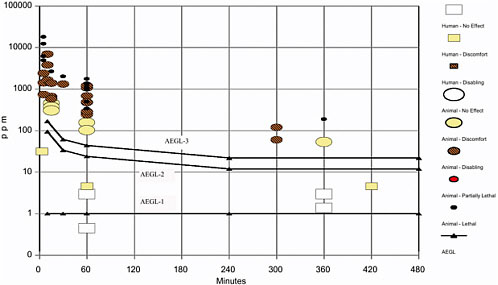
TABLE 3–9 AEGL-2 Values for Hydrogen Fluoride (ppm [mg/m3])
|
10 min |
30 min |
1 h |
4 h |
8 h |
|
95 (78) |
34 (28) |
24 (20) |
12 (9.8) |
12 (9.8) |
that a healthy person can tolerate with only minor irritation upon repeated exposure. Susceptible individuals, including asthmatic patients, should not be incapacitated at that concentration. Figure 3–1 is a plot of all of the data on HF from 3 min to 7 h by category of response. The AEGL-2 values are clearly below the serious injury category of data from tests in monkeys, rats, dogs, mice, guinea pigs, and rabbits.
According to Alarie (1981), 0.1 times the RD50 of 151 ppm for the mouse (TNO/RIVM 1996) can be tolerated for hours by humans with some irritation. The resulting concentration of 15 ppm is only slightly higher than both the 4- and 8-h values in Table 3–9.
7. DATA ANALYSIS FOR AEGL-3
7.1. Summary of Human Data Relevant to AEGL-3
Human data were insufficient for derivation of an AEGL-3. The highest nonlethal concentration that human volunteers were exposed to, 122 ppm for 1 min, produced marked irritation (Machle et al. 1934). That is a lesser effect than the AEGL-3 definition. Scaling to the longer time periods would result in lower values than the AEGL-2. Fatalities of humans from HF exposure have been reported, but exposures were via both dermal and inhalation routes, and exposure concentrations were unknown. Exposures during accidents were usually estimated.
7.2. Summary of Animal Data Relevant to AEGL-3
Lethality data are summarized in Table 3–4, and sublethal data are summarized in Table 3–6. The lowest lethal concentrations were reported for the mouse. Wohlslagel et al. (1976) reported a 1-h LC50 of 342 ppm and a 1-h value of 263 ppm that resulted in no deaths, which the data indicate is a threshold for lethality. However, the LC01, calculated by probit analy-
sis, was 200 ppm, below the LC0. The data also indicate that mice are approximately 3 times more sensitive to HF than rats.
The Dalbey (1996; Dalbey et al. 1998a) data are relevant to the development of short-term AEGL-3 values. In those studies, 10-min exposures to HF in orally cannulated rats (a potentially realistic model for the human breathing pattern under irritant conditions) resulted in serious effects including lethality at 1,764 ppm (1/20) and caused local irritation but no serious effects at 950 ppm. The NOAEL was 271 ppm.
7.3. Derivation of AEGL-3
7.3.1. Derivation of 10-Min AEGL-3
The concentration causing death in one of 20 orally cannulated rats, 1,764 ppm, was chosen as the lethal threshold for the 10-min AEGL-3 (Dalbey et al. 1998a). Although 1/20 is higher than the usual threshold for the AEGL-3, the oral cannulation model is conservative compared with normal nose-breathing, because it bypasses nasal scrubbing and maximizes the pulmonary dose. A total UF of 10 is reasonable under those conditions. Figure 3–1 shows that the 10-min AEGL-3 value is clearly below levels that cause death in tests in monkeys, rats, dogs, mice, guinea pigs, and rabbits. The use of a total UF of 30 would drive the 10-min AEGL-3 to 59 ppm, which is below the 10-min AEGL-2. Nose-breathing rats exposed at 1,669 ppm for 10 min had lesions confined to the nasal passages (Dalbey et al. 1998b). In addition, exposure of monkeys at 690 ppm for 1 h (MacEwen and Vernot 1970) did not result in any deaths. That value extrapolated to 10 min with an n=2 and a total UF of 10 would predict no deaths if monkeys were exposed at 169 ppm for 10 min, essentially the same value as the 10-min AEGL-3 of 170 ppm. Therefore, a total UF of 10 applied to the orally cannulated rat data should be quite protective.
7.3.2. Derivation of 30-Min to 8-H AEGL-3s
The AEGL-3 values for the threshold for life-threatening health effects or death for the longer time periods were based on the 60-min value of 263 ppm, which was the highest nonlethal concentration for the mouse reported by Wohlslagel et al. (1976). UFs and MFs are applied to account for interspecies and intraspecies variability. On the basis of LC50 data from
studies in which the susceptibility of both the rat and mouse were evaluated, the mouse was found to be approximately three times more sensitive than the rat to the effects of HF (Table 3–7). Because of the greater sensitivity of the mouse, an interspecies UF of 1 was applied; an intraspecies UF of 3 was applied to account for differences in human susceptibility. In addition, a MF of 2 was applied, because the highest nonlethal value of 263 ppm was close to the 60-min LC50 of 342 ppm. The 30-min and 4-h values were calculated based on the C2×t=k relationship. Because the time-scaled 8-h value of 15 ppm is inconsistent with the animal data (e.g., two rhesus monkeys survived a 50-d exposure to 18.5 ppm with no effects other than kidney lesions [Machle and Kitzmiller 1935]), the 8-h AEGL-3 value was set equal to the 4-h value. Calculations are contained in Appendix B, and results are listed in Table 3–10.
A total factor of 6 is reasonable and sufficient. If a total factor of 20 were used (3 each for inter- and intraspecies uncertainties and 2 as an MF), the predicted 6-h AEGL-3 would be 5.4 ppm. However, human subjects exposed intermittently at 8 ppm for 6 h over a 25–50 d period experienced only slight irritation (Largent 1960, 1961). Even a susceptible person should not experience a life-threatening effect at that concentration. In addition, the use of a total factor of 20 would drive the AEGL-3 values below the AEGL-2 values. Therefore, a combined factor of 6 is reasonable. The AEGL-3 values are clearly below the levels that cause death in monkeys, rats, dogs, mice, guinea pigs, and rabbits (Figure 3–1).
The database for HF is extensive, and many other studies with laboratory animals support the AEGL-3 values. Concentrations resulting in severe effects but no deaths in several animal species were divided by 10 (an interspecies UF of 3 to account for the fact that these species may be less sensitive than mice, and an intraspecies UF of 3 to account for differences in human susceptibility). When scaled across time, the 1-h values ranged between 69 ppm and 163 ppm, which are above the 1-h AEGL-3 of 44 ppm. In addition, the RD50 for mice of 151 ppm is not far below the 10-min AEGL-3 of 170 ppm. According to Alarie (1981), the RD50 could be tolerated for hours by humans but would result in tissue damage.
TABLE 3–10 AEGL-3 Values for Hydrogen Fluoride (ppm [mg/m3])
|
10 min |
30 min |
1 h |
4 h |
8 h |
|
170 (139) |
62 (51) |
44 (36) |
22 (18) |
22 (18) |
8. SUMMARY OF AEGLs
8.1. AEGL Values and Toxicity End Points
In summary, the AEGL values were derived in the following manner. The AEGL-1 was based on the study of Lund et al. (1997, 1999) in which sensitive biochemical markers of pulmonary inflammation were noted in human volunteers at a mean concentration of 3 ppm. The exposures were for 1 h. In a supporting study, human volunteers could tolerate exposure at a concentration of 2 ppm for 6 h/d with only mild irritation of the eyes, skin, and upper respiratory tract (Largent 1960, 1961). The 3-ppm concentration from the Lund et al. (1997, 1999) study was divided by an intraspecies UF of 3 to protect sensitive individuals. Because of the 6-h exposure duration of the supporting study, and because adaptation to mild sensory irritation occurs, the 1 ppm value was applied to all AEGL-1 exposure durations.
The 10-min AEGL-2 value was based on the 10-min NOAEL of 950 ppm for serious lung effects in orally cannulated rats; that value was considered the threshold for serious effects. A combined UF of 10–3 for interspecies variability (HF is a primary irritant, LC50 values differ by a factor of 2–4 between the mouse and rat, and the irritation end point is appropriate for human health risk assessment) and 3 for intraspecies variability.
The 30-min and 1-, 4- and 8-h AEGL-2 values were based on a study in which dogs exposed at 243 ppm for 1 h showed signs of irritation including blinking, sneezing, and coughing. The 1-h value of 243 ppm was divided by a total UF of 10–3 for intraspecies (the dog is a sensitive species for sensory irritation) and 3 for intraspecies. The values were scaled across time using C2×t=k. Based on the study of Largent (1960, 1961) in which human subjects intermittently exposed at 8.1 ppm for up to 50 d found the exposure only slightly irritating, the calculated time-scaled 8-h value of 8.6 ppm was considered too low. Therefore, the 8-h value was set equal to the 4-h value.
The 10-min AEGL-3 was based on the 10-min lethal threshold in orally cannulated rats, 1,764 ppm. That value was rounded down to 1,700 ppm and divided by a combined UF of 10–3 for interspecies differences (LC50 values differ by a factor of 2–4 between the mouse and rat) and 3 for intraspecies differences.
The other AEGL-3s were derived from the highest reported nonlethal 1-h value for the most sensitive animal species, the mouse. That value, 263 ppm, was divided by UFs of 1 for interspecies variability (the mouse was
TABLE 3–11 Summary of AEGL Values (ppm [mg/m3])
|
Classification |
Exposure Duration |
||||
|
10 min |
30 min |
1 h |
4 h |
8 h |
|
|
AEGL-1 (Nondisabling) |
1.0 (0.8) |
1.0 (0.8) |
1.0 (0.8) |
1.0 (0.8) |
1.0 (0.8) |
|
AEGL-2 (Disabling) |
95 (78) |
34 (28) |
24 (9.8) |
12 (9.8) |
12 (20) |
|
AEGL-3 (Lethal) |
170 (139) |
62 (51) |
44 (36) |
22 (18) |
22 (18) |
approximately 3 times more sensitive than rats) and 3 for intraspecies variability and by an MF of 2 to account for the fact the highest nonlethal value was close to the LC50. That value was scaled to the other time periods using C2×t=k. On the basis of repeated exposures in animal studies and the well-known scrubbing capacity of the mammalian nose at low concentrations, the 8-h AEGL-3 was set equal to the 4-h value. Values are summarized in Table 3–11, above.
8.2. Comparisons with Other Standards and Criteria
Standards and guidelines developed by other agencies are listed in Table 3–12. Those values are for both daily exposures in the workplace and emergency situations. The ERPGs are defined similarly to the AEGLs but are usually for only the 1-h exposure duration. Although based on older data than those used for AEGL development, the 1-h ERPG levels for the respective categories are similar to the 1-h AEGLs. In 1999, 10-min ERPGs were developed for HF. For the three respective levels, they were 2, 50, and 170 ppm. The ERPG-1 and ERPG-3 values are similar to the respective 10-min AEGLs.
The NIOSH IDLH (NIOSH 2002) of 30 ppm, applicable to a 30-min time period prior to donning suitable protective equipment or evacuation, is similar to the 30-min AEGL-2 of 34 ppm. The IDLH of 30 ppm is based on eye, nose, and lung irritation seen in studies with humans (Largent 1961) and animals (Machle et al. 1934).
Other standards and guidelines, applicable to an 8-h work day or peak excursions during an 8-h work day (3 ppm), are higher than the AEGL-1 (1 ppm), indicating the conservative end point chosen for the AEGL-1 and the fact that the AEGL-1 is applicable to the general population.
TABLE 3–12 Extant Standards and Guidelines for Hydrogen Fluoride (ppm)
|
Guideline |
Exposure Duration |
||||
|
0 min |
30 min |
1 h |
4 h |
8 h |
|
|
AEGL-1 |
1.0 |
1.0 |
1.0 |
1.0 |
1.0 |
|
AEGL-2 |
95 |
34 |
24 |
12 |
12 |
|
AEGL-3 |
170 |
62 |
44 |
22 |
22 |
|
ERPG-1 (AIHA)a |
2 |
|
2 |
|
|
|
ERPG-2 (AIHA) |
50 |
20 |
|||
|
ERPG-3 (AIHA) |
170 |
50 |
|||
|
CEEL-1 (CIC)b |
|
1.5 |
|||
|
CEEL-2 (CIC) |
7 |
||||
|
CEEL-3 (CIC) |
50 |
||||
|
IDLH (NIOSH)c |
|
30 |
|
||
|
REL-TWA (NIOSH)d |
|
3e |
|||
|
REL-STEL (NIOSH)f |
6e |
||||
|
PEL-TWA (OSHA)g |
3e |
||||
|
TLV-Ceiling (ACGIH)h |
3e |
||||
|
MAK (Germany)i |
3 |
||||
|
MAC-Peak Category (The Netherlands)j |
3.3 |
||||
|
aERPG (emergency response planning guidelines, American Industrial Hygiene Association) (AIHA 2002). The ERPG-1 is the maximum airborne concentration below which it is believed nearly all individuals could be exposed for up to 1 h without experiencing any symptoms other than mild, transient adverse health effects or without perceiving a clearly defined objectionable odor. The ERPG-2 is the maximum airborne concentration below which it is believed nearly all individuals could be exposed for up to 1 h without experiencing or developing irreversible or other serious health effects or symptoms that could impair an individual’s ability to take protective action. The ERPG-3 is the maximum airborne concentration below which it is believed nearly all individuals could be exposed for up to 1 h without experiencing or developing life-threatening health effects. bCEEL (community emergency exposure levels) (Clement International Corp., unpublished material). CEELs are concentrations that cause adverse health effects (exposure durations are unspecified). CEELs I, II, and III are designated alert, evacuation, and death levels, respectively. The CEELs developed by Clement International Corp. are recommended values. |
|||||
8.3. Data Adequacy and Research Needs
The database for human exposures is relatively good—both short-term and long-term studies with human volunteers are available. The well-conducted study of Lund et al. (1997, 1999) examined lung dynamics as well as biomarkers of exposure. In addition, some data from industrial exposures were located, although few exposures were to HF alone. Data from
animal studies used six species of mammals and encompassed a wide range of exposure concentrations and a range of exposure durations, including daily exposures. The data from human studies was adequate to derive or support the AEGL-1 and AEGL-2 concentrations, and the database for animal studies was adequate to derive the AEGL-2 and AEGL-3 concentrations. Extrapolation to longer exposure times for the animals studies showed that, based on the data of Largent (1960, 1961), the values were too low. Therefore, the 8-h AEGL-2 and AEGL-3 values were set equal to the respective 4-h values.
Sampling and analytical methods used in the human and animal studies conducted in the 1960s and 1970s were not as sensitive as those perfected by the late 1980s and 1990s and may have under- or overestimated concentrations. An improved sampling/analytical methodology developed by Haskell Laboratory (1990) indicates that HF may have collected on glassware in the exposure apparatus. That factor would indicate that exposure concentrations in the early studies may have been underestimated. However, the studies of Lund et al. were very recent and used a more sensitive analytical method.
9. REFERENCES
Abramson, M.J., J.H.Wlodarczyk, N.A.Saunders, and M.J.Hensley. 1989. Does aluminum smelting cause lung disease? Am. Rev. Resp. Dis. 139:1042–1057.
ACGIH (American Conference of Governmental Industrial Hygienists). 1996. Threshold Limit Values (TLVs) for Chemical and Physical Agents and Biological Exposure Indices (BEIs). Cincinnati, OH: ACGIH.
ACGIH (American Conference of Governmental Industrial Hygienists). 1997. Threshold Limit Values (TLVs) for Chemical and Physical Agents and Biological Exposure Indices (BEIs). Cincinnati, OH: ACGIH.
ACGIH (American Conference of Governmental Industrial Hygienists). 2002. Documentation of the Threshold Limit Values and Biological Exposure Indices: Fluorine, 6th Ed. Cincinnati, OH: ACGIH.
AIHA (American Industrial Hygiene Association). 2000. Emergency Response Planning Guidelines and Workplace Exposure Level Guides. Fairfax, VA: AIHA.
Alarie, Y. 1981. Dose-response analysis in animal studies: Prediction of human responses. Environ. Health Perspect. 42:9–13.
ATSDR (Agency for Toxic Substances and Disease Registry). 1993. Toxicological Profile for Fluorides, Hydrogen Fluoride, and Fluorine (F). TOP-91/17. Agency for Toxic Substances and Disease Registry, Public Health Service, Washington, DC.
Alexeeff, G.V., D.C.Lewis, and N.L.Roughly. 1993. Estimation of potential health effects from acute exposure to hydrogen fluoride using a benchmark dose approach. Risk Anal. 13:63–69.
Amoore, J.E., and E.Hautala. 1983. Odor as an aid to chemical safety: Odor thresholds compared with Threshold Limit Values and volatilities for 214 industrial chemicals in air and water dilution. J. Appl. Toxicol. 3:272–290.
Bertolini, J.C. 1992. Hydrofluoric acid: A review of toxicity. J. Emerg. Med. 10:163–168.
Bourbon, P., C.Rioufol, and P.Levy. 1984. Relationships between blood, urine and bone F levels in guinea pig after short exposures To HF. Fluoride 17:124–131.
Braun, J., H.Stoss, and A.Zober. 1984. Intoxication following inhalation of hydrogen fluoride. Arch. Toxicol. 56:50–54.
Budavari, S., M.J.O’Neil, A.Smith, and P.E.Heckelman, eds. 1996. The Merck Index, 12th Ed. Rahway, NJ: Merck & Co., Inc.
Chan, K.-M., W.P Svancarek, and M.Creer. 1987. Fatality due to acute hydrofluoric acid exposure. Clin. Toxicol. 25:333–339.
Chela, A., R.Reig, P.Sanz, E.Huguet, and J.Corbella. 1989. Death due to hydrofluoric acid. Am. J. Forensic Med. Pathol. 10:47–48.
Clement International Corporation. [Undated]. Monograph for hydrogen fluoride/hydrofluoric acid. Prepared for U.S. Environmental Protection Agency, Office of Pollution, Prevention and Toxics, Washington, DC.
Collins, T.F.X., R.L.Sprando, M.E.Shackleford, T.N.Black, et al. 1995. Developmental toxicity of sodium fluoride in rats. Food Chem. Toxicol. 33:951–960.
Collings, G.H., R.B.L.Fleming, and R.May. 1951. Absorption and excretion of inhaled fluorides. AMA Arch. Ind. Hyg. Occup. Med. 4:585–590.
Dalbey, W. 1996. Evaluation of the Toxicity of Hydrogen Fluoride at Short Exposure Times. Petroleum Environmental Research Forum Project 92–09, performed at Stonybrook Laboratories Inc., Pennington, NJ.
Dalbey, W., B.Dunn, R.Bannister, W.Daughtrey, C.Kirwin, F.Reitman, A. Steiner, and J.Bruce. 1998a. Acute effects of 10-minute exposure to hydrogen fluoride in rats and derivation of a short-term exposure limit for humans. Regul. Toxicol. Pharmacol. 27:207–216.
Dalbey, W., B.Dunn, R.Bannister, W.Daughtrey, C.Kirwin, F.Reitman, M. Wells, and J.Bruce. 1998b. Short-term exposures of rats to airborne hydrogen fluoride. Toxicol. Environ. Health 55 (Part A):241–275.
Dayal, H.H., M.Brodwick, R.Morris, T.Baranowski, N.Trieff, J.A.Harrison, J.R. Lisse, and G.A.S.Ansari. 1992. A community-based epidemiologic study of health sequelae of exposure to hydrofluoric acid. Ann. Epidemol. 2:213–330.
Derryberry, O.M., M.D.Bartholomew, and R.B.L.Fleming. 1963. Fluoride exposure and worker health. Arch. Environ. Health 6:65–73.
DHHS (U.S. Department of Health and Human Services). 1991. Review of Fluorides: Benefits and Risks. Report of the Ad Hoc Committee on Fluoride of the Committee to Coordinate Environmental Health and Related Programs. U.S. Department of Health and Human Services, Washington, DC.
Dinman, B.D., W.J.Bovard, T.B.Bonney, et al. 1976. Excretion of fluoride during a seven-day workweek. J. Occup. Med. 18:14–16.
DiPasquale, L.C., and H.V.Davis. 1971. Acute toxicity of brief exposures to hydrogen fluoride, hydrogen chloride, nitrogen dioxide, and hydrogen cyanide singly and in combination with carbon monoxide. AMRL-TR-71–120, AD-751–442. National Technical Information Service, Springfield, VA.
Dousset, J.C., C.Rioufel, P.Bourbon, P.Levy, and R.Feliste. 1986. Effects of inhaled HF on cholesterol metabolism in guinea pigs. Fluoride 19:71–77.
Dunipace, A.J., W.Zhang, T.W.Noblitt, et al. 1989. Genotoxic evaluation of chronic fluoride exposure: Micronucleus and sperm morphology studies. J. Dent. Res. 68:1525–1528.
EPA (U.S. Environmental Protection Agency). 1993. Hydrogen Fluoride Study: Final Report, Report to Congress, Section 112(n)(6), Clean Air Act as amended. EPA 550-R-93–001. U.S. Environmental protection Agency, Washington, DC.
German Research Association (Deutsche Forschungsgemeinschaft). 1999. List of MAK and BAT Values, 1999. Commission for the Investigation of Health Hazards of Chemical Compounds in the Work Area, Report No. 35. Weinheim, Federal Republic of Germany: Wiley VCH.
Haskell Laboratory. 1988a. Preliminary Report on the Concentration-Time-Response Relationships for Hydrogen Fluoride with Attachments and Cover Letter dated 062188. EPA/OTS; Doc #FYI-OTS-0788–0607 (Same as R. Valentine. 1988. Preliminary Report on the Concentration-Time-Response Relationships for Hydrogen Fluoride. Du Pont HLR 281–88).
Haskell Laboratory. 1988b. Test results of acute inhalation studies with anhydrous hydrogen fluoride with cover letter dated 031688. TSCATS/303700, EPA/OTS; Doc #FYI-OTS-0388–0607.
Haskell Laboratory. 1990. Acute inhalation toxicity of hydrogen fluoride in rats (final report) with attachments and cover letter dated 082390. EPA/OTS; Doc #FYI-OTS-0890–0607.
Heindel, J.J., H.K.Bates, C.J.Price, M.C.Mark, C.B.Myers, and B.A.Schwetz. 1996. Developmental toxicity evaluation of sodium fluoride administered to rats and rabbits in drinking water. Fundam. Appl. Toxicol. 30:162–177.
Higgins, E.A., V.Fiorca, A.A.Thomas, and H.V.Davis. 1972. Acute toxicity of brief exposures to HF, HCl, NO2, and HCN with and without CO. Fire Technol. 8:120–130.
Himes, J.E. 1989. Occupational medicine in Oklahoma: Hydrofluoric acid dangers. J. Okla. State Med. Assoc. 82:567–569.
Humiczewska, M., W.Kuzna, and A.Put. 1989. Studies on the toxicology of fluorine compounds. I. Histological and histochemical investigations on the liver, heart, lungs, and stomach of rats exposed to hydrogen fluoride [in Polish]. Folia Biol. (Krakow) 37:181–186.
Kaltreider, N.L., M.J.Elder, L.V.Crally, and M.O.Colwell. 1972. Health survey of aluminum workers with special reference to fluoride exposure. J. Occup. Med. 14:531–541.
Kleinfeld, M. 1965. Acute pulmonary edema of chemical origin. Arch. Environ. Health 10:942–946.
Kono, K., Y.Yoshida, H.Yamagata, M.Watanabe, Y.Shibuya, and K.Doi. 1987. Urinary fluoride monitoring of industrial hydrofluoric acid exposure. Environ. Res. 42:415–420.
Kusewitt, D.F., D.M.Stavert, G.Ripple, T.Mundie, and B.E.Lehnert. 1989. Relative acute toxicities in the respiratory tract of inhaled hydrogen fluoride, hydrogen bromide, and hydrogen chloride. Toxicologist 9:36.
Largent, E.J. 1960. The metabolism of fluorides in man. AMA Arch. Ind. Health 21:318–323.
Largent, E.J. 1961. Fluorosis: The Health Aspects of Fluorine Compounds. Columbus, OH: Ohio State University Press. Pp. 34–39, 43–48.
Lee, D.C., J.F.Wiley, and J.W.Snyder. 1993. Treatment of inhalation exposure to hydrofluoric acid with nebulized calcium gluconate. J. Occup. Med. 35:470.
Li, Y.M., A.J.Dunipace, and G.K.Stookey. 1987. Effects of fluoride on the mouse sperm morphology test. J. Dent. Res. 66:1509–1511.
Lund, K., M.Refsnes, P.Sostrand, P.Schwarze, J.Boe, and J.Kongerud. 1995. Inflammatory cells increase in bronchoalveolar lavage fluid following hydrogen fluoride exposure. Am. J. Respir. Crit. Care Med. 151:A259.
Lund, K., J.Ekstrand, J.Boe, P.Sostrand, and J.Kongerud. 1997. Exposure to hydrogen fluoride: An experimental study in humans of concentrations of fluoride in plasma, symptoms, and lung function. Occup. Environ. Med. 54:32–37.
Lund, K., M.Refsnes, T.Sandstrom, P.Sostrand, P.Schwarze, J.Boe, and J. Kongerud. 1999. Increased CD3 positive cells in bronchoalveolar lavage fluid after hydrogen fluoride inhalation. Scand. J. Work Environ. Health 25:326–334.
MacEwen, J.D., and E.H.Vernot. 1970. Toxic Hazards Research Unit Annual Technical Report: 1970. AMRL-TR-70–77, AD 714694. Aerospace Medical Research Laboratory, Wright-Patterson AFB, Ohio.
MacEwen, J.D., and E.H.Vernot. 1971. Toxic Hazards Research Unit Annual Technical Report: 1971. AMRL-TR-71–83. Aerospace Medical Research Laboratory, Wright-Patterson AFB, Ohio.
MacEwen, J.D., and E.H.Vernot. 1972. Toxic Hazards Research Unit Annual Technical Report: 1972. AMRL-TR-72–62, AD-755 358. Aerospace Medical Research Laboratory, Wright-Patterson AFB, Ohio.
MacEwen, J.D., and E.H.Vernot. 1974. Toxic Hazards Research Unit Annual Technical Report: 1974. AMRL-TR-74–78. Aerospace Medical Research Laboratory, Wright-Patterson AFB, Ohio.
Machle, W., and E.E.Evans. 1940. Exposure to fluorine in industry. J. Ind. Hyg. Toxicol. 22:213–217.
Machle, W., and K.Kitzmiller. 1935. The effects of the inhalation of hydrogen fluoride. II. The response following exposure to low concentrations. J. Ind. Hyg. 17:223–229.
Machle, W., and E.W.Scott. 1935. The effects of the inhalation of hydrogen fluoride. III. Fluorine storage following exposure to sub-lethal concentrations. J. Indust. Hyg. 17:230–240.
Machle, W., F.Thamann, K.Kitzmiller, and J.Cholak. 1934. The effects of the inhalation of hydrogen fluoride. I. The response following exposure to high concentrations. J. Ind. Hyg. 16:129–145.
Machle, W., K.V.Kitzmiller, E.W.Scott, and J.F.Treon. 1942. The effect of the inhalation of hydrogen chloride. J. Ind. Hyg. 24:222–225.
Maurer, J.K., M.C.Chang, B.G.Boysen, et al. 1990. 2-Year carcinogenicity study of sodium fluoride in rats. J. Natl. Cancer Inst. 82:118–126.
Mayer, T.G., and P.L.Gross. 1985. Fatal systemic fluorosis due to hydrofluoric acid burns. Ann. Emerg. Med. 14:149–153.
Ministry of Social Affairs and Employment (SDU Uitgevers). 2000. Nationale MAC (Maximum Allowable Concentration) List, 2000. Ministry of Social Affairs and Employment, The Hague, The Netherlands.
Morris, J.B., and F.A.Smith. 1982. Regional deposition and absorption of inhaled hydrogen fluoride in the rat. Toxicol. Appl. Pharmacol. 62:81–89.
Morris, J.B. and F.A.Smith. 1983. Identification of two forms of fluorine in tissues of rats inhaling hydrogen fluoride. Toxicol. Appl. Pharmacol. 71:383–390.
NIOSH (National Institute for Occupational Safety and Health). 1976. Criteria for a Recommended Standard: Occupational Exposure to Hydrogen Fluoride. DHHS (NIOSH) Publication 76–143. U.S. Department of Health and Human Services, Washington, DC.
NIOSH (National Institute for Occupational Safety and Health). 1995. Hydrogen Fluoride. Documentation for Immediately Dangerous to Life or Health Concentrations (IDLHs). U.S. Department of Health and Human Services, National Institute for Occupational Safety and Health, Cincinnati, OH [Online]. Available: http://www.cdc.gov/niosh/idlh/7664393.html [2002].
NRC (National Research Council). 1989. Biologic Markers in Pulmonary Toxicology. Washington, DC: National Academy Press.
NRC (National Research Council). 1991. Permissible Exposure Levels and Emergency Exposure Guidance Levels for Selected Airborne Contaminants. Washington, DC: National Academy Press.
NRC (National Research Council). 1993. Guidelines for Developing Community Emergency Exposure Levels for Hazardous Substances. Washington, DC: National Academy Press.
NRC (National Research Council). 2001. Standing Operating Procedures for Developing Acute Exposure Guideline Levels for Hazardous Chemicals. Washington, DC: National Academy Press.
NTP (National Toxicology Program). 1990. Technical Report on the Toxicology and Carcinogenesis Studies of Sodium Fluoride in F344/N Rats and B6C3F1 Mice (Drinking Water Studies). TR No. 393. National Toxicology Program, Washington, DC.
Pati, P.C., and S.P.Buhnya. 1987. Genotoxic effect of an environmental pollutant, sodium fluoride, in mammalian in vivo test systems. Caryologia 40:79–88.
Perry, W.G., F.A.Smith, and M.B.Kent. 1994. The halogens. Chapter 43 in Patty’s Industrial Hygiene and Toxicology, Vol. II, Part F, G.F.Clayton and F.E.Clayton, eds. New York, NY: John Wiley & Sons, Inc.
Placke, M.E., M.Brooker, R.Persing, J.Taylor, and M.Hagerty. 1990. Final Report on Repeated-Exposure Inhalation Study of Hydrogen Fluoride in Rats. Battelle Memorial Institute, Columbus, OH. Docket No. OPPTS 42187, submitted by Battelle Washington Environmental Program, Arlington, VA.
Placke, M., and S.Griffin. 1991. Subchronic Inhalation Exposure Study of Hydrogen Fluoride in Rats. Batelle Memorial Institute, Columbus, OH. Docket No. OPPTS 42187, submitted by Battelle Washington Environmental Program, Arlington, VA.
Ronzani, E. 1909. Uber den einfluss der einatmungen von reizenden gasen der industrien auf die schutzkrafte des organismus gegenuber den infektiven krankheiten [in German]. Arch. Hyg. 70:217.
Rosenholtz, M.J., T.R.Carson, M.H.Weeks, F.Wilinski, D.F.Ford, and F.W. Oberst. 1963. A toxicopathologic study in animals after brief single exposures to hydrogen fluoride. Amer. Ind. Hyg. Assoc. J. 24:253–261.
Sadilova, M.S., K.P.Selyankina, and O.K.Shturkina. 1965. Experimental studies on the effect of hydrogen fluoride on the central nervous system. Hyg. Sanit. 30:155–160.
Stavert, D.M., D.C.Archuleta, M.J.Behr, and B.E.Lehnert. 1991. Relative acute toxicities of hydrogen fluoride, hydrogen chloride, and hydrogen bromide in nose- and pseudo-mouth-breathing rats. Fundam. Appl. Toxicol. 16:636–655.
Stokinger, H.E. 1949. Toxicity following inhalation of fluorine and hydrogen fluoride. Chapter 17 in Pharmacology and Toxicology of Uranium Compounds, C.Voegtlin and H.C.Hodge, eds. New York: McGraw-Hill Book Company.
ten Berge, W.F., A.Zwart, and L.M.Appleman. 1986. Concentration-time mortality response relationship of irritant and systemically acting vapors and gases. J. Hazard. Mater. 13:301–310.
Trevino, M.A. 1991. Hydrofluoric acid exposures: Long-term effects [draft]. Draft report cited in EPA 1993.
TNO/RIVM (The Netherlands Organization for Applied Scientific Research/National Institute of Public Health and the Environment). 1996. Hydrogen Fluoride: Risk Assessment [draft]. Chemical Substances Bureau, The Hague, The Netherlands.
Tepperman, P.B. 1980. Fatality due to acute systemic fluoride poisoning following a hydrofluoric-acid skin burn. J. Occup. Med. 22:691–692.
Vernot, E.H., J.D.MacEwen, C.C.Haun, and E.R.Kinkead. 1977. Acute toxicity and skin corrosion data for some organic and inorganic compounds and aqueous solutions. Toxicol. Appl. Pharmacol. 42:417–423.
Voroshilin, S.I., E.G.Plotko, and V.Ya Nikiforova. 1975. Mutagenic effect of hydrogen fluoride on animals. Tsitol. Genet. 9:40–42.
Waldbott, G.L., and J.R.Lee. 1978. Toxicity from repeated low-grade exposure to hydrogen fluoride—case report. Clin. Toxicol. 13:391–402.
Wing, J.S., L.M.Sanderson, J.D.Brender, D.M.Perrotta, and R.A.Beauchamp. 1991. Acute health effects in a community after a release of hydrofluoric acid. Arch. Environ. Health 46:155–160.
Wohlslagel, J., L.C.DiPasquale, and E.H.Vernot. 1976. Toxicity of solid rocket motor exhaust: Effects of HCl, HF, and alumina on rodents. J. Combust. Toxicol. 3:61–69.
Weiss, G. 1980. Hazardous Chemicals Data Book. Park Ridge, NJ: Noyes Data Corporation.
APPENDIX A
Time-Scaling Calculations for Hydrogen Fluoride AEGLs
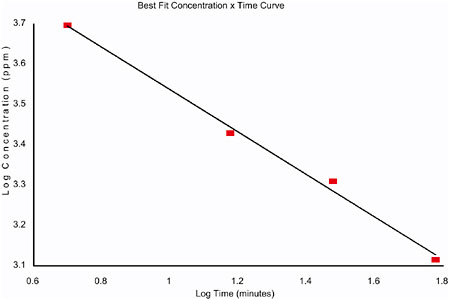
Data (LC50 values) (Rosenholtz et al. 1963)
|
Time (min) |
Concentration (ppm) |
Log time |
Log concentration |
|
5 |
4,970 |
0.6990 |
3.6964 |
|
15 |
2,689 |
1.1761 |
3.4296 |
|
30 |
2,042 |
1.4771 |
3.3101 |
|
60 |
1,307 |
1.7782 |
3.1163 |
|
Regression Output: |
|
|
Intercept |
4.0627 |
|
Slope |
−0.5260 |
|
R Squared |
0.9948 |
|
Correlation |
−0.9974 |
|
Degrees of Freedom |
2 |
|
Observations |
4 |
n=1.9
k=5.3E+07
APPENDIX B Derivation of AEGL Values
Derivation of AEGL-1
|
Key study: |
Lund et al. 1997, 1999 |
|
Toxicity end point: |
Biomarkers of exposure during 1 h exposure of exercising human subjects to several ranges of concentrations. |
|
Time-scaling: |
Not applied; adaptation occurs to the slight effects characterized by the AEGL-1. |
|
Uncertainty factors: |
3 for differences in human susceptibility. The resulting concentration should be protective of asthmatic individuals because it is below the average (2 ppm) and ranges of concentrations (up to 8.1 ppm) (Largent 1960, 1961) that produced slight to mild irritation in healthy adult male subjects. |
|
Calculations: |
The 3 ppm concentration was divided by the intraspecies UF of 3. The resulting concentration, 1 ppm, was used for all AEGL-1 time points. |
Derivation of AEGL-2
|
Key studies: |
Dalbey 1996; Dalbey et al. 1998a; Rosenholtz et al. 1963 |
|
Toxicity end point: |
Lower respiratory tract effects (10-min value)—the 10-min NOAEL of 950 ppm in orally cannulated rats (Dalbey 1996) Irritation (30-min and 1-, 4-, and 8-h values)—signs of blinking, sneezing, and coughing in dogs exposed at 243 ppm for 1 h (Rosenholtz et al. 1963) |
|
Time-scaling: |
C2×t=k, based on the data of Rosenholtz et al. (1963), where C=243 ppm, t=60 min, UF=10, and n=2 |
|
|
C2/10×t=k k=35429.4 ppm2·mm |
|
Uncertainty factors: |
10-min AEGL-2 Combined uncertainty factor of 10 3 for interspecies (effects are unlikely to differ between species; LC50 values were similar among species; oral cannulation maximizes the dose to the lower respiratory tract) 3 for intraspecies (oral cannulation maximizes the dose to the lower respiratory tract and is a potentially realistic model for human response to corrosive gases) |
|
|
30-min and 1-, 4-, and 8-h AEGL-2 Combined uncertainty factor of 10 3 for interspecies (the dog is a sensitive species for sensory irritation) 3 for intraspecies |
|
10-min AEGL-2: |
950 ppm/10=95 ppm |
|
30-min AEGL-2: |
C2/10×30 min=35429.4 ppm2·min C=34.4 ppm |
|
1-h AEGL-2: |
C=243 ppm/10=24.3 ppm |
|
4-h AEGL-2: |
C2/10×240 min=35429.4 ppm2·min C=12.2 ppm |
|
8-h AEGL-2: |
12 ppm |
|
|
Time-scaling to the 8-h exposure duration results in a value inconsistent with the human data. Because humans suffered no greater effect than slight irritation during intermittent exposures at 8.1 ppm on a repeated basis (Largent 1961, 1962), the calculated concentra- |
|
|
tion of 8.6 ppm was considered too low. Therefore, the 8-h AEGL-2 value was set equal to the 4-h value. |
Derivation of AEGL-3
|
Key studies: |
Dalbey 1996; Dalbey et al. 1998a; Wohlslagel et al. 1976 |
|
Toxicity end point: |
Lethality (10-min value)—LC05 in rats (1,764 ppm) (Dalbey 1996) Lethality (30-min and 1-, 4-, and 8-h values)—1-h no-death value in the mouse (263 ppm) (Wohlslagel et al. 1976) |
|
Time-scaling: |
C2×t=k, based on the data of Rosenholtz et al. (1963), where C=263 ppm, t=60 min, UF/MF=6, and n=2 |
|
|
(263 ppm/6)2×60 min=115,281.67 ppm2·min |
|
Uncertainty factors: |
10-min AEGL-3 Combined uncertainty factor of 10 3 for interspecies (effects are unlikely to differ greatly among species; LC50 values were similar among species; oral cannulation maximizes the dose to the lower respiratory tract) 3 for intraspecies (oral cannulation maximizes the dose to the lower respiratory tract and is a potentially realistic model for human response to corrosive gases) |
|
|
30-min and 1-, 4-, and 8-h AEGL-3 1 for interspecies (the mouse was the most sensitive species; LC50 values differed by approximately 3 between the rat and mouse and effects are unlikely to differ between species). 3 for intraspecies |
|
Modifying factor: |
2 to account for the fact that the highest nonlethal value was close to the LC50 (applied to the 30-min, and 1-, 4-, and 8-h values) |
|
10-min AEGL-3: |
1,700 ppm (rounded from 1,764)/10=170 ppm |
|
30-min AEGL-3: |
C2/6×30 min=115,281.67 ppm2·min C=61.9 ppm |
|
1-h AEGL-3: |
C=263 ppm/6=43.8 ppm |
|
4-h AEGL-3: |
C2/6×240 min=115,281.67 ppm2·min C=21.9 ppm |
|
8-h AEGL-3: |
C2/6×480 min=115,281.67 ppm2·min C=15.4 ppm (set equal to the 4-h value of 22 ppm) |
|
|
The time-scaled 8-h AEGL-2 value of 15 ppm is considered inconsistent with the animal data. Rats survived for 8 d during a 14-d exposure at 5 ppm (Placke et al. 1990). No deaths occurred in groups of four male and female rhesus monkeys inhaling 690 ppm for 1 h (MacEwen and Vernot 1970). In a longer-term study, two rhesus monkeys survived a 50-d exposure at 18.5 ppm, 6–7 h/d for 50 d for a total of 309 exposure hours (Machle and Kitzmiller 1935). Therefore, the 8-h AEGL-3 was set equal to the 4-h AEGL-3. |
APPENDIX C
ACUTE EXPOSURE GUIDELINE LEVELS FOR HYDROGEN FLUORIDE (CAS No. 7664–39–3)
DERIVATION SUMMARY
|
AEGL-1 |
||||
|
10 min |
30 min |
1 h |
4 h |
8 h |
|
95 ppm |
34 ppm |
24 ppm |
12 ppm |
12 ppm |
|
Key references: |
(1) Lund et al. 1997. Exposure to hydrogen fluoride: an experimental study in humans of concentrations of fluoride in plasma, symptoms, and lung function. Occup. Environ. Med. 54:32–37. (2) Lund et al., 1999. Increased CD3 positive cells in bronchoalveolar lavage fluid after hydrogen fluoride inhalation. Scand. J. Work. Environ. Health 25:326–334. |
|||
|
Test species/strain/number: 20 healthy male volunteers |
||||
|
Exposure route/concentrations/durations: Inhalation; average concentrations of 0.2–0.7 ppm (n=9), 0.85–2.9 ppm (n=7), and 3.0–9.3 ppm (n=7). |
||||
|
Effects: At 0.2–0.7 ppm, no to low sensory irritation; no change in FVC, FEV1; no inflammatory response in bronchoalveolar lavage fluid (BAL). At 0.85–2.9 ppm, no to low sensory irritation; no change in FVC, FEV1; increase in the percentage of CD3 cells and myeloperoxidase in bronchial portion of BAL; no increases in neutrophils, eosinophils, protein, or methyl histamine in BAL. At 3.0–6.3 ppm, low sensory irritation; no change in FVC, FEV1; increase in the percentage of CD3 cells and myeloperoxidase in bronchial portion of BAL; no increases in neutrophils, eosinophils, protein, or methyl histamine in BAL. |
||||
|
End point/concentration/rationale: Subthreshold concentration for inflammation of 3 ppm (0.85–2.9 ppm) for 1 h, which was without sensory irritation was chosen as the basis for the AEGL-1. |
||||
|
Uncertainty factors/rationale: |
||||
|
Total uncertainty factor: 3 |
||||
|
Interspecies: Not applicable since human subjects were the test species. |
||||
|
Intraspecies: 3. The subjects were healthy adult males. The resulting concentration is far below tested concentrations that did not cause symp toms of bronchial constriction in healthy adults (ranges up to 6.3 ppm [Lund et al. 1997] and 8.1 ppm [Largent 1960, 1961]) |
||||
|
Modifying factor: Not applicable |
||||
|
Animal to human dosimetric adjustment: Not applicable, human data used. |
||||
|
Time-scaling: Not applied. AEGL-1 values were calculated by adjusting the 1-h concentration of 3 ppm by a UF of 3. Because the response to slight irritation would be similar at shorter exposure durations, the 10- and 30-min values were set equal to the 1-h concentration. |
||||
|
Data adequacy: The values are supported by the earlier study of Largent (1969, 1961) in which five healthy human volunteers were exposed at 1.42–4.74 ppm for 10 to 50 d with no greater effects than slight irritation and reddened facial skin. Effects were no more severe in two individuals who were exposed at concentrations up to 7.9 ppm and 8.1 ppm during some of the exposure days. |
|
AEGL-2 |
||||
|
10 min |
30 min |
1 h |
4 h |
8 h |
|
95 ppm |
34 ppm |
24 ppm |
12 ppm |
12 ppm |
|
Key references: |
(1) Dalbey, W. 1996. Evaluation of the toxicity of hydrogen fluoride at short exposure times. Petroleum Environmental Research Forum Project 92–09. Performed at Stonybrook Laboratories, Inc., Pennington, NJ. (2) Dalbey, W., B.Dunn, R.Bannister, W.Daughtrey, C. Kirwin, F.Reitman, A.Steiner, and J.Bruce. 1998. Acute effects of 10-minute exposure to hydrogen fluoride in rats and derivation of a short-term exposure limit for humans. Regulat. Toxicol. Pharmacol. 27:207–216. (3) Rosenholtz, M.J., T.R.Carson, M.H.Weeks, F. Wilinski, D.F.Ford and F.W.Oberst. 1963. A toxicopathologic study in animals after brief single exposures to hydrogen fluoride. Amer. Ind. Hyg. Assoc. J. 24:253–261. |
|||
|
Test species/strain/gender/number: female Sprague-Dawley rats, 20/exposure group (Dalbey 1996); mongrel dogs, 2/exposure group (Rosenholtz et al. 1963) |
||||
|
Exposure route/concentrations/duration: 10-min inhalation exposures of orally cannulated rats to 135, 271, 950, or 1,764 ppm (Dalbey, 1996); 60-min inhalation exposures of mongrel dogs to 157 ppm or 243 ppm (Rosenholtz et al. 1963) |
||||
|
Effects: In the 10-min inhalation exposures of orally cannulated rats (Dalbey 1996), at 135 ppm there was no effect; at 271 ppm there was no effect; 950 ppm was set as a no-observed-adverse-effect level (NOAEL) (increase in myeloperoxidase and polymorphonuclear leukocytes in BAL); and 1,764 ppm resulted in death of one of 20 animals. In the 60-min inhalation exposures of mongrel dogs (Rosenholtz et al. 1963), at 157 ppm there was mild eye irritation and sneezing and dry cough that persisted for 2 d; and at 243 ppm there was eye, nasal, and respiratory irritation (blinking, sneezing, and coughing during exposures; cough persisted for 2 d and during exercise for up to 10 d). |
||||
|
End point/concentration/rationale: For the 10-min exposure, the NOAEL of 950 ppm in orally cannulated rats was chosen because it addresses the relevant exposure period and represents the highest concentration tested that did not result in death. In addition, direct delivery of hydrogen fluoride to the trachea via cannulation is a sensitive model and simulates 100% mouth-breathing in humans exposed to irritant gases. For longer-term exposures, the study by Rosenholtz et al. (1963) was chosen because it was well designed and used dogs which represent a sensitive model for irritants. The highest exposure |
||||
|
level of 243 ppm for 60 min, which resulted in symptoms/effects of great discomfort but is not expected to impair the ability to escape or result in irreversible or long-lasting effects, was chosen as the threshold for AEGL-2 effects. |
||||
|
Uncertainty factors/rationale: |
||||
|
10-min AEGL-2 values |
||||
|
Total uncertainty factor: 10 |
||||
|
Interspecies: 3. A sensitive model was used (orally cannulated rats). |
||||
|
Intraspecies: 3. Oral cannulation maximizes the dose to the lungs and is relevant to mouth-breathing humans. |
||||
|
30-min and 1-, 4-, and 8-h AEGL-2 values |
||||
|
Total uncertainty factor: 10 |
||||
|
Interspecies: 3. A sensitive species was used (other studies with irritant gases show an irritant response in the dog at concentrations that are nonir ritating to rodents). |
||||
|
Intraspecies: 3. A greater factor would lower the value to concentrations that were non-irritating in human studies. |
||||
|
Modifying factor: Not applicable |
||||
|
Animal to human dosimetric adjustment: Insufficient data |
||||
|
Time-scaling: Cn×t=k where n=2 was derived based on regression analysis of rat LC50 studies conducted at time periods of 5, 15, 30, and 60 min. A second study using rabbits and guinea pigs and conducted over time periods of 5 min to 6 h resulted in the same value for n (reported in a third study). End points for the second study were both irritation and death. Because the time-scaled 8-h value of 8.6 ppm was inconsistent with the data of Largent (1960, 1961), the 8-h AEGL-2 was set equal to the 4-h value. |
||||
|
Data adequacy: Based on the following observations, there is considerable support for the scientific credibility of the AEGL-2 values. Oral cannulation bypasses nasal scrubbing and maximizes the dose to the lung. Two species (rat and dog) were tested but not at the same concentrations. A similar irritant response was observed in the rat at higher test concentrations. According to Alarie (Environ. Health Persp. 42:9–13), one-tenth of the mouse RD50 for irritant chemicals can be tolerated for “hours” by humans. The mouse RD50 is 151 ppm; deriving AEGL-2 values based on the RD50 results in a human 4- or 8-h exposure of 15 ppm, slightly higher than the AEGL-2 values based on irritant effects in the dog. The database for irritant effects of hydrogen fluoride is extensive. Five species were tested over a range of concentrations for time periods of 5 min to 6 h. |
|
AEGL-3 |
||||
|
10 min |
30 min |
1 h |
4 h |
8 h |
|
170 ppm |
62 ppm |
44 ppm |
22 ppm |
22 ppm |
|
Key References: |
(1) Dalbey, W. 1996. Evaluation of the toxicity of hydrogen fluoride at short exposure times. Petroleum Environmental Research Forum Project 92–09. Performed at Stonybrook Laboratories, Inc., Pennington, NJ. (2) Dalbey, W., B.Dunn, R.Bannister, W.Daughtrey, C. Kirwin, F.Reitman, A.Steiner, and J.Bruce. 1998. Acute effects of 10-minute exposure to hydrogen fluoride in rats and derivation of a short-term exposure limit for humans. Regulat. Toxicol. Pharmacol. 27:207–216. (3) Wohlslagel, J., L.C.DiPasquale and E.H.Vernot. 1976. Toxicity of solid rocket motor exhaust: Effects of HCl, HF, and alumina on rodents. J. Combust. Toxicol. 3:61–69. |
|||
|
Test species/strain/gender/number: female Sprague-Dawley rats, 20/exposure group; female CF-1 mice, 10/exposure group |
||||
|
Exposure route/concentrations/durations: 10-min inhalation exposures of orally cannulated rats at 135, 271, 950, or 1,764 ppm. 60-min inhalation exposures of female mice at 263, 278, 324, 381, or 458 ppm |
||||
|
Effects: In the 10-min inhalation exposures of orally cannulated rats, at 135 ppm there were no effects; at 271 ppm there was no effect; 950 ppm was set as a no-observed-adverse-effect level (NOAEL) (increase in myeloperoxidase and polymorphonuclear leukocytes in BAL); and 1,764 ppm resulted in the death of one of 20 animals. In the 60-min inhalation exposures of female mice, at 263 ppm there were no deaths; at 278 ppm there were 1/10 deaths; at 324 ppm there were 7/10 deaths; at 381 ppm there were 6/10 deaths; at 458 ppm there were 9/10 deaths. |
||||
|
End point/concentration/rationale: For the 10-min AEGL-3, the LC05 of 1,764 ppm was rounded down to 1,700 ppm. Although 1/20 deaths is higher than the usual threshold for the AEGL-3 (1/100 deaths), the oral cannulation model is conservative compared with normal nose breathing as it bypasses nasal scrubbing and maximizes the dose to the lung. No higher concentrations were tested at the 10-min exposure period. The concentration resulting in no deaths in the mouse, 263 ppm, was chosen for the longer exposure periods. This specific data set was selected because, based on LC50 values in several studies, the mouse was the most sensitive of three tested species (monkey, rat, and mouse). |
||||
|
Uncertainty factors/rationale: |
||||
|
10-min AEGL-3 values |
||||
|
Total uncertainty factor: 10 |
||||
|
Interspecies: 3. Based on LC50 values in the same studies, the rat was approximately three times less sensitive than the mouse to the lethal effects of hydrogen fluoride; however, the delivery of hydrogen fluoride directly to the trachea via oral cannulation is a conservative model. |
||||
|
Intraspecies: 3. Oral cannulation maximizes the dose to the lungs and is relevant to mouth breathing humans. |
||||
|
30-min and 1-, 4-, and 8-h AEGL-2 values |
||||
|
Total uncertainty factor: 3 |
||||
|
Interspecies: 1. Based on LC50 values, the mouse was the most sensitive of three tested species; of several studies involving the mouse, this study had the lowest lethal values. |
||||
|
Intraspecies: 3. Application of a greater uncertainty factor would reduce concentrations to those found only slightly irritating in human studies. |
||||
|
Modifying factor: For 30-min and 1-, 4-, and 8-h AEGL-2 values, 2. The highest non-lethal value was close to the LC50 value |
||||
|
Animal to human dosimetric adjustment: Insufficient data |
||||
|
Time-scaling: Cn×t=k where n=2 based on regression analysis of rat LC50 studies conducted at time periods of 5, 15, 30, and 60 min. A second study using rabbits and guinea pigs and conducted over time periods of 5 min to 6 h resulted in the same value for n (reported in a third study). End points for the second study were both irritation and death. Because the time-scaled 8-h AEGL-3 value of 15 ppm was inconsistent with results of longer-term studies with monkeys and rodents, the 8-h value was set equal to the 4-h value. |
||||
|
Data adequacy: There is considerable support for the AEGL-3 values as the database for hydrogen fluoride is extensive with multiple studies of lethality conducted at several exposure durations and involving five species of mammals (monkey, rat, mouse, guinea pig, and rabbit). Studies with multiple dosing regimens generally showed a clear dose-response relationship. A few longer-term studies were also available and served as supporting data. Tissue and organ pathology indicated that the toxic mechanism was the same across species. Difficulties in maintaining/measuring exposure concentrations were encountered in some of the studies; studies in which these difficulties were described were not used to derive AEGL values. |


