
2
The Importance of Data on Race, Ethnicity, Socioeconomic Position, and Acculturation in Understanding Disparities in Health and Health Care
Serious disparities in health and in access and utilization of health care and medical treatment have been found across racial and ethnic groups and economic and social strata in the United States. Disparities linked to language proficiency and acculturation have also been found. As a precursor to our discussion of data needs for understanding these differences, we first consider why social and economic characteristics such as race, ethnicity, socioeconomic position (SEP), and language use and acculturation are important for understanding disparities in health and health care. Throughout the report, we use the term SEP (instead of the widely used alternative term socioeconomic status, or SES) to encompass a broad set of socioeconomic characteristics including income, wealth, and education. Although often used loosely as synonymous with SEP as defined here, SES is sometimes thought to refer solely to the narrower concept of status, which has connotations of a specific standing in society.
We begin by reviewing the literature on disparities. Next, we discus the panel’s definition of disparities. The key dimensions the panel was charged to consider—race, ethnicity, and socioeconomic position—as well as language use and acculturation are then discussed. The chapter concludes by highlighting the importance of better understanding the causes and consequences of disparities in health and health care.
DISPARITIES IN HEALTH AND HEALTH CARE
Examples of Racial, Ethnic, and Socioeconomic Position Disparities
An extensive body of literature covering a number of health and social science disciplines has documented persistent racial, ethnic, and socioeconomic disparities in health status and health care in the United States. For some measures of health and health care, these disparities have existed over a long period of time, or at least since data were available to measure them; in some cases they have decreased over time, and in others increased.
The causes of these disparities are not well understood. Differences in economic conditions across racial and ethnic groups (in general, racial and ethnic minorities and recent immigrants are poorer than nonminorities) probably contribute to disparities, as they are likely to result in less access to health care, inability to afford higher-quality care, and greater exposure to harmful occupational and environmental factors. Differences in education may contribute to disparities, as may health-related behavior patterns (e.g., diet, exercise). And, of course, bias and discrimination may also contribute to racial and ethnic disparities. In this section, we highlight a few examples of disparity problems.1
Table 2-1 shows infant mortality rates by racial and Hispanic origin of the infant’s mother from 1983-2000. In the most recent period shown, 1998-2000, non-Hispanic black infants had the highest infant mortality rates by far, with nearly 14 deaths per thousand live births. This contrasts sharply with the infant mortality rate among non-Hispanic whites, which is just under 6 deaths per thousand live births. The table also shows wide variation within broad racial and ethnic groups. For example, the overall infant mortality rate for Asian and Pacific Islanders is 5 deaths per thousand live births. Within this category, however, the infant mortality rate for Chinese Americans is 3.5 deaths per thousand live births, while the infant mortality rate for Filipinos is almost 6 deaths per thousand live births and the infant mortality rate for Hawaiians is almost 9 (National Center for Health Statistics, 2003, p. 122). With other health measures, the combined categorization of Asians and Pacific Islanders into a single subgroup has also masked variation among ethnicities within this subgroup—for example, Pacific Islanders have elevated levels of morbidity and mortality compared to the U.S. population (Frisbie, Cho, and Hummer, 2001).
TABLE 2-1 Infant Mortality Rates by Race and Hispanic Origin
|
|
Infant Deaths per 1,000 Live Births |
||||
|
Race and Hispanic Origin of Mother |
1983-1985 |
1986-1988 |
1989-1991 |
1995-1997 |
1998-2000 |
|
All mothers |
10.6 |
9.8 |
9.0 |
7.4 |
7.0 |
|
White |
9.0 |
8.2 |
7.4 |
6.1 |
5.8 |
|
Black or African American |
18.7 |
17.9 |
17.1 |
14.1 |
13.8 |
|
American Indian or Alaska Native |
13.9 |
13.2 |
12.6 |
9.2 |
9.0 |
|
Asian or Pacific Islander |
8.3 |
7.3 |
6.6 |
5.1 |
5.1 |
|
Chinese |
7.4 |
5.8 |
5.1 |
3.3 |
3.5 |
|
Japanese |
6.0 |
6.9 |
5.3 |
4.9 |
3.8 |
|
Filipino |
8.2 |
6.9 |
6.4 |
5.7 |
5.9 |
|
Hawaiian |
11.3 |
11.1 |
9.0 |
7.0 |
8.7 |
|
Other Asian or Pacific Islander |
8.6 |
7.6 |
7.0 |
5.4 |
5.2 |
|
Hispanic or Latino |
9.2 |
8.3 |
7.5 |
6.1 |
5.7 |
|
Mexican |
8.8 |
7.9 |
7.2 |
5.9 |
5.5 |
|
Puerto Rican |
12.3 |
11.1 |
10.4 |
8.5 |
8.1 |
|
Cuban |
8.0 |
7.3 |
6.2 |
5.3 |
4.3 |
|
Central and South American |
8.2 |
7.5 |
6.6 |
5.3 |
4.9 |
|
Other and unknown Hispanic or Latino |
9.8 |
9.0 |
8.2 |
7.1 |
6.9 |
|
Not Hispanic or Latino |
|||||
|
White |
8.8 |
8.1 |
7.3 |
6.1 |
5.9 |
|
Black or African American |
18.5 |
17.9 |
17.2 |
14.2 |
13.9 |
|
SOURCE: National Center for Health Statistics (2003). |
|||||
Racial and ethnic differences in incidence and death rates for different diseases also exist. Box 2-1 shows prevalence and death rates for diabetes across racial and ethnic groups. Rates of complications from Type 2 diabetes mellitus differ across racial and ethnic groups, even among members of the same HMO and after controlling for differences in income, education, health behavior, and clinical characteristics (Karter et al., 2002).
Disparities in access to and utilization of health care services between racial and ethnic groups may well contribute to disparities. Minorities, especially Hispanics, are much more likely than whites to lack any type of health insurance coverage. Among those under the age of 65 in 2001, 34.8 percent of Hispanics and Latinos had no health insurance coverage (National Center for Health Statistics, 2003, Table 129), compared with 11.9 percent of non-Hispanic whites and 19.2 percent of non-Hispanic blacks.
But utilization of health care services differs across races even among those who are insured. For example, Table 2-2, shows differences in the rates at which black and white Medicare enrollees receive selected services and shows that black Medicare enrollees are less likely to receive preventive care. Blacks in general are less likely than whites to visit a physician’s office, to see an ophthalmologist, and to have a sigmoidoscopy or colonoscopy. As a result, as Gornick (2002) points out, blacks are more likely to end up having surgery for complications of poorly controlled chronic illnesses—for example, amputations of limbs for diabetes or treatment for retinal lesions. Schneider, Zaslavsky, and Epstein (2002) also found that among Medicare
|
BOX 2-1
Age-Adjusted Death Rates per 100,000 People for Diabetes Mellitus
SOURCE: National Center for Health Statistics (2003). |
TABLE 2-2 Ratio of Percent of Black Women Receiving Mammogram, Flu Shot, and Pap Smear 65 Years of Age and Over, 1998
|
|
Mammogram |
Flu Shot |
Pap Smear |
|
Black to White Ratio of % Receiving Service |
|||
|
Unadjusted |
0.92 |
0.74 |
0.88 |
|
Adjusted for Income |
0.97 |
0.77 |
0.92 |
|
Adjusted for Education |
0.98 |
0.75 |
0.99 |
|
SOURCE: Unpublished tabulations from the 1998 Medicare Current Beneficiary Survey (Gornick, 2002). |
|||
beneficiaries in managed care health plans, black patients were less likely to receive breast cancer screening than white patients, even after adjusting for SES. One study has found that of patients with end-stage renal disease, black Americans have lower rates of referral for renal transplantation than white Americans (Epstein et al., 2000). Another study showed that black Americans are referred for cardiac catheterization less frequently than white Americans (Peterson et al., 1994).
Disparities in health outcomes also exist across levels of economic and social position. Several investigators have found that higher incomes are associated with lower mortality (Sorlie, Backlund, and Keller, 1995; Deaton and Paxson, 2001) and that people with higher incomes can expect to live longer than those with lower incomes (National Institutes of Health, 1992). Some research indicates a correlation between SEP and cancer incidence and mortality (Singh et al., 2003): those from high-poverty areas had higher incidence of cancer, later-stage diagnosis, and higher mortality rates than those from low-poverty areas. But the relationship does not hold for all types of cancers. For example, incidence and mortality from melanoma are higher in low-poverty areas, probably reflecting higher levels of income and wealth among whites, who are at greater risk for melanoma (Singh et al., 2003). This study also found that women in higher poverty areas were less likely to be diagnosed for breast cancer than women in low poverty areas, but had higher mortality rates from breast cancer.
There is also some evidence that prolonged experience of lower economic status, or at certain stages of the life course, translates into worse health outcomes later in life (Marmot and Wadsworth, 1997). Case, Lubotsky, and Paxson (2002) show that the relationship between low SEP and poor health is stronger for older children than for younger children. Currie and Stabile (2002) suggest that this result may occur because low-SES children receive a greater number of negative health shocks (e.g., accidents, incidence of disease) during childhood and these shocks accumulate into worse outcomes later in childhood.
Health outcomes and health-related behaviors also differ by levels of education. Figure 2-1 shows the age-adjusted prevalence of cigarette smoking by persons aged 25 and over by education level. While 31.9 percent of high school dropouts smoke, only 10.9 percent of those with college degrees smoke. For this and other reasons, mortality risk diminishes for those who have higher levels of education (Sorlie, Backlund, and Keller, 1995). Occupation has also been found to be associated with mortality differences. For example, in a longitudinal study of British civil servants, those who held professional or executive positions had the lowest mortality rate for coronary heart disease, neoplasms, and nonneoplasms compared with clerical and other occupations (van Rossum et al., 2000).
Race, ethnicity, and socioeconomic position are interrelated in the population, but each makes its independent contribution to health. For example, Table 2-3 shows rates of hypertension and overweight among white, black, and Mexican American women by economic status (poor, near poor, and middle-to-high income). For white women, lower income is associated with a markedly higher prevalence of hypertension and overweight. For black women, lower income is also associated with a markedly higher prevalence of hypertension, but not with the prevalence of overweight. Mexican American women are less likely to suffer from hypertension than either white or black women and there are essentially no income-related differences in hypertension rates among them. Mexican American women are more often overweight than white women but less than black
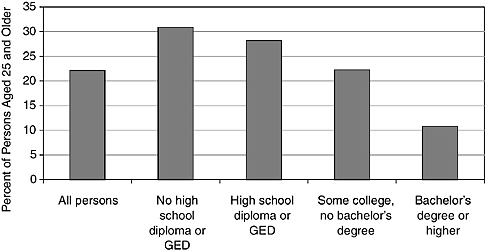
FIGURE 2-1 Age-adjusted cigarette smoking prevalence by education level, 2001.
DATA SOURCE: National Center for Health Statistics (2003).
TABLE 2-3 Age-Adjusted Rates of Hypertension and Overweight, by Race and Ethnicity and Average Annual Income: Women in the United States Aged ≥20 Years, 1988-1994
|
|
Hypertension, Percent |
Overweight, Percent |
||||
|
Income Level |
White |
Black |
Mexican American |
White |
Black |
Mexican American |
|
All (ages 20-74) |
19.3 |
34.2 |
22.0 |
32.5 |
53.3 |
51.8 |
|
Poor |
30.2 |
39.9 |
24.5 |
42.0 |
55.0 |
54.9 |
|
Near poor |
23.9 |
35.9 |
22.4 |
36.6 |
51.0 |
48.7 |
|
Middle/high income |
20.2 |
30.0 |
25.2 |
30.0 |
52.4 |
45.3 |
|
SOURCE: Williams (2002). |
||||||
women, with significant variation across income levels. Thus, race, ethnicity, and income interact in complex ways to affect these health outcomes.
In Chapter 1, we reported that black women were less likely to receive mammograms than white women. Table 2-2 shows that these racial differences may be partially explained by differences in income and in education, at least for women over the age of 65. The ratio of the percentage of black women to the percentage of white women receiving mammograms was 0.92 in 1998. However, when adjusted for income, this ratio increases to 0.97. Similarly, when education level is controlled, the ratio of black to white rates increases to 0.98.
Adjustments for income and education have little effect on black to white ratios for receiving flu shots (0.74 to 0.77 for income and 0.75 for education). On the other hand, adjusting for education nearly eliminates the differential between blacks and whites for pap smears; controlling for income, however, increases the black to white ratio only slightly.
A growing body of literature has documented disparities across races and ethnicities in health care treatment and quality of treatment (IOM, 2003a). Even after controlling for differences in other patient background characteristics, Schneider, Zaslavsky, and Epstein (2002) found racial differences among Medicare beneficiaries in managed care plans both in their receipt of beta-blockers after a myocardial infarction and in follow-up after hospitalization for mental illness. Black patients were less likely than white patients to receive beta-blockers and follow-up after hospitalization.
Disparities in health outcomes by the level of acculturation and proficiency with the English language have also been clearly documented in the research literature. The link between acculturation and health and health care is observed for many racial and ethnic groups, including Asian and Pacific Islanders and Hispanics (Clark and Hofsess, 1998; Balcazar and Qian, 2000). A variety of studies have demonstrated that high levels of
acculturation among Hispanics are associated with higher rates of low birthweight and intrauterine growth retardation, higher rates of adolescent pregnancies, early sexual initiation, and high levels of smoking, drugs, and alcohol consumption in adolescents. On the other hand, low acculturation is related to less access to health care and preventive services, and a lower probability of outpatient care for mental health problems (Clark and Hofsess, 1998). The patterns of low access to health care utilization and low use of preventive health services by less acculturated individuals cut across racial groups including many Asian subgroups such as Vietnamese, Chinese, Korean, and Japanese (Yi, 1995; Yeh, 2003).
Language use has been shown to be a powerful predictor of health care utilization and health among many racial and ethnic groups (Unger et al., 2000; English, Kharrazi, and Guendelman, 1997; Yu et al., 2002; Fiscella et al. 2002; Byrd, Balcazar, and Hummer, 2001). Language proficiency is also a very important factor in relation to enhancing patient-provider relationships and thus affecting health care outcomes. Indeed, a recent study found that in cases where physicians spoke the same language as the patient, the patient reported better physical functioning, psychological well-being, and health perceptions, as well as less pain than in cases where the physician and patient did not speak the same language (Perez-Stable, Napoles-Springer, and Miramontes, 1997).
Initiatives to Monitor and to Address the Problem of Disparities
Several major federal initiatives are aimed at monitoring trends in disparities, understanding the causes of disparities, and planning programs to reduce disparities when they are found. Most of these efforts focus on elimination of disparities across racial and ethnic groups rather than economic and social groups.
Eliminating health disparities across racial, ethnic, and education or income groups (and among other population groups as well) is one of two primary goals of Healthy People 2010, a long-term national agenda aimed at improving health in the United States (see U.S. DHHS, 2003a, and http://www.healthypeople.gov/). One of the initiative’s goals is to eliminate health disparities by the year 2010. The goals and objectives were developed by groups of experts directed by the secretary of the Department of Health and Human Services, in partnership with DHHS agencies, various state and territorial groups, and other nonfederal government agencies, with input from relevant business groups and community organizations. The initiative has set many objectives with corresponding targets for specific improvements to be achieved through health and program interventions. Success in meeting these targets will be tracked with indicators of health and health status from a number of different data sources.
Various DHHS agencies also are involved in initiatives corresponding to Healthy People 2010. The Centers for Disease Control and Prevention (CDC) is housing REACH 2010, a two-phased, 5-year departmental program demonstration project to support community coalitions in designing, implementing, and evaluating community-driven strategies to eliminate health disparities. The National Institutes of Health have a Strategic Research Plan to Reduce and Ultimately Eliminate Health Disparities. This 5-year plan for enhancing research, research infrastructure, and public information and community outreach outlines NIH’s objectives for reducing and eliminating disparities.
Disparities in health care have been recognized only recently relative to disparities in health. The IOM report (2002) on disparities in health care contained many recommendations for health system interventions, legal and regulatory changes, education promotion, data collection, and future research to begin to eliminate disparities. To date, however, there has been no official response to the report from DHHS.
In 1999, Congress required the Agency for Healthcare Research and Quality of DHHS to develop a National Healthcare Disparities Report (NHDR).2 The first of these annual reports was released in December 2003. The purpose of the report is to track the extent of disparities in health care and monitor whether progress has been made toward eliminating them.
One major initiative specific to racial and ethnic data collection efforts is the DHHS Inclusion Policy, implemented in 1999 (http://aspe.os.dhhs.gov/datacncl/inclusn.htm). This policy requires the inclusion of information on race and ethnicity in all DHHS-funded and sponsored data collection systems. It was implemented to monitor whether programs are administered in a nondiscriminatory manner and to ensure that standard racial and ethnic data are available to help coordinate responses to health and social service issues. The policy requires that the Office of Management and Budget (OMB) standards for racial and ethnic data collection be used.3
In November 2003, the Healthcare Equality and Accountability Act was introduced in the Senate and the House.4 This act would, among other things, require any health-related program administered, funded, or reimbursed by DHHS to collect data on the race, ethnicity, and primary language of each applicant for and recipient of health-related assistance.
|
2 |
|
|
3 |
These standards, which will be discussed further in the next chapter, were adopted in 1997 and can be found at http://www.whitehouse.gov/omb/fedreg/ombdir15.html. |
|
4 |
The Senate version is S.1883. The House version is H.R. 3459. |
What Are Disparities?
Throughout this report, we use the term disparities to indicate differences in health and health care, where health refers to the status of an individual’s condition (i.e., the presence of a health condition or illness, such as high blood pressure, asthma, overweight, drug use) and health care refers to the process of treating an illness or injury. Some disparities may be inequitable, but not all are. The assessment of whether a disparity in health is inequitable involves societal values as well as scientific explanation. A disparity due to discrimination in preventive care might be regarded as obviously inequitable. A disparity due to differing prevalence of a genetically based disease might not be regarded as inequitable, but if disproportionately few resources were devoted to research and treatment for diseases prevalent in certain groups, an issue of equity might be perceived.
Different perspectives on what constitutes a disparity in health and health care arise from a variety of policy and scientific positions.5 For example, IOM (2003a) and Gomes and McGuire (2001) define disparities in health care as differences in the treatment of individuals from different groups when these differences are not justified by clinical appropriateness or by patient preference. Using this definition, if members of a group less often receive coronary artery bypass graft because their health status more frequently contraindicates major surgery, this would reflect a health disparity, but not a health care disparity. Similarly, if members of one group more often refuse surgery for a condition while members of another group choose to have the surgery, there is no disparity in health care access.6 However, according to this definition, a disparity would exist if two patients had all the same medical conditions and would have chosen the same treatment if they were offered the same options, but one patient was not given the treatment while the other was. Although this particular definition of disparities in health care is not universally accepted, the related data variables that are required for studying disparities (as defined by Gomes and McGuire, 2001) would be similar under other definitions.
A disparity in health care may or may not be due to conscious or unconscious discrimination;7 there may be other causes such as lack of access to particular kinds of health care, poor communication between the patient and the provider, lack of information, individual behavior, and
patient preferences that may in part be shaped by past experience of discrimination or deprivation or by cultural, geographical, and other patient background factors.
The panel is charged with reviewing the availability and quality of data used to measure and better understand disparities. It is therefore outside the scope of the panel to make a scientific or policy assessment of whether a specific disparity is inequitable. Instead of adopting a particular definition of disparities, the panel has reviewed the data needed to maintain a monitoring system and to conduct analyses of disparities in health and health care that will allow policy and scientific analysis of the factors that contribute to disparities.
Although disparities in health and in health care are usually discussed together in this report, the panel recognizes that these two types of disparities, while both important, are not equivalent, nor are the data sources required for understanding the two always the same. For example, disparities in health care are routinely studied by examining data from the health care system, while studies of disparities in health also require information on individuals who do not participate in the health care system. Thus, the full range of available health data sources, from administrative data sets to population surveys, is critical to the understanding of disparities and will be discussed in this report.
FOUR KEY DIMENSIONS OF DISPARITIES
The panel was asked to review the adequacy of current policies and practices relating to the collection and availability of data on race, ethnicity, and SEP. We believe that another key dimension to the understanding of disparities is the degree to which an individual is acculturated into U.S. society, including the individual’s English language proficiency, and so we have added that dimension to our considerations. Each of these four dimensions is important in itself as well as in relationship to the other dimensions. There are, of course, other factors that determine individual and population health. These include individual characteristics and behaviors and ecological, policy, and health care system factors. There are several models of the determinants of health (reviewed by IOM, 2003b) but we focus on data needs related to race, ethnicity, SEP, and acculturation and language use.
In this section we discuss definitions of race, ethnicity, SEP, and language use and acculturation and their importance for understanding disparities in health and health care. The definitions of these concepts is, of course, the subject of much scholarly literature and media attention. This report does not intend to review that literature completely nor attempt to develop original definitions of these concepts.
Race and Ethnicity
The modern concept of race and the classification of individuals into racial categories has predominantly been based upon phenotypic or observable characterizations, such as skin color or facial characteristics. However, through recent advancements in genetics and biomedicine, as well as a long line of literature in anthropology, sociology, and other behavioral sciences, it has become more commonly recognized that race is not a meaningful biological marker (Lewontin, 1972; American Association of Physical Anthropology, 1996; Cooper and David, 1986).8 Rather, it is now more commonly recognized that racial classifications are social markers, constructed through a social process (Omi and Winant, 1986; NRC, 2004). The “social constructivist” point of view argues that even though race does not have a meaningful biological definition, it is still an important social and political marker because it reflects, however imperfectly, categories that play important roles in the distribution of power and wealth, discrimination, cultural and personal identity, and group solidarity (American Sociological Association, 2003; Harris, 2002).
Ethnicity usually refers to groupings defined by a common national or regional origin, with a consequent assumed commonality (to some degree) of culture and language. There is overlap in the markers used to indicate race and those used to indicate ethnicity, but race is distinct from ethnicity in that it has an ascribed physical or biological component. For example, Hispanic is a general ethnic term for people of Spanish-speaking origin. There are, however, white Hispanics and black Hispanics as well as many different Hispanic ethnicities, such as Puerto Ricans, Mexicans, and Cubans. There are also many ethnicities within categories of non-Hispanic whites, non-Hispanic blacks, and Asians.
Ethnic and racial categorizations are fluid both because the ways they are measured has changed over time and because the context in which they are measured may affect how individuals are classified or classify themselves. For example, Tutsis and Hutus in the United States would be considered black ethnic groups, but in Rwanda would be considered races because in that country, the difference is an important social and political distinction (Harris, 2002). Furthermore, the same individuals may identify themselves as members of different races or ethnic groups in different settings; for example, one person in different circumstances might identify as Taiwanese, Chinese, or Asian American. Recognizing that race and ethnicity are
both essentially in the eye of the beholder (whether ego or alter), we often refer to the combined concept of race and ethnicity. In this report, we will use these two together, recognizing that they do not quite have equivalent social meanings.
If race and ethnicity are constructs created to distinguish groups socially but not biologically, why is it so important to understand relationships between race and ethnicity and health outcomes? It is precisely because race and ethnicity are socially and politically constructed categorizations. They have been used to discriminate in the labor and housing markets, in education, and in health care, and they have also been the basis of segregation. For example, as recently as the 1960s, many hospitals in the South were still formally segregated into sections where blacks received care and sections where whites received care (D.B. Smith, 1999). Although no longer legally sanctioned, de facto residential segregation is still widespread in the United States (Massey, 2001) and contributes to segregation in primary and secondary schooling as well as negative employment outcomes, especially for poor inner-city minorities (Wilson, 1987; Massey and Denton, 1993). Segregation in health care facilities is also present in some areas (Fennell, Miller, and Mor, 2000). Finally, there are important links, both historical and current, between race and ethnicity and economic deprivation in the United States. The lasting effects of slavery, discrimination, and segregation have contributed to greater deprivation in some racial groups (e.g., American Indians and blacks). Further, immigrants to this country often come from less well-off backgrounds or their credentials and status in their countries of origin carry less weight (e.g., immigrant doctors who cannot practice in this country without being relicensed).
The recently released report of a National Academies panel charged with defining racial discrimination and assessing methodologies to measure it concluded that because race is a salient aspect of social, political, and economic life in the United States, it is necessary to collect data on race and ethnicity to monitor and understand differences among population groups (NRC, 2004).
Socioeconomic Position (SEP)
The economic and social resources of individuals are strongly related to their health, health care, and access to health care. Studies cited earlier in this chapter have shown that individuals with greater economic and social resources generally have better health and are better equipped (financially and educationally) to navigate the health care system. Thus SEP is an important dimension to health disparities.
SEP is a complex concept, encompassing a number of elements of a person’s position in society, including economic resources (earnings, in-
come, and wealth), social resources (social networks and connections to community resources), education (formal credentials, communication skills, and health information), and occupation. Some of these elements may evolve over the life course; for example, income and wealth can change greatly over the course of one’s life. Furthermore, the importance of income and wealth may be more important to health and health care at different points over the life course; for example, deprivation of resources may have more negative effects on health at infancy or during childhood than later in life. We use the term SEP throughout the report to refer to the set of these and other related elements of economic and social standing.
SEP affects health in many ways. Socioeconomic deprivation might be marked by increased exposure to hazardous environmental, occupational, or public health conditions, to poorer or more dangerous neighborhoods, or to poor nutrition, with obvious implications for personal health. Furthermore, mechanisms that may be used to cope with deprivation may lead to poor health—e.g., through alcohol or tobacco consumption or mental illness.
It is not always clear that these negative outcomes are due to lower SEP rather than to other factors, such as geography. For example, poor children are more likely to suffer from pediatric asthma than nonpoor children, but only in urban areas (Aligne et al., 2000). On the other hand, Lauderdale, Thisted, and Goldberg (1998) found that regional differences in hip fracture rates could be explained by the state in which individuals initially qualified for their Social Security card and not where they currently lived. The authors hypothesized that this might reflect differences in nutrition earlier in life.
Education level is one component of SEP. Education embodies a concept of one’s ability to process information, which includes the ability to read (literacy level) and understand complicated health and medical information. Higher education levels and better access to community and social networks can translate into better skills in getting quality care—engaging with physicians and other health providers and negotiating with health insurers. Education may also be associated with health-promoting behavior—for example, better understanding of human dietary requirements may translate into better eating habits. Those with less education or fewer skills are more likely to have jobs that require more physical labor and harsh working conditions, which could lead to worse health outcomes. Education also relates to income and wealth, as those with higher education levels tend to have higher incomes and wealth. Thus education is also indirectly related to the ability to afford health insurance and to afford higher quality health care.
Occupation, although closely related to other aspects of SEP, is itself an important component of SEP, separate from education, income, and wealth.
For example, clergy and teachers have relatively high education levels but relatively low wages, yet their occupations may represent leadership or social status above that of other occupations that command higher earning levels. It is also possible that there is a direct link between occupation and health. Some occupations that require physical labor may take a toll on physical health or may require greater physical stamina, which could act to either improve or harm physical health. Some occupations may lead to exposure to hazardous working conditions.
While the correlations between SEP and health are well documented (Acheson, 1998; Deaton, 2002; Kaplan and Lynch, 1997; Marmot, 2002; Smith, 1999; Sorlie, Backlund, and Keller, 1995; Turrell et al., 1999; Williams and Collins, 1995), the causal links between SEP and health are complex and can run in both directions. For example, poor health can affect employment, education, and occupation, which in turn can affect income and wealth (Covinsky et al., 1994; Wu, 2003); and conversely, those with lower income are likely to experience more stress and have worse health and less access to health care.
SEP and race and ethnicity are also interrelated. Most minority groups tend to have lower economic positions and less education than whites, on average. For example, the poverty rate in 2000 for non-Hispanic whites was 7.5 percent, compared with 22.1 percent for blacks, 21.2 percent for Hispanics, and 10.8 percent for Asians and Pacific Islanders (U.S. Department of Commerce, 2001a). Furthermore, median household income for non-Hispanic whites in 2001 was almost $46,000. This is lower than the median household income for Asians and Pacific Islanders ($55,521), but greater than the median household income for blacks ($30,439) and Hispanics ($33,447) (U.S. Department of Commerce, 2001b). There is considerable variation within each of the broad racial and ethnic populations. For example, within the Asian category, Laotians, Hmong, and Cambodians have higher rates of poverty and lower levels of household income than blacks or American Indians (U.S. Bureau of the Census, 1993). These three Asian subgroups also have higher rates of disability than other Asian groups and the white population (Cho and Hummer, 2000).9
Acculturation and Language Use
Acculturation is characterized as the dynamic bidirectional process whereby a person or group raised in another culture, typically immigrants,
come in contact with (in this case) the U.S. culture, resulting in subsequent changes in the behavior of both cultural groups. There are many components to acculturation. One component of the process is the degree to which an individual maintains ties to the culture of the country or region of origin—that is, the degree to which an individual holds norms, expectations, practices, and beliefs (in all areas of life, but for this report’s purposes, with respect to health and health care) that are consistent with the culture of one’s country or area of origin. Language use, particularly proficiency in understanding, speaking, reading, and writing English, is another component of acculturation. Place of birth, generation status, and time in the United States can also serve as indicators or components of acculturation.
U.S. culture itself is not homogeneous. Different people acculturate to different subcultures—for example, to a working-class or professional subculture, or perhaps to an ethnic subculture that has its own distinctive features. Furthermore, U.S. culture itself changes as the U.S. population changes—e.g., as new immigrant groups arrive and affect the areas in which they settle. For these reasons, acculturation can be difficult to define and measure because it is defined relative to a concept (U.S. culture) that cannot itself be precisely defined or measured. Rather, acculturation is marked by such factors as language use and proficiency, country of origin, or years or generations since immigration to the United States.
Acculturation affects health outcomes and interactions with the health care system. Various aspects of culture—behavior, diet, family environment—are related to health status and are transformed through acculturation. For example, adoption of a more typical U.S. diet could affect health positively or negatively, or perhaps both (e.g., less protein deficiency, but more obesity). Beliefs about health care may conflict with assumptions about the U.S. health care system; for example, views of illness as an imbalance and the use of traditional medical practices (e.g., herbalism) may be effective treatments for some conditions, but may also be inconsistent with more technically oriented U.S. medicine.
Many studies have shown associations of proxy measures of acculturation such as nativity (being foreign-born versus U.S.-born) or generational status with the health and health care of individuals (Clark and Hofsess, 1998; English, Kharrazi, and Guendelman, 1997; Sundquist and Winkleby, 2000; Crump, Lipsky, and Mueller, 1999; Guendelman and Abrams, 1995). Several studies suggest that acculturation is not always positively correlated with health outcomes. For example, less acculturation (more ethnic distinctness), as indicated by measures of nativity and measures of language proficiency, has been shown to confer a protective effect due to healthier lifestyles that are associated with greater family and social support and other forms of protective cultural practices. A greater degree of accultura-
tion (as measured by indicators such as language proficiency—reading and writing in English; place of birth; and other variables) appears to be associated with a decline in some health indicators among Hispanics (Vega and Amaro, 1994). For example, more acculturated Latinos seem to experience early sexual initiation, higher rates of adolescent pregnancy, higher rates of low birthweight and infant mortality, and higher rates of hypertension and obesity. Highly acculturated Latinos are also more likely to smoke, use drugs, and consume more alcohol than less acculturated Latinos. Finally, breast-feeding is greater among less acculturated Hispanic mothers than among highly acculturated Hispanic mothers (Clark and Hofsess, 1998).
Language in particular can be a limiting factor in health care interactions and is often one of the biggest barriers to effective health care for immigrants. Discussing medical issues requires a rather advanced level of language proficiency that many nonnative speakers do not have, and the resulting lack of understanding can affect health and health care outcomes. For example, Vietnamese women who are fluent in English are more likely to have a routine place for health care and a regular provider than Vietnamese women who do not speak English (Yi, 1995). Spanish-speaking Hispanic patients were significantly less likely than non-Hispanic white patients to have had a physician visit, mental health visit, or influenza vaccination (Fiscella et al., 2002), whereas those who saw a Spanish-speaking doctor generally enjoyed better health (Perez-Stable, Napoles-Springer, and Miramontes, 1997). Frye (1995) described the example of an Asian family that brought their grandmother to an emergency room with a complaint of epigastric pain. Neither the patient nor any of the family members could explain the problem in English, so hospital personnel called an Asian American nurse and asked her to speak “Asian” to the family. But the Vietnamese nurse was unable to communicate with the Hmong family in their language.
Because disparities in health exist across different levels of acculturation, it is important to measure acculturation and language use to monitor, better understand, and target interventions to eliminate these disparities. Measures of acculturation and language may also be important covariates for understanding racial and ethnic disparities in health. Thus, gathering information about acculturation can help provide a better picture of a person’s ethnic identity and its relationship to lifestyle behaviors that may affect the person’s health.
THE IMPORTANCE OF UNDERSTANDING DISPARITIES IN HEALTH AND HEALTH CARE
Measuring and studying disparities serves several important functions. In this section, we highlight reasons why a better understanding of health
disparities is needed to ensure the well-being of the overall population. In general, government health agencies at the federal, state, and local levels take on the responsibility of promoting and ensuring the health of the populations they serve. Because these government agencies are major funders of health insurance and health care services, they also have an interest in ensuring that these programs are administered fairly and are effective in meeting program goals. Other entities have an interest in promoting better health and health care as well. Better individual health may lead to more productive workers and less absenteeism, and thus employers have an interest in a healthy workforce. To the extent that healthy people and preventive health measures keep the costs of health care and health insurance low, employers, the entire health care industry, and the nation as a whole have an interest in promoting health among all their populations.
One reason it is important to study health disparities is to identify the problems and needs of specific groups of the population and in specific areas of the country. Measuring disparities can help in recognizing variations in the general health of populations and how those conditions change. Changes in health conditions over time and between groups may reveal areas that need further attention, such as the incidence and prevalence of particular health conditions and risk factors in population subgroups (see the paper by Fremont and Lurie in Appendix D). For example, Figure 2-2 shows trends between 1963 and 1994 in the percent of overweight children aged 6 to 11 by sex and race. The figure shows generally increasing rates of overweight status for all four groups—white males, black males, white females, and black females. However, rates have increased differently for each of these groups. In 1963 white males in the 6-11 year age range were overweight at higher rates than black males, but in the next 30 years the rate grew faster among blacks, who now have slightly higher rates of overweight status. White and black females initially were equally likely to be overweight, but the rate for black females has increased much more dramatically than for white females, such that in 1994, 17 percent of black females were overweight compared with 10 percent of white females.
Data on race, ethnicity, SEP, and language use and acculturation can be used to monitor how changes in the health care system and in the economy affect access to health care and to determine if these changes affect racial and ethnic groups differentially. For example, it would be useful to monitor and understand changes in health insurance coverage among different ethnic groups when health insurance premiums rise or unemployment increases. In short, early identification of problems can facilitate effective and timely interventions to eliminate disparities.
It is important to measure and study disparities in health and health care as part of the general goal of improving health and health care quality.
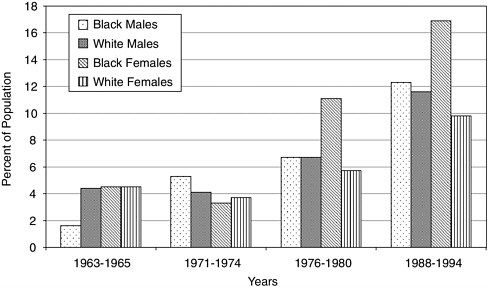
FIGURE 2-2 Overweight children 6 to 11 years of age, by race and sex.
SOURCE: Centers for Disease Control and Prevention, National Center for Health Statistics, National Health Examination Surveys and National Health and Nutrition Examination Surveys (NHANES).
Disparities may be an indicator of differences in either health care quality or health or both.
Since disparities in health and health care among racial, ethnic, language, and SEP subgroups have been identified, several agencies and governments responsible for ensuring the functioning of health care and public health systems have begun efforts to address identified disparities. The Healthy People 2010 initiative and the Health Disparities Report Card cited previously in this chapter are examples of two disparity-monitoring efforts by the federal government. These reports and others like them will provide periodic updates on the status of disparities and will help to hold accountable those agencies responsible for supporting the effective functioning of the health care system. In the case of racial and ethnic disparities, there is the important additional role of assessing and ensuring compliance with civil rights laws. While the existence of disparities in health and health care does not automatically imply discrimination, the monitoring of racial and ethnic disparities and of changes in disparities is critical to identifying potential problem areas and investigating the possibility of discrimination.
If the ultimate goal is to eliminate disparities in health and health care, then it is essential to understand the mechanisms that cause them. Measur-
ing social variables such as race, ethnicity, SEP, language use, and acculturation and the extent to which these contribute separately and interactively to differences in health and health care is key to that understanding. In the next chapter, we discuss the measurement of these concepts of race, ethnicity, SEP, and language use and acculturation.


