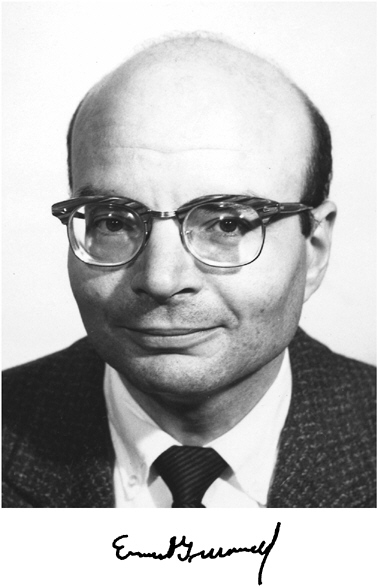
DAVID EZRA GREEN
August 5, 1910–July 8, 1983
BY HELMUT BEINERT, PAUL K. STUMPF, AND SALIH J. WAKIL
AT THE TIME OF DAVID Green’s death in 1983, Frank Huennekens, one of Green’s postdoctoral fellows, wrote in his personal recollections:
David Green was a remarkable person. Endowed with a keen intellect, an insatiable curiosity about Nature, a vivid imagination and boundless energy, he pursued a career devoted entirely to research. Over a period of four decades he and his colleagues published nearly 700 journal articles and reviews covering a broad spectrum of enzymology and bioenergetics. And, he was the author, co-author or editor of eight books. A legion of postdoctorals and visiting investigators received training in his laboratory. History will surely record that he was one of the giants of 20th-century biochemistry.
Green’s professional career had four distinct periods, during which he explored, developed, and refined the expanding concepts of enzymology. They were his educational experiences at New York University and at Cambridge; his return to the United States to begin his American career for one year at Harvard; his first academic appointment at Columbia College of Physicians and Surgeons in New York City; and finally his selection as codirector of the Institute for Enzyme Research at the University of Wisconsin at Madison, where he remained until his untimely death in 1983. As we will see, Green played a pivotal role in the expanding
frontier of enzymology, not only in the United States but also throughout the world.
David Ezra Green was born in Brooklyn, New York, on August 5, 1910. He attended the public school system there and apparently was indifferent to his studies in both his grade-school and high-school days. About his early education Green explained, “As I look back, school per se exerted little influence on me. My friends and my family were the principal catalysts in my development. There was not a single teacher in high school that fired or inspired me, though I respected them all as competent individuals. Curiously enough, courses in science did not particularly interest me. I hardly know why I avoided them in high school.” Interestingly the Book of Knowledge, an encyclopedia popular during that period, became Green’s bible. Its 20 volumes served as sources of information on subjects ranging from the arts to the sciences. His father loved learning, and it was from him that Green acquired an interest in books, ideas, and self-development.
In 1928 Green enrolled in New York University at the Washington Square campus and initially intended to study medicine. After taking the premedical-school curriculum for two years, however, he realized that the field of medicine did not interest him. Fortunately he was offered a student assistantship in the Department of Biology, and there he completed his undergraduate studies in 1931. A very important event was his summer experience at Woods Hole, where he associated with Professor Robert Chambers, the famed cell physiologist, and later with Professor Leonor Michaelis. Apparently the close association with Michaelis inspired Green and aroused his desire to explore more fully the mysteries of biological oxidations.
Green received a master’s degree in 1932 at New York
University and left for Cambridge University in England, where his potential talents were nurtured in the fertile soil of the Biochemistry Department led by the famous Sir Frederick Gowland Hopkins. The department was home to some of the greatest biochemists of that period—including David Keilin, Malcolm Dixon, Robin Hill, Joseph and Dorothy Needham, Judah Quastel, Marjorie Stephenson, Ernest Gale, and Norman Pirie—and was ranked as one of the leading centers of innovative research in the new field of enzymology. Green soon ensconced himself among the department’s many graduate and postgraduate students as the brash young American he was, a character that he did not lose even when made a Beit fellow.
Green conducted his graduate studies and research under the supervision of Malcolm Dixon, who said of Green’s graduate work, “David threw himself into his research with great enthusiasm, energy, and enterprise. He was full of ideas, which he expressed freely; and although not everybody agreed with all of them, they were always interesting and characterized by freshness and vitality.” In his initial year at Cambridge, Green completed all the research required for his Ph.D. thesis, “The Application of Oxidation-Reduction Potentials to Biological Systems.” Although he received his Ph.D. degree on June 8, 1934, the results of his thesis research had been published in Biochemical Journal in 1933 under the title “The Reduction Potentials of Cysteine, Glutathione and Glycylcysteine.”
During his eight years of research at Cambridge University and in collaboration with his colleagues, Green published an astounding 32 publications in peer-reviewed journals. His scientific genius was best expressed, however, in an eloquent essay titled “Reconstruction of the Chemical Events in Living Cells,” in which he wrote at the age of 27:
The mastering of a particular machine requires not only a knowledge of the component parts, but also the practical ability to take the machine to pieces and reconstruct the original…. One may ask with good reason what is the point of imitating the cell with mixtures of the components in test tubes. Is it egotism and vanity on the part of the biochemist or a flair of chemical engineering? The study of mechanism, perforce, must be extremely limited in dealing with intact tissues. The variation of conditions, which is essential to studies of mechanism, must lie within the confines of those tolerated by living material. The biochemist has therefore to resort to the disorganization of the cell in order to puzzle out the mechanisms of reaction. The major discoveries of the mechanisms which cells utilize for their reactions have practically all been made by the analyses of the behavior of cell extracts and of enzyme systems.
It was also obvious that the talented Green had other thoughts besides his research, in that he became acquainted with Doris Cribb, at the time the director of the design department at the Cambridge School of Art, which ultimately led to their marriage on April 16, 1936.
In 1940 after the defeat of the British at Dunkirk, the U.S. government recalled all U.S. citizens who were living in Europe. Green, Doris, and their young daughter, Rowena, returned to the United States, where he became a research fellow in the Department of Biochemistry at the Harvard University Medical School. Having refined his skills as an enzymologist at Cambridge, as well as having acquired a magnificent English accent tainted slightly by his Brooklyn years, he began his American career under rather humbling circumstances.
Green most likely was astounded at the facilities assigned to him at Harvard, when he compared them to those he had enjoyed at Cambridge. There were no cold rooms nearby and no centrifuge in the laboratory. An old Dubosque colorimeter was available for colorimetric measurements, and strangely the cupboards in the laboratory were stuffed with an abundance of filter paper in all shapes and sizes. Most
prominently lacking was a key piece of equipment widely used in the 1940s: a Warburg constant volume respirometer system. All the cofactors Green needed to conduct his experiments had to be isolated from yeast and from animal tissues. And because his research funds were derived solely from a grant awarded to him by the Ella Sachs Ploetz Foundation, he had a rudimentary research team: E. Knox, a bright medical student, and Paul K. Stumpf, a senior at Harvard College. Stumpf reminisced,
During my senior year at Harvard (1940-1941), I was required to prepare a research thesis to fulfill the honors requirement in biochemistry. Since I had become interested in enzymes, and since, in 1940, no enzymologist was on the faculty in Cambridge, Massachusetts, I made an appointment to see Professor A. Baird Hastings, at that time the chair of the Department of Biological Chemistry at the Harvard Medical School in Brookline. At the appointed hour, I was ushered into the august and wood-paneled chambers of Hastings and after a brief series of questions, Hastings informed me that he was no longer active in this field but that a “young chap” just back from Cambridge University was downstairs and it would be a worthwhile experience for me to at least meet him. Hastings then took me down to the first floor and we entered a high ceiling, dark laboratory with an enormous stone basin, and a central wooden bench. He introduced me to David Green. After Hastings left, Green asked me a few questions and then in his English accent instructed me to roll up my sleeves and go to work. In this way I began my six-year relation with Green.
Limited as Green’s equipment and personnel resources were, he isolated a yeast flavoprotein, purified potato starch phosphorylase, and published his results in the Journal of Biological Chemistry. In 1940 he authored an important book titled Mechanisms of Biological Oxidation, which was published by Cambridge University Press. This 178-page book with its nine chapters had a profound effect on the fledgling field of enzymology. With great clarity Green described what was then known about the enzymatic systems involved in oxidation-reduction processes. Equally important was his
essay, “Enzymes and Trace Substances,” published in 1941 in Volume I of the new series titled Advances in Enzymology. Green wrote in that essay,
The thesis which we shall develop in this article is that any substance which occurs in traces in the cell and which is necessary in traces in the diet or medium must be an essential part of some enzyme. We shall define a trace concentration as one where the uppermost limit is less than 5 micrograms per gram dry weight of the cell…. The fundamental assumption of the trace substance-enzyme thesis is that there is no rational explanation available of how traces of some substance can exert profound biological activity except in enzymic phenomena.
As with his book this essay had a profound effect on the development of the logical explanations of a large number of cofactors that were then already known or were to be discovered during the next decade. With the obvious limit of knowledge in the field in the 1940s Green had trouble explaining the functions of inhibitors and pharmacologically active drugs, as well as of plant and animal hormones. Nevertheless this thesis influenced the directions many biochemists took in their researches in the late 1940s and throughout the 1950s.
Late in 1941 Green was appointed assistant professor of biochemistry in the Department of Medicine at the Columbia College of Physicians and Surgeons in New York City. The department had a distinguished record of research in a broad range of the medical sciences and an excellent group of scientists and clinicians. In addition the building that housed the Department of Medicine also housed an equally distinguished Department of Biochemistry. Green was assigned a small but modern facility that had all the accessory rooms so sorely missing at Harvard. Soon he accumulated sufficient funds to hire a technician and a dishwasher and was able to employ his first and only graduate
student, Paul K. Stumpf, who had already been associated with Green at Harvard.
Green was in his element at Columbia, and his research thrived. By 1943 he was able to double his laboratory space by remodeling an adjoining room. Sarah Ratner joined his group at that time and hired as her technician Marian Blanchard. Stumpf occupied the remaining space to continue his collaboration with Green, as well as to carry out his Ph.D. research project on the pyruvic oxidase of Proteus vulgaris. In the later years of his Columbia period Luis Leloir and W. Farnsworth Loomis joined Green’s small research group. Throughout this period Green kept his desk in his small laboratory, where he administrated the two-room laboratory complex, ordered equipment, carried out all his own experiments, wrote his papers, and met an endless number of visiting scientists.
The Columbia period proved to be an exciting time for Green and his colleagues. With World War II fully underway and with supplies and equipment at a premium, Green was able to procure ample funding from private sources, such as the Williams-Waterman Fund of the Research Corporation, the Rockefeller Foundation, and the Winthrop Chemical Company. His research team published 20 papers on the enzymatic oxidation of amino acids, transamination, and the mechanism of pyruvic acid oxidation. In addition, he supported the construction of an ultrasonic device that was used to disintegrate bacteria, purchased one of the first battery-driven Beckman DU spectrophotometers, and was one of the first biochemists to use the new Waring blender to extract enzymes from tissues.
The efficiency and productivity of Green’s laboratory were demonstrated in other ways as well. One time when he needed a supply of milk xanthine oxidase, Green managed to obtain 10 liters of raw heavy cream and in the
process of isolating the enzyme produced a large amount of butter as a byproduct. Needless to say, because of shortages of butter during those war years, the byproduct was rapidly divided and consumed by his collaborators.
An excellent scientist, Green had an intuitive sense of designing relevant experiments and a knack for isolating unstable enzyme systems. Enthusiastic, impetuous, and always available for advice and encouragement, he was a rich source of information on all aspects of enzymology. David Nachmanson, Konrad Bloch, David Rittenberg, and David Shemin from the Department of Biochemistry at Columbia frequently sought his advice. Other frequent visitors included Severo Ochoa, Efraim Racker, Herman Kalckar, Fritz Lipmann, Otto Meyerhof, Boris Chain, M. Heidelberger, Karl Meyer, I. C. Gunsalus, W. W. Umbreit, Birgit Vennesland, and many of his former colleagues from Cambridge University. Green was largely responsible for the formation of the Enzyme Club, which met monthly at the downtown Columbia University Faculty Club and brought together investigators from the greater New York City area to discuss common interests. This idea caught on throughout the United States and for many years enzyme clubs were established at many urban academic centers.
In his last few years at Columbia Green was so successful in isolating and purifying soluble enzymes that he became bored with his successes and expanded his interests into the far more complicated and challenging field of oxidative phosphorylation and into multi-enzyme systems, such as those involved in the complete oxidation of pyruvic acid. For these studies Green used insoluble preparations obtained each day from rabbit kidneys and named this complex mixture of enzyme-bound systems the “cyclophorase system.” Many rabbits were needed to keep a supply of fresh kidneys for this work. The remaining parts of the rabbits
were eagerly sought after by a long line of students and staff who would wait patiently outside Green’s laboratory each morning for their share of fresh meat, presumably to be consumed in the evening as rabbit stew.
All the research conducted in Green’s laboratory throughout this period had the imprint of his talent. If he played a key role in the selection of and was an active participant in a research project, he was a coauthor. If on the other hand he merely advised and encouraged the progress of a research project carried out by a member of his team, he did not claim coauthorship on the research paper. This policy was to become an established procedure when he became codirector of the Institute for Enzyme Research at the University of Wisconsin in Madison. Consequently many very important papers on fatty acid oxidation and fatty acid synthesis that were published in the 1950s by researchers at the institute did not carry his name.
When the University of Wisconsin decided to organize an enzyme institute, Green, an obvious choice, was selected to be its codirector. He moved from New York to Madison in 1948. Sarah Ratner remained at Columbia. Stumpf joined the School of Public Health at the University of Michigan to investigate virus biochemistry and a year and a half later was invited to join the famous Department of Plant Nutrition at the University of California, Berkeley, and there began his career as a plant biochemist.
From his arrival in Madison in 1948 until his death in 1983 Green and his colleagues engaged in six areas of research: fatty acid oxidation; metallo-flavoproteins; fatty acid synthesis; mitochondria, coenzyme Q, and the respiratory chain complexes; mitochondrial anatomy; and electron transport and oxidative phosphorylation. These areas represent unique chapters in Green’s work at the Institute for Enzyme Research.
The Institute for Enzyme Research building was not ready when Green arrived in Madison, and he and his growing research team were housed in an old abandoned building on the engineering campus about two blocks from their final destination. This time is remembered among the team members—though with little nostalgia—as the “barn days.” They continued the cyclophorase work with the aim of improving the solubility of some of the fractions obtained so that separation of the individual components of the energy-producing enzyme systems (e.g., pyruvate or fatty acid oxidation) could be achieved and their properties documented. They tried various tissue sources and fractionation schemes, using changes of pH and salt concentrations in combination with different centrifugation conditions, but progress was slow and insufficient soluble material for further isolation work was produced.
During his last months at Columbia and the “barn days” at Wisconsin, Green was able to attract a considerable amount of funds from the National Institutes of Health and particularly from the Rockefeller Foundation. The post-World War II period, under the spell of Vannevar Bush’s famous motto “Science, the Endless Frontier,” was a time of generous financial support for scientific research. It was also a time when federal agencies themselves were seeking worthwhile projects to support. No doubt Green’s skill as a persuasive writer and his flair for picturing the broader implications of his experiments served him well. He was able to equip his laboratory in the new Institute for Enzyme Research building in a grand way, which was unique for those days, and support 10 postdoctoral fellows.
Green’s reputation attracted many eager young scientists to the Institute for Enzyme Research, including two of us (H.B. and S.J.W.). When the building was first occupied in 1949, there were at least 30 employees, including aca-
demic, technical, and auxiliary staff. Among the first fellows who became better known later in their careers were Frank Huennekens, Henry Mahler, Jesse Rabinowitz, Harold Edelhoch, Richard Schweet, Venkataraman Jaganathan, and Rao Sanadi. They were followed by Salih Wakil, Fred Crane, David M. Gibson, Joe Hatefi, Dan Ziegler, Anthony Linnane, Giorgio Lenaz, David Wharton, Gerald Brierley, Alan Senior, Alex Tzagoloff, David McLennan, Robert Goldberger, and Roderick Capaldi. These senior fellows would eventually leave the Institute for Enzyme Research for academic appointments at other institutions.
Green also provided a temporary haven to several senior scientists who had for different reasons an interruption in their careers. Among these were Tom Singer, Edna Kearney, and John Gergely. Often there were other visiting senior scientists in the laboratory. Some visited briefly, others completed a sabbatical. Among these were Osamu Hayaishi from Japan, Vernon Cheldelin from Oregon State, Walter Nelson from Cornell, Elizabeth Steyn-Parvé from Utrecht, and even Robert Alberty from the Chemistry Department at the University of Wisconsin in Madison. The continual presence of such scientists and the ideas and expertise they brought to the Institute for Enzyme Research made it an interesting and stimulating place to be.
Green once said during those days, “If we can lick fatty acid oxidation, I will be the happiest of men.” This meant that those who worked most closely with him were involved in this project. Despite their concerted efforts none of the enzyme preparations they produced had sufficient activity to be further purified. The solution to this impasse would come from Henry Lardy and his group, who had moved from the biochemistry department to the second floor of the Institute for Enzyme Research building. One of his students, George Drysdale, was investigating fatty acid oxida-
tion in rat liver. He had discovered that he could increase fatty acid oxidation activity many-fold in rat-liver extracts when he began the process with an acetone powder of the liver tissues. Drysdale’s discovery, which was presented at an institute seminar and later published, brought the breakthrough that Green and his group needed, namely, replacing tissue homogenates or fractions thereof with extracts of acetone powders.
Though rat liver was an unsuitable source for the further fractionation he intended to pursue, Green organized the production of acetone powders from slaughterhouse byproducts, such as pig and beef liver, kidney, and heart tissues. Through this ambitious undertaking Green had the opportunity to fully display his talent for strategy and planning on a grand scale. The Oscar Mayer Company in Madison donated the tissues, and a messenger from the Institute for Enzyme Research picked them up daily in large buckets of ice. A crew always awaited the arrival of the messenger in the prep room at the institute, armed with knives, cutting boards, blenders, chilled buffers, and acetone.
The extraction techniques that Green and his staff had used previously were adapted to the large-scale production of the acetone powders. Some additional hurdles had to be overcome, however, before the individual activities could be separated. Relying on his experience with enzymes and his knowledge of how to link them in ways that would not interfere with the reaction that was to be measured, Green devised a quick and practical assay for the overall fatty acid oxidation activity. The assay, which was a typical brainchild of Green’s, assayed the overall effect of the formation of the end product of the five reaction steps, namely, formation of the activated fatty acid (i.e., acyl-CoA), generation of a double bond in the fatty acid chain, hydration of the double bond, oxidation of hydroxy-acyl-CoA to form keto-
acyl-CoA, and then the separation of keto-acyl-CoA into two acyl-CoA derivatives. The final acceptor was triphenyl-tetrazolium. To be able to turn over fatty acid oxidation the assay also had to contain malate dehydrogenase, oxaloacetate-condensing enzyme, diaphorase, CoA, ATP, NAD, and a linking dye, such as pyocyanin.
All of the ingredients needed for Green’s assay could be prepared or purchased, except for CoA, which was available only in minute amounts and had to be obtained from microbiologists who had extracted it in a crude form from bacteria. Although Frank Strong and his group in the Biochemistry Department at the University of Wisconsin were trying to produce CoA from yeast extracts, they had not been able to get rid of the large amount of nucleic acids in these extracts without great difficulty. Richard Von Korff, who at the time was one of the institute’s postdoctoral fellows, had worked out a practical assay for CoA that was based on the reduction of NAD by the alpha-ketoglutrate oxidation system and was the only assay for CoA quick enough to be used for monitoring column effluents. He suggested that Green and his group might make use of the sulfhydryl nature of CoA and try to precipitate it with a metal. Green recalled that F. G. Hopkins and his group had successfully precipitated glutathione (GSH) with mercuric ions. This was tried with yeast extract but intractable gum resulted. Beinert dug up from the literature an alternative procedure using cuprous oxide in acid solution. While it gave a clean precipitate with GSH, the results with yeast extract were again disappointing. When an excess of GSH was added to the yeast extract, however, a clean precipitate was obtained with a good yield of CoA with an about 20-fold enrichment in CoA and enough material for further purification. Having the ability to produce from 100 mg to 200 mg of CoA in a single run made it possible to prepare the real
substrates, acyl-CoAs, for the enzymes by exploiting the corresponding activating enzymes.
Green quickly constituted a CoA production crew under Helmut Beinert’s supervision. Frank Strong’s group in the Biochemistry Department (Harvey Higgins, Bob Handschuhmacher, and Don Buyske) kindly supplied the prepurified yeast extract and worked out the method for the separation of CoA and GSH. The production of CoA in quantity was a cornerstone of all the work on fatty acid oxidation and biosynthesis. Green applied for a patent through the Wisconsin Alumni Research Foundation. The patent was never enforced, but Green, in the capacity of consultant, persuaded the management at the newly founded Pabst Laboratories in Milwaukee, who were experts on yeast products, to take over the production of CoA. Pabst then supplied Green with CoA free of charge.
These were truly exciting days. Through the combined effort of at least half of the people in the Institute for Enzyme Research—in producing the CoA derivatives, in purifying and characterizing the enzymes, and in making assays—the entire work on the enzymes involved in fatty acid oxidation was completed in less than a year. The results of this scientific blitzkrieg were ready for presentation at the 1953 spring meeting of the American Society for Biological Chemistry in Chicago, thus marking one of the high points in Green’s career. That Green personally contributed to almost every phase of the project—not only by providing funds and the organizational infrastructure but also by continually giving advice and encouragement and by cross-coordinating the activities and cross-correlating the results—should not be overlooked. As is typical of any scientific endeavor, however, he was not alone in aspiring to the worthwhile goal of solving the riddle of fatty acid oxidation.
While Green’s blitzkrieg was proceeding in Madison, both
Lipmann’s and Ochoa’s groups on the East Coast were also deciphering some of the key aspects of fatty acid oxidation. The most vocal and intense competition, however, came from Feodor Lynen and his group in Munich, who had provided the cornerstone of all these activities by isolating and characterizing active acetate (i.e., acetyl-CoA). So it happened that Lynen was also invited to the 1953 spring meeting of the American Society for Biological Chemistry in Chicago to present a plenary lecture on fatty acid oxidation. Lynen presented his lecture immediately before Henry Mahler took the podium to tell the Institute for Enzyme Research’s story. Lynen was clearly upset by the timing of the presentations and it was obvious from his remarks that he felt Green had unfairly intruded upon what he considered to be his territory.
The details of the work on the individual enzymes of fatty acid oxidation are too extensive to describe here, but some outcomes deserve to be mentioned because they contributed to new lines of investigation that were developing in Green’s laboratory at that time. These include the elucidation of the properties of flavoproteins, of flavoproteins in series, and of bound transition metals in flavoproteins and eventually in other proteins.
Butyryl-CoA dehydrogenase had a vibrant green color and contained some copper. It was first thought to be a copper-flavoprotein and to require copper to be active. While this belief did not stand the test of time, it nevertheless alerted the group to the possibility that heavy metals might play a role in catalysis in some enzymes that did not contain heme. This possibility was reinforced by the finding of Singer and his group that succinate dehydrogenase contains tightly bound flavin and iron. Tightly bound iron was soon also found in NADH dehydrogenase and molybdenum was found in xanthine oxidase. Similar findings were
reported by other investigators, thus ushering in the fields of metal-flavoproteins and of non-heme iron proteins.
Another line of work that was also initiated at that time was directly concerned with the properties of flavoproteins, such as the formation of free radicals or of charge-transfer complexes with substrates. In addition, the first compulsory flavoprotein-flavoprotein interaction, as between acyl-CoA dehydrogenase and the electron-transferring protein ETF, was demonstrated. Beinert pursued this line of investigation with the postdoctoral fellows who worked with him after he started an independent group at the institute. It eventually led to the discovery of iron-sulfur proteins and the characterization of these proteins by electron paramagnetic resonance spectroscopy (EPR). There was collaboration with members of Green’s group on some aspects of this work.
Soon after the enzymes of fatty acid oxidation were characterized Green and many of the Institute for Enzyme Research fellows moved on to study the more challenging problem of electron transport and oxidative phosphorylation. Green gave Gibson and Wakil the task of “mopping up the field of fatty acid oxidation, and showing that fatty acid synthesis is the reversal of β-oxidation.” The idea that the processes of fatty acid synthesis and the beta-oxidation of fatty acids were interrelated was not new, having been articulated at the beginning of the twentieth century by F. Knoop and H. S. Raper. As early as 1907 Raper had recognized that naturally occurring fatty acids are composed of an even number of carbon atoms and had suggested that these acids are produced by the condensation of a highly reactive substance that contains two carbon atoms. Subsequent work by R. Sonderhoff and H. Thomas and later by D. Rittenberg and K. Bloch reaffirmed this view and showed that successive condensation of acetate leads to the forma-
tion of fatty acids. The identification of acetyl-CoA as the “active acetate,” the fact that fatty acid oxidation leads to the formation of acetyl-CoA, and the fact that isotopic acetate was incorporated into fatty acids were sufficient evidence to claim an interrelationship between the oxidation and synthesis of fatty acids. This view was given further credence when the sequential cascade of enzymes involved in the β-oxidation of fatty acids was shown to be reversible. Even Lynen accepted the idea of reversibility. In 1953 he began his Harvey lectures by saying, “Let us consider the fatty acid synthesis” and concluded that the “beta-oxidation of fatty acids proposed by Knoop is nothing else than the reversal of this cyclic process.”
Before Gibson and Wakil began the work on solving the synthesis-oxidation problem, Beinert and Stansly had attempted to convert acetyl-CoA into longer chained fatty acyl-CoAs in the presence of the purified enzymes of the β-oxidation cycle, NADH, and a reduced dye. Surprisingly they were not able to synthesize a fatty acyl-CoA longer in chain length than butyryl-CoA. This outcome suggested that the process of fatty acid synthesis was more complex than the simple reversal of fatty acid oxidation and that another approach to the problem was needed. The Gibson-Wakil team decided to use the pigeon liver system of Gurin and his collaborators, who had shown that soluble pigeon liver extracts were able to convert [14C] acetate into long-chain fatty acids.
Ammonium sulfate fractionation of the soluble pigeon liver extracts yielded three separate protein fractions that collectively converted [14C] acetate into long-chain fatty acids in the presence of seven essential cofactors. Further purification of these fractions and the replacement of acetate by acetyl-CoA reduced the requirement for long-chain fatty acid synthesis with only ATP, isocitrate, NADPH, and
Mn. The requirement for ATP remained absolute throughout the purification process even though acetyl-CoA was used as a substrate, and no hydrolysis or resynthesis of acetyl-CoA was noted during the incubation of the reaction mixture. The assumption the group made at the time was that ATP was required in yet unknown steps in the conversion of acetyl-CoA into fatty acids.
Other significant observations were also made. For instance, if the incubation of the reaction mixture was carried out in a conical test tube rather than in a round-bottom test tube, there was a significant increase in the incorporation of [14C] acetyl-CoA into fatty acids, a phenomenon that was called the “test tube factor.” If the incubation mixture was placed in a shaking bath at 37°C, there was a relative decrease in fatty acid synthesis. Moreover, attempts to identify heat-stable or -unstable “factor(s)” led to increases in the incorporation of [14C] acetyl-CoA into palmitate, regardless of the source of the boiled extracts. This mystery was finally solved by accident when a phosphate buffer was mistakenly used instead of the usual bicarbonate-phosphate buffer to re-dissolve the enzyme fractions and no enzyme activity was detected. Adding bicarbonate to the preparation, however, caused very significant increases in fatty acid synthesis. Soon it was realized that HCO3– had to be present in the reaction mixture for [14C] acetyl-CoA to be converted to fatty acids and that [14C]HCO3 wa s not incorporated into the fatty acid products, suggesting that its role may be to form an intermediate metabolite in the synthesis of fatty acids. When Wakil incubated [14C] HCO3–with one of the soluble protein fractions (R1g) in the presence of acetyl-CoA, ATP, and Mn++, an intermediate metabolite was formed that could be converted into fatty acids in the presence of the second protein fraction (R2g). This intermediate was isolated and identified as malonyl-CoA.
The first of the two soluble protein factors (R1g) was later named acetyl-CoA carboxylase.
As the requirement for acetyl-CoA carboxylase was uncovered the question arose about whether any vitamin components were present in the enzyme fractions. The decision was made to screen the enzyme fractions at the nearby Wisconsin Alumni Research Foundation for the presence of various vitamins. When the answer came, it was a delightful surprise: the R1g fraction contained a high concentration of biotin, which was covalently bound to the protein and remained concentrated in the protein throughout its fractionation. The Institute for Enzyme Research team also demonstrated, for the first time, that the protein-bound biotin participates in the reaction, since adding avidin (the egg-white protein that specifically and tightly binds biotin) inhibited fatty acid synthesis. Treating avidin with free biotin before allowing it to interact with the acetyl-CoA carboxylase did not inhibit the enzyme, and its product malonylCoA was readily formed and was converted in the presence of NADPH into the long-chain fatty acids, myristate, palmitate, and stearate by the second highly purified protein fraction (R2g), later named the fatty acid synthase. The Institute for Enzyme Research team was also the first to show that this reaction required the presence of acetyl-CoA, which acts as the stump to which C2 units are added. The C2 unit in acetyl-CoA thus provides the two-carbon units, the C15-C16, of palmitate. Furthermore, the Institute for Enzyme Research team demonstrated that the product of this reaction was the free acid and not the acyl-CoA, as might have been expected.
The discovery of this novel pathway for the synthesis of long-chain fatty acids; the general characterization of the enzymes involved; the demonstration of the requirement for bicarbonate, ATP, and the biotin-bound protein; and
the identification of malonyl-CoA as an intermediate in the synthesis of fatty acids were major contributions of the Institute for Enzyme Research under Green’s leadership, support, and guidance. Gibson and Wakil, who continued their studies of the fatty acid synthetic pathway at other institutions, perpetuated the legacy of these contributions. In 1958 Gibson joined the Department of Biochemistry at Indiana University Medical School. A year later Wakil joined the Department of Biochemistry at Duke University. At Duke University and later at Baylor College of Medicine Wakil studied the enzyme systems involved in fatty acid synthesis and their regulation in more detail and established the individual steps and mechanisms involved.
With the recognition in the early 1950s that the active ingredients in the cyclophorase preparation were actually mitochondria, the word cyclophorase slowly vanished from the literature. After his success with the fatty acid oxidation system Green set out to isolate and describe the components of the mitochondrial respiratory chain and to determine how mitochondria produce energy by oxidative phosphorylation. While soluble preparations of succinate and NADH dehydrogenases, and cytochrome C were available, the link between these components was missing. In preparation for this new work Green discontinued the production of acetone powder and organized the production of mitochondria from beef and pig heart and liver. Fred Crane, who had become a group leader, was entrusted with this task, and soon the mitochondrial factory, for which the Institute for Enzyme Research would become renowned, was in operation.
Creating the mitochondria factory was no small feat. It represented a frontal attack on a major scientific problem, which Green knew could not be solved without an abundance of the material needed to carry out the work success-
fully. Even his competitors admitted that fact. Many laboratories in the United States and abroad, often those of former fellows of the Institute for Enzyme Research, eventually became frequent customers of the factory. Helmut Beinert even made use of this facility well into the 1990s until it was abandoned to make room for other programs, after one had learned to use Escherichia coli to make proteins for us.
In the years that followed the fatty acid blitzkrieg the Institute for Enzyme Research grew and its organizational structure changed. As Green added a number of capable lieutenants his more direct involvement, which had been considerable during the fatty acid project, became noticeably diminished. Plans for a new wing to the institute were worked out, and the new facility was occupied in 1960. It was generously equipped and air conditioned, and the rows of high-speed centrifuges in the prep room was impressive. It was in this new environment that the attack on the mitochondrial respiratory chain began after a discovery of lasting significance had been made: the discovery of ubiquinone (CoQ) as an indispensable component of mitochondria and the respiratory chain.
During the 1950s R. A. Morton in England identified and described a Q-series compound while working up the non-saponifiable fraction of fatty tissues, such as animal intestine and liver. He named the compound ubiquinone because of its apparent ubiquitous occurrence. At the Institute for Enzyme Research, Crane, Hatefi, Widmer, and Lester discovered a lipid soluble and water insoluble factor that was required for electron transfer form the primary dehydrogenases to the cytochrome system. The unknown factor had properties of a quinone and was therefore called coenzyme Q (CoQ). The structure of it was unknown for some time, but in collaboration with Karl Folkers at Merck it was shown to be an isoprenoid compound closely related or
identical to Morton’s ubiquinone, for which no function had been known. Thus, ubiquinone proved to be the missing link between the primary dehydrogenases, which were then known to be iron-flavoproteins, and the cytochrome system in complexes I, II, and III (discussed below) that were derived from mitochondria. Without this discovery, progress on the electron transport chain would have been severely hampered. Its significance was formally recognized when Crane received the Eli Lilly Award for this work after he had left the institute for a faculty position at the University of Texas in Austin.
After Crane’s departure Hatefi, Ziegler, and their groups continued the work on mitochondrial electron transport. Elaborate spectroscopic work on the sequence of the electron-transport system components had been done in other laboratories, but the individual components had not been separated and characterized. Hatefi, Ziegler, and their groups had learned from their work on mitochondrial subfractions that by judicious use of a variety of tools: differential centrifugation; variations in temperature (including freezing), protein concentration, pH, choice of salt, and salt concentration; and chaotropes such as urea or perchlorate, so that fractionations in which the individual complexes (I-III) were free of the activities of the other complexes could be achieved.
Hatefi and his group also succeeded in combining the complexes under suitable conditions so that the whole electron-transfer system—from succinate (or NADH) to cytochrome C to oxygen—could be reconstituted, after complex IV (cytochrome c oxidase) had also been purified. These were outstanding accomplishments, which had never even been dreamed of a few years earlier. The methods used to prepare the complexes, possibly with some minor variations, were used for many years. Hatefi eventually left the institute for a position at the Scripps Research Institute
in La Jolla, California, where he contributed further to this research area.
In the 1960s Green undertook a monumental effort to study the structure of mitochondria and their behavior under various conditions. He expected that this information would furnish leads toward solving the process of oxidative phosphorylation, which was the ultimate goal of all biochemists active in the bioenergetics field. Many clever minds outside the Institute for Enzyme Research were focused on the problem, and Green welcomed the challenge of the stiff competition he would face. The work on mitochondria relied heavily on electron microscopy, with which Green had no direct experience, and he therefore was dependent on collaborating colleagues for their expertise.
Most of Green’s work on mitochondrial structure did not stand the test of time. Electron microscopic techniques and instrumentation have greatly improved since the 1960s, such that greater resolution of images can now be obtained. In addition, novel staining and imaging techniques have considerably refined our picture of mitochondria themselves. Nevertheless investigators at the Institute for Enzyme Research, and independently Hackenbrock, were the first to observe the transition between the orthodox and condensed conformation of mitochondria.
More significantly three of Green’s postdoctoral fellows—Douglas Hunter, Robert Haworth, and James Southard—studied the relationship between configuration, function, and permeability in calcium-treated mitochondria and concluded that “mitochondria have a built-in mechanism which responds to low levels of calcium, phosphate, and fatty acids, resulting in simultaneous changes, including increased permeability, induction of ATPase, uncoupling of oxidative phosphorylation, and loss of respiratory control.” These observations are considered today by many scientists to rep-
resent the first experimental observation and description of the permeability transition that is fundamental for the process of apoptosis, a topic at the forefront of biomedical science today.
The observations of the different conformational states of mitochondria led Green to conceive that the process of energy conservation and transfer might be coupled to such conformational transitions. Green realized that ordered and useful conclusions could be arrived at from the large amount of experimental material only by developing suitable theoretical concepts. Consequently in the late 1960s and throughout the 1970s he preferred to have some postdoctoral fellows in his group who were skilled in theoretical chemistry and mathematics; several publications resulted from these collaborations. Although Green’s ideas of an all-embracing theory of electronic transport and energy conservation had elements that are expected to be part of any sound theory of these processes, they were too simplistic and too rigid to have influenced developments in this field.
Drawing such a conclusion about Green’s ideas today are unfair, especially when we have the benefit of all the knowledge amassed during the last 30 years to 40 years. The scientific record now includes a large number of high-resolution protein structures that show the actual electron carriers and proton channels in mitochondria, well-founded and experimentally supported theories of electron transfer through peptide chains, and knowledge of electron and hydrogen tunneling. Nevertheless Green did not subscribe to a 1970s theory that has stood the test of time: Peter Mitchell’s chemiosmotic theory. For that reason his name does not appear among the signatories—Paul Boyer, Britton Chance, Lars Ernster, Peter Mitchell, Efraim Racker, and Bill (E. C.) Slater—of the now famous reconciliation and
acceptance statements that were published in volume 46 of the Annual Reviews of Biochemistry in 1977.
David Green was a complex person who had an extraordinary personality. His life was dedicated fully to research in the field of enzymology. His career in enzymology began in the 1930s when he traveled to Cambridge University in England to pursue a Ph.D. degree in biochemistry. By 1940, at the age of 30, he had written and published his classic work, “The Mechanisms of Biological Oxidations.” Shortly thereafter, at the age of 31, he wrote a classic chapter that was published in volume 1 of the new treatise titled Advances in Enzymology, in which he projected his ideas about the role of vitamins and other trace substances as participants of enzyme function. By the middle of the twentieth century Green was the leading experimentalist in the field of enzymology. He had made significant enough contributions to merit the first Paul-Lewis Award in Enzyme Chemistry in 1946.
Green began his research career isolating and characterizing single enzymes. But when he was confronted with the complexities of the intact cell, he directed his energy to detailed studies of organized enzyme systems. As his fame spread throughout the United States immediately after World War II he attracted many junior collaborators both at Columbia University and later at the Institute for Enzyme Research. He took an active interest in his junior colleagues, not only by encouraging and inspiring them but also by allowing them to develop their own independent careers. Remarkably and unlike many of his senior colleagues in biochemistry he never insisted on placing his name as coauthor on many papers written by his junior colleagues, even when these papers described major discoveries. He established this policy while at Columbia and continued it throughout his career.
Green’s enthusiasm for research was infectious to those who worked side-by-side with him, particularly at Columbia University. When he moved to Wisconsin to set up the Institute for Enzyme Research, he became burdened with the many problems of organizing and operating the institute, finding and hiring talented colleagues, and the ever present problem of procuring funding for his many research activities. Nevertheless Green continued to exhibit the same enthusiasm for the research conducted by his colleagues.
Green’s wife, Doris, was an excellent companion for him and played a very supportive role throughout his career. The Greens had two daughters. Rowena, their elder daughter, was inspired by her father’s enthusiasm for biochemistry. She is now a distinguished biochemist at the University of Michigan and was elected to the National Academy of Sciences in 2002. Their younger daughter, Pamela, did not choose an academic career. She married and had a daughter, Tammy Baldwin, who currently is a congresswoman representing the Madison, Wisconsin, district.
In recognition of his many contributions to the field of biochemistry the National Academy of Sciences elected Green to membership in 1962. In 1977 a symposium was held in New Orleans to honor Green’s sixty-seventh birthday. His former colleagues Sidney Fleischer, Joe Hatefi, David McLennan, and Alex Tzagoloff organized the symposium under the theme “The Molecular Biology of Membranes,” and many other former colleagues were present to give honor to Green as the scholar and the innovative scientist that he was. A book of the same title is available from Plenum Press, New York and London, 1978, eds. S. Fleischer, Youssef Hatefi, David H. MacLennan, and Alexander Tzagoloff, in which Green presents a summary of his life’s work, and there are anecdotes from many of his collaborators that illustrate the relationship of Green and his disciples. There also was a
celebration of his seventieth birthday that was held in Madison.
Green became ill during the last years of his life, and his illness and the chemotherapy with which it was treated took a heavy toll on him. Nevertheless he bore his illness with great composure and bravery and never spoke of it. Green succumbed to his illness on July 8, 1983, shortly before his seventy-third birthday, and so ended a life full of great aspirations and accomplishments. According to his wishes there was only a modest memorial service with family and friends, at which Helmut Beinert gave a eulogy. An obituary by two of us (H.B. and P.K.S.) was published in Trends in Biochemical Sciences in 1983; another by Frank Huennekens was published in Bioenergetics in 1984.
WE WISH TO THANK Professor Rowena Matthews, Green’s eldest daughter, and his granddaughter, Congresswoman Tammy Baldwin, for their valuable input into the writing of this biographical memoir, and Professor Frank Huennekens and Youssef Hatefi for the background information on the Institute for Enzyme Research. We especially thank H. F. F. Dixon in the Department of Biochemistry at Cambridge University for his very helpful assistance in providing material from Green’s years at Cambridge. Finally, we thank Jolita Young in the Office of the Home Secretary at the National Academy of Sciences for making available archival biographical material written by Green at the time of his election into the Academy in 1962.
AWARDS
|
1946 |
Paul-Lewis Award in Enzyme Chemistry (first recipient) |
|
1960 |
American Academy of Arts and Sciences |
|
1962 |
National Academy of Sciences |
SELECTED BIBLIOGRAPHY
David E. Green was a prolific scientist. During his preCambridge and Cambridge days (1931-41) he published, alone or with colleagues, an amazing 36 peer-reviewed papers. During his Harvard stay of one year he and his colleagues published 3 papers, and during his Columbia stay (1942-49), he and his group published 24 papers. With his move to Wisconsin, over a period of 33 years, 559 scientific publications, including books and review articles, were issued. He was the author, coauthor, or editor of 8 books. Listed below is a partial list of notable publications.
1933 The reduction potentials of cysteine, glutathione and glycylcysteine. Biochem. J. 27:678-89.
1937 Reconstruction of the chemical events in living cells. In Perspectives in Biochemistry: Thirty-One Essays Presented to Sir Frederick Gowland Hopkins by Past and Present Members of his Laboratory, eds. J. Needham and D. E. Green, pp. 175-86. Cambridge, U.K.: Cambridge University Press.
1940 The Mechanisms of Biological Oxidations, pp 1-178. Cambridge, U.K.: Cambridge University Press.
1941 Enzymes and trace substances. In Advances in Enzymology, vol. 1, eds. F. F. Nord and C. H. Werkman, pp. 177-98. New York: Interscience Publishers.
1953 With H. Beinert, R. W. Von Korff, D. A. Buyske, R. E. Hendschumacher, H. Higgins, and F. M. Strong. A method for the purification of coenzyme A from yeast. J. Biol. Chem. 200:385-400.
With H. Beinert, P. Hele, H. Hift, R. W. Von Korff, and C. V.
Ramakrishnan. The acetate activating enzyme system of heart muscle. J. Biol. Chem. 203:35-45.
With H. Beinert. Xanthine oxidase, a molybdo-flavoprotein. Biochim. Biophys. Acta 11:599-600.
1954 With S. Mii, H. R. Mahler, and R. M. Bock. Studies on fatty acid oxidizing system of animal tissues. III. Butyryl coenzyme a dehydrogenase. J. Biol. Chem. 206:1-12.
With S. Mii. Studies on the fatty acid oxidizing system of animal tissues. VIII. Reconstruction of fatty acid oxidizing system with triphenyltetrazolium as electron acceptor. Biochim. Biophys. Acta 13:425-32.
With S. J. Wakil, S. Mii, and H. R. Mahler. Studies on the fatty acid oxidizing system of animal tissues. VI. Beta-hydroxyacyl coenzyme A dehydrogenase. J. Biol. Chem. 207:631.
With B. Mackler and H. R. Mahler. Studies on metallo-flavoproteins. I. Xanthine oxidase, a molybdoflavoprotein. J. Biol. Chem. 210:149-64.
Fatty acid oxidation in soluble systems of animal tissues. Biol. Rev. 29:330-66.
1956 With F. L. Crane, S. Mii, J. G. Hauge, and H. Beinert. On the mechanism of dehydrogenation of fatty acyl derivatives of coenzyme A. I. The general fatty acyl coenzyme A dehydrogenase. J. Biol. Chem. 218:701.
As already indicated in the text of this memoir Green did not list his name as coauthor when he did not directly participate in a research project although his input was critical to the success of the project. Green played an important role in the development of the specific research project in the following important papers.
1953 H. Beinert, R. M. Bock, D. S. Goldman, H. R. Mahler, S. Mii, P. G. Stansly, and S. J. Wakil. The reconstruction of the fatty acid oxidizing system of animal tissues. J. Am. Chem. Soc. 75:4111-12.
H. R. Mahler, S. J. Wakil, and R. M. Bock. Studies on fatty acid
oxidation. I. Enzymatic activation of fatty acids. J. Biol. Chem. 204:453-68.
H. R. Mahler and D. G. Elowe. DPNH-Cytochrome reductase, a ferro-flavoprotein. J. Am. Chem. Soc. 75:5769.
1954 S. J. Wakil and H. R. Mahler. Studies on the fatty acid oxidizing system of animal tissues. V. Unsaturated fatty acyl coenzyme A hydrase. J. Biochem. Chem. 207:125.
D. S. Goldman. Studies on the fatty acid oxidizing system of animal tissues. VII. The beta-ketoacyl coenzyme A cleavage enzyme. J. Biol. Chem. 208:345.
1956 F. L. Crane and H. Beinert. On the mechanism of dehydrogenation of fatty acyl derivatives of coenzyme A. II. The electron-transferring flavoprotein. J. Biol. Chem. 218:717.
J. G. Hauge, F. L. Crane, and H. Beinert. On the mechanism of dehydrogenation of fatty acid derivatives of coenzyme A. III. Palmityl CoA dehydrogenase. J. Biol. Chem. 219:727.
1957 D. M. Gibson, M. I. Jacob, J. W. Porter, A. Tietz, and S. Wakil. Biosynthesis of fatty acids by soluble enzyme fractions. Biochim. Biophys. Acta 23:219.
F. L. Crane and J. L. Glenn. Studies on the terminal electron transport system. VI. Fragmentation of the electron transport particle with Deoxycholate. Biochim. Biophys. Acta 24:100.
S. J. Wakil, J. W. Porter, and D. M. Gibson. Studies on the mechanism of fatty acid synthesis. I. Preparation and purification of an enzyme system for reconstruction of fatty acid synthesis. Biochim. Biophys. Acta 24:453.
F. L. Crane, Y. Hatefi, R. L. Lester, and C. Widmer. Isolation of a quinone from beef heart mitochondria. Biochim. Biophys. Acta 25:220.
J. W. Porter, S. J. Wakil, A. Tietz, M. I. Jacob, and D. M. Gibson. Studies on the mechanism of fatty acid synthesis. II. Cofactor requirements of the soluble pigeon liver system. Biochim. Biophys. Acta 25:35.
1958 D. M. Gibson, E. B. Titchener, and S. J. Wakil. Requirement for bicarbonate in fatty acid synthesis. J. Am. Chem. Soc. 80:2908.
S. J. Wakil, E. B. Titchener, and D. M. Gibson. Evidence for the participation of biotin in the enzymic synthesis of fatty acids. Biochim. Biophys. Acta 29:225.
R. L. Lester, F. L. Crane, and Y. Hatefi. Coenzyme Q: A new group of quinones. J. Am. Chem. Soc. 80:4751.
D. M. Gibson, E. B. Titchener, and S. J. Wakil. Studies on the mechanism of fatty acid synthesis V. Bicarbonate requirement for the synthesis of long-chain fatty acids. Biochim. Biophys. Acta 30:376.
S. J. Wakil. A malonic acid derivative as an intermediate in fatty acid synthesis. J. Am. Chem. Soc. 80:6465.
1959 R. L. Lester and S. Fleischer. The specific restoration of succinoxidase activity by coenzyme Q compounds in acetone-extracted mitochondria. Biochim. Biophys. 80:470.
F. L. Crane, C. Widmer, R. L. Lester, and Y. Hatefi. Studies on the electron transport system. XV. Coenzyme Q (Q275) and the succinoxidase activity of the electron transport particle. Biochim. Biophys. Acta 3l:476.
Y. Hatefi, R. L. Lester, F. L. Crane, and C. Widmer. Studies on the electron transport system. XVI. Enzymic oxidoreduction reactions of coenzyme Q. Biochim. Biophys. Acta 3l:490.
F. L. Crane, R. L. Lester, C. Widmer, and Y. Hatefi. Studies on the electron transport system. XVIII. Isolation of coenzyme Q (Q274) from beef heart and beef heart mitochondria. Biochim. Biophys. Acta 32:73.
R. L. Lester, Y. Hatefi, C. Widmer, and F. L. Crane. Studies on the electron transport system. XX. Chemical and physical properties of the coenzyme Q family of compounds. Biochim. Biophys. Acta 33:169.
R. L. Lester and F. L. Crane. The natural occurrence of coenzyme Q and related compounds. J. Biol. Chem. 234:2169.
S. J. Wakil, E. B. Titchener, and D. M. Gibson. Studies on the mechanism of fatty acid synthesis. VI. Spectrophotometric assay and stoichiometry of fatty acid synthesis. Biochim. Biophys. Acta 34:227.
D. M. Ziegler and K. A. Doeg. The isolation of a functionally intact succinic dehydrogenase-cytochrome B complex from beef heart mitochondria. Arch. Biochem. Biophys. 85:282.
1960 J. Ganguly. Studies on the mechanism of fatty acid synthesis. VII. Biosynthesis of fatty acids from malonyl CoA. Biochim. Biophys. Acta 40:110.
S. J. Wakil and D. M. Gibson. Studies on the mechanism of fatty acid synthesis. VIII. The participation of protein-bound biotin in the biosynthesis of fatty acids. Biochim. Biophys. Acta 41:122.
H. Beinert and R. H. Sands. Studies on succinic and DPNH dehydrogenase preparations by paramagnetic resonance (EPR) spectroscopy. Biochem. Biophys. Res. Commun. 3:41.
R. H. Sands and H. Beinert. Studies on Mitochondria and submitochondrial particles by paramagnetic resonance (EPR) spectroscopy. Biochem. Biophys. Res. Commun. 3:47.
K. S. Ambe and F. L. Crane. Studies on the electron transport system XXVI. Specificity of coenzyme Q and coenzyme Q derivatives. Biochim. Biophys. Acta 43:30.
1961 D. E. Griffiths and D. C. Wharton. Copper in cytochrome oxidase. Biochem. Biophys. Res. Commun. 4:199.
Y. Hatefi, A. G. Haavik, and D. E. Griffiths. Reconstitution of the electron transport system. I. Preparation and properties of the interacting enzyme complexes. Biochem. Biophys. Res. Commun. 4:441.
H. Beinert and W. Lee. Evidence for a new type of iron containing electron carrier in mitochondria. Biochem. Biophys. Res. Commun. 5:40.
L. R. Fowler and Y. Hatefi. Reconstitution of the electron transport system III. Reconstitution of DPNH oxidase, succinic oxidase, and DPNH, succinic oxidase. Biochem. Biophys. Res. Commun. 5:203.
D. E. Griffiths and D. C. Wharton. Studies of the electron transport system. XXXV. Purification and properties of cytochrome oxidase. J. Biol. Chem. 236:1850.