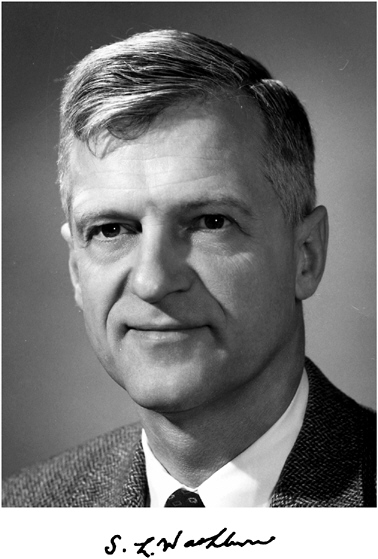
ROBERT GREEN SACHS
May 4, 1916–April 14, 1999
BY KAMESHWAR C. WALI
ON SACHS’S EIGHTIETH BIRTHDAY on May 4, 1996, Carolyn Sachs said, “Bob has three loves in his life: family, sailing, and physics.” She went on to say, “However much I wanted, I never had him declare his order of preference, because I was afraid of the outcome.” Indeed for the world of physics at large, although Sachs was known as an avid sailor and a loving patriarch of a large family, the highlight of his life was his loyalty and commitment to physics. Over the course of his scientific career, which spanned six decades, he made fundamental contributions to a wide- ranging area of basic research, including atomic, nuclear, and particle physics. A conscientious and meticulous teacher, Sachs guided the research of several graduates from the University of Wisconsin and the University of Chicago who have made their own mark in research.
To speak in broad terms Sachs believed strongly that “it is experiment what defines physics,” not pure thought or pure mathematics however elegant and beautiful these may be. Secondly, the underpinning of a physical model or a physical theory should be the most general, well-established principles to derive constraints and construct models to test against experiments and provide new tests for further
measurements. He (his students as well) avoided models based on extensive numerology and numerical analysis, which ultimately did no more than testing the general principles. Sachs characterized his approach as “phenomenological theory,” and over the years with this methodology he and his students worked on groups of problems, each group spanning a period of years but overlapping to some extent either in time or content or both. There have been three such major groups of research activity: (1) electromagnetic interactions of nuclei and their constituents, the nucleons (neutrons and protons); (2) resonances and unstable particles; and (3) time reversal and CP violation.
Although Sachs’s primary interest was teaching and research, when needed and called upon, he offered himself in service to the physics community. He was recognized for his contributions to questions relating to national and international energy policies, for his services to high-energy physics panels, and for his successful efforts in creating the Division of Particles and Fields. He served as associate laboratory director at Argonne National Laboratory (1964-68) and was in charge of its high-energy experimental research program at the new and then the most powerful 12 GeV accelerator, the Zero Gradient Synchrotron (ZGS). He later served as the director of the laboratory (1973-79). He also put in two terms as the director of the Enrico Fermi Institute (1968-73 and 1983-86).
Bob Sachs was born on May 4, 1916, in Hagerstown, Maryland, but his family moved to Baltimore, Maryland, in 1921, when Bob was five years old. Bob’s grandfather came originally from Russia. His family name was Schabershovsky. When he married one of the seven daughters (and no sons) of a man with the family name of Sachs, he was adopted by his wife’s family and acquired the name Sachs. Bob’s father, Harry Maurice Sachs, was the oldest in a family of
seven siblings from his father’s second marriage after the death of his first wife. Bob’s mother, Anna Green, was the daughter of an upper-middle-class Jewish family in Richmond, Virginia. Anna’s father was an Austrian by birth and her mother was a Lithuanian.
Anna married Harry Sachs when she was only 16. Her father was strongly opposed to the marriage because she was too young to marry and, secondly, Harry, who came from a small town, did not measure up to his expectations for a son-in-law. Anna married without his knowledge, but with complicity of her mother, which led to her parents’ divorce. She remained estranged from her father for the rest of her life, but remained close to her mother. In Baltimore Harry Sachs worked in the city printer’s office during the day and took night classes and eventually got a law degree from the University of Maryland. Anna was an accomplished singer, who sang professionally and during services at the temple Oheb Shalom to supplement the family income. These were difficult days for the Sachs family as Bob was growing up.
Bob Sachs had his elementary education at John Eager Howard School number 61. After completing his high school education at the City College in Baltimore he entered Johns Hopkins University in 1933. By then he had realized that physics was his true calling and opted for a straight six-year Ph.D. degree course, bypassing the usual bachelor’s and master’s degrees. He began his graduate research as a student of James Franck and Maria Göpert-Mayer. Officially his thesis supervisor was Göpert-Mayer, but Edward Teller at the nearby George Washington University was his true mentor. At Teller’s suggestion Sachs worked on the neutron-proton interaction potential in deuteron, which led to his first publication (1938). The values of the parameters of the Yukawa potential that he determined by solving the
deuteron problem numerically and fitting them to the data proved to be extremely useful in nuclear physics of the time. They were used extensively until the advances in meson theory and the modification of the potential in light of new experiments.
After his graduation, during the years 1939-41, Sachs continued his association with Edward Teller as a research fellow at George Washington University. He worked closely with him in research on a great variety of physics, including atomic, molecular, and solid-state physics, as well as nuclear physics. Among several papers during that period there were two that had great impact. One of them established a very general result for the ratio of the frequencies of the transverse and longitudinal polar waves in polar crystals in the long wavelength limit (1940). It is known as the Lyddane-Sachs-Teller theorem in solid-state physics literature. The other had to do with the general problem of scattering of slow neutrons by molecular gases (1941). At the time, the results were of interest mainly in determining neutron cross-sections from measurements on molecular gases, but later they played a vital role in the study and analysis of neutron dynamics in gas-cooled reactors that became a part of the Atomic Energy Commission program.
In 1941 Sachs had spent just four months (March to June) as an instructor at Purdue University, when he received a call from Robert Oppenheimer to be “his” postdoctoral fellow at the University of California, Berkeley. He left Purdue, but just as he started research on a problem in meson theory his pure research career came to an abrupt end; following the Pearl Harbor tragedy and America’s entry into World War II he became engaged mostly in classified applied research, the results of which could not be published in regular journals. First, he was called back to Purdue to serve as a house theorist to work on a
project on crystal rectifiers. In 1943 he moved to Aberdeen Proving Ground in Maryland to become the chief of the air blast section of the terminal ballistics branch of the Ballistic Research Laboratory (BRL).
The project at Purdue concerned the development of improved detectors for microwave radar. The prevailing art of the manufacture of such detectors was very labor intensive and entailed high cost. The needed contact between the point of a metal wire and a silicon crystal in the detector had to be made manually by tickling the crystal with the wire. Sachs’s assignment, under the direction of Karl Lark-Horovitz, was to make detectors that circumvented this problem and performed the way the known simple theory predicted. Although the effort did not lead to the solution of the practical problem in designing better detectors, it did lead to an understanding of why the ideal theory does not work and became an important contribution to the practical use of semiconductors. There were two types of Si and Ge semiconductors known as N type and P type. The theory of impurities explained why some of these semiconductors are of a specific type, but Sachs and Lark-Horovitz realized how specific impurities could be added to highly purified Si and Ge to make on demand either an N- or P-type semiconductor. Subsequently this discovery became extremely important in the production of transistors.
At BRL Sachs led a group that analyzed the tests of bombs and explosives. Aside from managing the group Sachs provided the interpretation of the results in terms of effectiveness in actual warfare, proposed new tests, did operations analysis on bombing, and carried out research on shock waves and blasts. During the course of this work Sachs and his group needed to know the effect of ambient pressure and temperature in order to analyze the results of their tests and for the evaluation of blast effects at high altitudes.
Sachs solved this problem in a very simple way by using scaling methods (1944).1 The BRL was a laboratory of the Ordinance Department, which had no access to the work of the Manhattan Project at Los Alamos. The contrary was not true. It turned out that Sachs’s solution was of great importance to the Manhattan Project. It had defied John Kirkwood, a distinguished theoretical chemist working at Los Alamos, who was trying to find the solution by detailed dynamical methods.
After the explosion of atomic bombs over Hiroshima and Nagasaki, the Ordinance Department requested Sachs to undertake a study of the comparative effectiveness in terms of both cost and strategies. This resulted in an unpublished report titled “Atomic Explosives for Defensive and Offensive Purposes” (1945). It was a far-reaching analysis that remained classified until 1964. An extract from this report appeared in the Bulletin of Atomic Scientists.2
At the beginning of 1946 Sachs joined the University of Chicago’s Metallurgical Laboratory to work on the physics of a gas-cooled BeO, ceramic-moderated reactor for electric power generation, proposed by Farrington Daniels and hence known as Daniels Pile. When the laboratory became Argonne National Laboratory on July 1, 1946, and was transferred to the Atomic Energy Commission, Sachs was appointed director of the Theoretical Physics Division. He had multiple responsibilities, including recruitment of theoretical physicists, research on various designs of power reactors, and basic research in nuclear physics. He also commuted between Chicago and Oak Ridge, Tennessee, to give introductory lectures in the first nuclear engineering program set up in Oak Ridge. The program included a group of young engineers selected by interested industrial companies from among their employees as promising candidates to become the first industrial nuclear power engineers. In-
deed many among this group became the principal leaders of the then developing industrial programs in nuclear engineering.3 He was also successful in bringing some prominent theorists such as his former thesis advisor, Maria Göpert-Mayer, David Inglis, and Morton Hammermesh to Argonne.
Sachs’s contributions to applied physics during this period included calculations of the critical sizes and temperature effects for reactor cores as well as investigations of various control methods. Most of this work and the work during the war years were presented in reports that were classified for a long time. Only a part of that work appeared subsequently in regular publications and found applications in basic research. For example, Sachs’s work on relativistic shock waves during the war was subsequently cleared for publication (1946) and had significant impact on theoretical work in astrophysics.4 Likewise, the paper with Fermi and Sturm (1947) on thermal neutron scattering, which arose from applied work on reactors, illustrated for the first time the power neutron diffraction for studying the properties of condensed matter. In nuclear physics it became instrumental in determining the nature of effective potentials in neutron scattering.
In 1947 Sachs joined the faculty of the physics department of the University of Wisconsin at Madison, marking the true beginning of his academic career in teaching and research. Wisconsin, which was a major center of experimental nuclear physics at the time, welcomed Sachs, who began to teach basic theory courses, including a course in nuclear theory to both experimental and theory students. Soon students graduating from Wisconsin found themselves to be leaders in Atomic Energy Commission projects and in nuclear engineering programs at Argonne National Laboratory as well as in academic positions throughout the country. The course on nuclear theory led to his writing a textbook
on the subject, Nuclear Theory (Addison-Wesley, Cambridge, Mass., 1953).
At the time Sachs entered the field of nuclear physics, nuclear theory was concerned with the nature and origin of strong interactions of nuclear forces. The interpretation of the underlying nuclear structure, however, based on experiments that involved only strong interactions, had become a difficult task. Sachs’s proposal was to use electromagnetic probes since the strength of the electromagnetic interaction measured by the fine structure constant was approximately 0.01 of that of the strong interactions. Consequently at relatively low energies they were expected to cause little disturbance to the underlying nuclear system. Moreover, their dynamical effects could be isolated and calculated using perturbation techniques.
Sachs’s first seminal paper in nuclear physics was published before he joined the faculty at the University of Wisconsin. The paper, “Magnetic Moments of Light Nuclei” (1946), established what became know as the mirror theorem for the magnetic moments of mirror nuclei (pairs of nuclei such that neutrons and protons in one are replaced by protons and neutrons in the other). It was based on the assumption that magnetic moments of nucleons in a nucleus are additive and it led to a correlation between the observed magnetic moments and the internal angular momentum structure of light nuclei. The mirror theorem, with suitable modifications to include relativistic corrections and its application to several experimental situations, led to several important papers during 1946-48. It soon became evident, however, that the mirror theorem, combined with the assumption that the nucleon moments are additive, failed to give reasonable agreement with experiments. There was mounting evidence that there was a contribution to the total magnetic moment in addition to the sum of the spin
and orbital moments of individual nucleons inside the nucleus.
Sachs recognized that the additional contribution could come from exchange currents due to the exchange of charged pi mesons between the nucleons. This was long before pi mesons were established experimentally. Persuaded by Fermi not to concentrate on a specific model, he developed a general phenomenological theory of exchange currents in nuclei (1948). This was based on a gauge invariant form of the Majorana exchange potential between nucleons. It led in subsequent years to a study of general consequences of gauge invariance. For instance, in the paper on the radiative transitions of a nonrelativistic system of particles (1951), Sachs (with Norman Austern) was able to give a general proof of the Siegert theorem5 for electric multipoles of all orders. Among other important results Austern and Sachs presented the formal construction of magnetic multipole moments, including the exchange current effects from any gauge invariant Hamiltonian. They demonstrated that the Rayleigh cross-section for the scattering of long wavelength radiation from a neutral system of charged particles was a direct consequence of gauge invariance.6 Further study of this formulation led to general expressions for nuclear transition amplitudes for various phenomenological forms of exchange and velocity-dependent interactions (1951, 1952) and an understanding of various electromagnetic properties of nuclear systems in light of then available data.
While primarily a nuclear theorist, Sachs foresaw high-energy physics as the new frontier field, the physics of the future in the early 1950s. He persuaded the department and the administration to hire faculty in this relatively new area and succeeded by the middle 1950s in making Wisconsin a center for high-energy experimental and theoretical research.7 In his own research Sachs turned his attention
from nuclear structure to the structure of nucleons, the presumed elementary constituents of all nuclei. He visualized the nucleon as consisting of a bare nucleon surrounded by a cloud of pi mesons. Because the strong interaction between the pi-meson cloud and the bare nucleon prevented the application of techniques based on perturbation theory, a new approach was necessary. Sachs introduced the general methods of his phenomenological approach to investigate the electromagnetic properties of the physical nucleon (1952), in particular the magnetic moments of the neutron and proton and the (static) neutron-electron interaction. His investigations suggested that the pion cloud consisted of highly correlated pairs and led to a model that could, in terms of the electromagnetic energy, account for the neutron-proton mass difference (1954). The later discovery of the rho meson in nucleon-nucleon collisions confirmed this feature of the nucleon structure.
This was the time in the 1950s when the pioneering experiments of Robert Hofstadter on electron-neutron scattering raised fundamental questions regarding the physical interpretation of the electromagnetic form factors and their physical interpretation in terms of charge and magnetic moment distribution inside the nucleon. The conventional Dirac and Pauli form factors had led to a paradoxical result in the interpretation of the measured electron-neutron interaction.8 In a paper that had strong impact, Sachs, along with F. J. Ernst and K. C. Wali, derived certain combinations of the Dirac and Pauli form factors as the truly physically meaningful expressions, in the sense that they were the Fourier transforms of the spatial charge and magnetization distributions inside the nucleon (1960). This not only removed the paradox but also led subsequently to new insights as regards the high-momentum transfer behavior of the form factors (1962).
In the late 1940s and early 1950s, when the world of elementary particles was ushered into a new era with the discovery of a host of new elementary particles, Sachs, like many other theorists, turned his attention to the study of their strange properties. He proposed a classification scheme for elementary particles based on a new additive quantum number called “attribute” (1955). This paralleled the Gell-Mann-Nishijima classification scheme for hadrons based on “strangeness,” but went beyond it since it included leptons as well.9 With Treiman he wrote a classic paper on K- interference (1956) that was to become a forerunner for a number of theoretical and experimental discoveries in K-meson physics. He developed a phenomenological theory based on S-matrix approach to describe their anomalous decay properties (1961), which incidentally proved to be a powerful tool to describe unstable particles in relativistic field theories.
The discrete symmetries—the charge conjugation (C), space inversion or parity (P), and time inversion (T)—have presented a great challenge to particle theory. The invariance of interactions under their combined operation, known as the CPT theorem, is regarded as one of the sacred principles of theoretical physics, since it is based on some very general principles, such as locality, Lorentz invariance, and causality. The discovery of parity violation in weak interactions in 1957 naturally raised the question regarding the invariance under the other two discrete operations. Sachs became interested in the subject when some preliminary experiments indicated a violation of the ΔS = ΔQ rule in the semi-leptonic decays of neutral K-mesons. Along with Treiman, Sachs analyzed the data, compared it with theory, and showed that the results implied the violation of CP invariance (1962). They suggested several experiments to test the conservation of CP in neutral K decays.10 Then
onward, the study of the discrete symmetries—C, P, and T—their conservation and their violation became an important part of Sachs’s research. Thus when CP violation was discovered in 1964, it was implicitly assumed that there should be a compensating T violation in order to preserve CPT invariance. Sachs felt strongly that it was extremely important to test CPT invariance independently, just because it was based on such general principles. Any violation, however small, implied the failure of some fundamental principle that goes into its proof. He proposed experiments to test the validity of CPT (1963) and tests of T violation (1990) independent of its expected violation connected with CP violation (assuming CPT invariance). Along with B. G. Kenny he examined the role of nonhermitian interactions in the proposed tests of T violation (1973, 1986). The monograph The Physics of Time Reversal ( University of Chicago Press, 1987) covers all aspects of time-reversal invariance beginning with classical physics, extended to the quantum world of atomic and nuclear systems and finally to quantum field theories of elementary particles.
In 1963 Sachs’s teaching and research came to a temporary standstill when he moved to Chicago to be the associate laboratory director for high-energy physics at Argonne National Laboratory (ANL). On December 4, 1963, during the gala dedication dinner of the Zero Gradient Synchrotron (ZGS), Albert Crew, the director of ANL, announced Sachs’s appointment. As the associate director, whose responsibilities he assumed on February 1, 1964, Sachs was responsible for directing the operation of the ZGS and supervising the physics program at the new accelerator. He faced a serious challenge since the construction of the ZGS at Argonne had a history of controversy between the Atomic Energy Commission (AEC) and the Midwest universities. For much of the Midwest university community Argonne
was not a natural site for an accelerator for basic research in high-energy physics. It had no record of high-energy physics activity. It was a multipurpose government laboratory, operated by the University of Chicago, with programs oriented mainly toward applied research.
Physicists in the Midwest universities wanted an accelerator of their own in the Midwest, patterned after the Brookhaven National Laboratory in the east, which had been created and operated by the Associated Universities, Inc. (AUI). They had formed a Midwestern Universities Research Association (MURA) and had proposed the construction of a high-intensity, 12.5 GeV machine (MURA accelerator), to be built in Madison, Wisconsin. In spite of its support from the Ramsey panel,11 President Lyndon Johnson rejected the project based “strictly on competitive economic considerations.” But to lessen the blow of rejection the President also directed Glen T. Seaborg, the AEC chair, “to take all possible steps to make possible an increase in the participation of the academic institutions in the Midwest in the work of the Argonne National Laboratory.”12 Johnson went on to say that he fully supported the centers of scientific strength in the Midwest. He felt certain that with the right cooperation between the government and the universities, a great deal could be done to build at Argonne the nucleus of one of the finest research centers in the world.
As a result the contract for Argonne and the University of Chicago was replaced by a tripartite contract between a consortium of Midwest universities (called Argonne Universities Association), the University of Chicago, and the AEC. Earlier Roger Hilderbrand, who was Sachs’s predecessor as associate laboratory director, and E. E. Goldwasser, acting on behalf of the potential users, had established a ZGS Users’ Group. However, the users, who were still harboring feelings of disappointment at the rejection of the MURA
accelerator, were not particularly friendly to Argonne. The fact that Sachs came from Wisconsin with a strong association with the user community and had played an active role in MURA deliberations did not make much difference. Recalling those initial days of his appointment, Sachs said, “I found a certain chill come over our relationship the minute I took the ANL job. I had no friends left!”13 But in a short time much of this bad feeling faded away. The Users’ Group, as conceived by Hilderbrand and Goldwasser and as implemented by Sachs, was to become a model for organizing high-energy physics research programs worldwide.
According to Sachs he was free of strong prejudice because as a theorist he had the advantage of knowing so little about matters to be decided. At the same time he suffered from the disadvantage of not knowing enough about experiments to trust his own judgement.14 To overcome the latter and in search of the needed guidance and insightful input from the experimental side, he appointed Thomas H. Fields as the director of the High Energy Physics Division. Together, focusing on young people and encouraging them to start their own experiments, they built a highly productive research effort locally at ZGS.15 Sachs also gave strong support for the particle detector projects that were already set in motion by his predecessor with groups at Midwestern Universities. These included, for instance, the design and construction of a 70-separated beam, a 30-inch hydrogen bubble chamber, and a 40-inch heavy liquid bubble chamber. These detectors, as well as a number of new electronic particle detector systems, enabled the ZGS university-based users to make an ongoing series of notable physics contributions in topical areas such as hadron spectroscopy, exploration of quark model effects, and weak interactions.
President Johnson, in keeping with his promised sup-
port for the full development of research facilities in the Midwest, put in a special grant in his fiscal year 1966 budget for upgrading the ZGS. There were two competing proposals: a new injector consisting of a 200-MeV linear accelerator and a 12-foot hydrogen bubble chamber with an additional external proton beam experimental area. It was Sachs’s responsibility to decide between the two. He opted for the second choice with a superconducting magnet for the bubble chamber. It was a much too risky venture as it was an entirely new generation of chambers. A superconducting magnet of the required size, which would be by far the largest in the world, had never been built. Nonetheless Sachs took the bold step, and under the leadership of Gale Pewitt, the bubble chamber and the magnet were designed and built successfully. It was indeed a great triumph in the design, construction, and operation of large chambers. One of the immediate results was that it enabled the study of GeV neutrino interactions with free nucleon targets.
Sachs also encouraged special projects whose scientific goals were outside high-energy physics research but could make innovative use of the skills and facilities at the ZGS complex. Some of these projects played crucial roles at ANL after the ZGS accelerator was shut down in 1979. For example, the intense pulsed neutron (spallation) source at ANL is based on pioneering experiments done at the ZGS. For many years thereafter this neutron source facility has made use of the ZGS booster accelerator and the second proton area.
During the years as associate director Sachs was also the regional secretary of the American Physical Society for the central states. By 1968 the ZGS program was running smoothly. The Users’ Group had extended beyond the Midwest to include all high-energy and particle physicists in the United States. Through this influential group Sachs had at
hand a means independent of government to make management decisions and decide on priorities concerning the future of high-energy physics. To institutionalize such capabilities he proposed and succeeded in reorganizing the American Physical Society, with divisions representing the major subdisciplines of physics under the control of the membership. The Division of Particles and Fields was his creation.
With ZGS running smoothly Sachs resigned in 1968 as the associate laboratory director to return to full-time research, teaching, and other academic responsibilities at the University of Chicago. But this dream proved to be very short lived. In October of that year George Beadle, president of the university, persuaded him to be the director of the Enrico Fermi Institute (EFI). Sachs undertook immediately the task of revitalizing the institute. He perceived that the tradition of excellence established during the Fermi years was slipping away. While the EFI had an excellent group of senior faculty, it needed new faculty, not only to join ongoing programs but also to initiate the programs of the future. It required a different style of research, different from the individualistic traditions among the seniors. With the advent of the Fermi National Laboratory Sachs was able to set successfully in motion the recruitment of new and young faculty both in theory and experiment. Although this was a full-time effort, Sachs taught courses for about one quarter out of each year and worked with several graduate students. He also served as the chair of the panel on elementary particle physics,16 a part of the Physics Survey Committee of the National Academy of Sciences chaired by D. Allan Bromley. The report, Physics in Perspective, the outcome of a two-year effort, described the status and prospects of each subfield of physics; it included projections of budgetary needs and set priorities.
In 1973 just as he was preparing again to devote his full-time energies to research and teaching, Sachs was called on to return to Argonne National Laboratory as its director. The laboratory was in deep trouble owing to severe budget cuts for fiscal years 1973 and 1974. The morale was low, as the cuts meant the loss of jobs for several hundred employees. The ZGS was 10 years old; its end was in sight with newer and ever more powerful machines on the horizon. Argonne’s largest program, the Liquid Metal Fast Breeder Reactor (LMFBR) was also faltering. Milton Shaw, the AEC’s director of reactor development, who often clashed with Argonne’s academically oriented reactor designers, saw Argonne as incapable of proceeding with the program along the lines he perceived, namely, toward a commercial breeder reactor.
Fortunately for Sachs, within three months of his taking over the directorship (ironically on April Fool’s Day in 1973), Dixy Lee Ray was appointed the chair of the AEC. Milton Shaw resigned. The Nixon Administration, convinced of the looming energy crisis, launched a new plan under which the AEC and its national laboratories would form the core of a new energy research agency responsible for developing energy technologies and applications ranging from fossil fuels and nuclear reactors to solar energy and energy conservation. Nixon, in addition to providing the AEC an additional $100 million on energy research in fiscal year 1974, asked Dixy Lee Ray to develop a five-year national energy plan for the expenditure of $10 billion.
Sachs was called on to serve on the Senior Management Committee to advise the chair of the AEC on the new energy initiative. The energy crisis and the new energy plan meant for Argonne potential recovery from the budget crunch of 1973. Sachs immediately started to expand the laboratory into new areas of energy research. He found out that
there were many individual members who, aware of the situation, had been looking into the laboratory’s broader capabilities in energy research. The laboratory had set up panels and task forces to look at energy options other than the nuclear option. One such panel was the solar energy panel that was struggling with the problem of tracking the Sun, using focusing devices to obtain useful solar energy. From his days as associate laboratory director for high-energy physics Sachs recalled the work of Roland Winston, a ZGS user from the University of Chicago. Winston had invented a unique nonimaging (nonfocusing) light collector for use in a Cerenkov counter in high-energy physics research. Sachs encouraged him to look into the possibility of using it to collect sunlight for solar energy systems. Winston and his collaborators soon established that nonimaging concentrators can be designed to focus sunlight efficiently throughout most of the day without ever moving. No tracking was necessary. It opened up a whole new possibility of large-scale deployment of nontracking solar concentrators.
Within a few years the laboratory recovered from its major troubles. The AEC became the Energy Research and Development Administration, followed by the establishment of the Department of Energy. Sachs felt he had accomplished his task and that it was time to return to the university to pursue his main interest, namely, research and teaching. He did so in 1979, but had to serve another term (1983-86) as the director of the Enrico Fermi Institute before he could devote himself full-time to this pursuit.
The fundamental questions concerning the discrete symmetries C, P, and T were to remain the main focus of his research during the last two decades of his life. In spite of the great success of the Standard Model of strong and electroweak interactions, it is recognized that it is not a fundamental theory. Of its many shortcomings the lack of
understanding of the origin and the strength of CP violation in weak interactions stands out as one of the great mysteries of theoretical physics. With the advent of quantum chromodynamics (QCD) a new problem arose concerning what is called “strong CP violation.” Sachs devoted himself almost exclusively to an understanding of some fundamental questions concerning this problem, which at the root depends on the definition of QCD vacuum (1994). His last two published papers (1994, 1997) delve deeply into the problem. His subsequent detailed exploration relating the origin of strong CP violation to the early Universe has remained unpublished.
Bob Sachs was devoted to his family just as much as to his academic pursuits and responsibilities. He is survived by his wife, Carolyn L. Sachs; five children (Judith Crow, Portola Valley, California; Joel Sachs, Arlington, Massachusetts; Rebecca Norris, Maynard, Massachusetts; Jennifer Sachs, New York City; and Jeff Sachs, Basking Ridge, New Jersey); three stepchildren (Jacqueline Wolf, West Newton, Massachusetts; Kate Wolf, Lincoln, Massachusetts; and Thomas Wolf, Brookline, Massachusetts); and fourteen grandchildren. Judith and Joel were his adopted children from his marriage to Jean Shudofsky (nee Jean Woolf) on December 17, 1950. Jean Sachs died on January 27, 1968, after a prolonged battle with cancer beginning around 1960. Affectionate and charming, Jean made the Sachs home a warm and friendly place for all Bob’s students and associates.17 After her death Franklin Levin, a former student, introduced Sachs to Levin’s “beautiful and very intelligent” sister Carolyn Wolf, whose husband had died in a tragic plane crash a year before. They married on August 21, 1968.
The extended family came together often—for birthdays, holidays, and sometimes to sail together. “As the patriarch of a large brood,” Rebecca Norris says, her father
“spoke willingly and enthusiastically at family occasions such as weddings, anniversaries, and bar and bat mitzvahs. He looked the role—tall and slim with his bushy eyebrows and hair a little wild—and his speeches always had the right touch. They were interesting, warm, funny, impeccably delivered, and perhaps most important of all, brief. He was the quintessential grandfather.”
To his colleagues, students, and associates Sachs was caring, loyal, and responsible. He was known to hold strong opinions, but was always forthright and a man of unquestionable integrity. He was tireless in working for institutional developments. At both Wisconsin and Chicago he enjoyed great respect from deans, presidents, and provosts. He made sure that the teaching faculty was the backbone of a university.
Sachs stood for fairness and internationalism in physics. Throughout his scientific career, along with his own research efforts, Sachs brought forth opportunities for others, particularly for the young. He worked closely with his students and his devotion to them was legendary. “I first met Bob Sachs in 1959 at CERN sitting at a lakeshore café,” says R. F. Sawyer. “ He offered me a post-doc job and said it is pretty much like this in Madison. It is a good place to do physics. His enthusiasm and energy had made the department in Madison a fine place to do particle physics.” Sachs was responsible for Roland Winston’s outstanding career by directing him from high-energy physics to solar energy research.
The summer institutes Sachs initiated at the University of Wisconsin during the years 1960-64 was a prime example of his concern for the physics community at large. It was a time when even the best of the younger physicists in U.S. universities had to interrupt their research during the summer and seek employment to supplement their income. That
was an era when few university faculty members had summer support covering their salaries. Sachs’s proposal to mitigate the situation by forming a summer institute for well-qualified theorists was welcomed by the National Science Foundation. With the necessary support for travel and salaries for the participants the summer institutes became unique in fostering free exchange of ideas among a rare combination of senior and distinguished and young, upcoming researchers not only from United States but also from all over the world.18
Sachs was a Guggenheim fellow (1959-60); received honorary doctor of science degrees from Purdue University (1967), University of Illinois, Circle Campus (1977), and Elmhurst College (1987); was elected to membership in the National Academy of Sciences (1971); and served as the chairman of the Academy’s Class I (Physical and Mathematical Sciences, 1980-83) and chairman of its Physics Section (1977-80).
I WOULD LIKE TO THANK Carolyn Sachs and the Sachs family for all their help in completing this project. I am particularly indebted to Rebecca Norris; Judith Crow; and Jeff, Jennifer, and Frances Sachs for providing me with Bob Sachs’s family history. I have also had extensive help from many of Sachs’s colleagues and associates, most particularly (in alphabetical order) Malcom Derric, Thomas Fields, William F. Fry, Roger Hilderbrand, Wendell G. Holladay, J. M. Nevitt, Gale Pewitt, Jonathan L. Rosner, Raymond F. Sawyer, Roland Winston, and Lincoln Wolfenstein.
NOTES
SELECTED BIBLIOGRAPHY
1938 With M. Göpert-Mayer. Calculation of a new neutron-proton interaction potential. Phys. Rev. 53:991-93.
1940 With R. H. Lyddane and E. Teller. Polar vibrations of alkali halides. Phys. Rev. 59:673-76.
1941 With E. Teller. The scattering of slow neutrons by molecular gases. Phys. Rev. 60:18-27.
1944 The Dependence of Blast on Ambient Pressure and Temperature, Ballistic Research Laboratories Report No. 466, May 1944 (Available at Defense Documentation Center, Alexandra, Va., under order No. ATI 39393).
1945 Atomic Explosives for Defensive and Offensive purposes, BRL 590, November 1945.
1946 Some properties of very intense shock waves. Phys. Rev. 69:514-22.
Magnetic moments of light nuclei. Phys. Rev. 69:611-15.
1947 With E. Fermi and W. J. Sturm. The transmission of slow neutrons through microcrystalline materials. Phys. Rev. 71:589-94.
1948 Phenomenological theory of exchange currents in nuclei. Phys. Rev. 74:433. Erratum. Phys. Rev. 75(1949):1605.
1951 With N. Austern. Consequences of gauge invariance for radiative transitions. Phys. Rev. 81:705-709.
Interaction effects on radiative transitions in nuclei. Phys. Rev. 81:710-16.
With M. Ross. Evidence for non-additivity of nucleon moments. Phys. Rev. 84:379-80.
1952 With J. G. Brennan. Nuclear photo processes at high energies. Phys. Rev. 88:824-27.
Structure of the nucleon. Phys. Rev. 87:1100-1110.
1954 Structure of the nucleon. II. Pion-nucleon scattering. Phys. Rev. 95:1065-78.
With W. G. Holladay. Neutron-proton mass difference. Phys. Rev. 96:810-11.
1955 Classification of the fundamental particles. Phys. Rev. 99:1573-80.
1956 With S. B Treiman. Alternate modes of decay of neutral K-mesons. Phys. Rev. 103:1545-49.
1960 With F. J. Ernst and K. C. Wali. Electromagnetic form factors of the nucleon. Phys. Rev. 119:1105-14.
1961 With R. Jacob. Mass and lifetime of unstable particles. Phys. Rev. 121:350-56.
1962 With S. B. Treiman. Test of CP conservation in neutral K-meson decay. Phys. Rev. Lett. 8:137-40.
High energy behavior of nucleon electromagnetic form factors. Phys. Rev. 126:2256-60.
1963 Interference phenomena of neutral K-mesons. Ann. Phys. 22:239-62.
Methods for testing the CPT theorem. Phys. Rev. 129:2280-85.
1973 With B. G. Kenny. Non-hermitian interactions and the evidence for T-violation. Phys. Rev. D8:1605-1607.
1986 Supplementary evidence for T-violation. Phys. Rev. D1:3283.
1990 CP or T-violation? In CP Violation in Particle Physics and Astrophysics, ed. J. Tran Than Van. Gif-sur-Yvette Cedex, France: Editions Frontieres.
With M. J. Booth and R. Briere. Interpretation of the neutron electric dipole moment: Possible relationship to |e¢|. Phys. Rev. D141:177.
1994 Is QCD consistent with quantum field theory? Phys. Rev. Lett. 73:377-80.
1997 QCD vacuum in the early Universe. Phys. Rev. Lett. 78:420-23.