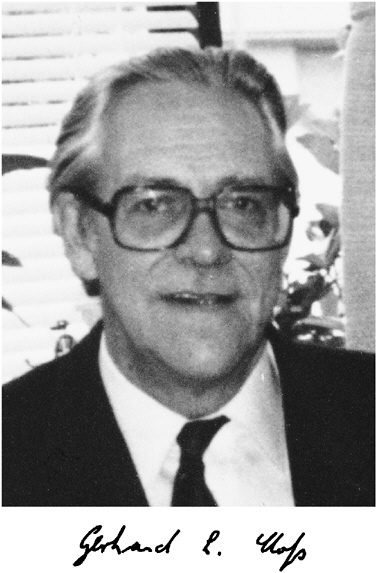
ROBERT M. BERNE
April 22, 1918–October 4, 2001
BY MATTHEW N. LEVY
ROBERT M. (“BOB”) BERNE, an acclaimed authority in the field of cardiovascular physiology, died on October 4, 2001, at the age of 83. Bob was born in 1918 in Yonkers, New York, and he grew up in Brooklyn. He attended college at the University of North Carolina and received his bachelor’s degree in 1939. He graduated from Harvard Medical School in 1943. He became an instructor in the Physiology Department of Western Reserve University in 1949 and rose to the rank of professor in that department in 1961. Bob moved to the University of Virginia in 1966, at which time he assumed the position of chairman of the Physiology Department. He carried out impressive research in the fields of the coronary circulation and cardiac metabolism. He became professor emeritus at the University of Virginia in 1994.
In the first year of Bob’s life he, his father, and his mother all contracted influenza during the terrible epidemic of 1918. Fortunately they all survived. The family moved subsequently to Dobbs Ferry and to the Bronx, and then to Brooklyn, where Bob entered the first grade in public school. Bob described his teacher as a huge, redheaded disciplinarian, who insisted that the students remain quiet for interminably long times. Bob was relieved when his mother be-
came a physical education teacher at the Brooklyn Ethical Culture School, a private school that accepted Bob and his sister as students.
Bob recalled that as he became more and more secure at this school, he became progressively more mischievous. After each of these episodes his mother would receive an angry report from one of his teachers. Finally his mother decided that he should be transferred to a public school. Even though Bob did well academically in this public school, and actually skipped a semester, he was very resentful because his sister lavished in the private school.
During his grammar school years the section of Brooklyn in which Bob lived was very safe. His family gave him the freedom to travel anywhere in the city that he wished to go. During his boyhood years, organized activities, such as Little League baseball, basketball, and soccer, did not interest him. Instead he participated in the popular neighborhood street activities, such as stickball, roller-skate hockey, touch football, and stoopball. He was an aggressive athlete and had a fervent desire to win. He was frequently embroiled in fistfights over trivial disagreements with his playmates, and he often returned home with a black eye or a bloody nose.
During the summers of his grammar school years his activities and surroundings were entirely different. His family rented a small cottage in the countryside near Albany, New York, for the entire summer. The cottage had no electricity, running water, or indoor toilets. Nearby were a small lake and a riding academy. During the summers Bob spent most of his daylight hours at the stable, cleaning the horses and stalls, feeding and watering the horses, and teaching horseback riding.
When Bob was ready to enter high school, he elected to attend Boys High School. This was the school that his fa-
ther and uncles had attended, and it had an excellent academic reputation. The school encouraged academic competitiveness by posting the 50 highest scholastic averages at the end of each term.
During his high-school years Bob was very short and thin. Even though his mother fed him a high-calorie diet, he failed to gain weight adequately. He developed a persistent cough, and his doctor suspected that he had acquired tuberculosis. Sputum examinations and chest X rays were negative, but his tuberculin test was positive. He was removed from school and was treated with bed rest for six months. Bob felt that this period was the most difficult time in his life, and he became very depressed and inactive. Fortunately his health and mental activities gradually improved. He finally went back to high school, at first on a half-day schedule and then on a full-day schedule. He gradually regained his strength and vitality and ultimately caught up with his class.
Bob was accepted for admission to the University of North Carolina. He found college to be a liberating experience, and he was delighted to find that he had substantial time for extracurricular activities. He quickly discovered girls and alcohol. His first experience with the latter was not too pleasant. He became inebriated, broke a window in a movie theater, and spent the night in jail. He worried that he would be expelled from school, but fortunately there were no repercussions. Bob majored in chemistry and was especially enthusiastic about organic chemistry.
Bob applied to a number of medical schools, and he was delighted to be accepted to Harvard Medical School. His elation faded quickly, however, because he found that the first-semester courses involved the various aspects of anatomy, and the major learning activity involved rote memorization. At the end of the first semester of medical school
Bob was so bored with medical school that he considered discontinuing his medical education.
He found the second-semester courses, physiology and biochemistry, to be somewhat more exciting. At that time biochemistry was still not very advanced, and so the major tutorial activities involved learning the techniques for assessing the contents of various organic compounds in blood and urine. He did find physiology to be somewhat more exciting. The professor, Walter Cannon, presented the material very well, but he terrorized the students periodically by presenting them with very difficult questions.
The second year of medical school included courses in microbiology, pharmacology, and pathology. The professor of microbiology was John Enders, an excellent teacher who ultimately was awarded a Nobel Prize. One of Bob’s classmates mishandled cultures of typhoid bacilli and contracted typhoid fever.
The third and fourth years, the clinical years, of medical school were very busy ones. The clinical studies were carried out mainly at the Brigham Hospital. When Bob conducted his studies at that hospital, most of the interns were sick with viral pneumonia, and the medical students assumed the clinical roles of the sick interns. During his clinical activities Bob became acquainted with a clinical teacher, Dr. Weinman, who was conducting research on toxoplasmosis. Bob asked Dr. Weinman whether he could carry out a study of the effects of certain sulfa drugs on mice that were infected with toxoplasmosis. This constituted Bob’s first adventure in medical research, and he was thrilled to learn that his research efforts were included subsequently in a paper published in the Journal of the American Medical Association. The combination of the clinical and investigative efforts led to Bob’s working from about seven each morning until about three the next morning. He was so
absorbed with his clinical and investigative efforts that he ignored the chronic fatigue that was caused by his lack of adequate sleep.
After the completion of his second year of medical school, Bob had a one-month vacation from school. During that month he worked as a chauffeur for a medical doctor in New York City. The doctor’s wife and two daughters stayed at a summer home about 50 miles from the city. Bob frequently drove the doctor back and forth between the city and the summer home. Bob loved this job, because he could enjoy tennis, swimming, canoeing, and sumptuous meals. During this month away from school, Bob did not know that Beth, the doctor’s daughter, who was then only 14 years old, would become his wife just 4 years later. Ultimately Bob and Beth had four lovely children: two girls and two boys. The daughters were Julie and Amie and the sons were Gordon and Michael. As the children matured, Julie became a social worker and has lived mostly in Charlottesville. Amie became a lawyer and has lived mostly in Atlanta. Gordon became an architectural landscaper and has spent most of his life in Charlottesville. Michael became a medical researcher and has lived mostly in Boston.
In April of 1943 Bob began his medical internship at Mt. Sinai Hospital in New York City. The internship, which lasted for nine months, was exhausting. Bob worked all day long every day and all night long on alternate nights. Financial compensation consisted of room, board, and laundry. His assistant residency, which also was nine months long, had a daily work schedule that closely resembled that of his internship. In March of 1944 Bob and Beth became engaged to be married, and a large wedding party was planned for May of that same year. However, Bob was afflicted with hepatitis shortly after their engagement was announced, and one month later he acquired a streptococcal
laryngitis. Their plans for a sumptuous wedding were reluctantly discarded and instead a small wedding party was held in his in-laws’ home.
Bob’s experience in the U.S. Army began in October of 1944 in Carlisle, Pennsylvania, where he received his basic training. After six weeks he was assigned to Fort Jackson in South Carolina as a medical officer, but his medical duties lasted only three months. He was then transported by troop ship to the Pacific island of Luzon, where the troops were training for the invasion of Japan. Twice each day Bob and his associates practiced going over the sides of landing crafts in preparation for storming a beach. The atomic bomb explosions freed Bob and his associates from the requirement of invading Japan.
Shortly after the peace agreement between Japan and the United States was signed, Bob sailed to Japan, arriving in Wakayama late in September. Over the next several months Bob was assigned as a medical officer to several cities on the island of Honshu. Bob’s major duties as a medical officer in Japan were to treat venereal diseases that afflicted a substantial portion of U.S. military personnel. Bob finally was permitted to return to the United States in October of 1946.
After his discharge from the Army, Bob returned to the Mount Sinai Hospital in New York to complete his training in internal medicine. Bob was appointed chief resident of the medical service headed by Dr. I. Snapper. At the beginning of this appointment Bob collaborated with Dr. Snapper on a research investigation of the treatment of multiple myeloma. Dr. Snapper was a very demanding mentor who had an encyclopedic knowledge of medicine. During this residency Bob’s mother developed metastatic cancer of the lungs, and Bob became involved in her treatment, including diagnostic thoracenteses two or three times per week.
Bob was not able to discuss his mother’s true diagnosis, for which failure he felt very guilty thereafter.
Bob Berne and I first met in Cleveland, Ohio, in August of 1948. On this day we began our academic activities as instructors in the Physiology Department of Western Reserve University Medical School (now Case Western Reserve University). I remember the month and year so well, because the Cleveland Indians were then involved in an exciting baseball pennant race. Ordinarily the Cleveland Indians were underdogs, but in late August of 1948 they were leading the New York Yankees in the American League. Bob was an ardent Yankees fan, a graduate of Harvard Medical School, and he had just completed his medical residency at Mt. Sinai Hospital in New York. I was a graduate of Western Reserve University Medical School, and I had just completed a two-year term as a medical officer in the U.S. Army. When Bob and I first met, a warm friendship developed almost immediately, despite the Yankees-Indians rivalry that continued throughout that summer until the World Series ended (with a surprising victory for Cleveland, I must add).
Our salaries were about $2,000 per annum. This amount certainly did not provide for an opulent life style, even though the value of the dollar then was much greater than it is today. The financial standard of living was no more opulent in the Physiology Department than it was at home. Professor Carl Wiggers, the chairman of the Physiology Department and a world-renowned medical scientist and educator, informed us promptly that his department did not have sufficient funds to enable him to hire technicians and other assistants. The members of the Physiology Department at that time were organized into teams of two members each. Wiggers explained that Bob and I would constitute one such team, and that on alternate workdays one of us would be the acting scientist and the partner would be
the acting technician. The roles would be reversed on the intervening workdays.
Wiggers suggested that Bob and I would each study a different aspect of a canine model of congestive heart failure. Bob had a greater interest and familiarity with biochemical processes and technics, whereas I used a more bioengineering approach. Bob initiated a study of the effects of reduced cardiac output on renal function, whereas I began a study of the effects of diminished cardiac output on arterial and venous hemodynamics. The two projects required numerous assessments of renal function and blood oxygen content. The animal experiments themselves usually occupied an entire workday. We had the option either of completing our biochemical analyses before we went home late in the evening or of postponing the chemical analyses until the next morning. Bob advocated the first option, because his medical residency experience accustomed him to long periods of sleep deprivation, whereas sleep deprivation made me very uncomfortable. I acceded grudgingly to Bob’s preference and we worked together throughout the long nights to complete our laboratory analyses. Fortunately Bob was such a pleasant, enthusiastic, and competent individual that in a very few weeks, I began to enjoy the grueling work schedule! My wife, Ruth, did not object strongly to my nocturnal adventures, although she asserted that I must be mentally deficient to follow such a strenuous routine. Bob’s wife, Beth, did not mind the exhausting schedule so much, perhaps because she had long been accustomed to Bob’s prolonged workdays during his internal medicine residency.
The laboratory where Bob and I worked was next door to Professor Wiggers’s office. Wiggers suffered periodically from gout, and when this disease was especially painful, his mood was not very pleasant. The lighting in our laboratory
was inadequate, and we persuaded Dr. Wiggers to have a new fluorescent light installed. A few days later an electrician came into our laboratory to install the new light fixture. The hammering evidently disturbed Dr. Wiggers, because he stormed into our laboratory and ordered the electrician to leave. He then shouted at us and insisted that this disturbance was inexcusable. He added that when he was a young scientist and needed greater illumination, he would activate a kerosene lamp, which was of course silent. Ever since that experience Bob and I referred to our fluorescent light as our kerosene lamp.
After serving one year as instructors in the Physiology Department, Bob and I were promoted to the rank of assistant professor. Our research activities progressed satisfactorily, and we also began to present lectures on various aspects of physiology to the medical students. Professor Wiggers was extremely conscientious about teaching the medical students. Consequently he monitored most of the lectures that we delivered to the medical students. After each lecture he discussed the good and bad features of the lecture and suggested how we might improve the quality of those lectures.
The Medical School of Case Western Reserve University developed a detailed syllabus, which they provided for the education of the medical students. Therefore, they did not recommend established, already published textbooks to their students. Furthermore the preclinical education system at our medical school was not organized on the classical basis of specific biological topics, such as anatomy, biochemistry, physiology, and pathology. Instead the curriculum was organized on an organ system basis, that is, when the cardiovascular system was being presented, faculty members from the various basic and clinical science departments would present the various anatomical, biochemical, physiological,
and pathological aspects of the cardiovascular system. The medical school’s syllabus reflected this rather unique orientation.
The medical school’s curriculum was updated periodically. When it was time to update the cardiovascular subsection in the early 1960s, Bob and I were called upon to update the physiological aspects of that subsection. We collaborated very effectively and enthusiastically. Our major complaint, however, was that the artistic features (such as drawings and graphs) of the curriculum were defective; satisfactory photocopying devices were not yet available. To print the graphic material the curriculum department used mimeograph machines, which were the standard copying devices of that era. Consequently the quality and clarity of the graphs and drawings were unsatisfactory.
Fortunately an official of the Mosby Corporation, one of the major publishers of medical textbooks, invited Bob and me to produce a monograph on cardiovascular physiology. We were both enthusiastic about this prospect. We were confident that the artwork would be far superior to that produced by our curriculum department, and we were also confident that our reading audience would be expanded considerably. The monograph was successful almost immediately, and it eventually led to a full textbook of physiology, which has also been used extensively.
Overall, my academic associations with Bob Berne were very fulfilling. My social associations with Bob were also wonderful. Bob was not only an exceptional teacher and research scientist but he was also a very well-rounded individual. He was an excellent athlete and a superb tennis and squash player. Bob and Beth were devotees of the arts and of the good life, and they introduced my wife and me to many of their social and intellectual activities. Bob and Beth loved classical music, and they encouraged us to attend
classical music concerts. Very shortly after they arrived in Cleveland we began to attend Cleveland Orchestra performances with them. The four of us sat together in the very last row of Severance Hall. Bob and Beth also introduced us to exquisite foods. Frequently on Saturday evenings we would patronize Cleveland’s best seafood restaurant, where we gorged ourselves on lobster. In those days a complete meal that included a two-pound lobster cost only about one dollar.
Dr. Wiggers retired as chairman of the Physiology Department in the early 1950s, and he moved to an office in the nearby Cleveland Clinic. In that office he became the first editor of the prestigious journal Circulation Research. Shortly thereafter George Sayers became the new chairman of the Physiology Department of Case Western Reserve University. The major emphasis of the department shifted to endocrine physiology, and Bob Berne’s principal interest focused on cardiac metabolism and the coronary circulation. Bob’s early studies indicated that a labile vasodilator was released from the myocardial cells when the oxygen supply to those cells was inadequate. His experiments suggested strongly that adenosine was an important mediator of the coronary vascular dilatation.
Bob’s studies on the adenosine hypothesis were postponed temporarily when he took a sabbatical with Professor E. C. Slater at the University of Amsterdam in 1959 and 1960. There he studied the “relaxing factor” in skeletal muscle. His two daughters attended the local school in Holland, and they quickly learned to speak Dutch fluently.
In 1964 Bob accepted the attractive offer to become the chairman of the Physiology Department of the University of Virginia. Bob held this prestigious position for the next 22 years. Shortly after he had moved to Charlottesville he accepted a sabbatical with Gustav Born at the Royal College
of Surgeons in London. Bob and Professor Born shared a mutual interest in the effects of adenosine on the microcirculation. This collaboration led to an important series of studies on the effects of adenosine on the coronary circulation and on cardiac function. These studies were carried out in collaboration with Professor Brian Duling, who completed a postdoctoral fellowship under Berne’s tutelage. Thereafter, Professor Duling became a valuable member of the Physiology Department and subsequently became the director of the Cardiovascular Research Center at the University of Virginia.
In collaboration with Professor Ted Rall, a member of the pharmacology department at the University of Virginia, Bob tested the hypothesis that adenosine receptors on the surface of the coronary vasculature could induce coronary vasodilation. Furthermore, the studies of Rall and Schrader revealed that adenosine could counteract the ability of β-adrenergic stimulation to elevate intracellular cyclic AMP and to increase the conductivity of the Ca++ channels in the myocardial cells. Luis Belardinelli, a postdoctoral fellow in Berne’s laboratory, studied the electrophysiological effects of adenosine in the heart. In collaboration with Bob Berne, Luis determined the effects of adenosine on certain cardiac arrhythmias in human subjects. Preliminary studies in human subjects were very promising.
Bob Berne was an outstanding scientist, author, and teacher, and he was consequently elected to the National Academy of Science. Bob was a delightful person who enjoyed life fully. He was unpretentious, and he was a pleasure to communicate with. His family, his many friends, his collaborators, and his many admirers around the world miss him profoundly!
SELECTED BIBLIOGRAPHY
1944 With D. Weinman. Therapeutic cure of acute toxoplasmosis. J.A.M.A. 124:6-8.
1949 With M. N. Levy. Production of acute experimental circulatory failure by graded pulmonary artery constriction. Proc. Soc. Exp. Biol. Med. 72:147-53.
1951 With M. N. Levy. Effect of acute reduction of cardiac output upon mechanisms of sodium excretion in the dog. Am. J. Physiol. 166:262-68.
1954 Myocardial function in severe hypothermia. Circ. Res. 2:90-95.
1957 With J. R. Blackmon and T. H. Gardner. Hypoxemia and coronary blood flow. J. Clin. Invest. 36:1101-1106.
1959 Cardiodynamics and the coronary circulation in hypothermia. Ann. N. Y. Acad. Sci. 80:365-83.
1961 With M. I. Jacob: Metabolism of adenosine by the isolated anoxic cat heart. Proc. Soc. Exp. Biol. Med. 107:738-39.
1963 Cardiac nucleotides in hypoxia: Possible role in regulation of coronary blood flow. Am. J. Physiol. 204:317-22.
1964 With S. Imai and A. L. Riley. Effects of ischemia on adenine nucleotides in cardiac and skeletal muscle. Circ. Res. 15:443-50.
1966 With R. M. Herzberg and R. Rubio: Coronary occlusion and embolization: Effect on blood flow in adjacent arteries. Am. J. Physiol. 210:169-75.
With M. Katori: Release of adenosine from anoxic hearts: Relationship to coronary flow. Circ. Res. 19:420-25.
1970 With B. R. Duling. Longitudinal gradients in periarteriolar oxygen tension: A possible mechanism for the participation of oxygen in regulation of blood flow. Circ. Res. 27:669-78.
1973 With R. Rubio, and J. G. Dobson, Jr. Sites of adenosine production in cardiac and skeletal muscle. Am. J. Physiol. 225:938-53.
1978 With D. H. Foley, J. T. Herlihy, C. I. Thompson, and R. Rubio. Increased adenosine formation by rat myocardium with acute aortic constriction. J. Mol. Cell. Cardiol. 10:293-300.
With W. L. Miller, R. A. Thomas, and R. Rubio. Adenosine production in the ischemic kidney. Circ. Res. 43:390-97.
1979 With H. R. Winn and R. Rubio: Brain adenosine production in the rat during 60 seconds of ischemia. Circ. Res. 45:486-92.
1982 With L. Belardinelli, S. Vogel, and J. Linden. Antiadrenergic action of adenosine on ventricular myocardium in embryonic chick hearts. J. Mol. Cell. Cardiol. 14:291-94.
1983 With J. P. DiMarco, T. D. Sellers, G. A. West, and L. Belardinelli. Adenosine: Electrophysiologic effects and therapeutic use for terminating paroxysmal supraventricular tachycardia. Circulation 68:1254-63.
1984 With J. P. DiMarco and L. Belardinelli. Dromotropic effects of adenosine and adenosine antagonists in the treatment of cardiac arrhythmias involving the atrioventricular node. Circulation 69:1195-97.
1985 With T. Tsukada and R. Rubio. Effect of chronic denervation on pharmacological responsiveness of coronary vessels. J. Auton. Nerv. Syst. 13:49-64.
With S. W. Ely, R. M. Mentzer, R. D. Lasley, and B. K. Lee. Functional and metabolic evidence of enhances myocardial tolerance to ischemia and reperfusion with adenosine. J. Thorac. Cardiovasc. Surg. 90:549-56.
1986 With R. C. Wesley, B. B. Lerman, J. P. DiMarco, and L. Belardinelli. Mechanism of atropine-resistant atrioventricular block during inferior myocardial infarction: possible role of adenosine. J. Am. Coll. Cardiol. 8:1232-34.
1988 With J. M. Gidday, H. E. Hill, and R. Rubio. Estimates of left ventricular interstitial fluid adenosine during catecholamine stimulation. Am. J. Physiol. 254:H107-H216.
1989 With R. Rubio and M. Bencherif. Inositol phospholipid metabolism during and following synaptic activation: Role of adenosine. J. Neurochem. 52:797-806.
1994 With D. R. Sawmiller. Effect of xanthine amine congener on hypoxic coronary resistance and venous and epicardial adenosine concentrations. J. Cardiovasc. Res. 28:604-609.