
2
Green Chemistry: The Impact on Water Quality and Supplies
Dennis J. Hjeresen
Los Alamos National Laboratory and the Green Chemistry Institute
INTRODUCTION
Most experts agree that water will be the next major environmental stress issue, rivaling and perhaps exceeding global climate change for technical and management solutions in the coming decades. The source of the water crisis is simple but exceedingly difficult to address, water resources are finite and the population that depends on those supplies is increasing inexorably. Virtually all of the global environmental impacts attributable to this population growth have ties to or severe impacts on water resources:
-
Deforestation resulting from the demand for agricultural land, housing, and fuel
-
Loss of biological species in forests and in waters
-
Desertification, erosion, and salination of farmland from unsustainable agricultural practices
-
Pollution of fresh and marine waters, further depleting food sources
-
Introduction of persistent organic pollutants into the ecosystem
-
Changing climate with as yet unpredictable changes in the hydrologic cycle having manifestations in flood, drought, sea-level change, and the spread of infectious diseases
Among water issues facing the world today, land-based sources of water pollution are among the most pressing. Adequate supplies of satisfactory-quality water are essential for the natural resources and ecological systems on which all life depends. An estimated 20 percent of the world’s freshwater fish and 80 percent of estuarine-dependent fish species, for example, have been pushed to the brink of extinction by contaminated water and loss of or damage to their habitat.
Green chemistry, however, offers a scientifically based set of solutions for protecting water quality. This paper highlights examples of green chemistry approaches to avoiding water pollution.
GREEN CHEMISTRY
In the broadest sense, green chemistry is about preventing upstream pollution. It is the utilization of a set of principles that reduces or eliminates the use or generation of hazardous substances in the design, manufacture, and application of chemical products. It is really a very simple approach that can have profound impacts for more complicated problems. Individuals, organizations, and companies turn to green chemistry for myriad reasons including those outlined below.
Voluntary Alternative
It can be highly beneficial for an organization to do something that is in its best interest as opposed to the rulemaking strategy. Rulemaking has been somewhat effective, but has proven overall to be insufficient. The tendency of other countries such as China is to think that if they just had more regulations, they would be able to improve their water systems. However, more regulations are not always the answer. For example, the Soviet Union on paper had the toughest environmental regulations on the planet, but enforcement was sorely lacking and thus its regulations were essentially ineffective in cleaning up pollution. Green chemistry presents an alternative to the command-and-control approach to environmental protection.
Economics
What has really influenced progress on environmental issues is a closer look at economics. The American business community receives a lot of criticism for its quarterly profit mentality. Yet when companies began looking at their profit
sheets, they found that there were two fundamental ways to increase profit: (1) increase your price, but this puts you at a disadvantage relative to your competition, or (2) decrease your cost. Many companies began looking for areas in which they could exercise more control over their costs and found that many of these costs lie in the environmental arena.
Life-cycle analysis (LCA), a tool of green chemistry, is a way of examining the total environmental impact of a product through every step of its life—from obtaining raw materials, through making the product in a factory, selling it in a store, using it in the home, and disposing of it. LCA reveals true waste costs. Companies have wasted a lot of money over the years on waste disposal and waste treatment, not to mention litigation. In looking at these costs, it makes sense that companies began to realize very quickly that control over process efficiency was also a control over cost. Decreasing pollution fundamentally increased profit, so movement into this area happened quickly.
This issue has also emerged internationally. Much of international competition is now based on control over costs: raw materials, labor, regulations, and environmental control. Early on there was a movement to ship a lot of U.S. manufacturing overseas because the laws were less stringent and the labor was less expensive. This is no longer the case.
Incomplete Safety Analysis
There are on the order of 75,000 chemicals manufactured, imported, or in commercial use in the United States according the U.S. Environmental Protection Agency’s (EPA) Toxic Substances Control Act Chemical Substance Inventory. About 3,000 of the substances listed are released into the environment every year in quantities of 1 million pounds or more. At the same time, toxicological data on most of the chemicals on the inventory are incomplete and falling behind. The EPA uses eight tests to analyze the safety of chemical substances. About 43 percent of the 75,000 registered chemicals have gone through just one EPA test and only 7 percent have been screened through all eight. The regulatory accountability for manufacturing new and existing chemicals with such incomplete safety analysis has become increasingly problematic for businesses and for the EPA. Safety concerns can thus be addressed through the use of alternative environmentally benign chemical substances.
Limited Regulatory System
In the United States, toxic substance discharges into the environment are fairly well regulated. About 650 chemicals and compounds are registered on the EPA Toxics Release Inventory. In 1999, U.S. toxics releases from 22,639 different facilities totaled about 7.8 billion pounds (3.5 billion kilograms). Releases of toxic substances to surface and injection wells added up to about 540 million pounds in our water
TABLE 2.1 Annual U.S. Water Releases to Surface and Injection Wells
|
Year |
Surface Releases |
Injection Wells |
Total Releases (lbs) |
|
1995 |
180,516,139 |
236,194,397 |
416,700,536 |
|
1996 |
173,288,209 |
204,329,109 |
373,617,318 |
|
1997 |
218,371,916 |
219,513,898 |
437,885,859 |
|
1998 |
233,365,761 |
210,639,389 |
434,005,150 |
|
1999 |
253,591,816 |
199,547,803 |
453,139,619 |
|
2000 |
260,882,385 |
279,036,646 |
539,919,031 |
supply in 2000 (Table 2.1). Avoiding such discharges in the first place is thus a goal of green chemistry efforts.
CHEMISTRY AND ENVIRONMENTAL ISSUES
Chemistry has often been seen as a detriment to the environment. The history of the twentieth century was that chemical substances tended to wind up in the environment, typically not intentionally. A good example is the bioaccumulation of persistent organic pollutants in the ecosystem. The original intention of these chemical applications was very good. Over time, however, dealing with the impact of a chemical once it is in the environment is extremely expensive and is less likely to be undertaken.
This legacy is a serious problem, not only for the environment, but for the field of chemistry in general. There are many potential chemistry students who feel that they want to do something important for the environment, but they do not choose chemistry as their primary discipline. The number of students going into chemistry is dropping steadily. If it were not for foreign students coming to the United States for a chemical education, many chemistry departments would be closing down.
It seems all of the bad examples would be sufficient to motivate a change in behavior in the right direction. In many cases, behaviors have changed, but overall there is a relation between chemistry and the environment that really has to be addressed at the upstream level.
ADDRESSING GLOBAL CHALLENGES
As evident from projections by the United Nations, population demands on water resources will continue to climb. For the 4 billion to 7 billion people projected, in addition to supplies of food and water, will there be adequate goods and services? Will there be plastic bags? Will there be floors and ceilings? When this equation of population growth is carried out into the products, goods and services, and rising standard of living that is being demanded, it ties back to what the chemical community has to supply.
On the one hand, this presents a growth market. On the other, by continuing down the path of “pollute first, clean up later,” chemistry is really not in a position to help. Chemistry must take a role in providing some alternatives. Leapfrog technology is required because when you look at population growth, the vast majority of it is going to take place in the developing world, not the developed world.
There is an opportunity here to leapfrog technology in the same way that China, Thailand, and India have in telecom-munications. Instead of investment in landline phones, it has all gone to cellular. Similar approaches are being taken in chip manufacturing and new industries. Western companies are going into these countries with the latest in environmental technology, which then sets the standards for local production. It does not always catch up right away, but it does.
GREEN CHEMISTRY EXAMPLES
The EPA, along with the National Science Foundation, the National Institute of Standards and Technology, and a number of the other stakeholders, sponsors the annual Presidential Green Chemistry Challenge Awards. Examples of some award winners are presented below and illustrate how chemistry relates to water. The examples given here focus on a holistic approach to water rather than a chemical-by-chemical approach. In general, green chemistry applies to issues far outside the traditional chemical industry.
Oxidative Technologies—Chlorine Alternatives
One of the environmental issues with which many are struggling now is endocrine disruption and the combination of chemicals in the environment in ways that they were not originally released. There are two problems, one having to do with the actual chemicals that cause endocrine disruption and the other relating to chlorine in particular. Approximately 70,000 organochlorine compounds are presently detectable in the environment. The vast majority of these were not produced directly by manufacturing processes. Rather, the majority of them result from the combination of chlorine with other molecules in the environment that has created new chemical species. These new compounds have not been tested for their safety.
The impact of these endocrine disruptors on mammalian and aquatic systems is largely unknown. This is also not something that EPA has the budget to monitor adequately. The result is that a rather large-scale ecological test is being run in real time. However, other issues of industrial waste treatment, water conservation, the marine environment, and particularly agriculture can be addressed that are important to the overall equation of sustainable development.
For example, Terry Collins at Carnegie Mellon University has taken a broad systematic approach to addressing chlorine molecules in the environment. Because chlorine is used predominantly for oxidation, he thought it might be possible to approach the problem overall by seeking out alternative oxidants. One of the great oxidants available is hydrogen peroxide. However, it is not an efficient enough oxidizer for most industrial applications. Over the last few years, Terry Collins and his group have developed the new set of tetraamino macrocyclic ligand (TAML®) catalysts to activate hydrogen peroxide and improve its efficiency.
The TAML catalysts that Collins has developed are now rapidly being commercialized for the replacement of chlorine in a number of oxidation applications, such as pulp and paper, fabric treatment, and disinfection.
This example illustrates one of the key points of green chemistry. That is, for almost any one of the major contaminants being talked about, there are a whole range of industrial applications. Thus, when taking on a problem, the solution can also be applied to a wide range of industrial applications.
By applying this technology broadly, it becomes more cost competitive. Conversely, as the technology becomes cost competitive, it can find more applications. Costs are particularly competitive when the life cycle of disposal and treatment of wastewaters is factored into the equation.
Photographic Chemicals—A Closed-Loop Approach
The ways in which water sources become contaminated are sometimes surprising. Photographic processing, for example, is one of the great “out-of-sight, out-of-mind” sources of water contamination. People across the world send their photographs out for processing each day, quite unaware of the major source of contamination that comes from photographic chemical developer simply dumped down drains. In the United States alone, the amount of photographic development waste adds up to about 1,200 million gallons of water containing 15 million gallons of developer and contaminants such as hydroquinone, ammonia, and silver.
DuPont has come up with a new photographic development system called DuCare™ that addresses this waste issue. With the DuCare system, hydroquinone developer is replaced with erythorbic acid, and 99 percent of the developer and fixer is recycled at a central facility. The chemicals are actually distributed in containers that once used are returned to DuPont for recycling. Thus, not only is the chemistry of the developer replaced, the way in which the photographic chemicals are distributed is as well. Overall, DuPont changed the nature of the business. Instead of just being a chemical supplier, it now provides a valuable service. DuPont came up with a way of delivering fixers and developers to stores that enables elimination of water use and contamination and is great for its bottom line. The only water involved now is what is originally put in the DuPont photographic processing system. Utilization of this system has the potential to the save about 395 million gallons of water per
year in the United States alone. Other companies around the world are also working on incorporating this type of closed-loop approach into photographic development.
Industrial Waste Treatment
It is important to think of the scale of the economics being talked about here. The numbers are easy to come by in terms of the chemicals. The United States sells about $3.5 billion in this world market for chemical treatment, but a $5-billion-a-year market in chemicals for water treatment is actually very little. Although, it sounds like a big number, the one underlying it is substantially bigger. In terms of the industrial infrastructure, more than a trillion dollars is being protected from corrosion, from scaling, and from bacterial growth, which are huge economic problems.
When you talk about replacing these chemicals or about avoiding pollution, you have to have an idea of the scale that is being considered. Another Presidential Green Chemistry Challenge Award winner Ondeo Nalco also uses this closed-system approach.
Ondeo Nalco used to be a chemical supplier for water treatment, including chemicals for corrosion, scaling, and bacterial growth. It was quite a lucrative business too. In recent years, however, Ondeo Nalco has taken a very different approach to business. Similar to DuPont, Ondeo Nalco now provides more of a service to its customers rather than merely supplying chemicals. For its customers it provides a systematic analysis of facility use, substitute chemistry to decrease toxicity, and precise control of chemical use. Fundamentally, what has happened is that now Ondeo Nalco sells substantially fewer chemicals, which has reduced the amount of chemicals going out in water. At the same time its profit is high because it has provided an effective service for the purchaser.
Lithographic Technologies—Water Conservation
The next example involves semiconductor fabrication. Semiconductor manufacturing is somewhat deceptive because semiconductor plants do not typically have smoke-stacks with pollutants billowing out. Also, the industry provides high-paying jobs and other features unlike the manufacturing jobs of the past. However, semiconductor manufacturing plants are essentially chemical factories with electronic output.
The resource intensity of semiconductor manufacturing is enormous. In a recent article (Williams, E.D.; Ayres, R.U.; Heller, M. Environ. Sci. Technol. 2002, 36(24); 5504-5510), it was found that 1.7 kg of chemicals and fuels are used to manufacture every 2-g, 32-MB DRAM chip produced. If you just consider water, 32,000 g of water are required for every 2-g chip. However, a lot of the water is recycled in plants and a lot of it is reused, but the water is deionized, which translates into fairly high energy content. There are also 45 g of chemicals used per 2-g chip.
Water is really a huge issue here. The average semiconductor fabrication plant will go through 2 million to 3 million gallons of deionized water a day. Typically the plants are located in semiarid regions of the country (e.g., Austin, TX; Albuquerque, NM; San Jose, CA; and Irvine, CA) that already struggle with water issues. However, this water use has not been much of an issue for the industry because economically the industry could afford it. For example, at its plant in Albuquerque, New Mexico, Intel has bought water rights from farmers up and down the Rio Grande in order to have a sufficient volume of water for its processing. Because of the very high-value product being made, paying such a high price for water was justified.
Then something occurred that changed this happy scenario. The industry hit a physics problem. The ratio of the width of features to their depth (aspect ratio) started to cause problems. Water with aqueous chemicals was used to clean the wafers as the chip features were produced. However, as the aspect ratio of the features increased, the high surface tension of the water inhibited it from being able to penetrate between the features. The industry then had to look for alternatives to water for cleaning.
A solution to this problem came out of Los Alamos National Laboratory. It was found that supercritical fluids, especially supercritical CO2, could be used for cleaning instead of water. This is because in the supercritical state, CO2 has no surface tension and can penetrate the small spaces with the addition of propylene carbonate, a food additive. Figure 2.1 shows the improved performance of cleaning with supercritical CO2. This technology has been commercialized, and the supercritical fluid technology has won a Presidential Green Chemistry Challenge Award. Now six other companies are beginning the construction of new equipment for the semiconductor industry to bring this kind of technology to bear. Again, it was a rate-limiting problem, but one of the benefits is that 2 million to 3 million gallons of water a day are available for other uses. Thus, it is important to consider conservation of water resources, as well as reduction of contamination in the equation.
Marine Environment—Anitfoulants
A $4-billion-a-year problem for the shipping industry is marine fouling in coastal water regions. Every ship has this problem of buildup of marine organisms (Figure 2.2). Organisms on ships’ surfaces increase drag and fuel costs, but cleaning them off is an expensive process, and takes a ship out of service. The typical approach to this problem has been the use of tributyltin in paint. Tributyltin kills marine organisms, but unfortunately, it also bioaccumulates and becomes toxic to larger organisms. In coastal regions, immune, reproductive, and mutagenic effects in marine organisms are now
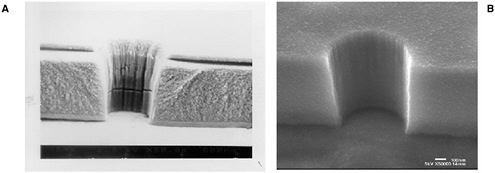
FIGURE 2.1 Comparison of a semiconductor component showing sidewall polymer (A) prior to cleaning, and (B) after cleaning with supercritical CO2.
quite high. This makes less food available in coastal regions and has led to some very long term impacts.
Rohm and Haas looked at this problem and developed the new Sea-Nine® antifoulant, 4,5-dichloro-2-n-octyl-4-isothiazolin-3-one (DCOI). The metabolic breakdown products of DCOI are nontoxic and do not bioaccumulate. DCOI is also cost competitive with tributyltin. It thus made sense for shipowners to switch to the less toxic alternative. Adoption of the new antifoulant was also facilitated by the number of international regulations beginning to ban the use of tributyltin. Again, regulation coupled with effective chemistry tools has helped shipowners move to use of the more environmentally friendly alternative and eliminate the use of tributyltin.
Agriculture
At the heart of sustainable development are food and water. It would not be possible to support the current population or that of the future without being able to provide food in a sustainable way. Providing enough food and water has a lot to do with the chemical industry. The chemical revolu-
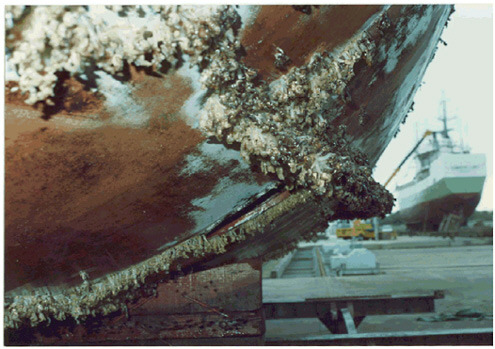
FIGURE 2.2 Marine fouling a major economic and environmental issue.
tion of the 1950s and 1960s made it possible to grow enough food to sustain the planet’s population. The agricultural chemicals industry is big, with $12 billion a year in pesticides alone. That is a fairly healthy dollar figure, but it is not healthy in terms of persistence and bioaccumulation. Really, the environmental movement began with Rachael Carson in the 1950s identifying the pathways of bioaccumulation of dichlorodiphenyltrichloroethane (DDT) in organisms.
Chemistry is going to have a critical role in a sustainable future, but what kind of chemistry will it be? In terms of herbicides and pesticides, they are not a problem for the most part when applied in correct doses in a scientifically responsible way. However, around the world, these chemicals are often mishandled, and proper safety procedures are not followed. Even here in the United States the typical person applying herbicides and pesticides to a lawn does not always read or follow the safety instructions provided.
The issue is how to avoid contamination of the environment in the first place. Over the last few years a number of Presidential Green Chemistry Challenge Awards have gone for agricultural applications and pesticide applications. There are even more examples such as the area of roach protection, ant protection, and other household uses. Companies are going to very different systems of alternative pesticides, including the biomimetic approach. Instead of using a broadscale neurotoxin to go after a species, more specific targets are being sought.
For example, Dow and Rohm and Haas separately have developed biomimetic pesticides that mimic the hormonal input that causes molting. Insects do not eat when they molt. If they are forced to molt early, they starve to death. These are endocrine hormones that essentially dissipate very quickly in the environment and are also effective in small doses. Thus, instead of having to use large quantities across fields, very small quantities can be used.
Another approach that is somewhat more controversial is the use of genetic engineering. What Eden Biosciences did is essentially study the plant biology. Plants have what can be thought of as the equivalent to an immune system that, when challenged with a disease or by insect infestation, leads to a protein cascade while the plant tries to fight it off. These proteins were identified, and now Eden is engineering them. When they are applied to the plants, increased growth and increased resistance to both disease and drought are obtained.
There are two or three advantages presented by these examples from the green chemistry community. One is that smaller doses are being used, and this means increased worker safety. The UN Food and Agriculture Organization has estimated that 10,000 agricultural workers die annually from pesticide poisoning. There is thus a very good reason to put things on the market that are less harmful, not only to the environment, but to the people who are working in the field. Another great advantage of the examples presented is the decreased water use, not only decreased water contamination.
Donlar Corporation won another award for its polyaspartic acid (PAA), which it uses in disposable diapers and other applications that require absorbents. Now it has also developed an agricultural application of PAA as an absorbent around the roots of plants that creates a sink for water and chemicals. It draws water from the surrounding area into the plant, which means less water use.
SUMMARY
Addressing sustainability issues such as water and food production cannot be a choice between resources or the environment. Instead, there have to be more innovative solutions. Fundamentally, water quality is going to have to be tackled along with water quantity. Desalination can be used to deal with water quantity, but it requires a large use of energy and can lead to significant water contamination. A desalination plant also does not put clean water back into the environment. Concentrated brine is created as part of the process at least in a 2-to-1 ratio, and it takes energy to produce that. For rich countries that have energy surpluses, this is certainly an option. However, for countries with fewer resources, other options are needed.
For example, 70 percent of the water in China is contaminated and unusable for human consumption. This is typical of many developing countries. A lot of contamination is human waste. That can certainly be managed with infrastructure: collection and treatment. However, there is also a lot of industrial waste containing persistent metals and organics that must be avoided from the beginning. Water quantity will not be dramatically increased so water quality must be addressed.
Part of the answer for developing countries therefore is to be able to reuse water repeatedly. Green chemistry is really a viable approach to such global environmental problems. Solutions may come on a process-by-process basis. Each chemist uses processes and develops processes. Part of the issue for the chemical community is how to make environmental design as much a criterion at the development stage of a process or a product as any other factor. If something can be designed to be red, it can be designed to be “green” as well.
In conclusion, green chemistry is a viable approach to global environmental problems. However, success requires an effective and complex blend of technical, social, economic, and political contributions.
DISCUSSION
Adequacy of Green Chemistry Tools
Dave Layton, of Lawrence Livermore National Laboratory, began the discussion by raising concerns about the use of experimental and simulation tools to replace problem chemicals with those that are benign. He felt that it is difficult to anticipate and screen for long-term problems, and
that the tools available cannot adequately mimic complex environmental situations, such as contaminants moving from one medium to another.
Dr. Hjeresen agreed that historically it was difficult to look ahead and foresee that something like chlorofluorocarbons would cause ozone depletion. However, he felt that by applying toxicology at the inception of programs rather than as an external regulatory function it may be possible to act preventively.
As an example, Dr. Hjeresen discussed ionic liquids. Early on in the development of ionic liquids, people considered them to be overall environmentally benign. Then researchers started looking at the toxicology of the compounds. Problems were found at the early stages of development, and this enabled new directions to be taken to make truly environmentally benign liquids. Dr. Hjeresen agreed that there of course would be surprises, but that this is no reason not to try the more benign path.
Adequacy of Chemical Industry Voluntary Measures
Jay Means, of Western Michigan University, expressed concern about the adequacy of the chemical industry’s voluntary measures. He felt that before looking abroad to international issues it would be necessary to look at home and determine what the political, economic, and social systems would be willing to do or not do. Mr. Means was concerned that these challenges are not being met domestically.
He provided an example of how the Great Lakes have relatively enlightened neighbors in the nation of Canada; and yet decades ago, 43 or so areas of concern were identified that limit the uses of fresh water in the Great Lakes. To date, in both Republican and Democratic administrations, Mr. Means knew of no areas that had been cleaned up.
Mr. Means stated that chemistry and the chemical industry are part of both the problem and the solution and that government can neither look only to a business to regulate itself, nor look only to its own bottom line for the choices it makes to support problem solving.
Mr. Means was concerned in looking at the language put forward earlier, that there is a deep desire to help but not much commitment. He felt that having a deep desire to do something does not translate to action, and a willingness to help suggests that the solution has to come from the ground up. He continued that in many cases these societies, particularly in the international domain, do not have the capability to even begin to raise themselves up.
Further, Mr. Means remarked that given such a situation, it is no wonder that the United States is viewed as the enemy in many of these domains. Thus, bringing chemical technology to some of these countries, in light of their inability to manage even simple systems with their governments and societies, would really be the wrong approach.
Dr. Hjeresen thought that Mr. Means provided some excellent points of discussion for the meeting. He agreed that these are very difficult problems with no simple solution. For example, he said that in the United States alone there are 17 different agencies at the federal level that have something to do with water, even before you get to states, water districts, and others. He said that it is good that everyone has a stake in this, but is bad when you are trying to make a decision. When you are talking about a fixed commodity such as water, he said, a decision always implies that there is some differential parceling of that resource, there is no good political mechanism to address this.
Dr. Hjeresen thought that the world situation is quite different in that there are grades to work with. He discussed the very high level of response in the United States, Western Europe, and Japan, but stated that there is also a middle level in countries that are at a middle level of industrial development where he thinks a technological approach could have a significant impact. There are a lot of people in these countries: China, India, Pakistan, and Brazil. Dr. Hjeresen thinks that targeting the middle state of economic development has the greatest chance of success.
He agreed that poorer areas—villages of Africa or Bangladesh—are where it is necessary to provide clean water at a dollar per person per year, with someone giving them the dollar. That is partially a money issue, a commitment issue, and a human rights issue.
Dr. Hjeresen stated that the chemical community is actually much stronger in that middle range where it is possible to essentially shut off the flow of contaminants from a known factory into a known water supply in a fixed amount of time. This is where he felt that technology could play the greatest role.
He continued that the difficulty with approaches to sustainable development is that it often requires having too many people to make it happen. With the green chemistry approach, you can take a look at everything a chemist does and it becomes more manageable.
Dr. Hjeresen said that he thinks the chemical community has a lot more to add here, that even in the poorest countries there are a lot of things that chemistry can do to make a difference. He continued that it is a daunting problem that cannot be solved all at once.
Life-Cycle Approach
Don Phipps, of the Orange County Water District, suggested that what Dr. Hjeresen proposed is a paradigm shift rather than an outright solution. He agreed that such an approach makes sense because it is impossible to guarantee that anything released to the environment will always remain benign. It is possible, however, to adopt a paradigm to use the best technology available to determine the fate of compounds and track what they do. Mr. Phipps agreed that it is very important that there be a shift from simply looking at the short-term solution—you develop a product that serves a single purpose, move on, and do not worry about
what happens after its use—to more of a chemical recycling paradigm.
Dr. Hjeresen agreed that just looking at the life cycle of chemical processes is a very important first step to make.
Business Drivers
Dan Askenaizer, of Montgomery Watson and Harza, was very interested in the examples presented for DuPont and Ondeo Nalco. In regard to the DuPont photographic system he wanted to know more about what influenced DuPont to move in such a direction—what were the drivers? Was it only economics? Also, he wanted to know how this service has worked out for DuPont.
In response, Dr. Hjeresen said that it is often the case that companies venture into such efforts due to being “beaten with a stick.” He talked about how the Union Carbide isocyanate disaster in Bhopal, India, significantly impacted the chemical industry, especially in the United States. The event prompted the industry to take action to improve its operations and led people to start thinking more in terms of the triple bottom line of social, economic, and environmental issues.
He continued that such decisions almost always start at the bottom by people looking for a path to do the right thing, but that implementation comes from a champion for the idea at the upper levels of the organization. He said that the biggest problem in general with most organizations is middle management interfering with the flow of such ideas. Once they are implemented, he said, most companies find their efforts to be very successful.
Commenting on the success of DuPont’s efforts, Dr. Hjeresen said that he thinks the technology has not penetrated to the degree it would hope for but that this is common with a lot of environmentally benign technologies. However, he gave the example of supercritical CO2 for semiconductor applications, which has been readily accepted. Supercritical CO2 for dry cleaning has not been accepted as readily. A number of good products have come out that can replace perchloroethylene as a dry cleaning substitute, with much less contamination of groundwater. However, the only place this has really taken over is on ships and in large cities where a dry cleaner is on the first floor of a building and perchloroethylene fumes reach the upper floors. Also, since California banned the use of perchloroethylene, more and more businesses have started noticing, and the orders for alternative machines shot up.
Dr. Hjeresen concluded that often a combination of regulatory measures and strong economic incentives is necessary to implement voluntary efforts such as those of DuPont and Ondeo Nalco.
Voluntary Versus Command and Control
Jeff Perl, of Chicago Chem, commented further on voluntary approaches versus command and control. He briefly discussed how the 1990 Pollution Prevention Act essentially involved a voluntary action and represented an effort to make that shift happen. Yet because of the legacy of command and control, the water system is used to make money from industry putting water down the drain so the incentive for reducing water use is not there. He wondered if Dr. Hjeresen had any thoughts about how to move more in the direction of a voluntary system and whether perhaps we would be better served by directing some of the metropolitan water funds into industries that reduce their water use.
Dr. Hjeresen felt that the answer is unique to each country, region, or municipality; he said the key, regardless of geographical location, is to address how to appropriately value water. He felt that the intrinsic value of water is underappreciated throughout the world.


