
2
Racial and Ethnic Identification, Official Classifications, and Health Disparities
Gary D. Sandefur, Mary E. Campbell, and Jennifer Eggerling-Boeck
Our picture of racial and ethnic disparities in the health of older Americans is strongly influenced by the methods of collecting data on race and ethnicity. At one level there is a good deal of consistency in data collection. Most Americans and most researchers have in mind a general categorical scheme that includes whites, blacks, Asians, Hispanics, and American Indians. Most Americans and nearly all researchers are also aware that these general categories disguise significant heterogeneity within each of these major groups. To the extent possible, recent research has attempted to identify and compare subgroups within each of the major racial and ethnic groups, making distinctions by country of origin, nativity, and generation within the United States. Most researchers generally agree that these categories are primarily social constructions that have changed and will continue to change over time.
Once we begin to explore more deeply the ways in which data on the elderly population are collected, however, we discover inconsistency across data sets and time. Part of this variation is from inconsistency in the way that Americans think and talk about race and ethnicity. Race and ethnicity are words that carry heavy intellectual and political baggage, and issues surrounding racial and ethnic identities are often contested within and across groups. The debate over racial and ethnic categories prior to the 2000 Census is one of the most recent, but by no means the only, example of these contests. Several advocacy groups pressured the Office of Management and Budget (OMB) to revise its racial and ethnic categories and data collection schemes (see Farley, 2001, and Rodriguez, 2000, for discussions
of the controversies). This resulted in several significant changes, including the most well-known change, which allowed individuals to choose more than one racial category in the 2000 Census. Although most national and many local data collection efforts follow the federal guidelines, they vary in the way in which questions are constructed and in the order in which they appear in the questionnaire or interview schedule. Such seemingly trivial differences in measurement lead to different distributions of responses about racial and ethnic identity (Hirschman, Alba, and Farley, 2000).
Another inconsistency that has troubled health researchers is the collection of racial and ethnic data using different criteria across data sources. A good example of this is the mismatch between self-selected race (which is used in most data sets) and the observer-selected race that is often used for death certificates. Comparisons between next-of-kin racial identifications and death certificates have shown that a large proportion of, for example, black Hispanics are misidentified on death certificates. This leads to a significant overestimate of their life expectancy because the race-specific mortality rates are inaccurate (Swallen and Guend, 2001).
The purpose of this chapter is to examine the implications of how we measure racial and ethnic identity for our understanding of racial and ethnic disparities in health, especially among the elderly.1 We focus on the official classifications used to produce statistics on the health status of the elderly, and because self-identification is the fundamental tool used to assign individuals to the official categories, we explore factors associated with self-identification.2 Although we emphasize identification and classification involving the elderly, much of what we have to say applies to other age groups as well. We first look at what the social science literature has to say about the ways in which individuals and society construct racial and ethnic identities. Second, we examine how information on race and ethnicity is recorded in some of the major federal data sets used to study health disparities among the elderly. We then discuss some of the major problems in our national system of collecting and reporting on health disparities. We conclude with some recommendations for achieving greater consistency in the collection and reporting of racial and ethnic information.
RACIAL AND ETHNIC IDENTITY
Historical Understandings of Racial and Ethnic Identity
Over time, academic and popular understandings of racial and ethnic identities have changed dramatically. Prior to the 20th century, racial and ethnic groups were perceived as permanent, biological types. Scholars of race and ethnicity turned to Biblical passages and, later, theories of natural history to explain the origins of differences among ethnic and racial groups
(Banton, 1998). They concluded that these group differences were natural and immutable. Cornell and Hartmann (1998) explain that the paradigms popular among social scientists in the late 19th and early 20th centuries “conceived ethnic and racial groups as biologically distinct entities and gave to biology the larger part of the responsibility for differences in the cultures and the political and economic fortunes of these groups” (Cornell and Hartmann, 1998, p. 42).
The work of Franz Boas shifted the model describing racial and ethnic differences from one stressing biology to one that focused on cultural differences (Cornell and Hartmann, 1998). This shift implied that racial and ethnic groups were dynamic rather than static. These paradigmatic changes influenced the work on race in the emerging Chicago School of Sociology, which led to an assimilationist model of racial and ethnic identities (Cornell and Hartmann, 1998). In this model, the inherent flexibility of racial and ethnic identities would eventually lead to the assimilation of distinctive racial and ethnic minority groups into the mainstream culture. However, developments in the middle of the 20th century, such as strengthening ethnic and racial conflicts, forced social scientists to reconsider the question of racial and ethnic identities.
Two paradigms, primordialism and circumstantialism, emerged in the post-assimilationist era (Cornell and Hartmann, 1998). Proponents of primordialism asserted that for each individual “ethnicity is fixed, fundamental, and rooted in the unchangeable circumstances of birth” (Cornell and Hartmann, 1998, p. 48). Those favoring circumstantialism claimed that individuals and groups claim ethnic or racial identities when these identities are in some way advantageous. As more and more social scientific research investigated racial and ethnic identities, it became clear that neither model was able to fully explain the complexities of these phenomena. The most prevalent current view on racial and ethnic identities is a social constructionist model (Banton, 1998; Cornell and Hartmann, 1998; Nagel, 1996). Within this system, “the construction of ethnicity is an ongoing process that combines the past and the present into building material for new or revitalized identities and groups” (Nagel, 1996, p. 19).3
As views of racial and ethnic identities have changed over time, so have official categories and measurement procedures. The U.S. Census has classified people into racial groups since its origin in 1790. However, the list of categories and the method of measuring race or ethnicity has changed many times in the intervening decades, as the political and economic forces shaping the collection of racial data have changed. In early Censuses, enumerators answered the race question based on their perception of the individual. The earliest Censuses used slave status as a proxy for a racial category, the only race options being “free White persons, slaves, or all other free persons” (Sandefur, Martin, Eggerling-Boeck, Mannon, and Meier, 2001; U.S.
Bureau of the Census, 1973). In later years more specific categories for those of mixed African American and white descent, such as mulatto, quadroon, and octoroon, were used (Lee, 1993). Asian groups have been listed on the form since the late 1800s. Chinese, Japanese, and Filipino were the first Asian groups to appear on the Census; later Korean, Vietnamese, Asian Indian, and other Asian groups were added to the list. American Indians were included as a separate group beginning in 1870. The Census question measuring the Hispanic population has also varied over time. Enumerators have used a Spanish surname, the use of the Spanish language in the home, and the birthplace of the respondent or parents to indicate Hispanic ethnicity.
In 1970, racial classification on the Census changed from enumerator identification to self-identification. This change had a relatively minor impact on the count of racial and ethnic groups in 1970 compared to 1960. However, it created a situation that led to significant changes in counts during subsequent years. This methodological shift proved to be especially influential for American Indians. During the period between 1960 and the end of the 20th century, the size of the American Indian population as measured by the Census increased much more than could be accounted for by migration or births (Eschbach, 1993; Nagel, 1996). This increase was because persons whom enumerators had previously identified as being of another race began self-identifying as American Indian and, after 1970, there was increased self-identification as American Indian by those who earlier self-identified or were identified by their parents as being in some other group (Nagel, 1996).
In 1997 OMB announced new standards for federal data on race and ethnicity (OMB, 1999). Following the OMB standards, the 2000 Census used the five suggested racial categories: White, black/African American, American Indian/Alaska Native, Asian, and Native Hawaiian/other Pacific Islander. The Census Bureau also added a sixth category, “some other race.” The Native Hawaiian/other Pacific Islander was separated from the Asian category for the first time. A second and even more influential change allowed respondents to choose more than one racial category.4 Prior to the 2000 Census, the U.S. Bureau of the Census conducted several tests—including the 1996 Race and Ethnic Targeted Test—to consider the implications of changing the way in which data were collected for the counts of racial and ethnic groups in the United States.5 The major conclusion that came out of this test was that allowing individuals to choose more than one racial group had a very small impact on the measured racial composition of the population (Hirschman et al., 2000; U.S. Bureau of the Census, 1997).
Based on these results, Hirschman and colleagues (2000) predicted that 1 to 2 percent of whites and blacks in the 2000 Census would identify with more than one race and that the numbers of respondents who identified
solely as American Indian or Asian would not be significantly different from what one would find if people were constrained to pick only one race. On the other hand, they predicted that some who in the past had recorded their race as white or “some other race” would report more than one race. Their predictions turned out to be correct. In Census 2000, 97.6 percent of the U.S. population reported only one race. Of the 2.4 percent, or 6.8 million, who reported more than one race, 32 percent reported white and “some other race,” 16 percent reported white and American Indian/Alaska Native, 13 percent reported white and Asian, and 11 percent reported white and black or African American (U.S. Bureau of the Census, 2001c). Another way to look at these figures, however, is to note that the size of the population reporting two or more races is larger than the American Indian or Pacific Islander populations and about half the size of the Asian population.
The Social Constructionist Paradigm of Racial and Ethnic Identity
Changes in the U.S. Census categories over time reflect changes in the ways in which Americans think about race and ethnicity as well as political conflicts over these views. Changes in official classifications in turn helped shape the discussion of race and ethnicity in subsequent decades. Within the paradigm of social constructionism, racial and ethnic groups are understood as socially created, rather than biologically given, realities. Relatively trivial (and even overlapping) phenotypical differences or group customs are used to categorize groups, and then society proceeds to attach a socially constructed meaning to these differences. The socially constructed meaning of racial/ethnic groups most often takes an evaluative tone.6 Given their social origins, racial and ethnic identities continually change over time and with varying circumstances. Changes are a result of forces from both outside and within the racial/ethnic group. Cornell and Hartmann employ the terms assertion and assignment to illustrate this interaction of forces shaping identities. They conclude that racial and ethnic identities “involve not only circumstances but active responses to circumstances by individuals and groups” (Cornell and Hartmann, 1998, p. 77). Nagel (1996, p. 21) agrees, stating, “ethnic identity is, then, a dialectic between internal identification and external ascription.” Of course, the relative influence of assignment and assertion varies by group. Waters (1990) demonstrates that white ethnics have a great degree of choice about their ethnic identity. They can choose a particular identity to highlight, and this choice can fluctuate across time and situations. However, she notes that many members of racial and ethnic minority groups do not have this degree of choice. For these individuals, identity is heavily ascribed by society. This is especially the case for individuals who have “markers” that associate them with a particular ra-
cial and/or ethnic group. These markers can be physical such as skin color, or they can involve surnames or accents.
Changes in a racial or ethnic identity can occur at both the group and individual levels. In other words, the racial/ethnic categories a society accepts and utilizes can change over a period of time; in addition, the racial/ ethnic label an individual chooses can change over time.7 Nagel (1996) described the extensive changes in American Indian identity in the second half of the 20th century. Social factors such as the civil rights movement, World War II, and federal Indian policy led to an “ethnic renewal” among American Indians. This, in turn, led to a revised understanding of the American Indian category; it also led many individuals who previously identified as some other race to change their ethnic identity from some other category to American Indian. In this case, ethnic identity changed at both the group and individual levels. Espiritu (1992) outlines the ways in which the meaning of the Asian American category has changed over time and with varying social and political circumstances.8
Although all racial and ethnic identities are socially constructed, some categories are more prone to change than others. Waters (1990) notes that the ethnic options employed by white Americans are generally not available to African Americans, Asian Americans, Native Americans, or Hispanics. Nagel notes that some racial and ethnic identities appear more rigid than others (1996, p. 26). In the United States, the racial category African American has been a relatively closed and static category. The common identity rule for this group is the rule of hypodescent, under which any amount of black ancestry, no matter how small, makes one African American.9 Individuals in this group have much less opportunity to claim varied identities and to have these identities socially recognized. In many cases even those biracial (African American and white) individuals with a white parent have difficulty claiming a non-black identity (Korgen, 1998; Rockquemore and Brunsma, 2002).
Another reason for varying levels of change in racial categories over time is the varying extent of racial intermarriage for different groups. Intermarriage, however, has less of an impact on the self-identification of older Americans than on younger Americans. Native Americans have historically had high intermarriage rates, leading to a large group of persons with both white and Native American ancestry. The intermarriage rates for Asian Americans and Hispanics have been increasing and are now at significant levels. For all these groups, the most common racial group to intermarry with is white. Therefore, there are significant numbers of persons whose ancestry is partially white and partially Native American, Asian American, or Hispanic. These individuals are faced with a choice of how to identify racially or ethnically. Many factors can lead to a particular identity choice. In their study of children with one Asian and one non-Asian parent, Xie
and Goyette (1997) show that factors such as the gender, national ancestry, and language patterns of the Asian parent affect the racial identity of the child. The race of the non-Asian parent also has an effect. Given these differences in racial and ethnic options across groups, it is important to examine the specific circumstances (historical and current) for each group and examine the ways in which these circumstances have affected the racial/ ethnic identity processes for the group.
African Americans
As mentioned, the African American racial category has relatively rigid boundaries in U.S. society. Inclusion in the black category is guided by the rule of hypodescent. Davis (1991) provides a thorough outline of the ways in which this system of racial categorization evolved in U.S. society. Both African Americans and whites have largely accepted this system of racial classification. Therefore, most persons with African American ancestry have a strong socially imposed identity. If they were to choose another identity, they would likely receive little social support for this identity. The findings of Waters (1991) support these ideas. She found that although more than half of her interview respondents were aware of non-black ancestors, none of the respondents reported that they would identify with this part of their ancestry. She concludes “the ‘one-drop rule’ operates to keep non-black ancestors from mattering to black individuals’ present day identifications” (Waters, 1991, p. 68).
However, there is some evidence that this situation is changing, or at least becoming more complex, due to increased interracial marriage among African Americans and increased immigration of persons of African descent. Intermarriage rates for African Americans, though still much smaller than rates for other groups, have been increasing significantly over the past few decades. This has created a sizable population of biracial (black-white) persons. Korgen (1998) studied the experiences of this group and found important generational differences. Biracial individuals born after the civil rights movement were much more likely to identify as biracial; those born before the movement were less likely to identify in this manner, primarily because they believed this identity would not have been socially supported or recognized. Rockquemore and Brunsma (2002) found a number of different identification strategies among their sample of young biracial (black-white) respondents: Monoracial identity (as either white or black), biracial identity, situationally shifting identity, and racially transcendent identity. This wide variation in racial identity among those with the same racial parentage indicates that the one-drop rule of racial identity for African Americans may be slowly weakening.
The increased immigration of individuals of African descent (primarily from Africa and the Caribbean) further complicates the social construction of African American identity. Second-generation black immigrants face an inherent tension: Their parents, in general, hold negative stereotypes of black Americans, and yet these second-generation persons are often identified as American blacks by others because they lack the ethnic markers of their parents (e.g., accent) (Waters, 1994, 1999). As with biracial individuals, this group shows evidence of a variety of racial identities. Among Waters’ respondents, some black immigrants adopted a black American identity, others had a strong ethnic identity (e.g., Jamaican, Trinidadian), and still others embraced an immigrant identity. These recent studies suggest that although African American historically has been an extremely rigid racial category, the situation may be slowly changing.
Asian Americans
Any examination of racial identity among Asian Americans must be informed by an awareness of important subgroup differences. Several subgroups, such as Chinese, Japanese, Filipino, and Asian Indian, are usually included in the Asian racial category. In 2000, Chinese Americans continued to be the largest Asian American group, with more than 2.7 million individuals reporting Chinese alone or in combination with other racial groups. More than 2 million recorded Filipino as one of their racial identities. The groups with more than 1 million included, in order of size, Asian Indian, Korean, Vietnamese, and Japanese. These subgroups differ widely with respect to language, culture, education, income levels, and immigration history. Furthermore, many Asian Americans identify more closely with their particular subgroup than with the panethnic identity. In many cases, using the panethnic label Asian can mask important variations among subgroups.
Members of Asian subgroups arrived in America with no perception of the Asian racial category. This is true for all of the umbrella groups used in the United States. Most Europeans entered the United States with little idea of a common European identity. The same can be said for African Americans, Hispanics, and Native Americans. National identities (e.g., Chinese, Japanese, Filipino) were much more relevant to members of these Asian subgroups, influencing many aspects of everyday life. Cornell and Hartmann (1998), for example, describe the Asian racial identity of recent Vietnamese and Cambodian immigrants as assigned and thin. The identity is assigned because although Vietnamese or Cambodian identity is much more salient to these immigrants, U.S. society for the most part ignores subgroup differences and groups all these individuals under the racial category Asian. The Asian identity is thin because it does not organize much of the social life
and activities of these individuals. Furthermore, unlike the case for Hispanics, there is no factor such as language that unifies the Asian population as a whole.
Writing about the evolution of the Asian American panethnic label, Espiritu (1992, p. 6) notes, “the term Asian American arose out of the racist discourse that constructs Asians as a homogeneous group.” More recently, however, Asian American panethnicity has also been constructed from within the group. Specifically, Espiritu (1992) focuses on the ways in which organizations have drawn on and extended the panethnic label as a way of claiming resources and gaining political influence. In her research, Kibria (1997) found that Chinese- and Korean-American respondents did have a sense of belonging to an “Asian race.” They understood that Asian groups were perceived by the dominant society as physically similar, they felt a common history of experiences resulting from being labeled Asian, and they had a sense of an Asian American culture. However, for most respondents the Chinese- or Korean-American identity was more important than Asian American identity (Kibria, 1997).
Intermarriage has a large impact on the racial identity of Asian Americans. This group has relatively high rates of outmarriage. In the 1990s, 24.2 percent of Asian American wives and 12.3 percent of Asian American husbands were married to someone in a different racial group (Sandefur et al., 2001). The children of these intermarried couples face choices about their racial self-identification. Saenz, Hwang, Aguirre, and Anderson (1995) and Xie and Goyette (1997) examined the factors that affect the racial self-identification of children with one Asian and one non-Asian parent. Saenz et al. (1995) used data from the 1980 Public Use Microdata Sample (PUMS) from California and restricted their analyses to children of Asian-Anglo marriages. They found that the probability of the child identifying as Asian was increased for children whose Asian parent is the father as opposed to the mother, who speak a language other than English, who are first generation, who live in areas with higher concentrations of the Asian parent’s ethnic group, who live in areas with less ethnic heterogeneity, and whose Asian parent is Asian Indian, Korean, Filipino, or Japanese (Saenz et al., 1995).
Xie and Goyette (1997) had similar findings using the 1990 PUMS for children with one Asian and one non-Asian parent. Their results show that children are more likely to be identified as Asian if they are of the first or third generation, their father (as opposed to mother) is Asian, or their Asian parent speaks a non-English language. Their results on ancestry of the Asian parent, however, contradict those of Saenz et al. (1995). Xie and Goyette (1997) found that those whose Asian parent is Chinese or Japanese were more likely to identify as Asian than those whose parent was Indian, Korean, or Filipino. Finally, they found that children whose non-Asian
parent was African American or Hispanic were significantly less likely to identify as Asian.
Hispanic Americans
Similar to Asian Americans, there is wide variation among Hispanic subgroups. The three largest Hispanic subgroups in the United States are Mexicans, Puerto Ricans, and Cubans. The case for Hispanics is further complicated by the fact that “Hispanic” is usually considered an ethnic identity, rather than a racial one. Therefore, in the Census and most survey data, the Hispanic ethnicity and race questions are separate. Hispanics, then, can be racially identified as white, black, Asian, or Native American.10
Differences among the Hispanic subgroups include median age, immigration history, geographic distribution, fertility and family patterns, health status and mortality rates, income and education levels, and occupational distribution (Maldonado, 1991; Sandefur et al., 2001). Survey data that do not separate these subgroups run the risk of masking important variations among the groups.
Hispanics also have significant rates of intermarriage. In the 1990s, 16.1 percent of Hispanic wives and 13.1 percent of Hispanic husbands were married to non-Hispanics (Sandefur et al., 2001). As with Asian Americans, this means that the children of these unions can potentially make choices about their self-identification. However, this is complicated by the fact that in most cases the Hispanic question is asked separately from the race question. This fact makes it much easier for children with one Hispanic and one non-Hispanic parent to identify with the race/ethnicity of both parents on a survey.
Several authors have investigated factors that lead adolescents with Hispanic ancestry to make particular racial/ethnic identity choices. Eschbach and Gomez (1998) investigate what factors led particular Hispanic adolescents to switch their self-identity (as measured on surveys 2 years apart) from Hispanic to non-Hispanic. Factors such as speaking Spanish, having a higher concentration of Hispanic students in the school, living in a Census tract with a concentration of co-ethnics, and having a lower socioeconomic status were related to a reduced likelihood of switching to a non-Hispanic identity. Those who spoke only English were more likely to shift to a non-Hispanic identity.11 The authors conclude that the results identify “linguistic assimilation and spatial deconcentration as the structural mechanisms through which experience in the United States leads to uncertainty about ethnic identification as a Hispanic” (Eschbach and Gomez, 1998, p. 86).
Portes and MacLeod (1996) examined the use of the Hispanic panethnic label by second-generation children whose parents were born in Latin
America. National origin had the strongest effects on use of the Hispanic label. Cubans were least likely to use the panethnic label, followed by Colombians, and then Mexicans. Dominicans and Nicaraguans were most likely to identify as Hispanic. Greater acculturation and greater parental status were related to a lower likelihood of adopting the panethnic identity.
This complex set of factors affecting the Hispanic population creates an uncertain future for the racial identity of Hispanics. Because Hispanic status is usually asked separately from racial group membership, Hispanic Americans can usually choose a racial identity as well. However, many Hispanics believe that they do not fit into any of the other available racial groups. The studies reviewed indicate that Hispanic identity may become less salient as structural assimilation occurs for the group. Furthermore, many Hispanics reject the panethnic label in favor of their particular national identity (e.g., Mexican or Puerto Rican).
Native Americans
Racial identity is also a complex issue for Native Americans. However, it is complex for different reasons. The history of tribal membership, Native American relations with the U.S. government, and interracial marriage are the primary factors affecting issues of racial identity for American Indians. Cornell (1990) outlines the macrolevel historical factors affecting Native American identity. The treaty system and the removal of tribes to geographically remote areas reinforced tribal identities rather than racial identities (e.g., Navajo rather than American Indian). Nagel (1996) describes the more recent emergence of a Native American panethnic identity. Factors such as experiences in World War II, the civil rights movement, and certain federal Indian policies led to the intensification and increased saliency of a racial identity as Native American.
This situation is further complicated by the many ways in which Native American identity can be defined.12 Nagel (1996, p. 234) concludes that in the post-Red Power era, “Indian individual and collective identities have become increasingly problematic and contested. There are widespread ambiguities and disputes about who is an Indian, how many American Indians there are in the United States, who should be permitted to assert Indian ethnicity, and who has the right to represent Indian interests.” Unlike other racial and ethnic groups, the federal government has outlined specific methods to classify Native Americans. These definitions can be at odds with state, tribal, and individual definitions of who qualifies as Native American. In order to receive federal services, Indian tribes must be federally recognized. Lack of tribal recognition denies tribal members official Native American status in the view of the federal government. Tribal definitions of Native American identity vary widely in their required blood quantum.
Some tribes require a particular percentage of ancestry or “blood quantum” in order for individuals to be considered tribal members. Of course, the Census and most surveys measure race by self-identification, so individuals not considered Native American in the previous cases would be counted as Native American in these surveys.
American Indians have racially intermarried at even greater rates than Asian Americans and Hispanic Americans. In the 1990s, 60.2 percent of Native American wives and 58.8 percent of Native American husbands were married to someone of another racial group.13 As with the previous groups, these high levels of intermarriage have produced a group of individuals who face choices about their racial identity. Nagel (1996) describes the ethnic renewal of American Indians in the latter half of the 20th century. Part of this renewal was the shifting of racial identities of multiracial persons with American Indian ancestry from a racial identification with their other ancestry group (usually white) to a racial identification as Native American. As the social and political atmosphere of the United States made American Indian identity more attractive, the numbers of those choosing this identity grew. Eschbach, Supple, and Snipp (1998) found that more highly educated persons living in cities were more likely to shift to a Native American identity in the Census. Self-identification shifts such as these can initially create apparent improvements in the demographic characteristics of Native Americans as a group. When analyzing longitudinal data on outcomes such as income, education, and health, researchers should consider possible identity shifts.
Summary
Existing evidence on racial and ethnic identity suggests that the early 21st century is a time of changing notions of racial and ethnic identity as immigration continues to fuel the growth of the Asian and Hispanic populations, as intermarriage rates continue to increase, and as the federal government begins to take into account the implications of mixed racial heritage or origins. As the previous discussion shows, the way in which Americans have seen themselves and one another has been influenced by the federal racial and ethnic classification schemes. At the same time, these classification schemes have responded to changes in how people identify themselves and others. The changes between the 1990 and 2000 Censuses are only the more recent examples of these shifts.
Next we review the racial and ethnic classification schemes employed by some of the largest federal data sets used to study racial and ethnic disparities in the health of the aging population. Although we discuss only a few of the major data sets, this will help us to understand the limitations
of the available data for the study of these complex racial and ethnic identities.
RACIAL AND ETHNIC IDENTIFICATION IN EXISTING DATA USED TO STUDY HEALTH DISPARITIES
What we know about racial and ethnic differences in health is, of course, largely driven by the kind of racial and ethnic data available. There are many sources of information about health, so it would be impossible to discuss all the intricacies of how racial and ethnic data are collected for health surveys. However, a few major federal data collection efforts are very important in their own right, and have a significant impact on how other surveys collect racial and ethnic data. For this reason, it is important to examine how the largest federal data sets measure race and ethnicity. In this section, we will discuss the measurement of race and ethnicity in the Census, National Health and Nutrition Examination Survey, Hispanic Health and Nutrition Examination Survey, National Health Interview Survey, and vital statistics.
The Decennial Census
Despite its limited measures of health and aging, changes in the Census will affect our understanding of health for two reasons. First, the Census provides one of the largest data sets available to researchers, which allows panethnic groups to be broken down into subgroups, such as nationality groups. Thus, we must rely on the Census for our information about some of the smallest groups. Second, many other large surveys look to the Census and the guidelines set by OMB to decide how to frame their own race and ethnicity items, so changes in the Census often affect many other surveys.
As noted earlier, the 2000 Census permitted individuals to identify with more than one racial group. This change could have a significant effect on health statistics for some groups because it is clear from early results that some groups have a much higher percentage of multiracial individuals than others. In other words, groups such as American Indians and Asian Americans are likely to have a much higher percentage of their population switch to a multiracial identity than African Americans or whites. This will change our understanding of racial differences in health to the degree that these multiracial individuals differ from the monoracial groups they were selecting before.
Older people were less likely than younger people to be affected by this change. Table 2-1 contains some information on the racial composition of the population of different ages from Census 2000. These figures illustrate
TABLE 2-1 Percentage Distribution into Racial Categories by Age Group, 2000
|
Age Group |
White Only, Including Hispanic |
Black Only |
American Indian Only |
Asian Only |
Pacific Islander Only |
Other Race Only |
Two or More Races |
Hispanic (of any race) |
|
Total |
75 |
12 |
0.8 |
4 |
0.1 |
5.0 |
2.0 |
13 |
|
Under 5 |
67 |
15 |
1.0 |
3 |
0.2 |
8.0 |
5.0 |
19 |
|
Under 18 |
69 |
15 |
1.0 |
4 |
0.1 |
8.0 |
4.0 |
17 |
|
18–64 |
76 |
12 |
0.8 |
4 |
0.1 |
5.0 |
2.0 |
12 |
|
65–69 |
84 |
9 |
0.5 |
3 |
0.1 |
2.0 |
1.0 |
6 |
|
75–79 |
88 |
8 |
0.4 |
2 |
0.04 |
1.0 |
0.9 |
4 |
|
85+ |
90 |
7 |
0.2 |
1 |
0.05 |
0.8 |
0.8 |
4 |
|
SOURCE: U.S. Bureau of the Census (2000). |
||||||||
the well-known fact that the population of individuals 65 and older is less diverse than the younger population. More importantly for our purposes, the results show that the percentage of people who report (or are reported as) being of two or more races declines consistently as we move upward through the age groups.
Hispanic identity has been and continues to be measured in a question separate from racial identification. Individuals were constrained to choose only one Hispanic group in the Hispanic identification question (although they could include multiple identities in the question about ancestry) (U.S. Bureau of the Census, 2001b). The question about Hispanic origins was placed before the race question because research indicated that individuals who were asked about their Hispanic origins first were more likely to answer the race question and less likely to choose “other race” as a response than if the order of the questions was reversed (Hirschman et al., 2000). Hirschman and colleagues (2000) argue convincingly that there is little reason to keep the Hispanic origin and race questions separate. In fact, there are good reasons for putting them together. The results from the 1996 Race and Ethnic Targeted Test (RAETT) laid out by Hirschman and colleagues showed that the percentage of individuals who did not respond to the question about race declined significantly when the Hispanic and race questions were combined into an origins question and people were allowed to select more than one group. They argue that the concept of origins seems to be closer to how most Americans think about diversity than the old concepts of race and ethnicity.
One issue raised by combining the race and Hispanic questions is whether this affects our ability to identify and study black Hispanics. Many Americans regard substantial numbers of Cubans, Puerto Ricans, and Hispanics from other countries of origin in Central and South America as black. Black Hispanics are of interest to social scientists and to those who
are interested in monitoring health because they represent an interesting combination of ascribed statuses. We do not know to what extent those who are seen as black Hispanics by Americans and thus by social scientists necessarily see themselves in the same way; they may identify more as black or more as Hispanic. Consequently, all we can do is compare the results of various forms of self-identification, including the old way of forcing a choice of race followed by a choice of Hispanic origin, the 2000 Census way of forcing a choice of Hispanic origin followed by allowing people to choose more than one racial category, or the Hirschman and colleagues proposal to combine the two questions and allow individuals to choose more than one. Table 2-2 shows the percentage of individuals who identified as both black and Hispanic in the 1990 Census, the 2000 Census, and in the combined panel (with the option of choosing more than one response) in the RAETT. In 1990, 3.4 percent of the Hispanic population self-identified or were identified by the householder as black, while 42.7 percent were identified as “other race” (McKenney and Bennett, 1994). In the 2000 Census, 2 percent of the Hispanic population was recorded as black, 42.2 percent as “other race,” and 6.3 percent as two or more races (U.S. Bureau of the Census, 2001a). In the combined question used in the 1996 RAETT, approximately 75 percent of Hispanics identified themselves as Hispanic only, while 0.9 percent identified as black and only 0.6 percent identified as “other race.” This suggests that most Hispanics see themselves as Hispanics only. The next most common category was white and Hispanic. Most importantly, the percentage of individuals who do not respond to the race question is reduced dramatically by using a combined question,
TABLE 2-2 Racial Distribution of the Hispanic Population (percentage)
especially among Hispanics. A combined question would reduce the count of black Hispanics, but given the choice of “other” in the 2000 Census, it is not clear that we have ever had a good count of the population that would be regarded as black and Hispanic by other Americans. The best we can hope for, and what we should try for, is a count that represents how people see themselves.
National Health and Nutrition Examination Survey and Hispanic Health and Nutrition Examination Survey
The National Health and Nutrition Examination Survey (NHANES) is a national survey of the health and nutritional characteristics of the U.S. civilian, noninstitutionalized population (excluding those who live on American Indian reservations). The Centers for Disease Control and Prevention’s (CDC’s) National Center for Health Statistics conducts the surveys. Since 1999, the NHANES has been an annual survey; before that, the NHANES was a multiyear survey that was done three times (NHANES I covered 1971-1974, NHANES II covered 1976-1980, and NHANES III covered 1988-94). The NHANES is a useful data set for health researchers because it includes both a home interview with basic demographic information and health tests that are administered by medical personnel in a “mobile examination center.”
Information on the racial and ethnic characteristics of the respondents comes from the home interview. Since the NHANES III, African Americans and Mexican Americans have been oversampled in the NHANES (along with adolescents, older individuals, and pregnant women) to allow for better estimation of the health characteristics of these populations. The most recent NHANES first asks respondents to indicate whether they identify with a Hispanic subgroup. Then respondents are asked to self-identify with one of the major racial categories. For most estimates by race and ethnicity, the researcher needs 3 years of NHANES to obtain an adequate sample size. Many of the results of the NHANES that are reported are still limited to reports of only whites, blacks, and Mexican Americans because of constraints of the sample size.
The Hispanic Health and Nutrition Examination Survey (HHANES) is a national probability sample from 1982 to 1984 that provides health and demographic information for Hispanic adults and youth. The goal of this survey was to provide a sample large enough (about 16,000) to allow estimation of the health of Hispanics in general, as well as of specific groups such as Mexican Americans, Cuban Americans, and Puerto Ricans. To do this, the NHANES instrument was adapted in small ways (such as the addition of an acculturation scale) and translated into Spanish so respondents could choose to participate in Spanish or English.
To accomplish the goal of a large sample of Mexican Americans, Cuban Americans, and Puerto Ricans, the HHANES sampled three localized areas with high concentrations of the three groups. The Cuban-American sample comes from the Miami (Dade County) area, with a sample size of 2,244. The Mexican-American sample comes from selected counties in five southwestern states14 with a sample size of 9,894. The Puerto Rican sample was selected from the New York City area, with a sample size of 3,786. In all areas, all Hispanics were asked to complete the survey, so there are small numbers of Hispanic respondents from other groups.
This geographical selection means, however, that the HHANES is really a survey of Hispanics in the most concentrated locations in the United States. The health outcomes of Hispanics might be different in areas where they are much less concentrated, an issue that cannot be addressed with HHANES data. The HHANES is also not designed to give a representative sample of any other Hispanic subgroups, so it does not inform us about, for example, the health experiences of Central and South American Hispanics in the United States.
National Health Interview Survey (NHIS)
The National Health Interview Survey (NHIS) is another representative sample of the civilian noninstitu-tionalized population of the United States. The survey, also run by the National Center for Health Statistics, is designed to cover basic health and demographic items, with supplements for specific health topics. The NHIS has been interviewing households since 1957, and is a continuous cross-sectional survey. In addition to these data, the Longitudinal Study of Aging (LSOA) is based on the 1984 NHIS sample, with baseline information drawn from the NHIS Supplement on Aging administered in that year.
The NHIS covers Hispanics, non-Hispanic whites, non-Hispanic African Americans, and Asian Americans. In 1985, the NHIS began oversampling African Americans. In 1995, the NHIS expanded its oversample to include Hispanics. An important change for researchers interested in racial and ethnic differences was the addition in 1992 of a detailed breakdown for Asian American groups. Since 1992, information has been available for nine Asian subgroups, and this information can be used to study these groups if the data are pooled over years to achieve a sample of sufficient size. The NHIS also collected the “observed race” of respondents, as recorded by the interviewers, in the past, but this practice ended in 1997. Once OMB released its new guidelines for collecting racial and ethnic data in federal surveys, the NHIS race and ethnicity questions were revised.
Since 2000, the NHIS has asked four questions about race and ethnicity. Respondents are asked if they identify as Hispanic, and those who do are
asked to select a specific Hispanic origin group. Then respondents are asked to self-identify with a racial group, and those who select more than one race are asked a follow-up question to determine which single race “best represents” the respondent’s race (see Division of Health Interview Statistics, 2002, for details). This format is particularly useful to researchers because it allows multiracial identification and provides a simple way to bridge past and current data. To create racial groups that are comparable to past data, the researcher can allocate multiracial individuals to the single race they select.
Vital Statistics Data
States are required to keep track of vital statistics for their populations, and the federal government compiles this information into national vital statistics. These data include information on births, marriages, divorces, deaths, and fetal deaths. These data are used to create fundamental statistics such as the average life expectancy in the United States and infant mortality information. This information is often broken down by race and ethnicity, providing a wealth of information about basic health inequalities. The data are especially useful because they are available for small geographical units and available over a long period of time.
Because the states are the first collectors of vital statistics, there is variation in how these records are kept. However, national standards provide a guideline that states are encouraged to follow. For example, a national standard death certificate can be used or adapted by states, so most states have similar forms. These forms usually have separate Hispanic ethnicity and race questions, similar to the Census.
Although vital statistics are essential to understanding health in the United States, they also suffer from one of the most well-known problems with respect to racial and ethnic identification. Documentation has clearly shown that mortality rates, especially for smaller groups, are flawed partly because of the way in which race and ethnicity are recorded on death certificates. This means that births, where the race of the child is usually identified by the parent, do not match with deaths, where the race of the deceased may be identified by a stranger.
The National Mortality Follow-Back Surveys (NMFS) of 1986 and 1993 provided some opportunities to investigate the implications of the misreporting of racial and ethnic group membership on the death certificates (Hahn, 1992; Swallen and Guend, 2001). Each NMFS was based on a national sample of death certificates. The NMFS contacted next of kin and hospital personnel to verify information on the death certificates. This created the opportunity for researchers to compare the racial and ethnic identification on the death certificate provided by whoever completed the
death certificate at the time of death with the information provided by next of kin. The results show, for example, that while 86 percent of white Hispanics were classified correctly on the death certificates, only 54 percent of black Hispanics were classified correctly. Swallen and Guend (2001) adjust the life expectancies at birth (e0) for black and white Hispanics for these misclassifications. The life expectancies for black Hispanic males drops from 77.28 to 65.01 and for black Hispanic females from 89.15 to 74.47. The reasons for these drops are clear: The current method of identifying race and ethnicity on the death certificates undercounts black Hispanic deaths, leading to an overestimation of life expectancy for this group. Swallen and Guend also find that these adjustments are more important for Hispanics than for non-Hispanics, but also more important for black Hispanics than for white Hispanics. The unadjusted life expectancy at birth for white Hispanic men is 65.65, while the adjusted life expectancy is 63.15. The black advantage among Hispanic men goes from nearly 12 years in the unadjusted rates to less than 2 years in the adjusted rates. It is also important to note that other data quality problems can significantly affect our understanding of racial and ethnic differences in health. Elo and Preston (1994), for example, note that racial differences in age misreporting significantly affect comparisons of white and black mortality at older ages.
THE LIMITATIONS OF EXISTING DATA SOURCES
The types of data we have reviewed here have several limitations for the study of racial and ethnic differences in health. Williams, Lavizzo-Mourey, and Warren (1994) review a number of these limitations. The first obvious weakness is that most of the large national surveys do not allow the researcher to examine subgroups within the major racial and ethnic groups. With the exception of surveys such as the HHANES, most data sources regularly used to examine the health characteristics of Americans are national samples with sample sizes too small to allow the specification of subgroups. The major panethnic categories used by researchers, however, contain such significant variation within them that it is difficult to draw useful conclusions about the population. We generally lack data on specific nationality groups for Asian Americans, for example, and yet we can be fairly sure that Japanese Americans and Vietnamese Americans will have significant differences in their health outcomes because there are such sizable differences in their class status. Similarly, Hispanics come from a wide range of ethnic backgrounds, and it is unreasonable to assume that early Cuban-American immigrants will have the same health characteristics as recent Mexican-American arrivals. Asian Americans and Hispanics are therefore most difficult to study using national data sources because their groups are both numerically small and very diverse. Therefore, most of the studies of the health of these subgroups
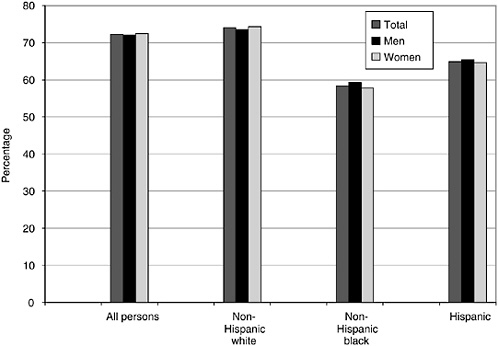
FIGURE 2-1 Percentage of persons aged 65 or older who reported good to excellent health, 1994 to 1996.
SOURCE: Federal Interagency Forum on Aging Related Statistics (2000).
do not come from these national data sets, but from state health surveys in states such as Hawaii, California, and Florida.
Figure 2-1 illustrates the type of information that is generally available in government publications (Federal Interagency Forum on Aging Related Statistics, 2000). This information is based on averaging over 3 years of data from the NHIS for the population aged 65 and older. An advantage of these data is that the numerator and the denominator are calculated using the same individuals. These data show that during the 1994-1996 period, 74 percent of non-Hispanic whites, 58.4 percent of non-Hispanic blacks, and 64.9 percent of Hispanics 65 and older reported they were in good to excellent health. These differences reveal continuing health disparities among the elderly for blacks, whites, and Hispanics. Unfortunately, they also disguise a good deal of heterogeneity within these groups. The Hispanic group consists of more than 25 national origin groups with wide variation in health status (Sorlie, Backlund, Johnson, and Rogot, 1993; Vega and Amaro, 1994; Williams, 2001). African American health status also varies with socioeconomic status, region of birth within the United
States, generation in the United States, and country of origin for recent immigrants from the Caribbean (Williams, 2001).
Many surveys force respondents to choose one race/ethnicity, which will become an increasingly significant problem as the multiracial population of the United States continues to grow. There are exceptions to this, of course, including the current NHIS and 2000 Census, so these sources need to be studied to see how multiracial identification might change our understanding of racial and ethnic health disparities. Currently, however, the multiracial population of the United States is overwhelmingly a young one, so this limitation should have a limited impact on studies of the health of the elderly (see, for example, Root, 1996).
Finally, death certificates greatly undercount the number of deaths for some racial and ethnic groups, and overcount deaths for other racial groups, because the observers identifying the race and ethnicity of the deceased identify them differently than they were identified in the Census. This draws our attention to the important fact that racial and ethnic identification can depend on who is identifying the individual. This is an important idea to bear in mind, especially when the source of the identification is different across data sets.
FIGURE 2-2 Age-adjusted death rates due to stroke by race and Hispanic origin.
SOURCE: Keppel et al. (2002).
We give one final illustration of the problems created by our current data collection and health surveillance systems. Figure 2-2 contains information on the 1990 and 1998 age-adjusted death rates due to stroke that come from Keppel, Pearcy, and Wagener (2002). According to these statistics, the highest death rate due to stroke is among blacks and the lowest is among Hispanics. However, as the authors of the report note, these death rates make no adjustments for the poor reporting of race and ethnicity on the death certificates. The Hispanic death rate due to stroke is undoubtedly higher than that reported in Figure 2-2. Furthermore, the nature of the Hispanic population changed considerably between 1990 and 1998 due to immigration, and these statistics do not provide information separately by nativity or year of arrival. The Hispanic figures also disguise a good deal of heterogeneity across the different countries of origin of individuals within this category.
SUMMARY, CONCLUSIONS, AND RECOMMENDATIONS
Summary of Racial Identification and Data Challenges
Our review of how we collect data on racial and ethnic groups suggests that in some ways an accurate picture of racial and ethnic disparities in health will remain elusive. This is because societal definitions of racial and ethnic group membership as well as individuals’ perceptions of their own racial and ethnic identities change over time. Furthermore there is a great deal of heterogeneity within racial and ethnic categories, including nationality subgroups, generation, language usage, and socioeconomic status. Only recently—1970 in the U.S. Census—have we permitted individuals to select their own race and ethnicity. Only in the 2000 Census were individuals permitted to select more than one racial identity. Research suggests that this change will have different effects on the elderly and young populations; for example, many older blacks of mixed racial descent do not identify themselves as such now because they never had the option in the past (Korgen, 1998).
Our review revealed that a major problem with the available official statistics is the relative paucity of data at the national level for people who do not identify as “black” or “white.” Only fairly recently have data been available for Hispanics or Asians (and these are often problematic, as already mentioned). Information on mortality for Native Americans has generally been confined to Indian Health Service reports, not nationally representative data. This greatly restricts our understanding of historical trends in morbidity disparities. We know from some analyses of morbidity and mortality that statistics for these umbrella groups are misleading and disguise a good deal of variability within the groups. Health disparities vary
with socioeconomic status within all of these umbrella groups. The picture would be more understandable if we looked at more detailed subgroups, including those differentiated by national origin, generation in the United States, and socioeconomic status. However, such differentiation is not always feasible with population-based survey data that sample enough cases to analyze Asians and Hispanics but not enough to examine specific origin groups or distinguish between the native born and the foreign born.
Implications for Health Outcomes
The ways in which we measure racial and ethnic identity have important implications for our understanding of racial and ethnic disparities in health among the elderly. Health outcomes might be influenced by both the racial and ethnic self-identification of individuals, and the discriminatory actions of others. The effects of discrimination on health occur because of how other people view an individual, which may or may not correspond with how an individual sees himself or herself. Nonetheless, it is clear that self-identification is the best way for gathering information about racial and ethnic identity. It gives people the opportunity to express how they see themselves, and it allows for greater consistency across data sources because most surveys use some form of self-identification. The Centers for Disease Control (now the Centers for Disease Control and Prevention) endorsed self-identification as the most desirable method for using race and ethnicity in public health surveillance (Centers for Disease Control, 1993). In addition, observer identification of race and ethnicity is heavily influenced by characteristics of the observer and context (Harris, 2002), so there is no consistent way to evaluate an individual’s observed race in survey settings.
There are also good reasons to believe that self-identified race and ethnicity would have significant impacts on health outcomes. First, self-identification has an important influence on the self-selected peer group and community, which can in turn have meaningful effects on the availability of health services and an individual’s tendency to utilize those services. Second, self-identification is related to the choice of media and cultural outlets, and these sources may contain messages about health behaviors such as smoking, eating habits, or visiting doctors. Finally, self-identification is often influenced by observer identifications, and so can also serve as a proximate measure of how others racially classify an individual.
The results of Census 2000 suggested that at this point in time a small minority of Americans took advantage of an opportunity to identify themselves as members of more than one racial or ethnic group (U.S. Bureau of the Census, 2001a). As the social science work on racial and ethnic identification and the biological work showing little evidence of biological racial
groups become more widely disseminated, Americans may move to what Hirschman and colleagues (2000) refer to as an origins-based self-identification system. However, as these authors and other authors point out, Americans still see African Americans as somehow different from other racial and ethnic groups (Cornell and Hartmann, 1998; Waters, 1991). African Americans have the fewest ethnic options of any group in the United States. Changes in measurement over time, therefore, will have a greater impact on some groups than others.
The battles that led up to the 2000 Census illustrate the political problems that arise over efforts to modify racial and ethnic classification schemes. The fact that there is no scientific basis for preferring a particular set of categories makes the political issues even more intractable. One can compare this to the issue of adjusting results based on sampling. Here there are statistical theoretical reasons for arguing that such adjustments are appropriate. These become influential, although not conclusive, in the political debate. When we are looking at racial and ethnic classification schemes, there is no established theoretical perspective that suggests some schemes are better than others, and the scientific debates are largely confined to comparability issues (wanting to study trends over time, compare groups across studies, or ensure that the denominator includes all of the people in the numerator when computing rates based on two different data sets). Nonetheless, what we have learned up to this point suggests the following:
-
Self-identification should be the standard method of collecting racial and ethnic information. In the case of death certificates, race and ethnicity should always be determined by asking the next of kin or someone familiar with the individual. This would bring data collection efforts into line with what most other federal agencies do in this area.
-
People should not be constrained to choose only one group; they should be permitted to choose as many as they wish. This again is in the spirit of the CDC recommendation of relying on self-identification, and would bring other data collection efforts in line with the 2000 Census and the NHIS. Researchers would then have the option of collapsing more detailed categories in various ways.
-
The race and Hispanic questions should be combined into an origins question. The question might be phrased as “What are this person’s racial or Hispanic origins? Mark one or more origins to indicate what this person considers himself/herself to be.” This goes beyond what federal policy currently specifies, but it would substantially reduce nonresponse to the race question and lessen the need to allocate individuals into racial categories.
-
Sampling designs that attempt to oversample specific Asian or Hispanic subgroups are better than those that attempt to oversample the ge-
-
neric Asian or Hispanic categories. Nonetheless, statistics on “Hispanics” and “Asians” are more useful than no statistics at all, especially if people recognize the heterogeneity of the categories they are using.
ACKNOWLEDGMENTS
Work on this chapter was supported by funds provided to the Wisconsin Center for the Demography of Health and Aging by the National Institute of Aging. We thank Rodolfo Bulatao, Christopher Jencks, Ann Meier, Molly Martin, members of the Committee on Ethnic Disparities in Aging Health, and two anonymous reviewers for their comments and suggestions.
ENDNOTES
REFERENCES
Banton, M. (1998). Racial theories. Cambridge, England: Cambridge University Press.
Centers for Disease Control. (1993). Use of race and ethnicity in public health surveillance. Summary of the CDC/ATSDR Workshop. Morbidity and Mortality Weekly Report, 42(RR-10), 1-17.
Cornell, S. (1990). Land, labour and group formation: Blacks and Indians in the United States. Ethnic and Racial Studies, 13, 368-388.
Cornell, S., and Hartmann, D. (1998). Ethnicity and race: Making identities in a changing world. Thousand Oaks, CA: Pine Forge Press.
Davis, F.J. (1991). Who is black? One nation’s definition. University Park: Pennsylvania State University Press.
Division of Health Interview Statistics. (2000). NHIS Survey description. Available: ftp://ftp.cdc.gov/pub/Health_Statistics/NCHS/Dataset_Documentation/NHIS/2000/srvydesc.pdf [Accessed July 2, 2003].
Elo, I.T., and Preston, S.H. (1994). Mortality, race, and the family: Estimating African-American mortality from inaccurate data. Demography, 31, 427-458.
Eschbach, K. (1993). Changing identification among American Indians and Alaska Natives. Demography, 30, 635-652.
Eschbach, K., and Gomez, C. (1998). Choosing Hispanic identity: Ethnic identity switching among respondents to high school and beyond. Social Science Quarterly, 79, 74-90.
Eschbach, K., Supple, K., and Snipp, C.M. (1998). Changes in racial identification and the educational attainment of American Indians, 1970-1990. Demography, 35, 35-43.
Espiritu, Y.L. (1992). Asian American panethnicity: Bridging institutions and identities. Philadelphia: Temple University Press.
Farley, R. (2001). Identifying with multiple races: A social movement that succeeded but failed? (PSC Research Report No. 01-491). Ann Arbor: University of Michigan, Population Studies Center at the Institute for Social Research.
Federal Interagency Forum on Aging Related Statistics. (2000). Older Americans 2000: Key indicators of well-being. Washington, DC: Author.
Hahn, R.A. (1992). The state of federal health statistics on racial and ethnic groups. Journal of the American Medical Association, 267(2), 268-271.
Harris, D.R. (2002). In the eye of the beholder: Observed race and observer characteristics (PSC Research Report No. 02-522). Ann Arbor: University of Michigan, Population Studies Center at the Institute for Social Research.
Hirschman, C., Alba, R., and Farley, R. (2000). The meaning and measurement of race in the U.S. Census: Glimpses into the future. Demography, 37, 381-394.
Keppel, K.G., Pearcy, J.N., and Wagener, D.K. (2002). Trends in racial and ethnic specific rates for the health status indicators, 1990-98. (Healthy People Statistical Notes, No. 23). Hyattsville, MD: National Center for Health Statistics.
Kibria, N. (1997). The construction of “Asian American”: Reflections on intermarriage and ethnic identity among second generation Chinese and Korean Americans. Ethnic and Racial Studies, 20, 523-544.
Korgen, K.O. (1998). From black to biracial: Transforming racial identity among Americans. Westport, CT: Praeger.
Lee, S.M. (1993). Racial classifications in the U.S. Census: 1890-1990. Ethnic and Racial Studies, 16, 75-94.
Maldonado, L. (1991). Latino ethnicity: Increasing diversity. Latino Studies Journal, 2, 49-57.
McKenney, N., and Bennett, C. (1994). Issues regarding data on race and ethnicity: The Census Bureau experience. Public Health Reports, 109(1), 16-25.
Nagel, J. (1996). American Indian ethnic renewal: Red power and the resurgence of identity and culture. New York: Oxford University Press.
Office of Management and Budget. (1999). Provisional guidance on the implementation of the 1997 standards for federal data on race and ethnicity. Available: http://www.whitehouse.gov/omb/inforeg/race.pdf [Accessed July 2, 2003].
Portes, A., and MacLeod, D. (1996). What shall I call myself? Hispanic identity formation in the second generation. Ethnic and Racial Studies, 19, 523-547.
Rockquemore, K.A., and Brunsma, D.L. (2002). Beyond black: Biracial identity in America. Thousand Oaks, CA: Sage.
Rodriguez, C.E. (2000). Changing race: Latinos, the census, and the history of ethnicity in the United States. New York: New York University Press.
Root, M.P.P. (1996). The multiracial experience: Racial borders as the new frontier. Thousand Oaks, CA: Sage.
Saenz, R., Hwang, S.S., Aguirre, B.E., and Anderson, R.N. (1995). Persistence and change in Asian identity among children of intermarried couples. Sociological Perspectives, 38, 175-194.
Sandefur, G.D., Martin, M.A., Eggerling-Boeck, J., Mannon, S., and Meier, A. (2001). An overview of racial and ethnic demographic trends. In N.J. Smelser, W.J. Wilson, and F. Mitchell (Eds.), America becoming: Racial trends and their consequences (pp. 40-102). Washington, DC: National Academy Press.
Snipp, M.C. (1997). Some observations about racial boundaries and the experiences of American Indians. Ethnic and Racial Studies, 20, 667-689.
Sorlie, P.D., Backlund, E., Johnson, N.J., and Rogot, E. (1993). Mortality by Hispanic status in the United States. Journal of the American Medical Association, 270(20), 2464-2468.
Swallen, K., and Guend, A. (2001). Data quality and adjusted Hispanic mortality in the United States, 1989-1991. Unpublished manuscript, University of Wisconsin-Madison.
U.S. Bureau of the Census. (1973). Population and housing inquiries in the U.S. Decennial Censuses, 1790-1970. (Working Paper 39). Washington, DC: Author.
U.S. Bureau of the Census. (1997). Results of the 1996 race and ethnic targeted test. (Population Division, Working Paper 18). Washington, DC: Author.
U.S. Bureau of the Census. (2000). Population by age, sex, race, and Hispanic or Latino origin for the United States. Washington, DC: Author.
U.S. Bureau of the Census. (2001a). Overview of race and Hispanic origin: Census 2000 brief. Washington, DC: Author.
U.S. Bureau of the Census. (2001b). The Hispanic population: Census 2000 brief. Washington, DC: Author.
U.S. Bureau of the Census. (2001c). The two or more races population: 2000. Washington, DC: Author.
Vega, W., and Amaro, H. (1994). Latino outlook: Good health, uncertain prognosis. Annual Review of Public Health, 15, 39-67.
Waters, M. (1990). Ethnic options: Choosing identities in America. Berkeley: University of California Press.
Waters, M. (1991). The role of lineage in identity formation among black Americans. Qualitative Sociology, 14, 57-76.
Waters, M. (1994). Ethnic and racial identities of second-generation black immigrants in New York City. The International Migration Review, 28, 795-820.
Waters, M. (1999). Black identities: West Indian immigrant dreams and American realities. New York: Russell Sage Foundation.
Williams, D.R. (2001). Racial variations in adult health status: Patterns, paradoxes, and prospects. In N.J. Smelser, W.J. Wilson, and F. Mitchell (Eds.), America becoming: Racial trends and their consequences (vol. II). Washington, DC: National Academy Press.
Williams, D.R., Lavizzo-Mourey, R., and Warren, R.C. (1994). The concept of race and health status in America. Public Health Reports, 109, 26-41.
Xie, Y., and Goyette, K. (1997). The racial identification of biracial children with one Asian parent: Evidence from the 1990 Census. Social Forces, 76, 547-570.
REFERENCES FOR DATA SETS
(text order)
1990 and 2000 Census: http://www.Census.gov/population/www/socdemo/race.html
NHANES: http://www.cdc.gov/nchs/nhanes.htm
HHANES: http://www.cdc.gov/nchs/about/major/nhanes/hhanes.htm
NHIS: http://www.cdc.gov/nchs/nhis.htm
LSOA: http://www.cdc.gov/nchs/about/otheract/aging/lsoa.htm
Vital Statistics: http://www.cdc.gov/nchs/nvss.htm


