
Abstracts
THE INTERFACE OF SCIENCE AND POLICY: ARE THE CURRENT POLICIES ABLE TO MEET CURRENT AND FUTURE CHALLENGES?
Fred Pontius
To address the question of whether current policies are able to meet current and future challenges, we must first consider how we got to where we are and the forces that have shaped current drinking water regulation. Drinking water regulations are set by the U.S. Environmental Protection Agency (EPA) under the Safe Drinking Water Act (SDWA), enacted in 1974. Since that time, the SDWA has undergone several reauthorizations, resulting in major changes in the way contaminants are regulated. In addition, the number of contaminants regulated has increase to 92—some are regulated with a maximum contaminant level (MCL) and some with a treatment technique, but all have a nonenforceable health goal, the maximum contaminant level goal (MCLG).
The scientific basis of and policy choices involved in regulating drinking water quality in the United States have changed as our experience has increased and as the SDWA has changed. In many respects, we are still adjusting as a society to recent policy shifts instituted by the SDWA amendments of 1996. The following key questions are discussed in this presentation, focusing on how science and policy choices have progressed over the years and whether current approaches can meet future challenges:
-
How should contaminants be selected for regulation?
-
How should MCLGs be established?
-
How should MCLs be established?
-
What constitutes the best science?
-
What should be the role of source water protection?
-
How can compliance be ensured?
Since enactment of the SDWA in 1974, great progress has been made in drinking water quality and regulation in the United States. It seems now that only the most difficult issues remain—protecting sensitive populations, achieving sustainable water systems, providing affordable drinking water for small systems, avoiding risk-risk trade-offs, and controlling emerging waterborne pathogens, to name a few. The need for creative thinking and innovation in drinking water science, policy, regulation, and legislation has never been greater.
ARE RECENT ADVANCES IN SCIENCE AND TECHNOLOGY ABLE TO MEET THE HEALTH CHALLENGES OF PROVIDING SAFE DRINKING WATER?
Jeffrey K.Griffiths
Narrowly, the provision of safe drinking water is dependent upon being able to (1) recognize the health risk of hazardous substances or microbes present in drinking water, (2) monitor drinking waters for the presence of these hazards, and (3) remove these hazards.
Challenges to providing safe drinking water include a diminishing supply of usable water, often most acute in areas with rapidly growing populations; an increasing need to reuse wastewaters that include sewage and industrial contaminants; and the demographic constraint of an aging population with increased relative susceptibility to drinking water contaminants. Specific populations, such as people with HIV infection or AIDS, are especially sensitive to emerging pathogens that were essentially not recognized in the pre-AIDS era. Predictions regarding climate change strongly suggest that less water will be available over time in multiple regions of North America. Industrial food production, via concentrated animal feeding operations (CAFOs), is increasingly cited as a source of animal pathogens that place humans at risk of zoonotic infection. Industrial production of novel chemical contaminants through
manufacturing also is increasing. These factors all conspire to increase the health risks that may be associated with drinking water consumption.
The study of modern health hazards in drinking water is a field in crisis, with an acute need for novel ways to study the population. Traditional epidemiological study methods are confounded by the mobility of the population and by difficulties in exposure assessment. It is hard to know what a person’s integrated exposure is to drinking water contaminants that vary over time and space and how to assign a risk to a specific compound when a person is exposed to many of them. In addition, surveillance of the population is keyed to outbreaks of classical diseases, not to the detection of low-level or endemic emerging diseases. Fresh methods for monitoring the health of the community, such as those that look at population-wide outcomes and integrate exposures over time and space, are needed. Examples of such approaches are given here.
At the laboratory level, drinking water hazards are usually studied via a reductionist model. In this approach, individual compounds are studied in the absence of their actual context (e.g., as part of the chemical soup, however weak or strong) in which they are found. It seems increasingly unlikely that resources will be available to test every new compound that can be found in drinking water, to say nothing of the combinations that exist. Reflecting this reductionist model, the regulatory structure that exists regulates chemicals on a compound-by-compound basis. Research into the health hazards of compounds is often driven by regulatory interest, yet our scientific infrastructure is unlikely to be able to test the thousands of new compounds that are produced each year. New scientific approaches and paradigms are needed that recognize these realities.
Monitoring drinking water for chemical contaminants is difficult for a variety of reasons. For example, many compounds are present at such low concentrations that detection via standard methods is difficult. Furthermore, specific analytical techniques for the tens of thousands of chemical contaminants found in drinking water simply do not exist. Analytical techniques for the detection of pathogens in drinking water are primitive, relying almost solely on classical culture techniques. We now understand that conventional water treatment does not remove all risk of pathogen transmission. Chlorination-resistant organisms such as Cryptosporidium remain important risks for immunocompromised populations and for the general population when other measures such as filtration are weak or when they fail. Evolving technologies that involve water con-
centration, advanced chromatographic methods, and genomic recognition may prove extremely helpful.
Advanced treatment modalities such as ultraviolet irradiation, activated charcoal absorption, and membrane filtration of water may provide a broad, blanket form of water treatment to inactivate or remove infectious organisms and chemicals, but their costs are perceived as primarily affordable only for systems that serve large populations.
In sum, new scientific methods for the study of health risks in the population are needed, as are advanced monitoring and analytical methods. Water treatment technologies are not completely protective of the population and current advanced treatment methods are costly.
OVERVIEW OF THE TEXAS SOURCE WATER ASSESSMENT PROJECT
Greg Rogers
In November 1999, Texas received U.S. Environmental Protection Agency approval of its Source Water Assessment and Protection (SWAP) Program. This approval represents a major milestone in an ongoing cooperative effort between the Texas Commission on Environmental Quality (TCEQ) and the U.S. Geological Survey (USGS) to develop and implement a scientifically defensible methodology for assessing the susceptibility of Texas’ public water supplies (PWS) to contamination.
Background
The 1996 amendments to the Safe Drinking Water Act require, for the first time, that each state prepare a source water assessment for all PWS. Previously, federal regulations focused on sampling and enforcement, with emphasis on the quality of delivered water. These amendments emphasize the importance of protecting the source water.
States are required to determine the drinking water source, the origin of contaminants monitored or potential contaminants to be monitored, and the intrinsic susceptibility of the source water. Under the amendments to the SWDA, states must create SWAP programs. The programs must include an individual source water assessment for each public water
system regulated by the state. These assessments will determine whether an individual drinking water source is susceptible to contamination.
During 1997–1999, TCEQ and USGS staff met as subject matter working groups to develop an approach to conducting Source Water Susceptibility Assessments (SWSAs) and a draft work plan. The draft work plan was then presented to and reviewed by various stakeholder and technical advisory groups. Comments and suggestions from these groups were considered and a final work plan was produced and presented to the EPA. After EPA approval, work formally began on the Texas SWAP project. The project has an expected completion date of September 2002. At that time, initial SWSAs of all Texas public water supplies should be complete.
Groundwater supplies can be considered susceptible if a possible source of contamination (PSOC) exists in the contributing area for the public supply well field or spring; the contaminant travel time to the well field or spring is short; and the soil zone, vadose zone, and aquifer/matrix materials are unlikely to adequately attenuate contaminants associated with the PSOC. In addition, particular types of land use or cover or within the contributing area may cause the supply to be deemed more susceptible to contamination. Finally, detection of various classes of constituents in water from wells in the vicinity of a public supply well may indicate susceptibility of the public supply well even though there may be no identifiable PSOC or land-use activity.
Surface water supplies are by nature susceptible to contamination from both point and nonpoint sources. The degree of susceptibility of a PWS to contamination can vary and is a function of the environmental setting, water and wastewater management practices, and land-use or cover within a water supply’s contributing watershed area. For example, a PWS intake downstream from extensive urban development may be more susceptible to nonpoint source contamination than a PWS intake downstream from a forested, relatively undeveloped watershed. Surface water supplies also are susceptible to contamination from point sources, which may include permitted discharges, as well as accidental spills or other introduction of contaminants.
The development of a scientifically defensible methodology for assessing the susceptibility of Texas PWS to contamination, based on the most accurate, readily available hydrologic, hydrogeologic, point source, nonpoint source, and other natural resource and environmental data, will better enable the TCEQ SWAP staff to do the following:
-
Focus its source water protection efforts on PWS that are more susceptible to contamination.
-
Potentially reduce monitoring costs associated with ensuring safe drinking water.
-
Assist the public in developing an improved understanding of the source of its water.
-
Support the implementation of best management practices as needed to protect source waters.
Approach
For the Texas SWAP project, the susceptibility of a PWS is defined as the potential for the PWS to withdraw water containing a listed contaminant(s), at a concentration that would pose concern, through any of the following pathways: (1) direct injection or discharge; (2) soil; (3) geologic strata including faults, fissures, or other types of secondary porosity; (4) overland flow; (5) up-gradient water or streamflow; and (6) cracks in a well casing or intake pipe.
Susceptibility of a PWS to contamination is related to (1) the physical integrity of the well or intake and the pipe transmitting water from the well or intake, the treatment plant, and the distribution system; (2) the anthropogenic, physical, geologic, hydrologic, chemical, and biological characteristics of the source water area over which, or through which, water and contaminants will move to the supply point; (3) the type and number of PSOCs and land-use within the contributing area of a supply well, spring, or intake; and (4) the nature and quantity of contaminants that have been or potentially could be released within a contributing area, as well as measures in place to prevent such releases.
The Texas SWAP project consists of work in three subject areas: (1) assessment software and database structures, (2) groundwater assessments, and (3) surface water assessments. The groundwater and surface water assessment areas are further defined as sets of components, where each component deals with a specific problem domain of the SWSA.
Assessment Software and Database Structures
The objectives of this subject area are to design and develop database structures, assessment software, and technical documentation specifically to support staff in performance of SWSAs on TCEQ computers.
Surface water susceptibility assessments are technically complex activities dependent on relational database programming and spatial analysis techniques. Spatial analysis techniques are mostly available in commercial geographical information systems (GIS) software as lower-level computer functions. These functions are available as macros or “system commands,” but require specialized expertise to combine them into usable software components capable of performing the higher-level analyses required for SWSAs.
Decision rules governing the assessment of PWS susceptibility must be encoded and made available so that they may be applied to data derived from spatial analysis, local SWAP-specific databases, and data retrieved from TCEQ’s agency-wide databases. In some cases, these rules are simple yes or no tests; in other cases, a series of logic tests involving several relational database files must be applied. The software system developed will be easy to use by staff charged with assessing PWS and will be compatible with TCEQ’s existing databases. Specialized training in GIS technology will not be required. Because of the volume and variety of required data and the level of technical detail of SWSAs, the staff requires access to software documentation and help files, metadata, bibliographic, and other supplementary information. The system being developed will make these data files and references available to the analyst at all times.
To complete the large number of assessments (more than 17,000) required, the software must be capable of supporting unattended (batch) processing of SWSAs. As larger-scale data sets are produced for Texas, SWSAs will be repeated—hence the ongoing requirement for unattended processing. In cases where a single assessment (a new PWS) or a small number of assessments are to be completed, an interactive version is desired. It is anticipated that as SWSAs become more technically complex and larger-scale data sets come online, assessments will require interactive rather than batch processing.
Software development efforts include (1) requirements analysis, design, development, testing, and documentation of database structures and assessment software; (2) a data object model defining overall database structure, data tables, data fields within tables, and data-entity relations including a data dictionary; (3) user interface software for display of GIS coverage, database query, hard-copy output, or report generation; (4) spatial analysis software for delineation of contributing areas, and calculation or determination of weighted variables, characteristics, and threshold values; (5) software to assist the user in applying appropriate
decision rules for determining susceptibility within SWSA components and determining overall susceptibility; and (6) a graphical user interface to provide access to databases, assessment software, online help, and documentation and support for interactive or batch processing.
Groundwater Assessments
The groundwater susceptibility assessment subject area consists of seven components, each addressing a specific problem domain. The primary focus of this subject area is the design and development of databases and software to enable SWSAs on PWS with groundwater as the primary source of water.
Identification component It is necessary to identify which aquifer a well derives its water from, since all subsequent determinations in SWSAs are based on aquifer type and hydrologic characteristics.
In Texas, 9 major and 20 minor aquifers have been mapped. These 29 aquifers have been subdivided and assigned some 450 aquifer codes, each having its own geologic, hydrologic, and water quality characteristics. These aquifer codes have been developed for several uses, including regulation of public drinking water; however, the 29 major and minor aquifers do not provide sufficient detail for the purposes of SWAP. Alternatively, data requirements for 450 aquifer codes are beyond the scope of this component. Thus, agreement was reached between various stakeholders, including representatives of TCEQ, the Texas Water Development Board (TWDB), and USGS, regarding a designation of about 45 aquifer codes that provide adequate detail.
Texas aquifers, for the purposes of SWAP, are designated as one of five major aquifer categories. Four of the categories are unconfined isotropic aquifers, confined isotropic aquifers, alluvial aquifers along major rivers, and anisotropic karst aquifers. Additionally, there are some public groundwater supplies in Texas that do not obtain water from the mapped major and minor aquifer systems or that obtain water where an aquifer determination cannot be made. Thus, a fifth aquifer category of “unknown” is required for susceptibility assessment purposes. Separate approaches have been developed for the five aquifer categories, because of their hydrogeologic characteristics.
Contributing area delineation component SWSAs require that the contributing area to each PWS well or spring be determined so that PSOCs
occurring within may be identified and assessed as to their potential effect on water quality.
Delineation of the contributing area for water to enter the groundwater system for a specific well field or spring is complicated by (1) complex geologic structure, (2) groundwater-surface water interaction, (3) heterogeneous aquifer matrix material resulting from the depositional environment of the aquifer, and (4) limited site-specific aquifer information.
Although there are several methods for determination of contributing areas of a PWS well or spring, flow-net analysis was chosen because of the regional scale of the problem, as well as knowledge of and assumptions made about the hydrogeologic properties of Texas aquifers. Using specially developed GIS software, the portion of the flow net that defines the contributing area for the water supply well or spring will be identified and a determination of time of travel to the well for all aquifer categories will be made, with the exception of the Edwards aquifer, where data from the USGS flow path investigations will be used.
Using this approach, the characterization of the aquifer is such that only the horizontal movement of water to the water table is approximated, not the vertical movement. The assumption is that the contributing area to a well in an unconfined system is the area directly above the flow paths for a specified end time (2, 5, 10, 20, and 100 years). In a confined system, the contributing area is that area within specified end times or terminating in the outcrop of the aquifer for similarly specified end times.
Tasks associated with this component are focused on developing data sets and software for delineation of contributing areas to PWS wells or springs that derive their water from the five categories of aquifers. GIS coverage produced under this component includes (1) time of travel and contributing area for wells or springs in confined or unconfined isotropic aquifers and alluvial aquifers, (2) contributing area for wells or springs in the Edwards aquifer, and (3) contributing area for wells or springs in unknown aquifers.
Nonpoint source component This component will involve a statewide investigation to develop statistical relations between known occurrences of nonpoint source contaminants in groundwater and the natural and anthropogenic factors or activities (referred to as environmental variables) within the capture zone contributing the water. To supplement existing TCEQ and USGS contaminant occurrence databases, 160 PWS wells
were sampled during 1999–2000. The PWS wells selected for sampling are located primarily in shallow, unconfined aquifers (those most susceptible to nonpoint source contamination) and have characteristics representative of a range of environmental variables that may influence source water susceptibility. Samples are collected using specialized, low-level detection sampling procedures developed by the USGS and analyzed for selected soluble pesticides, volatile organic compounds (VOCs) including methyl tert-butyl ether (MTBE), and nitrates. Environmental variable databases also are being compiled (to the extent that data are available) to support the development of statistical relations. These statewide databases of potential explanatory variables are wide ranging and include land-use (percentage urban, population density, animal densities or CAFOs, agricultural crop acreage, oil and gas production), selected natural factors (soil properties and hydrologic characteristics), and urban and agricultural pesticide and nutrient use. TCEQ will develop threshold values from the statistical relations.
Point source component A primary step in assessing the susceptibility of a groundwater supply to contamination is locating PSOCs within the contributing area of a supply. Selected categories of PSOCs that may contribute contaminants to the PWS well or spring are underground storage tanks; operative and closed solid and hazardous waste management units, including landfills, surface impoundments, and waste piles; uncontrolled hazardous waste disposal and spill sites, including Superfund sites; waste injection wells, including the family of Class V wells; and septic systems.
Texas state databases hold records for an estimated 65,000 known PSOCs. Although location information for the majority of these sites is available from the databases, this information is not accessible using the spatial analysis software in the various SWAP components. Approximately 10,000 PSOCs have no digital location information (latitude-longitude) as is required. The information for these sites may be available from a physical review of paper files maintained by TCEQ’s various PSOC programs. In some cases, PSOCs may have been located on USGS topographic maps; in other cases, only paper engineering reports, site drawings, or field sketches may exist. In still other cases, only street address information is available in the file.
A large amount of work is going on to obtain accurate location data for PSOCs. Interviews with pertinent TCEQ staff who manage PSOC programs were conducted to determine data type, attributes, locations,
quality, availability, and documentation. A comprehensive flowchart and list of interview questions to facilitate this process were developed and followed. For each PSOC for which location data are required, the paper file is physically pulled, reviewed, and pertinent information extracted, to allow the PSOC, if possible, to be located on a USGS topographic map or equivalent. Supplemental maps or commercial databases with address or location information will be required to locate some PSOCs.
This information is then put into a GIS database that will provide a variety of information on PSOCs, including the TCEQ program that collects and manages the PSOC data, the source material for the data, descriptions of data quality, and minimal accuracy standards (or needs) for PSOC locations. The database will be linked to the list of regulated contaminants (and contaminant groups) and to Standard Industrial Codes. A relational database providing technical data on the environmental behavior and fate of contaminants will be developed to assist evaluation of a potential contaminant or group of contaminants associated with the PSOC. The output from spatial analyses and database software of this component is a list of PSOCs within the contributing area of the PWS. The software also will provide a list of contaminants and quantities (when available) associated with the PSOC that are analyzed as part of subsequent components.
Contaminant occurrence component Some aquifers have naturally occurring contaminants that render the water less desirable for human consumption. Thus, an analysis, both spatial and temporal, of existing groundwater and PWS entry point monitoring data is needed to determine whether the measured occurrence of a contaminant in water from an aquifer is caused by natural or anthropogenic conditions. This analysis also may uncover sources of contamination caused by breaches of the confining unit for a confined aquifer. Several existing databases contain groundwater quality data useful for this analysis. Using spatial analysis techniques, water quality sampling sites will be identified within a 1-mile search radius around each PWS well and spring. If contaminants are detected within this area, the PWS would be assessed as being susceptible to either anthropogenic or naturally occurring contamination. These data will be used to identify sites with contaminant occurrences exceeding designated thresholds for specific constituents within a 1-mile search radius of the PWS well or spring.
Attenuation of contaminants Contaminants released from a point source, or from the land surface, that enter aquifers as solutes in groundwater undergo physical, chemical, and biochemical processes that lower their concentrations in the groundwater. The concentration of a contaminant in groundwater and its time of arrival at the point of exposure also are determined by the physical, chemical, and biochemical processes that may attenuate (lower) its concentration. Conservative behavior could mean that a contaminant might exceed the EPA MCL within a 20-year time of travel period of consideration at a PWS. Nonconservative behavior could mean that a contaminant might be attenuated in the soil, vadose zone, or aquifer matrix, depending on its specific properties, perhaps never arriving at the PWS or arriving at concentrations below levels of concern. Thus, it is important to include considerations of fate and transport based on behavioral data for each contaminant, along with physical properties of the soil, unsaturated (vadose) zones, and aquifer matrices.
Although time of travel is the most critical element in the evaluation of PWS susceptibility, the attenuation property of the soils, vadose zone, and aquifer matrix in the contributing area of the well or spring will be considered in the assessment. Some of the most important properties of the soil zone affecting contaminant fate and transport are permeability, thickness, and total organic material content. Additionally, the greater the depth to water, the longer the travel time will be to the aquifer through the vadose zone. The rock type of some aquifers also may inhibit the transport of some contaminants. A decision matrix will be developed for these properties to assess the generalized intrinsic capability of these zones to attenuate contaminants. The output of software using the decision matrix developed for this component will be a determination of whether the contaminant in question would be attenuated before affecting the PWS.
Susceptibility summary determination component This component will determine the cumulative susceptibility of the PWS to each listed contaminant or contaminant group, as contributed by point and nonpoint sources. The susceptibility determination will be automated using software to populate a matrix-type table with unique codes describing the PWS, surface and groundwater hydrologic setting, PSOC(s) and their contaminant(s), intrinsic capability to attenuate contaminants, and so on. The matrix will include every possible combination of codes with a predefined susceptibility determination. The software will compare the codes generated for each water system against the decision rules and ap-
ply a summary determination of susceptibility. This complex and extensive information will be simplified into a form easily comprehended, with a detailed report prepared for the water purveyor and a summary report produced for the public. A similar reporting method has been used for the last several years by the TCEQ Vulnerability Assessment Program and provides a simple, objective, rapid, and automated evaluation.
Surfacewater Assessments
The surfacewater susceptibility assessment subject area consists of seven components, each addressing different problem domains. The primary focus of this subject area is the design and development of databases and software to enable SWSAs on PWS with surfacewater as the primary source of water.
Delineation component The contributing watershed area must be determined for surface water intakes or outlets of PWS reservoirs so that PSOCs within the contributing watershed may be identified and evaluated. Land-use types within the contributing watershed must be determined to assess their potential nonpoint source effect on the water supply. Characteristics such as rainfall, runoff, and reservoir storage must be obtained for the contributing watershed to assess the intrinsic susceptibility of each surface water supply. Six types of watersheds are used in SWSA:
-
contributing watershed to the intake (delineated at the PWS reservoir outlet or at the mapped location of the intake on the stream);
-
contributing watershed to a stream, reservoir, municipal stormwater, or other water quality monitoring site;
-
contributing watershed for all non-PWS reservoirs with normal storage capacity greater than 1,000 acre-feet and located within the contributing area of the PWS intake;
-
truncated watershed (as required) for the area within the contributing watershed to the intake but excluding any contributing watersheds of non-PWS reservoirs with normal storage capacity greater than 1,000 acre-feet;
-
area of primary influence, defined as the area within 1,000 feet of a reservoir boundary and for all streams discharging directly to the reservoir the area within 1,000 feet of the center of the stream channel of an estimated 2-hour travel-time stream reach immediately upstream from
-
the reservoir; for intakes on streams, the area of primary influence is the area within 1,000 feet of the estimated 2-hour travel-time stream reach upstream from the intake; and
-
multijurisdictional area, defined as a contributing watershed area that is outside the state boundary, such as the Red River and the Rio Grande.
Contributing watershed delineations are required for about 500 surface water supply intakes of which about 176 are unique (multiple intakes in various reservoirs). Contributing areas also may be required for an estimated 90 additional reservoirs located within the contributing areas of PWS reservoirs. Finally, areas of primary influence for all surface PWS must be delineated.
Using specially developed software, watershed delineations are generated and then adjusted manually as necessary. Statewide coverage used in the watershed delineation process and created specifically or modified for use in this project includes
-
digital elevation models (a new statewide database, developed at 60-meter resolution by the USGS for SWAP);
-
flow direction and flow accumulation data sets;
-
hydrograph (streams and reservoir boundaries); and
-
intrinsic characteristics component.
Surface water supplies are all susceptible to contamination to some degree because contaminants released at the land surface can potentially reach supplies in relatively short time. Factors that can affect the relative magnitude of susceptibility are geology, soil characteristics, vegetative cover, amount of runoff, and attenuation of contaminants in watersheds. Eroded soil may carry, absorbed on the surface of sediment particles organic chemicals, pesticides, nutrients, and heavy metals. The dilution capacity and contaminant degradation capability of a stream or reservoir affect the fate, transport, and degradation of contaminants. Finally, the slope of the land is a major control on the time of travel of contaminants in runoff. Assessment of each of these factors would require very detailed, site-specific data that are not readily available in many cases; if the data were available, adding each of these components would result in the susceptibility assessment tools being too complex for source water assessment purposes. Instead, the following four broad measures will be used to assess the intrinsic susceptibility of a PWS:
-
intrinsic susceptibility associated with mean annual and mean seasonal surface runoff;
-
intrinsic susceptibility associated with soil credibility for contributing watersheds of water supply intakes;
-
potential effects of reservoirs within a watershed on concentration of contaminants; and
-
intrinsic susceptibility associated with time of travel.
Major efforts in support of this component are focused on the development of predictive equations for mean annual and mean seasonal runoff based on watershed characteristics; development of GIS databases for mean annual and mean seasonal precipitation; and calculation of the ratio of annual and seasonal runoff to annual and seasonal precipitation. Index values will be used to define susceptibility of the PWS caused by runoff.
Development of a soil credibility database also is required for this component. An index of high-, medium-, and low-erodibility soils is being developed that will be used to determine the susceptibility of the PWS to contaminants associated with eroded soils. Higher soil erodibility values indicate greater susceptibility; lower soil erodibility values indicate less susceptibility.
The potential effect of reservoirs in the watershed will be assessed by analysis of the ratio of total storage in the watershed to annual runoff in the watershed. High index values indicate less susceptibility at the intake because of reservoir storage (a beneficial effect resulting from dilution); low index values indicate increased susceptibility.
To assess a watershed’s intrinsic susceptibility associated with time of travel, the ratio of the area of the contributing watershed to the basin slope will be calculated. High size-slope ratios indicate longer time of travel and thus less susceptibility; low ratios indicate shorter time of travel and thus increased susceptibility.
Nonpoint source component This component will involve a statewide investigation to develop statistical relations between known occurrences of nonpoint source contaminants in surface water and natural and anthropogenic factors or activities (environmental variables) within the watershed. To supplement existing TCEQ, Clean Rivers Program, and USGS contaminant occurrence databases, 48 PWS reservoirs were sampled during 1999–2000. The PWS reservoirs selected for sampling have watersheds representative of the various hydrologic conditions and land-uses in Texas. Samples are collected using specialized, low-level detection
sampling procedures developed by the USGS and analyzed for selected soluble pesticides and VOCs (including MTBE). As stated in the groundwater component, environmental variable databases to support the development of statistical relations also are being compiled that include land-use (percentage urban, population density, animal densities or CAFOs, agricultural crop acreage, oil and gas production); selected natural factors (soil properties and hydrologic characteristics); and urban and agricultural pesticide and nutrient use. TCEQ will develop threshold values from the statistical relations.
Point source component The objective of this component is to assess the susceptibility of surface water supplies to point source discharges during low-flow conditions. Although point source discharges may be included in the environmental setting variables used statistically, the existing water quality data sets may not adequately represent low-flow conditions when point sources have their greatest influence on the water quality of the receiving water body. Therefore, theoretical concentrations of point source-associated contaminants at low-streamflow and low-flow reservoir storage conditions will be calculated on the basis of permitted releases of contaminants from point source discharges in the contributing watershed of the surface water intake or supply reservoir. A ratio of the total permitted releases of the contaminant to reservoir storage or to mean annual streamflow will be developed. Higher ratios indicate greater susceptibility.
Contaminant occurrence component Some watersheds have naturally occurring contaminants that render the water less desirable for human consumption. Thus, an analysis, both spatial and temporal, of existing surface water quality and PWS point of entry (POE) monitoring data is needed to determine whether the occurrence of a contaminant in water is caused by natural conditions in the watershed. Several existing databases contain surface water quality data useful for this analysis, such as TCEQ surface water quality and entrypoint databases and USGS National Water Information System databases. Using spatial analysis techniques, these data will be identified within each watershed containing a PWS intake or reservoir. If naturally occurring contaminants are detected within a watershed, the contributing watershed will be assessed as susceptible to contamination from such contaminants.
Contaminant detections also serve as a confirmation check of the methodology for assessing the degree of susceptibility of source water to
contamination. Stream, reservoir, and entrypoint monitoring data will be used to verify assessment decisions. If a surface water source is determined to have low susceptibility to a particular contaminant, then monitoring data should not reveal detections. If monitoring data reveal detections, the assessment model must be reevaluated. If a surface water source is determined to have high susceptibility, data may or may not support the assessment. The lack of detection may only mean that the stream, reservoir, and PWS or POE monitoring data were not collected at the appropriate “hydrologic” time (e.g., during or just after a runoff event, during base flow conditions).
Area-of-primary-influence component The proximity of a surface water intake to a point source discharge, potentially adverse land-use, major transportation corridor, or pipeline can result in the source water being susceptible to contamination. The relatively short time of travel of a chemical spill, continuous release, or runoff to the intake minimizes the opportunity for reducing a contaminant concentration or converting or degrading a contaminant to a less hazardous form.
The approach will consist of compilation and/or creation of GIS data sets as necessary to support area-of-primary-influence (API) assessments using software developed under a separate task. For intakes in reservoirs, an API will initially be defined as the area within 1,000 feet of a reservoir boundary and for all streams discharging directly to the reservoir the area within 1,000 feet of the center of the stream channel of the estimated 2-hour travel-time stream reach immediately upstream from the reservoir. For intakes on streams, the API is the area within 1,000 feet of the estimated 2-hour travel-time stream reach upstream from the intake. On an as-needed basis, the API will be tailored to the specific PWS by the incorporation of ancillary data sets such as floodprone areas and/or actual time of travel where flow characteristics are readily available.
Within the API, all PSOCs, including permitted point sources and marinas, land-uses, transportation corridors, pipelines, or electrical transmission lines, will be identified along with their associated contaminant groups. A qualitative determination of susceptibility (decreased susceptibility to increased susceptibility) will be assigned on the basis of presence of PSOCs, potential for releases or spills of contaminants, and contaminants associated with each specific PSOC in the API. The susceptibility determination will be guided by the number of PSOC sites, the total area dedicated to activities known to generate contaminants, and the
contaminants and amounts (if available) potentially generated by various activities within the API.
Susceptibility summary determination component As in groundwater susceptibility assessments, this component will determine the cumulative susceptibility of the PWS to each listed contaminant or contaminant group, as contributed by point and nonpoint sources. The susceptibility determination will be automated using software to populate a matrix-type table with unique codes describing the intake, hydrologic setting, PSOC(s) and their contaminant(s), intrinsic susceptibility, and so forth. This complex and extensive information will be simplified into a form easily comprehended. A detailed report and a summary report for the PWS will be produced.
LAND-USE PLANNING: A CONCERN FOR SOURCE WATER PROTECTION?
Douglas “Dusty” Hall1
Centuries-old “conventional wisdom” suggests that the outhouse should not be located near the drinking water well. That said, if this is centuries-old conventional wisdom, then why do so many new examples of development create risks to drinking water?
Comprehensive land-use planning and complementary authority are critical needs for source water and public health protection. The City of Dayton, Ohio, has implemented an extraordinary set of measures in response to threats to its drinking water resulting from inadequate, historical land-use planning. Societal changes, such as the migration of people from urban centers, are driving development patterns that are creating new risks to public health in areas where planning or authority may be insufficient.
Land-Use Planning—An Urban Exposure
The City of Dayton, along with many other communities, has long benefited from the Great Miami River watershed’s buried valley aquifer system. The city taps this resource to provide potable water to about 440,000 people in the Dayton area. The aquifer is readily recharged by water from the watershed’s rivers and streams. Unfortunately, other activities on the land may adversely affect the aquifer.
For more than a century, Dayton’s manufacturing economy flourished above the aquifer. In 1926, Dayton’s first land-use plan promoted industrial growth above the aquifer. As Dayton and its water needs grew, so did potential threats to the safety of the drinking water supply.
In the 1980s, citizens’ concerns for the safety of drinking water prompted the city to initiate a community-based effort to provide for the long-term safety of Dayton’s source water. The comprehensive well field protection program that evolved includes a balance of regulatory strategies and incentives. A zoning overlay district was established to prevent new incompatible development. Financial incentives were developed to address the hazards posed by existing uses. Groundwater monitoring, enhanced emergency response, and educational efforts rounded out the award-winning program.
The Changing Landscape
In the 1970s, the collective population of Ohio’s large urban centers peaked. Since 1970, townships near the urban centers have experienced high growth rates and large cities have lost population. The greatest population growth has occurred in an area extending from 10 to 20 miles outside urban centers (Clark et al., 2003).
Land-Use Planning—A Rural Exposure
The urbanization of formerly rural areas of Ohio has outpaced the advance of public water and sewer infrastructure. The Ohio Department of Health (ODH) projects that more than one in four new houses constructed in these areas will be built with private household sewage treatment systems (HSTSs). The ODH estimates that there are currently one million HSTSs, only about 8 percent of which are subject to oversight or
inspection. The ODH also estimates that about 25 percent of the systems are failing, with up to 900,000 gallons of sewage discharged per day.
As described above, Ohio’s growth has occurred primarily in townships. Ohio is a “home-rule” state, giving municipalities significant powers of self-governance while counties and townships may act only as specified by Ohio law. In Ohio, there is no specific authority for townships to create or adopt a comprehensive plan (Clark et al., 2003). In some instances, health district staff are de facto planners for townships by their actions to approve or disapprove proposed HSTSs.
Bridging the Gap
The case for comprehensive land-use planning that addresses the sustainability of water resources is abundantly supported by history. What is less clear however is the evolving public health risk associated with the development patterns of the last three decades. Is there a public health justification for supporting sustainable growth initiatives, increased comprehensive planning, and complementary authority to implement the plans? The answer to this question cannot come soon enough.
IMPACTS OF NONPOINT SOURCE POLLUTION ON DRINKING WATER AND HUMAN HEALTH
Thomas W.Christensen
According to the U.S. Environmental Protection Agency Inventory of Water Quality (USEPA, 2000), nonpoint source pollution from agricultural lands is among the leading sources of impairment of our nation’s waterways. Absent the application and maintenance of science-based best management practices (BMPs), runoff and leaching from agricultural lands can affect both surface and groundwater sources of drinking water. Excess quantities of nutrients and pesticides are among the primary pollutants and each of these contaminants can pose potential risks to human health. The U.S. Department of Agriculture (USDA), through research, technology transfer, education and outreach, and technical and financial assistance programs for conservation, is working diligently to help farmers and ranchers minimize these risks and reduce the effects of
nonpoint source pollution on drinking water sources. Today’s enhanced partnerships and increased conservation authorities and funding, coupled with the USDA’s experience in helping farmers and ranchers with practical on-the-ground solutions to address water quality concerns are exciting and encouraging developments that should further accelerate water quality improvements in agricultural settings.
Recognized agricultural contributions to drinking water pollution have traditionally included sediment, nutrients, and pesticides. Overenrichment of nutrients, particularly nitrogen and phosphorus, is a leading surface and groundwater pollutant. Nitrates have been implicated in drinking water contamination in some rural areas. Exposure to nitrate is chiefly a concern for those whose source water is groundwater, because groundwater generally has higher nitrate concentrations than surface water.
Although agriculturally induced soil erosion has declined significantly (nearly 40 percent) over the past 20 years, sediment remains the largest contaminant of surface water by weight and volume. Accelerated sedimentation reduces the useful life of reservoirs, while suspended sediment increases the cost of water treatment.
A diverse array of pesticides is applied to agricultural crops across the country. If not applied according to EPA label requirements and in combination with sound conservation measures, these pesticides can pose a potential risk to human health. To date, however, studies by the USGS generally have found low levels of pesticides in most of the waterways surveyed in agricultural basins. Moreover, a 1992 EPA survey of drinking water wells found that pesticide concentrations in groundwater rarely exceeded legal maximum exposure limits. Nonetheless, the appropriate use of pesticides in agriculture through practices such as integrated pest management remains a high priority for the USDA and the agricultural conservation community.
In addition to the commonly cited contaminants in agricultural settings, pathogens and pharmaceuticals have emerged in recent years as potential water quality concerns. Pathogens may enter drinking water supplies from agricultural feedlots and fields fertilized with animal manure where conservation management either is not practiced or is not practiced adequately. For instance, there is concern that pharmaceuticals—primarily antibiotics and hormones fed to livestock and poultry—may enter waterways as a component of animal manure and litter runoff, especially when manure and litter are not applied in accordance with a comprehensive nutrient management plan consistent with the
USDA Natural Resources Conservation Service’s (NRCS) (USDA, 2000) technical guidance.
Although much work remains to be done to restore and protect the nation’s waters, the United States has made significant progress in cleaning up polluted waters, especially over the past few decades. Many farmers and ranchers, with assistance from NRCS, state conservation agencies, local conservation districts, and others, have been active stewards of soil, water, and other natural resources for decades. Based on 70 years of experience, lessons learned, and success stories to date, the USDA remains a proponent of the voluntary, locally led, incentive-based approach as the principal means to help agricultural producers reduce the environmental consequences of production. Environmental regulation has a proper role, as evidenced by EPA’s Concentrated Animal Feeding Operations Rule for the largest animal feeding operations, but it is largely a complementary role—providing the vehicle for regulatory authorities to address the actions of “bad actors” and/or set expectations for sensitive areas subject to the greatest environmental risk.
Conservation technical assistance programs are the primary tools used by NRCS to improve water quality in agricultural settings. NRCS field personnel, in cooperation with other public and private technical service providers, supply technical assistance directly to farmers and ranchers to help them meet their goals for natural resource stewardship. USDA’s conservation programs, such as the Environmental Quality Incentives Program (EQIP), are used by many agricultural producers for the technical and financial assistance tools to help them comply with federal, state, and local regulations. Conservation practices, such as crop residue management, nutrient management, integrated pest management, grassed waterways, field borders, and buffer strips, combined into conservation systems, are proven to keep soil and nutrients in place and thereby minimize the risk of contaminated runoff leaving farm fields.
NRCS does not work alone in its efforts to reduce the agricultural contributions to drinking water contamination. The agency’s relationship to its core conservation partners (including local conservation districts and state conservation agencies) ensures the efficient delivery of technical and financial assistance through locally led processes. Other USDA agencies, such as the Agricultural Research Service and the Cooperative States Research, Education, and Extension Service (CSREES), perform equally valuable complementary functions, including conservation research, education, and outreach. Additional federal partners include EPA
and the U.S. Department of the Interior, where public and private land conservation and management issues interface.
Located in the rural Potomac headwaters area in West Virginia, the North Fork Project is an example of a successful multiagency watershed partnership approach to solve a water quality problem on a scenic, high-quality stream. The Potomac River supplies drinking water to millions of people in the Washington, D.C., metropolitan region. The North Fork of the Potomac was plagued by elevated levels of fecal coliform bacteria, due primarily to polluted runoff from intensive animal agricultural operations along the waterway. As a result of the implementation of numerous BMPs funded under several federal and state water quality programs, the water quality of the North Fork of the South Branch of the Potomac River has improved to such an extent that the stream no longer exceeds criteria for the listing of impaired or polluted water bodies in West Virginia (Federal Clean Water Act, Section 303(d)). This success was made possible through funding from the USDA, the EPA, and the State of West Virginia, along with farmers’ individual contributions of time, knowledge, and resources. Numerous other partners at the state and local levels helped produce an 85 percent voluntary landowner participation rate in this exemplary watershed project.
The North Fork Project and similar successes across the nation have elucidated the key ingredients for water quality improvement in impaired watersheds. Management of land and water resources on a watershed basis, enhanced partnerships and collaboration, and access to focused and accurate water quality information are critical components in mitigating nonpoint source pollution in agricultural watersheds. Increasing BMP adoption by landowners is a goal of NRCS and its partners. Achieving this goal will require the establishment of better links between best management practices and water quality improvements, better economic information on BMPs, and a greater awareness of social and cultural considerations to improve the effectiveness of outreach efforts to landowners.
Additional research needs exist beyond the scope of BMPs. There is a need to characterize the nature, extent of occurrence, behavior, transport, and fate of emerging contaminants in the environment such as pharmaceuticals, hormones, endocrine disrupters, and environmentally robust and antibiotic-resistant pathogens. Development of economical, community-based solutions is necessary to address watershed-scale problems. Improved monitoring and modeling techniques and technologies
are needed to provide decision makers with targeted, accurate water quality information.
The USDA and EPA are working together to address these research needs. The enhanced federal partnership between USDA and EPA in recent years has led to more effective interactions on significant water quality activities. Collaboration on the Concentrated Animal Feeding Operation Rule, the Chesapeake Bay and Mississippi River basin nutrient over enrichment challenges, and source water protection activities provide an impetus for additional successes in the future. An important ongoing collaboration between the two agencies is an effort to promote the adoption of water quality trading projects in impaired watersheds. The USDA supports EPA’s voluntary Water Quality Trading Policy (USEPA, 2003) and is currently developing its own environmental credit trading policy that will describe key principles and policies, as well as identify agency roles and responsibilities.
In 2002, Congress provided the USDA with powerful tools to address water quality concerns through new authorities and increased funding in the Farm Bill. An example of the significant increase in funding authorized by Congress is for EQIP, which in federal fiscal year 2004 is authorized at $1 billion. NRCS is proceeding rapidly with program implementation in order to deliver this increased funding to more producers to facilitate more widespread on-the-ground conservation.
The USDA is committed to improving water quality and reducing the effects of agricultural nonpoint source pollution on drinking water and human health. Providing incentives for good stewardship, supporting research and innovative science-based technologies, expanding and enhancing partnerships, and informing and supporting locally led decision making are the cornerstones of this commitment.
NUTRIENT LOADING: CRITICAL LINK IN THE CHAIN
Kenneth H.Reckhow
The nutrients in natural waters of greatest concern for human and ecological health are nitrogen and phosphorus. In the United States nitrate nitrogen is regulated in drinking water standards for human health concerns and nitrogen and phosphorus criteria have been proposed for the control of eutrophication in surface waters. Nitrate has a direct human health effect in infants; excessive nitrogen and phosphorus loading
to surface waters has an indirect effect through algal growths that may produce toxins or serve as trihalomethane precursors. These effects are discussed briefly.
The primary focus of this presentation is on nutrient loading; that is, the particularly concerned about the input of nitrogen and phosphorus to surface and groundwaters, with emphasis on the sources, assessment, and management.
Current scientific knowledge is strongest concerning the recognition of important sources of nitrogen and phosphorus. In the absence of human activity (or “background”), there are typically low-level contributions of nutrients to surface and groundwater from the atmosphere, decaying plant material, and erosion and bedrock weathering. This contribution is natural, and while it can be modified by human activities, it occurs with or without human intervention. Anthropogenic inputs of nitrogen and phosphorus to surface and groundwaters may be far greater in magnitude than natural inputs; the most significant anthropogenic sources are wastewater treatment plants, urban runoff, agricultural activity, and fossil fuel burning.
Fortunately, we know the cycles of nitrogen and phosphorus; thus, from a conceptual standpoint, we understand the set of possible outcomes once nitrogen and phosphorus are introduced into the environment. In other words, we know the transformations that nitrogen and phosphorus undergo and we can characterize the reaction rates for these transformations of nutrients under controlled (i.e., laboratory) conditions.
The picture becomes considerably less certain, however, when applying this general “laboratory” knowledge of nutrient sources and transformations to assess the effect of nitrogen or phosphorus loading in a specific aquatic environment. The natural environment is complex and highly variable; thus, our ability to predict the response of an aquatic system to nutrient loading will always be restricted by our ability to understand and characterize this complexity and variability. As a consequence, predictions of the effect of nitrogen and phosphorus loading to surface and groundwater are not very accurate in many situations. A case study addressing the effect of nitrogen loading to the Neuse River in North Carolina provides an example of the difficulties in (1) estimating nutrient loading, (2) assessing the effect of that loading, and (3) determining appropriate management strategies.
STATUS AND TRENDS IN ATMOSPHERIC DEPOSITION OF NITROGEN AND MERCURY IN THE UNITED STATES
Mark A.Nilles
Approximately 23 million tons of nitrogen oxides, 5 million tons of ammonia, and 158 tons of mercury from anthropogenic sources are estimated to be emitted annually to the atmosphere in the United States (USEPA, 1998, 2003). Current assessments identify fossil fuel combustion as the primary source of nitrogen oxide and anthropogenic mercury emissions, while livestock agriculture and fertilizer application are the primary sources of ammonia emissions.
Since 1978 a cooperative national monitoring effort has tracked the status and changes in wet deposition in the United States. The National Atmospheric Deposition Program (NADP) is cooperatively supported by more than 100 organizations, including 8 federal agencies, state and local agencies, universities, and private industries who pool resources to support centralized program management, site operation and maintenance, chemical analysis, data management, and quality assurance programs. NADP currently supports 250 sites nationwide to monitor acidity, nutrients, and base locations. In 1996, NADP initiated the Mercury Deposition Network (MDN), which now comprises 100 sites to monitor total mercury and methyl in precipitation.
Deposition of atmospheric nitrogen compounds to aquatic and terrestrial ecosystems can range from a negligible contribution to the predominant source of overall nitrogen inputs. NADP data indicate that the concentration and deposition of nitrate in precipitation are greatest in and downwind of the industrialized Midwest and Northeast regions of the United States, while for ammonium, the greatest flux occurs in and downwind of the primary plant and animal agricultural regions of the Midwest. The spatial distribution of mercury wet deposition in the United States exhibits greater complexity, possibly due to the integration of large-scale regional and global atmospheric processes with local emission and deposition processes (NADP, 2002) (see Figure A.1).
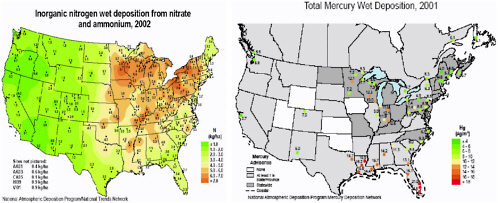
FIGURE A.1 Wet deposition of nitrogen compounds and mercury in the United States.
SOURCE: National Atmospheric Deposition Program, National Trends Network (2002).
Trends in wet deposition of oxidized and reduced forms of nitrogen have not followed the well-documented declines in sulfate deposition in the United States. Monthly data from 149 sites in the NADP National Trends Network were evaluated for trends over the period 1985–2001 using a parametric model to remove the influence of interannual variations in precipitation amount, followed by a nonparametric test for detection of monotonic trends (Nilles and Conley, 2001). Characteristics of wet deposition that must be considered in trend analysis include the influence of seasonality on data variability, typically nonnormal data distribution, missing data resulting from data screening steps, and considerable variation in the apparent form of trends exhibited at NADP sites (step-function, linear, or nonlinear). To address these constraints, the trends were analyzed for statistical significance using the Seasonal Mann-Kendall Test (SKT). The SKT is a robust nonparametric test for detection of monotonic trends that implicitly removes the influence of seasonality, while accommodating nonnormal data distributions and missing data. Wet deposition data typically vary strongly with season for many constituents, and the SKT compares only like months in a stepwise, time-ordered fashion to implicitly remove the influence of seasonality.
For ammonium deposition, statistically significant increases were detected at 58 of 149 sites examined, while only 2 sites exhibited declining trends. On a network-wide basis, ammonium deposition increased by
19 percent over the 17-year period of analysis. A number of the sites with increasing trends were located in areas of the country coincident with intensive animal agricultural production—states such as Arkansas, Oklahoma, Kansas, Illinois, and North Carolina. The Northeast region exhibited the fewest positive trends for ammonium concentrations compared to the Southeast and Western United States.
While the majority of sites did not exhibit any trend in nitrate deposition, 23 sites exhibited a significant increasing trend versus 12 sites with a declining trend. Sites with increasing trends in nitrate were predominantly located in the Western and Southeastern United States, while sites with declining trends were located mostly in the Northeast. The median trend of all 149 sites examined was less than +3.0 percent over the 17-year period. Measures to control nitrogen oxide (NOx) emissions such as those in Title IV of the Clean Air Act Amendments and in mobile source NOx controls implemented to date have mitigated increases in NOx, despite substantial increases in power production and vehicle-miles traveled over the past two decades. Hence, the finding here of few observed reductions or increases in NO3- concentrations in precipitation is consistent with the emission control policy promulgated in the United States over the period examined.
The median concentration of mercury in precipitation at NADP/ MDN sites was approximately 10 ng/L in 2001 (NADP, 2002). The highest concentrations of mercury in precipitation occurred in Florida, Minnesota, and Wisconsin. Deposition, which integrates chemical concentration with the amount of precipitation, was highest in the Southeastern United States. Mercury deposition exhibits strong seasonality, with greater concentration and deposition in the warmer months. A preliminary trend analysis of NADP/MDN mercury deposition data at 51 sites for the period 1996–2002 indicated no trend at 42 sites, a downward trend at 8 sites, and an upward trend at 1 site. Irrespective of statistical significance, most of the 51 trend slopes were negative.
The NADP demonstrates the value of a long-term, high-quality national network to gauge the spatial and temporal distribution of wet atmospheric deposition. The network provides an accountability mechanism to gauge the effectiveness of ongoing and future regulations intended to reduce atmospheric chemical emissions and subsequent effects on land and water resources. All NADP data are available at http://nadp.sws.uiuc.edu/.
PATHOGENS IN WATER: ADDRESSING A PUBLIC HEALTH THREAT VIA THE POTENTIAL SYNERGISM OF THE CLEAN WATER ACT AND THE SAFE DRINKING WATER ACT
Joan B.Rose
Waterborne disease statistics and potential risks are divided into recreational outbreaks and drinking water outbreaks. In terms of the current status of waterborne disease in the United States, during the last few years of reporting there has been an increase in disease associated with both drinking water and recreational fresh waters. Enteric bacteria, parasites, and viruses are the key microorganisms associated with these public health risks and are very similar despite the different exposure routes. The largest source of microbial fecal loading and contamination is sewage in the form of untreated and treated wastewaters, combined sewer overflows (CSOs), sanitary sewer overflows (SSOs), and septic tanks and—in the case of bacteria and protozoa—animal excreta. Exposure to untreated sewage has long been known to cause disease. The probability that any waterborne pathogen may cause illness will depend on the type of contact made; exposure; concentration of the organisms in the contaminated water; temperature of the receiving water, which influences survival; transport of the pathogen from source to contact point; and level of individual or population susceptibility to pathogen-borne illnesses. Only a small percentage of outbreaks are documented, as little as 10 percent (Harter et al., 1985). Gastrointestinal illnesses are largely unreported due to the lesser severity of illness in healthy individuals. When etiologic agents have been identified, most often the source of the fecal contamination has not. Thus, the burden of disease is not readily recognized.
While the Clean Water Act (CWA) has focused on protection of recreational waters, the Safe Drinking Water Act has focused on drinking water. In most cases, the different targets, approaches, and regulatory framework have resulted in a disconnection in regard to the protection of public health. Table A.1 shows the comparison in a number of areas.
The CWA has the tools for watershed protection to address sources, survival, transport, and risk, yet none of the rules have addressed pathogens or used a science-based risk assessment approach for examining appropriate public health microbial targets. The SDWA on the other hand has allowed for the use of quantitative microbial risk assessment
TABLE A.1 Comparison of the Clean Water Act and the Safe Drinking Water Act
with public health goals but has focused on treatment technology and has little authority for implementing watershed protection approaches except in a few cases. The complementary nature of the two laws is obvious, particularly for freshwater systems; however, changes that focus on pathogen targets in sources would have to be made.
In the future, new challenges will face the water industry and communities struggling with protection of both recreational waters and drinking waters. These may include
-
changes in disinfection: ultraviolet disinfection with new microbial targets of resistance such as adenoviruses;
-
changes in discharges: blending untreated and treated effluents, greater volumes, animal waste discharges;
-
discovery of new microbial contaminants (cancer-causing viruses; zoonotic pathogens); and
-
uses and interpretation of molecular data (source tracking, pathogen detection, and virulence factors).
The harmonization of a risk assessment framework to serve the goals of both the Clean Water Act and the Safe Drinking Water Act will ensure that efforts in the future to protect waterways from pathogens will be synergistic.
CHANGE: IMPLICATIONS AT THE WATER-HUMAN HEALTH INTERFACE
Peter H.Gleick
The failure to meet basic human and environmental needs for water is the greatest development failure of the twentieth century—one that carries with it adverse health effects of vast proportions. By the best estimates of the World Health Organization, two million to five million people die annually from preventable water-related diseases that result from lack of safe drinking water and adequate sanitation. In partial recognition of these effects, the United Nations adopted the Millennium Development Goals (MDGs), two of which specifically address water poverty; these call on the world community to work to reduce by half the proportion of people without access to safe drinking water and sanitation services by 2015.
Even if we meet the Millennium Development Goals for water, 34 million to 76 million people will die of preventable water-related diseases by 2020, and we are not going to meet the MDGs given current commitments. Further complications include the broad issue of global change, including geophysical aspects such as global warming and po-


