
3
Schooling
INTRODUCTION
Learning occurs more intensely during childhood and adolescence than during other phases of the life cycle in all domains, whether it is the development of physical or cognitive skills or the acquisition of knowledge and the shaping of values and beliefs. This is not just because of the obvious fact that growth always appears more rapid when starting from a lower base. During these same years, physical and intellectual capacities are growing rapidly, allowing for the more rapid acquisition of skills and accumulation of knowledge than at other phases of the life cycle. Interventions affecting the timing and sequencing of learning and the quality of the learning environment during these years can have important implications for the development of adult productive capacities. Investments in learning in these earlier stages of the life cycle tend to yield relatively high returns in comparison to learning later in life, because there are expected to be more decades of subsequent adulthood for returns to be obtained. Failure to invest at this stage is extremely unlikely to be compensated for in any later stage.
For all these reasons, this phase of the life cycle has typically been associated with a focus on learning. This learning can take many forms, ranging from learning by doing and imitating around the household and in family economic activities, to learning in the labor market or in military service, to formal training and schooling. Education is a central aspect of preparation for the multiple aspects of the transition to adulthood and indeed interacts with and affects each of them.
This chapter explores the process of becoming an educated adult during the second decade of life and beyond in the context of rapid global change. This process involves the acquisition of relevant capacities, including cognitive competencies, marketable skills, social capital, and complementary values and motivations, that enable individuals to function effectively in a range of adult roles, including worker, household provider, parent, spouse, family caretaker, citizen, and community participant. While education is not synonymous with going to school, the formal schooling system has become the preeminent institution worldwide dedicated to the education of young people. As a result, it is a place in which a growing percentage of young people spend significant amounts of their time. In major part, this is because the rapid changes that are discussed in Chapters 1 and 2 have substantially increased the benefits from both a more intensive as well as an extended period of learning at this stage of the life cycle. Indeed, schools are widely seen to be institutions in which young people can best develop their capacity for lifelong learning and thus are critical institutions in creating the enabling conditions for successful transitions to adulthood.
The strong link between schooling levels and subsequent earnings is well documented in the empirical literature (e.g., Knight and Sabot, 1990; Krueger and Lindahl, 2001; Psacharopoulos, 1994), as is the link between schooling levels, particularly for females, and various nonmarket or social outcomes, such as subsequent fertility and child health and educational outcomes (e.g., National Research Council, 1999; Jejeebhoy, 1995; Knowles and Behrman, 2005; Schultz, 2002; Summers, 1994; World Bank, 2001). In some parts of the developing world, however, the opportunities that education opens up for girls in the marriage market may be even more salient for parents making decisions about their girls’ schooling (see Chapter 7 for further discussion of the links between schooling and various aspects of marriage). While many of these studies characterize static relations between schooling and various outcomes, a subset of studies provides evidence of a causal effect of schooling on the capacity to deal with change in markets and technologies, a capacity that is likely to be of increasing importance given the acceleration of change that motivates this report (e.g., Rosenzweig, 1995; Schultz, 1975; Welch, 1970). The quantity and quality of schooling experienced by today’s young people in developing countries will have important effects on them as well as on future economic growth and development and on trends in inequality and poverty.
The chapter begins with a review of the basic facts and figures with respect to changes in schooling participation, attainment, and academic performance. We then explore some of the forces that have led to these changes, not only factors affecting demand for schooling, but also facts about some of the critical features of school systems, including recent re-
form efforts. Throughout these discussions, we recognize that changes in the quantity and quality of schooling provided are to an important extent a response to increased demand for schooling on the part of young people and their families. Both increases in demands for schooling and various proposals for school reform have emerged in response to the global changes, including changes in policies and programs outside the educational sphere, described in Chapters 1 and 2. The chapter also reviews the evidence about the effectiveness of existing educational policies and programs in improving the schooling environment and achieving various educational goals. The chapter ends with a summary of key findings, policy recommendations, and research questions.
WHAT ROLES DO SCHOOLS PLAY?
In traditional and slowly changing societies, the acquisition of productive capacities or human capital was largely taken up in the family or kin group through informal on-the-job apprenticeships, which taught agricultural techniques or various traditional trades. Over the course of economic development, with the growth of the monetized economy and the shift in the occupational structure from agriculture to industry to services, the inputs required to develop productive skills have shifted. These changes have led to a growing demand in the job market for literacy and numeracy—skills more efficiently provided in a formal classroom setting with specially trained teachers—as well as for the broader knowledge base and reasoning and problem-solving skills that are acquired in school. In response to these worldwide changes, mass formal schooling has become a global institution with commonly recognized features in all countries of the world (Meyer, 1992). These include courses in reading, mathematics, language, history or social studies, and science. While formal schools occasionally include religious education and religious groups sometimes run formal schools,1 we do not include in our definition of formal schools those schools that are solely dedicated to providing a religious education to the exclusion of other subjects.2 The gains from extended formal schooling, as noted, are expected to
increase with the more rapid changes that are being experienced by young people today.
The acquisition of human capital is only one of several types of capital potentially acquired in school. Social capital, defined as “the ability of actors to secure benefits by virtue of membership in social networks or other social structures” (Portes, 1998), can be acquired in school through the formation of peer networks, parents’ networks, or student-teacher networks.3 An additional domain of learning important to our subject is the acquisition of values or “cultural capital” (a termed coined by Bourdieu, 1985, as cited in Portes, 1998) that enhances an individual’s effectiveness in the culture, in the community, and in the workplace. In a modernizing society, formal schooling, particularly Western-style schooling, provides a major counterpoint to the family in the socialization of the young. One important example concerns gender. While boys and girls are mostly taught the same curriculum when it comes to academic subjects, the process of socialization that occurs in the schoolyard and the classroom is often quite different for boys and girls, as are some of the traditional nonacademic subjects, such as home economics and agriculture, that are still provided in some school systems on a sex-segregated basis. In traditional societies, gender role socialization occurred primarily in the home and the community. The school, through the authority of the teacher, also has enormous potential to influence the values, expectations, and behaviors of boys and girls with respect to gender roles in the family as well as the workplace, either by reinforcing traditional roles or by sharing in the classroom changing international norms regarding human rights and gender equality.4 Therefore, the role of schools in the socialization of the young is another factor to consider in the progress of children in school and their transition to adulthood.
A final aspect of formal schooling relates to becoming a citizen and a community participant and is treated more fully in Chapter 6. Effective citizenship at the community, national, and global levels requires a broad knowledge of the world and the acceptance of certain common values. As articulated by the Convention on the Rights of the Child, these include respect for human rights and fundamental freedoms, respect for local cul-
ture and language, respect for the natural environment, and the acquisition of a spirit of understanding, peace, tolerance, and gender equality (United Nations, 1989). Most national governments and educational ministries typically include at least some aspects of citizenship training in their educational curricula.
The universal desire of governments to control the education of children and youth through the provision of public formal schooling can be largely explained by the need perceived by all governments to shape citizens’ values and beliefs in ways that are consonant with prevailing culture, predominant religious beliefs, and national political ideology. A recent assessment of the centralized public school curriculum in Pakistan, for example, has concluded that “an overemphasis on Islamic interpretations in the government-prescribed syllabus has distorted historical data, nurtured intolerance for other religions and confined the scope of the physical and social sciences” (International Crisis Group, 2004).
In recent years, there has been a growing concern that nonformal religious schools, in particular Islamic schools, are capturing a growing share of school enrollment in parts of the Muslim world. The panel, however, could not find any solid evidence that this is indeed the case. Nonetheless, we did have access to recent nationally representative data from Pakistan from a survey of youth fielded in 2001-2002 that shows that 3.2 percent of young men ages 15-19 and 1.7 percent of young women of the same age had ever attended religious schools; less than 0.05 percent of young people attended religious schools exclusively.5
TRENDS AND PATTERNS OF SCHOOLING PARTICIPATION AND ATTAINMENT
The panel used data from a number of recent nationally representative household surveys—particularly Demographic and Health Surveys (DHS)—to describe various important aspects of formal schooling in this chapter. For most topics, we use these data in preference to United Nations Educational, Scientific, and Cultural Organization (UNESCO) data because they permit the exploration of differentials in formal school participation and attainment by household background characteristics and because they permit the derivation of trends over the last two decades on a consistent basis across countries. A full discussion of the strengths and weaknesses of alternative sources of data on schooling and the reasons for our choice of data sources can be found in Appendix A. Appendix tables to this chapter pro-
vide country by country data to complement the tables in the text that are based on regional and country income groups.
Current Patterns of School Participation
Table 3-1 presents aggregate country-level data on patterns of current school attendance6 by age according to regional and income grouping (see definitions in Appendix A) based on all DHS data from the 1990s. Data for China and India are presented separately in Table 3-2. Data for these two countries, representing the education experience of two-fifths of all young people in the developing world, are not available for the full range of ages presented in Table 3-1, but are available for two recent points in time, revealing very recent changes for these two important countries.
On average, the estimates presented in Table 3-1 suggest that roughly three-quarters of 10-14-year-olds, who are in the early phase of their transitions to adulthood, are attending school. This is probably a reasonable estimate of attendance rates for all developing countries, since India and China, with roughly equal numbers of young people in these ages, would exert countervailing and roughly balancing influences on the average if included (see Table 3-2). Attendance rates in low-income countries are about 16 to 18 percentage points lower than in the upper middle-income group. The gender gap in attendance rates among younger adolescents is also slightly larger in the lower income countries (6 versus 4 percentage points). Attendance rates for the 10-14 age group fall below 75 percent for boys and girls in sub-Saharan Africa and for girls in the Middle East. Gender equality in attendance rates during the early adolescent years has essentially been achieved in China, the former Soviet Asia, and Central and South America. The distribution of this attendance between primary and secondary school for this age group varies substantially across regions. This is partly a result of differences in the age at entry and the duration of the primary school cycle, but it is also affected by variation in progression rates from primary to secondary school across countries. Over 50 percent of 10-14-year-old students are attending secondary school in Asia, but no more than 3 percent are in Eastern and Southern Africa (data not shown).
In the later teenage years, attendance rates fall off substantially, gender gaps widen, and regional differences become more pronounced. Roughly 50 percent of boys and 41 percent of girls in the 15-19 age group are attending school in the countries represented in Table 3-1. Boys have higher
|
6 |
We use the term “attendance” to refer to those who are reported by their household to be currently attending school, whereas we use the term “enrollment” to refer to officially reported opening day enrollment. For further discussion see Appendix A. |
TABLE 3-1 Percentage Currently Attending School, DHS Countries
|
Region or Income Level |
Weighteda Averages |
|||||
|
Ages 10-14 |
Ages 15-19 |
Ages 20-24 |
||||
|
Boys |
Girls |
Boys |
Girls |
Boys |
Girls |
|
|
Region |
||||||
|
Africa |
||||||
|
Eastern/Southern Africa |
74.1 |
70.6 |
52.2 |
39.4 |
16.4 |
9.1 |
|
Western/Middle Africa |
66.1 |
57.6 |
48.1 |
34.3 |
24.2 |
12.2 |
|
Asiab |
||||||
|
South-central/South-eastern Asiac |
81.0 |
76.0 |
47.1 |
37.3 |
16.9 |
9.8 |
|
Former Soviet Asiad |
98.4 |
98.9 |
56.1 |
54.4 |
13.2 |
11.7 |
|
Latin America and Caribbean |
||||||
|
Caribbean/Central America |
80.0 |
77.8 |
50.9 |
44.2 |
21.3 |
16.5 |
|
South America |
92.9 |
93.1 |
60.5 |
61.7 |
22.0 |
23.8 |
|
Middle East |
||||||
|
Western Asia/Northern Africa |
81.0 |
67.6 |
47.7 |
37.4 |
17.5 |
10.3 |
|
Income Levele |
||||||
|
Low |
75.3 |
69.2 |
46.4 |
34.0 |
17.5 |
8.8 |
|
Lower middle |
86.6 |
84.1 |
57.4 |
54.0 |
20.1 |
16.5 |
|
Upper middle |
91.4 |
87.2 |
59.6 |
58.1 |
22.1 |
22.1 |
|
TOTAL—All DHS |
79.8 |
74.6 |
50.4 |
41.2 |
18.7 |
12.2 |
|
aWeighting is based on United Nations population estimates for year 2000 (World Population Prospects: The 2000 Revision). bEastern Asia not included; no DHS available. cIndia’s DHS does not include current enrollment data for 18-24-year-olds and has been removed from this table. dFormer Soviet Asia includes former Soviet Republics in South-central and Western Asia. eWorld Bank income classifications, World Bank (2002b). NOTE: See Appendix Table 3-1 for the data from each country. |
||||||
attendance rates than girls in all regions except South America. While over 50 percent of 15-19-year-olds are attending school in middle-income countries, this is not the case for the low-income countries. Among those who are attending school, over 70 percent of 15-19-year-old students are currently attending secondary school (data not shown). However, in Eastern and Southern Africa, where children get a late start in school and many primary school cycles are more than six years, no more than 31 percent of male students and 38 percent of female students ages 15-19 are enrolled in secondary school (data not shown).
TABLE 3-2 Recent Trends in School Attendance in India and China
|
Sex and Age |
China |
India |
||||
|
1989 |
1997 |
% Growth |
1992 |
1999 |
% Growth |
|
|
Boys 12-13 |
93 |
96 |
3.2 |
76 |
81 |
6.2 |
|
Girls 12-13 |
92 |
96 |
4.3 |
56 |
67 |
19.6 |
|
Boys 14-15 |
77 |
85 |
10.4 |
35 |
69 |
74.3 |
|
Girls 14-15 |
69 |
84 |
21.7 |
23 |
52 |
126.1 |
|
Boys 16-17 |
38 |
65 |
71.1 |
n.a.a |
54 |
n.a.a |
|
Girls 16-17 |
31 |
59 |
90.3 |
n.a.a |
37 |
n.a.a |
|
aInformation on attendance was not asked of those over the age of 15 in 1992 survey. NOTE: n.a. = not available SOURCES: Hannum and Liu (2005); DHS data. |
||||||
In some parts of the developing world, a substantial minority of young people ages 20-24 are still in school—over 20 percent of young men and women in South America and of young men in Western and Middle Africa and in the Caribbean and Central America. For boys at this age, the differences in attendance rates between low and upper middle-income countries are not large (18 versus 22 percent), whereas for girls the gap is much larger (9 versus 22 percent). The reasons for these patterns vary substantially. In some cases, grade attainment is high, leading to continuing school attendance at later ages; in other cases, lower grade attainment combined with late ages of entry and repetition have led to similar patterns of attendance by age despite poorer grade attainment (see further discussion of schooling beyond the secondary level below).
In Table 3-2, we compare recent changes in attendance by age in India and China. China has made impressive progress in extending school participation later into the adolescent years. The gender gap in attendance that had begun to emerge at the age of 14 in the late 1980s has almost been eliminated in the 14-15 age group and is now apparent only to a small degree among 16-17-year-olds who have showed extraordinary growth in school participation over the past 8 years. By ages 16-17, 59 percent of girls and 65 percent of boys are still attending school. India has also seen exceptional growth in school participation during the same period, particularly among the 14-15-year-olds. While the absolute gender gap in attendance rates has widened at this age, the percentage growth for girls exceeds that for boys because girls’ attendance rates started from a much lower base.
Differentials in Attendance by Wealth and Residence and Other Characteristics
Globalization is sometimes claimed to benefit most those who are relatively better off. Thus, it is interesting to look separately at current enrollment patterns among the most privileged in each country. We can do that by using the wealth index developed by Filmer and Pritchett (1999) especially for use with DHS data. It is based on a common set of indicators capturing the ownership of a set of consumer durables (e.g., radio, bike, car) as well as various indicators of quality of housing, including the availability of piped water, electricity, and finished flooring. Table 3-3 mirrors Table 3-1, but includes only those in the top 20 percent of the wealth
TABLE 3-3 Percentage Currently Attending School, Wealthiest 20 Percent of Households, DHS Countries
|
Region or Income Level |
Weighteda Averages |
|||||
|
Ages 10-14 |
Ages 15-19 |
Ages 20-24 |
||||
|
Boys |
Girls |
Boys |
Girls |
Boys |
Girls |
|
|
Region |
||||||
|
Africa |
||||||
|
Eastern/Southern Africa |
88.6 |
84.8 |
60.9 |
49.4 |
21.2 |
12.7 |
|
Western/Middle Africa |
86.7 |
80.0 |
67.4 |
53.7 |
40.2 |
26.8 |
|
Asia |
||||||
|
South-central/South-eastern Asiab |
90.7 |
88.3 |
67.3 |
58.1 |
31.7 |
20.3 |
|
Former Soviet Asia |
98.6 |
98.9 |
64.0 |
63.6 |
24.8 |
22.1 |
|
Latin America and Caribbean |
||||||
|
Caribbean/Central America |
96.3 |
92.6 |
81.0 |
74.0 |
50.0 |
43.1 |
|
South America |
98.1 |
97.0 |
73.2 |
72.8 |
31.9 |
36.9 |
|
Middle East |
||||||
|
Western Asia/Northern Africa |
93.5 |
88.9 |
61.8 |
60.3 |
27.7 |
20.4 |
|
Income Level |
||||||
|
Low |
88.8 |
85.0 |
64.4 |
53.8 |
31.3 |
19.9 |
|
Lower middle |
96.6 |
93.6 |
74.5 |
66.8 |
32.9 |
26.9 |
|
Upper middle |
96.6 |
95.5 |
67.8 |
70.8 |
27.4 |
30.8 |
|
TOTAL—All DHS |
91.4 |
88.1 |
66.7 |
58.7 |
31.0 |
22.8 |
|
aWeighting is based on United Nations population estimates for year 2000 (World Population Prospects: The 2000 Revision). bIndia’s DHS does not include current enrollment data for 18-24-year-olds and has been removed from this table. NOTES: For source of regional and income groupings and population data for weighted averages, see Table 3-1. Further detail can be found in Appendix A. See Appendix Table 3-2 for the data from each country. |
||||||
distribution in each country. While the top 20 percent in Mali may not resemble the top 20 percent in South Africa, they share in common their relative position in their own countries. Looking at the average for these relatively high-income households across all DHS countries, Table 3-3 shows that about 90 percent of 10-14-year-olds are in school, with nearly two-thirds of boys and 60 percent of girls still in school in the 15-19 age range. Gender gaps are small among the 10-14-year-olds regardless of region or country income level (with the possible exception of Western and Middle Africa), but they become greater among 15-19-year-olds, particularly in Africa, where male attendance exceeds female attendance by over 10 percentage points. Adolescents from these relatively high-income households have somewhat higher attendance rates when they live in higher income countries. In the upper middle-income countries in Table 3-3, current attendance rates among 10-14 year-olds are roughly 95 percent for both boys and girls.
To further explore the question of how gender interacts with other sources of difference, such as wealth and residence, we introduce an index of relative inequality in school participation that can be used to capture relative urban and rural differences or relative differences between extremes of the wealth distribution.7 The index ranges from 0 to 100, with 0 representing complete parity of attendance between the groups and a value of 100 representing the complete nonparticipation of the disadvantaged group. A measure of 50 implies that the one group has obtained 50 percent of the schooling participation rate of the other group.
Table 3-4 presents these measures of inequality in school attendance for males and females in the 10-14 and 15-19 age groups, using the same classification of countries. On average, young poor adolescents (ages 10-14) have attendance rates that are 25 percent lower than young rich adolescents. Relative inequality is nearly double during the later adolescent years, when transitions to secondary school are made and the differential disadvantage of poor girls widens as well.
Relative inequality varies dramatically from country to country and across regional groups. Relative inequality is highest in Western and Middle Africa and the Middle East and is also very high during the later adolescent years in South-central and South-eastern Asia and the Caribbean and Cen-
TABLE 3-4 Index of Inequality in School Attendance by Wealth, DHS Countries, High versus Low Wealth
|
Region or Income Level |
Weighted Averagesa |
|||
|
Ages 10-14 |
Ages 15-19 |
|||
|
Boys |
Girls |
Boys |
Girls |
|
|
Region |
||||
|
Africa |
||||
|
Eastern/Southern Africa |
24.7 |
27.3 |
18.8 |
33.3 |
|
Western/Middle Africa |
45.1 |
54.9 |
55.8 |
70.2 |
|
Asia |
||||
|
South-central/South-eastern Asiab |
20.2 |
25.1 |
52.1 |
63.5 |
|
Former Soviet Asia |
0.6 |
0.5 |
19.5 |
29.2 |
|
Latin America and Caribbean |
||||
|
Caribbean/Central America |
24.6 |
24.2 |
52.3 |
61.0 |
|
South America |
10.1 |
8.5 |
33.9 |
33.3 |
|
Middle East |
||||
|
Western Asia/Northern Africa |
24.1 |
43.8 |
41.7 |
65.7 |
|
Income Level |
||||
|
Low |
27.2 |
33.7 |
46.5 |
61.8 |
|
Lower middle |
18.8 |
21.2 |
42.1 |
43.5 |
|
Upper middle |
10.5 |
15.7 |
25.9 |
34.6 |
|
TOTAL—All DHS |
23.1 |
28.7 |
42.5 |
54.3 |
|
aWeighting is based on United Nations population estimates for year 2000 (World Population Prospects: The 2000 Revision). bIndia’s DHS does not include current enrollment data for 18-24-year-olds and has been removed from this table. NOTES: For source of regional and income groupings and population data for weighted averages, see Table 3-1. Further detail can be found in Appendix A. See Appendix Table 3-3 for the data from each country. |
||||
tral America. By contrast, there is almost no inequality in current enrollment during early adolescence in the countries of the former Soviet Asia. During the young adolescent years, poor girls are more disadvantaged than poor boys in South-central and South-eastern Asia, Eastern and Southern Africa, Western and Middle Africa, and the Middle East and suffer the greatest relative disadvantage in the Middle East. During the later adolescent years, the relative disadvantage of poor girls grows dramatically as overall levels of inequality grow during these years. The inequality index is highest in the lowest income countries for both girls and boys, where overall attendance rates are lower to begin with. Variations in relative inequality can be even more extreme within countries. For example, in India the index of inequality, based on the current attendance of both boys and girls
TABLE 3-5 Index of Inequality in School Attendance by Rural-Urban Residence, DHS Countries
|
Region or Income Level |
Weighted Averagesa |
|||
|
Ages 10-14 |
Ages 15-19 |
|||
|
Boys |
Girls |
Boys |
Girls |
|
|
Region |
||||
|
Africa |
||||
|
Eastern/Southern Africa |
14.5 |
11.4 |
38.1 |
34.6 |
|
Western/Middle Africa |
24.8 |
33.6 |
37.9 |
46.9 |
|
Asia |
||||
|
South-central/South-eastern Asiab |
7.1 |
13.2 |
23.0 |
41.7 |
|
Former Soviet Asia |
0.0 |
0.8 |
4.5 |
14.6 |
|
Latin America and Caribbean |
||||
|
Caribbean/Central America |
14.5 |
11.4 |
38.1 |
34.6 |
|
South America |
7.4 |
8.8 |
32.2 |
31.4 |
|
Middle East |
||||
|
Western Asia/Northern Africa |
15.2 |
34.1 |
31.5 |
54.6 |
|
Income Level |
||||
|
Low |
14.1 |
20.3 |
25.1 |
40.4 |
|
Lower middle |
11.4 |
16.3 |
28.2 |
32.7 |
|
Upper middle |
7.5 |
12.9 |
26.5 |
30.6 |
|
TOTAL—All DHS |
12.6 |
18.4 |
25.9 |
37.5 |
|
aWeighting is based on United Nations population estimates for year 2000 (World Population Prospects: The 2000 Revision). bIndia’s DHS does not include current enrollment data for 18-24-year-olds and has been removed from this table. NOTES: For source of regional and income groupings and population data for weighted averages, see Table 3-1. Further detail can be found in Appendix A. See Appendix Table 3-4 for the data from each country. |
||||
combined (ages 6-14), ranges from 9.0 in Kerala to 59.9 in Bihar (Filmer and Pritchett, 2001).8
Table 3-5 presents indices of inequality in school attendance by rural-urban residence. Calculated in the same way as the wealth inequality indices these compare attendance rates for rural and urban households rather than attendance rates for rich and poor households. Looking at the indices for 10-14-year-olds for all DHS countries combined, rural boys have 12.6 percent lower attendance rates than urban boys, while rural girls have 18.4 percent lower attendance rates than urban girls. Rural-urban inequalities
are greatest in the low-income countries (where attendance rates are lower) and much higher among older adolescents. This is likely to be affected by the much longer distances that rural adolescents need to travel to secondary school. In most regions (although not the Caribbean and Central America for both age groups or Eastern and Southern Africa and South America for the 15-19 age range), rural-urban inequality in school attendance is higher for girls than for boys, suggesting that rural girls are differentially disadvantaged. The highest rural-urban disparities in school attendance are found in Western and Middle Africa, the Middle East, and South-central and Southeastern Asia. Comparing the rural-urban inequality indices in Table 3-5 with the wealth inequality indices in Table 3-4, there appears to be greater inequality in attendance by wealth than by rural-urban residence, with the notable exception of Eastern and Southern Africa.
The relative differences in schooling between the top and bottom wealth quintiles and between urban and rural areas are greater than relative differences in schooling by gender (not shown) regardless of region, because there is an interaction between wealth and gender and between residence and gender. Girls are differentially disadvantaged among the poor and those who live in rural areas, particularly in later adolescence.
Gender, income, and residence differentials in schooling participation lend themselves more easily to comparative analysis. Other schooling differentials by ethnicity, race, caste, or religion can be as important in particular settings but do not lend themselves easily to comparative analysis. A review of studies focusing on these more country- or region-specific differentials reveals their importance. Typically, residential and income differentials can provide only a partial explanation for observed ethnic, racial, caste, or religions differences. Results from Israel, South Africa, Nepal, India, and China all attest to the persistence of these differentials over time, even as overall schooling trends improve (Borooah and Iyer, 2002; Hannum, 2002; Munshi and Rosenzweig, 2003; Shavit and Kraus, 1990; Stash and Hannum, 2001; Treiman, McKeever, and Fodor, 1996).
Trends in School Participation and Attainment
In the previous section, we presented a snapshot of school attendance patterns by age for the late 1990s. In this section, we present trends in school participation and attainment. Changes by decade are derived by comparing educational participation rates for cohorts that are 10 years apart in age. For each measure of participation or attainment, the youngest cohort chosen for the derivation of trends has reached a sufficient age to complete the transition in question.
The most basic measure of school participation that can be used to derive trends from a single survey is the percentage who have ever attended
TABLE 3-6 Trends in Percentage Ever Attended School, DHS Countries
|
Region or Income Level |
Weighted Averages |
|||||
|
Ages 10-14 |
Ages 20-24 |
Ages 30-34 |
||||
|
Male |
Female |
Male |
Female |
Male |
Female |
|
|
Region |
||||||
|
Africa |
||||||
|
Eastern/Southern Africa |
81.1 |
77.8 |
83.4 |
74.4 |
81.5 |
68.3 |
|
Western/Middle Africa |
74.0 |
65.9 |
72.3 |
56.6 |
64.8 |
46.2 |
|
Asia |
||||||
|
South-central/South-eastern Asia |
90.6 |
82.3 |
85.9 |
67.6 |
76.9 |
54.7 |
|
Former Soviet Asia |
99.5 |
99.8 |
99.7 |
99.5 |
99.6 |
99.7 |
|
Latin America and Caribbean |
||||||
|
Caribbean/Central America |
92.0 |
91.7 |
89.7 |
85.7 |
84.6 |
77.6 |
|
South America |
98.2 |
98.8 |
95.6 |
97.1 |
94.1 |
93.9 |
|
Middle East |
||||||
|
Western Asia/Northern Africa |
92.6 |
83.4 |
91.5 |
77.1 |
84.4 |
65.1 |
|
Income Level |
||||||
|
Low |
87.0 |
79.1 |
83.5 |
66.2 |
75.3 |
54.0 |
|
Lower middle |
95.2 |
91.0 |
93.9 |
87.1 |
89.7 |
80.4 |
|
Upper middle |
97.8 |
97.4 |
95.9 |
95.4 |
93.9 |
91.0 |
|
TOTAL—All DHS |
89.0 |
82.3 |
85.9 |
71.4 |
78.8 |
60.7 |
|
NOTES: For source of regional and income groupings and population data for weighted averages, see Table 3-1. Further detail can be found in Appendix A. See Appendix Table 3-5 for the data from each country. |
||||||
school. Table 3-6 presents comparable data weighted by population size across region and country income group on trends in the percentage ever enrolled over the last two decades based on the DHS data.9 The weighted average for all 49 DHS countries for the most recent period is 82 percent ever attended for girls and 89 percent for boys. This reflects a gain over the last 20 years of more than 10 percentage points for boys and 20 percentage
|
% Change |
|||||
|
Most Recent Decade |
Earlier Decade |
Over 20 Years |
|||
|
Male |
Female |
Male |
Female |
Male |
Female |
|
−2.7 |
4.5 |
2.3 |
9.0 |
−0.5 |
14.0 |
|
2.4 |
16.4 |
11.6 |
22.4 |
14.2 |
42.5 |
|
5.6 |
21.7 |
11.6 |
23.5 |
17.8 |
50.3 |
|
−0.2 |
0.2 |
0.1 |
−0.2 |
−0.1 |
0.0 |
|
2.6 |
7.0 |
6.2 |
10.5 |
8.9 |
18.2 |
|
2.7 |
1.7 |
1.7 |
3.5 |
4.5 |
5.3 |
|
1.2 |
8.1 |
8.5 |
18.5 |
9.7 |
28.1 |
|
4.2 |
19.5 |
10.7 |
21.1 |
15.2 |
44.7 |
|
1.4 |
4.5 |
4.8 |
8.3 |
6.2 |
13.2 |
|
2.0 |
2.0 |
2.2 |
4.9 |
4.2 |
7.0 |
|
3.6 |
15.1 |
8.8 |
16.8 |
12.7 |
34.4 |
points for girls. As a result, the gender gap has narrowed considerably. It is particularly striking to see the dramatic growth in girls’ attendance over the last 20 years in the low-income countries in which the gender gap has narrowed from 21 to 8 percentage points. By the late twentieth century, most children even in low-income countries have had at least some minimal contact with formal schooling. All countries in which ever attendance rates for both boys and girls ages 10-14 in the most current period fall below 70 percent are in sub-Saharan Africa (see Appendix Table 3-5).10
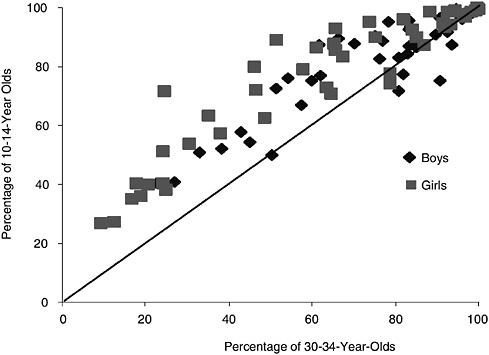
FIGURE 3-1 Percentage ever attending school, all DHS countries.
SOURCE: Appendix Table 3-2.
Figure 3-1 shows the change in the percentage ever attending school for males and females for all of the DHS countries included in our analysis. The figure plots the attendance rates of 10-14-year-olds against the attendance rates of 30-34-year-olds. Note that in all but a very few countries the percentage attending school among 10-14-year-olds is well above the 45-degree line, indicating improvements in school attendance over a 20-year period. The points for females tend to be even further above the 45-degree line than the points for males, indicating that girls have made even more progress than boys over the last two decades in most countries, consistent with the regional patterns shown in Table 3-6.
However, we should note some worrying recent declines in participation rates for boys in the last 10 years (see Table 3-6). In Eastern and Southern Africa and Latin America and the Caribbean, small gains for boys made in the previous decade have been erased in the more recent decade. A variety of conditions may have contributed to these declines, depending on the country, including worsening economic conditions, the spread of HIV/AIDS, rapid population growth, rising cost of schooling, and declines in school quality. As a result, in seven countries in Eastern and Southern Africa—Madagascar, Malawi, Namibia, Rwanda, South Africa, Zambia,
and Zimbabwe—girls’ attendance rates equal or exceed those of boys, a phenomenon already apparent in almost all of Latin America (Behrman, Duryea, and Szekely, 2004; Hewett and Lloyd, 2005) (see Appendix Table 3-5).
Table 3-7 presents trends in the percentage completing at least four grades of school, a marker of progress toward the Millennium Development Goal of universal primary schooling attainment by 2015 (UNESCO, 2002a).11 In contrast to the primary school completion rate, which is tied to the duration of the primary school cycle in each country, this indicator is comparable across countries. Grade 4 attainment rates range from 68 percent in Eastern and Southern Africa to 99 percent in the former Soviet Asia for boys and from 57 percent in Western and Middle Africa to 99 percent for girls in the former Soviet Asia. On average, the 4th grade completion rate has increased 17 percent for boys and 47 percent for girls in the last 20 years. As a result, by the late 1990s, at least two-thirds (except for girls in Western and Middle Africa) of adolescents have completed at least four years of schooling. Increases for girls have been particularly dramatic in the low-income countries (59 percent). For boys, more than half of this growth, however, occurred in the previous decade; more recent growth rates have been much more modest. The average gender gap has narrowed considerably in the last 20 years as well, from 20 to 9 percentage points. Indeed, for some regions—the former Soviet Asia, Latin America and the Caribbean—4th grade attainment rates for girls now equal or exceed those for boys. For the 15-19 age group 4th grade completion rates are about 2 percentage points higher for girls than for boys in the Caribbean and Central America and 6 percentage points higher for girls in South America.
Trends in primary school completion rates tell a very similar story. Close to three-quarters of young men and 60 percent of young women have completed primary school in the most recent period (data not shown). Stagnation and decline in primary school completion rates for boys and continuing but slower increases for girls in sub-Saharan Africa suggest that the gender gap in primary school completion rates is rapidly disappearing, at levels of completion that remain unsatisfactorily low. Figure 3-2 shows estimates made by Hewett and Lloyd (2005) of trends in the percentage of males and females completing primary school in different age groups in sub-Saharan Africa from recent DHS data. While they find evidence of a
TABLE 3-7 Trends in Percentage Completing Four or More Years of Schooling, DHS Countries
|
Region or Income Level |
Weighted Averages |
|||||
|
Ages 15-19 |
Ages 25-29 |
Ages 35-39 |
||||
|
Male |
Female |
Male |
Female |
Male |
Female |
|
|
Region |
||||||
|
Africa |
||||||
|
Eastern/Southern Africa |
68.3 |
63.8 |
71.2 |
61.3 |
67.6 |
48.2 |
|
Western/Middle Africa |
68.4 |
56.6 |
64.6 |
48.0 |
59.4 |
37.0 |
|
Asia |
||||||
|
South-central/South-eastern Asia |
81.4 |
69.1 |
75.2 |
53.5 |
66.3 |
43.5 |
|
Former Soviet Asia |
99.0 |
99.4 |
99.4 |
99.6 |
99.7 |
99.5 |
|
Latin America and Caribbean |
||||||
|
Caribbean/Central America |
69.6 |
71.8 |
69.4 |
62.0 |
59.0 |
48.6 |
|
South America |
81.8 |
87.8 |
82.0 |
82.3 |
77.8 |
75.7 |
|
Middle East |
||||||
|
Western Asia/Northern Africa |
88.8 |
76.8 |
84.0 |
65.7 |
76.9 |
52.3 |
|
Income Level |
||||||
|
Low |
77.4 |
65.7 |
72.7 |
52.3 |
64.8 |
41.4 |
|
Lower middle |
88.5 |
84.3 |
85.0 |
76.9 |
78.9 |
68.1 |
|
Upper middle |
84.6 |
88.5 |
84.8 |
82.7 |
81.6 |
75.4 |
|
TOTAL—All DHS |
79.4 |
70.1 |
75.3 |
58.1 |
68.0 |
47.8 |
|
NOTES: For source of regional and income groupings and population data for weighted averages, see Table 3-1. Further detail can be found in Appendix A. See Appendix Table 3-6 for the data from each country. |
||||||
convergence in male and female primary school completion rates, they estimate that only 53 percent of girls ages 10-14 and 58 percent of boys ages 10-14 in the late 1990s in sub-Saharan Africa completed primary school.12
Table 3-8 summarizes trends in mean grades attained among 20-24-
|
% Change |
||||||
|
Most Recent Decade |
Earlier Decade |
Over 20 Years |
||||
|
Male |
Female |
Male |
Female |
Male |
Female |
|
|
−4.1 |
4.1 |
5.3 |
27.0 |
1.0 |
32.2 |
|
|
5.8 |
17.7 |
8.8 |
29.7 |
15.1 |
52.7 |
|
|
8.2 |
29.2 |
13.4 |
23.1 |
22.7 |
59.0 |
|
|
−0.4 |
−0.2 |
−0.4 |
0.1 |
−0.7 |
−0.1 |
|
|
0.3 |
15.7 |
17.6 |
27.5 |
18.0 |
47.6 |
|
|
−0.3 |
6.7 |
5.5 |
8.7 |
5.2 |
16.0 |
|
|
5.7 |
16.8 |
9.2 |
25.7 |
15.5 |
46.8 |
|
|
6.5 |
25.6 |
12.3 |
26.3 |
19.6 |
58.6 |
|
|
4.2 |
9.6 |
7.7 |
13.0 |
12.2 |
23.8 |
|
|
−0.3 |
6.9 |
4.0 |
9.7 |
3.7 |
17.3 |
|
|
5.4 |
20.6 |
10.7 |
21.6 |
16.7 |
46.5 |
|
year-olds using DHS data.13 It is supplemented by Table 3-9 which shows comparable data from Latin America based on 1970 and 1980 birth cohorts, including countries from the upper middle and lower middle income category. Here there is a great diversity of schooling achievement across countries. Nonentry, late ages of entry, high grade repetition rates, and early dropout rates all contribute to low average grade attainment. Mean grades attained range from 4.8 for girls in Western and Middle Africa to 10.8 in the former Soviet Asia and from 6.2 for boys in Eastern and Southern Africa to 10.6 in the former Soviet Asia. As of the mid- to late 1990s, the mean grades attained for the population represented by DHS surveys is 6.0 for girls and 7.4 for boys.
|
13 |
As shown in Table 3-1, the overwhelming majority of young people have exited from school by the age of 20. |
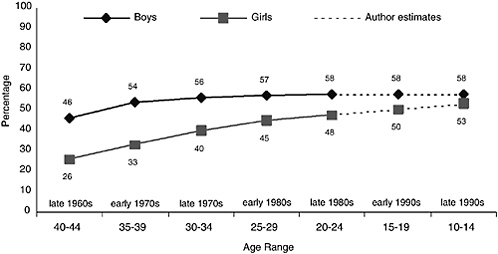
FIGURE 3-2 Trends in proportion completing primary school, 24 African countries.
SOURCE: Hewett and Lloyd (2005).
TABLE 3-8 Trends in Mean Grades Attained, DHS Countries
|
Region or Income Level |
Weighted Averages |
|||||
|
Ages 20-24 |
Ages 30-34 |
Ages 40-44 |
||||
|
Male |
Female |
Male |
Female |
Male |
Female |
|
|
Region |
||||||
|
Africa |
||||||
|
Eastern/Southern Africa |
6.2 |
5.5 |
6.3 |
4.8 |
5.3 |
3.3 |
|
Western/Middle Africa |
6.5 |
4.8 |
6.1 |
3.8 |
5.3 |
2.5 |
|
Asia |
||||||
|
South-central/South-eastern Asia |
7.6 |
5.7 |
6.7 |
4.2 |
5.9 |
3.5 |
|
Former Soviet Asia |
10.6 |
10.8 |
11.0 |
11.0 |
11.2 |
10.9 |
|
Latin America and Caribbean |
||||||
|
Caribbean/Central America |
6.7 |
6.4 |
6.5 |
5.7 |
5.1 |
4.0 |
|
South America |
7.4 |
8.0 |
7.4 |
7.4 |
6.7 |
6.4 |
|
Middle East |
||||||
|
Western Asia/Northern Africa |
8.6 |
6.8 |
7.8 |
5.5 |
6.9 |
3.9 |
|
Income Level |
||||||
|
Low |
7.2 |
5.4 |
6.5 |
4.1 |
5.7 |
3.2 |
|
Lower middle |
8.9 |
8.5 |
8.4 |
7.5 |
7.6 |
6.3 |
|
Upper middle |
7.5 |
7.7 |
7.4 |
6.9 |
6.6 |
5.8 |
|
TOTAL—All DHS |
7.4 |
6.0 |
6.8 |
4.7 |
6.0 |
3.8 |
|
NOTES: For source of regional and income groupings and population data for weighted averages, see Table 3-1. Further detail can be found in Appendix A. See Appendix Table 3-7 for the data from each country. |
||||||
Across the board, the rate of growth in grade attainment for girls has exceeded that for boys, with the result that the gender gap has narrowed considerably. The average growth rates for both boys and girls living in low-income countries are particularly striking. Most notably, there are dramatic improvements for girls in South Asia—a region heavily weighted by data from India that are very recent. Mean grade attainment for boys has declined slightly in the most recent decade in Eastern and Southern Africa, the former Soviet Asia, and Latin America. These declines in Latin America have not occurred only among the lower income countries, but also in some upper middle-income countries, for example Costa Rica and Panama (see Table 3-9). Indeed, it is interesting to note that the mean grade attained varies substantially even in the upper middle income group of Latin American countries, from 6.5 in Brazil to 11.3 in Chile for boys and from 7.0 in Brazil to 10.8 in Chile for girls. In many countries of Latin America, including the most populous ones (e.g., Brazil, Mexico, Colombia), grade attainment for girls has exceeded that for boys since the 1970 birth cohort.
|
% Change |
|||||
|
Most Recent Decade |
Earlier Decade |
Over 20 Years |
|||
|
Male |
Female |
Male |
Female |
Male |
Female |
|
−2.1 |
14.7 |
19.1 |
43.7 |
16.7 |
64.8 |
|
5.6 |
26.5 |
16.9 |
51.9 |
23.4 |
92.1 |
|
13.7 |
36.1 |
12.8 |
20.1 |
28.3 |
63.4 |
|
−3.7 |
−1.9 |
−1.3 |
1.1 |
−5.0 |
−0.9 |
|
2.8 |
12.2 |
28.3 |
43.8 |
31.9 |
61.3 |
|
−0.8 |
8.4 |
11.6 |
16.3 |
10.8 |
26.1 |
|
10.2 |
24.3 |
12.1 |
39.4 |
23.6 |
73.3 |
|
10.9 |
33.1 |
14.0 |
26.8 |
26.4 |
68.8 |
|
5.4 |
12.7 |
10.5 |
19.7 |
16.5 |
35.0 |
|
1.8 |
11.1 |
11.8 |
19.4 |
13.8 |
32.7 |
|
9.1 |
26.3 |
13.3 |
24.4 |
23.6 |
57.0 |
TABLE 3-9 Trends in Mean Grades Attained—Latin America
|
Income Level and Country |
1970 Cohort |
1960 Cohort |
% Change |
|||
|
Boys |
Girls |
Boys |
Girls |
Boys |
Girls |
|
|
Upper Middle Income |
||||||
|
Brazil |
6.5 |
7.0 |
6.0 |
6.4 |
8.3 |
9.4 |
|
Chile |
11.3 |
10.8 |
10.3 |
10.0 |
9.7 |
8.0 |
|
Costa Rica |
8.2 |
8.7 |
9.3 |
8.3 |
−11.8 |
4.8 |
|
Mexico |
8.9 |
9.0 |
8.3 |
7.7 |
7.2 |
16.9 |
|
Panama |
9.5 |
10.7 |
10.0 |
10.6 |
−5.0 |
0.9 |
|
Venezuela |
8.0 |
8.6 |
8.1 |
7.7 |
−1.2 |
11.7 |
|
Lower Middle Income |
||||||
|
Bolivia |
9.5 |
7.9 |
7.9 |
6.3 |
20.3 |
25.4 |
|
Colombia |
8.2 |
8.5 |
8.0 |
7.4 |
2.5 |
14.9 |
|
Dominican Republic |
8.8 |
9.4 |
9.1 |
8.1 |
−3.3 |
16.0 |
|
Ecuador |
9.2 |
9.8 |
8.5 |
8.4 |
8.2 |
16.7 |
|
El Salvador |
6.7 |
7.2 |
6.2 |
5.4 |
8.1 |
33.3 |
|
Honduras |
6.2 |
6.1 |
5.8 |
5.6 |
6.9 |
8.9 |
|
Jamaica |
10.4 |
10.7 |
9.7 |
9.5 |
7.2 |
12.6 |
|
Paraguay |
7.4 |
7.1 |
7.2 |
7.6 |
2.8 |
−6.6 |
|
Peru |
10.9 |
9.3 |
9.7 |
9.1 |
12.4 |
2.2 |
|
Low Income |
||||||
|
Nicaragua |
6.4 |
6.3 |
6.4 |
4.4 |
0.0 |
43.2 |
|
SOURCE: Behrman, Duryea, and Szekely (1999a). |
||||||
Table 3-10 summarizes recent changes in the percentage ever attending school beyond secondary school by comparing the experience of the 25-29-and 35-39-year-old cohorts. Because many are still enrolled in school in their early 20s, change cannot be assessed until most have had a chance to complete. Overall, 16 percent of the youngest men and 10 percent of the youngest women have had some postsecondary schooling. However, levels vary widely across regions, from a low of 5 percent for men and 3 percent of women in Eastern and Southern Africa to a high of 20 percent of men in South Asia and 15 percent of women in the former Soviet Asia. While trends have been impressive on average and greater for women than men, this largely reflects the experience of a few subregions, South Asia most dramatically and the Middle East and the Caribbean as well. Other regions have seen a decline in postsecondary enrollment in recent years, including all of sub-Saharan Africa, the former Soviet Asia, and South America for males and Western and Middle Africa, the former Soviet Asia, and South America for women. The most impressive increases for women have occurred in South Asia, the Middle East, and Eastern and Southern Africa, from a much lower base.
TABLE 3-10 Trends in Percentage Ever Attended School Beyond Secondary School, DHS Countries
|
Region or Income Level |
Weighted Averages |
% Change Most Recent Decade |
||||
|
Ages 25-29 |
Ages 35-39 |
|||||
|
Men |
Women |
Men |
Women |
Men |
Women |
|
|
Region |
||||||
|
Africa |
||||||
|
Eastern/Southern Africa |
4.7 |
3.3 |
5.3 |
2.6 |
−13.2 |
21.6 |
|
Western/Middle Africa |
10.5 |
5.2 |
11.9 |
5.4 |
−14.2 |
−4.4 |
|
Asia |
||||||
|
South-central/South-eastern Asia |
19.9 |
10.9 |
14.8 |
7.0 |
25.8 |
36.1 |
|
Former Soviet Asia |
17.1 |
14.8 |
21.0 |
17.0 |
−22.6 |
−14.9 |
|
Latin America and Caribbean |
||||||
|
Caribbean/Central America |
9.3 |
8.1 |
8.4 |
7.0 |
9.0 |
13.2 |
|
South America |
12.1 |
12.2 |
12.6 |
12.6 |
−4.1 |
−3.2 |
|
Middle East |
||||||
|
Western Asia/Northern Africa |
15.3 |
11.1 |
13.3 |
7.3 |
13.1 |
34.1 |
|
Income Level |
||||||
|
Low |
16.2 |
8.2 |
12.7 |
5.3 |
21.8 |
35.3 |
|
Lower middle |
22.2 |
20.8 |
20.1 |
17.8 |
9.3 |
14.6 |
|
Upper middle |
9.1 |
8.9 |
9.6 |
8.7 |
−5.6 |
2.0 |
|
TOTAL—All DHS |
16.2 |
9.7 |
13.2 |
7.1 |
18.3 |
27.3 |
|
NOTES: For source of regional and income groupings and population data for weighted averages, see Table 3-1. Further detail can be found in Appendix A. See Appendix Table 3-8 for the data from each country. |
||||||
Relative to historical experience, the speed of the schooling transition in the developing world, particularly in the poorest countries, has been very rapid (Clemens, 2004). This accelerating pace of change supports the panel’s view that various elements of global change that were not present historically are contributing to this rapid pace of change. In some cases, rapid improvements in primary school enrollment have come at the expense of school quality. In spite of this rapid rate of improvement, however, it appears that the Millennium Development Goals are unlikely to be met in many of the poorer countries. The patterns shown in Figure 3-2, for example, suggest that the goal of achieving universal primary schooling by 2015 in sub-Saharan Africa is unrealistic.
Student Performance
There are few comparable data on student performance in developing countries, whether measured by literacy rates or standardized tests. The best known data regularly published by UNESCO on literacy, which are based on self-reports, are now widely acknowledged by UNESCO and other United Nations agencies to be seriously flawed and are not presented here.14 In the discussion below, we present some very recent but incomplete data that begin to show what schooling participation may be yielding in terms of learning outcomes as measured by literacy or by the results of standardized texts in reading, mathematics, and science in the few developing countries that have participated in these cross-national testing exercises. As yet, there are no data on trends in learning outcomes.
Literacy
Recent DHS surveys have collected data on literacy using a minimal but “objective” measure that provides suggestive evidence of the possible link between poor school performance and attrition. In seven African countries, literacy among young adult women (15-24) has been measured directly by asking respondents to read a whole sentence out loud as part of an interview process.15 These data, presented in Figure 3-3, measure variations in very minimal levels of literacy among women who dropped out of school prior to primary school completion according to grade attained.16 Levels of literacy appear to vary dramatically across this set of countries by grade,
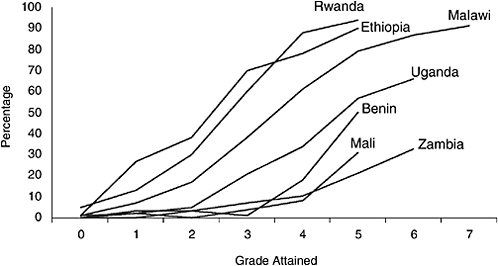
FIGURE 3-3 Percentage of young women who can read a simple sentence by grade attained.
SOURCE: Lloyd and Hewett (2004).
but typically fall well below 50 percent among those dropping out before the completion of grade 4. As success in primary school requires literacy, those who fall behind during the first few grades are more likely to get discouraged and drop out. Given that the poor have much higher attrition rates, these literacy rates disproportionately represent the poor (Lloyd and Hewett, 2004). Another factor contributing to these lower literacy rates in some settings may be differences between the language spoken locally, the official medium of instruction in primary school, and the language spoken by the primary school teacher, whose natal language may differ from the local language or the medium of instruction.
Standardized Test Scores
A few international data sets are beginning to emerge that allow one to compare results of standardized tests typically administered in high-income countries with results from a handful of lower income countries. These results can be supplemented using data from several regional efforts in Latin America, French West Africa, and Southern Africa.
The most comprehensive and rigorous of these international efforts is Programme for International Student Assessment (PISA) of the Organisation for Economic Co-operation and Development (OECD) (Organisation for
Economic Co-operation and Development, 2001).17 This involved the testing of 15-year-old students in reading, mathematics, and science literacy in 32 countries in 2000 (including two developing countries, Mexico and Brazil) with five more developing countries added in 2002 (Argentina, Chile, Indonesia, Peru, and Thailand) (Organisation for Economic Co-operation and Development and UNESCO Institute for Statistics, 2003).18 The participating developing countries follow the patterns of the other OECD countries in showing better performance for girls relative to boys in reading, worse performance in mathematics, and about the same performance in science.
For each of the PISA test scores—reading, mathematics, and science—all seven participating developing countries had scores falling well below the OECD average (see Table 3-11, which provides a comparison with the results for Japan, Korea,19 Canada, the United States, and France). Brazil, Indonesia, and Peru ranked at the bottom of the developing country group for the literacy score, with Thailand and Mexico at the top. These lower average scores reflect the fact that many tested students could not read sufficiently well to apply reading to the acquisition of knowledge and skills in other areas. For example, 54 percent of students in Peru fell below even level one, indicating the most minimal functional levels of literacy. In other Latin American countries the percentages falling below level one ranged from 16 percent in Mexico to 23 percent in Argentina and Brazil, and the percentage ranged from 10 percent in Thailand to 31 percent in Indonesia. By contrast, in the United States, 6 percent fell below level one.
Another international testing study was undertaken in 1999 by the International Study Center at Boston College—the Third International Mathematics and Science Study (TIMSS) (Martin, Gregory, and Stemler, 1999; Mullis et al., 2000). It involved the testing of students in 8th grade in 38 countries.20 A total of 12 developing countries participated in the 1999
|
17 |
PISA is based on a dynamic model of lifelong learning and seeks to assess how students can apply what they have learned to real-life situations. This approach helps ensure greater international comparability, as students’ responses do not depend heavily on specific curricular material that might be highly variable from country to country. |
|
18 |
Because eligibility for testing was based on age rather than grade attained, there is the possibility that the lower scores in some developing countries were partially related to older ages of entry and higher rates of repetition, leading many 15-year-olds to have attained fewer grades by a given age than their peers in the OECD member countries. It should also be kept in mind that many fewer students in developing countries are still attending school at age 15 (see Table 3-1), so these scores are less representative of all young people in developing countries than of young people in developed countries. |
|
19 |
Korea, which is now a high-income country, has scores on all three subject areas well above the OECD average. |
|
20 |
A two-stage stratified cluster sample was used: the first stage was a sample of schools and the second stage was a randomly selected classroom in the school. |
TABLE 3-11 PISA Test Scores by Country
|
Region and Country |
PISA 2000-2001 Test Scores |
||
|
Reading |
Math |
Science |
|
|
Developed Countries |
|||
|
Japan |
522 |
557 |
550 |
|
Canada |
534 |
533 |
529 |
|
United States |
504 |
493 |
499 |
|
France |
505 |
517 |
500 |
|
Korea |
525 |
547 |
552 |
|
Developing Countries |
|||
|
Argentina |
418 |
388 |
396 |
|
Chile |
410 |
384 |
415 |
|
Brazil |
396 |
334 |
375 |
|
Peru |
327 |
292 |
333 |
|
Mexico |
422 |
387 |
422 |
|
Thailand |
431 |
432 |
436 |
|
Indonesia |
371 |
367 |
393 |
|
OECD Average (including Mexico) |
500 |
500 |
500 |
|
SOURCE: OECD and UNESCO Institute for Statistics (2003). |
|||
round—Chile, Cyprus, Indonesia, Iran, Jordan, Malaysia, Morocco, the Philippines, South Africa, Thailand, Tunisia, and Turkey—but only two of these (Cyprus and Iran) participated in the earlier 1995 round. With the exception of Malaysia, all the developing countries in the sample had average scores below the international median for mathematics and science (see Table 3-12 for relative scores). Furthermore, less than 50 percent of students in Chile, Morocco, the Philippines, and South Africa were able to reach the lower quarter benchmark (based on the international lower quartile) indicating that students can do basic computation with whole numbers (i.e., add and subtract).21 Less than a third of students in Chile, Indonesia, Iran, Morocco, the Philippines, South Africa, Tunisia, and Turkey were able to achieve the international median benchmark indicating that students can apply basic mathematical knowledge.
TABLE 3-12 Percentage of Students Reaching TIMSS 1999 International Benchmarks
|
Country |
Lower Quartilea |
Medianb |
|
Japan |
98 |
89 |
|
Netherlands |
96 |
81 |
|
Canada |
96 |
77 |
|
United States |
88 |
61 |
|
Malaysia |
94 |
69 |
|
Thailand |
81 |
44 |
|
Cyprus |
84 |
51 |
|
Jordan |
62 |
32 |
|
Indonesia |
52 |
22 |
|
Turkey |
65 |
27 |
|
Iran |
63 |
25 |
|
Chile |
48 |
15 |
|
Tunisia |
80 |
32 |
|
Philippines |
31 |
8 |
|
South Africa |
14 |
5 |
|
Morocco |
27 |
5 |
|
aMedian benchmark: Student can apply basic mathematical knowledge in straightforward situation. bLower quarter benchmark: Students can do basic (add, subtract) computation with whole numbers. SOURCE: Mullis et al. (2000). |
||
The regional office of UNESCO in Latin America undertook a study of reading and mathematics performance in grades 3 and 4 using comparable instruments in 13 countries, comprising 56,000 students in at least 100 schools per country (Casassus et al., 1998).22 The report presents results for 11 countries—Argentina, Bolivia, Brazil, Chile, Colombia, Cuba, Dominican Republic, Honduras, Mexico, Paraguay, and Venezuela—four of which participated in PISA.23 Mexico, which ranked near the top of the developing country group on reading in the PISA assessment, was ranked relatively low on the UNESCO reading test. Brazil, which was ranked near the bottom on the PISA mathematics test, was ranked relatively higher on math-
|
22 |
The development of the test took two years and much international consultation (including participation of the Educational Testing Service) and was based on the careful study of curricular material from each of the countries in order to make the test comparable within the region. |
|
23 |
See the section on child labor in Chapter 5 for further discussion of how the academic performance of students who work compares with the performance of children who do not combine work and school. |
ematics in the regional test. These differences in ranking between PISA and UNESCO, while partially explained by differences in approach, suggest caution in the interpretation of comparative test scores.
We are aware of several other regional efforts at internationally comparable student assessment in Africa: one in French-speaking West Africa (Conferences des Ministres de l’Education des Pays ayant le Francais en Partage or PASEC, 2002) and one in Southern Africa (Kulpoo, 1998, Southern African Consortium for Monitoring Education Quality). Standardized tests in mathematics and French were administered in primary schools in five countries of French-speaking Africa: Burkina Faso, Cameroon, Cote d’Ivoire, Madagascar, and Senegal. Michaelowa (2001) presents results for 5th grade students from PASEC: in many cases the percentage with the correct answer was no better than what could be achieved with guesswork.24
Within countries, most education systems administer standardized tests at the end of primary school in order to determine eligibility for secondary school. Only those scoring above a certain percentage are guaranteed entrance to the next level. In some countries, girls score below boys in all tests—for example, Kenya (Appleton, 1995) and Bangladesh (Arends-Kuenning and Ahmed, 2004b)—whereas in others, girls are the better performers—for example, Egypt (Lloyd et al., 2003). Such widely different gender patterns in test results, which cannot be explained by underlying differences in capabilities by gender, provide indirect evidence of the importance, not only of the curriculum, but also of the school environment and teacher attitudes in affecting student performance (see further discussion of schools as socializing agents later in the chapter).
While we are not able to make statements about trends in school performance, and even data on levels are only minimally comparable, it is nonetheless clear from these data that there are serious gaps in student achievement in many of the countries of concern to us in this report, gaps that may explain part of the reason that rapid increases in enrollment have not been translated as expected into economic growth (Easterly, 2001). While all of the countries covered have achieved substantial progress in participation and attainment, it is difficult to know what that means in terms of significant changes in the knowledge and skills of young people. The poor performance results for the developing countries are even more disconcerting because these test results apply only to students currently attending school. The older the age or grade of students tested, the greater
the selectivity of the group. Those untested represent a much larger proportion of young people in developing than in developed countries, compromising the overall comparability of results for all young people (as opposed to only those in school).
FACTORS AFFECTING DEMAND FOR SCHOOLING AND HOW THEY ARE CHANGING
There is growing evidence that parents and young people around the world share high aspirations for schooling attainment, usually expressing a desire for levels of schooling that are well beyond the reach of all but a minority. For example, in a recent rural survey fielded in Kenya in 1996, an overwhelming majority of boys and girls attending primary school expressed a desire for a university education. Percentages expressing such a desire ranged from 84 to 92 percent in different districts (Ajayi et al., 1997) despite the fact that DHS data indicate that less than 1 percent of young people in Kenya go on to university. In Egypt, around 70 percent of boys and girls ages 10-19 aspire to continue to university, based on the results of a recent nationally representative survey, in contrast to less than 1 percent who actually go (El-Tawila et al., 2000). In Pakistan, where many children never go to school and where no more than 29 percent of rural girls and 66 percent of rural boys complete primary school (Sathar et al., 2003b), many rural parents express the desire to see their children go beyond the metric level (class 10). Roughly a third of girls’ parents and two-thirds of boys’ parents express such desires (Sathar, Lloyd, and Mete, 2000). There is also evidence from recent qualitative research in Thailand that the gap in parental aspirations for schooling for boys and girls is narrowing (see Box 3-1).
For most, reality falls far short of young people’s aspirations. To what extent do these aspirations translate into effective demand, and what are some of the factors that may have led to an increase in demand for schooling over the last two decades? In this section of the chapter, we discuss various global, national, and local changes that are likely to have affected the demand for schooling, either by changing family circumstances, or by changing the economic returns associated with different levels of schooling. All of these changes are the product of various aspects of global change discussed previously as well as of policies and programs supporting fertility decline and improvements in health and socioeconomic well-being. Our review of the effects of these changes on the demand for schooling makes clear that policies and programs outside the education sector can have a significant effect on schooling trends. The influence of some of the changes in education law and policy at the national level from Box B of the conceptual framework is discussed in the next section on policy and programs.
|
BOX 3-1 Knodel (1997) undertook 15 focus group discussions in 1991 and 1992 in two rural districts of Thailand to explore parental attitudes about gender and schooling. A focus of the discussions was continuing schooling past the primary school level since, at the time, this was the point at which many rural Thai children drop out of school. The quotes below are representative of the attitudes reflected in the focus group discussions. These include quotes from a group who completed primary school but did not go on to secondary school as well as a group that had continued to secondary school. Parents of Primary School Terminators, Northeast, Group 7 Parent 1: In this high-tech age, they [boys and girls] are the same. Parent 2: You have to see each person for himself, whether girl or boy. Depends on who is interested. If the boy does well, let him go on and if the girl is smart then she should get high education. Parents of Secondary School Continuers, Central Region, Group 8 Moderator: Comparing a boy and a girl, if both go to school, who will get more advantages? Parent 1: Now they have equal rights. Parent 2: It’s the same for boys and girls. Moderator: The boys won’t be more advanced later? Parent 2: No, not nowadays. Parent 3: Today women can be soldiers. Parent 1: and police officers…. No difference, equal rights. SOURCE: Knodel (1997:74). |
Not all elements of the conceptual framework are discussed here. While all are conceptually relevant, systematic studies are lacking on some.
Changing Family Circumstances and the Demand for Schooling
Young people in developing countries in the early twenty-first century live in families that are different in important ways from the families of young people 10, 20, or 30 years ago. A number of these differences may have a significant impact on schooling outcomes, and they may help explain the increases in schooling participation that are taking place in much of the developing world. In this section we review some important features of the families of young people, noting both areas of change and areas of relative stability. These include changing family size, improvements in child
health, changes in family income, improvements in parents’ schooling, and rapid urbanization.
Family Size
One of the interesting demographic paradoxes affecting many young people in the developing world today is that they have grown up during a period in which family size was falling but cohort size was increasing (Lam and Marteleto, 2005). Most developing countries (with the exception of parts of sub-Saharan Africa) have reached the stage in the demographic transition at which declining fertility has more than offset declining infant and child mortality, leading to reductions in the number of surviving children per family. From the standpoint of the children themselves, the large declines in fertility translate into declines in the number of siblings. For example, the number of preschool-age siblings, which appears to be negatively associated with school enrollment in many empirical analyses, declined by over 50 percent, from 1.2 to 0.5 for Brazilian youth ages 7-17 between 1977 and 1999 (Lam and Marteleto, 2005). The biggest change was the decline in the numbers of very large families, and these are the families for whom enrollment differentials have been shown to be largest (Kelley, 1996). Using the cross-sectional relationship between family size and schooling in 1977 to project the impact of declining family size over time, Marteleto (2001) found that, after controlling for changes in other variables, the decline in numbers of siblings accounted for about 25 percent of the 1.2 year increase in schooling attainment of 14-year-olds in Brazil between 1977 and 1997.
Most empirical studies on schooling attainment based on data from countries in which family size is declining have found that a child’s schooling attainment is negatively associated with the number of siblings or the number of coresidential siblings. While statistically significant, these estimated effects are, by and large, relatively small in size when measured using cross-sectional data (see extensive reviews of the literature by Kelley, 1996; Lloyd, 1994).25 These effects are often attributed to a dilution of resources, with a smaller share of financial and interpersonal resources available for each child in larger families.
Furthermore, there is evidence from this literature that some of the gender gap in schooling can be explained by the differential response of
parents to resource constraints brought on by larger families (Lloyd, 1994). Thus, the reduction in number of siblings may also be related to reductions in gender inequalities in schooling. There are two possible reasons for this. First, parents with fewer children may be less likely to discriminate against girls. Second, where gender preferences are strong and fertility remains high, girls may have more siblings than boys and therefore face greater resource constraints. With reductions in family size, gender disparities in schooling are likely to fall because girls will no longer tend to come from larger families.
Jensen’s (2003) investigation of gender disparities in schooling in India indicates that about half of the gender disparity in the likelihood of completing primary school can be accounted for by the fact that girls on average have more siblings than boys. Since Jensen finds that children in larger families in India tend to have less schooling, this systematic relationship between gender and number of siblings contributes to the female disadvantage in schooling outcomes.
The number of siblings of school-age children can be expected to fall further in most developing countries in the future. The speed of the decline will depend at least in part on sustained investments in access to family planning for the poor who continue to experience unwanted fertility. These trends will contribute to future growth in educational participation and attainment as well as to the closing of the gender gap.
Child Health
Another important global trend with implications for the demand for schooling is the overall improvement that has occurred in children’s nutritional status and health as a result of both economic improvements and specific health interventions (de Onis, Frongillo, and Blossner, 2000). Fogel (1994) has estimated that a third or more of the gains in labor productivity that have been made in the last 200 years in Western Europe can be linked to improvements in health and nutrition. Severe malnutrition leads to stunted growth, which delays motor maturation in infants and young children and thus reduces exploratory behavior. Stunted children evoke caretaking behaviors and social responses that are otherwise reserved for younger children (Lloyd and Montgomery, 1997). This, along with their slower motor maturation, delays the acquisition of important cognitive skills and social behaviors and lessens their adult cognitive capacities, with negative effect on adult productivity (Behrman, Haddinott et al., 2003; Pollitt et al., 1993).26
Furthermore, the expected returns to investments in schooling are greater with longer expected lives over which to reap those returns (Lee and Schultz, 1982). As a result, we would expect lower schooling participation and achievement among children who are nutritionally deprived in the first few years of life. Improvements in nutrition have occurred primarily in Asia and Latin America, although also in parts of Africa. These trends in health need to be recognized as a factor in the pace of schooling progress in different parts of the developing world.
As later ages of entry are associated with shorter durations in school (Bommier and Lambert, 2000), the link between nutritional status and timing of entry is an important one (The Partnership for Child Development, 1999). There is some evidence to suggest that ages of entry have been falling both because of growing enrollment in preschool and because of earlier start ages for those who enter at grade 1 (Colclough and Lewin, 1993).
Several recent well-designed studies using longitudinal data in developing country settings are beginning to substantiate the existence and importance of nutrition-schooling links and to point to the possible pathways, including the timing of age of entry, through which these effects operate. A first decision point for parents is whether or not to enroll their child in school. In Pakistan, where enrollment is not yet universal, Alderman and colleagues (2001) found that children who were nutritionally deprived at age 5 were significantly less likely to enroll in school by the age 7 than other children, and the effects are greater for boys than girls. For the Philippines, where enrollment is nearly universal, Glewwe, Jacoby, and King (2001) found that better nourished children perform significantly better in primary school not only because they enter earlier (and therefore have more time to learn), but also, more importantly, because they progress through school more smoothly, losing less time to repetition. Finally, Alderman, Hoddinott, and Kinsey (2003) found that improvement in the nutritional status of preschoolers in Zimbabwe is associated with earlier ages of school entry and higher grade attainment.
Parental Schooling
There is almost universal empirical evidence that the schooling of parents has a positive impact on the school enrollment and schooling attainment of children (Behrman and Sengupta, 2002; Behrman et al., 1999; Lam and Duryea, 1999; Schultz, 2002; Thomas, Schoeni, and Strauss, 1996).27
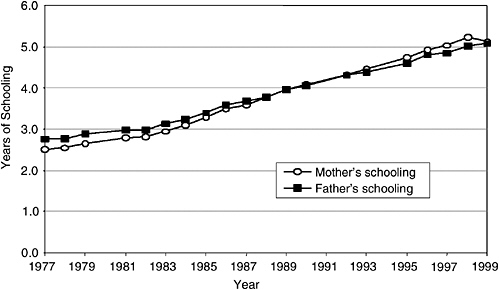
FIGURE 3-4 Means schooling of mothers and fathers of children age 7-17, Brazil 1977-1999.
SOURCE: Lam and Marteleto (2002).
Given steady improvements in schooling in most developing countries in recent decades, the parents of today’s young people are on average considerably better educated than their own parents were. To illustrate this point, Figure 3-4 shows the large changes in parental schooling observed in Brazil. The schooling of mothers of children ages 7-17 more than doubled in Brazil between 1977 and 1999, from 2.5 to 5.1 years. The schooling of fathers increased from 2.7 to 5.1 years. Lam and Marteleto (2005) show that this increase in parental schooling can account for well over half of the substantial improvements in school enrollment observed for 16-year-olds in Brazil over this period.28
|
|
intergenerationally correlated and cause biases in the estimated impact of parental schooling on child schooling. Behrman and Rosenzweig (2002), for example, found that the significant positive estimate for the impact of mothers’ schooling on child schooling in standard estimates for the United States became negative when data on identical twin mothers was used to control for such endowments (they speculate because more-schooled women holding ability constant spend more time in the labor market and less with their children), while those for father’s schooling remained significantly positive. |
Parental Income or Wealth
Parental income or wealth can be another important determinant of schooling outcomes of children. There is a large literature documenting a positive association in the cross-section between parental income or wealth and children’s schooling outcomes (e.g., Barros and Lam, 1996; Behrman and Knowles, 1999; Brown and Park, 2002; Filmer and Pritchett, 1999). Studies using time series or panel data are relatively rare, however. Using panel data for Vietnam, Glewwe and Jacoby (2004) explored the rise in secondary school enrollment from 1993 to 1998, a period of exceptional income growth in Vietnam. They found a positive and significant relationship between changes in household wealth (as approximated by a measure of consumption expenditures) and changes in schooling outcomes. These effects persist even after controlling for locally specific changes in rates of return, opportunity costs of schooling, and the supply and quality of schools.
One possible explanation of rising school participation and attainment in recent decades, therefore, would be increased parental income and other family resources. Unlike the case of parental schooling, however, in which increases are fairly universal across developing countries, the experience of income growth in developing countries is very mixed. While some regions, notably much of Asia, where the majority of young people in the developing world reside, have experienced substantial increases in family income levels, including decreases in poverty rates, much of Latin America and Africa has experienced little or no increase in per capita income in recent decades.
Rural-Urban Residence
Another important change that families in developing countries have experienced is increasing urbanization. Young people in developing countries today are much more likely to live in cities than they were 20 or 30 years ago (National Research Council, 2003). Urban areas are likely to differ from rural areas in both the costs and benefits of schooling. On the cost side, urban residents are more likely to live near a school or have access to public transportation, making the cost of school attendance less for urban residents. On the benefit side, urban areas may have higher returns to schooling given the concentration of manufacturing and services, including public-sector employment, in cities. It is also possible that the competition between school attendance and alternative time uses is different in rural and urban areas. Rural areas may have high opportunity cost of schooling if youth labor is important in agriculture or, as is often the case for girls, if their labor is used for water and fuel provision. In contrast, cities may offer additional economic opportunities for young people that keep the opportu-
nity cost of schooling high. On balance, as Table 3-5 shows, attendance rates are consistently higher in urban than rural areas. We therefore expect that urbanization will be one of the factors leading to further increases in enrollment rates.
Returns to Schooling
One of the important components of the cost-benefit calculus, driving decisions about how long to stay in school and how much effort to invest in school, is the impact of schooling on future economic opportunities.29 In deciding whether to stay in school, young people and their parents are presumably affected by their expectations about how an additional year of schooling will affect the probability of finding a job and the wages earned in that job. The conventional method of estimating private returns to schooling is to compare the earnings of individuals with different years of schooling in a cross-sectional survey or census, usually controlling for other characteristics, such as age and labor market experience. When returns to schooling are estimated in this way, it has frequently been observed that returns to schooling in developing countries are higher than returns to schooling in high-income countries (Psacharopoulos and Patrinos, 2002), with recent estimates showing higher returns in Africa and Latin America than in Asia. One possible explanation of these high estimated rates of return is that the overall stock of human capital is low in developing countries, making the rate of return high. Returns to primary schooling are much higher for men than women; women on average have the advantage relative to men in terms of private market returns to secondary schooling.
There are many reasons why this type of estimate of returns to schooling may be misleading, however. One common argument is that there will be correlations between individuals’ ability or family background and their level of schooling, generating potentially biased estimates of the impact of schooling itself on earnings. A large literature has explored these issues for several decades, and it is beyond the scope of this report to survey that literature here (see, for example, Card, 2000; Griliches, 1977). While there is some evidence that controls for family background, ability, and school quality lower the estimated returns to schooling in developing countries (Behrman and Birdsall, 1983; Case and Deaton, 1999; Lam and Schoeni, 1993), returns to schooling still appear to be quite high after controlling for these factors (Krueger and Lindahl, 2001). These conclusions are based on studies that exploited natural variations in school supply that were inde-
|
29 |
The opportunity costs of school participation in terms of foregone earnings or family work time are discussed in Chapter 5. |
pendent of individual schooling choices, such as Duflo’s (2001) analysis of the impact of a school expansion program in Indonesia. While rates of return vary across schooling levels and across countries, the weight of evidence suggests that low schooling levels observed in many developing countries are not the result of low returns to schooling in the labor market.
Given the substantial economic changes associated with increased international trade, privatization, and market liberalization taking place in many developing countries in recent years, it is important to consider how these changes might be affecting returns to schooling for young people. It is worth considering, for example, whether the increased levels of schooling attainment described above for many countries are a response to increases in the private rate of return to schooling.
There is now widespread evidence from a range of countries representing all developing regions that rates of return to secondary and tertiary schooling are increasing relative to the past with somewhat lower returns to primary or middle schooling. For example, Behrman, Birdsall, and Székely (2003) investigated the impact of such polices as privatization, market liberalization, and free trade on the rates of return to schooling levels for urban males by combining 71 household surveys for 18 Latin American countries for the period 1977-1998 with indices of country-level policies. Their estimates control not only for all unobserved fixed country characteristics, but also for unobserved time-varying characteristics that affect basic wage levels. Their results indicate that liberalizing policy changes overall have had the effect of increasing the private returns to schooling, particularly to tertiary schooling, although this effect tends to fade over time. This effect is due to the strong impact of domestic financial market reform, capital account liberalization, and tax reform on schooling returns. Privatization, in contrast, contributed to narrowing wage differentials across schooling levels, and trade openness appeared to have had no significant effect on wage differentials across schooling levels.
Recent data from China have also allowed Heckman and Li (2003) to update estimates of rates of return to college education. They found that, after 20 or more years of economic reform with growing emphasis on markets, there has been a substantial increase in private rates of return to college. Duraisamy (2002) also estimates private rates of return to schooling in India using two national samples spread over a decade (1993-1994 and 1983-1984) and found that, in each year, returns rose up to the secondary school level and then declined. Over time, relative returns to secondary school and college have risen while returns to primary and middle school have declined.30
In Brazil, where it is possible to estimate private rates of return to schooling for large annual cross-sections from the late 1970s to the present, overall rates of return have been relatively constant at levels that are quite high in comparison to high-income countries. Average rates of return are around 15 percent, with high returns at all levels of schooling with controls for family background variables (Lam and Schoeni, 1993).31 As in the case of India, there is some evidence that returns to schooling in Brazil are characterized by declines in the returns to schooling in the late primary and early secondary school grades at the same time that there have been increases in returns to schooling at the highest schooling levels.
A similar increase in the private returns to schooling at higher schooling levels is observed in South Africa (Lam and Leibbrandt, 2003), perhaps reflecting the same kind of increased returns to skill that has affected returns to schooling in the United States (Bound and Johnson, 1992). Schultz (2003) has also estimated recent rates of return to schooling in Ghana, Cote d’Ivoire, Kenya, South Africa, and Burkina Faso and found evidence that the returns are substantial, are likely to be growing, and are highest for those with some postsecondary education.
In addition to the strong impact of schooling on earnings, economic returns to schooling can also be affected by the impact of schooling on the probability of finding a job. As discussed in Chapter 5, evidence from most countries indicates that young people with higher levels of schooling are more likely to be employed, once they have completed schooling (O’Higgins, 2001).
In the context of recent experience in Asia, Montgomery and colleagues (2001) pose the question as to why the increase in the supply of educated young labor has not brought with it a decline in private rates of return to schooling. In the absence of other changes, such a result might be expected. There are good theoretical reasons to think that globalization and market liberalization are affecting private returns to schooling, and the recent studies cited above on Latin America, India, and China provide evidence to that effect. Furthermore, it is interesting to note that Noorbakhsh and Paloni (2001) found a correlation cross-nationally between levels of direct foreign investment and the average number of secondary years of school per working age adult, suggesting improved market opportunities for countries that have already achieved some success in secondary school completion rates.
|
|
still informative under the somewhat plausible assumption that theses biases are not likely to have changed much between the two years considered. |
While many women who go to school never enter the labor market or only work part time or for a few years, nearly all women marry. Marriage is therefore another potential pathway for young women and their parents to realize private returns on investments in schooling. These returns are likely to come in the form of a spouse who is more educated, comes from a more prosperous family, and has better earning prospects. Behrman et al. (1999) found that men in rural India who experienced significant gains from the Green Revolution married more educated women than they otherwise would have, so for women there were marriage market gains to schooling in the form of marrying into higher income households. In Cameroon, there is evidence that more educated women, if they marry men of similar schooling levels, may provide an important source of family support to family members after marriage in the form of in-fostering of relatives for school support, thus allowing families to reap a return from girls’ schooling even when they do not work as adults (Eloundou-Enyegue and Calvès, 2003). Men who are more educated also have the opportunity to find a more educated wife who will be a more skilled household manager and a more effective mother. These returns, while infrequently measured, may be important factors driving the growing demand for schooling among girls in developing countries, even in settings in which female labor participation rates remain low. In countries in which the size of young cohorts continues to grow and in which women tend to marry men who are older, the competition in the marriage market is keen for women who are relatively better educated. With divorce rates still relatively low, marriage is usually for life and represents a one-time opportunity to adjust living standards and opportunities.
SCHOOL SYSTEMS AND HOW THEY ARE CHANGING
With globalization and the diffusion of international norms regarding school accountability, governmental systems of formal schooling are coming under increasing international scrutiny both in terms of academic standards of performance and in terms of financial accountability (Carnoy, 2000; Carnoy and Rhoten, 2002). At the same time, in some parts of the developing world, particularly in Africa and the Middle East,32 rapidly growing school-age populations are confronting greater financial stringencies, due to economic slowdown and local policy responses to debt crises and structural adjustment. Scarce resources are forcing the rethinking of
priorities and processes and, in countries reliant on the assistance of international donors, leading to the imposition of conditions on multilateral and bilateral schooling grants and loans. As a result, school systems are being increasingly evaluated in terms of their contribution to labor productivity (Stromquist and Monkman, 2000a), while other aspects of schooling that contribute to the formation of cultural and social capital during adolescence, such as socialization and citizenship, are being given less attention (Libreros, 2002; Morrow and Torres, 2000).
In the discussion below, we highlight some of the most notable ways that school systems and the provision of formal schooling are changing in response to changes in demand on one hand and changes in governmental policies and programs on the other. Because there appears to be very little correlation within or across countries between education expenditures and school performance (Pritchett, 2004),33 we focus here on evidence of actual changes in school systems rather than on trends in government expenditures on education, which UNESCO (2004) itself admits are difficult to track or compare.
Changes in School Access
In the education literature there is often said to be a problem of lack of access to formal schools—particularly at the primary school level for the rural poor in much of sub-Saharan Africa and some parts of South Asia and particularly for girls, rural residents, and the poor at the secondary school level more broadly. The term “access” in the education literature is sometimes used interchangeably with terms that relate to school outcomes, such as enrollment, attendance, or attainment, that are the net outcome of supply and demand factors.34 Here we use the term “access” to capture supply factors exclusively. These include the physical proximity of schools, the existence of supply-side barriers to use, and the presence of incomplete schools.35 There is increasing evidence that, by the late 1990s, most rural
residents in developing countries lived within relatively easy reach of a formal primary school (either within the village or within a short walk) (Filmer, 2003; Filmer and Pritchett, 1999). Some notable exceptions are in particularly remote areas, in rural West Africa, and for girls in parts of South Asia (e.g., Pakistan, Afghanistan), where government primary schools are single-sex and girls’ schools are still in relatively short supply (Sathar et al., 2003a). This reflects a substantial improvement over the last 20 years in primary school access and is a particularly remarkable achievement given the rapid growth of the school-age population in recent decades. It was not uncommon for the school-age population to have grown at rates of 2 to 3 percent per annum in many developing countries during the 1980s and 1990s.
Because there are fewer middle and secondary schools than primary schools, many more households, particularly in rural areas, face additional costs when it comes to sending their children beyond primary school. Indeed, in rural Ghana, Lavy (1996) found convincing evidence that supply constraints at the middle and secondary school level are an important factor in holding down enrollments in primary school and leading to early dropout. The shorter the primary school cycle, the younger students are when they face these constraints as well as the exams that determine eligibility for the next phase of schooling.
One response to a scarcity of school places in the public sector and the resulting excess demand for schooling has been a rise in the numbers of private formal schools, both run for profit and run by nongovernmental organizations (NGOs), including technical and vocational schools. An example is Tanzania, where from 1984 to 1990 the number of public secondary schools grew from 85 to 135 and the number of private secondary schools grew from 84 to 213 (Samoff and Sumra, 1994). As a result, no more than 40 percent of all secondary schools were public in 1990. Tanzania was a country previously noted for its restrictions on the supply of private secondary schools (Knight and Sabot, 1990). This expansion, however, appears to have had a limited impact on enhancing access for children from lower income families (Lassibille, Tan, and Sumra, 2000). In Pakistan, where access is still an issue at the primary school level, there has been a rapid rise in the availability of private formal schools at the primary level, even in rural areas in the 1990s (Sathar et al., 2000). However, at least in the case of Pakistan, it does not appear that the availability of private alternatives to formal schooling contributes strongly to higher primary school enrollment rates overall; instead it primarily affects the distribution of enrollment in formal schooling between the public and private sectors (Lloyd, Mete, and Sathar, 2005).
Supply constraints at the middle and secondary school levels have encouraged the phenomenon of “shadow schooling,” which involves private
and school-based tutoring and exam preparation classes that are advertised to reduce the chances of exam failure and subsequent grade repetition (Buchmann, 2002). In some contexts, shadow schooling enhances learning but in other contexts, particularly when teachers are underpaid, it may just mean that learning that would otherwise have occurred in the classroom is being shifted to other venues, as underpaid teachers use their classrooms to recruit private students to supplement their income outside the classroom.36 There are no comparative data on trends in parental expenditures on extra classroom tutoring, but the evidence from the accumulation of many case studies suggests that a growing proportion of students are participating in shadow schooling (for a recent review, see Bray, 2003). While initially this was primarily an East Asian phenomenon, data now confirm the spread of this practice to most other parts of the world.
This rapid increase in the private provision of education services to the formal schooling sector, particularly at the secondary level, suggests the existence of an excess demand for post-primary schooling that is not being fully met by the government as well as a growing ability and willingness among parents and older students themselves to pay for schooling of adequate quality. The growth in NGO schools in some settings is also a response to the relative underenrollment of the poor in contexts in which school fees and other expenses are prohibitive and the state has inflexible pricing policies.
Changes in School Costs
Newly formed national governments in the 1960s and 1970s made a strong financial commitment to education, including the provision of free primary schooling (Mehrotra, 1998). With the economic slowdown of the 1980s and the growing size of school-age populations, per capita schooling investments declined in many countries (Colclough and Al-Samarrai, 2000; Colclough and Lewin, 1993). As a result, many countries adopted education reform measures, often with international assistance, to improve efficiency, mobilize resources, and reallocate expenditures away from tertiary and towards more basic levels of schooling (Samoff et al., 1994). Two key elements of school reform have been policies to decentralize governance
structures (including devolution of responsibility for educational delivery to lower levels of government, to parent-teacher associations, and to the private sector) and to achieve greater financial accountability. There are some studies that claim that community participation in school financing increases community involvement, leading to improvements in school quality in response to community pressures for accountability (e.g., Jimenez and Paqueo, 1996).
The result of these reforms has been a fairly universal rise in the share of the total per pupil costs (typically calculated without regard to transportation costs) paid by parents—a trend that has taken different forms depending on the context (Knowles and Behrman, 2005). While we are unaware of any internationally comparable data on levels and trends in per unit school costs and changes in their distribution between various levels of government and parents, many country case studies document recent increases in school fees and complementary out-of-pocket costs, such as textbooks and uniforms.37 The total costs of school attendance for students and their parents include both direct out-of-pocket costs and indirect opportunity costs (previously discussed). The direct costs of school enrollment include not only school fees but also the costs of uniforms, books, and other supplies, as well as the cost of travel to school and often supplementary tutoring fees.38
Data are lacking on trends in the total costs of public-sector schooling, whether measured from the point of view of households or from the point of view of the state. The largest component of per-pupil school costs financed by the state is the cost of teachers. Teachers’ salaries are variable across countries, as are teacher-student ratios (see further discussion below on school quality). Over the last 25 years there has been a steady decline in the average teacher’s salary from 6.6 to 3.7 times per capita gross domestic product, with particularly dramatic declines in French-speaking Africa, where salaries had been relatively high (Bruns, Mingat, and Rakotomalala, 2003). As there appear to be no striking trends in teacher-student ratios in
recent years (UNESCO, 2002b), this might suggest that per-pupil costs or investments incurred by the state are actually falling. Ideally, proper comparisons of trends in school costs would require some assumptions about school quality standards both over time and across settings.
Transportation costs, which are not typically included in the calculation of total costs, are one area in which the cost of schooling is likely to have fallen substantially in recent decades for the average young person in developing countries, given the combination of rapid urbanization, improved transportation, and expansion of schooling systems. In rural areas the total direct costs of attending secondary school may be particularly large, perhaps requiring the child to move to a town in which a school is located.
Changes in School Quality
Pressure to expand school enrollments can have direct implications for the quality of education that young people receive. The major components of school quality identified in the literature as relevant to the development of cognitive competencies include (1) time to learn, (2) material resources, (3) curriculum, and (4) teacher knowledge and pedagogical practices (Lockheed and Verspoor, 1991). Each of these major components has many subelements too numerous to list, all of which have the potential to affect learning. Given the complexity of the schooling environment and the lack of agreement in the literature about which elements are most important for success in learning (Glewwe, 2002), it is not surprising that little is known on a comparative basis about school quality, much less about trends in school quality.
The first component of school quality—time to learn—is primarily a function of the number of contact hours per day and the length of the school year. There are internationally comparable data on time to learn for 1990 from UNESCO but no data on trends in the length of the school day over time. Reported contact hours vary from 845 in Centrally Planned Economies to 1,097 in Eastern Asia (Lee and Barro, 1997). However, in many settings the school day is very short, sometimes no more than three to four hours (see Arends-Kuenning and Amin, 2000, for Bangladesh; El-Tawila et al., 2000, for Egypt). This allows relatively little time for learning but does allow teachers the time to supplement their income with other jobs and with private tutoring and students the time to engage in various work activities.
The second element of school quality—material resources—includes class size, the supply of teachers, and the physical infrastructure and learning materials, such as textbooks. Available international data on student-teacher ratios and expenditures per student are often used as proxies for
quality, despite the fact that neither of these measures is independent of enrollment trends. The latest data from UNESCO (2004) on student-teacher ratios show enormous variability across countries, with values ranging from a low of 11 to a high of 77. Data on changes in student-teacher ratios over the last 15 years since 1985 are available for 80 countries and show no consistent trend: in 44 of the 80 countries, student-teacher ratios rose, and in most others this ratio declined (UNESCO, 2002b). In some countries in which enrollments are declining, a falling ratio could be a sign of failure rather than success; alternatively where enrollments are rising, a rising ratio could be a sign of success. While some school systems have accommodated larger school-age populations through increasing class size (see Duraisamy et al., 1997, for Tamil Nadu), others have used the same school infrastructure with net additions to the teaching staff to add multiple shifts with shorter school days per session (see Lloyd et al., 2003, for Egypt). For this reason, trends in teacher-student ratios are difficult to interpret.
Curriculum—the third well-recognized component of school quality—includes the content of curriculum and the language of instruction. With the global rise in the Western approach to schooling, there has been a remarkable convergence of the core aspects of the formal curriculum, particularly in the primary school grades (Meyer, 1992). In a review of curricular material in 130 countries, including 94 low- and middle-income countries, Benavot and Kamens (1989) found that the primary school curriculum not only contained the same subjects in all countries but also gave them the same relative emphasis. Moreover, this relative emphasis has been consistent since the 1960s (Lockheed, 1993). Furthermore, at the classroom level, the experience of going to school is remarkably similar to what it was 40 years ago. “Even where parents and the local community do participate actively in school affairs, they make few attempts to change content, teaching methods or the general philosophy of education” (McGinn, 1997:48).
Language of instruction is another important aspect of the curriculum in many developing countries, particularly in sub-Saharan Africa and among the indigenous and tribal populations of South America and Asia, where a huge number of different languages are spoken.39 Much research suggests
that early learning is most effectively accomplished in a child’s native tongue (UNICEF, 1999). The greater the number of languages spoken, the greater the difficulty of staffing schools with teachers who share the same languages with their students. This is in part true because certain ethnic minorities who have historically been discriminated against are less likely to have the levels of education required for the teaching profession. In countries in which many languages are spoken, however, it is very important for students to learn the national language—the language typically used in exams for promotion to the next level—and ideally an international language like Arabic, Chinese, English, French, or Spanish. There is evidence of substantially higher rates of return to French versus Arabic language schooling in Morocco (Angrist and Lavy, 1997) and English versus Marathi schooling in Bombay (Munshi and Rosenzweig, 2003). The authors of both of these studies linked these differences to the market premium associated with languages of international commerce.
There is no information available comparatively or over time on teacher qualifications and pedagogy. Even very recent information on pedagogical practices, however, suggest that rote learning and corporal punishment remain prevalent in many parts of the developing world (Fuller and Snyder, 1991; Lloyd and Mensch, 1999). Critical thinking skills are much less likely to develop in classrooms in which rote learning is the norm.
Socialization in Schools
The formal academic curriculum reveals only part of the actual content of the school and classroom experience—an experience shaped by the principal’s and teachers’ attitudes and behaviors and sometimes codified in various administrative rules and practices. In this “hidden curriculum” lies a rich reality mirroring the social norms and values present in the community and beyond (if teaching staff come from outside the community). Not only can schools reinforce traditional values but they can also be the purveyors of new ideas and behaviors.
In traditional societies, elders in the community acquire power through knowledge, which is an asset to be controlled and used for personal gain (Bledsoe, 1992). In many schooling systems that are no more than a generation old, the teacher often assumes the traditional role of the village elder. Using rote learning techniques, most teachers are vocal, dominant, and often punitive in the classroom (Lloyd and Mensch, 1999). This “chalk and talk” approach to teaching takes on special meaning when seen in the context of traditional power structures that are drawn along lines of age, class, race, caste, tribe, ethnicity, religion, and gender. In many traditional contexts, the school principal and the teachers in the school hold special power and often convey very conservative values (Jeffrey and Basu, 1996).
In recent years, however, many schools have introduced new nonacademic elements to the curriculum, such as family life education or life skills, sports, and citizenship training, all of which have the potential to introduce more “modern” attitudes and behaviors. The impact of these new materials on the socialization of the young is very dependent on teacher training and motivation. Family life or life skills education taught by a teacher with no special training and traditional values can be used to purvey those values and in the process reinforce traditional behaviors. The impact of these new elements of the curriculum on the attitudes and behavior of young people have rarely been rigorously evaluated (see further discussion in Chapters 4 and 6).
Gender role socialization is a particularly important part of the hidden curriculum because it so fundamentally contributes to the very different experiences of boys and girls in their transitions to adulthood. Administrative practices, the curriculum (including the content and treatment of teaching materials), principals’ and teachers’ attitudes, peer subcultures, and school and classroom dynamics all contribute to the hidden curriculum on gender. For example, a common practice in many school systems is to expel girls from school when they become pregnant. Boys who make girls pregnant typically do not suffer a similar fate. Such practices convey powerful messages to boys and girls about the value associated with their schooling and the roles they are expected to play in the future.
Messages conveyed through school policies and administrative practices are heavily reinforced by centrally designed teaching materials that present cultural notions of appropriate gender roles (see Box 3-2). Independent reviews of the content of textbooks in many different parts of the developing world have found images of women appearing less frequently and, when images were depicted, women were usually shown in supporting roles and with negative character traits (Bustillo, 1993; El-Sanabary, 1993; Ibrahim and Wassef, 2000; Lloyd and Mensch, 1999; Obura, 1991; Shaheed and Mumtaz, 1993; Stromquist, 1994). Furthermore, in some parts of the world, certain aspects of the curriculum may be different for boys and girls (e.g., life skills, home science, family life, education, sports).
Probably the most important aspect of the hidden curriculum is conveyed in teachers’ attitudes and behaviors. There are reports from qualitative studies in schools in different parts of sub-Saharan Africa (Guinea, Kenya, Malawi, and Togo) that both male and female teachers display negative attitudes toward girls in both their verbal comments and their behavior. Girls are viewed as lazy, less competent, and less serious about their studies (Anderson-Levitt, Bloch, and Soumare, 1998; Biraimah, 1980; Davidson and Kanyuka, 1992; Hyde, 1997; Lloyd and Mensch, 1999). Appleton (1995) asked teachers in Kenya why they thought girls did less well than boys in exams. Their response was that girls’ poor exam results
|
BOX 3-2 Changes in school textbooks are by no means uniform and, since they are based on country-level studies, are difficult to generalize. Nonetheless, Peru constitutes a good case to discuss because data are available that allow comparisons over time of textbook content in primary school. Through content analysis, Mansilla (1981) found that textbooks presented women primarily in their roles as mothers and wives, thus fostering a social understanding of women as associated with emotions, whereas the portrayal of men emphasized traits such as aggression, competitiveness, and heroism. A subsequent analysis of primary school materials (Anderson and Herencia, 1983) found that men were depicted in many more instances than women and consistently as possessing more valuable intellectual and attitudinal attributes than women. The study also found that the presence of women as historical or political figures decreased in textbooks for higher grades. Further studies analyzed social sciences textbooks for the 5th and 6th grades of elementary school in the subjects of history, geography, and civic education (Fernandez Davila et al., 1986). Military and presidential figures were found to prevail in all the textbooks on civic education that referred to the principle of equality among all citizens. The presentation of women was limited to wives and mothers who promote unity, respect, and understanding among family members, while fathers were described as the head of the family and breadwinner. Families were presented in an ideal version, denying the variety of families that exist in the country today. Content analysis of primary school teacher guides produced since 1997 and in use now reveal the maintenance of traditional stereotypes regarding masculinity and femininity (Muñoz, 2003). For example, a guide for the 2nd grade presents 321 masculine illustrations and only 160 feminine illustrations, while the guide for the 6th grade offers 329 masculine and 269 feminine illustrations. Although the materials now make explicit reference to gender and to equity, the drawings continue to present traditional portrayals, with men occupying public spaces, working, and occupying professional roles and women at home and in private settings and portrayed mostly as teachers when in professional roles. Since 1998, students in public schools have had access to supplementary materials on sex education that can be used in classes dealing with civics and social studies. Guides have been produced for both primary and secondary school teachers. These materials have been developed around three themes: the family, sexuality, and responsible fatherhood and motherhood. They highlight the importance of the family but consider only complete nuclear families. The materials offer very clear depictions and explanations of the reproductive system for men and women; they also address democratic and civil rights. Such issues as domestic violence, adolescent pregnancy, and the use of contraceptives are presented; there is weak discussion of other issues such as homosexuality, abortion, and incest. From 1996 to 2002, training in sex education has reached 47,000 primary and secondary school teachers, or about 11 percent of the teaching force. To our knowledge, the effects of these curricular materials on student knowledge and behavior have not been evaluated (Montoya, 2003). |
were related to the effects of adolescence on them; they become disturbed by their bodily changes, lose interest in school, become more interested in boys and their appearance, and suffer from mood swings.
Attitudes are reflected in behavior when teachers actually treat boys and girls differently. Mensch and Lloyd (1998) report that girls in 8th grade classrooms in Kenya—the last year of the primary school cycle—were more likely than boys to feel that gender treatment in the school was unequal. Furthermore, in their classroom observations, they found some small but systematic differences between male and female students in the number of positively toned interactions they were observed to have with their teachers (see Box 3-3). Gender treatment varies by cultural context; in Egypt, teachers prefer teaching girls to boys and find them more hard-working and intelligent. Boys experience more physical beating in the classroom, a practice that has been made illegal but that is still relatively common. Data from a survey of students in school reveal that 22 percent of boys but only 5 percent of girls reported that they had been hit by the teacher on the previous school day (Lloyd et al., 2003).
In a more in-depth exploration of gender role attitudes among unmarried Egyptian adolescents (ages 16-19), Mensch et al. (2003) did not find that progressively higher levels of schooling in Egypt were associated with the expression of more egalitarian attitudes among either sex. Their study was based on data drawn from a national representative survey in which young people were asked about desirable qualities in a spouse as well as more direct indicators of gender role attitudes, such as opinions about whether wives should defer to their husbands, share in household decision-making, and have responsibility for performing domestic tasks. They concluded that Egyptian schools are not currently a particularly progressive force for attitudinal change.
The role of socialization in schools regarding gender has been explored much more than the role of socialization in schools regarding other differences in school, such as race, ethnicity, religion, caste, class, and tribe. This probably is the case because gender is pervasive across school systems, whereas these other groupings differ greatly across school systems. Another reason is an articulate and influential lobby on gender issues centered in the developed world and in international organizations. But causal observations in particular contexts suggest that socialization in schools about roles with regard to race, religion, ethnicity, tribe, and class may be very important in determining options for individuals and how societies function. Furthermore, it would appear that such socialization, as often is the case for socialization about gender, is dominated by conservative tendencies to maintain traditional hierarchies and power structures rather than to expand individual opportunities of those from disadvantaged groups.
|
BOX 3-3 In a study designed to measure differential gender treatment in the school and classroom, Mensch and Lloyd (1998) combined school and classroom observations with interviews with students and teachers in a sample of 36 rural primary schools. In particular, they focused on the experiences of boys and girls in grades 7 and 8, the last two grades of primary school. In Kenya, the majority of school-going adolescents attend primary school. A higher percentage of girls than boys drop out of school before the end of primary school, and girls score on average lower than boys on the nationally competitive school-leaving exam at the end of primary school that determines eligibility for secondary school. Their research had both quantitative and qualitative components. Girls were found to suffer from negative attitudes and discriminatory behavior in both low- and high-performing schools (measured using average scores on the primary school-leaving exam). Teachers’ attitudes and behaviors revealed lower expectations for adolescent girls, traditional assumptions about gender roles, and a double standard concerning sex in both types of schools. Each team of observers stayed in each school for 2-3 days. Before conducting observations of mathematics and English classes, the observers were given a short gender training course and shown videos of typical Kenyan classrooms. Some of their comments are particularly revealing of what they saw. To provide a context for each comment, the authors identified the source of each comment by whether or not the parents of children in that school were more or less well educated and by whether the school did relatively well or poorly in the primary school-leaving exam. The following quotes are examples of such comments: “As usual, like in most Nakuru rural schools, the school is run by the cane. Students are caned severely for minor offenses and for getting low marks. The girls are caned on the thighs and hands. The students are so tense that when they see teachers passing, you can just see fear in their eyes” (high parental education, high-performing school). “The teacher told girls that they can never be household heads. This was prompted by the one girl who could not read the comprehension loudly and clearly” (high parental education, high-performing school). “Most questions were directed to boys and not girls. The teacher told the girls that if they do not improve, he could foresee them joining the local Mathenge technical institute instead of good boarding schools or institutions…. The teacher constantly told the class that the girls do not use common sense and that is why they might not make good sales persons. ‘Lazy salesmen like some of you girls get very little commission,’ the teacher told the class” (high parental education, low-performing school). “When the girls gave wrong answers, the teacher was very unhappy and pointed out that ‘girls do not understand because they do not use their heads.’ When marking the exercise, the teacher concentrated [on] showing girls examples he had already written on the board. When I inquired about the extra attention, the teacher said that girls in 8A are weak and lazy” (high parental education, low-performing school). |
THE IMPACT OF SCHOOL POLICIES AND PROGRAMS ON SCHOOLING OUTCOMES
The provision of formal schooling for the young has traditionally been the business of the state in most societies, although in a number of cases there are also strong traditions of private, religious, or other types of formal schools.40 With the establishment of international norms relating to the goals of universal primary school completion and gender equity in access to all levels of schooling, schooling in developing countries has also become the business of the United Nations system, multilateral and bilateral donor agencies, and a host of international and local NGOs. Along with a succession of donor-led initiatives and local school reform efforts has been a growing body of research on policy and program factors contributing to positive educational outcomes for the young including school effectiveness studies as well as evaluations of specific supply- or demand-side interventions designed to promote attendance, retention, or improved academic performance in general or among particular disadvantaged groups.
Schools have the potential to impact positively or negatively on many aspects of the transition to adulthood. As in other policy arenas, however, few of these policies or programs have been scientifically evaluated, including separately by gender. Studies of cost-effectiveness are particularly rare, and rarer yet, are estimates of rates of return to alternative interventions that would permit comparisons of uses of resources across interventions in different domains of action, such as health or labor markets. Furthermore, few of these evaluations permit identification of differences between private and social rates of return that would establish the basis for public subsidies on efficiency grounds. This paucity of adequate evaluation research may not be surprising given the complexity of the issues. Policies designed to serve one or some combination of the many goals of the formal schooling system may reinforce or jeopardize others. It is difficult to weigh competing objectives when assessing effectiveness. Schooling policies or programs have the potential to affect boys and girls and members of different ethnic, religious, caste, class, and tribal groups differently as well as to affect other aspects of the transition to adulthood indirectly, such as work and marriage. These benefits or costs of schooling policies also need to be assessed for a complete evaluation. Nonetheless, in the absence of such research, policies and programs are designed on the basis of anecdotes, nonrandom observations, and the views of those with strong vested interests or on experiences from developed countries without a sensitivity to differences in context—and the consequent result is the loss or misuse of scarce resources.
The good news is that the current research climate in the education field is changing fairly rapidly, and evaluations of school performance are one of the most fertile and innovative areas of research among those reviewed by the panel. Many of the studies cited below have been completed in the past few years, and we expect the field to continue to evolve rapidly. To date, the evidence of effects from well-designed studies is very eclectic, both with respect to types of interventions and countries (examples from Asia and Latin America are more frequent than examples from Africa and the Middle East). These studies often depend on the happenstance of particular types of data, the determined behavior of a few key individuals, or the particular circumstances of the intervention ex post in terms of placement.
Evaluations tend to fall in one of four categories: (1) prospective randomized experimental studies of specific interventions; (2) retrospective longitudinal studies of specific policies and programs, in some cases using so-called natural experiments;41 (3) cross-sectional reduced-form studies of specific policies and programs on demands and supplies that approximate responses with the experience represented in the sample; and (4) studies that estimate structural models of behavior based on direct estimation of the underlying structural preferences and production function relations, allowing the simulation of alternative policy scenarios.
The first three of these alternative approaches are efforts to evaluate the effects of actual programs or policies. These approaches have the limitation that they cannot be generalized with any confidence outside the range of the experiment or the sample. The fourth, by contrast, can evaluate policies that have not been implemented. This is an approach that has some considerable advantages (at the cost of being specific about the structural relations underlying behaviors) because it usually is not possible to undertake many experiments on many different variants of a program.42 Typically, evalua-
|
41 |
Natural experiments are occurrences perhaps due to policies or perhaps to other factors, such as individual behaviors that are claimed to change some determinants of the outcome of interest, but do not directly affect the outcome. Table 3-13 gives some examples. For a critical evaluation of many so-called natural experiments, see Rosenzweig and Wolpin (2000). |
|
42 |
Todd and Wolpin (2003), for example, estimated a structural model based on the baseline data from Programa de Educación, Salud y Alimentación: The Education, Health, and Nutrition Program of Mexico (PROGRESA) and found that the model predicts well the experimental outcomes of the program. They use the structural model to estimate counterfactual policies pertaining to what would happen—not only to schooling but also to other household decisions, such as fertility—if the program were in operation for cohorts throughout their school ages and what would happen if the conditional transfers in the program had been substantially smaller or substantially larger. |
tions tend to focus on schooling outcomes, including enrollment, grade attainment, and academic performance, whose improvement is associated with successful transitions in one of three domains: (1) policies affecting demand, (2) policies affecting school access, and (3) policies affecting school quality.
In the review that follows, each of these three policy domains is discussed in turn, and both direct evidence, based on scientifically sound evaluation research, and indirect evidence, based on more descriptive and qualitative material, is brought to bear on the question of school effectiveness in enhancing successful transitions to adulthood. The absence of research in particular policy domains is also noted. As success in later grades is very much linked to early success in school, our review focuses in particular on policies and programs relating to primary or basic schooling and on factors affecting progression to secondary school.
There is a large family of school-based education production function (or school effectiveness) studies that have been conducted in developing countries over the years that are not covered in this review. This is because they suffer from selectivity biases (in that they are restricted to enrolled students) that are not corrected in settings in which enrollment is less than universal (Glewwe, 2002). In addition to problems of selectivity, all studies assessing policy impact face other estimation problems.43 Before including a study in our review, we have carefully assessed the plausibility of each study’s conclusions in light of the particular research question, the context, the study design, and research techniques. Table 3-13 summarizes the major evaluation studies cited according to type of study and policy domain. This table can be referenced throughout the following discussion.
TABLE 3-13 List of Studies of Program and Policy Impact by Type in Developing Country Settings
|
1. |
Prospective randomized experimental studies of specific interventions |
|
|
|
Demand: |
PROGRESA, Mexico (Behrman et al., 2002; Schultz, 2004) |
|
Access: |
Quetta girls’ fellowship, Pakistan (Kim et al., 1999) PACES, Colombia (Angrist et al., 2002; King et al., 1999) |
|
|
Quality: |
DIP, Philippines (Tan et al., 1999) Flip charts, Kenya (Glewwe et al., 2004) Textbooks/uniforms, Kenya (Glewwe et al., 2001) De-worming, Kenya (Miguel and Kremer, 2004) Second teacher, India (Banerjee et al., 2002) Teacher incentives, Kenya (Glewwe et al., 2003) Remedial education, India (Banerjee et al., 2003) School meals (Banerjee et al., 2000) |
|
|
2. |
Retrospective longitudinal studies of specific policies and programs, including “natural experiments” |
|
|
|
Demand: |
FSSAP, Bangladesh (Khandker et al., 2003) |
|
Access: |
INPRES, Indonesia (Duflo, 2001)a |
|
|
Quality: |
ASP, Nicaragua (King and Ozler, 1998) FONCODES, Peru, (Paxson and Schady, 2000) French language, Morocco (Angrist and Lavy, 1997) Class size, South Africa (Case and Deaton, 1999)a Class size, Israel (Angrist and Lavy, 1999)a Vouchers, Chile (Hsieh and Urquiola, 2003) |
|
|
3. |
Cross-sectional studies of specific policies and programs |
|
|
|
Demand: |
FFE, Bangladesh (Ravallion and Wodon, 2000; Ahmed and del Ninno, 2002; Arends-Kuenning and Ahmed, 2004a; Arends-Kuenning and Ahmed, 2004b) |
|
Access: |
CSP, Pakistan (Kim et al., 1998) EDUCO, El Salvador (Jimenez and Sawada, 1999) Secondary school access, Kenya and Tanzania (Knight and Sabot, 1990) Tiered system, Tunisia (Mete, 2004) Double shift, Egypt (Lloyd et al., 2003) |
|
|
Quality: |
Escuela Nueva, Colombia (Psacharopoulos et al., 1993) Class size, India (Duraisamy et al., 1997) Class size, Bolivia (Urquiola, 2000) Classroom infrastructure, Ghana (Glewwe and Jacoby, 1994) Pedagogical processes, Jamaica (Glewwe et al., 1995) Gender treatment, Kenya (Lloyd et al., 2000; Appleton, 1995) Local teacher, Pakistan (Lloyd et al., 2005) Vouchers, Chile (Contreras, 2003) |
|
|
All elements: |
DPEP-Phase I, India (Jalan and Glinskaya, 2003) |
|
|
4. |
Structural models of behavior |
|
|
|
Demand: |
Bolsa Escola, Brazil (Bourguignon et al., 2002) PROGRESA, Mexico (Todd and Wolpin, 2003) |
|
aCharacterized by the authors as a natural experiment. |
||
Policies and Programs Affecting Demand
Governments can affect the demand for education by changing the costs or the benefits of attending school. Furthermore, regulations that restrict access to governmental schools because of such factors as age, parental status, ethnicity, race, religion, tribe, or marital status can raise the cost of education to particular subgroups in the population.
Laws and Rules Governing Attendance and Eligibility
Many countries have included guarantees of compulsory schooling in their constitutions (Tomasevski, 2001), although compulsory schooling laws are rarely enforced. A total of 43 developing countries do not have such guarantees, and most of these are in sub-Saharan Africa. Among the countries that do, the legally mandated length of compulsory education varies from 4 to 11 years (Tomasevski, 2001). Effective enforcement requires that there be an adequate supply of school places for the eligible population, as well as mechanisms to ensure that students who are required to be in school actually are. In many developing countries, universal access at the primary level has been achieved; in others, this will require substantial additional investment.
We are not aware of any studies examining the impact of compulsory schooling laws on retention and on lifetime earnings in developing countries.44 An important administrative rule governing eligibility relates to the appropriate or required age of entry. On one hand, in contexts in which parents are not yet ready to commit their children to school at a set age or doubtful about their child’s prospects of continuing beyond primary school, an inflexible age of entry rule may work against universal schooling goals by limiting the window of time during which children are eligible to enter. Some experts feel that the enforcement of a rigid age of entry in the highly bureaucratized Egyptian system led to the permanent exclusion of many girls who never entered school (Lloyd et al., 2003). On the other hand, flexible age of entry rules, while more inclusive, have led to other problems.
In Kenya, where the rules governing the timing of entry are very flexible, children continue to enter the system until age 11 (Montgomery and Lloyd, 1999). The resulting age heterogeneity in the classroom presents a challenge to teachers who are dealing with young people at very different stages of development.45 To our knowledge, there is no proper evaluation that compares the quality of the learning environment under these very different conditions. The enforcement of age-appropriate entry requirements has been identified by some as a promising area for intervention (e.g., Pritchett, 2004) because there is clear evidence that late age of entry is associated with fewer years in school.
Certain administrative rules governing eligibility discriminate specifically against young women by prohibiting school attendance if one is pregnant, married, or a parent. These administrative rules are based on assumptions about the incompatibility of roles and concerns about contagion effects. In our review of these policies, we were able to determine that, in recent years, many of these policies and practices are being liberalized, but many still remain (see Chapter 8 for further discussion of pregnancy and school progress).
School Fees
As previously discussed, school fees are only one component of total school costs but the one that is most easily changeable in response to market conditions or specific policy intervention. Jacoby (1994), using data from Peru, found that the school progress of children from credit-constrained households was much more responsive to changes in household economic circumstances than the school progress of children from households without credit constraints. For the many countries that have implemented structural adjustment policies in response to economic crisis in the last 15 to 20 years, the privatization of school costs through increasing user fees is thought to have had negative effects on enrollment. However, until very recently there has been no direct evidence of how changes in school fees might affect demand.
The high price elasticity of demand for basic schooling among poor parents has been dramatically demonstrated in the aftermath of the decision in 1997 by the government of Uganda to eliminate school fees for primary school, using new resources made available through debt relief (Deininger, 2003). As a direct result, by 1999, the wealth gap in enrollment had been substantially narrowed, the gender gap has been eliminated, and
many fewer students were giving cost as a reason for dropping out. Success has come at a price, however, as class sizes have shot up and failure rates have increased. The experience in Malawi after the elimination of school fees in 1994 was similar (Moulton et al., 2001). More recently, fees for primary school were eliminated in Tanzania and Kenya in 2002 (Lacey, 2003; Millennium Project Task Force, 2004).
Even when rates of return to basic schooling are high, liquidity constraints may prevent parents from sending their children to school, not only because of school fees, but also because of the opportunity costs in terms of lost earnings or lost domestic product (Jacoby and Skoufias, 1997). Girls can be disadvantaged further despite relatively high rates of return (Schultz, 2002; Summers, 1994) in contexts in which parents are unable to recoup their investment through labor market returns, remittances after marriage, or reduced dowries or increased bride-prices. These research findings have led many educational policy makers to identify school grants or subsidies targeted to disadvantaged groups as potentially cost-effective interventions for boosting enrollment rates.
Conditional Grants or Targeted Subsidies
A growing number of programs have been designed to address the enrollment gap between rural and urban areas, particularly as it relates to the poor. One of the first of the conditional grant programs was the food for education program in Bangladesh, where poor households with primary school-age children are eligible for monthly rice or wheat allotments according to their number of children, conditional on the children’s maintaining an adequate attendance record at school. The program was begun on a large-scale pilot basis in 1993 and has grown to cover 27 percent of all primary schools and to benefit about 13 percent of all primary school students. Despite the large scale of the project, its design and implementation did not include a built-in evaluation component. Since its implementation, however, there have been two ex post evaluations, one using a 1995-1996 household expenditure survey (Ravallion and Wodon, 2000) and one using a survey specially designed for the evaluation (Ahmed and del Ninno, 2002). Both studies found large statistically significant effects of the program on enrollment, with the largest effects emerging in the immediate aftermath of its introduction. Furthermore, improvements in girls’ enrollment have exceeded those of boys.
In 1994, the government of Bangladesh also began a female secondary school stipend program in rural areas to increase the enrollment of secondary school-age girls, to improve their secondary school completion rates and to delay their age of marriage. This stipend program, which combines both tuition coverage and a cash grant that increases with age, is comple-
mented by other program components designed to enhance school quality. A girl is eligible to receive the stipend if she maintains a minimum level of performance, has a 75 percent attendance record, and remains unmarried. Using household and school data from two points in time, Khandker, Pitt, and Fuwa (2003) were able to conduct an ex post evaluation of the program, taking advantage of differences across villages in the timing of introduction. They found, using village fixed effects, that the duration of the program had strong statistically significant effects on the enrollment of girls but no impact on the enrollment of boys. They also found that the school enrollment benefits of the program accrue disproportionately to girls from families with larger amounts of owned land. As of 1997, the stipend budget alone was estimated to represent over 13 percent of the education sector budget. Given the large expense of the program, these conclusions may suggest that the program needs to be better targeted or abandoned; at the moment, girls are eligible regardless of family income or land ownership.
A newer version of the conditioned transfers for education has emerged more recently in Latin America, with cash grants to poor households conditioned on children’s school attendance as part of an antipoverty strategy. These programs include PROGRESA in Mexico, which began in 1997, the Red de Protección Social (RPS—The Social Safety Net Program in Nicaragua), begun in 2000, and most recently Bolsa Escola in Brazil, which was expanded to a national scale in 2001 (Bourguignon, Ferreira, and Leite, 2002). The best documented in this family of programs is the PROGRESA program in Mexico. This is because the introduction of the program included a pilot evaluation phase, in which intervention and control communities were randomly selected from a group of eligible communities and their experiences were compared over a two-year period (see Box 3-4). The conditional cash grants are given to mothers for all children maintaining an adequate attendance record in grades 3-9—the higher the grade, the higher the grant, with girls in secondary school receiving a slight premium over boys.46 A very thorough assessment after two years of the program showed strong positive effects on schooling outcomes, including earlier ages of school entry, less grade repetition, better promotion rates to secondary school, lower dropout rates, and higher school reentry rates among drop-
|
BOX 3-4 At its inception in 1997, Mexico’s Programa Nacional de Educación, Salud y Alimentacíon (PROGRESA) was among the most comprehensive rural antipoverty and human resource investment programs ever implemented in the developing world. Its purpose was to improve the education, health, and nutrition of poor families. Benefits consist of education grants to mothers contingent on their children’s regular attendance in school and food consumption grants contingent on regular visits to health clinics, in which nutritional supplementation and basic care are provided. Oportunidades, the new name for PROGRESA, also covers urban areas and now reaches over 20 million poor individuals. Research has played a critical role in each phase of the project’s design and implementation at the instigation of the Mexican government. The decision to provide cash grants to mothers was based on research findings on intrahousehold resource allocation in developing countries showing that income received by mothers had a stronger association with positive child outcomes than the same amount of income transferred to fathers. The selection of eligible communities and households was based on careful statistical analysis based on the census. The decision to give mothers slightly larger education grants for their daughters than their sons for secondary school attendance was based on the observation that girls had lower enrollment rates than boys (although, as noted, girls had higher schooling attainment because boys repeated grades much more often than girls). Finally, the startup phase of the project was designed to allow for a scientific evaluation of the program’s impact using random assignment of communities to treatment and control areas. PROGRESA, in collaboration with the International Food Policy Institute (IFPRI), undertook an extensive evaluation, using both qualitative and quantitative research methodologies, encompassing the first two years of the intervention prior to the introduction of the program in the control areas. The research team collected household-level data from 24,000 households in 506 localities, 320 of which were designated as treatment and 186 as control communities. In the first two years of the program, some of the most dramatic positive impacts of the program related to the school attendance and work of adolescents. Behrman, Sengupta, and Todd (2002) found beneficial effects of the program at all stages of school progression, including earlier ages of entry, reduced grade repetition and better grade progression, lower dropout rates, higher school reentry rates, and, most importantly, higher transition rates from primary to secondary schools. Behrman, Sengupta, and Todd (2002) have simulated longer term effects, using the assumption that each child is a member of a PROGRESA household for eight years from ages 6 to 14, and found an average impact per child of 0.6 additional years of schooling, with a slightly greater effect for girls than boys. Such an increase in attainment was estimated to imply an increase of about 7 percent in adult earnings. |
|
While this is a key finding, it should not overshadow the fact that PROGRESA had no measurable impact on regular school attendance or test scores of students in the short time frame allowed for impact evaluation (Behrman, Sengupta, and Todd, 2000; Schultz, 2000). Furthermore, no studies have been conducted on PROGRESA’s impact on class size or other measures of education quality, although the available estimates find no negative spillover effects on children who were ineligible for PROGRESA but who were attending the same schools as many children supported by PROGRESA. The results of the evaluation do suggest, however, that investments in improved access to secondary schools by building additional schools so as to bring all children within four kilometers of a secondary school would have less than a tenth of the effect on enrollment than the enrollment impact attributed to PROGRESA (Skoufias and McClafferty, 2001). Skoufias and Parker (2001) studied interrelationships between schooling and all aspects of working, including time spent in market, domestic, and farm activities. Their findings give important insight into the roles of work in the lives of adolescent boys and girls. For boys, the increases in school participation were approximately equivalent to decreases in market work, suggesting that market work and schooling are competing activities. For girls, increases in school participation were more likely to be associated with reductions in domestic work. While domestic work for girls declined with increased school participation, it did not do so to the same extent as market work for boys, suggesting that some domestic work is flexible enough to be combined with schooling or, conversely, that the domestic division of labor is not easily altered. Despite the fact that quantitative studies find that PROGRESA effectively targets poor households in communities, qualitative interviews with beneficiaries, doctors, school directors, and nonbeneficiaries revealed that PROGRESA’s system of household targeting may be problematic. All groups participating in focus groups or in-depth interviews believe that there are many families in PROGRESA communities who are poor and do not receive benefits and, to a lesser extent, people receiving benefits who do not need them (Adato, 2000). These social costs in the form of divisions in the community between beneficiaries and nonbeneficiaries merit further research. However, limiting PROGRESA to families identified as poor in the recipient communities permitted much more extensive coverage of poor communities for given program resources—about a third more communities—than would have been possible if coverage had included all households in poor communities instead of just those below the poverty line (Skoufias, 2001). NOTE: In March 2002, Mexico’s government, headed by President Vicente Fox, changed PROGRESA’s name to Oportunidades, but the program retains the key elements of the PROGRESA program. Oportunidades will expand upon PROGRESA’s coverage, both in urban and rural areas, with the help of a $1 billion loan from the Inter-American Development Bank (IDB), its largest ever (Krueger, 2002). |
outs. Indeed, the program is encouraging even to the younger children who are not yet eligible for the subsidies (Behrman, Sengupta, and Todd, 2002). Based on projections by Schultz (2004), the benefits of PROGRESA could be as much as a 10 percent increase in grade attainment.
The two-year pilot phase of a similarly designed program in Nicaragua (Red de Protección Social, or RPS) incorporated an evaluation component as well using randomization of treatment and control areas and a panel survey design. In this pilot phase, RPS induced a net 17.7 percentage point increase in enrollment among 7-13-year-olds as well as improvements in retention (Maluccio and Flores, 2004). Bourguignon et al. (2002) used national data from Brazil to simulate some of the potential long-term effects of Bolsa Escola, a similar antipoverty program being implemented in Brazil, although one without the baseline, longitudinal, and experimental assignment features. They found that the most critical factor in the program’s likely success is the fact that the grant is conditional on the attendance of school-age children. Unconditional grants to the poor that do not change the cost of education are predicted to have little effect on enrollment; increasing the size of the grant with age is not projected to have a major incremental effect. Similar results also have been reported for PROGRESA (Todd and Wolpin, 2003). This suggests that, in the absence of constraints, the poor see more pressing uses for the extra resources than supporting the attendance of their children in school. Therefore, constraining the use of these resources for the children’s education is effectively an intergenerational transfer.
An alternative approach to increasing demand for schooling is the use of targeted subsidies, vouchers, or scholarships that alter the cost of private schooling directly for low-income groups. Programa de Amplicación de Cobertura de la Educación Secundaria or the PACES voucher program in Colombia is among the best known because of its careful evaluations (Angrist et al., 2002; King, Orezem, and Wohlgemuth, 1999). Between 1992 and 1997, Colombia awarded over 125,000 vouchers to secondary school pupils from poor urban neighborhoods to pay for private schooling (Angrist et al., 2002). These vouchers typically covered the tuition charged by lower cost private schools, but not the cost of more elite schools. Municipalities could choose to direct their resources to the building and maintenance of public schools or to the subsidization of existing private schools by joining the voucher program. During the five years of program operation, only 25 percent of municipalities joined the voucher program, and adoption was most likely in municipalities in which existing private schools had excess capacity, a large percentage of students were enrolled in private school, and there was a limited number of underserved students. The program was disbanded because its monitoring and administrative requirements proved too costly (King et al., 1999).
In municipalities in which the number of applicants exceeded the funds available, scholarship recipients were randomly selected through a lottery. Taking advantage of the lottery feature as a natural experiment, Angrist et al. (2002) collected data on voucher applicants in Bogota and Cali in 1998. The authors estimated that the additional 0.12-0.16 years of schooling completed by lottery winners would raise their annual incomes by about $36-48 per year.47 In addition, the estimated increase of 0.2 standard deviations in test scores among lottery winners was estimated to be the equivalent of about one full year of schooling, which would translate into an additional gain of about $300 in annual earnings. With a favorable benefit-cost ratio,48 this program would appear to have a high return compared with alternative marginal investments, but its ultimate demise suggests that some of the up-front costs proved daunting while the potential returns were not yet clearly visible.
There is no doubt that grants conditioned on school attendance or subsidies that are targeted to the poor can be effective in increasing enrollment, reducing dropout, and increasing grade attainment. The estimates for the Colombian voucher program (Angrist et al., 2002) indicate high benefit-cost ratios and internal rates of return. Whether conditional cash transfer schemes are cost-effective depends on whether or not all of the transfer is attributed to the educational objective or whether it is partially or fully attributed to its primary antipoverty objective (Pritchett, 2004).
Some critical questions remain: (1) How will these programs affect school quality and what implications will these changes have for the academic performance of recipients and nonrecipients who typically attend the same schools? (2) How can they be designed to achieve maximum cost-effectiveness? Few of these evaluations have given any attention to school quality. However, in the case of the food for education program in Bangladesh, schools were required to maintain certain standards to be eligible to enroll recipient children. While participating schools experienced an increase in enrollment relative to nonparticipating schools and the academic performance of participating schools declined overall, it is interesting to note that the academic achievement of nonparticipating students in participating schools did not change (Ahmed and del Ninno, 2002). Similar results are reported for PROGRESA (Behrman et al., 2002).
Policies and Programs Affecting School Access
In many developing countries, major public works programs, such as school building, occurred at an early stage of economic development during the 1960s and 1970s. Today, primary school access exists for the majority in most countries, although often in crowded conditions, but difficult pockets remain in more remote rural areas or urban slums or squatter settlements. Secondary school access is available on a much more selective basis, and, in many systems, only a minority of primary school leavers can find a place in public secondary schools due to a shortage of places. Over the years, school access policies have included a range of approaches, including: (1) the building of new schools, (2) the development of alternative schools with lower unit costs, (3) the decentralization of school authority to the community, (4) double shifting in order to use the same school facility for several school sessions per day, and (5) the imposition of national exams at the end of primary school to restrict access to secondary schools according to a student’s performance on competitive exams.
School Construction
Duflo (2001) was able to take advantage of rich national survey data in Indonesia to assess the impact of a major national school building program that occurred in Indonesia from 1973 to 1979. She assessed its effects on grades attained and the future wages of men by exploiting differences in the number of schools constructed by region and differences in outcomes across birth cohorts. By comparing cohorts entering school before the intervention to cohorts entering school after the intervention, she found positive and significant effects of the building program on average grades attained, the percentage completing primary school, and adult wages. She concluded that the program paid for itself many times over due to increased earnings in later life.
Development of Alternative Schools
Another approach to increasing school access has been to encourage the development of alternative schools that provide more flexibility and ease of access than the standard public primary school. In Egypt, the introduction of community schools in disadvantaged areas for girls who missed the entry age has been credited with a substantial increase in girls’ enrollment, but this well-publicized intervention has not been subject to a proper evaluation. The even better known nonformal primary education program in Bangladesh, started by the Bangladesh Rural Advancement Committee (BRAC) on a pilot basis in 1985 to reach poor rural girls who had missed
out on school, has not been properly evaluated (Ahmed, Chabbott, and Pande, 1994). BRAC schools currently enroll over a million girls, some of whom missed school altogether and others of whom may still have the opportunity to be mainstreamed back into the formal schooling system (accessible at: www.brac.net/education). The Colombian PACES voucher program for private schools discussed above is another example.
We are aware of only one intervention to develop alternative community schools that included an evaluation as part of the pilot phase of the program’s introduction. This is the Quetta Girls’ Fellowship program in Balochistan, Pakistan, in the city of Quetta, which began in 1994. The purpose of the study was to determine whether the establishment of private primary schools in poor neighborhoods that lack a public primary school was a cost-effective way of expanding primary schooling (Kim, Alderman, and Orazem, 1999). Subsidies were provided to private schools to establish new facilities in urban slums; the size of the subsidy was a function of the number of girls enrolled. In the start-up phase of the project (1994-1996), the program was introduced in 10 slum areas but its placement was randomized in 1 of 3 sites in each area; the other sites became the controls. In the first two years of the program, enrollment for boys increased by 24 percent and enrollment of girls increased by 28 percent. The authors concluded that this was more cost-effective than several alternative approaches, including income transfers to poor households and the construction of new public schools. The program has continued to expand since the pilot phase from 11 to 40 schools and from 2,000 to 10,000 students.
Decentralization and Community Control
It is probably too soon to expect solid evaluation results from the recent widespread school reform efforts aimed at decentralization of management authority and development of more participatory community governance structures for local schools. A common goal of these reforms has been to enhance efficiency, cost-effectiveness, and accountability through organizational change. Depending on the context, the reforms may be directed toward the more specific longer term goals of expanding the supply of schools in underserved areas or improving pedagogy and boosting student achievement. We are aware of only three country reform programs for which partial evaluations have been made, two of which were specifically designed to increase school access in underserved areas; the third in Nicaragua is discussed in the section on teacher knowledge and pedagogical practices because its primary purpose was to improve teaching practices and improve learning outcomes.
After the civil war in El Salvador, a community managed school program (EDUCO) was introduced in 1991 to expand school access to remote
rural areas. Communities targeted for the new schools had high rates of malnutrition and grade repetition rates. The program provided for a community education association comprised of elected parents to manage the school, in particular to be responsible for administration, management, the hiring and firing of teachers, equipment and school maintenance, and teacher supervision. An ex post analysis based on a panel of EDUCO and traditional schools from 1996 to 1998 showed that access had indeed been effectively expanded and more active community involvement, a better classroom environment, and more careful teacher management have led to improved retention rates (Jimenez and Sawada, 1999).
A smaller scale intervention to develop government community partnerships to support the expansion of school access in rural Pakistan (Balochistan) was also evaluated on an ex post basis using a survey conducted in participating and control villages with similar characteristics (Kim, Alderman, and Orazem, 1998). The purpose of the program was to provide government funding and short-term teacher training to communities that could provide a temporary school facility and a local female teacher, even if she did not have the necessary credentials. Three years after the program began, the authors found a significant increase in girls’ enrollment as well as an increase in boys’ enrollment.
Double Shifting
Double shifting is widely practiced in many developing countries as a way of reducing the unit costs of schooling. The same building is used twice in a day, but the school day is shorter and only the core subjects are taught. A particular school infrastructure will often have a completely different staff in the morning than the afternoon. Lloyd et al. (2003) provide evidence, based on a cross-sectional study linking a community-based sample of adolescents with the schools they attended in Egypt, that girls’ retention suffers when they live in communities with double-shifting schools.49 This effect was not observed for boys—a result that also brings out the possibility that policies and programs may have differential impacts on boys and girls.
Restrictions on Secondary School Access
In most public school systems, many fewer students can be accommodated in secondary than in primary school given a relative scarcity of school places at the secondary level. Knight and Sabot (1990) explored the implications of alternative policies on secondary school access in Kenya and Tanzania on school progression, subsequent earnings, and intergenerational mobility based on data collected from male urban wage employees in 1980 in both countries. While both countries limited entry to government secondary schools through meritocratic exams and provided extensive subsidies, Tanzania strongly discouraged the establishment of private secondary schools, while Kenya allowed the growth of private secondary schooling and even provided some subsidies. The result was a much more rapid expansion of secondary school enrollment in Kenya relative to Tanzania, resulting in a widening gap between the two countries in productivity. In a context of excess demand and constraints on the private sector, highly selective promotion practices lead to overcrowded classrooms in government schools, which become filled with grade-repeating students who are either not ready to sit for the exam or have sat for the exam multiple times. In the case of Tunisia, Mete (2004) shows how these practices impact negatively on student success rates and create a vicious cycle of inefficiency and failure.
Policies and Programs Affecting School Quality
In contrast to evaluations of policies or programs affecting demand or school access, most evaluations of explicit interventions to improve school quality have been entirely school based and therefore restricted to currently enrolled students. Some studies of school quality, however, based on household surveys that include all children of school age, can be linked to data on schools attended by children in the community as well as to other relevant community characteristics. This permits researchers to exploit variations in measured school quality to derive implications about their effects on various educational outcomes using multilevel analysis. This second group of studies has the disadvantage of being retrospective and therefore suffers from some of the potential biases discussed earlier, including omitted variable bias and the potential endogeneity of school choice or placement. However, this approach has the advantage of being able to look at effects of school quality on the initial enrollment decision and the decision to exit from school; school studies can explore only outcomes specific to the particular school, including test scores and dropout, and are limited to selected
samples of school attendees, which may make interpretation difficult.50 The discussion of results is organized according to the major categories of school quality introduced previously but includes as well a few system-wide interventions designed to improve quality more holistically, either through promoting competition on one hand or providing an intensive infusion of resources on the other.
Time to learn, usually translated into the length of the school day, is less variable across schools in a system but is highly variable across countries. It is an assumption, but not a fact established through research, that a longer school day permits more learning because children are removed from home demands. Obviously the context is fundamentally important to how time is used, and that is why the other elements of school quality have been given more attention in evaluation research. Time to learn can also be affected by factors affecting student or teacher absenteeism. Thus, health interventions in the schools could be seen as contributing to time to learn. When teachers do not come from the villages in which they teach, have to cash or collect their wages elsewhere, or do not receive wages conditional on performance, teacher absenteeism can be a problem.
School feeding programs have been a popular approach to improving nutrition and school attendance simultaneously. Because of the possibility of substituting a meal in school for a meal at home, these programs have not been seen to be highly effective approaches to improved childhood nutrition, which has been their primary purpose (Banerjee et al., 2000). A three-cell school feeding experiment in the Philippines using random assignment compared no intervention to school feeding alone and school feeding combined with parent-teacher partnerships and did not find any statistically significant improvement in dropout rates after two years (Tan, Lane, and Lassibille, 1999).
Schools can also be used as a venue for vaccinations or the treatment of infectious diseases. A recent prospective study of deworming treatment in Kenyan schools using random assignment of schools provides a strong case for the cost-effectiveness of health interventions in schools in which certain infectious diseases are endemic (Miguel and Kremer, 2004). Two years after the intervention began, the school-based deworming program had led to at least a seven percentage point average gain in primary school participation in treatment schools, representing a 25 percent decline in absenteeism due to the improved health of both treated and untreated children.51
In Pakistan, where girls’ primary schools are staffed by female teachers, teacher absenteeism can be a particular problem in rural areas in which many teachers are not local residents. In a recent study in rural Punjab and the North West Frontier Province, Lloyd et al., (2005) developed a structural model of the enrollment decision and found that the presence of a local female teacher, rather than a teacher from out of town, in a village with a girls’ primary school was predicted to have a greater positive effect on girls’ enrollment than introducing a girls’ school in a village that previously had none.
Material Resources
Many elements of school quality are related to material resources including class size, the supply of teachers, the physical infrastructure, and learning materials often requiring parental contributions. Of these, class size—or the teacher-student ratio—has been the element to receive the most research attention. Recent studies provide persuasive evidence that increases in class size beyond some reasonable threshold have a negative impact on grade retention and average test scores.52 Furthermore, it appears that the question of the impact of class size on learning is more complex than originally understood and the answer is likely to vary depending on the composition of students in the classroom. The study in South Africa is based on a representative household sample linked with district data on schools (Case and Deaton, 1999). The large variability in teacher-student ratios across black schools was assumed to be outside the control of students and their families because they had little voice in school budgets and
|
|
must pay the marginal resource costs of the treatment—everyone is tempted to ride free on the treatment of others. So there is a strong efficiency case for public subsidies of such treatment. While there are many claims of important externalities that justify public subsidies for health and education investments, this study is an exception in that it measures the extent of such externalities carefully rather than just claiming that they are important. |
no freedom to move out of the community in search of better schools.53 Case and Deaton found that decreasing the student-teacher ratio from 40 to 20 (the approximate means in black and white schools, respectively) would result in an increase in grade attainment by 1.5 to 2.5 years and a significant increase in students’ reading test scores as well (conditional on years of school attendance). A second study, by Angrist and Lavy (1999), was able to take advantage of an unusual rule about class size in Israel, which sets a maximum for each class: class size is immediately cut in half and another teacher is hired when total enrollment exceeds 40. This nonlinearity in class size reduces the chance that class size will be correlated with unobserved determinants of learning. They found a significant negative effect of class size on reading and mathematics scores. Urquiola (2000) also found a significant negative effect of class size on test scores in Bolivia using similar techniques.
Several studies from India provide further support for these conclusions. First, a longitudinal study in Tamil Nadu showed that a decline in the pass rate for the statewide 10th grade exam (Duraisamy et al., 1997) was associated with an increase in teacher-student ratios arising from a sharp rise in enrollment triggered by numerous measures adopted by the state to encourage enrollment.54 Banerjee and colleagues (2003) evaluated a large-scale remedial education program conducted in Mumbai and Vadodara, which included substantial reductions in teacher-student ratios for those students receiving remediation. They interpreted the measured success of the program in terms of improved learning outcomes as being at least partially attributable to smaller class sizes.
Additional insights about the effects of class size on performance come from interventions designed to increase the enrollment of disadvantaged students. In the food for education program in Bangladesh, the lower income beneficiary students performed better when attending schools with smaller class sizes than when attending schools with larger class sizes (Ahmed and del Ninno, 2002; Arends-Kuenning and Ahmed, 2004a). By contrast, in neither the Bangladesh food for education program nor the PROGRESA program in Mexico did nonbeneficiary students suffer ill effects in terms of performance when class sizes grew in response to the
intervention (Behrman, Sengupta, and Todd, 2002). This may suggest that the performance of students from lower income families is more sensitive to class size than the average student, possibly because their families are able to provide less material and intellectual support to their schooling than the families of their better off peers. Nonbeneficiary students were, however, negatively affected in terms of their performance by the presence in the classroom of poorer performing beneficiary students, suggesting that it is not just the size of the class that is important but also its composition.
Infrastructural improvements can be an important domain of school quality in settings with difficult weather conditions and poor building materials. For example, in a study linking household and school data in Ghana, Glewwe and Jacoby (1994) found that the existence of unusable or leaky classrooms was a statistically important factor in explaining variations in test scores and student retention. A recent longitudinal study of the impact of an education program in Peru primarily devoted to funding community-based school renovation projects (a part of the larger Peruvian Social Fund known as FONCODES) found a sizeable impact of the program on the school attendance of younger children (Paxson and Schady, 2000).
Several other well-designed randomized experiments in Kenya have explored the effects of the provision of uniforms and textbooks (Kremer et al., 1997), textbooks only (Glewwe, Kremer, and Moulin, 2001), and flip charts (Glewwe et al., 2004) on various school outcomes. These studies have been small in scale and short in duration. None of these interventions found positive effects on test scores. However, the interventions themselves appear to have been poorly designed and chosen by the collaborating NGOs, although the evaluation methodology was sound. It was found, for example, that the textbooks were too advanced for the students and that the teachers were not properly trained in their use. The authors claim nevertheless that each of the interventions they consider are ones for which there are strong advocates. Thus the publication and dissemination of negative results are helpful to the policy dialogue.
Curriculum
Language of instruction is a key aspect of curriculum that is rarely evaluated in terms of its impact. Angrist and Lavy (1997) took advantage of a natural experiment in Morocco to evaluate the impact of a change in the language of instruction in grade 6 and higher in Morocco from French to Arabic in 1983. By comparing the hourly wages of successive cohorts going through the school system, Angrist and Lavy were able to determine that the premium to postprimary education of younger cohorts was reduced by as much as one-half as a result of the language change. They were able to attribute this largely to a decline in French writing skills. Morocco is not the
only country that has shifted the language of instruction away from the language of former colonial powers (e.g., Swahili in Tanzania and Urdu in Pakistan), but the consequences of these changes are not known.
Teacher Knowledge and Pedagogical Practices
Several intervention studies have given attention to the special pedagogical needs of children in disadvantaged settings. These include greater teacher autonomy (Autonomous School Program in Nicaragua [King and Ozler, 1998]); multigrade schools and teacher training and instructional materials adapted to slow learners and local needs (Escuela Nueva in Colombia); and multilevel learning materials and parent-teacher partnerships (dropout intervention in the Philippines). King and Ozler (1998) used a matched comparison design in Nicaragua to follow a sample of treatment and no-treatment schools and found no evidence that students in schools participating in the program had better test scores. However, they did find that when schools, regardless of participation in the program showed higher levels of teacher autonomy student test scores were significantly higher.
Psacharopoulos, Rojas, and Velez (1993) have evaluated, using a cross-sectional study with a quasi-experimental design, the effects of the introduction of Escuela Nueva in villages in rural Colombia that formerly had no primary school. These multigrade schools were designed with flexible promotion, teacher training and instructional materials adapted to slow learners and local needs, intensive supervision, community involvement, and student governance, and they were introduced into rural villages. The authors found improved test scores and less dropout among students attending Escuela Nueva relative to those attending traditional schools in similar villages. In the three-cell randomized experiment in the Philippines, the introduction of multilevel learning materials combined with parent-teacher partnership did result in a reduction in dropout rates and better language learning (Tan et al., 1999).
Glewwe and colleagues (1995) simulated alternative policy scenarios for the improvement of cognitive competencies in Jamaican primary schools using data linking school and household data. They took a very comprehensive approach to the measurement of school inputs, including the traditional factors used in educational production function studies as well as measures of pedagogical processes and school management and organization. They found that material inputs were less important than the pedagogical processes in explaining variations in achievements. Among the most important factors were increasing the intensity of textbook use and decreasing the amount of time spent on written assignments in class.
An evaluation of a randomized trial of a teacher incentive scheme in Kenya documents that teachers can be extremely responsive to financial
incentives if linked to improvements in students’ test scores (Glewwe, Llias, and Kremer, 2003). In intervention schools, test scores increased significantly. However, teachers devoted increased class time to test preparation without improving their attendance record, their approach to homework, or their pedagogy. An implication of this study is that improvements in pedagogy are unlikely to result when incentives are tied solely to test performance.
Gender Treatment
Boys and girls may have different experiences in the same school because of differences in curricular opportunities, differences in treatment by individual teachers, and differences in rules, regulations, and administrative practices. While some differences in gender treatment are legislated by policy (e.g., home economics for girls, required withdrawal if pregnant) and therefore uniform across schools, differences in gender treatment in the classroom, in the absence of gender training for teachers, are likely to vary both within and across schools. Few studies have attempted to quantify differences in gender treatment across schools in a way that would allow the measurement of their impact on school outcomes. Appleton (1995), exploring the determinants of gender differences in the scores of primary school-leaving exams in Kenya with his own sample of schools in Nairobi, identified teacher attitudes toward the teachability of boys and girls as a statistically significant factor associated with differences in exam scores. Specifically, girls underperform boys in schools when the staff think they are naturally less able, while boys are not significantly affected in their school performance by such attitudes. Lloyd, Mensch, and Clark (2000), using data from their own specially designed school and household survey in rural Kenya, found various measures of gender treatment, controlling for family and other more traditional school quality factors, to be statistically significant factors associated with the probability of dropout for girls but not for boys. From these results, they concluded that school environments are discouraging to girls when boys are favored in class and provided with a more supportive environment in terms of advice, teachers take the importance of more difficult subjects like mathematics less seriously for girls, boys are left free to harass girls, and girls’ experience of less equality treatment is not fully recognized by boys.
Treatment of Others Disadvantaged by Class, Race, Ethnicity, Tribe, Caste, or Religion
Although there has been relatively greater attention to gender differences in education, there are some suggestions that different treatments by
other categorizations may be important and in some cases probably more important than gender differences. As noted above, for example, schooling differentials by income or wealth class tend to be larger than those for gender holding income or wealth constant both across countries and within countries. A number of programs directed toward the poor (reviewed above) show significant and possibly high rate-of-return impacts for transfers conditional on school attendance and vouchers that expand choices to private schools. We are not aware, however, of systematic evaluations of programs that are designed to change the treatment of poor students in schools.
While categorizations beyond gender and economic class may be very important in any particular context, the nature of these categorizations varies across countries. In some contexts the important distinctions involve race, in others religion, tribe, caste, language, or immigrant status. For instance, as noted above, the differential in treatment by race in apartheid South Africa was enormous. Black students typically studied in more crowded classrooms than white students with important consequences for schooling attainment. In postconflict Southeastern Europe, schools and other public institutions have been blamed for exacerbating ethnic tensions rather than healing them because there are separate sessions in some schools for children from different ethnic groups (World Bank, 2002b). As far as we are aware, however, there is no systematic documentation of the many ways schools treat students differently according to these other categorizations.
Promotion of Competition Through School Vouchers
While voucher programs have been much discussed and experimented with in school reform initiatives in the United States, experience with vouchers is rare in developing countries. To our knowledge, among developing countries, Chile has the most extensive experience with vouchers. Chile introduced a nationwide voucher system in 1981 in order to promote competition between the public and private sectors, improve efficiency in all schools, and produce better learning outcomes. This system has now been in place for over 20 years but did receive substantial enhancements in the early 1990s in response to some disappointments relating to the unequal social distribution of learning outcomes (Cox and Lemaitre, 1999).
There are three types of schools in Chile: (1) municipal schools financed by a per-student subsidy granted by the state and run by the municipality, (2) private subsidized schools (voucher schools) financed by the same per-student subsidy but run by the private sector, and (3) private fee-paying schools financed by fees paid by parents and managed by the private sector. Both types of private schools use selection procedures and are there-
fore able to screen out some of the weaker or more difficult students (Cox and Lemaitre, 1999; Mizala and Romaguera, 2000).
There have been several recent rigorous evaluations of the program. Hsieh and Urquiola (2003) used data from the 1980s to assess whether the promise of the system to improve overall educational outcomes was realized. They found no evidence that choice improved overall education outcomes. Contreras (2003), using data from the 1998 college test exam and controlling for school choice, found that those who attended voucher schools have substantially higher standardized scores than those attending public schools. However, the author did not address the selectivity of private school admission. Furthermore, these results do not address the fundamental question addressed by Hsieh and Urquiola (2003) as to whether or not choice improved overall educational performance.
Intensive Infusion of External Donor Resources
The district primary education program is the most intensive primary school education intervention ever undertaken by the government of India. Launched in 1994, it is entirely funded with donor dollars and covers 271 districts in 18 states, targeted to districts in which female literacy rates were low. The range of investments includes the building of new schools, the enhancement of existing facilities, the training of teachers, and the institution of village and school management committees. Using data from the 1991 census as well as two national surveys (1993-1994 and 1999-2000), Jalan and Glinskaya (2003) assessed the net impact of the program using propensity score matching in the absence of randomization. Despite the huge investment, they found evidence of only a very small net impact on primary school attendance and completion rates and progression to higher grades. Furthermore, most of the benefit accrued to boys and was largely concentrated in the state of Madhya Pradesh, where several other state-level interventions had been initiated. This was a very disappointing result given the amount of resources invested.
The field of evaluation of school policies and programs is in a very rich and fertile stage of development. Many lessons from the most recent and best studies reflective of this new line of inquiry have already emerged that have both methodological and substantive implications. These studies largely group in two areas: (1) large-scale studies of the enrollment effects of targeted antipoverty programs with an education component and (2) smaller scale, often local, studies of the effects of school input enhancements on enrollment, retention, and achievement. Recent research comparing the policy implications than can be derived from prospective randomized studies with research results based on retrospective designs that do not allow for the control of all unobserved community characteristics raise
many questions. Natural experiments, such as the change of language of instruction in Morocco and the school building program in Indonesia, also provide a promising route for policy insight but results are less timely as sufficient time has to elapse after the change in policy to allow for an assessment of impact. The conclusions and implications of this research for policy and programs designed to enhance successful transitions are summarized below.
CONCLUSIONS AND RECOMMENDATIONS
Key Findings
Young people in developing countries are spending more of their adolescence in school than previously. The rate of growth in school attendance has been very rapid, in some cases far exceeding the pace of change that occurred in the historical transition to universal schooling in the West. Nonetheless, aspirations for schooling attainment expressed by both parents and young people far exceed actual attainment levels. This rapid pace of change is expected to continue.
These trends, while typical, are not universal. In sub-Saharan Africa, rates of growth in school attendance and attainment slowed in the 1990s, and in some countries boys’ attendance rates have begun to decline. These trends are worrying because they are occurring in countries with rapidly growing school-age cohorts and poor economic prospects. Furthermore, in sub-Saharan Africa, the former Soviet Asia, and South America, enrollments in postsecondary school appear to have declined, in some cases dramatically, while returns to secondary and tertiary schooling are rising rapidly.
Growth rates in all indicators of school participation and grade attainment have been greater for girls than for boys. As a result, gender gaps are narrowing rapidly and have been eliminated or reversed in some countries. Girls now have a small educational advantage in South America in terms of grade attainment and primary school completion rates and may soon reach parity with boys in much of Africa. The gender gap in attainment remains largest in South Asia, the Middle East, and in some of the smaller countries of Western and Central Africa.
There remain large differences, however, in school attendance rates according to wealth and residential status. Indeed, the relative differences in schooling between the top and bottom wealth quintiles or between urban and rural areas are greater than relative differences by gender. However, there is an interaction between wealth and gender and urban-rural residence and
gender such that girls are differentially disadvantaged among the poor and among rural residents, particularly in later adolescence.
Trends in grade attainment tell only part of the story; limited data from standardized test scores provide cause for serious concern. Limited comparative data on literacy and standardized test scores show a very loose connection between grades attained and the acquisition of basic literacy and learning skills. Standardized test results in reading, mathematics, and science administered to 15-year-old students in some of the more advantaged developing countries as well as most of the developed countries in 2000-2001 show students from all participating developing countries falling well below average scores reported by OECD countries. As of yet, there are no data on trends in test scores.
Global trends in fertility, mortality, health, urbanization, and education, undoubtedly enhanced by policies and programs supporting these trends, have all contributed positively to current schooling trends in developing countries. Furthermore, attendance rates have been rising not only in countries experiencing strong economic growth, but also in countries with disappointing economic performance. It is likely that rising aspirations for schooling are also driven by changing global norms about rights to and the value of schooling, as these norms have been expressed in recent United Nations agreements and conventions.
Private rates of return to schooling at the secondary and tertiary level are consistently high and the gap between the returns at higher versus lower levels of schooling is widening. These trends are expected to continue in countries in which liberalizing domestic policy changes are under way and in which economies are becoming more open to global economic opportunities. As a result, one expects a rapid rise of the proportion progressing on to secondary school and beyond.
In most parts of the developing world, young people live within reasonable proximity of a primary school. Given the rapid growth in school-age cohorts, this represents a huge achievement. However, access to secondary schooling and university and other tertiary institutions is much more limited, creating intense competition for scarce places.
The most visible changes in the provision of education in those countries in which such data are available are the rise in private formal schooling and the increasing share of school costs (including the costs of the growing practice of supplementary tutoring) paid by parents. The implications of these trends for the quality and quantity of educational opportunities are
unclear. The rise in private schooling and the increasing share of costs borne by parents could be a response to an inadequate supply of school places relative to demand or to deteriorating quality in the public sector; it could also be a reflection of rising expectations in relation to existing school quality. Trends in other aspects of the school experience that have the potential to affect attitudes and behaviors are even more difficult to track.
Recent studies have shown that conditional grants or targeted subsidies can be highly effective strategies for increasing school attendance and progression rates among disadvantaged groups. Given the scarcity of resources, the challenge of these programs is twofold: (1) proper targeting, so that only those at the margin will benefit and not those who would have gone to school or stayed in school in any case and (2) proper monitoring so as to ensure that beneficiaries are indeed fulfilling the enrollment conditions of participation.
Poor school quality is a major factor limiting enrollments and encouraging dropout. There is growing evidence to suggest that the integration of disadvantaged groups into the school system will create additional challenges to teachers in more diverse classrooms, particularly if class sizes are allowed to rise. Successful transitions to adulthood depend on dramatic improvements in school quality. A recent experiment testing a low-cost approach to remedial education in the early grades in India shows promising results.
A growing chorus of development experts are now calling for systemic school reform based on the knowledge and experience gained from a decade of active research and experimentation with a range of school innovations. Most evaluation studies have measured the impact of one or no more than several discrete policy or program changes among a much wider array of factors affecting either the demand or supply of schooling. Both positive and negative results have been documented, but effects are often small in size and context specific. Systematic reforms are rarely evaluated, although they are increasingly being implemented.
Policy Recommendations
While the panel supports the UN Millennium Development Goals for education, it does not see the achievement of these goals—universal primary school completion rates and the elimination of gender disparities at all levels of schooling—as sufficient for the next generation of young people to acquire the skills necessary for successful transitions to adulthood. The rapidity of global change and changing patterns of employment require that policy makers give equal attention to investments in school quality in order
to ensure adequate learning outcomes at the primary level as well as to create a stronger base for further expansions in enrollment at the secondary level.
The panel sees successful transitions to adulthood as requiring, at a minimum, that young people receive respectful and equitable treatment in the classroom regardless of gender, class, race, ethnicity, or religion and leave school literate in a commonly spoken language and endowed with skills for lifelong learning. Success cannot be measured solely in terms of participation rates but must be evaluated also according to the nature of the educational process and the quality of educational outcomes.
A first education policy priority is to address the needs of the poor. School fees are not the only barrier to sustained school attendance; many poor families cannot afford to send their children to school even when schools are free and available. Antipoverty programs that provide incentives to parents to send their children to school through grants to low-income families that are conditional on children attending school have proved to be successful in increasing enrollment and reducing dropout in some settings. However, unless very carefully targeted, such programs can be prohibitively expensive.
A second education policy priority is to achieve universal on-time enrollment. Delayed age of entry is an area that has been underresearched, but it is increasingly recognized as a significant factor in low grade attainment and dropout prior to primary school completion.
A third education policy priority is to enhance primary and secondary school quality so as to ensure better learning outcomes. Poor school quality contributes to discouragement and dropout as well as poor learning outcomes. Basic school enhancements must be accompanied by better training and accountability for teachers. Few schools are currently well equipped to meet the educational needs of the disadvantaged who lack parental supports for learning.
A fourth education policy priority is gender equality in the delivery of education services. This includes the equal treatment of students in the classroom and the presentation of materials that do not portray stereotypical beliefs and attitudes about gender roles. While the gender gap in schooling participation and grade attainment is closing rapidly, traditional attitudes and beliefs persist and are reflected in differential treatment in the classroom and gender differences in standardized tests. Gender equality in
the delivery of education services is essential if girls are to reach their full potential as adults.
Policies outside the education sector are also critical to the achievement of education goals. Population and health policies that reduce unwanted childbearing and improve children’s health have proved to be important factors in past educational success. Furthermore, most strategies to alleviate poverty in the short run lie outside the education sector and often even outside the country. Poor countries will find it difficult to meet these challenges without assistance in the form of debt relief, human and financial resources, and fairer markets for exports from developing countries.
While additional resources for schools will be needed, their marginal impact will be limited in many settings without systemwide reform that includes performance incentives and mechanisms for accountability. Strategies to increase local autonomy and provide more choice have yielded disappointments in contexts in which standards are lacking, providers are poorly trained and unmotivated, and parents are ill informed.
Evaluation research shows that important actors in the system, whether they are parents, students, teachers, or administrators, can be very responsive to well-designed incentives. However, the results of most educational evaluation studies are very context dependent because of the complexity of school systems. It is hard to generalize, even from the very best studies.
Policy evaluation should be adopted as an integral part of policy innovation. A new generation of educational policy reforms is likely to emerge from current priority setting in the international debates around the Millennium Development Goals. These reforms will be multifaceted and context specific. If rigorous evaluation becomes a routine part of a phased implementation, lessons can be learned and adjustments made before implementation goes to scale that will increase the chances of success.
Research Recommendations
Despite a rich tradition of research in the education field, many important questions remain unanswered, some of which merit particular priority given the panel’s conclusions and policy recommendations. To be effective, research requires not only accurate data and skilled practitioners but also good dissemination. The current generation of research questions will challenge the most highly trained researchers but at the same time risk being lost to the policy formulation and design process if not well communicated once executed.
Important research questions remain unanswered:
-
What explains the rapid rise in girls’ schooling? Why are rates of girls’ schooling rising more rapidly than those of boys?
-
What role do various forms of nonformal education play in learning and how effective can they be as alternatives to formal schooling in the education of the young? How do they need to be adjusted to meet the needs of older adolescents?
-
What is the relationship between formal schooling and self-efficacy and agency (especially for young women)?
-
How important is language of instruction to the acquisition of literacy, progress to secondary school, and future productivity?
-
What is the potential of formal schooling as a site for attitudinal change?
-
How can teacher effectiveness in imparting basic literacy and numeracy be enhanced? In imparting learning for life skills?
-
What are the implications of sensitivity training for teachers with respect to gender, race, ethnicity, class, and religious differences on student outcomes?
-
What school investments will yield the greatest returns in terms of performance on internationally comparable tests, such as the Program for International Student Assessment (PISA)?
-
How can adequate accountability be achieved in settings in which parents themselves are illiterate or barely literate or in which citizens have little voice?
-
How have civil war, natural disasters, and other major disruptions affected educational progress in different settings?
APPENDIX TABLES 3-1 THROUGH 3-8 FOLLOW.
APPENDIX TABLE 3-1 Percentage Currently Attending School, DHS Countries
|
Country |
Survey Date |
Male (age) |
Female (age) |
||||
|
10-14 |
15-19 |
20-24 |
10-14 |
15-19 |
20-24 |
||
|
Armenia |
2000 |
97.5 |
60.5 |
12.8 |
99.1 |
65.7 |
14.0 |
|
Bangladesh |
1999-2000 |
72.7 |
45.9 |
27.4 |
76.5 |
34.2 |
12.7 |
|
Benin |
1996 |
59.0 |
35.3 |
12.9 |
31.6 |
16.1 |
3.5 |
|
Bolivia |
1998 |
93.8 |
72.8 |
37.4 |
90.3 |
64.4 |
28.1 |
|
Brazil |
1996 |
93.8 |
61.5 |
20.6 |
94.1 |
64.4 |
23.7 |
|
Burkina Faso |
1998-1999 |
30.3 |
15.0 |
8.9 |
21.7 |
8.2 |
3.1 |
|
Cameroon |
1998 |
81.7 |
52.9 |
21.6 |
76.5 |
35.7 |
12.4 |
|
Central African Republic |
1994-1995 |
72.4 |
46.2 |
18.3 |
50.1 |
19.9 |
6.0 |
|
Chad |
1996-1997 |
49.9 |
44.4 |
25.2 |
29.5 |
12.3 |
3.6 |
|
Colombia |
2000 |
87.8 |
52.1 |
22.8 |
90.3 |
51.7 |
22.6 |
|
Comoros |
1996 |
71.9 |
61.2 |
35.1 |
59.3 |
47.3 |
21.8 |
|
Côte d’Ivoire |
1998-1999 |
65.8 |
31.7 |
14.8 |
46.3 |
16.9 |
7.7 |
|
Dominican Republic |
1996 |
93.6 |
67.5 |
23.9 |
95.1 |
63.4 |
26.6 |
|
Egypt |
2000 |
88.5 |
61.7 |
19.3 |
81.9 |
50.8 |
12.4 |
|
Ethiopia |
1999 |
46.1 |
42.4 |
18.8 |
36.1 |
26.2 |
6.8 |
|
Ghana |
1998-1999 |
82.0 |
49.6 |
15.1 |
79.8 |
37.6 |
4.0 |
|
Guatemala |
1998-1999 |
82.9 |
38.5 |
17.6 |
74.2 |
34.5 |
12.4 |
|
Guinea |
1999 |
38.2 |
33.7 |
17.8 |
25.8 |
13.5 |
5.4 |
|
Haiti |
2000 |
65.7 |
55.1 |
24.2 |
64.5 |
37.6 |
11.0 |
|
Indonesia |
1997 |
88.5 |
46.1 |
14.6 |
88.1 |
42.8 |
11.5 |
|
Jordan |
1997 |
96.7 |
66.7 |
20.9 |
96.6 |
70.8 |
14.8 |
|
Kazakhstan |
1999 |
98.8 |
78.5 |
17.3 |
99.1 |
76.8 |
18.9 |
|
Kenya |
1998 |
93.2 |
61.6 |
11.8 |
90.7 |
50.1 |
5.7 |
|
Kyrgyz Republic |
1997 |
97.3 |
51.1 |
9.3 |
97.6 |
53.7 |
11.2 |
|
Madagascar |
1997 |
59.5 |
22.0 |
6.3 |
57.2 |
16.2 |
2.6 |
|
Malawi |
2000 |
83.6 |
64.5 |
22.2 |
84.6 |
44.6 |
5.4 |
|
Mali |
2001 |
46.5 |
30.2 |
15.8 |
32.4 |
16.8 |
6.2 |
|
Morocco |
1992 |
60.1 |
34.4 |
14.1 |
41.4 |
23.5 |
7.5 |
|
Mozambique |
1997 |
71.4 |
46.1 |
10.9 |
58.7 |
17.3 |
3.0 |
|
Namibia |
1992 |
91.6 |
76.7 |
35.1 |
93.4 |
69.1 |
25.7 |
|
Nepal |
2000-2001 |
83.5 |
51.0 |
13.6 |
65.1 |
30.6 |
5.5 |
|
Nicaragua |
1997 |
77.2 |
46.0 |
20.9 |
81.7 |
47.7 |
19.6 |
|
Niger |
1998 |
32.1 |
12.6 |
5.9 |
22.1 |
6.4 |
2.3 |
|
Nigeria |
1999 |
74.5 |
61.5 |
33.4 |
70.1 |
49.3 |
19.0 |
|
Pakistan |
1990-1991 |
69.3 |
44.5 |
15.1 |
45.0 |
21.2 |
4.6 |
|
Peru |
2000 |
95.4 |
62.6 |
24.7 |
92.2 |
58.9 |
24.7 |
|
Philippines |
1998 |
87.7 |
58.8 |
18.7 |
92.7 |
63.5 |
15.6 |
|
Rwanda |
2000 |
41.7 |
12.4 |
4.0 |
42.4 |
8.9 |
0.9 |
|
Senegal |
1992-1993 |
42.6 |
25.2 |
14.0 |
31.6 |
11.4 |
6.8 |
|
South Africa |
1998-2000 |
96.6 |
84.8 |
35.2 |
97.5 |
79.4 |
34.4 |
|
Togo |
1998 |
84.6 |
65.8 |
31.7 |
65.8 |
37.3 |
8.7 |
|
Turkey |
1998 |
81.4 |
36.8 |
16.8 |
61.9 |
26.4 |
9.0 |
|
Uganda |
2000-2001 |
91.3 |
66.1 |
19.8 |
90.1 |
45.6 |
4.9 |
|
United Republic of Tanzania |
1999 |
69.3 |
30.1 |
3.6 |
69.0 |
26.3 |
0.7 |
|
Uzbekistan |
1996 |
98.4 |
43.7 |
11.7 |
99.0 |
40.3 |
7.4 |
|
Vietnam |
1997 |
90.4 |
43.8 |
6.7 |
85.6 |
33.7 |
5.1 |
|
Zambia |
1996-1997 |
76.2 |
52.4 |
12.7 |
74.7 |
33.6 |
4.0 |
|
Zimbabwe |
1999 |
93.1 |
58.1 |
8.9 |
91.8 |
42.7 |
4.1 |
APPENDIX TABLE 3-2 Percentage Currently Attending School, Wealthiest 20 of Households, DHS Countries
|
Country |
Survey Date |
Male (age) |
Female (age) |
||||
|
10-14 |
15-19 |
20-24 |
10-14 |
15-19 |
20-24 |
||
|
Armenia |
2000 |
99.5 |
80.6 |
20.9 |
98.7 |
78.5 |
27.7 |
|
Bangladesh |
1999-2000 |
80.4 |
64.2 |
47.6 |
73.1 |
52.0 |
25.7 |
|
Benin |
1996 |
85.6 |
58.2 |
28.0 |
53.5 |
29.9 |
12.7 |
|
Bolivia |
1998 |
99.3 |
91.0 |
65.3 |
94.4 |
79.0 |
52.0 |
|
Brazil |
1996 |
98.4 |
74.6 |
28.8 |
97.5 |
76.0 |
36.3 |
|
Burkina Faso |
1998-1999 |
60.1 |
41.0 |
22.3 |
53.8 |
27.7 |
13.1 |
|
Cameroon |
1998 |
95.0 |
69.0 |
39.8 |
92.2 |
59.8 |
34.6 |
|
Central African Republic |
1994-1995 |
86.6 |
70.0 |
38.9 |
81.2 |
46.7 |
20.8 |
|
Chad |
1996-1997 |
73.3 |
62.5 |
47.6 |
58.7 |
33.2 |
13.8 |
|
Colombia |
2000 |
96.5 |
63.8 |
30.3 |
94.7 |
60.9 |
31.1 |
|
Comoros |
1996 |
87.5 |
72.2 |
43.7 |
76.7 |
72.2 |
40.4 |
|
Côte d’Ivoire |
1998-1999 |
88.7 |
62.3 |
41.2 |
62.5 |
37.8 |
21.3 |
|
Dominican Republic |
1996 |
98.1 |
79.0 |
42.3 |
97.2 |
75.3 |
43.5 |
|
Egypt |
2000 |
96.1 |
75.1 |
28.2 |
94.0 |
67.6 |
20.7 |
|
Ethiopia |
1999 |
81.8 |
67.8 |
29.2 |
69.2 |
52.3 |
16.8 |
|
Ghana |
1998-1999 |
95.7 |
60.9 |
28.3 |
89.6 |
43.9 |
12.0 |
|
Guatemala |
1998-1999 |
98.3 |
77.0 |
45.3 |
92.8 |
67.7 |
34.0 |
|
Guinea |
1999 |
61.3 |
54.9 |
31.8 |
51.0 |
30.3 |
16.8 |
|
Haiti |
1994-1995 |
94.5 |
90.8 |
64.2 |
86.1 |
81.8 |
54.3 |
|
Indonesia |
1997 |
96.5 |
67.6 |
31.6 |
95.8 |
62.2 |
24.3 |
|
Jordan |
1997 |
98.3 |
82.3 |
37.7 |
99.1 |
84.4 |
30.5 |
|
Kazakhistan |
1999 |
99.8 |
85.7 |
40.2 |
99.6 |
89.6 |
36.3 |
|
Kenya |
1998 |
95.2 |
58.9 |
11.4 |
88.6 |
38.6 |
8.1 |
|
Kyrgyz Republic |
1997 |
98.3 |
71.3 |
22.3 |
98.4 |
73.4 |
27.9 |
|
Madagascar |
1997 |
89.6 |
52.6 |
22.2 |
86.1 |
45.7 |
10.3 |
|
Malawi |
2000 |
90.4 |
75.4 |
28.9 |
88.4 |
61.0 |
10.7 |
|
Mali |
2001 |
73.3 |
59.2 |
36.6 |
57.1 |
34.1 |
21.2 |
|
Morocco |
1992 |
92.8 |
65.2 |
28.2 |
77.9 |
56.0 |
19.3 |
|
Mozambique |
1997 |
80.5 |
59.9 |
22.8 |
78.5 |
34.9 |
11.5 |
|
Namibia |
1992 |
98.4 |
80.3 |
23.3 |
94.5 |
65.5 |
22.4 |
|
Nepal |
2001 |
91.3 |
64.4 |
22.5 |
85.7 |
53.0 |
15.1 |
|
Nicaragua |
1997 |
91.9 |
76.5 |
48.4 |
96.2 |
72.7 |
44.0 |
|
Niger |
1998 |
66.9 |
35.2 |
15.3 |
55.9 |
23.7 |
9.8 |
|
Nigeria |
1999 |
93.0 |
77.9 |
48.6 |
92.9 |
71.1 |
36.2 |
|
Pakistan |
1990-1991 |
85.8 |
65.2 |
27.2 |
84.9 |
51.0 |
13.6 |
|
Peru |
2000 |
98.6 |
73.3 |
43.1 |
98.6 |
69.1 |
44.4 |
|
Philippines |
1998 |
96.5 |
78.2 |
29.1 |
95.3 |
64.9 |
20.1 |
|
Rwanda |
2000 |
40.7 |
15.1 |
11.2 |
42.2 |
15.0 |
3.0 |
|
Senegal |
1992-1993 |
75.9 |
54.5 |
27.7 |
65.3 |
29.5 |
20.6 |
|
South Africa |
1998-2000 |
98.5 |
77.5 |
23.8 |
99.2 |
77.6 |
26.0 |
|
Togo |
1998 |
95.6 |
77.9 |
41.8 |
74.2 |
50.6 |
19.3 |
|
Turkey |
1998 |
90.6 |
43.2 |
26.1 |
87.6 |
52.1 |
19.9 |
|
Uganda |
2000-2001 |
94.3 |
68.8 |
30.9 |
90.5 |
54.4 |
11.1 |
|
United Republic of Tanzania |
1999 |
85.7 |
29.8 |
5.9 |
91.6 |
30.1 |
1.7 |
|
Uzbekistan |
1996 |
97.8 |
48.0 |
17.1 |
98.5 |
45.1 |
12.2 |
|
Vietnam |
1997 |
97.4 |
65.9 |
16.5 |
96.4 |
66.0 |
14.0 |
|
Zambia |
1996-1997 |
96.2 |
73.2 |
27.0 |
91.9 |
55.5 |
10.5 |
|
Zimbabwe |
1999 |
99.2 |
65.9 |
16.6 |
95.9 |
46.6 |
8.0 |
APPENDIX TABLE 3-3 Index of Inequality in School Attendance by Wealth, DHS Countries, High Versus Low Wealth
|
Country |
Survey Date |
Boys |
|||||
|
Ages 10-14 |
Ages 15-19 |
||||||
|
SES High |
SES Low |
Inequality Index |
SES High |
SES Low |
Inequality Index |
||
|
Armenia |
2000 |
99.5 |
96.2 |
3.3 |
80.6 |
50.4 |
37.5 |
|
Bangladesh |
1999-2000 |
80.4 |
64.6 |
19.6 |
64.2 |
27.8 |
56.8 |
|
Benin |
1996 |
85.6 |
40.1 |
53.2 |
58.2 |
17.3 |
70.3 |
|
Bolivia |
1998 |
99.3 |
89.3 |
10.0 |
91.0 |
47.7 |
47.5 |
|
Brazil |
1996 |
98.4 |
89.5 |
9.0 |
74.6 |
50.0 |
33.0 |
|
Burkina Faso |
1998-1999 |
60.1 |
19.6 |
67.4 |
41.0 |
3.8 |
90.8 |
|
Cameroon |
1998 |
95.0 |
70.4 |
25.9 |
69.0 |
37.4 |
45.9 |
|
Central African Republic |
1994-1995 |
86.6 |
56.4 |
34.9 |
70.0 |
29.1 |
58.5 |
|
Chad |
1996-1997 |
73.3 |
36.6 |
50.1 |
62.5 |
31.6 |
49.4 |
|
Colombia |
2000 |
96.5 |
79.5 |
17.6 |
63.8 |
38.1 |
40.3 |
|
Comoros |
1996 |
87.5 |
60.3 |
31.1 |
72.2 |
50.4 |
30.1 |
|
Côte d’Ivoire |
1998-1999 |
88.7 |
55.1 |
37.9 |
62.3 |
17.9 |
71.3 |
|
Dominican Republic |
1996 |
98.1 |
89.4 |
8.9 |
79.0 |
58.0 |
26.6 |
|
Egypt |
2000 |
96.1 |
83.6 |
13.0 |
75.1 |
51.0 |
32.1 |
|
Ethiopia |
1999 |
81.8 |
34.1 |
58.3 |
67.8 |
30.7 |
54.7 |
|
Ghana |
1998-1999 |
95.7 |
73.5 |
23.1 |
60.9 |
43.8 |
28.1 |
|
Guatemala |
1998-1999 |
98.3 |
72.3 |
26.4 |
77.0 |
20.2 |
73.7 |
|
Guinea |
1999 |
61.3 |
23.9 |
61.0 |
54.9 |
13.0 |
76.4 |
|
Haiti |
1994-1995 |
94.5 |
63.9 |
32.4 |
90.8 |
59.3 |
34.7 |
|
Indonesia |
1997 |
96.5 |
82.2 |
14.8 |
67.6 |
32.9 |
51.3 |
|
Jordan |
1997 |
98.3 |
95.6 |
2.7 |
82.3 |
58.2 |
29.3 |
|
Kazakhistan |
1999 |
99.8 |
97.8 |
2.0 |
85.7 |
74.4 |
13.2 |
|
Kenya |
1998 |
95.2 |
92.4 |
2.9 |
58.9 |
61.8 |
−4.9 |
|
Girls |
|||||
|
Ages 10-14 |
Ages 15-19 |
||||
|
SES High |
SES Low |
Inequality Index |
SES High |
SES Low |
Inequality Index |
|
98.7 |
98.4 |
0.4 |
78.5 |
55.4 |
29.4 |
|
73.1 |
70.9 |
3.0 |
52.0 |
20.7 |
60.2 |
|
53.5 |
13.0 |
75.7 |
29.9 |
2.8 |
90.8 |
|
94.4 |
82.6 |
12.5 |
79.0 |
32.9 |
58.3 |
|
97.5 |
90.4 |
7.3 |
76.0 |
53.0 |
30.3 |
|
53.8 |
9.3 |
82.6 |
27.7 |
0.8 |
97.2 |
|
92.2 |
60.2 |
34.6 |
59.8 |
16.2 |
72.9 |
|
81.2 |
26.6 |
67.2 |
46.7 |
5.9 |
87.3 |
|
58.7 |
16.4 |
72.0 |
33.2 |
4.8 |
85.5 |
|
94.7 |
85.1 |
10.2 |
60.9 |
38.2 |
37.2 |
|
76.7 |
41.1 |
46.5 |
72.2 |
26.7 |
63.0 |
|
62.5 |
32.7 |
47.7 |
37.8 |
3.9 |
89.7 |
|
97.2 |
92.2 |
5.1 |
75.3 |
47.9 |
36.4 |
|
94.0 |
69.7 |
25.8 |
67.6 |
34.4 |
49.1 |
|
69.2 |
22.1 |
68.0 |
52.3 |
13.6 |
73.9 |
|
89.6 |
69.2 |
22.7 |
43.9 |
31.1 |
29.0 |
|
92.8 |
61.6 |
33.6 |
67.7 |
10.4 |
84.6 |
|
51.0 |
10.2 |
80.0 |
30.3 |
1.6 |
94.8 |
|
86.1 |
63.7 |
26.0 |
81.8 |
43.1 |
47.3 |
|
95.8 |
82.6 |
13.8 |
62.2 |
27.0 |
56.7 |
|
99.1 |
94.6 |
4.6 |
84.4 |
56.1 |
33.6 |
|
99.6 |
98.3 |
1.3 |
89.6 |
69.8 |
22.1 |
|
88.6 |
92.0 |
−3.9 |
38.6 |
57.3 |
−48.6 |
|
Country |
Survey Date |
Boys |
|||||
|
Ages 10-14 |
Ages 15-19 |
||||||
|
SES High |
SES Low |
Inequality Index |
SES High |
SES Low |
Inequality Index |
||
|
Kyrgyz Republic |
1997 |
98.3 |
95.8 |
2.5 |
71.3 |
44.6 |
37.5 |
|
Madagascar |
1997 |
89.6 |
48.6 |
45.8 |
52.6 |
9.7 |
81.5 |
|
Malawi |
2000 |
90.4 |
80.0 |
11.4 |
75.4 |
60.0 |
20.5 |
|
Mali |
2001 |
73.3 |
39.0 |
46.8 |
59.2 |
17.1 |
71.1 |
|
Morocco |
1992 |
92.8 |
34.1 |
63.3 |
65.2 |
11.1 |
83.0 |
|
Mozambique |
1997 |
80.5 |
64.4 |
20.0 |
59.9 |
40.6 |
32.3 |
|
Namibia |
1992 |
98.4 |
89.9 |
8.7 |
80.3 |
81.2 |
−1.2 |
|
Nepal |
2001 |
91.3 |
76.5 |
16.3 |
64.4 |
40.4 |
37.3 |
|
Nicaragua |
1997 |
91.9 |
63.3 |
31.1 |
76.5 |
20.9 |
72.6 |
|
Niger |
1998 |
66.9 |
18.5 |
72.4 |
35.2 |
3.0 |
91.4 |
|
Nigeria |
1999 |
93.0 |
51.4 |
44.7 |
77.9 |
40.2 |
48.4 |
|
Pakistan |
1990-1991 |
85.8 |
55.7 |
35.1 |
65.2 |
29.3 |
55.1 |
|
Peru |
2000 |
98.6 |
93.1 |
5.5 |
73.3 |
54.7 |
25.3 |
|
Philippines |
1998 |
96.5 |
80.2 |
16.9 |
78.2 |
42.8 |
45.3 |
|
Rwanda |
2000 |
40.7 |
45.4 |
−11.7 |
15.1 |
11.2 |
26.2 |
|
Senegal |
1992-1993 |
75.9 |
20.9 |
72.5 |
54.5 |
10.8 |
80.2 |
|
South Africa |
1998-2000 |
98.5 |
94.6 |
4.0 |
77.5 |
86.1 |
−11.0 |
|
Togo |
1998 |
95.6 |
76.6 |
19.9 |
77.9 |
55.9 |
28.2 |
|
Turkey |
1998 |
90.6 |
73.3 |
19.1 |
43.2 |
28.8 |
33.4 |
|
Uganda |
2000-2001 |
94.3 |
89.2 |
5.3 |
68.8 |
63.6 |
7.6 |
|
United Republic of Tanzania |
1999 |
85.7 |
54.8 |
36.0 |
29.8 |
34.7 |
−16.3 |
|
Uzbekistan |
1996 |
97.8 |
98.6 |
−0.8 |
48.0 |
39.7 |
17.4 |
|
Vietnam |
1997 |
97.4 |
85.3 |
12.5 |
65.9 |
31.9 |
51.6 |
|
Zambia |
1996-1997 |
96.2 |
65.6 |
31.8 |
73.2 |
44.0 |
39.8 |
|
Zimbabwe |
1999 |
99.2 |
92.0 |
7.3 |
65.9 |
57.5 |
12.8 |
|
Girls |
|||||
|
Ages 10-14 |
Ages 15-19 |
||||
|
SES High |
SES Low |
Inequality Index |
SES High |
SES Low |
Inequality Index |
|
98.4 |
97.4 |
1.0 |
73.4 |
40.3 |
45.0 |
|
86.1 |
43.4 |
49.6 |
45.7 |
3.5 |
92.4 |
|
88.4 |
81.2 |
8.1 |
61.0 |
37.3 |
38.8 |
|
57.1 |
23.0 |
59.6 |
34.1 |
5.6 |
83.7 |
|
77.9 |
10.7 |
86.3 |
56.0 |
1.7 |
97.0 |
|
78.5 |
45.3 |
42.3 |
34.9 |
8.2 |
76.6 |
|
94.5 |
94.5 |
0.0 |
65.5 |
73.4 |
−12.0 |
|
85.7 |
50.0 |
41.6 |
53.0 |
17.2 |
67.5 |
|
96.2 |
68.2 |
29.1 |
72.7 |
22.5 |
69.0 |
|
55.9 |
9.8 |
82.4 |
23.7 |
0.7 |
97.1 |
|
92.9 |
43.8 |
52.8 |
71.1 |
27.1 |
62.0 |
|
84.9 |
21.3 |
74.8 |
51.0 |
2.9 |
94.4 |
|
98.6 |
86.9 |
11.9 |
69.1 |
42.5 |
38.4 |
|
95.3 |
89.1 |
6.5 |
64.9 |
51.1 |
21.2 |
|
42.2 |
43.3 |
−2.6 |
15.0 |
6.5 |
56.8 |
|
65.3 |
11.7 |
82.1 |
29.5 |
2.0 |
93.3 |
|
99.2 |
96.3 |
3.0 |
77.6 |
78.9 |
−1.7 |
|
74.2 |
55.0 |
25.9 |
50.6 |
25.0 |
50.7 |
|
87.6 |
46.6 |
46.8 |
52.1 |
14.6 |
71.9 |
|
90.5 |
86.6 |
4.3 |
54.4 |
37.1 |
31.7 |
|
91.6 |
59.3 |
35.2 |
30.1 |
19.7 |
34.4 |
|
98.5 |
98.5 |
0.0 |
45.1 |
31.5 |
30.2 |
|
96.4 |
78.1 |
18.9 |
66.0 |
18.5 |
71.9 |
|
91.9 |
62.9 |
31.6 |
55.5 |
21.3 |
61.7 |
|
95.9 |
90.8 |
5.3 |
46.6 |
43.9 |
5.7 |
APPENDIX TABLE 3-4 Index of Inequality in School Attendance by Urban-Rural Residence, DHS Countries
|
Country |
Survey Date |
Boys |
|||||
|
Ages 10-14 |
Ages 15-19 |
||||||
|
Urban |
Rural |
Inequality Index |
Urban |
Rural |
Inequality Index |
||
|
Armenia |
2000 |
98.4 |
96.4 |
2.0 |
65.9 |
53.5 |
18.9 |
|
Bangladesh |
1999-2000 |
70.4 |
73.3 |
−4.1 |
50.7 |
44.7 |
11.9 |
|
Benin |
1996 |
74.2 |
50.4 |
32.1 |
44.2 |
28.9 |
34.7 |
|
Bolivia |
1998 |
96.3 |
90.0 |
6.5 |
82.5 |
50.0 |
39.4 |
|
Brazil |
1996 |
95.2 |
89.6 |
5.9 |
66.5 |
44.8 |
32.5 |
|
Burkina Faso |
1998-1999 |
73.7 |
23.8 |
67.7 |
50.2 |
6.1 |
87.8 |
|
Cameroon |
1998 |
89.5 |
78.2 |
12.6 |
63.2 |
45.1 |
28.7 |
|
Central African Republic |
1994-1995 |
83.6 |
63.9 |
23.6 |
60.1 |
30.5 |
49.3 |
|
Chad |
1996-1997 |
67.8 |
44.5 |
34.3 |
62.1 |
37.0 |
40.3 |
|
Colombia |
2000 |
92.9 |
77.8 |
16.2 |
59.1 |
35.9 |
39.3 |
|
Comoros |
1996 |
78.9 |
69.5 |
12.0 |
70.0 |
56.5 |
19.3 |
|
Côte d’Ivoire |
1998-1999 |
75.0 |
61.9 |
17.5 |
48.4 |
20.0 |
58.7 |
|
Dominican Republic |
1996 |
94.8 |
92.1 |
2.8 |
72.7 |
60.1 |
17.4 |
|
Egypt |
2000 |
89.3 |
87.9 |
1.5 |
68.0 |
57.2 |
16.0 |
|
Ethiopia |
1999 |
85.0 |
40.0 |
52.9 |
75.8 |
35.1 |
53.7 |
|
Ghana |
1998-1999 |
91.1 |
78.1 |
14.2 |
55.1 |
46.8 |
15.0 |
|
Guatemala |
1998-1999 |
91.7 |
78.0 |
15.0 |
58.1 |
25.4 |
56.3 |
|
Guinea |
1999 |
61.4 |
28.6 |
53.5 |
57.1 |
18.5 |
67.6 |
|
Haiti |
1994-1995 |
91.6 |
73.7 |
19.6 |
85.9 |
68.0 |
20.8 |
|
Indonesia |
1997 |
93.9 |
86.6 |
7.8 |
62.2 |
38.5 |
38.0 |
|
Jordan |
1997 |
96.4 |
98.1 |
−1.8 |
66.8 |
66.0 |
1.2 |
|
Kazakhistan |
1999 |
99.8 |
98.1 |
1.7 |
85.7 |
73.7 |
13.9 |
|
Kenya |
1998 |
92.6 |
93.3 |
−0.7 |
55.7 |
62.7 |
−12.6 |
|
Girls |
|||||
|
Ages 10-14 |
Ages 15-19 |
||||
|
Urban |
Rural |
Index Inequality |
Urban |
Rural |
Index Inequality |
|
99.5 |
98.6 |
1.0 |
73.4 |
54.9 |
25.2 |
|
70.4 |
77.9 |
−10.6 |
39.4 |
32.9 |
16.7 |
|
45.3 |
21.5 |
52.5 |
24.8 |
8.2 |
67.0 |
|
95.6 |
81.7 |
14.6 |
75.0 |
32.4 |
56.9 |
|
95.7 |
88.5 |
7.5 |
68.0 |
49.0 |
27.9 |
|
62.5 |
14.0 |
77.6 |
34.1 |
1.4 |
95.8 |
|
87.4 |
70.7 |
19.0 |
53.3 |
25.1 |
52.9 |
|
69.8 |
33.0 |
52.7 |
33.3 |
7.6 |
77.2 |
|
52.3 |
22.9 |
56.3 |
31.8 |
6.4 |
79.9 |
|
93.9 |
81.9 |
12.8 |
57.0 |
35.0 |
38.5 |
|
67.3 |
56.3 |
16.3 |
63.4 |
40.5 |
36.2 |
|
53.7 |
41.8 |
22.1 |
28.3 |
7.3 |
74.4 |
|
96.2 |
93.6 |
2.7 |
69.2 |
52.6 |
24.0 |
|
92.0 |
75.2 |
18.3 |
65.1 |
40.1 |
38.5 |
|
78.4 |
28.4 |
63.8 |
58.8 |
17.1 |
70.9 |
|
86.2 |
76.9 |
10.8 |
41.1 |
35.6 |
13.5 |
|
81.0 |
70.0 |
13.6 |
46.4 |
25.9 |
44.1 |
|
48.3 |
14.2 |
70.6 |
26.9 |
4.6 |
83.0 |
|
83.4 |
75.2 |
9.9 |
71.9 |
58.6 |
18.5 |
|
93.1 |
86.3 |
7.3 |
60.1 |
33.5 |
44.2 |
|
96.9 |
95.1 |
1.8 |
72.1 |
65.1 |
9.7 |
|
99.6 |
98.7 |
0.9 |
80.3 |
73.9 |
8.0 |
|
86.5 |
91.4 |
−5.6 |
29.6 |
55.6 |
−88.3 |
|
Country |
Survey Date |
Boys |
|||||
|
Ages 10-14 |
Ages 15-19 |
||||||
|
Urban |
Rural |
Inequality Index |
Urban |
Rural |
Inequality Index |
||
|
Kyrgyz Republic |
1997 |
98.5 |
96.9 |
1.6 |
60.7 |
47.8 |
21.3 |
|
Madagascar |
1997 |
78.1 |
53.3 |
31.8 |
45.6 |
12.8 |
71.9 |
|
Malawi |
2000 |
94.8 |
82.1 |
13.4 |
72.7 |
62.8 |
13.7 |
|
Mali |
2001 |
71.8 |
37.6 |
47.6 |
58.2 |
16.5 |
71.7 |
|
Morocco |
1992 |
84.6 |
42.9 |
49.3 |
53.6 |
16.3 |
69.6 |
|
Mozambique |
1997 |
84.5 |
67.7 |
19.9 |
55.7 |
40.8 |
26.8 |
|
Namibia |
1992 |
96.4 |
90.1 |
6.5 |
78.2 |
76.2 |
2.6 |
|
Nepal |
2001 |
90.4 |
82.7 |
8.5 |
61.4 |
49.7 |
19.1 |
|
Nicaragua |
1997 |
86.0 |
66.4 |
22.8 |
59.3 |
25.0 |
57.8 |
|
Niger |
1998 |
65.7 |
23.0 |
64.9 |
37.3 |
3.9 |
89.5 |
|
Nigeria |
1999 |
82.2 |
71.2 |
13.3 |
72.6 |
56.2 |
22.6 |
|
Pakistan |
1990-1991 |
79.2 |
64.9 |
18.0 |
48.9 |
42.0 |
14.0 |
|
Peru |
2000 |
97.0 |
93.3 |
3.8 |
66.7 |
55.4 |
16.9 |
|
Philippines |
1998 |
92.4 |
83.9 |
9.2 |
65.6 |
51.4 |
21.6 |
|
Rwanda |
2000 |
46.7 |
41.0 |
12.2 |
17.6 |
11.3 |
35.4 |
|
Senegal |
1992-1993 |
69.5 |
27.0 |
61.2 |
41.3 |
13.7 |
66.9 |
|
South Africa |
1998-2000 |
97.9 |
95.5 |
2.5 |
82.8 |
86.8 |
−4.9 |
|
Togo |
1998 |
94.2 |
80.9 |
14.1 |
75.3 |
61.0 |
19.0 |
|
Turkey |
1998 |
86.7 |
73.4 |
15.4 |
41.5 |
27.9 |
32.9 |
|
Uganda |
2000-2001 |
89.7 |
91.5 |
−1.9 |
65.6 |
66.2 |
−0.9 |
|
United Republic of Tanzania |
1999 |
81.2 |
66.5 |
18.1 |
26.8 |
31.2 |
−16.7 |
|
Uzbekistan |
1996 |
97.5 |
98.9 |
−1.5 |
42.1 |
44.5 |
−5.9 |
|
Vietnam |
1997 |
93.0 |
90.0 |
3.3 |
54.1 |
41.5 |
23.2 |
|
Zambia |
1996-1997 |
87.0 |
69.7 |
19.9 |
60.8 |
46.1 |
24.2 |
|
Zimbabwe |
1999 |
97.4 |
91.9 |
5.6 |
59.3 |
57.6 |
2.8 |
|
Girls |
|||||
|
Ages 10-14 |
Ages 15-19 |
||||
|
Urban |
Rural |
Inequality Index |
Urban |
Rural |
Inequality Index |
|
99.0 |
97.1 |
1.8 |
67.7 |
47.7 |
29.5 |
|
76.5 |
51.1 |
33.2 |
37.5 |
8.0 |
78.7 |
|
86.5 |
84.3 |
2.5 |
57.5 |
42.0 |
27.0 |
|
54.0 |
24.0 |
55.6 |
33.2 |
5.4 |
83.8 |
|
73.4 |
19.1 |
74.0 |
46.6 |
4.8 |
89.7 |
|
75.6 |
53.3 |
29.5 |
33.3 |
11.1 |
66.6 |
|
95.8 |
92.6 |
3.4 |
61.8 |
72.2 |
−16.9 |
|
81.4 |
63.2 |
22.4 |
54.8 |
27.7 |
49.5 |
|
89.9 |
69.9 |
22.2 |
60.3 |
26.2 |
56.6 |
|
55.9 |
11.5 |
79.4 |
25.3 |
0.8 |
96.9 |
|
82.6 |
64.3 |
22.2 |
59.9 |
45.0 |
24.8 |
|
68.4 |
33.1 |
51.7 |
41.1 |
10.0 |
75.7 |
|
95.8 |
87.3 |
8.9 |
65.9 |
43.3 |
34.3 |
|
93.9 |
91.6 |
2.4 |
65.0 |
61.4 |
5.5 |
|
46.6 |
41.8 |
10.3 |
16.7 |
6.8 |
59.1 |
|
54.8 |
16.9 |
69.2 |
22.5 |
2.3 |
89.7 |
|
98.4 |
96.8 |
1.6 |
79.4 |
79.4 |
0.0 |
|
74.5 |
61.5 |
17.5 |
45.0 |
31.2 |
30.6 |
|
72.6 |
47.1 |
35.1 |
34.4 |
13.9 |
59.5 |
|
87.5 |
90.5 |
−3.4 |
48.7 |
44.9 |
7.8 |
|
76.6 |
67.1 |
12.4 |
27.6 |
25.9 |
6.0 |
|
99.4 |
98.8 |
0.6 |
44.3 |
38.1 |
14.2 |
|
94.0 |
84.3 |
10.3 |
59.8 |
28.4 |
52.5 |
|
86.2 |
67.1 |
22.2 |
43.5 |
24.6 |
43.6 |
|
92.3 |
91.6 |
0.8 |
41.7 |
43.3 |
−3.9 |
APPENDIX TABLE 3-5 Percentage Ever Attended School, DHS Countries
|
Country |
Survey Date |
Male (age) |
Female (age) |
||||
|
10-14 |
15-19 |
20-24 |
10-14 |
15-19 |
20-24 |
||
|
Armenia |
2000 |
99.2 |
99.8 |
99.5 |
99.6 |
99.8 |
99.6 |
|
Bangladesh |
1999-2000 |
87.5 |
79.4 |
61.8 |
89.1 |
68.4 |
51.3 |
|
Benin |
1996 |
66.9 |
66.3 |
57.4 |
38.4 |
32.2 |
24.7 |
|
Bolivia |
1998 |
99.3 |
99.0 |
98.7 |
98.8 |
96.7 |
92.6 |
|
Brazil |
1996 |
97.9 |
94.4 |
92.6 |
98.7 |
96.9 |
93.3 |
|
Burkina Faso |
1998-1999 |
40.6 |
36.0 |
22.7 |
27.2 |
16.8 |
9.3 |
|
Cameroon |
1998 |
88.6 |
90.5 |
85.3 |
83.6 |
77.6 |
67.3 |
|
Central African Republic |
1994-1995 |
82.9 |
86.1 |
80.7 |
62.8 |
56.1 |
48.7 |
|
Chad |
1996-1997 |
54.5 |
61.0 |
45.1 |
35.1 |
27.2 |
16.7 |
|
Colombia |
2000 |
98.0 |
97.5 |
96.1 |
99.2 |
98.0 |
96.3 |
|
Comoros |
1996 |
77.1 |
78.1 |
61.9 |
63.6 |
63.8 |
35.0 |
|
Côte d’Ivoire |
1998-1999 |
72.8 |
62.7 |
51.5 |
57.3 |
53.4 |
37.9 |
|
Dominican Republic |
1996 |
96.2 |
91.9 |
89.8 |
97.6 |
93.8 |
91.7 |
|
Egypt |
2000 |
95.6 |
92.4 |
83.4 |
86.7 |
78.1 |
61.2 |
|
Ethiopia |
1999 |
49.9 |
53.5 |
50.2 |
40.0 |
30.3 |
20.6 |
|
Ghana |
1998-1999 |
86.8 |
86.9 |
83.3 |
85.8 |
75.0 |
65.5 |
|
Guatemala |
1998-1999 |
93.8 |
89.6 |
83.6 |
90.2 |
80.6 |
75.0 |
|
Guinea |
1999 |
57.6 |
48.5 |
43.0 |
40.3 |
24.2 |
17.8 |
|
Haiti |
2000 |
87.5 |
90.1 |
80.8 |
88.4 |
83.8 |
63.5 |
|
India |
1998-2000 |
90.4 |
85.5 |
75.3 |
80.0 |
61.6 |
46.2 |
|
Indonesia |
1997 |
98.7 |
97.9 |
95.4 |
98.8 |
97.1 |
88.3 |
|
Jordan |
1997 |
99.4 |
97.6 |
94.7 |
99.2 |
98.5 |
94.2 |
|
Kazakhstan |
1999 |
99.6 |
99.5 |
99.6 |
99.6 |
99.6 |
99.9 |
|
Kenya |
1998 |
96.5 |
97.3 |
95.8 |
95.0 |
94.7 |
91.4 |
|
Kyrgyz Republic |
1997 |
99.4 |
99.2 |
99.5 |
99.3 |
99.8 |
99.4 |
|
Madagascar |
1997 |
77.6 |
81.6 |
82.0 |
77.7 |
81.4 |
78.7 |
|
Malawi |
2000 |
92.6 |
90.6 |
83.4 |
93.2 |
81.2 |
65.5 |
|
Mali |
2001 |
50.7 |
34.2 |
33.0 |
36.3 |
20.0 |
18.8 |
|
Morocco |
1992 |
75.4 |
74.3 |
60.0 |
54.1 |
45.5 |
30.6 |
|
Mozambique |
1997 |
84.5 |
81.6 |
83.0 |
70.8 |
58.7 |
64.6 |
|
Namibia |
1992 |
95.1 |
88.4 |
78.4 |
96.2 |
92.7 |
82.0 |
|
Nepal |
2001 |
89.6 |
83.8 |
66.4 |
71.8 |
44.4 |
24.6 |
|
Nicaragua |
1997 |
88.8 |
85.2 |
85.0 |
91.3 |
87.8 |
85.2 |
|
Niger |
1998 |
40.9 |
39.0 |
27.0 |
27.4 |
19.9 |
12.3 |
|
Nigeria |
1999 |
82.7 |
83.0 |
76.3 |
79.2 |
69.6 |
57.9 |
|
Pakistan |
1990-1991 |
76.2 |
65.9 |
54.3 |
51.3 |
36.1 |
24.1 |
|
Peru |
2000 |
99.7 |
99.1 |
98.6 |
99.1 |
97.5 |
94.3 |
|
Philippines |
1998 |
98.4 |
98.7 |
98.7 |
98.9 |
98.7 |
98.4 |
|
Rwanda |
2000 |
87.7 |
83.2 |
70.1 |
87.9 |
81.9 |
65.1 |
|
Senegal |
1992-1993 |
52.0 |
50.4 |
38.2 |
40.2 |
32.8 |
24.2 |
|
South Africa |
1998-2000 |
97.9 |
97.6 |
95.3 |
98.8 |
98.0 |
92.4 |
|
Togo |
1998 |
88.9 |
85.1 |
76.9 |
72.3 |
58.8 |
46.6 |
|
Turkey |
1998 |
97.0 |
98.5 |
96.5 |
92.7 |
89.8 |
84.1 |
|
Uganda |
2000-2001 |
96.4 |
92.5 |
90.7 |
95.4 |
84.0 |
73.9 |
|
United Republic of Tanzania |
1999 |
75.3 |
88.7 |
90.7 |
74.3 |
82.9 |
78.5 |
|
Uzbekistan |
1996 |
99.5 |
99.9 |
99.7 |
100.0 |
99.3 |
99.7 |
|
Vietnam |
1997 |
97.2 |
94.5 |
97.2 |
96.9 |
94.4 |
96.7 |
|
Zambia |
1996-1997 |
87.5 |
92.8 |
93.8 |
87.5 |
89.0 |
86.9 |
|
Zimbabwe |
1999 |
98.5 |
98.5 |
97.3 |
98.6 |
98.1 |
94.0 |
APPENDIX TABLE 3-6 Percentage Completing Four or More Years of Schooling, DHS Countries
|
Country |
Survey Date |
Male (age) |
Female (age) |
||||
|
15-19 |
25-29 |
35-39 |
15-19 |
25-29 |
35-39 |
||
|
Armenia |
2000 |
99.2 |
99.4 |
99.3 |
100.0 |
99.8 |
99.4 |
|
Bangladesh |
1999-2000 |
70.8 |
58.5 |
48.6 |
69.5 |
44.2 |
32.7 |
|
Benin |
1996 |
45.9 |
44.9 |
36.8 |
25.5 |
21.6 |
10.5 |
|
Bolivia |
1998 |
96.4 |
93.3 |
84.8 |
92.5 |
79.2 |
65.0 |
|
Brazil |
1996 |
76.7 |
78.1 |
74.6 |
85.3 |
79.8 |
74.0 |
|
Burkina Faso |
1998-1999 |
29.7 |
21.0 |
12.9 |
18.4 |
10.0 |
7.6 |
|
Cameroon |
1998 |
77.9 |
82.2 |
72.6 |
72.2 |
65.4 |
54.1 |
|
Central African Republic |
1994-1995 |
55.6 |
57.7 |
52.1 |
34.9 |
32.3 |
17.7 |
|
Chad |
1996-1997 |
36.1 |
33.6 |
28.9 |
14.2 |
7.7 |
7.1 |
|
Colombia |
2000 |
90.2 |
87.1 |
79.1 |
92.9 |
88.4 |
80.4 |
|
Comoros |
1996 |
64.1 |
62.6 |
34.9 |
48.9 |
43.6 |
15.1 |
|
Côte d’Ivoire |
1998-1999 |
57.1 |
59.0 |
50.5 |
40.9 |
43.5 |
27.3 |
|
Dominican Republic |
1996 |
77.7 |
81.5 |
74.4 |
87.0 |
84.9 |
73.4 |
|
Egypt |
2000 |
89.3 |
83.7 |
71.7 |
77.2 |
61.8 |
44.8 |
|
Ethiopia |
1999 |
30.7 |
36.6 |
29.3 |
20.8 |
19.5 |
7.9 |
|
Ghana |
1998-1999 |
85.0 |
83.7 |
77.0 |
79.1 |
62.4 |
60.1 |
|
Guatemala |
1998-1999 |
67.3 |
62.9 |
53.0 |
62.9 |
49.5 |
41.9 |
|
Guinea |
1999 |
48.9 |
35.3 |
31.1 |
25.1 |
15.1 |
12.1 |
|
Haiti |
2000 |
62.2 |
66.8 |
49.2 |
65.1 |
50.2 |
28.6 |
|
India |
1998-2000 |
81.5 |
75.1 |
65.4 |
64.9 |
47.0 |
38.4 |
|
Indonesia |
1997 |
92.6 |
91.8 |
76.8 |
93.2 |
83.6 |
61.3 |
|
Jordan |
1997 |
98.0 |
94.8 |
92.3 |
97.5 |
95.0 |
86.4 |
|
Kazakhstan |
1999 |
98.9 |
99.1 |
99.8 |
99.5 |
99.8 |
99.7 |
|
Kenya |
1998 |
90.6 |
93.0 |
90.9 |
90.6 |
88.5 |
72.3 |
|
Kyrgyz Republic |
1997 |
99.0 |
99.4 |
99.8 |
99.3 |
99.4 |
98.8 |
|
Madagascar |
1997 |
41.3 |
57.5 |
55.1 |
43.1 |
55.5 |
42.0 |
|
Malawi |
2000 |
71.8 |
69.6 |
66.4 |
71.5 |
48.0 |
38.2 |
|
Mali |
2001 |
35.3 |
25.0 |
25.3 |
23.0 |
14.0 |
14.9 |
|
Morocco |
1992 |
69.0 |
56.5 |
50.3 |
44.5 |
32.3 |
22.2 |
|
Mozambique |
1997 |
56.2 |
49.8 |
52.4 |
34.1 |
30.0 |
17.9 |
|
Namibia |
1992 |
70.1 |
74.2 |
69.6 |
82.1 |
78.9 |
65.0 |
|
Nepal |
2001 |
74.2 |
64.2 |
47.1 |
51.2 |
25.0 |
8.8 |
|
Nicaragua |
1997 |
74.9 |
70.0 |
65.3 |
79.6 |
75.1 |
59.6 |
|
Niger |
1998 |
35.7 |
26.8 |
15.8 |
18.1 |
15.0 |
7.2 |
|
Nigeria |
1999 |
83.2 |
79.4 |
75.6 |
73.4 |
64.1 |
48.0 |
|
Pakistan |
1990-1991 |
66.0 |
54.6 |
51.1 |
40.5 |
25.6 |
18.8 |
|
Peru |
2000 |
96.1 |
95.8 |
93.2 |
95.0 |
90.3 |
82.7 |
|
Philippines |
1998 |
93.5 |
92.5 |
91.0 |
97.0 |
95.5 |
92.8 |
|
Rwanda |
2000 |
57.0 |
64.9 |
51.8 |
56.8 |
61.8 |
36.6 |
|
Senegal |
1992-1993 |
45.6 |
38.4 |
35.0 |
34.0 |
20.7 |
18.4 |
|
South Africa |
1998-2000 |
96.2 |
93.1 |
88.9 |
97.6 |
91.5 |
84.1 |
|
Togo |
1998 |
68.8 |
63.9 |
61.0 |
47.5 |
32.9 |
26.8 |
|
Turkey |
1998 |
97.1 |
96.8 |
94.6 |
90.6 |
84.3 |
72.9 |
|
Uganda |
2000-2001 |
82.8 |
78.0 |
71.1 |
74.1 |
58.3 |
46.4 |
|
United Republic of Tanzania |
1999 |
73.5 |
82.5 |
84.8 |
70.5 |
77.6 |
54.1 |
|
Uzbekistan |
1996 |
99.1 |
99.6 |
99.8 |
99.2 |
99.5 |
99.4 |
|
Vietnam |
1997 |
88.2 |
88.4 |
91.4 |
86.6 |
87.7 |
83.7 |
|
Zambia |
1996-1997 |
80.6 |
87.4 |
90.1 |
78.4 |
74.8 |
71.1 |
|
Zimbabwe |
1999 |
95.0 |
97.0 |
90.9 |
95.2 |
94.2 |
72.1 |
APPENDIX TABLE 3-7 Mean Grades Attained, DHS Countries
|
Country |
Age at Start |
Number of Years in Primary |
Survey Date |
Male (age) |
Female (age) |
||||
|
20-24 |
30-34 |
40-44 |
20-24 |
30-34 |
40-44 |
||||
|
Armenia |
7 |
4 |
2000 |
10.7 |
11.8 |
11.7 |
11.6 |
12.0 |
11.6 |
|
Bangladesh |
6 |
5 |
1999-2000 |
6.1 |
4.8 |
4.5 |
4.7 |
3.1 |
2.3 |
|
Benin |
6 |
6 |
1996 |
3.8 |
4.2 |
2.8 |
1.6 |
1.6 |
0.9 |
|
Bolivia |
6 |
8 |
1998 |
9.9 |
9.2 |
8.2 |
8.8 |
7.7 |
6.2 |
|
Brazil |
7 |
8 |
1996 |
6.5 |
6.8 |
6.0 |
7.4 |
6.9 |
5.9 |
|
Burkina Faso |
7 |
6 |
1998-1999 |
2.6 |
1.6 |
1.3 |
1.2 |
0.6 |
0.4 |
|
Cameroon |
6 |
6 |
1998 |
7.5 |
7.7 |
6.1 |
6.3 |
4.8 |
3.5 |
|
Central African Republic |
6 |
6 |
1994-1995 |
5.0 |
5.1 |
3.7 |
2.8 |
2.4 |
1.0 |
|
Chad |
6 |
6 |
1996-1997 |
3.6 |
2.7 |
2.3 |
1.1 |
0.7 |
0.4 |
|
Colombia |
6 |
5 |
2000 |
8.6 |
7.7 |
7.2 |
9.2 |
8.0 |
7.0 |
|
Comoros |
7 |
6 |
1996 |
5.3 |
5.4 |
2.3 |
4.3 |
2.8 |
0.7 |
|
Côte d’Ivoire |
6 |
6 |
1998-1999 |
5.0 |
4.5 |
3.9 |
3.7 |
2.6 |
2.4 |
|
Dominican Republic |
6 |
8 |
1996 |
7.5 |
8.2 |
7.4 |
8.7 |
8.6 |
6.6 |
|
Egypt |
6 |
5 |
2000 |
9.6 |
9.1 |
7.7 |
8.0 |
6.4 |
4.4 |
|
Ethiopia |
7 |
6 |
1999 |
2.8 |
3.1 |
2.1 |
1.7 |
1.1 |
0.4 |
|
Ghana |
6 |
6 |
1998-1999 |
8.6 |
8.5 |
8.6 |
6.5 |
5.7 |
5.3 |
|
Guatemala |
7 |
6 |
1998-1999 |
6.3 |
5.4 |
4.4 |
5.4 |
4.5 |
3.1 |
|
Guinea |
7 |
6 |
1999 |
3.8 |
3.7 |
3.9 |
1.7 |
1.4 |
1.2 |
|
Haiti |
6 |
6 |
2000 |
6.8 |
6.4 |
3.6 |
5.5 |
4.1 |
2.2 |
|
India |
6 |
5 |
1998-2000 |
7.9 |
6.8 |
6.1 |
5.3 |
3.6 |
3.1 |
|
Indonesia |
7 |
6 |
1997 |
8.7 |
7.9 |
6.3 |
8.1 |
6.3 |
4.9 |
|
Jordan |
6 |
10 |
1997 |
11.0 |
10.1 |
9.9 |
11.4 |
9.6 |
7.1 |
|
Kazakhstan |
7 |
4 |
1999 |
10.7 |
10.9 |
11.0 |
11.1 |
11.3 |
11.0 |
|
Kenya |
6 |
8 |
1998 |
8.5 |
8.6 |
7.8 |
8.1 |
7.3 |
4.8 |
|
Kyrgyz Republic/Kyrgyzstan |
7 |
4 |
1997 |
10.4 |
10.9 |
11.1 |
10.7 |
10.9 |
10.9 |
|
Madagascar |
6 |
5 |
1997 |
3.8 |
5.0 |
4.2 |
3.8 |
4.3 |
3.3 |
|
Malawi |
6 |
8 |
2000 |
6.4 |
5.7 |
5.4 |
4.8 |
3.4 |
2.5 |
|
Mali |
7 |
6 |
2001 |
2.4 |
2.2 |
2.4 |
1.2 |
1.1 |
0.9 |
|
Morocco |
7 |
6 |
1992 |
5.5 |
4.5 |
3.5 |
3.4 |
2.3 |
1.3 |
|
Mozambique |
7 |
5 |
1997 |
3.9 |
4.1 |
3.2 |
2.3 |
2.2 |
0.9 |
|
Namibia |
7 |
7 |
1992 |
6.1 |
6.1 |
5.1 |
6.9 |
5.9 |
4.0 |
|
Nepal |
6 |
5 |
2001 |
6.2 |
4.8 |
3.3 |
3.1 |
1.4 |
0.6 |
|
Nicaragua |
7 |
6 |
1997 |
6.3 |
6.5 |
5.6 |
6.7 |
6.6 |
4.8 |
|
Niger |
7 |
6 |
1998 |
2.8 |
2.1 |
1.2 |
1.3 |
0.8 |
0.4 |
|
Nigeria |
6 |
6 |
1999 |
8.2 |
7.8 |
6.5 |
6.6 |
5.2 |
3.0 |
|
Pakistan |
5 |
5 |
1990-1991 |
5.4 |
4.5 |
3.8 |
2.8 |
1.8 |
1.2 |
|
Peru |
6 |
6 |
2000 |
10.2 |
10.2 |
9.6 |
9.8 |
9.1 |
8.0 |
|
Philippines |
7 |
6 |
1998 |
9.3 |
9.0 |
8.4 |
9.9 |
9.3 |
8.6 |
|
Rwanda |
7 |
7 |
2000 |
4.8 |
4.9 |
3.6 |
4.6 |
4.0 |
2.4 |
|
Senegal |
7 |
6 |
1992-1993 |
3.9 |
3.0 |
2.7 |
2.2 |
1.7 |
0.9 |
|
South Africa |
6 |
7 |
1998-2000 |
9.8 |
9.2 |
7.9 |
10.1 |
8.5 |
7.2 |
|
Togo |
6 |
6 |
1998 |
5.1 |
5.5 |
4.6 |
2.9 |
2.4 |
1.7 |
|
Turkey |
6 |
5 |
1998 |
8.7 |
7.6 |
7.4 |
6.7 |
5.7 |
4.4 |
|
Uganda |
6 |
7 |
2000-2001 |
6.5 |
6.4 |
6.1 |
5.1 |
4.0 |
3.5 |
|
United Republic of Tanzania |
7 |
7 |
1999 |
6.0 |
6.3 |
5.0 |
5.6 |
5.3 |
2.8 |
|
Uzbekistan |
6 |
4 |
1996 |
10.6 |
11.1 |
11.2 |
10.5 |
10.7 |
10.6 |
|
Vietnam |
6 |
5 |
1997 |
7.4 |
8.0 |
8.1 |
7.4 |
7.5 |
6.9 |
|
Zambia |
7 |
7 |
1996-1997 |
7.0 |
8.0 |
8.3 |
6.0 |
6.0 |
5.6 |
|
Zimbabwe |
6 |
7 |
1999 |
9.5 |
10.0 |
7.3 |
9.0 |
8.2 |
5.0 |
|
SOURCE: UNESCO Statistical Yearbook (1999). |
|||||||||
APPENDIX TABLE 3-8 Percentage Ever Attended School Beyond Secondary School, DHS Countries
|
Country |
Survey Date |
Male (age) |
Female (age) |
||
|
25-29 |
35-39 |
25-29 |
35-39 |
||
|
Armenia |
2000 |
23.0 |
20.8 |
21.2 |
16.4 |
|
Bangladesh |
1999-2000 |
18.2 |
13.8 |
7.4 |
2.9 |
|
Benin |
1996 |
3.3 |
4.9 |
0.2 |
0.7 |
|
Bolivia |
1998 |
27.0 |
24.4 |
21.7 |
16.5 |
|
Brazil |
1996 |
7.0 |
9.0 |
7.6 |
10.1 |
|
Burkina Faso |
1998-1999 |
2.4 |
1.2 |
0.5 |
0.5 |
|
Cameroon |
1998 |
7.7 |
7.1 |
2.9 |
1.2 |
|
Central African Republic |
1994-1995 |
4.4 |
5.3 |
1.7 |
1.0 |
|
Chad |
1996-1997 |
2.1 |
2.3 |
0.1 |
0.3 |
|
Colombia |
2000 |
18.3 |
15.1 |
17.8 |
15.3 |
|
Comoros |
1996 |
4.2 |
5.6 |
1.4 |
0.5 |
|
Côte d’Ivoire |
1998-1999 |
7.6 |
5.7 |
3.8 |
1.2 |
|
Dominican Republic |
1996 |
14.5 |
16.4 |
18.6 |
16.6 |
|
Egypt |
2000 |
17.9 |
17.4 |
13.0 |
10.3 |
|
Ethiopia |
1999 |
3.0 |
2.9 |
1.2 |
0.8 |
|
Ghana |
1998-1999 |
6.7 |
8.2 |
2.2 |
3.1 |
|
Guatemala |
1998-1999 |
8.8 |
5.2 |
4.1 |
4.4 |
|
Guinea |
1999 |
5.9 |
6.6 |
2.3 |
3.0 |
|
Haiti |
2000 |
5.9 |
2.7 |
3.2 |
1.0 |
|
India |
1998-2000 |
25.2 |
18.3 |
12.5 |
7.7 |
|
Indonesia |
1997 |
8.9 |
5.5 |
7.1 |
3.1 |
|
Jordan |
1997 |
34.1 |
37.3 |
34.1 |
24.2 |
|
Kazakhstan |
1999 |
14.1 |
17.8 |
18.5 |
22.7 |
|
Kenya |
1998 |
6.6 |
6.2 |
3.4 |
1.7 |
|
Country |
Survey Date |
Male (age) |
Female (age) |
||
|
25-29 |
35-39 |
25-29 |
35-39 |
||
|
Kyrgyz Republic |
1997 |
11.5 |
20.7 |
17.0 |
18.2 |
|
Madagascar |
1997 |
2.6 |
6.2 |
1.8 |
2.1 |
|
Malawi |
2000 |
0.7 |
1.1 |
0.3 |
0.1 |
|
Mali |
2001 |
4.3 |
2.7 |
1.2 |
0.8 |
|
Morocco |
1992 |
10.2 |
5.2 |
3.9 |
1.7 |
|
Mozambique |
1997 |
0.2 |
0.3 |
0.0 |
0.1 |
|
Namibia |
1992 |
4.3 |
6.7 |
3.2 |
2.9 |
|
Nepal |
2001 |
12.4 |
7.9 |
2.6 |
0.8 |
|
Nicaragua |
1997 |
8.1 |
13.1 |
9.5 |
8.6 |
|
Niger |
1998 |
2.0 |
2.3 |
0.3 |
0.5 |
|
Nigeria |
1999 |
16.4 |
19.3 |
8.9 |
9.9 |
|
Pakistan |
1990-1991 |
6.4 |
5.2 |
2.2 |
1.6 |
|
Peru |
2000 |
30.5 |
27.9 |
29.2 |
22.8 |
|
Philippines |
1998 |
33.5 |
30.3 |
36.1 |
31.8 |
|
Rwanda |
2000 |
1.3 |
2.1 |
0.7 |
0.2 |
|
Senegal |
1992-1993 |
3.4 |
7.6 |
1.2 |
0.7 |
|
South Africa |
1998-2000 |
11.1 |
10.5 |
11.2 |
8.5 |
|
Togo |
1998 |
4.3 |
5.2 |
1.2 |
0.7 |
|
Turkey |
1998 |
13.3 |
10.7 |
10.6 |
5.3 |
|
Uganda |
2000-2001 |
8.3 |
9.5 |
5.0 |
4.6 |
|
United Republic of Tanzania |
1999 |
0.1 |
0.5 |
0.0 |
0.1 |
|
Uzbekistan |
1996 |
19.1 |
22.8 |
11.5 |
13.6 |
|
Vietnam |
1997 |
1.3 |
2.2 |
1.3 |
3.1 |
|
Zambia |
1996-1997 |
5.5 |
10.7 |
4.0 |
5.1 |
|
Zimbabwe |
1999 |
7.1 |
10.4 |
4.5 |
3.9 |


