
The following HTML text is provided to enhance online
readability. Many aspects of typography translate only awkwardly to HTML.
Please use the page image
as the authoritative form to ensure accuracy.
Understanding the Sun and Solar System Plasmas: Future Directions in Solar and Space Physics
STRENGTHENING THE NATION’S SOLAR AND SPACE PHYSICS ENTERPRISE
In addition to setting forth a national research strategy for solar and space physics for the coming decade, the Survey Committee’s report proposes several measures to strengthen the national infrastructure for solar and space physics research and to ensure the availability of a sufficient number of scientists and technicians with the training and skills needed to carry out the recommended research initiatives. Among the issues addressed by the Survey Committee’s proposals:
Solar and space physics education at colleges and universities, especially on the undergraduate level
The contribution of solar and space physics to K-12 education and public outreach
University involvement in NASA’s spaceflight program
Cost-effective, reliable, and ready access to space
Coordination among the research (NASA, NSF) and operational (NOAA, DOD) agencies engaged in solar and space physics research
Controlling spaceflight mission cost growth
International collaboration and cooperation in space research
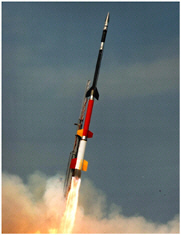
Sounding rockets have proven to be a valuable asset for training students as well as an important tool for solar and space physics research.
Below are the first 10 and last 10 pages of uncorrected machine-read text (when available) of this chapter, followed by the top 30 algorithmically extracted key phrases from the chapter as a whole. Intended to provide our own search engines and external engines with highly rich, chapter-representative searchable text on the opening pages of each chapter.
Because it is UNCORRECTED material, please consider the following text as a useful but insufficient proxy for the authoritative book pages.
Do not use for reproduction, copying, pasting, or reading; exclusively for search engines.
OCR for page 36
Understanding the Sun and Solar System Plasmas: Future Directions in Solar and Space Physics
STRENGTHENING THE NATION’S SOLAR AND SPACE PHYSICS ENTERPRISE
In addition to setting forth a national research strategy for solar and space physics for the coming decade, the Survey Committee’s report proposes several measures to strengthen the national infrastructure for solar and space physics research and to ensure the availability of a sufficient number of scientists and technicians with the training and skills needed to carry out the recommended research initiatives. Among the issues addressed by the Survey Committee’s proposals:
Solar and space physics education at colleges and universities, especially on the undergraduate level
The contribution of solar and space physics to K-12 education and public outreach
University involvement in NASA’s spaceflight program
Cost-effective, reliable, and ready access to space
Coordination among the research (NASA, NSF) and operational (NOAA, DOD) agencies engaged in solar and space physics research
Controlling spaceflight mission cost growth
International collaboration and cooperation in space research
Sounding rockets have proven to be a valuable asset for training students as well as an important tool for solar and space physics research.