
Appendix F
White Papers
STEVE WELBY, DARPA
DARPA Organization
Since DARPA's establishment in 1958 in response to Sputnik, its mission has been to prevent technological surprise from this nation’s adversaries and to assure that the United States maintains a lead in applying state-of-the-art technology to military capabilities. With strong support from senior DOD management, DARPA has evolved into an agent of technological change. It serves as a deliberate counterpoint to traditional thinking and approaches and often represents positions anathema to the conventional military and R&D structure. Three key organizing principals have allowed DARPA to maintain this cutting-edge position in the defense research establishment.
The first is that DARPA should remain a relatively small, flexible, and flat organization relying on a technically astute staff of program managers borrowed for 3 to 5 years from industry, universities, government laboratories, and Federally Funded Research and Development Centers (FFRDCs). These program managers operate with substantial autonomy and with a minimum of bureaucratic impediments. An entrepreneurial spirit is encouraged, partly because the program managers are only at DARPA for a while and can run risks there that might hurt their careers elsewhere. Upper management is focused on good stewardship of taxpayer funds but imposes little else in terms of rules; its job is to empower the program managers (PMs).
The second is that DARPA planning should be largely program based. Programs are typically 3 to 5 years long with a strong focus on end-goals. Often major technological challenges (such as focal plane development or unmanned vehicles) may be addressed over much longer times but only as a series of independent programs. When a program reaches its planned end, it generally stops. Other programs may be started in the same technical area, perhaps with the same program manager. To the outside world, this may be seen as a simple extension, but for DARPA, it is a fresh decision to pursue a current opportunity. Prior investment is not a deciding factor.
The third is that DARPA maintains very little permanent infrastructure (no labs, test facilities, or production lines) so that it maintains maximum flexibility in budgeting and keeps its focus on promoting innovation rather than maintaining what it has or what it has done.
DARPA’s emphasis on technical entrepreneurship, coupled with intentionally limiting its attachment to any particular program, set of people, and infrastructure, has allowed it to focus successfully on promoting radical innovation for national security.
Relationships with Government, Academia, and Industry
These defining features of the DARPA ethos have significant consequences for its relationship with academia, industry, and the rest of government. The first is that there are no hard and fast rules. Each program tends to be very different, with its character very dependent on the personality of the PM and his performers, with some influence from the (very few) higher levels of management. The PM chooses his technical support team and can draw from almost anywhere—System Engineering and Technical Assistance (SETA) contractors, consultants, government laboratories and contracting shops, and FFRDCs. This often results in a very close, teamlike working relationship between the DARPA program manager, his support team, and the performing contractors.
Another consequence is a constant hunger for new ideas. To attract ideas DARPA advertises its current priorities through a Web presence, biennial DARPA tech symposia, open BAAs, and frequent briefings to industry. This is in addition to having an (almost) open door policy to new ideas from industry, government, and academia.
Because the program is the focus, DARPA prefers free and open competition, which has been demonstrated to maximize performance. The agency uses grants, contracts, other transactions (under sections 10 USC 2371 and 2371 note), and prizes. It generally solicits via BAAs, though RFPs are also used. Occasionally, particularly when the idea or concept is specific to a performer, projects are sole sourced.
DARPA puts the generation of new ideas and program execution first. For example, because fixed facilities create inertia and prevent DARPA from putting its money where the needs and opportunities exist, it prefers to execute most programs through open, competitive procurements. Where appropriate, program managers employ government laboratories in a variety of ways, but they enjoy no permanent or incumbent status.
The agency seeks proposals from companies of all sizes but recognizes that small companies are often sources of great innovation. To overcome some of the limitations under which small companies operate, DARPA participates in the SBIR and STTR process. Many program managers learn to integrate these processes into their program development. DARPA’s use of these mechanisms is a rich source of opportunity, for both DARPA and the participating companies.
In addition to bringing in university personnel as program managers, DARPA funds a substantial quantity of pure and applied research at universities. Universities often participate in teams to execute large system demonstrations. For example 20 percent of the teams in DARPA’s recent Grand Challenge, a prize contest to build an autonomous ground vehicle, were led by universities. Intellectual property rights are generally negotiated as part of the grant or contract.
Performance is required in all cases. While DARPA uses graybeard advisors and red teams, the quality of the work is ultimately judged by the program managers, their office directors, and the head of the agency. It is important to emphasize that DARPA is a culture that depends on two things—technically cognizant program managers and a universe of contractors who realize that a program manager’s priority is the ruthless pursuit of program success. Failing programs or contractors will be cut; no programs or performers are so important that poor performance will be tolerated. The flip side of this willingness to stop failing efforts is that room is available for new opportunities. As a result, protests are few and DARPA remains flexible without a large set of fixed rules and policies.
Risk Management
Since DARPA seeks to identify and develop transformational technologies and system concepts for national security, it knowingly invests in high-risk, high-payoff projects. This means that DARPA executes projects that cover a broad range of maturity and risk, from basic research in math and biology to the construction of prototype aircraft.
Because it generally transitions products to research and acquisition organizations that specialize in final product development, DARPA tends to manage risk rather than maturity. Often programs are structured to remove key technical risks in a concept or product rather than to demonstrate a finished product. DARPA uses a variety of mechanisms and methods for identifying risks and technology needs and for planning and implementation, with few standards. Program managers often work with each contractor to develop a risk-management approach.
To transition products and technologies to the Services, one must speak their language. DARPA pays attention to system requirements, future operational capabilities, Service needs, and deficiencies identified by the Services but is not bound by them during the execution of the program. DARPA will use NASA TRLs, for example, to communicate the estimated maturity of the products of its programs, even if the program plan is not driven by it.
Requirements and Other Programmatic Criteria
DARPA’s program managers have an ambivalent relationship with what the military calls “requirements.” Requirements are the collection of specifications, features, and capabilities which define an approved material product that the military will purchase. While program managers understand that requirements capture important elements of a product’s function, they often see that they frequently limit innovation, produce inefficiencies, and protect the status quo because they are defined in terms of the presumed product, not a statement of need. As a result, DARPA often stretches, ignores, bypasses, or seeks changes in the requirements that exist at the outset of programs. This is part of the project-specific set of relationships that the program manager develops. Requirements influence but do not determine what DARPA management decides to fund.
For a number of years program managers have been informally asked to answer several questions before embarking on any program:
-
What is the project trying to do?
-
How is it done now and what are the limitations?
-
What is truly novel in the approach that will remove those limitations and improve performance? By how much?
-
If successful, what difference will it make?
-
What are the interim technical milestones required to prove the hypothesis?
-
What is the transition strategy?
-
How much will it cost?
-
Are the programmatic details clear?
DARPA depends upon an extremely energetic set of bright program managers to answer these questions and arrive at solutions to other related problems, like community coordination. Often this is done with the help of end users but is rarely entirely under their control, at least while it is a fully DARPA project.
The UCAV Program as an Example
The Unmanned Combat Air Vehicle (UCAV) program is a good example of a system prototype program at DARPA. The UCAV program started as the Uninhabited Tactical Aircraft. The conceptual framework for this effort was defined by a team led by Col. Mike Francis from 1994 to 1996. It went far beyond a simple UAV platform development effort, because its goal was the networked integration of multiplatform sensing and situational awareness, dynamic planning, efficient operations, and effective target prosecution to improve decision making, speed actions, and increase flexibility. Rather than the centerpiece of the program, the actual UCAV platform was only the part of this system of systems that closed the sensor-to-shooter loop with the target. Over this period the program manager met with many of the potential stakeholders in such an effort, including the warfighters, potential contractors, and government laboratories. The user interactions were principally with the Air Force, and the Air Force was DARPA’s partner in the initial UCAV program.
With the decision to proceed, and a new office director, the concept became somewhat more platform-centric. The concept that resulted from this evolution followed several guidelines:
-
Work a single mission that is dull, dirty, or dangerous—the mission chosen was reactive suppression of enemy air defenses.
-
Build the smallest vehicle compatible with the mission.
-
Set goals like range, speed, endurance, and survivability that exceed those of their manned counterparts.
-
Reduce the cost, particularly the operational cost, by making the plane a stored item, air-freighted to its deployment base, and maintenance-free prior to use—a plane in a Ziploc bag.
-
Solve the key risks—airframe capability, human-machine interface, communications, targeting, signature, supportability, and mission planning.
The next program manager, Larry Birklebaw, put together the program strategy. The UCAV program has been executed under the Other Transactions Authority granted to DARPA. This has provided flexibility to DARPA in managing the team, in getting industrial cost sharing, and in team formation and management. Phase I was a 1-year competition between four vendors based on concept design, risk management approach, and effectiveness analysis. Phase II began with the selection of one contractor (Boeing). This contractor built the multiple A-vehicle prototypes to demonstrate capability in the key risk areas: autonomous ground operations; intervehicle communications; and multivehicle flight operations, including formation flying, collision avoidance, and dynamic retasking. The air vehicles were part of an overall demonstration tool kit that included surrogate aircraft and extensive modeling and simulation tools. The demonstration phase, Phase III, addressed additional risks using B-model vehicles. This included formation flying with communications losses, planning and decision-making systems, final air vehicle design, incorporation into simulation for joint exercises, and final end-to-end demonstrations in Service and joint exercises.
The UCAV concept was sufficiently interesting that by 2000 the Navy realized it, too, needed to join the Air Force and become involved. The UCAV-N effort identified additional issues to be addressed to enable an unmanned system operating in the unique environment of a carrier. These include integration with manned aircraft operations, catapult launch, on-deck taxi and maneuver, arrested landing, waveoff, and recovery from failed arrest (bolter).
In 2003, the program was transitioned to a joint program office still managed by DARPA but tightly coordinated with the Services. The goal for this joint program office is the maturation of the systems and the seamless transition of the UCAV technology base to an acquisition program, without the usual gap of several years. As part of this transition of authority, the technical and design approach of the vehicle has changed somewhat to reflect service requirements. These changes were not necessarily true to the original DARPA-originated UCAV concept, but were needed to ensure a smooth reception by the ultimate users.
The UCAV program is considered a highly successful DARPA effort. By identifying key enabling technologies and concepts, DARPA helped to move the concept of an unmanned combat aircraft from speculation to demonstration, with great promise of an operational capability in coming years.
CURTIS PENINGER, COAST/ADVANCED CHIP MAGNETICS
The Department of Defense (DOD) Office of Small and Disadvantaged Business Utilization (OSADBU) states: The DOD Mentor-Protégé (MP) program was enacted in 1990 (Public Law 101-510) under the direction of Senator Sam Nunn and Secretary of Defense William Perry. This program was established to provide incentives for (major) DOD prime contractors (mentors) to help small disadvantaged businesses (SDBs), qualified organizations that employ the severely disabled, and women-owned businesses (protégés) develop technical and business capabilities. The goal of the program is to assist protégés to successfully compete for prime contract and subcontract awards.
Successful mentor-protégé agreements provide a winning relationship for the protégé, the mentor, and the DOD.
Coast/Advanced Chip Magnetics (Coast/ACM), along with hundreds of other protégé firms, received opportunities that normally would never be afforded to a small firm. Every department within the federal government has a mentor-protégé program, including most agencies such as NASA. The DOD has two avenues available for its Mentor-Protégé program, which sets it apart from all of the other programs. One form of the program is for credit only (this is what the other departments and agencies of the government have). The other form of the program is administered through the various branches of the Services, and it has reimbursable funds available. Coast/ACM was involved in the Air Force Mentor-Protégé program. The Air Force announces the program several times a year through a broad agency announcement. The major participants in the proposal package are the prime contractor (mentor), the small (qualified) business (protégé), and a historically black college/university or a minority institution (HBCU/MI).
Coast/ACM and its mentor, Northrop Grumman Space Technology (NGST), managed by Tizoc Loza, succeeded in having a technology transfer that not only was beneficial to NGST but has been accepted industry-wide. The Department of Defense and most particularly the Department of the Air Force as well as NASA received a better product due to quicker assembly time and lower unit cost. Program highlights include:
-
Signing of a supplier partnership agreement (number 001)
-
Closing of NGST’s Magnetic Components Fabrication Laboratory (saving NGST over $1 million)
-
Major technology program transfer—magnetic component ball grid array (BGA) (see Figure F-1)
-
Technology transfer of surface mount technologies
-
Major testing and modeling performed by Florida International University
-
ISO9001:2000 training
-
Lean manufacturing training
-
Close working relationship with NGST commodity team
-
Doubling of sales after 2 years
-
Nunn-Perry Award winner
The DOD Mentor-Protégé program is the best reimbursable technology program Coast/ACM has been involved with. Our goals as well as the goals of our mentor have been met as well as surpassed.
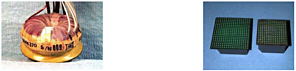
Figure F-1 Transformer before BGA technology transfer and transformer after technology transfer. Photos courtesy of COAST/ACM.


