
Integrated Approach to Water and Wastewater Management for Tehran, Iran
Massoud Tajrishy and Ahmad Abrishamchi
ABSTRACT
Tehran, with a population of over 7 million, is experiencing perhaps the fastest urban development of all Asian cities. The population growth in the next decade will place immense demands on the city’s water resources. Tehran is one of the largest cities in the world that lacks an adequate wastewater collection and treatment system. Most of the city’s wastewater is disposed under the ground, without any treatment, through the use of injection wells to recharge the groundwater. This type of disposal is unique and has caused some water supplies to be polluted, raised the water table, and degraded surface water channels. In this article, analysis is made of the increasing potable water demand, resulting from continuous population growth; inadequacies in the water resources supply that are causing a chronic potable water shortage; and pollution of raw water due to inappropriate disposal of wastewater without adequate treatment. The extent of these increasing demands when placed against the constraints of water, time, funds, and the lack of an integrated approach to manage drought impact and pollution of groundwater, confirms that the city faces a serious water and wastewater crisis.
INTRODUCTION
The tremendous speed of population growth (often doubling within only 10-20 years) in many major cities of developing countries is much faster than the speed at which city authorities can increase services. Growing cities often destroy their own water sources, while the new sources farther away rapidly become
insurmountably costly to use. Such is the case in Tehran. As is happening in many megacities worldwide, metropolitan Tehran is experiencing rapid urban growth, with serious concerns being raised regarding the environmental sustainability of this development, and the potential detrimental impacts on the quality and quantity of groundwater resources.
The city of Tehran, with an existing population of over 7 million people, covers an area of approximately 730 km2 and lies within the Tehran basin on the semiarid plains to the south of the Alborz Mountains, with a varied terrain; from steep hilly areas in the north to plains in the south. The average slope of the area ranges from 1.3 to 5 percent. The mean annual precipitation is only 250 mm and occurs mainly during the winter and spring. No rivers of any size pass through the basin, but groundwater is contained in the extensive alluvial aquifer that underlies the basin.
What is needed is to move away from the technical-fix dominated, and largely supply-oriented management structure of water resource management. The focus has to be extended from blue water flow to incorporate also green water issues, and from water quantity to incorporate water quality as well.
An integrated approach is necessary for environmental management and water management of megacities like Tehran. Urban planning, as it relates to water, should encompass the integration of the physical land beyond the city limits, considering both the river basin where the city is located and the surrounding region affected by and interacting with the city. Planning should also incorporate a multisectorial framework. All sorts of interdependency linkages and implementation barriers need to be addressed in an overarching and integrated manner. The conventional setup of sectoral water management institutions is not able to cope with the present water problem facing the city of Tehran. The solutions to these problems require an integrated approach to water, land use, and ecosystems, addressing the role of water within the context of social and economic development and environmental sustainability.
Basically what is spoken of as a water problem in the city is not solely a water problem but a societal problem; the main task is to master the driving forces, to build up the balancing forces, and to develop competent governance systems. Megacities like Tehran are not able to cope with the growth of the suburbs, and in many cases development has gotten out of control. The unbalanced population growth and reliance on long distance water transfer are among the challenges that the city faces.
Problems that are facing water resources management in Tehran can be summarized as increase in demand and waste production due to population growth and socioeconomic development; decrease in availability of water per capita; high losses of urban water; and local depletion and pollution of surface and groundwater. Urban water management in this city will fail without a holistic and integrated view.
SOURCES OF WATER
The traditional method of providing water in Tehran, as well as in other parts of Iran and the Middle East, is by means of “qanats,” which are small-diameter, hand-excavated tunnels that slope gently upward from the plain to tap the groundwater at higher levels near the foothills of the mountains. Before 1927, 26 strings of qanat with a total flow rate of 700 liters/second had been supplying the city’s water needs.
The first supply to the city from a surface water source was commissioned in 1933, bringing water by aqueduct from the Karaj River some 40 km to the west. Since that time, the population of Tehran has grown from some 300,000 to more than seven million people.
Water is currently one of the major constraints on the city’s development. The city gets its water from both surface water and groundwater. Surface water supplies have been augmented by the construction of the Amirkabir Dam on the Karaj River, duplication of the original aqueduct, and the construction of the Latiyan dam and tunnel diverting water from the Jajrood River east of the city. In 1978, the construction of the River Lar project, which consists of a major dam, was commissioned for several purposes: regulating the flows of the Lar River, providing a storage controlled flow, releasing water down the river to Mazandaran, and creating a diversion tunnel system transferring Lar water to the Latiyan Reservoir for onward conveyance to Tehran. Hydroelectric power stations are included in the diversion system to utilize the appreciable head between the two reservoirs.
The annual exploitation of subterranean water for supply is increasing and currently is on the order of approximately 400 Mm3, which is drawn from 200 deep wells with an average depth of 130 m. Approximately 40 percent of the population of the city relies on groundwater for its drinking water needs. The quality of drinking water available from Tehran’s aquifers is generally very good, although the aquifers are susceptible to contamination. Additionally, since the 1998 drought, 20-30 Mm3 of water is pumped annually from wells adjacent to the Jajrood River into the tunnel reaching Tehran’s No. 5 Water Treatment Plant. The rest of the city’s municipal demand is met by water from three reservoirs located in nearby watersheds (Figure 1). The distribution of the water supply for the city of Tehran during the last 25 years is shown in Table 1 and Figure 2.
WATER USE
From 1955 to 1995, over about 40 years, the water consumption in Tehran rose from 10 Mm3 to more than 800 Mm3, an increase of eighty times. Tehran’s water demand began to expand rapidly as the Iranian economy grew. This expansion became particularly rapid during the 1970s and 1980s due to the nature of the rapid economic growth, causing industry and population to be
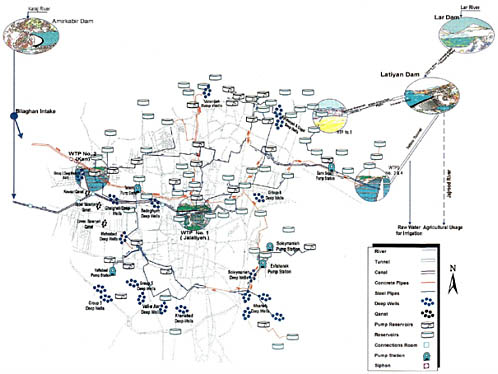
TABLE 1 Proportion of Water Supplied by Groundwater (GW) and Surface Water (SW) for the City of Tehran
|
|
1975 |
1985 |
1995 |
2000 |
||||
|
Source |
% |
Mm3 |
% |
Mm3 |
% |
Mm3 |
% |
Mm3 |
|
Karaj River (Amirkabir Dam) |
60 |
212 |
57 |
310 |
43 |
320 |
29 |
270 |
|
Latiyan and Lar Dam |
30 |
108 |
33 |
180 |
36 |
290 |
29 |
270 |
|
Groundwater |
10 |
35 |
10 |
55 |
21 |
170 |
42 |
390 |
|
Total |
100 |
355 |
100 |
545 |
100 |
810 |
100 |
930 |
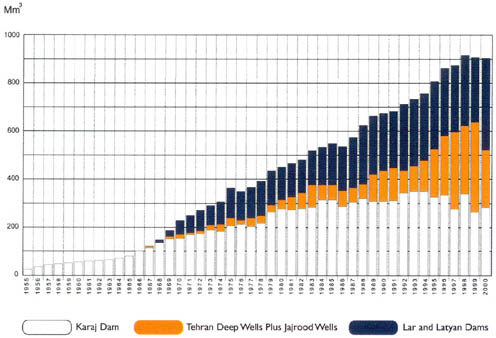
FIGURE 2 Tehran’s water supply resources during 1955-2000.
concentrated in the capital, and the massive migration of population after the Islamic revolution in 1978.
Population and water usage during the last 35 years is given in Table 2. The population of Tehran has grown steadily due to the intense centralization of the majority of the political and economic functions of the country, as well as spreading unemployment in other provinces. Recent studies show that the population
TABLE 2 Trends in Population Growth, Total Water Usage, and Daily Per Capita Water Usage of the City of Tehran
|
|
1965 |
1975 |
1985 |
1995 |
2000 |
|
Population (1000) |
2700 |
4500 |
6000 |
6600 |
7200 |
|
Total Water Usage (Mm3) |
96 |
355 |
545 |
810 |
930 |
|
Liters/Person/Day |
97 |
160 |
250 |
335 |
350 |
migration and birth rate add to the city’s population by 300,000 and 70,000 persons per year, respectively. As illustrated in Table 2, although population has increased by about 2 percent yearly, water usage (liters per capita) has increased at a rate of about 5 to 6 percent annually.
During recent years water consumption has risen above 350 liters/person/ day. If the population continues to rise at the same rate (about 2 percent annually) as it did from 1995 to 2000, Tehran’s population alone will reach about 10 million by 2015. If the high population growth of the last 25 years slows down dramatically and population migration stops, the rate of population growth may slow to 1.7 percent, which will result in a population of above 10 million by the year 2020.
In the years 2010 and 2020, the volume of water consumption in Tehran is projected to reach 1,100 and 1,400 Mm3, respectively. Based on current water usage and anticipated population growth, the water shortage is expected to grow to about 100 Mm3 in the years ahead; about 400 Mm3 by year 2015, and about 600 Mm3 by year 2020. Most of the water is expected to be supplied by groundwater pumping (which will be discussed later and which has its own problems) and the transmission of water from further distances.
WASTEWATER
The city of Tehran is located on an alluvial plain. The alluvium is composed of sand, ballast, and clay, with high permeability in the northern areas of Tehran, due to the concentration of sand and ballast, and poor permeability in the south, due to clay content. The water table north and south of the city is at a depth of approximately 70 m and 3 to 4 m, respectively. Because of the huge costs involved in a rapidly expanding city, the development of the sewer system did not keep pace with the construction of buildings and highways.
The city lacks municipal sewage facilities; hence, the only method of sewage disposal for domestic waste is through seepage pits and leaching cesspools. There is a potential for waste from these leaching cesspools to leach into the underlying aquifer. The extensive use of cesspools in Tehran has caused the water table to rise (Figure 3). The average distance between the water table and the bottom of
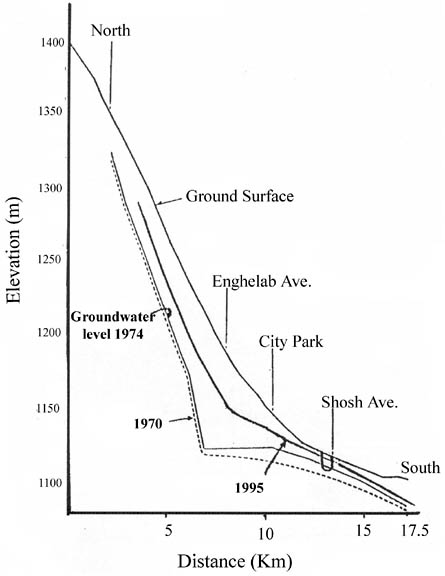
FIGURE 3 Historical groundwater level changes in the city of Tehran.
the seepage pits within the city limit is about 20 m. The level, however, varies from the north to the south.
Southern seepage pits and leaching cesspools are more likely to break through to the aquifer because of the shallow water table and because of saturated soil conditions during periods of heavy rainfall. In the south, where soil content is high in clay, the water table is close to the surface. In these areas, a network of
pumping wells and a proper collection system have been built to transport and dispose of the pumped groundwater to keep adequate distance between the seepage pits and the water table. In some areas, these facilities have resulted in differential soil settlement, causing additional structural and environmental damage.
Sixty to seventy percent of Tehran’s water ultimately penetrates the ground because of the lack of a sewage system. Consequently, the water table is rising rapidly throughout the city; the average rate is approximately 1 to 2 meters per year, but in some areas the water levels have risen 10 meters in only four years.
Contamination from rising groundwater and wastewater intrusion are significant factors potentially limiting groundwater use. The direction of groundwater flow is basically toward the south and southeast, with a mean velocity of approximately 0.2 m/day.
A sewage collection and treatment system has been planned and designed in two stages. The first phase, which is expected to be completed by the year 2015, will cover 15,000 hectares of the city, consisting of 10,000 hectares in the south and about 5,000 in the north, and serving about 2 million people. The second phase of the project will cover the remaining part of the city and has an unknown completion date. The project calls for two treatment plants to be located in the south and west sections of the city. Effluent from these plants will be used for irrigation while the sludge from the treatment works will be used as fertilizer.
PROPOSED SOLUTIONS TO WATER SHORTAGE
Curtailment of population growth, water reuse, administrative and technical measures to obtain savings in water consumption, a reduction in losses in the distribution system, and better management of local water resources are proposed as solutions to Tehran’s water problem. These measures are preferred over importing water from outer basins, which results in unnecessary expenditure and ultimately transferring the water problems to other areas.
Population Control
The explosive population growth trend for the Tehran Metropolitan Area (TMA) may be curtailed by means of short-term and long-term policies that increase the quality of living and working conditions in other parts of the country and at the same time reduce the economic attractiveness of the capital. At present, 20 percent of the country’s population lives in TMA. The current scheme of hierarchical centralization should be abandoned in favor of a more balanced outline that will foster increasing development beyond the basin of Tehran. Figure 4 shows the formation of new towns (or satellite towns) from 1950 to 1990, which helped to control the growth of Tehran, as the influx of immigrants was concentrated in the outside areas.
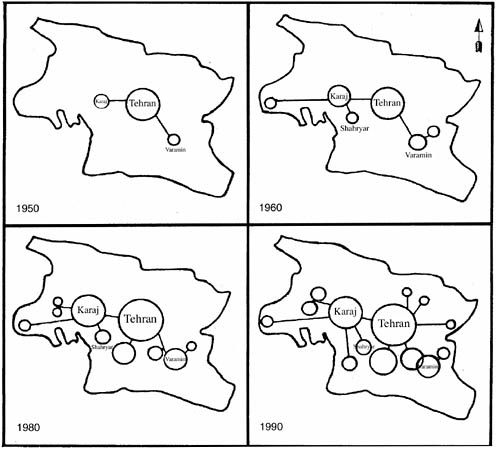
FIGURE 4 Population increase in the suburbs of Tehran from 1950 to 1990.
Wastewater Reuse
Reclaimed wastewater is a reliable source of water that must be taken into account in formulating a sustainable water policy. Recycling and reuse of wastewater presents a very important option for water planners in Tehran. Reuse is a promising avenue for solving water resource problems by providing additional quantities of water. Reuse is, therefore, a water management option that should be carefully considered in the future planning of Tehran’s water, and utilized to its full potential. City wastewater can be reused both in the city and in the peri-urban area as a potential resource for food production, both for farmers themselves and for the urban market. The health hazard risk involved can be mitigated by simple and available treatment methods. Integrating the wastewater reuse component into the city’s strategic water plan will give the potential to fully
utilize more than 600 Mm3 of wastewater produced yearly. This makes water reuse within the city a promising alternative. If there are any barriers to adopting water reuse, the barriers must be reshaped to cope with an era of better utilization of limited resources, an era of living with what is physically available.
Landscaping and Recreational Use
In semiarid areas like Tehran, water is in short supply for irrigating natural vegetation, landscaping, and park areas. The city of Tehran has about 20 km2 of parks that use freshwater for their irrigation. Many of these parks are located close to satellite wastewater treatment plants from which the outflow is currently being discharged to seepage pits and surface stormwater channels. In one study, it has been shown that about five parks located in Tehran (total 5,000 ha) use 30 Mm3 of freshwater that can be replaced by reclaimed wastewater from treatment plants close to them. Outflow from treatment plants can even be used for landscape impoundment and groundwater recharge in the eastern part of the city, which is under development.
Industrial Reuse
Water efficiency is very low in the industrial sector of the country, and there is still not enough emphasis on water recycling and reuse. Municipal wastewater after treatment can be reused for cooling and processing water in industry. This has become an established practice in many countries. The greatest potential for industrial water reuse in Tehran is to supplement or replace the potable water demand of Ray Petrochemical Complex located south of the city. This complex uses more than 10 Mm3 per year of potable water mainly for industrial processes. Treated municipal wastewater effluent from the south wastewater treatment plant can be used for a significant fraction of the water requirements of Ray Petrochemical Complex. Other industries in the western part of the city (Karaj Industrial Park) can use reclaimed wastewater for direct evaporative cooling, indirect refrigeration (food processing), or for in-plant transport and washing.
Irrigational Reuse
Historically, the reuse of irrigation water has been quite common in the Varamin-Garmsar basin (south of Tehran) after reduction of Jaj-e-Rood River outflow. The southwestern part of the basin, after construction of Amirkabir dam, experienced a lowering of the water table due to a decrease in aquifer recharge. Irrigation by wastewater has a great potential that has not yet been considered. One particular advantage to irrigation reuse is that almost no advanced wastewater treatment is necessary. The biological material remaining in the wastewater effluent can provide valuable nutrients for crops.
Wastewater injection into local aquifers at selected sites within the basin should further be investigated in order to improve aquifer recharge, which has decreased continuously because of growth of urbanized areas and drainage of increasing volumes to the Tehran basin.
Administrative and Technical Measures
Conservation is achieved through a combination of efforts that includes legislation, pricing, incentives, coalition building, research, and education. While figures of water consumption per capita in the industrial countries are almost stable as a consequence of water-saving techniques in industry and households, the water consumption in the city of Tehran is still increasing.
Conservation efforts must be focused primarily on information and education programs. A strategy should be adopted to reduce per capita water use by 20-25 percent within 5 years. It is estimated that if conservation efforts could decrease water use by 20-25 percent by the year 2010, the current water supply could be extended by 10 years.
Establishment of a water conservation planning board is needed, and this board needs to promote implementation of best management practices (BMPs) over the next 5 years. The BMPs are incentive pricing and billing, water measurement and accounting systems, information and education programs, distribution system audit programs, consumer audit and incentive programs, commercial and industrial audit and incentive programs, landscape regulations and water conservation programs, wastewater management and recycling programs, indoor fixture replacement programs, plumbing regulations, and a water-shortage contingency plan.
Leakage Losses
Tehran’s water supply facilities are about 50 years old. According to a leak detection study, the proportion of unaccounted water in the network amounts to approximately 40 percent. This leads to a monetary loss of approximately U.S. $15 million and a loss of 300 Mm3 of water per year.
The city of Tehran is tackling leak detection programs on a priority basis. In order to carry out the leakage control work effectively, the Water Bureau tackles such kinds of work as technical development, improvement of instruments, methods, and technical advice to personnel. By means of these progressive leakage-control works, the leakage rate is anticipated to decrease to 20 percent in the next 10 years.
Water losses, or non-revenue water, include physical losses that occur before reaching the consumers (loss in the distribution system), and commercial losses due to inaccurate metering. Under-reading of meters, under-registration of meters, and the tampering with of meters amount to about 7 percent of losses in Tehran.
Breakage and leakages of trunk mains, distribution mains, communication pipes, and illegal connections account for the rest.
CONCLUDING REMARKS
The tremendous speed of population growth in the city of Tehran has raised serious concerns regarding the city’s sustainability due to the short supply of water resources and the lack of an integrated approach to its water and wastewater problems. Urban water management in the city will fail without a holistic and integrated view.
Problems are increasing as a result of three factors. First, urban population is growing fast. Megacities like the Tehran Metropolitan Area simply are not able to cope with the growth of the suburbs, and in many cases the development, with its associated increase in water demand, has gotten out of control. The second problem is that because of the lack of adequate water resources and drinking water, water must be transported from far away areas (distances of several hundred kilometers). The third factor is that problems arise with more groundwater exploration and extraction.
The extent of these increasing demands, when placed against the constraints of water, time, funds, and the lack of integrated approaches to manage drought impact and pollution of groundwater, confirms that the city faces a serious water and wastewater crisis.
Curtailment of population growth, water reuse, administrative and technical measures to obtain savings in water consumption, a reduction in losses in the distribution system, and better management of the local water resources are proposed as solutions to Tehran’s water problems. These measures are preferred over importing water from outer basins, which results in unnecessary expenditure and ultimately transfers the water problems to other areas.
ACKNOWLEDGMENTS
The authors wish to thank the I. R. Iran and U.S. Academies of Science and Sharif University of Technology for supporting this work.
SELECTED BIBLIOGRAPHY
Tajrishy, M. 1997. Demand management to solve Tehran’s problem, Presented at 4th International Conference on Civil Engineering. Tehran, Iran.
Tajrishy, M. Water crisis in Tehran: The integrated approach, Water and Sewage, Volume 22, 1997. Pp. 2-12.
Tajrishy, M. Tehran’s wastewater management through a new integrated approach, Water and Sewage, Volume 28, 1998. Pp. 2-11.
Tehran Province Water and Sewage Company. A glance at water and wastewater. Province Company of Tehran, 1998. P. 16.
Jamab Consulting Engineers, National Water Master Plan- Tehran, Water Resources Organization of Iran, 1999.
Mahab Ghodss Consulting Engineering, Optimum Utilization of Groundwater Resources in a Heavily Exploited Aquifer of Tehran, Technical Report, 2001.
Maksimovic, C., and Tejada-Guibert, J.A. (eds.) Frontiers in Urban Water Management. Deadlock or Hope, IWA Publishing, London, 2001.


